
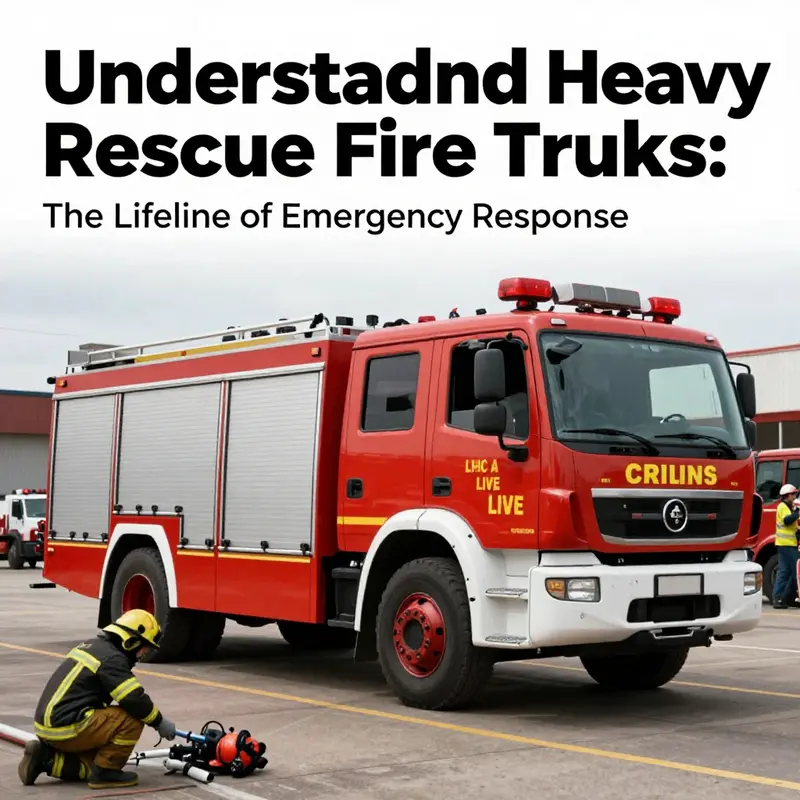
Heavy rescue fire trucks are essential tools in contemporary emergency response, expertly designed to manage complex and hazardous situations that extend beyond traditional firefighting. These specialized vehicles play a pivotal role in saving lives by providing access to advanced equipment and tools for sophisticated rescue operations, such as vehicle extrications, structural collapses, and hazardous material incidents. In this comprehensive overview, we will delve into the defining characteristics of heavy rescue fire trucks, their operational roles in emergencies, the technological innovations shaping their capabilities, and the funding considerations necessary for their procurement. Each chapter will contribute to a unified understanding of how these vehicles operate at the heart of emergency response, preparing communities for both everyday crises and extraordinary challenges.
From Frontline Firefighting to Technical Rescue: A Deep Dive into the Heavy Rescue Fire Truck
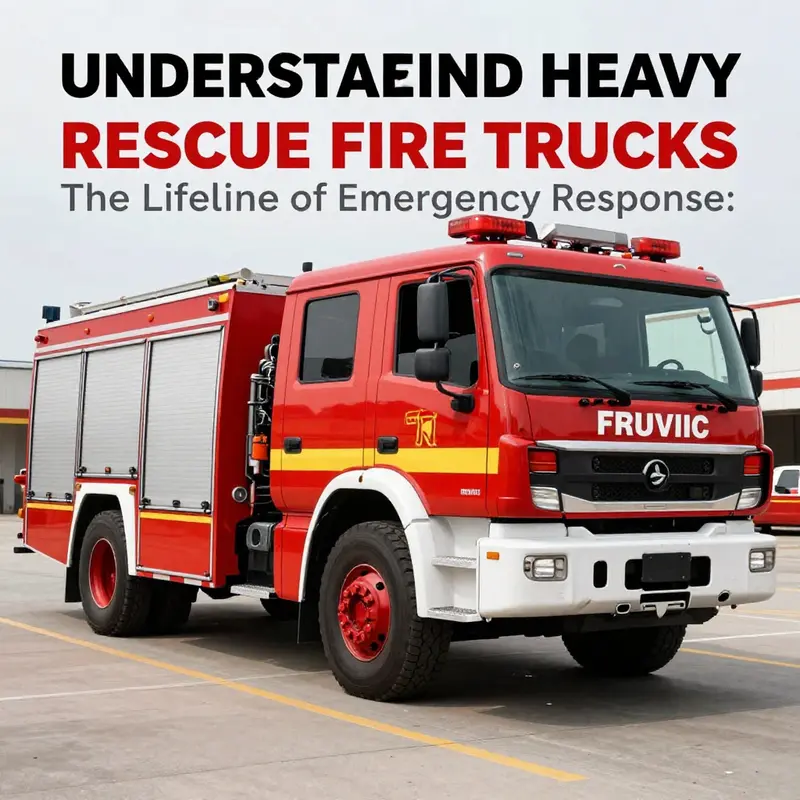
A heavy rescue fire truck sits at the intersection of firefighting and technical rescue. It is a purpose-built, all‑weather tool chest on wheels, designed not merely to fight flames but to manage the kinds of emergencies that test a response team’s breadth and depth. In many urban and regional systems, these vehicles are summoned when fire growth is not the only threat, when people are trapped, when the air is hazardous, or when a structure’s stability is in doubt. The heavy rescue unit becomes a mobile workshop, a support hub, and sometimes a temporary command post, all rolled into one chassis that must perform in the most demanding conditions. The vehicle’s value emerges from its versatility: the ability to adapt quickly, to deploy specialized equipment with precision, and to keep the crew safe while they unravel complex scenes. This is not the truck that merely sprays water; it is the truck that prepares a scene for decisive action and sustains it through the long hours of a difficult operation.
At the heart of the heavy rescue concept is a robust, purpose-built chassis. These machines are engineered to withstand extreme loads, to resist the jolts and dust of rough terrain, and to endure repeated use in challenging environments. The cab—often reinforced for crew protection—serves as a portable shelter where responders can don protective gear, stage equipment, and plan their approach before stepping into the danger. Because these missions demand multiple specialists on site, many heavy rescue trucks feature dual or even triple cab configurations. In practical terms, that means more seating and more space for gear, enabling crews to ride together, coordinate on the move, and transition to interior work with fewer delays. The result is a vehicle that remains operational under sustained pressure, not a fragile platform that must be offloaded and rebuilt after a single intense incident.
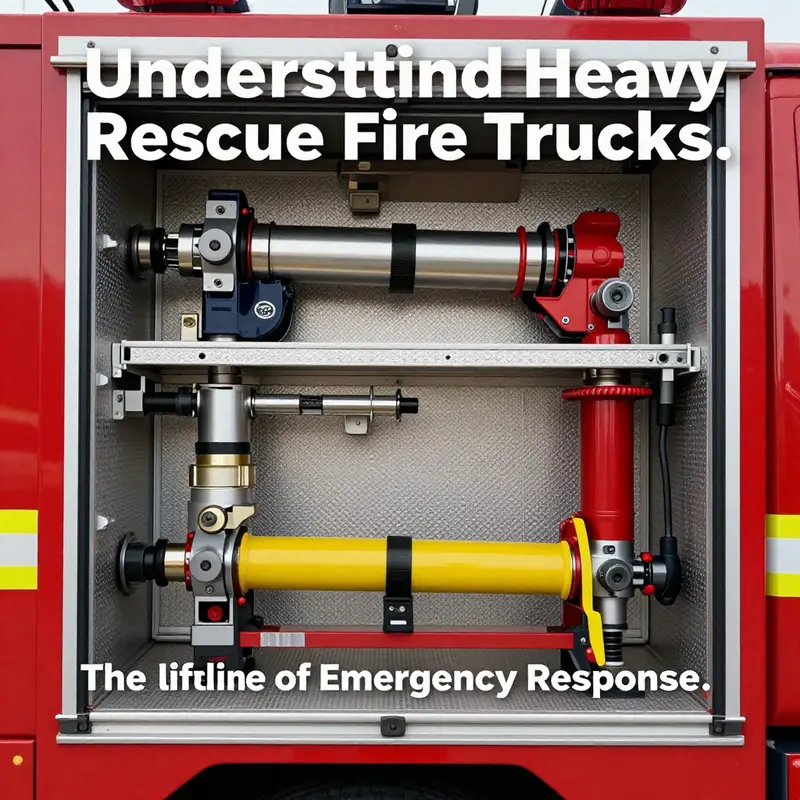
Inside the body of a heavy rescue unit, the equipment philosophy centers on three linked capabilities: stabilization and access, extrication and rescue tools, and life-support and illumination. The stabilization kit includes devices that secure a wrecked vehicle or a collapsing structure, distribute loads, and prevent further movement during an operation. Access and extrication tools are the heart of technical rescue. Rather than a single tool, the truck carries a suite of hydraulic devices, rams, spreaders, and cutting equipment. With these tools responders can pry, lift, and pry again, gently coaxing victims free from entrapment while minimizing additional harm. To preserve a breathable atmosphere and extend operational endurance, air supply systems on board provide a reliable source of breathing air and assist in scene lighting and communication. Lighting is not a luxury here; it is essential. Advanced lighting on these vehicles illuminates complex work zones, enabling surgeons of the scene to see tiny confining spaces, assess structural gaps, and guide the placement of tools without relying on improvised sources.
Beyond rescue-specific gear, these trucks carry a broad suite of safety and efficiency enhancements. The electrical systems are designed to be explosion‑proof where industrial hazards are likely, reducing the risk of ignition or arcing in volatile environments. This is especially important in settings where chemical, petrochemical, or heavy manufacturing processes create unique hazards. The vehicle also houses heavy‑duty generators and power distribution that support both rescue operations and on-scene medical care. Weather, time, and terrain can turn a rescue into a marathon, so the truck must maintain accessibility to the scene while power management remains predictable and stable.
The firefighting capability integrated into many heavy rescue units speaks to the real-world needs of long, complicated incidents. A heavy rescue truck can carry high‑capacity water and foam systems, enabling a sustained attack if a fire grows or re-ignites during a rescue operation. Large water tanks, sometimes described in terms of their potential capacity, allow responders to deliver water where hydrants are scarce or difficult to access. In some configurations, dual water cannons provide strategic advantage: they are capable of delivering water from two angles, supporting both exterior firefighting and protection of a rescue corridor where occupants may be working. The inclusion of foam systems further enhances effectiveness in incidents involving flammable liquids or mixed fuels, where plain water might be insufficient to control the risk quickly. The combination of water, foam, and a power‑heavy hydraulic system makes the heavy rescue vehicle a credible secondary attack platform, ensuring that responders can shift from rescue to containment without waiting for a separate engine or pump unit to arrive.
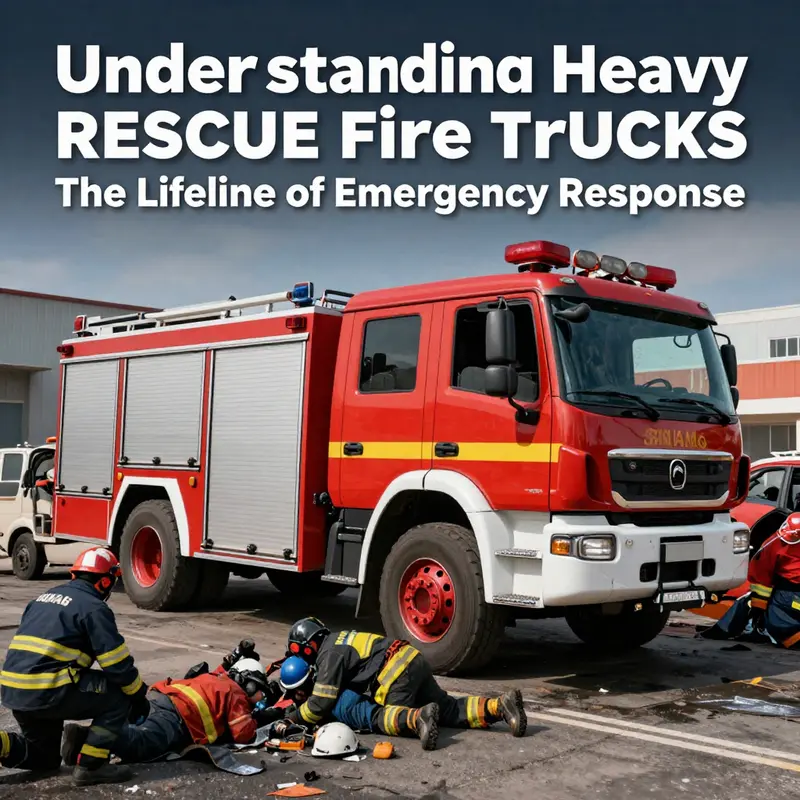
Operationally, the presence of a heavy rescue truck at a scene is as much about manpower and coordination as it is about hardware. The vehicle acts as a mobile command and control node, carrying radios, scene management software, and the personnel necessary to establish incident command, triage, and casualty care on site. The crew can be dispatched with an integrated medical kit, enabling immediate triage and stabilization before transport to a hospital. In the most challenging disasters—structural collapses, confined spaces, or large‑scale industrial incidents—the heavy rescue truck provides a focal point for the deployment of specialized teams. It can serve as a staging area for technicians readying stabilization devices, as a workshop where damaged equipment is field-diagnosed and repaired, and as a shelter where exhausted responders can access rest and nourishment while maintaining readiness for the next shift in the mission.
This blend of rescue, firefighting, and support roles requires thoughtful configuration. Modern heavy rescue trucks are designed around modularity and rapid reconfiguration. A single platform might accommodate a comprehensive array of tools within a compact footprint, yet be adaptable enough to swap in additional equipment as mission profiles change. In urban environments, where space is at a premium and risks can shift in a heartbeat, the ability to reallocate space between patient care, tool storage, or additional fuel and water supplies can determine whether a rescue ends with a fatal delay or a successful outcome. The vehicle’s storage ethos centers on accessibility and organization. Drawers and compartments are laid out to minimize search times; crew members know where to find extrication gear, where to locate hazardous-material sampling kits, and where to grab extra lighting without interrupting the operation. This kind of efficiency—gained through thoughtful design and rigorous training—translates directly into faster, safer interventions for those at the scene.
Standards and reliability underscore every choice made in the design and procurement of heavy rescue trucks. These vehicles are built to meet international safety and environmental standards, ensuring consistent performance across diverse markets. The emphasis on quality control, system integration, and ergonomic design helps ensure that a vehicle remains trustworthy after years of service in demanding environments. In practice, this means a careful balance between rugged construction and careful attention to operator comfort, fatigue management, and intuitive control layouts. A cockpit that reduces strain during long deployments can preserve reaction times and decision-making clarity when every second counts.
The topic naturally extends to how communities obtain and adapt these machines. Heavy rescue trucks are commonly customized to fit local operational needs, climate, and geography. Some fleets prioritize rugged off-road capability for rural or industrial terrains; others emphasize rapid deployment and high-volume water delivery for urban wildfire scenarios. Regardless of the emphasis, a consistent thread runs through successful programs: the vehicle is treated as an integrated platform, not a mere collection of tools. Maintenance planning, regular inspections, and crews that are trained to work in concert with the vehicle—and with each other—are essential to realizing the full promise of heavy rescue capabilities. The rewards are clear: faster on-scene access, more precise extrication, safer stabilization, and a more resilient emergency response system overall.
For readers seeking a broader view of how these vehicles fit into a global landscape of rescue mobility, deeper discussions exist about comprehensive fire truck solutions designed for developing regions. These discussions highlight how modular designs and scalable configurations can address diverse rescue needs with cost efficiency and reliability. For a deeper look, see comprehensive custom fire trucks for developing countries advanced solutions for diverse firefighting needs. This line of inquiry emphasizes the shared goal across contexts: to empower responders with a mobile, adaptable toolkit that can be deployed quickly and used effectively in the roughest conditions. While the specifics of each fleet will vary, the core principles—versatility, robustness, and a culture of safety—remain constant across heavy rescue practice.
To ground the discussion in practical realities, it’s worth noting that even as communities push toward more sophisticated configurations, the fundamental aim is radiantly simple: get responders to the scene fast, keep them protected, and provide the tools they need to bring victims to safety. A heavy rescue truck embodies that aim. It is a story of modular engineering meeting field challenges, of a vehicle designed to endure, and of crews trained to turn a complicated situation into a sequence of manageable steps. In the end, the vehicle’s worth is measured not by the number of compartments or the size of its pump, but by the lives saved and the confidence it instills in those who rely on it when time is shortest and danger is greatest. External factors—terrain, weather, and the scale of the incident—will always shape the exact configuration, but the underlying purpose endures: a heavy rescue fire truck is the backbone of complex emergency response, a moving workshop that translates planning into action when it matters most.
External reference: https://www.alibaba.com/product-detail/Water-Foam-Fire-Engine-Giga-10-Wheels_1600017365258.html
The Mobile Arsenal: How a Heavy Rescue Fire Truck Becomes a Lifesaving Toolbox on Wheels
When a major emergency unfolds—whether a vehicle crash on a crowded highway, a partial collapse of a building, or a hazardous materials incident—the standard fire engine is often only part of the answer. A heavy rescue fire truck enters the scene as a true multipurpose platform, a mobile toolbox on wheels designed to bring the full toolkit of modern rescue work to the point of need. Its purpose goes far beyond fighting flames. It is crafted to stabilize dangerous situations, create protected access to victims, and manage complex operations from a centralized vantage point. The vehicle embodies a philosophy of preparedness and adaptability, where every inch of space and every piece of equipment is aimed at turning a life-threatening moment into a solvable scenario. In this light, the heavy rescue unit reads less like a single-purpose machine and more like a coordinated system, a self-contained response center that can be deployed rapidly and reconfigured for a broad spectrum of emergencies.
At the core of this philosophy lies a combination of robust engineering and versatile design. Heavy rescue trucks are built on sturdy, purpose-built chassis that deliver substantial load-bearing capacity and reliable performance in demanding environments. They are engineered to handle steep grades, uneven surfaces, mud, and rough terrain that might challenge lighter apparatus. Their drivetrains emphasize traction and control, with features that enable confident operation in off-road settings or tight urban back streets where space and grip are limited. The result is a vehicle that can carry a heavy payload of equipment while maintaining the maneuverability needed to reach the most obstructed sites. In many contexts, dual or even triple cab configurations are used to accommodate additional crew members and gear, ensuring that responders have the right people and the right tools on the ground without delay. This flexibility—more personnel, more gear, sooner—helps transform a complex rescue into a coordinated, executable plan rather than a scrambling scramble of improvisation.
Durability and safety are not afterthoughts but fundamental design aims in these platforms. The body and frame are typically reinforced to withstand the shocks and heat that accompany prolonged operations at disaster sites. A full-steel construction, reinforced cab structures, and anti-rollover protection contribute to a safer working environment for crews who must operate in unstable spaces. In some models, tools and equipment must be deployed in environments where heat, dust, and debris are constant threats; here the protective features extend beyond the crew to the vehicle itself, with cooling systems and protective barriers designed to keep vital components functional even when conditions are extreme. The safety philosophy also covers stability and fall protections for personnel working at height or near unstable debris, ensuring that the vehicle can function as a secure platform for long, complex operations.
Operational reach is enhanced by space and load capacity that look more like a mobile workshop than a single-purpose truck. Heavy rescue platforms allocate substantial square footage to carry a wide array of devices and interfaces—enough room to lay out tools, spare parts, and medical supplies in a way that keeps critical items accessible under pressure. A notable design principle is abundant, purpose-built storage surfaces with secure slides and trays that can bear heavy loads. In practical terms this translates to the ability to bring a large quantity of equipment—from cutting and spreading tools to stabilization jacks, air bags, and lighting kits—without having to shuttle multiple times between the staging area and the site. In some configurations, the platform can hold heavy modules or additional equipment racks on sliding trays, enabling responders to swap gear in minutes when mission parameters shift. In effect, the truck becomes a moving, modular supply depot—an essential advantage when time and precision can determine outcomes for trapped people or compromised structures.
The heartbeat of the heavy rescue vehicle, however, is its modular tool system. The toolbox on board is not a fixed assortment but a curated set of hydraulic and mechanical tools designed to work in concert. High-capacity hydraulic rams and spreaders deliver tens of tons of force, enabling swift structural breach, vehicle extrication, and the prying open of stubborn panels. Hydraulic cutters and electric or pneumatic tools extend the range of tasks, supporting rapid access while minimizing additional risk to victims. The modular nature of these tools allows responders to tailor the configuration to the scene—deploying the needed power and reach for a given rescue while keeping other functions in reserve for later stages of the operation. Beyond cutting and prying, the system includes stabilization arms, jacks, and supports that can be deployed to prevent secondary collapses or shifts in heavy debris. In this way, the vehicle does not merely reach victims; it actively creates a safer working envelope around them.
Lights, sensors, and imaging rounds out the kit in a way that elevates rescue work from trial-and-error to evidence-based practice. A heavy rescue truck is equipped to illuminate large work areas with extensive lighting arrays that reach around the entire site, ensuring visibility in smoke, darkness, or inclement weather. Sophisticated sensing capability—such as panoramic cameras and infrared or thermal imaging—enables operators to locate heat sources, identify hotspots, and detect the presence of victims hidden by debris. This combination of light and sensing capability helps responders move with confidence, reducing the need to guess where to direct manpower or how to approach a complex rafter system or collapsed stair. The result is a scene that can be assessed quickly, with the most dangerous zones identified before any physical intervention begins.
Communication and command capacity are another defining feature. Today’s heavy rescue units are not just tools; they are mobile command centers that integrate with broader dispatch and incident-command networks. In practice, this means built-in digital platforms, satellite connectivity, and broadband links that allow on-site teams to share live data with central command and other responding units. The vehicle also supports contemporary drone operations and remote video feeds, enabling situational awareness that expands beyond what can be seen from the cab. When every minute matters, this consolidated digital picture helps teams coordinate complex tasks, allocate resources efficiently, and adjust strategies in real time as conditions evolve. In short, the truck is a moving nerve center, translating field observations into actionable plans and ensuring that responders remain synchronized as a team.
Towing, pulling, and reconfiguration are practical capabilities that further amplify the heavy rescue platform’s versatility. Many units carry high-capacity winches and standardized towing points that enable the rapid relocation of disabled vehicles, debris, or modular assets around the incident scene. This capacity supports quick reconfiguration for different missions, such as attaching a portable water pump unit or bringing in a generator for extended operations. The modular ethos is explicit here: a single vehicle can flex from a rescue-centric role to a firefighting support role or to a recovery operation, depending on the incident’s demands. This fluid adaptability ensures that scarce resources are applied where they will make the most difference at each moment.
Taken together, these features—the rugged chassis, the reinforced construction, the expansive tool and equipment footprint, the modular tool system, the advanced illumination and imaging, and the integrated command and control capabilities—form a coherent, purpose-built platform. A heavy rescue fire truck is, in essence, a mobile fortress of capability. It is designed to go where the danger is greatest, to bring the full range of technical rescue tools to bear, and to support a coordinated, evidence-based response when time itself is the critical variable. It embodies a principle that has become central to modern emergency response: one vehicle, multiple missions, all under one roof. The design is not just about broadening what a fire service can do; it is about delivering decisive, life-saving action in the most demanding conditions possible.
For readers who want to see how modular, scalable designs translate into real-world platforms in diverse contexts, consider this example of comprehensive and adaptable configurations: comprehensive customized fire trucks for developing countries meeting diverse firefighting needs efficiently. The philosophy behind such platforms—maximal versatility, rapid reconfiguration, and integrated systems—reflects exactly why heavy rescue trucks occupy a central role in modern emergency response. These vehicles are not simply chasing fires; they are seeking out the most effective ways to reach, access, and liberate victims, stabilize hazards, and communicate a coherent, real-time plan across a team that might be spread across a dangerous site.
In narrative terms, a heavy rescue truck is a living embodiment of the partnership between human skill and mechanical capability. The crew brings training, judgment, and teamwork to bear, while the vehicle brings power, reach, and reliability. The result is a synergistic system in which each element amplifies the other. The vehicle’s tools extend the operators’ reach; the operators shield the vehicle’s systems with disciplined practice and procedural rigor. The combination makes the heavy rescue truck a vital, trusted partner in the long arc of a modern incident—from the first tableau of danger to the final moments of recovery and rehabilitation. This is not just about equipment; it is about deploying that equipment in a way that respects human limits and optimizes the chances of survival. And as urban landscapes grow more complex and the speed of response becomes ever more critical, the heavy rescue platform stands as a benchmark of readiness, resilience, and intelligent engineering—an emblem of how the right tool at the right moment can alter a life’s trajectory.
The chapter draws toward the idea that the heavy rescue truck, with its modular backbone and integrated systems, represents a mature approach to emergency response. Its design philosophies—versatility, durability, rapid deployment, and seamless communication—tie closely to the broader narrative about what modern rescue services do to protect communities. As the next chapters will explore, this same strategic outlook informs training, interoperability with other agencies, and the evolving standards for safety and performance in the field. The heavy rescue platform remains not only a technical achievement but a symbol of coordinated action under pressure, a reminder that in the most perilous moments, the right combination of tools, people, and situational awareness can turn a dangerous scene into a managed, hopeful outcome.
null
null
Technological Innovations in Heavy Rescue Fire Trucks: From Robotic Assistants to Integrated Platforms
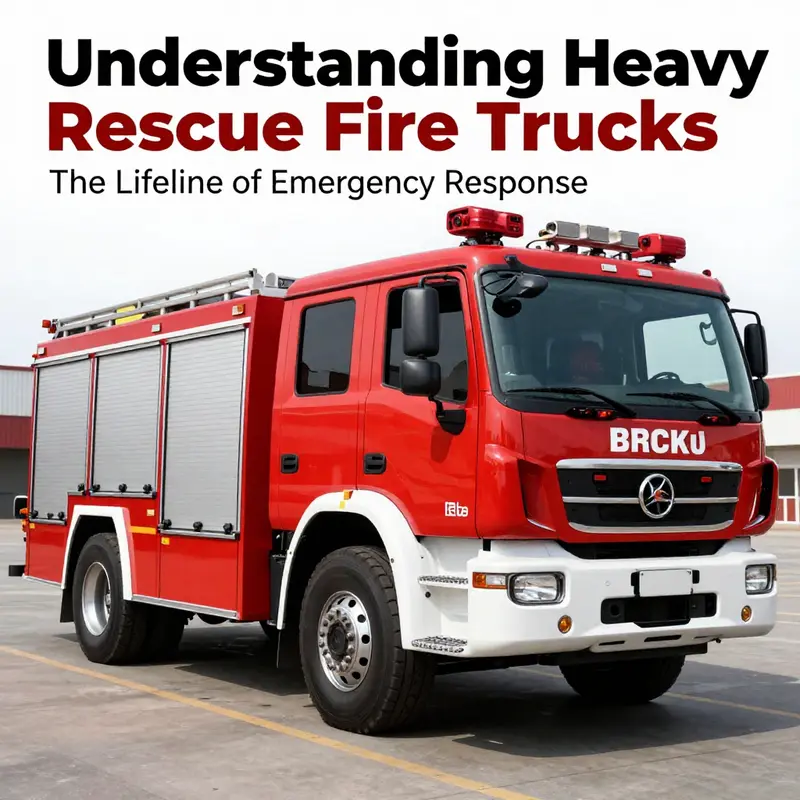
Heavy rescue fire trucks occupy a specialized niche in the emergency services landscape. They prioritize capability, reliability, and readiness over sheer fire suppression power. Modern platforms blend rugged mechanical design with smart sensing, embedded computing, and modular tool layouts to support complex rescue operations, such as structural stabilization, vehicle extrication, confined-space access, and hazardous material responses. The result is a vehicle that can be deployed to stabilize collapses, reach trapped victims, and manage dangerous environments with safety and precision.
A central thread is the rise of intelligent robotic systems designed to work alongside human crews. Leading manufacturers have introduced smart rescue robots that extend on-scene assessment, reduce exposure, and enhance intervention in environments too dangerous for direct human entry. These robots can detect heat, track localization, and execute tasks with limited human input. They augment responders rather than replace them, sustaining operations for extended periods under smoke, heat, and toxic atmospheres.
Navigation and terrain handling are critical: robots traverse rough terrain, climb gradients, and maneuver through debris. The remote command center and robust communications keep operators in control even through thick walls. On-board sensors, cameras, and telemetry support a layered understanding of the setting while maintaining a reliable link across distances.
Intelligent systems coordinate with traditional rescue tools and teams through resource scheduling, task grouping, and multi-machine collaboration. This synergy can shorten response times and improve precision, enabling earlier stabilization and safer extrications. Yet the human operators remain essential for judgment, ethics, and nuanced decision-making.
An important design consideration is crew compartment configuration and tool stowage. Modern platforms favor layouts that maximize crew capacity while allowing rapid deployment of both hydraulic and electronic tools. Dual- or multi-cab arrangements support larger teams, while modular tool bays and serviceable components simplify maintenance and spares.
Operational practice emphasizes hybrid fleets and ongoing training that covers traditional techniques, sensor interpretation, and control of automated systems. Maintenance strategies must accommodate software updates and diagnostics. Departments increasingly balance upfront investment with expected reductions in risk, downtime, and total cost of ownership.
Looking ahead, the integration of robotics, AI, and hydraulics is reshaping how departments plan fleets, train personnel, and coordinate with partners. The trajectory suggests heavy rescue platforms evolving toward adaptable rescue platforms that seamlessly blend human skill with intelligent automation, thereby improving safety and effectiveness in the most challenging emergencies.
Funding the Backbone of Rescue: Navigating Costs, Grants, and Strategic Investment in Heavy Rescue Fire Apparatus
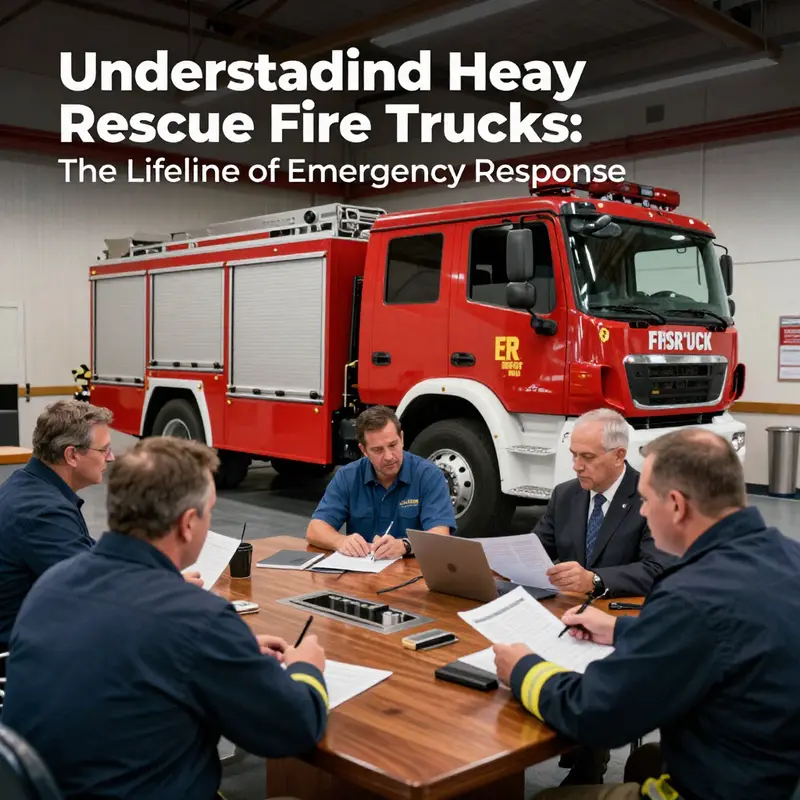
When a community faces the prospect of adding a heavy rescue fire truck to its fleet, the decision carries implications far beyond a single purchase. A heavy rescue vehicle is not merely a firefighting apparatus; it is a specialized platform designed to carry advanced tools, rugged hardware, and trained personnel to complex emergencies. Vehicle extrications, structural collapses, confined-space rescues, and hazardous-material incidents demand a machine that can function as the operational backbone of a regional response. That reality makes budgeting for such an asset a careful balance between capabilities, reliability, and long-term value. Understanding the cost landscape is essential for any department that aims to expand its rescue capacity without compromising other essential services or destabilizing its governance and funding commitments. In practice, the numbers are large because the expectations are precise: a vehicle must be rugged enough to endure demanding environments and adaptable enough to accommodate evolving rescue techniques and new equipment as technology advances. The typical price range for a heavy rescue truck reflects this duality. In many cases, departments report a spectrum that starts around half a million dollars and can exceed a million dollars when fully equipped with the most advanced tools and bespoke bodywork. That broad range is not a reflection of a single quirk in the market; it mirrors the realities of customization, chassis choices, and the depth of rescue systems installed. A base chassis forms the foundation, a variable in cost that grows larger as specifications rise. The chassis must support heavy loads, rigorous use, and long service life, all while accommodating a range of equipment, power needs, and interior configurations. The transformation from a sturdy chassis to a fully functional heavy rescue unit hinges on the specialized rescue tools that live aboard. Hydraulic cutters, spreaders, and rams form the core of the mechanical rescue toolkit, but the true value comes when those tools are integrated with power sources, control systems, and storage that keep them ready for rapid deployment. Each tool adds a line item to the project budget, and the more capability a department requires—faster operation, higher cutting force, multi-angle spreaders—the more the cost climbs. Beyond tools, the vehicle’s electrical and lighting systems must be robust enough to operate in low-visibility environments and under field conditions where reliability is non-negotiable. Advanced lighting, communications gear, and rugged intercoms are not luxuries; they are safety-critical elements that ensure crews can communicate, coordinate, and perform tasks safely under intense pressure. The onboard medical supplies and the space required for patient care equipment also influence price. A heavy rescue mission may begin with rescue and extrication, but it can quickly pivot to medical care, stabilization, and evacuation. Providing a credible medical capability aboard the rescue truck reduces the need for separate transports and improves patient outcomes, but this addition comes with storage, power, and climate-control demands that contribute to the overall cost. Custom bodywork is another meaningful factor. Departments often require tailored compartments, tool stowage, and ergonomically designed work surfaces that respond to their specific operational profiles. The result is a vehicle that looks different from district to district because the work culture and the types of incidents encountered shape the layout, material choices, and fatigue resistance required. The price tag thus reflects not only the number of tools but the degree to which the vehicle is adapted to a department’s unique workflow. It is also important to account for ongoing expenses that accompany these capital purchases. Maintenance is a continuing commitment; it preserves reliability and reduces the risk of failure during a high-stakes incident. Regular inspections, preventive servicing, and the replacement of worn components are routine, but they accumulate into a predictable annual cost. Fuel consumption, while not the primary factor in the initial purchase, becomes a relevant consideration as missions and standby requirements grow. Insurance is another recurring line item that protects the department’s investment and the public’s safety. Finally, training costs, both for new personnel and for ongoing certification, must be embedded in the fiscal plan. Training ensures that the crew can extract maximum utility from the heavy rescue apparatus and work cohesively during complex operations. Even when a department has a clear sense of the total cost, the financing path is rarely a single-source solution. A multi-pronged approach is common and prudent, designed to spread risk and align with the community’s financial planning cycles. Grants play a prominent role in this landscape. Federal and state programs exist to ease the burden of capital purchases for critical public-safety equipment, and the Assistance to Firefighters Grant program, administered through federal channels, provides a mechanism through which eligible costs can be covered. In many cases, grants can cover a substantial portion of the project, sometimes up to 75 percent of eligible costs, depending on the specific program guidelines and the department’s readiness to meet the criteria. This makes the grant process highly competitive, but it also opens a pathway for departments to modernize their fleets without compromising other essential services. Local government budgets remain the backbone of capital investments. Fire services are typically funded through a combination of operating budgets and capital improvement plans, with a long horizon that accommodates depreciation, debt service, and planned renovations. Capital Improvement Funds are a frequent conduit for larger acquisitions, enabling jurisdictions to earmark resources over several years to fund a heavy rescue truck. In some communities, special tax levies or dedicated levies for fire service needs provide additional, stable revenue streams specifically for apparatus acquisitions. These mechanisms reflect a broader strategy: align the investment with long-term community risk management, annual budgeting cycles, and the anticipated demand for rescue capacity as population and infrastructure grow. Partnerships and fundraising campaigns add another layer of resilience. Private partnerships, corporate sponsorships, and community fundraising can supplement public funding and help bridge gaps between grant awards and the final financing needs. Such collaborations often require careful governance and accountability, ensuring that public safety remains the primary objective and that any private support is transparently managed. The financial planning for a heavy rescue truck, therefore, is not simply a study of price tags; it is a disciplined exercise in value assessment and risk management. Departments that succeed in this space typically approach it with a clear articulation of need, a robust cost-benefit analysis, and a strategic timeline that aligns with equipment replacement cycles and training plans. They build a case that links the investment to measurable improvements in response times, rescue capability, and overall resilience of the service area. In that light, the decision to acquire a heavy rescue vehicle becomes as much about organizational readiness as it is about the vehicle itself. For departments that seek examples of how to frame such a decision in diverse contexts, resources that discuss comprehensive, customizable fire trucks and their deployment in developing regions can be especially instructive. These references highlight the flexibility required to adapt to different emergency profiles while maintaining the core capability that heavy rescue units provide. See for instance the resource on comprehensive customized fire trucks for developing countries meeting diverse firefighting needs efficiently. It offers a perspective on how adaptable configurations and modular equipment can influence overall cost and effectiveness across varying budgets and terrains. Alongside this, it is essential to anchor every budgeting effort in credible, policy-aligned funding channels. The U.S. Department of Homeland Security’s guidance on grant opportunities provides a framework for eligibility, documentation, and application timing that departments can apply to their own cycles. This external guidance helps ensure that departments pursue funding opportunities with a clear plan, milestones, and a realistic timeline, avoiding both overextension and underfunding. For those seeking a practical starting point, the following external resource offers concrete expectations about grants and budget considerations: https://www.dhs.gov/assistance-firefighters-grant-program. While every jurisdiction will tailor the specifics to its tax base, population density, and risk profile, the underlying principles remain consistent: invest in equipment that genuinely expands rescue capacity, pursue funding streams with disciplined project management, and maintain a continuous focus on training and maintenance as part of a sustainable lifecycle. Finally, as communities plan to acquire heavy rescue capability, they should remember that the value of the investment extends beyond the vehicle and tools. It encompasses the safety of responders, the reliability of the response system, and the public confidence that a well-prepared fire department can deliver in the most demanding moments. When a department can articulate how a heavy rescue truck sustains mission readiness over time—through thoughtful design, robust maintenance, strategic funding, and transparent governance—the investment becomes a durable asset that supports not only today’s emergencies but the evolving needs of tomorrow. For readers exploring further context on how adaptable configurations can meet diverse rescue demands across different regions, see the internal resource linked here: https://tpbhrescue.org/comprehensive-customized-fire-trucks-for-developing-countries-meeting-diverse-firefighting-needs-efficiently/.
Final thoughts
Heavy rescue fire trucks represent a cornerstone of modern emergency response, embodying the evolution of rescue operations through their advanced capabilities and specialized equipment. As communities face increasingly complex challenges, understanding the multifaceted nature of these vehicles, their operational roles, innovations in technology, and the considerations involved in their acquisition is crucial for maintaining effective emergency services. The integration of these trucks into local firefighting teams not only enhances the capacity to respond to emergencies but also reassures communities of their safety. By investing in quality rescue vehicles and personnel training, municipalities ensure that they are prepared to face emergencies that could arise at any moment, fostering resilience and security for all.