
Fire rescue apparatus are the backbone of emergency response systems, standing as a clear symbol of safety and readiness within our communities. From urban firefighting to high-stakes rescues, these vehicles and tools are specifically engineered for efficiency and effectiveness in some of the most critical situations. In this comprehensive exploration, we will delve into the key features that make a fire rescue apparatus indispensable; examine the technological advancements paving the way for future operations; and discuss the economic and social impacts these essential vehicles foster in our society. Understanding these dimensions helps cultivate a deeper appreciation for the equipment and personnel dedicated to protecting lives and property during emergencies.
Gearing for the Fire Line: How a Rescue Apparatus Marries Power, Safety, and Mobility
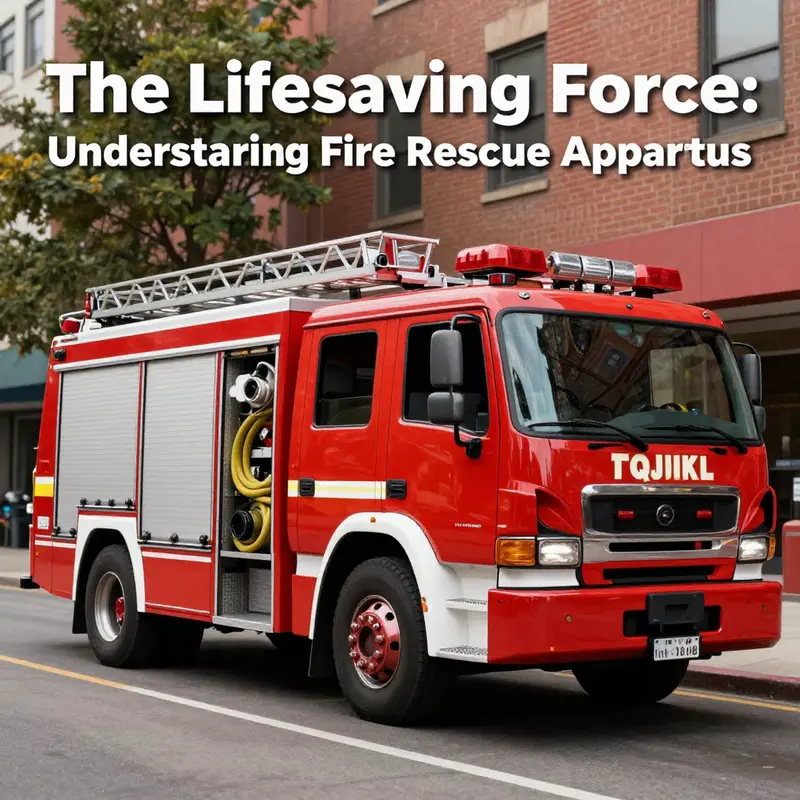
A fire rescue apparatus is more than a vehicle with a hose. It is a purpose-built tool that translates crew needs into decisive action on scene. When an alarm rings, the apparatus becomes a moving command post, a water delivery system, a ladder platform, and a protective shelter. This chapter explores how a chassis, pump, ladder, and rescue tools work together in urban cores, suburbs, and rural settings. It is not a catalog of parts, but a narrative about how design decisions drive faster response, safer operations, and better outcomes for people in peril.\n\nAt the heart of the vehicle is the structural frame and suspension, chosen for resilience and predictable handling. Ground clearance matters for curb negotiation and uneven ground; the suspension must absorb shocks without letting the crew feel every motion. Engineers optimize rigidity and adaptive geometry so equipment and water tanks stay within safe limits during acceleration, braking, and turns. In practice, these choices translate to steadier platforms, safer climbs, and more precise positioning at the scene.\n\nThe water delivery system is central. A pump moves large volumes quickly, maintains steady pressure, and works with onboard tanks that serve as a ready source while hydrants are found. The interaction between storage and pump output is balanced to maximize reach, while redundancies protect against failure. Crews depend on reliable sources and clear control paths to deploy water where needed, fast.\n\nLadders and aerial capabilities extend reach and enable controlled access to upper floors or roofs with stability. Modern aerial devices prioritize safety, intuitive operation, and precise positioning, even in wind or confined spaces. The operator’s training and feedback mechanisms matter to ensure the platform responds predictably under load.\n\nRescue tools, protective gear, and communications complete the system. Compartments are organized for rapid access, and PPE is designed to work in harmony with the vehicle’s hydraulics and controls. Onboard communications, data links, and navigation support incident command and coordination with other units. The chapter closes by linking these elements to training, maintenance, and universal design principles that enable a rescue apparatus to perform across diverse environments.\n
From Water Jets to Digital Twins: The Technological Leap in Fire Rescue Apparatus
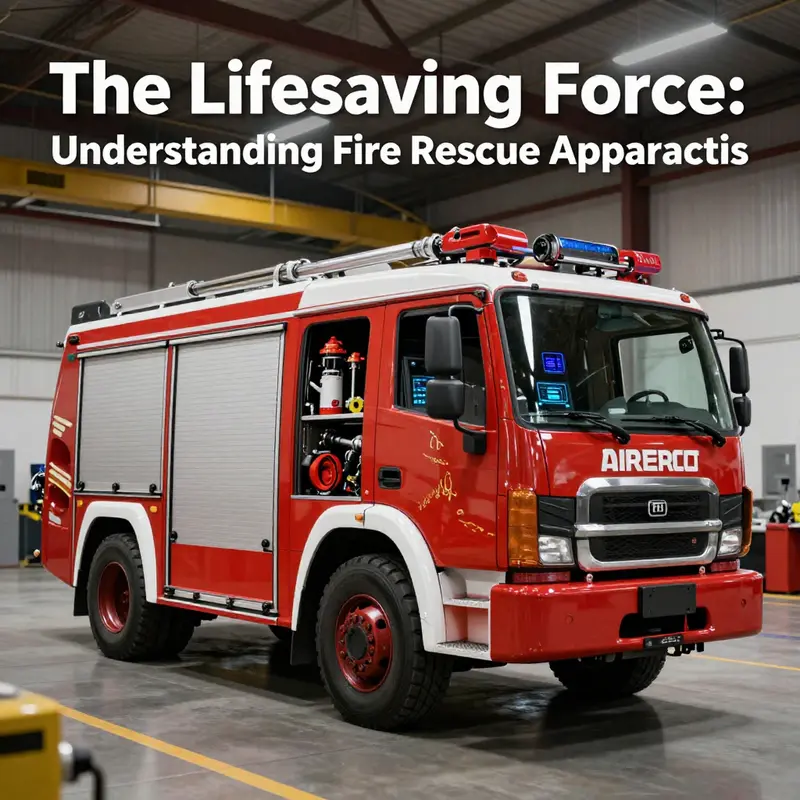
The fire rescue apparatus of today is less a single machine and more a dynamic platform that threads together power, protection, perception, and propulsion. In the old days, a pumper, a couple of hoses, and a ladder truck defined the toolbox of firefighting. Now, the calculus has shifted. A modern apparatus functions as a moving command center, an armored vest for its operators, and a sensor-laden scout that can reach into the most dangerous rooms while keeping firefighters out of the line of fire. This transformation is not merely incremental; it reconfigures the timing, the risk calculus, and the very language of urban emergency response. What follows is a continuous reflection on how far fire rescue equipment has come, and why those changes matter for life safety, for the communities served, and for the professionals who must trust their tools under extraordinary pressure.
Materials science lies at the core of this evolution. Fire is not just an element to be overcome; it is a harsh environment that frays metal, consumes insulation, and threatens human skin and lungs with heat and toxic byproducts. Advancements in fire-resistant materials, including high-temperature composites and protective casings, extend both equipment longevity and crew survivability. These materials do more than withstand flame; they reduce the thermal load on hoses, pumps, and monitors, enabling longer pursuit and more sustained operations in hazardous zones. The result is a fleet that can be deployed deeper into a fire’s life cycle—the moment when a structure pivots from ignition to collapse risk, when interior temperatures spike, and when visibility dwindles to near zero. In this way, durability is not simply a matter of long-term performance; it is a direct determinant of whether a crew can occupy the space long enough to search, locate, and extract.
But durability alone does not guarantee success. Real-time data flows are the lifeblood of contemporary rescue work. A growing constellation of sensors, cameras, and communication channels feeds a continuous stream of intelligence back to the incident command center. The latest systems integrate high-resolution thermal imaging with ultra-fast, low-latency data networks to deliver color-coded heat maps, precise temperature distributions, and situational geometry of trapped individuals. When the fire scene becomes a complex three-dimensional puzzle, having a high-fidelity digital replica of the environment becomes indispensable. This digital twin is not a mere visualization tool; it is a decision-support engine. It aggregates live video, thermal data, gas readings, and youthfully jittery satellite-like location data to create a near-real-time model of the interior. Commanders can simulate wind shifts, fuel progression, and smoke movement before placing crews into harm’s way. They can rehearse evacuation routes, prioritize entry points, and adjust suppression tactics as conditions evolve. In short, the digital twin transforms the scene from a guessing game into a guided operation, where the best available intelligence continually informs the next move.
Underpinning these data ecosystems is a robust, reliable communications backbone. The adoption of high-speed wireless networks—often leveraging 5G or near-5G capabilities—ensures that images, maps, and alerts flow without the lag that used to plague radio stitched calls. The human and mechanical agents on the ground are no longer tethered to a single vantage point on a street corner. Instead, the apparatus becomes a mobile hub of information, transmitting high-definition feeds from an evolving field of view. That blend of mobility and visibility changes how teams coordinate; it enables multiple units to operate in concert, each contributing a complementary slice of the incident picture. In the hands of a well-led crew, these digital channels become a shared language, aligning tactics with real-time intelligence and preventing miscommunications that can cost lives.
Robotics have moved from novelty to necessity in many theaters of operation. The use of anti-explosion firefighting reconnaissance robots at major exhibitions and demonstrations underscored a broader shift: the ability to deploy a machine into an environment where human entry would be perilous. These robotic platforms carry sophisticated imaging systems, including multi-spectral sensors and a thermal palette with numerous pseudo-color modes. They deliver live battlefield data through 5G links, effectively becoming a scout that can observe, measure, and report from within the danger zone before any crew steps across the threshold. The value of such machines lies not merely in the data they collect but in their function as partners—iron companions that extend human reach and attenuate risk. They provide a confidence-building layer for decision-makers, who can verify room layouts, identify hotspots, and confirm the locations of victims or hazards without exposing responders to immediate danger. And as algorithms learn from each mission, these robots become more adept at recognizing patterns, predicting explosive risk, and guiding the human operators toward safer, more efficient paths to a rescue.
The rise of aerial firefighting equipment has opened new geographic horizons for suppression and rescue. Platforms that can extend high into the air and maneuver with precision allow crews to overcome the limitations of ground access, especially in high-rise scenarios or in areas where street geometry complicates water delivery. Advances in structural design and hydraulic systems have produced platforms capable of reaching unprecedented heights, delivering water or foam with accuracy, and maintaining steadiness amid the upthrust of wind and heat. The reach of these systems reduces the need for risky vertical operations on scaffolds or inside stairwells and provides a means to cool upper floors, protect egress routes, and create safer entry points for interior teams. The urban firefighter’s toolkit, which once depended almost entirely on ladders and ground-based pumps, now includes a spectrum of aerial capabilities that dramatically expands what is feasible in a single incident. This augmentation allows for staged approaches where suppression, rescue, and ventilation can be choreographed with the same whole-scene awareness that digital twins offer.
Procurement and interoperability concerns have followed these hardware advancements closely. The drive toward modular, swappable configurations means a single chassis can be re-tasked with different equipment bodies as needs shift. This modularity supports regional adaptations, enabling a city to field a fleet that can be tuned for its climate, architecture, and population density. It also speaks to a larger strategic objective: reducing downtime between operations and extending the useful life of apparatus through reconfiguration rather than replacement. When a department can rotate in new sensors, new robotics payloads, and new high-efficiency powertrains, it preserves the capital value of its fleet while continually expanding its functional envelope. Yet this transition also requires careful governance. Standards become critical, as do maintenance regimes that can keep a complex web of sensors and actuators running reliably in the field. The human element remains central here. Operators and drivers must be trained not only to operate the equipment but to interpret the streams of data, to manage the interfaces, and to navigate the new decision-making workflows that these technologies enable.
If the discipline of firefighting has a core challenge, it is standardizing safety with innovation. On one hand, new materials, sensors, and autonomous systems promise fewer casualties and faster rescues. On the other hand, the same innovations raise questions about compatibility, cybersecurity, and the potential for overreliance on automated systems. The best practice emerging from this tension is an integrated approach that treats technology as a force multiplier, not a replacement for human judgment. The most effective modern apparatus is designed to complement crew skills—amplifying perception, clarifying priorities, and distributing tasks across a network of devices and people. The design philosophy is thus about resilience as much as speed: resilience to heat and pressure, yes, but also resilience to system failures, miscommunications, and the chaos of evolving emergencies. It is the capacity to stay coherent under duress that ultimately determines whether technology saves lives or merely adds complexity to a perilous environment.
A bridge from concept to field readiness often passes through the cultural and educational circuits that shape how response teams learn to use new tools. For many departments, training now embraces simulators, virtual rehearsals, and cross-disciplinary exercises that stress coordination across engines, ambulances, and command posts. The digital twin, in particular, becomes a training partner as well as an operational aid. Trainees confront realistic heat scenarios, obstacle layouts, and time pressures in a controlled setting before facing the uncertainty of a real blaze. When these learning experiences cohere with live operations, the result is a workforce that trusts the apparatus as a partner rather than a burden. In turn, communities benefit from faster, more reliable responses, with responders who execute complex strategies with heightened confidence. The social contract deepens: residents see a service that blends human expertise with machine-thinking, and this blend becomes a foundational element of public safety culture.
Indeed, the most forward-looking narratives of fire rescue apparatus emphasize a philosophy of networked intelligence. The modern vehicle is a node in a larger ecosystem that includes municipal sensors, building management systems, and regional emergency centers. The best-equipped departments pursue not just a single high-performance tool but an integrated suite of capabilities. A typical day might begin with a live feed from a building’s smart sensors, revealing a developing hot spot before a call even arrives. Dispatchers sketch potential entry points on the digital twin map, then deploy units with payloads tuned for the anticipated challenges—one platform heavier with water and foam, another configured for rapid reconnaissance, another ready to execute elevated ventilation or rescue operations from above. The team on the ground, guided by this multi-layered intelligence, advances with a shared understanding of risk, opportunity, and timing. The synergy is real, and it is changing the tempo of emergency response in ways that are measurable in lives saved, property preserved, and crews kept out of harm’s way.
A note on accessibility and global applicability is essential. The very innovations that make urban centers safer must be adaptable to diverse contexts, including developing regions where resources are more constrained and terrain can be challenging. The architecture of modern fire rescue apparatus—from materials to software to mechanical design—ideally accommodates variations in climate, infrastructure, and response demands. The principle is not to export a one-size-fits-all solution but to export a family of capable systems whose components can be selected and scaled for local realities. In this sense, the equipment itself becomes a platform for resilience, enabling communities to tailor protection without sacrificing the integrity of safety standards or the effectiveness of training programs. The result is a more equitable distribution of life-saving capability, where technological progress serves as a common denominator rather than a luxury exclusive to wealthier jurisdictions.
This chapter has traversed a landscape where innovation is inseparable from risk management, where the fire ground has become a testbed for artificial intelligence, robotics, and connected sensing. The modern apparatus is a synthesis of materials science, wireless communications, robotics, and hydraulic excellence. It carries the memory of past firefighting while carrying the promise of a future in which danger is anticipated, coordinators have more accurate maps, and responders can act with greater certainty. What emerges is a picture of fire rescue as a continuously evolving practice, one that demands not only engineers and designers but also the clinicians of safety who interpret data, the operators who maneuver in chaotic environments, and the policy leaders who align procurement with real-world needs. In such a framework, the apparatus ceases to be a static instrument and becomes a living ecosystem—a moving, thinking, responsive partner in the mission to protect life and property.
For readers seeking a window into the human and institutional dimensions behind these technologies, consider how museums, learning centers, and field demonstrations shape adoption and public understanding. Institutions that curate the history and future of fire services illuminate how techniques, ethics, and technologies converge to form best practices. A representative example of this ongoing dialogue can be explored through resources such as Innovation Museum Transforming Fire Services, which chronicles how creative experimentation and evidence-based policy converge to drive meaningful change. External sources also document the rapid pace of development in equipment and capability. For a broader view of how these innovations are presented and evaluated on an international stage, see the latest coverage from industry exhibitions and trade shows that showcase new platforms, safety features, and interoperability frameworks. These gatherings are not mere showcases; they are the testing ground where users, engineers, and policymakers converge to validate what works under pressure and to refine what fails under stress. They are the crucibles that turn bold ideas into reliable tools for real-world rescue.
As this narrative continues to unfold, readers are invited to reflect on the central question: what does a fire rescue apparatus ideal look like when it embraces speed, safety, adaptability, and intelligence? The answer lies not in a single feature but in the coherent integration of all these elements into a living system. A vehicle designed with modular payloads, secure and resilient data channels, intelligent sensing, and cooperative robotics will not only respond faster but respond smarter. It will anticipate, not just react; it will coordinate, not merely communicate. It will preserve life, safeguard responders, and help communities recover with resilience that feels less like luck and more like design. It is this vision—the convergence of materials science, networked sensing, autonomous reconnaissance, and aerial reach—that defines the current era of fire rescue apparatus and points toward a future where every response is guided by data, protected by design, and realized by trained hands supported by intelligent systems. For practitioners and researchers alike, the challenge is to sustain this momentum while ensuring that the human core of firefighting—the courage, discipline, and judgment of responders—remains at the center of every advancement.
To keep pace with this evolving landscape, ongoing dialogue between field experience and technological development is essential. The most effective innovations arise when designers listen to the frontline crews who operate these tools under extreme conditions and when responders insist on interfaces and workflows that minimize cognitive load and error. The result is a cycle of improvement that respects safety, values durability, and honors the complexity of real-world emergencies. As capacities grow, so too does the expectation that every tool is not just capable on paper but trustworthy in practice, performing in concert with others to deliver a unified, humane response in the most trying moments. The fire rescue apparatus, in this sense, is becoming less a single machine and more a resilient, adaptable system—an intelligent, ethically grounded instrument that keeps pace with the evolving theater of urban risk while carrying forward the timeless commitment to saving lives.
For readers who want to explore the origins of this trend and its practical implications, the discussion can be enriched by looking at dedicated sources that document the progression from conventional gear to contemporary, networked systems. Innovation-focused perspectives highlight how museums and exhibitions play a pivotal role in shaping public understanding and professional practice. A direct entry point to this story is available through the Innovation Museum Transforming Fire Services, which offers insight into how experimentation and storytelling accompany technical development. This axis of innovation—where design meets demonstration—helps translate laboratory breakthroughs into field-ready capabilities. In turn, the broader community gains a clearer understanding of how the tools of rescue have evolved and why these changes matter for safety, for efficiency, and for the dignity of those who respond when a crisis arrives.
External resource: https://www.fireexpo.com.cn/
Resilience in Motion: The Economic and Social Footprint of Fire Rescue Apparatus
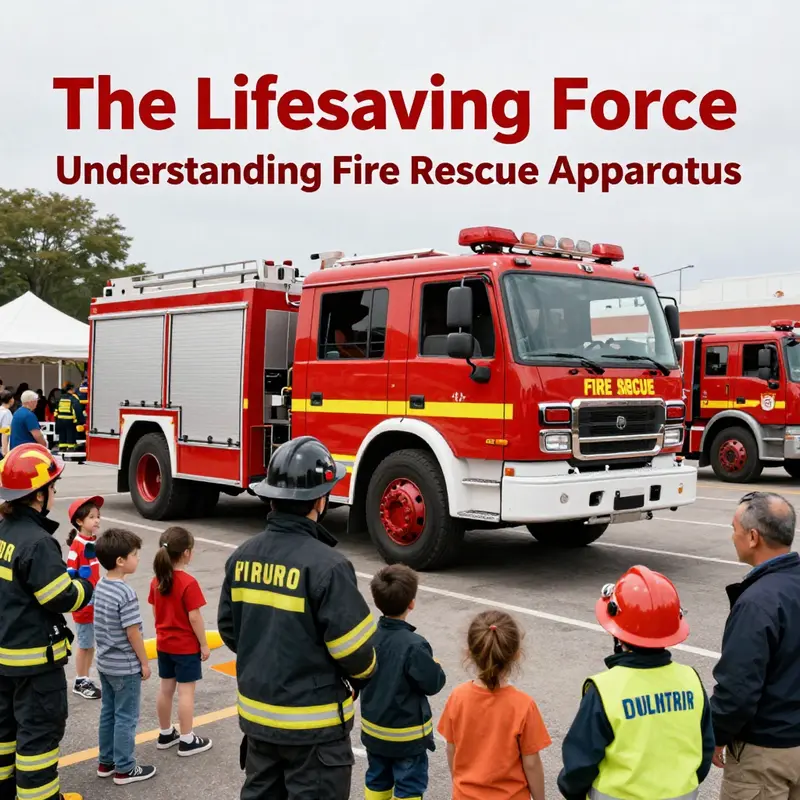
The fire rescue apparatus that rumble through city streets are more than mechanical helpers in a crisis. They are engines of resilience, capable of translating peril into safety while sustaining the everyday rhythm of urban life. These vehicles carry a potent combination of water and suppressant delivery, flexible hose configurations, ladders, and an array of tools that enable responders to reach confined spaces, stabilize dangerous scenes, and uplift trapped individuals from the crush of smoke and heat. The equipment itself is a calculated investment in readiness, designed to perform under pressure, to adapt to structural complexities, and to coordinate with incident command in moments when seconds matter. The result is a dynamic interplay between hardware, human skill, and organizational culture. When a community trains its teams and equips them with modern rescue apparatus, it does more than save buildings. It preserves the economic and social fabric that keeps neighborhoods viable, vibrant, and secure in the long term.
The economic argument for fire rescue apparatus rests not only on the costs of procurement and maintenance, but on the tangible and ripple effects of rapid, effective intervention. A city that can deploy its fire services with speed and precision reduces the scale of destruction and the duration of business disruption. When a blaze is contained quickly, property damage falls, insurance claims diminish, and the time needed for restoration work shortens. The financial calculus then expands to broader GDP considerations: the capacity to avert cascading losses in commerce, manufacturing, and housing supports steady growth even in the wake of a serious incident. In practical terms, these devices are part of a fixed capital stock that underpins economic stability. They enable decision‑makers to channel scarce public resources toward prevention, housing, transportation, and health services without constantly reallocating funds to emergency repairs.
Empirical analyses illuminate the scale of these effects. In a 2017 cost‑benefit assessment conducted for a major Canadian city, the fire department’s operating costs were estimated at around 20 million CAD. Yet, the return on that investment was far more substantial. The fire services contributed roughly 368.7 million CAD in GDP savings by preventing property destruction and business interruptions, and they generated about 64.8 million CAD in direct cost savings through avoided damages and reduced insurance claims. Those figures are more than mere numbers; they map a chain of consequences that reach people, neighborhoods, and enterprises. The savings are not dispersed evenly. They concentrate in areas where risk is higher—areas with older housing stock, dense commercial corridors, or critical infrastructure whose disruption would ripple outward. But the broader message is clear: well‑funded, well‑maintained rescue fleets compress the time people spend in danger while compressing the economic damage that follows a major incident. The effect is a more predictable environment for investment, planning, and long‑term development. The same logic applies to sparsely populated areas and rapidly urbanizing cities alike, where a robust response framework stabilizes markets and reduces the chance that a single disaster derails an entire growth trajectory.
Beyond the numbers, there is a social dimension to the presence and performance of fire rescue apparatus. Communities that witness reliable, visible emergency services tend to experience heightened public confidence. When residents know that trained professionals can reach them quickly, the sense of personal security expands into everyday life. Businesses are more likely to invest, not only because the physical risk is mitigated but because the social contract appears more concrete: public institutions are capable, accountable, and prepared to safeguard lives and livelihoods. This trust feeds urban vitality. It attracts workers, stimulates entrepreneurship, and broadens the tax base that funds schools, parks, and transit. Fire rescue teams often engage in prevention programs and community outreach. They visit schools to teach fire safety, hold open houses, and participate in neighborhood events. These activities are not ancillary; they are central to building the social capital that underpins a resilient city. When people are educated about risk and equipped with practical knowledge, communities reduce the human and financial costs of emergencies before they occur. The apparatus is thus part of a social education system, reinforcing habits of prevention and preparedness that endure far beyond the immediate aftermath of a blaze.
The social benefits extend to vulnerable populations in particularly meaningful ways. Fire and rescue services frequently collaborate with hospitals, elder care facilities, and shelters to plan and practice evacuations, especially for seniors and individuals with mobility challenges. The ability to stage rapid, orderly evacuations and to provide sheltering during and after incidents reduces the likelihood of panic and injury. In this sense, the apparatus becomes a catalyst for inclusive urban resilience. The social narrative around safety shifts from crisis management to continuous protection, and that shift has measurable consequences for health outcomes and quality of life. When a city demonstrates that it can manage risk with competence and compassion, families are more likely to remain, invest in housing, and participate in community life. The social fabric is reinforced not merely by the presence of trucks and crews but by the ethos that safety is a shared enterprise.
The procurement and deployment of fire rescue apparatus also interact with policy, planning, and governance. The decisions about what equipment to purchase, how to staff it, and how to maintain it require a long‑term view and interagency coordination. A fleet that is outdated or incompatible with modern firefighting tactics can become a liability, increasing response times and constraining the ability to reach high‑rise façades or complex industrial sites. Conversely, a well‑designed fleet—one that balances power, mobility, and reliability with fuel efficiency and maintenance costs—improves response times and operational readiness. In such a system, data and evaluation play crucial roles. Incident data, maintenance records, training outcomes, and community risk assessments feed back into strategic planning, guiding future investments in equipment and training. This ongoing cycle strengthens both the efficiency of response and the predictability of budgets, which in turn sustains public trust and supports urban development.
The global dimension of the fire rescue apparatus story is also worth acknowledging. In many regions, rapid urbanization, aging infrastructure, and climate‑related hazards pose fresh challenges. The core principles remain the same: adaptability, reliability, and readiness. But the specifics of procurement, funding models, and maintenance regimes vary. In some contexts, there is a premium on cost‑effective, widely serviceable fleets that can operate across diverse geographies and weather conditions. In others, there is a push toward high‑tech capabilities and modular configurations that allow responders to tailor their toolkits to particular hazards. Across these variations, the central insight persists: the equipment of rescue services is not a mere expense but an investment in social order and economic vitality. It anchors risk management in the public sphere, turning potential exposure into manageable, solvable problems. It is as much about enabling everyday life as it is about saving lives during extraordinary events.
This chapter’s synthesis points to a concise truth: fire rescue apparatus shape the resilience of cities by reducing the frequency and severity of losses, and by strengthening the social and economic fabric that makes communities attractive places to live and work. The numbers from economic analyses illuminate the financial logic, while the social dimensions illuminate the human logic. When residents and business owners see that their city can respond quickly and effectively to danger, confidence grows, investment follows, and a cycle of welfare, safety, and prosperity reinforces itself. That is the essence of the economic and social footprint of fire rescue apparatus: a disciplined blend of hardware capability, organizational capacity, and community engagement that transforms emergency response from a reactive service into a driver of sustainable urban health.
To explore one facet of how frontier systems might scale in developing contexts, consider the broader discourse on adaptable and comprehensive fire truck solutions for diverse rescue needs. These discussions underscore that the right combination of capacity, reliability, and cost‑effectiveness can empower cities at different stages of development to achieve similar social and economic gains. See the discussion here: comprehensive-customizable-fire-trucks-for-developing-countries-meeting-diverse-rescue-needs-efficiently. This ongoing framing reminds us that the value of rescue apparatus transcends national borders and budget envelopes. It is, at its core, about safeguarding people, protecting livelihoods, and sustaining the prospects of communities through the certainty that help will arrive when it is needed most.
In sum, the economic and social impact of fire rescue apparatus rests on a simple but powerful premise: preparedness pays. By enabling rapid, effective intervention, these fleets reduce the scale of disasters and the ripple effects that follow. They stabilize markets, protect property, and maintain a sense of security that invites investment and growth. They strengthen communities by supporting prevention, education, and outreach. And they do so within a framework of governance that relies on data, maintenance, and prudent budgeting. The resulting picture is not just one of cost savings or property protection; it is a narrative of resilient cities where citizens can thrive, businesses can plan with confidence, and public services can focus on creating a safer, healthier future for all.
External resources further illuminate the scope of these effects and provide a broader context for policymakers and practitioners. For a detailed examination of the economic valuation of fire service activities, see the Government of Canada’s Economic Analysis of Fire and Rescue Services (2017), which places the local experience within a national picture of how emergency services contribute to GDP, costs avoided, and social welfare. Access the report here: https://www.canada.ca/en/department-national-defence/services/fire-rescue/economic-analysis.html
Final thoughts
The fire rescue apparatus is more than just equipped vehicles; it is a lifeline in our communities, embodying preparedness, technological advancements, and an unwavering commitment to public safety. By acknowledging the key features that define these vehicles, understanding the technological evolution that enhances their capabilities, and recognizing the profound economic and social impacts they have, individuals and communities can foster pride and support for these essential resources. The commitment of firefighters and support personnel, coupled with robust apparatus, ensures that when emergencies arise, communities are well-equipped to respond effectively and compassionately.