
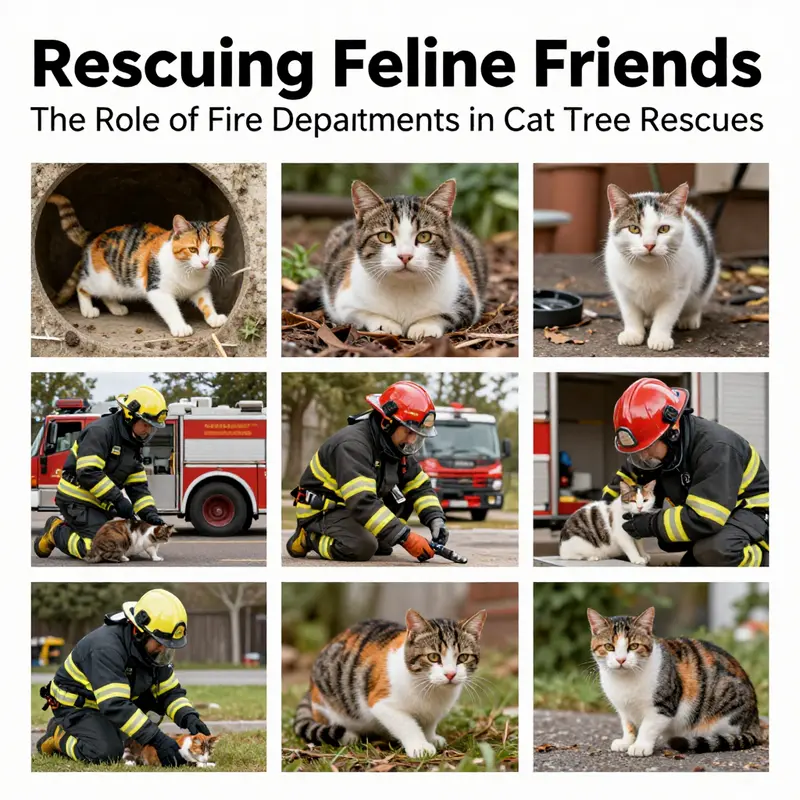
The bond between humans and their pets, particularly cats, is deeply woven into the fabric of our daily lives. Cats’ curious natures often lead them to precarious situations, one of the most notorious being getting stuck in trees. In numerous communities, fire departments are called upon for assistance in these seemingly trivial yet potentially dangerous rescues. This article will explore case studies that highlight successful cat rescues by fire departments, community perspectives on this service, the specific roles fire departments play in animal rescues—particularly regarding cats in trees—and the legal and resource considerations they must navigate. Together, these chapters will provide a comprehensive overview of how fire departments contribute to animal welfare and community safety, reinforcing the notion that while they are tasked with life-threatening emergencies, rescuing cats is also an essential aspect of their community service role.
Climbing to Care: Case Studies and Consequences of Fire Department Cat Rescues from Trees
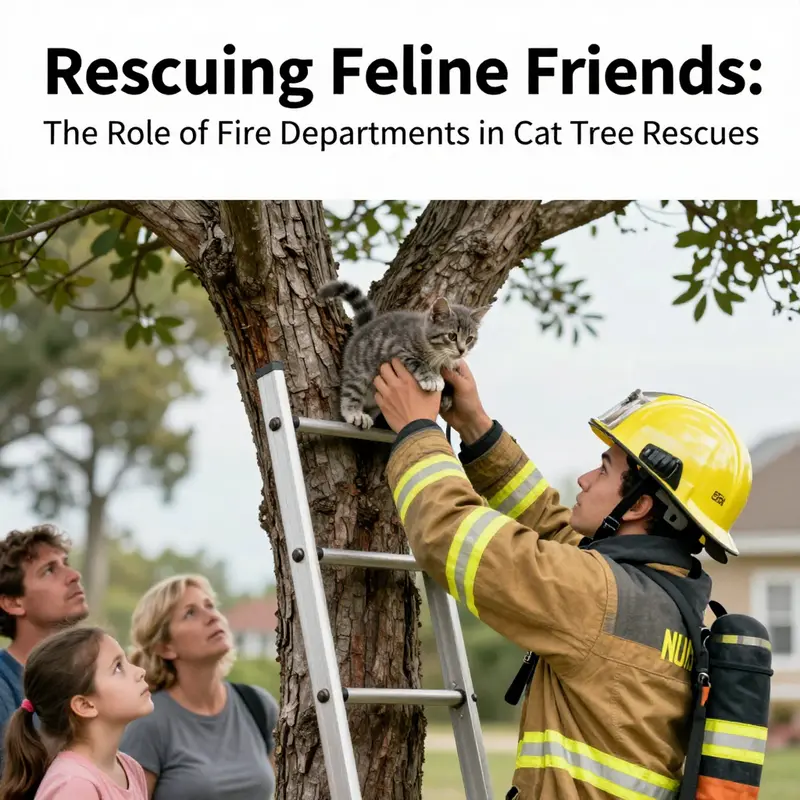
Cats stranded in trees are not rare events, and they rarely present as emergencies in the same way a burning building does. Yet the moment the branch sways with a frightened paws or the wind creaks a limb, a chain of responses begins. Fire departments, trained in high angle rescue, rope systems, and crowd management, are often the first public safety responders to step in when a tree becomes a trap rather than a perch. The situation tests more than strength and reach; it tests judgment, patience, and a commitment to safety that extends beyond the animal and into the human sphere around it. Across regions, the rationale for these rescues rests on a simple premise: the equipment exists, the training is current, and the risk of a humane outcome outweighs the cost of a failed attempt. In practice, this means a careful balance between hastening relief for a frightened cat and ensuring the safety of everyone nearby, including onlookers who may be emotionally invested in the animal’s welfare.
Consider a trio of documented rescues that illuminate how such cases unfold in real life, underlining the shared methods that endure across cities and climates. In the United States, a 2023 incident in San Jose centered on a cat named Oli that had climbed a tall pine to a height of about 15 meters. The animal was scared and uncooperative, and the owner stood at the base watching through a mix of worry and resolve. Firefighters approached with an aerial platform and a purpose-built cat carrier, using a steady, methodical sequence that blended reassurance with technical precision. The operation stretched for nearly two hours, a timeframe that might feel long in a living room but is often the right tempo when working with a skittish animal suspended above a crowd. The event drew media attention, not as a dramatic spectacle but as a testament to professional composure under pressure. What stood out was not merely the extraction itself but the way crews communicated with Oli, offering gentle sounds, slow movements, and a plan that minimized the animal’s exposure to new stimuli.
In London, a 2022 rescue brought a different climate into view, both literally and emotionally. Pepper, a black cat, had climbed to roughly 10 meters up an oak in a southern London park. The London Fire Brigade employed high access gear to reach the cat, then used a soft net and food to coax Pepper into a capture device. The entire procedure took less than 40 minutes, and Pepper descended unharmed. The emphasis here was on nonconfrontational engagement: slow approach, the careful use of a net, and the leverage of comforting cues so the cat would relax enough to rejoin the world below. The news that followed highlighted not only the success of the rescue but the public trust these professionals have earned. In both spaces—San Jose and London—the core elements were consistency of technique, an environment of calm, and a willingness to adapt to the cat’s behavior rather than forcing a quick finish.
Further south and to the south hemisphere, Melbourne in 2024 offered another lens on how these rescues can unfold in ecologically sensitive areas. A kitten found itself trapped in a dense eucalyptus canopy, the branches rimmed with the sorts of angles that require more nuance than a straight line ascent. Firefighters here used a rope rig and a lightweight吊篮 to extract the animal. The setting also called for an extra layer of care: the rescue occurred within a wildlife protection zone, so teams had to avoid disturbing other animals and preserve the broader ecological balance around the tree. Each of these cases reveals a common thread: the priority is safety and humane treatment, not speed alone. The cat’s survival, the crew’s safety, and the welfare of bystanders all ride on a measured, deliberate approach.
These snapshots embody more than procedural success. They reveal a field of practice that has evolved with broader shifts in public safety. Modern departments often emphasize not just the mechanics of reach and climb but the softer skills that make a rescue humane. The best teams prepare to improvise within a framework, knowing when to persevere, when to reassess, and when to call for a change in tactic. They understand that a tree can be a source of fear for a cat and a site of risk for people on the ground. Calm voices, familiar routines, and predictable tempo help the animal to reorient itself and become receptive to human aid. The balance between technical action and compassionate handling is not incidental; it is the heartbeat of these rescues.
This balance is not achieved by accident. It rests on ongoing training that crosses discipline lines—high angle rope work, animal behavior understanding, and crowd management. Firefighters learn to read a cat’s body language as carefully as they study a knot or a ladder angle. A tail flick can signal a shift in mood as surely as a gust of wind can threaten balance. In practice, crews often begin with an assessment from the ground, listening for audible cues in the animal’s movement and watching the tree’s architecture for potential hazards. If the situation appears manageable, they proceed with a controlled ascent. If not, they reframe the objective, perhaps choosing to wait for a calmer moment or to request additional equipment. The repeated success in these rescues demonstrates the value of patience as a technical asset, not a soft virtue.
The public dimension of these rescues cannot be overlooked. People watch with a blend of concern and curiosity, and the sight of professionals coaxing a frightened animal down from a height often strengthens public confidence in emergency services. Yet behind the sentiment lies a sober calculus: wasting time or forcing a down climb can endanger both the animal and the responders. Many departments remind the public that while pets are loved, professional help can be the safest option when a tree-line standoff could escalate into injury. This advisory stance helps situate animal rescue within the broader mission of public safety, linking domestic animal welfare to the safety of the community at large. And as the practice evolves, departments increasingly position such rescues as opportunities to demonstrate skill, empathy, and careful judgment in action rather than as a sideline service.
From a strategic perspective, the cases also highlight how equipment and technique influence outcomes. Elevating platforms, rotor-rotor technology, and specially designed containment devices are not mere toys of display but essential tools that can determine whether a frightened animal is coaxed to safety in minutes or hours. The equipment choices reflect a broader philosophy: rescue is not about conquering the tree but guiding the animal toward release with as little disruption as possible. In the Melbourne scenario, for example, the decision to use a lightweight吊篮 and a rope system aligned with conservation considerations. In urban environments like London, speed and gentleness sometimes converge through the use of aerial ladders and soft capture nets that minimize trauma. Each scene offers a compact study in how context shapes practice, and how universal principles—patience, safety, humane handling—translate across borders and species.
The narrative surrounding these rescues also intersects with a growing discourse about professionalization in public safety. The perception that fire departments should shuttle only fire-related emergencies is increasingly tempered by recognition that emergency services operate on a spectrum of risk and need. Rescues of domestic animals, though non-threatening to the public in most cases, nonetheless carry real stakes. A misstep can escalate into a dangerous fall, a misread of animal fear can trigger a retreat that leaves the animal stranded, and crowd pressure can complicate the operation. The strongest responders treat this spectrum as an opportunity to apply disciplined problem solving to a non-malevolent problem. They show that expertise does not degrade when the subject is a cat; rather, it expands to include listening, patience, and an awareness of animal welfare that complements the physics of climbing and lowering. In this sense, these cat rescues become case studies in how emergency services adapt to evolving expectations from the communities they serve.
The conversation around who should handle such situations is also part of the wider public safety conversation, especially as cities explore the allocation of scarce resources. Some observers suggest animal welfare groups should carry the banner for non-emergency animal calls to avoid tying up responders on a nonfire incident. Yet the documented rescues reinforce a different view: trained teams with the right procedures can address animal welfare concerns without compromising broader emergency coverage. The careful, deliberate approach to these rescues can serve as a model for how public services diversify their portfolios while maintaining clear thresholds and safety nets. In the end, the animal’s welfare is not a separate issue from community safety; it is a dimension of it that draws on the same core values.
As these real-world examples accumulate, they also carry a practical invitation for communities. The presence of a rescue-ready fire service signals a readiness to respond to unexpected situations with steadiness and skill. It signals a culture of continuous improvement, a willingness to refine techniques, and a commitment to the animal and human lives involved. For readers following the larger arc of this article, these case studies illuminate how a clearly defined professional capability can extend into many forms of urgent need. They remind us that the work of a fire department is not framed solely by flames, smoke, or sirens, but by the ability to meet fear with competence, to convert height into safety, and to transform a moment of crisis into a restored sense of security for a frightened pet and a worried owner alike. The human-centered dimension—careful communication, calm tempo, and steady hands—remains the quiet engine driving every successful descent.
For those who want to explore the broader conversation about how the fire service continues to evolve in this arena, a related examination of the wider transformation of fire services offers additional perspective on how these capabilities are being institutionalized and expanded. See the discussion at Innovation Museum Transforming Fire Services. Innovation Museum Transforming Fire Services.
External resources for continued reading emphasize both the consistency and variability of these cases. A widely cited example from London demonstrates rapid ascent and compassionate capture, reinforcing that the goal is not merely to retrieve the animal but to do so with minimal stress and no harm. For readers seeking a concise professional account, the external link provides a clear, documented narrative of a cat rescue from a tree in 2022. For deeper regional context and further case studies, the classic London example remains a touchstone for comparing practices across geographies. External reading: https://www.london-fire.gov.uk/news/2022/cat-rescue-from-tree/
Bridging Branches and Public Trust: Community Perspectives on Fire Department Cat Rescues from Trees
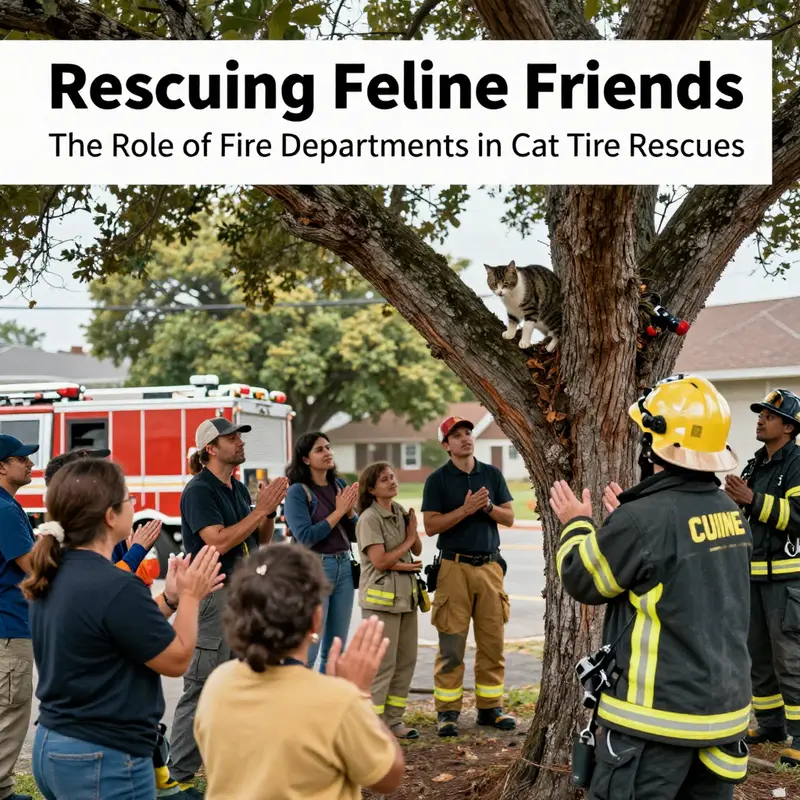
When a cat clambers up a swaying branch and seems to vanish into a swath of leaves, a small drama unfolds not just in the tree, but in the public imagination. The question at the heart of this chapter—does the fire department rescue cats from trees?—arrives here as more than a procedural inquiry. It touches on trust, public safety, and the social fabric that links emergency responders to the people they serve. Across communities, people report a quick, often grateful, response when a pet or a stray is perched beyond reach. The scene is familiar: a caller, a dispatcher, and a crew that arrives with ladders, platforms, and a calm authority. In many regions, this is exactly how rescues unfold. The broader public narrative suggests that these actions are not frivolous uses of scarce resources, but integral expressions of public service and humane concern.
Public attitude toward cat rescues from trees tends to be affirmative and warm. People rarely question the need for help when a frightened animal is clearly unable to descend. Instead, they applaud the swift arrival of trained personnel who can reach a high perch without risking injury to the animal or to bystanders. In this sense, the public’s response is less about the animal itself and more about the reassurance that competent hands are available when danger or distress emerges. Observers often describe the wait as tense but hopeful, with cheers or applause becoming visible markers of relief once the cat is lowered. The social signal is strong: when a fire department answers a call about an improvised rescue, the community sees a visible act of care, not merely a technical exercise in ladder work.
The public record of recent rescues reinforces this sentiment. In Xiangyang, Hubei, December 2023, a prominently reported operation unfolded in front of an attentive crowd. Firefighters received an alarm and dispatched seven personnel and one fire truck. The team worked for more than an hour to recover a male cat that had become frightened and unable to come down on its own. They used a 15-meter ladder, a tool whose reach and steadiness can transform a precarious perch into a safe exit path for an anxious animal. The outcome was greeted with applause from onlookers and gratitude from the cat’s owner, who likely had endured a long vigil. This case embodies a pattern seen in multiple regions: organized, measured intervention that prioritizes animal welfare and human safety alike.
Similar rescues have been documented across different cities and provinces, each contributing to a shared public story. In Jinhua, Zhejiang; Neijiang, Sichuan; and Cihu, Hubei, residents witnessed firefighters executing careful retrievals from trees. In each instance, the sequence follows a familiar arc: a call, a rapid dispatch, a careful ascent, a controlled descent, and finally, a grateful reunion or relief. Even when the outcome includes a relieved owner or a restored sense of safety, the broader public response remains steady—a recognition that fire departments extend their mission beyond fires and disasters into everyday moments of need. This consensus helps illuminate why many communities insist on reporting these incidents promptly, trusting that trained professionals will assess the situation and intervene when safe to do so.
The most compelling public endorsement often rides on the notion that animal welfare and human safety are not competing priorities but two sides of the same public-interest coin. In this view, a rescue is not simply a rescue; it is a humane action that reduces the risk of injury to the animal, to the person who might try a risky ascent, and to bystanders who could be drawn into a dangerous situation. The social calculus here is straightforward: when a cat is stuck, time matters. Prolonged exposure to height, wind, or stress can lead to dehydration, further disorientation, or panicked movements that complicate the operation. The public’s emphasis on timely intervention mirrors the fire department’s own communications about safety and the cautious use of resources. Public-facing messages repeatedly stress that if any party is in danger or unable to descend, dial the emergency number. The shared message is clear: professional help exists because it is safer for all involved when someone trained handles high-altitude retrievals.
Yet the conversation is not without its critics. A minority perspective argues that animal rescues from trees could waste public resources or divert attention from more urgent emergencies. The most visible critique dates back to a 2013 Jiaxing incident, where some experts questioned the allocation of time and equipment for a cat rescue. In the longer arc, however, the mainstream view gains strength from two converging realities. First, many communities experience a steady stream of these calls as part of the public safety ecosystem. Second, the perceived value of compassionate action—especially when it is delivered by responders who are trained to manage risk—elevates the acceptability of such rescues. The dialogue around these rescues thus tends to favor a balanced approach: rescue actions must be proportionate to risk, executed with safety as a core priority, and guided by clear protocols that minimize the use of scarce resources when the situation allows. The more widely accepted stance is not that every tree-top cat needs rescue, but that when a life is at risk or a rescue is safe to perform, professional responders are best positioned to act.
The importance of timely intervention is not merely about the duration of the ascent. It is also about preventing extended exposure that could escalate problems for the animal and the community. In cases where a cat has been stranded for days or hours, the risk of starvation, dehydration, or a dramatic fall increases. Fire departments often communicate that people should not feel compelled to intervene in dangerous ways themselves. The emphasis on safety—both for humans and animals—guides the public toward calling for trained assistance rather than attempting risky ascents. This stance aligns with broader public-safety objectives and reinforces the legitimacy of animal rescues as part of emergency response, rather than as a specialized, isolated service.
The social resonance of these rescues also intersects with the idea of community-centered policing and services. Fire departments, in many locales, position themselves as not only responders to fires but guardians of everyday safety and well-being. This positioning helps explain why the public often views cat rescues as a natural extension of the department’s mission. When a cat is coaxed or guided down by a ladder, the act becomes a visible demonstration of care that transcends firefighting alone. It is a moment of social warmth, a practical demonstration that public services are attuned to the nuanced, day-to-day concerns of residents. In communities where such rescues are common, residents may feel a deeper sense of trust in local institutions and a stronger belief that those institutions see the public as more than a resource to be managed.
From the perspective of public communications, the way these rescues are framed matters. Fire departments and their public information channels often emphasize safety first, then welfare, then gratitude. The public cadence mirrors this order: a call is answered; a safe and careful ascent is made; the animal is brought to ground level; a moment of relief is shared; and finally, the community acknowledges the responders’ professional competence and humane concern. This communication pattern reinforces a collective value system that treats animal welfare as part of the safety web that holds a community together. It also reinforces the impression that the emergency services rely on cooperation with residents—calling early, avoiding risky attempts, and sharing in the outcome of a successful rescue.
The internal resonance of this ethos can be seen in broader discussions about community resilience and sustainable, humane public service. The spirit of public warmth and responsibility that undergirds cat rescues aligns with resources and conversations about community-building and health. For readers who want to explore how fire service culture translates into community well-being, a related discussion on sustainable, community-centered firehouse design and practice offers helpful context. The internal resource the-green-firehouse-creating-sustainable-spaces-for-community-and-health/ highlights how fire facilities can embody care, accessibility, and health-conscious approaches in everyday operations. This connection is not an abstract one. It reinforces the sense that rescues from trees are not isolated acts but components of a broader, relational approach to public safety that treats residents as partners in safeguarding life and well-being. the-green-firehouse-creating-sustainable-spaces-for-community-and-health/ invites readers to consider how institutions can design spaces, policies, and routines that reflect this ethos in daily practice.
The chapter’s evidence, while rooted in specific regional examples, points to a universal thread. When a cat is in distress and down a high branch, the public’s instinct is not to question the need for help but to hope for a precise, professional intervention. The rescue becomes more than a physical act; it becomes a social signal about the values that communities want to affirm. If a rescue unfolds safely, it validates a shared belief in competent, compassionate public service. If a rescue is unnecessary or poorly managed, it invites constructive critique about resource use and risk. But across the cases that have been documented and observed by communities around the world, the default outcome streams toward recognition of the fire department’s role in protecting life, reducing harm, and extending a hand to vulnerable animals in ways that reinforce communal trust and resilience.
In closing, the public perception of fire departments rescuing cats from trees is not a simple evaluation of a single skill set. It is a complex narrative about trust, safety, and humane action. It reveals a public that values quick, skilled, and sensitive response, especially when the risk to animals and people is minimized through professional intervention. It also acknowledges that animal welfare and human safety are not competing demands but overlapping responsibilities that public services shoulder together. While debates over resource allocation will continue in some quarters, the dominant public sentiment—supported by documented rescues and the human stories that accompany them—frames these incidents as meaningful expressions of public service and community care. The chapter thus contributes to a fuller understanding of how the fire department’s mission engages with everyday life, from the dramatic to the delicate, from the tree limb to the ground, where gratitude and trust are quietly rebuilt with every lowered cat.
External reference and further reading can be found in regional reports that document these rescues in real time, such as the Xiangyang incident described in contemporary coverage. See the Jingchu News Report: Xiangyang Firefighters Successfully Rescue Trapped Cat for a concrete example of the scenario described above: https://www.cnhubei.com/2023/1211/146854.shtml.
Above the Branches: Fire Department Cat Rescues as a Measure of Public Safety and Community Care
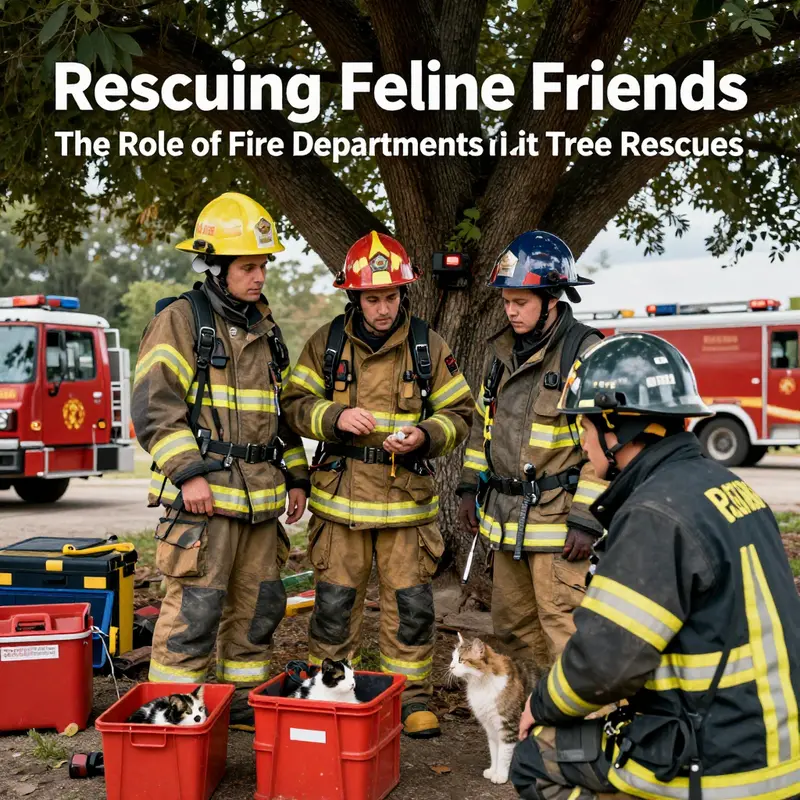
Across many neighborhoods, cats in trees are a familiar sight. People often worry about the cat’s safety and the potential danger to bystanders when a scene attracts curious onlookers. In those moments, the fire department often becomes the practical and trusted option. Their involvement is not simply a matter of tradition or routine; it rests on a deliberate balance of skill, technology, and public safety. Fire services bring to the table more than ladders and axes. They offer trained personnel who understand the psychology of a frightened animal, the physics of a stretchable branch or a slippery trunk, and the timing of a rescue that avoids panic rather than exacerbating it. The decision to respond is rarely a casual one; it is an assessment of risk for the animal, for people nearby, and for the responders themselves. In many communities, a cat in distress becomes a symbol of the broader commitment to protect all life, not just human life. This sense of duty matters because it shapes public trust. When residents see the fire service act with calm precision in something as seemingly small as a cat’s ascent, they begin to see these responders as guardians of the everyday, capable of handling both emergencies and the unexpected moments that test a neighborhood’s cohesion.
The mechanics of a cat rescue reveal why fire departments are called to these scenes with such frequency. Most operations rely on equipment designed for reach and stability: extendable ladders, aerial platforms, and harness systems that can secure a trembling animal without causing it to lash out. In an urban landscape, where a tree may loom above traffic or pedestrian crowds, the ability to deploy a calculated, low-stress approach becomes essential. The goal is not to perform a dramatic extraction but to restore normalcy as quickly and gently as possible. This is why responders often remain on the scene long enough to ensure that the cat is calm, the owner is reassured, and the area is cleared of hazards. The emphasis on safety extends to both humans and animals; a rescue plan that keeps paws on bark and paws on ground is a plan that reduces the risk of injury to all involved. In short, the rescue is less about spectacle and more about responsible public service, the kind of work that sustains community confidence in the people who wear the gear and answer calls when life feels most fragile.
The story of Bella, the 13-week-old kitten who climbed an 18-meter tree in Cambridgeshire, illustrates the blend of urgency and care that characterizes many rescues. Bella’s ascent created a moment of public alarm that could have escalated into a dangerous situation for the animal and the owner who sought to help. Firefighters did not rush a dramatic descent; they executed a measured plan that leveraged trained personnel and proper equipment. The outcome was not only Bella’s safety but the restoration of calm on the ground, with neighbors reassured that the responders could handle surprises that nature sometimes throws at a small, frightened creature. Bella’s case shows how a rescue becomes part of a larger narrative about community welfare, where the time spent on scene translates into reduced risk and greater social reassurance.
Across oceans and continents, similar patterns recur with local variations. In Hubei’s Xiangcheng District, a cat perched high in a tree for more than two hours was rescued after the owner’s attempts to coax it down failed. Firefighters deployed a 15-meter metal ladder and executed a careful retrieval that minimized stress for the animal. The emphasis on patience resonates with the broader philosophy of animal welfare that guides many modern fire services. In Dalian, teams responded to calls about stray cats on trees, bringing them down with ladders and practiced technique. In Zhongshan District, a cat remaining in a tree for an entire day prompted a response that prioritized the animal’s safety and the surrounding public’s well-being. Each incident adds to a body of practice that demonstrates how a city’s emergency services turn a potential moment of chaos into a controlled, humane outcome.
Important as those examples are, it would be incomplete to present the topic as a simple sequence of rescues. The broader debate about resource allocation and public expectations often surfaces in discussions about cat rescues. Critics argue that manipulating emergency resources for an animal might divert attention from more serious incidents. They point to research or commentary that suggests cats possess a level of agility that could reduce the severity of a fall from modest heights. Yet those arguments miss a key point. Public safety is not solely about potential injuries; it is also about perception and trust. When residents believe that serious, trained responders intervene to save animal life, they are more likely to trust the system as a whole. Fire services frequently frame these rescues as part of a larger mission to protect life and preserve property, arguing that public confidence depends on visible, compassionate actions in moments of distress. The point is not zeal for saving every creature at any cost; it is commitment to safety, welfare, and community values that people carry into every other episode of the day.
The practice has also evolved with time and place. In Hong Kong, for instance, the rescue of animals during a large building fire revealed how sophisticated animal rescue can be when it becomes part of an integrated response. Firefighters used real-time video feeds from a pet owner’s smart devices and security cameras to locate nine cats, one dog, and one turtle trapped inside the burning structure. The operation was coordinated through a dedicated animal rescue channel, with veterinarians on standby providing immediate care, including oxygen therapy and CPR for animals suffering from smoke inhalation. This level of coordination demonstrates how modern fire departments adapt to protect all life, not just humans. It also highlights a shift toward more professional partnerships with veterinary services and animal welfare organizations, as well as the development of canine units and community outreach programs that extend resilience beyond the immediate danger of a single incident. The underlying message—that every life matters—reaches far beyond the immediate crisis and helps shape a culture of preparedness and care in the community.
To deepen those capabilities, some fire services have embraced innovations that extend animal rescue into a more comprehensive safety framework. The idea is not to replace animal welfare organizations but to complement them with a system that is ready to act when a rescue is clearly needed and when alternative methods fail. This trend toward integrated rescue work often involves partnerships with animal welfare groups, veterinarians, and the public health sector. It also includes training that emphasizes stress reduction for animals, safe handling techniques, and humane capture methods that minimize trauma. In some regions, the fire service has begun to articulate animal rescue as an essential component of public safety education, reinforcing the notion that protecting animal life helps safeguard human life by reducing crowding, noise, and confusion on scene. A useful reference for those curious about how these capabilities can unfold is the network resource that discusses how an Innovation Museum Transforming Fire Services frames ongoing changes in training, equipment, and interagency collaboration. This kind of resource helps communities understand that animal rescue is not an afterthought but a deliberate, evolving function of modern fire services.
The ethical conversation around resource allocation is not trivial. Critics may note that the value of a cat is not a substitute for the cost of emergency response elsewhere. Proponents counter that animal rescues can depend on public sentiment and the everyday trust that people place in responders. The reality is often a measured balance: the animal’s distress is weighed against the risk to bystanders, the possibility of reentry into a hazardous scene, and the potential for the animal to free itself with time. In practice, these judgments involve clear criteria for escalation. If a cat can safely descend or be coaxed by an owner or a trained animal handler, responders may avoid a ladder rescue. If the situation presents a risk to the animal or to people—such as a branch instability, busy roadways, or a frightened animal that may lunge—then a controlled, professional retrieval becomes warranted. The decision is rarely about whether to help but about when to intervene safely and efficiently.
A common thread through all these cases is the growing expectation that fire departments will respond when they are equipped to do so without compromising safety. This expectation is tied to a broader trend of treating residents and their animal companions as members of the same community fabric. Fire services have learned that a rescue from a tree is not a purely practical act; it is a public demonstration of care, expertise, and accountability. Communities notice when responders communicate clearly, manage risk, and complete a rescue with minimal disruption. The public sees these outcomes and internalizes a message about what their local fire department represents: readiness, responsibility, and a willingness to engage with even the most delicate challenges that life presents.
In the stride toward more sophisticated animal rescue operations, another dimension often appears—the role of the community and the owners themselves. When a cat climbs a tree, the owner’s response matters. Convincing a frightened animal to descend can require patience, calm voice, and sometimes the assistance of a familiar scent or treat. Owners who stay on the ground and cooperate with the responders can significantly ease the process. Yet there are moments when the owner’s attempts to retrieve the pet may jeopardize safety, either by encouraging dangerous climbing or by placing themselves at risk by climbing after the animal. In such moments, the presence of trained professionals provides a crucial safety net. The public safety model not only helps the animal but protects the people who want to help. It is a practical reminder that safety protocols are designed to reduce harm, even when the impulse is to act quickly to reunite a pet with its family.
The evolving picture of cat rescues also carries implications for how communities think about emotional bonds with animals. The stories of cat rescues, whether from Cambridgeshire’s tall tree, Xiangcheng District’s lengthy wait, or the urban drama of a Hong Kong building fire, reveal a shared cultural value: the desire to protect at all costs when possible. This value, while sometimes debated in resource terms, ultimately feeds a broader public trust in emergency services. People see responders not as distant professionals operating from a distance but as guardians who stand alongside residents in moments of fear and frustration. In this sense, the rescue of a cat from a tree becomes more than a single incident; it becomes a symbol of a community choosing care as a first principle in public life.
To keep pace with expectations and risks, fire services continue to adapt. The collaboration with veterinarians, the integration of canine units in some regions, and the adoption of real-time information streams during complex incidents all illustrate a modern approach to animal rescue. The underlying thread remains constant: when a cat or other animal is stuck, the primary aim is to minimize harm, safeguard bystanders, and preserve the integrity of the rescue operation. The case studies across multiple countries demonstrate that this is not a one-off courtesy; it is a coherent, practiced response that aligns with how contemporary emergency services define public safety. For readers who want to explore how these capabilities can be framed within a broader narrative of fire service evolution, the Innovation Museum Transforming Fire Services resource offers a concise lens into how training, equipment, and interagency collaboration shape today’s rescue work.
In closing, the question does not reduce to whether fire departments should rescue cats from trees. It is a question about how communities choose to value life and safety in everyday moments. The evidence from Cambridgeshire, Hubei, Dalian, Zhongshan, and Hong Kong shows a consistent pattern: when a rescue is feasible and safe, responders step in. They do so not out of whim but out of a professional ethic that places life—human and animal—at the center of public service. The result is a public square filled with quieter confidence, knowing that the branches above may be a challenge, but so long as the fire service is available and prepared, the canopy above a community remains a place where care meets competence. For those interested in deeper discussions of how modern fire services are transforming to meet evolving safety needs, the referenced resource on innovation in fire service design offers a compelling entry point to broader conversations about training and readiness.
External resource: https://www.scmp.com/news/hong-kong/society/article/3368579/firefighters-rescue-9-cats-dog-and-turtle-hong-kong-building-fire
When Climbing Becomes a Call: Navigating Laws, Resources, and Public Trust in Fire Department Cat Rescues
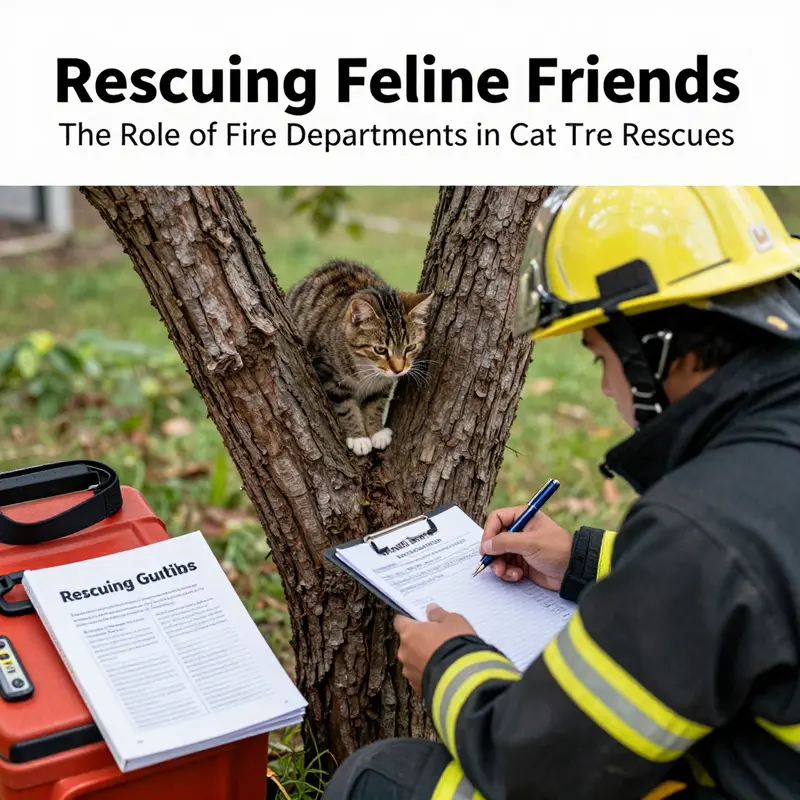
A cat perched high in a tree can become more than a momentary source of amusement for a neighborhood. It can become a touchstone for how a community understands safety, responsibility, and the reach of its emergency services. The acts of rescuing a feline from a branch or a trunk are small in scale, yet they sit squarely at the intersection of concern for animal welfare, public risk, and the practical limits of what a fire department can or should undertake. Across regions, the story repeats itself in slightly different dialects: a resident calling 911 or the local emergency number, a dispatcher weighing urgency, a crew arriving with a ladder or an aerial platform, and a team of firefighters balancing compassionate instincts with procedural rigor. The narratives vary—from a young kitten in Cambridgeshire who climbed an eighteen-meter tree and needed not only to be brought down but for the owner who climbed after it to be assisted back to ground— to a cat in Hubei that had waited for hours in a tree and required a carefully staged ascent and descent. What unites these episodes is a shared recognition that the safety of people and animals can be mutually reinforcing goals, but they require careful judgment and appropriate resources.
This chapter does not aim to adjudicate every outcome or to police the value of every rescue. Instead, it sketches how fire departments approach cat rescues as a genuine professional responsibility that sits within a broader calculus of duty, liability, resources, and public trust. The conversations about whether a rescue is warranted begin long before a cat’s paws touch bark. They start with the fundamental question of duty to rescue. In many jurisdictions, there is no blanket obligation to rescue a cat unless the animal’s life is in immediate danger or public safety is at risk. The moment a cat becomes an object of a routine call—rather than a crisis requiring urgent fire suppression or medical attention—engine companies and officers must decide if the situation meets a threshold of risk that justifies mobilizing specialized equipment. The decision-making process is not adversarial or punitive; it is a risk management exercise designed to prevent harm to the animal while preserving the department’s ability to respond to other emergencies. The careful calculus helps ensure that the fire service remains prepared for fires, medical emergencies, hazardous situations, and the unpredictable vagaries of real-world incidents. The same principle undergirds the emphasis that safety is a two-way street: it protects animals, but it also safeguards people who may be placed in danger by hastily pursued, low-precision rescues.
From a legal perspective, liability considerations loiter behind every dispatch. Fire departments are exposed to potential claims if a rescue is mishandled—whether through negligent scene control, misapplied equipment, or injuries to bystanders or firefighters. The bar for negligence is set not merely by the outcome but by the process: was the scene secured? were the procedures followed? was the equipment used in a manner consistent with training and established standards? These questions and the risk they expose the department to are not mere abstractions. They translate into policy, training, and decision trees that shape whether a crew is sent to a cat in a tree at all. In practice, departments rely on risk-based protocols to determine if the request is an urgent life-safety concern or a low-priority situation that might be more efficiently handled by animal control, private responders, or non-emergency channels. The aim is not to shrink compassion but to ensure that every action is tethered to a rational assessment of risk and responsibility.
Resource allocation sits at the heart of the operational debate surrounding cat rescues. Fire departments are staffed and equipped for a spectrum of tasks: structural fires, medical emergencies, hazardous materials incidents, and complex technical rescues. When a call comes in about a cat, it triggers a cascade of considerations: Do we have personnel available without compromising readiness for higher-priority incidents? Can we deploy the ladder or aerial platform without diverting essential resources from an ongoing incident? How long will the rescue take, and what is the opportunity cost of using a specialized unit for a non-life-threatening scenario? These questions are not abstract budgetary fears; they reflect the real impact of resource allocation on the community’s overall safety. In smaller departments, the calculus becomes even tighter. Some agencies have implemented policies to discourage non-emergency calls, or to require residents to attempt safer, less resource-intensive means first. The possibility of charging for non-emergency cat rescues has surfaced in a few jurisdictions, reflecting a push to align public expectations with the realities of limited resources. The practical discipline here is simple in theory but intricate in application: protect lives, protect property, and protect the department’s ability to respond to the next call.
Beyond the technicalities of gear and gears, the public’s perception of the fire service shapes these rescues as well. When people hear that firefighters have climbed a tree to save a pet, they often feel a surge of gratitude and relief. Yet this outpouring can strain trust if the public perceives a misuse of scarce resources. Conversely, that same public may support a robust education effort that helps pet owners prevent collapses into the kind of situation that requires a ladder but provides no real danger to life. Many departments acknowledge this balance and have pivoted toward outreach that integrates practical guidance with demonstrations of their core mission. This is where the concept of public education—teaching people how to prevent animals from climbing trees, what to do if an animal does climb, and when to seek professional help—emerges as a central pillar of community safety. These educational initiatives are not mere add-ons; they can reduce unnecessary calls, preserve resources for critical emergencies, and strengthen the community’s understanding of the fire service’s obligations and limits.
The operational reality of rescuing cats from trees is not merely about reaching a branch with a ladder. It is about a staged, measured approach to safety that respects the animal’s welfare while guarding the safety of firefighters and bystanders. Firefighters are trained to approach animal rescues with the same discipline that governs other technical rescues. A typical rescue involves securing the scene, evaluating the animal’s position and behavior, and choosing the safest method to bring the animal to ground level. In some scenarios, the cat may be coaxed down with calm presence, food, and a quiet, patient approach. In others, a controlled ascent using an appropriate ladder system is necessary. In rare cases, more complex techniques or additional equipment might be required, especially if the cat is perched in a location that complicates descent. Each option is weighed against the animal’s distress level, the risk to the animal itself, the potential for injury to bystanders, and the likelihood that a quicker, simpler solution could be found through non-emergency channels. The aim is to resolve the incident with the least possible risk and the greatest likelihood of a gentle outcome for the cat, while not compromising public safety or the department’s readiness for the next call.
The emotional and ethical dimensions of these rescues also matter. Pets occupy a special place in many households, and their welfare elicits powerful public empathy. A well-handled rescue can reinforce trust in the fire service as a compassionate, responsive public institution. At the same time, a poorly managed rescue can invite criticism that resources were being used for a non-emergency task. This tension has pushed many departments to articulate clearer guidelines and to emphasize education alongside response. Some jurisdictions partner with animal control or private animal welfare organizations to provide a pathway for non-emergency rescues, thereby preserving the capacity of the fire service to respond to more urgent crises while ensuring the animal’s welfare is not neglected. In this regard, the work resembles a broader governance challenge faced by emergency services elsewhere: how to balance a duty to help with the practical limitations that shape daily operations. The discipline required here is not merely procedural; it is a reflection of how a community values safety, empathy, and responsible stewardship of public resources.
As technology and leadership thinking shape modern fire services, several threads become more visible. Tools that improve communication, risk assessment, and response coordination can make rescues safer and more efficient. Data collection about incidents, response times, and outcomes informs better decision-making and helps justify resource use in a manner that the public can understand. The way leaders frame and communicate these decisions matters as well. Leaders who emphasize evidence-based practices, transparent criteria for calls, and consistent training for animal rescues help ensure that each intervention is grounded in safety and accountability. For a broader look at how technology reshapes leadership in fire services, readers may explore discussions about how digital tools, analytics, and training platforms influence decision-making and ethical considerations in the field. Impact of technology on fire department leadership offers a lens into how modern departments balance compassion with discipline and how public expectations are met by disciplined, informed leadership.
Ultimately, cat rescues from trees illuminate the friction and the harmony between public service, legal frameworks, and resource stewardship. They remind us that the fire department, at its best, is not a limitless rescue force but a well-governed community resource. The decisions surrounding these rescues—whether to deploy a ladder or to guide a cat down slowly, whether to paperwork a fee or to offer neighborly assistance—are microcosms of a larger social contract. They reflect how a community prioritizes safety, animal welfare, and fiscal responsibility, and how it negotiates the delicate line between performing a cherished ritual of care and preserving readiness for the more acute demands of public safety. For those who seek a practical anchor, the National Fire Protection Association (NFPA) standards provide a framework of guidelines and recommendations that help fire departments across jurisdictions calibrate their responses to non-emergency rescues while maintaining the ability to deliver essential services when lives and property are at stake. https://www.nfpa.org
Final thoughts
The vital role fire departments play in rescuing cats from trees is a testament to their broader commitment to community safety and welfare. While opinions may vary on the appropriateness of involving emergency services in what some may view as trivial rescues, the documented cases and community responses affirm the significance of these interventions. Fire departments are not just first responders to human emergencies; they also step in to ensure our beloved pets are safe and secure. Encouraging responsible pet ownership, community awareness, and understanding of available resources can further enhance the relationship between fire departments and the communities they serve. In celebrating these heroic acts, we acknowledge the indispensable role firefighters play in not only protecting human life but also safeguarding innocent animals. It is essential for communities to recognize and support the indispensable services offered by their fire departments, fostering a stronger bond between public service and animal welfare.