
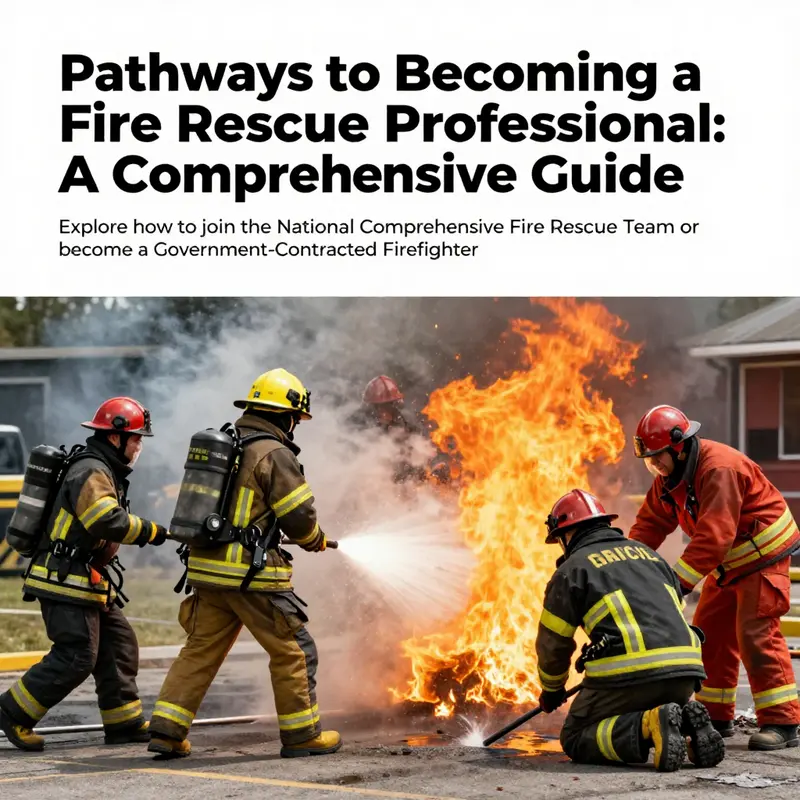
Firefighting is a noble profession that embodies courage and resilience, helping to protect lives and properties during emergencies. In China, aspiring firefighters can pursue varying pathways, each with its own set of requirements and offerings. This article provides a detailed exploration of how to become a member of the National Comprehensive Fire Rescue Team, a Government-Contracted Firefighter, and details on advancing within the ranks. Furthermore, you’ll uncover essential steps to prepare for a career in fire rescue in 2026. By understanding these pathways and preparation strategies, individuals in the community, educators, and current emergency personnel can make informed decisions that lead to a rewarding firefighting career.
Ascending to Civil Service Firefighting in China: Navigating the National Comprehensive Fire Rescue Team
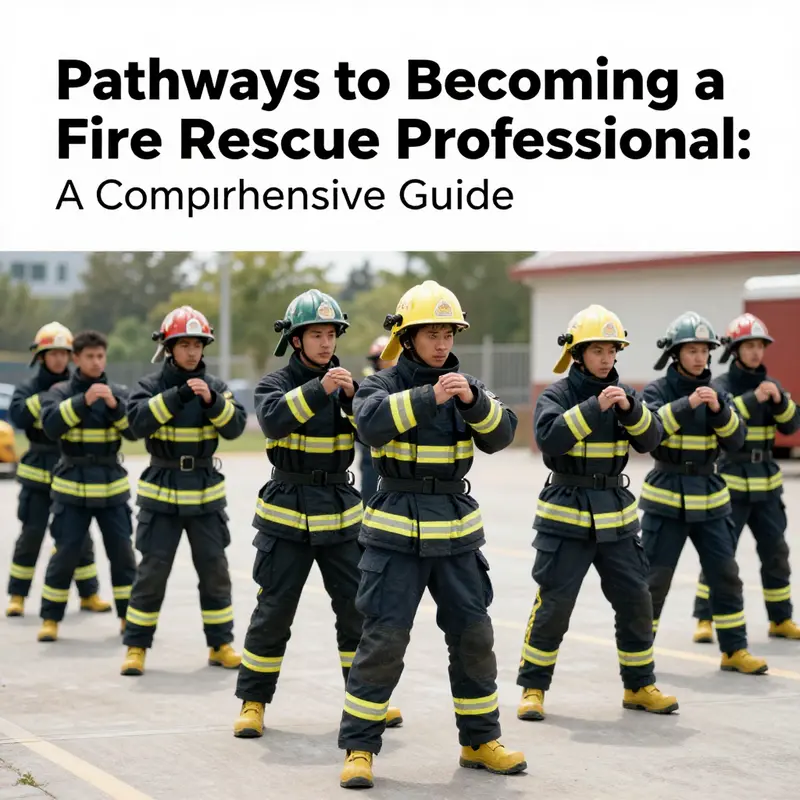
Joining the National Comprehensive Fire Rescue Team is a prestigious route within China’s fire protection system, reserved for individuals who aspire to long-term civil service status. This chapter outlines the key steps, eligibility criteria, and preparation strategies for candidates aiming to enter the national cadre of firefighters.
Eligibility and qualifications: Citizenship must be Chinese; age typically ranges from 18 to 22, with extensions up to 24 for some college graduates, up to 28 in exceptional cases with ministerial approval; education requires at least a high school diploma; health and physical standards must meet the Firefighter Recruitment Physical Examination Standards; political qualifications require ideological alignment with the leadership and the socialist system; a clean criminal record and good moral character are required.
Recruitment targets and timing: The national team seeks college graduates from regular universities, veterans from the PLA or Armed Police, and socially trained youth. The recruitment cycle is often announced in mid-year through an official platform; candidates must prepare and monitor the application site for windows and documents (ID, graduation certificates, military discharge papers if any, and background checks).
Application and assessment: The process begins with online submission, followed by a rigorous physical fitness test, which may include load-bearing tasks, running, climbing, and endurance elements while wearing protective gear. A position suitability assessment tests decision-making, risk management, and teamwork; psychological testing evaluates resilience and emotional stability. Interviews explore motivation and leadership potential; a political review checks alignment with national values; final enrollment occurs after public notice.
Benefits and career progression: Civil service status brings competitive salaries, comprehensive social insurance, housing support, healthcare, pension, and work-related protections. Training and advancement opportunities exist through officer recruitment for current government-contracted personnel or through educational pathways offered by institutions such as the Fire Rescue Academy, with ranks tied to educational attainment.
Pathway 2 Unlocked: Navigating the Government-Contracted Firefighter Path in China’s Public Safety System

When you see the term government-contracted firefighter, think of a pathway that blends practical firefighting work with the security of a formal labor contract. In China, this route offers a sturdy bridge into public safety without the formal civil service status of the national fire rescue corps. It is a path many aspiring firefighters in regions like Xīnbā’ěr Hǔ Yòu Qí consider because it promises steady work, meaningful benefits, and a direct service to the local community. The recruitment notices you encounter will emphasize a set of core qualifications and a structured process, but they also reflect a broader evolution of how fire services recruit, train, and deploy personnel in a rapidly changing environment. As you read the landscape, you can imagine a career shaped by discipline, physical readiness, community duty, and the daily realities of field response. The journey here is not merely a test of strength; it is a test of reliability, ethics, and commitment to public safety.
Eligibility for this pathway is precise and regionally anchored. At the most basic level, candidates must be male citizens of the People’s Republic of China. This gendered criterion is a carryover from specific regional recruitment practices that prioritize certain demographic profiles, even as the broader fire service increasingly emphasizes merit and capability. Beyond gender and nationality, the candidate must demonstrate political and ethical alignment with national laws and regulations, uphold party leadership, and promote social harmony. The frame is not punitive but prescriptive: the role requires someone who can carry out duties with integrity, serve as a reliable public servant, and contribute to a collective mission of safety. Physical and mental health is non-negotiable. Applicants must possess normal physical conditioning and psychological resilience suitable for high-stress, physically demanding tasks that arise in emergencies. The standards are designed to ensure you can endure long shifts, operate under pressure, and recover quickly from demanding operations.
Age is a practical compass for this pathway. The general window sits between 18 and 35 years old, with variations that can favor different profiles. In some notice periods, especially for regions with specific needs or veteran pools, the age ceiling may shift to accommodate experienced professionals or graduates with specialized credentials. An important detail is the residency requirement. For New Barag Right Banner and similar jurisdictions, you must be a registered resident of Xīnbā’ěr Hǔ Yòu Qí. This criterion helps ensure that you are integrated into the local safety network, familiar with the terrain, and available for deployment within the community you would serve. Education must meet a baseline standard: at least a college diploma or higher from a recognized institution. This educational anchor supports roles that involve not only physical tasks but also planning, coordination, and adherence to procedural standards. A background free of serious criminal issues is required, aligning with the expectation that firefighting personnel model responsibility and trust within the public sphere.
Within the pool of eligible candidates, certain qualifications are prioritized. Previous service in related fields holds significant weight. Former members of the National Comprehensive Fire Rescue Team are given priority, provided they were not dismissed or expelled. Additional advantages go to graduates with full-time associate or bachelor’s degrees, to veterans, and to applicants with more than two years of actual firefighting experience. Another favored credential is a B2 or higher driver’s license, especially when paired with the ability to operate specialized vehicles. These preferences reflect the multifaceted demands of modern fire response: the ability to drive diverse apparatus, coordinate with teams, and manage complex on-scene tasks under varying conditions. The recruitment notices also spell out disqualifications with equal clarity. Individuals with prior criminal convictions, party membership issues, or current investigations are barred. Those who are in ongoing education, active-duty military, or under disciplinary action are likewise excluded. The rules underscore a broader principle: the hiring process seeks candidates who are ready to commit long-term to a structured public service career and who can be trusted to uphold the obligations that come with emergency response.
The recruitment process itself unfolds as a sequence of carefully staged steps. After the recruitment announcement, applicants submit documents through official channels within a designated window. In practice, that window varies by region, but notice periods often include a narrow timeframe for online application, preliminary screening, and document verification. The physical fitness test remains a central hurdle. It assesses endurance, strength, agility, and coordination through tasks that mimic real firefighting demands—tests that go beyond simple cardio to reveal how you pace yourself, how you manage fatigue, and how you perform under pressure. A medical examination follows, confirming that you meet the health standards and can safely operate heavy equipment, work in hazardous environments, and endure extended shifts. A political review examines alignment with national standards of integrity and reliability, signaling that public safety work demands transparency and trust at every level. A background check, often inclusive of family considerations, rounds out the screening, ensuring the candidate’s history supports a stable, responsible role within the public safety framework. Finally, successful candidates are publicly announced and offered an employment contract, marking the formal entry into service.
Once the contract is signed, the practical realities begin: a structured orientation, on-the-job training, and ongoing professional development. The financial picture for government-contracted firefighters is solid and straightforward. The monthly salary typically starts around ¥5,000, complemented by a package often described as five insurances and one housing fund. Workers receive free lodging and meals, uniforms, periodic medical exams, and paid leave that roughly equals eight days each month when expressed in terms of paid time off. These benefits create a stable living situation that supports long-term commitment, which is essential given the demanding nature of the job. The compensation is designed to reward reliability, skill, and continued service, with regular raises tied to length of service and performance. While the civil service track—National Comprehensive Fire Rescue Team—offers a different set of benefits and career tracks, the contracted route provides a credible and sustainable pathway to a meaningful firefighting career with a recognized public-service footing.
A chapter of progression exists within this pathway for those who aspire to move beyond frontline duty. Special recruitment programs allow experienced government-contracted firefighters to transition into officer roles. The criteria typically require at least two years of firefighting experience, a bachelor’s degree or higher, and success across a multi-faceted assessment that combines a public administration written test, an essay, a practical skills evaluation, and a rigorous interview. The final score allocation—50 percent from the written exam, 35 percent from the interview, and 15 percent from practical skill—reflects the balance between knowledge, judgment, and hands-on capability. If approved, officers undergo six months of targeted training to prepare for leadership roles. This pathway illustrates how a mid-career firefighter can ascend into management, policy implementation, and strategic planning within the fire service, blending operational know-how with administrative acumen.
Education can also broaden horizons within the same field. The China Fire Rescue Academy and related pathways offer routes to higher ranks through formal education, including opportunities to pursue degrees via the national college entrance exam or through special recruitment streams. Graduates flow into ranks such as Fourth-level Commander for associate degrees, Third-level Commander for bachelor’s degrees, and First-level Commander for advanced credentials. This progression underscores a central theme: the fire service rewards knowledge and leadership as much as it does physical prowess. It is a career where study and service reinforce each other, enabling you to shape not only your own future but also the standards and response capabilities of the department you join.
Preparing for this pathway in 2026 requires strategic thinking and disciplined preparation. Start by verifying eligibility: confirm age windows, education level, residency status, and health. Gather essential documents early—ID, graduation certificates, discharge papers if applicable, and a clean criminal record certificate. Build up your physical conditioning with a practical regimen that combines endurance, strength, and mobility: interval running, stair climbs, push-ups, pull-ups, and functional drills that simulate on-scene tasks. Keep a detailed training log and seek feedback from mentors or trainers who understand firefighting requirements. As you approach the recruitment cycle, maintain vigilance for regional notices—some jurisdictions publish updates on official channels and social media accounts; in the case of the New Barag Right Banner recruitment, the notice dates and application windows are pivotal. For the 2026 cycle, the recruitment window across some districts has targeted late January, but always verify local timelines through official notices.
An important aspect of navigating this path is understanding the regional context and the local fire department’s expectations. For New Barag Right Banner specifically, the official site provides the most precise instructions, forms, and deadlines. The recruitment notice, eligibility criteria, and required documentation are all published in government channels and mirrored on local administrative portals. To stay aligned with these requirements, it helps to monitor a few reliable sources and engage with civil service offices early to clarify any region-specific nuances. In this sense, the journey resembles a carefully choreographed process where timing, accuracy, and transparency are essential. The broader transformation of fire services, including shifts toward more health-conscious and efficiency-driven station design and operations, is shaping how new recruits perceive their careers. This evolution—emphasizing safer work environments, evidence-based practices, and continuous learning—offers a more sustainable path for individuals who commit to public safety over many years. For readers curious about these broader changes, a focused exploration of modernization in fire stations highlights how the job is changing. Transforming Fire Stations: A Health-Conscious Revolution provides a sense of how facilities and culture evolve to support the people who wear the badge every day.
As you consider applying, the practical steps remain clear. Review the notice thoroughly, prepare your documents, and understand the specific submission window. If you qualify, your path will move from application to fitness testing, to medical review, to political and background checks, and finally to an employment contract. Throughout this process, remember that the goal is to join an organization that values public service, teamwork, and resilience under pressure. The government-contracted route is not merely a job; it is a commitment to the safety of neighbors and the stewardship of community resources. It is a path that allows you to contribute meaningfully while building a foundation for future advancement, whether you pursue officer roles, higher education, or specialized assignments within the fire service.
For readers seeking a concise roadmap, consider this practical synthesis: ensure you meet the core eligibility criteria, especially the residency and age requirements; strengthen your credentials with relevant education and licenses; cultivate a robust physical and mental fitness regime; stay connected with the local fire department’s communications; and prepare a complete, accurate dossier for the recruitment window. In this framework, the contract is not a compromise but a platform offering stability, professional development, and a route into leadership within the fire service. The personal narrative of a government-contracted firefighter is one of steadiness, service, and growth—a story that begins with a single decision and unfolds through disciplined preparation, regional opportunities, and a commitment to public safety.
Internal link for further context on industry evolution: Transforming Fire Stations: A Health-Conscious Revolution.
External resource for the official recruitment framework and 2026 guidance: Official recruitment notice for 2026. https://xbehyq.gov.cn/
Advancing Your Career: How to Transition from Fire Rescue to Officer

The spark of ambition in a fire rescue professional rarely dims. It blazes when you stand at the end of a shift, watching the city quiet down after a siren raid, and you realize that leadership, not just courage, is what sustains a team in the long grind of emergency response. The arc from frontline firefighter to officer in the National Comprehensive Fire Rescue Team is not merely a step up in rank; it is a transition into a role that blends technical mastery, strategic thinking, and a steady moral compass. Since the reorganization in 2018, when the former People’s Armed Police Fire Forces were integrated under the Ministry of Emergency Management, the fire service in China has framed career paths with more clarity and higher expectations. The path toward officer status now rests on a combination of eligibility, demonstrated leadership, formal education, and a rigorous recruitment process that sits at the heart of the system’s pursuit of capable, resilient leaders who can guide teams through the most demanding emergencies.
To understand how to transition, it helps to start with the two broad routes that the system presently recognizes: a civil-service route into the National Comprehensive Fire Rescue Team as a career firefighter, and a government-contracted route that operates under labor contracts but can still lead to officer opportunities through competitive recruitment and targeted development. The civil-service track is often described as the formal administrative path, with public servant benefits and a fixed ladder of advancement, while the contracted route offers strong job security and professional growth within a local or regional framework. The difference matters because the eligibility thresholds, training pipelines, and promotion timelines reflect the objectives of the two streams. Yet both channels converge on a common denominator: the capacity to lead, to learn, and to uphold the safety and efficiency of operations when seconds count.
A first, essential checkpoint is recognizing your current status within the fire rescue system. If you are a career firefighter—hired through official recruitment and occupying a formal position—you have a defined track toward promotion. If you are a government-contracted firefighter, your path to officer hinges on whether your local government has established a formal officer recruitment pipeline for contracted personnel. This distinction is not merely bureaucratic; it shapes the kinds of qualifications you need, the competitive environment you will face, and the training pathways you must undertake. In either case, the aim remains the same: to accumulate the blend of experience, education, and demonstrated leadership that when evaluated against formal criteria, marks you as a suitable candidate for command roles.
The basic requirements for officer promotion form the backbone of the process. Citizenship is a non- negotiable baseline: you must be a citizen of the People’s Republic of China. Political qualifications matter as well; officers are expected to support the leadership of the Communist Party and the socialist system, reflecting the public service ethos that interweaves governance with public safety. Then comes the core triad: age, education, and health. Age windows are the most immediate practical gatekeepers. Traditionally, aspiring officers fall into the 18 to 24-year-old range, though there are relaxations and adjustments for those who bring additional qualifications. Graduates with higher education—such as an associate degree or above—may extend eligibility to 26. If specialized talents are needed urgently—think engineers, medical specialists, or individuals with unique technical skills—the window can extend, under certain conditions, to 28 for those born after a defined date. The policy architecture recognizes that broader skill sets and education enrich leadership capacity in modern fire-rescue operations.
Education is another decisive factor. A high school diploma or its equivalent is the minimum, but officer-level roles often demand more. For technical or command positions, or for those who carry the aspiration to oversee large-scale operations, a bachelor’s degree or higher is strongly preferred. The path toward officer duties frequently passes through formal training conduits such as the China Fire Rescue Academy or other sanctioned institutions, and many officers hold degrees that tie directly to emergency management, public administration, or engineering disciplines. The system also recognizes that education is not a one-off achievement. It is a continuing thread—one that is reinforced by ongoing professional development, certifications, and higher education opportunities supported by local governments through tuition reimbursement or scholarships.
Health and mental readiness are equally critical. Passing the Firefighter Recruitment Physical Examination Standards is a baseline checkpoint. The standards cover physical and visual requirements, scars and tattoos considerations, and overall health that must align with the demands of frontline work, often repeated in high adrenaline, high-stakes environments. The mental health assessments, including psychological testing, are designed to ensure resilience, emotional stability, and the capacity to function effectively under stress. The public-facing nature of the role—where leadership under pressure can affect entire crews and communities—means a robust mental framework is non-negotiable.
Beyond these basics lies the practical scaffolding of promotion: leadership demonstrated within the field, accumulation of relevant experience, and a track record of reliable performance. Officers are expected to shepherd teams through complex operations, mentor younger firefighters, and contribute to training and doctrine development. Demonstrating leadership is not a one-off action during a promotional cycle; it is a habit nurtured through initiative in training, the ability to coordinate resources during emergencies, and a willingness to take responsibility when plans go wrong. This is where the everyday life of a firefighter intersects with the broader ambitions of the fire service: to turn courage into capable action, to convert passion into disciplined performance, and to translate experience into guidance that protects communities.
The promotion pathway rewards a balance of practical experience and academic preparation. A common route into officer ranks is to continue developing within the system and then apply for officer positions through the formal recruitment process. This process is typically managed under the auspices of the Ministry of Emergency Management in conjunction with local fire rescue bureaus. It usually begins with an online application, followed by a qualification review, a rigorous physical fitness test, an assessment of position suitability, psychological testing, an interview, a political review, and finally a public enrollment notification for successful candidates. The sequence emphasizes not only physical readiness but also cognitive flexibility, communication skills, and a capacity to navigate the complexities of command under duress. The exact weights assigned to each component can vary by locality and cycle, but the overarching structure remains consistent: observe, qualify, prove, and ascend through merit.
An important strategic dimension for those who already hold a frontline role is the potential to leverage education and specialized training to enhance candidacy. Pursuing higher education is not merely a prestige exercise; it is a practical investment in leadership capability and technical proficiency. The system supports this through pathways such as the China Fire Rescue Academy, where graduates may receive ranks aligned to their education level—for example, fourth-level commander for associate degree holders, third-level commander for bachelor’s degree holders, and first-level commander for doctoral graduates. This framework invites firefighters to plan a long arc of study that aligns with their ambitions to guide, train, and lead.
There are also special career advancement avenues designed to unlock officer status for those already embedded in the system. One common route is the transition from a government-contracted firefighter to an officer through special recruitment. In these cases, candidates typically need at least two years of firefighting experience and a bachelor’s degree or higher. The recruitment process includes a written examination on public administration and related topics, a practical skills test, a rigorous interview, and a psychological assessment. The final score often calculates with a specific weighting—writing, interview, and practical examination combined to form a composite judgment. If approved, the officer-training phase lasts several months and blends classroom learning with applied leadership practice. This pathway acknowledges that many contracted personnel bring extensive field experience and practical know-how that, when coupled with formal education, makes them strong contenders for leadership roles.
For those who are already veterans or who have specialized credentials, additional considerations may apply. Some cities and regions have age relaxations for veterans or for drivers with appropriate licenses, recognizing the value such backgrounds bring to fire-rescue operations. These allowances reflect a broader policy objective: to tap diverse experiences and technical competencies that can improve response effectiveness in a variety of contexts. The reality, however, is that such relaxations are not uniform and depend on local rules and the needs of the service. If you are a veteran or hold a high-level professional designation, inquire directly with your local fire rescue bureau to understand whether any age or qualification relaxations are available in your jurisdiction.
The path from frontline service to officer status also involves strategic planning for continued professional development. Mid-career firefighters who want to position themselves for advancement should cultivate leadership opportunities within their units. This can include mentoring new recruits, organizing training drills, participating in incident command exercises, and contributing to the development of standard operating procedures. Demonstrating consistent performance, reliability under pressure, and a proactive approach to learning can yield strong references during the qualification review phase of officer recruitment.
A practical mindset for aspiring officers is to view advancement as a long-term project rather than a single test. It means mapping out a plan that integrates job performance with education, certifications, and experiences that showcase leadership and operational excellence. It also means staying closely connected to the official channels that announce recruitment cycles, eligibility criteria, and mandatory assessments. The official website for recruitment—where applications, deadlines, and tests are posted—remains the primary source for accurate, up-to-date information. In addition to national announcements, local fire rescue bureaus frequently publish their own recruitment notes, practice requirements, and timelines. Maintaining an organized portfolio of your accomplishments, medical clearance, training certificates, and letters of recommendation can significantly smooth the path when an officer position opens.
To illustrate the broader ecosystem, consider how progress in the fire service today is shaped by both tradition and innovation. The modernization of stations, the advancement of response protocols, and the targeting of specialized capabilities all feed into the growing demand for officers who can synthesize field experience with strategic leadership. A useful way to connect with this ongoing evolution is to engage with resources that bridge hands-on practice with organizational transformation. For instance, the concept of an Innovation Museum Transforming Fire Services provides a lens into how contemporary fire services think about change, not as a disruption, but as a structured opportunity to enhance readiness, learning, and resilience. This perspective can inspire a firefighter to pursue officer candidacy not just as a personal career move, but as a commitment to shaping the future of public safety. You can explore such progressive ideas through dedicated resources and programs that align with the service’s broader mission of protecting lives and property while elevating professional standards.
As you plan the next steps, keep in mind a simple, practical rhythm: assess eligibility, cultivate leadership and technical competencies, pursue relevant education, and engage with the recruitment system with clarity and consistency. The timing of cycles—often annual for civil-service routes and variable for contracted pathways—means preparation is best done well in advance. Start by confirming your age, education, and health status against the current eligibility framework. Build your fitness base for the physical tests, and seek opportunities to lead in drills, training, and small-scale incident responses. Document your achievements, seek feedback from supervisors, and pursue advanced certifications pertinent to emergency management or rescue operations. Over time, your cumulative record of leadership, learning, and service can carry you through the formal steps toward an officer role, enabling you to guide teams, shape training, and influence the strategic direction of your fire-rescue organization.
Ultimately, the journey from front-line firefighter to officer is a test of consistency, perseverance, and a capacity for growth that aligns with the evolving demands of public safety. It is a path that rewards those who treat knowledge as a core tool of leadership and service as a lifelong commitment. If you are serious about moving into an officer role, the core truth remains: preparation now, opportunities later. Monitor official recruitment cycles, invest in education, strengthen your leadership profile, and stay engaged with your unit’s strategic priorities. The trajectory you choose—civil service or contracted—will shape the specifics of your advancement, but the fundamental competencies of judgment under pressure, effective communication, and a steadfast ethic will travel with you along the way.
For readers seeking concrete steps and real-world alignment with policy updates, the official recruitment guidelines remain the best compass. They provide the authoritative criteria, the procedural cadence, and the performance expectations that define what it means to move from fire rescue to officer in today’s Chinese fire service. As you chart your own course, remember that every drill done well, every certification earned, and every responsible decision you take in the field adds up to a future where you can lead, protect, and inspire a crew when lives hang in the balance. The next chapter will explore specific case studies of officers who navigated these pathways, illustrating how theory translates into practice on the ground, in training, and during operations.
Internal resource reference: Innovation Museum Transforming Fire Services — a perspective on how modern fire services evolve and how leaders adapt to changing demands within the system. Innovation Museum Transforming Fire Services
External resource: for the most up-to-date official recruitment information and cycle timelines, consult the National Comprehensive Fire Rescue Team recruitment portal and related notices at https://www.12350.gov.cn/ .
null

null
Final thoughts
Pursuing a career in fire rescue in China opens the door to invaluable opportunities that can profoundly impact the community. By understanding the pathways to the National Comprehensive Fire Rescue Team and the Government-Contracted Firefighter roles, as well as opportunities for advancement and effective preparation steps, aspiring firefighters can position themselves for success. Each step taken toward becoming a fire rescue professional brings you closer to a rewarding career dedicated to public service and safety. Begin your journey today with knowledge and preparation that empowers your future.