
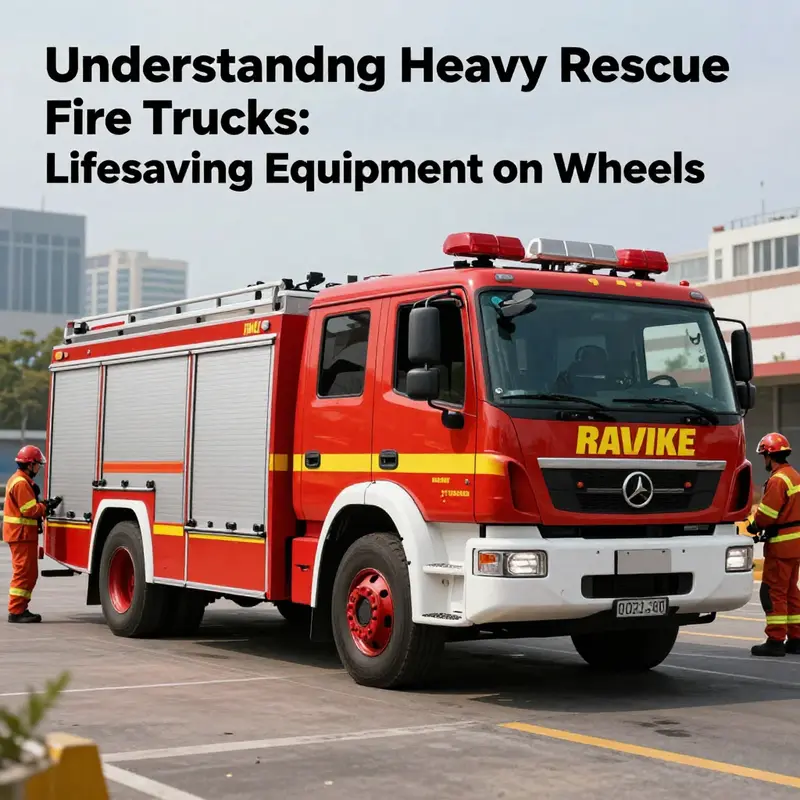
Heavy rescue fire trucks play a pivotal role in enhancing emergency response capabilities across urban landscapes. Designed primarily for technical rescue operations, these specialized vehicles are equipped with advanced tools that go far beyond traditional firefighting systems. As urban communities face increasingly complex emergencies—ranging from vehicle extrications to structural collapses—the demand for versatile emergency vehicles grows. This article delves into the multifaceted aspects of heavy rescue fire trucks, examining their functionality, the comprehensive equipment they carry, and their diverse applications in the rescue and emergency services landscape. Each chapter builds upon the last, providing a holistic understanding of how these critical vehicles provide essential support in mitigating crises.
null
null
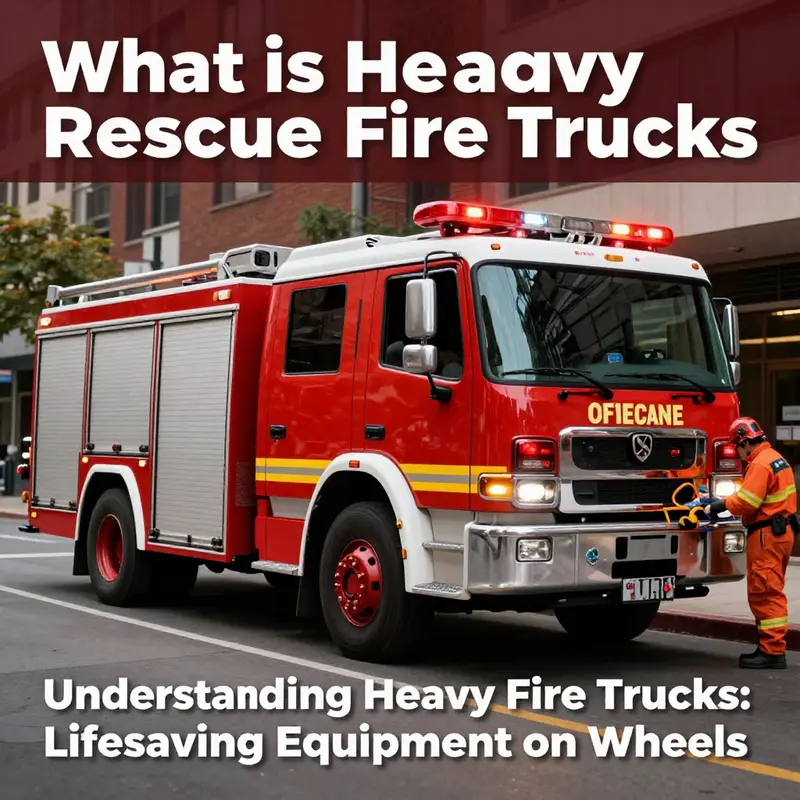
Heavy Rescue Fire Trucks: The Mobile Arsenal for Complex Emergencies
A heavy rescue fire truck is not simply a larger version of a standard engine; it is a purpose-built platform designed to mobilize a comprehensive toolkit in the most demanding situations. When fires flare in a warehouse, a vehicle crashes on a crowded urban street, or a building shifts into a dangerous posture after a collapse, responders rely on a vehicle that can shift from patient care to technical extraction with minimal delay. In many departments, these trucks bridge a crucial gap between rescue operations and firefighting, carrying modalities that safeguard lives while keeping pace with the evolving pace of urban emergencies. The concept centers on mobility, durability, and a robust complement of tools that work together to pry, cut, lift, stabilize, ventilate, illuminate, and coordinate—often all within a single incident command framework. The heavy rescue vehicle is designed to be this adaptable core, a mobile workshop on wheels that can be dispatched to the heart of danger and there, under the leadership of trained crews, transform chaos into controlled, life-saving action.
From the outset, the heavy rescue truck emphasizes purpose over prestige. Its chassis is deliberately heavy, built to bear substantial weight and endure harsh conditions. It sits high enough to traverse uneven terrain and rubble while offering a stable platform for delicate work. The weight capacity is not just about raw mass; it translates into endurance during drawn-out extrications, complex shoring tasks, and prolonged operations under smoke, dust, and heat. In urban settings where the likelihood of multi-casualty events and intricate entrapments is higher, this kind of apparatus becomes a critical multiplier for the entire response system. The vehicle’s fabric is reinforced to handle repeated exposure to vibration, impact, and the mounting of large tools and power sources. The roomy crew compartment and carefully organized stowage reflect a philosophy that speed matters, but not at the expense of safety or efficiency. A well-planned space for personnel, equipment, and debriefing ensure teams can operate cohesively at the edge of risk, where every minute saves another life.
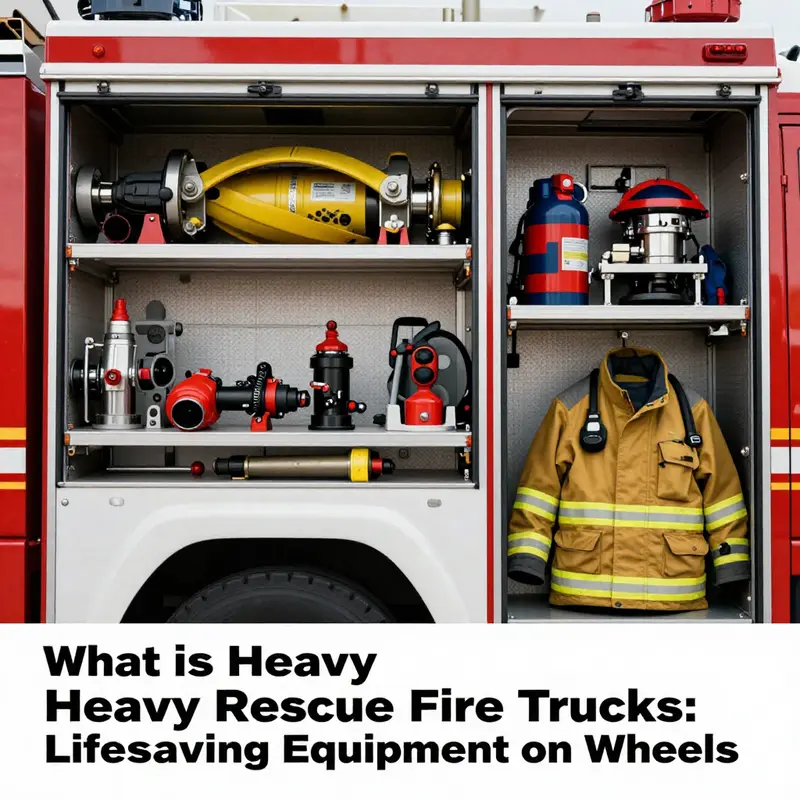
What makes heavy rescue trucks so indispensable is the blend of heavy capability with practical accessibility. The tools are potent, but their value is realized only when they are readily reachable and operable by trained crews. Hydraulic rescue tools—commonly known as the “Jaws of Life” in popular discourse—are at the heart of many rescue operations. Spreaders, cutters, and rams are designed to apply and release force with precision, creating the space needed to reach occupants without compromising structural integrity. Spreaders pry and sustain gaps, cutters sever through metal and other barriers, while rams push or pull to reposition debris or create egress routes. These tools are driven by high-pressure hydraulic systems that convert mechanical energy into enormous, controlled force. The elegance of hydraulic power lies in its ability to magnify human effort across a broad spectrum of materials and forms, from sheet metal in a crashed vehicle to reinforced concrete in a partial collapse. The operator must read the scene quickly, select the correct tool, and coordinate the motion with others on the scene—every action a carefully choreographed step toward safe extraction.
But a heavy rescue truck is more than a toolbox on wheels. It also carries a suite of supportive technologies that stabilize the environment, protect responders, and extend the reach of the operation. Airbags, for example, provide lift and stabilization for heavy objects without introducing the oscillations that might endanger trapped victims or responders. They can be deployed to gently lift, tilt, or hold pieces of a vehicle or debris in a position favorable to access. Winches add another layer of control; they pull objects away from a hazard, stabilize a vehicle on a slope, or assist in repositioning heavy loads that block a path to safety. Ventilation equipment solves a stubborn problem common to many rescues: smoke and hazardous fumes that obscure vision and complicate breathing. Advanced ventilation systems can move smoke, heat, and contaminated air away from the work zone, improving visibility for crews and reducing the physiological burden on occupants awaiting extraction.
Lighting is another defining facet of the heavy rescue mission. Prolonged operations demand robust illumination that reaches behind vehicles, into stairwells, and across uneven terrain. Heavy rescue trucks are outfitted with expansive lighting arrays and portable floodlights designed to withstand the field’s grime and weather. This capability is not merely about convenience; it directly affects safety. Clear illumination helps identify hazards, tracks movement, and supports precise tool placement. When the sun sinks or factors like fog and smoke reduce visibility, reliable lighting becomes as important as any cutting tool. In this ecosystem of gear, power is essential. Onboard generators ensure that lights, tools, and ventilation systems remain operational even when incident scenes are remote or off-grid. The engine may be loud and the work intense, but the ability to maintain power for critical devices reduces the likelihood of stalled operations and missed opportunities for rescue.
The equipment list would be incomplete without attention to the human element—the crews who assemble, deploy, and maneuver this arsenal under pressure. Heavy rescue trucks include a dedicated crew compartment that accommodates multiple responders with seating and secure storage for personal protective equipment and handheld devices. The design acknowledges that rescue work is not a solitary endeavor; it requires continuous communication, coordinated timing, and mutual trust. Radios, intercoms, and integrated communication systems connect the crew with incident command, other response units, and, when necessary, hospital teams. The ability to stay in close contact during fast-changing scenarios is not a luxury but a life-saving necessity, enabling synchronized actions such as coordinating an extraction path, relaying hazard information, and sharing medical priorities for occupants awaiting transport.
Alongside the rescue-specific gear, many heavy rescue platforms bring lightweight, modular firefighting capabilities. In some configurations, a limited firefighting function complements rescue tasks. This is not about replacing a dedicated engine company, but about providing a flexible response when the incident begins with a structural fire that quickly reveals a more complex rescue need. A small foam system or a compact water supply may be carried to address immediately evolving threats, such as fuel-fed fires encountered during vehicle extrication or rollover scenarios. The dual-use approach underscores the practical reality of urban emergencies: multi-hazard environments require responders to adapt, often with limited time for on-scene reconfiguration. The result is a vehicle that can pivot between life-saving extrication and fuel management, smoothing the transition from rescue to suppression without losing tempo.
The equipment and capabilities of heavy rescue trucks extend into the realm of specialized tools designed to tackle less common but high-consequence events. Structural collapse rescue demands shoring systems, cribbing, and stabilizing devices that can endure loads far beyond typical highway incidents. Confined space operations call for equipment that can reach into tight corridors, provide air, maintain monitoring, and enable safe extraction of occupants who cannot be reached by conventional means. In hazardous materials responses, responders rely on containment, detection devices, and containment kits to secure spills, monitor exposure, and protect rescuers as they work in potentially dangerous environments. Each of these functions requires careful planning, precise execution, and a dependable platform from which to operate. The heavy rescue truck, therefore, is not merely a set of tools, but a small, mobile command post that helps incident commanders maintain situational awareness, assign tasks, and adapt to evolving risk profiles.
To understand the breadth of capability, it helps to view the vehicle as a modular framework rather than a fixed lineup. The layout supports rapid reconfiguration for different incidents. Storage compartments are arranged to place the most frequently used tools in easy reach, while less commonly used devices are kept secure yet accessible. Crew members may rotate through roles during a long operation, with one person managing hydraulic controls, another overseeing stabilization, and a third coordinating ventilation and lighting. This division of labor is not arbitrary; it reflects decades of experience in aligning human factors with mechanical capabilities. When a scene demands rapid action, the truck’s design helps the team maintain focus on the evolving priorities: access, stabilization, protection, and patient care when possible on-site.
The equipment philosophy also informs training and maintenance. Because the tools operate in high-stress, high-risk contexts, responders must train regularly to maintain competence and confidence. Training emphasizes tool selection and operation, scene safety, and the sequencing of actions under pressure. Maintenance routines must account for hydraulic fluid integrity, battery health, generator performance, and the reliability of lighting and ventilation systems. In practical terms, this means that a heavy rescue truck is not a one-off solution but an ongoing investment in readiness. It requires a programmatic approach: regular equipment checks, scenario-based drills, and a culture that emphasizes teamwork and continuous improvement. In this sense, the vehicle’s value compounds over time, as crews sharpen their skills and the equipment evolves with new techniques and standards.
A key consideration in the broader ecosystem of emergency response is how heavy rescue trucks integrate with national standards and guidance. Standards bodies provide benchmarks for design, performance, and interoperability. This creates a shared language across jurisdictions, enabling responders to work together when incidents cross borders or involve mutual aid. The NFPA, in particular, has long served as a repository of best practices and design criteria for fire apparatus. While regional adaptations are common, these guidelines offer a framework that helps agencies compare capabilities, warrant maintenance, and justify investments in equipment and training. The result is a more predictable, robust response that can be scaled to fit the size and risk profile of a given municipality. For readers who want to explore these standards, the NFPA website is a reliable starting point for understanding the formal criteria that underlie heavy rescue apparatus and related equipment.
In practice, the heavy rescue truck is a capable, adaptable, and highly regarded member of the emergency response family. It binds engineering with operational tactics, creating a platform that can meet the demands of a modern urban landscape. Its tools are not abstract gadgets; they are instruments forged through countless real-world scenarios, refined by engineers and responders who have seen what happens when seconds matter and space is scarce. The vehicle embodies a philosophy of resilience: a heavy, durable chassis that can carry a heavy load without compromising maneuverability, a core set of hydraulic tools that can pry, cut, and lift in tight spaces, and a network of supportive systems that maintain continuity of operation under pressure. It is a testament to how modern rescue work blends mechanical ingenuity with the art of decision-making under uncertainty.
The topic of heavy rescue trucks also invites reflection on how regional practice shapes the equipment mix. In densely populated regions with aging infrastructure and a high incidence of vehicle collisions, there is a natural emphasis on rapid extrication and stabilization. In other areas facing industrial hazards, there may be greater attention to confined spaces and heavy lifting. The size and configuration of a department’s heavy rescue fleet can reflect budgetary realities, geographic challenges, and the types of incidents most often encountered. Yet the underlying principle remains the same: the vehicle must be a reliable, flexible, and well-supported platform that helps responders convert urgent danger into a controlled, survivable scenario. This is where partnerships between manufacturers, training institutions, and fire departments matter. A thoughtful procurement strategy considers not just price but durability, maintenance support, local repair capabilities, and the ability to adapt over time as technology and best practices evolve. The end result is a vehicle that remains relevant across generations of incident types, ready to act when the situation demands more than brute force and more than a single-purpose tool.
For readers seeking a practical, field-focused understanding of how heavy rescue trucks fit into the larger rescue ecosystem, consider how the concept translates in diverse environments. In developing contexts, where resources may be more constrained and the spectrum of emergencies broader, agencies often pursue adaptable solutions. A heavy rescue framework can be paired with modular, cost-effective configurations that emphasize core rescue capabilities while retaining the potential for incremental upgrades. Such an approach aligns with the idea that a vehicle’s value is measured not only by its tools but by its resilience, the speed with which it can be deployed, and its ability to support responders as they navigate the most perilous moments. In many cases, this mindset leads to partnerships that emphasize shared training, common maintenance protocols, and standardized interfaces that reduce the learning curve for new teams joining an operation.
This broader perspective helps explain why heavy rescue trucks continue to evolve. As urban environments change—new construction, changing traffic patterns, and evolving hazard profiles—the demand for versatile platforms grows. The instrument set expands, but the core aim remains constant: to bring life-saving capability to the scene as quickly and safely as possible. The vehicle is a catalyst for effective teamwork, enabling responders to coordinate with law enforcement, EMS, and hospital staff while remaining grounded in safety procedures and incident command. In that sense, the heavy rescue truck embodies a philosophy of preparedness—an enduring commitment to turning potential tragedy into recoverable outcomes through technical excellence and disciplined execution. To readers who want to delve deeper into the practical management of such fleets, a broader exploration of comprehensive customized fire trucks for developing countries meeting diverse rescue needs efficiently can offer useful context on how modular capabilities and thoughtful design choices scale across different settings. See the broader standards landscape for fire apparatus design and performance from the NFPA for a framework that informs ongoing development and practice: https://www.nfpa.org
Heavy Rescue in Action: Expanding the Reach of Emergency Response
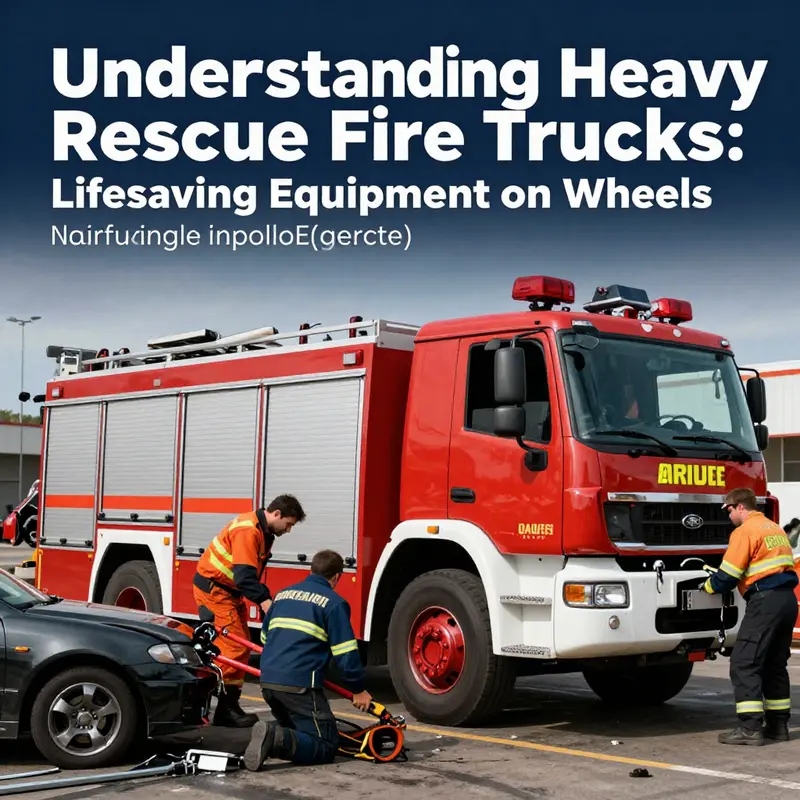
In the choreography of an emergency, the heavy rescue fire truck stands apart from standard engines. It brings tools, stabilization equipment, and access systems designed for technical rescue, collapse scenarios, and hazardous materials incidents. Built on a robust chassis with weight-bearing capacity and off-road ability, the vehicle can reach tight spaces, stabilize unstable debris, and support extraction while responders manage hazards. Its hydraulic tools, rams, and the Jaws of Life operate within a coordinated system, enhancing control and safety. Beyond extrication, heavy rescue units enable rapid assessment, scene stabilization, and on-site decontamination when needed, serving as a mobile workshop and command post that integrates with the broader fire department response. In urban and rural contexts alike, the truck expands what responders can accomplish at the scene, reducing delays and increasing survivors’ chances while keeping risk in check.
Final thoughts
In summary, heavy rescue fire trucks are indispensable assets within urban emergency response frameworks. Their specialized functions and equipment enable first responders to tackle complex situations efficiently, ensuring that lives are safeguarded during times of crisis. Understanding their capabilities and applications enhances community awareness and appreciation of these vital resources. As emergencies become more multifaceted, the crucial role of heavy rescue fire trucks will only continue to grow, emphasizing the need for consistent investment in emergency response infrastructure and training.