

Firefighters and rescue personnel play a critical role in ensuring public safety and responding to emergencies. As communities face increasing threats—from natural disasters to urban fires—the demand for skilled fire rescue professionals has never been greater. This article aims to provide a comprehensive guide on how to become a firefighter through two main pathways in China: joining the National Comprehensive Fire Rescue Team and becoming a Government-Professional Firefighter. Each chapter will guide you through eligibility requirements, recruitment processes, necessary training, and career advancement opportunities, equipping you with the knowledge needed to embark on this noble vocation.
null

null
From Citizenship to Public Service: Navigating the Government-Professional Firefighter Path in China

In China, the path to joining the fire rescue service splits early into two distinct routes. One leads to a formal civil service position within the National Comprehensive Fire Rescue Team, with official government status and the full range of civil service benefits. The other, which this chapter centers on, channels ambitious candidates into government-professional firefighter roles. These positions are contract-based, tied to local government budgets and departments, yet they offer stability, compelling benefits, and a robust ladder for advancement. The government-professional route is not a shortcut; it is a carefully structured journey that aligns talent with community needs and public safety priorities. It is a pathway built on a foundation of physical readiness, disciplined training, and a clear understanding of how emergency management operates at the local level, where most daily fire rescue work begins and is most visible to the public. To grasp this route fully, one must see how eligibility is defined, how applications flow, what tests and assessments are required, and how the job evolves over time. The narrative that follows weaves these elements into a cohesive portrait of entry, life on the line, and the long arc of professional growth within China’s modern fire service.
Eligibility for the government-professional track centers on a blend of citizenship, political alignment, education, and health. Anyone seeking admission must be a citizen of the People’s Republic of China and must demonstrate a commitment to the country’s leadership and the socialist system, with no criminal record or disqualifying history. The age framework is tightly drawn but not rigid. General applicants are typically aged 18 to 22, born between September 1, 2002, and August 31, 2007. There are pathways for extension: for those with a college degree or higher, for former soldiers from the PLA or the armed police, and for government professional firefighters or forestry firefighters with more than two years of frontline firefighting experience. In exceptional cases, for highly specialized roles that require rare skills, age can be extended up to 28 with approval from the Ministry of Emergency Management. Education must be at least a high school diploma or its equivalent, though higher education is often advantageous, especially in promotion and selection for more demanding positions. The physical and mental standard is exacting. Vision and hearing must meet specific thresholds, and there are checks for color vision, tattoos, and overall health. Beyond the body, there is a political and moral dimension: candidates must agree with the political framework that guides public service in China, and they must bear a clean record without adverse political associations. This constellation of requirements is not merely bureaucratic ritual; it is designed to ensure that those who train to respond to emergencies can do so under pressure, maintain team cohesion, and uphold public trust during some of the most stressful moments of a community’s life.
The application process for the government-professional track unfolds in a sequence that tests suitability as much as it tests desire. Registrants submit their applications online through the National Firefighter Recruitment Platform, which, for this pathway, is hosted at the designated portal for national recruitment activities. The process begins with online registration, followed by a document verification stage in which identity, education, potential military service, and any prior firefighting experience are checked. Applicants who carry valuable credentials—such as prior firefighting service, military background, or specialized技能—are given favorable consideration in the screening phase. The next stage is the physical fitness evaluation. The test suite is intentionally rigorous and is designed to simulate the endurance and strength demands of frontline work. A typical set of requirements includes sustained cardiovascular effort and functional strength, such as a demanding run, push-ups, and pull-ups, all designed to assess stamina, muscle endurance, and grip strength. The precise benchmarks can vary by region, but the expectation is consistent: daily physical training is essential and nonnegotiable for those who aspire to be firefighters.
After the physicals comes the interview and a psychological assessment. In the interview, candidates face questions that probe motivation, responsibility, teamwork, and thoughtfulness under pressure. The evaluators seek evidence that the candidate’s values align with the life-and-death realities of rescue work, and that they can communicate clearly under duress. The psychological evaluation complements this by evaluating resilience, emotional regulation, and cognitive function in situations that may involve trauma, time pressure, and high-risk decisions. The next steps are medical and political reviews. A comprehensive medical examination is conducted according to established recruitment standards; certain conditions are disqualifying if they hinder operational readiness. The political review, meanwhile, screens for potential conflicts of interest or affiliations that could undermine public trust. The culmination of this process is a formal offer and enrollment into orientation or training programs. Although the path is highly structured, it rewards persistence, discipline, and a demonstrated commitment to public service.
To understand what life looks like after passing through the gate, it helps to consider the employment benefits and the career trajectory. Salaries for government-professional firefighters are competitive for contract-based roles within local governments. A probationary period typically precedes full confirmation, with monthly compensation in the region of several thousand yuan. Once confirmed, the monthly salary ranges commonly fall in a band that recognizes field responsibilities and the cost of living, with adjustments tied to seniority and performance. Drivers who hold a B2 or higher license may command higher pay due to specialized duties and the operational value they bring to a fire station. In addition to salary, benefits include free meals and accommodation, uniforms provided at no cost, and paid leave that accrues with service. There are regular health checks and a housing fund or social insurance program that helps staff manage long-term welfare. Importantly, there are clear avenues for advancement. A firefighter can progress to team leadership roles and eventually to station leadership, with opportunities to pursue civil service examinations or to integrate further into the political and administrative structures that underpin public safety. Although the path is different from the civil service stream, these routes can converge over time for individuals who demonstrate consistent performance, leadership capability, and a readiness to assume broader responsibilities.
Certain groups receive preferential consideration during recruitment for government-professional roles. Veterans with commendations often gain priority, as do college graduates and “recent graduates” entering the labor market. Individuals with specialized skills, such as proficient driving or technical expertise in mechanics or information technology, can also be advantaged. Those with prior firefighting experience are particularly valued for the immediate value they bring to a station’s operations. This deliberate prioritization ensures that the fire service taps into a diverse pool of talent while short-cutting common onboarding frictions, a practical approach for building teams that can respond quickly to emergencies and complex incidents. Yet even with these preferences, the standards remain exacting. The goal is to assemble a corps that can operate effectively from day one, work cohesively as a unit, and sustain the physical and mental demands of continuous readiness.
Preparatory work for this path centers on three strands: physical conditioning, knowledge acquisition, and situational awareness. Physical training should emphasize endurance, strength, and agility. Prospective applicants should train for load-carrying climbs, shuttle runs, constant movement, and the ability to perform under fatigue. The knowledge component spans fundamental fire safety principles, emergency procedures, and a practical understanding of how firefighting and rescue operations are coordinated across departments. Staying informed through official channels is essential. Prospective applicants should monitor the main recruitment portal at the official site and local fire department communications to anticipate changes in requirements, deadlines, and regional quotas. A disciplined cadence of practice is the most reliable predictor of success in the screening process.
A practical thread that runs through the entire process is the role that innovation and continuous learning play in modern fire services. Even as the fundamentals of firefighting—team coordination, rapid decision-making, and physical readiness—remain constant, the tools, protocols, and systems used in the field evolve. This evolution is reflected in resources dedicated to improving service delivery, safety standards, and community resilience. For readers curious about how innovation intersects with traditional public service in firefighting, consider exploring discussions on how modern fire services are transforming through research, training, and new approaches to preparedness. A concise look into this topic can be found at Innovation Museum transforming fire services, which offers a perspective on how evolving practices reshape the daily duties of firefighters and the strategic decisions at stations. This broader lens helps frame the government-professional path not just as a series of tests and contracts, but as an entry point into a living profession that continuously adapts to new risks, technologies, and community expectations.
In parallel with the preparation and application, aspirants should remain mindful of the broader ecosystem in which fire rescue operates. The Ministry of Emergency Management oversees recruitment and sets the formal standards for entry, training, and career progression. The official recruitment announcements, including the 2025 guidelines, provide the authoritative blueprint for eligibility, assessments, and the sequence of steps. Understanding and aligning with these guidelines is essential for anyone serious about joining as a government-professional firefighter. The precise criteria, regional variations, and timeframes require careful attention, since a misstep in documentation or timing can delay entry by a year or more. The pathways are designed to be rigorous, but they are also transparent enough that candidates can chart a clear course from preparation to placement.
The practical upshot for readers who intend to pursue this path is straightforward. Build a robust physical base, cultivate disciplined study habits and situational judgment, and maintain a commitment to the ethical standards that public service requires. Seek mobility within your local department by aligning your experiences, education, and training with the department’s needs, and keep an eye on opportunities that recognize veterans, graduates, or those with specialized licenses. The trajectory—from applicant to firefighter, from there to team leadership and potentially to station leadership or civil service pathways—constitutes a coherent ladder. It is a ladder that rewards consistency, resilience, and a willingness to assume increasing levels of responsibility in high-stakes environments. And though the road may feel arduous, the payoff is more than a salary: it is the satisfaction of contributing to community safety, the stability of a structured career, and the sense of belonging to a system that protects life and property when emergencies strike.
For those seeking a concrete reference point as they plan, apply, and train, the official channels remain the most reliable source of details. The recruitment framework emphasizes fairness, clarity, and predictability, with criteria that are well documented and periodically updated. Prospective applicants should use the official portal for current applications and follow the guidance issued by the Ministry of Emergency Management. By pursuing this path with intention and preparation, individuals can transform a personal aspiration into a lifelong commitment to safeguarding communities and supporting resilience at the local level. For readers who want to explore related dimensions of the fire service—such as how innovative practices intersect with traditional duties—one can explore resources that discuss transformation within fire services, including this concise overview: Innovation Museum transforming fire services.
Official details that govern the recruitment cycle are published on government portals. The 2025 National Firefighter Recruitment Announcement provides the definitive criteria, timelines, and procedures that govern entry into the government-professional track. Prospective applicants should consult the published materials to confirm eligibility, understand any region-specific nuances, and align their preparation with the official standards. The explicit references to age ranges, education requirements, health standards, and the multi-stage assessment process underscore the seriousness of the pursuit. Those who meet the thresholds and can demonstrate readiness across the stages of examination, physical testing, interviews, medical and political reviews will place themselves in a position to begin a rewarding career that contributes to public safety and community well-being.
In closing, the government-professional firefighter pathway offers a compelling route into fire and rescue work for individuals who value public service and want to grow within a structured, mission-driven environment. It requires discipline, a balanced blend of physical prowess and cognitive readiness, and a genuine commitment to the safety of others. While the process is exacting, it is also transparent, with clear milestones and benefits that support long-term career development. Candidates who approach this path with a clear plan—gaining relevant education, pursuing practical firefighting experience, and maintaining peak physical condition—will maximize their chances of joining a professional cadre that operates at the heart of China’s emergency response framework. As they move through the stages, they will not only learn to respond to fires and emergencies but will also participate in a profession that evolves with technology, policy, and the evolving needs of a modern society.
External reference for official recruitment details: https://www.mem.gov.cn/gk/zfxxgkpt/fdzdgknr/202506/t20250627_349429.html
From Readiness to Action: Building the Skills, Mindset, and Pathways to a Fire Rescue Career
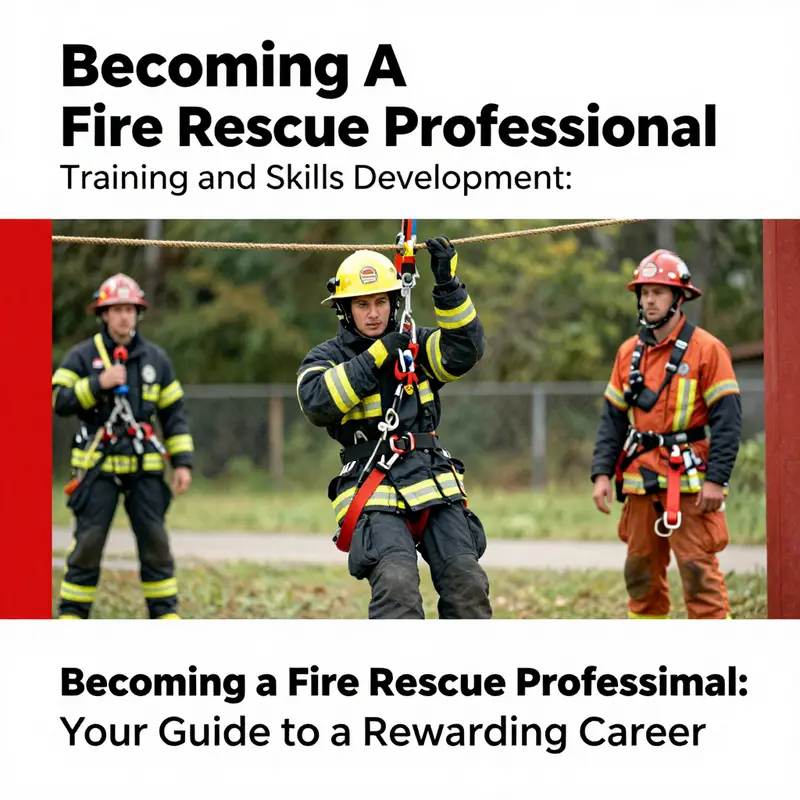
Becoming a fire rescue professional is more than a career choice; it is a commitment to continuous readiness. In China, the path to the fire service unfolds along two main routes, each with distinct expectations and lifelines for advancement. Yet across both routes, the essence of success rests on a unified triad: physical robustness, mental clarity under pressure, and a sustained drive to learn. The chapter that follows weaves these threads into a cohesive narrative that respects the practical realities of recruitment while underscoring the mindset that transforms a person into a reliable responder in the most demanding moments. At the heart of this journey lies a concept that seasoned responders embrace as a guiding principle: the tactical firefighter. This term signals not a single job description but a philosophy of ongoing improvement, situational awareness, and precise execution when lives and property hang in the balance. Training is the vehicle; resilience is the fuel; and service to the community is the horizon toward which every effort points.
A lifelong learning mindset starts well before a formal appointment. Departments provide baseline training, but true proficiency grows from inside the individual. Aspiring firefighters should cultivate a habit of studying beyond required curricula. This can mean pursuing additional certifications, enrolling in college courses from associate to master’s levels, and actively engaging with professional literature. Industry journals, research studies, and safety reports offer a steady stream of insights that keep responders current with evolving tactics, equipment, and standards. An old maxim that applies here is practical and blunt: don’t wait to be spoon-fed; feed yourself. In a field where new challenges emerge with every incident, knowledge becomes as crucial as physical strength. The habit of reading not as a chore but as a core part of professional identity helps shield a responder from stagnation and short-sighted improvisation.
Physical conditioning is the most visible pillar of preparation. The job demands stamina, strength, agility, and durable recovery. A structured fitness plan is non-negotiable, tailored to the realities of fireground work. Training should emphasize cardio endurance for long carries and repeated bursts of intense effort, progressive strength routines for lifting and stabilization, and mobility work to protect joints during dynamic tasks. Core work and stability training help maintain balance when navigating stairs under heavy gear, while plyometrics improve power for explosive tasks such as forcible entry or rapid repositioning. Nutrition, sleep, and injury prevention are integral parts of this equation. The aim is not merely to pass a fitness test but to sustain peak performance through long shifts, multiple incidents, and unpredictable conditions. As a consequence, every aspiring firefighter should build a personal regimen that can be adjusted with changing duties, fatigue levels, and family responsibilities.
Mental and emotional readiness sits alongside physical fitness as a core prerequisite. Fire suppression, rescue, and medical response involve high-stress scenarios that tax decision-making and teamwork. Mental training helps maintain focus, manage fear, and regulate stress responses so that responders can make clear judgments when seconds matter. Techniques such as controlled breathing, stress inoculation exercises, and scenario-based drills with realistic time pressure become standard practice. Emotional resilience is equally essential; responders frequently confront traumatic scenes, grief, and personal risk. Developing a supportive peer network, seeking supervision when needed, and maintaining personal well-being outside the fire station all contribute to sustained performance. The best responders cultivate a steady presence on the fireground—being physically prepared, mentally centered, and emotionally connected to teammates and the communities they serve.
Equally important is the ability to stay informed about the environments responders serve. A continuous cycle of situational awareness keeps tactics relevant. This means monitoring changes in local areas—new construction, renovations, population shifts, traffic patterns, and infrastructure upgrades. Understanding how these factors alter risk profiles, egress routes, water supplies, and access for apparatus informs safer, faster responses. It also invites a proactive stance: recognizing potential hazards before they escalate and coordinating with other agencies to mitigate risk. The reality is that the most effective teams anticipate rather than react. In practice, that anticipation grows through field experience, opportunistic learning during calls, and deliberate reflection after incidents. A robust culture of debriefing and knowledge sharing helps translate each experience into better future performance.
To anchor these personal practices in a broader professional framework, many in the field look to standardized curricula and credentialing bodies. The National Fire Protection Association, among others, provides widely recognized standards and guidance that set the baseline for competencies across levels. While every local department tailors its training to its resources and local needs, the existence of universal benchmarks helps ensure portability of skills and consistency in safety practices across regions. An aspiring professional can benefit from studying these standards, not as a substitute for hands-on drills, but as a map of the core capabilities that a competent firefighter should demonstrate. A disciplined learner uses these benchmarks to identify gaps, design a personalized training plan, and track progress over time. In this sense, preparation becomes a living process rather than a single hurdle crossed on a test day. If one exercise makes a difference, it is the steady accumulation of small, deliberate improvements that compounds into reliable performance under pressure.
Pathways into the fire service in China sit within a structured system that rewards experience, education, and demonstrated capability. The first route, the National Comprehensive Fire Rescue Team, confers an official government position under the Ministry of Emergency Management. This route comes with civil servant status and national public servant benefits, a pathway that may be attractive for those seeking long-term career security, stability, and retirement provisions. Eligibility centers on nationality, age, education, health, and character. The typical window for new recruits is in mid-summer, with an annual cycle that includes online applications, qualification reviews, rigorous physical tests, position suitability assessments, psychological evaluations, interviews, and a political background check. The process culminates in a public enrollment into training after passing medical examinations and being publicly announced as successful candidates. The emphasis on a clean political record and a sound character underscores the expectation that recruits will uphold a broad standard of conduct, both on and off duty, throughout a lifelong civil service career.
The second pathway, government professional firefighters, operates through labor contracts with local governments or fire departments. These roles offer strong benefits and a clear career ladder, though they sit outside civil service status. Eligibility tends to be broader in age, typically 18 to 30, with allowances for veterans, fire science graduates, or those holding drivers licenses at or above the B2 level. Education requirements begin at high school and extend to higher education for those pursuing specialized roles. The recruitment process for contract-based positions places emphasis on physical fitness, background checks, and a mandatory pre-employment training phase. Benefits often include competitive salaries, housing and meal provisions, uniforms, health checks, and paid leave—compensation that, while not the same as civil service packages, remains robust within the local context and reflects the value placed on frontline service. The existence of two parallel tracks means prospective applicants can align their choice with personal priorities, whether they seek formal civil service status or the flexibility and immediate benefits associated with contract-based positions.
A practical bridge for those already serving as government professional firefighters is the opportunity to advance directly into the National Comprehensive Fire Rescue Team, provided they meet specific criteria. A minimum of two years of frontline firefighting experience, a bachelor’s degree or higher, and age within the established limits create a viable pathway to higher ranks and broader responsibilities. This route requires passing a national civil servant examination, followed by medical, psychological, skills evaluations, and interviews. For individuals who combine on-the-ground experience with formal education, the prospects for upward mobility become substantial, reflecting a structured system that values both hands-on competency and academic attainment. This integration of experience and credentialing reinforces a principle that runs through all elite public safety professions: mastery emerges when practical skill is paired with rigorous assessment and continuous learning.
For someone standing at the threshold of this profession, the question is not merely how to pass a test or secure a job, but how to cultivate a career that remains effective over decades of service. The answer lies in embracing the tactical firefighter ethos: commit to lifelong learning, train with intention, and remain deeply connected to the communities you protect. Physical preparation must be complemented by mental readiness and emotional resilience, while knowledge should be broadened through study of standards, best practices, and current events in the field. The two pathways offer different routes to the same destination: a role that commands respect, delivers critical public safety services, and grows with the individual as the landscape of emergencies evolves. It is this synthesis of body, mind, and mission that turns aspiring applicants into capable, reliable responders who can be counted on when every second counts.
To reinforce the practical steps that can turn a rising candidate into a viable applicant, it helps to anchor personal preparation in concrete milestones. Begin with a self-assessment of fitness and health against which you can measure progress over weeks and months. Build a training log that records workouts, nutrition plans, recovery, and any injuries, so patterns emerge and adjustments become data-driven rather than guesswork. Simultaneously, map out a study plan that includes core fire safety concepts, emergency procedures, and an organized reading list drawn from reputable sources. A regular cadence of practice drills—whether solo, with peers, or through volunteer programs—ensures that the physical and cognitive demands of the job become familiar, not novel, on testing days or on the fireground. Seek out mentors who can provide feedback, share experiences, and illuminate pathways through the complexity of the recruitment cycles. The blend of disciplined self-improvement and guided mentorship accelerates readiness and reduces the friction often found in competitive selection processes.
In addition to personal preparation, aspiring firefighters should remain mindful of the official channels that govern recruitment and career progression. The primary portal for national-level opportunities is the official recruitment website of the National Comprehensive Fire Rescue Team, which typically outlines the cycle, requirements, and procedures. Local channels—provincial or municipal fire departments and their HR offices—provide the more immediate information needed to apply for government professional firefighter roles. Staying informed requires a steady habit of checking official notices, attending information sessions when offered, and engaging with community or alumni networks that share timely updates. To keep practice aligned with expectations, it can be valuable to study the structure of the selection process: online qualification reviews, rigorous physical tests, position suitability, psychological assessments, interviews, and political and medical reviews. Each stage tests a different facet of suitability, and success often depends on a coherent preparation plan that addresses all these dimensions rather than focusing solely on one.
The practical implications of these pathways extend beyond individual careers. Fire rescue work is inherently community-centric. The best firefighters view themselves as members of a wider response ecosystem—adapting to local risk profiles, engaging with residents to raise awareness of safety, and contributing to the resilience of neighborhoods. This broader sense of purpose informs training choices as well. For instance, understanding the specific hazards associated with new construction, altered traffic flows, or demographic changes in one’s city can refine how drills are designed and what skills are emphasized. It also underlines the importance of cross-agency collaboration, public communication, and continuous feedback from the communities served. A career built on these foundations is not merely about executing procedures under pressure; it is about sustaining trust and delivering reliable outcomes when it matters most.
As you consider your path, let the internal example of ongoing professional development guide your decisions. Acknowledge that pathways and timelines may shift with policy changes, funding, and regional needs, but the core competencies remain consistent: physical readiness, mental agility, and a disciplined, curious approach to learning. The two routes do not cancel each other out; they complement one another, offering options that reflect different life circumstances while still steering toward the same mission. When you combine the personal discipline of a well-structured fitness and study regimen with the clear expectations of the recruitment processes, you place yourself in a strong position to navigate whichever pathway aligns with your values and goals. The journey is long, and it will demand persistence, but the payoff is the ability to serve communities with competence, courage, and integrity.
For practitioners and policymakers alike, the chapter of becoming a fire rescue professional is a living one. Training is not a checkbox but a continuous practice that evolves with new risks, technologies, and societal needs. The concept of the tactical firefighter acts as a compass that keeps this evolution aligned with a noble purpose: protecting lives and property with precision, compassion, and unwavering dedication. If you are beginning this journey, you can start today by evaluating your current fitness, outlining a study plan that incorporates core safety standards, and seeking out mentors who can illuminate the path ahead. If you are further along, you can deepen your preparation by pursuing advanced credentials, exploring opportunities to bridge between civil service and contract-based roles, and refining your ability to translate field experience into leadership and training contributions for your department.
Internal reference for training ecosystems and evolving practice can be found in dedicated industry innovations that illustrate future-focused approaches to fire service training and culture. See innovation-museum-transforming-fire-services for insights on how training environments and organizational cultures are being reimagined to support better outcomes on the fireground. innovation-museum-transforming-fire-services
External resource for standardized firefighter qualifications and curricula can be consulted through widely recognized standards bodies. For a comprehensive view of professional qualifications and curricula that many fire services align with, refer to the National Fire Protection Association’s standards and resources. NFPA standards
Ascending Through the Flame: A Cohesive Roadmap for Fire Rescue Career Progression
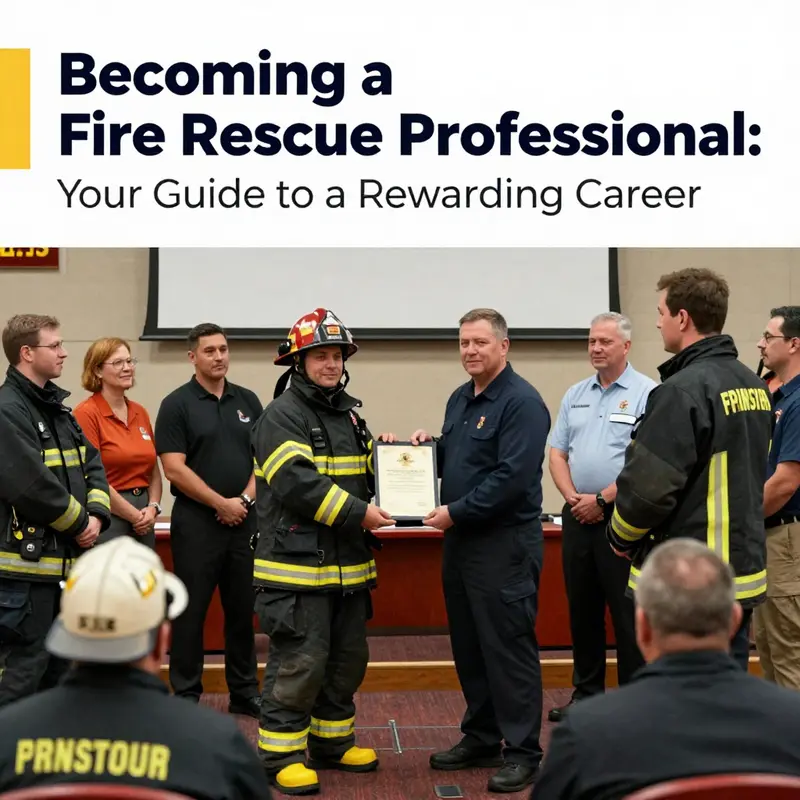
The journey to become a fire rescue professional is more like a measured ascent than a single leap. It is built on a foundation of hands-on response, disciplined training, and steady growth in responsibility. For many, the path begins with the decision to serve under a formal system, but it expands in scope as experience, education, and leadership capability accumulate. Across the two primary routes—one that offers official civil servant status and another that provides government-backed but contract-based roles—the end goal remains the same: to protect lives, safeguard property, and guide teams through crisis with calm competence. Understanding these trajectories offers a practical, cohesive map for anyone who longs to grow beyond the first shift and move toward advanced duties, higher ranks, and greater impact. In the evolving landscape of fire rescue, advancement is not a single test but a continuous blend of performance, learning, and leadership cultivation, reinforced by the requirements and opportunities described in official channels and professional development communities alike.
The two main pathways, while distinct in status and governance, share a common core: a base of rigorous training, a commitment to physical and mental readiness, and a trajectory that rewards dedication with expanded scope. Pathway one leads into the National Comprehensive Fire Rescue Team, a national framework under the Ministry of Emergency Management that confers official civil servant status and its attendant career benefits. Pathway two offers Government-Professional Firefighter roles, secured through local governments or fire departments via labor contracts and without formal civil service status, yet with competitive pay, housing, meals, and substantial opportunities for advancement. The 2025 recruitment cycle, as outlined in official announcements, remains a key reference point for those entering either track. It emphasizes eligibility windows, health standards, and a staged selection process that tests more than raw strength; it assesses suitability, resilience, and a capacity to grow within a structured career ladder. When a candidate reads the official notices, they see not just a doorway but a design for progression that rewards education and frontline experience alike.
In practical terms, the ascent begins with the essential building blocks. Eligibility is the first gate, and it is framed to identify individuals who can endure the demands of a life spent guarding others. For Pathway One, candidates need to be Chinese citizens within a tight age band—18 to 22 years old, with extensions up to 24 or 28 in specific circumstances such as holding a degree, being a former PLA or Armed Police veteran, or having direct firefighting experience in government professional roles. Education at least at the high school level, robust physical health, and a clean political background are prerequisites that align with civil service norms across the country. Pathway Two, while more permissive on age, also requires solid physical condition, a clean background, and a driver’s license, typically a high school diploma or higher as a baseline. Both routes prioritize those who can demonstrate not only the ability to respond to emergencies but the discipline, reliability, and teamwork required to lead others under stress.
The recruitment process itself is a careful, multi-step test of mind and muscle. For Pathway One, the cycle begins with online registration through the official portal, followed by qualification review and on-site verification. A rigorous physical fitness test assesses endurance, strength, and functional capacity—tasks that mirror the realities of climbing stairs with equipment, performing rapid shuttles, and maintaining pace under load. A position suitability test then probes adaptability to specific roles, while a psychological assessment screens for decision-making under pressure and the temperament needed to supervise others. A panel interview examines communication, motivation, and demeanor, and a political review ensures alignment with the core values of public service. Medical examinations close the loop before enrollment in training programs that convert potential into competence. Pathway Two follows a similar cadence, with emphasis on background checks and medical readiness, followed by a structured training phase that includes an orientation and a syllabus designed to integrate recruits into their local brigades. In both tracks, success opens the door to a formal phase of training that blends classroom theory, simulations, and field practice.
Once sworn in or hired, the real journey begins. Fire rescue is as much about leadership as it is about technique. The career ladder is codified in regulations that describe three broad levels—Senior, Intermediate, and Junior—and eight grades within those levels. A bachelor’s degree or higher can influence where a recruit starts on the ladder; graduates with bachelor’s degrees typically begin at the Fourth-level Commander, while those with master’s or doctoral credentials may start at higher ranks, such as the Third-level or First-level Commander. This structure underscores a fundamental principle: education accelerates advancement, but it is the quality of service, the consistency of performance, and the ability to guide others that sustain ascent over the long arc of a career. As a firefighter gains frontline experience, leadership opportunities emerge in practical settings—leading a crew on a structure fire, coordinating EMS response, or supervising a technical rescue—each instance a test of judgment, communication, and composure.
The pathway to the upper echelons in the national framework is not automatic. For those currently serving as government professional firefighters who aspire to join the National Comprehensive Fire Rescue Team, the gatekeeper is frontline experience and educational attainment. A minimum of two years of frontline firefighting experience is often required, along with a bachelor’s degree or higher and an age window that keeps the door open for a focused cohort of candidates. Passing the national civil servant exam—an assessment of public administration acumen and writing skill—enters the applicant into a medical and psychological evaluation and an array of skills tests, ultimately culminating in interviews and a public enrollment for training. The process, lengthy as it is, reflects the reality that national leadership in emergency services depends on a measured integration of field excellence and academic preparedness. The system recognizes that leaders who can balance accountability, policy comprehension, and frontline realities will be the ones who shape the service in the decades ahead.
In parallel, those who choose the contracted, non-civil service route can still traverse a robust pathway toward leadership roles. Local governments and fire departments offer significant promotional opportunities, especially for veterans, fire science graduates, and drivers with advanced licenses. The progression often hinges on accumulating experience, pursuing specialized training, and performing consistently across incidents that test technical skill and people leadership. The practical benefits in Pathway Two—competitive salaries, housing support, health checks, and structured progression—provide a solid platform for engineers of leadership to grow their influence within a community’s fire and emergency ecosystem. In both tracks, the emphasis on continuous development remains the same: leadership is earned through a blend of sustained performance, formal education, and targeted training that expands a firefighter’s repertoire beyond the fireline.
A crucial feature of this maturation is ongoing professional development that helps fire rescue professionals translate experience into leadership capability. The Officer Development Program, associated with Fire-Rescue International and aligned with the Job Performance Requirements of NFPA 1021, represents a cornerstone of modern professional growth. It is not a one-off course but a sustained suite of leadership education that prepares company officers and chief officers for broader responsibilities. The program is celebrated for its depth, its practical focus on command presence, decision-making under pressure, and the ability to mentor others through complex operations. For anyone intent on climbing the ladder, exposure to such programs signals a readiness to assume roles that require strategic thinking, risk assessment, and organizational influence. The broader professional ecosystem also supports growth through journals and publications that keep practitioners abreast of evolving standards, safety science, and leadership practices. In particular, Fire Rescue Magazine, published by a major publisher in the field, offers case studies, research findings, and reviews that illuminate best practices in situational awareness, succession planning, and firefighter safety. Engaging with this literature helps align daily practice with the leading expectations of the profession and the longer arc of public service.
For a practitioner who wants a tangible touchstone beyond formal courses, it helps to draw lessons from the broader transformation within the fire service. Innovation in equipment, command concepts, and community engagement reshapes what it means to lead a crew on a crisis scene. Forward-thinking resources, like the Innovation Museum that focuses on transforming fire services, provide meaningful contexts for how leadership, technology, and policy converge to redefine practice. A quick look at the ideas and case studies showcased there can inspire a firefighter to seek advanced training, pursue certifications in specialized areas such as hazardous materials response or technical rescue, and advocate for changes within their own department to support safer, more effective operations. Innovation Museum: Transforming Fire Services serves as a reminder that progress in the field is not just about technical prowess but about cultivating the vision to lead teams through uncertainty while maintaining a steadfast commitment to service.
The journey also involves concrete strategic steps that an individual can take to ensure readiness for advancement. A practical approach begins with a clear assessment of where one stands today: what certifications have been earned, what degrees are in progress, what incidents have provided leadership opportunities, and what gaps exist in communication or planning skills. From there, a plan emerges—one that is tailored to the chosen pathway. For Pathway One, the emphasis is on preparing for the civil service process while continuing to expand knowledge through formal education and professional development. For Pathway Two, the focus shifts toward career-building within the local department: pursuing fire science or emergency management degrees, refining EMS capabilities, and attaining higher-grade driver licenses. In either case, establishing a routine that blends physical training, study, and leadership practice—such as leading a small team on drills, mentoring newer recruits, or coordinating community safety outreach—becomes the scaffolding for growth.
The telling measure of progress in a safety-critical field is not only the number of incidents managed but the quality of decision-making under pressure, the ability to mentor others, and the capacity to contribute to system-level improvements. This is why the professional development ecosystem emphasizes standards like NFPA 1021 and the Job Performance Requirements, and why many departments encourage or require continuing education. It is also why a robust career path includes opportunities to contribute beyond the station: participating in regional or national forums, sharing lessons learned, and contributing to revisions of practice guidelines. Such engagement helps cement a reputation for reliability, ethical judgment, and collaborative leadership—qualities that elevate an individual from frontline responder to trusted captain of teams and programs.
Along the way, resilience and wellbeing remain essential. The physical demands of firefighting are formidable, and the emotional toll of frequent exposures to life-and-death scenarios can be equally taxing. Maintaining health, seeking peer support, and integrating stress-management practices into daily routines are not optional extras but core components of sustainable leadership. The career path rewards those who protect their own readiness as diligently as they protect public safety. As responsibilities expand—from incident command during urgent calls to policy-informed decision-making that shapes training, equipment, and response protocols—these personal disciplines become the bedrock of credible leadership. The most effective leaders in fire rescue are those who model this balance: they demonstrate accountability, fairness, and the courage to listen as they guide others through dangerous and uncertain moments.
In this sense, the ascent is a shared enterprise. Mentors, supervisors, and peers help accelerate growth by providing opportunities to lead, offering feedback that refines judgment, and presenting chances to pursue specialized training. The path is not a straight line; it winds through reassignment, redeployment, and occasionally a shift from one pathway to another as life circumstances or professional objectives evolve. Yet the underlying pattern remains consistent: a commitment to learning, a track record of dependable performance, and a readiness to take on greater scope with integrity and humility. The end is not merely a higher rank but a broader platform to influence the service, improve public safety outcomes, and inspire the next generation of firefighters to view leadership as a responsibility that extends well beyond the badge.
For those who are charting this course today, a practical note can help translate aspiration into action. Begin with the official coordinates for your chosen path—whether the National Comprehensive Fire Rescue Team or a local government–professional role—and commit to meeting the stated eligibility and process requirements. Build a personal development plan that integrates degree progress, recognized certifications, and leadership experiences that demonstrate readiness for promotion. Seek out opportunities to engage with professional bodies and conferences, such as those offering officer development content and leadership training, and actively seek mentors who can share insights about navigating the complexities of larger organizational structures. Finally, stay informed through reliable sources and official channels, watching for updates to recruitment windows, examination standards, and rank regulations so that your preparation remains aligned with current expectations. In this way, the ascent through the flame becomes less a matter of luck and more a disciplined, integrated pursuit of mastery and service.
External resources offer a final layer of guidance. The broader field recognizes the value of ongoing education and leadership development, and it is worth reviewing external programs and standards that shape modern practice. For those seeking further exploration of leadership pathways and professional development opportunities, consider visiting reputable industry resources that discuss officer qualifications and the evolution of fire rescue leadership. This broader perspective complements the local and national frameworks described above, helping to bridge the gap between daily duties and strategic impact. As you prepare to take the next step, remember that growth in fire rescue is a lifelong process, anchored in service, learning, and the steady pursuit of excellence. To continue expanding your horizons, you can consult external perspectives such as Fire-Rescue International online communities and programs at https://www.fire-rescueinternational.com. The combination of formal pathways, thoughtful personal development, and access to a global conversation about fire leadership creates a robust, resilient roadmap for anyone determined to rise through the ranks and shape the future of fire rescue in meaningful ways.
Final thoughts
Becoming a fire rescue professional requires dedication, skill, and commitment to serving the community. Understanding the pathways available—whether through the National Comprehensive Fire Rescue Team or as a Government-Professional Firefighter—provides clear direction for aspiring candidates. Effective preparation, both mentally and physically, is essential to succeed in this demanding field. Finally, the journey does not end with initial hiring; career advancement is achievable through continued education, training, and a commitment to excellence. Embrace this noble career path and prepare to protect and serve your community with pride.