
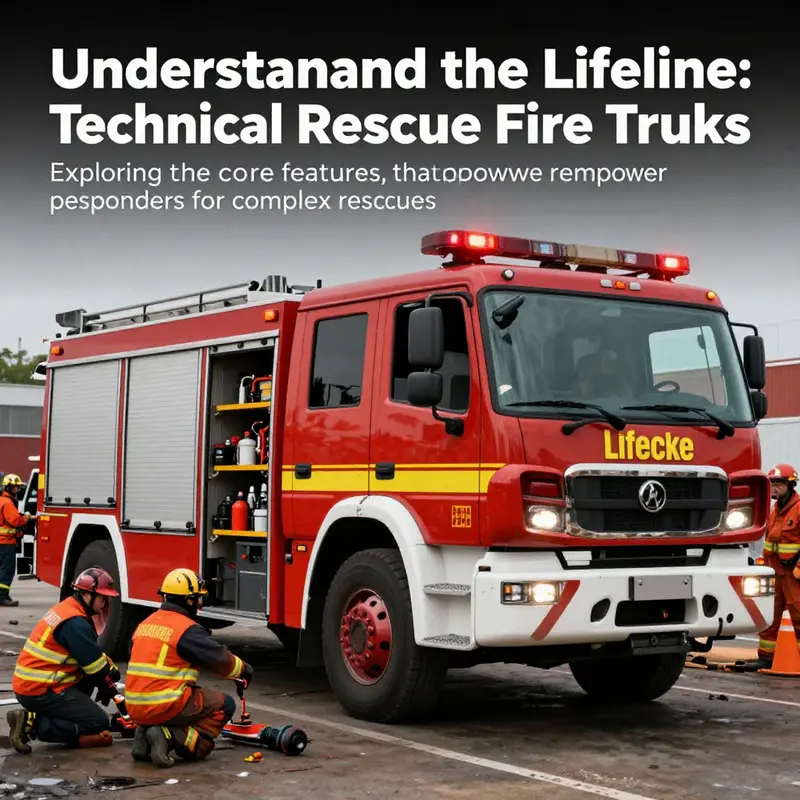
Technical rescue fire trucks are essential vehicles equipped with advanced capabilities designed to tackle intricate non-fire emergencies. From assisting at vehicle accidents to responding to structural collapses and hazardous material incidents, these specialized trucks serve as mobile command centers that enhance the effectiveness of emergency responders. This article delves into the comprehensive tool arsenal, critical support systems, specialized equipment, and versatility that define these invaluable trucks, ensuring that the community understands their significance and role in saving lives.
Inside the Frontline Toolbox: The Comprehensive Arsenal Driving Technical Rescue Fire Trucks
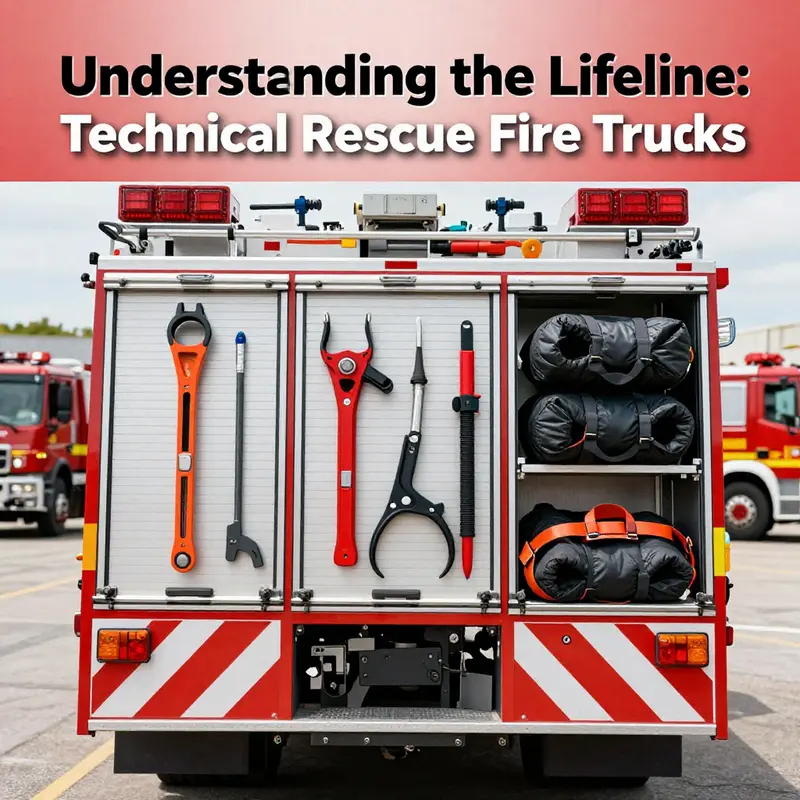
When the sirens finally fall silent after a call, a different kind of clock begins to tick inside the fire station and, more crucially, inside the heart of a technical rescue operation. The technical rescue fire truck is not merely a mobile shelf of gear; it is a carefully engineered ecosystem. It must be ready to shift from rapid extraction to structural stabilization, from confined-space reconnaissance to hazmat monitoring, all while serving as a mobile command post that coordinates time-sensitive decisions under pressure. In this sense, the truck embodies a philosophy: save lives by moving quickly, thinking clearly, and equipping teams with a toolbox that can be customized on the fly to fit the problem at hand. The comprehensive tool arsenal housed in these vehicles is the backbone of that philosophy, a living inventory designed to meet the unpredictable demands of non-fire emergencies with the same urgency and discipline that firefighters bring to flames.
The arsenal is organized not as a random assortment of gadgets but as an integrated system that can be deployed in sequence and adapted in real time. At the core are hydraulic rescue tools that can generate tremendous force with precision. Rather than naming any single product, it is the principle of hydraulics—high-pressure systems that translate limited engine power into controlled, wide-ranging movements—that matters. These tools allow rescuers to pry apart twisted metal, widen apertures around an entrapped victim, and create space where every second counts. The ability to apply force in multiple directions, with dual-action capability that permits both spreading and cutting, turns a seemingly impossible extraction into a staged, methodical operation. In many high-stakes scenes, the first critical step is to remove barriers that obstruct access to the victim; hydraulic spreaders and cutters, used with a steady hand and a trained eye, provide that access while preserving the patient’s physiology as much as possible.
But a truly capable rescue rig does not rely on hydraulics alone. Lifting and pulling devices form another essential pillar of the arsenal. Winches and robust cable systems anchored to the chassis enable responders to reposition wreckage, stabilize surging debris, or lift heavy components away from a trapped person. Chain hoists and pulley arrangements contribute to the precision needed when gravity and balance threaten to worsen an injury. The choreography of heavy-lift work demands forethought about load paths, risk of secondary collapse, and the sequence of operations that keeps responders out of harm’s way while protecting the patient. In practice, lifting and pulling devices act as the connective tissue between stabilization and extraction, allowing teams to control force vectors and to place debris in positions that reveal viable egress routes.
Cutting and metalworking capabilities are another vital thread in the fabric of the vehicle’s toolkit. Oxy-fuel and plasma cutting devices enable rapid access through barrier materials—thick doors, reinforced panels, even concrete where necessary. Welding equipment can secure temporary supports or reinforce altered structures so that subsequent movements do not compromise the work already completed. The emphasis here is not on glamor but on reliability: every cut or weld must be predictable, repeatable, and safe given the surrounding hazards. In the coolant-chilled environment of a collapse zone or the heat of a smoldering vehicle, the tools must deliver clean, controllable results without introducing new risk to the victim or the responders.
Ventilation and air supply systems thread safety through the operation. Large-capacity forced-air fans push fresh air into confined spaces, clearing smoke, removing deadly gases, and reducing the likelihood of toxic exposure as rescuers work. Within the same vehicle, onboard breathing air systems and compressor units provide a sustainable lifeline for both the crew and the victim. This connection between air management and rescue timing cannot be overstated. The moment air quality deteriorates, every minute becomes more precious, and the ability to ventilate effectively can determine whether a patient survives or succumbs to asphyxia or inhalation injuries. In trench and structural scenarios, proper ventilation also helps to control dust and fumes that hamper visibility and complicate navigation.
Detection and monitoring instruments broaden the rescuers’ perception beyond what the naked eye can discern. Thermal imaging cameras reveal body heat through smoke and rubble, guiding search patterns and pinpointing hot spots that may indicate fire spread or structural weaknesses. Gas detectors provide real-time air quality data, signaling oxygen depletion or hazardous concentrations of carbon monoxide or hydrogen sulfide. Acoustic and seismic sensors add another layer by listening for subtle cues like shifting debris or distant calls for help. The integration of these diagnostic tools into the command system enables a more confident, data-driven approach to decisions that must be made under extreme time pressure.
Lighting and communication systems ensure that no detail is lost to darkness or isolation. High-intensity LED floodlights illuminate the working area, while portable light towers extend visibility when access is limited. Communication gear—radio networks, repeater setups, and sometimes satellite options—keeps teams connected as they move through complex environments. In many high-stress rescues, reliable communication can be the difference between a coordinated, lifesaving strategy and a fragmented, second-guessing operation. The electrical architecture of the vehicle underpins each of these capabilities, distributing power where it is needed and providing redundancy so that a single failure does not derail the mission.
The medical and trauma support kits carried by technical rescue units reflect the dual nature of the mission: to reach the patient quickly and to stabilize life-threatening injuries until professional care is available. Advanced trauma kits, including hemorrhage control gear, chest seals, and spinal immobilization devices, are complemented by onboard medical supplies that enable immediate care on site. The goal is not to replace hospital care but to bridge the gap between the moment of injury and definitive treatment. In practice, that means trained personnel who can evaluate perfusion, airway, breathing, and circulation while simultaneously managing the physical constraints of the rescue environment. This balance—intentional, pragmatic medical readiness alongside a robust set of technical tools—defines the character of the rescue truck as a whole.
Structural reinforcement tools are particularly important when rescuing victims from unstable environments. Temporary bracing, shoring systems, and concrete break ers are deployed to prevent further collapse while access is established. These tools require careful assessment of the building’s geometry, the type of soil, and the likelihood of secondary failures. The operators must read the signs of stress in real time and adapt their tactics accordingly. In many rescues, stabilizing a structure is a prerequisite to any form of extraction; without it, the safest path to the patient may be blocked, or worse, might precipitate additional harm to both victim and rescuers.
Beyond the physical tools, the truck functions as a mobile command and data integration platform. Onboard computers and digital documentation tools support incident management, mapping, and real-time sharing of information across multiple teams. The ability to record actions, track victim status, and generate after-action reports transforms a rescue into a learning opportunity that strengthens future responses. This aspect of the vehicle’s capability is not a luxury but a necessity in an era of increasingly complex emergencies, where interagency coordination, evolving safety standards, and data-driven decision-making shape the quality and outcome of every mission.
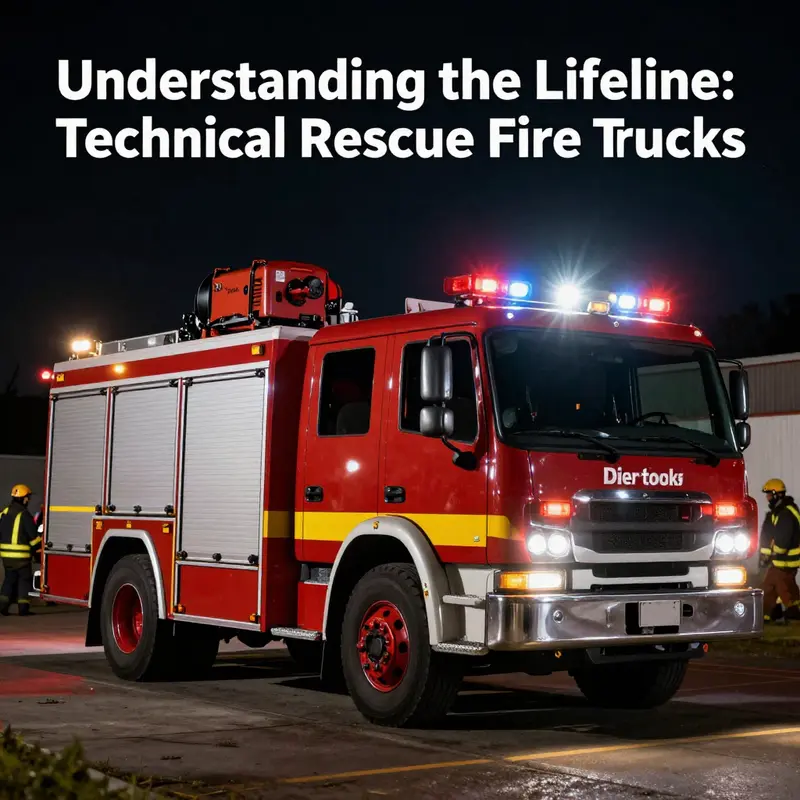
From a design perspective, the technical rescue truck is built on a robust automotive chassis with an upper equipment deck that houses the tools and systems. A power take-off and transmission system transfers engine power to auxiliary equipment, while an intricate electrical architecture manages lighting, fans, detectors, and communication gear. The result is a machine that can operate for extended periods in hazardous environments without succumbing to heat, dust, or vibration. The materials chosen for the chassis and mounting points emphasize strength-to-weight optimization and corrosion resistance, ensuring reliability when every component is tested by dust, water, or impact. This emphasis on durability is not decorative; it translates directly into operational readiness in disaster zones, remote locations, and structurally compromised settings where quick, repeated deployment is the norm.
The versatility of these trucks matters as much as their raw capability. Vehicle extrications that involve many moving parts, trench collapses that demand rapid stabilization, confined-space rescues that require precise positioning, and myriad other technical emergencies each benefit from a tailored mix of tools and systems. The crew’s ability to adapt—selecting the right combination of cutters, spreaders, airbags, shoring, ventilation, and lighting, while maintaining clear lines of communication—defines the mission’s tempo and safety. In many respects, the tool arsenal is a living organism within the truck, constantly updated as new techniques emerge and as lessons from real-world incidents filter back into training and procurement decisions.
For readers seeking a broader view of how these tools are integrated into the fabric of rescue practice, consider resources that discuss the broader context of specialized fire apparatus. One such reference captures the way material properties, performance metrics, and system integration shape a modern rescue fleet. It situates the technical rescue truck not as a standalone device but as a node in a network of responders, standards, and communities ready to absorb the shock of a disaster and to rebound quickly with a precise, coordinated response. This perspective helps explain why the vehicle’s architecture—its modular compartments, its redundant power, its adaptable work planes—matters so much when every second counts. To explore related ideas about how customized solutions translate into on-the-ground capabilities, you can review the broader discussion available through dedicated practitioner-focused portals that emphasize practical, field-tested designs and outcomes.
In practice, the internal arsenal is not merely about adding tools; it is about shaping a workflow that respects time, risk, and human capability. The sequence a rescue crew follows is informed by training, standard operating procedures, and the specific conditions of the scene. Preparation becomes anticipation; anticipation becomes speed without sacrificing safety; speed without safety becomes chaos. The technical rescue truck, with its integrated systems, is designed to maintain that balance. The tool rack and the power network are not independent components; they are co-dependents that enable the team to identify a plan, refine it in light of new information, and execute with practiced precision. That synergy is what makes a complex rescue feasible when every move could either save a life or endanger it.
The broader purpose of this chapter, and of the article as a whole, is to illuminate how a technically sophisticated rescue vehicle functions as both a lifeline and a catalyst for action. It is a mobile toolbox and a mobile command center, a platform where engineering, medicine, and operations intersect. The tools within are designed to work in concert, not in isolation, so that the slightest adjustment—shoring a support beam a fraction of an inch to create a stable platform, or shifting a vent fan to optimize air flow—can unlock a path to the victim. This integrated approach helps explain why technical rescue teams train rigorously, why crews inventory and audit their equipment with meticulous care, and why manufacturers and service providers continue to push the envelope on durability, modularity, and usability under duress.
As a practical tie-in for readers who want to see how this philosophy translates into real-world procurement and deployment, consider the route that links comprehensive, customized firefighting solutions for challenging environments to the everyday operations of rescue teams in diverse settings. The linked resource provides a snapshot of how flexible configurations, supported by robust supply and maintenance ecosystems, enable departments in varied contexts to tailor equipment to local needs while preserving core capabilities. The value of such a configuration becomes clear when a single incident demands rapid adaptation across multiple rescue modalities—extrication, stabilization, ventilation, and patient care—without the team needing to chain together disparate, incompatible tools. This cohesiveness is what turns a technically capable vehicle into a dependable partner on the front line.
Internal link to related content: comprehensive-customized-fire-trucks-for-developing-countries-meeting-diverse-rescue-needs-efficiently
External resource for broader context: Fire Truck Apparatus Guide. structure material properties performance metrics. https://www.firetruckapparatusguide.com/structure-material-properties-performance-metrics
null
null
Beyond the Jaws of Life: The Specialized Arsenal Driving Technical Rescue Fire Trucks
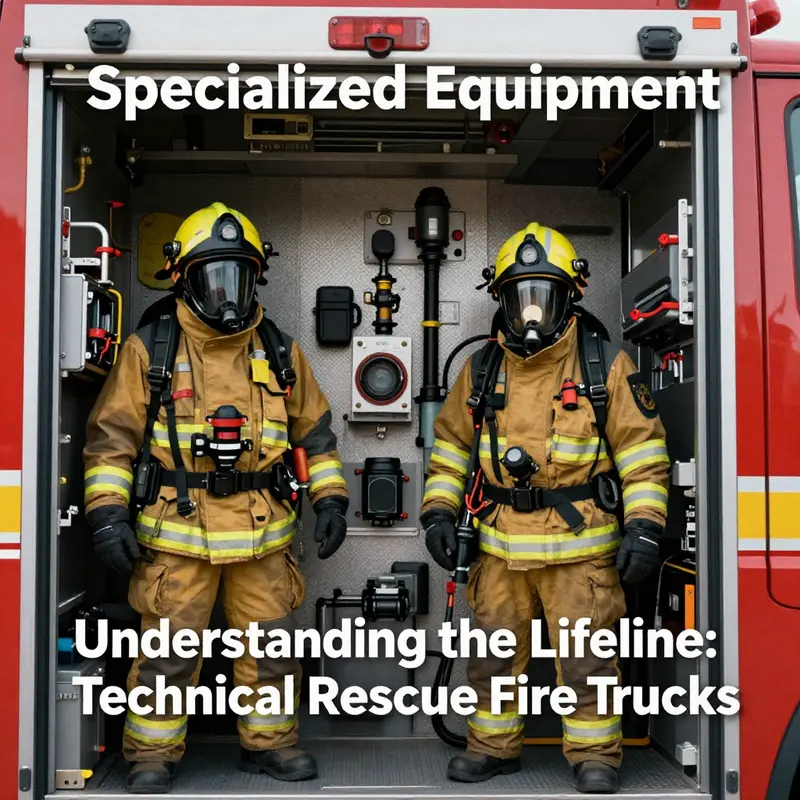
A technical rescue fire truck is not a single-purpose instrument of fire suppression. It is a moving workshop, a mobile command post, and a carefully curated toolbox designed to meet emergencies that demand precision, patience, and power beyond what a standard fire engine can muster. On arrival, responders do not simply pour water on a blaze and walk away. They assess, stabilize, and patiently dismantle danger with a carefully choreographed set of tools and systems. The vehicle itself embodies a philosophy: in high-risk scenarios, reliability comes from modularity, power from versatility, and safety from thoughtful design that integrates driving dynamics with engineering that serves rescue work. This chapter explores the specialized equipment that makes that philosophy possible, revealing how the truck’s arsenal translates into real-world capability across vehicle extrication, structural collapse, confined space rescue, trench operations, and high-angle work. It is a story of the quiet, relentless machinery that turns urgent response into lives saved, and it grounds the broader understanding of what a technical rescue fire truck truly is within the wider fabric of emergency services.
At the core of every technical rescue vehicle lies a curated ensemble of hydraulic tools. These are not mere add-ons; they form the backbone of the rescue workflow. Hydraulic spreaders, cutters, and rams provide the mechanical advantage necessary to pry open metal and bend stubborn structures without compromising the victim’s safety or igniting secondary hazards. Spreaders can push apart or pry open obstacles; cutters can shear through metal to free a trapped person; rams extend and seal the gap as needed, creating access while controlling the deformation of surrounding material. The power to drive these operations typically runs from an onboard hydraulic system that is independent of the engine yet closely linked to a robust power transfer network. This ensures that even when one system is taxed or down, essential tools remain functional. In practice, responders move from assessment to action with a rhythm that mirrors a well-rehearsed orchestra, where each tool plays a distinct but complementary role. The result is a rescue sequence that is faster, safer, and more controlled than ad hoc techniques could ever achieve.
Beyond the immediate actions of cutting and spreading, trench rescue and structural stabilization demand a different kind of toolset. Trench safety systems, for example, are built to stabilize unstable soil while occupants are extricated from buried or partially buried situations. Aluminum trench boxes, hydraulic shoring, and related stabilization components are carried as part of the specialized payload. Their presence on board is not just about capability but about risk reduction. When soil or debris shifts during an extraction, the likelihood of a secondary collapse rises rapidly. A well-implemented trench safety arrangement translates into a more manageable work environment, enabling rescuers to operate with confidence rather than fear. The system also supports a crucial safety practice: preventing further harm to both the victim and the responders by maintaining a stable working envelope in an inherently dynamic setting.
Rope and rigging systems expand the reach of the truck’s capabilities into vertical and constrained spaces. A comprehensive suite of pulleys, anchors, harnesses, and winches enables crews to perform vertical rescues from height or depth, negotiate treacherous terrain, and establish lifelines in environments where accessibility is severely limited. The rope rigging is not merely a set of mechanical components; it is a discipline, requiring ongoing training in knots, load paths, redundancy, and the choreography of multiple lines under load. When combined with a capable crane or hoist, these systems allow responders to lower equipment, raise heavy objects, or reposition debris with a level of precision that is difficult to achieve with improvised gear. This clarity of purpose—every pulley, anchor, and rope serving a defined role—helps keep teams organized even in chaotic scenes.
Confined space entry gear occupies a critical niche in the toolbox. Sewers, tanks, vaults, and other enclosed areas pose hazards that demand specialized preparation. Self-contained breathing apparatus (SCBA) provide breathable air for workers entering toxic or oxygen-poor environments. Gas detectors identify hazardous atmospheres before entry and throughout operations, while portable ventilation fans clear stale air and reduce explosive or toxic accumulation. Lighting designed for confined spaces keeps hands free and eyes free from shadowed corners, enabling responders to read gauges, map routes, and monitor the interior conditions in real time. In these environments, teamwork becomes a sequence of small, deliberate steps: donning suits and respirators, performing a controlled entry, maintaining communication with base, and maintaining a continuous reevaluation of air quality and structural integrity as work progresses.
Specialized lighting and communications equipment further extend the rescue truck’s reach into difficult conditions. Night operations, smoke-filled interiors, or cluttered urban environments demand high-intensity LED lighting with robust optics and long runtimes. A telescoping mast or elevated light towers can illuminate entire work zones, reducing shadows and enabling precise tool operation. Communication systems—portable radios, interoperable channels, and redundant links—keep crews coordinated across multiple teams and agencies. This is not merely about visibility; it is about reducing cognitive load under stress. Clear, reliable light and communication allow responders to maintain situational awareness, track the location of trapped victims, and synchronize actions as a plan unfolds. The design emphasis here is on resilience and ease of use: lighting that doesn’t fail in damp conditions and radios that perform in signal-degraded zones, all integrated so that the crew does not have to chase equipment mid-mission.
Onboard tool storage and workstations reveal the truck as a breathing, working space rather than a mere surface housing. Customized compartments and tool racks provide rapid access to essential gear, while integrated workbenches support on-site repair and assembly tasks. The workstations are deliberately designed to minimize time spent searching for tools and to maximize the operator’s range of motion. When a responder needs to adapt a tool for a unique scenario, the layout supports quick reconfiguration of the workspace. This is particularly important for complex rescue operations, where time saved accessing a single tool can be the difference between a successful extrication and a deteriorating situation. The vehicle’s interior layout thus serves as a critical, almost invisible contributor to operational tempo and safety.
Power and propulsion systems anchor the technical rescue truck’s capability in conditions where access to power is essential. A heavy-duty generator—engine-driven or independent—supplies electricity for tools, lighting, fans, and computer-based command systems. The generator’s availability is a lifeline for resilience: if external power is unavailable or compromised, the crew can still run critical equipment throughout a lengthy operation. A robust electrical system further coordinates the power take-off (PTO) and transmissions that transfer engine power to auxiliary equipment. This integration is not a mere convenience; it is a carefully engineered interface that ensures each tool receives the appropriate horsepower and voltage with predictable response times. The result is a vehicle that can function as a self-contained response unit, capable of operating for extended stretches under challenging conditions without requiring a foothold in an external power grid.
The structural design of a technical rescue truck also deserves attention. The chassis, upper body or cab, and a sophisticated electrical architecture work together to support the complex equipment carried on board. A resilient frame supports heavy loads and dynamic forces generated during lifting, prying, and hoisting tasks. The upper body, often housing all equipment in modular compartments, is engineered to withstand vibration, heat, and rough handling during high-stress operations. The electrical system manages power distribution, sensor networks, lighting, communication gear, and data recording for post-incident analysis. A well-integrated design ensures that the tools remain accessible, reliable, and safe in the most demanding environments, from collapsed structures to submerged vehicles.
The versatility of these trucks is perhaps their most defining trait. They are deployed far beyond fire suppression to address a spectrum of emergencies that require technical skill and careful manipulation of materials and forces. Vehicle extrications often demand precise cutting and spreading operations to liberate trapped occupants without adding further risk. Structural collapses require stabilization and careful debris management to protect still-present victims and rescuers. Confined space rescues call for a disciplined approach to air quality, lighting, and entry timing. Trench rescues demand a balanced combination of stabilization and careful excavation. In all these contexts, the technology is inseparable from the human factors: the crews’ training, the adherence to safety protocols, and the ability to read a scene and adapt rapidly. The equipment becomes an enabler for competent decision-making rather than a substitute for it.
Training and safety culture are as essential as hardware. The most advanced tool kit cannot compensate for gaps in practice or judgment. Regular drills, scenario-based training, and interagency coordination build the muscle memory a crew needs to apply the right tool at the right moment. The vehicle’s design supports this training by presenting a logical, predictable array of equipment that can be accessed with minimal hesitation. When responders know where every item lives and how it is intended to be used, they are less likely to improvise dangerous solutions and more likely to execute deliberate, measured actions that favor life safety. In this sense, the technical rescue truck is not merely a machine; it is a learning environment, a platform where skills advance in parallel with the equipment that makes those skills practical on the ground.
The expedition of knowledge continues as crews collaborate with other responders and agencies. A rescue scene rarely respects jurisdictional boundaries, and the truck’s communication capabilities help bridge gaps between departments, hospitals, utilities, and civil defense partners. The mission becomes a coordinated effort rather than a series of isolated acts. When the truck arrives with a ready-made suite of tools and a trained crew, it signals a shift from improvised improvisation to deliberate, integrated action. The result is a higher likelihood of successful outcomes, especially in urban environments where dense infrastructure amplifies complexity. This interconnected approach to rescue work—combining a specialized vehicle with disciplined practice—embodies the best of modern emergency response, balancing aggressive action with careful, evidence-based reasoning.
For readers seeking a broader technical picture that extends into regional applications and standards, it is useful to consult detailed speculations and case studies that explore how these vehicles are configured to meet diverse rescue needs in different contexts. A comprehensive resource highlights how modular design, safety-focused features, and adaptable toolsets enable responders to tailor equipment to local challenges while preserving universal principles of emergency response. This perspective helps clarify why a technical rescue fire truck remains a cornerstone of urban resilience and a formidable asset in any community’s public safety toolkit. External resources alongside the material covered here provide deeper insight into regional implementations and the evolving standards that guide the development of these complex machines. See the referenced external resource for further technical insights and application notes.
Internal reference and further reading: for a detailed look at adaptable fire-truck configurations in developing regions and the diverse rescue needs they address, readers can explore practical discussions on vehicle customization and mission-specific payloads. In particular, the topic of comprehensive, customizable fire trucks tailored for varying rescue demands illustrates how modular equipment and thoughtful design translate into effective field performance. comprehensive customizable fire trucks for developing countries meeting diverse rescue needs efficiently.
External resource: https://www.madisonhill.com/fire-truck-in-china-technical-specifications-grades-applications/
Engineered for Rescue: Structural Mastery and Versatility in Technical Rescue Fire Trucks
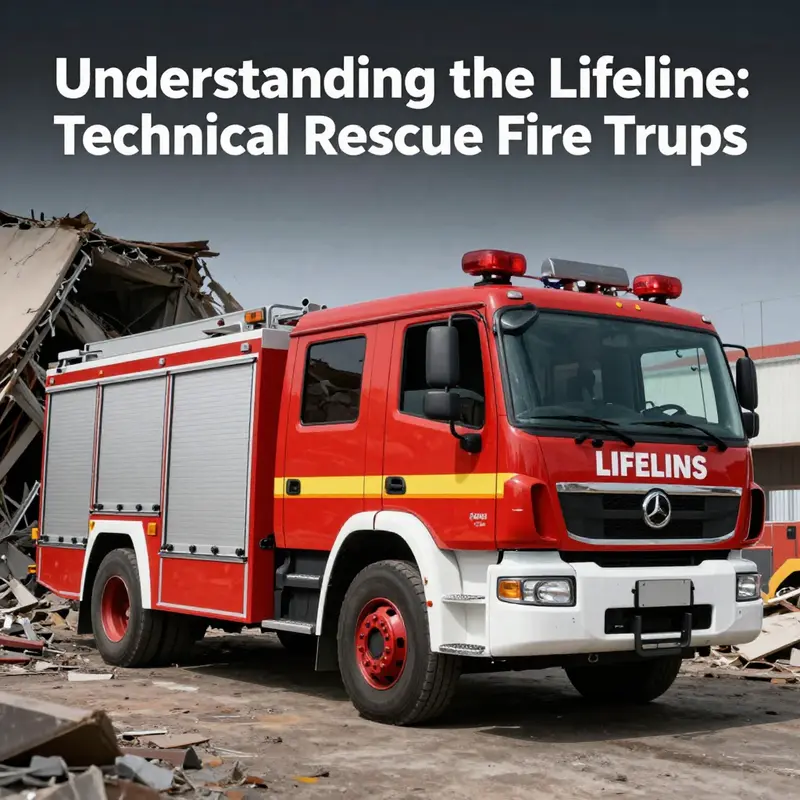
A technical rescue fire truck is not a single-purpose instrument but a mobile, evolving system built to confront the stubborn realities of danger where conventional tactics fail. In the most demanding incidents, where time, space, and physics conspire against the responder, these trucks stand as a compact workshop, a command post, and a shield. They are designed to respond not only to fires but to the wide spectrum of non-fire emergencies that demand precision, strength, and a patient, methodical approach. The chapter you are reading traces more than the silhouette of a vehicle. It traces a philosophy of resilience embedded in steel, hydraulics, and carefully organized space. It is a philosophy that sits at the intersection of engineering discipline and life-saving improvisation, where every bolt, hinge, and compartment has a purpose aimed at buying seconds and reducing risk for people in peril.
The essence of a technical rescue truck rests on three interwoven strands: structural integrity, tool system integration, and adaptive interior design. Structural integrity begins with a chassis and a frame that can absorb dynamic stresses while keeping the vehicle stable on uneven ground, slippery ramps, or debris-strewn environments. Reinforced frames and durable cross-members resist bending moments generated by heavy lifting, cutting, or stabilizing operations. This is not about brute mass at the expense of handling; it is about distributing weight so that lifting devices and stabilization jacks can work in harmony without tipping the platform. The vehicle’s weight distribution is balanced to maintain maneuverability in urban settings yet have adequate loading capacity for the most demanding rescue tools. The physics of rescue work demands robust protection against fatigue and sudden shifts in cargo, and the chassis is designed to withstand those demands without compromising operator safety or tool access.
A second pillar is the integration of tool systems that would otherwise require a sprawling workshop. The famous hydraulic cutters, spreaders, and rams—often dubbed the jaws of life in popular discourse—are not merely powerful. They are precisely mounted to respond in seconds to evolving scenes. These systems are typically driven by a heavy-duty hydraulic pump powered by an onboard generator, ensuring that work continues even when external power is unavailable. The hydraulic lines, hoses, and fittings are arranged for reliability and ease of maintenance, with fail-safes and redundancies that acknowledge the high-stakes nature of rescue work. The tools themselves are arranged to minimize the time spent reaching for the next device while maximizing the operator’s leverage, control, and accuracy. In a tight space, where every inch of clearance matters, the way tools are carried matters as much as the tools themselves.
A telescoping light mast, a compact crane or hoist, and a selection of lifting jacks are not ornamental adornments but essential components of the rescue workflow. The high-intensity lighting system illuminates work areas that refuse to yield to ambient light, while a crane or hoist provides a controlled means to move heavy debris or vehicles without endangering nearby victims or responders. When the scene is at street level, in a trench, or inside a collapsed structure, a single moment of uncertain visibility can turn a rescue into a tragedy. The lighting and lifting systems are designed to be robust, reliable, and easy to operate under stress, with intuitive control layouts that reduce cognitive load when responders are under pressure.
The interior architecture of a technical rescue unit is a study in purposeful compartmentalization. The interior is not a hollow shell; it is a modular system with configurable bays and drawers that can be tailored to anticipated needs. Departments customize configurations to emphasize the most recurrent scenarios—urban vehicle extrication, confined-space rescue, or industrial incidents with potential hazardous materials. In one layout, for example, medical trauma kits ride in easily accessible drawers near the hoseline controls, ready for rapid medical assessment or triage as soon as casualties are freed. In another configuration, rope and harness systems occupy a dedicated wall along with anchor points, enabling high-angle rescue operations without the responder needing to fumble through multiple cabinets. The ability to reconfigure these spaces means the same base vehicle can perform differently in successive incidents, a critical advantage when response resources are scarce or when different communities face distinct risk profiles.
The modularity extends beyond the drawers and bays into the electrical and air-supply infrastructure. A sophisticated electrical system manages a network of power and lighting, communication devices, and charging stations for PPE and life-support equipment. This system is designed to function as a stand-alone unit, capable of sustaining operations at a disaster site for extended periods. In hazmat scenarios, for example, the truck may host portable air supply units and filtration systems, enabling responders to work in contaminated environments without immediately trading safety for speed. The onboarding philosophy is clear: the technical rescue truck must offer a self-sufficient platform that does not demand a perfect external support network to stay effective on the front lines. The more independent a vehicle can be, the more flexible it becomes in remote or infrastructure-compromised settings.
The design philosophy also embraces stability and safety under dynamic conditions. During lifting, stabilizing, or vehicle stabilization tasks, operators depend on outriggers, counterweights, and dedicated stabilization gear to keep the platform steady. The combination of a strong chassis and an intelligent stabilization system reduces the risk of unintended movement when the crew applies force with the cutting or spreading tools. The quiet efficiency of the system—where power, hydraulics, and stabilization operate in concert rather than as separate, competing components—speaks to careful optimization. It is this quiet orchestration that allows a crew to work faster and safer, because there is less time spent troubleshooting mechanical hiccups and more time spent solving the live problem at hand.
The truck’s mobility and adaptability also hinge on its capability to perform across diverse terrains. Urban streets, rural byways, uneven ground behind a collapsed wall, or a slopeside hillside all demand a platform that can maintain grip, stability, and control. A robust four-wheel-drive arrangement, decent ground clearance, and a durable exterior shell contribute to this operational flexibility. The vehicle may also feature foam suppression systems and water pumps to address secondary hazards that arise during a rescue, especially when incidents involve fuel or chemical releases alongside entrapment or collapse. This synergy—between rescue-specific tools, hydraulic power, lighting, and mobility—defines the emergency response calculus. It is less about a single dominant feature and more about how a constellation of capabilities aligns to unlock safe and timely outcomes for victims.
This integrated philosophy also shapes how departments think about training and maintenance. A vehicle that can do many things will accumulate wear in many places; therefore, maintenance routines must be comprehensive and proactive. Regular checks of the hydraulic system, generator reliability, electrical circuits, and tool mounting are essential. The interior compartments require routine inspection to ensure that drawers open smoothly and that latching mechanisms hold under vibration and load shifts. The best technical rescue trucks are not just powerful machines; they are designed for longevity and predictable performance. Their design choices reflect a deep understanding that rescue work is as much about reliability as it is about raw capability. In practice, this means a commitment to high-quality construction, meticulous assembly, and ongoing calibration of controls so that responders can trust the platform with every decision they make on scene.
The multifaceted design also recognizes a broader strategic role for these trucks within the fire and rescue service. Beyond direct rescue, they function as a mobile command center, coordinating communications, scene assessment, and logistics as responders respond to evolving hazards. In the middle of a chaotic incident, a well-organized truck helps preserve situational awareness, enabling commanders to assign tasks, track resources, and maintain safety for both victims and teams. In this way, the vehicle contributes to the larger operational tempo, turning a potentially overwhelming scenario into a manageable sequence of focused actions. The vehicle’s interior and exterior cues signal to all on scene that expertise and discipline govern the operation, a psychological edge that often improves coordination and reduces the risk of missteps under pressure.
The concrete takeaway from this architectural and systems-based overview is not simply that a technical rescue truck is a toolbox on wheels. It is a carefully engineered platform whose structural design, tool integration, and interior adaptability are all tailored to the most exacting rescue demands. The truck embodies a philosophy that values modularity as a pathway to resilience. A department can start with a core platform and evolve it over time, adding compartments, alternative power sources, or specialized gear as the community’s risk profile shifts. The ultimate measure of success is not a single dramatic extraction but a sequence of safer, faster, and more predictable outcomes across a wide range of incidents. The truck’s ability to carry that promise rests on its underlying architecture: a durable frame, a harmonized hydraulic backbone, and a living interior that can morph to meet the moment.
For readers drawn to broader possibilities, the idea of scalable, adaptable rescue vehicles is echoed in modern-day discussions about comprehensive customized fire trucks for developing countries—meeting diverse rescue needs efficiently. This approach illustrates how the central principles translate across contexts, reinforcing that the core objective remains constant: to extend human reach into danger with tools, training, and a vehicle that keeps pace with evolving threats. comprehensive customized fire trucks for developing countries—meeting diverse rescue needs efficiently. The narrative here is not a sales pitch but an invitation to recognize how structure and strategy converge in the best rescue platforms, turning engineering into life-saving capability. In the broader arc of the article, this chapter integrates the materials on tool arsenals and performance standards, showing how each design choice ripples outward to affect outcomes in fire and non-fire emergencies alike. The emphasis on modularity, stability, and autonomy threads through subsequent discussions of how departments deploy these trucks in different regions, how they train crews to exploit their full potential, and how maintenance regimes ensure readiness for the long-haul of public safety operations.
From a practical perspective, a modern technical rescue truck embodies a deliberate balance between weight, reach, and accessibility. Every tier, every cabinet, every mounting bracket is placed with a specific rescue sequence in mind. A responder entering a vehicle with entrapment will face a controlled workflow: stabilize the scene, establish power and illumination, select the appropriate cutting or spreading tool, and advance toward the objective with a clear plan. The design supports this flow by resisting fatigue and enabling rapid, repetitive action without compromising safety. It is the convergence of structure and strategy that makes these trucks so effective in the field. When a crew arrives at a complex scene, the truck does not merely supply gear; it supplies confidence, order, and predictability under pressure. That is why the engineering of these platforms deserves equal attention to the artistry of rescue work—the artistry of knowing how to apply force, where to place a stabilizer, and how to read a scene as a dynamic puzzle that demands both patience and decisiveness.
As the chapter closes on this portrait of resilience, imagine the rescue team arriving at a site where space is constricted, debris shifts underfoot, and a life may depend on a relentless sequence of precise actions. The truck’s robust chassis and modular interior do not just withstand the environment; they actively shape the responders’ ability to work within it. The vehicle becomes a partner in the rescue, translating the operator’s intent into mechanical action with a reliability born of thoughtful design and careful testing. In this sense, technical rescue trucks are not merely tools of intervention. They are instruments of disciplined action, capable of turning what could be a disjointed and dangerous operation into a coordinated, life-saving mission. The story of their versatility and structural design is, at its core, a story about how engineering serves courage—by providing a platform that respects the gravity of the moment and amplifies the hopeful intent of every rescuer who climbs aboard.
External reference for further technical perspective: Technical rescue fire trucks—design and capabilities
Final thoughts
Technical rescue fire trucks embody the essence of modern emergency response, equipped with a comprehensive suite of tools and systems designed to tackle complex challenges. By understanding the critical features, specialized equipment, and the structural versatility of these vehicles, community members can appreciate their indispensable role in ensuring safety and rapid intervention in crises. Therefore, the next time one sees a technical rescue fire truck in action, it serves as a reminder of the collaborative efforts of emergency responders who work tirelessly to save lives.