
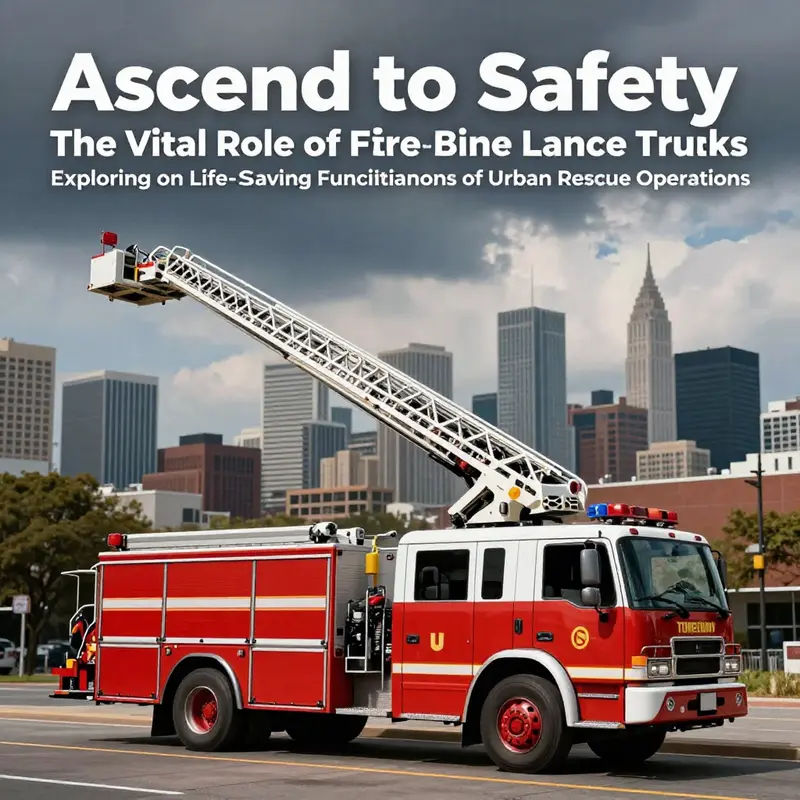
Fire engine ladder trucks are indispensable assets in emergency situations, particularly in urban environments teeming with high-rise structures. These specialized vehicles are designed to provide quick aerial access for firefighting and rescue operations. Equipped with powerful hydraulic ladders and versatile turntable platforms, they enable firefighters to reach individuals trapped in perilous situations on upper floors. Understanding the profound significance and operational capabilities of ladder trucks sheds light on their role during emergencies. In the following chapters, we will delve into the critical functions that define ladder trucks, the technical specifications that empower them, and a real-world case study illustrating their impact during rescue operations. By exploring these dimensions, we can gain a comprehensive appreciation for how these vehicles drive toward the lifelines of countless individuals facing emergencies.
Ascending to Save: The Ladder Truck’s Critical Role in Urban Rescue
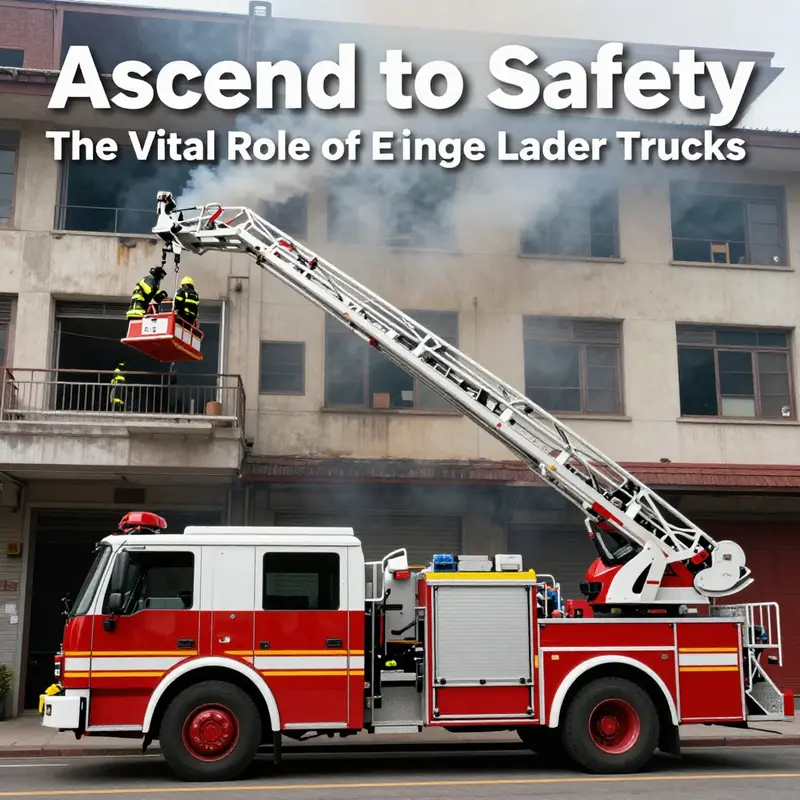
From the curb to the skyline, the moment the siren cuts through the street, a fire engine ladder truck begins its measured ascent toward danger and relief. The vehicle itself is a fusion of weight and grace, a machine built to translate ground-level power into elevated access. When it arrives at a rescue incident, the scene shifts from motion and noise to a choreography of precision. Outriggers lock the chassis to the pavement, the hydraulic motors hum, and the extended ladder breathes with a patient, almost mechanical patience. The crew rotates into their roles with practiced economy: the driver maintains position and stability, the aerial operator begins a deliberate ascent, and a second team stands ready in the bucket to conduct searches, ventilate, or assist with victim care. This is not simply a tool for climbing higher; it is a mobile, elevated platform for survival—an adaptable stage where life-saving acts unfold before a crowd of anxious bystanders and under the watchful eyes of incident command.\n\nThe ladder itself is a marvel of function. Most systems extend from a base to a vertical reach of seven to ten stories, depending on the model, and some can press even farther when wind and weight allow. The ladder is both a lifeline and a ladder to possibility. It can telescope to reach over balconies, tuck into narrow alcoves, and, with careful articulation, align with a window frame or an open stairwell. At the end of the gleaming steel, a turntable platform—often called a bucket—gives firefighters a stable perch close to the danger, transforming the jump across a yawning distance into a controlled, accessible operation. The bucket is more than a seat; it is a workstation in which a firefighter can ventilate a room, establish line-of-sight to a victim, and coordinate with crews below while maintaining a protective posture against heat and smoke. The controls, redundancies, and monitoring systems aboard the basket ensure that the operator can respond to subtle changes in the scene—wind gusts, shifting debris, or an unexpected flare of flame—without surrendering safety.\n\nThis aerial prowess, however, sits within a larger engine of emergency response. A common misconception is that the ladder truck’s primary function is to pour water from above. In truth, the ladder’s central purpose is to unlock vertical space, granting access to higher floors and enabling actions that ground-based apparatus cannot easily perform. From the elevated vantage point, firefighters can perform forced-entry work, break or clear a ventilation path, or create escape routes for civilians. They can also manage a direct attack from above, applying water or foam through hoses that are threaded along the ladder or delivered via the master stream at the ladder’s tip. The combined effect of elevation and water makes it possible to suppress a fire more efficiently, as heat and smoke are vented away from occupants and the flames are contained by directing attention to the most critical zones—the floors where people are trapped and the rooms where the temperature remains lethal.\n\nIn urban environments, where streets thread through dense blocks and high-rise silhouettes dominate the horizon, the ladder truck functions as a bridge between street-level action and rooftop or mid-floor operations. The density of urban architecture means that many rescues must happen in places where stairs are blocked, elevators are unreliable, or access routes are overwhelmed by smoke. The ladder provides a safe route to reach these spaces, a route that is not constrained by the geometry of the building’s interior. It is a key element of a layered response, complementing ground crews who advance hose lines, search teams who systematically comb through floors, and incident commanders who must see, from above, where the fire is spreading and where people are most at risk. In such contexts, the ladder truck is more than a tool; it is a platform for situational awareness, a moving observation post that informs every subsequent decision.\n\nThe collective value of the ladder shows up most clearly in the way it reshapes scene management. When the truck finds a position that offers sightlines across a building’s facade, a commander can direct resources with a confidence born of perspective. From above, the firefighting operation becomes an integrated map of actions: where to place responders, which windows to ventilate, and which doors to secure to prevent backdraft or flashover. Thermal imaging and digital displays wired to the cab or the platform help refine this map in real time. Having a direct, elevated view is not merely a tactical advantage; it is a safety multiplier for every person on the scene. A well-placed bucket can reduce the time needed to locate a victim while also allowing rescuers to coordinate with ground teams, ensuring that hoses and ladders do not tangle in a maze of beams and debris.\n\nThe ladder’s role in high-rise and dense-urban incidents is shaped by ongoing training and the disciplined rhythm of the crew. The driver works with the truck’s weight and wind conditions, adjusting stance and outriggers to keep the base solid. The aerial operator—often a veteran firefighter with complex cockpit knowledge—manages lean angles, extension speed, and the delicate balance between reach and stability. A third crew member in the bucket handles victim rescue, but they also participate in ventilation tasks or can guide a search through smoke-logged corridors from an elevated position. The depart-and-respond tempo of this unit makes every moment count. Decisions are made with an ether of calmness born from repetition: confirm a target, deploy the ladder, align the platform, verify the person on the other end is ready to be assisted, then begin the careful extraction as a coordinated pair below moves to provide support. The process is less a sprint and more a practiced waltz that keeps pace with the fire’s unpredictable choreography.\n\nAs this choreography unfolds, the ladder truck operates within a broader system of urban resilience. The ladder is one component among high-rise response strategies that include building codes designed to limit vertical fire spread, dedicated stairwells for egress, and post-fire recovery protocols that prioritize occupant safety. The integration of the ladder with other units—engine companies, rescue squads, and incident command—emerges through pre-incident planning and after-action reviews that refine tactics and safety practices. The ladder’s reach allows for rapid, decisive action that can alter the arc of a fire’s development, but it also introduces the necessity for meticulous coordination. The bucket must be kept clear of power lines and glazing, the hoses must be managed so they do not snag or whip dangerously, and the platform’s operators must communicate clearly with those on the ground to ensure that a rescue does not become a secondary hazard. In short, aerial response heightens both possibilities and responsibilities: it extends life-safety options while amplifying the need for discipline and discipline’s companion—communication.\n\nThe urban scale also invites reflection on the balance between resource allocation and the needs of diverse communities. The statistics offered by national safety standards bodies remind us that high-rise incidents, while concentrated, are a defining feature of modern cities. In large metropolitan centers, a notable share of structural fires involve multi-story structures where a ladder’s access can dramatically shift outcomes. The ladder’s role in such contexts is to increase the probability that occupants outside the immediate reach of ground-level stairs can be found, sheltered, and evacuated safely. It also creates opportunities for early, above-the-fire intervention that can limit the spread to adjacent apartments and corridors, preserving more of the building’s integrity and reducing the risk to civilians still inside. This is why aerial apparatus is embedded in standard urban response protocols—a recognition that height, geometry, and the distribution of people across floors demand a specialized tool capable of turning vertical space from a barrier into a route of rescue.\n\nThe human dimension of this work also deserves emphasis. Training regimes emphasize more than technique; they cultivate the calm, decisive presence that a rescue demands. Rehearsals cover the ladder’s mechanics under varying wind conditions, the way to manage a victim’s weight through a traverse in the bucket, and the sequence for handing a survivor to paramedics waiting on a landing above the street. The mental rehearsal translates into a steadier, more humane response under pressure. The ladder crew becomes a visible symbol of the city’s commitment to safety and resilience, a reminder that urban life is supported by teams who work in harmony to keep people out of harm’s way even when the smoke is heavy and the clock is ticking.\n\nThis chapter’s lens on the ladder truck is not limited to what can be seen on the street during a single incident. It also invites consideration of how cities plan for emergencies in a way that integrates aerial capabilities with broader strategies for building performance, occupant safety, and post-incident recovery. A well-conceived plan recognizes that the ladder’s greatest payoff comes when it is part of a system that prevents high-rise tragedies from escalating—not merely by fighting fires but by enabling rapid, compassionate rescue when prevention gaps become real concerns. In that sense, the ladder is a conduit of both response and reassurance, a platform that stands between danger and daylight, between confusion and clarity.\n\nAs urban futures unfold, the discussion about aerial response evolves alongside architectural trends and evolving risk profiles. Some agencies seek comprehensive customizable fire truck solutions for developing countries to address diverse rescue needs and budget realities. This approach acknowledges that even as high-rise threats in major cities drive demand for aerial capabilities, other communities require adaptable, cost-conscious configurations that can scale with risk. The ladder’s design philosophy—versatility, reach, and safe operation—therefore becomes a broader template for how emergency services think about mobility and access. The same principles that guide an urban firefighting fleet can inform efforts to strengthen rescue capacities in different environments, whether a sprawling metropolis or a developing town where space and resources are constrained. For readers curious about how such adaptable frameworks are built, this broader perspective helps illuminate the ladder’s core purpose: to extend the reach of care when it matters most.\n\nThe ladder truck’s story is ultimately a human story, told in steel and hydraulics but carried forward by people who train, cooperate, and risk their own safety to save others. It is about how a city converts fear into action, how a crew’s calculated movements translate into a window of hope for someone trapped on a higher floor, and how the equipment’s reach is matched by disciplined teamwork on the ground. When the ladder climbs, the narrative becomes more than a sequence of mechanical steps; it becomes a testament to organized care—an astonishing blend of engineering, training, and courage that makes a high-rise rescue not only possible but probable when communities need it most. The scene, in other words, is less about height and more about humanity—about using every inch of the ladder to bend toward safety and bring someone home.\n\nTo conclude this exploration without reducing its complexity, consider the ladder truck not as a singular device but as a dynamic component of urban safety. Its value lies not only in its capacity to reach upper floors but in the way it reframes the way responders think about space, access, and vulnerability. It is an instrument of access, a platform of protection, and a symbol of the city’s readiness to respond with precision when volatility rises. In every incident where a ladder is deployed, the outcome rests on a blend of design, training, and teamwork—the three pillars that underpin the ladder truck’s enduring impact on emergency responses in dense urban landscapes. The ascent is more than a climb; it is a deliberate act of care, a careful crossing from peril toward safety on a platform built to bear both weight and hope. \n\nExternal resource: For additional context on the regulatory and standard framework guiding aerial firefighting apparatus, see NFPA 1901: Standard for Automotive Fire Apparatus. NFPA 1901 Standard for Automotive Fire Apparatus.
null
null
Commanding Heights: How Fire Engine Ladder Trucks Transform Urban Rescue Missions
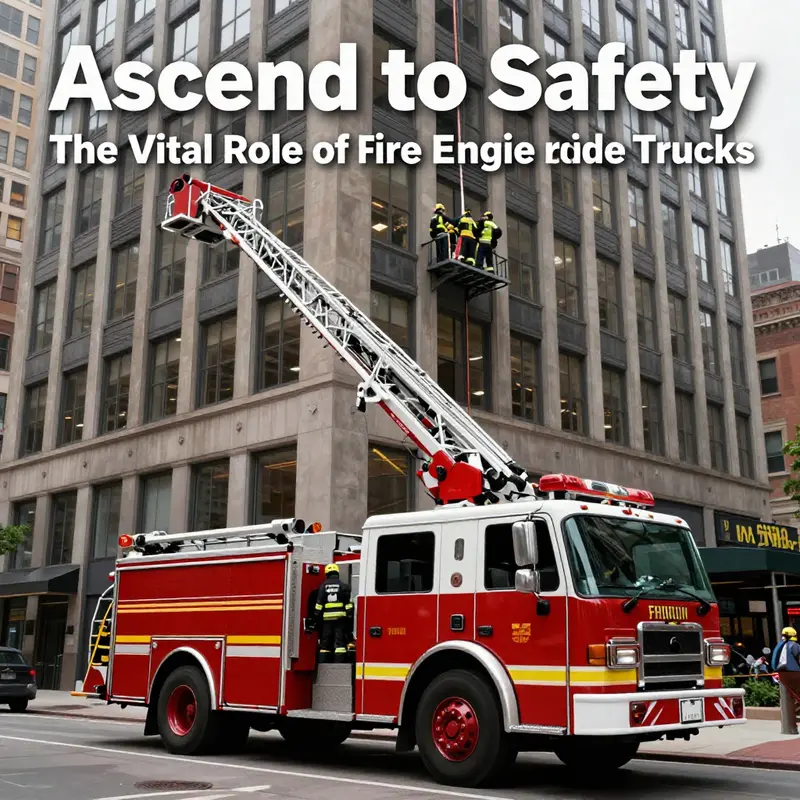
In the urban landscape dominated by towering skyscrapers and complex building clusters, fire engine ladder trucks emerge as indispensable instruments in the firefighting arsenal. These specialized vehicles embody the intersection of engineering, strategy, and human courage, designed explicitly for the rigors of high-rise rescues and firefighting operations where conventional ground equipment falls short. Their intricate hydraulic aerial ladders, capable of extending beyond 30 meters, enable emergency crews to reach perilous heights swiftly, circumventing obstacles such as blocked stairwells or malfunctioning elevators, which often jeopardize evacuation and rescue efforts.
A vivid illustration of their critical role unfolded during a major fire in 2023 in a 40-story residential tower in downtown Chicago. When flames ignited on the 35th floor, the usual limitations of ground-based apparatus became apparent. The sheer vertical scale of the building and intense fire conditions hindered direct access—making it impossible for standard fire engines to deliver aid effectively at higher levels. Responding with urgency, multiple fire departments deployed a fleet of aerial ladder trucks, each equipped with telescoping ladders and elevated platforms to overcome these challenges.
As these ladder trucks navigated the dense urban streets, their arrival marked a turning point in the rescue operation. With ladders reaching balconies several floors above the blaze, firefighters executed a multifaceted response. Victims trapped by fire and smoke found safe exit routes through these aerial access points. Meanwhile, firefighting crews positioned on the hydraulic turntable platforms were able to apply water streams directly into the fire zone, curbing its spread from vantage points previously inaccessible. This approach not only expedited the rescue of numerous residents but also significantly minimized fire damage and potential casualties, showcasing the ladder trucks’ unmatched value in metropolitan emergencies.
Beyond facilitating direct rescue, fire engine ladder trucks fulfill several essential operational functions that dramatically enhance urban firefighting effectiveness. Their extended reach enables them to bypass compromised internal building systems, which often stall ground-level firefighting efforts. This rapid vertical access is crucial in high-rise fires where every second counts and traditional evacuation routes may be compromised or perilous.
Moreover, these vehicles enhance search and rescue capabilities. Firefighters can perform comprehensive visual sweeps and physical searches from elevated positions, quickly identifying trapped or unconscious victims that might otherwise be missed or unreachable. The presence of aerial platforms allows specialized teams to safely execute extrications or medical interventions in precarious situations, bridging the gap between chaos inside burning structures and the safer environment outside.
Ventilation, a critical component in controlling fire behavior, is another key tactical advantage offered by ladder trucks. By gaining access to windows, roof hatches, or other openings, crews can release toxic smoke and excessive heat, improving air quality within the structure for both occupants and responders. This ventilation not only aids in visibility and survivability but also tempers fire intensity, assisting in containment and suppression efforts.
Navigate a ladder truck through the dense, congested urban environment presents its own set of challenges, however. Narrow streets crowded with parked vehicles, low-hanging power lines, streetlights, and overhead signage require precise maneuvering and situational awareness. Deploying these massive vehicles demands well-planned positioning to ensure the extension of the aerial ladder without hindrance, providing maximum operational flexibility.
In response to these logistical obstacles, recent advancements have focused on incorporating advanced route-planning technologies within emergency response frameworks. Research such as the 2025 National Institute of Standards and Technology (NIST) study introduced multi-criteria decision-making models designed to optimize the deployment pathways of high-arm fire trucks. These systems analyze variables including street width, traffic conditions, overhead obstructions, and proximity to the incident scene to chart the most time-efficient and safe routes for these specialized vehicles. By integrating such models into dispatch protocols, fire departments can significantly reduce response times and enhance coordination, ultimately improving rescue outcomes.
The technological evolution of ladder trucks themselves also reflects this drive for operational efficiency and safety. Modern units often come equipped with features such as automated leveling systems, load sensors, and weather-resistant hydraulic mechanisms that maintain stability and control during complex maneuvers and in adverse conditions. Additionally, the shift toward platform-equipped aerials—sometimes called “bucket trucks”—enables firefighters to work securely at high elevations, performing delicate rescue or firefighting tasks that would be impossible from fixed ladders alone.
Understanding the critical role ladder trucks play in high-stakes urban firefighting is incomplete without acknowledging the dedicated personnel who operate them. Firefighters entrusted with these vehicles undergo rigorous training to master operation under pressure. Their expertise encompasses precise vehicle placement, ladder extension and angle adjustments, safe platform operation, and tactical coordination with ground teams. This human element, combined with cutting-edge equipment, underpins the ladder truck’s effectiveness as a lifeline in urban emergencies.
The Chicago incident further underscores the importance of interdisciplinary collaboration during urban fire responses. Coordination between multiple fire departments, communication with building management, and engagement with medical teams on-site demonstrated how ladder trucks serve as pivotal nodes in a complex network of responders. Their capacity to deliver personnel and equipment to hard-to-reach locations fosters a flexible, scalable approach to managing large-scale incidents that can adapt to changing dynamics on the ground.
Beyond immediate firefighting and rescue, the presence of ladder trucks facilitates damage mitigation strategies such as preventing fire spread to neighboring buildings—a constant threat in densely populated city centers. By allowing firefighters to attack fires from above, these trucks help isolate affected areas and provide containment lines where ground-based efforts alone would falter.
It is important to recognize that ladder trucks represent a synergy of mobility, engineering, and tactical foresight tailored to urban environments. Their deployment reflects a broader philosophy of preemptive readiness and rapid, adaptable response designed for the unique challenges of modern cities. Initiatives to enhance their integration into emergency systems, both technologically and operationally, continue to evolve, ensuring these vehicles remain at the forefront of urban firefighting capability.
For emergency services and urban planners alike, the lessons gleaned from ladder truck deployments influence architectural design, safety protocols, and infrastructure planning. Buildings equipped with features that accommodate aerial ladder operations—such as accessible balconies or reinforced roof hatches—improve the effectiveness of such rescue efforts. Similarly, urban design considerations that maintain clear access routes and minimize obstructions enhance the ability of ladder trucks to respond efficiently.
In this context, fire engine ladder trucks do more than just ascend facades; they symbolize the prioritization of human life through methodical engineering and tactical innovation. Their story within the high-rise firefighting narrative exemplifies how specialized equipment, when combined with skilled operators and strategic planning, transforms the daunting task of urban rescue into a controllable and ultimately life-saving endeavor.
For further insights on emergency readiness in complex scenarios, exploring in-depth resources on firefighting strategies can provide valuable context and practical knowledge such as the expertise covered in this detailed blog on becoming a great conversationalist, which highlights communication skills equally vital during coordinated emergency responses.
To explore more about advancements in optimizing fire truck deployment and their impact on urban rescue efficiency, refer to the National Institute of Standards and Technology’s comprehensive coverage of their 2025 study: Study Optimizes Route Planning for Aerial Ladder Trucks in Urban Emergencies.
Final thoughts
Fire engine ladder trucks are vital to urban emergency response strategies, proving their significance beyond mere firefighting. Their ability to reach heights and access precarious locations defines the edge they provide in rescue operations. Understanding their function and technical specifications highlights how they work relentlessly to save lives in emergencies, offering essential support to firefighters and victims alike. Through continued investment in such technology and training first responders effectively, communities can ensure readiness in the face of unforeseen emergencies. Ladder trucks are not just vehicles; they represent a commitment to safety and community resilience.