
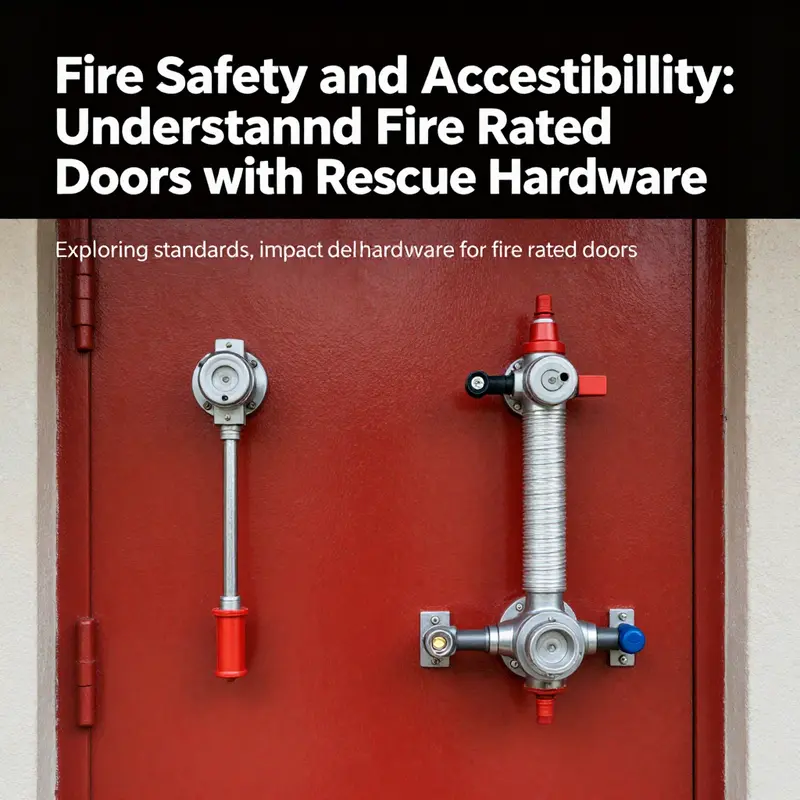
Fire safety is a critical concern for residential and commercial buildings alike. The proper selection and installation of fire rated doors, particularly those equipped with rescue hardware, play a vital role in ensuring safe egress during emergencies. The intricacies of fire rated doors involve adherence to specific standards and requirements, which ensure that these doors effectively maintain their fire resistance while facilitating swift exit. This article delves into the standards and requirements of fire rated doors with rescue hardware, the impact of this hardware on overall fire safety, and guidelines to select the right rescue hardware, providing a comprehensive understanding for residents, firefighters, educators, and emergency personnel.
Guarded Exits: The Realities of Fire-Rated Doors with Rescue Hardware
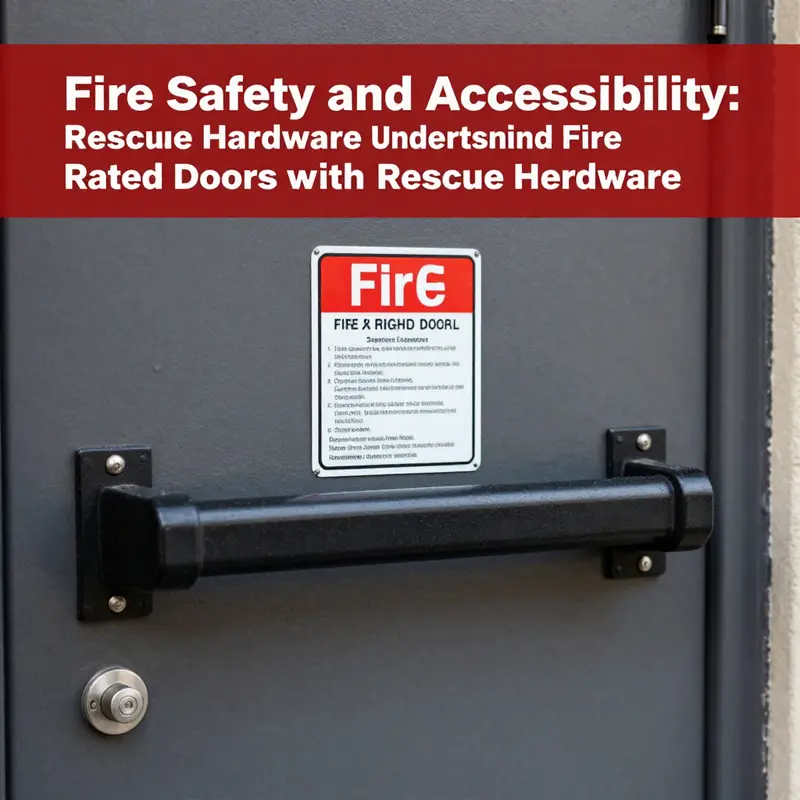
A fire-rated door with rescue hardware is not a contradiction in terms, but a carefully engineered agreement between protection and accessibility. When a building design prioritizes life safety, it treats doors not as inert barriers but as active components of an egress system. The question, can you have a fire-rated door with rescue hardware, is best answered with a qualified yes—the door can carry a fire rating and still accommodate the rapid, unobstructed egress that panic hardware provides. The catch is that the hardware and door must be designed, labeled, and installed to function as a single, certified assembly. Without that integration, the very rating that protects lives may be compromised. The belief that safety comes from a door alone is a common oversimplification. In truth, a rated door relies on the surrounding frame, the mounting hardware, the closing device, and the way the assembly behaves during repeated emergency openings. The integrity of the system depends on adherence to standards, careful installation, and ongoing maintenance.
Standards act as both a compass and a test. The life safety code, most notably NFPA 101, frames the expectations for doors serving as means of egress. It makes clear that where occupancy exceeds certain thresholds, doors serving those spaces must be equipped with approved panic hardware. The hardware isn’t merely a lever or bar; it is a mechanism that must withstand repetitive loading during emergencies. The labeling that accompanies fire-rated doors and the hardware attached to them is not cosmetic. Labels declare that the assembly is suitable for emergency egress and for the fire rating it carries. They assure the authority having jurisdiction that what they see on the door and on the hardware is a matched, tested solution. When a building uses panic hardware that isn’t certified for fire-rated doors, the entire fire assembly can be compromised. The risk is not merely a mislabel; it is the potential loss of the door’s ability to resist heat and flames while still providing quick escape. This is why many codes require, or at least strongly encourage, a fully certified, integrated door assembly when panic hardware is part of the plan.
A central misunderstanding concerns the distinction between the door’s fire rating and the hardware’s rating. The hardware must be appropriate for fire-rated doors. It might be labeled with its own fire rating and size limitations, but more crucially, it must be designed to work in harmony with the door’s fire-resistance characteristics. Electrified panic hardware, for example, has specific certification criteria. If a piece of electrified hardware is used that is not certified for fire-rated applications, its presence can void the fire rating of the door and frame. Such a mistake often occurs during retrofit projects, when someone tries to install a preferred hardware style after construction without considering the fire-rated implications. The risk is that the assembly is treated as a substitution rather than an integrated system, and the safety margins the building relied upon shrink accordingly.
The labeling conversation extends beyond the door to the door’s complete assembly. The door, frame, hinges, and hardware must be tested and certified as a whole. This is not a case of mixing and matching components at will; it is a process of selecting parts that are tested to work together under fire exposure and during repeated operations. Labels on both the door and the hardware inform inspectors and maintenance crews that the assembly has clearance to perform under the conditions for which it was designed. In different regions, the precise standards and proof requirements may vary. Some jurisdictions emphasize UL-listed components, others CE-certified products, and some may align with regional civil defense requirements. Nevertheless, the core principle remains: a certified door assembly is a tested system, and the reliability of that system depends on maintaining the integrity of every component and its connection to the others.
In practical terms, this translates to a set of performance criteria that are not merely about keeping heat out. The door’s rating often corresponds to a portion of the surrounding wall’s rating. A common rule of thumb is that the door assembly is rated at roughly three-fourths of the wall’s fire rating. If a wall is rated for 90 minutes, the door may be rated for around 60 minutes. This ensures that the door remains in place long enough to allow occupants to evacuate and for fire services to respond, while the assembly as a whole withstands heat and structural pressures for the duration needed to maintain life safety. When glass is present in fire-rated doors, its presence is not ignored. The vision light may carry extra protections—wire mesh glass or ceramic glass—to maintain thermal and structural integrity. The goal is to prevent a compromised opening during a fire from becoming a new avenue for heat and flame to reach occupants quickly.
In zones where temperatures might rise rapidly, such as stairwells or corridors near critical egress paths, temperature rise protection becomes a consideration. These are sometimes referred to as temperature-rise doors. They are tested not only for their mechanical performance but also for how well they resist heat transfer, ensuring occupants have a window of safety during evacuation. This is one clear example of how the fire-rated door and rescue hardware conversation stretches beyond simple label checks. It is about the door’s ability to remain functional and safe under fire conditions while still offering a reliable escape route.
A key thread through this discussion is the importance of installation discipline. The best-rated door can fail if installed incorrectly. A frequent mistake is retrofitting or installing unrated or inadequately rated electrified panic hardware after construction. If the hardware is not certified for fire-rated doors, the door’s rating can be undermined, even if the door itself is considered high quality or highly rated. The consequences are not merely theoretical. In the event of an emergency, a door that fails to perform as expected can trap occupants, impede egress, or allow heat and smoke to spread more quickly. The safety philosophy behind fire-rated doors with rescue hardware is that each component must be compatible with the others and with the building’s design. Any deviation from validated configurations invites risk.
The integration of rescue hardware into a fire-rated door is also a matter of ongoing maintenance and inspection. Codes require periodic checks to ensure that the hardware still functions as intended, that the door continues to seal properly when closed, and that the egress path remains unobstructed. This maintenance is not a bureaucratic exercise. It is a practical safeguard for life safety. If a door’s closer loses its effectiveness, if misalignment creeps in, or if a hold-open device interferes with the door’s ability to close under fire conditions, the entire rating can be jeopardized. Maintenance routines that focus on alignment, latch engagement, and the integrity of seals preserve the door’s fire-resistance performance while keeping the egress path clear and intuitive for occupants under stress.
The design conversation also touches on the human factor. Rescue hardware is chosen not only for mechanical performance but for how occupants will interact with it during an emergency. Panic hardware is designed to be simple to operate, often by applying a single force against a horizontal bar. In most jurisdictions, the design must accommodate a broad spectrum of users, including children and people with mobility challenges. That accessibility requirement cannot be at odds with the fire-resistance performance. The hardware must unlock reliably when a push is applied, but it must not disengage without user intention during normal use. The correct balance is achieved through testing and labeling that assures both rapid exit in emergencies and consistent safety in routine operation.
For designers and facility managers who are balancing safety, cost, and aesthetics, the temptation to select alternate hardware pathways outside the tested systems can be strong. Yet the consequences of non-conformance extend beyond code compliance. A door that relies on a non-rated or improperly rated device is a door whose fire rating could be invalidated during inspection. The resulting liability is not just about fines or delays in occupancy; it is about the potential for tragedy in an emergency. That is why many jurisdictions insist on a fully certified, integrated approach to fire-rated doors with rescue hardware. The door, the frame, the hinges, the closer, and the panic hardware are not separate purchases; they are parts of a single, certified system that has been tested to perform together when heat, smoke, and high winds of urgency are at play.
Where does the design conversation lead when planning for new construction or major renovations? It begins with a clear understanding of occupancy, egress paths, and exit requirements. NFPA 101 provides the broad framework, but local authorities guide the specifics. In areas where occupancy exceeds 50, certain egress doors must be equipped with panic hardware. The practical implication is this: if you are planning spaces such as schools, offices, healthcare facilities, or multitenant residences, you should anticipate the need for panic hardware on doors serving these areas. Don’t assume a standard door can be retrofitted with any hardware and still carry its fire rating. The structural reinforcement required to withstand repeated egress operations during a fire is not universal; it is defined for each assembly. The reinforcement is what allows the door to maintain its integrity when the hardware is activated, and it is the reason why labeling and certification are non-negotiable.
The human and organizational aspects of compliance are just as important as the technical ones. Owners, designers, and facility managers must coordinate with the AHJ—authority having jurisdiction—to confirm that the chosen assembly meets the local code requirements, testing protocols, and labeling expectations. Documentation matters. A door that ships with a complete set of labels for both the door and the hardware communicates a tested, approved combination. The labels tell inspectors that the assembly has been tested as a system and that it will perform as intended when a real emergency occurs. In the absence of such documentation, even a seemingly compliant door can become a point of contention during inspections or in the aftermath of an incident.
It is also worth reflecting on how design concepts evolve. The industry continues to explore ways to harmonize safety with sustainability, aesthetics, and user experience. Some facilities are exploring integrated design approaches that seek not only to meet code requirements but to create spaces that are safer and more welcoming to occupants. In this context, durable materials, energy efficiency, and thoughtful visibility features can coexist with the strict requirements of fire-rated door assemblies. The fire-rated door with rescue hardware is not a relic of past code thinking; it remains a living, evolving element of modern life safety design. In discussions about durable, safe, and sustainable building practices, reference to innovative examples can be instructive. For readers who want to explore design concepts in a broader safety and community context, the idea of a resilient, health-conscious firehouse exemplifies these aims. See the discussion in The Green Firehouse, which looks at creating sustainable spaces for community and health, and consider how such design principles might dovetail with rigorous egress safety requirements. the-green-firehouse-creating-sustainable-spaces-for-community-and-health.
In sum, the existence of a fire rating does not preclude the use of rescue hardware. The two concepts are compatible when the hardware is selected and installed as part of a certified door assembly that has been tested and labeled accordingly. The door must be reinforced to withstand the loads generated when the hardware is engaged, particularly under panic conditions. The labeling must declare not only the door’s fire rating but also the hardware’s compatibility and the size limitations that govern its use. When these conditions are met, a fire-rated door with rescue hardware serves its dual purpose: it preserves the building’s integrity under fire while preserving the occupants’ ability to exit swiftly and safely. And when maintenance and inspection programs are in place, this dual purpose is sustained over the life of the building, rather than merely becoming a box checked during commissioning. The everyday reality for building owners is that fire-rated doors with rescue hardware are part of a living safety system, one that requires diligence, coordination, and a steadfast commitment to proven, certified configurations. The payoff is clear: a door that can resist heat long enough for people to get out, and a hardware that performs exactly when it’s needed most.
External resource for further guidance: For authoritative testing and code-based protocols, consult NFPA 101: Life Safety Code. https://www.nfpa.org/Code-Development/All-Codes-and-Standards/700-Series/NFPA-101-Life-Safety-Code
Rescue-Ready Fire Doors: How Fire Ratings Coexist with Rescue Hardware for Safer Egress
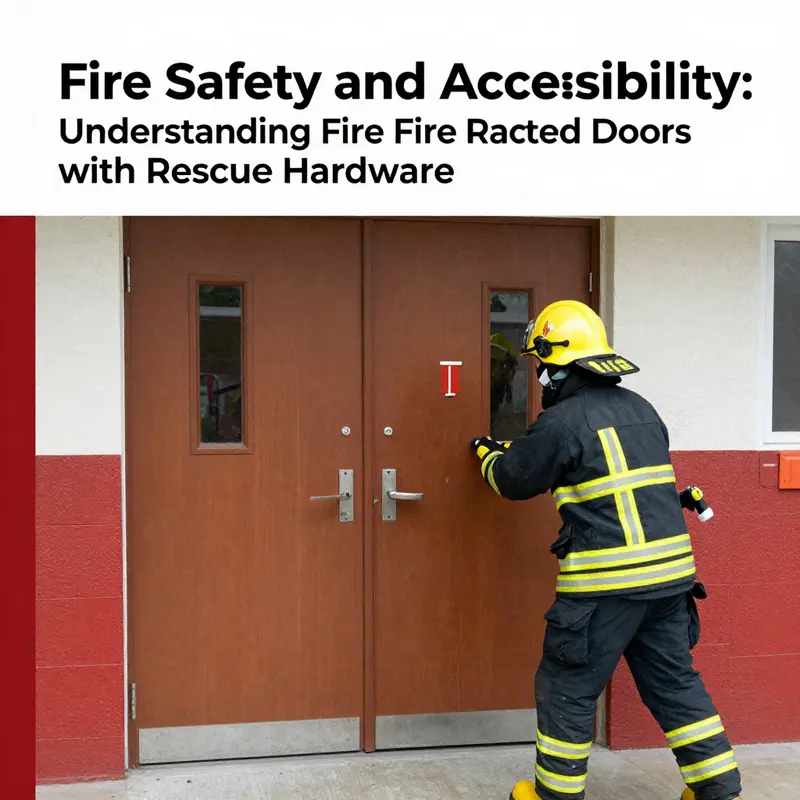
Can a door that blocks flames at the height of a calamity also serve as a reliable channel for rapid escape and rescue? The short answer is yes, but with a precise logic behind it. Fire rated doors are designed to resist heat and maintain enclosure integrity for a defined period. Rescue hardware—often called panic hardware or emergency exit hardware—exists to ensure that in a panic or rescue situation, people can push through quickly and with minimal delay. The two concepts are not enemies; they are teammates when the hardware and the door are carefully selected, properly labeled, and installed as a tested fire-rated assembly. The core idea is that the door, the frame, and the hardware all participate in a single, certified system. When an emergency occurs, the system must open smoothly, seal appropriately after passage, and not compromise the fire rating of the door assembly. This is not a matter of preference but a matter of safety, legal compliance, and engineering integrity.
From the outset, the concern about mixing a fire rated door with rescue hardware typically centers on the risk of invalidating the door’s fire rating. Fire rated doors are part of an assembly that includes the door itself, the frame, the hardware, the seals, and the glazing. Each element contributes to the overall performance during a fire. If the hardware is not designed for fire-rated service or is installed after a fire rating was established without re-certification, the entire assembly can be deemed unfit for its listed rating. The consequence is not just a paperwork issue; it is a tangible safety risk, because a door that fails under load or warps under heat may no longer provide the intended containment, or it may fail to maintain a safe egress path during a fire, smoke, or heat event.
The practical requirement, therefore, is straightforward in principle and exacting in practice: a fire-rated door can include rescue hardware only if the hardware is rated for use on fire-rated assemblies and is properly labeled for that purpose. The labeling serves as a guarantee that the hardware has undergone appropriate testing and that the manufacturer accepts responsibility for its performance within the fire-rated door assembly. This is why reputable authorities—whether they are code officials, insurers, or safety consultants—advise selecting panic hardware and exit devices that specifically state their suitability for use on fire-rated doors. The hardware must also carry a price of entry that aligns with the door’s rating and with the environmental conditions in which the door operates. In many jurisdictions, the label on the door itself will indicate that the door is intended to be used with panic hardware, and the hardware will bear its own fire rating alongside size limitations and mounting requirements.
The logic of rating together with labeling is not mere bureaucracy. It arises from the reinforcement that occurs around the door and frame to withstand the repeated forces of emergency egress. When people push, pull, and pass through during a crisis, the hardware endures forces that could otherwise loosen hinges, bend latches, or damage the frame. In a non-rated configuration, those forces could degrade the door’s ability to act as a fire barrier in the minutes, or even seconds, after occupants have escaped. The engineering principle is that the door assembly must behave predictably under both normal use and emergency use. In other words, a properly certified rescue hardware on a fire-rated door enables safe, rapid egress without undermining the door’s core protective function.
Consequently, the practice of retrofitting rescue hardware after construction, or using non-rated devices on fire doors, is not a minor oversight. It is a direct breach of the fire-rated assembly’s integrity. In many cases, such retrofits result in local code violations and may void the fire rating, triggering costly remediation and creating potential liability gaps for building operators. The risk is not theoretical: it translates into real-world outcomes in which a doorway either fails to provide a clear path to safety or becomes a conduit for flame and smoke to spread more quickly. The responsibility for avoiding these gaps rests with the design team, the facility owner, and the installers who bring all the components together.
To navigate these complexities, it helps to understand the framework that guides practice in this area. Fire-rated doors and panic hardware are not separate standards stitched together by chance; they are integrated through recognized testing laboratories and labeling schemes. The door is tested as part of a complete assembly, which includes the hardware. This means the hardware must be listed or labeled for fire-rated use and must carry specifications that align with the door’s rating, often expressed in terms of hours of fire resistance and applicable door thickness. The hardware label typically indicates the maximum size and the applicable door types for which the device is suitable. The testing agencies that certify these assemblies examine not only how the device operates under everyday conditions but also how it behaves during timed fire exposure. They examine the effect of repeated activations, the durability of the latch or bar under impact, and how well the seal around the door maintains its integrity when the emergency device is engaged.
In practice, responsible procurement decisions begin with a clear specification: choose fire-rated doors and panic hardware that are designed to work together as an assembly. It is not enough to pick a fire-rated door and a random panic device. The spec must confirm that the hardware is explicitly approved for use on fire-rated assemblies and that the labeling on both the door and the hardware reflects this combination. The specification should also address the local occupancy, as occupancy thresholds influence egress requirements and the type of hardware approved for the space. For example, rooms with higher occupant loads often trigger stricter egress standards, and local codes may require approved panic hardware for doors serving corridors or exits. The overarching aim is to ensure that the exit path remains unobstructed, that the hardware reliably releases upon activation, and that the door returns to a closed and sealed position after traversal, preserving the fire barrier when the space is not in use.
In the broader arc of fire safety, the use of rescue hardware on fire-rated doors aligns with a growing emphasis on resilience and continuity of operations. Modern facilities—from hospitals to campuses to high-rise complexes—depend on egress systems that function under duress. A door that sticks, or a panic bar that momentarily jams due to misalignment, can slow responders and trap occupants. The goal is to reduce complexity in the moment of crisis by ensuring that the hardware behaves predictably under heat and stress, and that the door remains a barrier until the hazard passes. The result is a safer environment for both occupants and responders, who benefit from a system that is tested as a whole rather than as a collection of individual pieces.
The value of compliance is reinforced by authoritative guidance from professional organizations and standards bodies. The NFPA, for instance, outlines how rescue devices should function in proximity to fire-rated doors and which devices are permitted to be used on such doors. The standards emphasize that the installation, maintenance, and testing of rescue hardware on fire-rated doors should be performed by qualified personnel and should incorporate inspection cycles that verify continued compliance. Safety professionals also stress the practical importance of coordinating with the local authority having jurisdiction, because codes and fire protection philosophies can vary by city, state, or country. The process usually involves a review of the door assembly, the chosen hardware, and the labeling that accompanies both. It may require a submittal to the AHJ with test data and manufacturer literature that demonstrates compatibility and continued performance.
For professionals who want to connect theory with practice, there is a wealth of resources that lay out the expectations and the pathways to compliance. One especially helpful way to visualize the evolving landscape is to explore how technology and design thinking come together in ongoing innovations around exit systems. A resource that captures this spirit is the Innovation Museum, which showcases how fire service practice evolves through new concepts and tools, including how doors and hardware are integrated into safer, more resilient buildings. This perspective helps frame the importance of choosing devices that are designed to work together, rather than simply selecting components that happen to fit. See Innovation Museum Transforming Fire Services for a sense of how forward-looking design thinking informs today’s safer exit solutions.
Beyond the design and labeling requirements, practitioners should remember that fire ratings also hinge on the surrounding environment. The door is not evaluated in isolation; it is evaluated as part of a complete wall assembly that includes joints, penetrations, and the adjacent construction. The frame, closures, gasketing, and thresholds play supporting roles in maintaining the barrier. If the door is activated by a rescue device, the installer must ensure the hardware does not compromise the frame or the seals. A misaligned hinge, a worn latch, or a misfit threshold can create gaps that not only degrade the fire rating but also impede rapid egress. The standards guide the maintenance of these interfaces over time, as normal wear and environmental exposure may alter the behavior of a once-perfect assembly. Regular inspection and timely replacement of worn components are essential practices in keeping the system functioning as intended.
In the end, the question is not whether a fire-rated door can accommodate rescue hardware, but how to implement such a pairing with discipline. The answer rests on three pillars: selection, labeling, and ongoing care. Selection means choosing hardware that is explicitly rated for fire-rated use and designed to operate with the door style and frame in question. Labeling means confirming that the certification appears on both the door assembly and the hardware and that the labeling covers the exact door thickness, margin requirements, and environmental conditions. Ongoing care means establishing inspection regimes, training maintenance staff, and coordinating with local authorities to address any changes in occupancy, use, or code interpretations over time. When these principles are applied, the door operates as a resilient barrier that still serves as a fast, safe path to safety in emergencies.
The practical takeaway for designers, facility managers, and rescue professionals is clear. If you intend to equip a fire-rated door with rescue hardware, you must treat the hardware and the door as a single tested system. Do not assume compatibility based on appearance or generic performance. Do not substitute unlisted devices in the name of convenience or cost savings. Do not retrofit after the fact without reevaluation and re-labeling. Instead, follow a disciplined workflow that begins with a precise specification, moves through documented testing and labeling, and ends with a robust maintenance program. When this discipline is in place, the resulting rescue-ready door does not merely satisfy code; it actively elevates safety by ensuring that in the hour of need, the door opens reliably, the path remains clear, and the fire barrier remains intact for as long as the rating requires.
External readings and professional guidance reinforce the same message. Fire-rated doors with rescue hardware exist in a spectrum of configurations, all bound by the same principle: the assembly must be tested, labeled, and maintained as a unit. The impact on safety is measurable and meaningful, extending beyond the margin of compliance to the heart of rescue operations. In rope rescue scenarios and other high-risk deployments, the stakes are even higher. When responders rely on equipment that is not NFPA compliant or does not meet the expected standards for strength, durability, and environmental resistance, the risk to both rescuers and victims escalates quickly. The emphasis on compliance is not a bureaucratic burden; it is a practical, life-saving precaution. It reassures responders that the ropes, harnesses, and hardware they depend on have endured rigorous testing and are designed to function under the most demanding conditions. NFPA standards for rescue equipment, which codify these expectations, provide a clear baseline for what is acceptable and how it should be verified in the field and in installation.
For those who want to explore the standards in more depth and see how they translate to field practice, a reliable external resource offers a structured overview of the rescue equipment landscape. It is worth reviewing the NFPA standards for rescue equipment to understand how the components interact in the chain of safety and how the testing and labeling framework supports consistent performance across different manufacturers and installations. This external reference helps connect the practical experience of designing and maintaining rescue-ready fire doors with the formal expectations that govern safety-critical systems. https://www.nfpa.org/codes-and-standards/all-codes-and-standards/list-of-codes-and-standards/detail?code=1005
The journey toward a truly rescue-ready fire door is iterative and collaborative. The design team, the installing trades, the maintenance staff, and the safety officers all contribute to a system that remains reliable under pressure. The design philosophy must anticipate how the door and hardware will be used in real emergencies, including the possibility of repeated activations, the need for rapid egress without bottlenecks, and the requirement that the door re-seals after each use to preserve the integrity of the fire barrier. In practice, this translates into detailed manuals and training sessions for building occupants and staff, regular testing of the door-hardware assembly, and a clear process for addressing any wear, misalignment, or component fatigue before it can affect safe operation. The value of this approach extends beyond compliance. It translates into quicker rescues, fewer injuries, and a more resilient building environment that continues to perform when it is needed most.
To bring this back to the broader arc of safety culture within buildings, it is essential to recognize that the decision to use rescue hardware on a fire-rated door reflects a systems-level understanding of safety. It is not only about meeting a standard but about embracing a philosophy that safety is dynamic and collective. In facilities where people move through spaces quickly and where emergencies unfold under high stress, a panic device that fails to perform or a door that warps in heat can create a cascade of problems. The best practice is to pursue integrated solutions, verify compatibility through testing and labeling, and maintain vigilance through ongoing inspection and training. This approach invites a broader conversation about how buildings can be designed and managed to support rapid, safe, and orderly movement during crises, while preserving the protective function of fire-rated barriers when the danger subsides.
In closing, the compatibility of fire-rated doors with rescue hardware is a well-established field of practice that hinges on careful adherence to labeling, testing, and maintenance requirements. It requires a precise alignment of the door, the frame, and the hardware as a single, certified system. When done correctly, a fire-rated door with rescue hardware becomes more than a protective barrier. It becomes a trusted ally in emergency operations, enabling swift egress and effective rescue while maintaining the fire resistance that keeps occupants safe. The balance is delicate but achievable, and the payoff is safety that endures beyond the moment of crisis.
Choosing Rescue Hardware for Fire-Rated Doors: A Practical Guide
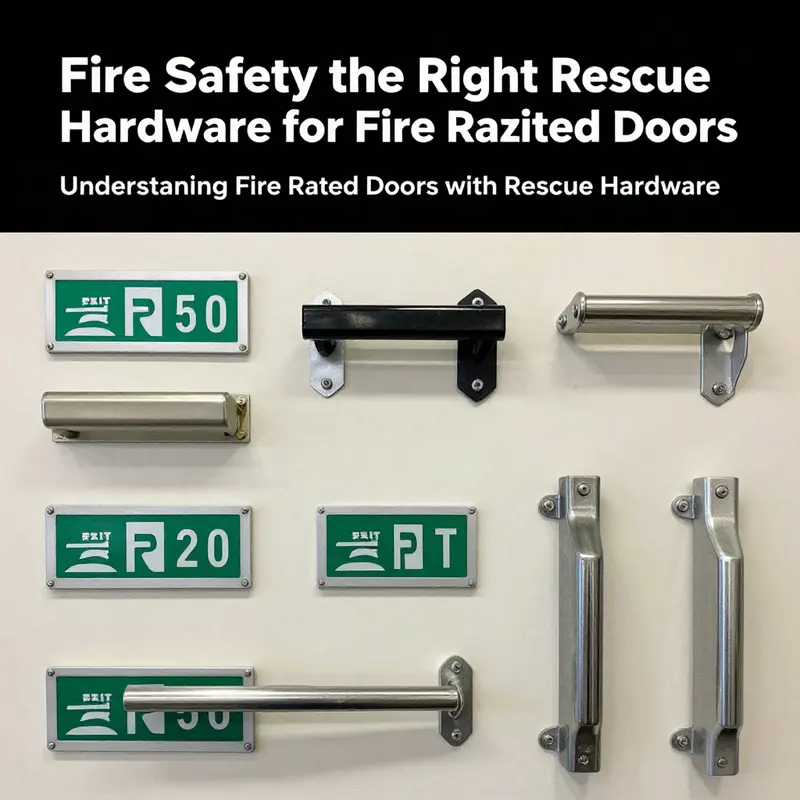
Choosing rescue hardware for fire rated doors requires balancing safety, compliance, and reliability. Fire rated doors are part of an assembly that includes the door, frame, seals, and surrounding construction. The rating reflects the performance of the entire system, not just the material of the door. When rescue hardware is added it must be labeled and listed for use with fire rated doors. It should be reinforced to handle repeated uses and aligned with the door and frame without creating gaps or interference with seals. Improper retrofits can void the rating and create safety risks. Labels on the door and on the hardware provide essential information about compatibility and limitations.\n\nCompliance with codes is not optional; it is a safeguard. In many jurisdictions the use of fire exit hardware on appropriate doors is required and must be installed by qualified personnel following manufacturer instructions. The installation should consider backset, strike reinforcement, and threshold clearance to maintain the fire resistance. Testing and certification by recognized laboratories such as UL ensure the hardware and door are a tested combination.\n\nFrom a practical perspective, verify that the hardware is UL listed or listed by a recognized testing lab for the door rating. Ensure that installation documents show the exact door rating, backset, and strike type. Schedule regular inspections and maintenance to keep alignment and function under load. The goal is a cohesive, certified system that preserves life safety without introducing weak links.\n\nBy following these principles designers and facility managers can select rescue hardware that preserves the fire rated performance while providing reliable egress.\n\nExternal resource for further guidelines: https://www.ul.com/standards/fire-door-assemblies
Final thoughts
In conclusion, understanding the integration of rescue hardware with fire rated doors is paramount for ensuring safety in emergencies. Adhering to the established standards and choosing the appropriate equipment not only maintains the structural integrity of fire rated assemblies but also enhances the overall evacuation process. For residents and professionals alike, staying informed about these practices is essential for fostering a safer community. Remember, your proactive measures in fire safety could save lives.