
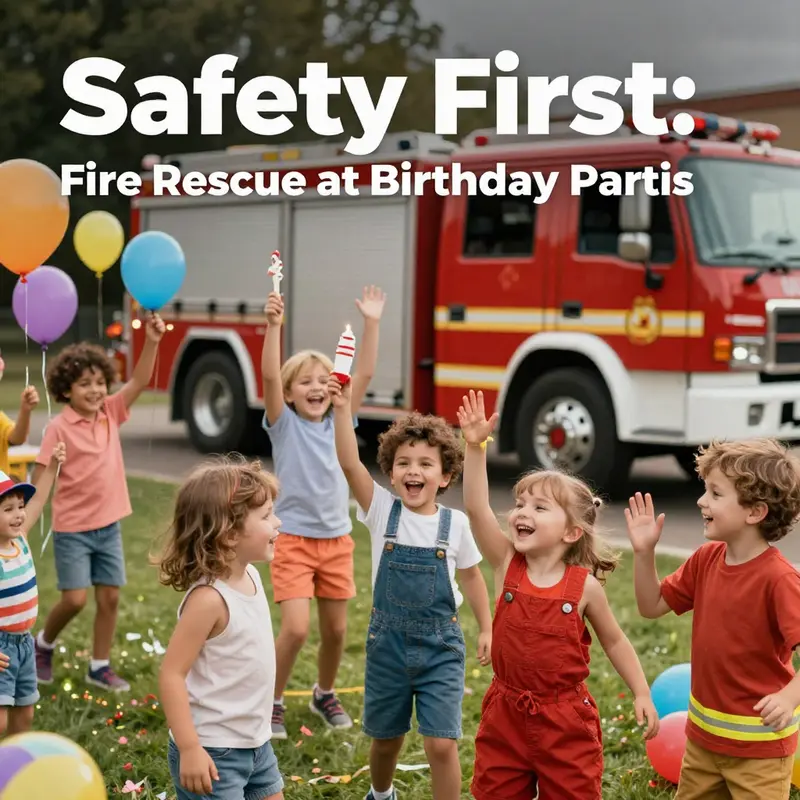
Birthday parties are cherished milestones in our lives, yet they can inadvertently present emergency situations. Incidents such as fires pose significant risks, underscoring the need for emergency responsiveness during festive gatherings. This article delves into the capabilities of fire rescue services during such events, preventive fire safety measures to consider, and the crucial role of community education led by fire departments. Together, these chapters provide a holistic understanding of how to celebrate safely while being prepared for emergencies.
Candles, Crises, and Celebrations: Fire Rescue Realities at Birthday Parties
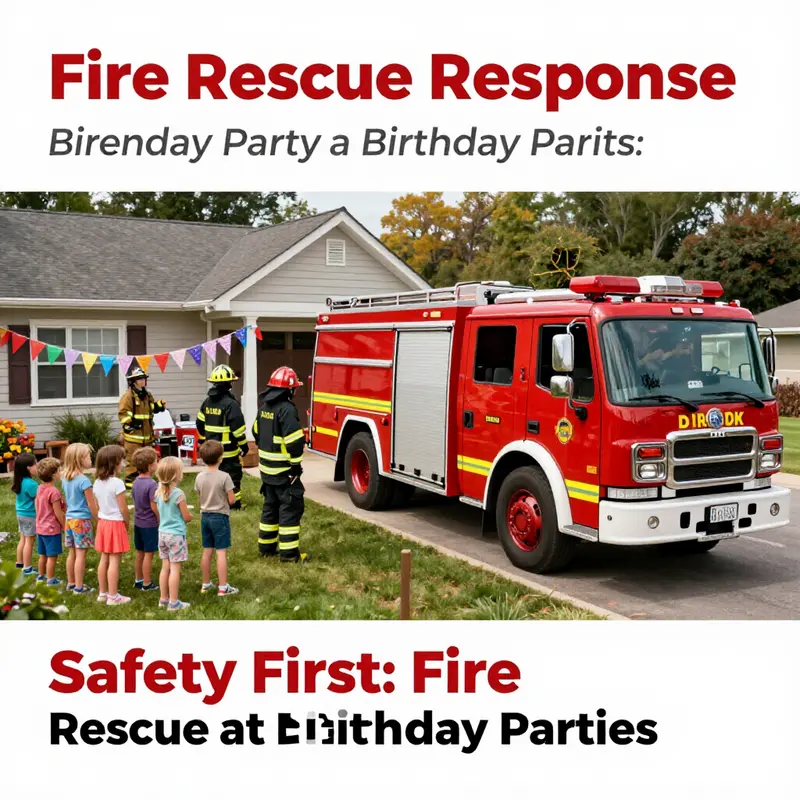
A birthday party is a small lantern of joy in the busy year. It brightens a home, centers a family, and folds friends into a shared moment of delight. Yet even in moments built on laughter, there is a weightier, quieter question: how prepared are we for emergencies that could unfold in the middle of such a celebration? The answer, drawn from real events and professional practice, is not simple. Fire rescue teams can and do respond to emergencies at birthday parties, just as they would to any other incident. They arrive, they assess, they rescue, they treat, and they calm. They are an essential, though sometimes unseen, thread in the fabric of safety that makes gatherings possible. The tragic Newark incident in October 2024—where a residential fire during a birthday gathering claimed the lives of two young girls—anchors this chapter in a stark, human reality. It is a reminder that celebratory candlelight can align with danger if safeguards are neglected, and it is also a testament to the speed and skill of responders who work in the most time-pressured situations. In the aftermath of such events, communities often pivot toward stronger prevention messages, more robust evacuation planning, and clearer communication about risks that accompany even the most ordinary celebrations. This chapter moves through what happens when danger arises, how responders approach private events, and what organizers and households can do to tilt the balance away from tragedy toward safety, all while preserving the warmth and meaning of birthdays.
When a fire emergency arises at a birthday party, the immediate response follows a familiar arc that mirrors responses to broader fire incidents, but the context shapes urgency and priorities. A 911 call triggers the dispatch of fire engines and medical teams to the scene. Time becomes the critical currency; every second saved in arrival translates into more efficient suppression, more effective triage, and a better chance that children and adults alike reach safety without lasting harm. The primary goals in these moments are threefold: first, to extinguish or control the flame source quickly; second, to secure the area and protect attendees, with special attention to children who may be frightened or disoriented; and third, to assess for smoke inhalation or burns and to provide immediate care when needed. Firefighters must balance rapid action with careful assessment, because a moment of overconfidence can escalate a small flame into a broader hazard or an unseen smoke condition that injures first responders or bystanders. In practice, crews arrive to a crowded space that may contain a cake, decorations, a sound system, and an array of outlets and appliances. They quickly sift through potential hazards, identify escape routes, and establish a safe perimeter. They ask guiding questions: Is there a live flame or is the fire already spreading through fabric, wallpaper, or drapery? Are exits clear and accessible? Are there children who may linger near risk zones, and if so, where is their guardian? In these moments, the work is not only technical but deeply human; the goal is to protect every person in the room, to keep panic at bay, and to coordinate with medical responders who may be assessing breaths and burns on the spot. The Newark tragedy underscores the gravity of such work and the fragility of life at small gatherings. It also serves as a sober reminder that good luck is not a substitute for good planning. Emergency responders can perform bravely and efficiently, yet their work is reinforced by the choices made by hosts and families before any sirens begin to wail.
The dynamics of a birthday party introduce a particular texture to risk management. Open flames are the most obvious hazard. Candles on a cake, while a cherished ritual, represent a continuous heat source within a crowded room. Even a single gust from an open door or an excited burst of movement can threaten nearby decorations, curtains, or furniture. In many homes, the room also contains lit lamps or decorative lighting that adds mood but increases the load on electrical circuits. Overloaded outlets and run-through power strips can become hidden hazards, and a sudden fire can spread through fabric props, balloons, or streamer materials that are part of a festive setup. Refrigeration units, charging devices for music players, and sound systems add to the electrical demand, often in a space not originally designed for high electrical load. Helium balloons, when left near heat sources, pose a separate but related risk; they may float toward lamps, tripping hazards, or inadvertently become projectiles in a smoke-filled room. These vulnerabilities are not reasons to abandon warmth and celebration; they are signals to tilt the balance toward safer practices without sacrificing the joy of the moment.
From a professional perspective, the response protocol at a birthday party follows the same core logic as any other fire incident, but it is tempered by the intimate, private setting. On arrival, responders will quickly identify the fire’s location and scope, confirm that alarms and exit paths are functioning, and begin controlled ventilation where appropriate to reduce smoke inhalation risk. They will initiate suppression if flames still threaten occupants, or they will focus on rescue if someone is trapped or incapacitated. The ability to perform a rapid triage becomes critical when there are many children who may be frightened, immobilized by smoke, or unable to communicate clearly. In such cases, paramedics may begin with airway management, oxygen delivery, and treating burns or smoke exposure while the firefighting team continues to contain the incident. Communication with family members and bystanders is essential; responders must convey concise instructions, reassure anxious attendees, and coordinate evacuation with the party’s organizers who know the layout and the location of exits. The scene must later be documented for investigators and safety officials who will review the factors that contributed to the incident, such as candle placement, material hazards, and electrical configurations. The Newark case demonstrates that even swift, skilled intervention may not always prevent tragedy, but it also reinforces the broader message that prevention and preparedness can change outcomes in meaningful ways. In the months and years that follow, communities study these events to refine their education and uplift the standard of safety at private gatherings, recognizing the shared responsibility of homeowners, hosts, and public safety professionals.
Prevention is the most effective form of safety for birthday parties. The ideas may seem straightforward, yet they are the difference between a night of celebration and a hazardous emergency. Event organizers should begin with a simple risk assessment that begins long before guests arrive. They should place candles away from flammable materials such as curtains, paper decorations, and tablecloths. They should avoid open flames inside enclosed spaces whenever possible. If candles must be used, there should be careful attention to the number of flames, the distance from guests, and the presence of a stable, nonflammable surface. A practical approach is to replace traditional candles with safer alternatives, such as LED or battery-powered options, which provide the familiar glow without the heat and fire risk. This is not merely a matter of taste; it is a decision that directly affects whether the event remains a memory of laughter rather than a memory of loss.
Beyond candles, the decorations themselves deserve scrutiny. Helium balloons, while magical in the moment, can create hazards if they come into contact with heat sources or if someone trips on their strings. Lightweight, highly flammable materials used for streamers and banners should be kept away from heat and sparks, and any fabric drapes should be noncombustible or properly treated for flame resistance. Organizers should also consider the electrical plan for the room. High-wattage lights, sound systems, and even kitchen appliances can overload circuits in a small space, particularly if the party takes place in a home with older wiring or limited electrical capacity. A simple step—test the circuit plan, unplug nonessential devices, and ensure that the space has a clear, accessible path to an outside exit—can prevent a situation from escalating. A working smoke detector in the party room and nearby living spaces can be a silent guardian. Fire extinguishers should be readily accessible but not placed where curious children might misuse them. A brief safety briefing before guests arrive helps set expectations: where exits are, how to respond if a fire is detected, and who to contact for assistance. It is a quiet version of rehearsal for the real thing, and it makes the real moment less terrifying if something goes wrong.
Public education campaigns conducted by fire departments often extend beyond the fire station and into homes and private events. These programs emphasize practical steps like safe candle use, verifying the function of smoke detectors, and rehearsing simple evacuation plans. The aim is not to dampen joy but to increase confidence that a party can be both festive and safe. Families gain a sense of agency when they understand the basic sequence: detect danger, alert others, call emergency services, evacuate, and assist others as needed. When children witness a calm, structured response at a young age, they internalize safety behaviors that carry forward into many areas of life. The educational message also includes the importance of planning for contingencies: what to do if a guest experiences a medical emergency, how to keep a nursery or play area accessible for caregivers, and how to establish a safe meeting point outside the home in case of a rapid evacuation.
The social and emotional dimensions of a birthday party interact with risk in subtle ways. The presence of candles and lights invites a moment of awe and ritual. The very act of gathering, sharing a cake, and singing together creates a sense of unity that can blunt the perception of danger. This is precisely why prevention must be woven into the planning, rather than taught as a separate topic after the fact. A thoughtful host makes safety a natural part of the celebration, a shared responsibility that invites all guests to contribute to the well-being of the group. For parents and guardians, this means modeling calm, step-by-step actions and making space for children to participate in simple safety tasks, like moving flammable items away from the cake or helping to keep pathways clear. These practices are not about removing joy; they are about preserving it by ensuring that the moment does not become overshadowed by preventable harm.
In practical terms, a party should balance the glow of a cake with the clarity of a safe environment. A simple, repeatable routine can be as influential as any professional intervention. Before the candles are lit, the host can confirm that the cake is on a large, stable plate, distant from drapery and decorations. The room should have a designated babysitter or adult watcher who is clearly tasked with monitoring the candles and handling any immediate hazard. An accessible exit should be kept unobstructed, and guests should be reminded to avoid crowding around the cake. If a guest is known to have a medical condition that could be aggravated by smoke or heat, a contingency plan should be in place, including a nearby air-conditioned area and ready access to fresh air. In homes where space is limited, the party might be shifted to a safer configuration: a table away from the main thoroughfare, with a small, dedicated area for candles that can be managed by a responsible adult while others engage in games and singing elsewhere. The overarching principle is to minimize risk without dampening celebration, preserving a sense of spontaneity while anchoring it in practical safety measures.
For communities and individuals seeking a deeper understanding of safety at private gatherings, the National Fire Protection Association offers guidance that is broadly applicable to a wide range of home events. The emphasis is on prevention, preparedness, and informed decision-making that accounts for the realities of everyday life. This guidance aligns with the broader frame of fire rescue as a communal service: responders are not only there to extinguish flames but also to help people avoid becoming victims in the first place. A birthday party becomes a moment when the values of public safety—care, prevention, and readiness—are lived out in a personal setting. The paradox of safety work at such occasions is that the more we invest in planning, the more freely we can enjoy the moment without fear. In the end, the question is not whether fire rescue services will ever be needed at a birthday party, but whether we have built a social environment that makes that need rare and, when it does arise, manageable through collaboration, clear communication, and practiced routines.
To bring this narrative back to the reader’s immediate situation, consider the energy of a party and the responsibility that comes with hosting. A practical mindset begins with admission: even in a well-planned event, risk exists. A robust plan does not dampen joy; it satisfies the prerequisite for ambiance to endure—safety. A host who has taken time to map exits, test electrical loads, place decorations away from heat, and designate candle-watchers sends a strong signal to guests that the party honors both celebration and well-being. If a fire begins, the steps are crisp and manageable: the person nearest to the danger should alert others and help with safe evacuation, someone should call emergency services, others should assist children and infirm guests to the closest exit, and a contained fire should be addressed only if it is safe to do so with an extinguisher. The aim is to reduce the likelihood of harm while sustaining the social warmth that makes birthdays meaningful. This is not a call for fear but for informed care, the kind of care that grows from listening to real-world experiences and learning from them rather than pretending they do not exist.
As a closing reflection, the core takeaway is simple but powerful: you can have fire rescue at a birthday party, and you can do so with a sense of confidence and dignity. The Newark incident does not instruct us to cancel celebrations; it invites us to craft celebrations that progress with awareness and competence. It invites communities to strengthen the social contracts that keep homes and gatherings safe—candle-lit or LED, decorated or minimal, indoors or outdoors. It invites hosts to treat safety as a form of hospitality, extending care to guests, especially children, by making smart choices about flame use, electrical safety, and crowd flow. It invites families to rehearse a calm, practical response in advance, so that if danger does arrive, it is met with the same composure that defines a well-run celebration. And it invites each reader to engage with credible resources, such as the NFPA guidance, to deepen understanding and to translate knowledge into everyday practice. For a quick, starter reference on safety messaging and community education, you can explore the Hello World post at the dedicated blog, a reminder that safety education begins with accessible, human storytelling. Hello World.
In the end, the question is not whether fire rescue will be called to a birthday party, but whether a party can flourish under a canopy of practical safety, shared responsibility, and proactive planning. When these elements align, birthdays can glow with warmth and wonder while staying well within the boundaries of safety that protect every guest, especially the youngest and most vulnerable. The outcome is not a sanitized celebration, but a resilient one—one that recognizes risk, respects it, and welcomes the presence of trained professionals as part of a broader culture of preparedness. The birthday candle shines brighter when it stands beside a plan that keeps the room safe, clear, and capable of turning a single night into a long, cherished memory rather than a moment of panic.
External resource: https://www.nfpa.org/
Candles, Contingencies, and Care: Rethinking Fire Safety at Birthday Parties
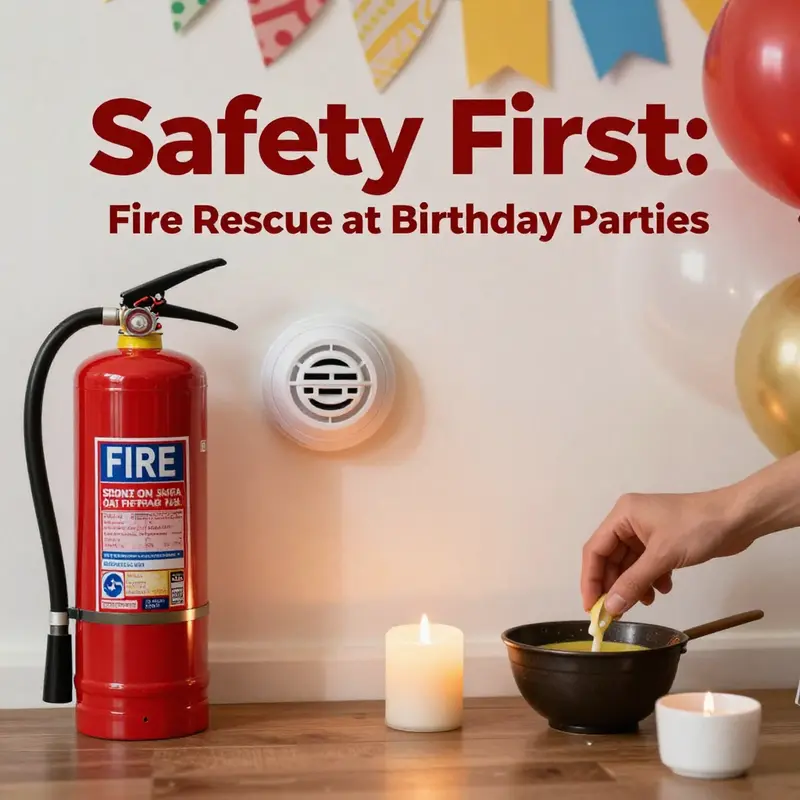
A birthday party is a microcosm of joy and energy. Laughter ricochets off walls, music shades into the hum of conversation, and candles flicker on a cake as wishes drift into the room. Yet beneath the glow, a thread of risk runs through any gathering that includes heat, flame, or a busy mix of guests and décor. The Newark tragedy that unfolded in October 2024, where a fire started on the second floor of a residential home during a birthday celebration and claimed the lives of two young girls, is a stark reminder that emergencies do not arrive with a warning label. Fire rescue services respond with urgency to any incident, whether at a home party or a public venue, and the first minutes determine how quickly people can evacuate, how effectively responders can access people in danger, and how many lives can be saved. This reality is not designed to dampen celebration, but to anchor it in practical wisdom: safety is a form of hospitality that protects every guest, especially children, who may be more vulnerable to smoke, heat, and confusion amid the excitement.
To understand how to balance celebration with preparedness, it helps to think of a birthday party as a dynamic system rather than a single moment. The cake lighting, the music, the streamer-draped corners, and the kitchen’s activity—all of these elements interact. When one piece fails or becomes hazardous, the whole event can tilt toward danger. The good news is that a few deliberate steps can create a margin of safety without dampening the festive mood. Fire rescue is not an abstraction here. It is a practical possibility that influences where guests stand, how they move, and how a host marshals resources to prevent harm. This is not about fear; it is about agency. It is about shaping a party’s environment so that if a small flame flickers or a piece of overheated equipment glows a warning sign, the response is swift, organized, and calm.
Central to this approach is space management. A birthday room should feel expansive to the guests and, crucially, to the people who may need to slip through if there is an evacuation. Clutter can impede movement, creating choke points near exits or along narrow hallways. In a home setting, where rooms are often multipurpose and furniture is arranged to accommodate a crowd, clearing pathways becomes an act of care. This does not require a remodeling project. It can be as simple as moving chairs away from the center of activity, stacking gifts in a corner rather than along a doorway, and ensuring there are clear routes to the nearest exit. The aim is to preserve momentum during a safe exit as much as to keep an area aesthetically pleasing. The more open space there is, the faster people can reach a safe zone and the less likely a panic will derail orderly movement.
Decoration choices deserve equal attention. The impulse to celebrate with abundant color and texture is part of the charm of birthdays, but it can introduce hazards if left unchecked. Non-flammable or flame-retardant materials are a wise standard for party décor. Paper lanterns, tissue streamers, and fabric banners can be stunning yet risky when placed near heat sources or candles. Balloons, particularly those filled with helium, may drift toward light fixtures or open flames. While balloons are a hallmark of festivity, their potential to obstruct visibility or entangle cords should be weighed. If real candles are part of a cake or centerpiece, consider LED alternatives that mimic the effect without the same ignition risk. The overall philosophy is simple: beauty should not become a liability, and the safest décor is décor that stays in its lane, away from flames, heat, and heavy airflow from stoves or heaters.
Candle supervision represents another crucial hinge. A cake with candles is emotionally meaningful, but it is also a focal point of risk. An adult should be responsible for lighting and extinguishing candles, and the candles should never burn unattended. This is not merely about monitoring a child’s curiosity; it is about ensuring that someone adult and capable remains with the flame for the entire duration of the candle’s presence. For events that extend beyond the cake reveal, consider substituting LED candles for longer-lasting ambience. When candles are part of the ritual, place them away from drapes, curtains, and other flammable fabrics, and position the cake in a space with easy access to a hand towel or damp cloth for a quick, safe extinguishment if needed. If cooking outside or grilling during a birthday gathering, keep the grill in an outdoor area far from the house and fully away from places where children gather. A stable, clean grill, with a clear zone around it, reduces the chance of flare-ups that could threaten nearby decorations or structures.
Electrical safety, too, deserves careful attention. The energy that powers music, lighting, a sound system, and perhaps a project or slideshow is a double-edged sword. Overloading outlets with multiple cords or high-wattage devices can create heat buildup in a short timeframe. Using surge protectors, inspecting cords for fraying, and ensuring cords run along walls rather than under rugs are prudent steps. Remember that a party with amplified music and lighting requires thoughtful cable management: tape cords to edges where they won’t be stepped on or pinched by furniture, and avoid running cords behind the couch where they might heat up or become pinched by movement. Unplug devices when they are not in use, particularly before leaving the room or going to sleep. These practices are small and practical, but they reduce the chance of an electrical fault erupting into a fire in the middle of shared laughter and singing.
Exits and access points must remain clinically clear. The best décor should not obscure doorways, windows, or hallways. In a home, doors that lead outside or to stairs must be easy to reach. Obstructed exits create hazards during an emergency, increasing the risk that someone is delayed or trapped. Fire safety at a birthday party is intertwined with the home’s usual layout; rehearsing the simplest path to safety with guests and children helps everyone respond quickly when seconds matter. A quick drill is not a show of distrust but a practical rehearsal of care. Let guests know where the nearest exit is and how to reach it without having to navigate a maze of chairs or stacked gifts. In a family home, this is often as easy as pointing to a hallway that leads to the back door and assigning a volunteer to help younger children through the route.
No plan is complete without a well-placed safety toolkit and a clear, tested safety plan. A homeowner or host should know the location of a fire extinguisher, even if only to confirm it is present and accessible. The plan should include smoke detectors, which should be placed in key areas such as hallways, bedrooms, and near the kitchen. It is wise to test detectors monthly and replace batteries as needed. The plan should also include a simple set of steps for guests: evacuate calmly, assemble at a predetermined meeting point outside, and call emergency services if there is any doubt about the extent of danger. If a small fire starts, the recommended actions emphasize first, if feasible, to smother it with a damp cloth or baking soda for a grease or small electrical fire. Water should never be used on a grease fire or an electrical fire, as it can spread flames or cause electrocution risk. The host can also consider training a guest or family member in the basics of using a fire extinguisher, but only if they are confident and calm.
Education and preparedness extend beyond the immediate household. Fire departments routinely conduct public education campaigns about fire prevention and safety in home gatherings. They emphasize safe candle use, working smoke detectors, and clear evacuation plans—topics that intersect with almost every birthday party scenario. These campaigns remind hosts that prevention is an ongoing process, not a one-off safety checklist. They also signal the importance of aligning personal safety practices with community resources. For more detailed guidance on preventing fires during events, trusted organizations offer comprehensive checklists and best practices for home safety events. In particular, the National Fire Protection Association provides accessible guidance to help households translate high-level safety principles into concrete actions for everyday life. This channel of information serves not as a substitute for personal responsibility but as a practical extension of it, helping hosts adapt safety wisdom to the realities of their own homes and gatherings. See the NFPA Home Safety Tips for a structured overview of precautions that can be woven into birthday celebrations.
The Newark incident, tragic as it was, also highlights what is possible when safety becomes a shared responsibility. A home gathering becomes safer when hosts enact a culture of vigilance that extends to guests, teenagers, and younger children alike. One practical approach is to designate a “safety lead” for the party—a responsible adult who keeps a watchful eye on near-flame activities, monitors the kitchen as cooking occurs, and coordinates with other adults to ensure exits remain open and accessible. Creating a calm, collaborative environment can prevent a single moment from turning into a crisis. It is not about policing the party; it is about ensuring that the party remains a place where joy and safety can coexist. The family celebrated the personhood of the day and did not surrender to fear; the goal is to equip every host with the tools to achieve that balance as reliably as possible.
A broader perspective on safety at diverse settings can enrich a birthday party plan. Evacuation challenges and failures in other contexts reveal common threads—confusion, blocked exits, and delayed responses—that are just as relevant in a home as in any public facility. For instance, a discussion of evacuations in senior care facilities underscores how important it is to have clear lines of communication and practiced routines in any scenario where occupants may have limited mobility or impaired awareness. The takeaway is not to worry excessively about worst-case scenarios but to acknowledge that safety emerges from a deliberate sequence of small, repeatable actions. The idea is to normalize conversations about safety so that guests feel comfortable asking questions and hosts feel empowered to implement practical safeguards. See the broader discussion on evacuations in senior care facilities for a perspective on how standardized procedures can translate across settings, including home birthday parties. evacuations in senior care facilities.
In all of this, the human element remains the core. A successful birthday party is not measured by the absence of risk but by the presence of a culture that supports quick, calm action when risk emerges. The host’s confidence in the plan influences how guests respond. Children, with their own curiosity and shorter attention spans, require particular attention: keeping matchsticks and lighters out of reach, teaching simple rules about not touching grills or hot surfaces, and guiding them toward safe play zones away from the kitchen hustle. The more families integrate fire safety into the party’s fabric, the less likely a spontaneous moment of danger will overwhelm the celebration. A well-run party is quiet in its prevention and loud in its orderly response if danger appears. The Newark tragedy teaches that responders will do everything in their power, but their work begins with the host’s foresight and the guests’ cooperation. Safety, in this sense, is a shared act—one that honors the celebratory spirit while acknowledging our responsibility to one another.
If this approach feels weighty, it is because the stakes at a birthday gathering are real. The aim is not to siphon away the magic but to protect it by ensuring that candles are a source of wonder rather than a spark that unsettles a room. It is about designing environments where hazards are anticipated and contained, where alarms are heard and understood, and where the people who care for one another can move with confidence. The family that lights a cake and says a quiet thanks is also building a habit of care that extends beyond the party’s hour. In this sense, fire safety becomes part of the most generous gesture a host can offer: the guarantee that guests, especially children, can celebrate with their attention fully on the moment and not on the hidden risks around them. The chapter thus returns to the heart of the matter—the simple truth that preparedness is a form of hospitality, and hospitality, when practiced thoughtfully, keeps the flame of celebration alive without letting fear extinguish it.
For readers seeking a structured entry point into home safety practices, a trusted external resource offers a practical starting place. The NFPA Home Safety Tips provides checklists and guidance that readers can adapt to their own homes and gatherings. This external reference complements the host’s hands-on planning and reinforces a culture of prevention that can be carried forward into future celebrations. To explore these actionable tips, refer to the NFPA resource linked above.
In sum, a birthday party can be a time of enduring memories when it is safeguarded by a culture of preparedness that begins with space and décor, candle supervision, electrical discipline, clear exits, practical equipment, and a shared readiness to act. Fire rescue at a birthday party is not a distant possibility; it is a real service that responds when called, and its effectiveness hinges on the host’s foresight and the guests’ cooperation. The Newark incident stands as a severe reminder that tragedies can unfold rapidly, but it also illuminates a path forward. By integrating these preventative measures into every celebration, families can honor the joy of the moment while safeguarding the people who make it unforgettable. It is, in the end, a respectful balance—a celebration chosen with care rather than risk pursued at the edge of possibility.
Bright Candles, Brighter Safeguards: Fire Departments and Birthday-Party Safety
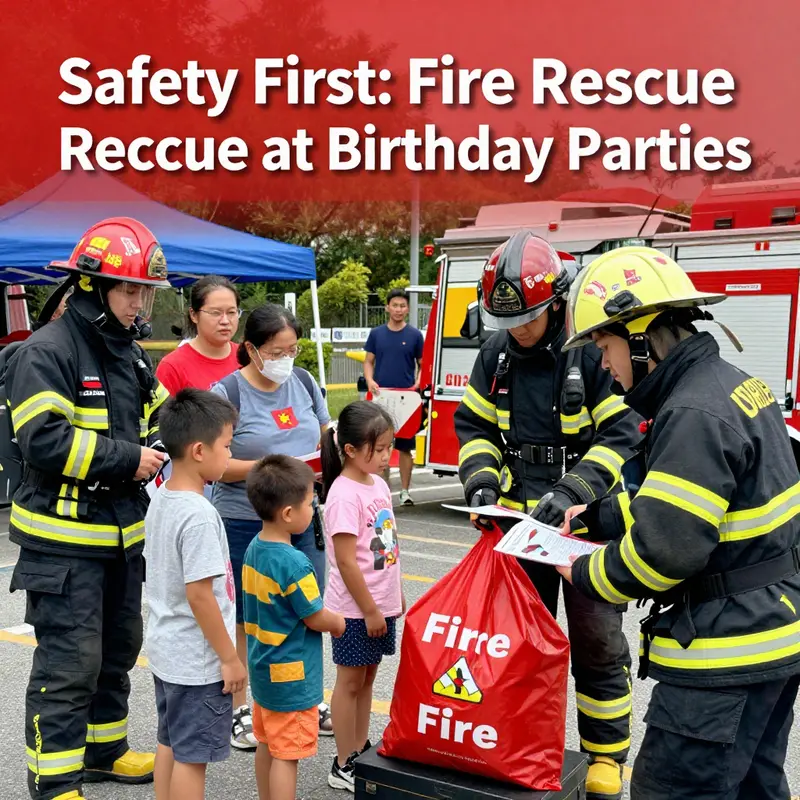
A birthday party is a mosaic of anticipation, laughter, and small rituals that mark another year of life. The cake sits at center stage, a ring of candles waver with every burst of applause, decorations festoon tables and walls, and a kitchen hums with the flour-dusted energy of cooks and the clatter of plates. In that moment, a spark or a misplaced cord can turn a scene of joy into a risk, and the very forces that help us celebrate—candles, lights, even the heat of the stove—become the earliest warning signs of danger. Yet the question at the heart of this chapter remains simple and urgent: can you have fire rescue at a birthday party? The answer, when we look honestly at the full arc of safety, is yes. Fire rescue is not a concession to fear; it is a product of readiness, education, and community partnership. It is the assurance that, even if the unexpected occurs, a trained, coordinated response can limit harm and preserve memory, not erase it, by acting decisively and with care.
When a party happens in a home, a hall, or a rented space, the fire department is a potential presence as real as the cake itself. They respond to the same conditions that any other call would demand—an alarm that becomes a dispatch, a crew that becomes a team, a plan that becomes action. The Newark tragedy that unfolded in October 2024, when a residential fire on East Street claimed the lives of two young girls, is a stark and sobering reminder of how rapidly a celebrations-focused moment can pivot into a life-altering tragedy. In that event, responders arrived quickly, and they worked with all the tools at their disposal—fire suppression, search and rescue, medical care—to mitigate the disaster and to preserve as many lives as possible. But response is only one dimension of the broader safety picture. The other dimension—the one that lowers the odds of tragedy in the first place—rests on prevention, planning, and the everyday choices families and event organizers can make before candles are lit or music starts.
Prevention begins with recognizing that the familiar comforts of a birthday party can harbor hidden hazards. Open flames, such as candles, are iconic but inherently risky when they share space with children, costumes, and easily ignitable decorations. A cake candle can become a heat source that ignites a tablecloth, a curtain, or a paper streamer in a matter of seconds. Electrical equipment—string lights, party lanterns, or the portable outlets needed to power a blender or a popcorn machine—adds another layer of complexity. And even seemingly safe activities, like baking or decorating, bring with them the possibility of grease fires or overheated cookware. The Newark incident is not an isolated case; it is a reminder that what may appear to be ordinary domestic routines can escalate if safety gaps go unaddressed.
Fire departments do not only respond to emergencies; they also build resilience by shaping a culture of safety within the communities they serve. A central responsibility of modern fire services is public education. They teach families how to manage open flames, how to use smoke detectors effectively, how to maintain clear evacuation routes, and how to respond if something goes wrong. These educational efforts are not generic campaigns; they are tailored to the realities of everyday life—birthday parties, school events, neighborhood gatherings, and family celebrations. In practical terms, this means offering guidance on candle placement, choosing safer lighting alternatives, and planning a quick, orderly exit path that keeps exits unobstructed even when children are excited and focused on the moment. It also means advising on the structural and electrical aspects of a venue, such as the safe use of decorations, the moderation of lighting loads, and the careful management of kitchen heat and ignition sources.
Within this framework of prevention and readiness, the role of the fire department expands beyond the emergency line. When a community event is planned, the department might offer a pre-event walk-through, a quick safety checklist, or a short demonstration on how to handle small candles and on how to stage a safe baking station. In many communities, these activities are part of larger public education campaigns that emphasize simple, repeatable practices: verify smoke detectors, keep a fire extinguisher within reach, designate safe zones for kids away from the flame, and ensure there is a clear way to exit the space if alarms are triggered. The goal is not to dampen joy but to illuminate the choices that preserve it, to turn a festive moment into a teachable one that equips families with the knowledge to prevent harm.
The practical takeaways for a birthday guest list, a parent, or a party planner begin with a realistic assessment of the space and the activities involved. Is the venue a home, a rented hall, or an outdoor area with a tent? Are there multiple candles on the cake, or a single focal flame? Will there be a kitchen activity that involves heat, such as a cake being lit or a stove being used for popcorn or hot cocoa? Are there decorations that might snag or obscure a doorway, or fixtures that might overheat if they are placed too close to lights or flames? The answers will shape a simple, actionable plan. For instance, at a home where candles are a tradition, one practical step is to place candles in the middle of the cake on a stable, heat-resistant surface, away from the edges where young children might reach. Candles should be lit briefly and blown out promptly after singing, not left burning while guests are gathering around the cake or posing for photos. In addition, LED or battery-powered candles offer a safe alternative that preserves the ritual’s visual appeal without introducing an open flame into the party space.
A companion practice is to ensure that the party’s décor is flame-retardant and that the pathway between the cake table and the exit remains clear. Decorations should be placed away from air vents, lights, and outlets. Extension cords should be taped down and managed to prevent tripping, and any electrical equipment should be unplugged when not in use or when it becomes crowded with excited guests. Kitchen activities should be conducted with a measured, organized approach, and adults should maintain a dedicated area for food preparation that is separated from the main living or party space. It is about balancing celebration with vigilance, allowing joy to unfold while leaving no loose ends that a fast-moving flame could exploit.
The social dimension of birthday parties—the shared experience of singing, clapping, and cheering—can itself become a safety catalyst if the hosting adults embed a culture of awareness. One way to do this is to appoint a safety lead for the evening. This person’s job is not to dampen the celebration but to monitor the flame, check that candles are extinguished after use, ensure stairs and doorways are clear, and remind guests about dry, stable surfaces for serving hot foods. A safety lead also helps coordinate when to pause activities such as singing or blowing out candles so that the flame is treated with respect rather than becoming a moment of recklessness fed by distraction. In this sense, safety is not a checklist that inhibits happiness; it is a shared habit that protects it.
Education and preparation also extend to families who live in older homes or apartments with evolving fire-safety concerns. In some houses, outdated wiring, limited exit routes, or the proximity of a kitchen to a living room can subtly raise risk during a party. Fire departments recognize these nuanced realities and offer practical, nonjudgmental advice. For instance, they may suggest keeping a fire extinguisher in the kitchen and near the cake area, choosing daylight hours for major baking or cooking activities to monitor heat more effectively, and establishing simple rules for candle usage that a child can understand, such as “one candle at a time” and “never touch a lit candle.” The goal is to translate professional knowledge into relatable, easy-to-remember guidelines that families can reuse for future gatherings, not only for birthdays but for any time people come together under one roof.
The broader conversation about birthday-party safety also intersects with the urban fabric of communities. Fire departments are part of a public system that includes schools, health-care facilities, neighborhood associations, and cultural organizations. They work with these partners to deliver consistent messages about preparedness and to create opportunities for families to engage in safety activities outside of emergencies. When a department hosts a safety fair or a home-visit program, it helps to normalize the idea that safety is not a burden but a shared value. In some places, this philosophy has led to creative collaborations where local artists or youth groups create posters, games, or short plays that dramatize common fire-safety scenarios in a language that resonates with children and parents alike. The result is a community that understands risk not as a remote concept to be feared but as a tangible condition to be managed through daily habits.
In this light, a birthday party becomes more than a single evening; it becomes a microcosm of the broader safety culture that a community builds together. When families practice candle safety, ensure exits are accessible, and host a space in which adults remain vigilant for potential hazards without stifling joy, they are contributing to a chain of preparedness that can influence outcomes in a genuine emergency. The fire department’s role in shaping that culture is not only to respond to calls but to prevent the calls from happening in the first place, or to reduce their severity when prevention fails. This is why public education, home visits, and community partnerships are central to the mission. They transform a birthday party from a potentially perilous moment into an occasion that showcases how preparation and care can coexist with celebration.
To illustrate how these ideas translate into real-world practice, consider the way communities sometimes integrate safety with celebration through a public-facing model of engagement. The idea of a “green firehouse”—not just as a building but as a living concept of sustainable, health-conscious safety—offers a powerful image of how a department can be a neighbor in a celebratory space. This approach emphasizes not only response readiness but a proactive, ongoing commitment to the well-being of families during everyday events like birthdays. It invites people to see safety as part of the social contract of living in a shared space, where public services help sustain a culture of care rather than merely react to danger. For an example of how such a philosophy can be translated into practice, see The Green Firehouse initiative, which embodies the blend of community-centered safety and sustainable spaces that support health and resilience. The Green Firehouse: Creating Sustainable Spaces for Community and Health.
Finally, while the Newark incident casts a long shadow and prompts heartbreak for the families involved, it also reinforces a vital point: the best outcomes come from the synergy of careful planning, responsible hosting, and rapid, well-coordinated rescue when something goes wrong. Fire departments are trained to operate within that trio of elements—prevention, preparation, and response. They work with communities to disseminate practical guidance that can be implemented in the home and at smaller gatherings, including birthday parties. They also maintain the readiness to deploy when the unexpected occurs, to perform search and rescue, to deliver medical aid, and to coordinate with hospital teams to ensure that the wounded receive attention as quickly as possible. In this sense, the question of whether you can have fire rescue at a birthday party is answered not by a blanket yes or no but by a nuanced yes—the yes that comes with knowing how to plan for safety, how to respond effectively, and how to recover with care after an event if danger arises.
For families and organizers who want to anchor their celebrations in a practical, community-informed safety framework, the path is straightforward and repeatable. First, assess the space with honesty: where are the exits, where will candles be placed, and how will decorations be arranged so they do not obstruct pathways or heat sources? Second, adopt safer lighting options when possible, leaning toward LED candles or other flame-free alternatives for the main celebration while reserving a momentary candle activity for controlled, supervised moments. Third, designate a safety lead who can monitor the flame, manage any candles that are lit, and coordinate with adults to ensure clear routes for evacuation. Fourth, ensure smoke detectors are functioning and that a small, readily accessible fire extinguisher is present in the cooking zone or near the cake table. Fifth, educate children with simple rules that they can remember: stay away from flames, never play with matches or lighters, and immediately alert an adult if something seems wrong. Finally, cultivate a relationship with the local fire department. Invite them to share guidance in person, to perform a quick safety check of the space, or to participate in a brief demonstration that illustrates both the seriousness and manageability of home fire safety. This collaborative stance reflects the core truth of the matter: fire rescue at a birthday party is not an intrusion into celebration; it is the safety net that makes celebration possible by reducing risk, clarifying steps, and reinforcing the social value of looking after one another.
As this chapter closes on the idea that a birthday can be both joyful and safe, it is worth returning to the broader implication: safety infrastructure is not a bureaucratic add-on; it is an act of care embedded in the social fabric. Fire departments, through education, community engagement, and responsive service, help transform a single night into a pattern of safer practices that endure beyond the candles. The Newark tragedy, while heartbreaking, can be a catalyst for stronger habits that reduce risk in countless homes and venues. When families learn to balance celebration with preparedness, the possibility of a rescue—not merely a response—becomes part of the shared responsibility we bear for one another. And in that shared responsibility, a birthday party can be both a genuine celebration of life and a testament to a community that understands how to protect it.
External resource: For more information on home fire safety practices and prevention guidelines, see the NFPA resources. NFPA.
Final thoughts
As we celebrate milestones like birthday parties, the presence of fire rescue services and awareness of fire safety measures can transform potentially dangerous situations into secure gatherings. Understanding the capacity for emergency responses, implementing preventative measures, and valuing community education are essential. By prioritizing safety, we can ensure that events filled with joy do not become just memories of emergencies. Let’s keep the spirit of celebration alive without compromising on safety.