
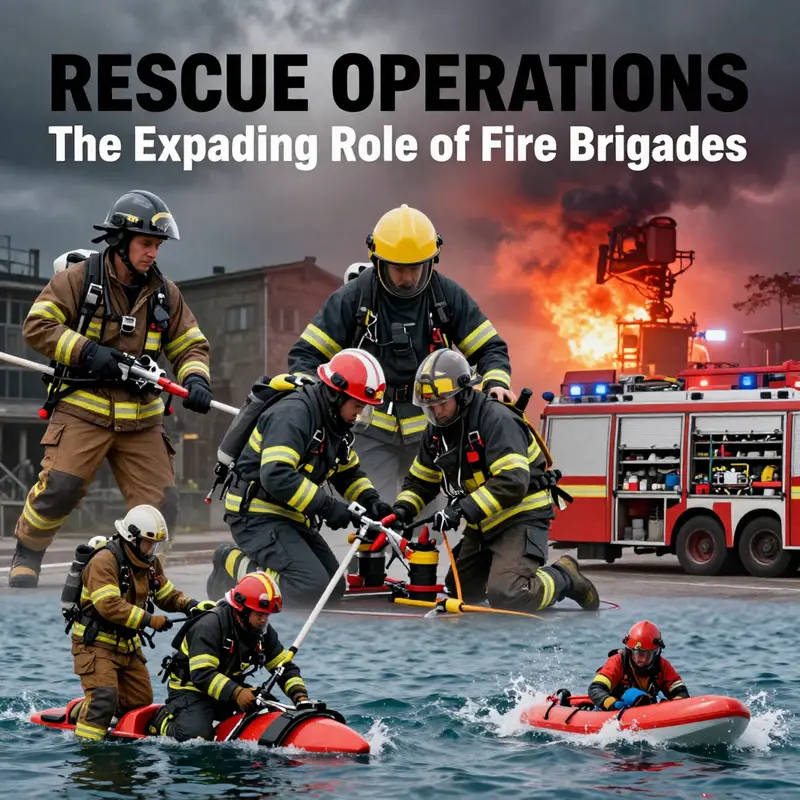
Fire brigades have evolved beyond their traditional role of firefighting to become vital emergency response units equipped for a variety of rescue operations. This article delves into the crucial roles fire brigades play in technical and medical rescues, urban search and rescue, and water and hazardous material rescue operations. Understanding these expansions highlights the breadth of their capabilities and reassures communities about the support available during emergencies.
When Firefighters Become First Responders: Technical and Medical Rescues by Modern Fire Brigades
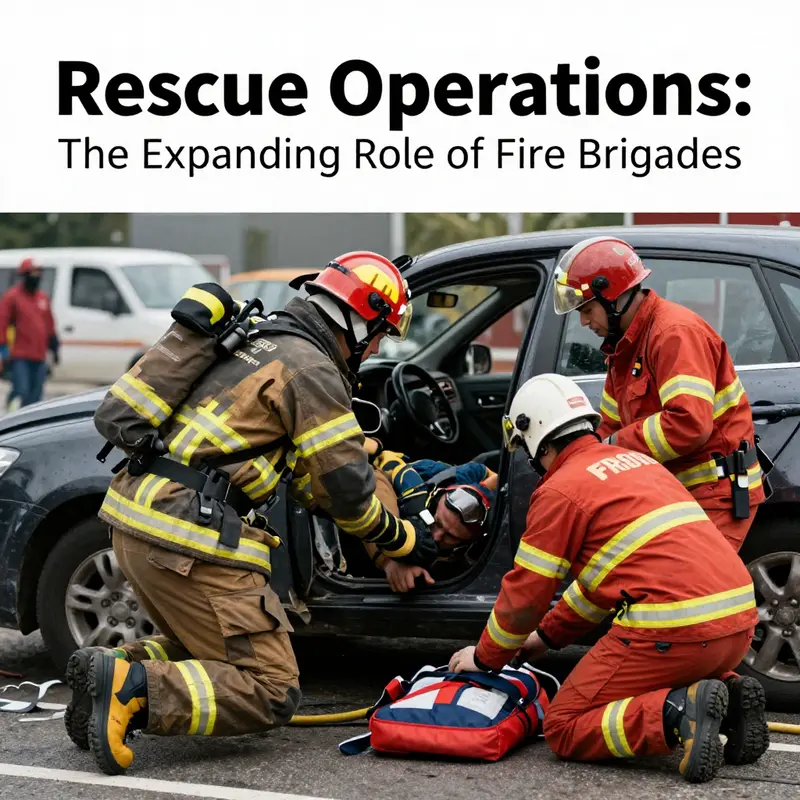
Fire brigades have long been symbols of courage and swift action. Today, their role stretches far beyond extinguishing flames. Across cities, towns, and rural areas, firefighters now perform complex technical rescues and deliver advanced medical care at emergency scenes. This chapter explores how and why fire brigades carry out these duties, the techniques and training that make them effective, the legal and organizational frameworks that mandate their participation, and the practical realities that shape day-to-day operations.
The shift from a narrow firefighting focus to a broad emergency response function did not happen overnight. Increasingly dense urban environments, a rise in vehicle traffic, more frequent extreme weather events, and evolving public expectations all demanded a wider skill set. As a result, fire services incorporated technical rescue disciplines—vehicle extrication, high-angle and confined-space rescue, water operations, and urban search and rescue—into routine practice. At the same time, many fire departments absorbed or partnered with emergency medical services, providing basic and advanced life support at the scene of medical crises. These changes create a single, integrated frontline capability that can stabilize, treat, and extricate victims before other services arrive.
Technical rescues are defined by the physical and mechanical complexity of the incident. Vehicle extrication is one of the most common technical tasks. When collisions deform vehicle structure, passengers can become trapped by jammed doors, crushed dashboards, or collapsed roofs. Firefighters trained in extrication assess structural hazards, stabilize vehicles to prevent movement, and use hydraulic cutters, spreaders, rams, and air lifting bags to create survivable spaces. Time is critical: uncontrolled movement or delayed access can lead to worsening injuries. Teams coordinate with medical personnel to apply cervical stabilization and bleeding control as soon as an access point is available. Proper extrication minimizes secondary injuries and speeds transfer to definitive care.
High-angle and rope rescues present a different kind of technical challenge. Rescuing a person from a bridge, tower, or steep terrain requires rigging anchor points, managing loads, and ensuring redundancy in every line and connection. Firefighters trained for high-angle work must understand rope strengths, friction systems, mechanical advantage, and patient packaging for transport on stretchers. Safety protocols demand redundant anchor systems and clear communication between the rigging team and the patient attendant. These operations often involve prolonged on-scene work during which medical monitoring continues. The dual demands of patient care and technical safety make these rescues inherently interdisciplinary.
Confined-space incidents are particularly hazardous. Entrapment inside tanks, silos, sewer lines, or narrow crawl spaces creates a high risk of oxygen deprivation, toxic atmospheres, and engulfment. Firefighters trained for confined-space rescue use gas monitors, ventilators, intrinsically safe lighting, and retrieval systems. They also follow strict entry protocols, including permitting systems and standby teams ready to retrieve rescuers should conditions deteriorate. Training emphasizes atmospheric monitoring, the use of supplied-air respirators when necessary, and the logistics of removing an incapacitated person through tight openings without causing further harm.
Beyond these specialties, many brigades operate as part of urban search and rescue (USAR) systems. USAR encompasses locating and extricating victims from collapsed structures following earthquakes, explosions, or structural failure. It combines heavy rescue techniques with shoring, breaching, and demolition skills. Canine search teams, acoustic sensors, and fiber-optic cameras can locate survivors, but removing them safely requires careful shoring to prevent further collapse. USAR operations are slow and methodical, balancing the urgency of finding survivors with the imperative to avoid additional collapse.
Water rescues expand the fire brigade’s reach to rivers, coastal zones, and flooded urban areas. Swift-water teams are trained to read currents, perform boat operations, and execute swimmer rescues using throw bags, rescue sleds, and submerged victim retrieval techniques. Flood rescues require understanding vehicle buoyancy and the hazards of wading in contaminated water. Firefighters also perform ice rescue, shore-based victim retrieval, and coordinated evacuations in larger flood events. These skills are essential as climate-driven storms and urban flooding become more frequent.
Medical rescues are a central and sometimes life-defining component of modern fire service work. In many jurisdictions, fire crews are the first to arrive at cardiac arrests, traumatic injuries, and other life-threatening events. To meet this need, fire departments train personnel in basic life support (BLS) and often in advanced life support (ALS), including airway management, intravenous access, and medication administration. Defibrillators, advanced airway devices, and rapid sequence of interventions are part of the standard toolkit.
The integration of medical care into fire response has clear benefits. Faster initiation of cardiopulmonary resuscitation (CPR) and defibrillation dramatically improves survival in out-of-hospital cardiac arrest. On-scene stabilization for severe trauma—controlling hemorrhage, securing airways, and rapid transport—reduces mortality. Firefighters’ ability to combine extrication and immediate medical care during vehicle crashes, for example, shortens the window between rescue and definitive hospital treatment. This integrated response demands cross-training: medics must understand rescue constraints, and rescuers must be competent in medical priorities.
Training and equipment underpin both technical and medical capabilities. Modern fire brigades allocate substantial resources to continued education, simulation exercises, and certification. Training often includes multi-agency drills that replicate real-world scenarios, from mass-casualty incidents to complex confined-space recoveries. Simulation allows teams to practice communication, triage, and the coordination of medical care with physical extrication. Technological tools—from hydraulic extrication gear to portable ultrasound devices—enhance outcomes, but only when paired with disciplined, practiced procedures.
Legislation and policy shape how fire brigades take on these responsibilities. Different countries and regions codify the duties of fire services in statutory frameworks that may explicitly include rescue and medical roles. Studies of legal bases for rescue corps emphasize coordinated responsibilities among emergency services, ensuring that jurisdictional boundaries do not hinder rapid, effective responses. Formal agreements define who leads the scene in mixed incidents, who controls triage and transport decisions, and how resources are shared. In many places, integrated dispatch systems channel calls so the nearest capable unit—often the fire brigade—arrives first.
Interoperability is a recurring requirement. Complex rescues typically involve police, emergency medical services, utility companies, and sometimes military engineers. Fire teams must communicate clearly with these partners, using standardized terminology and incident command systems to coordinate tasks. The emphasis on unified command and clear roles improves safety and streamlines access to specialized assets. It also clarifies liability and ensures that legal responsibilities for patient care and scene management are understood.
Technology increasingly extends the reach and efficiency of rescues. Drones provide aerial reconnaissance, helping incident commanders assess hazards, locate victims, and monitor dynamic scenes such as wildfires or floods. Thermal imaging can find heat signatures in smoke or rubble. Computerized command systems enable resource tracking and real-time mapping. Even simple advances—like stronger, lighter extrication tools and modular patient packaging—reduce time to patient access and improve outcomes. Technology does not replace skill; it amplifies it.
Operational realities vary by region. Volunteer brigades may operate with fewer resources but compensate through strong community integration and mutual aid agreements. Career departments in dense urban centers often maintain specialized teams for USAR, hazardous materials, and technical rescue. In all settings, strategic planning weighs local risk profiles: coastal communities invest more in water rescue; mountainous regions emphasize high-angle operations; industrial zones require confined-space and HAZMAT readiness. Flexible staffing models and mutual aid networks help scale response to the incident.
The human element remains central. Technical rescues are physically demanding and psychologically intense. Firefighters face the stress of working in dangerous environments while making rapid decisions that affect life and death. Peer support, mental health services, and a culture that prioritizes safety are critical to long-term performance. Experience and leadership shape crews’ confidence and competence; seasoned teams anticipate complications and maintain composure under pressure.
Public expectations also influence service design. Communities increasingly expect that the closest emergency crew will provide immediate care and rescue. This demand has practical implications for resource allocation and training standards. Fire services must balance readiness for rare, high-consequence events with the everyday demand for medical response and routine rescues. Investment decisions—equipment, personnel, and training—reflect these competing priorities.
Examples from large urban centers illustrate the scale and impact of modern fire-rescue work. In Shanghai, coordinated fire and rescue teams responded to hundreds of thousands of alarms over recent years, saving tens of thousands of lives through evacuations and emergency interventions. Such statistics highlight that fire services are not merely reactive to flames; they are proactive protectors of public safety across many hazard types. Whether removing civilians from a submerged vehicle, stabilizing a collapsed building, or delivering life-saving medications at the roadside, the fire brigade’s reach is broad and consequential.
Ultimately, the integration of technical and medical rescues into fire brigade work is a pragmatic response to contemporary risk. It optimizes the first-arriving resource, reduces delays in critical care, and aligns capabilities with community needs. The result is a single, versatile frontline service capable of meeting diverse emergencies. That versatility depends on rigorous training, legal clarity, technological support, and sustained investment. Where those elements align, fire brigades save lives not only by suppressing fires but by rescuing, treating, and transporting victims in the moments when every second matters.
For further reading on standards and best practices that guide modern fire and rescue operations, consult the National Fire Protection Association’s resources and guidelines.
External reference: https://www.nfpa.org
Internal link: Learn more about how technology reshapes fire leadership and operations from this discussion on the impact of technology on fire department leadership: https://tpbhrescue.org/impact-of-technology-on-fire-department-leadership/
Under Rubble and Rising Drones: Fire Brigades at the Frontline of Urban Search and Rescue
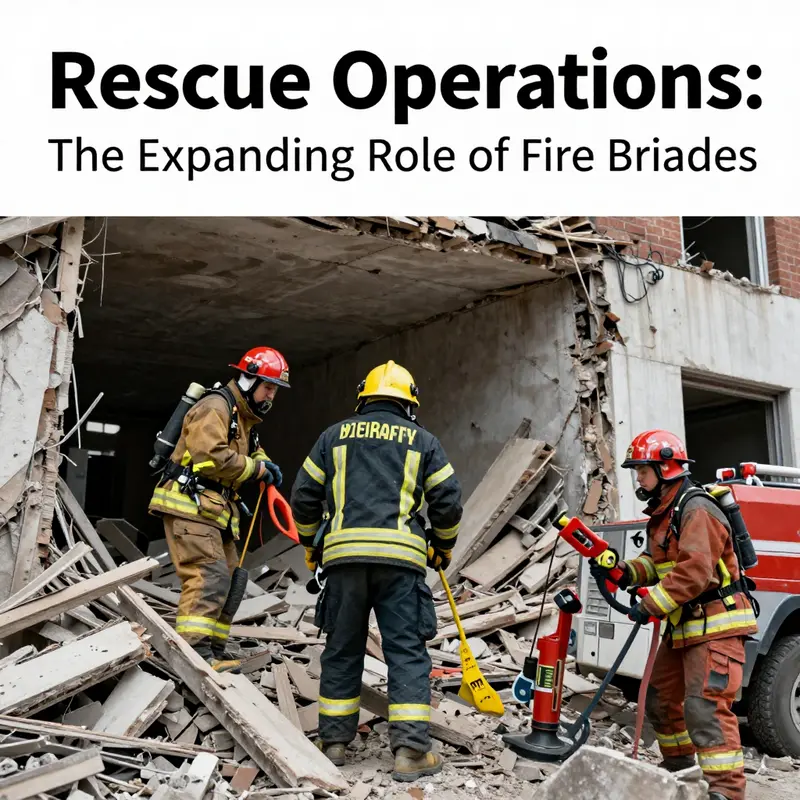
When people think of fire brigades, the image that often comes to mind is a blaze, a siren, and firefighters wielding hoses. Yet the reality of modern emergency response is far more nuanced. Fire brigades have transformed into multi-hazard response organizations whose reach extends far beyond extinguishing flames. Among the most demanding and high-stakes tasks they now routinely perform is urban search and rescue (USAR) in the wake of earthquakes, building collapses, and other structural failures. This fusion of firefighting prowess with technical rescue skill marks a shift in the field’s identity: responders who can rapidly locate victims, stabilize dangerous environments, extricate people from wreckage, and provide initial medical care in situations where every minute counts. The core objective of USAR—locating, accessing, and delivering crucial care to those trapped beneath debris—lays bare the competencies that fire brigades cultivate in the modern era. It is not merely an add-on capability; it is a fundamental function that shapes training, equipment, interagency collaboration, and the very tempo of on-site operations.
The orchestration of a USAR mission begins with a swift, disciplined arrival. Fire brigades are among the first emergency services to reach disaster zones, their crews trained to assess structural stability, identify hazards, and establish a preliminary plan in minutes. They must quickly determine which areas remain accessible, which are at risk of secondary collapse, and where occupants are most likely to be found. This rapid triage process is not about treating every problem at once; it is about prioritizing paths of access and search strategies that maximize survivor likelihood while minimizing risk to rescuers. The on-scene commander, often a senior firefighter with broad command responsibilities, works in concert with police, medical teams, engineers, and sometimes utility workers. The aim is a coordinated, multi-agency response where every action is synchronized, every voice is heard, and every tool is directed toward a common objective: to save lives amid chaos.
Within the search and rescue workflow, the technical repertoire of fire brigades plays a decisive role. They rely on a suite of access techniques designed for confined spaces, unstable debris, and precarious footholds. These include carefully planned shoring to prevent further collapse during lifting or drilling, careful removal of material, and the use of cutting and prying devices to create new egress routes for trapped victims. Each maneuver requires precise risk assessment. A single misstep could endanger a survivor or another rescuer. This is why the training pipelines for modern fire services emphasize not only strength and speed but restraint, situational awareness, and the ability to improvise under shifting conditions. The equipment portfolio that supports USAR is diversified, resilient, and designed to function in environments where standard ambulances or hospital resources cannot reach. Rescuers may bring in specialized lifting bags, hydraulic spreaders, cutting tools, and stabilization devices. They may also deploy high-precision sensors to map the environment, including thermal imaging cameras to detect heat signatures, acoustic sensors to hear faint sounds through rubble, and gas detectors to identify dangerous atmospheres.
Technology is no mere convenience; it is a force multiplier that expands what is possible in USAR. The advent of portable imaging, sensor fusion, and real-time data streams has reshaped decision-making on the ground. Thermal cameras help locate heat-emitting areas that may indicate occupants hidden under debris, or reveal pockets of fire that require swift containment to prevent further harm. Acoustic sensors listen for movement or calls for help through rubble, occasionally even through several meters of obstructing material. Gas detectors warn rescuers of hazardous atmospheres that could cause health issues or ignite a loose could of gases. Drones, too, have moved from novelty to necessity, enabling reconnaissance over unstable sections of a site without exposing personnel to danger. The data they gather—topography, debris mapping, and potential voids where a victim might be found—can reshape search plans in real time. All of these tools interlock with the human element: trained crews interpreting signals, adjusting tactics, and maintaining the discipline required to operate inside a precarious, rapidly evolving environment.
As the search progresses, the extraction phase commences with careful, deliberate action. The primary objective is to free a trapped person without inducing further harm, a balance that demands both surgical precision and a readiness to pivot when conditions change. Rescue teams often work in segments, with specialists assigned to particular aspects of the rescue: some focus on clearing obstructive debris, others attend to stabilization and lifting to create a corridor for the patient’s removal. Medical personnel provide a critical bridge to the next phase of care, delivering spinal protection, airway management, bleeding control, and immediate evaluation of circulation and consciousness. The fusion of technical rescue and medical intervention during USAR underscores a broader truth: the modern fire service is a continuum of life-saving competencies that begins with assessment, continues through extraction, and culminates in rapid, on-site medical support, all within a disaster’s chaotic landscape.
No discussion of USAR would be complete without acknowledging the role of robotics and remotely operated devices. In environments too dangerous for human entry, robotic platforms extend the reach of rescuers. A tracked robotic vehicle, designed to traverse uneven rubble and transmit real-time video and sensor data, becomes a vital asset in such scenarios. The value of these robotic systems lies not only in the ability to explore hazardous pockets but also in their capacity to deliver information that reshapes decision making at the frontline. Operators can assess structural integrity, track the progression of a collapse, and guide human teams with improved situational awareness. The use of these platforms embodies a broader shift toward integrating automated and remotely controlled systems into the standard USAR toolkit, allowing responders to maintain momentum in the face of risk.
The importance of robotics in USAR is underscored by early testing and evaluation conducted in controlled settings that simulate disaster conditions. These evaluations examine how a robot’s mechanical design performs on uneven terrain, how well it can climb over obstacles, and how effectively it conveys critical sensor data back to operators. They also examine how these systems can integrate with human teams, including how to synchronize commands, interpret feeds, and translate the information into actionable rescue steps. Although the specific marketed platforms vary, the underlying principle remains consistent: machines serve as force multipliers, extending the reach of trained responders and enabling more survivors to be found and helped in the critical minutes following a collapse. This symbiotic relationship between human skill and robotic capability is shaping a new standard for USAR across many fire services worldwide.
The capability to conduct USAR does not exist in a vacuum, however. It rises and falls with the quality of training, the availability of equipment, and the network of relationships that surround the on-scene team. Fire brigades operate at the intersection of emergency medicine, structural engineering, and civil protection, which means their success in rescue operations hinges on sustained collaboration with a broad set of partners. Police may contribute crowd control and scene security; medical teams provide triage, stabilization, and transport; engineers may assess the building’s stability and help plan shoring and breaching strategies; utility workers assess and mitigate hazards; and social services assist with survivor care and family support in the wake of a disaster. Effective coordination among these actors is as essential as the tools in a technician’s kit. It requires shared communication protocols, common terminology, and respectful, practiced handoffs from one unit to another. As disasters become more complex, so too does the coordination challenge, which is why modern fire services invest in command and control systems that can quickly assimilate data from diverse sources and present it in a coherent, actionable format for decision makers on the ground.
This broader ecosystem of USAR-enabled response has become a defining characteristic of contemporary fire brigades. The shift toward multi-hazard rescue training reflects an acknowledgement that fires are often the least of a responder’s concerns when a city is shaken by an earthquake or when a building fails in a basement- or top-down collapse. To meet these demands, many fire services have developed cross-disciplinary training modules, bringing together engineers, medical professionals, technicians, and even robotics specialists under a unified program. The goal is not to create silos of expertise but to foster a culture in which diverse skills converge to support life-saving outcomes. This cultural evolution is visible in international examples where volunteer and professional brigades alike are urged to maintain readiness for technical, medical, chemical, or environmental rescue tasks in addition to firefighting and disaster response. The broader message is clear: rescue operations have become a fundamental, integral function of fire brigades worldwide, shaping how they recruit, train, and deploy resources in the service of communities.
In this context, one can see a deliberate bridge being built between the traditional emphasis on extinguishing flames and the modern demand for resilient, adaptive response networks. The on-scene reality often defies neat categorization. Rescuers must be ready to switch between roles—searcher, medic, stabilizer, and pressure regulator for collapse risks—without losing momentum. They must also stay vigilant for long-term demands. A post-disaster horizon may require engineering assessments, debris removal, and environmental cleanups, all of which can intersect with USAR tasks in ways that call for extended operations, fatigue management, and careful resource allocation. The more adept fire services are at sustaining operations under prolonged stress, the higher the likelihood of finding survivors and minimizing secondary harm. It is this endurance—the ability to keep pace with the evolving crisis, to stay calm under pressure, and to maintain a human-centered approach even in the most technical circumstances—that distinguishes world-class USAR responses.
Innovation has a central role in sustaining this capability, connecting field practice to evolving best practices. The search for better tools, better protocols, and better teamwork is ongoing. Modern services seek out new ways to map risk, identify vulnerabilities, and anticipate collapse scenarios before they unfold. This is where the spirit of learning is embedded in every mission. It is also why the dialogue around USAR often features explorations of new training models, automated sensing, and rapid-deployment equipment that can shrink response times and improve outcomes. As with other front-line services, the culture of continuous improvement is embedded in the fabric of rescue operations, and its influence can be seen in the way teams rehearse, rehearse again, and refine their approach to every new incident.
The global perspective reinforces the universality of these capabilities. In countries with varied topographies and population densities, fire brigades adapt their USAR programs to reflect local realities—urban canyons, rural culverts, high-rise districts, and complex industrial settings all demand tailored rescue strategies. The Polish example underscores a model in which volunteers and professionals alike are trained for a spectrum of rescue tasks—from technical and medical to chemical and environmental rescue—alongside firefighting duties. Across other borders, specialized teams focus on forest fire suppression, high-rise building rescue, or complex technical rescues, illustrating how multi-hazard resilience has become a defining attribute of modern fire services. Even where resources are constrained, the insistence on USAR readiness persists because the consequences of inaction in a collapsed structure are simply too severe to accept. In short, the USAR mission is not an optional expansion; it is a core, expected function that reflects the evolving definition of public safety in the twenty-first century.
For readers tracing the arc of this topic through the wider article, this chapter’s focus on USAR illuminates how rescue operations have become inseparable from the identity of fire brigades. The discussion naturally links to how fire services manage training, equipment, and interagency collaboration in order to be ready for the most perilous emergencies. It also echoes the underlying theme that rescue operations are a vital expression of the broader capability spectrum that defines contemporary fire services. The narrative here does not exist in isolation. It is a thread in a larger fabric that includes technological innovation, community resilience, and the continuous redefinition of what it means to be a responder to danger. As communities face new threats and aging infrastructure, the ability of fire brigades to lead USAR efforts—through planning, rapid deployment, and disciplined execution—will continue to shape their role in public safety for years to come.
In the end, the question of whether fire brigades perform rescue operations is answered not by a single act but by a pattern of on-the-ground realities, policy commitments, and technical innovation that together redefine the modern rescue landscape. USAR is not an add-on skill; it is the procedural backbone of an emergency response system designed to save lives when every second matters. The chapter’s exploration of this terrain shows that fire brigades neighbor the line between firefighting and advanced rescue, translating raw danger into structured, life-preserving action. In doing so, they demonstrate a practical, evolving form of service—one that recognizes that the emergencies communities face require a blend of courage, science, and collaborative precision. The chapter has traced how these elements cohere in practice, offering a coherent picture of how rescue operations have become a central, indispensable function of fire brigades worldwide.
To connect this discussion to ongoing threads about innovation within the service, consider the growing emphasis on integrating cross-disciplinary knowledge and advanced technologies into rescue missions. This integration is not about replacing human judgment with machines; it is about complementing human skill with new tools that expand reach, speed, and safety. When a brigade can combine rapid situational awareness with precise mechanical access, the probability of survival for a trapped person climbs markedly. The narrative of USAR in modern fire services is, therefore, a narrative of augmentation—a story about how the convergence of people, processes, and technology augments what firefighters can achieve when a city’s most vulnerable citizens need help most. The path forward rests on sustained investment in training that spans medical care, structural assessment, and technical rescue; on equipment that remains adaptable to changing conditions and scalable to different environments; and on interagency cooperation that leverages the strengths of every partner around the disaster scene. The chapter has traced how these elements cohere in practice, offering a coherent picture of how rescue operations have become a central, indispensable function of fire brigades worldwide.
For readers seeking an accessible primer on how such capabilities develop in real-world settings, the idea of an ongoing exchange between on-the-ground practice and organizational learning is key. Fire services continually translate lessons learned from one incident into updated protocols and drills, ensuring that tomorrow’s responders arrive with not just courage but also better-informed strategies. The emphasis on USAR represents a forward-looking stance that acknowledges the evolving risk landscape—from earthquakes in crowded urban cores to structural failures following severe weather or industrial incidents. It is a stance that positions fire brigades as not only protectors from flames but also guardians of the vulnerable when the world around them seems most unstable. As this transformation continues, the frontline rhetoric remains simple and enduring: locate, access, stabilize, and care. The means may change, but the mission remains relentlessly human.
This perspective also invites readers to consider how communities can support rescue readiness. Investment in training pipelines, acquisition of safe and versatile equipment, and the establishment of clear multi-agency protocols are essential. The ultimate objective is a resilient system where life-saving actions are predictable under pressure, where teams can move through rubble with confidence, and where survivors can receive medical attention within minutes of rescue. In such a system, the chapter’s core claim—that fire brigades perform rescue operations as a central, enduring function—becomes not only plausible but demonstrably true across diverse geographies and operational contexts. The resilience of urban life depends on it, and the bravery and discipline of responders in these moments reveal the most tangible face of public safety: a coordinated, compassionate, informed response that keeps communities intact when disaster tests their limits.
To ground this discussion in an accessible point of reference for those who wish to explore the human and technical dimensions more deeply, consider the broader discourse on how innovation intersects with practice in fire services. A promising line of inquiry is the way institutions frame rescue readiness as part of a continuous improvement culture that blends field experience with analytical testing. This approach helps explain why rescue operations remain central even as new hazards emerge. It also sheds light on how agencies balance the immediacy of a live incident with the slower, methodical work of training and equipment development. The conversation around USAR is not a theoretical abstraction; it is a living practice that shapes how cities defend themselves against the unpredictable. In that sense, the chapter closes with a practical takeaway: preparedness is a dynamic, iterative process. Fire brigades, at their best, embody that dynamic as they lead with skill, adapt with technology, and collaborate to safeguard life when disaster strikes.
In sum, the urban search and rescue functions performed by fire brigades illuminate a core transformation in modern emergency response. The fire service has moved beyond its historical niche to become a comprehensive emergency entity capable of addressing the most demanding rescue scenarios. USAR is the heart of that evolution. It binds together rapid response, technical expertise, medical care, and interagency coordination in a way that magnifies the impact of every life saved. The practice shows that firefighters do more than extinguish flames; they navigate wreckage, stabilize fragile environments, and bring hope to those entombed by disaster. As communities continue to confront a range of hazards, this rescue-centric identity will likely grow even more essential, guiding how brigades train, equip, and operate in the years to come. The story of USAR is, in essence, a story about the resilience of public safety and the human capacity to persevere through collapse, guided by trained hands, disciplined minds, and the steadfast will to save lives when time itself seems to run out.
Internal link reference: For readers interested in how innovation shapes the future of fire services, see the discussion on Innovation Museum Transforming Fire Services. This resource offers a broader context for understanding how new ideas and technologies are driving changes in rescue operations, including how teams prepare for complex incidents and how system-wide learning supports frontline response. External reference: For a detailed technical assessment of robotic platforms used in urban search and rescue, consult the MDPI study on tracked vehicles and their applications in disaster scenarios: https://www.mdpi.com/2076-3478/12/10/359.
Between Currents and Contamination: How Fire Brigades Master Water and HazMat Rescues
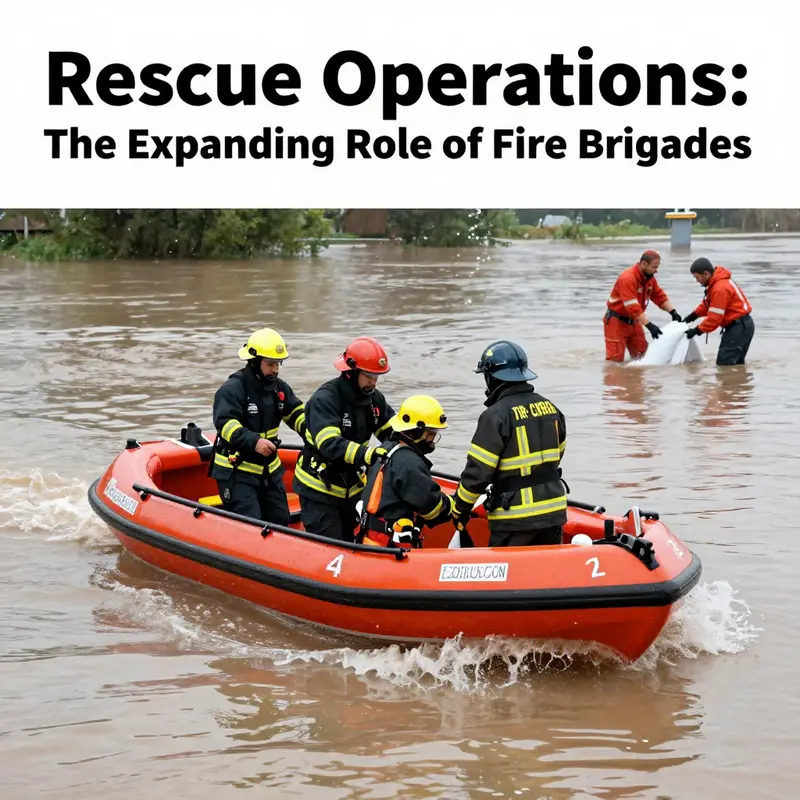
Fire brigades no longer arrive only to fight flames. Modern brigades must be ready to rescue people from flowing rivers, murky depths, and deadly chemical clouds. Water and hazardous material (HazMat) rescues demand distinct skills, equipment, and command choices. They also require seamless integration: a single incident can combine drowning risks with toxic exposure. This chapter follows how contemporary fire services prepare for, execute, and learn from these complex missions. It explains the technical layers that make water and HazMat rescue part of the fire brigade’s core mission and shows why coordination, training, and technology are decisive.
At the heart of both disciplines is risk control. When water or hazardous substances threaten life, the priority is to isolate hazards, protect victims and responders, and then recover or stabilize. For water rescue, that often starts with scene size-up: identifying water type, current speed, depth, visibility, access points, and nearby hazards such as submerged structures or electrical risks. For HazMat, the assessment focuses on the identity of the substance, its phase (gas, liquid, solid), concentration, odor, and the potential for secondary reactions like fire or explosion. Each assessment shapes the tactics and the protective layers responders use.
Water rescue operations are commonly grouped by conditions because the physics of water changes what is safe and what is possible. In calm inland waters and shallow urban flooding — often called static water rescue — firefighters can act directly from shore with personal protective equipment (PPE) and flotation aids. Throw bags, life rings, extension poles, and lightweight boats are useful. Shore-based tactics emphasize patient packaging and simple extrication. The scene can require quick wading rescues in waist-deep water; those are deceptively risky. Rescuers must anchor themselves with ropes and maintain connection to shore teams. In these scenarios, communication and safety lines create a net to prevent bystander rescues from becoming multiple casualties.
Fast-flowing water changes the equation. Riverine or coastal rescues involve rapid currents and hydrodynamic forces that can disorient or pin victims. Here, rescues rely on specialized swift-water teams who train to read hydraulics—eddies, strainers, and boils—and to use technical rope-work and inflatable craft. Teams deploy downstream safety lines, establish highpoint anchors, and use throw-bags with accuracy drills the way firefighters practice hose handling. Inflatable rescue boats, properly rigged, allow for dynamic approaches: moving with the current to pick up victims or setting up downstream stops to prevent victims from entering dangerous hydraulics. Rescuers also place rescue swimmers with tethered lines, who remain anchored to shore crews to mitigate the risk of being swept away.
Underwater or diving rescue is the most specialized branch of water operations. It requires trained public safety divers, dive tenders, and surface support teams. Divers operate in low-visibility conditions and often with heavy equipment to search for submerged vehicles, structures, or evidence. Search patterns—grid, circular sweep, or jackstay—are chosen based on last-known positions and environmental constraints. Rebreathers, full-face masks, dry suits, and tethering provide safety and endurance, while surface-supplied air allows longer bottom times. Diver operations demand meticulous supervision, redundant breathing systems, and the capacity to conduct rapid medical intervention for conditions like decompression sickness or hypothermia. Because diving pushes personal limits, decision-making hinges on clear go/no-go criteria and an emphasis on acceptable risk.
HazMat rescue operations require a different protective mindset. Chemical risks are invisible, can spread by air or water, and may react under heat, pressure, or contact. HazMat responses begin with identification and isolation. If the substance is known—a chlorine leak, a caustic spill, or a flammable solvent—the incident commander consults safety data and follows pre-planned mitigation steps. When unknown, reconnaissance from a safe distance using detectors, drones, and visual signs guides protective measures. Early actions include establishing hot, warm, and cold zones; controlling access; and using appropriate respiratory protection and protective suits.
The choice of protective ensemble is critical. Level A full encapsulation offers complete protection against vapors but limits mobility and heat tolerance. Level B provides respiratory protection with splash protection for liquid hazards. Commanders balance protection against the need for dexterity and endurance; tasks such as victim extrication or valve shut-off may require different gear than sample collection or monitoring. Decontamination corridors must be set up before rescuers make contact with victims. The goal is to prevent secondary contamination of ambulances, hospitals, and personnel. Rapid on-scene decon — gross rinse followed by systematic soap-and-water or specialized neutralizing agents — reduces exposure and makes patient transport feasible.
Fire brigades increasingly cross-train for blended scenarios. Consider an industrial spill where a chemical plume enters a river while workers fall into the water. Incident commanders face simultaneous threats: toxic inhalation for those onshore and contaminated immersion for those in the water. This overlap forces coordinated tactics. A unified incident command system separates responsibilities but fosters shared situational awareness. Water teams establish rescue lanes and recovery points; HazMat teams set containment booms upstream to limit pollution; medical units prepare for both chemical exposure and hypothermia. Such coordination short-circuits the risk of isolated teams working at cross purposes and reduces the chance of secondary casualties.
Training underpins capability. Fire brigades train to a standard that matches their mission profile and legal responsibilities. For water rescue, that means swim proficiency, rope-work certifications, boat handling, and dive team qualifications. Skills maintenance is continuous: teams rehearse night operations, cold-water rescues, and multi-victim scenarios. HazMat training covers chemical recognition, monitoring equipment, isolation strategies, entry and exit procedures in protective suits, and decontamination practices. Tabletop exercises and full-scale multi-agency drills test communication, logistics, and decision-making. Cross-training with police, emergency medical services, environmental agencies, and industry partners creates realism and prepares responders for jurisdictional complexity.
Equipment choices reflect the hazards. For water rescue, assets include shore-based rescue kits, throw lines, inflatable rescue boats, swift-water helmets, personal flotation devices, wet and dry suits, and dive systems. For HazMat, detection instruments (photoionization detectors, gas chromatographs, infrared sensors), containment materials, neutralizers, specialized firefighting rigs, and transportable decontamination units are essential. In some regions, brigades maintain aerial spray systems or large-flow cannons to dilute or disperse flammable vapors and control fires that involve hazardous chemicals. Investment in these assets often reflects local risk assessments: industrial corridors, coastal cities, and flood-prone areas prompt different equipment mixes.
Technology is widening capabilities. Drones provide airborne reconnaissance over rivers and chemical plumes without exposing personnel. Thermal imaging helps locate submerged victims or hot spots in a contaminated area. Real-time data links allow detectors to stream readings to the command post for immediate analysis. Intelligent command systems integrate sensor feeds, GIS maps, and resource tracking, enabling faster decisions and clearer communication with partner agencies. As technology evolves, brigades must adopt tools within their training regimen to avoid creating false precision: a drone’s video is only as valuable as the operator’s interpretation and the decision framework it supports. For a discussion of how technology reshapes leadership and operations in fire services, see this analysis of the impact of technology on fire department leadership.
Safety culture is another essential pillar. Both water and HazMat rescues push physical and cognitive limits. A strong safety culture enforces the rule that no single life is worth multiple casualties. That means strict accountability for entry procedures, mandatory safety lines in water operations, clear stop-work authority if conditions degrade, and formal risk assessment checklists for HazMat entries. Peer review and after-action analysis reinforce learning. When errors occur, structured debriefs identify system failures rather than assigning only individual blame. This approach improves procedures, training, and equipment procurement.
Legal and environmental obligations complicate decisions. HazMat incidents often invoke environmental agencies and public health authorities because contamination can extend beyond the immediate rescue. Fire brigades must document chain-of-custody for samples, preserve evidence for investigations, and support long-term remediation efforts. Water rescues in protected waterways can require liaison with conservation agencies to limit ecological impacts. These obligations emphasize that technical rescue is not only a momentary life-saving act but also the start of a longer public safety and environmental process.
Logistics and mutual aid sustain operations. Major water or HazMat incidents can outstrip local capacity quickly. Fire brigades maintain mutual aid agreements and regional strike teams to bring specialized boats, dive teams, HazMat specialists, and heavy equipment. Staging areas supply fuel, medical support, rehabilitation for fatigued responders, and evidence collection points. Planning for prolonged operations includes rotation schedules, mental health support, and supply resupply chains for consumables like suits, filters, and breathing air.
Effective communication ties everything together. Clear channel discipline, plain language radio procedures, and a shared incident command structure prevent confusion when multiple teams operate in close quarters. Common terminology across agencies reduces mistakes: for example, marking a contaminated victim as “hot” and routing them through the decon corridor is a simple convention that prevents lethal cross-contamination. Public messaging also matters. During floods or chemical releases, accurate, timely instructions to the public—evacuate, shelter-in-place, or avoid rivers—save lives. Fire brigades often coordinate with emergency management and media to ensure that protective actions are understood and followed.
Learning from incidents improves readiness. After-action reviews from complex rescues reveal patterns: gaps in coordination, missing equipment, ambiguous roles, or training deficiencies. Successful programs institutionalize lessons into revised standard operating procedures, targeted training modules, and prioritized acquisitions. For example, a near-miss during a riverine rescue might lead to acquiring additional throw-lines and increasing emphasis on downstream pick-off techniques. A chemical release that overwhelmed local decon capacity could prompt investment in modular decon trailers and pre-arranged mutual aid from neighboring jurisdictions.
Ultimately, the ability of fire brigades to perform water and HazMat rescues rests on three converging principles: specialized training, adaptive equipment, and integrated command. Specialized training gives teams the technical footing to act safely. Adaptive equipment enables those actions across varied environments. Integrated command ensures that actions are coordinated, prioritized, and responsive to changing conditions. When those elements align, fire brigades can move beyond simply suppressing fire to protecting life and environment in the most hazardous contexts.
This evolution reflects a pragmatic truth: emergencies seldom arrive in neat categories. Fires, floods, and chemical hazards intersect. Communities depend on fire brigades to manage that complexity. By investing in training, tools, and interagency systems, brigades transform capability into consistent performance. The result is a public safety service that accommodates the unpredictable while minimizing harm—rescuing people from currents and contamination alike.
External resource: The detailed example of a specialized response team in Dalian, China, underscores the importance of tailored HazMat readiness and industrial risk planning.
Final thoughts
The expanding roles of fire brigades in rescue operations underscore their essential presence in emergency response frameworks. From executing technical rescues to undertaking complex urban search initiatives and managing water and hazardous situations, fire brigades are vital pillars of community safety. This assurance of multifaceted support reflects the ongoing evolution of these brave professionals, reminding residents of the comprehensive rescue capabilities available to them in times of crisis.