
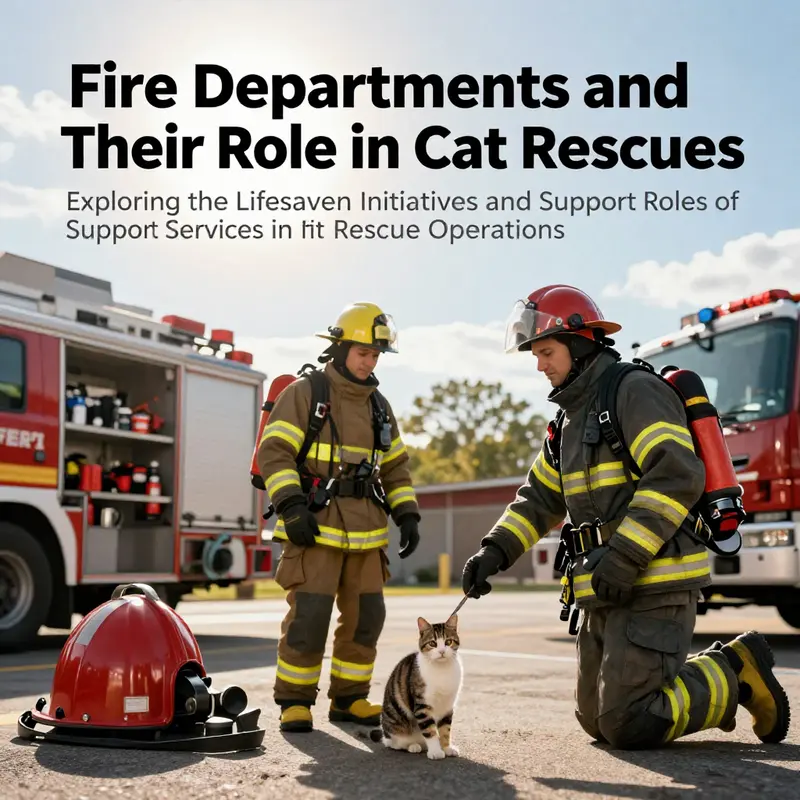
Fire departments have long been seen as the brave protectors of human life and property, but their role extends far beyond traditional firefighting duties. Increasingly recognized is their commitment to the rescue of other species—specifically cats—deeply woven into their operational strategies in urban areas. This article delves into fire departments’ multifaceted roles in cat rescues, assessing their actions in both fire-related emergencies and non-fire situations while examining the technology they employ, public perceptions involving resource allocation, and the emotional contributions these initiatives offer. By exploring each dimension of the partnership between fire departments and their feline rescues, this article aims to reaffirm the essential role these life-saving missions play within the community.
Fire Department Rescue Cats: A Lifesaving Initiative in Urban Environments
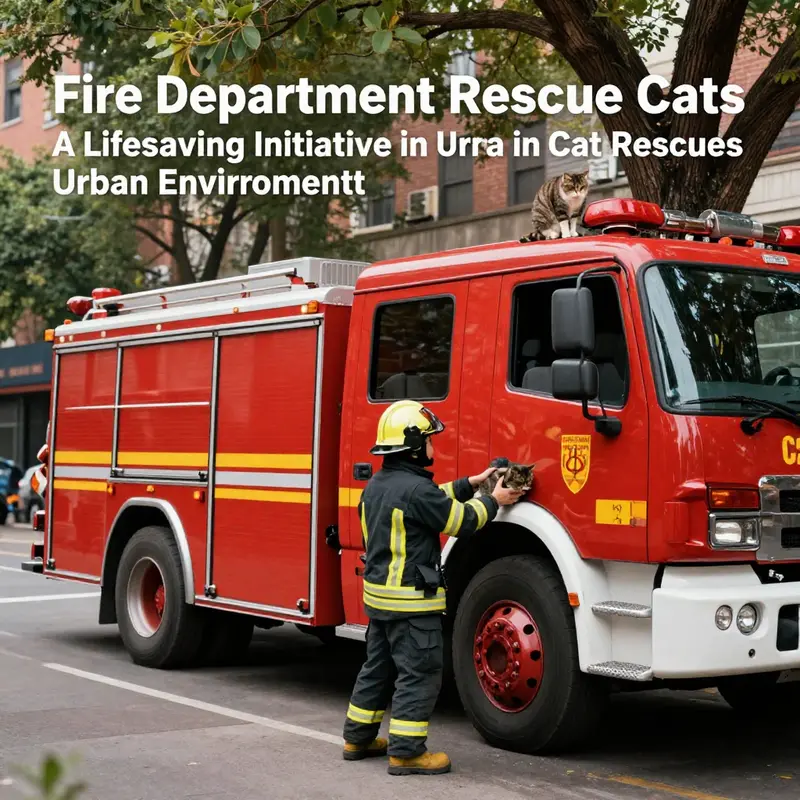
On crowded city streets and in high-rise districts, the work of a fire department has long centered on quelling flames, rescuing people, and preventing harm. Yet as urban life evolves, so do the duties of firefighters. In many cities, the rescue mission has grown to include the creatures who share homes with residents—the cats who roam windowsills, the dogs who rush toward smoke, the birds that flutter from balconies when the sirens rise. This widening of scope reflects a broader ethic of public safety that recognizes a family’s entire ecosystem. The urban fire service has started to treat animal welfare as part of its mission, not a distraction from it. The pilot programs and field successes seen in London show how modern departments are prototyping tools and procedures to respond more effectively when a pet is threatened by fire or smoke. The change is not about softening the job’s seriousness; it is about extending the same resolve to every life under danger, whether two legs or four.
Central to this shift is a practical innovation: specialized animal oxygen masks designed to fit a range of animal faces and snouts. These masks, developed by a dedicated animal welfare nonprofit, come in three sizes to accommodate common pets and small wildlife—cats, dogs, rabbits, and even small rodents. They are compact, rugged, and designed to deliver breathable oxygen quickly to patients whose lungs and airways have been compromised by smoke inhalation. In the context of an urban fire, time is the decisive factor. With a pulley of hoses, a team working to rescue a resident can allocate a moment to provide life-saving oxygen to an animal in distress without exposing themselves to additional risk. The pilot program equips fire engines in selected neighborhoods, ensuring responders have the right tool at the right moment. What starts as a test can become a standard capability that reframes how families understand the safety net around their homes.
In Paddington, a junction of brick terraces and busy commutes, a blaze provided the clinical test for this approach. Two cats were saved in a single incident, one of them needing immediate respiratory support. A custom mask was fitted to the animal just as firefighters worked through the danger around them. The moment of contact—the seal, the fit, the gentle flow of oxygen—proved decisive. The cat stabilized; the other cat, though not requiring oxygen, benefited from the rapid access to rescue and the assurance that the team could address multiple needs without compromising the overall operation. This event became a touchstone for the program, a proof of concept that animal care could be integrated with human rescue without slowing or complicating the primary mission. It also reassured pet owners that the responders would consider their animals as part of the family’s safety plan.
Operationally, the initiative rests on logistics and training as much as it does on compassion. The masks are carried on fire engines and are chosen to fit quickly to different animal faces. Firefighters practice rapid fitting in simulated smoke conditions, so that diagnosis and treatment do not consume precious seconds. The program blends with other tools for animal rescues—joints of rope for pets stranded in trees, lights to locate victims in dark stairwells, and clear communication with families waiting outside. The ethical calculus remains clear: human life remains the top priority; animals are rescued whenever doing so does not unduly endanger responders or divert scarce resources from people in immediate peril. Yet in many urban scenarios, human risk is reduced by the presence of a prepared crew, while a cat’s life can be saved with equipment that fits into the same pocket of time. The broader philosophy is that public safety is a spectrum, and pets are part of the community’s fabric. This sentiment also echoes the idea that the fire station can be a hub for holistic wellbeing and community resilience, a concept highlighted in resources about the evolving role of modern stations and their spaces.
Public sentiment has been a powerful driver of this evolution. Firefighters report that many pet owners dash toward the danger to save a beloved animal, sometimes placing themselves at risk. The counterpoint—the counterfactual of waiting for the animal to escape on its own—often yields poor outcomes. Providing a tailored tool for animal rescue helps families feel that their safety net considers the full range of threats their households face. In this sense, the urban fire service is not simply a technical force but a social one, building trust with residents who see responders as partners in neighborhood welfare. The presence of an animal-focused capability can also influence behavior—people take precautions knowing that emergency responders may respond to pets with the same seriousness as people in need. The result is a community that is better prepared, more cooperative, and more aware of how preparedness translates into real-world outcomes at a moment of crisis. This alignment with broader civic goals is part of a growing trend toward integrating human and animal welfare within emergency planning. For some readers, it may also connect with ongoing conversations about how cities design spaces and services to nurture a sense of shared responsibility, a topic that threads through discussions of sustainable, health-conscious urban life and the evolving identity of the fire station as a community anchor. To reflect this broader orientation, some writers point to related explorations of how fire stations can function as more than just response centers, but as adaptive spaces for community wellbeing, resilience, and humane outreach.
Beyond fires, cats have become familiar targets of urban rescues: trees, tight spaces in houses, or entrapments in vehicles often become the quiet margins where a rescue matters as much to the owner as a burned-out corridor matters to a firefighter. In some places, the debate over resource allocation surfaces, with questions about whether time and money should be spent on animals when human lives are not at immediate risk. Yet fire departments repeatedly emphasize that a rescue can be executed within the same framework of safety and efficiency that governs human rescues. When resources permit, crews extend their reach to these non-human emergencies, guided by triage principles that prioritize life in order of immediacy. The expansion of animal rescue within urban emergency services speaks to a broader trend toward holistic, community-centered protection that respects the bonds between people and their animal companions. The idea of the fire station as a community hub—where care is practiced not only during crises but through everyday acts of prevention and support—reflects an overarching shift toward multifunctional public service. For those who want to explore this dimension further, additional perspectives about sustainable and community-focused station design can be found in discussions of the green firehouse principles.
Within fire stations themselves, animals sometimes play a lighter, morale-boosting role. There have even been instances of working cats helping to manage rodents and contributing to a sense of camaraderie and resilience. While not a formal program in all departments, these stories reflect how urban rescue services have become part of the social fabric of a city. The idea that emergency workers are guardians extends beyond the flames; it encompasses the small daily acts of care that families entrust to those who respond when danger arrives. In that frame, the warning siren is not merely a signal of risk but a call to protect a shared, four-legged family. The chapter of city life that involves rescuing cats from trees or smoke and from tight spaces illustrates a broader moral arc: the city protects life, wherever it hides, and responders adapt with ingenuity and compassion.
Looking ahead, the London pilot program could become a blueprint for other metropolitan areas seeking to strengthen community safety. If the three-size approach demonstrates reliability, speed, and positive outcomes for animals, it can inform policy decisions and training curricula around the world. The adoption of a dedicated pet-rescue toolkit within urban fire services signals a broader commitment to preparedness that recognizes households as integrated systems. It also invites a reexamination of the relationships between residents and responders. When people know that local firefighters carry tools specifically for pets, they may be more willing to report fires promptly and cooperate with evacuation instructions. The shift aligns with a growing understanding that safety is not a zero-sum game but a collective enterprise that includes every member of a household, two-legged or four. In this sense, the rescue of a cat in Paddington becomes part of a wider narrative about urban resilience and the capacity of modern emergency services to respond to a complex web of needs.
These developments invite reflection on how future chapters of this article will unfold. If animal rescues in city streets become routine, how might it reshape emergency planning, training, and resource distribution? What happens when communities demand broader roles for responders in shelters, pet welfare programs, and preventive care? The questions point to a trend: fire departments expanding their mission while retaining the core emphasis on human safety. The experience in London suggests that compassion and efficiency are not competing values but mutually reinforcing ones. When a city binds together its residents, responders, and the animals that share living spaces, it creates a more resilient, vigilant ecosystem. The chapter on rescue cats is, at its heart, a story about trust—between the public and those who respond, and between people and the animals they cherish.
In urban environments, every life matters, and rescue operations are most effective when they recognize that life comes in many forms. The cat on a windowsill, the dog at the door, the small rodent trapped in a cell—each demands a response that is swift, skilled, and humane. The evolving mission of the fire service in cities around the world is proof that courage and compassion can work hand in hand to protect the most vulnerable and the most beloved. For readers curious about the broader practicalities and implications of animal rescue in urban emergency services, the London Fire Brigade provides detailed coverage of the animal oxygen mask pilot program. The resource offers context on how equipment, training, and field experience come together to expand the reach of life-saving responses beyond people.
External resource: https://www.london-fire.gov.uk/news/2026/february/animal-oxygen-mask-pilot/
Internal reference for context on community-focused facility design: The Green Firehouse: Creating Sustainable Spaces for Community and Health
Between the Flames and the Roof: How Fire Departments Rescue Cats in Non-Fire Crises
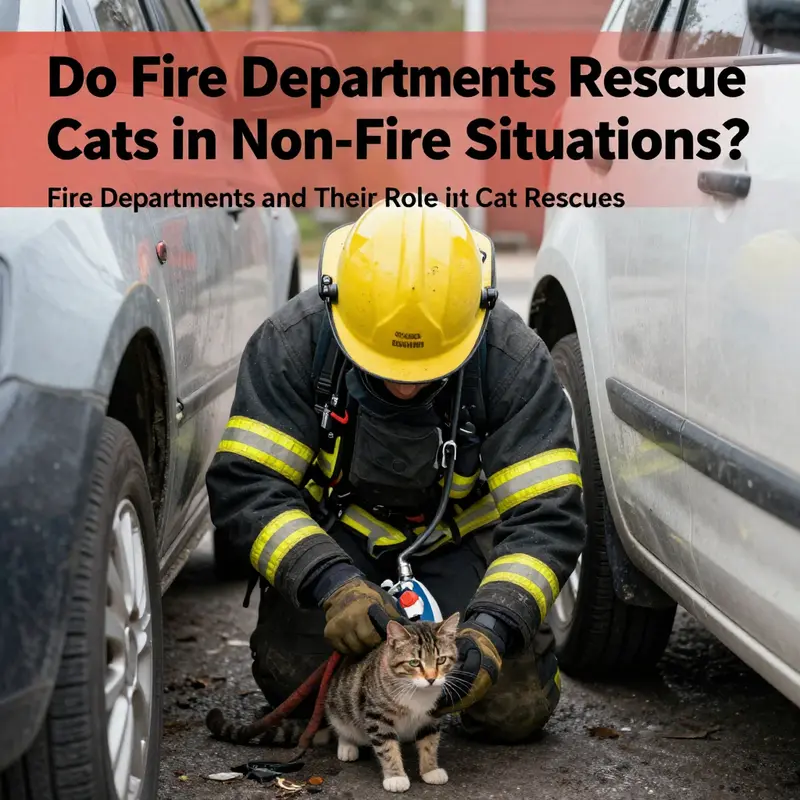
The image of a fire department rushing toward a blazing building is powerful, but the daily reality for many fire crews includes a quieter kind of rescue that takes place well outside the smoke and heat. Cats, dogs, and other pets can become trapped in moments of household mishap, urban architecture, or simple misadventure. In these moments, the fire service often steps in not just as responders to fire, but as guardians of life in its broadest sense. The role is not the department’s primary function, and it sits on the edge of their mission planning, yet it remains a recognizable aspect of what communities expect from their local firefighters. When a cat is stuck high in a tree, on a roof, or wedged within a chimney, the same hands that wield ladders against concrete and steel can also reach for a rescue line to bring a frightened animal back to solid ground. In many places, these rescues are performed with the same seriousness and care that accompany human-life emergencies, even though the immediate human stakes may be lower. The result is a practical, humane, and occasionally controversial blend of emergency response, public service, and community morale that deserves careful attention as part of the broader story of modern fire services.
The logic behind these rescues is straightforward and miles away from sentimentality. Fire departments carry equipment—ladders, harnesses, nets, and ropes—that is versatile enough to handle a variety of precarious situations. When a cat is perched on a branch or stranded on a rooftop, the risk of falling or consuming dangerous materials can be significant. Trained personnel assess the scene for safety, don PPE, and control the environment so that the animal is retrieved with minimal stress and no harm. This often takes place without the dramatic ambiance of a firefight; instead, crews focus on patient handling, animal welfare, and rapid handover to caretakers or veterinarians. The process emphasizes teamwork and method, with every move calculated to secure the animal, not merely to complete a rescue. It is a reminder that emergency services are built to be flexible, capable of reconfiguring their toolkit to fit the danger in front of them, whether that danger is human or animal, life-threatening or merely inconvenient.
Public expectations shape how these rescues are approached. In some communities, the instinct to protect animals runs deep, and fire departments are seen as a trusted public resource with broad reach. Citizens value the accessibility of firefighters, and animal rescues can reinforce that trust. Yet the same dynamic invites scrutiny. Resources are finite, and dispatchers must weigh a distant, lower-risk animal rescue against the potential need for a rapid response to a structural collapse or a dangerous chemical release. The balance is not a simple equation but a continuous operating judgment call that hinges on scene safety, the health of the animal, and the likelihood of a successful outcome without compromising readiness for higher-priority emergencies. This is not a critique of compassion but a pragmatic acknowledgment that every call consumes time, personnel, and equipment that could be redirected when an urgent human hazard arises. In many departments, therefore, animal rescues become a discrete, lightly shielded portion of a broader community-outreach program. They are pursued when feasible, explained when possible, and documented as part of the department’s contribution to public safety and wellbeing.
The kinds of non-fire rescues that capture the imagination—cats stuck in trees, cats on roofs, or kittens lodged in chimneys—illustrate a spectrum of risk. A cat in a tree can be coaxed down with patience and the right equipment, sometimes with the animal merely deciding to descend on its own once the fear subsides. A cat on a roof, exposed to weather and height, demands careful rigging and, at times, the use of a rescue line to lower the animal to a safe area. A cat trapped in a tight space or a vehicle presents its own hazards and may require specialized handling to avoid injury to both animal and rescuer. The common thread is not just the presence of danger but the emphasis on preserving life through careful, deliberate technique. These rescues are rarely glamorous, but they are deeply practical, offering a concrete way for communities to witness the value of trained emergency responders beyond the dramatic scenes of fire and flood.
In the global landscape, stories of animal rescues punctuate the public narrative about firefighting. For instance, contemporary accounts from major cities describe initiatives that improve the odds for animal survival during fires, including equipment enhancements designed to fit animals of different sizes. The practical impact of such tools is tangible on the ground: properly fitted devices can be the difference between life and death for an animal recovering from smoke exposure. Beyond the immediate danger, there is a cultural effect as well. Fire stations often become community hubs, and the presence of rescued animals or even working animals at a station can humanize the service and foster a sense of shared duty. Yet the debate persists. Critics question whether limited resources and the unpredictable timing of animal rescues should take precedence over essential human lifesaving capabilities. Advocates argue that animals are part of many families and communities, and the moral impulse to protect them aligns with the broader aim of protecting life in all its forms. The truth lies in nuanced policy and local practice, where departments weigh risk, resource availability, and community expectations on a case-by-case basis.
A striking feature in many places is the use of specific, purpose-built approaches to animal rescue that underscore the seriousness with which departments treat these calls. In European cities and in parts of North America, crews may deploy a combination of ladders, harnesses, and nets designed to secure an animal without causing additional distress. This equipment, while seemingly humble, represents a convergence of animal welfare considerations with occupational safety standards. The idea is to make every animal rescue a teachable moment about how professionals adapt their trade to new kinds of risks. It is also a reminder that the relationship between human safety and animal welfare is not a zero-sum game but a shared obligation where success is measured by the calm, careful retrieval of life from precarious circumstances. When a cat is finally returned to a relieved owner, the scene often travels far beyond the immediate moment and becomes part of the community narrative about what a fire department can do in service of everyday life.
The social and cultural dimensions of animal rescues extend into the personal narratives that accompany each event. Stories of cats saved from high places or rescued from chimneys circulate in local media and online forums, shaping perceptions of the fire service as a partner in daily life rather than solely as first responders during disasters. Working cats, or cats kept at stations to help control pests and improve morale, also complicate the conversation. They remind us that fire stations are more than emergency workplaces; they are social spaces where the rhythm of daily life interlaces with the occasional crisis. The presence of animals at the station can soften the hard edges of a demanding job, offer a sense of companionship, and, in some communities, serve as a morale booster for firefighters who face long, taxing shifts. This humanizing effect, while not the primary justification for animal rescue, helps to illuminate why such calls matter to the people who rely on the service and to the animals who depend on it.
As with many aspects of public service, the narrative around non-fire rescues is not monolithic. Some communities enrich their capability with partnerships that extend animal-rescue expertise beyond the firehouse. In places where animal-control units operate separately, firefighters may still be called to assist if the scene is safe and the risk to humans is minimal. In others, the presence of a dedicated animal-rescue protocol within the fire department can streamline responses and reduce the burden on animal welfare networks. The common thread across these variations is a shared commitment to preserving life wherever and whenever possible, even when the danger is not caused by flames but by the unpredictable quirks of daily life. This commitment, practiced responsibly, can bolster trust and cooperation between fire departments and the communities they serve. It also highlights the adaptive nature of modern emergency services, which must remain agile enough to address a broad spectrum of risks while maintaining readiness for the most urgent threats.
For readers seeking a broader lens on how societies navigate these decisions, the public discourse around animal rescues often intersects with broader questions about resource allocation, community values, and the boundaries of public safety services. The balance between responding to an urgent tree-climbing cat and ensuring readiness for a potential building collapse is not a theoretical debate when every hour of a shift is an opportunity cost. Yet the practical outcome—skilled personnel, careful execution, and a respectful regard for animal life—remains a clear throughline. In many communities, the result is a story of cooperation: pet owners, veterinarians, animal welfare groups, and fire department personnel working together to maximize the chance of a positive outcome while preserving the department’s core capabilities for human emergencies. This collaborative ethos reflects a broader societal appreciation for public safety services as multifaceted institutions capable of adapting to the evolving needs of the communities they protect. The chapter thus returns to a simple, durable truth: rescuing a cat in a non-fire situation is not merely an act of mercy; it is an example of professional versatility, community trust, and the quiet, persistent work of keeping life safe in its many forms.
For readers who want to explore the topic further from a different angle, see the Green Firehouse initiative as a case study in how fire services can weave animal welfare and public health into their broader mission and culture. The Green Firehouse: Creating Sustainable Spaces for Community and Health.
External perspective confirms that these stories are part of a larger conversation about what fire departments do beyond fires. They illustrate how life-saving work extends to animals and how communities interpret and support those efforts. The balance remains delicate, but the impulse to help—in a way that is careful, efficient, and compassionate—keeps the narrative moving forward. If nothing else, these rescues remind us that the line between danger and safety is often drawn not by a single event but by a sequence of decisions made under pressure, with the wellbeing of living beings—the tiny, vulnerable ones as well as the human neighbors—always in view. And as cities evolve, so too will the practices and principles guiding how fire departments respond when a cat needs a hand, whether it is on a tree limb, a rooftop, or a dormer within sight of a bustling street.
External resource for broader context: https://www.bbc.com/news/uk-45437683
Breath of Rescue: How Specialized Equipment Enables Fire Departments to Save Cats
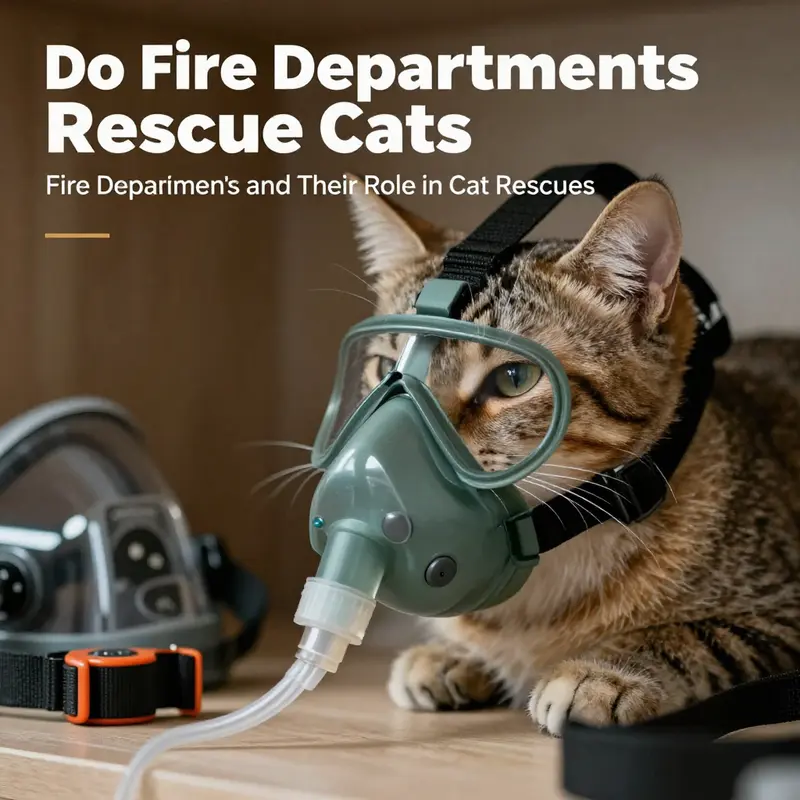
In the hush after a siren, a rescue worker kneels beside a cat shrouded in smoke and ash. The image is a striking reminder that fire departments have broadened their lifesaving missions beyond human beings. Across cities and towns, teams are learning to treat animal victims with the same urgency and methodical care that has long defined human emergency response. The centerpiece of this shift is a set of specialized tools that fit the exigencies of small lungs, curious paws, and rapid brain responses. The equipment might be simple in concept—oxygen delivery devices tailored to pets—but its impact is measured in minutes and in the quiet, almost miraculous, revival of a life that had been close to the edge.
In London, a program designed to test the idea that pets deserve a rapid oxygen boost after rescue has introduced patient-specific oxygen masks that come in sizes suited to cats, dogs, rabbits, and smaller creatures. The intent is not to replace veterinary care but to buy time and stabilize a patient until professional treatment can begin. The masks are part of a broader approach to pet first aid that includes brief training for firefighters, enabling them to act swiftly within what rescuers call the golden hour after extraction. When a cat is pulled from a burning room, its airways may be soot-laden, its lungs inflamed, and its heart pressed by shock and stress. Without immediate oxygen, neurons can suffer injury, and the heart can falter. The difference between a survivable incident and a tragedy can hinge on the ability to deliver oxygen quickly and effectively.
The London example is both practical and hopeful. Fire stations in several districts are piloting the use of pet-specific masks, with the understanding that fit matters as much as force. A snug, correct seal allows oxygen to reach delicate respiratory tissues without delay, especially in small animals whose airway paths differ from those of larger mammals. The first publicly documented success in this initiative arrived in a Paddington house fire, where a cat revived after oxygen delivery was properly applied. That outcome is not a guarantee in every case, yet it serves as a persuasive demonstration that the combination of proper tool, trained hands, and timely action can tilt the odds toward life. The transformation is not about choosing between human and animal care; it is about expanding the moral and professional remit of firefighting to include all vulnerable lives when the situation permits.
The practical logic behind the shift is underpinned by a clear physiological reality. Smoke inhalation inflicts injury not only on the lungs but on the brain and heart through a deficit of oxygen. In humans, the chain of survival has long grown to resemble a relay race—scene safety, initial care, rapid transport, and definitive treatment. Fire departments, while specialists in risk assessment and rapid extrication, have historically relied on improvised methods to assist animals in distress after extraction. The new equipment changes that dynamic. It provides a ready-made, species-appropriate means to deliver oxygen, with the same pace and confidence that human rescuers expect when a neighbor is in urgent need. The innovation is anchored not in drama but in reliability: a mask that can be handled with one gloved hand, a quick check for a proper seal, and a breath that carries relief for the animal’s nervous system and heart.
Beyond the flames themselves lies a broader social context. Fire departments are increasingly seen as guardians of community welfare, not only bystanders to danger but as responders to the everyday predicaments of the households they serve. Cats climb trees, become stuck in tight spaces, or find themselves trapped in car engines or collapsed structures. In some cases, stories surface from distant corners of the world about acts of dedication—firefighters driving long distances to free cats from traps, showing a willingness to mobilize resources for animals whose owners are likely to be devastated by their loss. The ethical calculus is nuanced. Resources—time, personnel, and equipment—have real costs, and departments must prioritize human life in imminent danger. Yet when human risk is manageable and animal life is on the line, the argument for intervention strengthens. The cumulative effect is a shift in policy and practice: rescue workflows that recognize animals as integral members of households and communities.
This evolving practice is reinforced by a growing recognition of the emotional bond between people and their pets. Firefighters themselves often speak about the moral clarity of saving a life that someone loves; such moments tend to bolster morale and reinforce a sense of purpose. The adoption of pet-first-aid tools and training is as much about concrete outcomes as it is about cultural change within stations. In some places, stations even cultivate an atmosphere of mutual care with animals present, whether as working animals or as companions that soften stressful calls. The emotional dimension matters because it translates into more engaged, careful work on every call, including those where the stakes are not immediately life-threatening to humans but are urgent for the animal involved.
The London program is still in its pilot phase, with early results pointing to a direction rather than a destination. If this approach continues to show positive outcomes, it may prompt wider adoption across stations, standard curricula for animal first aid, and ongoing collaborations with veterinary professionals and animal welfare nonprofits. The prospect of institutionalizing a consistent, rapid response to animal distress invites questions about training standards, equipment maintenance, and supply chains—challenges familiar to any large public service organization scaling an innovation. The transition from improvised methods to standardized practice is a sign of maturity, illustrating how public services adapt to the complex and evolving needs of the communities they serve.
Within this frame of improvement, the support infrastructure matters just as much as the masks themselves. Trials rely on ongoing professional development for firefighters, checklists to ensure the right equipment is accessible on every engine, and clear protocols for when animal rescue is appropriate. If a rescue is responded to while human lives are temporarily outside risk, teams can allocate the necessary time to careful handling, aiming to minimize stress and injury for the animal. A properly trained team can move with both urgency and gentleness, recognizing that a frightened cat or rabbit may struggle, scratch, or bolt. The masks, though simple in concept, require attention to fit, maintenance, and compatibility with oxygen sources and transport procedures. The discipline of training closes the gap between a brilliant tool and a successful outcome, ensuring that every breath delivered is not wasted on seal failure, misfit, or hesitation.
To understand the broader arc of this development, one can view it as part of a wider transformation of fire services into highly responsive, technology-enabled guardians of community health. The effort to rescue cats is one thread in a larger tapestry that includes child safety, environmental hazards, and disaster response—all woven together with the same commitment to rapid assessment and decisive action. And as with many innovations, the evolution is iterative. Each successful revival after rescue adds to a growing repository of field experience, which in turn informs training curricula, equipment checks, and policy discussions. The ultimate aim is simple, even if the path is intricate: to preserve life, across species, in moments of vulnerability.
This evolving practice is reinforced by a growing recognition of the emotional bond between people and their pets. Firefighters themselves often speak about the moral clarity of saving a life that someone loves; such moments tend to bolster morale and reinforce a sense of purpose. The adoption of pet-first-aid tools and training is as much about concrete outcomes as it is about cultural change within stations. In some places, stations even cultivate an atmosphere of mutual care with animals present, whether as working animals or as companions that soften stressful calls. The emotional dimension matters because it translates into more engaged, careful work on every call, including those where the stakes are not immediately life-threatening to humans but are urgent for the animal involved.
The London program is still in its pilot phase, with early results pointing to a direction rather than a destination. If this approach continues to show positive outcomes, it may prompt wider adoption across stations, standard curricula for animal first aid, and ongoing collaborations with veterinary professionals and animal welfare nonprofits. The prospect of institutionalizing a consistent, rapid response to animal distress invites questions about training standards, equipment maintenance, and supply chains—challenges familiar to any large public service organization scaling an innovation. The transition from improvised methods to standardized practice is a sign of maturity, illustrating how public services adapt to the complex and evolving needs of the communities they serve.
Within this frame of improvement, the support infrastructure matters just as much as the masks themselves. Trials rely on ongoing professional development for firefighters, checklists to ensure the right equipment is accessible on every engine, and clear protocols for when animal rescue is appropriate. If a rescue is responded to while human lives are temporarily outside risk, teams can allocate the necessary time to careful handling, aiming to minimize stress and injury for the animal. A properly trained team can move with both urgency and gentleness, recognizing that a frightened cat or rabbit may struggle, scratch, or bolt. The masks, though simple in concept, require attention to fit, maintenance, and compatibility with oxygen sources and transport procedures. The discipline of training closes the gap between a brilliant tool and a successful outcome, ensuring that every breath delivered is not wasted on seal failure, misfit, or hesitation.
To understand the broader arc of this development, one can view it as part of a wider transformation of fire services into highly responsive, technology-enabled guardians of community health. The effort to rescue cats is one thread in a larger tapestry that includes child safety, environmental hazards, and disaster response—all woven together with the same commitment to rapid assessment and decisive action. And as with many innovations, the evolution is iterative. Each successful revival after rescue adds to a growing repository of field experience, which in turn informs training curricula, equipment checks, and policy discussions. The ultimate aim is simple, even if the path is intricate: to preserve life, across species, in moments of vulnerability.
For readers curious about how such innovations emerge and spread, the story mirrors other lines of research about transforming fire services through better equipment, more versatile fleets, and smarter protocols. The mentorship of veterinary professionals within the workflow helps ensure that scientific understanding informs practical care, rather than leaving rescue teams to improvise. This collaborative approach—engineers, clinicians, firefighters, and animal welfare advocates working together—helps translate the symbolism of a rescued cat into a reproducible, scalable practice. The potential ripple effects are meaningful: if pet-rescue tools gain traction, they could normalize animal welfare as an integral part of public service, encourage further cross-disciplinary training, and inspire new partnerships that place animal welfare at the forefront of emergency response strategies.
As a concrete step in this ongoing journey, the community of responders continues to explore how to expand access to these life-saving tools, improve their fit across species, and ensure that every engine and medic unit carries the capacity to respond swiftly to feline, canine, or small-mammal distress. The practical markets of supply chains and maintenance debates are rarely glamorous, but they determine whether the next call ends with a grateful owner and a purring cat rather than a needless tragedy. The story of these masks is a reminder that public service can evolve in quiet, patient phases, turning a simple device into a lifeline that travels from a hospital bench in veterinary medicine to a fire station kitchen table, then into the field where it saves a life in minutes.
The link between equipment, training, and values is clear: when specialized tools meet disciplined practice, the chance of turning fear into relief multiplies. The message travels beyond kitchen-table conversations about mere policy or budget lines. It reaches into living rooms where a cat curls on a windowsill, into ambulances that await the next call, and into stories shared by neighbors who witnessed a life saved. In this way, the rescue of cats becomes a measurable indicator of how a fire service adapts to a changing world—one that recognizes the deepest bonds people have with their animal companions and responds with the same urgency, care, and competence that define human emergency response. The pursuit of that goal—saving life, in all its forms—continues to guide every packet of oxygen, every seal checked for fit, and every hand that steadies a frightened animal in the critical minutes after a rescue.
Innovation in transforming fire services. This ongoing dialogue between equipment, training, and values will shape how fire services meet the demands of a changing world. External reference: https://www.bbc.com/news/uk-england-london-62438571
Rescuing Cats, Building Trust: How Fire Departments Balance Animal Rescues, Resource Allocation, and Public Perception
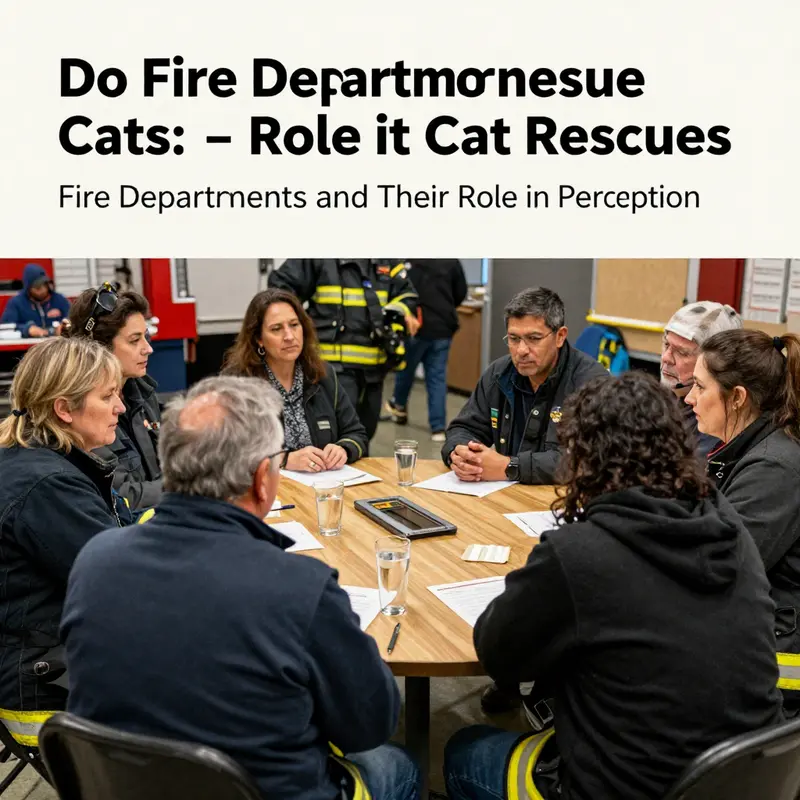
Fire departments exist to protect life and property, but as families form emotional bonds with pets, responders are increasingly asked to protect non-human life as part of emergency response. Rescues of cats and other animals are not vanity acts; they are risk-managed actions that support human safety by reducing frantic re-entries and by signaling care to the public. When trained teams can extract an animal without compromising human rescue priorities, the operation demonstrates a continuum of care that enhances trust and cooperation.
Resource allocation for animal rescues sits at the intersection of ethics, efficiency, and risk. Departments justify dedicated equipment and training by showing that such rescues can be performed safely and without delaying critical actions. In practice, many agencies embed animal-rescue capabilities into standard incident command so responders can reach animals in tight spaces, administer basic first aid, and monitor vitals after extraction.
Public perception matters. Communities tend to view responders who protect pets as compassionate and trustworthy, which can translate into higher compliance with evacuations, better reporting of hazards, and stronger support for prevention programs. This social contract becomes a practical asset when years of budgets and planning depend on demonstrated community value.
Operationally, agencies balance competing demands through clear policies about when animal rescues are pursued, how they are sequenced with human life-saving actions, and what equipment is deployed. Training emphasizes animal behavior, calm handling, and stress reduction for frightened pets, with post-rescue care that includes assessing breathing and temperature. The London example appears in some discussions as a reference point for how targeted tools can expand capacity without slowing response.
Ultimately, the measure of a modern fire department is its ability to harmonize human safety, animal welfare, and community confidence. By treating all lives with professional care, responders reinforce legitimacy and encourage resilient, prepared neighborhoods. The conversation about animal rescues will continue as urban landscapes evolve, but the underlying principle remains clear: when done responsibly, these rescues are a legitimate extension of life-saving work and public service.
Felines on the Frontline: Emotional Support Cats in the Modern Fire Station
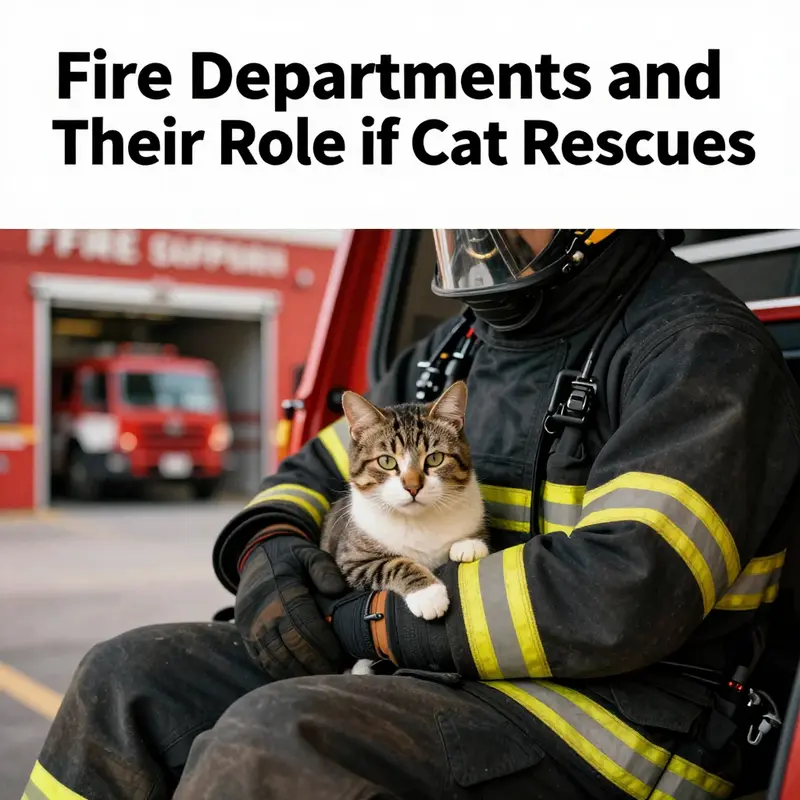
In the heat of a blaze, when every second counts and the line between danger and safety can hinge on split-second decisions, the fire station has long been a place where discipline and courage persevere. Yet within those hallways and bays, a quieter kind of work unfolds. Cats occupy a peculiar but increasingly accepted niche: they live among firefighters, offering something that goes beyond simple companionship. They become a steady thread of normalcy in the high-stakes texture of emergency response. The idea of feline residents in firehouses is not a whimsy but a thoughtful evolution in how stations function as holistic environments. These spaces are designed not only to train and deploy responders but to support the people who stand between crisis and calm. When a cat curls up on a radiator after a long shift or follows a firefighter along the pebbled floor of a training corridor, the effect is subtle but real: a ritual of care that anchors routine, a living presence that reminds the crew that there is life beyond the sirens, a living reminder that resilience is fostered in community as much as in drills. And this is not merely about morale. The integration of cats, and the broader concept of animals in stations, intersects with practical rescue culture, mental health awareness, and the evolving design of spaces intended to sustain human performance under pressure. The presence of a cat does not erase risk or replace training, but it can soften the relentless cadence of adrenaline with a steady, comforting rhythm—a purring counterpoint to pumping breaths and calculated actions. In that sense, cats become a bridge between the operational and the emotional, a small but meaningful piece of the human factors that keep crews focused and cohesive when a call comes in that could change everything. The everyday reality for many firefighters is a day punctuated by high-stakes moments and long stretches of downtime where the mind can drift toward fatigue. The addition of a calm, observing cat can help regulate emotions and restore a sense of balance after a tense incident. This is not just anecdote. Research into animal-assisted interventions has long shown how animals can reduce stress, lower blood pressure, and improve mood in people who face repeated traumas. For first responders, the implications are especially relevant because emotional regulation under pressure supports decisions that are as precise as the tools they wield. The cat in the station becomes a form of ambient emotional support, a living, breathing presence that invites a breath, a pause, and a shared moment of humanity amid the clang of gear and the press of schedules. The practical facts of this phenomenon are anchored in the realities of rescue work. Fire departments do not exist in isolation from their broader communities, and the act of rescuing an animal—whether a cat found trapped in a tree or one pulled from a collapsed home—becomes a visible symbol of care that resonates beyond the immediate emergency. There are stories that circulate within departments about animals saved in fires by crews who understood the life still glimmers in the ashes. In London, for example, firefighters have used specialized animal oxygen delivery equipment to support small animals during and after fires. The focus is practical: ensure the animal receives air and remains stable until veterinary care can finish the job. This is a reminder that the role of a firefighter extends beyond human rescue. When a cat is revived and reconciled with a relieved owner, the moment travels through the station, affirming the value of all life and the skill of responders who practice restraint, patience, and specialized care under pressure. The emotional ripple effect of these rescues is not incidental either; it can contribute to the morale of the team at a moment when fatigue might otherwise erode focus. The Tarzana case, widely shared in departmental stories, puts a bright line on this point: firefighters saved a man’s cat from a house fire, and the emotional reunion afterward underscored the deep bond that often exists between people and their pets. The story is more than a demonstration of rescue prowess; it is a narrative about trust, relief, and shared humanity. It is easy to imagine how such moments can seed a broader culture of mutual care within a station. When teams are responsible for saving cats as well as humans, they experience a daily reminder that their work stands on a continuum of life that includes the creatures they live with and the communities they serve. In that context, the introduction of an emotional support animal within the station becomes a strategic choice rather than a sentimental one. The role of an ESA, in this setting, is not merely to provide cute company but to offer a form of psychological stabilizer. As Dr. Rebecca Thompson notes, the legitimacy of an emotional support animal rests on professional assessment rather than any registry. A licensed mental health professional’s evaluation is what makes an ESA meaningful and credible, especially when it comes to housing accommodations or other benefits. This caution is important in a space where the line between support and disruption can become tangled with schedules, animal behavior, and safety concerns. The careful approach that professionals advocate ensures that ESAs contribute positively to mental health and do not create new risks for a crew or the animals themselves. Legal frameworks offer further nuance. The Fair Housing Act allows ESAs in housing that would otherwise prohibit pets, which is a meaningful protection for individuals who rely on animal companionship to manage daily stress and post-traumatic responses. That protection is distinct from air travel regulations, where the Air Carrier Access Act has shifted in recent years toward stricter limits on non-service animals. For those navigating these laws, the HUD overview stands as a clear guide to rights and responsibilities, illustrating how policies can support humane, humane-centered approaches to living with animals in shared spaces. The practical integration of cats into fire stations also invites questions about welfare and welfare’s connection to performance. A cat in a station must be housed, fed, and cared for with the same attention given to personnel. This means creating appropriate living spaces that meet the cat’s needs, routine veterinary oversight, and clear boundaries that protect both animal welfare and the crew’s safety. It also means recognizing that animals have stress thresholds and preferences that can shift with season, workload, and the emotional climate of a shift. When designed with care, these environments become healthier for everyone. This is where the broader conversation about station design intersects with the emotional support function of animals. The idea of transforming stations into healthier spaces is not merely about aesthetics or comfort; it is about supporting cognitive clarity, stress management, and interpersonal trust. A growing body of thought about “the green firehouse” frames this transformation as part of a holistic approach to public safety. This concept envisions stations that welcome community, promote health, and cultivate resilience within their own walls. The broader design considerations might include discreet welfare zones for animals, quiet corners that allow crews to decompress, and routines that protect animal welfare without compromising emergency readiness. The interlocking threads of rescue skill, animal welfare, mental health, and station design come together in practical, everyday ways. A cat resident can become, in small but meaningful ways, a touchstone that keeps a crew grounded after a challenging call, a nonjudgmental presence during long hours, and a living symbol that the mission of a fire department extends beyond extinguishing flames. The Tarzana incident and other rescues illustrate how those moments reverberate through station life, reinforcing a culture in which life is valued in all its forms and where the emotional climate of the crew matters as much as the mechanical aspects of response. In the end, the question is not whether fire departments rescue cats, but how those rescues and the accompanying human-animal relationships shape the ethos of modern firefighting. The answer lies in acknowledging that resilience is built, in part, through ordinary acts of care performed under extraordinary pressure. It’s not a distraction from duty; it is a discipline of care that strengthens decision-making, teamwork, and the sense that a fire station is a humane place where people protect life—human and animal alike. For further contemplation of how these spaces evolve toward healthier, more connected environments, see the broader discussion on sustainable, health-focused station design at the following resource: the-green-firehouse-creating-sustainable-spaces-for-community-and-health. As the dialogue around ESAs in emergency services matures, it will invite ongoing reflection on the best ways to honor the deep, reciprocal bonds that exist between people who risk their lives to save others and the animals who stand alongside them as partners in that mission. External context can be found in public resources that explain how housing protections for emotional support animals work within the broader legal landscape, such as HUD’s overview of the Fair Housing Act. External resource: https://www.hud.gov/programoffices/fairhousingequalopp
Final thoughts
The role of fire departments in rescuing cats reflects a commendable commitment to the safety and well-being of all community members, both human and animal. As this article has illustrated, initiatives involving not just fire-related rescues, but also assistance in varied non-emergency situations showcase the invaluable contributions of firefighters who prioritize lives. With the integration of specialized equipment like animal oxygen masks and community engagement, fire departments reinforce their essential role as protectors of urban environments, ensuring that every life they save—whether it be a cat or a human—adds value to the communal tapestry. In their unwavering mission to serve, fire departments embrace the heartwarming duty of rescuing cats, inspiring community trust and safety.