
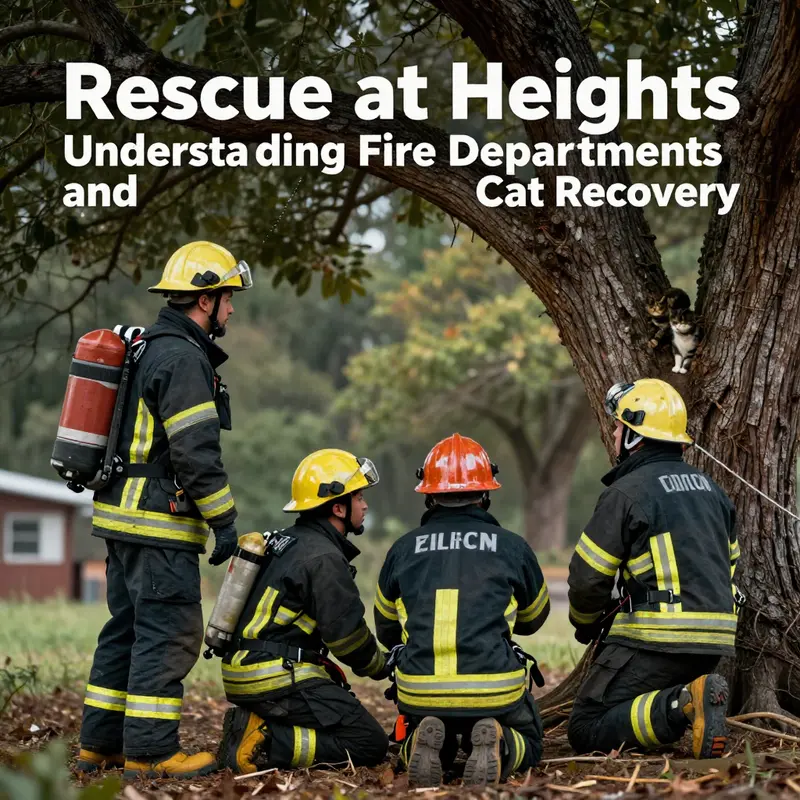
The sight of a cat stranded high in a tree often sparks immediate concern and curiosity regarding whether fire departments are equipped to assist. While the iconic image of firefighters rescuing felines captures the public’s imagination, the reality is more nuanced. This article delves into the primary responsibilities of fire departments, exploring the techniques and protocols they implement, the alternatives for cat rescues, and the common myths surrounding these scenarios. Each chapter contributes to a comprehensive understanding of the approach taken by fire services in animal rescue situations, revealing the best practices and advocating for appropriate resources.
Between the Ladder and the Branch: Fire Departments, Cats in Trees, and the Boundaries of Rescue
When a cat is stranded in a tree, the scene often looks urgent to onlookers and heart-wrenching to neighbors who know the animal finds comfort in the treetop height but discomfort in the unknown. The image of a branch-bound feline can trigger a powerful public expectation that the local fire department will swoop in, climb the ladder, and carry the cat to safety. Yet the operational reality behind such moments rests on a layered set of policies, training, and risk calculations that rarely appear on a news broadcast. Fire departments are frontline responders, yes, but their remit is defined by a spectrum of life‑safety priorities that extends far beyond the tree line. The core obligation remains simple in principle: protect people from harm, protect property from loss, and preserve the public’s trust in the system that is supposed to keep them safe. The cat in the tree becomes a symbol that tests those boundaries, asking the question: how far should a fire engine stretch its resources when a small animal poses a limited, though emotionally charged, risk?
The practical answer in many jurisdictions is rooted in risk management. Firefighters must quickly assess the scene, the animal’s condition, and the potential hazards of the situation. A cat balanced on a branch above a sidewalk is different from a cat perched near power lines or a busy thoroughfare. The height, the tree’s stability, the possibility of sudden movement, and the presence of bystanders all feed into a decision that balances time, equipment, and safety. In such moments, the default instinct of many departments is to promote self-rescue whenever feasible. Cats, in particular, have a remarkable repertoire of climbing and climbing-down strategies. They often learn to descend on their own, guided or impeded by fear, hunger, or fatigue. The natural history of the species includes moments of precise self‑removal, even if the process takes hours or days. The risk of a well-meaning but wrong move—one misstep on a ladder, a branch snapping, or a frightened animal lashing out—can transform a routine call into a complicated rescue, with the potential for injuries to both the cat and the responders.
This is why the administrative frame matters. Many agencies publish a clear policy that they do not routinely rescue animals from trees. A public-facing text from a rural fire service, for instance, states that trees are not a standard rescue priority unless the animal is in immediate danger or there is a compelling risk to people. The logic is not cruelty; it is triage translated into help logistics. Fire departments are equipped and trained to handle structural fires, vehicle crashes, floods, hazmat incidents, and a broad set of life-threatening contingencies. When the cat’s safety is a matter of hours rather than minutes, the priority calculus tip toward waiting, observation, and, in some cases, mobilizing specialized animal rescue partners who carry equipment and expertise better suited to animal welfare work.
This division of labor does not imply indifference toward animals. It reflects a recognition that rescue is a coordinated system, not a single act. Animal welfare groups, animal control agencies, and trained volunteers often rise to the challenge with different tools—soft nets, harnesses, and patience—built to handle the delicate process of coaxing a frightened animal to safety. The partnership model, then, becomes essential. A community that understands the split between incident command and animal rescue can respond more effectively. When an animal rescue organization becomes involved, it is not a replacement for the fire department; it is a complementary arm that can move with a different rhythm and with procedures that minimize stress for the animal and risk for the humans.
Policy discussions around this topic frequently emphasize safety and proportionality. Proportionality means that responders should only escalate to a more resource-intensive rescue when the risk profile justifies it. A cat on a low branch in full view of the street may be easily coaxed down by the owner or a quiet approach by neighbors and a calm animal control officer. A cat perched high in a storm-laden tree, with slick bark and gusty winds, creates a different threat assessment. In those moments, the decision may be to secure the area, ensure bystander safety, and wait for the animal welfare team or a trained firefighter with specialized equipment who can perform a safe retrieval if the cat cannot descend unaided. The key is that the decision is made transparently, with consideration for the welfare of the animal and the safety of the public.
The literature on emergency response emphasizes a spectrum of missions. Fire suppression, structural rescue, hazardous materials containment, and advanced medical care are the core pillars of the profession. The addition of animal rescue appears in the mix as a community service that tests the system’s flexibility rather than as a primary mission. In practice, the most successful outcomes often come from clear communication and seamless handoffs between agencies. When a cat is stranded, a call that begins as a potential fire or medical emergency can quickly evolve into a multi-agency operation if the scene demands it. Yet the best outcomes frequently involve prevention: public education that keeps cats indoors during storms, window guards to prevent falls from heights, and the availability of non-emergency channels to connect households with animal welfare resources.
The emotional dimension of the issue is not to be underestimated. Cats are beloved family members for many households, and the sight of a cat in distress triggers a potent mix of concern and empathy. This human element can pressure responders to act decisively, even when policy and risk analysis would suggest a more conservative path. The friction between compassion and procedure is real, and it is precisely where community leadership matters. Transparent policies about when to request animal welfare partners, how to communicate with the public during an incident, and how to describe the rationale behind a given decision can reduce confusion and build trust. One way this trust manifests is through pre-incident planning. Fire departments that partner with local animal rescue groups, and that participate in joint drills and public education, set expectations before a crisis arises. They demonstrate that they are not indifferent to animal welfare but that they are mindful of the limits of any response and the importance of safeguarding every life by employing the right tool for the job.
Within the broader emergency response framework, the question of cats in trees also intersects with the ethics of resource allocation. In many communities, responders juggle limited personnel, boats, ladders, and even downtime between calls. The decision to allocate scarce resources to a non-life-threatening animal scenario must be weighed against the ongoing risk to human life. By acknowledging this reality, agencies can avoid being blamed for inaction in the eyes of a distressed pet owner while avoiding the hubris of performing a dangerous operation for a non-emergency. This is not a passive stance. It is a deliberate, principled approach that keeps the mission focused on protecting lives and reducing harm, while recognizing the legitimate value of animal welfare in a humane and reasonable way.
The chapter on rescue culture suggests that public communication and media portrayal can either mislead or illuminate. In the age of smartphones and viral clips, a small incident can become a national conversation in hours. The awe of watching a firefighter on a ladder can overshadow the nuanced decision-making that occurs off-camera. To counter sensationalism, some departments publish brief post-incident summaries that spell out what happened, what was decided, and why. This practice helps residents understand that the absence of a dramatic rescue does not equal failure; it can reflect a disciplined, safety-first approach that ultimately minimizes risk for everyone involved. It also underlines the importance of non-emergency channels. If a cat is genuinely stranded, contacting an animal rescue group or a local shelter is often the simplest and quickest route, because these organizations bring specialized know-how, not only gear, but also experience in handling stressed animals with minimal trauma.
The human factor extends to the responders themselves. Firefighters bring years of training and a professional culture that prioritizes prevention and controlled actions. They carry the weight of public expectations and the responsibility to avoid needless danger. A well-informed firefighter can calm a worried owner, explain the limits of a given operation, and still take decisive action if the animal’s welfare is at risk. In this sense, the cat-in-a-tree scenario becomes a test of a department’s communication, coordination, and willingness to collaborate across lines. It is a story about how a community builds resilience through a layered emergency response system, not a simple retelling of one dramatic moment.
Finally, a practical takeaway emerges from this reflection. The cat in the tree episode should not be treated as a spectacle but as a signal about how we conceive safety as a shared responsibility. Fire departments will continue to be the first touchpoint for a wide range of acute emergencies, and their readiness to adapt to situations beyond the core mandate is a marker of a mature public safety apparatus. However, the most humane, efficient, and sustainable approach to cats in trees hinges on robust partnerships with animal welfare organizations, clear policies that prevent dangerous improvisation, and a culture of transparent communication with the public. When these elements align, the outcome for the cat is a threshold moment of relief, for the owner a reassurance that help is both practical and principled, and for the department a reaffirmation that its mission remains steadfast: safeguarding life, in all its forms, through disciplined action and collaborative care. To learn more about how this broader field of rescue is conceptualized, see ScienceDirect Topics for an overview of fire department responsibilities, including a broad view of rescue operations. For a foundational community perspective, readers may explore a post such as Hello World.”
Branch by Branch: The Subtle Science Behind Fire Department Cat Rescues from Trees
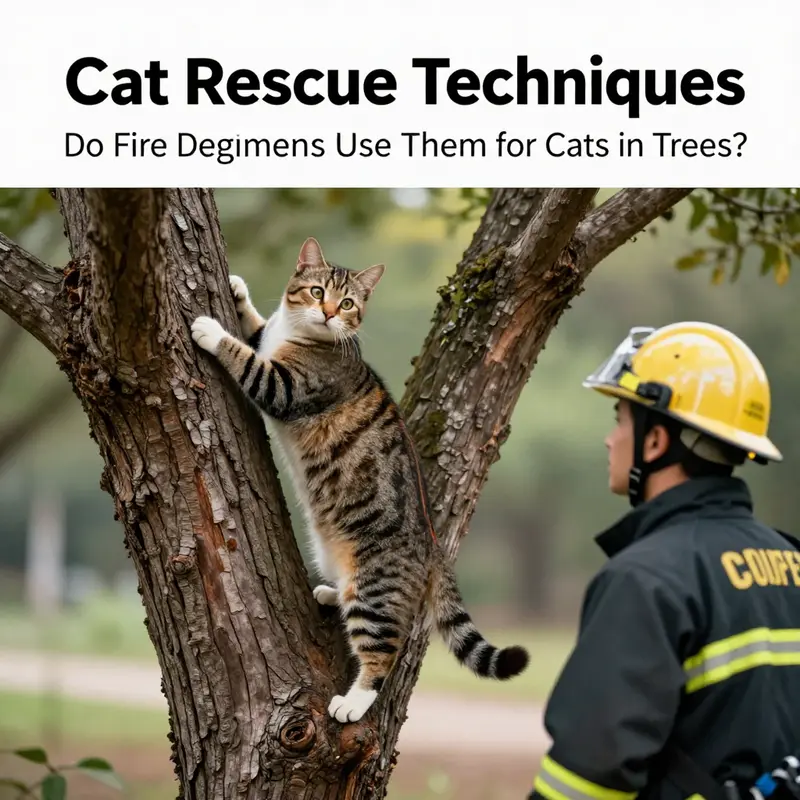
When a cat climbs a tree, the scene often stirs up a swirl of questions and emotions. People imagine flashing lights, the crackle of radios, and a dramatic rescue in which a brave firefighter descends with a frightened feline cradled in protective arms. In truth, the practice sits at a quiet intersection of public expectation and professional risk management. Fire departments are public safety agencies first and foremost, charged with fires, medical emergencies, and catastrophic incidents. Yet a growing awareness of animal welfare and evolving training in the field have nudged some departments to add cat rescues from trees to their repertoire, not as a primary mission but as a specialized capability that can be invoked when conditions are right. The result is a nuanced picture: rescue teams prepared to act, but mindful of the boundaries between routine emergency response and the gentler, sometimes more delicate handling that animals require.
To understand how this plays out in real life, it helps to start with the core idea that the cat in the tree is not simply a problem to be solved with bravado. It is an animal that can be stressed, frightened, and unpredictable. Firefighters entering such a scene bring with them a mindset that prioritizes safety for the human responders, the animal, and any bystanders. The decision to intervene is rarely automatic. It begins with an assessment that weighs the cat’s condition, the height and location, the stability of branches, and the risk to rescue personnel. If the animal appears distressed, encircled by danger, or unreachable by straightforward means, the likelihood of a hands-on intervention increases. If the cat is calm, perched in a position that seems safe and reachable with minimal exposure, patience and observation may prevail, and the animal may descend on its own—often guided by a calm presence rather than by force.
What follows—should a rescue proceed—reveals a set of techniques that are at once practical and considerate. Fire departments rely on a small toolbox of equipment and tactics designed to balance effectiveness with gentleness. Ladders offer a straightforward route to close distance with the cat, while aerial platforms provide a controlled vantage point from which rescuers can approach from above. Nets or traps can create a soft catch if the animal moves suddenly, and they can also function as a containment measure to prevent the cat from scrambling to a more dangerous spot. In addition, responders frequently use food or familiar scents to lure the animal closer to safety, a tactic that aligns with humane handling principles rather than brute force. When possible, rescuers aim to coax the cat to descend under its own steam, guided by a reassuring voice and a calm, steady presence that reduces stress on both sides of the emergency.
The human element in any cat rescue is central. A trained firefighter who has practiced animal rescue understands that the goal is not a dramatic grab but a precise, gentle transfer of the cat from a precarious perch to a secure ground position. The process often requires balancing the instinctual behavior of a frightened animal with the careful hand of a rescuer. This is where training and guidelines come into play. The National Fire Protection Association has published guidelines that outline how departments perform animal rescues, detailing the procedures and training expectations that keep rescues safe and humane. The emphasis is on protocol, not bravado; on minimizing stress for the animal and risk to responders while ensuring a successful outcome. The reality is that many departments, while not having cats as their core remit, cultivate a specific competency in animal rescues because of the frequency of such incidents in urban and suburban settings. They recognize that public sentiment often expects a compassionate response, and that a well-executed rescue can reinforce trust in the fire service as a protective, community-oriented institution.
The practical choreography of a cat rescue from a tree can appear almost ceremonial in its restraint. First comes a careful assessment of the environment. Is the tree healthy enough to support an ascent? Are there hazards above and below that could complicate a rescue? Is the cat stuck in a position that would allow for a quick descent, or does it require more deliberate, slow handling? The firefighter may ascend the tree or position themselves with an elevated platform to minimize the distance the cat must travel and to ensure safe contact. They prepare for contingencies, such as the possibility that the cat bolts or clings to a limb in a way that makes a direct lift risky. Their goal is to reduce the chance of a fall, a panicked scratch, or an injury to the animal that could complicate medical outcomes after the fact.
Equipment plays as much a role as skill. Ladders and aerial devices give responders reach, but the choice of equipment is dictated by the scene. A ladder, while readily available, might require a longer, steadier approach and more handholding of the animal. An aerial platform can offer a broader field of view and a gentler contact surface when a rescue is needed at a greater height or on a slopey trunk. Nets and traps, deployed with care, function as a soft landing net or as a containment strategy that limits the cat’s ability to leap or scramble toward danger. It is notable that a lot of the decision-making hinges on how comfortable the cat is with these conditions. A frightened animal can behave unpredictably, and a calm, predictable demeanor on the part of the rescuer can significantly alter the outcome.
An often-underappreciated tool in this repertoire is patience and timing. In many cases, responders will sit with the cat at a prudent distance, communicating in a quiet, steady voice, occasionally offering food or a familiar scent to coax the animal closer to a safe exit. If the cat is perched high and the branches are unstable, the safest route may be to wait for the animal to move toward a lower perch or toward a rescuers’ hand when it feels the environment is secure. The aim is to avoid chasing or cornering the animal, which tends to increase stress and heighten the risk of injury for both cat and rescuer.
The ethical dimension of cat rescues cannot be ignored, because it shapes the choices made in the field. When is intervention warranted, and when is it better to leave the cat to self-rescue, perhaps with a gentle note for passersby? Departments that engage in animal rescues often rely on local animal welfare organizations or animal control divisions to provide ongoing care and disposition options after the cat is brought to safety. This collaboration ensures that if the animal has been abandoned or is injured, it can receive appropriate veterinary attention and foster care or rehabilitation. It also places a check on the impulse to perform a rescue at all costs, recognizing that animals are not simply accessories of a public display but living beings who deserve reverent handling and humane treatment.
Beyond the scene itself, the broader framework of training and guidelines is essential. Fire departments that regularly encounter cats in trees tend to codify their approach into standard operating procedures. They train in animal behavior observation, basic restraint techniques that minimize harm, and safe rappel or climbing methods that reduce risk to personnel. The NFPA guidelines cited in official materials serve as an anchor for these practices, offering a reference point for departments seeking to harmonize local procedures with industry-wide expectations. The presence of a formal framework does more than protect the animal and the responders; it helps shape public faith in the rescue effort. When a passerby sees a firefighter approach with a gentle hold and a calm voice, the impression is one of competence and care, reinforcing the sense that public safety extends beyond fire lines and emergency medical care into the realm of humane treatment.
A concrete example helps illuminate how these principles translate into action. In February 2026, a city’s fire department responded to a call involving a cat stranded on a fifth-floor balcony after a window-well misstep left the animal in a precarious position. The incident drew attention not only for the precariousness of the location but also for the precision of the rescue. The firefighter, using a combination of reach and verbal reassurance, completed a careful descent that kept the cat’s welfare at the fore. The moment of handover, when the animal was placed safely in the arms of a citizen or animal care professional, often becomes a small but powerful story about public service in action. Such incidents, while not the majority of calls, demonstrate that the tools and training exist to extend the reach of the fire service into humane, compassionate rescue work. They also remind us that the most important outcomes are not dramatic drama but the quiet relief of a frightened animal released from a perilous perch and restored to the comfort of a familiar home environment.
The relationship between fire departments and animal welfare organizations adds another layer of complexity and cooperation. In many communities, animal rescue or welfare groups possess specialized handling equipment and veterinary partnerships that complement the fire service’s capabilities. When a rescue requires veterinary assessment, or when the animal’s long-term care exceeds the immediate rescue, these partnerships become crucial. The end result is a coordinated effort that respects the distinct roles of each entity while delivering a humane and efficient resolution. This aligns with a broader trend in public safety that recognizes animals as stakeholders in the safety ecosystem, deserving of professional and compassionate intervention.
For readers seeking a broader sense of how these practices are evolving, a look at contemporary fire service innovations helps. The field increasingly frames animal rescues within a culture of readiness and continuous improvement. Departments are encouraged to review their protocols, engage with animal welfare partners, and participate in ongoing training that simulates real-world scenarios. This approach not only expands the technical repertoire available to responders but also reinforces the ethical commitment to minimize distress and maximize safety for all involved.
In sum, the question of whether fire departments rescue cats from trees yields to a more nuanced answer: yes, many departments do employ specialized techniques for cat rescues when the circumstances warrant it. These operations reflect a balance of skill, equipment, and humane considerations. They signal a willingness to extend public safety duties beyond the most dramatic emergencies while maintaining stringent safeguards for everyone involved. They also highlight the importance of collaboration with animal welfare organizations to ensure the animal’s welfare after the rescue, which is where the story often moves from the tree to the home, the shelter, or the veterinary clinic. The practice is not about heroic showmanship but about a thoughtful, measured response that respects the animal, the community, and the professionals who answer the call.
For readers curious about the broader landscape of fire service practice and the innovations that shape it, you can explore related discussions on the evolution of fire service culture and technology. Innovation Museum transforming fire services offers a window into how new ideas, training paradigms, and collaborative approaches are redefining what it means to serve a community in moments of need. And for readers seeking official procedural guidance, the NFPA’s provisions on fire department animal rescue protocols provide a formal backbone to these compassionate interventions. See the authoritative external source at the end of this chapter for more detail.
External reference: For official procedures and training guidelines, see the NFPA guidelines on fire department animal rescue protocols, which provide standardized expectations for equipment, tactics, and safety measures across jurisdictions. https://www.nfpa.org/News-and-Information/All-News/2026/February/Fire-Department-Animal-Rescue-Protocols
Beyond the Ladder: Rethinking Fire Department Roles in Cat Rescues from Trees
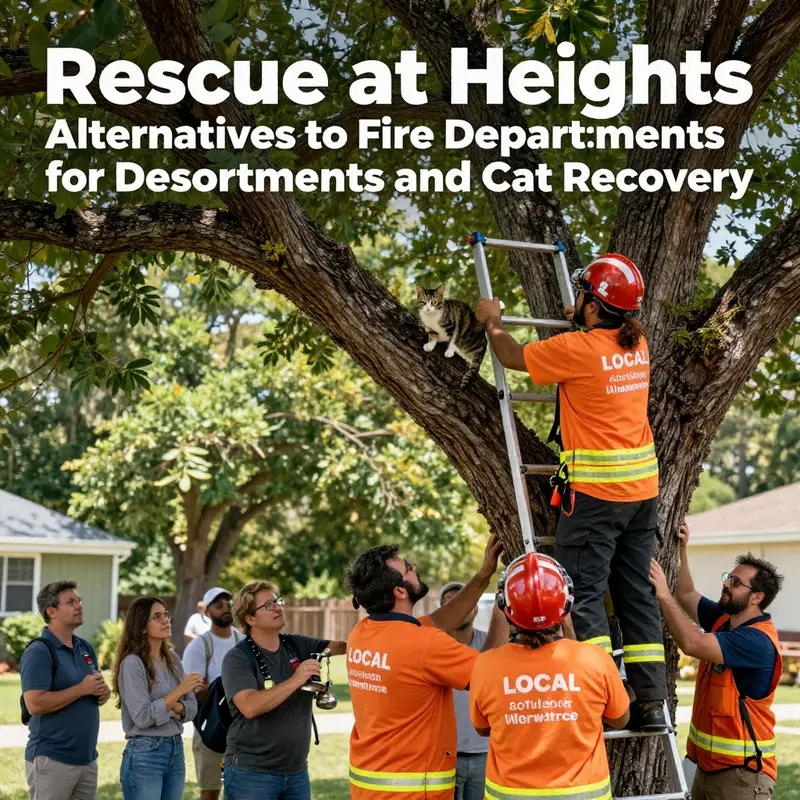
A cat perched in a tree is a scene that invites drama and urgency, a tableau many people associate with the decisive crack of a whistle, the glint of a fire helmet, and a swift, dramatic descent. Yet the reality behind that image is more nuanced. When a cat is stuck high among branches, the instinct to dial the emergency number and request the nearest fire engine is common. The impulse is understandable. Fire departments are trusted to respond to danger, to bring order to chaos, and to use specialized gear that can reach places most people cannot. But the research and firsthand experiences of many communities suggest that this is one of those situations where the most visible solution is not always the most appropriate, or the most efficient, way to safeguard the cat, the bystanders, and the responders themselves. In many places, the official guidance has been explicit: fire departments are not the primary responders for non-urgent animal rescues, especially when the animal’s safety does not hinge on immediate, life-threatening danger. A page from a representative rural fire department, for instance, frankly states that they “usually do not rescue trees on cats or other animals.” That blunt assessment is not a rebuke of the courage of firefighters or the value of their work; it is a practical acknowledgment of the limits of a resource that must be prioritized for true emergencies. The idea that a ladder-clad savior will always be waiting at the base of every tree is appealing but not reliable. It risks diverting scarce emergency resources from people in dire need, and it can expose the cat to protracted stress, injury, or worse if the animal’s position is unstable or the climber’s approach escalates the danger. The balance to strike, therefore, is not a blanket condemnation of all tree rescues by fire services, but a clear recognition of when and where they are an appropriate part of a broader system of care for animal welfare and public safety.
What follows is a map of safer, more efficient pathways that communities have assembled to handle cats in trees without overburdening emergency services, while still preserving the option to call authorities when a true emergency is at hand. The first layer of this map is professional cat rescue organizations—groups that specialize in the quirks of feline behavior and the logistics of retrieving a cat without turning the tree into a stage for a dramatic, potentially unsafe rescue. These organizations deploy volunteers who are trained not only in the mechanics of climbing and capture but in reading a cat’s stress signals, preventing panic, and ensuring that the animal is handled with minimal restraint and maximum gentleness. They bring to bear an arsenal of tools that are tailored to this niche problem: extendable poles that can drop a soft net to a frightened cat, calm-driven handling techniques that reduce bite risks, and adjustable ladders designed to support cautious movements along bark and branch. Their aim is precision and care—the opposite of a high-adrenaline fetch mission. A simple online search for “cat rescue near me” often reveals these local specialists quickly, and their responsiveness generally translates into lower overall stress for the animal and shorter disruption to the neighborhood.
But rescue networks do not operate in a vacuum. Local animal shelters and veterinary clinics often sit at the hub of a broader safety net. They maintain connections with trusted rescuers and can mobilize a swift response when a cat is in a difficult position but not in immediate danger. They can also provide medical oversight if the cat has spent hours aloft or if there were minor injuries during the climb or descent. Some hospitals and shelters even cultivate informal partnerships with rescue volunteers who are willing to lend equipment or knowledge during off-hours. In this ecosystem, the shelter’s role is twofold: they help orchestrate the retrieval and also stand ready to deliver aftercare that supports the cat’s physical and emotional recovery.
A further option, particularly in regions with a more dynamic private sector, is the availability of private pet rescue services. These professionals typically carry insurance, carry specialized gear, and operate with a clear scope: a rapid, low-stress retrieval that minimizes risk to both the animal and the human involved. Because these services operate in a competitive environment, they are often able to offer flexible response times and transparent pricing, presenting a predictable alternative to a backlogged or reluctant public system. The practical upshot is straightforward: if the risk of attempting a ground- or tree-based capture in a non-emergency scenario weighs heavily in favor of professional intervention, a paid cat-in-tree service may offer a measured, humane, and timely solution.
There is also a vibrant, informal thread to this safety net—community-based volunteer networks that can spring into action when a resident needs help and the cat is not in immediate danger. Neighborhood associations, online platforms like local Facebook groups or Nextdoor, and informal neighborly networks can coordinate a rapid, local response. When a tree-climbing cat is only a few meters off the ground, and the person can provide a stable base, volunteers with practical tools—long-handled nets, sturdy ladders, and calm hands—can often facilitate a safe descent without involving emergency services. The social fabric that supports these grassroots efforts is essential: it lowers the barriers to timely action, reduces the stress of the situation, and enables a coordinated response that respects both animal welfare and public safety.
For cases where the cat is within reach, there are truly simple, low‑risk techniques that a caregiver or neighbor can attempt if they feel confident and the animal is calm enough to endure gentle handling. These do-it-yourself options are not a substitute for professional help in every case, but they can provide a bridge to a safe outcome when the tree is not tall or the cat’s distress is manageable. Food lures—offering tuna, wet food, or other favorites at the base of the tree—can entice a cat to descend on its own terms. A long towel or cloth attached to a broom or pole can create a soft, friction-based “bridge” to guide the cat toward the ground, especially when the animal is near the trunk and has a moment of doubt about leaping. A ladder, when used with caution and stable footing, can enable a quiet, deliberate downdraft of the cat from a branch to a safer vantage point. The goal of these techniques is not to force a quick rescue but to restore the cat to safety with as little stress as possible. It is important to emphasize safety at every turn: do not shake the tree, do not shout, and do not attempt to climb after the cat unless you are trained and protected. Stress in both cat and human increases the risk of a fall or a bite, and the reward of a calm, patient approach is a higher likelihood that the cat will return to ground level unscathed.
Across all these options, a common rule emerges with surprising clarity: the height and distress level are the decisive factors. A cat more than around six meters above ground or one that shows signs of severe distress should trigger a professional response. The risk of a fall, a misplaced grab, or a panic-driven leap increases dramatically as the cat climbs higher or as the time spent aloft lengthens. In those moments, invoking a trained team with proper equipment is not an indulgence in theater; it is a safety measure. The responders’ training is especially important for recognizing when a cat’s posture and vocalizations signal that the animal is ready to leap or retreat rather than be cradled or coaxed. The ultimate objective is to return the cat to a familiar, safe environment with the fewest possible threats to either party.
The decision-making process about whom to call can be clarified by a few practical steps. First, assess the immediacy of danger. Is the cat merely perched and immobile, or does the animal appear to be in danger from wind, traffic, or predators? If there is no imminent threat to the cat’s life, it is reasonable to contact a local animal rescue organization or shelter to arrange for a non-emergency response. If the cat is higher than what a typical citizen can manage safely, or if the animal is panting, whimpering, or showing signs of injury, a professional should be engaged promptly. Second, consider available resources. Do you have a reachable ladder, a stable surface, and someone who can help with a calm, measured approach? If not, the safest option is to wait for trained rescuers. Third, never compromise safety for the sake of speed. A rushed rescue can injure the cat or create a second problem in the form of a fallen rescuer or a frightened animal scuttling deeper into the tree. In these situations, the benefit of patience and professional coordination grows clear.
In the end, the aim is to create a rescue pathway that respects the welfare of the cat while preserving the safety of the community. Fire departments still have a critical role in extreme emergencies that threaten human life or property, and the courage of firefighters should be honored. But when a cat sits high in a tree with no immediate threat to human safety, the most efficient and humane route often lies in leveraging trained cat-rescue specialists, animal welfare partners, and well-organized community networks. The community’s safety net expands when people know whom to call, what to ask, and how to support a calm, careful descent. It is not a denouncement of firefighters’ bravery; it is a refinement of practice that channels resources toward urgency and uses every available partner to protect animals that cannot advocate for themselves.
For readers seeking a broader primer on rescue work and how volunteers coordinate in these delicate situations, a concise introduction to the broader field can be found here: Hello World. This resource, while not a step‑by‑step manual for every scenario, underscores the value of prepared, trained responders and the importance of connecting communities with the right expertise. In addition to these internal channels, there is a widely used external reference that many communities consult when a cat needs help quickly. PetFinder’s rescue directory offers a gateway to local shelters, rescue groups, and organizations that list certified rescuers who can respond with appropriate gear and planning. External resource: https://www.petfinder.org/rescue/.
In sum, the question “do fire departments rescue cats from trees?” deserves a nuanced answer. Yes, in some cases they will respond, particularly when danger is imminent or when a person’s safety is at risk. More often, however, the most humane, efficient, and least disruptive option is to mobilize trained cat-rescue volunteers, shelters, veterinary networks, and, when appropriate, private services. Acknowledging and embracing these layered responses reduces the burden on fire departments, preserves resources for true emergencies, and—most important—ensures that a frightened feline is returned to ground and home with as little stress as possible.
null
null
Final thoughts
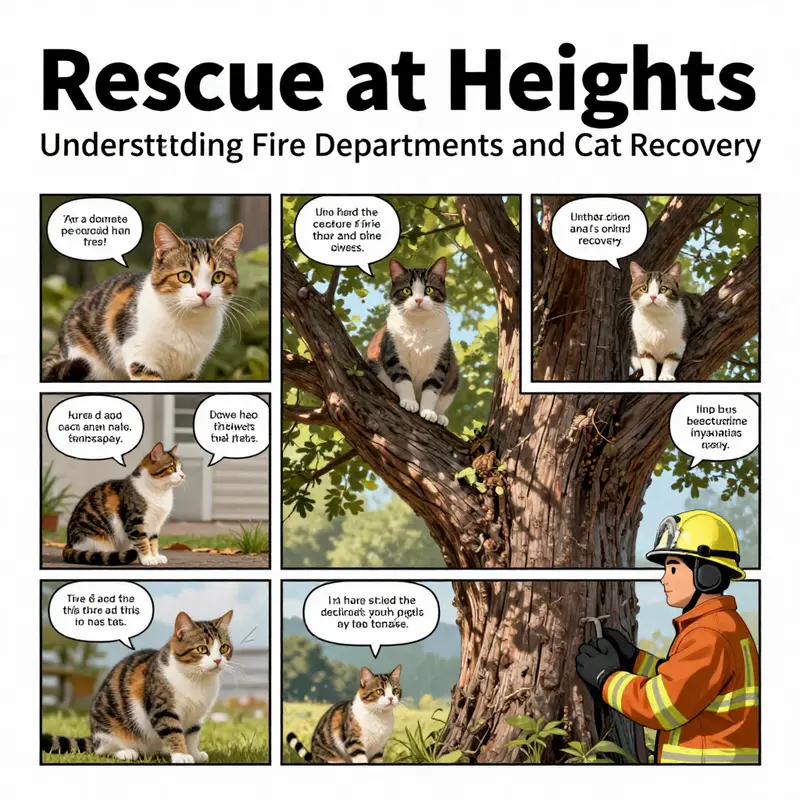
In conclusion, while the perception of fire departments as cat rescuers is widespread, their primary focus remains on human safety and emergency response. Cats often have the agility to descend on their own, making it unnecessary for fire services to intervene in most cases. For those instances where feline friends require assistance, local animal control and rescue organizations are equipped to provide the needed support. Clearing up these misconceptions leads to better-informed community members who can appropriately direct resources while promoting responsible pet care.