
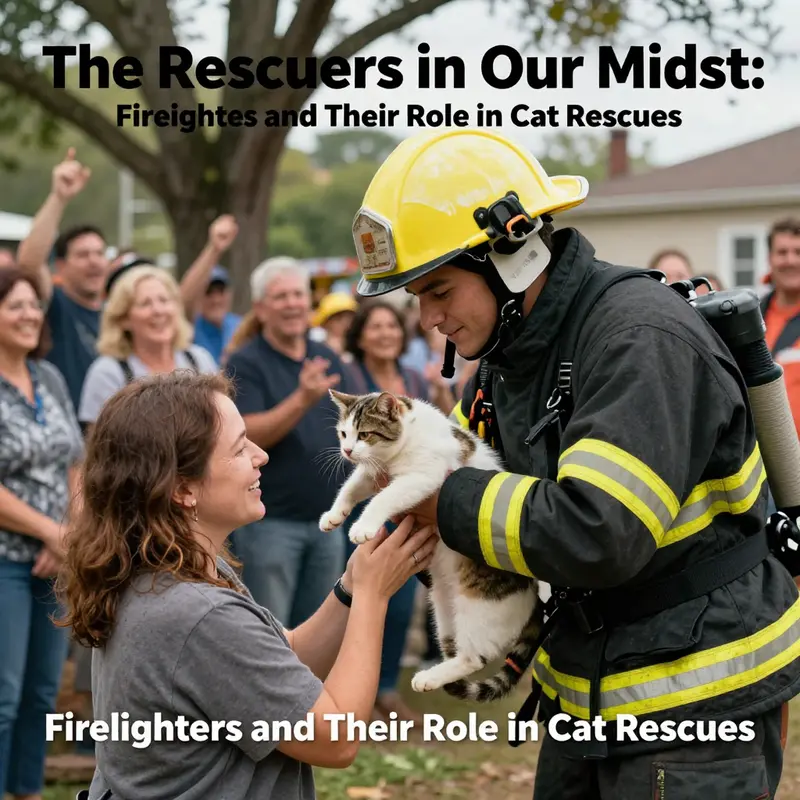
Cats frequently find themselves in precarious situations, notably stuck in trees, leading to numerous calls for assistance. Firefighters have become the unsung heroes in these situations, often utilizing specialized tools and training to ensure the safe retrieval of animals in distress. As community residents and emergency personnel navigate the complexities of animal rescues, understanding the dynamics at play is crucial. This article will delve into the role firefighters play in these rescues, explore the reasons why cats end up stranded, provide safety guidelines for when to call for help, and discuss the broader community perception regarding these endeavors. Each chapter contributes to a comprehensive understanding of how cooperation, safety, and respect for both animals and rescuers are essential in these vital situations.
Climb, Wait, Rescue: The Quiet, Lifesaving Role of Firefighters in Cat Rescues from Trees
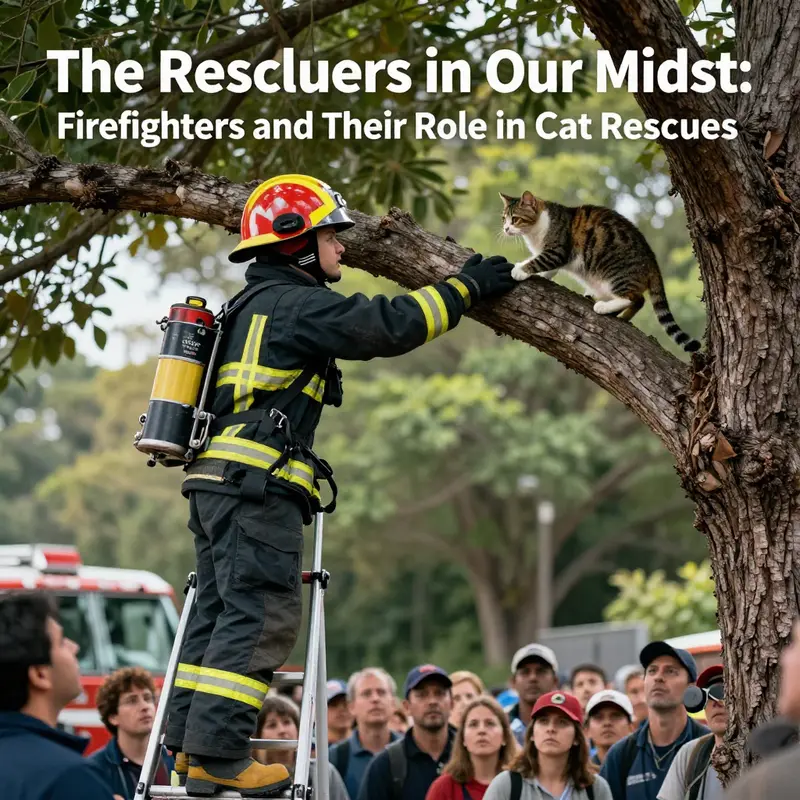
When a call arrives about a cat stuck high in a tree, the scene that unfolds is rarely dramatic in the way a firestorm or a house blaze might be. It is quiet in a different way—patients and firefighters alike are listening for the soft creak of a branch, the rustle of leaves, the breath held by a crowd gathered at the base. Yet the stakes feel real and immediate. The animal’s safety hangs in the balance, and the clock moves with a careful rhythm. This is where firefighters reveal a blend of skill, patience, and plain human empathy that often goes unseen by the public. They do not simply climb a ladder and retrieve a frightened pet; they orchestrate a small, precise operation that respects animal behavior, environmental hazards, and the fragile line between risk and relief. It is a service that sits at the intersection of technical proficiency and community trust, and it speaks to a broader truth about what rescue work means in modern cities: responders arrive not only with tools but with an ethic that treats every creature, be it two-legged or four-legged, as a neighbor in need of protection.
Cats become involved in these rescues for a host of reasons. Curiosity often pulls them into trees where branches offer a seductive perch, freedom from the hustle of ground-level activity, or a vantage point that makes sense of a world that feels larger from above. Fear can anchor them in place once a wrong footing or a sudden breeze turns the climb into a risk they cannot easily reverse. But once perched, many felines discover one hard truth: the ground has a gravity of its own, and descending is not always instinctive when the world below seems suddenly intimidating. Here, the firefighter’s role begins long before the ladder touches the trunk. It starts with a careful assessment: is the cat truly endangered, or simply disoriented? Are there power lines nearby, unstable branches, or thick vegetation that might complicate a lowering? Is the animal in a position that could turn dangerous the moment a human approaches? Answering these questions requires a blend of field experience, a calm demeanor, and a readiness to adapt on the fly.
Modern fire departments train to manage cat rescues with a disciplined approach. They rely on extendable ladders, aerial platforms, ropes, and harness systems designed to support both animal and rescuer in delicate, high places. The equipment is not about spectacle; it is about controlled, minimal-intervention engagement. The ladder is not a symbol of power but a tool calibrated for height, weather, and the cat’s temperament. Crews position themselves to avoid sudden movements that could startle the animal, speaking in soft tones and moving with deliberate steadiness. The cat, perched in some awkward crucible of fear and curiosity, often waits to be coaxed down—not by chimes or cheers, but by quiet, predictable actions that reassure it the space around is safe. In these moments, the firefighter assumes the role of a patient guide, creating a corridor of safety that makes the difference between a wobbly descent and a sudden, panicked leap.
The process is not universally uniform because every rescue unfolds within a different tree, a different neighborhood, and a different cat. In some cases, the animal may choose to descend on its own given enough time and calm. Firefighters understand this well. They monitor, they keep bystanders at a respectful distance, and they resist the urge to intervene prematurely. Patience can be the most valuable tool, especially when a cat’s fear is more powerful than the instinct to flee toward familiar ground. When a rescue is necessary, the team proceeds with a plan that minimizes stress and risk. A firefighter may approach from below, securing a rope line and using a harness to create a controlled descent path. Others may set up an elevated position that allows the cat to feel the closeness of a friendly presence without feeling hemmed in or cornered. Each step is about maintaining balance—physically and emotionally—for both the animal and the people who care about it.
The role of professional responders is underscored by what happens when nonprofessionals attempt rescues. The public’s instinct is often to act quickly, but fear or inexperience can push well-meaning neighbors toward risky improvisation. Climbing a tree to retrieve a frightened pet can result in injuries for the climber and, potentially, worse outcomes for the animal if a misstep causes a fall. This is why the guidance from responsible agencies emphasizes calling local fire or animal control services when a pet is truly stuck or endangered. The aim is not to shame anyone for concern, but to ensure safety through trained technique and proper equipment. A significant portion of the rescue’s success hinges on this early decision—whether to wait for professionals or to attempt an improvised solution that could have lasting consequences. The public’s trust in firefighters rests on the consistency of this approach: a calm, methodical, and humane response that respects the animal’s needs while safeguarding human participants.
The emotional dimension of cat rescues often reveals itself in the aftercare and the moments of shared relief that follow a successful return to solid ground. When the ground is reached and a soft-handed stroke from a relieved owner follows, there is a sense of mutual gratitude. The cat might be a bit shellshocked, its whiskers twitching as it processes the change in routine, yet many are quickly comforted by familiar human contacts—the gentle voice of a caregiver, the cupping of hands around its body, the familiar scent of home. Firefighters, for their part, carry their own residue of quiet satisfaction. They know they have reduced risk not only to the animal but to bystanders, to power lines that might have complicated a descent, and to their own crew, for whom every maneuver carries a weight of responsibility. The image of a firefighter securing a strap around a tree or adjusting a harness connection is more than a procedural moment; it is a human gesture of care performed with the same seriousness applied to more visibly dangerous emergencies.
This combination of technique and tenderness is at the heart of why these rescues matter in the broader fabric of urban life. Cities are dense, dynamic ecosystems where human and animal inhabitants share space in close quarters. The cat in the tree becomes a symbol of fragile safety—a reminder that danger and risk can arise from the simplest explorations. Firefighters respond with a practical, repeatable set of actions that has evolved over time through continuous practice, interagency cooperation, and a willingness to adapt to new knowledge about animal behavior, weather conditions, and structural hazards. When they step back after a successful lift, the scene tends to soften into a quiet gratitude. The owner’s relief, the neighbor’s smile, and the cat’s eventual return to a familiar rug all converge to illustrate a core truth: rescue work is as much about the social contract of care as it is about the mechanics of ascent and descent.
In recent years, the profession has also embraced a broader set of considerations that shape how cat rescues are framed within public safety. Training modules increasingly emphasize the difference between a true emergency and a situation that can be managed with patience. Firefighters learn to read animal cues—whether a tail flick, a slow blink, or a tense crouch—as signals of stress that require adjustments in technique. They also learn to coordinate with animal services when a recovery might require temporary shelter or veterinary evaluation after the fact. The goal is to minimize the duration of distress and to ensure that if any medical issues surface, they are identified and treated promptly. The dialogue between responders, animal control, and pet owners underscores a shared commitment to outcomes that honor life and minimize harm. Within this framework, the rescue becomes less about spectacle and more about a careful stewardship of safety and care.
As the field continues to evolve, so too does the recognition that modern rescues benefit from continual learning and innovation. The broader movement toward refined operating procedures and enhanced safety protocols is captured in departments’ efforts to share lessons learned and to integrate new practices that reduce risk. A small but meaningful thread in this ongoing development is the exploration of training resources and knowledge repositories that document successful approaches while acknowledging missteps. These efforts are not about prestige; they are about ensuring that every future call benefits from the accumulated experience of crews who have stood at the edge of a branch, looked into the eyes of a frightened cat, and chosen the most conservative, compassionate route to safety. That ethos—calm, careful, and relentlessly practical—remains the heartbeat of cat rescues in cities where the trees rise near homes, schools, and busy streets alike.
In the broader arc of the chapter’s inquiry, it is essential to recognize that these rescues offer a microcosm of how emergency services increasingly integrate with the community they serve. The cat in the tree is a problem that is small in scale but rich in meaning. It invites neighbors to observe, and it invites responders to explain. After the moment of relief, many departments provide post-rescue notes or public-facing messages that reinforce safe practices: don’t attempt to rescue a pet from a height; contact local authorities; keep pets away from potentially dangerous perches until professionals arrive. These messages, while practical, also carry a moral dimension. They remind communities that safety is often about restraint and planning as much as it is about speed and bravado. The cat rescue, in this sense, becomes a teachable moment about how cities can balance affection for animals with the imperatives of public safety.
A glimpse into the micro-politics of the rescue reveals further details about how teams decide when to intervene. In some cases, a cat perched near a power line or in a location where a ladder could destabilize the branch can present a decision point that favors a longer approach with more secure rigging, even if it takes more time. In other situations, the animal’s behavior—watchful but curious, or increasingly agitated—might push responders toward a quicker extraction. Each call is a negotiation among pace, risk, and animal welfare, and the outcome depends on the crew’s ability to read the moment with precision. When the ground finally greets the cat and its owner, the sense of closure is tangible. The cat receives a second chance at a familiar, safe environment; the family receives assurance that help was available when worry peaked; the community gains a reminder that trained professionals stand ready to intervene with restraint and respect when a pet’s wellbeing is at stake.
As a society, we often erect a narrative around rescue work that emphasizes drama—the sirens, the dramatic climbs, the triumphant returns. The reality of the cat in the tree rescue, however, is more often about quiet competence and the trust that comes from consistent practice. It is about the patient labor of making every move count, about letting a frightened animal feel the ground’s solidity again, and about the humility to acknowledge that not every rescue ends with a dramatic appearance on the branch’s crown. In many ways, these rescues illustrate the best of what public service can be: a steady, humane commitment to the vulnerable, a careful calibration of risk, and an acknowledgment that value is created not only by saving lives but by preserving the dignity and safety of every creature involved.
This chapter’s exploration—woven through incidents both viral and local, domestic and international—points to a simple conclusion. Firefighters rescue cats from trees not for show, but for responsible, compassionate reasons that align with the core aims of public safety. The work requires technique, patience, and an understanding of animal behavior that defies stereotype. It also demands a structured respect for boundaries—human, animal, industrial—so that even a brief interaction at height remains under careful control. The public perception of these rescues is often shaped by moments of levity, such as a cat’s surprising move on a ladder, which are memorable precisely because they reveal how unpredictable animals can be under stress. Yet the underlying truth endures: when a pet is truly stuck or in danger, trained responders bring together equipment, experience, and empathy to restore safety in a way that feels almost intimate in its attention to detail. It is an image that remains quietly powerful—the lifeline between a frightened animal and a safe return to the ground, maintained by people who choose to do this work because they believe in the value of life, in the importance of every rescue, and in the shared responsibility to protect those who cannot defend themselves.
For readers seeking a broader sense of the evolving landscape of emergency response and animal welfare, it is worth noting how the field has embraced new perspectives and knowledge about safety practices. Innovations in training and procedure—like more sophisticated rope systems, refined harness checks, and cross-agency collaboration—mirror a culture that treats every rescue as an opportunity to improve. The work is never merely about retrieving a cat; it is about building confidence in a system that can respond calmly and effectively to a spectrum of situations. This narrative of continuous improvement aligns with a wider commitment to community well-being, where the presence of firefighters in a neighborhood conveys a steady promise: readiness, restraint, and care.
As the chapter closes, the reader is left with a reinforced sense of why these rescues matter beyond the animal at stake. They stand for the steady, quiet architecture of urban safety—the kind of safety that requires preparation, patience, and practiced hands. They reflect a community’s faith that its emergency responders will enter a space of fear and uncertainty and emerge with the animal back on the ground, its human companions relieved and grateful. The cat’s swift but unpredictable moment in the tree becomes a shared memory that reinforces the value of professional intervention, not simply because it prevents harm, but because it models a humane approach to crisis that other residents can emulate in less dramatic, equally important ways. And so the work continues, not as a spectacle, but as a dependable thread in the fabric of everyday safety—where a ladder, a rope, and a calm voice form a gentle sequence that carries a frightened animal from height to home, from danger to safety, from fear to trust. By design and by practice, these rescues embody a simple truth: the city’s resilience is built one careful lift at a time.
External resources for safety guidelines, such as comprehensive animal rescue practices, provide further context for readers who want to understand the standards that shape these operations. For more on public safety guidelines and wildlife rescue procedures, see NFPA’s official guidelines: https://www.nfpa.org.
Internal reference for ongoing innovation in fire service practices can be found at a resource that highlights how training and equipment evolve over time. This illustrates how the field stays prepared for a range of scenarios, including animal rescues, through continual learning and adaptation. Innovation Museum: Transforming Fire Services.
High Vantage, Safe Descent: Why Cats Get Stuck in Trees and How Firefighters Help
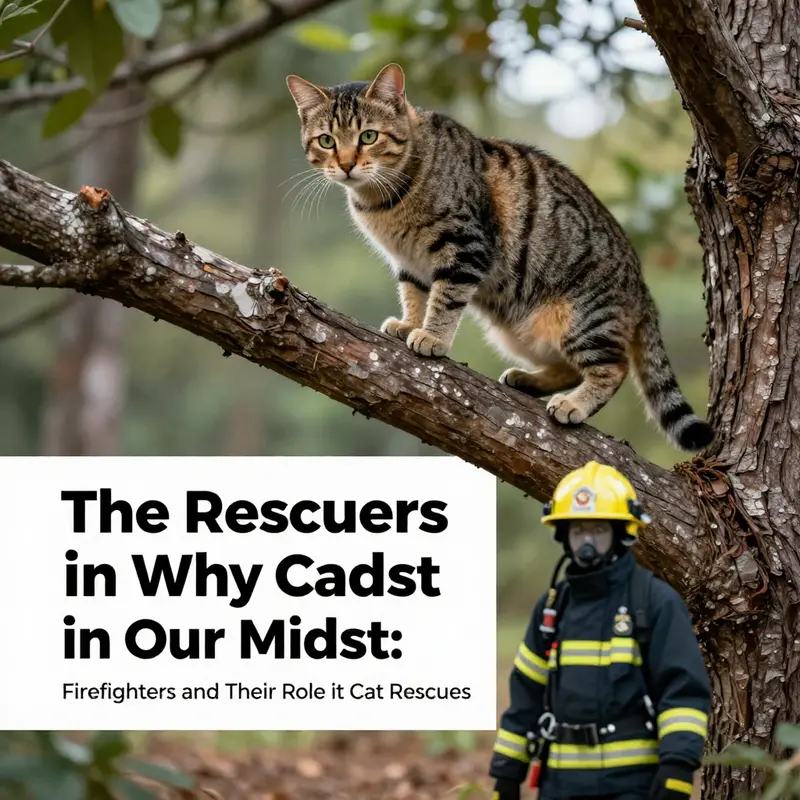
From the curb, the scene can seem almost humorous: a small tail flicking at the base of a trunk, a creature perched inches from the ground, and a crowd gathered as a ladder unfurls toward the sky. But behind the laughter lies a moment of quiet urgency. Cats climb trees for many reasons, and the moment they decide to descend is rarely as simple as stepping off a branch. The people who respond to these calls—the firefighters who show up with hoses, hooks, and a practiced calm—carry a different kind of expertise. They are not simply risers of ladders; they are stewards of safety for both the animal and the human who fears the height. When a cat is stuck, the rescue operation becomes a study in patience, technique, and humane restraint, a small but telling example of how professional responders translate training into everyday compassion.
Cats do not climb trees by accident. Their ascent is driven by instinct and perception. In moments when a cat perceives threat or feels exposed, the tree becomes a refuge, a stage from which they can observe potential escape routes while staying just out of reach of danger. The climb often begins as a simple search for safety or curiosity—an exploratory ascent that quickly becomes a test of nerve when the ground below grows distant or unfamiliar noises echo through the branches. In this way, tree-climbing is less about clumsiness and more about an animal’s natural habits of pursuit and avoidance. The cat may feel secure at the top, perched on a higher vantage point where human voices can seem distant enough to avoid, rather than confront. Yet the moment it tries to come down, the same height that offered safety can suddenly become a trap’s narrow doorway. Bark can be slick, branches may give way, and once the cat’s paws slip, fear can freeze the animal in place. The amygdala, a part of the brain that governs fear, can trigger a freeze-and-assess response. In that state, movement seems risky even when safety is within reach, and the descent becomes not a matter of ability but one of willingness and timing.
That is where the role of firefighters becomes crucial, nuanced, and profoundly human. Firefighters are trained not only to lift people from danger but to manage animal distress with care. The public often underestimates the psychological dimension of a cat rescue. A frightened animal can bolt unpredictably, hiss, scratch, or lash out in an attempt to protect itself. The responders’ first objective is to create a sense of safety for the animal, a challenge as much about psychology as about physics. They approach with soft voices, slow movements, and a measured pace designed to reduce stress. The tools at hand—ladders, aerial platforms, and the occasional harness—are used not to overpower the cat but to extend a hand, or rather a ladder, toward enabling descent in a controlled, noninjurious manner. The physics of a rescue matters: the ladder must be steady, the slope of the trunk clear, the angles of approach predictable. Every position the firefighter takes has a twin aim: to reach the cat and to keep both the animal and the rescuer protected from harm.
The actual process of retrieval is a blend of strategy and restraint. Ground teams assess the situation by observing the cat’s location, the height, the tree’s condition, and the weather. A calm, quiet environment often matters more than the most elaborate apparatus. The aerial lift can be deployed to create space for the animal to move toward a safer, more stable descent path, but the cat’s path is rarely a straight line. In many rescues, the animal travels along a short branch system, pausing as if to weigh each next step. Firefighters read these micro-motions with the minimal cues a cat offers—the flick of a tail, the shift of a paw, a slight twitch of the whiskers. A patient approach may include gently coaxing the animal with a soft voice or offering a calm, low-level distraction, all while keeping the cat’s speed at the cat’s own pace. It is a moment where the science of rescue meets the art of care. The aim is not to speed the cat down but to ensure that each inch of descent is safe, steady, and humane.
This carefulness stands in contrast to the more dramatic, viral moments that occasionally surface on social media. A famous incident in a major city once circulated online when a cat on a utility pole made a brief move toward a ladder before leaping back to its perch. The moment sparked a wave of amusement aimed at the cat’s apparent pride in independence. Yet such episodes, while they may provide lighthearted content, also reveal a common truth: most cats only need time, space, and the right conditions to come down on their own. The rescuer’s role, therefore, is to balance respect for the cat’s autonomy with the safety imperative for all involved. In many cases, a cat will retreat to a safer stance on a branch and, after the commotion dies down, descend unaided. Sometimes, a calm, patient system of observation is all that is required. Other times, the cat is not in a position to descend safely, perhaps due to injury or fatigue, and the firefighter’s job becomes the careful bridging of that gap—bridging fear with safety, and fear with a clear, practiced path back to the ground.
The broader significance of these rescues lies not in the spectacle but in the underlying alignment of values. Firefighters are called to act when a pet is truly at risk and when the terrain itself poses a danger to either party. The decision to intervene is never made lightly. On one level, the question is simple: can the cat descend safely with minimal risk? On another level, the question asks about the community’s trust in trained professionals to handle delicate situations. Firefighters bring a combination of physical readiness and animal-handling techniques, a discipline honed by years of training across countless scenarios. They know when to apply a measured touch and when to escalate the operation to a more involved method, all while communicating with a sense of authority that reassures the worried owners on the ground. This balance—between action and restraint—characterizes rescue work across many contexts. It is a reminder that public safety is not only about preserving life but about preserving dignity and comfort in vulnerable moments, even for animals.
The human element of these rescues deserves attention as well. The responsible citizen who calls for help often does so out of concern rather than impulse. They may have watched a beloved pet become frightened in heights that look small from the ground, yet loom large to the animal itself. In many communities, the decision to involve emergency services is the prudent one, a recognition that the safest outcome often depends on professional judgment, not personal bravado. This dynamic can be seen in how fire departments engage with animal welfare guidelines and the public’s evolving expectations of what rescue work should look like. Public familiarity with the process has grown as more rescues are shared online, but so has the responsibility to avoid risky behavior that could lead to more harm. The guidance offered by safety networks emphasizes not entering a tree yourself, not attempting to climb after a pet, and instead calling trained teams who know how to stage a rescue with the least possible disruption to the animal’s psyche and body.
There is a broader, transnational thread to consider. Cat rescues from trees are not unique to one place or culture. In urban centers, in suburban neighborhoods, and even in rural areas, trees pose a common obstacle when a curious or scared cat climbs in search of vantage or safety. The mechanisms of fear and the steps toward safe recovery are likewise universal: the animal’s fear response; the careful, measured approach of rescuers; the use of equipment to minimize risk; and the ultimate goal of returning the animal to the ground with dignity and without harm. The lessons learned from these operations—how to create calm, how to coordinate teams, how to stage a rescue without escalation—are valuable across the spectrum of emergency response. They remind communities that rescue work is as much about communication and compassion as it is about technique. It also prompts a reflection on the kind of preparedness that benefits neighborhoods: training, protocols, and public education about when to call for help and what to expect when responders arrive.
From a safety and public-policy perspective, the right approach to cat rescues aligns with broader guidelines on wildlife and pet emergencies. Fire departments and animal services often coordinate in ways that maximize outcomes for the animal while ensuring human safety. The approach is consistent with a principle that recurs across many risk-reduction efforts: anticipate fear, reduce uncertainty, and provide a clear, stepwise path to safety. Firefighters leverage years of interfacing with different contexts—addressing everything from high-rise calls to delicate animal touch-policies—and, in doing so, create a body of knowledge about how to handle seemingly whimsical, yet genuinely urgent, moments of peril. The aim is a rescue that preserves life and reduces trauma, both for the animal and the humans who care for it.
Within this frame, the cat’s descent is a small but telling demonstration of what public-service professionals bring to everyday life. It shows how a community’s safety net operates in quiet, unseen ways, offering reassurance that help can arrive when it is needed most, even if the event itself seems minor or even comical from a distance. The science of rescue works hand in hand with the art of care, and the result is not merely the recovery of a cat but the reinforcement of public trust in those who answer calls for help. This is the ongoing, practical truth of why fire departments exist beyond the headlines: they build a bridge between fear and recovery, between a frightened animal and a safe, grounded return to daily life. In that bridge lies a responsibility to continue learning—about animal behavior, about techniques for humane handling, and about the ethics of rescue that place the animal’s well-being at the heart of every decision.
For readers who want to explore the broader dimensions of how equipment and prepared systems support such rescues, a helpful point of reference is the broader ecosystem of firefighting resources that inform everyday practice across communities. See the discussion on customized fire-truck and equipment solutions for developing contexts, which helps illuminate how the same principles of safety, patience, and precision translate into different scales and settings: https://tpbhrescue.org/customized-fire-trucks-for-developing-countries-reliable-cost-effective-and-comprehensive-solutions/. This connection underscores that the core values behind animal rescues—careful handling, safety-first protocols, and calm, predictable action—are echoed in the hardware and training that support professionals no matter where they work. It also signals that even seemingly small rescues can be part of a much larger tapestry of public safety, where a single cat’s descent becomes another thread in the community’s ongoing commitment to protection and humane treatment.
Ultimately, the broader message is simple enough to carry beyond the tree: not every animal needs intervention, and not every height demands a ladder. Yet when a rescue is required, the goal remains consistent—resolve the danger with as little stress and as little risk as possible, and return the animal to familiarity and safety. The firefighters who respond to these calls teach a broader lesson about professional responsibility: expertise matters, compassion matters, and timing matters. They remind us that in moments of fear, the most reliable response is often patience and precision, not bravado. The cat may not remember the specifics of the rescue later, but the quiet competence of the responders is a memory that can reassure a neighborhood for years to come. In this sense, a tree that once challenged a curious creature becomes, after the rescue, a story of trust re-built between the animal, its human caretaker, and the community that called for help.
External resource: https://www.firefighterequipment.com/2025/12/why-do-cats-get-stuck-in-trees-the-role-of-firefighters/
Know When to Call the Pros: Safety Guidelines for Cat Rescues from Trees
Safety first: when a cat is perched in a tree and appears distressed, the guiding principle is to minimize risk to both you and the animal. If the cat is in immediate danger or cannot descend safely, call trained firefighters or animal control. Only attempt a rescue yourself if you can do so without exposing anyone to undue risk and without using improvised gear near the animal.
A calm, patient approach can help some cats choose to come down on their own. Keep the area quiet, avoid hovering on ladders, and do not reach out with ropes or harnesses unless you are trained. If the cat remains calm in place and there are no hazards from weather or traffic, allow professionals to assess the situation.
When professionals arrive, they bring tools designed for controlled engagement: extendable ladders, aerial platforms, harnesses, ropes, and anchored systems. They move slowly, communicate with the animal, and coordinate teams to avoid sudden movements that could startle the cat or create a fall.
Avoid improvisation. A ladder leaned against a trunk, a makeshift rope harness, or a DIY device can quickly escalate risk for the cat and for the rescuer. If you are uncertain about safety, pause and call for help.
To help responders, provide clear information: the cat’s location, height, the tree’s condition, and any signs of injury or illness. Secure the area so pets, children, and curious bystanders stay at a safe distance, and limit distractions around the rescue site.
The goal is to recover the cat with the least possible stress and the lowest risk to everyone involved. If in doubt, err on the side of calling professionals. After the cat is down, a quick veterinary check can confirm there are no injuries and help plan any needed follow-up care.
Living Stories of Courage: How Firefighters and Cat Rescues Shape Our Shared Sense of Community
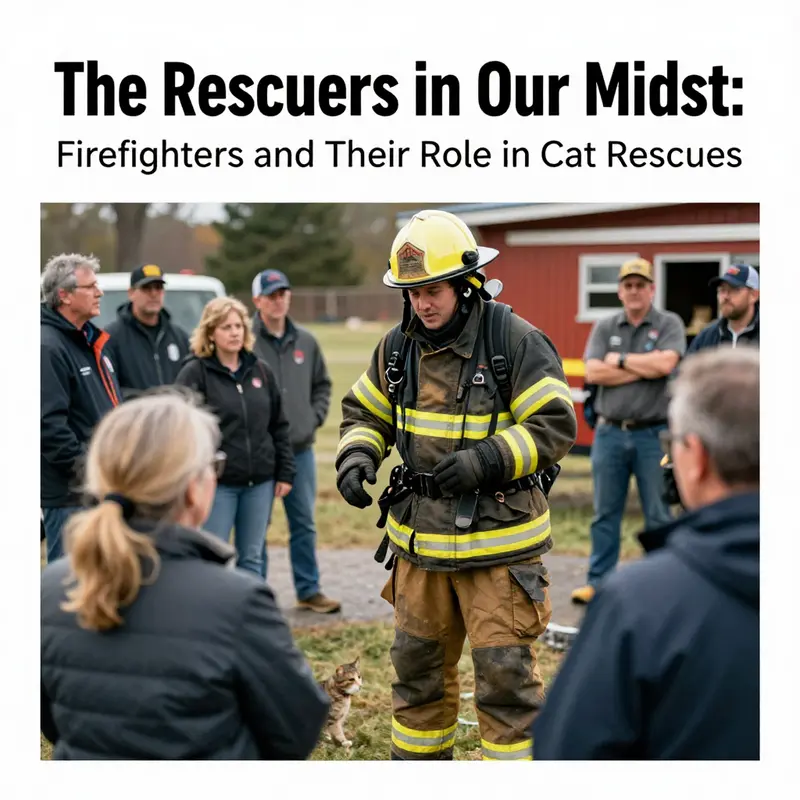
Across neighborhoods, city blocks, and rural lanes, the emblematic silhouette of a firefighter climbing a ladder or guiding a rescue line has become more than a response to danger. It is a social reflex, a moment when fear yields to trust, and strangers become neighbors with a single shared hope: that someone will reach down and steadier the hands of another who cannot do it alone. In the fabric of everyday life, these rescues—especially those of cats perched high in trees or on precarious perches—emerge as small but powerful demonstrations of community values. They crystallize a larger story about what a city or town believes about safety, care, and the responsibilities we share for one another’s well-being. The perception of firefighters and the humane act of rescuing a frightened animal intersect in ways that reveal how communities imagine themselves and their own capacity for collective resilience. In this chapter we trace how these acts of courage—human and animal—become social currency, shaping public sentiment, policy conversations, and everyday conduct without seeking the spotlight of grand headlines. They are, in their most ordinary forms, expressions of a larger ecosystem of public trust and mutual aid that sustains a community through calm days and crisis alike.
The core of this dynamic lies in the public image of firefighters themselves. Across cultures and continents, these professionals are broadly seen as paragons of bravery and selflessness, figures who consistently place the welfare of others above personal risk. That perception is not merely a matter of sensational television clips or dramatic replays in online feeds. It is reinforced by countless, quieter acts of service that accumulate into a shared sense of safety. When an alarm sounds, a human chain forms around the threat, and the community witnesses the deliberate steps that lead from danger to relief. The firefighters’ role extends beyond extinguishing flames or containing structural collapse; it embodies the public’s expectation that order will be restored with competence, steadiness, and compassion. This expectation translates into support—funding, volunteering, and civic engagement—that sustains fire departments as anchor institutions within neighborhoods. In many places, people come to view the fire station not merely as a place of work, but as a visible emblem of collective protection and preparedness.
Within that broader reverence, cat rescues have grown into a distinct, socially resonant strand of public perception. Animals—especially cats—carry a special emotional resonance: they symbolize vulnerability and trust, curiosity and fear, the intimate bond between humans and their animal companions. When a cat is perched on a branch, a lamppost, or a utility pole, the scene becomes a micro-drama about fear, pursuit, and the longing for safety. The rescue itself, often captured on video and shared across social platforms, functions as a social ritual. It allows ordinary people to participate vicariously in a moment of care, even if they are miles away. The emotional arc is familiar: the animal is frightened, the helpers are careful, the ladder rises, and the moment of potential harm becomes a moment of relief and gratitude. The viral nature of many of these clips—where the cat’s first instinct is to sprint away, or, in a twist of fate, to step onto the rescuer’s platform and then choose a different path—serves less as a celebration of a single act and more as a mirror held up to a culture that values mercy and patient intervention. In this light, the cat rescue becomes less about the animal and more about the values it highlights: patience, restraint, and the recognition that sometimes the simplest, safest path is to wait for trained professionals to remove danger.
Yet the social significance of these rescues goes beyond sentiment. They function as everyday demonstrations of how a community handles uncertainty. Most cats do descend on their own when the moment is right; fear alone can be a sufficient barrier, and a calm, non-threatening approach by responders can coax the animal down without escalation. But when the animal is truly stuck, or when a rescue is necessary to prevent a fall or exposure to hazards, the presence of trained personnel on the scene reaffirms a social contract: we rely on institutions that can respond with timely, reasoned action. The delay or failure of such responses can erode confidence, while successful rescues reinforce a belief in collective competence and the capacity of institutions to mobilize quickly and effectively. The public also learns through these events how to balance caution with courage. People watching from sidewalks or kitchen windows may feel a renewed sense of responsibility to avoid risky stunts, to avoid placing themselves in harm’s way in attempt to aid a pet, and to instead contact the appropriate authorities who have the proper equipment and training.
There is a social logic to the timing of a rescue—a rhythm that can teach communities about patience and prudence. An animal in distress can evoke a powerful impulse to intervene immediately, even when the safest course would be to wait for trained responders. When witnesses observe professionals carefully lowering a cat from a height, checking the animal’s physical state, ensuring warm shelter and medical evaluation if needed, the scene becomes a concrete lesson in careful intervention. It is not just about the rescue itself but about the process that follows: the handoff to animal control or veterinary care, the sheltering of the animal if it cannot immediately return to its home territory, and the way community members reflect on the incident in the days that follow. In many communities, those reflections are not ephemeral. They become part of a broader discourse about animal welfare, urban safety, and the responsibilities of residents toward vulnerable neighbors—human and animal alike.
Public perception is also mediated by the models and narratives that media and community organizations choose to elevate. Heroic images of firefighters performing daring feats are compelling because they map onto an enduring cultural script about courage, sacrifice, and the willingness to accept personal risk in service of others. But the cat rescue adds a complementary arc to that script: it foregrounds everyday compassion, the gentleness that accompanies strength, and the understanding that bravery does not always require a dramatic life-or-death moment. The juxtaposition of these narratives—grand heroism and intimate care—helps to broaden the public’s appreciation of emergency services as not only capable of handling emergencies but also attuned to the emotional textures of community life. At the same time, this broader appreciation must be tempered with realistic expectations about safety and professionalism. Media representations, while emotionally resonant, should anchor public belief in the necessity of trained responders and systematic safety practices. This is why public education campaigns, public health messaging, and consistent channeling of calls to the right agencies matter. When people know whom to call and why, the likelihood of a safe, efficient outcome increases, and the community’s trust in those systems is reinforced.
The social impact of these rescues also reverberates through community relationships and local governance. In neighborhoods where residents feel a high level of social cohesion, cat rescues and firefighter stories become shared folklore that strengthens communal bonds. People may organize spontaneous block gatherings to watch a rescue unfold, offer blankets or towels to a frightened pet, or simply exchange words of gratitude with responders and each other. In these moments, a sense of shared fate emerges: a belief that in times of uncertainty, a collective response is possible, and that ordinary people can contribute to the safety and welfare of others. Conversely, in environments where trust in public services is frayed, the same cat rescue can become a point of tension, a reminder of bottlenecks and gaps in the system. The way a city handles post-incident communication—how swiftly it informs residents about safety steps, how accurately it conveys the risks involved, and how transparent it is about the actions taken—shapes the lasting imprint of the event. The aim for communities is not merely to witness a rescue; it is to translate the encounter into durable structures—training programs, better public messaging about animal safety, and reinforced lines of communication between residents and responders.
Within this social ecology, there are concrete expressions of resilience that connect everyday acts with long-term preparedness. The idea that ordinary citizens can act with extraordinary courage in moments of need is itself a source of inspiration for school programs, neighborhood watch initiatives, and volunteer organizations. Children who see a cat rescued from a tree may carry that memory into later years as a reminder of the value of seeking help when danger is present, rather than improvising risky, solitary attempts. Adults who witness a calm, professional team deploying equipment, verifying pet safety, and ensuring humane handling understand that resilience is built on training, protocols, and mutual aid. Public spaces, streetscapes, and local institutions respond to these values by prioritizing safety features, such as accessible routes for emergency services, signage that discourages unsafe attempts to rescue animals, and community workshops that demystify the roles of responders. When communities invest in such measures, the moral of the story—compassion paired with competence—becomes embedded in the social fabric rather than merely being an episodic memory of a single incident.
An important thread in this tapestry is the way communities recognize and celebrate acts of ordinary courage alongside extraordinary ones. The example of residents in the TianTai Community water-side area who contained a nighttime fire illustrates how heroism comes in many forms. It shows that heroism is not confined to a public demonstration of dramatic action; it also includes vigilance, collaborative problem-solving, and the protection of lives and property through timely, coordinated effort. In this way, the social narrative around firefighting extends beyond the fire station’s doors and into the rhythms of daily life, where neighbors look out for one another, where small but decisive steps prevent large-scale harm, and where the line between ordinary and heroic is continually negotiated in the practice of emergency preparedness. The study of public perception, such as the Forest Fire Human Factors Public Perception Survey, underscores that a large portion of communities is increasingly aware of human-caused risks and the ways in which proactive behavior reduces those risks. This awareness translates into a more resilient citizenry: people who understand the importance of prevention, who know how to respond to incidents, and who support the institutions that empower them to act safely and effectively.
Of course, the social resonance of firefighter and cat-rescue narratives must be balanced with a sober understanding of safety and professional boundaries. It is crucial to resist the temptation to dramatize every rescue as a glamorous feat, lest the public loses sight of the complex technical expertise that underpins successful outcomes. Firefighters train to manage risks meticulously, to use height and rope systems safely, to assess animal welfare, and to communicate clearly with pet owners and bystanders. This discipline is as much a part of public trust as the moment of ascent with the rescue equipment. Communities that internalize these lessons tend to cultivate a coexistence with risk that is informed, not induced. They recognize that preparedness reduces fear and that preparedness is a public good—an investment in the health and safety of the entire community.
One practical way communities connect these ideals to action is through partnerships that extend beyond the fire station walls. For example, integrating animal welfare with emergency response planning creates a more holistic safety net. The idea is not to replace professional rescue with volunteer effort but to synchronize them so that volunteers support responders in ways that enhance outcomes. In this sense, the public perception of firefighters and cat rescues becomes a driver of social innovation, pushing communities toward models that honor both human safety and animal welfare. It also invites a broader range of civic conversations: about how neighborhoods can withstand extremes of weather, how to design public spaces that reduce the likelihood of dangerous rescues, and how to foster a culture of patience that prioritizes the well-being of all residents.
To bring these threads together, a community’s life stories—the day-to-day acts of care, the shared remembrance of saved pets, the aspirational images of steadfast responders—form a curriculum in resilience. They teach that courage is not monolithic; it is distributed across many kinds of actions, from the dramatic to the intimate, from the moment of a ladder’s ascent to the quiet sheltering of a frightened animal after a successful descent. The societal appreciation for these acts grows when communities reflect on the values they want to embody and the standards they want to uphold. The test of a society is not simply how it faces catastrophe, but how it cherishes acts of care in ordinary days, how it uses those moments to reinforce trust in institutions, and how it channels that trust into ongoing preparation and mutual aid. In this light, the perception of firefighters and cat rescues becomes more than a cultural curiosity; it becomes a lens through which communities examine their own capacities for collective care and continuous improvement.
For readers seeking a deeper perspective on how public perception of emergency response shapes behavior and prevention, there is a broader body of research that explores cognitive status and improvement pathways in the context of forest fires and human-caused risks. This body of work illuminates how awareness translates into practical actions, how communities move from knowledge to readiness, and how stories of rescues contribute to a shared mental model of safety. It is not a single answer, but a moving, ongoing conversation that connects policy, practice, and daily life. As neighborhoods absorb these insights, they can approach every call, every brush with danger, and every moment of compassionate intervention with a sense of purpose grounded in history, tempered by knowledge, and oriented toward a safer, more interconnected future.
Internal resource: The Green Firehouse: creating sustainable spaces for community and health. The concept imagined here ties directly into how communities can institutionalize safety, wellness, and cohesion through design and collaboration with responders. This kind of partnership—between public service and community spaces—offers a tangible path to translate the symbolic acts of courage into concrete improvements in everyday life. The Green Firehouse: creating sustainable spaces for community and health.
External resource: For a broader research perspective on public perception and emergency behavior, see Minghui Think Tank’s Forest Fire Human Factors Public Perception Survey Report—Cognitive Status and Improvement Pathways. https://www.minghuithinktank.org/research/forest-fire-perception-report-2025
Final thoughts
Firefighters play an essential role in rescuing cats from trees, preventing potential harm both to pets and to well-meaning humans trying to assist them. Understanding the reasons cats become stranded, knowing when to call for professional help, and recognizing the community’s perception of these heroic acts fosters a safer environment for pets and residents alike. By working together, communities can ensure that both animals in distress and emergency responders are treated with care and respect, emphasizing the importance of safety in every rescue operation.