
Fire rescue operations are often intrinsically linked to traditional fire departments, leading many to assume that these entities are the sole providers of such critical services. However, an evolving landscape of emergency response reveals a broader array of models that can effectively manage fire rescue operations. This article delves into the multifaceted roles of fire departments, the viability of alternative rescue service models, and the impact of public policy on these operations. Additionally, it examines technological advancements shaping the field and considers community perspectives on fire rescue management. Through these chapters, we will illustrate the importance of a dynamic approach to fire rescue, emphasizing collaboration and innovation in safeguarding our communities.
Rethinking Fire Rescue: Does It Have to Be Ran by Fire Departments?
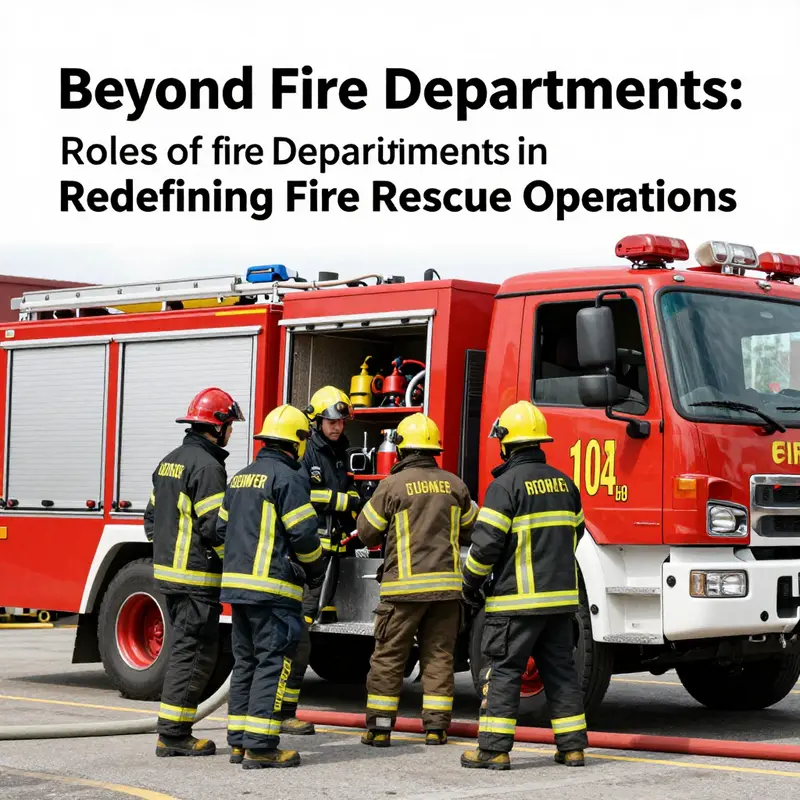
The question itself opens a broader inquiry into how communities organize safety in a world of competing hazards and finite resources. Fire rescue is not a single trick of the trade. It is a bundle of capabilities that includes rapid response, technical rescue, medical care, hazard containment, and risk communication. In many places, the fire department is the visible, dependable anchor for this bundle, but the question remains: must it be the fire department that runs it all? The answer is nuanced. In different jurisdictions, rescue leadership is distributed across agencies that specialize in particular challenges, with governance and funding designed to match risk profiles. When we examine rescue through this lens, the truth emerges: fire rescue does not have to be run exclusively by the fire department, and in some settings, spreading leadership can sharpen outcomes.
To understand why other arrangements can work, it helps to unpack what rescue activities actually involve. At a scene, time, precision, and the right expertise converge. Firefighters bring speed, basic scene safety, and leadership under pressure. They are trained for a wide range of scenarios—from urban fire suppression to stairwell evacuations and rapid extrication. But rescue operations increasingly demand specialized skills: hydraulic or rope systems for high-angle work, swift-water capabilities for floods, or deep technical knowledge of collapsed structures. Some regions respond to this need by creating dedicated rescue teams that sit outside traditional fire services, often under civil protection or public safety authorities. These teams may excel in complex searches, stabilization work, or remote extraction, while the fire department concentrates on initial stabilization and scene safety. In other areas, emergency medical services are delivered by a separate system and coordinate with rescue crews as care continues on the way to hospital. The result is not a fragmentation of duty but a rational division of labor tailored to risk.
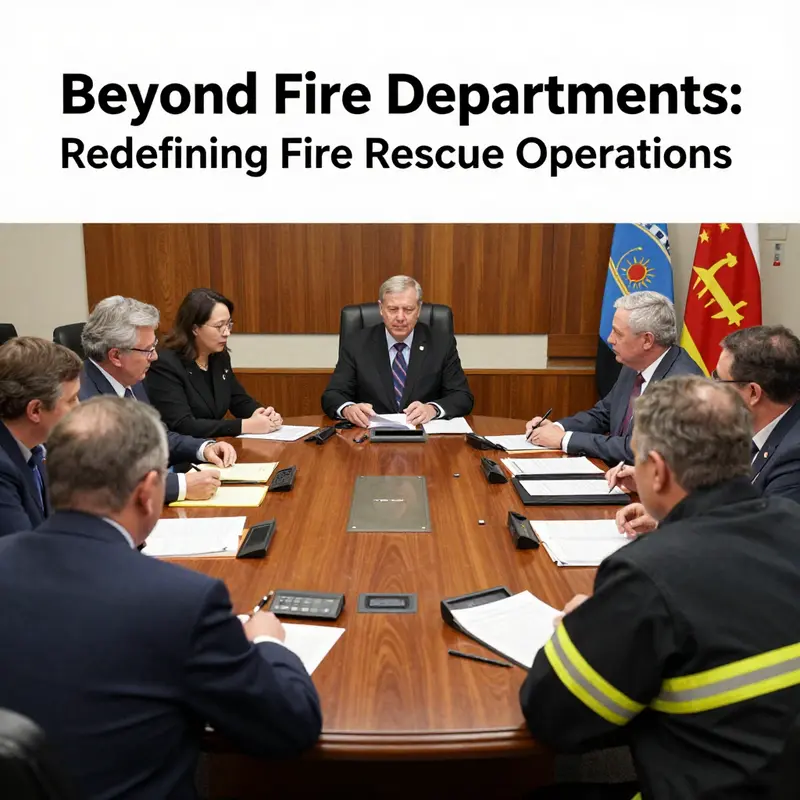
The policy question then shifts to governance. Who writes the rules for response, who commands at the scene, and who is accountable for outcomes? The ideal is not to hoist responsibility on a single group but to cultivate a shared leadership model with well-defined roles. In practice, this means clear dispatch protocols, interoperable communications, and mutually understood command structures that function even when teams arrive from different agencies. A well-designed system allocates tasks based on capability. The area with frequent swift-water incidents, for example, might maintain a dedicated swift-water rescue unit. A community facing frequent chemical spills could rely on a specialized hazmat team. In such cases, the fire department remains essential, but it does not bear exhaustive responsibility for every facet of every incident. The on-scene leadership can pivot fluidly, drawing on the best-suited experts while maintaining a cohesive strategic picture. This flexibility is what makes rescue systems resilient when the next emergency unfolds.
The practical benefits of diversified leadership are perhaps most visible in large-scale or technically demanding events. A collapsed tunnel, a floodplain with rising currents, a wildfire edge threatening lifelines, or a mass casualty scenario test the limits of any single organization. In these settings, multi-agency coordination is not a luxury but a requirement. Teams that share training, communicate through common jargon, and rehearse joint procedures tend to converge faster and with fewer misunderstandings. The result is not a loss of unity but rather a clarified unit of action. Communities that cultivate this interoperability often develop a culture of collaboration rather than competition across agencies. That culture can withstand turnings of political fortune because it rests on shared experience and repeatedly tested routines rather than on a single administrative umbrella.
An important thread in this discussion is how innovation shapes what rescue leadership looks like. When we glimpse the future of safety, we see networks of responders who can be mobilized with precision. The emphasis shifts from “who wears the badge” to “who brings which capability when.” This reframing invites new organizational designs, where independent rescue services contribute specialized know-how without forgoing their own accountability structures. For instance, independent urban search and rescue units might assume primary responsibility for locating and extracting trapped victims, while fire departments handle rapid hazard containment and medical triage. The power of such configurations lies in visible competence on the ground, a diversified toolkit, and the shared mission of saving lives. In these conversations, it is not a destabilization of public safety but a maturation of it—an acknowledgment that risk calls for a credible portfolio of expertise, not a single source of power. This evolving landscape is explored in depth in [Innovation Museum Transforming Fire Services].
To speak plainly about public perception, communities benefit from transparent explanation of roles. When residents know who leads a response and why, trust grows. People understand that a rescue operation may begin with firefighters, but that a related phase could be led by a dedicated technical rescue team or civil protection unit. The messaging matters just as much as the response. A system built on clarity invites cooperative behavior at the scene, reduces confusion among bystanders, and helps families understand the care pathway their loved ones will follow. This, in turn, supports resilience: residents who recognize the limits of any single organization will be more likely to cooperate with drills, heed evacuation orders, and report hazards accurately, knowing that trained professionals from multiple disciplines stand ready.
The literature also highlights the role of governance in shaping outcomes. Across jurisdictions, the balance between local autonomy and regional or national standards determines how rescue is organized, funded, and evaluated. Local communities can design arrangements that reflect their geography and demographics, while still benefiting from national frameworks for training and equipment standards. The structural design matters less than the presence of shared objectives, reliable funding streams, and enduring partnerships with cross-sector institutions. When these elements align, the rescue system can respond rapidly, adapt to evolving threats, and maintain high performance across a spectrum of incidents. A key outcome is not only faster reaction times but also better care trajectories, as patients transition from field care to hospital with uninterrupted, high-quality support.
An illustrative thread running through the research results is the potential for a modular approach to rescue leadership. Consider a metropolitan area with a dense urban core and distant mountainous hinterlands. A modular system might designate a primary urban resilience unit to helm most incidents in the city center, supported by specialized remote rescue teams that can be dispatched quickly to more challenging terrain. In this model, the on-scene commander comes from the team best suited to the hazard, while the governing body maintains oversight through standardized protocols and performance metrics. The modular approach preserves the immediacy and visibility of the fire service, while embracing expertise that enhances performance where it matters most. The net effect is that communities do not have to choose between tradition and innovation; they can integrate both to build a rescue system that is as versatile as the hazards it faces.
Within this context, one can appreciate the value of a design philosophy that centers on capability rather than cadre. The question—do fire rescue operations have to be run by fire departments?—loses its rigidity when reframed as: what combination of organizations delivers the safest, fastest, and most just response for a given place and time? The answer is that there is no universal mandate. There is a spectrum of viable configurations, each with its own governance arrangements, funding models, and training ecosystems. The underlying principle remains constant: the objective is to minimize harm and maximize safety, and this is achieved when the right people act together at the right moment, with a shared sense of purpose and the tools to sustain that purpose over time. The growing recognition of independent rescue services and public health–oriented EMS in some regions is not about dividing the public’s trust; it is about ensuring that the system can meet local risk profiles with the right mix of speed, technical mastery, and medical continuity.
As communities contemplate reforms or reforms of their own safety systems, the temptation to simplify may be strong. Yet the evidence favors a different path: cultivate interoperability, invest in training across disciplines, and create governance structures that support specialization without fragmenting accountability. Public resources should be allocated so that primary response remains reliable, but the system can flexibly deploy the most effective teams for each phase of an incident. In short, fire rescue is a public safety function that benefits from redundancy in expertise, not redundancy of effort. When the public is served by a network of capable responders—firefighters, technical rescuers, EMS professionals, civil protection agents, and trained volunteers—safety is enhanced, equity of response improves, and communities emerge better prepared to recover after adversity.
For a deeper dive into the specific challenges of operation in challenging environments, see the external resource below. The discussion offers empirical insights into how specialized environments—like tunnels or other constrained spaces—test response systems and reveal the importance of clear leadership, cross-agency training, and adaptable procedures.
External resource: https://www.sciencedirect.com/science/article/pii/S235214652300075X
Rethinking Rescue: Alternative Models for Post-Flashover Fire Response Beyond Traditional Fire Departments
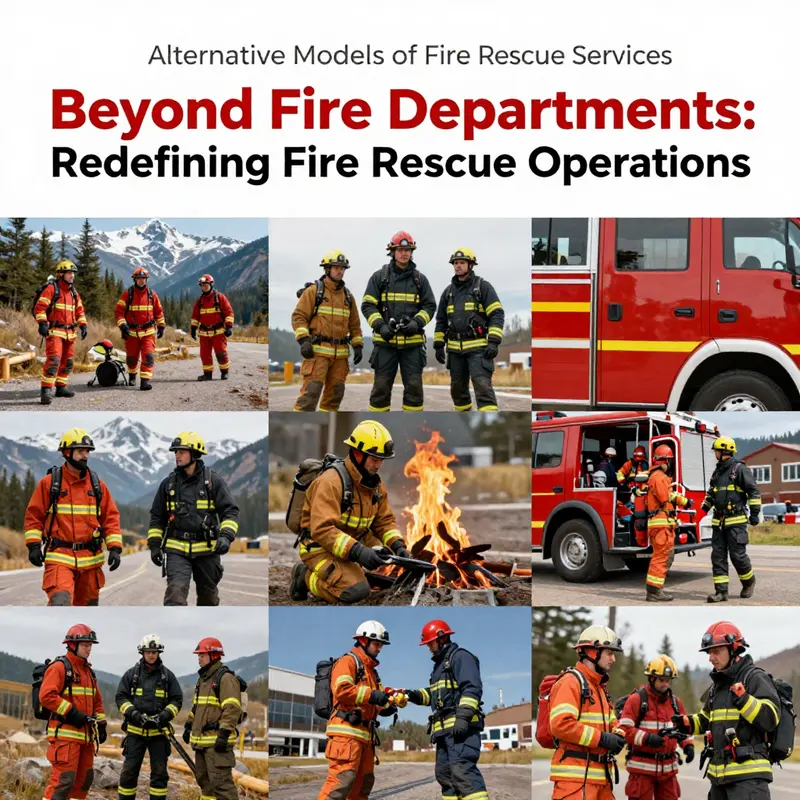
The idea that fire rescue must be run exclusively by fire departments has long guided policy, training, and budgeting in many places. Yet the landscape of structural fires is changing as buildings grow more complex and as the consequences of late-stage, or post-flashover, fires become more severe. In this chapter, we explore how rescuing people and containing the worst effects of deep structural fires can benefit from models that transcend traditional department boundaries. The core argument is not that fire departments should give way to unrelated agencies, but that the most effective rescue in post-flashover scenarios often requires a deliberate reconfiguration of responsibilities, partnerships, and capabilities. This shift aligns with broader efforts to tailor emergency response to the realities on the ground rather than to a historic organizational template.
Post-flashover conditions present hazards that can overwhelm standard response paradigms. A space that has transitioned from a fire to a fully developed, high-temperature environment becomes a dynamic theater of risk: collapsing elements, toxic atmosphere, rapidly deteriorating visibility, and the unpredictable behavior of concealed fires behind walls and floors. Traditional fire suppression and basic search techniques, while essential, may not suffice when the priority is rapid access for trapped occupants, precise stabilization of structural integrity, and careful removal of hazards before conditions worsen. This reality motivates a shift toward a more specialized and coordinated set of rescue capabilities that can adapt to the particular demands of late-stage fires.
What some researchers and practitioners are proposing is a model in which post-flashover rescue responsibilities are distributed across a broader ecosystem of trained teams. These teams would complement, rather than simply support, conventional fire suppression. They might include dedicated technical rescue units, urban search and rescue specialists, and civil protection or multi‑agency teams that bring together expertise from engineering, medicine, and disaster management. The arrangement emphasizes not only who responds, but what they bring to the scene: advanced access techniques, risk assessment for unstable structures, and capabilities to extract occupants from complex layouts without triggering further collapse or toxic exposure. It is a shift from a single, department‑led chain of command to a networked approach that leverages the strengths of diverse organizations under a unified strategic framework.
The proposed objective of such models centers on effectiveness in the hardest moments of a building fire. In post-flashover environments, the window to locate and save victims narrows quickly, and every decision about whether to advance, cut, or stabilize must balance speed with safety. The alternative models aim to optimize the sequence of actions that an on‑scene team takes, ensuring that life preservation, structural integrity, and environmental hazards are addressed in a deliberate order. This often requires pre-planed roles, standardized procedures across agencies, and joint training that makes coordinated action almost second nature. In practical terms, this means reshaping the organizational map so that the right people with the right tools are ready to operate together when an alarm arrives.
The governance question is central. National, regional, and local frameworks shape what is possible. In some places, fire departments retain primary responsibility for rescue because they are already present in communities, have established response rhythms, and maintain emergency medical services as part of a single public safety system. In other places, rescue tasks are organized by independent technical rescue services or civil protection agencies that operate separately from firefighting. Each model has its strengths and its costs. The key is strategic alignment: ensuring that any arrangement can mobilize multiple specialized teams quickly, that command and control remain clear under pressure, and that funding and accountability follow a coherent plan rather than a patchwork of ad hoc arrangements. The MDPI research on alternative models emphasizes this alignment, arguing that a targeted reconfiguration can improve outcomes in post-flashover fires by focusing expertise where it is most needed and by clarifying lines of responsibility.
A practical implication of adopting alternative models is the redefinition of the roles that different organizations play on the ground. A dedicated rescue unit might assume responsibility for rapid exploration and victim extraction in complex structures, while fire departments concentrate on containment of the main fire and protection of exposed areas. Emergency medical services could operate in parallel, prioritizing triage and rapid transport once life safety is stabilized. In a multi‑agency framework, the incident command system evolves to accommodate these distinct capabilities without sacrificing unity of effort. Clear protocols, joint training drills, and shared decision criteria help ensure that interruptions in one component do not cascade into delays across the entire operation. In other words, the compatibility of teams becomes as important as their individual competencies.
Attention to post‑flashover realities also invites a broader view of equipment and technique. Rescue missions in late-stage fires often require heavy access tools, shoring and stabilization gear, and advanced illumination and monitoring to navigate burning voids safely. It is not enough to have a wrench of specialized tools; teams must synchronize deployment with structural assessment and fire control actions. The resilience of the system depends on mutual aid arrangements that can rapidly bring in additional expertise and equipment when conditions shift. Training programs that cross traditional boundaries—combining structural engineering insights with rescue techniques and medical priorities—produce responders who can read a building in motion rather than a single hazard in isolation.
A central benefit of this reframed approach is potentially faster and more reliable rescue outcomes for occupants. When rescue specialists are integrated with, yet not tethered solely to, fire suppression, they can act with a level of autonomy appropriate to post‑flashover hazards while maintaining a shared strategic vision with the incident commander. The kind of on‑scene decision making that preserves life without compromising safety hinges on the existence of integrated protocols and trusted lines of communication. In many regions, this entails formalized memorandum of understanding between agencies, joint procurement of compatible equipment, and standardized data-sharing practices that allow different teams to operate with real‑time situational awareness. The goal is not duplication of effort but coordinated specialization—knowing who does what, when, and how to coordinate swiftly when a signal of danger turns into a call for life saving action.
The narrative of alternative models is also a story about how communities want to be protected. Fire suppression remains indispensable, but it sits alongside a more nuanced, collaborative rescue apparatus. This arrangement can improve outcomes while also distributing risk and responsibility in a manner that reflects local needs and resources. It invites communities to reimagine what a public safety network looks like and to invest in capabilities that complement traditional fire services rather than compete with them. The challenge is balancing flexibility with reliability, ensuring that new configurations do not fragment authority or slow response times. The most robust designs emphasize interoperable training, shared doctrine, and governance that creates clear lines of accountability across agencies.
Within this landscape, one can find a thread of continuity with the broader history of emergency services. The move toward specialized rescue and multi‑agency coordination does not erase the central role of fire departments. Instead, it reframes what those departments do and how they function in concert with others. It preserves the essential capacity to suppress fires while expanding the scope of rescue to include the most difficult, high-risk scenarios. It also opens space for innovations in public safety culture: a willingness to test new configurations, to measure outcomes, and to adjust organizations in light of evidence rather than tradition alone. In this sense, the shift is less about replacing one model with another and more about cultivating a resilient, adaptive framework that can respond to the evolving architecture of danger.
For readers curious about the concrete explorations of these ideas, there are ongoing conversations and case studies that illuminate how such models could be designed, tested, and scaled. Some discussions point to the value of cross‑disciplinary learning and the integration of civil protection concepts with fire and rescue practice. Others highlight the importance of maintaining strong community trust and ensuring that changes in organization do not erode the sense of safety that residents rely on during emergencies. An important interpretive thread is the emphasis on post‑flashover fires as a specific domain where these reorganizations may yield disproportionate benefits. It is precisely in the most challenging moments that a well‑orchestrated network of specialized teams can make the difference between life saved and life lost.
In the broader discourse on reforming fire rescue services, the chapter invites readers to consider not only how such changes might be implemented, but why they matter. If the ultimate objective is to save lives during the most demanding stages of a building fire, then the design of rescue support should be prioritized alongside suppression and medical care. The approach should be grounded in demonstrable improvements in on‑scene effectiveness, a transparent governance framework, and a sustainable model for funding and accountability. When communities can articulate a shared vision for rescue that acknowledges both the value of traditional expertise and the gains from cross‑agency collaboration, the path toward more effective responses becomes clearer. And as the field evolves, so too does the potential to craft rescue systems that are not only technically proficient but also resilient, adaptable, and more responsive to the realities of modern urban danger.
For readers seeking deeper context on the research that informs these perspectives, the MDPI article provides a detailed examination of how alternative models might better address post‑flashover building fires. This body of work outlines the theoretical foundations, practical implications, and potential implementation pathways that can guide policy and practice. See the external resource at the end for a fuller analysis.
Internal link for further reflection on transformation in fire services: Innovation Museum: Transforming Fire Services.
External resource for deeper study: https://www.mdpi.com/2071-1050/15/23/16497
null
null
Technology as Boundary-Breaker: Rethinking Who Directs Fire Rescue
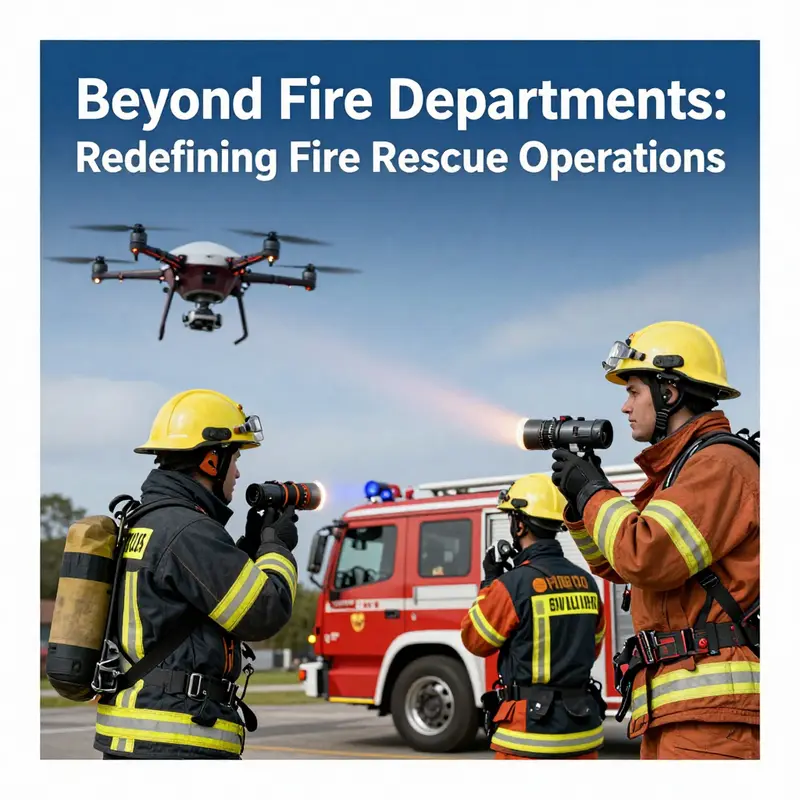
Technology is not merely a toolkit for firefighters; it acts as a boundary-breaker that reframes who leads the response to fire and rescue incidents. The central question—do fire rescue tasks have to be run by traditional fire departments?—receives a nuanced answer in today’s complex emergency landscape. Across nations and regions, authorities increasingly explore models where rescue operations are led by specialized units, coordinated through integrated systems that span multiple agencies. This shift is not about replacing the fire department as a capable responder; it is about recognizing that rescue, medical support, and disaster response frequently demand different leadership, workflows, and governance. The consequence is a more flexible map of accountability and capability, where technology, rather than institutional allegiance, increasingly shapes who directs a given operation.
Historically, fire departments have carried the mantle of rescue because they already possessed the core mix of training, equipment, and command authority suitable for emergencies. Yet as incidents grow more diverse—urban collapses, mountain rescues, hazardous material scenarios, or mass casualty events—the one-size-fits-all model strains. Some countries have developed dedicated rescue services that operate independently from fire departments, focusing on specialized skills and mature command structures. In others, emergency medical services exist as a separate public health function, stepping in to lead medical components of a response while coordinating with fire and police on the scene. In large-scale disasters, multi-agency coordination becomes the norm, weaving together police, military, civilian technical teams, NGOs, and community partners. These arrangements reflect a deliberate choice about governance and capability, not a rejection of fire-based expertise.
Technology acts as the great enabler in this broader tapestry. Real-time data analytics, advanced communication networks, drones, thermal imaging, and AI-powered predictive modeling all translate information into faster, safer decisions. When responders face smoke-filled rooms, shifting priorities, or collapsing infrastructure, these tools reduce the time between detection and action, while increasing the precision of each move. Real-time data streams—from weather and terrain to the location of personnel and critical assets—create a shared picture that different agencies can rally around, even if their leadership comes from separate roots. Drones survey inaccessible areas, delivering high-resolution imagery without exposing ground teams to danger. Thermal imaging helps locate trapped victims and identify hotspots, guiding prioritization and resource allocation. AI and predictive modeling can anticipate crowd movements, infrastructure failures, or wavefronts of risk, allowing incident commanders to preemptively shift teams and equipment before the crisis evolves.
Crucially, these technologies are not merely gadgets; they are instruments of interoperability. The essence of modern fire rescue leadership is less about who carries the badge and more about who can assemble, interpret, and act on trusted information under pressure. When interoperability is baked into system design—through standardized data formats, shared command protocols, and joint training—different organizations can assume command for portions of a response with confidence that their colleagues will understand the underlying assumptions and priorities. This kind of coordination is especially important when the incident type straddles multiple sectors. Urban search and rescue crews may lead in a collapsed structure scenario, while specialized medical or humanitarian teams coordinate triage and evacuation. The fire department’s role may pivot toward ensuring safety, maintaining critical infrastructure, and ensuring that communications remain clear and accurate as the situation evolves. The leadership, therefore, becomes a function of capability rather than a parity of authority.
In the United Kingdom and elsewhere, digital transformation initiatives have been touted as essential to achieving this level of integration. The emphasis on better use of technology and data aligns with recommendations from oversight bodies that stress comprehensive, intelligent systems rather than singular organizational control. The aim is to raise situational awareness, optimize decision-making, and minimize risk to both responders and the public. The Emergency Services Show, for example, highlights how emerging tools are being adopted in practice, illustrating the bridge between policy directives and on-the-ground improvements. This movement is not about dissolving the line between fire and other responders; it is about dissolving artificial barriers through technology, governance, and shared training that empower a range of capable leaders to guide the response where it fits best.
The question of leadership also touches on the relationship between fire services and emergency medical services. In some regions, EMS operates independently of fire departments, while in others, EMS is closely tied to fire-focused agencies. When independent EMS leads a medical component, the rescue operation can still benefit from the fire service’s expertise in high-risk environments, including rapid extrications and technical rescue. Conversely, when fire departments spearhead a combined response, they can integrate medical teams to deliver rapid life-saving care while maintaining unit cohesion and safety oversight. These arrangements underscore a central truth: the core competencies required for rescue—risk assessment, rapid deployment, and safeguarding life—are distributed across organizations. Technology helps knit these competencies into a single, coherent response,
one that respects regional governance, budgetary realities, and cultural expectations. A key virtue of this approach is resilience. When leadership is not tethered to a single agency, communities can adapt to staffing fluctuations, funding changes, or shifting risk profiles without sacrificing capability. For instance, an area prone to flooding may rely on multi-agency rapid-response teams that combine water rescue, medical care, and contingency planning under a shared digital platform. In mountain or remote terrain, civilian or specialized rescue units can assume leadership for access operations, while fire and medical teams handle stabilization and evacuation. The emphasis is on reliability and speed, which are increasingly bolstered by technology that reduces the friction of collaboration—shared maps, live video feeds, and interoperable radios that bridge diverse responders.
From a policy standpoint, the shift toward technology-enabled, multilateral leadership is not a rejection of expertise but a recognition of context. Not every incident benefits from a single lead agency. The governance question becomes: which organization is best placed to coordinate a given operation’s priorities, given the terrain, risk, and available resources? Technology provides the evidence base for that decision. It allows incident commanders to compare alternative courses of action, forecast outcomes under different configurations, and choose leaders who can implement the plan most effectively. When this is done well, the public experiences faster response times, fewer miscommunications, and greater protection for vulnerable populations—outcomes that rely on more than institutional pedigree.
To stay grounded in practice, it helps to think of the evolving landscape as a spectrum rather than a dichotomy. On one end, traditional fire departments retain command in routine, high-tempo operations where their full suite of rescue and safety capabilities is indispensable. On the other end, independent rescue services or EMS-focused agencies can lead specialized responses when their distinct strengths better align with the incident’s demands. In the middle, many operations unfold under a shared framework of governance and digital interoperability, with leadership that flexes to meet the scene’s needs. In all cases, the goal remains the same: to safeguard lives and property through swift, informed, and coordinated action. Technology makes that goal more accessible across different organizational roots, turning what used to be a rigid hierarchy into a flexible, resilient system capable of adapting to diverse emergencies.
This chapter, linked to the broader discussion of how fire rescue should be organized, treats technology as the central enabler of effective leadership across boundaries. It is not a manifesto for displacing traditional fire services but a recognition that the most capable response may require leaders who emerge from specialized rescue units, EMS, civil protection, or multi-agency collaborations. The mechanisms enabling this reality—shared data, interoperable communications, and advanced field tools—are the same tools that can knit a coalition of responders into a unified force. A practical takeaway is clear: communities should invest in interoperable systems, cross-training, and governance models that permit leadership to flow to the unit best positioned to solve the problem at hand. In doing so, they honor both the expertise accumulated within fire departments and the specialized strengths that other responders bring to bear when the situation demands it.
For readers seeking a deeper dive into the innovative pathways shaping this future, an exploration of how institutions preserve resilience through continuous learning and adaptation can be found in dedicated resources that trace the evolution of fire services’ digital transformation. See the innovation-focused discussions at the innovation museum of transforming fire services, which illuminate how creative leadership and technology converge to redefine capability on the ground. innovation-museum-transforming-fire-services
External resources also point to a broader ecosystem of knowledge sharing at industry showcases. These events gather practitioners, policymakers, and researchers to evaluate how new tools translate into real-world improvements in response times and safety outcomes. As the field continues to evolve, the central message remains stable: leadership in fire rescue is increasingly defined by the ability to integrate diverse skills and assets around a single, technologically supported objective—protecting people when time is of the essence.
External resource: https://www.emergencyservicesshow.co.uk
Beyond the Badge: Reimagining Fire Rescue Management Across Agencies
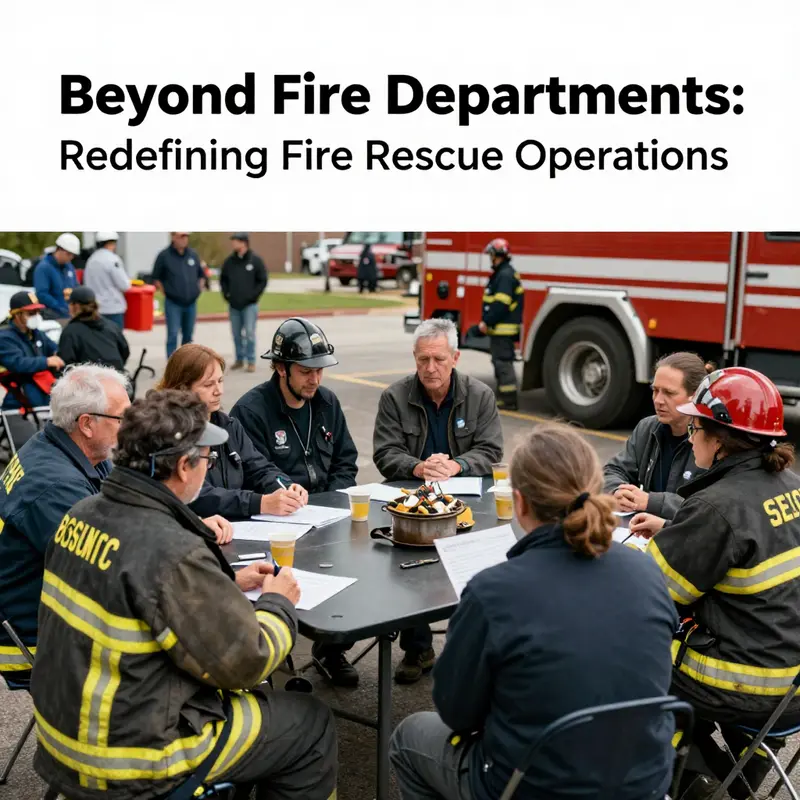
Fire rescue has long been framed as a function of the fire service, but the question in many communities now is not whether rescue exists, but who should be authorized and equipped to perform it when lives are on the line. In diverse governance landscapes, rescue work is conducted by a spectrum of actors, coordinated under an overarching public-safety framework. The essential point is not to catalogue agencies, but to understand how leadership, capability, and trust are built across organizational boundaries.
Public safety demands a map that aligns mission objectives with the realities of personnel, training, and resource deployment. Traditional fire departments bring a core set of capabilities: rapid response, scene management, fire suppression, basic medical aid, and a culture steeped in risk mitigation. Yet rescue tasks—particularly in complex environments such as collapsed structures, deep confined spaces, water rescues, or high-angle operations—often require specialized training, equipment, and decision-making that exceed conventional fire service practice. In many jurisdictions, dedicated rescue services exist precisely to fill this gap. Urban search and rescue teams, mountain or cave rescue units, and technical rescue specialists operate with distinctive governance, funding streams, and command structures. They may be housed within independent civil protection agencies, national disaster management ministries, or, in some systems, within police or health agencies. The net effect is a constellation of actors bound by common objectives: protect life, minimize danger to responders, and restore normalcy as quickly as possible.
This plurality is not a risk but a saying of resilience when managed well. In regions where emergency medical services (EMS) are their own function rather than a fire service responsibility, EMS responders bring different clinical cultures, triage protocols, and patient-care pathways. When a complex incident unfolds, multi-agency coordination becomes the rule rather than the exception. The challenge lies in integrating these varied capabilities into an actionable response plan that preserves safety, minimizes duplication, and leverages the strengths of each organization. The governance question—who should lead rescue operations in a given incident—depends on national, regional, and local frameworks, on explicit memoranda of understanding, and on the capacity to simulate and rehearse joint responses. The UK experience, among others, demonstrates that leadership can flex with the problem. The public expects a coherent, credible response, not a string of logos and separate radio channels. In many places, the lead role in rescue is taken by the most capable unit for the task, which might be a dedicated technical rescue service, a regional civil protection authority, or a combined interagency team. That flexibility is not a breakdown of accountability; it is an intelligence about where expertise lies and how best to deploy it when minutes count.
What matters most to communities is not the provenance of the rescuers but their performance in the crucial moments: speed, transparency, and clear communication. A landmark thread in recent community-centered research highlights that people want real-time information, accessible through multiple channels, and they want to see the rationale behind triage and prioritization decisions explained plainly. Social media updates, community briefings, and alert systems have become part of the frontline repertoire. The public also values the human dimension of rescue—the psychological support offered to survivors, to families of victims, and even to responders themselves. Fire personnel are increasingly expected to fulfill not only technical tasks but also the empathetic aspects of disaster response, recognizing that recovery is as much psychological as it is physical. This broader expectation tilts the political scales toward a more holistic view of public safety, where prevention, response, and recovery are seen as a continuum rather than isolated silos.
The practicality of rescue operations has been further reframed by a long-standing argument about safety principles in confined spaces and other hazardous environments. Communities anticipate a hierarchical approach to rescue: self-rescue first, non-entry rescue second, and only then entry rescue. In other words, agencies should maximize the likelihood that people can free themselves or be recovered without putting additional lives at risk. When entry rescue is unavoidable, teams rely on rigorous risk assessment, procedural discipline, and situational awareness that reflect a mature, professional culture. This framework is not merely procedural; it is a fundamental statement about professional legitimacy and community trust. It signals that responders take every precaution to minimize harm and that the public has confidence that the safest path has been chosen, even when urgency pulls in multiple directions.
From a governance perspective, the existence of multiple rescue actors is compatible with the aim of greater community preparedness. Rather than a binary choice between “fire department-only” or “some other agency-only,” modern emergency management emphasizes interagency coordination, shared drills, and joint training scenarios. These efforts build common language, interoperable communication protocols, and mutual aid arrangements that survive political changes and funding cycles. The public interest is served when community co-governance becomes more than a slogan; it becomes a practice where residents, local authorities, and responders co-create preparedness plans, test them in exercises, and revise them based on feedback from the people who will rely on them. This approach does not dilute accountability. It clarifies responsibilities through clear command structures, transparent evaluation criteria, and published performance data that reflect real-world outcomes rather than idealized expectations. The safer and more capable the system, the more resilient the community.
Yet the literature also cautions that the fragmentation of rescue responsibilities can pose risks if not carefully managed. Blooming networks of agencies can suffer from duplicated tasks, gaps in accountability, and inconsistent standards. The remedy lies in establishing adaptable, outcome-focused governance. It requires formal interoperability agreements, shared training programs, and centralized oversight capable of reconciling different legal authorities into a single, comprehensible mission. In this sense, the critical objective is not to harmonize every operation under one agency, but to ensure interoperable capabilities, reliable information flow, and dependable leadership when crises collide across sectors. The evidence from leadership and management perspectives in the UK underscores the centrality of transparent decision-making, community engagement, and an ongoing commitment to improving the integrity of the system. It is not enough to deploy the right kit and the right people; the public must perceive that those assets are used with integrity and accountability.
In this light, the idea that fire rescue must be run exclusively by traditional fire departments becomes less compelling. The broader question shifts to how communities guarantee fast, safe, and compassionate rescue—whether through a department, a dedicated rescue service, or a hybrid arrangement that leverages the strengths of multiple actors. The evolving vision recognizes fire departments as one indispensable node in a wider network of emergency responders. Their role can be leadership, coordination, and frontline rescue when aligned with specialized partners who contribute unique capabilities. The key is not the label on the door but the performance, the readiness to scale, and the openness to learn from neighboring systems. When communities demand open channels of communication and meaningful public involvement, the governance architecture should be designed to deliver those outcomes. That means drills that include non-governmental organizations, civil protection bodies, and volunteer groups; information platforms that share risk assessments, operational plans, and after-action learnings; and accountability mechanisms that keep the system honest.
Ultimately, policy designs should reflect lived experience: the best rescue systems mobilize capacity quickly while earning public trust through clarity and accountability. The forward-looking trajectory points toward an ecosystem of resilience where innovation, evidence-based practice, and inclusive governance converge. Innovations in governance and training—synergies illustrated by initiatives highlighted by the Innovation Museum transforming fire services illustrate how practice is being reimagined. This internal evolution of fire services, captured by contemporary discussions and case studies, emphasizes that resilience rests on the ability to adapt, to collaborate across professions, and to value community input as a core governance input. A robust chapter in this field argues that resilience is not simply about bigger trucks or more powerful pumps; it is about meaningful partnerships, shared responsibility, and transparent accountability. For communities seeking to prepare for uncertain futures, that is the most durable path: a rescue system that is capable, legible, and trusted because it integrates multiple capable actors under a coherent mission.
For readers who want to explore the broader scholarly conversation, a recent study in Safety Science highlights the leadership and management challenges of contemporary fire rescue services, with case studies from the UK that illuminate how community participation mechanisms shape outcomes. This resource emphasizes that the legitimacy of any rescue system rests on clear leadership, continuous learning, and genuine engagement with the people it serves. See the external reference for deeper insights into governance and community involvement in fire rescue. https://www.sciencedirect.com/science/article/pii/S136843702400123X
Final thoughts
Fire rescue operations play a vital role in community safety, and while fire departments have traditionally been at the forefront, a variety of models for management exist that can be equally effective. Understanding the unique contributions of different organizations, the influence of policy, the importance of technological advancements, and the perspectives of community members enriches the discourse on emergency management. A comprehensive approach to fire rescue not only highlights the necessity of collaboration among varied entities but also underscores the evolving nature of our response capabilities, ensuring that communities remain safe and well-protected.