
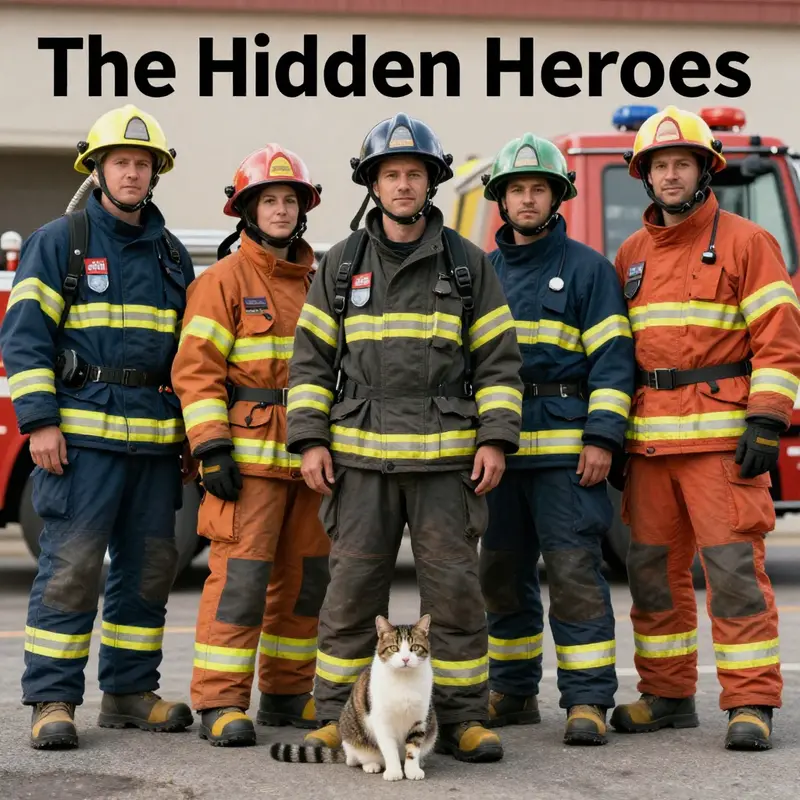
Cats often find themselves in precarious situations, whether stuck in trees, walls, or other confined spaces. Fire departments stand ready to rescue these beloved pets when they are in distress. This article delves into the multifaceted role firefighters play in cat rescues, examining techniques, economic implications, societal perceptions, and real-life case studies. Each chapter will provide a deeper understanding and appreciation for how these heroes in uniform respond to calls that, while perhaps unconventional, are crucial to the welfare of our communities’ furry companions.
Cracks, Climbs, and Courage: How Fire Departments Rescue Trapped Cats
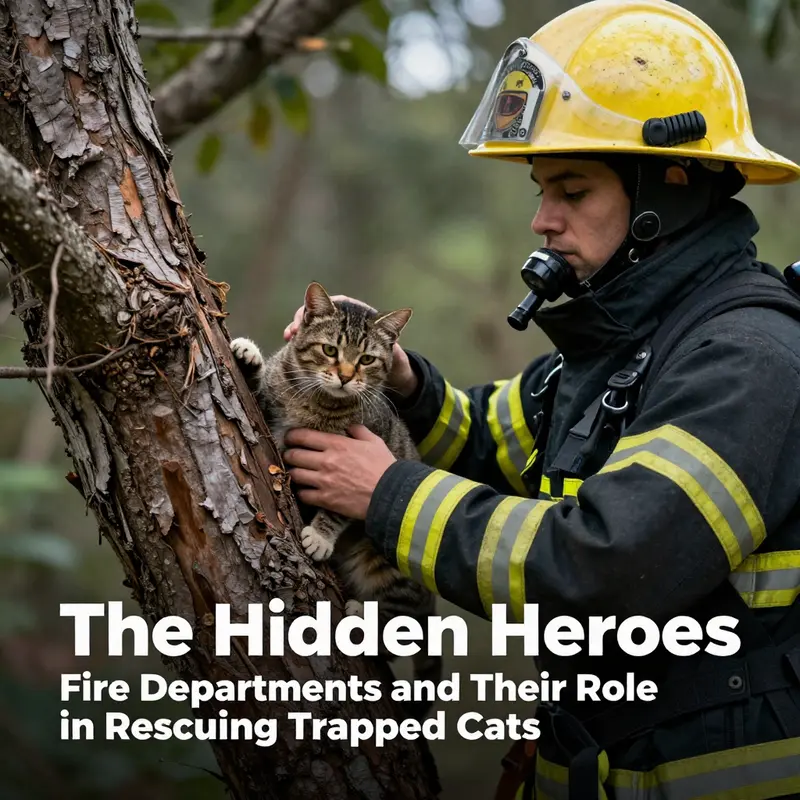
When people imagine a fire department in action, they often picture flames, sirens, and life-saving rescues from burning structures. Yet a quieter, equally important dimension of the job unfolds when flames are not the immediate threat and the danger is a trapped pet. Across cities and towns, fire departments frequently answer calls to rescue cats ensnared in tight spaces—inside walls, attics, chimneys, or even cluttered basements. These missions demand a blend of skill, patience, and restraint, because the safety of both the animal and the rescue team hinges on careful assessment and ongoing communication with worried owners. In these moments, firefighters demonstrate a broader devotion to community welfare, one that extends beyond extinguishing fires to preserving the lives of animals that share households, neighborhoods, and the daily rhythms of human life. The rescue of a cat, though it may seem small in scale, serves as a tangible reminder that the responsibilities of a modern fire service include safeguarding vulnerable beings and easing the distress that accompanies an animal’s perilous predicament.
Training in a fire department is not only about hoses and ladders. Within many departments, personnel receive instruction in urban search and rescue, technical rescue, and specialized animal rescue protocols. This repertoire matters because the situations are rarely routine. A cat stuck in a narrow wall cavity requires a different mindset than a person trapped in a collapsed doorway. Firefighters must quickly gauge whether access through a doorway or window is safer for the animal and for the crew, identify the most efficient means of access—whether by removing a grate, carefully lifting a panel, or lowering a rescuer into a confined space—and maintain calm, supportive communication with the frightened animal. The decision to deploy a downed team member into a sewer or to stage a careful extraction from a chimney is never taken lightly. It rests on a calculation that a delicate touch can prevent a frightened creature from injuring itself or escaping into a dangerous area, while a forceful move could precipitate harm to the animal or the rescuers.
A telling example from the field involves kittens discovered in a shallow sewer. The depth may have been modest, but it was an environment where escape routes disappear under pressure, and instinct alone could not pull them to safety. Firefighters arrived and, rather than forcing a rush, they organized the effort with discipline. They consulted with one another, mapped a plan, and, with the utmost care, one or two members were lowered to access the bottom. The storm grate was removed, a small but decisive step that opened a pathway to lifelines once hidden in darkness. When the grate yielded, the rescuers heard the unmistakable cries of tiny animals, and at that moment the team knew they were dealing with newborns that needed warmth as much as rescue. The operation was swift yet sluggish enough to ensure precision; once the kittens were retrieved, the crew kept them together to preserve body warmth and reduce stress. This simple act—keeping the kittens close in a shared, warm environment—speaks volumes about the philosophy underpinning many animal rescues: rescue is not merely extraction, but recovery in a form that respects an animal’s fragile physiology and needs.
After the immediate danger subsides, the mission shifts to processing and care. In many cases, rescued animals are handed over to humane societies or local shelters where veterinary checks can confirm their health, assess age, and determine readiness for adoption. The humane workers who receive these animals often provide warmth, food, and quiet spaces to help them reconnect with normalcy after a fear-inducing ordeal. The emotional arc of these rescues is as important as the physical elements. A frightened cat entering a bright, unfamiliar environment can undergo disorientation, and responders recognize the importance of minimizing that stress by preserving familiar cues whenever possible. Even the simple act of placing rescued kittens in a tight, shared group can help them regulate body temperature and reduce panic as they transition from a cold, echoing sewer to a human-centered world. These small, thoughtful steps reveal an ethos that sees animal welfare as inseparable from public service.
In parallel with hands-on rescue, the fire service increasingly embraces protective technologies that extend its reach beyond ventilation and containment into immediate medical support for animals. A notable development is the adoption of animal oxygen masks, designed to deliver life-sustaining oxygen in the critical minutes following exposure to smoke or after a stressful rescue. This innovation, championed by nonprofit groups that partner with fire services, marks a significant shift in how departments view post-rescue care. The narrative of these masks is compelling: they are designed in multiple sizes to accommodate cats, dogs, rabbits, and even small reptiles or rodents, acknowledging that the need for rapid, compassionate care is universal across many species. A pioneering example gained prominence when a cat rescued from a house fire in London became the first pet to receive a specially designed animal oxygen mask. The device, developed by the Smokey Paws initiative, is now being trialed on fire trucks across districts, with the hope of broader rollout if the trials prove successful. This development underscores a broader trend: the fire department is not only a responder to danger but a provider of life-saving medical care that can improve outcomes for animals who have endured smoke exposure or perilous situations. The BBC News coverage of this program highlights how innovative, cross-sector collaboration can expand the scope of public safety to include animal welfare as an essential component of emergency response.
Beyond the technical and medical dimensions, there is a human dimension that is often the most powerful in these stories. Owners frequently call in a moment of extreme distress, fearing for a beloved companion who is more than an animal at home—they are a family member who shares daily routines, comforts, and companionship. Firefighters, in recognizing this bond, approach rescues with a calm, patient demeanor and with careful explanations of what they are doing and why. The reassurance provided by trained crews can be as important as the physical act of removing the animal from danger. When a cat is hoisted out of a tight space or guided along a cat-friendly extraction path, voices among the crew may reassure the animal with soft, quiet commands, patting and gentle touches that help to mitigate shock. A rescue that ends with the animal coddled in a blanket or placed in a carrier lined with towels often becomes a story of not just survival, but return to a home environment where familiar scents and sounds can ease the transition back into ordinary life. It is a powerful reminder that public safety is a continuum: protection from fire, protection from smoke, and sometimes relief for the animal and owner in the wake of danger.
As these rescues have become more commonplace, the fire service has begun to weave them into a broader narrative of community welfare. The integration of animal rescue into routine operations—paired with the growing availability of specialized equipment like animal oxygen masks—signals an evolution in how departments conceive of their mission. It is a move toward holistic emergency response that acknowledges pets as integral members of households and communities. This evolution is visible in the way departments coordinate with humane societies, share best practices, and document outcomes to improve future responses. Each rescue adds to a growing body of knowledge about how to minimize stress, maximize safety, and ensure the swift return of animals to the arms of grateful families. In this sense, the rescue of a trapped cat becomes a microcosm of the larger transformation in emergency services, one that values compassionate care as much as procedural proficiency.
The thread connecting these incidents to innovation is not merely the existence of new tools, but the willingness to rethink what a fire department can be in times of crisis. The narrative of animal rescues is tightly interwoven with the concept of a modern, responsive public safety organization. It reflects a shift from a purely reactionary posture to a proactive, welfare-oriented approach. This is where the dialogue with innovation becomes meaningful. For instance, the idea that an oxygen mask could become a standard tool on every engine or ladder truck—so that an animal can receive immediate medical support upon extraction—emerges from a broader recognition that rapid, on-scene care can alter outcomes dramatically. Such innovations are more likely to take root when departments acknowledge the value of cross-sector collaboration and when they routinely analyze rescue scenarios with an eye toward improving the health and happiness of all who depend on public safety services. In this spirit, a chapter in the ongoing story of firefighting emphasizes not only how to reach a cat, but how to care for it, how to transport it gently, and how to partner with communities to keep animals safe in the long term. The conversation about animal rescue thus becomes inseparable from the conversation about the future of the fire service itself, a future in which every encounter with danger also carries the possibility of healing.
To anyone reading this chapter within the broader article, the rescue of trapped cats reveals a practical truth: the fire department’s role in safeguarding lives extends into the quiet, intimate spaces where fear and vulnerability reside. It reminds us that courage in a uniform is not only about tackling flames, but about handling a frightened animal with care, about stabilizing a medical crisis when a device like an animal oxygen mask is available, and about partnering with social institutions to ensure a humane, compassionate end to a frightening episode. In doing so, firefighters demonstrate that public service is a continuum of protection—covering people, pets, and the shared spaces in which everyday life unfolds. The lessons drawn from these rescues carry forward, shaping training, influencing equipment choices, and guiding the ways communities perceive emergency responders as guardians of safety, not just fixers of disasters. They also encourage a broader appreciation for how innovation—whether through new tools, new protocols, or new collaborations—can elevate the ordinary work of responding to calls into something timelessly humane. For readers who want to explore how these shifts in fire service practice are being documented and discussed, one can look to the growing conversation around transformation in fire services, including resources like Innovation Museum: Transforming Fire Services, which encapsulate the direction many departments are heading as they adapt to complex, multi-faceted emergencies. Innovation Museum: Transforming Fire Services.
External resource: https://www.bbc.com/news/uk-england-london-62145893
Claws, Courage, and Calm: The Quiet Mastery of Fire Department Cat Rescues
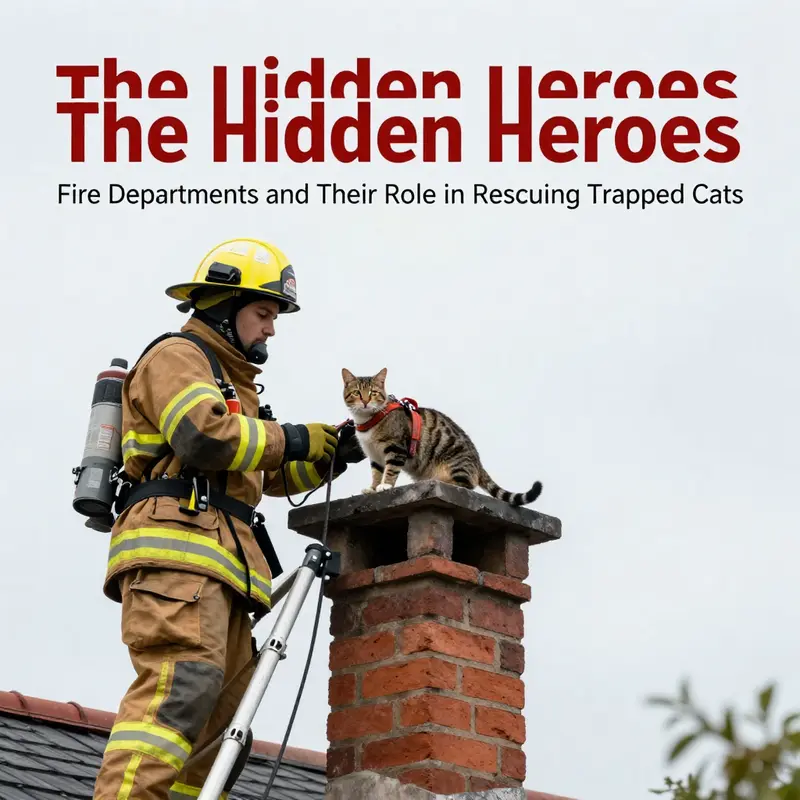
When the sirens fade and the smoke clears, another kind of drama often unfolds in city streets and quiet neighborhoods alike: a trapped cat, a perilously tight space, and a team trained to translate fear into safety. The topic is not merely about rescuing an animal; it is about how fire departments extend their protective reach beyond flames and flames-first priorities to safeguard vulnerable creatures whom urban life sometimes imprisons. Cats, with their reputation for independence and stubborn self-reliance, can find themselves cornered in places humans rarely contemplate—inside walls, behind ceilings, perched on narrow ledges, or wedged within the narrow gaps of a chimney. The rescue, then, becomes a test of patience, precision, and compassion. It asks what a modern fire service truly means when the danger is not visible as a blaze but hidden in the geometry of a building and the frailty of a frightened animal. In this sense, cat rescues illuminate a broader facet of public safety: the willingness to meet risk with restraint, to apply science with empathy, and to acknowledge that life in all its forms deserves a chance at recovery and return to a loving home.
Firefighters bring to these calls a synthesis of skills developed across the spectrum of urban rescue work. They are not merely climbers who scale balcony rails or heft heavy gear; they are problem solvers who read environments like open cases in a medical chart. The typical scene begins with a call that a cat is stuck somewhere that feels static to the lay observer—yet for the team it is a dynamic puzzle. The cat may be on a fifth-floor balcony, peering from behind drywall in a century-old wall, or wedged into a crawl space where every movement could escalate danger for the animal or the rescuers. The goal is not to force or improvise but to create a path of least resistance that respects the animal’s wellbeing while protecting the rescuers. The process blends careful planning with rapid adaptation. It is a choreography shaped by training, experience, and the idiosyncrasies of the location. Each rescue becomes, in its own way, a quiet testament to the idea that public safety extends to guardianship of domestic life—an ethos that resonates with communities watching the scene unfold and quietly hoping for a gentle outcome.
At the heart of many successful cat rescues lies a suite of practical techniques designed to reach the animal without escalating stress. Extending ladders and rescue harnesses are among the most visible tools. When a cat clings to a balcony railing or a windowsill on a higher floor, a ladder truck—if available—offers a stable avenue for a careful ascent and descent. The veteran firefighter learns to treat every inch gained as a potential turning point for the cat’s safety. The rescue harness, paired with secure rigging, allows the animal to be supported in a way that feels less like capture and more like a guided return to ground, where a soft touch and familiar voice can ease fear after a perilous ascent. The visual language of the operation is instructive; it shows a balance between strength and restraint, power and gentleness. This balance matters not only for the cat in question but for the crew who carry the responsibility of preventing harm to themselves while minimizing the risk to the animal.
Beyond the visible hardware, technology teaches us another crucial lesson about animal rescue: you can often locate a cat in the most unwelcoming spaces by seeing what the eye cannot. Thermal imaging cameras have become standard in many departments for precisely this reason. In dark attics, behind walls, or inside tight recesses, heat patterns reveal where a frightened animal might be resting, moving, or attempting to hide. The image becomes a map, guiding teams to a safe approach and reducing the guesswork that can lead to unsettling or disruptive operations. The cat’s temperature is not the goal, but its location is, and the thermal signature helps teams plan a route that keeps the animal calm as movements begin. When a cat looks down from a ledge or into a narrow void, the operator’s goal is to translate heat into humane action, to bring the animal to safety without chase, panic, or trauma. The value of this approach extends beyond a single rescue; it reshapes how crews think about access in tightly constrained spaces and reinforces the principle that modern fire services are increasingly guided by evidence and observation, not just force.
The chain of care does not end with the animal’s extraction. When a cat has been frightened or slightly injured in the process, basic first aid becomes a bridge to veterinary care. Gentle immobilization, warmth, and careful handling are applied in the field to preserve mobility and prevent further injury before the animal is transported. The aim is to stabilize rather than to treat in the moment, recognizing that professional veterinary intervention is essential for a full recovery. In many cases, cats rebound quickly once they are safely with their owners or placed in a controlled environment with familiar scents and comforting words. The compassionate touch that accompanies the clinical steps matters as much as the technique itself. It is a reminder that the rescue is not an isolated event but a link in a longer chain of welfare that starts with the decision to call for help and ends with the cat’s safe return to the home and the family that loves it.
When spaces are exceptionally tight or when danger from a larger incident—such as a fire or structural compromise—limits traditional entry, ventilation tools and breaching equipment offer pathways that keep the cat out of harm’s way. Ventilation fans, carefully positioned to control air currents, can help clear smoke or heat while providing a breathable corridor for an animal that may be disoriented. In other scenarios, controlled breaching operations create new openings without unnecessary destruction of property or risk to the animal. The principle here is careful curation of access: the team engineers a corridor that respects the building’s integrity and the animal’s safety. This deliberate approach often requires a calm, methodical pace, a willingness to step back and reassess, and a readiness to adjust plans in response to new information that emerges as the rescue unfolds.
Even when the terrain is unfriendly to the human body, modern rescues have harnessed the potential of unmanned tools to reduce exposure to danger. Drones equipped with thermal sensors provide a bird’s-eye view and a heat map of the environment before a crew descends into the scene. The drone is not a substitute for the hands-on work that follows, but it broadens the information available to the team at the outset. A drone can clarify whether the cat is behind a wall, behind a door, or on the far side of a blocked corridor. This aerial reconnaissance helps crews chart a path of least resistance and minimizes unnecessary disruption to the living space. The adoption of drone-assisted strategies speaks to a broader trend in firefighting: the integration of technology not to replace human judgment but to expand it, to give responders more tools to protect life when every second counts.
Even the most technically rigorous operation is guided by the soft powers of reassurance. Firefighters understand that a panicked animal can escalate risk for everyone involved. Soft, padded carriers, gentle voices, and a steady, unhurried presence are often as important as the ladders and cameras. The science of rescue and the art of calm go hand in hand here. In many cases, the cat’s welfare hinges on the ability of the team to convey safety through demeanor as much as through equipment. This humane dimension is not an afterthought; it is woven into training and practice. It informs the way teams approach a rescue, how they handle the animal at the moment of retrieval, and how they coordinate with veterinary professionals once the cat is out of danger. The goal is not to demonstrate prowess but to demonstrate care, a distinction that resonates with the public and builds trust in the broader mission of the fire service.
The narrative of modern cat rescues also reflects a culture of continual improvement. Fire departments collect lessons from each operation, sharing insights into what worked and what did not. Innovations—from improved harness designs to more precise thermal imaging overlays—further refine the craft. This iterative learning process is part of a living system, a network of departments that push each other to lift the standard of care while remaining mindful of each animal’s unique personality and fear threshold. A recent, widely shared example from early 2026 highlighted a gentleness and skill that turned a potentially tense fifth-floor balcony scenario into a story of cradle and safety. Observers noted the firefighter’s careful cradling of the cat during the descent, a moment captured in public memory that underscored the humanity embedded in the job. Source: BBC News – Firefighter rescues cat from fifth-floor balcony in emotional video. https://www.bbc.com/news/uk-england-london-68312456
This evolving toolkit—the ladders, the harnesses, the thermal vision, the drones, the careful handling—exists within a wider conversation about how fire services adapt to urban complexity. Innovations at the intersection of safety engineering and animal welfare frame a future in which rescuers can operate with even greater precision while maintaining compassion at the core of every response. The idea that a fire department’s remit includes the welfare of pets expands the public imagination about what protection looks like in a modern city. It is not merely about extinguishing flames or performing a dangerous lift; it is about safeguarding life in all its forms and about building a relationship with the communities they serve that recognizes vulnerability and resilience in equal measure. In this sense, the cat rescue becomes a model for how public institutions can respond to distress with tact, knowledge, and empathy—qualities that, together, elevate the practice of rescue from a set of techniques to a shared social value.
The internal thread running through these rescues is a blend of readiness and responsiveness. Teams prepare through ongoing training, drills, and simulations that emphasize steadiness under pressure. They respond with a repertoire of approaches that can be tailored to the site and the cat’s temperament. They communicate clearly with observers, owners, and fellow responders, ensuring that the operation remains transparent and accountable. And they do not forget the human dimension—the relief of a pet owner, the gratitude of a neighbor, the quiet admiration of bystanders who witness a difficult moment transformed into a hopeful outcome. This is not an isolated victory; it is a reflection of how public safety has broadened its frontiers, embracing the welfare of animals as part of its duty to preserve life, reduce harm, and comfort fear in a tangible, immediate way.
As readers consider the question, “Does the fire department rescue trapped cats?” the answer becomes more nuanced than a simple yes or no. In many communities, these rescues embody a philosophy of care that mirrors the broader mission of public safety. The cat in distress is a symbol of the vulnerable in urban life, and the firefighter’s response is a pledge to protect that vulnerability with skill, patience, and heart. The techniques described—extending ladders, harnesses, thermal imaging, ventilation, drones, and compassionate handling—form a cohesive practice that blends science with sentiment. They remind us that emergency services operate not just in crisis but in daily acts of guardianship that reinforce the social contract between residents and responders. This chapter has traced the threads of that practice, from the first call to the soft, reassuring moment when the cat is cradled and carried to safety. It is a narrative of balance—between force and gentleness, between speed and deliberation, between the concrete world of bricks and the unseen vulnerability of a frightened animal—and, at its core, a testament to the quiet courage of those who answer the call when life—of all kinds—hangs in the balance.
Internal link reference: innovation-museum-transforming-fire-services
External reference for readers: https://www.bbc.com/news/uk-england-london-68312456
null
null
Brave, Compassionate Rescues: How Fire Departments Save Trapped Cats and Shape Community Trust
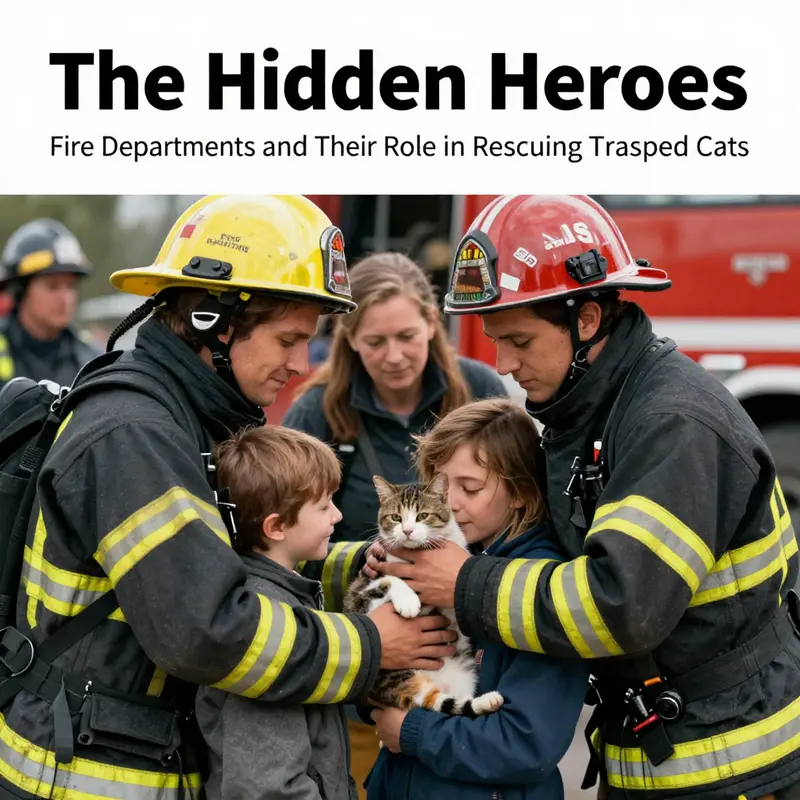
When a cat is wedged into a narrow void, teetering on a ledge, or hidden inside a wall, the alarm that travels from home to hallways and fire stations is rarely about property or noise. It is about a living creature in peril, and the response is a carefully coordinated blend of training, equipment, and restraint that speaks to a broader ethic of service. Fire departments, by design, are built to handle the most demanding, physically risky tasks in the shortest possible time. They train for urban search and rescue, technical rope operations, high-anglework, confined-space procedures, and swift animal rescues. In many jurisdictions, these officers and technicians adapt the same discipline that saves lives in fire and flood to the more delicate work of retrieving a frightened animal from a tight space. The technical language of rescue—stability, entrapment assessment, controlled extraction—becomes, in the cat’s case, a language of gentle handling, calm voices, and minimal force. It is an odd but powerful fusion: the same person who might face roaring flames and collapsing structures is also the person who cradles a trembling creature with the steadiness of a surgical nurse, ensuring no further harm comes to the animal or to the rescuers themselves. The stories of these rescues often circulate not just in local news, but on social media, where a single image of a firefighter gently lifting a cat from a wall or a window frame resonates with millions of viewers who may never meet the rescuer in person. The public’s empathy is reinforced by the visible care and patience that accompany the extraction, from picking the safest trajectory to the careful securing of the animal once it has been freed. In some dramatic cases—such as a cat saved from a fifth-floor window during a difficult urban operation—the moment of release is captured in a few seconds of video that becomes a calm, almost ceremonial tableau. The animal is cradled, checked for injuries, given space to settle, and, when possible, returned to an owner or handed to a shelter or adopter who will steward its recovery. These episodes are not just cute or heartwarming vignettes; they are examples of professional duty, where expertise, caution, and compassion intersect to produce outcomes that are widely celebrated. The practical reality, however, is more nuanced. Firefighters rarely engage in animal rescues as a separate mission; they are often responding to calls that come with a sense of urgency and potential risk. A cat stuck in a chimney or trapped behind a wall is not a mere curiosity; the animal may be frightened, dehydrated, or injured, and its pace of rescue must align with a safety plan that protects both the animal and the team. The tools used in these operations vary, but the guiding principle remains constant: minimize harm. This approach demands careful deliberation about the animal’s welfare, including how to approach the situation without increasing stress or triggering a panic response. The rescue is staged, not spontaneous. The firefighter who finally slides the last centimeter of space between paw and freedom is often the one who has spent minutes evaluating doors, routes, and possible entanglements. The process embodies a philosophy of restraint: action is necessary, but force is saved for necessity alone. The broader culture of rescue in fire departments contributes to a public image that goes beyond heroism in the heat of a crisis. It helps people see responders as guardians of life in many forms, not solely human life. This perception matters because it builds trust between communities and emergency services. When a firefighter is seen choosing to rescue a frightened cat, it communicates a consistent message: public safety is not just about outcomes in emergencies but about the character of those who carry out the duties. Public sentiment of these rescues tends to be overwhelmingly positive, often feeding a cycle of goodwill that strengthens civic engagement. People who see these acts—whether in a neighborhood social feed or a televised report—are reminded that the services they fund and support exist to care for the vulnerable, human and non-human alike. In practical terms, this can translate into increased volunteering at animal shelters, donations to local welfare groups, and heightened community involvement in safety education. The animal rescue narrative thus becomes a bridge to broader conversations about compassion, animal welfare, and responsible pet ownership. Yet, even as admiration grows, debates surface about resource allocation. Critics warn that during periods of severe weather, wildfires, or large-scale disasters, every minute and every tool must serve the most urgent needs first. They argue that cat rescues can strain teams that are already stretched by other critical operations, and they insist on clear protocols that ensure animal calls do not delay life-saving responses for people. The tension is real and necessary. Fire departments that publicly affirm their dedication to animal welfare often respond with transparent policies that place animal rescues within a framework of triage principles. They explain how dispatch prioritization works, how responders decide whether to attempt extraction, and how they coordinate with animal welfare organizations to minimize duplication of effort. This transparency helps to balance compassion with accountability, showing that rescuers are mindful stewards of limited resources. The societal impact of these rescues extends far beyond the moment of release. Rescued animals sometimes become ambassadors for animal welfare in their own right. A cat that has endured a perilous encounter, when it recovers and becomes comfortable in community settings, can symbolize resilience and the possibility of second chances. In some communities, such stories spark local campaigns that encourage adoption, address stray populations, and support shelter programs. The narratives also encourage volunteering and foster care for animals, creating a ripple effect that strengthens the social fabric surrounding animal welfare. When communities view firefighters as guardians of all life, not just human life, a broader cultural shift can take place. Citizens become more engaged in safety planning, more supportive of public safety budgets, and more attentive to the needs of vulnerable residents who require assistance during emergencies. This shift is not about sentimentality alone; it is about recognizing a shared stake in communal welfare, where the well-being of animals and people is interwoven. The ethical dimension of these rescues also comes into view. Animal welfare standards guide the conduct of every rescue operation. Fire departments work with veterinarians and animal-control officers to ensure that methods minimize distress and maximize the chance for a safe, calm recovery. The focus on humane treatment—no rough handling, no unnecessary exposure to danger, the use of gentle containment when needed—illustrates a care ethic that resonates across many public service professions. In this light, the rescue of a trapped cat becomes more than a single event; it is a reflection of how communities value kindness in action. It invites society to consider what kind of public safety system it wants: one that is efficient and brave, but also empathetic and accessible to all living beings that share the streets. The resonance of such acts bridges cultural divides, offering a narrative that many can support, regardless of geography or politics. It is this shared narrative that can inspire trust in institutions and motivate citizens to participate in safety and welfare initiatives. For communities looking to deepen this engagement, a useful focal point is the way these rescues are framed—emphasizing the humane aspects, the skill, and the measured risk management that accompany every extraction. It is possible to acknowledge the admiration for courage while also highlighting the procedural safeguards that keep teams and animals safe. In that sense, the cat rescue story becomes a case study in how public services can embody both strength and tenderness, two traits that do not cancel each other out but instead reinforce one another. The same principle underpins the relationship between emergency services and the communities they serve. When people see responders respond with calm, competence, and care to an animal in distress, they are more likely to trust the professionals when the situation involves people—such as a family trapped by a downed power line or a child caught in a dangerous accident. The public’s perception of these rescues thus becomes a measure of a city’s vitality and humanity. In sum, fire department cat rescues illuminate a practical and ethical intersection between life-saving work and compassionate care. They illustrate how professional duty can align with everyday kindness, creating a public narrative that strengthens social bonds, supports animal welfare, and fosters ongoing trust in public safety institutions. They remind us that courage in this field is not only about facing danger but also about choosing the gentler, slower, and more deliberate path when the moment demands it. The symbolism is powerful because it speaks to a universal desire: to be protected by guards who respect life in all its forms and to see those guards as neighbors who will extend a hand to a frightened creature as readily as to a frightened person. The Green Firehouse, a concept that emphasizes sustainable, community-centered spaces for health and resilience, captures this ethos in a tangible way and helps anchor the idea that rescue work is part of a broader social project. The human story behind each cat rescue, with the quiet aftercare and the relieved sighs, continues to reinforce the notion that public safety is a shared responsibility—one that relies on skilled professionals, informed citizens, and a collective willingness to care for the most vulnerable among us. For readers seeking additional context on public sentiment and cross-cultural responses to firefighter animal rescues, the BBC article on a similar incident in China offers an external perspective that complements the local and national narratives described above. External reference: https://www.bbc.com/news/world-asia-china-39548712
Guardians in Smoke: Real-World Fire Department Cat Rescues and What They Reveal About Public Service
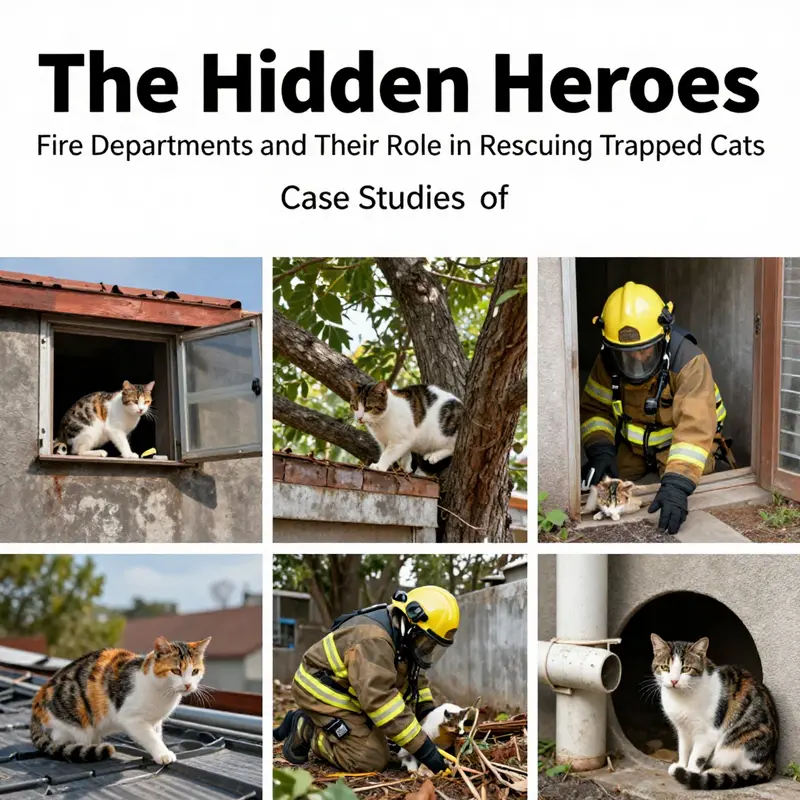
When people ask whether a fire department rescues trapped cats, the answer is often “yes,” but the full story isn’t always told in the headlines. Fire departments exist to protect life and safety, and that mission extends beyond human beings to the vulnerable creatures that share our homes and streets. The rescue of a cat from a chimney, a wall crack, a freezer, or an underground conduit might seem like a small event, yet it reveals a disciplined approach to risk, a compassion that travels beyond the call, and a community’s trust in its responders. In many cities and towns, the same crew that fights fires and saves people also works with animal welfare groups, shelters, and neighborhood residents to ensure that a frightened animal can be returned to a safe home or a secure setting where its future can be considered with care. The narratives behind these rescues, while diverse in their terrain and technique, share a common thread: trained responders prioritize safety, minimize harm, and honor the value of life, whether furred, feathered, or scales none of us would choose to see endangered.
A string of documented rescues across continents illustrates how this principle plays out in practice. In October 2023, the New York City Fire Department faced a smoky, confounding problem: a small cat lost atop a chimney nearly 15 feet above the living room. The walls of the flue were slick, the space constricted, and the risk of a collapse or a fall loomed large. Yet the firefighters did not abandon the animal to an uncertain fate. With careful use of climbing gear, lighting, and steady communication with the cat’s nervous instincts, they guided the creature toward safety from the top of the stack. The cat emerged unharmed, and neighbors watched as the animal, initially a stray voice in the night, found a calmer ending through a familiar turn—the neighbor who would become its adopter. The case underscored a broader truth: rescue work for animals is not a separate department’s affair; it is a shared value embedded in modern emergency response.
Across the Atlantic, a 2024 incident in London added a different texture to the same theme. A cat wedged within the narrow brick gaps of an older building faced a precarious wait as daylight dwindled and the risk of a fall increased for both the animal and the rescuers. Firefighters there employed light, careful cutting tools, and a rope system to extract the cat without disturbing the structure. A deliberate net technique ensured the animal was handled gently at the moment of release. The outcome was more than a successful extraction; it was a community reassurance that even in the most stubborn and stubbornly hidden spots, animal life deserves deliberate attention. The photograph‑worthy moment of a tiny creature peering into the camera after the rescue carried a message many communities internalize: the public trust in fire services includes a shared sense of responsibility for all living beings within reach of danger.
In North America, practical improvisation meets domestic intimacy. In January 2024, Vancouver firefighters faced a challenge that could easily become a crisis of patience: a kitten hiding behind the shelving in a home freezer. The team used a thermal imaging device to locate the cat’s exact position and a small pry tool to open just enough space to retrieve the frightened animal without damaging the appliance. The kitten, chilled but otherwise unscathed, received a brief veterinary check before reuniting with its relieved owner. This rescue illustrates a different dimension of the same core skill set—preplanning, noninvasive access, and rapid assessment of the animal’s welfare. The emphasis is not on heroics but on precise, technically adept care that preserves life while keeping human property intact.
Meanwhile, in Sydney, a wildlife-focused mission emerged from a much more challenging environment: an eight‑meter-deep, abandoned storm conduit that housed a stray cat seeking shelter from the elements. Rescue workers donned protective gear, brought portable ventilation, and navigated a dark, narrow bore with flashlight beams cutting through the damp air. The cat emerged through a narrow exit opening, trembling but alive, and was handed over to a wildlife center for examination and eventual placement. The decision to pursue an underground rescue is a reminder that every environment—from a cozy attic to a labyrinthine pipe system—presents its own hazards and demands the same disciplined approach to safety and animal welfare.
Taken together, these cases sketch a map of what it means for a fire department to treat animal rescue as a routine extension of public service. The responders’ primary responsibility remains the safety of people and responders, but the humane consideration of animal welfare often follows. Every successful rescue rests on a blend of skill, patience, and a willingness to adapt. It requires trainers who can teach rope-work and venting techniques, medics who understand animal stress responses, and dispatch centers that recognize animal-related calls as legitimate emergencies with appropriate prioritization. In many departments, these calls are routed with the same seriousness as medical or structural ones, signaling how closely communities now tie animal welfare to human safety in a shared emergency management framework.
This shift—from treating animal rescues as special add-ons to treating them as integral components of emergency response—reflects evolving social expectations. When a community treats a pet’s welfare with the same gravity as a neighbor’s safety, it creates a more cohesive network of support. Animal shelters, local volunteers, and veterinary networks become natural partners in the chain of care. Firefighters, for their part, gain a broader, more human-facing identity: not only the guardians who respond to flames, but also the guardians who respond to fear, isolation, or confusion—whether a frightened cat trapped behind a wall or a family overwhelmed by a sudden crisis. The public exposure to these incidents, via news reports and official updates, reinforces a sense of shared responsibility and fosters an appreciation for the careful, measured approach that modern rescue work demands.
Within this broader context, consider the ethical calculus that accompanies every rescue. Firefighters must assess risk to themselves and to the animal, and that calculation can tilt toward the higher side of caution when the situation involves delicate spaces, sharp edges, or confined air. Yet their decision to enter a difficult environment often mirrors a community’s own values about the right to life and the obligation to minimize suffering. The outcomes vary, of course. Some rescues lead to immediate adoption or transfer to a local shelter, others to reunifications with grateful owners, and a few to longer-term care by wildlife or animal-rescue organizations. In every scenario, the essential thread remains: a professional response designed to preserve life and reduce harm, anchored in training, teamwork, and a deep respect for living beings large and small.
The stories also illuminate the practical realities of fieldwork. The repertoire of techniques—rope systems, mechanical advantages, careful use of lighting, noninvasive extraction—does not translate to showmanship. It translates to safety logs, standard operating procedures, and ongoing practice that keeps animals and humans out of unnecessary danger. A rescue from a chimney may demand a different configuration than a rescue from a wall crack or a freezer, but the underlying discipline is the same: image-breaking, not for drama, but for decisive action that preserves life with minimal intrusion. In this way, the animal rescue component becomes a litmus test for a department’s capacity to adapt to evolving urban landscapes where pets live in more complex, higher-risk environments than ever before.
The cultural impact of these rescues should not be underestimated. When communities observe a firefighter calmly retrieving a frightened cat from a perilous space, they are watching a dialogue between public service and everyday life. The rescue becomes a teaching moment about personal safety, animal welfare, and the importance of seeking professional help. It also highlights the collaborative potential between emergency services and animal welfare groups. In many places, a successful cat rescue is followed by a brief handoff to a shelter that can facilitate veterinary care and eventual adoption, creating a humane loop that strengthens the social fabric and expands the public’s trust in responders who show up in moments of fear.
For readers who seek a concrete takeaway from these narratives, the thread is clear: does a fire department rescue trapped cats? The answer depends on the setting, the risk calculus, and the available tools, but the core commitment remains steadfast. Across the examples—the chimney, the wall, the freezer, the conduit—the same principle holds: intelligent rescue is possible when responders approach the situation with caution, respect for life, and a well-rehearsed set of skills. This principle does not hinge on glamour or spectacle; it rests on a professional demeanor, methodical decision-making, and a community-centered ethos that keeps animals—and people—safe. In a broader sense, these rescues reveal more than the outcomes of individual incidents. They reveal how a city or town frames its priorities, how it trains its personnel, and how it envisions the role of emergency services as a steady hand in the shared life of a community.
As the chapter moves forward, the theme threads through to larger questions about the scope of public service. If fire departments are increasingly expected to respond to nontraditional emergencies—structural risks, hazardous spaces, and animal welfare alike—what does that mean for training, resource allocation, and interagency coordination? How can communities sustain these capabilities without compromising safety, efficiency, or the well-being of the responders themselves? The answers lie not in a single policy shift but in a continuous, integrated effort—one that treats every rescued cat as a reminder of the duty to protect life wherever it is found. In this light, the stories from New York, London, Vancouver, and Sydney become more than anecdotes. They become a blueprint for a more compassionate, capable, and connected emergency landscape.
For readers who want to explore related dimensions of community resilience and humane space within public services, the concept behind the thematic thread at the Green Firehouse offers a pertinent perspective. the-green-firehouse-creating-sustainable-spaces-for-community-and-health provides a thoughtful look at how safety infrastructures can be designed to support health, well-being, and a culture of care that extends beyond the immediate fire response. While the specifics differ, the underlying ethos—protecting life, sustaining community trust, and fostering cooperation—resonates across all the examples of animal rescue and human safety alike.
External reference: For a published, official account of a cat rescue from a wall, see the London Fire Brigade’s report on the 2024 incident, which details the planning, equipment, and procedure used to extract the cat safely from a wall works site. https://www.london-fire.gov.uk/news/2024/06/rescue-of-cat-trapped-in-wall-works-out-well/
Final thoughts
The commitment of fire departments to rescue trapped cats not only highlights their dedication to animal welfare but also strengthens community bonds. As we’ve explored, the techniques employed, economic implications, and perception of these rescues affirm an essential service that extends beyond human lives to include our beloved pets. Recognizing the value of such efforts fosters greater appreciation for our firefighters and encourages active participation in supporting these critical interventions within our communities.