
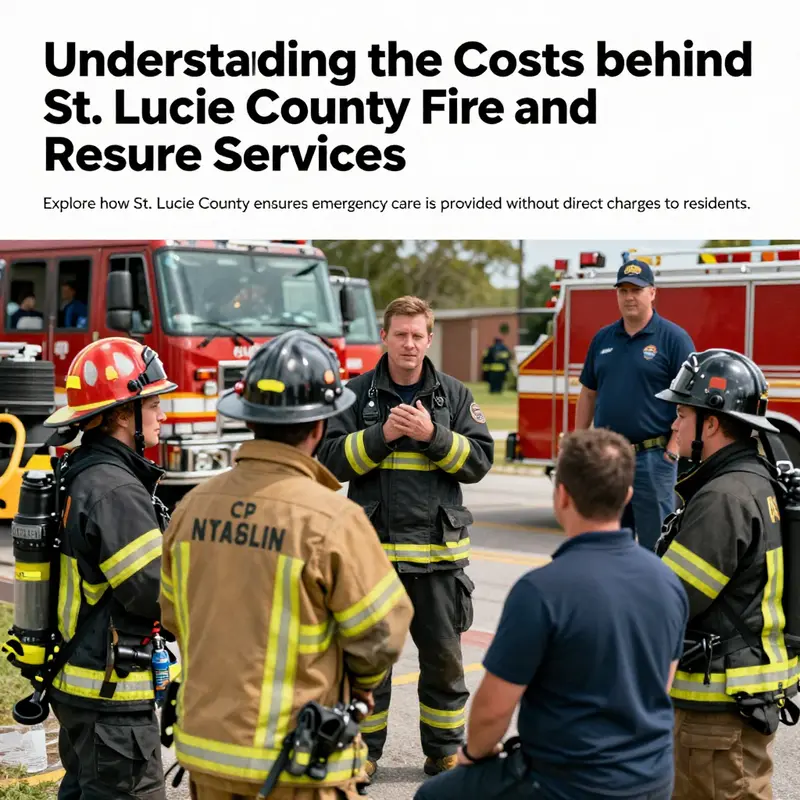
As a critical lifeline during emergencies, St. Lucie County Fire and Rescue provides essential services to the community. Many residents may wonder if they will face charges when seeking help during emergencies, and what, if any, fees might be incurred for non-emergency services. This article delves into the various facets of charges associated with St. Lucie County Fire and Rescue, providing key insights for community residents, emergency personnel, and educators. Each chapter will illuminate different aspects of the service: emergency response costs, charges for non-emergency transport, ambulance services, and how these essential services are funded without burdening residents directly.
Public Safety Without Direct Fees: How St. Lucie County Fire and Rescue Funds Emergency Response and When Costs May Apply
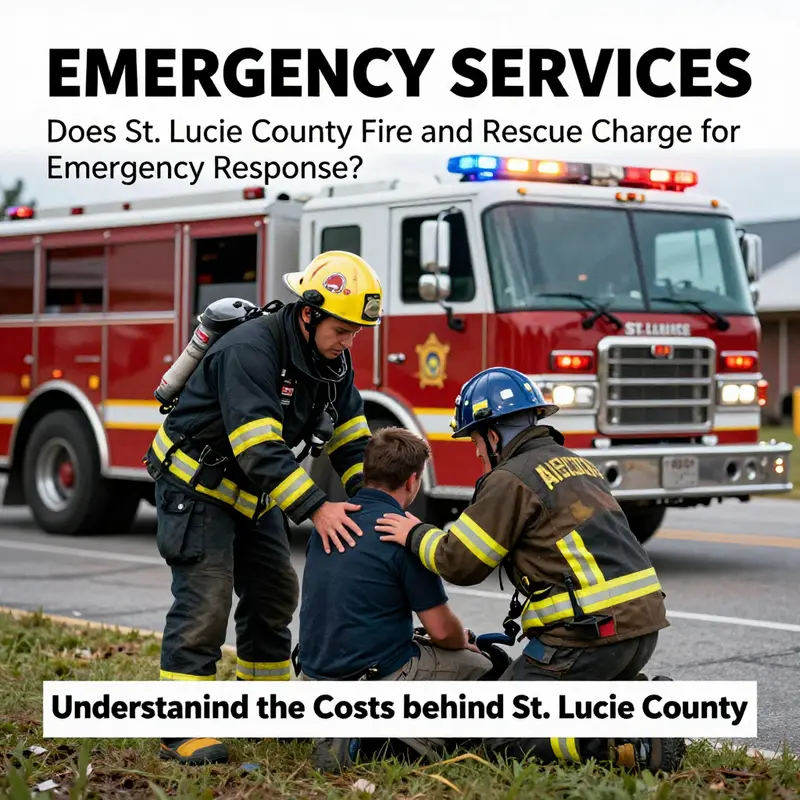
In St. Lucie County, the emergency response you receive from Fire and Rescue is provided at no direct cost at the moment of the call. This funding is supported by local taxes, general fund allocations, and other public budgets, ensuring that lifesaving actions occur without delay or payment conversations at the scene.
However, the initial on-scene care and transport decisions are handled within a broader public-private funding framework. If ambulance transport to a hospital or care facility is required, the transport itself may be billed by the ambulance provider, under contract with the county or with private vendors. The charges, if any, are typically addressed to the patient, their insurer, or a combination, rather than to the fire department or the county’s emergency response program.
A key distinction is maintained between emergency response and subsequent services. Non-emergency transfers, specialized rescues, or interfacility movements can be billed under different policies, sometimes resulting in charges that are not part of the immediate emergency response. Insurance coverage often reduces or covers these costs, but coverage varies by plan and circumstance.
For residents seeking to understand potential costs, official county resources offer guidance on what is covered and what may incur charges. It is prudent to review current billing policies, speak with providers, and keep records of services received. The overarching message remains: the county prioritizes rapid, on-scene lifesaving care and public safety, while transport and post-emergency services follow separate financial pathways.
Charging Realities: Understanding Non-Emergency Transport Fees and Emergency-Care Funding in St. Lucie County
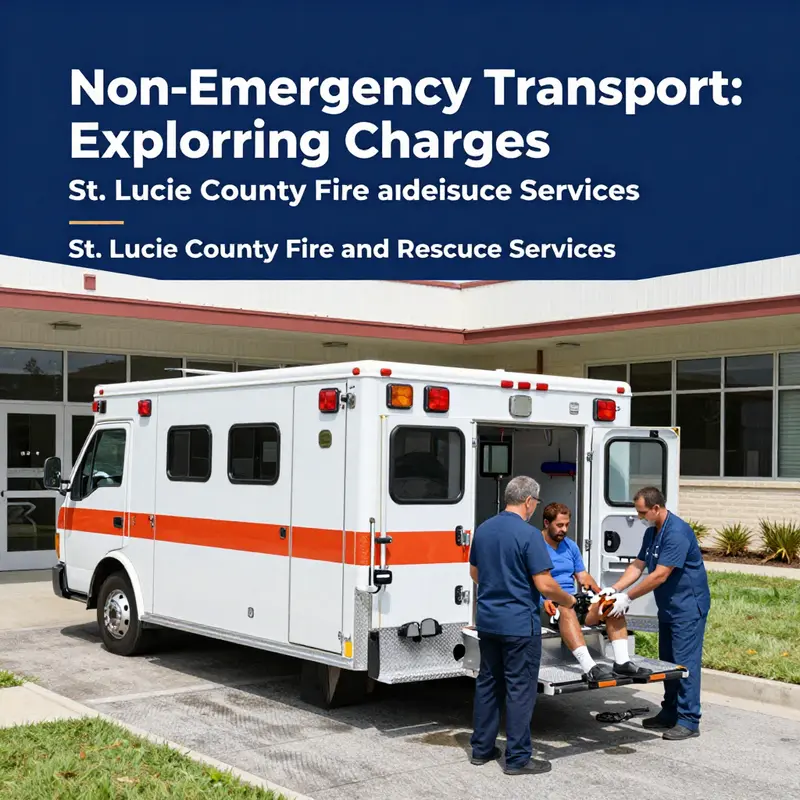
When a siren fades and the scene settles, many residents open a quiet file in their minds: what did that call cost? In St. Lucie County, the core message is clear and widely understood in public-facing materials: emergency fire and medical response services are funded through local taxes and government appropriations, ensuring life-saving care is available at the moment of need without a direct bill for that emergency arrival. But the same public system that guarantees rapid response also hosts a more nuanced set of charges surrounding non-emergency transportation and specialized rescue operations. The distinction between emergency and non-emergency services matters not only in policy terms but in daily civil life, as it shapes planning, budgeting, and the choices families make about how they move within the healthcare system during non-urgent times.
To grasp the landscape, it helps to start with the fundamental premise: residents do not pay out of pocket for emergency response. When 911 is dialed and a response vehicle arrives, the aim is to deliver life-saving care, stabilize, and transport if necessary. The funding for this core emergency mission comes from local tax revenues and appropriations that support the fire rescue department’s ability to provide critical services to all who need them. This arrangement preserves the universality of urgent care, removing a barrier that could discourage someone from seeking help in a crisis. It also anchors the trust that the community places in its public safety services—trust that is earned through predictable access to first responders when every minute counts.
Yet the same system that underwrites emergency response also accommodates a spectrum of non-emergency transportation and operations that, while still under the umbrella of public safety, operate under a different fiscal logic. The chapter of the county’s service catalog dealing with non-emergency transport addresses a practical need for safe, reliable travel to medical appointments, dialysis sessions, and other healthcare-related trips when an individual cannot drive or lacks suitable transport. Non-emergency transport serves a clearly defined niche: it is not intended for an acute crisis, but it is intended to ensure continuity of care for people who require medically appropriate transport to appointments. This distinction matters because it signals a shift from universal, tax-funded emergency care to a transport service that can involve billing, insurance coordination, and set rates. In practice, the result is a two-tier understanding within a single public safety framework: emergency care is universally funded; non-emergency transport is billable in many circumstances, with rates influenced by a set of policy choices, eligibility rules, and insurance coverage.
Within this framework, the cost structure for non-emergency transport is built to reflect practical realities of service provision. The service is designed to be accessible to those who need it for medical reasons but who do not meet the criteria for emergency transport, or who require specialized transport arrangements such as wheelchair-accessible vehicles. The typical financing stream for those who qualify includes Medicaid or Medicare, which can cover non-emergency transport costs. This arrangement aligns with broader public policy aims: it helps ensure access to essential healthcare while using public funds to support those with qualifying eligibility. For individuals who do not have insurance or whose policies do not cover non-emergency transport, a fee is charged. The calculation of this fee is not arbitrary; it rests on transparent factors that residents can anticipate and plan for.
First and foremost, distance traveled matters. The greater the miles between pickup and destination, the higher the potential charge. It makes intuitive sense that longer trips require more time, fuel, and vehicle wear, and the billing framework mirrors those operational realities. The type of vehicle used is another deciding factor. A standard van is less costly than a wheelchair-accessible vehicle or other specialized equipment configurations designed to accommodate mobility limitations or medical needs. Vehicle type thus affects the price tag, reflecting the resources required to safely transport a patient with particular mobility considerations.
These two levers—distance and vehicle type—create a fee schedule that can vary from one request to the next. It is a reminder that non-emergency transport is a technically complex service, even if it does not carry the same urgency as an emergency response. The county cautions residents that exact charges depend on individual circumstances, and it is advisable to contact St. Lucie County Fire and Rescue directly to obtain an accurate quote. This caveat is not a sign of opacity but of practical transparency: the services are individualized, and so too are the charges. The system is designed to be fair rather than one-size-fits-all, with the aim of balancing access to transportation with the realities of service provision.
The policy framework surrounding these charges is also shaped by the realities of insurance coverage. Medicaid and Medicare play central roles in underwriting non-emergency transport for eligible individuals. When these programs cover a trip, the resident’s out-of-pocket burden is significantly reduced, and in some cases eliminated. For patients who do not qualify for Medicare or Medicaid, or for those whose policies do not extend to non-emergency transport, the county’s billing policies come into play. In such cases, the patient or their family may be responsible for the portion not covered by insurance, subject to the rate structure mentioned earlier. This dynamic underscores the importance of understanding one’s own coverage, engaging with the billing office, and seeking quotes in advance when possible.
In practical terms, the scheduling process for non-emergency transport operates with a degree of predictability but still requires careful coordination. Residents or caregivers who anticipate a need for non-emergency transport should begin by clarifying eligibility and seeking a clear estimate of charges based on the planned trip. It is prudent to confirm the pickup time, the exact start and end points, any mobility accommodations needed, and whether a medical escort or attendant will be required. These details not only ensure the safety and comfort of the patient but also allow the billing office to produce a reasonable, itemized estimate that aligns with the policy rules. The scheduling steps are designed to minimize last-minute surprises while preserving the ability to meet essential medical appointment timelines.
A broader policy dimension worth noting concerns specialized rescue operations. In certain scenarios, charges may apply to highly technical or specialized rescues, such as vehicle extrication, particularly when there is no immediate life-threatening situation. This nuance reflects the ongoing balance between public safety funding for emergencies and the continued availability of professional, trained teams for complex rescue tasks that may be needed outside the narrow window of a crisis. The existence of such charges does not contradict the overarching principle that true emergencies are funded by taxes and government appropriations. Instead, it highlights the layered nature of public safety work: a community benefits from rapid, no-cost emergency response while also supporting specialized services that require sophisticated resources and planning. The distinction matters in how families prepare for emergencies versus non-emergency transport, and in how residents understand the public safety safety-net in their daily lives.
Another practical reality concerns follow-up care after hospital transport. In some cases, a patient may incur charges related to the transport itself, and in addition, follow-up care or facility-based services may intersect with insurance coverage. Insurance typically covers accompanying medical transportation costs when appropriate, but gaps can occur if a patient’s plan has limitations or exclusions. The interaction between transport billing and hospital billing can be intricate, and patients or guardians should be prepared to communicate with both the transport provider and the hospital’s billing department. The aim is to keep the patient’s transition from hospital to home—or from one facility to another—smooth and financially manageable, with as much clarity as possible about what is covered and what remains the patient’s responsibility.
In communicating these nuances to residents, public information efforts emphasize transparency and accessibility. The county and its fire rescue department generally provide clear guidance about eligibility, scheduling, and the potential for charges. They encourage residents to use official channels to verify the latest policies and rates and, when possible, to obtain pre-transport quotes. This approach helps reduce confusion and fosters trust, ensuring that individuals understand when a charge is likely and when it is not. It also aligns with broader public service commitments: even in a system that protects access to life-saving emergency care, there remains a necessary, accountable framework for other transportation services that communities use for ongoing care.
For readers seeking a deeper, official explanation, the county’s public-facing resources on fire and rescue services are the most reliable reference. The information there is designed to help residents navigate their options with confidence, including how non-emergency transport is funded, how charges are calculated, and how eligibility interacts with insurance programs. When in doubt, reaching out directly to the county’s fire and rescue administrative contacts can provide tailored guidance and a current quote based on the specifics of a given trip. In addition, the county’s site often houses updates regarding changes in policy, shifts in billing practices, or adjustments related to healthcare funding streams that affect transport services. These updates help ensure that residents remain informed as policies evolve over time.
For readers who want to explore related discussions about public safety infrastructure, sustainable community-space initiatives, and the broader context of how fire-rescue services integrate with health care access, one resource that echoes these conversations is the Green Firehouse project, which highlights how fire facilities can be designed to support community health and resilience. You can explore a related discussion here: the-green-firehouse-creating-sustainable-spaces-for-community-and-health.
The bottom line for residents asking, “Does St. Lucie County Fire and Rescue charge for emergency responses?” is straightforward: no direct charge is assessed for emergency fire or medical response. The charges you may encounter relate to non-emergency transport, specialized rescue operations when not part of an immediate life threat, and follow-up transport or care that insurance may or may not cover. The best practice is to plan ahead if non-emergency transport is anticipated, inquire about eligibility and potential charges in advance, and use the official channels to confirm the most current rates. The system is designed to ensure access to emergency care for everyone while maintaining a fair, transparent framework for non-emergency transportation that reflects the real-world costs of providing these essential services.
As a practical takeaway, keep a few steps in mind: know your eligibility criteria for Medicaid or Medicare coverage of non-emergency transport; request a pre-transport quote based on distance and vehicle type; confirm pickup and destination details with the dispatch or scheduling office; and maintain a clear line of communication about insurance coverage and potential gaps. If you face questions about charges, engage with the billing office early and document all communications. The experience of navigating these policies can be smoother when patients or caregivers approach it as a planning exercise rather than a reaction to an unforeseen cost. A well-informed plan supports both timely access to care and financial clarity, which together help safeguard the health and well-being of individuals and families during both routine medical needs and the occasional non-urgent transport.
Finally, it is worth recalling that the public safety infrastructure is designed to serve the whole community, with emergency response funded to ensure universal access during crises. The non-emergency transport option exists to complement that mission, offering a way to preserve health continuity without compromising the core emergency services that protect lives in the moment of danger. In this sense, St. Lucie County’s approach reflects a thoughtful balance: a robust, no-cost emergency response complemented by a transparent, means-tested non-emergency transport option that respects both public funding principles and individual healthcare needs. For residents navigating this system, the clarity about when charges apply, what the charges are, and how to access coverage provides a practical framework to approach medical transportation with confidence rather than confusion.
External resource: https://www.stluciecountyfl.gov/fire
Billing the Ride: Understanding Hospital Transport Fees in St. Lucie County Fire Rescue
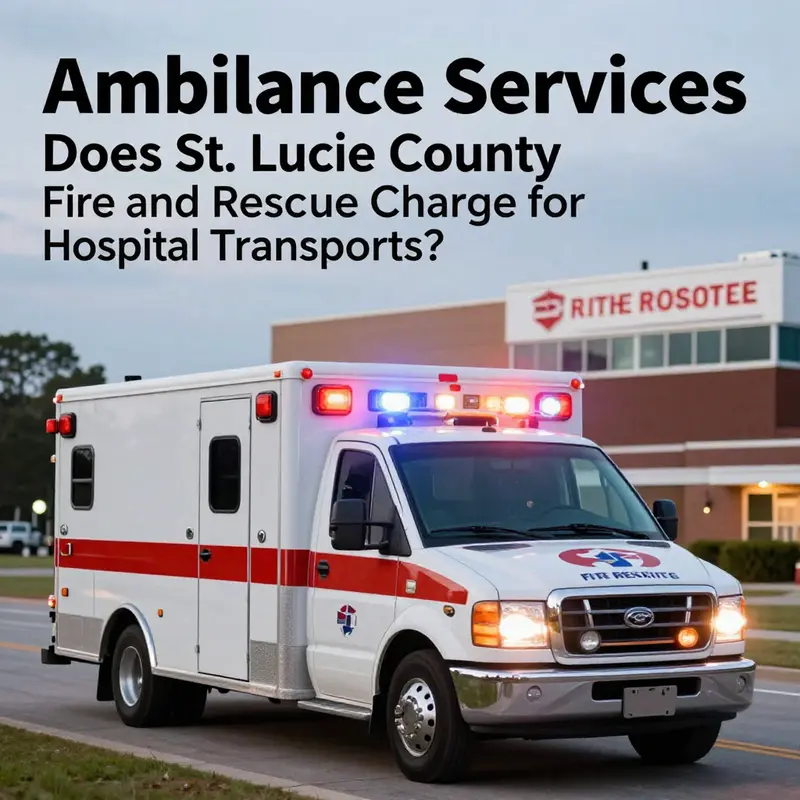
In St. Lucie County, emergency response and hospital transport are handled as two linked but distinct services. The on scene emergency care you receive is funded through taxes and public appropriations, with no charge at the moment of service. When transport to a hospital is necessary, EMS may bill for the transport itself, with charges typically reflecting resources used, distance traveled, and other operational costs. Insurance coverage often reduces the amount owed, but balances can occur if coverage is insufficient or absent. Many residents may qualify for sliding scale fees or financial assistance programs designed to reduce or waive transport charges. These programs aim to preserve access to essential care while keeping EMS financially viable. If you receive a transport bill, contact the EMS billing office to explore eligibility for waivers or payment plans. For the most current fee schedules and programs, consult the official St. Lucie County Fire Rescue pages.
How St. Lucie County Funds Fire and Rescue: Tax-Based Support, Grants, and Why Residents Aren’t Billed at the Scene
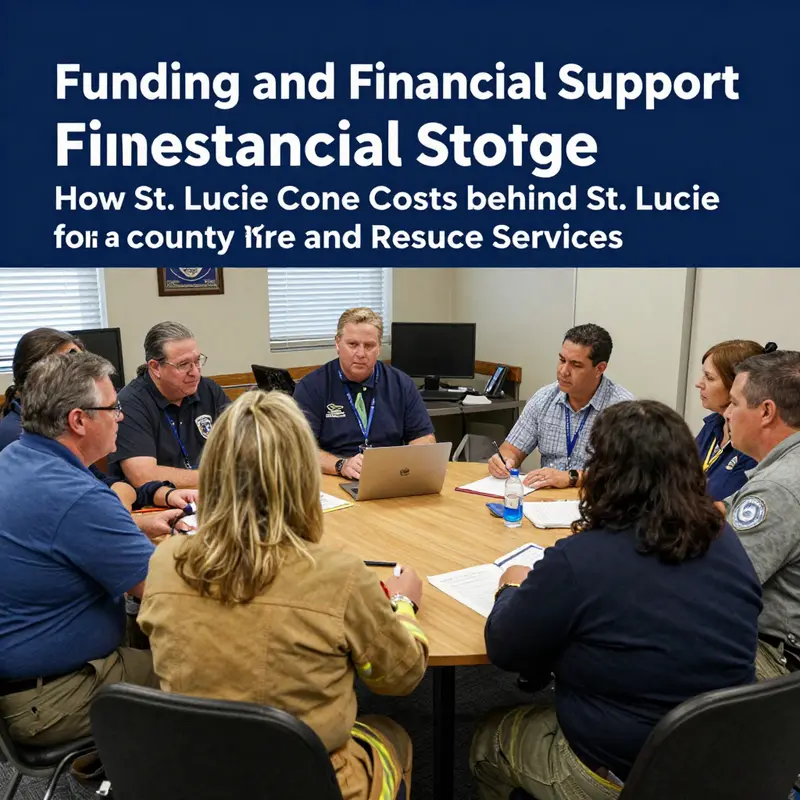
How St. Lucie County Funds Fire and Rescue: Tax-Based Support, Grants, and Why Residents Aren’t Billed at the Scene
St. Lucie County Fire and Rescue delivers emergency fire, medical, and rescue services without charging residents at the moment of response. That policy reflects a deliberate funding choice. The community funds core emergency services through property taxes, supplemented by state and federal grants. This model ensures everyone receives immediate, life-saving care regardless of ability to pay.
Local tax revenue forms the backbone of the department’s operating budget. Property taxes collected within St. Lucie County are allocated during annual budget cycles to maintain personnel, apparatus, training, and station operations. Those allocations cover the everyday work of firefighters and emergency medical technicians. Because the county funds the service through general revenue, the department does not impose user fees for standard emergency responses. When a home is on fire or a person needs urgent medical attention, cost considerations do not affect the decision to respond.
Grants and targeted contracts supplement that base funding. State and federal grant awards allow the county to expand capacity, invest in infrastructure, and purchase equipment that taxes alone might not cover. A recent example is the $38,000 contract for improving Fire Station 4. That allocation, managed through the county’s contracting process, illustrates how external funding strengthens local capability without shifting costs to individual callers. Grants like these are typically tied to specific projects. They fund capital improvements, technology upgrades, or specialized gear. The county incorporates these resources into the budget to augment taxpayer support.
The combined funding approach balances predictable, recurring revenue with opportunities for targeted investment. Property tax revenues provide steady operational funding. Grants offer occasional infusions for priority projects. Together, they create a framework that preserves universal emergency access. Residents thus benefit from a system where life-saving response is a public good rather than a fee-for-service transaction.
That said, the county’s funding model does allow for fees in clearly defined, non-emergency circumstances. Some charges apply to transfers that are routine and not urgent. For example, ambulance transport arranged for non-urgent patient transfers between medical facilities may incur fees. Such transports are often scheduled and billed differently from emergent 911 responses. The rationale is straightforward: when an event is planned and lacks immediate risk, the cost can be recovered through billing mechanisms. Insurance typically covers these charges, though patients should confirm coverage in advance.
Specialized services can also generate fees in certain cases. If an operation requires unique resources or extraordinary effort outside the scope of standard emergency response, the county may recover costs. Examples include recovery operations that are logistical rather than life-saving, or technical rescues where equipment and personnel dedication are substantial and the situation was not emergent. These exceptions are narrow. The guiding principle remains that immediate life-threatening emergencies are addressed without on-scene billing.
Transparency and clear policy are crucial to make these distinctions understandable. St. Lucie County outlines its billing practices and exceptions through public documents and contract records. Residents can consult county materials to learn what triggers fees and which services remain fully covered by taxpayer funds. When the county accepts grant money for a project, it usually documents the award and the intended use. That documentation helps citizens track how external funds supplement local tax support.
A related point is the relationship between billing and insurance. When a patient is transported to a hospital following an emergency response, hospitals and billing entities may submit charges to insurance providers. Those claims are distinct from the act of response. In many cases, insurance pays the costs of hospital care, related procedures, and transport. If insurance does not cover the expenses, individuals may receive bills. St. Lucie County’s policy of not charging for the initial emergency response does not necessarily eliminate all follow-up costs tied to medical treatment. It does, however, remove the immediate financial barrier to calling for help.
Budgeting and fiscal stewardship play a large role in sustaining the no-fee emergency response model. County officials create multi-year budget plans to anticipate staffing needs, vehicle replacement cycles, and station maintenance. Funding decisions prioritize readiness, response times, and training. Maintaining a fleet of engines, ambulances, and specialized rescue vehicles requires continuous investment. The county’s budget process also involves contingency planning for disaster response, when expenses can spike dramatically. Grant opportunities often focus on these needs, helping the county cover costs associated with large-scale events or capital projects.
Community expectations influence funding choices as well. Residents expect unfettered access to emergency care. That expectation shapes political decisions about how to allocate tax revenue. Voters and elected officials weigh the value of keeping emergency response free at the point of service against competing demands for local funds. In St. Lucie County, public safety consistently ranks high among budget priorities. This prioritization maintains staffing levels and station readiness, while also encouraging pursuit of supplemental grants.
Operational efficiency is another factor that sustains the funding model. The department monitors response data, resource utilization, and call volumes to deploy units strategically. Efficient operations reduce waste and maximize the impact of tax dollars. When the department demonstrates disciplined fiscal management, it strengthens public support for funding emergency services through general revenue rather than user charges.
Infrastructure improvements illustrate how funds come together in practice. The $38,000 contract for Fire Station 4 is modest but meaningful. It reflects targeted investment to sustain station operations, improve working conditions, and support response capability. Such contracts, when funded through grants or budget allocations, reduce the burden on the recurring operating budget. They also show how county governance channels dedicated funds toward capital needs without resorting to per-call billing.
Long-term financial sustainability requires continuous attention. Demographic shifts, development trends, and climate risks can alter demand for fire and rescue services. The county must plan for those changes while preserving the principle of free emergency access. That planning includes exploring recurring grant opportunities, carefully setting property tax rates, and maintaining reserves for emergencies. Public engagement and informed debate are essential in this process. Citizens who understand funding mechanisms can better participate in policy decisions and hold officials accountable for fiscal outcomes.
For residents wondering what to expect in practice, the key points are simple. Calling 911 for an emergency does not generate a direct charge from St. Lucie County Fire and Rescue. Ambulance transports that are non-urgent, or specialized non-emergency services, may generate fees that are typically billed to insurance. Investment in stations and equipment often comes from combined sources: property taxes for ongoing needs, and grants for targeted projects. This hybrid approach delivers universal emergency access while enabling improvements and growth when external funds become available.
If you want to read more about innovative station design and funding implications, consider the Green Firehouse case study. It explores how sustainable station ideas intersect with community health and budget choices: https://tpbhrescue.org/the-green-firehouse-creating-sustainable-spaces-for-community-and-health/.
For official, detailed policy and further verification of funding and billing practices, consult the St. Lucie County Fire and Rescue website: https://www.stluciecountyfl.gov/fire
Final thoughts
Understanding the funding and operations of St. Lucie County Fire and Rescue not only reassures community residents about receiving emergency support at no direct cost but also highlights the importance of community financing in sustaining these vital services. With the assurance that emergency responses are covered by local funding, residents can focus on safety and preparedness, knowing their local fire and rescue service is dedicated to providing help when it matters most.