
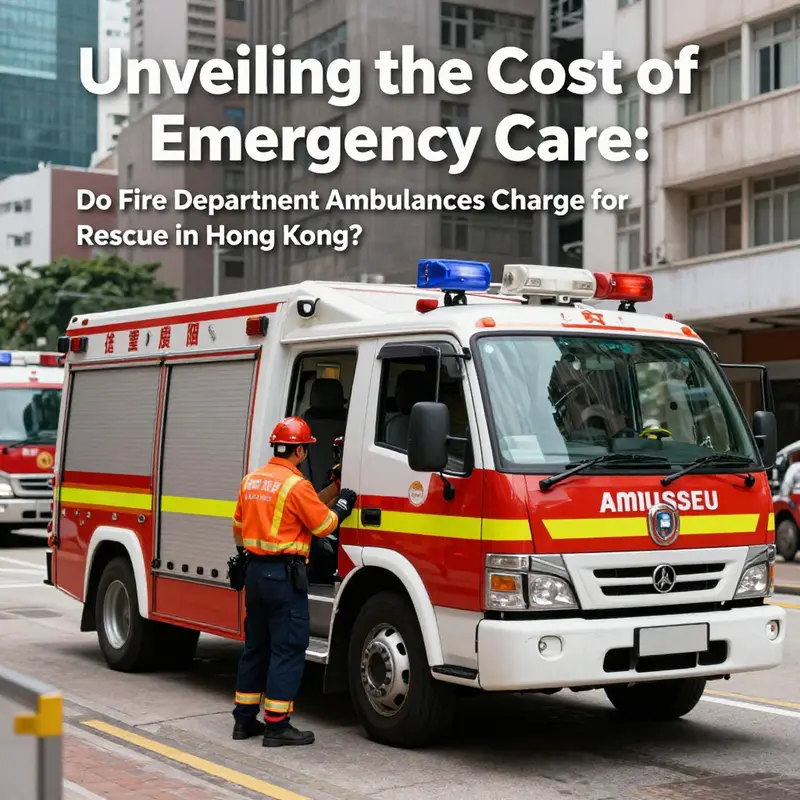
Ambulance services serve a crucial role in emergency medical response, providing timely assistance to those in need. In Hong Kong, the Fire Services Department (FSD) offers these services without any charges, setting a standard for public service in emergency care. This article delves into the nuances of this policy, examining not only the implications for the residents of Hong Kong but also contrasting practices in other regions. Each chapter will build a comprehensive narrative around the operational framework of fire department ambulances, their significance in public health strategy, and the perceptions that influence policy decisions regarding free emergency services.
Free Rescue on Call: Demystifying Emergency Ambulance Charges in Hong Kong
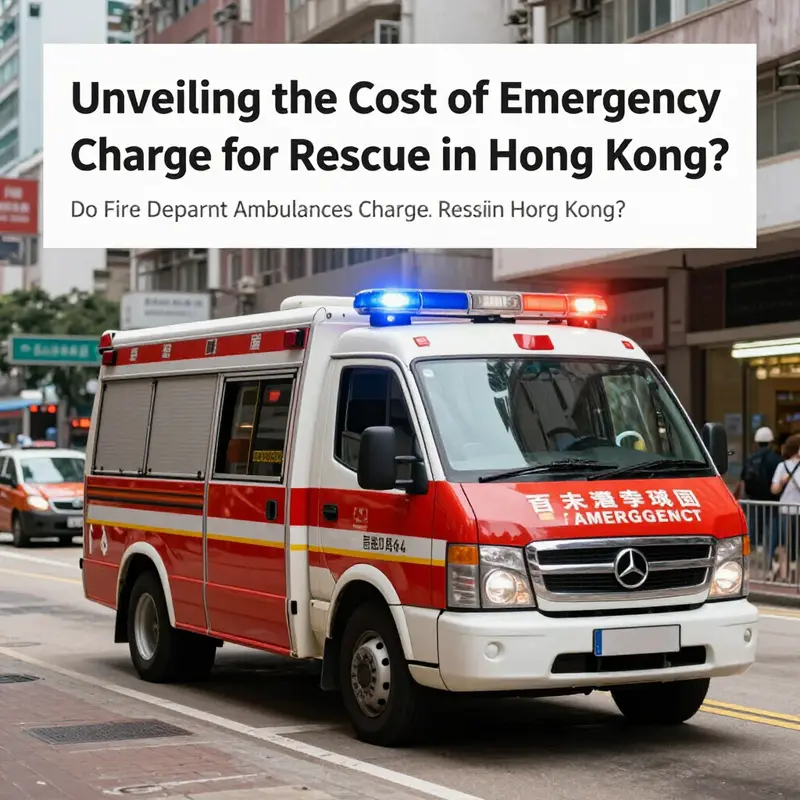
When people ask whether an ambulance ride costs money, the answer in Hong Kong’s public system is generally straightforward for emergencies: no, not for genuine medical emergencies.
Across Hong Kong, when an emergency arises, calling 999 connects you to a rapid response network designed to save lives. The Fire Services Department (FSD) delivers the ambulance service as a public function funded to serve everyone, including visitors. In genuine medical emergencies, the ambulance ride and the accompanying pre-hospital care are free. The service is designed to reach the sick and injured quickly, with a target response time of 12 minutes for all emergency ambulance calls. From the moment the call is answered to the moment the patient arrives at the hospital, the focus remains on speed, clinical care, and safety.
That structure rests on a public service mandate, anchored in Hong Kong’s broader health and safety framework. The FSD’s role is explicit: respond to emergencies, stabilize patients, and transport them to medical facilities when needed. Funding for this public service is drawn from government budgets designed to keep life-saving care accessible to all. The policy applies to citizens and visitors alike, reinforcing a universal expectation that a 999 call will activate a free ambulance response when there is a genuine medical need.
However, the word emergency matters. If the transport is non-emergency—such as inter-hospital transfers, medical escorts, or other routine transportation—the public system does not automatically cover the cost. In these situations, private arrangements or provider-specific billing can apply. The distinction between urgent care on scene and scheduled movement between facilities is real and consequential for patients and families planning care journeys. It is important to discuss expectations with medical teams or transport coordinators to understand which leg of the journey is covered by public funding and which requires private payment.
Beyond the FSD, another organization steps into the same space with a complementary reach: St. John Ambulance also operates a 24-hour emergency ambulance service across Hong Kong, serving different precincts and patient needs. In practice, residents may encounter either provider depending on location and circumstances, but in all cases the emphasis remains swift response and safety. If the situation is urgent, dialing 999 will mobilize assistance and direct you to the appropriate responders. St. John Ambulance can be contacted directly at 1878 000 for urgent medical assistance, although in a life-threatening emergency the 999 line remains the fastest conduit to help.
This dual arrangement matters for public trust. When a society promises no charge for life-saving emergency transport, it must also demonstrate that the system is funded, accountable, and accessible. The free emergency ambulance service reflects a commitment to equity: people should not be delayed or deterred by cost during a crisis. In practice, this means that anyone presenting with a genuine medical emergency should receive on-scene care and safe transport, regardless of income or background. It also highlights the importance of hospital readiness and pre-hospital protocols, because rapid care begins the moment help is summoned and continues through to the hospital handoff.
Public policy works best when people understand its boundaries. The clarity around charges is not just about money; it is about expectations and responsibility. The policy does not blanket all transport needs; it specifically covers genuine emergencies and the critical moments of care that occur en route to a hospital. This clarity helps emergency responders focus on clinical priorities rather than billing concerns, which in turn supports faster interventions and better outcomes. It also reduces the risk that people might delay seeking help because they fear the cost, a concern that could endanger lives in time-sensitive situations.
For visitors and residents alike, a simple rule of thumb emerges: when there is a life-threatening problem or a severe injury, call 999. When the need is urgent but not immediately life-threatening, professionals can advise on the most appropriate route, which could involve public emergency transport or a scheduled, fee-based service. The presence of this policy, combined with clear guidance from medical teams, helps families plan while reducing financial uncertainty during one of the most stressful moments of care. In the end, the system aims to preserve health outcomes and preserve dignity under pressure.
Transparency about policy is essential, and that is where official sources matter. The Fire Services Department provides the public with policy specifics, targets, and service parameters on its official site. For those who want to verify the terms of service, or who want to understand the mechanics of response times and coverage, the site offers a reliable, current reference point. In addition to the FSD, the public health system often engages in continuous improvement efforts to ensure that emergency response remains fast, efficient, and customer-centric. The conversation around emergency rescue is part of a broader commitment to resilience, readiness, and service quality that keeps communities safe when seconds count.
As part of the broader conversation about resilience and modernization of public rescue services, consider the ways in which Hong Kong has evolved its emergency response landscape. Innovations in training, facilities, and coordination between agencies influence how quickly and effectively care unfolds from the first call to hospital admission. For readers exploring this topic, a related discussion offers a view of how public rescue services are transforming to meet diverse needs and budgets while maintaining universal access. See Innovation Museum Transforming Fire Services.
Ultimately, the question of charges for an emergency ambulance in Hong Kong resolves into a straightforward principle: in genuine emergencies, the ambulance ride and pre-hospital care are provided free of charge by the public system. Non-emergency transport, however, may involve fees outside the scope of public funding. This distinction matters for planning, billing, and expectations, but it does not diminish the life-saving value of rapid response when an alarm is raised. The policy’s success rests on clear communication, robust funding, and the professionalism of responders who bring care to the scene and carry it toward definitive treatment. When people know what to expect, they can act quickly and confidently, which is exactly what emergency medical services are designed to achieve.
For official information on emergency services and response times, refer to the Fire Services Department site: https://www.fire.gov.hk.
Free Frontline Care, Billing Lines: Exploring How Regions Charge for Fire Department Ambulance Rescue
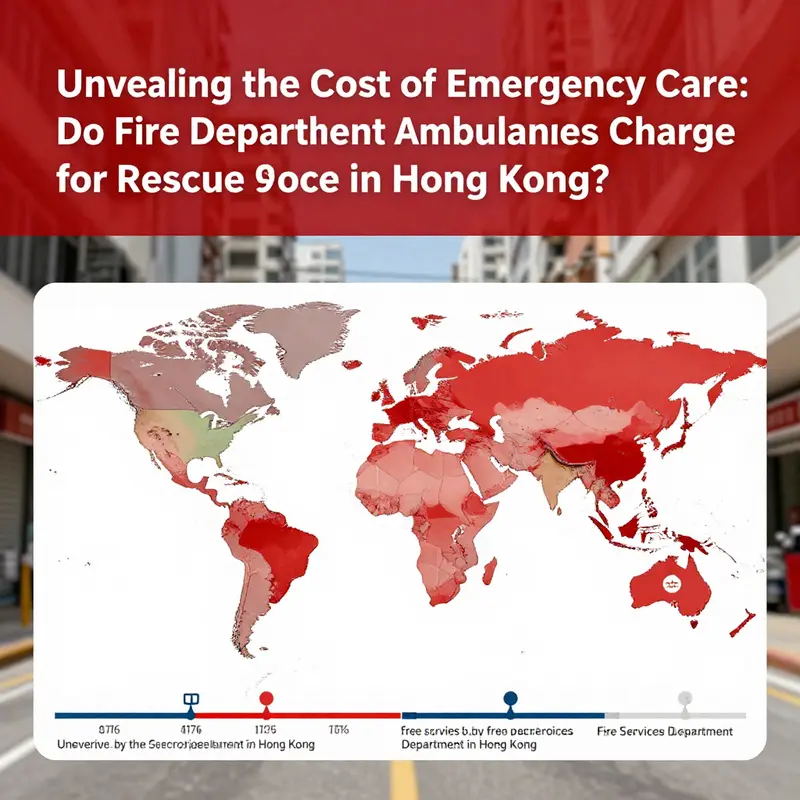
At the heart of any emergency response debate lies a practical question: does calling for an ambulance rescue cost the patient? In many places, it does not. In Hong Kong, the Fire Services Department operates an emergency ambulance service that is free at the point of use. This model aligns with a public service mandate that treats emergency medical response as a basic public good rather than a paid transaction. Yet this story is not universal. Across regions, funding and charging structures diverge, and those differences ripple through access, equity, and the speed with which help arrives. The Hong Kong example gives a baseline against which other systems can be compared, while reminding us that any broad claim about charges must be grounded in jurisdictional policy and governance.
Regions fall along a spectrum. Some place emergency ambulance services entirely in the public funding envelope, financed through taxes and designated health budgets. In those systems, patients often receive care and transport without a direct bill, though there may be later reimbursement processes or insurance interactions. Others mix public and private elements, with base fees, mileage surcharges, or transport-specific charges that appear on a bill to the patient or their insurer. Some economies rely on private providers that operate under market pricing, where cost and billing structures vary widely by region and service type. In still others, emergency transport may be legally mandatory or reimbursable under social safety nets, making the question of charges a matter of administrative rules rather than a simple price list.
Yet the knowledge base for a clear cross-regional comparison remains thin. One document in the research corpus cites an ambulance charge set at thirty percent above cost plus fifteen dollars per mile. Taken alone, it is a data point—interesting, but lacking context. It does not specify the jurisdiction, the service model, or the eligibility rules that might justify such pricing. Without a robust map of base rates, distance charges, urgent care modifiers, and patient responsibility across several regions, any attempt at a meaningful comparison risks misinterpretation. The research community has long noted this data gap and warns against drawing patterns from isolated cases.
To move from anecdote to apples-to-apples analysis, researchers would need standardized definitions. A base transport fee, a mileage rate, and a patient care surcharge might exist in some places, while other regions waive all transport charges for medically necessary calls. The data would need to capture who pays under what circumstances: the uninsured, insured residents, non-residents, or patients with special status such as low income or vulnerable populations. It should also map how policy choices influence service scope: are basic life support rides eligible for public funding? Do fee waivers apply for interfacility transfers in emergencies? And how do regulatory regimes shape billing: is EMS pricing governed by health departments, insurance regulators, or curbs on private enterprise? Factors like service model, public versus private, and government oversight all matter.
In the Hong Kong case, the free service is tied to a clear public mandate and a system of accountability for response times and readiness. A 12-minute target for emergency ambulance responses creates a benchmark that prioritizes speed and reliability over direct charges at the point of use. This arrangement also influences how other regions frame their EMS economics. Where access is protective of public health, governments might subsidize ambulance operations to reduce the financial barrier to calling for help. Conversely, where budgets are constrained or where emergency services operate within a broader privatized framework, charging becomes a routine instrument to recover costs and allocate scarce resources. The policy choice has real-world implications: it affects patient behavior during emergencies, the financial risk borne by households, and the fiscal health of the agencies tasked with life-saving work.
From a governance perspective, the question of charging also intersects with data transparency and accountability. If billing practices are opaque or vary regionally, residents may not understand what to expect when they dial emergency numbers. Public trust hinges on predictability: a system that clearly states whether an ambulance ride is free, billable, or refunded reframes the public’s relationship with emergency care. Researchers seeking to compare regions must disentangle emergency medical transport from subsequent hospital bills, insurance reimbursements, and post-hoc cost-sharing. The financial piece of EMS is not only about the sticker price of a ride; it is about who ultimately bears the cost and how those costs influence decisions to seek care in urgent situations.
Within this landscape, the Hong Kong example offers a vital reference point. It demonstrates that a society can commit to rapid, universal access to critical care without turning to patient charges at the outset. It also invites questions about sustainability, funding streams, and the balance between response capacity and other health priorities. For readers and policymakers, the takeaway is not a blanket endorsement of free EMS, but rather an invitation to examine how revenue models align with public health goals. If a region aims to maximize timely rescue for all, what are the trade-offs between upfront free service and downstream costs, such as hospital admissions, post-emergency care, or debt burden? Answering these questions requires data, governance clarity, and a willingness to experiment with policy design while preserving patient welfare.
To illustrate the broader point about how regional experiments and public mandates shape access, a short primer can be found in the Hello World article. This example serves as a reminder that even seemingly simple questions about ambulance charges sit within a larger ecosystem of policy design, funding decisions, and public expectations. Readers who want to situate a local system within a global framing will benefit from reviewing concise materials that outline how different jurisdictions approach EMS economics and what trade-offs they consider when they decide how to charge, or not charge, for life-saving transport. The contrast between a no-charge model and a fee-based framework underscores the central tension in emergency care: speed and coverage versus financial sustainability and fairness.
For lawmakers and practitioners, the discussion invites a broader, more granular inquiry. If a city or region contemplates reforming its EMS billing, it must weigh several dimensions beyond the price tag. First, what is the desired level of access? If the goal is to minimize hesitation in calling for help, the system should minimize financial barriers. Second, what is the fiscal capacity of the jurisdiction? Public funding streams can sustain universal access but require durable revenue and clear managed risk. Third, how will reform affect hospital systems and downstream care costs? In many cases, a cheaper ambulance ride may lead to higher hospital utilization if patients arrive sicker or later in isolation from community-based care. Fourth, what safeguards exist to protect low-income households? Fee waivers, income-tested subsidies, or exemptions can preserve equity while allowing a financial mechanism to support system viability.
Acknowledging these complexities also requires acknowledging the data challenges that researchers face. Billing data are often interwoven with hospital charges, insurance settlements, and regional health financing mechanisms. Distilling a true cost of EMS from related expenditures demands careful methodological choices. Time of day, urban density, and geographic accessibility all shape both cost and outcome. When a region looks at its EMS model, it should compare apples to apples: similar service levels, similar urgency classifications, and similar patient populations. Without that alignment, comparisons risk misrepresenting what actually drives charges and what outcomes they influence.
Beyond the numbers, there is a human element that undercuts any purely financial analysis. In emergencies, every minute matters, and every dollar matters to the extent it affects a person’s willingness to call for help. When people fear a bill, even a small charge can become a barrier to care. Conversely, a system that shares the cost across society signals a collective commitment to protect the vulnerable and to uphold public health. The trade-offs are real, and they are political as much as they are economic. This is why transparent governance, clear policy objectives, and robust data governance matter so much in EMS pricing discourse.
In practice, a robust comparative chapter would map base rates, mileage charges, patient transport fees, and variations by medical urgency or service type across multiple regions. It would also describe how public versus private models, regulatory oversight, and budgetary constraints interact to shape those charges. Until such a map exists, the Hong Kong model will remain a critical case study for readers seeking a baseline where access is prioritized and costs to patients at the point of care are minimized. The discussion should not pretend there is a universal standard for EMS pricing. Instead, it should illuminate how different governance choices yield different experiences for patients, responders, and taxpayers alike, and how those choices affect the timeliness and equitability of emergency rescue.
External reference: For a broader, authoritative overview of EMS funding and operations, consult the National Highway Traffic Safety Administration’s EMS Information.
External resource: https://www.nhtsa.gov/emergency-medical-services
How Fire Departments Deliver Free Ambulance Care and Why It Matters
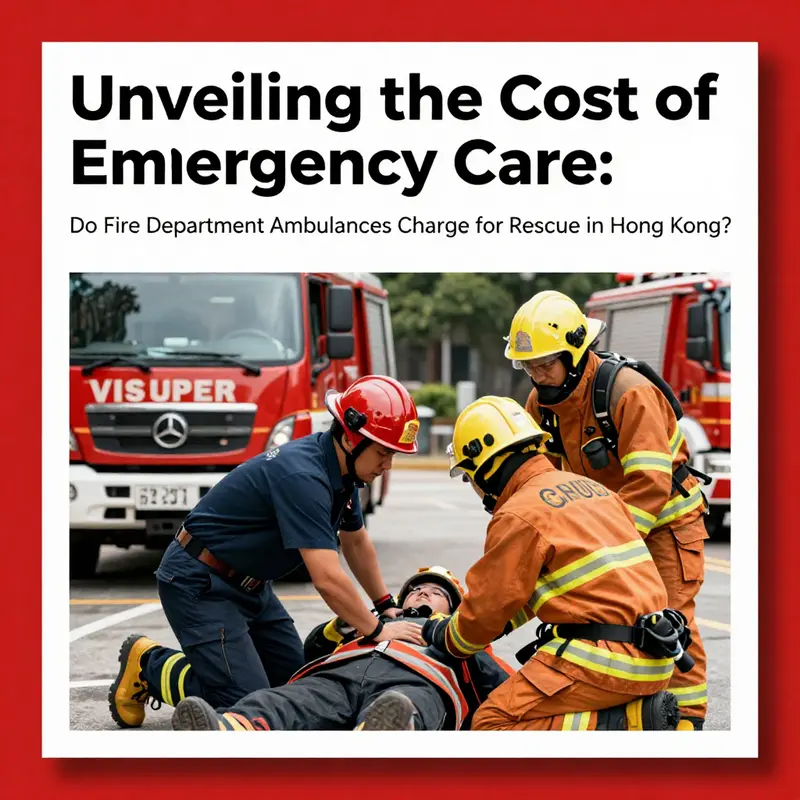
How fire departments became core emergency medical providers
Fire departments are often the community’s first line of defense in a crisis. They arrive quickly, stabilize patients, and coordinate transport. In many places, they do this without charging patients for ambulance responses. That public-service model emphasizes access, equity, and timely care. It also changes expectations about what a modern fire service must provide. The example of Hong Kong’s Fire Services Department (FSD) makes this clear. The FSD operates an extensive ambulance network and treats emergency medical response as a primary mission. Their service is free at the point of care, and their structure shows how fire departments can combine firefighting, rescue, and medical services into a single, efficient system.
The FSD maintains 42 ambulance depots across a dense urban environment. These depots help meet a response time target of 12 minutes for emergency ambulance calls. In practical terms, that target means personnel and vehicles are positioned to reach incidents rapidly. In 2024, the FSD handled 39,320 special service calls. Many of these were medical emergencies requiring ambulance crews. The scale of those numbers underscores the crucial role fire departments play in everyday public health and safety. It also highlights why a free-service model makes sense for densely populated regions. When every second can matter, barriers like fees can deter calls and delay care.
Fire-based emergency medical systems combine multiple advantages. First, they use an existing, widespread infrastructure. Fire stations are strategically placed to ensure fast access. Second, they staff crews who are cross-trained. Firefighters learn medical skills alongside extrication and rescue techniques. That combination allows teams to handle complex scenes. A cardiac arrest victim in a vehicle, for example, may need both advanced airway management and prompt extrication. An integrated crew can provide both services without waiting for a separate unit. Third, this approach promotes coordination during large incidents. Whether the event is a single trauma or a multi-site disaster, integrated teams streamline command and communication. The FSD’s Ambulance Command is an explicit recognition of that integrated mission.
Offering ambulance services without charges changes how communities interact with emergency systems. When care is free, people are more likely to call early. Early calls improve outcomes for conditions like stroke and heart attack. They also reduce the chance that minor issues become catastrophic. Free ambulance services also foster trust. Residents in vulnerable neighborhoods, or those without private insurance, feel safer calling for help. That trust reduces hesitation and helps emergency systems act before problems escalate. In turn, an effective free service can lower overall healthcare costs by preventing complications that require expensive hospital stays.
Yet the decision to run a free ambulance service is not merely moral. It is logistical and financial. Funding must come from public budgets. Staffing and training requirements must be met. Vehicles, medical equipment, and depot maintenance all cost money. In return, jurisdictions gain a predictable, equitable system of pre-hospital care. The FSD model shows that with adequate resourcing, a free ambulance system can achieve high coverage and consistent response times in a complex urban setting.
Training and scope of practice are central to success. Fire departments that lead in EMS invest heavily in medical education. Crews learn to manage trauma, cardiac events, respiratory distress, and other urgent conditions. They practice advanced life support interventions when protocols call for them. They also coordinate with hospitals to refine triage and transport decisions. This training ensures that care delivered in the field aligns with in-hospital needs. It shortens the handoff and maintains continuity of care. The Ambulance Command within the FSD reflects an organizational commitment to these standards. It provides oversight, quality assurance, and clinical governance across a large network.
Integration with other emergency services enhances capability. Hazardous materials response, urban search and rescue, and disaster coordination often overlap with medical needs. A firefighter trained in both hazardous material protocols and patient care can safely manage a contaminated patient, for instance. That dual capability reduces time lost waiting for specialized units. It also improves safety for crews and patients. Public education is another integrated function. Fire departments teach prevention, first aid, and community safety. Those programs reduce incident rates and improve outcomes when emergencies occur. Education closes a loop: effective prevention reduces demand, allowing the department to focus resources where needed most.
Operational design matters. Strategic placement of depots, dynamic staffing models, and data-driven deployment all increase the impact of a free ambulance service. In Hong Kong, the distribution of 42 depots supports dense coverage. Response time targets guide resource allocation. Data on call volumes and incident types help leaders decide where to place ambulances and when to adjust staffing. Modern systems also use technology for dispatch and navigation. Real-time data improves routing, reducing delays caused by traffic or other obstacles. Those logistical improvements compound the benefits of offering care without fees.
Running a free service also raises difficult policy questions. Who pays when demand rises? How should limited resources be prioritized? Policymakers must balance emergency care needs with other public expenditures. Transparent reporting on response times, call outcomes, and cost-effectiveness helps justify budget choices. Demonstrating that free ambulance access prevents worse outcomes can secure political support. Communities can see the value when lives are saved and when preventable complications decline.
Equity remains a core benefit and a constant concern. A free model aims to level the playing field. But implementation can fall short if certain neighborhoods receive slower responses or fewer resources. Equity requires active management. Leaders must track performance across districts. They must invest in underserved areas and adapt deployment patterns. Community engagement helps find local barriers to access and increases public confidence. When residents understand the service and how to use it, the system functions more effectively for everyone.
Preparedness and resilience are additional advantages. A fire department that provides ambulance services builds a workforce accustomed to surges. Personnel trained in mass casualty care, triage, and disaster coordination scale these skills during crises. That surge capacity supports hospitals and other healthcare assets. In epidemics, floods, or large-scale fires, having a unified responder that provides both rescue and medical care improves the overall response. It reduces fragmentation and improves coordination across agencies.
Looking ahead, technology and data will shape future models. Telemedicine, remote monitoring, and predictive analytics can improve pre-hospital decisions. Fire departments can use data to predict demand patterns, allocate resources, and reduce idle time. Teleconsultation with physicians during transport can refine triage. Such innovations enhance the value of a free service by improving outcomes and managing costs. But technology alone is not enough. Investment in people, training, and equitable deployment remains essential.
The public perception of fire services also evolves when ambulance care is part of the mission. Communities often see firefighters as heroes at fires. Adding a medical role broadens that image. It deepens trust and fosters wider public support. Fire departments that succeed in this dual mission often engage in visible health campaigns, training, and outreach. These activities create a feedback loop: visible service builds support, and support secures resources.
For jurisdictions considering whether a fire department should provide free ambulance care, the FSD model offers practical lessons. Free services can achieve fast response times, high coverage, and strong community trust. Achieving those outcomes requires clear policy choices, sustained funding, data-driven deployment, and rigorous training. It also requires attention to equity and transparency. When those elements align, a free, fire-based ambulance system becomes more than a convenience. It becomes a public health asset.
For further detail about the Fire Services Department’s ambulance structure and mandates, see the FSD official information: https://www.fire.gov.hk/en/index.html
Read more about transforming fire stations into health-focused community assets at transforming fire stations: a health-conscious revolution.
Perception, Policy, and the Price of Rescue: How Public Trust Shapes Fire-Department Ambulance Services
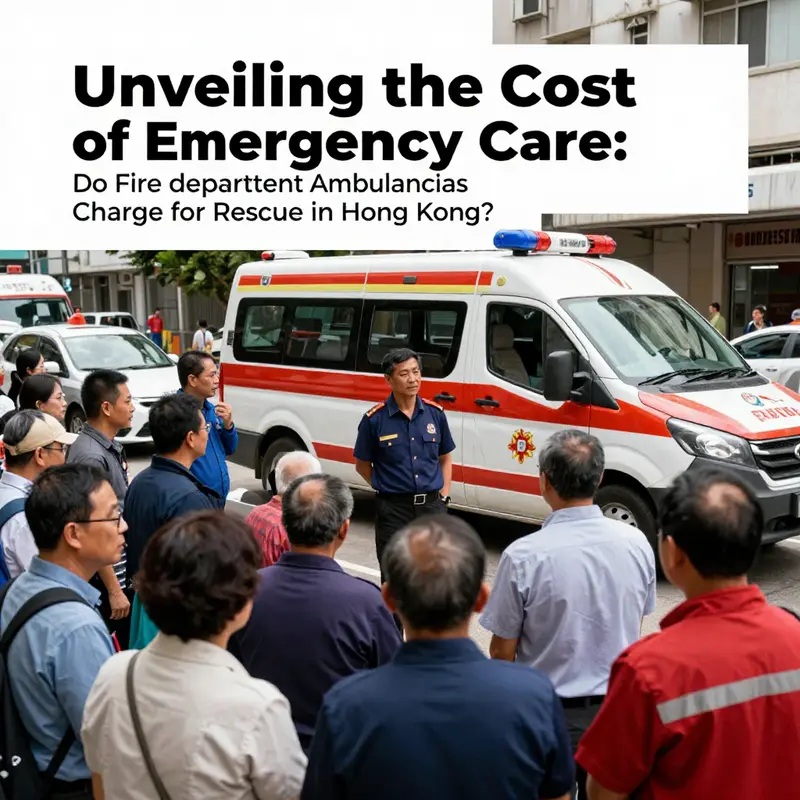
When people think about a fire department, they often picture flames, hoses, and brave rescues. But the core of modern fire services in many places is a more nuanced and equally life-saving mission: rapid ambulance response to emergencies. The public gaze falls not only on how quickly responders arrive, but also on who pays for the service, what the service actually costs, and how transparent those costs appear to the people who rely on them. In places like Hong Kong, where the Fire Services Department provides emergency ambulance service at no charge to the public, the cost question takes on a distinct dimension. The idea of a “free” emergency ambulance challenges common assumptions about who funds public safety and how much the community values the act of rescue in real-time. It is not merely about whether a bill lands in the mail; it is about trust, expectations, and the social contract that binds citizens to their guardians in moments of crisis. The chapter that follows traverses these threads—how the public perceives ambulance services, how policy shapes those perceptions, and what that means for the sustainability of rescue as a public good.
Public perception is a composite of experience, media narratives, and the implicit promise that emergency care will be available when most needed. Across countries, research consistently shows that the public respects the core functions of emergency services: speed, competence, and the capacity to stabilize life-threatening situations. A notable strand of this literature emerges from comparative studies on fire service outcomes rather than outputs alone. In the Netherlands, citizens expressed a willingness to pay for outcomes such as fast turnout times and the saving of lives. This willingness signals a broad recognition that the value of emergency services extends beyond the act of dispatch to a chain of benefit that culminates in preserved health and, in many cases, preserved lives. The study’s emphasis on outcomes resonates with a central question for policymakers and service managers: how do we align incentives with public expectations in a system where time-sensitive care is both a moral obligation and a complex logistical enterprise?
Yet perception is not monolithic. Knowledge and awareness matter deeply. A study focusing on a National Ambulance Service found that respondents with higher levels of education tended to be more aware of the service’s existence, capabilities, and limitations. This pattern points to a broader public education challenge: accurate information about what emergency ambulance services can and cannot guarantee, how they are funded, and what patients may owe under different circumstances. When people misunderstand these boundaries, they may form skeptical or misinformed views that undercut trust. For example, if the public believes that emergency service is universally free in all contexts, but learns of potential charges for non-emergency rides or post-dispatch hospital processes, confidence in the system can falter. The implication for policy design is straightforward yet powerful: transparency and education are not ancillary to service quality; they are integral to the social license that keeps funding steady and responses timely.
The policy implications of integrating ambulance services within fire departments are equally nuanced. Across the United States and other places, models and guidelines have emerged to address occupational stress, violence, and the mental health needs of fire-based EMS personnel. These policy concerns are not merely about worker welfare; they have direct bearing on public perception and on the long-term viability of emergency services. When responders operate under high stress or feel unsafe, response times can lengthen, decision-making can become cautious rather than decisive, and overall trust can erode. Model policies emphasize organizational interventions: robust mental health supports, de-escalation training, and improved safety protocols. They also highlight the need for clear boundaries between emergency responses and other forms of transport or care, so that patients and their families understand what is included in emergency care and what may incur charges in non-emergency contexts. The connection between responder well-being and public trust is not incidental. It is a core design feature of sustainable emergency medical systems that aim to protect lives while maintaining the public’s confidence in the service’s integrity.
Against this backdrop, the Hong Kong experience offers a concrete case for how perceived cost interacts with public health objectives. The Fire Services Department does not charge for emergency ambulance service, presenting a policy stance that foregrounds accessibility and equity in life-saving care. The no-charge model aligns with a commitment to universal access—an essential attribute of a public health system that treats emergency response as a public good rather than a market commodity. A policy that removes financial barriers at the moment of crisis can reinforce the perception that the system is dependable and fair, especially for households with limited resources or for individuals in precarious health situations. The 12-minute response time target for all emergency ambulance calls further codifies this commitment to timeliness and reliability. Residents know that, in a critical moment, the public system is obligated to respond quickly, without the distraction of price negotiations or payment stress. Such clarity can strengthen trust and encourage people to rely on the service when it is truly needed, which in turn can influence bystander actions, downstream health outcomes, and community resilience.
Nevertheless, the notion of a free emergency ambulance is not universal, nor is it the sole determinant of public perception. The broader policy environment—how governments fund emergency services, how costs are transparently reported, and how non-emergency or interfacility transport is handled—shapes the public’s overall confidence in the system. Transparent reporting on costs, even when the primary service is free, helps to illuminate the true value of the emergency response and the resources required to sustain it. People want to know that the system has a plan for maintaining readiness in the long term: continuous training for responders, up-to-date equipment, and robust information-sharing with hospitals to ensure smooth patient handoffs. When these elements are visible, public perception tends to move from passive acceptance to informed endorsement. People see that the service is not merely a reflex action to crisis but a carefully managed ecosystem designed to deliver outcomes under pressure.
A critical dimension of perception concerns equity and access, particularly for vulnerable groups. Public education campaigns can help correct misperceptions about who is charged and under what circumstances, reducing anxiety around calling for help in uncertain situations. At the same time, policy designers must monitor whether the no-charge approach in emergency ambulance services creates any blind spots—situations in which resources are stretched in ways that could disadvantage non-emergency transport, post-dispatch care, or follow-up services. The literature underscores the importance of voice and inclusion: the public should have channels to express concerns about safety incidents, response delays, or perceived inequalities in care. When communities feel heard, they are more likely to trust authorities and to participate constructively in dialogues about service design and funding.
The social dimensions of perception also intersect with memorable crisis narratives. Media coverage of large-scale emergencies often highlights dramatic rescues, but it can also spotlight gaps in safety, communication, or aftercare. A particularly poignant area of focus is the evacuation experience of vulnerable populations, such as residents of senior care facilities. Even as the overall system aims to deliver rapid, free emergency response, failures in evacuation planning can erode trust in the broader safety net. A linked yet distinct thread is the need to connect emergency response with downstream risk management. If a community perceives that fire and EMS services end abruptly at the hospital doors or that evacuation procedures for high-risk populations are flawed, the entire chain of protection can feel incomplete. This is not merely a matter of ethics or humanitarian concern; it is a practical consideration for policy because trust translates into willingness to engage with preventive measures, participate in training, and support investments in resilience. As research from diverse contexts shows, people value outcomes that preserve life and minimize harm, and they want assurance that the system is built to deliver those outcomes consistently.
In this landscape of perception and policy, a concrete example can illuminate how seemingly subtle differences in messaging and structure can shape public views. Consider a policy discourse around a hypothetical scenario where a jurisdiction contemplates charging for some ambulance services or non-emergency transport. The public would likely respond not merely to the price itself but to the clarity of the justification, the fairness of application, and the prospect of unforeseen financial burdens during a medical crisis. When people understand that emergency interventions are financed through public revenue or designed as universal services, they are more likely to interpret a rescue as a shared social achievement rather than as the outcome of a private transaction. Conversely, opacity about funding or inconsistent charging practices can open space for skepticism, rumors, and distrust—damaging the perceived legitimacy of the entire emergency response system. The upshot for policymakers is clear: integrate transparent funding models with active public education and continuous evaluation of service outcomes. Only by making the trajectory from call to care visible can a system maintain the legitimacy required to sustain high-quality, timely rescue services.
For readers who want to situate these considerations in a broader policy and public-safety conversation, a relevant thread is the literature on vulnerable- population safety and evacuation policy. The linked discussion on safety gaps in senior-care evacuation serves as a cautionary tale about how perceived gaps can undermine trust in even well-funded systems. Left behind the tragic failures of fire evacuations in senior care facilities, a critical reminder about how policy implementation affects real lives, underscores the need for continuous improvement and accountability in all stages of emergency response and post-crisis care. Left-behind the tragic failures of fire evacuations in senior care facilities.
Ultimately, the public perception of fire department ambulance services is a dynamic product of trust, transparency, and demonstrated outcomes. The no-charge policy in Hong Kong illustrates one approach to aligning the public good with the goal of rapid, reliable response. It reinforces the argument that when communities perceive emergency care as accessible and predictable, it becomes a trusted pillar of public health and safety. Yet perception is not static. It evolves with information, experience, and the visible integrity of service—whether through consistent response times, clear communication with patients and families, or the visible well-being of responders who carry the weight of crisis-day decisions. Policymakers who want to sustain public confidence must invest deliberately in education, resilience, and safety culture, acknowledging that the value of rescue is measured not only by lives saved in moments of crisis but by the steady, principled commitment to keeping that rescue available to all when it is needed most.
External reference: A comparative study from the Netherlands highlights citizens’ willingness to pay for outcomes tied to fast turnout times and lifesaving results, signaling public recognition of the value of rapid, effective emergency response. See https://www.tandfonline.com/doi/full/10.1080/17423953.2020.1852648 for further detail.
Final thoughts
The Fire Services Department of Hong Kong exemplifies a significant commitment to public health through its provision of free ambulance services. Understanding the implications of this policy not only highlights the essential role these services play in emergency situations but also shapes community trust and reliance on such resources. As seen through comparative analysis with other regions, free emergency medical services are not merely a public service but a vital strategy to ensure the well-being of urban populations. Moving forward, it is imperative to maintain full support for these initiatives, ensuring that the high standards of care continue without impeding access based on financial capacity.