
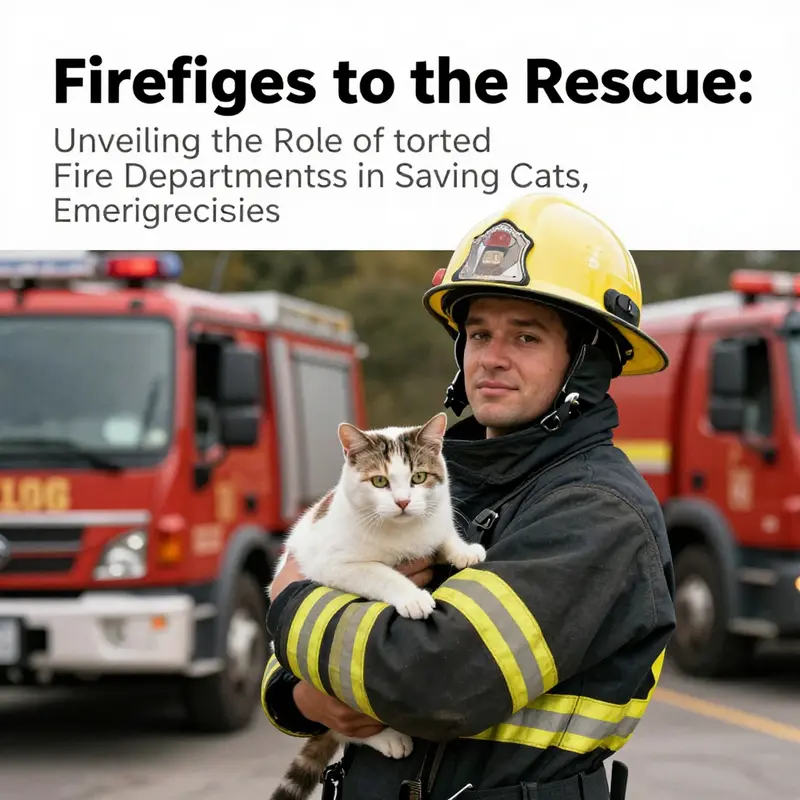
The role of fire departments extends beyond human safety and property protection; they often become unlikely heroes to pets in peril, particularly cats. When fires erupt or emergencies arise, fire crews frequently act with tremendous courage and compassion to rescue not only human beings but also our beloved animal companions. Recent incidents illustrate that their dedication to saving lives knows no boundaries, reflecting community ethics and evolutionary responsibilities that have gradually expanded over time. This article invites readers to explore the actions of firefighters during emergencies concerning feline rescues, cultural considerations shaping this role, the technological advancements enhancing rescue operations, and the overall impact on community trust. Together, these chapters will demystify the significance of fire departments rescuing cats and showcase the multifaceted nature of their duties, ultimately encouraging a deeper appreciation of their service.
Cats in the Line of Fire: How Fire Departments Rescue Feline Friends During Emergencies
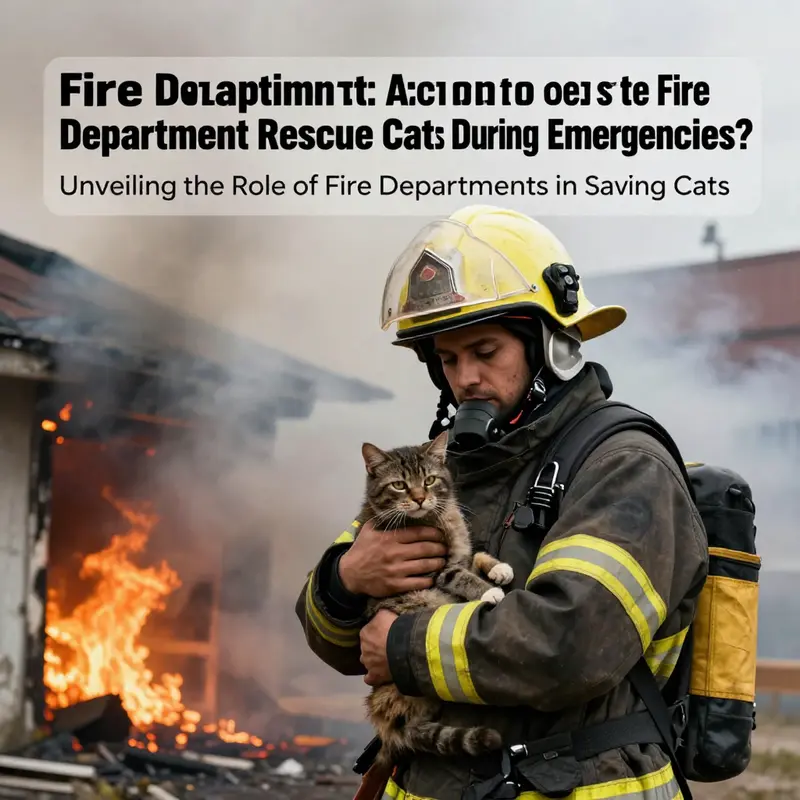
When a fire bell rings, the instinct to save lives is immediate and fierce. The siren cuts through the smoke, and every minute can tilt the balance between danger and safety. In that crucible of heat and urgency, firefighters prioritize human lives and the protection of property. Yet across many cities and towns, a quieter, equally urgent mission takes shape: rescuing cats and other pets from burning homes, from smoke-filled rooms, and from the precarious ledges where frightened animals cling to survival. This isn’t a public-relations flourish or a sentimental add-on; it is a developing creed within modern fire services. It rests on a practical premise—pets are family—and on a broader professional ethic that treats all lives with respect. The result is a growing body of practice, equipment, and shared stories that reframes emergency response as a community-centered service that extends beyond people to the places they hold dear at home.
The evidence is cumulative and specific. In China, the pattern of rescue has become more visible in recent years, underscoring a developing cultural expectation that firefighters should act, when it is safe, to preserve animal life. In 2025, a firefighter in Hohhot pulled an injured cat from a burning warehouse, the cat soot-streaked and injured yet ultimately survivable with medical care. The firefighter, Wang Hanbo, did not merely perform a duty; he paid for the cat’s medical expenses out of pocket, a private act that signals the moral weight many responders attach to these calls. The same year, another incident in 2026—captured on video and shared across social platforms—showed a cat precariously clinging to a window ledge during a blaze in Shenzhen, a vivid image of the risk and restraint firefighters manage as they work to secure an animal’s life without compromising their broader mission. And in 2022, a more dramatic tally appeared: firefighters rescued 38 cats unconscious from smoke inhalation after a fire, a number that underscored how quickly animal distress can accumulate alongside human danger.
These episodes aren’t merely anecdotal; they reflect a shift in how fire services view their own role in the safety and well-being of the communities they serve. While fire control laws typically prioritize human life first, the operational reality has evolved toward a model in which animal rescue is integrated into the service ethos. Fire departments have come to see pet rescue as part of public trust and community resilience. The logic is practical as well as moral. Pets can contribute to household safety networks—early alarms, predictable routines, and emotional ties that make people more likely to heed warnings and evacuate promptly. When firefighters demonstrate a willingness to rescue animals, they reinforce a community’s reluctance to put pets at risk or to underestimate the emotional and social stakes of animal companionship. In this sense, the rescue of cats becomes a measure of how seriously a fire department takes its obligation to the people who rely on it, not merely as emergency responders but as stewards of the home environment that people defend with their lives.
A tangible manifestation of this evolving approach is the adoption of specialized tools and protocols designed to protect animal life without interrupting the core flow of emergency operations. In London, the fire brigade launched a pilot program that equips vehicles with specially designed animal oxygen masks in select neighborhoods such as Brixton, Paddington, Richmond, and Hammersmith. The masks come in three sizes, crafted to fit dogs, cats, rabbits, and smaller animals such as snakes and mice. The program, though modest in scope, marks a deliberate move to prepare responders for the realities of urban home life where pets are common and where a few minutes can determine whether a cat survives a fire, a smoke-filled room, or a panicked escape attempt. There, firefighters who previously relied on improvised techniques now have a recognized method to stabilize an animal quickly after rescue, improving the animal’s chances of recovery and, by extension, the family’s chance to regain a sense of normalcy after the crisis.
The success stories associated with these tools are more than anecdotal. A Paddington kitchen blaze, for instance, demonstrated how a targeted intervention with an animal oxygen mask could stabilize a cat that had been rescued from a smoke-filled space. The immediate stabilization of the cat’s breathing helped veterinary teams begin treatment sooner and with a better prognosis. This is not about a single heroic moment; it is about a scalable practice that can reduce suffering and increase the odds of survival for pets who are already under extreme stress. The broader implication is clear: when fire services equip themselves to handle animal life, they reduce the risk of secondary injuries and complications—such as stress-related trauma, dehydration, or worsened airway injury—that can arise in the tumult of a rapid rescue.
This evolution does more than save animals; it reassures pet owners that their companions are considered part of the community’s safety fabric. While the legal obligation in many jurisdictions may not codify pet rescue as mandatory, many departments recognize the public trust housed in the pet-owner relationship. People invite emergency responders into their homes expecting not only a swift response to danger but a compassionate one. The visibility of animal rescues also has a social function. It can prevent owners, out of fear or perceived risk to themselves, from delaying evacuations—an outcome that could endanger humans. In this sense, rescuing cats is not a distraction from the mission but a reinforcement of it. It aligns with broader public-safety goals: protect life, maintain community confidence, and demonstrate that safety is a holistic concept, not a series of isolated duties.
The trend toward integrating animal rescue into mainstream fire response is mirrored in a wider cultural shift about the meaning of “home” in disaster terms. Across different regions, fires reveal that many homes are not just buildings with walls and doors; they are places where people and animals share intimate routines and where the emotional stakes of loss are high. In Zhejiang Province, a 2023 fire brought a kitten crying from a cage on an upper floor to the attention of rescuers who had extinguished the flames. The kitten’s cry is a stark reminder that danger in a home is not a static line but a moving, cascading set of risks that includes drops, smoke inhalation, heat exposure, and the possibility of confinement to unsafe spaces. In Jiangsu Province, a stray cat’s persistent meows woke a sleeping owner, enabling a prompt evacuation and the emergency call that saved a life. In Changsha, an electric oven’s unattended operation turned into a near-tragic event, and the cat’s alertness to danger helped the household respond in time. These cases illustrate more than heroic acts; they illustrate a synergistic relationship between human vigilance and animal signals, a dynamic in which pets act as quiet sentinels and as beneficiaries of a responsive emergency system.
The London program underscores a broader lesson about how equipment and training shape outcomes in animal rescues. Access to properly scaled masks reduces the barrier between rescue and survival. It is not simply a matter of pulling a pet from danger; it is about delivering a controlled breath of life at a moment when every second matters. When a cat inhales correctly after rescue, the path to recovery becomes clearer, and the likelihood of an animal returning to its owner without lasting complications increases. The pilots in London are part of a global trend toward recognizing that safety in emergencies must be inclusive of all household life forms. This inclusivity has practical implications for how fire departments are organized, trained, and funded. It prompts administrators to consider pet-related outreach as part of community safety programs, to include animal rescue scenarios in drills, and to ensure that vehicles are stocked not only with gear for people but with life-saving equipment for animals as well.
The ethical dimension of pet rescue is inextricable from its practical one. Firefighters are trained to risk their own safety to save others, but they also recognize the limits of what can be done without compromising overall response timelines. The decision to intervene on behalf of a cat, a dog, or a small mammal is a calculus of risk-reward, a professional judgment call made in seconds but underpinned by years of experience, training, and a sense of duty to the community. When a kitten, a tabby, or a terrier escapes a home’s danger, the event becomes a shared memory for the family and a case study for the department’s evolving protocols. It is not mere sentiment; it is an indicator of a service that has learned to see pets as more than property and owners as more than clients. The relationship between emergency response and household life has become a measure of the era’s social contract: if a city is truly prepared, its fire services will honor the full spectrum of life that people hold dear inside their homes.
For readers seeking practical context on how communities begin to weave animal rescue into their emergency framework, there are accessible touchpoints. A concise primer available through community resources can illuminate what a family might expect if a cat is trapped during a fire and how responders coordinate with veterinary care. See tpbhrescue.org/hello-world/ for an example of how outreach pages frame safety, preparedness, and partner cooperation in ways that demystify the response process and offer clear steps for home readiness. This kind of resource is not a plan to substitute professional response; it is a bridge that helps households reduce risk and understand what responders can offer when time is of the essence. The underlying message is simple: preparedness and trust in public services extend to every member of the household, furry or not.
The chapter’s arc, then, moves from the principle that human life is the priority to the lived reality that animals share our homes and thus deserve consideration in crisis moments. Fire departments are increasingly seen as stewards of a wider concept of safety, one that includes the emotional and social fabric of the home. The adoption of animal-specific equipment, the documentation of rescue outcomes, and the visible acts of care from responders together contribute to a cultural shift. This shift recognizes that a calm, thoughtful rescue can favor both animal welfare and human safety by preventing unnecessary risk during chaotic moments. The evidence from London’s program and the documented incidents across China and elsewhere suggests that these rescuers are not simply performing a duty; they are shaping a public trust. They are teaching communities to think of safety as something that encompasses all living beings under one roof.
As this chapter weaves together hard data, human stories, and evolving practice, it remains clear that the question—does the fire department rescue cats during emergencies?—has a multifaceted answer. Yes, they do, when it is safe to do so and without compromising the primary mission. Yes, it is becoming more systematic and instrumented, with equipment and protocols that support animal life as part of the overall emergency response. Yes, the public stance toward pets in crisis has shifted toward recognition and respect, with communities increasingly embracing these rescues as expressions of care and resilience. In a world where disasters test families and cities alike, the firefighting teams who choose to save a cat’s life are affirming a larger truth: life matters, in all its forms, and the integrity of a community is measured by how it protects the smallest and most vulnerable members within it.
External reference: London Fire Brigade – Animal Oxygen Masks Pilot Program. https://www.london-fire.gov.uk/news/2022/08/15/london-fire-brigade-launches-pilot-of-specialist-animal-oxygen-masks/
Beyond Human Rescue: Cultural and Ethical Forces Shaping Fire Departments’ Response to Cats
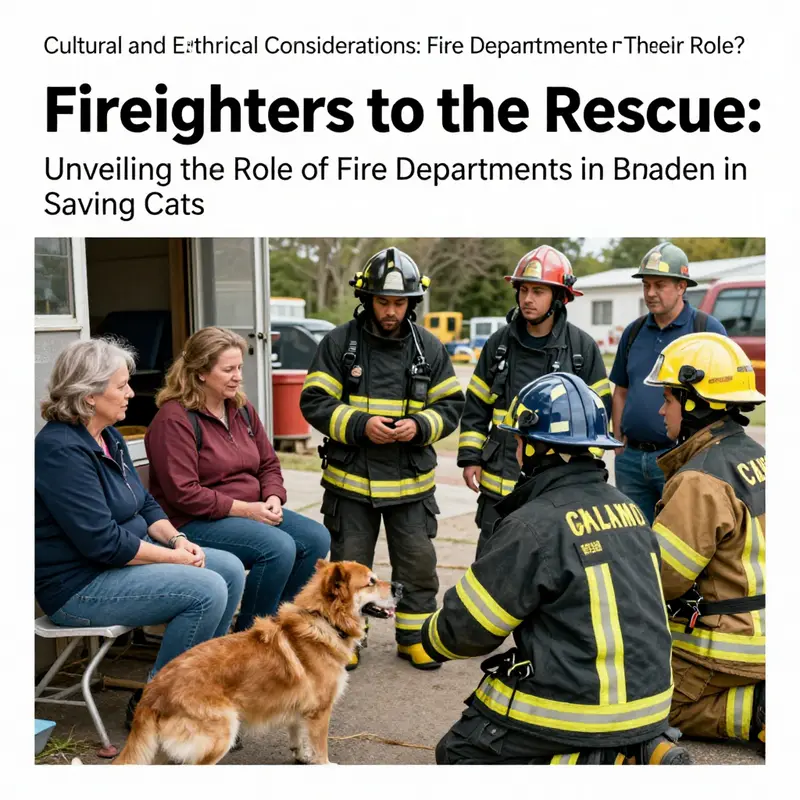
Cultural and ethical dimensions of rescuing cats by fire departments
The question of whether fire departments should rescue cats sits at the meeting point of duty, culture, and compassion. Firefighters are trained and tasked to protect human life and property. Yet, over the past decades, many crews have answered calls for animals in distress. Those moments reveal much about local values and the ethical choices emergency services face. They also show how practical limits, public expectations, and policy must find a workable balance.
Public pressure often pushes departments toward action. Pet ownership has grown in many regions. People increasingly treat animals as part of the family. When a cat becomes trapped or threatened, neighbors expect help. Social media amplifies those expectations. Videos of firefighters saving a struggling cat draw praise and shares. In 2026 a firefighter rescuing a cat clinging to a ledge in Shenzhen became a viral symbol of compassion. In 2025 another firefighter in Hohhot pulled an injured cat from a burning warehouse, paid for its care, and earned public admiration. These incidents show how rescue acts can strengthen community trust and goodwill.
That goodwill, however, must be weighed against operational priorities. The legal frameworks in many countries prioritize human life. China’s Fire Control Law, for example, assigns rescue resources to life-threatening situations. Fire departments must avoid mission creep that would divert personnel and equipment from those critical tasks. During busy shifts, answering a call about a pet could delay response to a person in danger. Officers and dispatchers therefore must triage calls carefully. The result is a practical rule that many departments already follow: animal rescues are permitted when doing so will not compromise human safety or ongoing operations.
Cultural norms shape how that rule is applied. In some countries, animal rescue by fire services is routine. Australia is a clear example where fire agencies regularly assist animals. In such places, taxpayers and leaders view these actions as civic responsibility. The incremental cost of a simple rescue is low compared to the public benefit. That acceptance makes it easier for departments to include animal rescue in daily duties. Elsewhere, public debate has been sharper. In China, a 2019 incident where residents called for help to free a cat from a balcony sparked national conversation. Some argued the call wasted limited resources. Others argued that such help strengthens community bonds and reflects humane values. Departments had to respond to both views while holding to their legal mandate.
Ethics sits at the heart of the debate, with two main principles in tension. The first is resource allocation. Emergency services have finite personnel, vehicles, and attention. These resources must be prioritized. Critics worry that widening responsibilities to include routine animal rescue could erode readiness for human emergencies. The second is the recognition of life value. Many citizens and responders feel every life matters. Small acts of kindness by emergency crews create moral affirmation. They show that the public servant cares for all beings. These acts build trust and can make residents more likely to cooperate with authorities during crises.
Practical solutions aim to reconcile these principles. One common approach is policy clarity. Departments that adopt explicit guidelines reduce ambiguity for crews and dispatchers. For example, a guideline might allow animal rescue only when no higher-priority calls are active. Another option is to allow rescues that pose minimal risk and require minimal resources. Clear criteria reduce risk and conserve capacity. They also provide a defensible basis for a decision when public criticism follows.
Training and equipment adjustments are another avenue. While firefighters are not veterinarians, basic animal-handling training improves outcomes. Lessons on safe restraint, signs of distress, and contamination risks help crews avoid injury to themselves and the animal. Departments in some regions equip vehicles with simple supplies for animal aid. That gear can include basic oxygen masks sized for animals and restraint tools. These additions are modest in cost but increase safety and effectiveness when crews decide to intervene.
Collaboration with specialized organizations yields important gains. Many communities have animal welfare groups and volunteer rescue teams. Creating formal links through memoranda of understanding gives dispatchers options. If a call concerns a trapped cat but human life is safe, crews can summon animal rescue volunteers. This layered response model allows firefighters to focus on life-threatening matters while still ensuring animals receive help. When specialized teams are unavailable, fire crews—guided by clear policy—can step in safely.
Community education reduces unnecessary emergency calls. Many pet rescues could be handled by neighbors, landlords, or animal control. Public information campaigns can teach citizens which situations warrant dialing emergency services. Clear messaging also encourages the use of appropriate channels for non-emergency animal aid. Over time, public hygiene on this point reduces demand on fire services and ensures firefighters remain available for critical incidents.
Ethics also extends to how crews are supported after animal rescues. Saving an animal can be emotionally intense. When outcomes are poor, responders can experience grief. Departments that provide peer support and counseling acknowledge this reality. Recognizing the emotional labor of rescue tasks creates healthier teams. It also prepares firefighters to act when they can, without fearing unresolved stress after the call.
Legal frameworks can evolve to reflect social expectations. Legislation that clarifies the role of emergency services regarding animals can prevent confusion. Policy can outline liability protections for responders who perform animal rescues in good faith. It can also incentivize cross-agency cooperation. When laws and department policies align, decisions at the scene become clearer and criticism is less likely to be rooted in misunderstanding.
Case studies illustrate how these ideas work in practice. In Laiyang City in 2015, firefighters traveled a distance to free a cat from a mousetrap. The act sparked praise and showed how local crews can act when operations allow. In another incident in 2022, firefighters rescued 38 cats that had been rendered unconscious from smoke inhalation during a building fire. That response required coordination, medical triage for the animals, and follow-up care. It also offered a powerful public message: firefighters protect all vulnerable lives when possible.
Not every rescue should default to fire services. For routine incidents, trained animal control or rescue groups remain the better option. For complex or dangerous scenes, such as building fires, human priorities must guide action. But in many everyday scenarios, a measured role for fire departments is feasible. That role depends on policy, training, and community partnerships. It also depends on honest public dialogue about limits and expectations.
A balanced approach often works best. Departments can set rules allowing animal rescues when the risk is low and human calls are handled. They can invest in modest training and equipment. They can strengthen ties to animal welfare groups. They can educate the public about the appropriate use of emergency services. And they can create legal and administrative frameworks that protect responders when they act compassionately. Such a strategy honors both ethical impulses and operational realities.
The cultural implications are important. When firefighters save a cat, the act resonates because it reflects shared values. Communities that expect and accept animal rescue tend to see their emergency services as caring and responsive. That trust matters during larger crises. Fire departments that build goodwill through service often find smoother cooperation during evacuations and emergencies. Conversely, departments that are seen as unresponsive risk eroding public confidence. The symbolic weight of animal rescue therefore carries strategic value beyond the single act.
At the same time, leaders must be clear-eyed about trade-offs. Resources remain finite. A decision to expand animal rescue efforts must come with commitments to funding, training, and policy guidance. Without that support, well-meant efforts can unintentionally weaken core mission readiness.
In practice, many departments already navigate these tensions with discretion. They prioritize people, step in for animals when safe, and lean on partners for non-emergency cases. This pragmatic approach respects both the letter of legal obligations and the spirit of communal care. The result is a flexible public service capable of responding to human crises and, when appropriate, extending compassion to animals.
For departments considering changes, several next steps are useful. First, craft clear policy on animal rescue priorities. Second, offer basic animal-handling training to crews. Third, establish formal partnerships with welfare groups. Fourth, equip vehicles with simple, safe tools for animal aid. Fifth, launch public education on when to call emergency services. These measures reduce ambiguity while upholding humane responses.
Ultimately, the question is not simply whether fire departments rescue cats. It is how communities choose to balance urgency, compassion, and capacity. Many departments already answer that call with care and courage. With thoughtful policy and community collaboration, those actions can continue—safely and sustainably—without diminishing the primary mission of saving human lives.
For more detail on official guidelines and how Chinese departments have navigated this debate, see the People’s Daily overview: https://en.people.cn/2020/0306/c1008-3074523.html
For a perspective on how fire stations can evolve as community-centered institutions, see transforming fire stations: health-conscious revolution.
Tech at the Doorstep: The Quiet Role of Tools in Firefighter Cat Rescues
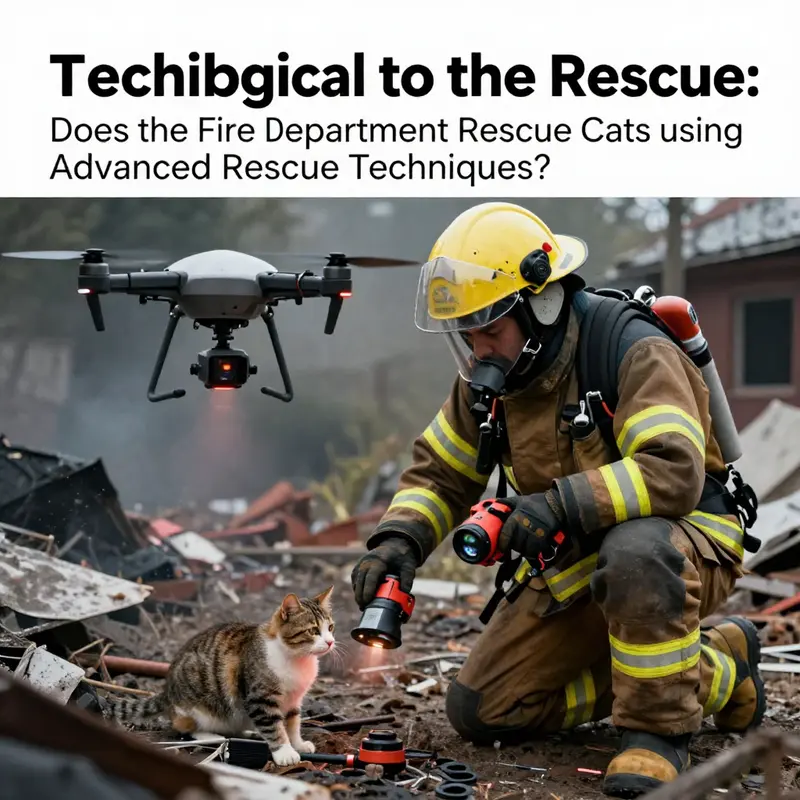
When flames bite at the margins of a building and smoke threads through hallways, the instinct to act is swift and measured. The primary mission remains human safety and protecting life and property, but within many fire departments a parallel pledge has grown: to help animals in distress whenever it can be done without compromising people. This focus is not driven by a myth of romance but by a pragmatic ethic that treats all lives with care. In practice, technology plays a permissive, supportive role rather than a dominant one. The lion’s share of cat rescues continues to hinge on training, judgment, and the cool, deliberate hands of firefighters. This is not to overlook the ways tools can improve outcomes. It is to acknowledge that rescue, in its most intimate moments—when a frightened cat is slid from a perilous perch into the safety of a carrier—owes more to experience and restraint than to gadgets alone.
The record of recent incidents offers a window into how this balance works in real time. In a notable case, firefighters successfully extracted a kitten that was trapped in a sewer, a narrow, echoing space where minutes can feel like hours as the animal panics and the rescuer negotiates the perfect tilt of the ladder and the gentlest hand. In another episode, a cat lost consciousness after a fire, and responders performed CPR and assisted breathing—procedures grounded in veterinary guidelines that emphasize a careful rhythm and the humane needs of a small, living being. The human element—calm voices, patient handling, a steady tempo of chest compressions—often matters more than the gadgetry at hand. And there are broader reminders in the annals of public service: in 2022, an incident remarkable for scale involved the rescue of 38 cats unconscious from smoke, a scenario that underscores teamwork, triage, and the art of rapid decision-making under pressure. The same ethos appears in 2025, when a firefighter in Hohhot, China, saved an injured cat from a blazing warehouse and reportedly covered medical expenses out of personal concern. A later moment in 2026, captured on a video that circulated online, showed a cat clinging to a window ledge during a fire in Shenzhen, a vivid demonstration of urgency and compassion that resonates far beyond the immediate geography. Together, these accounts illustrate a pattern: animal rescue is embedded in the culture of public service, driven by a sense of responsibility that accompanies every life saved.
Within this framework, the tools of rescue do not vanish; rather, they are deployed with a clear-eyed appreciation for the risks and the realities on the ground. When a kitten must be coaxed from a sewer, the repertoire typically includes ladders, ropes, and a suite of hand tools designed to minimize movement that could injure either the animal or the rescuer. The extraction process demands precision and restraint; a cat’s balance and fear response can make even small missteps dangerous. Firefighters must read the animal’s body language—ears back, tail tucked, pupils wide—and translate that into a sequence of movements that keep the cat calm and the operation efficient. In such moments, the traditional toolkit proves itself again: a sturdy ladder extended to a safe reach, a rope system to lower the animal without jostling, and gentle handling that uses towels or soft fabric to protect fragile limbs while preventing further panic. These are not high-tech maneuvers; they are the language of practical rescue, learned through hours of drills, field experience, and the instinct to protect life in all its forms.
Yet the contemporary rescue scene also contains a quieter, more expansive role for technology. Thermal imaging cameras, drones, and other devices can provide crucial situational awareness in complex structures or smoke-filled environments. They help responders identify heat sources, map the interior layout, or locate pockets where an animal might be hiding. However, in the specific context of cat rescues, these tools are used sparingly and with careful judgment. The moment of contact with a frightened animal is a moment of intimate exchange, and it often requires a human touch that neither thermal images nor drones can replicate. When a cat is perched in a precarious location, the safest course is commonly the one that relies on the responders’ training to slow the pace, stabilize the scene, and approach with patience rather than force. Technology becomes a supplementary compass, guiding decision-making rather than performing the rescue itself.
The broader picture reveals a natural, almost ecological relationship between technique and temperament. The everyday rescue workflow begins with risk assessment and scene safety, proceeds to location and access, and culminates in the careful transfer of the animal to a veterinary or shelter setting for observation and recovery. In these steps, equipment remains a means to an end: reducing danger to humans, stewarding the animal’s welfare, and preserving the integrity of the emergency operation. The emphasis on safety means that dramatic demonstrations of high-end devices are rare in cat rescues. There is little room for robotic arms or automated extraction devices when prompt voluntary cooperation from an anxious cat is not guaranteed. Instead, responders rely on the age-old virtues of communication, empathy, and steady technique, all supported by the era’s general tools.
This is not to suggest a vanilla, technophobic picture of firefighting. Technology does shape training, planning, and leadership, and it informs decisions about where to allocate limited resources. In a broader sense, the evolution of technology—how sensors communicate, how data informs response times, and how decision-support tools sharpen command decisions—has a meaningful impact on how departments prepare for and manage animal rescues. This influence often appears in the strategic layer: what kinds of drills are run, how teams rehearse multi-entity responses, and how communities perceive the fire service’s role beyond extinguishing flames. Yet the operational heart of cat rescue remains stubbornly hands-on and human-centered. The cat’s survival may hinge on a rescuer’s calm breath, a careful grip, and a moment of compassionate presence in a space that is both dangerous and uncertain.
The ethical and cultural dimensions of this practice are also worth noting. Fire departments operate under a legal framework that prioritizes human life, with animal rescue frequently framed as a community service rather than a mandatory obligation. Even so, the frequency and warmth of such rescues signal a cultural commitment to respect all living beings and to view animal welfare as part of public trust. When responders choose to save a cat, a dog, or any creature in distress, they are acting in a space where duty blends with empathy. The public response to these acts—often expressed through social media and community gratitude—reinforces a shared value: that a city’s strength is not only in its ability to confront danger but also in its willingness to care for those who cannot speak for themselves.
Within this landscape, technology’s role can be examined through the lens of leadership and organizational culture. The integration of modern tools into training and response planning shapes how teams think about risk, allocate time, and measure outcomes. It affects how incident commanders weigh the pros and cons of deploying a drone to scan a collapsed stairwell versus sending a team to establish a safe access point for a distress animal. In discussions about technology’s influence on fire department leadership, the emphasis often falls on how decision-makers balance efficiency, safety, and compassion in high-stakes environments. This balance matters not only for the present rescue but for how communities perceive the fire service’s evolving mandate. See the discussion on technology’s impact on leadership for a broader sense of how tech culture intersects with field practice and ethical commitments in emergency response.
The thread that runs through these observations is clear. Advanced tools do offer advantages in terms of visibility, speed, and risk assessment, but they do not replace the virtues of patient technique and humane handling. The majority of cat rescues rely on the tried-and-true method of using ladders, ropes, and careful restraint, guided by veterinary principles for any medical intervention. A cat that has inhaled smoke, for instance, may require oxygen therapy and close monitoring, yet these steps happen after the animal has been physically secured and kept in a calm environment. The coordination with veterinary professionals remains essential, and the chain of care—from the moment of extraction to the moment of treatment—depends on the same cooperative philosophy that governs all emergency work: protect human life first, then gently extend care to non-human life when it does not compromise the mission.
As readers reflect on these dynamics, the takeaway is not that technology is unnecessary. Rather, it is that technology shapes the boundaries of what is possible without eroding the essential human elements of rescue. It is the difference between a scene being illuminated by devices that map heat and structure, and a scene being navigated through the quiet confidence of a skilled rescuer who knows when to pause, when to reassure, and when to act. This, in turn, resonates with broader discussions about how fire services adapt to new challenges while remaining faithful to core values—safety, service, and stewardship of life in all its forms. To explore how these values are evolving under the influence of technological and organizational change, consider the broader conversation about the impact of technology on fire department leadership. The link below offers a window into how leaders balance innovation with the enduring human-centered ethos that underpins every life-saving decision.
impact of technology on fire department leadership
For readers seeking a deeper case study that blends narrative and analysis, the original reporting on compassionate animal rescues contains examples that underscore both the courage and restraint that define these moments. The narrative of firefighters rescuing a cat from a sewer, giving it a name, and ensuring its continued care illustrates the bridge between fieldcraft and empathy that sustains community trust. It is a reminder that every tool, every technique, and every act of care sits within a larger story about how cities care for their most vulnerable inhabitants. This chapter recognizes that story while staying grounded in the practicalities of modern rescue work and the ethical framework that supports it.
External reading can illuminate the broader spectrum of these rescues and the ongoing dialogue about safety, welfare, and public trust. For an in-depth account of a dramatic cat rescue and the human elements that shaped it, see the following report: Firefighters Rescue Cat Trapped in Sewer, Give It a Name. This narrative offers a vivid complement to the discussion above, demonstrating how ingenuity, patience, and mercy converge in a single moment of rescue.
https://www.daxiaowang.com/news/firefighters-rescue-cat-trapped-in-sewer-give-it-a-name
Bravery Beyond the Alarm: Cat Rescues, Public Trust, and the Everyday Ethics of Firefighting
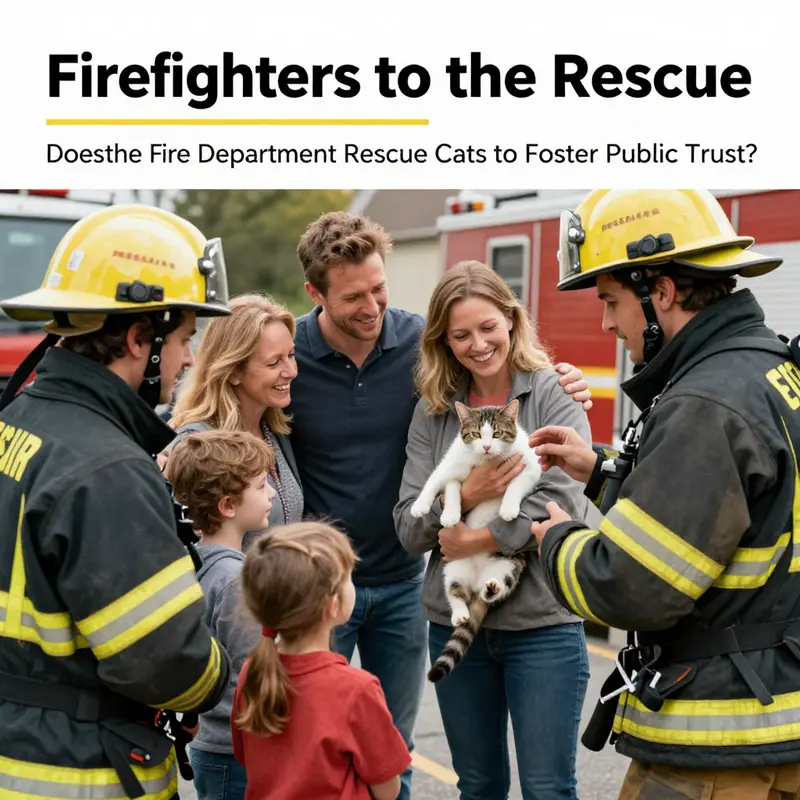
When most people think of a fire department, they picture flames, sirens, and life-saving maneuvers aimed at protecting human life and property. Yet the chapters of many emergencies reveal a slightly different truth: people, and sometimes their pets, are in danger together. In these moments, firefighters are pressed into roles that blend professional priority with a hard-wired compassion. The question that threads through public conversation is whether rescuing cats is part of the job. The answer, drawn from recent incidents and professional perspectives, is nuanced. Cat rescues are not a formal objective of modern fire services, but they are common enough to be recognized as a meaningful extension of a department’s core commitment to community safety. They unfold most often during fires and other hazardous events when rescuing an animal can be accomplished without compromising human safety. In this sense, the act is both ethical and practical, a humanizing dimension of public service that aligns with a broad social contract: first protect life, then extend care to every vulnerable creature within reach.
The concrete examples that populate recent years underscore how these rescues occur, how they are handled, and what they signify about the culture of firefighting. In 2025, a firefighter in Hohhot, China, pulled an injured cat from a burning warehouse. The cat was soot-smeared and visibly hurt, yet the animal survived thanks to rapid smoke- and heat-focused decision making, with triage and treatment following the extraction. What stood out beyond the dramatic moment was the personal commitment of the firefighter, who reportedly covered the cat’s medical expenses himself. This detail is telling. It signals a cultural impulse within some fire crews that goes beyond protocol, a willingness to shoulder private costs to safeguard life that has no price tag in the moment of crisis. The gesture resonates publicly because it speaks to a standard firefighters often aspire to but cannot legally guarantee: a broad-energy approach to life that treats all beings with dignity when it is safe to do so.
A year later, a different snapshot of courage went viral from Shenzhen, China, where video footage captured a cat clinging to a window ledge amid a burning building. The image circulated with quickness and empathy, turning a perilous scene into a public story about perseverance and fast, careful rescue work. The cat’s survival was the visible outcome, but the broader takeaway was the message these first responders send in every call: when danger is real and time is short, the aim is to reduce harm across the spectrum of life. The viral moment underscores a longstanding dynamic: media and public audiences reward displays of bravery that are tempered with tenderness. Fire teams know that a rescue can become a symbol of trust—of a public service that cares enough to act with mercy, even when the danger is personal and discrete.
The historical record also includes statistics that anchor the conversation in a different frame of reference. In 2022, a fire department team rescued 38 cats that were unconscious due to smoke inhalation in a fire. The scale of that incident illustrates that animal rescues are not rare anomalies but recurring possibilities within the broader responsibilities of emergency response. Each cat saved enhances the public’s perception of the fire service as a multifaceted guardian—one who protects people and animals alike when the situation allows for it. Yet even as these incidents accumulate in public memory, they are understood by practitioners as exceptions that illuminate rather than redefine the core mission: to safeguard life first, then to mitigate risk and protect property, with animal welfare unfolding within the same ethical framework.
This leans into a crucial distinction that scholars and practitioners emphasize. There is no formal obligation in many legal frameworks to rescue pets during emergencies, and no policy that treats animal rescue as a strategic lever for improving community standing. Laws like China’s Fire Control Law prioritize human life, and their language reflects a hierarchy of danger that puts people first. The absence of a legal mandate does not erase the reality of compassionate action—indeed, it highlights the difference between rule-bound duty and moral choice in the heat of the moment. In practice, when a cat is discovered in a dangerous zone, firefighters perform a risk assessment that weighs human safety, scene stability, and the animal’s immediate peril. If it is safe to intervene without derailing the primary emergency operation, they often proceed. If not, they prioritize human safety and return to the operational plan. This balance—between the statutory priority and the spontaneous call to mercy—defines much of the public perception of the fire service in modern times.
Within professional circles, the discussion about rescuing animals is anchored in risk management and public expectations. The American Society for the Prevention of Cruelty to Animals (ASPCA) and other welfare organizations routinely frame animal rescues during disasters as urgent responses to imminent danger, not as public-relations gambits. The emphasis is squarely on mitigating immediate harm rather than building a curated image. This distinction matters because it keeps the focus on safety and ethics rather than on performance metrics or audience reception. Fire departments that publicly celebrate animal rescues still frame them as incidents that test the same core competencies they use on human rescues: scene assessment, rapid decision making, precise technique, and careful handling to minimize additional risk. In this sense, the cat rescue is less about branding and more about the practical, humane application of professional judgment under pressure. The discipline behind such actions is reinforced by training and protocols that guide responders through the rare moments when animals are within the danger zone and can be spared without compromising human lives.
An underappreciated aspect of how these moments unfold is the social texture of the response. Fire departments operate in tightly knit communities where trust is earned through predictable, verifiable behavior. The occasional rescue of a cat becomes a powerful, visible manifestation of core values: courage, competence, and compassion in equal measure. In neighborhoods where residents may have little direct contact with the fire service, the image of firefighters acting gently with a frightened animal can humanize the force in a way that drills and statistics cannot. Video clips and news reports amplify this effect, creating a shared cultural reference point that influences how people view public safety institutions. Yet the actual operational question remains steadfast: would the rescue have been possible without diverting or delaying critical life-saving operations? Since the standard practice is to rescue animals only when it does not endanger humans or impede emergency work, these stories tend to reinforce a pragmatic ethic rather than a strategy aimed at public relations. They are celebrations of moral clarity under stress, rather than public relations campaigns dressed in fur and flames.
The internal culture of fire services also plays a significant role in shaping how animal rescues are conceived and executed. Some departments integrate animal handling into their broader training and field protocols, ensuring that responders have the skills to approach distressed animals with calmness and care. This preparation matters because animals can react unpredictably in smoke-filled environments. A trained responder can minimize stress for the animal while preserving the responder’s safety and the integrity of the scene. In practice, this means the rescuer uses techniques that reduce the animal’s fear, secures the animal in a safe carrier or guide, and ensures that medical evaluation follows as soon as the animal is out of danger. When these steps are followed, the rescue becomes a procedural success—an example of how a team’s competence translates into compassionate outcomes for the most vulnerable members of the community.
The public narrative around these rescues is further complicated by the speed and spectacle of modern media. Social media has the power to turn a single rescue into a national or global moment, which can, in turn, influence expectations about what fire departments should do on every call. The tension emerges: how to acknowledge and celebrate humane acts without implying that all emergencies are opportunities for heroism or spectacle. Responsible depictions emphasize the constraints of the job—where human life takes precedence, where safety protocols exist to protect responders and civilians alike, and where spontaneous acts of mercy occur only when they do not undermine operations. This is not a denial of compassion; it is a precise articulation of a professional ethic that values life while maintaining the discipline to avoid unnecessary risk. Firefighters understand that trust is earned not by dramatic rescues alone, but by consistent behavior that places people first and animals second, when possible, within a framework of safety and accountability.
In this light, the connection between cat rescues and public trust becomes clearer, though it remains indirect. The rescues themselves are not designed as long-term PR strategies. Instead, they function as demonstrations of a broader ethos—the willingness to protect life in all its forms, and to do so with competence and restraint. When a community witnesses a rescue that ends with the animal safe, the observer experiences a tangible expression of the department’s values. People see a team that can act decisively, communicate clearly, and extend care beyond human life without compromising the mission. Over time, these moments contribute to a culture of trust. Residents feel that the fire service is not only capable of defeating danger but also compassionate in the presence of vulnerability. This dual capability matters: it reinforces the social compact that public safety services exist to shelter communities from hazard and to treat all living beings with respect when circumstances permit.
The chapter of public trust, however, remains open to interpretation, and the best evidence lies in how departments reflect on their practice. The narrative is not that every call should end with an animal rescue, but rather that when opportunity and safety align, rescuing an animal is a humane extension of the same professional judgment that saves human lives. This perspective is echoed by lines of inquiry that connect to ongoing innovations in the field. Fire services continually explore how to improve safety, efficiency, and community engagement. Some of these explorations appear in forward-looking forums and institutions that push the boundaries of what emergency response can become. For readers who want to see how new ideas are shaping the future of firefighting, consider the work outlined in Innovation Museum Transforming Fire Services. It highlights how contemporary fire services are reimagining operations, training, and community partnerships, reinforcing the idea that care—not just crisis management—defines a modern public safety agency.
Beyond the anecdotes and the policy caveats, the enduring takeaway is that the rescue of cats embodies a broader ethical stance: every life has value, and the duty to protect life extends beyond human beings when it can be done safely. This stance does not require a departmental rebranding or a new legal mandate; it requires judgment, discipline, and a culture that prizes mercy alongside effectiveness. In the long arc of public safety, such acts contribute to a collective memory of a force that is capable of dramatic action and quiet kindness. The public’s perception of the fire service as a steadfast guardian is reinforced not only by the dramatic saves but also by the everyday choices that make the difference between harm and relief for animals caught in harm’s way.
As readers consider the broader implications, they may look toward external sources that codify how these practices fit into a comprehensive framework of emergency response. For those seeking formal guidance on animal handling within the discipline of firefighting, the National Fire Protection Association provides guidelines and data on firefighter training, incident protocols, and safety considerations that shape how departments prepare for all manner of contingencies: https://www.nfpa.org. This resource helps situate animal rescues within the same system that governs smoke ventilation, search-and-rescue operations, and hazard mitigation—an integrated approach that sustains both human and animal welfare on the front lines of danger.
In the end, public trust is built not by occasional dramatic rescues, but by a consistent and transparent commitment to life, safety, and compassion as inseparable elements of service. The rescues of cats—when they occur—are signs of that commitment at work: acts of mercy performed with the same precision, teamwork, and calm under pressure that define life-saving firefighting. They remind communities that the fire department operates within a moral landscape where courage and care walk hand in hand. And they invite ongoing dialogue about how public safety institutions can evolve—honoring tradition while embracing innovation and humane responsibility. For those who follow these stories, the takeaway is simple yet powerful: a fire department’s worth is measured not only by how it fights flames but by how it protects life in all its forms, often in moments when the clock is ticking and the line between danger and mercy is razor-thin. In that space, cat rescues are more than compassionate episodes; they are reflections of a public service that believes in the sanctity of life and the duty to defend it, however fragile the situation may seem. They are quiet, persuasive arguments for trust built not on spectacle, but on steady, principled action.
External resource: NFPA.
Final thoughts
The compassion exhibited by fire departments in their efforts to rescue cats during emergencies represents a profound commitment to all lives within the community. These actions, combined with the ethical considerations and technological advancements, highlight the shift in their roles as vital components of safeguarding not just human beings but also treasured pets. As communities witness these acts of bravery and care, a bond of trust is nurtured between residents and their local fire departments, reinforcing the importance of service in all its forms. By fostering a deeper understanding of this multifaceted role, we can appreciate the dedication and valor firefighters demonstrate in their responsibility toward both people and animals alike.