
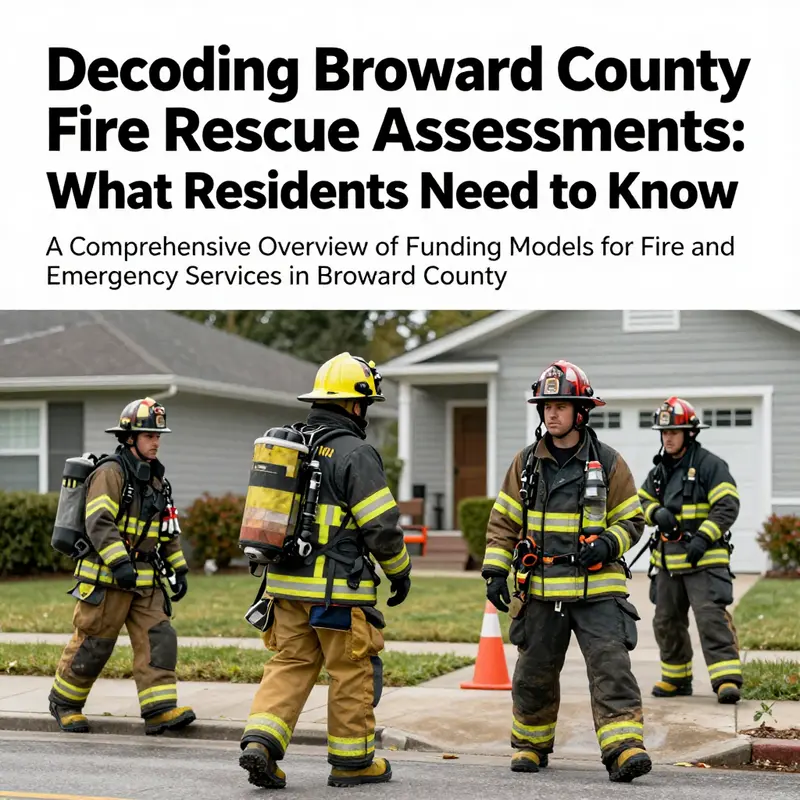
Broward County Fire Rescue assessments are pivotal to sustaining essential fire and emergency services, ensuring safety and readiness throughout the community. These assessments are calculated based on property value, directly linking funding to real estate holdings. It is crucial for residents, property owners, firefighters, and educators alike to understand how these assessments are determined, the implications for taxpayers, and the responsible management practices involved. By delving into these areas, we can cultivate a better understanding of how public safety is financed in our county and reinforce the importance of fiscal responsibility in maintaining our emergency services.
Funding the Fire Line: Decoding Broward County’s Five-Year Fire Rescue Assessments
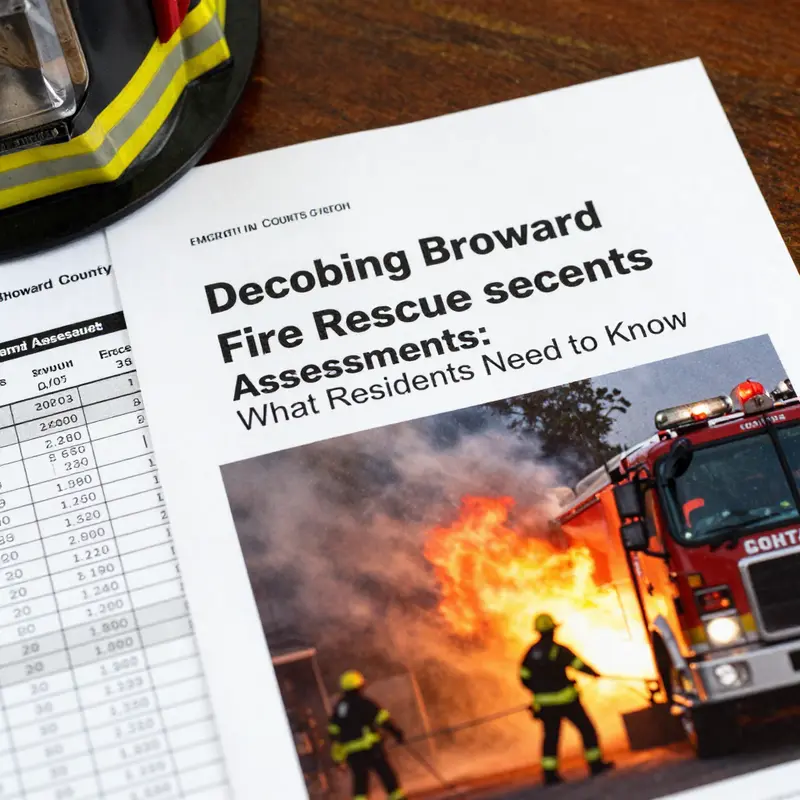
Broward County’s approach to funding its fire and emergency services rests on a property-based assessment that travels with every parcel of real estate within the county. This chapter unpacks how those assessments are calculated, why the five-year cost calculation cycle is central to the system, and how the numbers translate into predictable, transparent charges on property tax bills. The goal is not merely to illuminate a technical process but to connect that process to the lived reality of residents and business owners who rely on timely, effective fire and rescue responses. At its core, the assessment seeks to align the cost of delivering fire suppression, emergency medical services, public safety education, equipment upkeep, and administrative support with the expected use and risk profile associated with a property. In practice, the mechanism aims to distribute the burden of a broad public good in a way that is fair, stable, and tied to actual service demand, rather than shifting costs through fees that rise and fall with the political climate of yearly budget debates. This balancing act—between predictability for agencies and fairness for taxpayers—defines how Broward County plans, targets, and updates its Fire Rescue Assessment Program year after year.
The five-year horizon is more than a planning convenience. It is a deliberate effort to smooth volatility in operational needs, reflect long-term investments, and keep pace with changes in population, development, and service expectations. The cycle begins with a comprehensive cost analysis that aggregates both direct program costs and indirect overhead that supports the entire mission. Direct costs are the funds allocated to actual fire suppression, emergency medical services, and related public safety work. Indirect costs include administrative functions, fleet maintenance, training programs, facility operations, and other support services that ensure responders can reach every call with speed and competence. By projecting these costs across FY2022-23 through FY2026-27, the county creates a disciplined framework for rate setting. This temporal span recognizes that fire rescue operations operate on multi-year rhythms: equipment renewal schedules, staffing plans, and capital investments all unfold over several fiscal cycles. A five-year lens also permits the incorporation of anticipated changes in risk profiles—for example, shifts in development patterns, alterations in call volume, or the emergence of new service demands—without destabilizing the annual tax bill.
The calculation methodology treats the assessment as a proportional instrument rather than a blunt flat fee. In this sense, property owners pay in proportion to the expected use of fire and rescue services by their parcel. Several factors influence that proportionality. The most straightforward is property type: residential, commercial, industrial, or mixed-use properties each have different exposure levels and potential call volumes. But the story does not end with land use. Location within Broward County matters because some geographic areas experience higher call densities, longer response times, or more frequent emergencies due to demographic shifts, aging infrastructure, or environmental risk factors. The risk profile of a property—captured through a combination of occupancy type, construction standards, presence of specialized equipment, and historical incident patterns—enters the calculation to adjust the rate up or down accordingly. The operational philosophy here is explicit: taxpayers contributing to a green, well-staffed fire service should see that investment reflected in the reliability and speed of responses in their own neighborhoods, while those living in comparatively lower-risk areas contribute fairly to a system designed to remain ready for the unexpected across the entire county.
In practical terms, the county’s costing framework is built around a set of cost pools that feed into the final per-property assessment. The direct service pool covers the essential front-line work—the suppression crews, the EMS teams, and the personnel who transform a response into a saved life or a mitigated emergency. This pool is sensitive to staffing levels, overtime expenditures, and the costs of maintaining a ready fleet of apparatus, including maintenance cycles and fuel consumption. The public education and prevention pool reflects the ongoing investments in safety awareness, school outreach, and community preparedness campaigns that aim to reduce incident frequency and improve outcomes when emergencies do occur. The equipment and maintenance pool covers the depreciation and renewal of critical gear, from hoses and towers to ambulances and medical devices, ensuring responders can operate with modern, reliable tools. Finally, the administrative and overhead pool accounts for the back-office functions—budgeting, performance measurement, information systems, training administration, and the governance processes that sit behind every call that comes in and every mission that gets dispatched.
What makes the Broward County approach distinctive is not a single clever trick but an integrated commitment to long-range planning married to granular visibility. The five-year projection anchors the rate-setting process in a stable framework, but it does not render the system inflexible. The actual assessment each year can reflect updated cost data, revised staffing plans, or new capital needs while remaining within the overarching five-year path. This structure helps avoid sudden spikes in the property tax bill—a concern many homeowners and small business operators raise when regulatory costs are revised in response to short-term budget pressures. The law and policy documents that guide this process translate into transparent assumptions, such that residents can examine how a particular property’s rate is influenced by factors like its class, its location, and its risk profile. To the extent that residents wish to study the particulars, Broward County provides detailed documentation that breaks down the calculation into the line items that feed the final figure and the forecast horizon that undergirds it.
A crucial feature of the calculation is the explicit linkage between a property’s assessed value and its share of the cost. While the mechanics can appear opaque at first glance, the underlying logic is straightforward science wrapped in governance. The assessed value acts as a proxy for a property’s footprint in the service ecosystem: larger, higher-valued properties tend to be associated with greater exposure to risk and, often, more complex needs in terms of protection and response. Yet the system also recognizes that high-value does not automatically equate to high-risk. A warehouse with robust fire suppression systems and limited occupancy might present a different risk profile from a smaller, high-occupancy residential building in a densely populated neighborhood. The assessment therefore translates a multi-dimensional risk assessment into a per-parcel charge that is fair, predictable, and aligned with anticipated service demands. This proportional approach, rooted in a multi-criteria model, balances equity and efficiency: it charges those who are more likely to generate higher demand for fire and rescue services while ensuring that every property contributes to keeping the county’s emergency response capabilities ready for the full spectrum of potential incidents.
The policy narrative behind the five-year cycle also embodies a fidelity to public accountability. The process is designed to be auditable and transparent, with periodic updates that reflect actual cost experience, changes in service levels, and evolving community needs. The June 2024 ordinance-related publication by OrdinanceWatch marks a point at which the methodology and assumptions are publicly refreshed, offering a detailed map of how each cost component flows through to the final rate. In turn, this transparency supports constructive dialogue with residents, neighborhood associations, and business groups who may have questions about area-specific charges or the rationale for adjustments in a given year. It is a practical recognition that an essential public service, no matter how professional and predictable it appears in daily operation, relies on continuous scrutiny to maintain trust and legitimacy among the taxpayers who fund it. For readers who want to see the nuts and bolts in a formal document, the official R8143 FY25 Fire Assessment Fee with backup provides the granular breakdown, including the assumptions that underlie projected costs and the exact allocation rules that tie a parcel’s characteristics to its rate.
The interplay between property characteristics and service demand also highlights how the county contends with changing demographics and development patterns. Broward County has experienced growth in certain corridors and shifts in land use that can alter the expected call mix and response dynamics. A five-year projection accommodates those dynamics by updating cost pools and rate structures in a way that preserves the integrity of the funding mechanism while allowing for necessary adjustments. In this sense, the assessment is not merely a static tax adjunct; it is a living instrument tuned to the evolving realities of the community. The aim is not to punish growth with higher fees but to align the funding needed to sustain essential services with the scale and intensity of the demand they are designed to meet. In practical terms, this means that a new high-rise, mixed-use development with a unique risk profile will be evaluated through the same risk-adjusted lens as an established residential neighborhood, yielding a rate that corresponds to the probability and consequence of emergency service needs within that parcel’s footprint.
The technical core of the calculation rests on a blend of data sources, cost accounting methods, and policy choices that together determine the annual numbers residents see on their property tax bills. The direct cost pool is anchored in service units—fire suppression incidents, EMS transports, and response-time targets—while the indirect pool reflects the shared infrastructure that makes reliable service possible. The cost allocations rely on a disciplined accounting framework that distinguishes capital equipment amortization from ongoing operating costs, thereby avoiding distortions that could either overstate or understate the price of service. The result is a rate schedule that mirrors not only current expenditures but also the expected strain on the system in coming years, incorporating anticipated maintenance cycles, equipment replacement needs, and staffing trajectories that align with population and economic growth in the county.
Importantly, the methodology acknowledges that fairness is embedded in more than arithmetic. It requires a clear articulation of how property class distinctions, risk indicators, and geographic variation feed into a single, understandable rate. To residents, this means that the charge they see on their bill is not a mysterious levy; it is a reflection of the county’s commitment to provide timely emergency responses, maintain capable equipment, and invest in prevention and education that can reduce incidents in the first place. It is also a reminder that the public funding mechanism for life-safety services is a shared enterprise: one that hinges on accurate budgeting, prudent financial management, and continuous public communication. The five-year horizon is the framework that makes this shared enterprise intelligible, predictable, and resilient across changing fiscal climates, while the annual adjustments grounded in the tenets of proportionality and risk ensure that no parcel bears an unwarranted burden or enjoys unwarranted immunity.
For readers who want to trace the thread from a single parcel to the countywide budget, the pathway runs through the official documentation that translates cost pools into rate components. Within the R8143 FY25 Fire Assessment Fee with backup document, one can locate the specific table that ties line-item costs to the per-parcel charges, along with the explicit assumptions used in projecting costs through FY2026-27. The document also clarifies how different property classifications are treated and how changes in occupancy, usage, or location can affect the rate. The level of detail is essential not only for accountability but also for enabling informed participation by residents and property owners who may attend budget hearings or request clarifications about particular parcels. The chapter thus closes the loop between the abstract economics of public safety funding and the everyday experience of paying a bill that funds the firefighters who stand ready to respond at any hour of the day or night.
To reinforce the narrative of continuous improvement and public accessibility, the chapter highlights a related resource that frames how fire services are evolving in practice. Within the broader conversation about modernizing fire and emergency response, the concept of transforming fire services through knowledge, technology, and community engagement resonates with the five-year planning philosophy. You can explore the innovative perspectives and transformative ideas in this area through a related resource that broadens the context of what it means to fund and sustain a capable fire service beyond fees and tables. Innovation Museum Transforming Fire Services offers a lens into how proactive investments in training, equipment, data analytics, and community partnerships contribute to improved outcomes and more efficient use of resources. This link is intended to provide readers with a complementary understanding of how the workforce, the facilities, and the technology stack intersect to produce a resilient, responsive emergency system that remains fiscally responsible over time.
The practical implications of Broward County’s approach are felt at the street level in every neighborhood. Homeowners and business operators see a rate that reflects a thoughtful balance between what it costs to keep a ready and capable fire rescue apparatus available and what is needed to maintain neighborhoods safe as they grow and change. The five-year planning horizon contributes to predictability, which is appreciated in fiscal planning and investment decisions. It also anchors public trust by showing that the county is not reacting to short-term budget crunches with abrupt tax increases, but is instead following a structured plan that prioritizes preparedness, response reliability, and continuous improvement. In this sense, the assessment is more than a line item on a bill; it is a statement about the community’s value system—one that prioritizes safety, resilience, and transparent governance. And as the county’s population and development continue to evolve, the five-year window provides a stable yet adaptable framework to uphold those commitments while maintaining fairness across diverse property types and risk profiles.
In summary, Broward County’s Fire Rescue Assessments are not simply a mechanism for revenue; they are a governance instrument designed to translate public safety ambitions into measurable, equitable contributions from property owners. The five-year calculation cycle anchors long-range budgeting, while the annual rate setting translates that plan into a real, visible cost for each parcel. The calculation’s backbone rests on a multi-faceted cost structure that includes direct service costs, preventive education, equipment maintenance, staffing, and administrative overhead. It accounts for property type, location, and risk profile to ensure that charges reflect proportional use and anticipated need. It relies on transparent documentation—most notably the June 2024 OrdinanceWatch update and the detailed R8143 FY25 Fire Assessment Fee with backup—to enable scrutiny, discussion, and ongoing refinement. And it invites the public to engage with an evolving vision of a responsive, sustainable fire rescue system that remains ready to serve every corner of the county, now and well into the future. For readers seeking a broader perspective on how such systems are conceived and implemented, the external resource linked at the end of this chapter offers a practical entry point into the governance and budgeting disciplines that underpin these critical municipal services.
External resource: For the detailed cost breakdown and the assumptions behind Broward County’s five-year Fire Rescue Assessment projections, see the official document provided by OrdinanceWatch: https://www.ordinancewatch.com/.
From Risk to Revenue: How Broward County Fire Rescue Assessments Shape Homeownership, Costs, and Community Safeguards
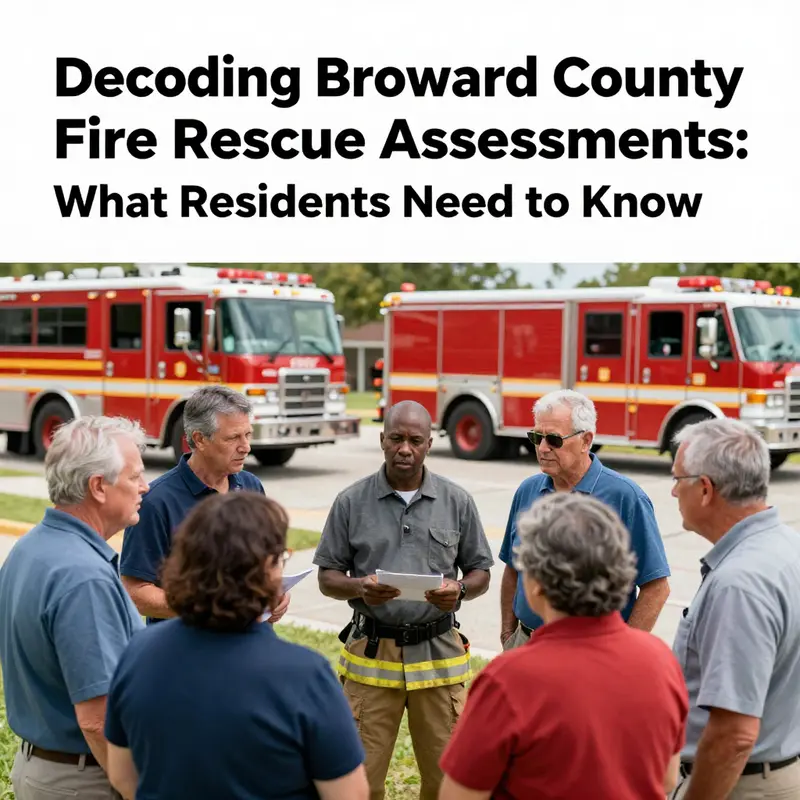
Fire protection is often understood as a public good delivered through organized rescue services, trained personnel, and reliable equipment. In Broward County, that system rests on a property-based assessment structure designed to spread the cost of fire and emergency services across those who may benefit most from their presence. The concept sits at the intersection of local governance, public safety, and the day-to-day realities of homeowners and business owners who receive annual tax bills. What emerges from the Broward County model is a careful balancing act. On one side lie the operational needs of a large and densely populated county: the salaries of firefighters, the maintenance of modern apparatus, the ongoing replacement of critical gear, and the continuing demand for rapid, capable responses to a spectrum of emergencies. On the other side sit property owners who, in exchange for fire protection, shoulder a predictable and transparent portion of those costs. The framework for this exchange is built on the principle that those who live in higher-risk locations should contribute proportionally to the level of protection they receive, while still ensuring that affordable, equitable access to essential services is maintained for all residents and commercial stakeholders in the county. The result is not a single, static fee but a five-year cycle of calculations, adjustments, and reviews that seek to stabilize funding while remaining responsive to shifting operational realities and community needs. The latest update to the structure, published in June 2024 by OrdinanceWatch, offers a detailed map of how fees are determined for each property class, integrating considerations of risk, value, and service demand. This narrative explores how those elements come together, what they mean for a typical Broward property owner, and how residents can engage in the process to ensure transparency and fairness remain at the core of the system. Within this discussion, there lies a broader question about how a community funds protection without turning fire rescue into a burden that silences the very goal it serves: to safeguard lives and property when seconds count. The Broward model provides a concrete example of how public finance and public safety can align, even as the costs of urban density, aging infrastructure, and climate-related hazards rise in ways that require ongoing vigilance and adaptation. To understand the mechanics of the assessment, it helps to start with what the fees are intended to support. The fire rescue assessment is a property-based fee assessed on real estate within Broward County, designed to fund the operating expenses of the Fire Rescue department. Those operating expenses encompass a broad range of line items: personnel costs that cover the salaries and benefits of firefighters, paramedics, dispatchers, and support staff; equipment investments that keep engines, aerial apparatus, rescue tools, and protective gear in serviceable condition; and the cost of delivering emergency response services, including the after-action support that ensures readiness for the next call. In practical terms, the fee helps sustain an essential service that is invoked not only in dramatic emergencies but in daily operations—station coverage, training, maintenance, inspections, fire prevention programs, and community outreach that reduces risk over time. The design of the assessment recognizes that fire protection is not a luxury but a service with wide and lasting social value, while also acknowledging that the financial commitment must be predictable enough to allow households and businesses to plan ahead. The five-year cost calculation cycle is central to this stability. It allows the county to smooth out year-to-year fluctuations in operational demand, funding needs, and unexpected events that could otherwise create sharp spikes in assessments. Over the course of a five-year period, the county evaluates factors such as personnel rosters, equipment replacement timelines, anticipated response volumes, and seasonal or climate-related variances in need. This approach reduces the risk of sudden levy changes that could disrupt budgeting for families and small businesses, while preserving the flexibility to adjust when structural costs or service expectations change in meaningful ways. The methodology guiding these calculations is comprehensive. For fiscal years 2022–2023 through 2026–2027, Broward County has articulated a detailed approach that incorporates both the steady requirements of ongoing operations and the more episodic demands that arise from emergencies or new safety programs. The core assumption is that fire protection is a function of both capacity and coverage: a floor of minimum staffing and equipment managed across the county, plus the adaptability to surge where risk is highest or where population growth concentrates demand. Within that framework, the assessment is not a blunt surcharge but a structured instrument. It translates a property’s relative risk profile into a fee amount that reflects not only the value of the asset but also the level of protection it requires and the degree of service the property may attract or necessitate. This is where the concept of equity comes into sharper relief. If the evaluation weighs risk by location, density, and structure type, then a property in a high-risk, high-density area may bear a higher charge than a similarly valued property in a lower-risk neighborhood. The principle is not punitive; it is about aligning the cost of protection with the likelihood and impact of service needs. The public record shows that the assessments sit alongside the broader property tax system, often appearing as a separate line item on bills or within the same tax package, so property owners can see clearly how much supports fire rescue services, and how that amount relates to the total tax burden. In Broward, the logic is reinforced by the fact that the fee is linked to a five-year review process. That cadence does not produce an annual, constant dollar amount that would fail to reflect real-world changes; rather, it builds a trajectory that can accommodate shifts in operational costs and demand while avoiding abrupt, discriminatory swings that undermine trust in the process. The public nature of the process is a core part of the county’s approach to legitimacy and accountability. Property owners are invited to participate in the evaluation process through public input periods, which are integral to how the Broward County Property Appraiser shapes final decisions about fee adjustments. Public input does not occur in a vacuum; it is part of a broader system in which residents and business owners can articulate concerns, ask for clarifications, and propose adjustments based on firsthand experiences with service delivery. In many cases, questions arise about how the contribution of a given property is calculated, what factors increase or decrease assessments, and how the funds are allocated at the departmental level. The chapter of public input is complemented by a petition for review mechanism. If a property owner believes that the assessment is excessive or unfair, there are formal channels to petition for review. The existence of these channels matters—not only because it provides a path to challenge a specific number, but because it reinforces the idea that the system is designed to be responsive, not arbitrary. The rights of property owners to engage in the process—informed discussion, formal review, and access to transparent data—are essential to maintaining public trust. They ensure that the very people who bear a share of the cost can hold the process accountable to standards of fairness and reasonableness. The broader context for understanding these rights is the imperative of transparency. When residents see how a risk-based fee translates into a dollar amount, and when they can examine the operational inputs behind that number, the line between paying for protection and the protection that payment funds becomes legible. The public record should, and often does, show the components of cost: the distribution of payroll across shifts and stations, the depreciation schedules for apparatus, the maintenance and replacement cycles for critical gear, and the investments in safety programs that extend life and reduce losses. This transparency matters even more as the county faces evolving risk landscapes. Population growth, development patterns, aging infrastructure, and climate-driven events can alter the demand for fire and rescue services in ways that require recalibration of the five-year plan. The model’s resilience rests on its capacity to incorporate these shifts within a predictable framework. That is why the five-year horizon is not merely a bureaucratic artifact but a strategic device: it gives the system room to adapt without abandoning the principle that those most at risk shoulder a proportionate share of the cost. The practical implications for property owners are real and multidimensional. On a practical level, these assessments affect monthly budgets and annual planning. In Broward, homeowners may notice the fire rescue component on their tax bill, separate from other charges. The amount can vary based on risk classification tied to the property’s location and structure, even when the market value of the property moves in a different direction. For many households, the impact is most pronounced when a property is newly purchased, when improvements are made that alter risk characteristics, or when the county updates its assumptions in the five-year cycle. For business owners, the stakes are equally significant, with commercial properties often presenting different risk profiles due to occupancy types, density, and the presence of life-safety requirements. The complexity of the calculation can be confounding, which is why the availability of official guidance, and the opportunity to participate in the process, matters. The Broward framework recognizes that accessible explanations matter as much as accurate numbers. In practice, this means that residents should be able to understand the rationale behind an assessment, how the risk-based portions are determined, and how the public input and petition processes operate. The trust that supports a sustainable funding model arises from people feeling heard and seeing that the numbers reflect measurable factors rather than opaque decisions. When residents engage in the process—through listening sessions, written comments, or public testimony—they contribute to a culture of accountability. They also enable the Fire Rescue department to understand community concerns, which can, in turn, influence future planning and resource allocation. This dynamic tension between local control and statewide or regional benchmarks is not unique to Broward. Yet Broward’s explicit articulation of a five-year planning horizon, combined with a clear connection between risk, service demand, and fee levels, provides a model for how a dense, diverse community can fund essential safety services without sacrificing transparency or fairness. The integration of findings from the five-year cycle with ongoing service delivery yields a coherent story about how fire protection is funded and how the costs align with the value residents place on safety. It also illustrates the practical realities of governance in a modern county: the need to balance predictability with adaptability, to respect the views of property owners while maintaining the discipline of a structured budget, and to ensure that the funds collected are applied to the stated purpose—protecting lives and property when emergencies arise. In pursuing that balance, Broward County has also created a pathway for informed citizen participation. The process invites residents to consider not only what the fees are, but why they exist, what they fund, and how the funding translates into a safer community. It invites questions about efficiency and effectiveness, asking whether every dollar is directed toward the most impactful interventions, whether response times can be improved through staffing adjustments, and whether preventive programs—such as inspections and fire prevention education—offer long-term value that reduces the need for expensive emergency responses. These questions are essential to the health of any public safety system. They encourage a culture of continuous improvement, which in turn helps justify the ongoing investment in fire rescue services. The research results emphasize that the reputation of the assessment process rests on ongoing transparency and accountability. When property owners see consistent application of the risk-based approach, understand how the five-year cycle operates, and observe the link between service levels and funding, trust grows. This trust is not merely a feeling; it translates into predictable support for the services that underpin the county’s safety and resilience. For readers seeking further context on how fire protection funding intersects with broader governance and technology, consider exploring related discussions that connect leadership decisions, data-driven oversight, and public communication. For a deeper look at how technology shapes leadership within fire departments, see Impact of technology on fire department leadership. Such resources illuminate the ways in which dependable information, clear reporting, and accessible feedback contribute to stronger, more responsive public safety institutions. Finally, to ground these reflections in official practice, property owners may wish to consult the Broward County Property Appraiser’s fire assessment information page. It provides the authoritative data, definitions, and guidance used to implement the five-year cycle and risk-based calculations that determine each parcel’s contribution to fire rescue. External resource: https://www.broward.org/propertyappraiser/fire-assessment-fee.aspx
Financing Fire Rescue: The Five-Year Balance Behind Broward County’s Public-Safety Assessments
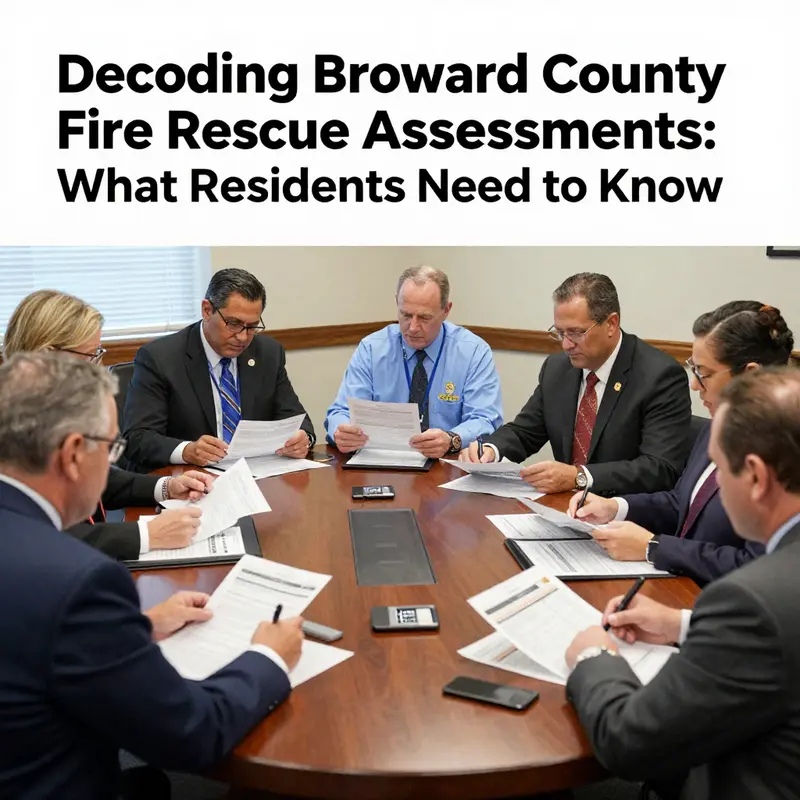
Broward County’s approach to funding Fire Rescue is less a single price tag than a carefully calibrated system—a living framework that blends property economics with public safety needs. At its core, the Fire Rescue Assessment is a property-based fee designed to fund the full cost of operating the fire service across multiple fiscal years. It is not a standalone levy; it sits within the annual property tax bill, a place where homeowners and business owners routinely see where dollars are directed and where the county’s commitment to public safety becomes a visible, tangible line item. What makes this system distinctive is not only the fact of a fee tied to real estate but the discipline behind how that fee is calculated and projected. The county relies on a five-year cost calculation cycle that breathes stability into a volatile funding landscape. By projecting costs across a multi-year horizon, Broward seeks to dampen swings in revenue that might otherwise translate into abrupt service reductions or delayed investments. The method is purposefully forward-looking, anchoring decisions in a structured view of needs, costs, and anticipated demand for emergency response and-related services.
In practical terms, this means the assessment is built on a comprehensive accounting of what it costs to run the Fire Rescue program today and what it will require in the near future. The five-year horizon is not a guess; it is a disciplined forecast that blends current operations with anticipated changes in workforce, equipment, facilities, and workload. For residents and property owners, that translates into a sense of predictability. For decision-makers, it provides a framework to balance competing priorities—resilience, response capability, and efficiency—over a period that aligns with budgeting and planning cycles across county government. And for public safety, it is a tool to maintain, and where possible strengthen, response times, coverage, and the quality of care that Broward residents expect when seconds count.
The most recent public-facing articulation of how these calculations are performed appears in the June 2024 update published by OrdinanceWatch, which details the calculations used to determine the fee amounts for each property class. This update sits atop a longer record of methodical refinement, reflecting an ongoing commitment to data-driven budgeting and transparent governance. The OrdinanceWatch documentation traces the chain from operational costs and staffing needs through to the expected revenue that property-based assessments will produce. In that sense, the Broward approach mirrors a broader trend in public safety finance: align revenue with the actual cost of delivering essential services, and do so in a way that publics can scrutinize, understand, and, if necessary, challenge through established channels. The transparency embedded in this process is a feature, not a byproduct; it is the mechanism by which the county maintains trust with taxpayers while pursuing the high reliability of its emergency services.
To ground this discussion in the procedural realities that shape every billable year, it is helpful to reference the specific documentation that curates the line-by-line cost calculus. The R8143 FY25 Fire Assessment Fee with backup document, cited in the latest public-facing materials, lays out the full costs from Fiscal Year 2022-23 through Fiscal Year 2026-27. It is in this table-driven backbone that stakeholders encounter the granular logic of the multi-year projection: the drivers of cost, the allocations to different program components, and the explicit accounting of how changes in population, development, and activity levels feed into fee levels. The table is more than a ledger; it is a narrative of how Broward envisions its fire and rescue obligations over a period when both population and risk are not linear but dynamic. The structure ensures that funding remains stable and predictable even as the county navigates growth, economic fluctuations, and evolving emergency-service demands. This alignment between projected costs and anticipated revenues undergirds the county’s capacity to plan equipment investments, recruitment cycles, training programs, and facility needs in a coordinated fashion.
This is not a purely mechanical exercise. The five-year cycle begins with the recognition that emergency services demand is not static. It grows with population and development, changes with shifts in land use, and expands in response to climate and hazard trends that influence incident frequency and severity. The cost-calculation framework, therefore, embeds multiple layers of causality. It accounts for staffing requirements—who is on duty, how many frontline firefighters, paramedics, and support personnel are needed, and how such staffing levels translate into costs across wages, benefits, health coverage, and overtime. It includes equipment costs—appliances, protective gear, communication gear, predictive maintenance, and replacement schedules that keep fleets ready and capable. It also contemplates training, dispatch systems, and facility maintenance—each a line item that, when aggregated, captures the full operational footprint of Broward Fire Rescue. The multi-year projection then distributes these costs to property classes in a manner intended to reflect the degree to which different kinds of properties contribute to demand for services. This is where the logic of fairness meets the arithmetic of cost, a balancing act that seeks to distribute burden without compromising coverage and readiness.
Behind the numbers, there is an articulate philosophy about funding public safety through dedicated revenue streams rather than ad hoc appropriations. The assessment, being tied to property value, has a defensible basis: those who own property—often in better financial positions as property values rise—participate in financing the services that protect, enhance, and preserve their asset base and surrounding community. Yet the Broward framework also recognizes the public-good dimension: even in a bustling county with high property values, the fire-rescue system protects lives, livelihoods, and economic vitality. The multi-year horizon serves as a stabilizer; it mitigates the inevitable volatility of annual budgets that can follow real estate cycles, interest-rate shifts, or unexpected disaster-related costs. In this sense, the five-year approach acts as a counterweight to short-term political and economic pressures, enabling a steadier course for investments that pay dividends in public safety outcomes over time.
A central feature of the methodology is its attention to transparency in cost calculations and fiscal planning. The public, after all, bears the fee, and the county’s obligation is to illuminate the logic that translates property values into a fee schedule that funds the full operating cost. The OrdinanceWatch documentation, along with the associated backup materials, provides a record of the assumptions, the data sources, and the calculation steps used to derive each class’s assessment. This is not a static policy; it is a living work product that evolves with new information about costs and service levels, and with input from stakeholders who rely on fire-rescue services. The R8143 document’s emphasis on full-cost accounting—factoring not only day-to-day expenses but also capital needs, reserve considerations, and contingencies—speaks to a broader commitment to enduring financial stewardship. It reflects a recognition that emergency services, to remain robust, require sustained investment planning that anticipates both growth and shocks.
The chapters of cost, when read together, describe a system that is as much about governance as it is about accounting. The five-year cycle anchors the financial plan in a cadence that aligns with capital planning and revenue forecasting. The planning horizon also maps onto service objectives: what response capacity looks like, how many fire stations must be staffed, where new equipment must be deployed, and how training pipelines support ongoing readiness. It is not simply about paying current bills; it is about building a framework that anticipates the county’s trajectory and preserves public safety as a predictable standard. In this sense, the assessments function as a public commitment. They articulate a policy choice: that Fire Rescue is essential infrastructure, deserving predictable funding, and that the fee structure should weather economic ups and downs without compromising service levels.
Within this broader frame, each property class contributes its share according to a method that reflects usage patterns and risk profiles. The cost-calculation framework assigns fees in relation to the assessed value of properties, a principle that is widely understood in property taxation but takes on particular significance in the context of emergency service funding. A residential property, a commercial complex, or a mixed-use development does not simply “pay what a neighbor pays.” Instead, the methodology seeks to align financial responsibility with the expected impact on the system. This means that higher-value properties, by virtue of their contribution to potential demand, fund a portion of the fixed and variable costs that keep the system resilient. Yet the model also guards against unintended inequities by ensuring that essential needs—like emergency medical response, first-responder readiness, and rapid deployment capabilities—remain accessible across communities, including neighborhoods with different risk profiles and response expectations. The result is a financing instrument designed to sustain, not simply to collect.
Critically, the process is iterative. The five-year cycle does not lock the county into a static budget for the entire period; it creates milestones for review, adjustment, and recalibration. The transparency embedded in the backup materials invites scrutiny and dialogue. Community stakeholders can observe how costs evolve and how those evolutions translate into fee changes across property classes. This iterative quality is essential for public trust. It acknowledges that emergency services, while essential, operate within a dynamic environment that includes aging infrastructure, changing land use patterns, and evolving public health priorities. The ability to adjust in a controlled, transparent way—without sacrificing readiness—depends on the clarity of the cost calculus and the discipline of the planning process. In Broward, the combination of a structured, multi-year projection and an open repository of calculations serves as a civil contract: the county commits to funding the Fire Rescue program in a predictable fashion, and the public retains a clear window into how those funds are produced and allocated.
To connect this accounting rigor with the lived experience of residents, one can imagine the chain from a bill on a property tax statement to the tangible outcomes on the ground. When a county budget allocates funds to retire or replace aging fire apparatus, upgrade training facilities, or expand dispatcher capacity, those decisions are rooted in the five-year assessment framework. The cost projections inform the capital plan and the operating plan, aligning equipment lifecycles with anticipated demand. When a new housing development adds to load in a district, it may be reflected in future cost projections, ensuring that service coverage remains proportional to population growth and development intensity. When a storm or wildfire season places unusual demands on the system, the contingency provisions embedded in the multi-year forecast help absorb the shock while maintaining reliable response. These are not abstract outcomes; they are the practical consequences of a financial architecture designed to link revenue to responsibility and to preserve the county’s ability to protect life and property in a predictable, accountable manner.
In addition to the technical and procedural dimensions, there is a cultural dimension to Broward’s approach. A governance culture that values transparency, data fidelity, and continuous improvement builds legitimacy for the assessments. The public-facing materials—indeed, the very structure of the R8143 FY25 Fire Assessment Fee with backup—signal that the county treats fire rescue as a shared obligation. The five-year cycle, while technical in tone, embodies a philosophy: that long-term safety is more likely to endure when funding decisions are made with foresight, when costs are comprehensively accounted for, and when communities can observe the rationale behind those decisions. The public, in turn, gains a clearer understanding of why a given property contributes to funding the services that protect it. And for the professionals delivering emergency care and rescue, that clarity provides a stable platform to operate from—one that reduces uncertainty about resources, supports prudent planning, and reinforces the sense that every dollar spent is tethered to a concrete objective: safeguarding lives when seconds matter.
For readers who wish to explore the broader context of how such reforms and innovations take shape across fire-rescue organizations, the conversation around modernization, governance, and openness is often situated in a wider ecosystem of practices and ideas. One facet of this broader discourse is the way institutions frame and present complex cost structures to the public, sometimes through museums of innovation or thought leadership that illustrate how data-driven finance supports resilient services. This strand of reflection is echoed in discussions that emphasize transforming fire services through insightful exhibits and accessible knowledge networks. See the broader discussion on innovation-museum-transforming-fire-services for related ideas on how communities visualize and interpret the evolution of public safety finance and operations. innovation-museum-transforming-fire-services
As the chapter moves toward its conclusion in this part of the article, it is important to recognize that Broward County’s method is not a finished blueprint but an ongoing conversation between budgets, services, and communities. The ongoing update in 2024 and the detailed five-year planning documents illustrate a commitment to refining the process as data quality improves and as public expectations evolve. The county’s practice of coupling full-cost accounting with a forecast horizon that spans multiple fiscal years creates a framework in which both present obligations and future protections are accounted for in a single, auditable stream. The net effect is a financing mechanism that strives for reliability, fairness, and accountability—a foundation upon which Broward can continue to deliver high-quality emergency services even as the county grows and new challenges arise. The result is not merely math on a spreadsheet; it is a public-visible statement about how a community chooses to fund safety and resilience over time, balancing the needs of today with the uncertainties of tomorrow, and doing so in a way that invites informed participation from property owners, residents, and stakeholders across the county.
External resource: For those seeking the official calculations and supporting documentation, see the Broward OrdinanceWatch repository detailing the R8143 FY25 Fire Assessment Fee with backup, which provides the year-by-year cost projections and the underlying assumptions that drive the multi-year forecast. (https://ordinancewatch.broward.org/)
Final thoughts
Understanding Broward County Fire Rescue assessments is foundational for all community stakeholders. Through grasping how these assessments are calculated and their ramifications, particularly as they relate to property owners, residents can better appreciate the significance of their contributions towards safety and emergency preparedness. Fiscal responsibility in the management of these funds not only ensures stability in operational costs but also reassures the community that their safety is being prioritized effectively. By maintaining awareness and engagement in this process, we can collectively enhance the effectiveness of fire rescue services, ensuring a safer environment for all.