
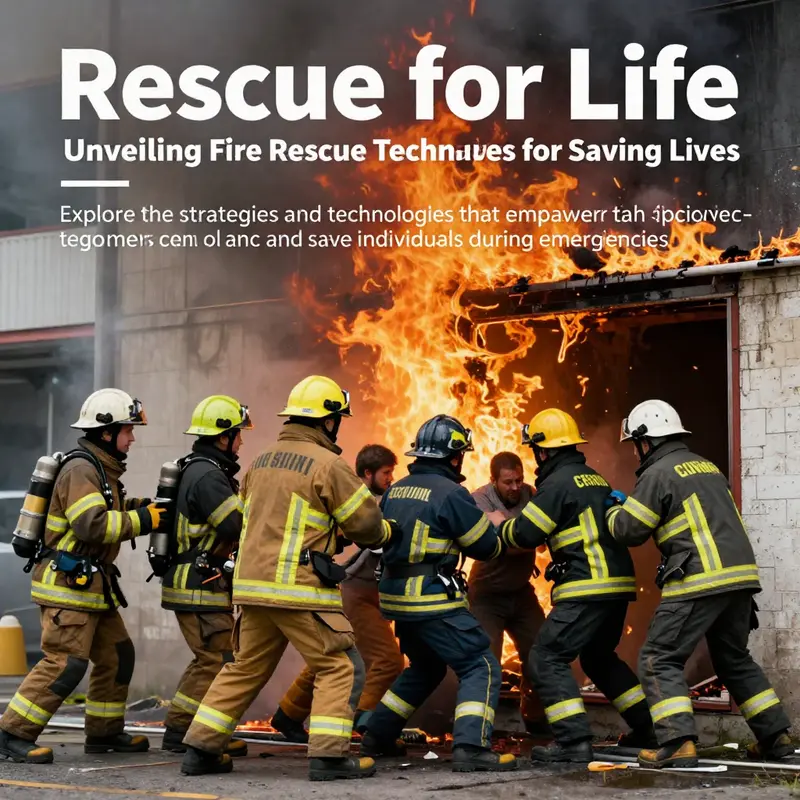
Understanding how fire rescue teams operate is vital for community safety and resilience. Every moment counts when lives are at stake, and the methods employed by firefighters to locate and rescue individuals in peril are critical to minimizing harm during emergencies. This comprehensive exploration reveals the search techniques that enable rescue teams to find and assist those in danger, discusses the technological innovations that enhance their capabilities, examines operational strategies suited for urban environments, and highlights real-world case studies that demonstrate successful rescue operations. With these insights, community residents, educators, and emergency personnel can better appreciate the complexity and dedication involved in fire rescue efforts, supporting a proactive approach to safety.
null
null
Technological Innovations in Fire Rescue: Enhancing How Rescue Teams Catch People
Across the history of firefighting, saving lives has always been the primary objective. Yet as incidents have grown more complex, technology has become the bridge between intention and outcome. In fire rescue, catching people—locating, reaching, and extracting those in danger—has evolved from reliance on instinct to a disciplined, data-informed practice. The transformation rests on sensing, mobility, and decision support, enabling responders to reveal hidden dangers, protect personnel, and coordinate teams with precision.
One visible strand is snake-like robots that enter unstable spaces. The INACHUS prototype shows how flexible, remotely operated devices navigate rubble and narrow conduits. They act as mobile data collection platforms, transmitting audio, thermal, and video signals back to operators in real time, turning a risky search into informed steps. These robots extend reach without exposing crews to aftershocks or toxic atmospheres, supplying a clearer map of terrain and threats.
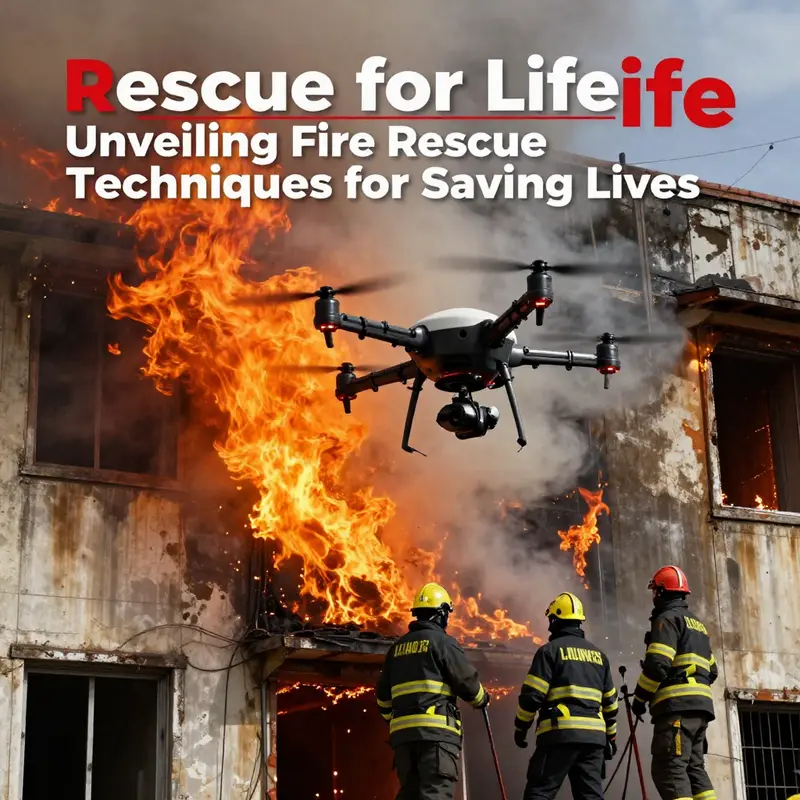
Drones have emerged as another pillar of modern rescue operations. Aerial platforms survey large tracts of terrain in moments, identify hotspots, and deliver situational awareness beyond what ground teams can achieve quickly. In urban fires, drones map building exteriors and likely paths of smoke, guiding crews toward doors and stairs while avoiding collapse zones. In remote areas, drones provide reconnaissance, thermal imaging, and live feeds that help plan safe crossing routes. When connected to ground ops centers, drones synchronize actions among units, enabling coordinated cadence rather than piecemeal maneuvers. The Zhengzhou example illustrates how drone surveillance can complement ground checks to create a composite safety net for visitors in high-risk settings.
To imagine rescue without proper protection is to overlook the importance of decontamination and protective systems. Modern decontamination vehicles create controlled bubbles with micro-positive pressure protection and integrated detection modules, enabling responders to decontaminate people and equipment rapidly and safely. This capability reduces secondary injuries and supports longer, more intentional operations when every second counts for a survivor who may be conscious, injured, or disoriented.
Beyond physical reach, sensing ecosystems provide early, actionable warnings. Multi-sensor early warning systems, increasingly relevant as electric vehicles proliferate, combine smoke detection, temperature monitoring, and gas analysis to yield a nuanced hazard picture. Early detection translates into earlier access for responders and informs the sequence and method of rescue, preserving both victim and responder safety.
AI-powered investigation tools are also transforming practice. Video analysis can extract critical moments, piece together sequences of events, and highlight patterns that human investigators might miss. This automation reduces the time needed for causal analysis and supports training that inoculates responders against repeating mistakes. The result is a rescue ecosystem that can adapt and scale its lessons faster than ever before.
The synergy among these innovations matters most when considered as a system: robots enter debris, drones map the path, decontamination protects, sensors warn, and AI informs decisions. Data streams feed incident command, guiding personnel deployment and extraction sequencing to minimize risk. As these technologies mature, they become more robust, interoperable, and capable of preserving life without forcing responders into danger.
For practitioners and researchers, the message is clear: to keep improving the art and science of catching people, invest in interoperable systems and preserve the human core of the mission. The tools described here are catalysts—enablers that push responders to new heights of precision, courage, and compassion. The following chapters explore how these threads weave into preparedness, response planning, and community resilience.
null
null
The Quiet Clockwork of Saving Lives: How Fire Rescue Detects, Reaches, and Extracts People in Emergencies
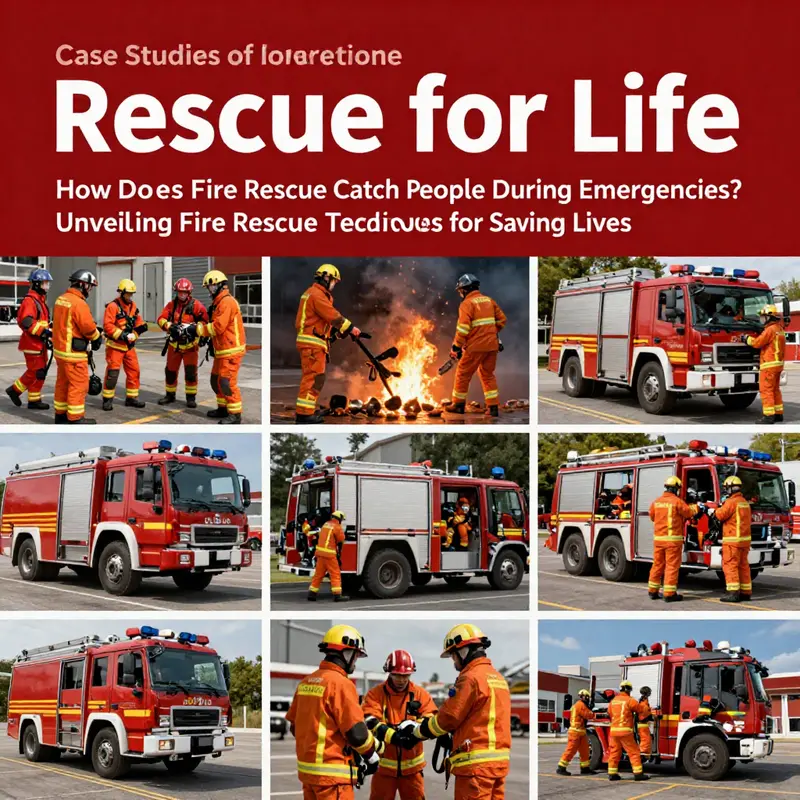
When the sirens fade into the distance and the smoke settles, a different rhythm begins. Fire rescue is not about spectacle but a precise tempo built from training, coordination, and real time perception. It is a choreography of movement, perception, and restraint where every decision can tilt the balance between safety and catastrophe. This chapter traces how rescuers locate people in danger, how they reach them, and how they extract them from settings that feel like labyrinths, whether a flooded port during a typhoon, a village cut off by an earthquake, or a narrow shaft that hides a child. This is the quiet machinery behind the dramatic scenes viewers sometimes see, powered by discipline, technology, and a stubborn commitment to life.
Life safety first is a guiding principle that threads through every action, from the first arrival on a scene to the last handoff to medical teams. On arrival crews perform a rapid but disciplined assessment. A room can present two extremes: a small fire with clear paths or a collapsing structure where time is limited. When flames surge, commanders tilt toward control, establishing a perimeter, mapping routes, and stabilizing the environment before teams advance. In such moments, search and rescue is a sequence of tasks executed with relentless precision. A room that might hold a single victim can quickly become a trap if conditions deteriorate. The emphasis remains constant: protect life, preserve the scene, and minimize secondary harm.
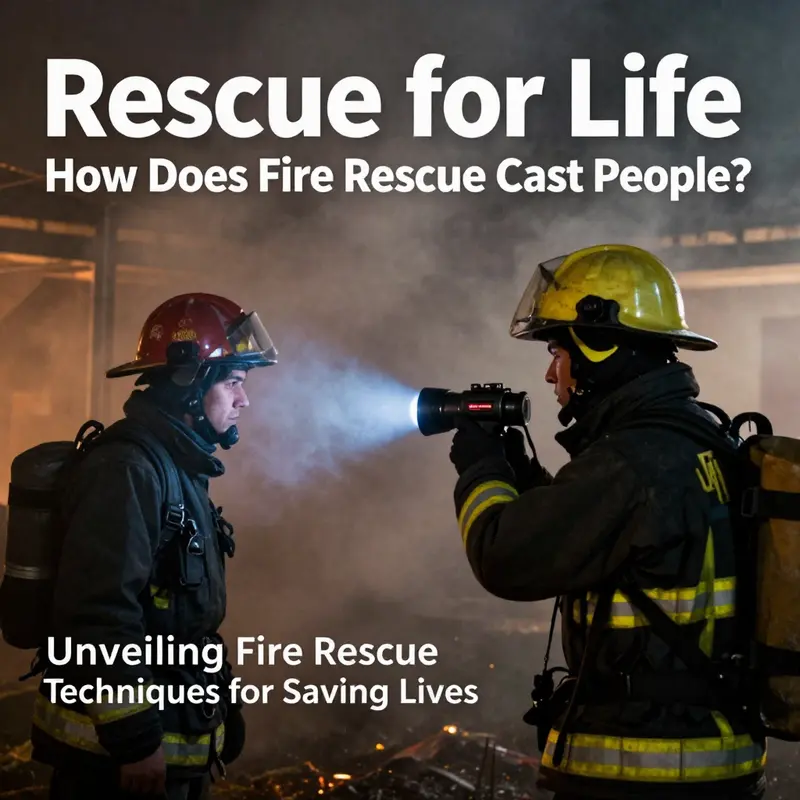
Central to the practice is information. Real time data guides decisions. Thermal imaging cameras act as sentinels through smoke, revealing heat signatures where visibility ends. Trained teams use systematic scans to guide them toward likely locations of victims—beneath beds, behind doors, in closets—without blindly forcing uncertain passages. The scenes they reveal are not always dramatic, but they are meaningful indicators that someone remains inside a room waiting for a voice or a rope of hope. Every frame of information is a piece of a plan that might save a life if acted upon in time.
As information sharpens the mission, the human element remains core. Firefighters communicate with victims to calm them and build cooperation. Voice commands and simple signals become lifelines in danger, turning fear into a willing partnership rather than panic. The psychological dimension of rescue matters as much as the mechanical. A frightened person who follows a plan is more likely to survive. The chain of reassurance helps prevent panic that could lead to unsafe movements.
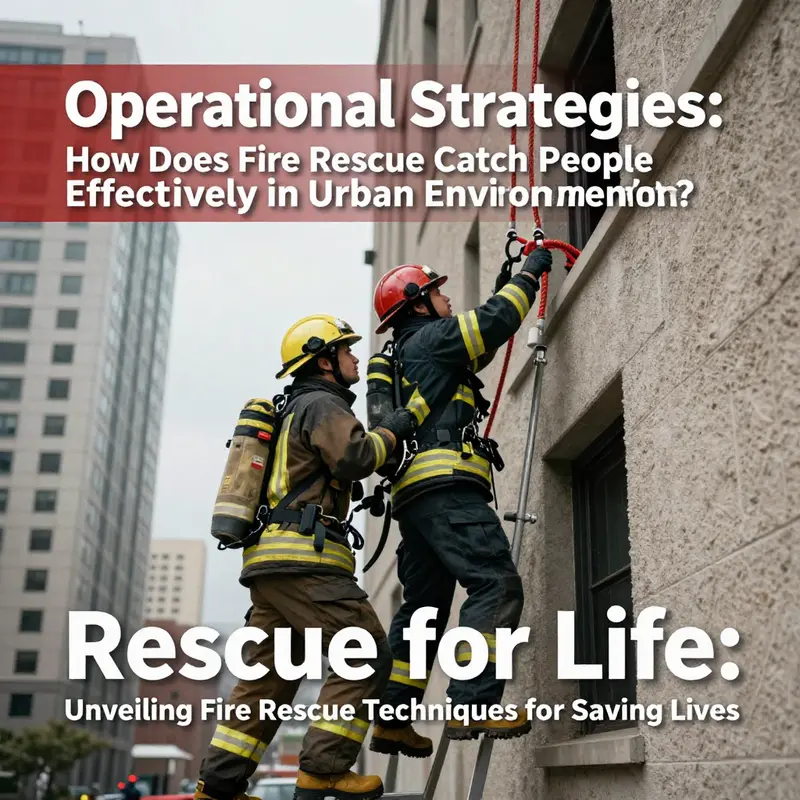
For high rise or elevated scenarios, ladders, ropes, and harness systems translate training into gravity discipline. Aerial ladders and rope operations extend reach to upper floors or difficult balconies. Victims may be lowered with controlled descent devices, a technique reminiscent of mountaineering. These operations demand precise rope management, anchor points, and clear communication with the person being lowered. The objective is a controlled movement that reduces risk to both sides.
Bridging gaps created by structural damage is another test of a team. Responders use a mix of tools and tactics to breach barriers while preserving as much of the structure as possible. They stabilize debris, secure access, and create paths for the person to emerge. They move with confidence born of drills and a shared mental map of the scene, knowing when to push, pull, and stop to reassess. This balance between action and restraint defines the most dangerous moments of rescue.
Case studies illuminate the breadth of modern rescue. In a major typhoon along a storm lashed coast, responders showed that planning is not just tactical but logistical, with a network of response points activated within minutes. In an earthquake rescue, the combination of back and forth improvisation with proven discipline enabled long pushes through treacherous terrain. In a well entry, thermal guided stabilization helped recover a child from underground. These operations show how tools and teamwork converge to save lives.
The throughline is disciplined uncertainty. Rescue is rarely a single dramatic action but a sequence of deliberate steps taken with a steady tempo. It begins with entry or defense, moves through the deployment of the right tools in the right order, proceeds through calm communication and careful movement, and ends with medical handoffs and debriefings that calibrate future responses. The broader lesson is that rescue blends science and courage, becoming a choreography of decision, discipline, and dexterity that happens in real time under pressure with life at stake.
For readers curious about the larger implications, modern rescue work is shaped by urban planning, civil defense education, and cross agency cooperation. It is not only about catching someone in danger but about reducing risk through preparedness, clear guidance, and ongoing training. The same principles that guide dramatic extraction translate into everyday safety practices, from how stairwells are designed to how people respond to smoke alarms. In essence, rescue is a bridge between the urgency of emergencies and the ongoing work of communities to prevent them.
As this chapter shows, the operations that appear dramatic on screen are built on a foundation of preparation, tools, and teamwork. The cases of proactive staffing and rapid water rescue, long riverine ascents through challenging terrain, and well guided stabilization together illustrate a universal truth. Rescue is a discipline that blends science and courage, a choreography of decision, discipline, and dexterity that happens in real time. For those who study or participate in these missions, the message is clear: when every decision can change an outcome, the margin for error narrows to a single line of action. The result is not a single heroic moment but a continuum of careful actions that save lives.
Internal reference: readers curious about how fire services evolve can explore how institutions reframe their approach to response and training, offering a lens on how knowledge, space, and technology converge to shape modern rescue practices.
Final thoughts
The landscape of fire rescue is continually evolving, driven by innovation, dedication, and the relentless pursuit of safety. Firefighters embody a commitment to saving lives, employing advanced techniques and collaborative strategies to navigate the complexities of emergency situations. As we continue to support these brave professionals, it is essential to advocate for ongoing training, public awareness, and resources that strengthen community-rescue team partnerships. Ultimately, understanding how fire rescue teams catch and save people reinforces a resilient approach to safety and preparedness within our communities.