
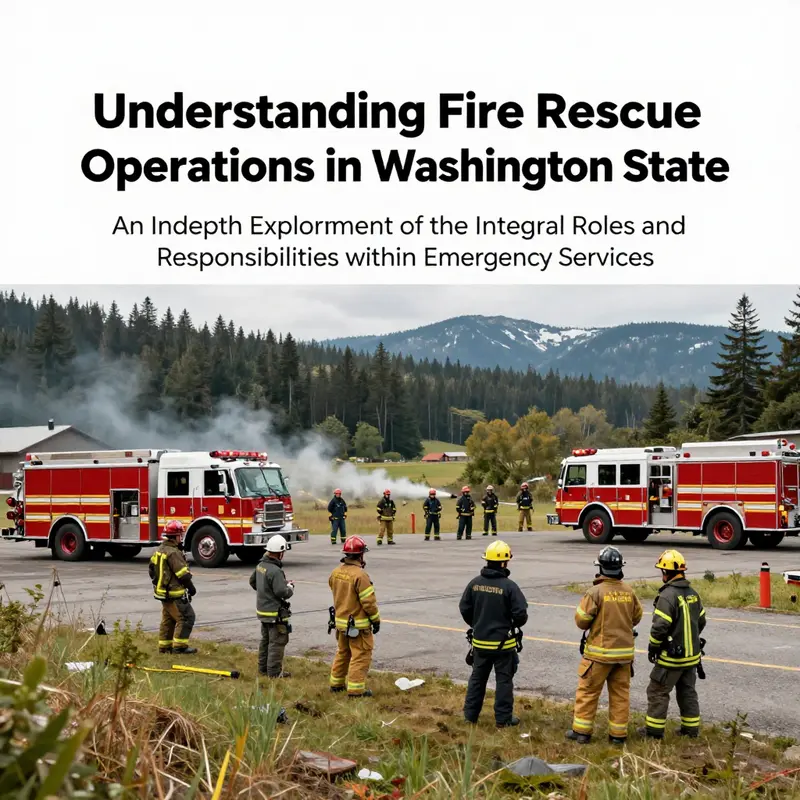
Fire rescue operations in Washington State form a compassionate and well-coordinated response system aiming to protect lives and property in emergencies. With an intricate network involving local fire departments, the Washington State Department of Natural Resources (DNR), and the Fire Marshal’s Office (SFMO), each entity plays a vital role in managing various emergencies, from structure fires to hazardous material incidents. This comprehensive overview delves into the distinctive responsibilities of these organizations and highlights the collaborative efforts that empower firefighters and emergency personnel to respond effectively to the diverse challenges facing communities throughout the state. Through this structure, we aim to reassure residents that they are protected by a dedicated team ready to respond at a moment’s notice. Subsequent chapters will address the role of local fire departments, the DNR’s wildfire management efforts, legislative frameworks, inter-agency coordination, and the challenges and innovations shaping fire rescue.
Coordinated Fire Rescue in Washington State: How Local Departments, State Agencies, and Wildland Teams Converge
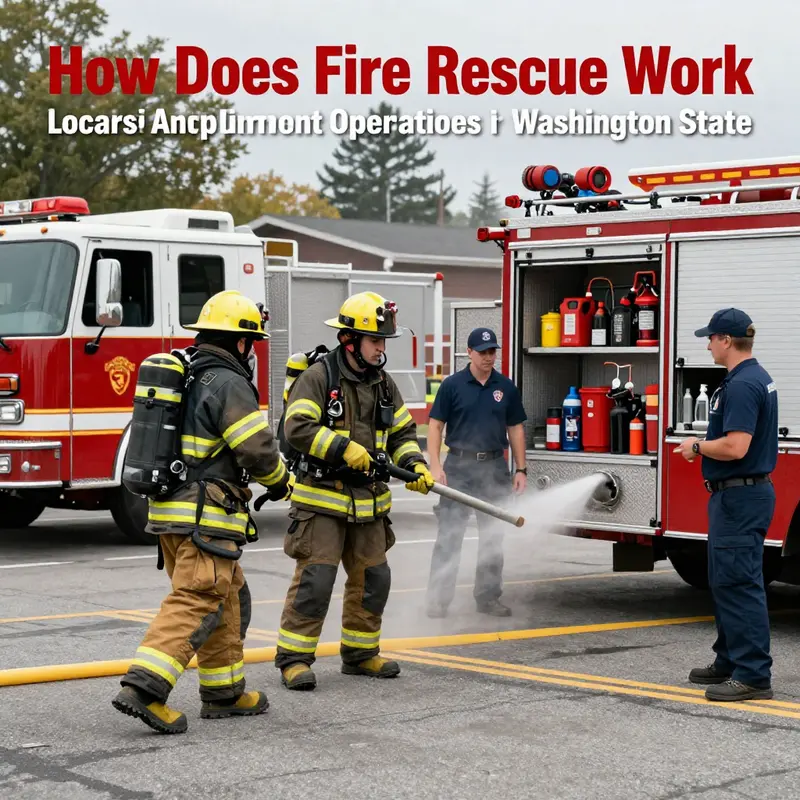
In Washington State, fire rescue is less a single act and more a carefully choreographed system that blends urban response with forested landscape resilience. The terrain—from Puget Sound cities to the dry eastern plains and the rugged mountains in between—demands a spectrum of capabilities. At the heart of this system are local fire departments, the frontline organizations that answer calls, fight fires, and provide medical and technical rescue services. Yet their effectiveness rests on a broader network: state agencies that provide specialized equipment, trained personnel, and cross-jurisdictional coordination when incidents spill beyond city or county boundaries. Understanding how Washington’s rescue framework operates reveals a thoughtful balance between local accountability and state-level readiness, a balance designed to keep communities safer amid the state’s diverse threats.
Local fire departments occupy the front lines of almost every emergency. They are the first responders to structural fires, medical emergencies, hazardous materials incidents, and technical rescues. These departments are typically governed by city or county authorities and operate under local ordinances and regulations that tailor their mission to the community they serve. The daily duties extend beyond extinguishing flames. Firefighters maintain equipment and facilities, run continuous training programs, and lead public education on fire prevention. In many communities, career firefighters work alongside volunteer members, creating a flexible capacity that can scale with demand. This local base is essential because most incidents begin and end within the jurisdiction of a single department, and the first minutes are often the difference between a manageable incident and a major disaster.
But the local response is only part of the story. Washington’s fire rescue system relies on a deliberate framework for interagency cooperation when incidents cross jurisdictional lines or require specialized expertise. A major wildfire threatening multiple counties, for example, cannot be contained by one department alone. In such cases, the state steps in with a structured mobilization approach that can draw upon a wide pool of resources and align them under a standardized command system. This integration is crucial in high-stakes events where speed, predictability, and clear lines of authority prevent confusion and duplication of effort. The state’s mobilization framework ensures that rural districts with limited wildland firefighting capacity can still access the right tools, personnel, and support to protect lives and property.
The Washington State Fire Marshal’s Office (SFMO) anchors statewide fire safety regulation and incident coordination. Its responsibilities extend beyond investigating causes and enforcing codes. In practice, the SFMO provides critical oversight, technical support for large mobilizations, and field response assistance when incidents escalate. The SFMO’s involvement during major events can include Emergency Operations Center (EOC) functions and coordination activities that bridge local and state efforts. Importantly, SFMO works within a broader legal and regulatory framework—such as supervisory authorities laid out in state law—that clarifies roles for professionals like inspectors and testing technicians, and for specialized trades such as sprinkler fitters under Washington Administrative Code provisions. This regulatory backbone helps ensure consistent practice across communities and agencies, reducing ambiguity during fast-moving emergencies.
In the wildland arena, the Washington Department of Natural Resources (DNR) serves as the state’s primary wildfire fighting force. DNR deploys a large workforce of trained personnel—over 1,300 employees, including more than 800 dedicated wildland firefighters—across public and private lands to combat fires that threaten ecological and human communities. The DNR’s mission is not only suppression but also prevention, rapid detection, and strategic coordination with local departments to ensure sustained suppression during peak fire seasons. Their presence is especially vital in rural and forested regions where terrain and vegetation can complicate access and safety. The DNR’s involvement reinforces a fundamental principle of Washington’s system: local response plus state-level capacity create a two-layer safety net that can adapt to the scale and pace of a given emergency.
A cornerstone of this adaptive capacity is the All-Risk Mobilization program. This framework provides a mechanism to rapidly deploy personnel and resources across jurisdictions, matching the response to the evolving needs of an incident. All-Risk mobilization is designed to integrate assets from city, county, tribal, state, and sometimes federal partners, enabling a flexible, coordinated surge when a fire, flood, or other hazard demands it. The scale of this program has become evident in recent years during severe wildfire seasons. Washington’s wildfire activity, including notable events in 2021 and 2025, has stressed resources and highlighted the importance of mobilization. In 2025 alone, the state faced elevated costs tied to prolonged fire suppression efforts. The Blankenship Fire in Asotin County served as a stark reminder that even with strong local and state capacity, large incidents demand rapid, well-coordinated mobilization to protect communities and natural resources. The All-Risk framework helps mitigate delays by pre-identifying personnel and assets that can be dispatched quickly, minimizing the time between initial alert and on-the-ground response. For readers seeking a deeper dive into how this mechanism operates, the All-Risk Mobilization program details are available from the state police or public safety resources.
To translate theory into action, coordination among the three pillars—local departments, SFMO, and DNR—must be seamless in practice. At the scene, local fire units carry out suppression, triage medical needs, and manage technical rescues within their jurisdiction. When a fire grows beyond the local capacity, mutual aid agreements kick in, and neighboring departments lend personnel, apparatus, and equipment. If the incident continues to expand or involves wildland interfaces, state managers step in to coordinate the escalation path. The SFMO helps align fire safety standards and enables field support and EOC functions for up to 28 authorized mobilizations in recent quarters, underscoring its role as a statewide backbone during large incidents. Meanwhile, the DNR’s wildland expertise and logistical capacity—air support, heavy equipment, specialty crews—complement the suppression effort and provide sustained, strategic operations that local departments alone cannot sustain over days or weeks.
The end-to-end process is not a single sequence but a dynamic, evolving operation. A typical wildfire or multi-structure incident may begin with a local crew arriving to control the scene, conduct risk assessments, and begin evacuation or medical support if needed. As the fire grows or shifts, the incident command structure expands to incorporate more units and functions. The local authorities, often operating under a formal incident command system, maintain visibility of the immediate hazards and secure protection for nearby residents and critical infrastructure. Simultaneously, the SFMO and DNR personnel begin to align with regional plans to provide air and ground support, assess fire behavior, and coordinate suppression priorities over longer time horizons. The EOC, when activated, serves as the nerve center for interagency communication, resource tracking, and public information dissemination. In all of this, the All-Risk Mobilization program acts as a bridge—an institutional mechanism designed to move people and matériel quickly between jurisdictions, ensuring responders can scale up without starting from scratch.
An element that often remains underappreciated is the culture of preparedness embedded in Washington’s fire-rescue system. Local departments invest heavily in community outreach, fire prevention education, and regular drills. The intent is to reduce the number of emergencies and lessen the severity when they occur. Public education campaigns promote safe heating practices, outdoor fire safety, and the importance of early alarm reporting. Training pipelines ensure that responders maintain readiness across structural fires, hazmat incidents, and complex rescue scenarios. On the regulatory side, ongoing updates to WACs and RCWs refine how professionals perform their duties, clarifying definitions for supervision, maintenance, and engineering requirements across inspection and testing, sprinkler systems, and related roles. For aspiring firefighters, the path combines practical experience with formal certification. While individual careers vary, the emphasis remains on physical fitness, continuous training, and a commitment to serving communities under stringent safety standards.
The integration of local and state capabilities also mirrors a broader trend in emergency management: the need for adaptable, interoperable systems. Washington’s approach demonstrates how local readiness can be amplified by a state-level architecture that prioritizes rapid mobilization, disciplined command, and disciplined resource allocation. This synergy helps ensure that whether a fire starts in a city neighborhood or a remote woodland edge, the response can be timely, technically proficient, and sustained if the incident demands it. For practitioners and policymakers alike, this model provides a blueprint for balancing autonomy at the municipal level with the efficiencies of centralized support when emergencies outgrow local capacity. It also underlines the importance of regulatory clarity, continuous training, and a culture of mutual aid—principles that keep the rescue system resilient in the face of Washington’s evolving hazards.
As the profession evolves, so does the way communities connect with fire-rescue services. The path from initial 911 call to controlled containment is paved with cooperation, shared standards, and deliberate investment in human and material resources. A future-ready Washington state hinges on maintaining strong local departments that can act swiftly, reinforcing them with the strategic oversight of SFMO and the operational depth of the DNR. This triad, supported by mobilization frameworks, ensures that resilience is not a peripheral goal but a built-in capability, ready to be scaled up or down to match the moment.
For those curious about how this evolution translates into practical wisdom and ongoing innovation, consider the idea that the fire service is not merely about responding to flames. It is also about learning—learning how to prevent fires, how to coordinate across jurisdictions, and how to prepare communities to endure the risks of wildland interfaces and urban hazards alike. That learning is codified in training, regulation, and in the very culture of interagency collaboration that makes Washington’s fire rescue system more than the sum of its parts. To see how such innovations are documented and shared, one can explore the broader narrative of innovation in fire services and the ways museums and institutional programs illuminate the evolution of rescue work.
As part of the ongoing dialogue about this subject, readers can engage with a concise exploration of transformation in fire services through a dedicated resource that highlights how innovations are shaping practice and leadership in the field.
External resource: All-Risk Mobilization program details (https://www.wsp.gov/all-risk-mobilization/).
Internal resource: For a perspective on how innovation is reshaping fire services, see this exploration of evolving approaches in the field—innovation museum transforming fire services.
Orchestrating the Heat: How Washington’s Department of Natural Resources Shapes Wildfire Rescue Across the State
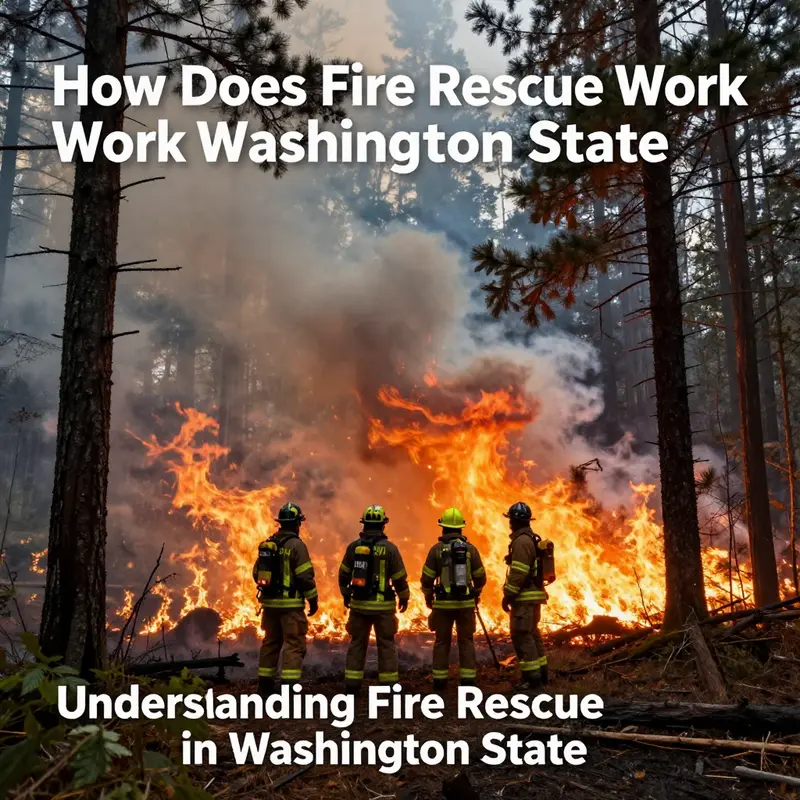
In Washington, the landscape itself is a constant invitation to fire—forests that burn with dry summer winds, towns nestled near dense timber, and a mosaic of federal, state, and local jurisdictions charged with keeping people and ecosystems safe. Fire rescue here is not the work of a single entity but a carefully choreographed system in which the Department of Natural Resources (DNR) plays a pivotal, if sometimes underappreciated, lead role when flames threaten the wildland-urban interface. This chapter follows the thread of that leadership, tracing how a dedicated wildfire-fighting force, an integrated state mobilization framework, and a network of local agencies converge to stop fires before they overwhelm communities and resources. It is a story of rapid response, strategic planning, prevention, and the ever-present need to adapt to the evolving fire seasons that define life in the state’s diverse climates and topographies.
The DNR stands as Washington’s frontline wildfire organization, a full-time, highly trained corps prepared to respond anywhere in the state whenever the call comes. With more than 1,300 employees on the roster, including upwards of 800 wildland firefighters, the department maintains a significant surge capacity that can be mobilized quickly as a situation escalates. This isn’t merely a matter of numbers. It reflects a deliberate commitment to field readiness, with crews that are trained to work across rugged terrain, rapidly redeploy to new fire fronts, and coordinate with other agencies to ensure that suppressive action is both effective and efficient. The result is a rapid response capability that reduces the time a fire has to gain intensity, limits the spread across landscapes, and protects nearby communities and critical watersheds.
Prevention and regulation are foundational to the DNR’s approach. Washington state law assigns the department the authority to regulate outdoor burning on forestlands within its jurisdiction, a task that sounds simple in concept but carries enormous consequences in practice. Burn bans, restrictions, and required burn permits are not merely bureaucratic checkboxes; they are essential layers of protection designed to reduce human-caused ignitions that can spark large, difficult-to-control fires. The emphasis is proactive: stopping ignitions before they start, preserving air quality, safeguarding habitat, and maintaining healthier forests that are less vulnerable to catastrophic burning when winds pick up. In practical terms, prevention means public education, clear communication about when and where burning is allowed, and a disciplined permitting process that helps landowners and fire crews anticipate and mitigate risk.
When a fire does start, the DNR’s role shifts from prevention to direct suppression and strategic coordination. The department operates from Emergency Operations Centers (EOCs), where trained staff map the fire’s dynamics, align resources across jurisdictions, and maintain situational awareness for decision-makers at all levels. This coordination is crucial because wildfires rarely respect political boundaries. A blaze that begins on state-owned land or private property can quickly draw in federal resources, local fire districts, and tribal authorities, each with its own rules, equipment, and command structure. The DNR’s presence in the EOC environment helps harmonize these diverse inputs, establishing a single operating picture and a unified plan of action that accelerates containment and reduces duplication of effort.
A central pillar of Washington’s wildfire response is the All-Risk Mobilization program, a framework that enables rapid, cross-jurisdictional deployment of personnel and equipment when a large incident demands it. The ability to call up state assets and temporarily reallocate them to the area of greatest need is a force multiplier that makes the difference between a manageable fire and a region-wide emergency. The All-Risk Mobilization mechanism complements the intimate, local-rooted knowledge of neighboring fire districts and the technical expertise of DNR crews. In practice, it means a well-rehearsed playbook that can be activated midseason when a new front opens, a weather event shifts, or a fire grows beyond initial containment lines. During recent fire seasons, Washington has leveraged this framework to coordinate complex operations across multiple jurisdictions, ensuring that suppression strategies, air and water resources, and community protection efforts happen in concert rather than in parallel tracks.
The scale of modern wildland firefighting in Washington brings attention to the department’s workforce in both numbers and specialization. The DNR’s field operations include engines, hand crews, dozers, helicopters, and a cadre of highly trained incident commanders who can take on leadership roles in the field. These professionals coordinate with other agencies’ specialists to establish containment strategies, structure protection plans, and evacuation support when needed. The department’s emphasis on training and readiness translates into faster, safer, and more effective suppression actions. This readiness is particularly critical during peak fire years when the state experiences multiple simultaneous incidents across diverse ecosystems—from the forested cascades to the arid plains—requiring fluid reallocation of personnel and equipment while preserving the health and safety of firefighters.
Beyond suppression, the DNR’s wildfire work encompasses a broader stewardship of natural resources. Fire is both a hazard and a part of many forest ecosystems, and intelligent wildfire management requires a blend of aggressive attack on active fires and disciplined, science-based practices for prevention, siting of fuel breaks, and post-fire rehabilitation. The DNR’s prevention and response activities are therefore tightly interwoven with land management decisions, habitat conservation, and the protection of watersheds that supply communities. This integrative approach helps minimize secondary impacts, such as erosion, sedimentation, and habitat loss, that often accompany major fires. In this sense, the department’s wildfire operations are as much about maintaining ecological resilience as they are about safeguarding lives and properties.
Regulatory and professional standards support an orderly, capable firefighting system across the state. The Washington State Fire Marshal’s Office (SFMO) provides statewide leadership, fire prevention oversight, and regulatory clarity that helps ensure consistency across local departments and state agencies. SFMO’s involvement is especially important in major incidents, where field response and Emergency Operations Center functions extend beyond the DNR’s immediate purview. By aligning fire safety codes, inspection practices, and enforcement with field operations, SFMO helps create a safety culture that reduces risk and accelerates coordinated action when emergencies strike. The SFMO’s ongoing regulatory work—such as refining definitions of supervision and maintenance under RCW 18.160 and RCW 18.270 and clarifying the roles of inspection and testing technicians and sprinkler fitters in WACs—ensures that responsibilities are clearly defined, professional standards remain high, and jurisdictional boundaries remain intelligible even under pressure.
In moments of crisis, a well-structured, multi-agency response must also address the human dimension of risk. Washington’s approach acknowledges that communities, businesses, and first responders all face uncertainty during wildfire events. The combination of prevention, rapid local response, and State-level mobilization creates a safety net that reduces the odds of a small fire spiraling into a disaster. For residents in fire-prone areas, this translates into clearer evacuation plans, more reliable information about fire behavior and air quality, and better protection for critical infrastructure and essential services. For firefighters, it means support systems that prioritize safety, access to diverse resources, and opportunities to work in teams with a shared sense of purpose. The result is a culture of readiness that is continually refined through drills, after-action reviews, and the evolving body of knowledge about how fires move through Washington’s landscapes.
The story of Washington’s wildfire response is also a story of innovation and learning. As the fire seasons become longer and more intense, agencies look for ways to improve coordination, reduce response times, and protect more people with fewer resources. The professional community often points to knowledge-sharing, cross-agency training, and the adoption of best practices from across the country. Within this broader narrative, the DNR’s singular focus on wildland fire—a workforce trained to operate in wild terrain, with the equipment and support to stay effective under harsh conditions—remains a constant anchor. It is why the DNR can lean on local departments when fires begin near towns and simultaneously scale up through All-Risk Mobilization when a broader threat emerges. The ultimate aim is simple, even as the path to it grows complex: protect lives, protect property, and protect the land that supports Washington’s communities and economies.
For readers who want to explore how fire services continue to evolve, the field’s ongoing conversations about prevention, preparedness, and response are well illustrated in industry discussions and case studies. One compelling thread emphasizes the need for historical learning and forward-looking design, a reminder that every wildfire season offers lessons about how to deploy people, how to protect critical infrastructure, and how to sustain forests while maintaining safe living spaces for residents. This awareness sits at the heart of the DNR’s mission and explains why the department remains a central figure in Washington’s wildfire narrative.
Internal link for further reading on fire-service evolution: Innovation Museum: Transforming Fire Services.
External resource for broader context: For a deeper look at wildfire preparedness, regulations, and current conditions, see the Washington Department of Natural Resources’ Fighting Fire page: https://www.dnr.wa.gov/programs/fire/fighting-fire
Codes, Coordination, and Courage: How Washington State’s Fire Rescue Is Shaped by the State Fire Marshal’s Regulatory Framework
The architecture of fire rescue in Washington State rests on a carefully composed mix of laws, standards, and on-the-ground practice. At its core is a regulatory framework built and enforced by the State Fire Marshal’s Office (SFMO). This framework translates broad safety goals into specific requirements that govern building codes, fire protection systems, inspection routines, and the licensing of professionals who install, test, and maintain critical life-safety equipment. The result is a unified expectation across cities, towns, and rural districts—a common language for prevention, response, and accountability that keeps communities safer and fire services more capable when every second counts.
Central to this system are the Washington Administrative Code (WAC) provisions and the Revised Code of Washington (RCW). The SFMO uses these instruments to codify not only what must exist in structures and systems but how those elements are assessed and maintained over time. Recent revisions to the WAC have gone beyond mere checklists. They clarify essential terms like direct supervision and maintenance, ensuring everyone—from a districting officer to a contractor working on a fire protection system—operates with the same understanding. The scope of work for Inspection and Testing Technicians under RCW 18.160 and for sprinkler fitters under RCW 18.270 is spelled out with precision, so responsibilities and qualifications are clear and consistently applied across the state. Such alignment matters in practice because it affects how often a system is examined, how confidently a city can approve a project, and how quickly a concern can be escalated when safety is at stake.
The SFMO’s regulatory reach does not stop at inspections and licenses. It extends into the realm of large-scale incidents where coordination and rapid decision-making become a matter of life and home. Washington’s All-Risk Mobilization program stands as a formal mechanism to summon trained personnel and equipment when a crisis transcends local capabilities. The program enables a swift, multi-jurisdictional response, bridging gaps between small communities and larger, resource-rich agencies. In 2025, the SFMO supported 28 authorized mobilizations, providing field response and Emergency Operations Center (EOC) functions to sustain an organized flame of response across landscapes and communities. The mobility of skilled teams, strategic engines, and logistics personnel under this umbrella is what transforms a potential conflagration into a managed emergency rather than an uncoordinated scramble.
This emphasis on mobilization is complemented by the SFMO’s preparedness planning. The agency maintains plans that anticipate the realities of wildland smoke and flame, as well as the disruptions that can accompany multi-hazard environments. For instance, the Northwest Geographic Area wildland fire plan, refined through the COVID-19 era and evolving with each season, guides Incident Management Teams (IMTs) in adapting their procedures to changing conditions and cross-boundary needs. The aim is not to predict every twist of fate but to provide a scalable framework in which trained teams can shift strategies while preserving safety and accountability. In practice, this means teams practice handoffs between agency partners, rehearse command transitions, and maintain a shared vocabulary of risk assessment and resource prioritization that holds up under pressure.
Operational transparency and accessibility are also essential features of this regulatory system. The SFMO maintains an online portal that enables people and organizations to engage with licensing and certification processes, report fire fatalities or near-misses, review NFIRS guidelines, and schedule facility inspections. This portal makes professional credentials traceable and public, reinforcing confidence that standards are not abstract slogans but concrete requirements backed by oversight and accountability. It also supports the workforce that keeps every fire service run safe—from firefighters and inspectors to technicians who install and verify life-safety systems. The transparency ethos extends to funding requests, too. The SFMO has advocated for substantial budgets to sustain readiness and response capacity, citing a need for significant investment—such as $15.53 million for fiscal year 2024 and an additional $10 million requested for the 2025 fire season—so that regulatory obligations are matched by practical resources on the ground.
Yet the SFMO’s regulatory and mobilization duties do not operate in isolation. Washington’s fire rescue ecosystem is inherently collaborative, built through the partnership of local departments, the Washington State Department of Natural Resources (DNR), and the SFMO itself. Local fire departments remain the first line of response for most everyday emergencies. They are the ones who battle structure fires, deliver emergency medical services, conduct technical rescues, and inform the public about prevention and safety. Their day-to-day work occurs under local governance, with personnel who may be career, volunteer, or a blend of both. When incidents exceed local capacity, or when specialized expertise and resources are necessary, state-level support steps in to supplement and reinforce what begins at the local level.
This is where the distinct roles of DNR and SFMO intersect with local fire services. The DNR bears responsibility for wildland fire management on state-owned lands and other specified public lands. In wildfire seasons marked by extreme conditions, DNR mobilizes specialized crews and equipment to address rapidly spreading flames and complex terrain. The 2021 and 2025 fire seasons offered stark reminders of how wildfires challenge firefighters and communities, with incidents like the Blankenship Fire in Asotin County underscoring the persistent costs and operational complexity of modern firefighting. The mobilization framework, including interagency coordination, resource sharing, and common command principles, allows responders to converge from multiple jurisdictions while maintaining coherent strategy and accountability. The SFMO’s oversight ensures that across this sprawling network, safety codes are followed, inspections are up to date, and response protocols align with statewide standards.
The relationship among first responders, regulators, and land-management agencies is grounded in the law, but it thrives in practice because it is designed to be adaptable. The framework recognizes that no single agency can meet every need in every emergency. It prioritizes clear roles, interoperable procedures, and continuous professional development. In this sense, the SFMO’s regulatory work has a direct, tangible impact on field operations: when inspectors verify a fire protection system in a high-rise building, when a certified technician tests a suppression system in a warehouse, or when IMTs train to coordinate cross-jurisdictional resources, communities benefit from safer buildings and more reliable response. The intent is not to constrain professionals with bureaucratic red tape but to create a dependable backbone for urgent action—one that makes the long hours of shifting plans, communicating warnings, and staging equipment more efficient, predictably safe, and ultimately more effective at saving lives.
For readers seeking a broader view of how these pieces fit together, the SFMO’s resources offer a window into the evolving landscape of fire service leadership and knowledge. The internal exploration of regulatory definitions, supervision standards, and maintenance responsibilities helps explain why a city fire marshal and a state inspector can speak the same language when evaluating a modern fire protection system. It also clarifies why cross-border mobilizations work so smoothly during big incidents: teams arrive with a shared frame of reference, standardized expectations, and a common commitment to public safety. The story of Washington’s fire rescue, then, is not only about courageous acts at the scene but also about the careful, sometimes granular, work of code-writing, credentialing, and planning that makes those acts possible.
For a deeper dive into how the broader evolution of fire services is shaping modern practice, see this exploration of an Innovation Museum project that highlights transforming approaches to readiness and response: Innovation Museum transforming Fire Services.
As students, citizens, and professionals look to the future, the Washington State model offers a clear lesson: safety infrastructure is as strong as its rules, and those rules are strengthened by collaboration across jurisdictions and disciplines. The SFMO’s regulatory framework—coupled with the state’s mobilization and interagency planning—provides a robust, adaptable, and accountable system. It ensures that when danger intensifies, the right people, equipped with the right authorities, respond in the right way. The result is not merely a chain of procedures but a living, responsive conduit for protecting people, homes, and communities when fires and other hazards emerge from the landscape they share.
The Architecture of Fire Rescue in Washington State: How Local Fire Halls Unite with Statewide Readiness
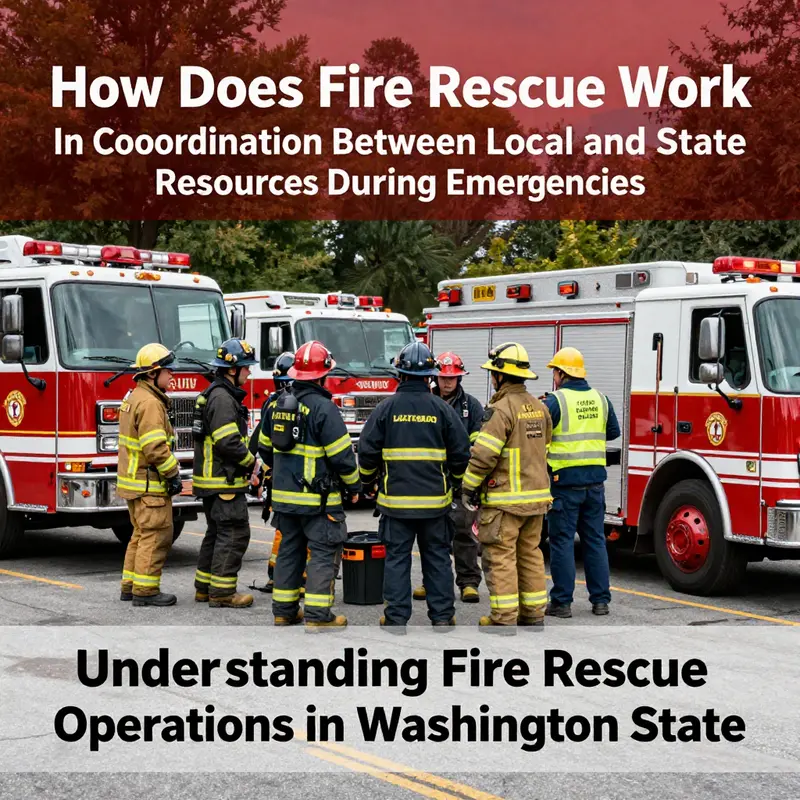
Washington state presents a portrait of emergency response that is hard to grasp from a single scene. When a sprinkler valve leaks, a storefront catches flame, or a wildfire menaces a ridge line, the response unfolds through a layered network where local fire departments do the daily work and state agencies stand ready to scale up. The result is not a single agency racing to a crisis, but a coordinated orchestration in which local autonomy and state support blend seamlessly. In Washington, fire rescue is less a single agency story and more a multi‑agency collaboration that stretches across jurisdictions, disciplines, and operational theaters. The core idea is simple in intent but complex in practice: local teams handle the immediate incident, and state resources reinforce, extend, or sustain that response when the challenge exceeds the capacity of individual communities. This balance—local initiative paired with state-wide structure—allows Washington to respond to the widest possible spectrum of threats, from a residential blaze in a tight city block to the spread of a wildfire across scattered public lands and rugged terrain.
At the heart of this system lies the Washington Emergency Management Division (EMD), the central coordinating body for all emergency management activities in the state. The EMD steers mitigation, preparedness, response, and recovery, forging a unified approach that keeps local responders aligned with statewide priorities. It does not replace local fire departments; it enhances them. By weaving together fire, EMS, law enforcement, and public health, the EMD ensures that resources are allocated where they are most needed and that information travels quickly between the scene and the command posts where decisions are made. This is not merely about sending more fire engines to a fire; it is about deploying the right kind of support at the right moment, whether that means aerial resources, specialized technical teams, or medical evacuation capacity.
To facilitate coordination across the state, Washington organizes its emergency response framework into nine Emergency Preparedness Regions. These regions serve as mid-level hubs that bring together local governments, first responders, and the many state agencies involved in an incident. In practice, the regional structure translates the abstract idea of statewide readiness into tangible, faster action on the ground. When a complex incident emerges—such as a wildfire that crosses terrain and jurisdiction lines—the regional teams can marshal mutual aid, share situational awareness, and align logistical support so that state resources can be mobilized without delay. This regional approach helps prevent bottlenecks, ensures consistent communication protocols, and accelerates the flow of information from incident commanders to the EOC—where policy and operational decisions are made under the broader umbrella of the state’s emergency management strategy.
Within this architecture, several agencies perform distinct, interconnected roles. The Washington State Fire Marshal’s Office (SFMO) provides critical oversight, prevention, and regulation. It leads statewide fire prevention efforts, conducts investigations into the causes of fires, and enforces safety codes to protect both occupants and responders. The SFMO’s involvement during major incidents—and its support for field operations and Emergency Operations Center (EOC) functions—demonstrates how a regulatory body can actively participate in the field as a partner rather than a distant regulator. In recent periods, the SFMO has supported up to 28 authorized mobilizations, underscoring its capacity to backstop local efforts during large events and to help coordinate interagency responses when information needs to be shared rapidly and decisively.
Wildfire response carries its own specialized layer. The Washington State Department of Natural Resources (DNR) is tasked with managing and suppressing wildfires on state-owned lands and certain other public lands. During wildfire seasons of intense fire activity, the DNR deploys specialized crews, engines, and aircraft to confront blazes that threaten forests, communities, and infrastructure. The 2021 and 2025 fire seasons, marked by particularly challenging conditions, illustrate the scale of this work. During 2025, the Blankenship Fire in Asotin County highlighted persistent and difficult-to-contain fires, with mobilization costs already surpassing eight million dollars for the year. These figures, while sobering, reveal a system that is designed to absorb heavy burdens by coordinating across agencies and jurisdictions. In such moments, the state’s All-Risk Mobilization program comes into play. This program enables rapid deployment of personnel and resources across jurisdictions, offering a flexible, scalable mechanism to surge capacity where needed most. When a single county lacks the necessary aviation, ground support, or command logistics to manage an escalating wildfire, the All-Risk Mobilization framework makes it possible to draw from a broader pool of trained personnel and equipment, speeding relief to the front lines.
The practical effect of this structure is a response system that retains local know-how—the intimate understanding of a neighborhood, its hazards, and its residents—while benefiting from the reach and discipline of state-level planning and resources. Local fire departments remain the primary responders for routine emergencies and day-to-day fire suppression. They run EMS services, perform technical rescues, and deliver public education. They are the front line operators who know their streets, neighborhoods, and the people who live there. When those local capabilities are stretched, the EMD and SFMO step in with coordinated, larger-scale support. If the incident involves wildland-urban interfaces or wildfires on state lands, the DNR can deploy specialized wildfire teams and equipment that complement local efforts. If a major incident requires broader command, control, and communications support, the EMD and SFMO provide field response and EOC expertise to ensure that on-the-ground actions are coordinated across agencies.
A crucial element in this ecosystem is the mutual aid framework, which Washington state has long woven into its public safety fabric. Mutual aid agreements, along with the All-Risk Mobilization program, enable quick, legally grounded sharing of resources among jurisdictions. Such agreements are not merely about lending equipment; they are about sharing expertise, standardizing procedures, and ensuring that leadership structures can scale without losing coherence. The aim is a unified command that can adapt to a wide spectrum of emergencies, from commercial building fires to multi‑jurisdictional wildland fires that threaten thousands of acres and multiple communities. In practice, this means incident commanders can request the types of resources they know they will need days or hours in advance of a crisis—air support, heavy equipment, or extra medical capacity—and the system delivers in a coordinated, predictable way.
This integrated approach also implicitly carries a heavy emphasis on prevention and regulation. The SFMO’s oversight includes refining definitions and roles under state codes to ensure that supervision, maintenance, and professional responsibilities are clear. The ongoing work to define roles for inspectors, testing technicians, and sprinkler fitters under RCW 18.160 and RCW 18.270 helps maintain a steady standard across the state. Clear regulations support smoother operations during emergencies by reducing ambiguities that could slow response or complicate accountability when the pressure is on. In short, the regulatory layer complements the operational layer by providing a stable foundation for safe and effective action when seconds matter.
As the system operates, a constant thread is visible: local initiative guided by a robust state apparatus. The EMD’s regional structure functions as both a planning body and a rapid-response coordinating hub. It aligns the day-to-day realities of local fire service with statewide strategies for mitigation and recovery. When a community experiences a fire, its fire department fires up its standard response, but it now does so with the assurance that a larger, well-organized network stands ready to augment and assist. The SFMO’s regulatory and field support, the DNR’s wildfire specialization, and the EMD’s orchestration create a resilience that is greater than the sum of its parts. The result is a response system capable of absorbing shocks, reallocating resources in real time, and returning communities to safety and stability with a degree of speed and reliability that would be hard to achieve through isolated action.
For readers curious about how leadership adapts to evolving technology on the ground, this chapter bears a close relationship to the human side of the response as well. As leadership in fire departments increasingly relies on technology to coordinate operations, see the impact of technology on fire department leadership. This link underscores how modern command structures, data sharing, and communications dashboards translate into faster, more coordinated action during crises, reinforcing the point that the architecture of Washington’s fire rescue is as much about people and process as it is about plans and procedures.
The story of Washington’s fire rescue framework is not about any single agency triumph but about disciplined collaboration. It is about how a local fire hall can respond immediately to a street corner blaze while a state EOC coordinates the broader response to a wildfire that crosses mountains and county lines. It is about how the DNR, SFMO, and EMD each contribute their specialized strengths so that the system remains agile and scalable. It is about how regional planning, mutual aid, and All-Risk Mobilization convert potential fragmentation into a unified force capable of protecting lives, property, and lands across a state with rich diversity of communities and landscapes. In the end, the architecture works because it respects local knowledge while embracing state-wide capability, a balance that keeps Washington’s response coherent even as emergencies evolve in scale and complexity.
External resource: Washington State Emergency Management Division (WA EMD) official site
Coordinating Fire Rescue in Washington State: Local Firehouses, State Support, and the Innovations Keeping Communities Safe
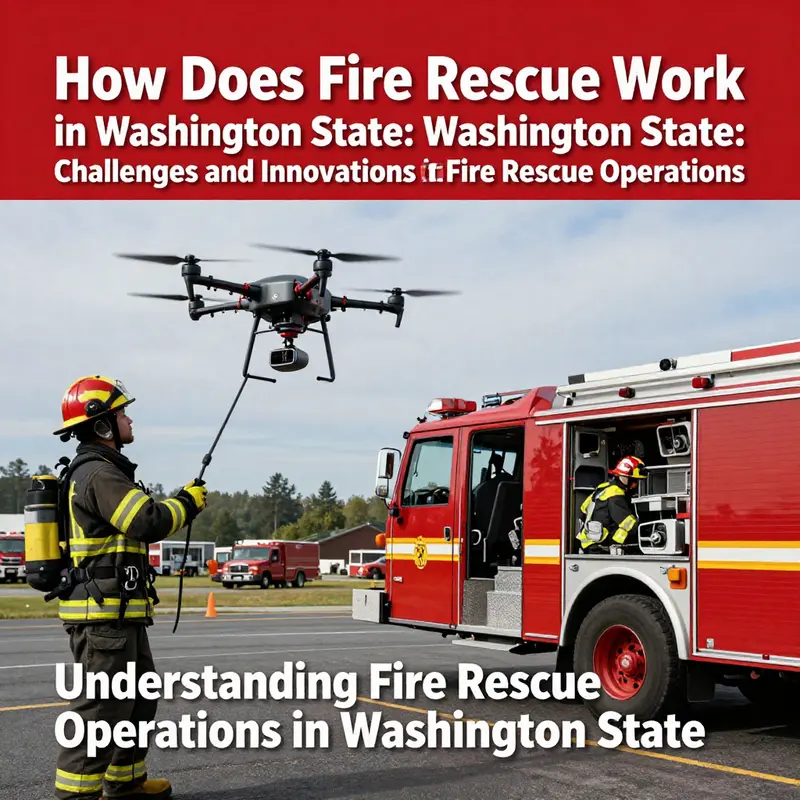
Washington State’s fire rescue system blends local response with state coordination to protect lives and property across diverse terrain. Local fire departments provide the first line of defense, handling structure fires, vehicle crashes, medical emergencies, and a range of technical rescues while maintaining deep knowledge of their communities. When incidents exceed local capacity, the All-Risk Mobilization framework activates regional and statewide assets, enabling rapid cross-jurisdictional support from agencies like the Department of Natural Resources (DNR) and the Fire Marshal’s Office (SFMO), as well as federal partners when needed. The SFMO anchors prevention, regulation, and emergency support, enforcing fire codes, conducting inspections, and coordinating investigations, while also supporting field operations and EOC functions during major incidents. DNR contributes specialized wildland firefighting resources and a robust mobilization capacity across timbered, grass, and remote landscapes. Interagency interoperability, unified command, and standardized communications enable responders to operate with a common operating picture. Innovation—through real-time fire mapping, drones, predictive modeling, and interoperable radio networks—improves situational awareness and accelerates decision-making. Ongoing training, drills, and regulatory clarity help ensure that personnel from different agencies can work together effectively. Throughout Washington, the balance between local expertise and state-scale support creates a resilient system capable of responding to evolving wildfire risks and other emergencies.
Final thoughts
In conclusion, the fire rescue system in Washington State operates as a cohesive unit, where local fire departments, the DNR, and the SFMO cooperate across multiple levels to address emergency challenges. Each organization plays a distinct role that enhances the overall effectiveness of fire protection and emergency response across the state. With a strategic approach to regulatory compliance, inter-agency coordination, and adopting innovative technologies, Washington State remains committed to protecting its communities and ecosystems. As residents, educators, and emergency personnel, it is crucial to understand the framework that supports these efforts and the unique strengths each entity brings to the table. This knowledge fosters a safer environment and creates a sense of reassurance that dedicated professionals are actively engaged in safeguarding lives and property.