
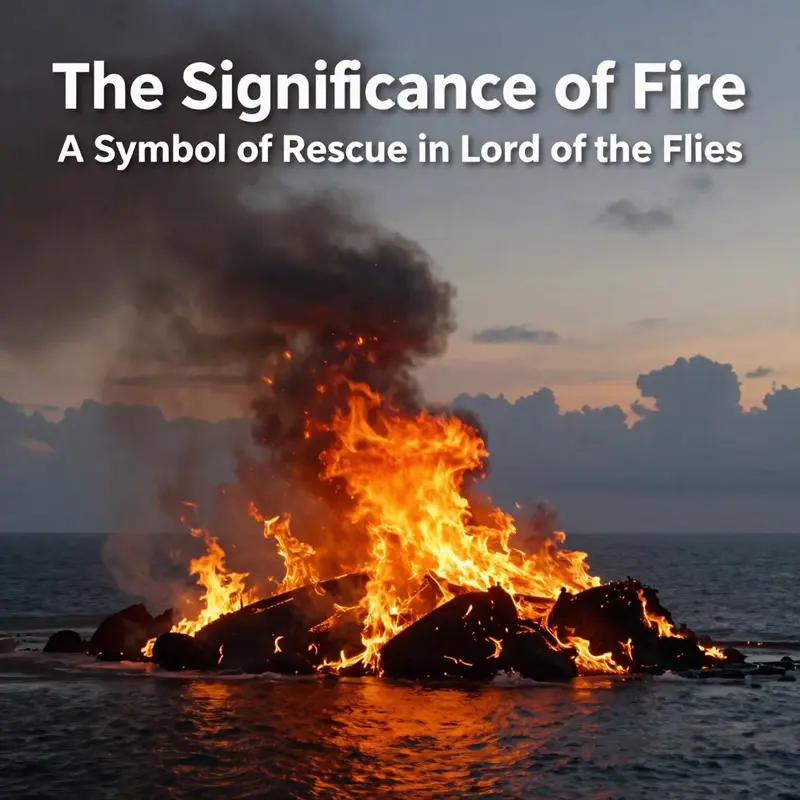
Fire holds profound symbolic meaning in William Golding’s Lord of the Flies. Initially, it represents hope and civilization, serving as the boys’ primary tool for signaling rescue efforts. Yet, as the narrative progresses, the symbolism shifts, revealing the thin line between order and chaos. This article examines how fire evolves from a beacon of hope to a destructive force, affecting the boys’ connection to rescue and their descent into savagery. Each chapter aims to illuminate various facets of this complex symbolism, highlighting its relevance not just in literature, but in broader societal themes surrounding human nature and survival.
From Beacon to Beast: Fire as Rescue and the Fragile Boundary of Civilization in Lord of the Flies
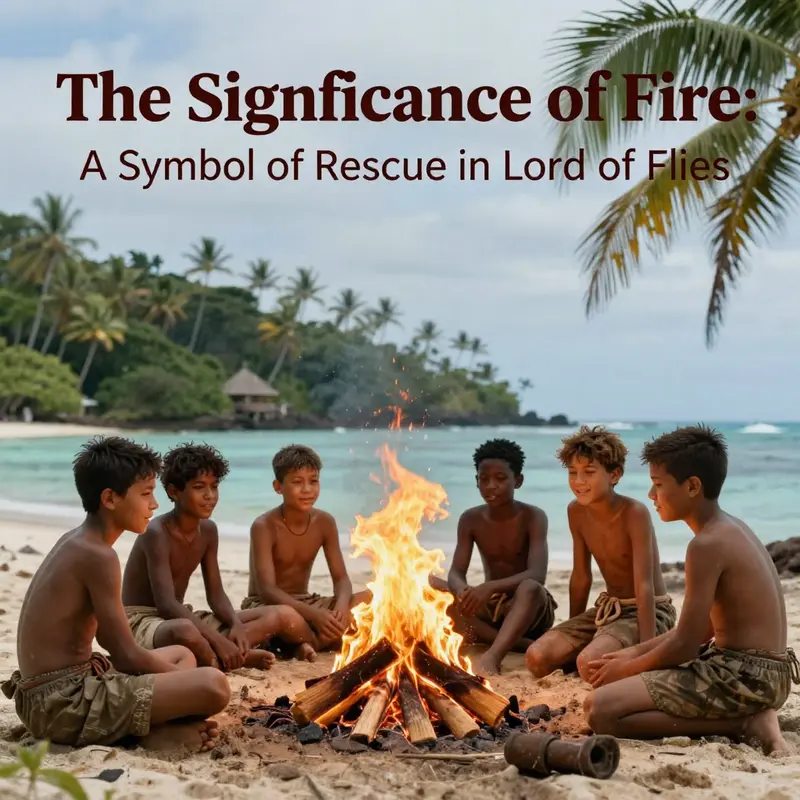
When readers first meet the castaways on the deserted island, fire enters as more than a practical tool. It is a deliberate act that embodies the boys’ grasp on civilization and their stubborn hope for rescue. The signal fire on the mountain rises as a beacon, a visible link to a world beyond palm fronds and shifting tides. In those opening pages, Golding makes fire into a compact between the boys and the larger order from which they have been severed. The flame is not merely warmth or a means to cook; it is a social contract. Its maintenance requires cooperation, shared discipline, and a common goal. Ralph, with Piggy’s clear-eyed pragmatism beside him, treats the fire as a lifeline tied to an outside audience—ship travelers, planes, any chance of seeing human life and returning to a structured society. The fire becomes a public sign, a language spoken in smoke and ash, insisting that rescue is possible if they stay organized and vigilant. In this sense, fire crystallizes the earliest, simplest form of civilization on the island: a community united by purpose and a shared belief in the world beyond their makeshift fortress.
That initial alignment around the signal fire is not incidental. It is the first scene in which the boys test the boundaries between order and chaos, and it reveals how quickly hope can be tethered to regular, cooperative acts. The mountain top becomes a stage where leadership is exercised, where decisions are weighed in terms of collective benefit. The fire’s glow casts a moral map across the boys’ tentative social order. Ralph’s insistence on keeping the flame alive—on trimming the wick of collective effort, on feeding the flame with wood and oversight—frames the island not as a mere arena of survival but as a proving ground for civilization itself. Piggy’s insistence on the fire’s signaling function underlines a persistent truth: civilization survives not merely through brute force or cleverness, but through shared norms, repeated rituals, and the belief that some signal will reach others who can restore the endangered social fabric. The fire, in effect, becomes a living emblem of human reliance on connection with others beyond the island’s boundary.
Yet the same flame that promises rescue also presses the boys to define what counts as responsible and communal action. The signal fire requires more than occasional tending; it demands constant attention, regular cooperation, and a willingness to subordinate personal longing to a larger aim. The group’s early cohesion rests on this shared commitment. When the flame burns steadily, the boys appear capable of bridging the gap between primal fear and civilized restraint. The flicker on the mountain becomes a kind of social heartbeat—a visible rhythm that says, we still belong to something larger than ourselves. The juxtaposition of the flame with the conch, another emblem of order and governance, deepens this sense of civilization as a fragile cadence rather than an inevitable condition. Golding makes the signal fire a moral instrument as well as a practical one; its glow is the moral weather, forecasting whether the island will drift into order or drift into something harsher and less predictable.
But the flame’s promise depends on a continuous, almost ceremonial maintenance of shared purpose. The moment fear or appetite overrides this practice, the flame falters. The turning point arrives when Jack and his band prioritize the hunt over keeping the beacon alight. The fire goes out, and with it goes a thread of civilization. The missed signal to a passing ship becomes more than bad luck; it becomes a symbolic rupture. The boys have allowed fear, appetite, and the thrill of power to eclipse their awareness of rescue as a future possibility. The reordering of priorities reinscribes a new grammar on the island: the rules that once kept the flame going are now replaced by rules built from risk, appetite, and survival instincts. The extinguished fire marks the moment when civilization begins to crack, and what follows is not merely a physical descent into savagery but an unraveling of shared purpose. The missed opportunity is a spiritual loss as much as a practical one, for it reveals that the island’s promise of rescue is inseparable from the collective discipline that sustained it.
As the narrative progresses, fire migrates from a hopeful beacon to a test of courage, loyalty, and fear. The flame remains a symbol of rescue, but its meaning widens to include the fear that rescue itself may be compromised by the very human instincts that democracy and schooling try to curb. The forest fire that erupts later in pursuit of Ralph—born of panic, aggression, and the desire to control others—functions as a stark counterpoint to the early, orderly signal fire. It is a force that can both save and destroy. The same crackling canopy that sends a plume of smoke toward a distant ship can, in a single gust, become a weapon of destruction that consumes the island and exposes the boys to their own capacity for violence. This dual capacity is essential to the novel’s argument: fire embodies the tension between salvation and destruction, the delicate line that separates civilization from chaos, reason from impulse.
The climactic convergence of fire and fear crystallizes the paradox Golding threads through the whole tale. In the final arc, the great forest fire—set, as many readers recall, in an attempt to smoke out a presumed beast and to flush Ralph from hiding—becomes the island’s most dramatic signal to the outside world. The smoke is a beacon not of refined social order but of raw, elemental panic that can still illuminate danger to others. And yet the same smoke also betrays the island’s inhabitants to themselves, sealing their fate as witnesses to the fragility of their moral boundaries. The naval officer’s sudden arrival underscores this double-face of fire: rescue arrives because the signal is visible, yet the rescue is paid for by the catastrophic cost of their descent into savagery. The final irony is that the flame intended to preserve a link to civilization ends up revealing the island’s chaos, the boys’ fear, and their capacity for destruction. In that split moment, fire becomes a mirror of humanity itself: a tool that can sustain a fragile alliance or unmask primal violence when discipline falters.
This trajectory—signal, sustain, squander, ignite—embeds fire at the core of Golding’s meditation on civilization. The island is a laboratory where the rules of grown-up life are tested under stress. Fire is the instrument by which those rules are tested, spooled forward by the boys’ choices and their sense of belonging. When the flame is diligently tended, rescue is plausible, and civilization holds. When the flame is neglected, or when it becomes a tool of fear and domination, rescue recedes, and the island becomes a stage for competing instincts. The fire’s power to illuminate and to blind is not a contradiction but a paradox Golding uses to expose the ambiguities of human nature when purified of social constraint. The initial understanding of fire as a signal of civilization thus yields an ironic, enduring truth: rescue is inseparable from the maintenance of communal norms, and those norms require not just fear of the outside world but a disciplined respect for the inside world—the fragile, often fragile, glue that holds a society together.
In this light, the symbol of fire operates on multiple planes at once. It is a signal to others that life beyond the island remains possible. It is a test of whether a group can subordinate personal desire to a shared project. It is a reminder that the line between rescue and danger runs through human intention as much as through the physical flame. Golding’s point is not merely that civilization is fragile, but that rescue itself is contingent on the maintenance of meaning beyond immediate appetite. The fire embodies both the longing for return and the danger of becoming what one fears. It is a beacon that can guide ships home or a beacon that reveals a group’s unraveling. This layered symbol gives the reader a distilled sense of the central tension: the human impulse to connect with civilization is as powerful as the impulse to seize control, and each impulse can be both protective and destructive depending on the moment and the will of those who tend the flame.
For readers seeking a broader lens on how fire as symbol is interpreted in Golding’s work, consider the ways in which communities today cope with the tension between signaling for help and protecting themselves from danger. The idea of signaling as a communal responsibility—keeping a watch, maintaining a shared goal, and coordinating action—resonates with contemporary conversations about resilience and preparedness. In this sense, the island becomes a microcosm of broader societal dynamics: the more a group guards its outward signals, the more it must protect the inner commitments that sustain those signals. The contrast between the careful, hopeful maintenance of the signal fire and the impulsive, destructive blaze that follows invites readers to reflect on how modern communities balance vigilance with prudence, outreach with safety, rescue with responsibility. One can draw a provocative parallel to the concept of sustainable, community-centered fire safety as a living practice, a topic that invites further exploration—see the discussion under Green Firehouse concepts for a contemporary take on resilient communities. Green Firehouse: Creating Sustainable Spaces for Community and Health.
As a final note, the arc of fire in Lord of the Flies offers more than a cautionary tale about a group of boys on an island. It provides a compact meditation on what rescue requires: not merely the presence of a flame but the discipline to tend it, the humility to renew a shared purpose, and the courage to resist the urge to weaponize fear. The fire’s transformation—from beacon to burden, from hope to hazard—maps the movement of civilization itself under pressure. It invites readers to ask not only how to signal for help but how to sustain a humane order when the environment and the inner lives of people tested by isolation threaten to derail that order. In Golding’s hands, the flame remains a provocative mirror: rescue is possible only if a people choose to keep faith with each other, even when fear and appetite pull in opposite directions. And when they fail, the same fire that once promised salvation becomes a warning light, burning away the illusion that civilization is a permanent state rather than a continuous practice.
External perspectives can enrich this reading. For a deeper analysis of fire as symbol in Lord of the Flies, consult scholarly discussions such as the Fire Symbol Analysis on LitCharts: https://www.litcharts.com/lit/lord-of-the-flies/fire-symbol.
Embers as a Delicate Lifeline: Fire as the Rescue Signal in Lord of the Flies
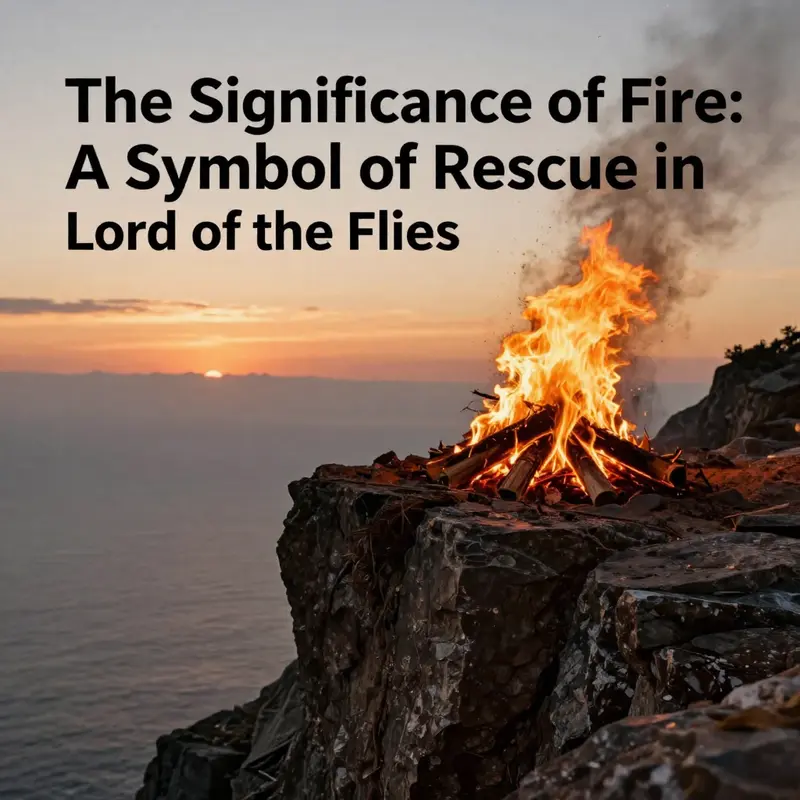
From the moment the plane crashes, fire on the island appears as more than warmth or cooking fuel. It is a visible breath of civilization, a beacon that suggests rescue and a future beyond the palm trees. The first practical blaze is lit with a clear purpose: to attract a passing ship or pilot, to connect the boys to the world they left behind. The fire thus becomes a tangible lifeline, a link to rescue and to order in a situation of fear and hunger. Its steady glow promises cooperation and the possibility of collective action, with Ralph insisting on tending the flame to keep hope alive and Piggy pressing on the need for intellect and inclusion. The pursuit of rescue through fire also reveals the costs of civilization: maintaining the signal requires discipline, shared purpose, and the willingness to subordinate immediate appetite to a future outcome that is uncertain. When the fire is neglected or goes out, the sense of belonging frays and fear gains ground, illustrating how quickly civilization can unravel under pressure. As the narrative evolves, fire becomes a stage on which power, courage, and fear compete. Jack and his hunters treat signal keeping as a trivial obstacle, prioritizing the thrill of the chase over rescue. The ritual of feeding the flame shifts toward domination rather than beacon, and the absence of steady signal makes rescue seem more distant. Yet even when the blaze is mishandled, the symbol endures; the hope that someone, somewhere is watching and will read the smoke remains a stubborn thread. The eventual resurgence of fire alongside the arrival of the naval officer restores a fragile moral order and reveals that rescue in the story depends as much on the world reading signs as on the island staying true to its commitments. In literary terms fire operates as a delicate lifeline between order and chaos. It embodies the boys capacity for cooperation and planning, while also exposing the vulnerability of agreements forged under stress. The flame’s arc—from hopeful beacon to dangerous instrument to uncertain savior—echoes Golding’s larger argument that civilization rests on shared discipline and vigilance. The concluding lesson is that rescue is possible not because it is guaranteed, but because people choose to tend the fire, interpret the smoke, and resist the pull toward fear and savagery.
Flicker and Fall: Fire as Rescue and the Descent into Savagery in Lord of the Flies
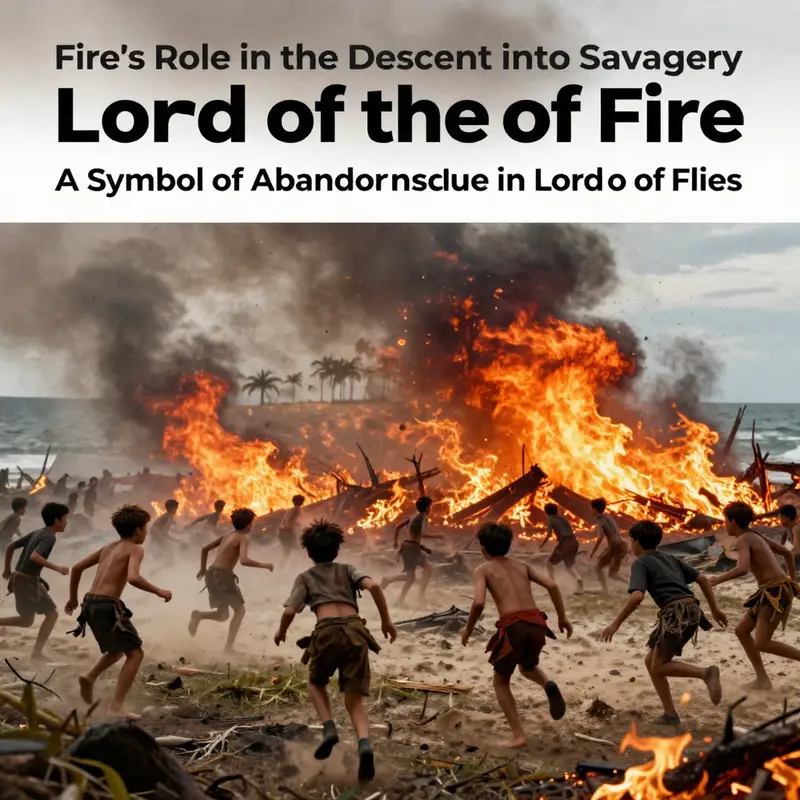
From the moment they first glimpse the island and decide to light a beacon, fire in Lord of the Flies conducts more than warmth and light. It becomes a tether to civilization, a fragile thread that links a group of children to the world they left behind. In this way, fire opens the novel with a promise: as long as the flame is tended, rescue remains plausible. The boys’ early cooperation—the careful building of the signal fire, the rhythm of tending it, the practical discipline of keeping it burning—reads like a miniature civics lesson. Ralph, with a sense of duty that borrows its force from adult society, stands at the center of this effort. He knows the signal fire is not merely a source of heat; it is a public act, a communicative gesture aimed at any watcher who might pass overhead in a passing plane or ship. The fire becomes a visible claim on civilization, a reminder that the boys are still connected to the larger order of the world beyond the palm-strewn edges of the island. In the earliest chapters, the fire is a bright, stubborn line drawn between order and chaos, a line worth preserving because it is, in a sense, a vote for rescue.
The symbolism of fire deepens as characters argue about its purpose and its future. Fire is never neutral in Golding’s landscape; it is a barometer of intent. When Ralph insists on keeping the signal flame burning, the act embodies cooperation, responsibility, and the shared goal of return to the adult world. The fire, in this sense, is a rehearsal of democracy: all hands have a role in maintaining the beacon, and the group survives only if intention and labor align. The show of collective will under the flame’s glow becomes a microcosm of the society they pretend to inhabit, with rules about who tends the fire and when it should be fed. The flame is a language spoken in smoke and embers, a language that says civilization is possible and that rescue is credible as long as there is the will to signal.
Yet the island quickly reveals how fragile this language can be. Fire does not merely illuminate rescue; it can expose the frailties of the boys’ project. When Jack seizes leadership away from Ralph and shifts focus from signal to sport, the fire’s role shifts as well. The hunters’ appetite for power, the thrill of the chase, and the seduction of control replace the communal duty to maintain the beacon. The fire loses its public intention and becomes a private instrument—sometimes neglected, sometimes misused. The moment the signal fire goes out at a crucial juncture marks more than a practical missed opportunity; it signals a deeper withdrawal from the values that make rescue possible. The loss is almost ceremonial: the world to which they hope to return slips from view as the smoke dies, and with it, the sense of being answerable to something larger than themselves.
The most telling episodes involving fire in this arc occur when the flame’s purpose seems clear and then is subverted by a competing desire. Jack’s circle redefines the flame as a tool of intimidation and display. Fire becomes a symbol of dominance rather than tether to civilization. The island’s own boundary—the beach where ships might glide past—receives a darker echo: the same beacon that could summon aid begins to reflect the boys’ fear that rescue might demand accountability, restraint, or even sacrifice. In this reversal, the flame embodies a perilous paradox: what once promised salvation now embodies the boys’ capacity to harm themselves and one another. The transformation is not simply about flame versus wind; it is a change in moral weather. The fire’s glow becomes a mirror in which the boys see themselves as they wish to be seen or fear they might become—rescuers or raiders, citizens or savages.
The narrative reach of fire expands further when a different kind of blaze takes center stage—the forest fire that erupts in tandem with the pursuit of Ralph. This conflagration embodies Golding’s insistence that civilization is a precarious construct, easily altered by fear, anger, or the hunger for power. The same element that was supposed to summon help ends up sweeping across the island and reshaping its moral landscape. Fire here is less a beacon and more a force, untethered from purpose, capable of both protection and destruction. It tests the boys’ ability to manage danger without surrendering to it. The forest fire becomes a dramatic hinge: it both signals the external world and pushes the characters toward internal catastrophe. The sense of rescue—so long associated with the signal fire—splits into two directions at once. There is rescue by human mercy, as a naval officer appears in the distance, but there is also rescue undone by the blaze’s indiscriminate sweep, which consumes rain-forest, shelters, and fear alike.
In the closing arc, the flame discovers its most brutal paradox. The very fire that could have summoned aid ends up becoming the instrument of the island’s unraveling, and, paradoxically, the means by which rescue arrives. The naval officer’s appearance is precipitated by smoke, a smoke that rises from the island’s swamp and glade, stitched together by a reckless blaze. The boys’ ferocity has summoned a power they cannot fully master, and yet that same power becomes the only path back to civilization. The ending reframes the narrative around fire’s double vocation: salvation and annihilation walk hand in hand. The rescue is not a simple triumph of order over chaos; it is a complicated acknowledgment that the line between civilization and barbarism is drawn in flame, and that line is crossed not just by acts of violence but by the very desire to call for help.
The broader implication of this flame-driven arc offers a poignant meditation on human beings under pressure. Fire, in Golding’s hands, becomes a morally operational instrument. When tended with discipline and shared purpose, it anchors a community to hope and to an external audience. It is a symbol of responsibility, a pledge that the group has not abandoned the world beyond the palms. When mismanaged or weaponized, fire exposes the fissures in character, revealing how quickly self-preservation can morph into self-destruction. The flame’s persistence or neglect translates into a visible grammar of choice: sustain the beacon and you sustain civilization; neglect or weaponize the beacon and you invite chaos. The novel’s masterful reversal—that the beacon of rescue comes at the very moment it seems to be consumed by destruction—serves as a stark reminder of the moral complexity of crisis. Rescue, in Golding’s world, is never guaranteed, and its signal can be both a call to return and a catalyst for ruin.
To read fire in this novel is to read the political and ethical weather of the boy’s experiment in living. The flame’s warmth once provided a social contract, a daily ritual that bound the group to a common purpose. The flame’s ash and smoke later reveal a different contract, forged under fear and the adrenaline of survival. The pull toward rescue never vanishes entirely; it mutates. The island’s dueling flames—one bright and orderly, the other wild and consuming—become a single, if contradictory, testimony to human nature. In the end, rescue and ruin share the same ember. The sovereign question remains, as it did at the outset: what kind of world do we rebuild when the old one is taken away, and what kind of people does a fire reveal we are, when the world becomes too small to hold us? The answer Golding compels is neither naive nor romantic. He invites readers to see how easily a spark can illuminate a path back to humanity, and how readily that path can be corrupted by a hunger that is not disciplined by shared law.
For readers and scholars, this trajectory invites a careful, continuous revision of the links between fire and rescue. The flame is never simply a signal for help; it is a litmus test for the state of communal life. Its glow exposes what the boys are willing to protect and what they are willing to relinquish in the name of power, fear, or appetite. The novel’s most enduring moral charge lies in the recognition that rescue is as much about the willingness to hold onto civilization as it is about surviving in a hostile environment. The fire’s trajectory—from beacon to weapon, from hope to hazard, from signal to symbol of a society in flux—maps the fragile line that divides rescue from ruin. The flame’s light keeps faith with the possibility of return, yet it also bears witness to the stubborn, sometimes tragic, truth that civilization requires constant, conscientious effort. Without such effort, the fire that was meant to summon help can easily become the force that brings the island to its knees, forcing a brutal reentry into a world the boys scarcely remember. The chapter thus closes with a reminder: rescue is never guaranteed, and the fire that promises it can just as easily reveal the shadow side of human longing for safety, control, and belonging.
External reference: Fire Symbol in Lord of the Flies – LitCharts. https://www.litcharts.com/lit/lord-of-the-flies/fire
Internal link: For a broader discussion on how real-world fire emergencies reveal the fragile balance between signaling and safety, see this related reflection on evacuations and outcomes in care settings: Left-behind: tragic failures of fire evacuations in senior care facilities.
The Duality of Fire: From Rescue Beacon to Reckoning in Lord of the Flies
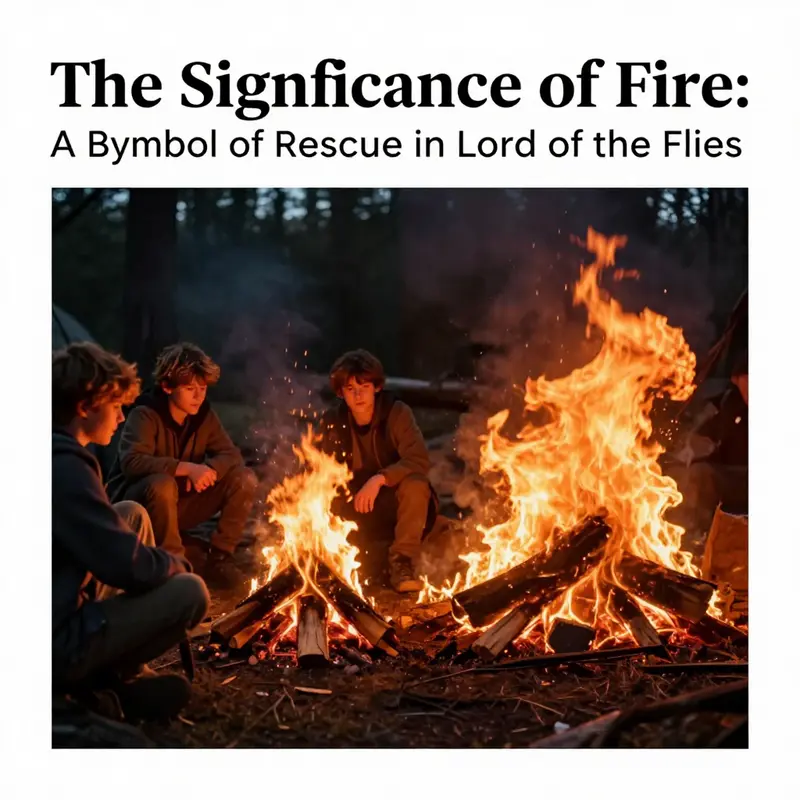
Fire in William Golding’s Lord of the Flies begins as a lifeline and a promise. It is the first sign that the boys have not fully surrendered to the island’s silence, a stubborn ember that defies loneliness and fear. In the early chapters, the fire is not merely a source of warmth or a tool for cooking; it stands as a practical and moral scaffold. Ralph and Piggy realize that fire can draw the attention of ships or planes passing by, a sign that civilization has not forgotten them. This fire embodies order, rationality, and the fragile thread that ties the boys to the world they left behind. To understand its significance, one can picture the dark on the shore at night, the glow rising against the trees, and the way a signal flare can turn the horizon into a doorway back to grownups, rules, and shared responsibility. The fire thus becomes a literal and symbolic beacon: a beacon of rescue, yes, but also a beacon of what civilization costs when rendered in flame and light.
As the narrator emphasizes, the fire is the most important thing on the island, a statement that anchors the boys’ conduct and their sense of purpose. The signal fire organizes their days, not just their nights. It dictates their routines, their roles, and their conversations about who they are and who they want to be. The act of keeping the fire alive requires cooperation, patience, and restraint. It demands that they subordinate appetite, comfort, and fear to a shared goal. In this sense, the flame is not merely a physical phenomenon; it is a moral test. Ralph arrives with a practical vision of leadership: a chorus of voices must unite to tend the blaze, to keep it high and steady, to choose safety over spectacle. The fire becomes a language through which the boys talk about belonging and the possibility of return to something like the civilization they once knew.
Yet the island’s heat reveals how quickly hope can be tempered by human weakness. The early unity dissolves as the group fractures into factions. The need to signal rescue competes with the need to feed, to hunt, and to prove prowess. Jack’s charisma and appetite for power begin to pull some of the boys away from the communal duty of tending the fire. The hunters grow more restless, their focus shifting from signaling to the thrill of the chase. The fire, once a shared commitment, becomes a casualty of factionalism. When the hunters neglect the signal fire to pursue a boar, the flame dwindles. The glow that once traced a possible path home darkens. In that moment, the island seems to hollow out inside each boy, because the physical absence of fire mirrors the spiritual absence of discipline and restraint. The rescue that had seemed imminent now feels contingent, fragile, and uncertain.
The pivotal moment arrives with a shuddering clarity: the fire, left unattended during a hunt, roars into a new life, sweeping part of the island and, in a cruel twist, setting in motion a catastrophe that costs a child’s life. The tragedy underscores fire’s double edge. It offers salvation and exposure in equal measure. Light can reveal the world beyond the trees; it can also expose the boys’ hearts to themselves, revealing fear, cruelty, and the ease with which good intentions can be burned away by fear and desire. The same element that promises rescue becomes a catalyst for ruin when moral responsibility is abandoned. The island’s parables crystallize around that moment: progress without restraint invites disaster; rescue without solidarity becomes a mirage that vanishes as quickly as sparks in a windstorm.
This transformation of fire’s meaning—from a practical signal of safety to a force of chaos—speaks to a larger argument about civilization itself. Fire is power, but power must be tempered by conscience. The fire’s transition is not only about the flame; it is about the boys and what they choose to value when fear tightens its grip. Ralph’s insistence on maintaining the signal fire is a quiet assertion that civilization relies on shared responsibility and the discipline of a common purpose. He understands that the flame’s glow is owed to the effort of many hands, not to the ambition of a few. Jack, by contrast, interprets fire as a instrument of dominance and control once the hunt calls, turning the flame into a weapon to flush out prey and, in a darker moment, to threaten and chase a fellow human. The fire’s power to save also grants it the capacity to injure, to erase boundaries between life and danger, to convert the symbol of rescue into a tool of pursuit and fear. The island’s constant tension between warmth and danger mirrors the tension within each boy: the impulse to belong and the impulse to dominate, the urge to cooperate and the lure of conquest.
In the woods and on the sands, the fire’s language changes with the boys’ evolving motives. When the flame climbs and the smoke curls toward the sky, the air seems to carry two messages at once: a cry for help and a warning that help might come at a price. The fire’s dual message is the novel’s most enduring lesson about rescue. Rescue is not a simple return to the way things were; it is a negotiation with the unknown, a reckoning with the parts of ourselves we prefer to keep hidden. The flame makes visible the moral economy of the island. It is a metric of trust: how much are we willing to risk for the possibility of being found? It is also a device for truth-telling: the way the flame is tended, ignored, or weaponized reveals the state of the group’s collective soul. When the final chapters arrive and the fire becomes a tool of pursuit, the symbolism deepens further. Light, once a signal of belonging and hope, becomes a beacon that guides the hunters to find Ralph, demonstrating how rescue and pursuit can converge in a single blaze. The same light that promises salvation can illuminate a path toward violence, revealing that fear can outpace reason and that survival can eclipse humanity.
To read the fire as a mere symbol of escape would miss the complexity Golding builds into this motif. The flames do not simply announce the boys’ location to the outside world; they reveal what the boys are inside. They show what they owe to each other and what they owe to a larger social order. The fire’s capacity to sustain life by attracting rescue also carries the risk of destroying life through negligence, hunger, and fear. It is a reminder that civilization is not a place but a practice—an ongoing discipline that requires restraint and a shared sense of responsibility. The act of keeping a fire burning becomes a moral act, a commitment to the possibility that others beyond the island still exist and that the boys matter enough to uphold a standard. The moment you see the flame as a measure of accountability rather than a mere tool, the novel’s tragedy and its critique of human nature become more intimate, more inevitable, and more compelling.
A final reflection helps connect this symbol to the broader argument of the article: fire in Lord of the Flies stands for rescue precisely because it encodes the precarious negotiation between civilization and chaos. The flame embodies the hope for return, yet also exposes the fragility of that hope when fear, power, and desire run unchecked. The same light that would guide a ship to safety can also betray by revealing the darker currents under the surface of the boys’ alliances. In this light, the fire’s arc—from signal of salvation to instrument of destruction—reads as a parable about human nature. It suggests that rescue is never guaranteed; it is earned through collective discipline and ethical restraint. And it is endangered whenever a community prioritizes strength over responsibility, or spectacle over care. The fire thus serves as a moral weather vane, signaling not only whether the world beyond the island remains reachable but whether the world within the group remains humane.
For readers seeking a broader conversation about fire’s symbolic weight in the novel, consider how contemporary discussions of resilience and community echo the same tensions. The idea that a community can endure only if its members share in the maintenance of a common fire—whether literal or figurative—resonates across decades and genres. The Green Firehouse article suggested here offers a modern lens on how communities design spaces and practices that support collective safety and well-being, a reminder that the impulse to shelter and protect is as vital today as it is in Golding’s island. See The Green Firehouse: Creating Sustainable Spaces for Community and Health for a contemporary perspective on how shared safeguards sustain people in times of crisis.
As the novel closes, the fire’s last chapters reaffirm the paradox at the heart of rescue. The island’s final blaze is less about signaling help than about exposing truth: the truth of who the boys have become when fear overwhelms judgment, and the truth about how fragile the boundary is between keeping a flame alive and letting it burn out. The rescue that the fire once promised remains possible, but its realization becomes entangled with the hunters’ flames, with Ralph’s pursuit, and with the most elemental truths about power, belonging, and responsibility. Thus, the fire’s legacy endures not as a simple symbol of salvation but as a sobering emblem of the human condition: the urge to save, the impulse to dominate, and the perilous path that lies between those two poles. In that sense, the flame is not only a sign of hope but a test—one that challenges readers to ponder what they would guard, what they would sacrifice, and what they would become if given the chance to be found.
External resource for further scholarly framing: https://www.academia.edu/37591807/SignificanceoffireinLordofthe_Flies
Note on related internal exploration: For a broader discussion of how communities organize their protective practices in challenging environments, see The Green Firehouse: Creating Sustainable Spaces for Community and Health.
Final thoughts
Fire in Lord of the Flies serves as a poignant symbol of the boys’ journey from civilization to savagery, encapsulating their hopes and fears. Initially, it brightens their prospects for rescue and connection to their former lives; however, as they descend into chaos, fire becomes a force of destruction, reflective of their lost humanity. This duality emphasizes the essential struggle between our instinct for civilization and the primal instincts that lie beneath. Understanding the symbolism of fire provides valuable insights into human nature, civilization, and the consequences of abandoning hope.