
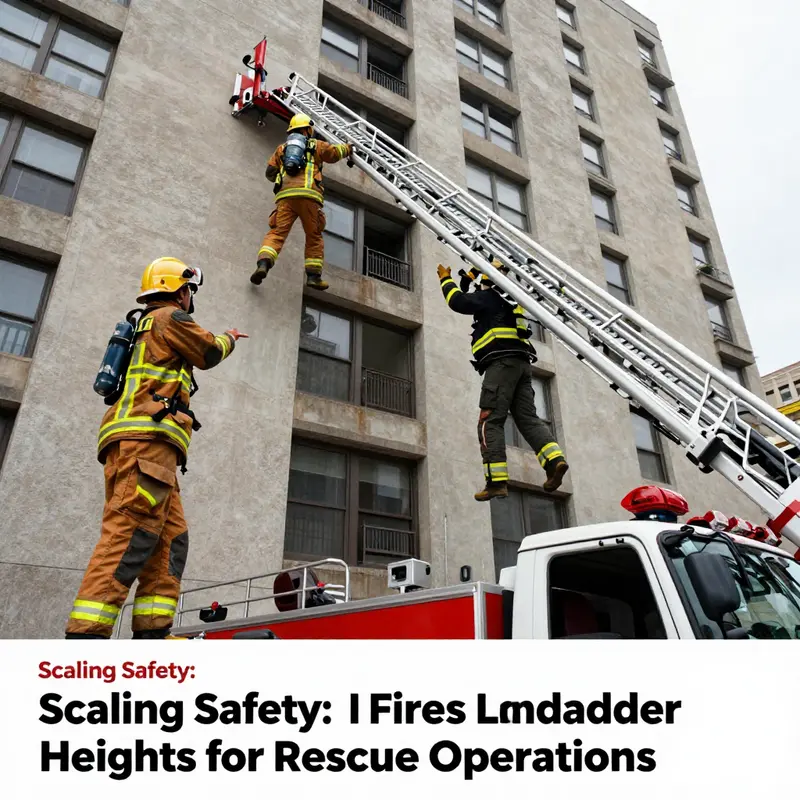
Fire ladders play a crucial role in modern firefighting and rescue operations, providing access to difficult-to-reach locations. Understanding how high these ladders can reach and their capabilities is essential for community safety and emergency preparedness. This article delves into three key areas: the typical heights of fire ladders and their rescue capacity, advanced fire ladder technologies enhancing these capabilities, and the real-world limitations faced during high-rise rescues. Each chapter offers insights that are vital for general public awareness, community readiness, and for the professionals on the front lines of emergency response.
null
null
Advanced Fire Ladder Technologies and Their Impact on Rescue Heights
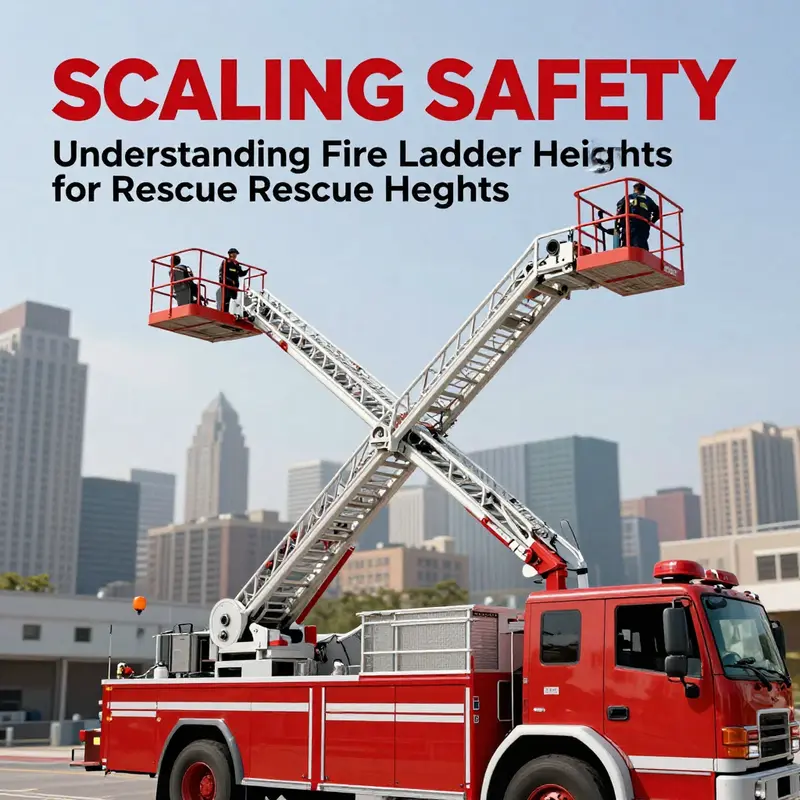
The question of how high a fire ladder can rescue people from is not a simple arithmetic problem. It is a synthesis of physics, engineering, urban geometry, and the relentless demands of live rescue. Ladders and aerial platforms are not merely extensions of a firefighter’s reach; they are dynamic, highly engineered systems designed to transform a narrow vertical emergency into accessible, controllable space. In examining how high these systems can extend their influence, we must move beyond the number that a ladder can extend and focus on how innovations change the real, practical ceiling for rescue in complex urban environments.
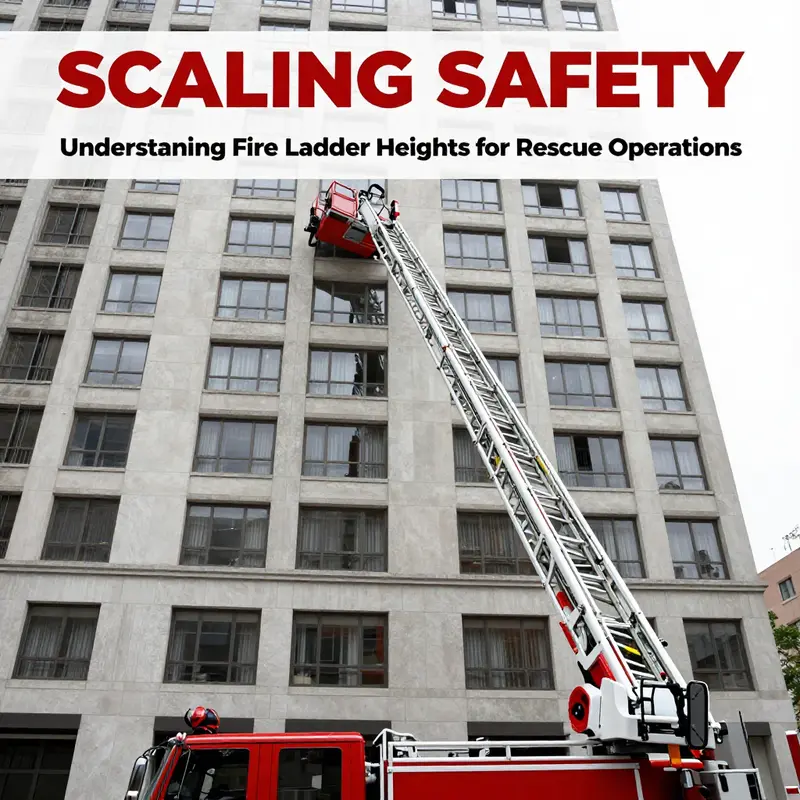
At a practical level, the height question begins with the most common configuration: the aerial ladder and its associated platform. In many urban departments around the world, including those in some of the most densely built regions, the typical working range of standard aerial ladders falls into a broad band. The working height of many systems is commonly cited between roughly 24 and 54 meters. That range translates into access to eight to eighteen-story facades when we assume an average floor height near three meters. This is not a hard wall; it is an engineering envelope shaped by the vehicle’s length, the angle of extension, the stability that outriggers and stabilizers can provide, and the ground conditions behind the vehicle. The numbers matter not as a veneer of capability but as a guide to what kinds of rescues are possible in a real-world street scene, where time, wind, access, and the architecture of the building all contend with the ladder’s reach.
In this context, China represents a notable contrast between traditional capacity and the edge of what contemporary technology is beginning to unlock. The highest-capacity aerial platform currently in active service in China can reach about 101 meters in theory, which suggests a potential reach to roughly thirty-three or thirty-four floors—though some assessments push this to around thirty-seven floors if we count a standard three-meter floor height and consider the variability of floor-to-floor spacing among buildings. It is important to emphasize that this is a theoretical maximum. The practical rescue height often lies well below that ceiling, because reach and stability co-vary with wind conditions, the vehicle’s proximity to the building, and the geometry of the site. The global peak for an operational fire ladder reaches about 112 meters, a height that exceeds forty stories on most tall structures, but again, the real-use height is tempered by safety margins, platform control, and access constraints.
These constraints are not abstractions. In the field, the firefighting team must park the truck in a position that allows the ladder to extend toward the target window or opening while maintaining a safe base. The urban fabric—narrow streets, parked vehicles, and the necessity of dedicated firefighting access zones—can force compromises. A ladder that could theoretically extend to a given height might not be allowed to approach because the truck’s stabilizers cannot achieve a stable footprint on the available surface, or because the ladder would swing in response to gusts as it climbs higher. Even when a direct line of sight to a higher floor exists, features on the building—the security grilles, balcony rails, or interior partitions—can prevent entry. These realities underscore why the practical height of rescue remains a function of more than the pure extension capability of the ladder.
Against this backdrop, advanced ladder technologies are not merely incremental improvements; they are redefining the operational envelope by enhancing stability, precision, and speed. The most consequential trends lie in three interlocking domains: telematics integration, automated stabilization systems, and refined hydraulic controls. Each domain contributes to extending usable height in a way that is meaningful for real-world rescues while preserving the safety and reliability that are the lifeblood of any emergency operation. Telematics, for instance, creates a data-rich feedback loop that informs the crew not only about the current status of the ladder but also about the external conditions around the vehicle. Sensors monitor the load, the tilt, the pitch, the wind pressure on the platform, and the distribution of weight along the ladder. The result is a system that can warn operators of approaching limits before they are breached and that can guide micro-adjustments in real time. This data-driven awareness translates into steadier climbs and more precise positioning near the target opening, which in turn can shorten the time needed to reach a vulnerable occupant and deliver lifesaving aid.
Automated stabilization systems take those insights a step further. Modern ladders incorporate a suite of actuators and control algorithms that actively manage the platform’s orientation. When wind gusts or uneven ground threaten stability, the stabilization system can automatically deploy outriggers, adjust the platform’s tilt, and dampen swaying motions. In practice, this reduces the instinctive conservatism that otherwise slows operations—firefighters often pause to verify that a high-angle extension remains within a safe envelope. With automation, the operators gain a more predictable performance profile as the ladder climbs, enabling the crew to push the reach higher with confidence rather than uncertainty. The result is not just higher altitude but more reliable placement of the platform at the exact window or balcony that will maximize the chance of a successful rescue.
Hydraulic control improvements complete the triad of transformative technologies. The hydraulic system is what translates steel and hydraulics into smooth, controllable motion. Advances in hydraulic architecture—higher-pressure circuits, better relief and damping strategies, and more finely tunable valves—produce a ladder that can extend with delicacy and respond quickly to command inputs. The improved control produces two linked benefits: it enables more precise positioning at higher elevations, and it reduces the mechanical shock transmitted to occupants when the platform settles near a window or a doorway after a climb. For occupants, this matters. A stable, predictable platform makes communication with rescuers easier, and the window or entry point is more likely to remain accessible during the entire operation. In turn, this improves the odds that occupants can be guided to a safe egress path within a few minutes, a critical factor in many high-rise emergencies.
Together, telematics, automated stabilization, and hydraulic advances create a compound effect: higher reach can be pursued with a lower risk profile, even in challenging urban topographies. The orchestration of information flow and mechanical response turns height from a raw measure into a dependable capability. The ladder becomes, in practice, a proactive system rather than a reactive tool. A crew can anticipate how the platform will behave under a given wind speed, a specific angle of extension, and a known load at the basket. They can prepare, adjust, and align in a sequence that minimizes the time spent in the critical altitude band where wind and gravity compete most aggressively. This shift—from improvisation at the edge of safety to a controlled, data-informed extension—helps translate the theoretical maximum height into a reliably usable rescue height in a broad spectrum of cases.
In the broader arc of firefighting technology, such advances do more than expand the ladder’s vertical reach. They enable a more nuanced integration with other rescue modalities. For example, as ladders can extend higher with greater stability, firefighters can coordinate with interior teams to stage evacuation routes on upper floors, create safer access points for occupants near a window, and deploy rescue devices in a manner that minimizes the need for forced egress through hazardous interior spaces. The cumulative effect is a higher overall survivability curve in tall-building emergencies because the ladder becomes an adaptable, high-precision bridge between external access and internal egress. The operator’s attention can shift from simply achieving height to optimizing the rescue sequence: first stabilize, then position, then communicate, then secure, then evacuate.
Moreover, these technological shifts ripple through practice and policy in ways that extend beyond the cab of the apparatus. Telematics data contribute to post-incident analysis, maintenance planning, and training curricula. Engineers and fire chiefs can study how a ladder performed under varied wind profiles, road geometries, and load conditions, allowing them to refine standard operating procedures and update safety margins. Training programs increasingly incorporate simulation tools that mirror the feedback loops provided by real equipment. Trainees learn not only how to command the ladder but how to interpret sensor signals, how to recognize when a wind-induced sway is approaching unsafe thresholds, and how to coordinate a complex sequence with other teams inside and outside the building. In this sense, the higher potential for rescue is also paired with a deeper responsibility to manage risk, a balance that remains central to high-rise rescue philosophy.
Yet the story remains grounded in the realities of place and time. Even with these advances, a ladder’s usable height is not a limitless horizon. Environmental factors such as urban wind patterns between tall structures, street geometry that constrains vehicle placement, and the presence of overhead utilities all shape what is physically deliverable on any given emergency. Building design itself matters: window placements, balcony configurations, and architectural features can impede access even if the ladder can reach the floor level that contains the occupant. Conversely, the proliferation of taller buildings in many cities creates an imperative to continue investing in ladder technology as a form of vertical resilience. In this sense, high-rise rescue is a moving target, one that gains ground whenever technology enhances the ladder’s stability, precision, and predictability, while still acknowledging that no ladder can substitute for comprehensive fire protection systems, early warning, and rapid internal evacuation strategies.
The trajectory of these innovations is not isolated to the hardware. It is inextricably linked to how fire services train, how cities plan firefighting access, and how the public understands the limitations and possibilities of rescue operations. A taller ladder does not automatically translate into more lives saved unless its use is integrated with other capabilities—interior ventilation, search and rescue protocols, and effective communication with occupants. The most effective outcomes emerge when technicians view the ladder as one component in a broader system of protection: a system that includes building design for safety, street-level logistics that keep access clear, and interoperable procedures that allow a coordinated response as conditions change rapidly during a blaze. It is within this integrated framework that the impact of advanced ladder technologies on rescue heights asserts itself most clearly. The ladder’s height becomes a confidence measure, a sign of what emergencies can be managed without compromising the safety of the rescuers or the occupants awaiting rescue.
As the urban landscape continues to evolve, the dialogue between capability and constraint will mature around a central question: how can the gains in reach be translated into faster, safer, and more reliable rescues? The path forward will likely involve further refinements in the three pillars described—telematics, automated stabilization, and hydraulic control—augmented by a broader emphasis on predictive maintenance, better integration with building systems, and smarter, data-informed training. It will also involve a shared understanding of how much height is truly necessary in most scenarios and where efforts should be directed to improve interior egress, fire suppression, and occupant guidance. In that sense, the pursuit of higher rescue heights is not an abstract arms race but a continuous negotiation between physics, safety, urban form, and emergency response strategy.
For readers seeking a broader, industry-wide perspective on how these technologies are shaping the future of aerial rescue platforms, a comprehensive market outlook provides context for the pace and direction of change. The discussion highlights how telematics, automated stabilization, and hydraulic innovations are being adopted, scaled, and standardized across regions, and how these trends influence training, procurement, and operational doctrine. Such sources offer a useful lens for understanding the practical implications of the developments described here and how they may unfold over the coming years. You can explore a detailed overview of market expansion and technology adoption at the following external resource: https://www.marketsandmarkets.com/Market-Reports/aerial-ladder-rescue-vehicle-market-478194385.html.
Beyond the market dynamics, internal discussions and case studies of innovation in fire services illuminate a parallel thread: the way departments curate and disseminate knowledge about new ladder technologies. For readers who want to explore how innovation narratives translate into practice, the topic is sometimes illustrated through curated exhibits and museum-style inquiries into the evolution of firefighting tools. An internal resource that delves into how museums and knowledge centers document and interpret these innovations can be a valuable companion to the practical material described here. The link below leads to a discussion that frames innovation as a tangible, story-driven process within fire services. It invites readers to consider how new capabilities emerge from the intersection of engineering, training, and culture: Innovation Museum Transforming Fire Services.
In sum, the advance of fire ladder technologies is transforming what counts as rescue height on a daily basis. It is not simply a matter of extending a telescoping structure higher into the air but of delivering stable, precise, and rapid access to occupants at greater elevations. The real-world impact of telematics, automated stabilization, and enhanced hydraulic controls is threefold: it expands the practical range within which rescuers operate safely, improves the speed and reliability of placement at critical windows, and strengthens the overall safety profile for both responders and civilians. As urban architectures rise and the demands on emergency services intensify, these technologies will continue to redefine the upper bounds of rescue capability. At the same time, the ongoing integration of these innovations with building design, urban planning, and training will determine how effectively each additional meter translates into saved lives. The question, therefore, remains both a technical one and a human one: how high can we reach, and how often can reaching higher mean reaching for outcomes that preserve life?
Beyond the Reach: The Real Limits and Consequences of Aerial Fire Ladders in High-Rise Rescues
In the heat of a high-rise emergency, firefighters often ride a precarious line between triumph and compromise. The image of a towering ladder arcing toward a narrow window, lights glinting on metal, evokes rescue as a clean, technical act. In truth, the process unfolds within a tangle of physics, weather, urban geometry, and human lives. The chapter that follows does not diminish the courage or skill of those who operate external ladders; it instead unpacks the hard limits that govern their effectiveness. Aerial ladders—whether viewed as a symbol of modern firefighting prowess or as a practical tool—operate within a spectrum defined by height, wind, structure, and time. The question “how high can the ladder rescue people from?” is deceptively simple. The answer, when one accounts for real-world constraints, is more nuanced and consequential: ladders have a finite reach that often requires strategic shifts in how rescues are planned, executed, and, crucially, how buildings are designed and inhabited in the first place.
Height matters, but it is only one axis of a complex problem. Across many urban centers, the practical working height of mainstream aerial ladders tends to hover around the midrange of the device’s potential extension. The theoretical maximum height can command praise for its promise, but the operational reality is tempered by stability and safety concerns. When an arm extends, the apparatus becomes increasingly sensitive to wind, ground conditions, and the geometry of the building and street. The ladder’s cantilevered nature means that even modest gusts translate into measurable sway. In one documented scenario, a 30-meter extension could exhibit lateral movement substantial enough to undermine the operator’s ability to position the ladder with precision, especially when the base vehicle is not on perfectly level ground or is contending with uneven pavement. The result is a practical working height that is lower than the ladder’s maximum reach. This divergence—between theoretical height and usable height—permeates every stage of a rescue attempt and reshapes the decision-making calculus that governs whether external access is attempted at all.
Consider the structural reality: the hydraulic arm and its supporting framework are formidable feats of engineering. The physical mass involved in extending a ladder is not a trivial consideration. In some designs, the hydraulic arm itself can weigh hundreds of kilograms per meter of reach, requiring leverage and counterbalance systems, as well as materials capable of withstanding extreme stresses. The metals and composites used in these arms must combine stiffness with resilience, able to maintain a predictable path under load while contending with gravity, wind, and the dynamic forces of a rescue operation. The engineering challenge is not merely to stretch higher, but to hold steady enough to allow occupants to step into an opening with the assurance of safety. The time factor compounds the difficulty. Deploying a ladder is not instantaneous; it requires a sequence of checks, stabilizations, and alignments performed by a trained crew. In practice, the deployment may take a meaningful interval—often measured in minutes—during which every second counts for people trapped on higher floors. The clock, then, becomes another constraint on usable height: every marginal meter of extension has to be weighed against the stability margins, the time to bring the vehicle into position, and the risk of creating additional hazards for those awaiting rescue.
The wind is perhaps the most capricious adversary in this math. When a ladder extends to significant lengths, even modest wind speeds can translate into dangerous sway. A practical benchmark appears in fire service reports and anecdotal accounts: at around 30 meters of extension, sustained gusts or turbulence can drive lateral movement of roughly a meter or more, a staggering amount when precision is required to align with a specific window or balcony. In more extreme conditions, wind speeds that would be second-order concerns in ground-based firefighting can force a retreat from external rescue operations altogether. One widely cited scenario involved a tall urban building where a ladder, extended to about 70 meters, had to be abandoned due to wind speeds around ten meters per second. The takeaway is stark: high-rise rescue cannot be a warranty of safety simply by virtue of reaching a higher level. It is conditioned by air, ground, and the geometry of the urban canyon in which the building sits.
Access and positioning also narrate a constraint story that is independent of the ladder’s height. The fire vehicle must be able to park in a location that permits a safe and effective setup. Street width, vehicle turning radius, parked cars, and the presence or absence of dedicated firefighting access lanes dramatically influence the ladder’s real-world utility. In densely built areas, a building might be skirted by other structures or by a tangle of alleys that prevent the truck from achieving the optimal orientation. Even if the ladder can physically extend to a given floor, the operator must negotiate the precise alignment between a rescue window and the aerial platform. The smallest misalignment may render a rescue impossible from the exterior end, forcing occupants to rely on interior stairs, elevators (if they remain powered and safe), or other containment measures. The urban fabric itself, then, becomes a critical determinant of whether exterior rescue is viable, effectively turning a building’s foothold within a city into a separate, non-technical factor in survival odds.
Another layer of limitation arises from the architectural and security features of the target building. Even when a window is within reach, obstructions such as closed windows, security grilles, fire shutters, or balcony barriers may block access. If the interior layout includes multiple doors or interior corridors that are locked or compromised by heat and smoke, the ladder’s access point becomes a mere gateway that leads to dead ends rather than a direct line of escape. In this light, the ladder’s role shifts from a primary rescue mechanism to a complementary tactical option, one that works best as part of a broader, integrated response. A rescue plan that relies solely on the ladder risks leaving occupants beyond the ladder’s reach stranded in sections of the building that cannot be reached externally. This reality underscores a central theme in modern high-rise firefighting: external ladder operations are most effective when they operate in concert with robust interior egress strategies, reliable fire suppression systems, and pre-planned building evacuations.
The theoretical heights cited in research chatter and global summaries—ranging into ranges of 50 meters or more—work as a useful map for planning, but not as a guarantee of success in any given incident. In real-world operations, the effective working height often sits well below the maximum mechanical extension. This reality is not merely a technical footnote but a core driver of how cities design their high-rise era. If the ladder’s reach cannot reliably cover the floors where occupants are concentrated, then building codes, evacuation stairs, smoke control, and early warning systems must do much of the heavy lifting. The human dimension is central here: the survival of people on upper floors hinges on fast, informed action. The more distant the threat, the more critical it is for occupants to know how to escape, to identify safe corridors, and to seal off compartments to limit smoke intrusion. The exchange between equipment capability and human response becomes a law of rescue in modern urban fires.
A further, often underappreciated factor is the pace of deployment. Fire services everywhere must balance the desire to reach higher floors with the imperative to respond quickly to the earliest signs of danger. The psychology of delay matters. If responders arrive to discover that external access would take several minutes more to setup, the odds of a successful external rescue may drop sharply. In some high-rise contexts, the decision not to deploy the ladder externally is driven as much by time and risk assessment as by the device’s physical constraints. The same hours that might have seen a firefighter climbing onto a platform could instead be spent coordinating evacuation, deploying interior hose lines, and supporting residents through stairwells while maintaining a defensible zone near the building. In this sense, external ladders are not merely tools but strategic choices that reflect a complex cost-benefit calculation under pressure.
The international landscape reveals a spectrum of capabilities, illustrating both the potential of hydraulic platforms and the persistent gaps that remain. In some other countries, higher-reaching external ladders exist, offering greater theoretical reach and improved stability under wind loads. Yet even then, the same fundamental limitations—wind, ground conditions, urban obstructions, and the time required for deployment—continue to shape outcomes. The disability of a ladder at great height is not simply a function of engineering shortfalls; it reflects the broader truth that human lives embedded in high-rise environments demand multi-layered defenses. The ladder can rescue only if it can be positioned, extended safely, and aligned with accessible openings. If any of these steps falter, the rescue must pivot toward intrusions of interior access, fire suppression, containment, and orderly evacuation.
This layered reality has a direct effect on how occupants experience a fire. When a building rises into the sky and the ladder cannot reach the critical upper floors, residents confront a dual risk: the danger of smoke and heat, and the risk of being stranded away from the exterior hinge of rescue. To mitigate this, knowledge and planning at the human level become part of the protective system. Evacuation drills, clearly marked stairwells, and reliable communication about safe routes can meaningfully improve outcomes, especially when the ladder’s reach is insufficient. A key insight from field observations is a stark reminder: when the ladder cannot reach you, survival increasingly depends on what you know, how quickly you act, and whether you have practiced escape under smoke conditions. This is the human element of a highly mechanical problem—a reminder that firefighting is not solely about machines but about people navigating danger with clarity and courage.
In this context, the pursuit of higher ladders must be understood not as an unchecked race to build taller devices but as part of a broader program that elevates the entire safety ecosystem. Urban planners and fire services are faced with a set of interlocking questions: How do we ensure stairwells remain tenable under smoke conditions and power outages? How can we design egress corridors that minimize time to safety while allowing firefighters to perform critical interventions? How can we situate firefighting apparatus to maximize accessibility without compromising traffic flow and pedestrian safety on crowded streets? And how can we align equipment capability with realistic, scenario-based risk assessments that reflect weather, street geometry, and building diversity?
Some might wonder whether the answer lies in pushing ladder heights higher still. Yet the evidence suggests a more nuanced direction: augmenting external reach must be paired with investments in interior resilience, better urban design, and smarter incident command that prioritizes occupant survival through self-rescue and organized evacuation when external access is constrained. The hard truth—echoed by practitioners who have faced the closing gap between possibility and practice—is that high-rise firefighting remains a world-class challenge. When the ladder cannot reach the top floors, the burden shifts decisively toward the occupants’ ability to understand and execute self-preservation strategies. A veteran voice in the field once captured the essence of this reality in a concise statement that resonates across jurisdictions: when the ladder can’t reach you, your survival depends on what you know—and how quickly you act.
To connect these threads to the practical, everyday work of emergency responders and city planners, it helps to view the ladder as a critical but not standalone tool. Its value lies in what it enables when the environment cooperates: a window of possibility where a rescue becomes physically feasible and where the window is also backed by doors that can be unlocked, staircases that function, and smoke control methods that contain hazard. Recognizing the ladder’s limits does not diminish the bravery of crews; it sharpens the focus on a more comprehensive approach to life safety. It invites a shift from sensational headlines about unreachable upper floors to thoughtful conversations about how to design buildings and streets that blend intrinsic safety with the practical realities of external rescue operations.
Within this framework, knowledge transfer becomes essential. Residents should be educated on recognizing the most viable escape routes, identifying safe rooms, and understanding how to seal doors to control smoke ingress if an exterior rescue is delayed or impossible. Fire safety is not merely a matter of kicking in doors and lifting people to safety; it is a chain of interdependent actions that includes early detection, rapid notification, interior containment, and, where possible, external support. The chain is only as strong as its weakest link. If any link—from a blocked staircase to a blocked window—fails, the entire rescue strategy can be compromised. The practical implication is clear: in the design and operation of high-rise safety systems, external ladders must be integrated with robust internal rescue plans. The two strands must inform one another, each reinforcing the other, so that when the ladder reaches its edge, there remains a coherent route to safety for every occupant.
Finally, the story of ladder limitations invites a forward-looking reflection on how to advance urban resilience. The conversation cannot be limited to the height that mechanical arms can reach. It must extend to the cadence of urban development, the disposition of streets and parking, and the prioritization of stairwell integrity, smoke management, and emergency communications. It is a conversation about designing cities where rescue strategies are built into the fabric of a building from the ground up. The chapters that follow will expand on how occupants, designers, and responders can work together to reduce reliance on a single instrument of rescue and instead cultivate a comprehensive, layered safety culture that makes survival more probable even when external access remains constrained.
To readers who want to explore how equipment decisions intersect with broader rescue planning, consider the broader discourse on developing safer firefighting ecosystems, including the work that explores the role of equipment solutions in developing contexts. See an example of how comprehensive and customized equipment series are being developed to address diverse rescue needs in developing countries, where resource constraints require adaptable, reliable, and cost-effective solutions: comprehensive customized fire trucks for developing countries.
External reference for further context on the global limits and dilemmas of high-rise ladder rescues can be found here, which documents how even the most capable ladders face a “hundred-meter dilemma” when confronted with windy conditions and tall facades: https://www.thepaper.cn/newsDetailforward24911243. This external perspective helps frame the chapter’s core argument: height is compelling, but the real design of safety hinges on how a city, a building, and a community prepare for the day when the ladder reaches its maximum, and then reaches its edge.
Final thoughts
Understanding the heights that fire ladders can achieve, along with the advanced technologies available, is crucial for ensuring the effectiveness of rescue operations. However, recognizing the limitations that emergency responders face is equally important in preparing for high-rise scenarios. By educating our communities about these topics, we can enhance safety measures and improve emergency preparedness, ensuring that when disaster strikes, help is not far behind.