
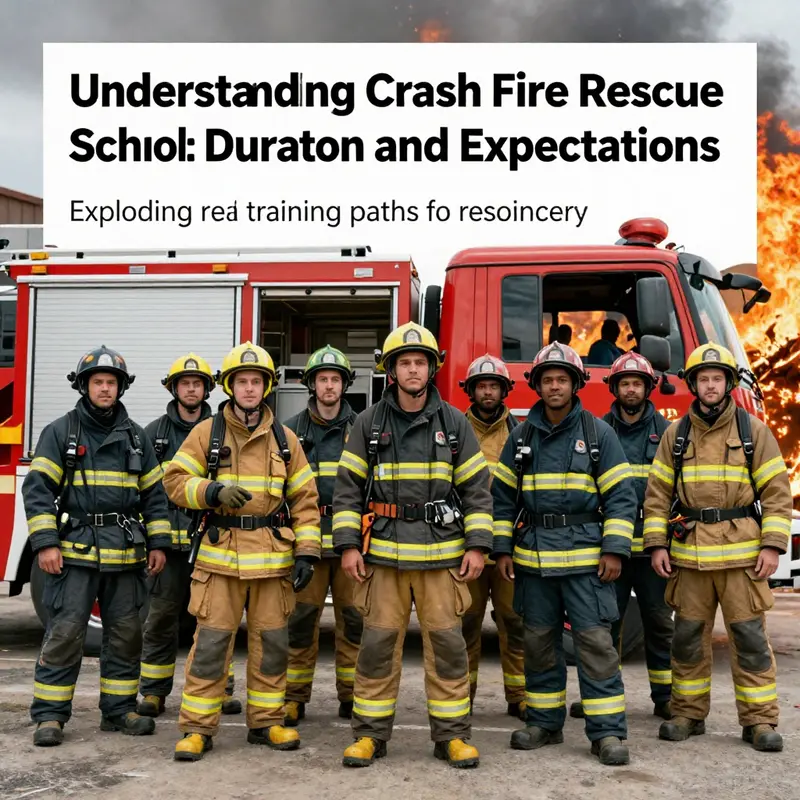
The training duration for Crash Fire Rescue School remains a topic of interest for many within the firefighting community and beyond. Understanding how long these programs last, structured as courses, and the variations that exist across different jurisdictions is essential for prospective students and community members alike. This comprehensive exploration not only addresses the core question of duration but also juxtaposes these training programs against other emergency response courses. Additionally, we will unravel the perceived differences between real-life training and the dramatizations portrayed in media. Each chapter aims to provide a clearer view into Crash Fire Rescue School training durations, aiding those seeking to enter the field of emergency services.
Real-World Timelines for Crash Fire Rescue Training: From Short Courses to Three-Year Paths
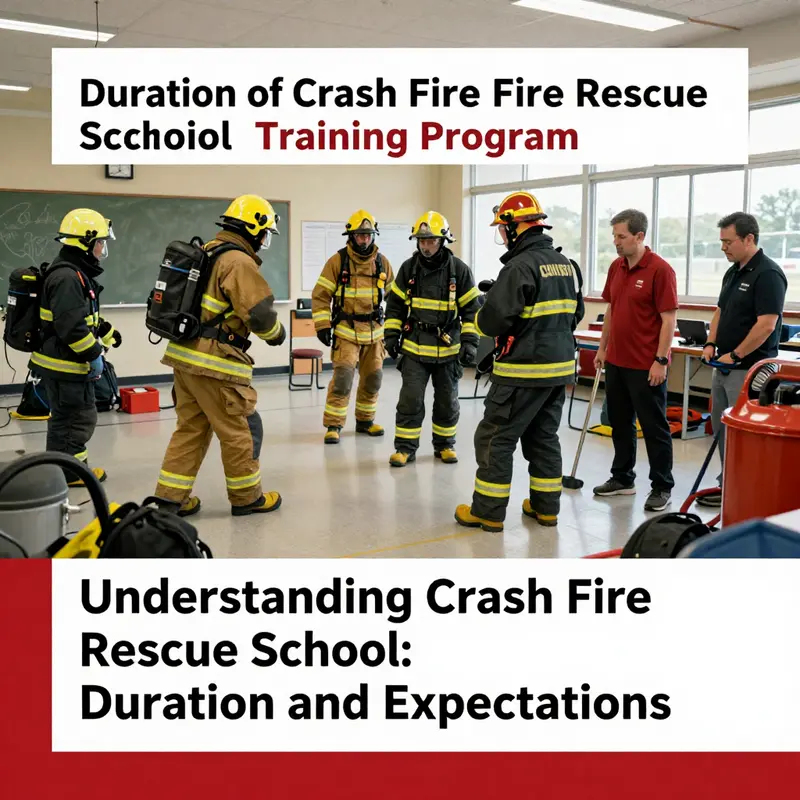
The term “Crash Fire Rescue School” often conjures the high-octane scenes of television drama, where life-or-death decisions unfold in tightly edited moments. Yet the reality behind those dramatized lessons is far more varied. There is no universal, standardized duration for crash fire rescue training that applies across all nations, jurisdictions, or even institutions within a single country. The truth is shaped by the specific role a responder is preparing for, the regulatory framework that governs credentialing, and the level of certification that the local system requires. In many places, training programs for firefighting recruits are concise and action-oriented, designed to produce a frontline worker capable of basic, practical response within a few months. In contrast, more comprehensive tracks, blending firefighting with advanced emergency medical care, hazardous materials awareness, technical rescue, and incident management, can extend over several months or even years. The result is a mosaic of timelines that seems to fracture the screenwriter’s illusion of a single, tidy curriculum into a spectrum of real-world pathways.
Across Western systems, a common baseline emerges for entry-level firefighting roles: recruit training that typically falls within a window of roughly 10 to 12 weeks. This period is often described in public-facing materials as the core regimen for learning foundational skills—personal protective equipment use, physical conditioning, basic fire suppression tactics, search and rescue basics, and the safety protocols that guard both responders and civilians. It is important to note, however, that even this figure is highly context-dependent. Some programs compress components into shorter modules for academies that operate on year-round cadet cycles, while others spread core competencies across longer cycles to accommodate concurrent academic coursework or mandatory internships. In many U.S. jurisdictions, the pathway continues beyond recruit school with field probation, station-based training, and specialization tracks that extend the overall time to full credentialing.
When the discussion shifts from a firefighting-centric track to a broader emergency responder profile—where EMS, rescue operations, and incident command are part of the job—the duration often grows substantially. Emergency Medical Technician (EMT) and paramedic programs can range from several months to more than a year, depending on whether the aim is basic certification or higher-level, license-eligible practice. The same principle applies to rescue operations that integrate swift water, rope, confined space, or vehicle extrication training; many of these capabilities are layered on top of core firefighting education and require additional weeks or months of dedicated instruction and supervised fieldwork. In short, the same “crash” label can mask a variety of formalized, structured programs that are designed to align with divergent regulatory standards and career ladders.
Turning to international contexts, the terrain becomes even more nuanced. The duration of crash fire rescue-related education abroad can reflect national labor market needs, the maturity of safety-education systems, and the degree to which public institutions emphasize applied versus theoretical learning. In some nations, the emphasis on professional, application-oriented education in emergency services is anchored in polytechnic or vocational-technical colleges. Here, a three-year associate-degree pathway is common for specialized fields such as rescue technology, emergency management, and disaster response. These three-year programs aim to produce graduates who can immediately contribute to complex field operations, understand the interplay between prevention and response, and lead small teams during emergencies. The three-year timeframe is not arbitrary; it reflects a deliberate design to blend practical skill development with broader competencies in instrumentation, command procedures, risk assessment, and community resilience. In places where such pathways exist, graduates exit with a robust, work-ready toolkit rather than a narrowly focused skill set.
To illustrate, certain institutions in major producing regions have structured three-year curricula specifically around emergency management and rescue command. The intent is to cultivate application-oriented talents who can serve in roles that require not just physical readiness, but also the capacity to coordinate resources, analyze evolving threats, and communicate effectively with multiple stakeholders under pressure. Within these programs, the day-to-day rhythm might include lab simulations, field practicums, and internships that expose learners to real-world incidents. The length of the program is a deliberate choice to ensure coverage of general education alongside practical training, so that graduates are equipped to adapt to a wide range of incident scenarios—from urban search and rescue to large-scale disaster response. It is a model that acknowledges the complexity of modern rescue work and the necessity of intertwining technical proficiency with problem-solving and leadership.
Foundational professional programs across these three-year tracks retain a core emphasis on safety, procedural discipline, and teamwork. But they also foreground context: the social and environmental dimensions of rescue work, the ethical considerations of emergency response, and the critical importance of effective communication in high-stress environments. Learners spend substantial time on problem-based exercises, scenario-driven drills, and cross-disciplinary collaboration with other public safety disciplines. The pedagogy tends to balance hands-on practice with theory, ensuring that graduates not only execute standard procedures but also understand why those procedures exist and how to adapt them when circumstances deviate from the ideal. This holistic approach helps ensure that a longer duration translates into durable competence rather than rote memorization.
The contrast between Western and Eastern training architectures further underscores how a single term can mask divergent expectations. While the longer, three-year tracks emphasize breadth and integration, some Western programs favor modular, competency-based progressions that can be completed more quickly if learners demonstrate mastery in specific areas. Yet the unifying thread remains clear: effective crash fire rescue work increasingly demands more than physical dexterity. It requires an integrated skill set that includes risk assessment, decision-making under uncertainty, leadership when incident command is invoked, and the ability to operate within a multi-agency framework. For aspiring responders, the decision about which path to pursue should reflect not just the clock on a wall but a careful appraisal of career goals, the regulatory landscape, and the scope of practice one intends to assume.
The literature surrounding these topics often emphasizes credible sources as critical touchpoints. In practice, those seeking precise, jurisdiction-specific timelines should consult the standards bodies and training academies that codify minimum hours and certification criteria. The National Fire Protection Association (NFPA) and local fire department training academies repeatedly surface as reliable references for widely accepted baselines. They help demystify the gap between what media portrays and what real programs require. They also illuminate the range of certifications that craft a responder’s career arc—from entry-level responders to senior commanders responsible for directing large-scale, multi-disciplinary operations. The takeaway is not that one route is superior, but that different systems align with different public safety needs, funding realities, and workforce pipelines. When evaluating a given program, prospective students should map the duration to the competencies they will gain, the job roles they can pursue, and the level of responsibility they can reasonably expect to assume upon graduation.
One broader thread that emerges when contemplating these timelines is the role of infrastructure in shaping training length. If a program assumes substantial on-site, hands-on practice in controlled environments with close supervision, the duration naturally extends. If a system depends heavily on simulated scenarios and modular assessments, the timeline can be compressed without sacrificing skill development, provided the assessments are rigorous and the field experiences authentic. In regions where higher vocational education sits at the core of emergency services preparation, the three-year structure embodies a deliberate investment in both depth and practicality. It recognizes that the modern fire and rescue mission often requires not just suppression and emergency medical responses, but also a nuanced grasp of disaster risk reduction, incident management, and the socio-environmental context in which communities live.
For readers who are curious about how these ideas translate into concrete avenues for study, consider exploring the broader conversation about evolving training ecosystems and the architectural shifts that support them. See the discussion on how training infrastructures are evolving in the sector’s ongoing transformation. innovation museum transforming fire services.
As you navigate these timelines, it helps to keep in mind that the labels on a transcript or a course catalog—whether a short recruit course or a three-year program—are less important than the competencies a graduate brings to the field. A three-year program tends to produce graduates who can walk onto a scene with a holistic perspective: they understand how prevention strategies reduce demand, how to read a flame’s behavior in a structural setting, how to coordinate with EMS and urban search teams, and how to sustain their own physical and mental readiness for the long haul. A shorter program, by contrast, may accelerate entry into the workforce but might require longer periods of on-the-job learning and mentored specialty training to reach the same level of operational fluency.
The chapters that follow will delve into entry requirements, recruitment pathways, and the evolving expectations for new responders in different regions. The goal is not to prescribe a single blueprint but to illuminate how duration, when considered alongside purpose and context, becomes a meaningful signal about a program’s aims and a learner’s future trajectory. In many ways, the length of a course is less a verdict about its quality and more a reflection of the complexity and scope of the responsibilities it is preparing a person to undertake. The time invested is the time earned back in the field, when every minute counts and the difference between a calculated plan and a successful operation rests on the readiness forged in those training hours.
External references can provide concrete, jurisdiction-specific details for readers who want to trace the exact hours and certification requirements in their area. For further details on specific training durations, see the China Fire and Rescue Institute’s official site: https://www.cifri.edu.cn
From Weeks to Years: Unraveling Real Timelines in Crash Fire Rescue Training
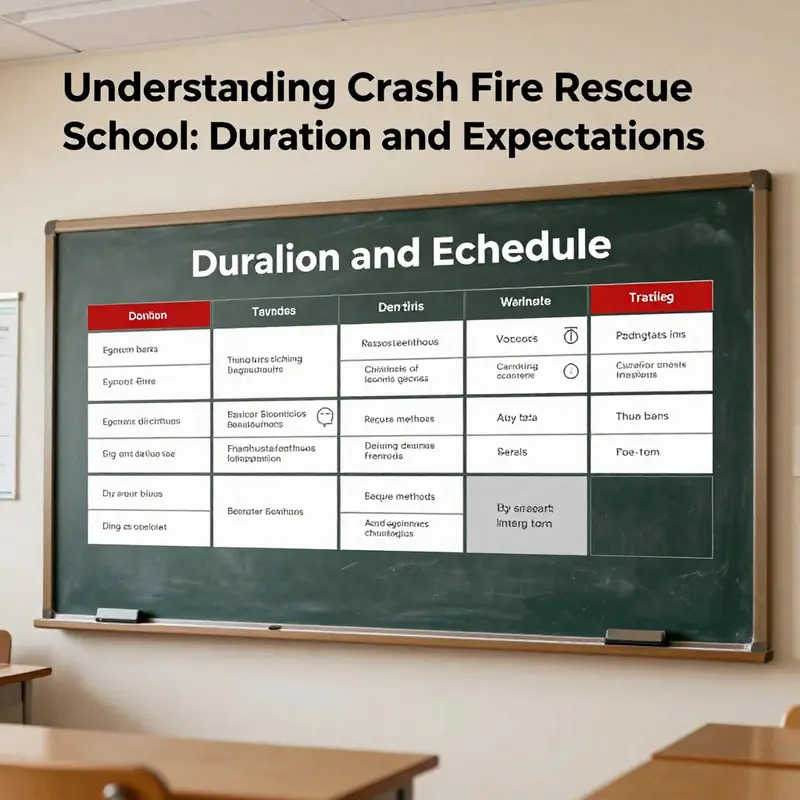
Fans of procedural dramas often meet the phrase crash fire rescue school as if it were a single, standardized training program. In reality, there is no universal institute by that name, and there is no one-size-fits-all duration that applies across every jurisdiction or every entry path. When we pull the threads from real-world training pipelines, the times vary by the role being prepared, by the level of certification sought, and by the setting in which the responder will operate. In many fire service academies and emergency medical programs, the span from start of training to readiness runs from roughly eight to twelve weeks for basic firefighter recruit tracks, to several months for EMT and paramedic licenses, and to year-plus horizons for degree-level preparation that combines science with field-intensive rescue practice. Media portrayals compress or dramatize these timelines for narrative pacing, but practical scheduling follows clear educational and safety requirements. The China Fire and Rescue Academy (CFRA) provides a counterpoint—a structured, multi-year educational model that deliberately blends theory with hands-on competence.
At CFRA, the curriculum resilience rests on a dual foundation: a broad base of core academic work and a targeted, professional preparation that responds to the specialized demands of rescue operations. The Foundation Department carries 18 core undergraduate courses that build the intellectual scaffolding any firefighter or rescue professional needs. Courses such as General Physics, Chemistry, and Mathematical Statistics are not filler; they establish the analytical habits that help responders assess scenarios, calculate risks, and plan interventions under pressure. Equally important are practical subjects—Firefighting Physical Training, Drill Training, and topographic applications—that cultivate stamina, coordination, and situational awareness. The design favors interdisciplinarity, showing how Chemical Safety Technology or Destruction Risk Assessment informs hazardous materials handling and disaster response. Far from a narrow skill set, the CFRA approach ties scientific literacy to operational readiness, ensuring graduates can translate laboratory insights into field actions.
Among the specialized offerings, Rescue Command and Technology stands out as a deliberate convergence of leadership, technical know-how, and fieldcraft. Students in this major explore disaster prevention and mitigation, safety science principles, and emergency management fundamentals while also learning to map hazards with GIS-like tools, survey accident scenes, and coordinate on-site responses. The program’s scope includes 3S technology—an integrated reference to geographic information systems, global positioning, and remote sensing—and risk assessment that supports decisions when seconds count. On-site medical care during disasters, emergency rescue equipment, and rescue command and coordination equip graduates to lead teams through complex operations, often under austere or rapidly changing conditions. The training philosophy leans heavily into simulation exercises and field drills, where theory is tested against the dynamic pressures of real-world emergencies. This is where a school’s stated duration begins to feel secondary to the intensity and continuity of practice.
CFRA’s curriculum design mirrors a student-centered philosophy that adapts to the needs of different majors. The so-called customized or order-based model means instructors tailor modules to emphasize relevance for engineering-focused students or administrative tracks, ensuring the content resonates with the intended career path. A high proportion of practical training marks the program, with labs, simulations, and live-field exercises forming a substantive portion of credit hours. This immersive approach helps cement competencies that no classroom lecture alone could impart, such as rapid decision-making, team communication, and disciplined adherence to safety protocols. To maintain quality across this diverse portfolio, CFRA employs a robust evaluation system, including a second-level teaching supervision mechanism within the Foundation Department. The aim is not to produce rote performers but to cultivate performers who can reason, adapt, and lead during emergencies. In other words, the school foregrounds readiness, not mere credentialing, and uses continuous feedback loops to refine methods, drills, and assessment metrics.
Beyond individual courses, institutional support and development frame how long someone remains in training and how effective that training proves to be. CFRA’s ongoing self-assessment and evaluation efforts—visible in documents such as Undergraduate Teaching Work Evaluation reports—signal a commitment to aligning content with evolving national goals and standards. The curriculum is positioned within a broader public-safety mission, which includes aesthetic education and the cultivation of combat spirit and courage as cultural values that sustain resilience under pressure. This holistic approach matters because the duration of training is not simply about counting days on a calendar; it is about ensuring a graduate can integrate knowledge, teamwork, and moral courage when every second of a shift matters. It is this combination of depth, practice, and character that shapes how long a program should last for those destined for high-stakes rescue work. To glimpse how such educational design translates into ongoing competence, consider the link to innovations in training and how institutions balance science with field readiness: Innovation Museum Transforming Fire Services.
When people ask how long Crash Fire Rescue School takes, the most reliable answer depends on the pathway chosen. If the question is framed around a generic entry into firefighting as a recruit at a regional academy, a common answer is eight to twelve weeks for entry-level firefighter training, with longer tracks for EMT or paramedic conversion. If the ambition is a college degree that culminates in professional licensure, the horizon extends to months or years, depending on the targeted credential and the pace of clinical or field components. The discrepancy underscores an important point: the media’s action-driven portrayals compress time, while real training sequences unfold across layered stages—academic foundations, applied science, technical skills, drills, evals, and then field deployments. For context, CFRA’s model shows how a single institution can weave undergraduate education with specialized rescue training, creating a pipeline that takes longer than a single summer academy but yields graduates who are prepared to manage complex, multi-hazard environments. In such settings, duration is not merely a number; it reflects the breadth of expertise, the depth of practice, and the continuity of professional development. The phrase crash fire rescue school, then, maps awkwardly to a single institution or a fixed timetable. Instead, it points to a spectrum of pathways that share a common aim: reliable, capable responders who can think clearly, act decisively, and stay safe while protecting others under pressure.
Finally, anyone mapping a realistic training path should consult established resources and local offerings. Factoring in the required certifications, the sequence of courses, and the need for supervised field experience will illuminate how long a given program lasts. Real-world programs emphasize safety, competency, and adaptability as non-negotiable outcomes, so schedules are designed to balance rigorous instruction with the health and wellbeing of learners. The emphasis on practical training, scenario-based drills, and continuous evaluation helps ensure graduates carry not just knowledge but the confidence and judgment essential for protecting lives when crises unfold. For readers seeking a deeper sense of how modern training is evolving, consider exploring sources that document innovations in fire-service education and the ways institutions balance science with street readiness. Innovation and research continue to reshape the length and content of training, even as core competencies—hazard assessment, emergency leadership, and on-scene medical care—remain central. The result is a clearer understanding that there is no single duration that defines Crash Fire Rescue School; instead, there are pathways tailored to roles, jurisdictions, and learning objectives, all anchored by a shared commitment to public safety. If you want a broader view of how training and equipment evolve together, you can also explore industry considerations that shape curriculum design in regions facing diverse rescue needs, which helps explain why durations vary so widely across programs. For official information about CFRA, see its site: CFRA Official Website.
Measuring Readiness: How Crash Fire Rescue Training Length Shifts Across Jurisdictions and Airport Demands
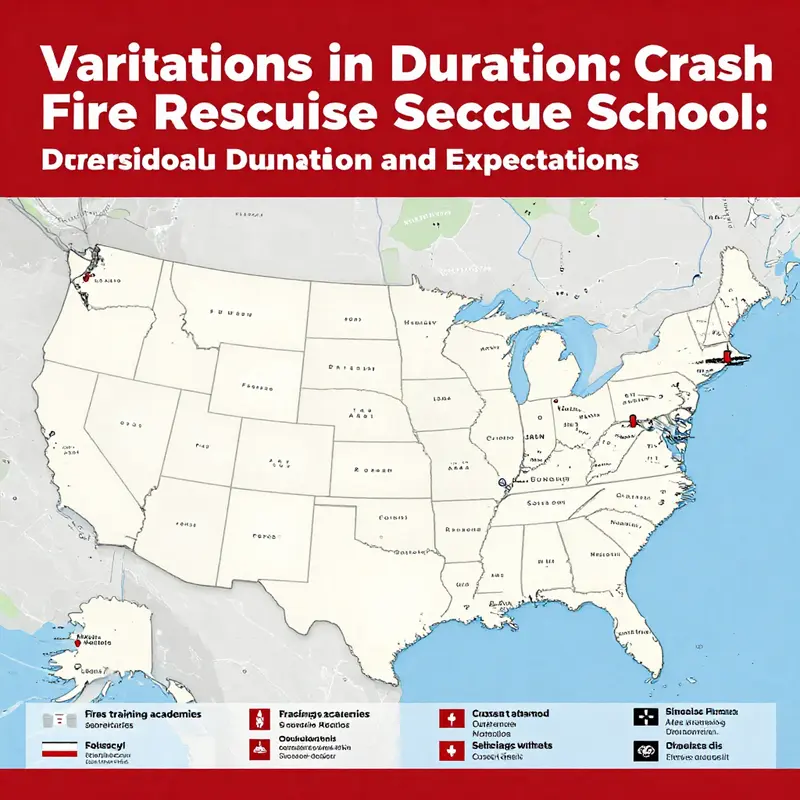
When readers ask, “how long is crash fire rescue school?” they are probing a question that looks simple on the surface but dissolves into a landscape of local rules, airport realities, and evolving safety standards. There is no one-size-fits-all program called “Crash Fire Rescue School.” Instead, emergency responder training in this niche tends to cluster around a few broad timeframes, yet those timeframes are elastic. In many jurisdictions, foundational programs span roughly eight to twelve weeks, with some roles requiring longer immersion. The variation commonly hinges on the intended certification, the complexity of the aircraft environments being served, and the regulatory framework that governs airport operations. While popular media may dramatize a brisk, cinematic cadence, actual training sequences are calibrated to ensure responders emerge with both practical competence and an unwavering appreciation for the hazards unique to aircraft emergencies. For readers seeking a factual compass, national bodies and local academies offer guidelines that help anchor these durations to real-world needs.
A central driver of duration is the size and mission of the airport itself. Major international hubs operate with a scale and risk profile that demands a broader repertoire of responses. The tactical demands in those settings include rapid incident assessment around large jet aircraft, specialized foam deployment for high-energy fuels, and the capacity to manage complex passengers and crew in a highly structured emergency environment. Training programs in such jurisdictions often extend toward the longer end of the spectrum. They integrate classroom instruction with extended hands-on practice on wide variety of aircraft types, in both daylight and night conditions, and under pressure to demonstrate coordinated crew performance. The objective is not merely to learn how to fight fire but to perform as a disciplined team operating under the stringent constraints of an aviation firefighting system. In this context, duration becomes a proxy for depth: more time allows for more scenarios, more repetitions, and more deliberate mastery of the many moving parts of an aviation incident.
Smaller regional airports, by contrast, present a different calculus. Their annual air traffic, fleet mix, and incident history may not justify the same breadth of training as a global gateway. Yet even in these environments, responders confront unique risks—shorter runways, mixed-use aircraft operations, and potentially more diverse weather and terrain challenges. Here, curricula are designed to balance core competencies with operational practicality. The result can be a more concise program, perhaps eight to ten weeks, that still covers the essentials: aircraft recognition and hazard assessment, early warning and access, safe approach and rescue techniques, ground surveillance, ventilation and cooling methods, and the safe management of passengers and crew. The aim is to produce responders who are proficient enough for routine aircraft incidents while preserving room for ongoing skill refinement after deployment. In both large and small airports, the thread that binds curricula is the insistence on hands-on proficiency—drills, live-fire simulations, and realistic scenario training—paired with a solid grounding in theory.
The composition of the training program itself reflects these jurisdictional choices. Most courses begin with a shared core syllabus that introduces aviation-specific hazard awareness: jet fuel behavior, aircraft fuselage integrity, and the particular shut-off and rescue systems found on common aircraft archetypes. Students soon progress into practical techniques: rapid access to aircraft cockpits, securement of power sources, and the establishment of safe zones for responders and civilians alike. A crucial portion of the curriculum is devoted to extinguishment strategies that align with aviation fuels, including the careful use of foam concentrates and the management of radiant heat in confined spaces. Alongside this, instructors emphasize evacuation doctrine—how to prioritize life safety while coordinating with airfield operations, air traffic control, and incident command. The education sequence culminates in full-scale drills where learners rotate through roles, rehearse communication protocols, and demonstrate the ability to adapt tactics to shifting conditions. These elements—theoretical grounding, practical manipulation, and team-based decision making—are the non-negotiables that justify a longer program when the airport demands higher readiness.
Despite the differences in length, most jurisdictions align with a shared safety philosophy and a common catalog of competencies. International frameworks, such as those promulgated by aviation authorities, provide a global scaffolding that helps harmonize training outcomes across borders. The International Civil Aviation Organization (ICAO) ARFF standards, for example, offer guidance on content breadth, recommended durations, and the progression from basic to advanced competencies. The value of such standards is not to enforce uniformity at the expense of local needs but to provide a reliable reference that ensures every responder, whether in a hub with millions of passengers or a small municipal airfield, has the core abilities required to confront an aircraft emergency with confidence. In the United States, national fire protection and aviation safety organizations contribute parallel guidance, often shaping how local academies structure their weeks, balance classroom time with field exercises, and sequence certifications. The result is a practical ecosystem in which duration becomes adaptive rather than dogmatic: longer durations where risk justifies more practice, shorter ones where the threat environment is more limited, but with a guaranteed core of competencies that remains constant.
The logistics of delivering these courses are another reason for duration variation. Availability of certified instructors, access to full-scale aircraft mockups or fuselage sections, and the ability to stage realistic, multi-agency responses all influence how long a program can run. In jurisdictions with robust training facilities, programs can incorporate extended exercises, night-time operations, and cross-discipline drills that mirror the real-world tempo of an airport emergency. In areas with limited infrastructure, curricula compress opportunities for high-fidelity simulations, relying more on classroom analysis, tabletop exercises, and shorter, focused practical sessions. Even where resources are scarce, the drive to maintain public safety standards often leads to partnerships with neighboring jurisdictions, volunteer academies, or shared-use facilities that help stretch training time without compromising quality. The net effect is that duration becomes a practical function of resource availability as much as of risk exposure, with planners seeking a balance that sustains high readiness without overwhelming budgets or schedules.
Within this landscape, the distinction between the length of initial training and the trajectory of ongoing readiness becomes important. A typical eight- to twelve-week initial program is designed to lay a sturdy foundation. It covers the essentials, builds muscle memory, and establishes a standard of performance that can be relied upon when an actual incident occurs. But crash-fire-rescue readiness continues beyond the certification banquet. Responders frequently engage in ongoing in-service training, periodic refresher courses, and advanced modules that address evolving threats, new aircraft configurations, or revised safety protocols. In practice, this means a career-long continuum rather than a singular rite of passage. The short-term duration of initial training is thus complemented by long-term continuity: a program that starts with a compact, intensive immersion and evolves into a sustained rhythm of practice, evaluation, and skill refinement. The goal remains steady: responders who can move swiftly, think clearly, and apply discipline under pressure, regardless of which runway they guard.
A final note ties the thread back to the broader question of what governs duration. Policy makers, training directors, and field supervisors weigh several inputs when designing programs. They assess risk profiles—both the likelihood of aviation accidents and the severity of potential outcomes. They evaluate incident history, fleet diversity, and airport layout, which shape the kinds of drills that must be practiced and how many iterations are necessary for confidence. They consider the regulatory backdrop and the expectations of stakeholder agencies, from airport authorities to national safety boards. And they acknowledge the human factor—the capacity of training facilities to provide safe, effective, and fatigue-conscious learning experiences. All these factors converge to justify a spectrum of durations rather than a single figure. In short, the length of crash fire rescue training is a reflection of local needs meeting universal safety principles, a balance between depth of preparation and the realities of operation. For readers who wish to explore global standards more formally, international resources outline the frameworks that help ensure a shared baseline of readiness across diverse jurisdictions.
For those curious about broader policy and practice, a global framework offers further context. See the ICAO ARFF standards for a comprehensive reference on how training is framed across different jurisdictions and how duration guidelines are envisioned to support consistent safety outcomes. This broader view helps explain why a program at a crowded international airport may span more weeks than one at a smaller airfield, even as both aim to produce responders capable of rapid, safe, and effective aircraft incident management. And for those who want a glimpse into the culture of training, consider how the fire service environment itself shapes learning spaces. The idea of a sustainable, well-equipped training station—one that embodies the values of safety, continuous improvement, and community health—echoes in discussions about how long responders spend preparing before they ever face an emergency. See the discussion on green firefighting spaces for a sense of how training environments themselves contribute to readiness. green-firehouse-creating-sustainable-spaces-for-community-and-health.
In sum, the question of “how long is crash fire rescue school” cannot be answered with a single number. It is a question that invites a nuanced, jurisdictional response. Durations range from roughly eight to twelve weeks for core aviation-rescue curricula, with the possibility of shorter or longer programs depending on airport size, risk exposure, and resource availability. The essential aim remains constant: to equip responders with the knowledge, skills, and judgment necessary to protect life and property in the kinetic, high-stakes realm of aircraft emergencies. As the field evolves, the blend of standardized guidance and local adaptation will continue to shape how agencies decide the length of training while preserving the uncompromising standard of readiness that the aviation environment demands.
Specialized, Intense, and Time-Critical: How Crash Fire Rescue Training Differs from Other Emergency Programs and Why Course Lengths Vary
Crash fire rescue training occupies a distinct niche in the broader landscape of emergency responder education. While community firefighter recruits, EMTs, and paramedics all train to save lives and property, crash fire rescue programs focus narrowly on aviation disasters and airport incidents. This specialization shapes everything about the training: its content, tempo, equipment, and typical duration. Understanding these differences explains why a “crash fire rescue school” rarely conforms to a single, universal length and why many programs compress vast practical skillsets into intense, relatively short courses.
At the heart of the divergence is the operational context. Aircraft emergencies present hazards unlike those in urban or rural settings. Jet fuel fires burn hotter and spread faster than most structural fires. Aircraft fuselages contain cramped, curved spaces and complex materials that behave unpredictably in heat. High-impact crashes create tangled wreckage that can trap victims behind seats or inside bulkheads. In this environment, the effective rescue window often measures in seconds rather than minutes; many protocols emphasize initial intervention within 60 to 90 seconds. Training must therefore prioritize immediate, decisive action over broad, generalized knowledge.
This focus affects course length in a practical way. General firefighting academies teach recruits to handle a wide range of incidents: residential structure fires, vehicle extrications, hazardous materials, wildland fires, and routine medical aid. Because of that breadth, standard academy programs often span 10 to 16 weeks for basic firefighting skills, with ongoing field training. EMT courses emphasize medical assessment and patient care and usually take several months. Paramedic training is even longer, often extending beyond a year due to advanced medical coursework and clinical rotations. In contrast, crash fire rescue programs typically cover a dense set of aviation-specific skills, and many jurisdictions design those programs to be shorter but more concentrated—often eight to twelve weeks for initial qualification, supplemented by recurrent drills.
Several core distinctions explain why crash fire rescue classrooms compress high-risk skills into shorter timeframes. First, specialized equipment demands focused instruction. Airport crash tenders differ from municipal engines. They carry larger water and foam tanks, high-capacity turrets, and agents like aqueous film-forming foam (AFFF). Trainees learn to operate these systems under immediate pressure. Mastery of foam application, turret placement, and synchronized vehicle maneuvers can make the difference between a controlled scene and rapid escalation. Municipal apparatus training prioritizes versatility across many call types, while crash crews drill to deploy powerful, targeted suppression quickly. Because the equipment and tactics are narrower in scope, initial courses can concentrate on those specifics without the broader variety of topics an urban academy covers.
Second, live-fire and realistic simulation training are central. Crash fire training routinely uses full-scale aircraft mockups, fuel spill simulations, and controlled fire pits to rehearse rescue under the noise, heat, and smoke typical of an airfield incident. These exercises replicate sensory overload and complex coordination. Trainees practice victim removal from narrow aisles, structural breach of fuselage panels, and protection of ground-based rescuers from secondary hazards like exploding wheel assemblies. Such hands-on repetition builds procedural memory. The immersive nature of live-fire sessions compresses learning: repeated high-fidelity scenarios accelerate skill acquisition compared with classroom-heavy programs.
Third, multi-agency coordination is choreographed from day one. An aircraft incident instantly involves airport operations, air traffic control, medical dispatch, law enforcement, and sometimes military or federal agencies. Crash fire rescue training therefore integrates joint exercises with these stakeholders. Trainees learn airport-specific incident command, runway closure procedures, and communication protocols with air traffic controllers. They rehearse patient triage and rapid handoffs to emergency medical units positioned at secure staging areas. General emergency training often builds interagency relationships later, after core skills are established. Aviation rescue school places coordination at the center, so courses allocate significant time to joint drills and communication protocols, often at the expense of extending the overall calendar length.
Fourth, regulation and standardization influence program structure and duration. Aviation response training aligns with international and national frameworks that specify minimum competencies and recurrent training cycles. Those mandates ensure crash fire personnel meet consistent global expectations but allow for local adaptation in duration and format. Some jurisdictions mandate more intensive initial programs; others require shorter initial schooling followed by extensive on-the-job training. The result is variation in course lengths across airports and countries despite a consistent set of required competencies.
These factors explain a pragmatic approach many agencies adopt: shorter, denser initial courses followed by mandatory recurrent training. A compressed initial academy teaches core aviation rescue skills intensely. After that, personnel enter frequent, scheduled drills and live-fire refreshers to keep skills sharp. This model recognizes two realities: first, the operational environment demands high initial proficiency; second, real-world competence depends on continuous, scenario-based rehearsal. Recurrent training can include monthly equipment checks, quarterly joint exercises, and annual certification assessments. Over time, a crash fire responder’s cumulative training hours may equal or exceed those of firefighters who earned longer initial academy times but see less frequent high-fidelity refreshers.
For those comparing timelines, an important nuance is the layering of qualifications. Many crash fire rescue candidates arrive with prior firefighting or EMS certification. Departments often recruit already-certified firefighters and then provide aviation-specific training as a supplemental program. When measuring how long it takes to be operational on an airfield, you must include both prior credentials and the specialized course. A candidate who completes a 10-week crash fire program after a 12-week municipal academy will be ready sooner than someone who pursues separate EMT and paramedic tracks that together span a year.
Finally, the psychology of intensity matters. Training that simulates the confined heat and sensory overload of an aircraft incident conditions responders to remain calm and decisive. Short, immersive courses foster resilience and muscle memory. They also reduce time away from operational duties, a practical concern for busy airports that must maintain 24/7 coverage. Agencies balance the need for deep, practical training with workforce realities by concentrating aviation-specific instruction into targeted periods and compensating with regular drills.
If you are assessing how long crash fire rescue school will take, consider three practical questions: What baseline certifications are required? Does the program emphasize long initial instruction, or short initial schooling with frequent refresher drills? What regulatory standard governs training content? Answers will reveal whether the advertised course length represents the full path to operational readiness or one stage within a longer, layered training journey. For authoritative standards and guidance on airport emergency planning and required training competencies, see the International Civil Aviation Organization’s Annex 17, which outlines global benchmarks for airport emergency response and personnel qualifications.
External reference: https://www.icao.int/safety/aviation-security/Documents/Annex17.pdf
For a deeper look into how technology and operational leadership shape fire service training, see this discussion on the impact of technology on fire department leadership: impact of technology on fire department leadership.
From Screen to Station: How Long Crash Fire Rescue Training Really Takes and Why It Matters
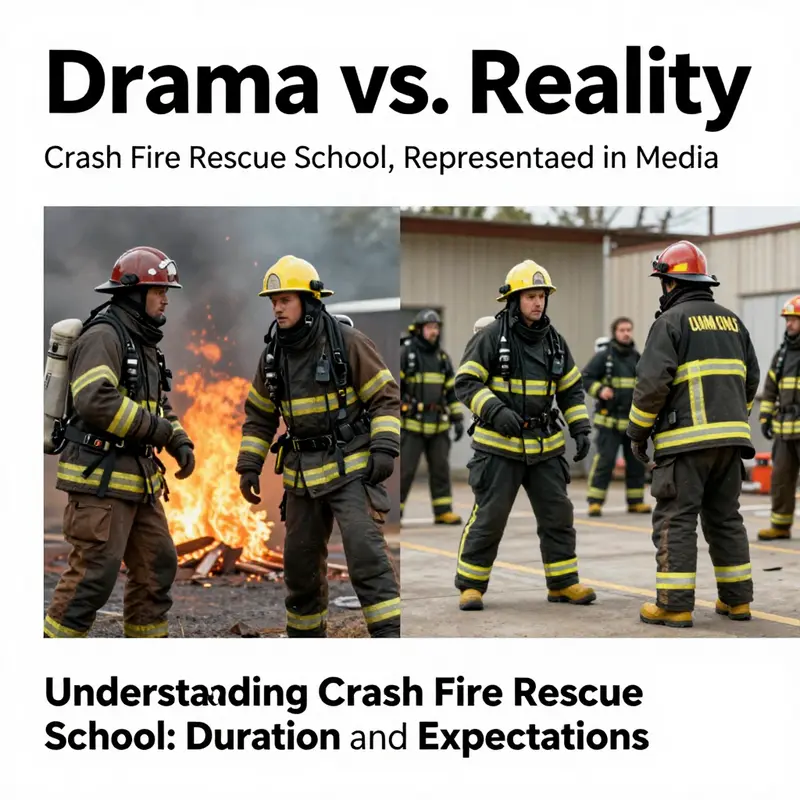
When a viewer tunes into a televised emergency scene, the image of a crash fire rescue school often arrives as a hushed montage of adrenaline and decisive action. The clock seems to sprint forward, the drills unfold with cinematic precision, and the hero emerges just as the siren fades. In real life, the question “how long is crash fire rescue school?” is more layered than it appears. The duration depends on the exact path a trainee chooses, the jurisdiction that frames the program, and the way the department packages training with hands-on experience, safety, and ongoing education. What is clear from careful pulls of the training landscape is that the process is designed to build competence, not just to check a box. It is systematic, progressive, and deeply safety conscious, with time allocated to each essential pillar of professional preparation. In the broad spectrum of emergency responder education, short introductory blocks may exist, but the full journey—from recruit academy to independent duty—unfolds over a timeline that is deliberate and varied.
In the most common layout, firefighter recruit training programs span approximately eight to twelve weeks in many departments. This window reflects a balance between rigorous physical conditioning, foundational theory, and increasingly complex, hands-on sessions. It is a period thick with early mornings, long days, and evaluations designed to ensure readiness before a recruit can operate without close supervision. However, the term “crash fire rescue school” is a cinematic shorthand rather than a standardized title. Within the real world, programs are often structured to introduce essential competencies quickly while layering in depth over time, so recruits graduate with a solid base plus room to grow once they return to the field for supervised, on-the-job learning. The length is not a single metric; it is a framework that accommodates different roles and certification tracks.
If a trainee is pursuing a broader public-safety designation, the path can extend beyond the recruit academy. Emergency medical technician (EMT) courses, and especially paramedic programs, commonly stretch from several months to well over a year. These longer tracks reflect the added responsibilities and the depth of clinical knowledge needed to assess, treat, and stabilize patients in the pre-hospital setting. In many cases, individuals will complete a fire academy or equivalent basic officer training first, then enter EMT or paramedic coursework, then eventually return to fire service duties with enhanced medical capabilities. That sequencing highlights a practical truth: training is not a single sprint but a designed continuum that mirrors the real demands of a bustling, unpredictable work environment. The difference between a short boot camp and a comprehensive professional education becomes most evident when you consider the range of skills involved: from incident command and incident stabilization to vehicle extrication, technical rescue, and patient care. Each of these domains demands not only knowledge but tested judgment under pressure, and that is why time is allotted for practice, feedback, and correction.
Beyond the numbers, the structure of training reveals a careful emphasis on safety and procedural rigor. The learning journey begins with foundational elements—fitness standards, personal protective equipment (PPE) procedures, and basic safety rules—before progressing to more demanding modules. In many programs, weeks are organized to gradually increase the complexity of scenarios. Early scenarios might involve controlled simulations focused on fire behavior basics, safe entry protocols, and air management. As weeks advance, students face more realistic, multi-task drills that integrate rapid decision-making, teamwork, and communication under stress. The goal is not to rush a solution but to cultivate reliable habits: systematic assessment, clear communication, and deliberate allocation of tasks among team members. In this sense, training serves as a rehearsal for life-or-death decision-making, where milliseconds and clarity of thought can influence outcomes for both responders and the public.
Terminology and standards offer structural guidance, but the exact timetable remains variable. National or regional standards—often shaped by professional bodies, accrediting organizations, and state or local agencies—define the core competencies expected of new firefighters and paramedics. The standards frame what must be learned and demonstrated, yet the duration to achieve those competencies is influenced by local resources, the pace of the program, and the intended scope of certification. It is common to see a recruit academy aligned with a few months of sustained instruction, followed by a probationary period on the job that can extend training through continued field experience. In such arrangements, the initial weeks establish a proficiency baseline, and the subsequent months introduce progressively complex tasks under the watchful eye of seasoned mentors. The effect is a training arc that begins with foundational safety and physical conditioning and gradually broadens to include high-stakes rescue operations, patient care, and interagency coordination.
What makes the discussion about duration especially important is how it informs expectations for those pursuing a career in emergency response. A prospective trainee may be drawn to the idea of a compact program that yields a quick path to duty, but the reality is that the most critical investments occur in preparation, testing, and ongoing education. The difference between a dramatic on-screen rescue and a real-world success story lies not just in the bravado of the moment but in the rigors that precede and follow it. Those rigors include practice in controlled settings, repeated drills of vehicle extrication and patient handling, and the steady accumulation of practical knowledge across evolving protocols. The emphasis on progression is deliberate: when students are introduced to complex tools or dangerous environments, they do so through structured, supervised exposure that minimizes risk while maximizing learning. In this way, the timeline becomes a proxy for the depth of training and the reliability of the responder’s future performance.
Media representations often contribute to a myth that emergency response training is a rapid, one-shot preparation, a narrative device that sequences danger, heroism, and resolution in a tight reel. Realistic training, by contrast, treats safety, assessment, and teamwork as the backbone of every scene. The U.S. Fire Administration underscores this distinction by highlighting that actual firefighter education encompasses classroom instruction, physical conditioning, hands-on drills in controlled environments, and steadfast adherence to safety protocols. The difference between the dramatic tempo of television and the measured tempo of training is not a flaw in storytelling but a reminder that competence in high-stakes work is earned through structured learning and disciplined practice. For those who want a concise, factual lens on the training landscape, credible sources in the field—such as national standards and official training pages—offer clarity about what is taught, how it is taught, and how long it takes to reach the required level of readiness.
Embedded in this discussion is a sense of continuity that links the present to the future. The chapter’s focus on duration should be read not as a rigid timetable but as a map of the journey toward professional capability. It reveals how a department balances the urgency of responding to emergencies with the lifelong commitment to learning that defines modern fire and rescue services. The chapter also invites readers to consider the broader context: how ongoing education, periodic certifications, and new competencies—such as advanced medical care, rescue techniques, and incident management—shape the length and texture of a career. A trainee who completes a multi-month academy may still spend years refining skills and expanding responsibilities, a reminder that the end of one training cycle marks the beginning of another.
As the closing note of this exploration, it is worth recognizing that the precise duration of crash fire rescue training is less important than the integrity of the learning process and the safety of those it aims to protect. If you are trying to plan a path toward a career in this field, consult local training academies and national standards to understand the expected timelines for your area and certification level. The numbers—eight weeks, twelve weeks, several months, or more—are practical guidelines that reflect a spectrum of roles and expectations. They map a terrain where the pace is purposeful, and the stakes are steady. This awareness helps demystify the dramatic impressions from screen narratives while highlighting the real, patient-building work that underpins every successful rescue.
For readers seeking further context on how training aligns with evolving practices and innovations in fire services, a deeper look into transitional education and modernization initiatives is instructive. Innovation Museum: Transforming Fire Services (https://tpbhrescue.org/innovation-museum-transforming-fire-services/) offers a lens into how training evolves as tools, tactics, and knowledge advance. And for a foundational, external perspective on the educational framework that shapes these programs, the U.S. Fire Administration’s Training and Education resources provide a reliable baseline for understanding classroom instruction, physical conditioning, and safety protocols. External resource: https://www.usfa.fema.gov/training/education/
Final thoughts
In summation, the journey through understanding the duration and structure of Crash Fire Rescue School training reveals the extensive efforts put forth in preparing individuals for emergency response roles. Variances in duration across jurisdictions emphasize the tailored approaches to training based on local requirements. Furthermore, recognizing how these programs stack up against other emergency response training enriches the knowledge base for potential candidates and community supporters. Finally, dispelling the myths influenced by media dramatizations helps set realistic expectations for future emergency personnel. Equipped with this knowledge, stakeholders can better navigate the path of education and preparedness in fire rescue and emergency services.