
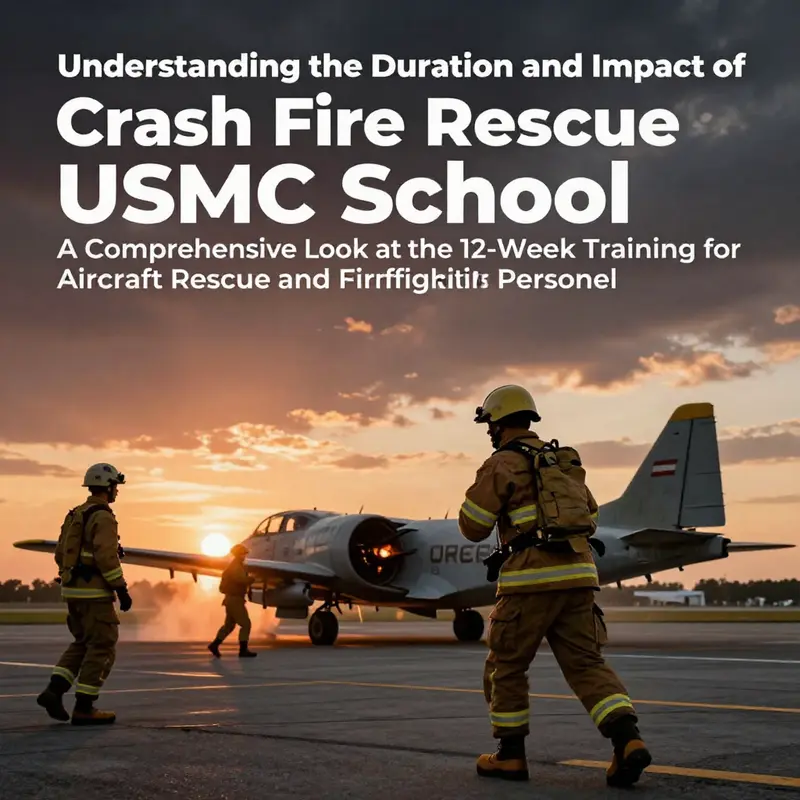
The Crash Fire and Rescue (CFR) School for the United States Marine Corps (USMC) equips Marines with essential skills for emergency response in aviation. This rigorous training lasts 12 weeks and covers vital topics, making it a crucial program for military personnel involved in aircraft firefighting and rescue operations. Understanding the structure, curriculum, certification, and role of this school sheds light on its significance in both military and civilian contexts. This article explores these aspects systematically, revealing how they contribute to effective emergency preparedness and response.
A 12-Week Cadence: Unpacking the Duration and Structure of USMC Crash Fire Rescue Training
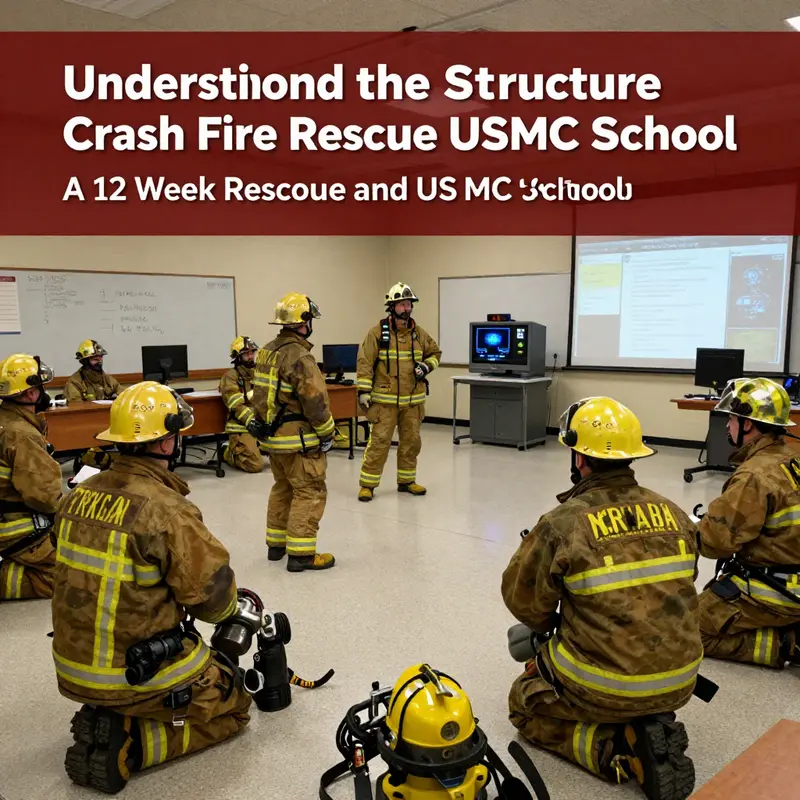
The path from recruit to fully capable Aircraft Rescue and Firefighting (ARFF) operator within the U.S. Marine Corps is defined by a deliberately rigorous timetable. The Crash Fire and Rescue (CFR) School in the USMC is a twelve-week, immersive program that transforms raw strength and discipline into specialized competence. Its duration is not a mere tally of days; it is a carefully choreographed arc that builds knowledge, hones physical and mental stamina, and culminates in a series of high-stakes exercises where speed, accuracy, and teamwork are the currency of success. In that sense, the twelve weeks act as both a curriculum and a crucible, shaping responders who must operate with precision in environments where aircraft are vulnerable to fires, crashes, and cascading hazards. The structure of those weeks reflects a balanced philosophy: establish a rock-solid foundation, escalate to advanced techniques, integrate medical and hazardous materials awareness, and then drive the lessons home through realistic, iterative drills that mimic deployed operations as closely as possible under training conditions.
From the outset, Marines entering CFR School are oriented toward a standard of readiness that emphasizes not just what to do, but how to think when every second counts. The early phase of the program concentrates on fire behavior and safety fundamentals, which serve as the bedrock for later, more complex tasks. Trainees learn how aviation fuels burn, how different materials react under heat, and how environmental factors such as wind, terrain, and moisture affect the progression of an incident. The goal is not only to teach extinguishment techniques but to cultivate an intuition for risk assessment that can prevent escalation and protect the response teams themselves. Personal protective equipment, communications protocols, and incident command concepts are introduced with a seriousness that mirrors real-world operations. This early exposure also establishes expectations around fitness and resilience, two pillars that support every maneuver that follows.
As weeks advance, the curriculum shifts toward aircraft-specific rescue techniques and the mechanics of operating within an airfield environment. Trainees study aircraft configurations, structure layouts, and critical points where cuts or openings may be necessary to reach victims or recover equipment. Advanced rescue operations are explored with deliberate emphasis on maintaining stability of the aircraft and minimizing further injury during extraction. Students practice cutting techniques, glass removal, and vehicle stabilization, all executed under time constraints that replicate the pressure of a live incident. These exercises are paired with assessments of situational awareness, ensuring that a responder not only possesses the manual skills to effect a rescue but also the cognitive control to coordinate those skills within a larger team effort. The connected thread across these weeks is a growing proficiency in rapid decision-making—an ability that integrates knowledge of fire behavior, structural integrity, and the specific hazards present on a military airfield.
A significant portion of CFR School is devoted to hazardous materials handling and emergency medical response. The curriculum recognizes that aircraft incidents rarely involve a single hazard; they often present a mosaic of flammable liquids, toxic vapors, and compromised structures. Trainees learn to identify common materials, read placards and labels quickly, and apply decontamination and containment procedures that mitigate risk to the team and surrounding populations. Medical response training is tailored to austere environments where care must be administered with limited resources and under evolving conditions. The aim is to empower a CFR team with the ability to stabilize patients, perform life-saving interventions, and manage the transport of casualties to higher care levels when necessary. In practice, this means rehearsing airway management, hemorrhage control, shock recognition, and triage in a way that emphasizes speed without sacrificing patient care.
Alongside these technical proficiencies, the CFR School places a premium on leadership and collective execution. Command and control procedures become more pronounced as the program progresses, reinforcing that incident management in a military context relies as much on clear direction and disciplined delegation as on raw fire suppression skill. Instructors coach trainees on how to assume roles within a formal incident command structure, how to communicate under stress, and how to supervise a rapidly expanding or contracting scene as responders arrive and depart. These leadership exercises are not abstract drills; they mirror the realities of deployed operations where every team member must understand not only their own task but how it fits into a broader, mission-critical sequence. In short, the structure of the twelve weeks embeds a leadership cadence that supports cohesive action in the most demanding circumstances.
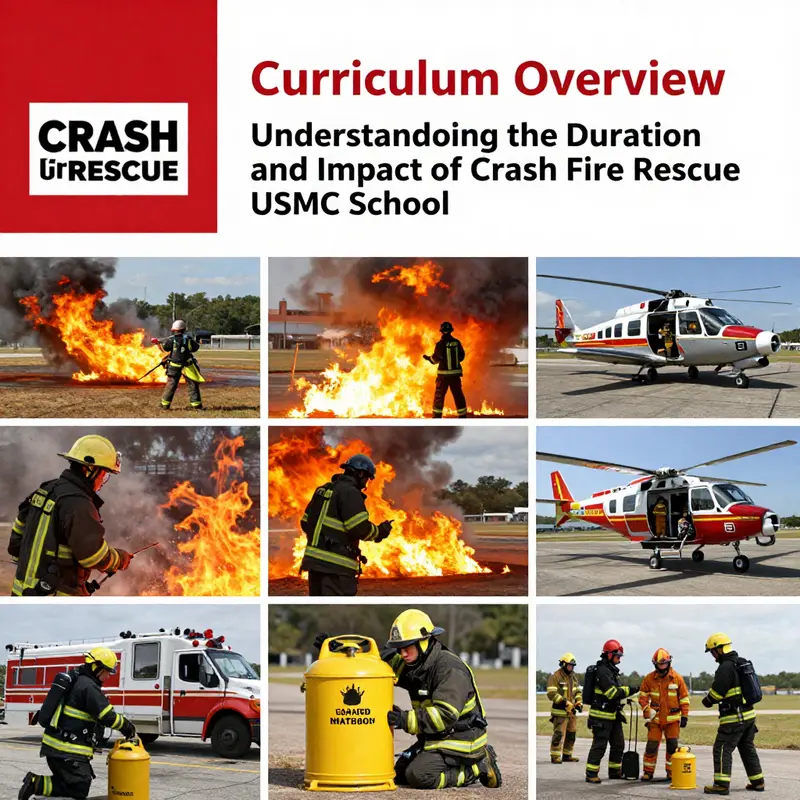
Practical training forms the heart of the CFR School experience. Trainees participate in extensive hands-on drills, traversing a spectrum of realistic scenarios that fuse the theoretical with the tactile. The training environment emphasizes realism: burn pits, mock aircraft fuselages, and controlled simulations that recreate the quick tempo and high stakes of an actual incident. Students rotate through stations that test their readiness under pressure, moving from one critical skill to another in a loop that reinforces muscle memory and procedural fluency. The objective is not merely to memorize a set of procedures but to internalize a rhythm—a rhythm of rapid assessment, precise execution, and immediate after-action reflection that sharpens performance with each repetition. The drills systematically integrate the core domains learned in the classroom: determining fire behavior, applying appropriate extinguishment strategies, coordinating a rescue, and managing medical care while protecting teammates from secondary hazards.
Within this twelve-week arc, several emphasis areas emerge as consistent and non-negotiable. Physical fitness remains a constant between sunrise and the final drill. The demands of holding and dragging equipment, lifting victims, breaking through structural barriers, and performing in heavy protective gear do not relent; they demand sustained stamina, grip strength, core stability, and endurance. The emphasis on teamwork is equally relentless. CFR teams operate as tightly rehearsed units where timing, communication, and mutual trust are the difference between success and failure. Trainees learn to anticipate the needs of their partners, to provide timely assistance, and to execute coordinated tasks that require synchronized action even under duress. Finally, decision-making under stress forms a throughline that threads through all activities. Instructors deliberately inject time pressure and escalating complexity to cultivate calm, deliberate judgment when consequences are real and rapid. Together, these elements create a training culture where fitness, teamwork, and clear-eyed, decisive action are the baseline expectations rather than aspirational goals.
The twelve-week cadence also carries a trace of progressive validation. As weeks accumulate, assessments become more demanding, and the margin for error tightens. Early milestones ensure that foundational skills are solid before moving into more complex operations. Mid-course evaluations probe the integration of multiple competencies, such as executing a rescue while preserving a safe working environment, or conducting a rapid medical assessment while maintaining situational awareness in a chaotic scene. Final exercises synthesize everything the trainee has absorbed, with scenarios designed to stress the entire system—command, communication, rescue, medical care, and environmental hazard management—into a cohesive performance. The culmination is not a single test but a graded portfolio of competencies that demonstrates a trainee’s readiness to serve as a qualified CFR operator at military airfields, ready to respond to aircraft emergencies in deployed or forward-operating environments.
The duration and structure of CFR School inevitably intersect with the broader culture of evolution in military firefighting. Training programs continually refine their approaches by incorporating lessons learned from real-world incidents, emerging best practices, and advances in safety science. The twelve-week model offers a robust scaffold that accommodates iterative improvement without sacrificing the depth of instruction or the pace required to prepare Marines for high-tempo operations. It is, in effect, a living blueprint, designed to absorb new techniques while preserving the essential components of physical conditioning, technical proficiency, and disciplined teamwork. This dynamic is reflected in the way CFR School aligns with wider conversations about how firefighting and rescue practices evolve—conversations that can be explored through resources highlighting innovations in fire services and training culture, such as the Innovation Museum Transforming Fire Services. Innovation Museum Transforming Fire Services. The link embodies the spirit of continuing education and adaptive learning that courses like CFR School embody, even as the core mission remains constant: to save lives and protect critical assets under the most demanding conditions.
For those seeking a concise trajectory of what to expect across the full twelve weeks, the structure unfolds in a practical sequence. The early weeks lay the groundwork in safety, fire behavior, and basic rescue concepts, with daily routines that emphasize drill discipline and physical readiness. As weeks progress, training intensifies with aircraft-specific modules, specialized rescue methods, and more sophisticated medical response protocols. The middle portion of the course adds a layer of complexity through hazardous materials handling and integrated incident command training, ensuring that students can recognize and respond to layered risks rather than treating each hazard in isolation. The final phase tightens the focus on real-world application: high-fidelity drills that require teams to stage, suppress, rescue, and treat casualties within a controlled but intensely realistic environment. In this phase, the operational tempo resembles the cadence Marines can expect in deployment or forward operating settings, where collaboration, speed, and precision determine outcomes.
The official information about the duration, structure, and training objectives of the USMC CFR School sits at the intersection of tradition and current practice. While the twelve-week layout remains the anchor, the broader aim is clear: to develop responders who are physically capable, technically proficient, and mentally prepared to act decisively when aircraft and personnel depend on their performance. The program’s value is most evident in the graduates who carry forward the CFR School’s ethos into real-world duties, maintaining readiness not as a static standard but as an ongoing obligation to protect life and critical assets in the most challenging environments. For a detailed, official account of recent CFR School graduates and the scope of the curriculum, readers can consult the Marine Corps’ updated coverage on the subject. The direct source provides context, confirms the twelve-week framework, and highlights the outcomes of contemporary classes that reflect current operating realities. Official information can be found here: https://www.marines.mil/News/Articles/Article/3087496/crash-fire-and-rescue-school-graduates-2024-class/
As a cohesive whole, the CFR School’s twelve-week structure is more than a timetable; it is a disciplined rite of passage that fuses fitness, knowledge, and teamwork into a ready-to-deploy capability. It invites Marines to move beyond rote memorization toward practiced judgment—an ability to analyze a developing incident, coordinate a response under pressure, and execute life-saving actions with confidence and clarity. The training environment supports this journey by offering realistic, scalable challenges that progressively demand more from the trainee while ensuring safety, accountability, and professional standards. The result is a cadre of CFR professionals who are not only technically competent but also resilient, adaptive, and capable of sustaining high performance in the most demanding conditions of military aviation operations. In that sense, the twelve weeks are less about reaching a finish line and more about instilling an enduring habit of excellence under fire, a habit that Marines carry with them wherever aircraft take them and whatever challenges they face in the skies above.
null
null
From Drill Ground to Incident Scene: The Certification Journey Through USMC Crash Fire Rescue Training
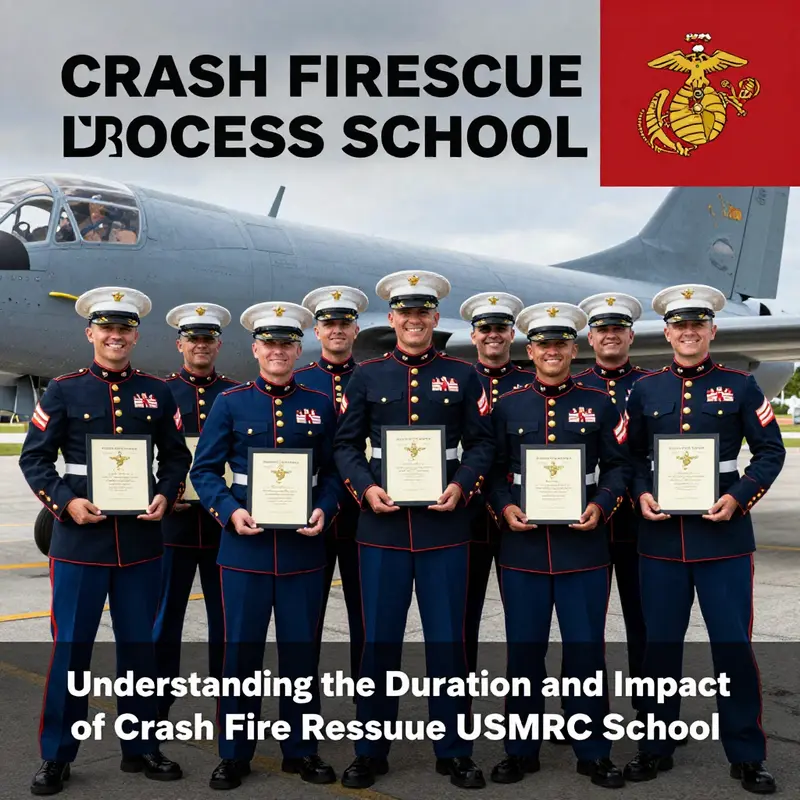
The Crash Fire and Rescue (CFR) School of the United States Marine Corps stands as a disciplined gateway between classroom theory and the split-second decisions that define aircraft emergencies. It is a 12-week crucible where Marines are reshaped into specialized responders capable of protecting people, aircraft, and operations in some of the most demanding environments the Corps encounters. The training is designed not merely to teach techniques but to forge a culture of readiness, precision, and composure under pressure. In this setting, every drill, every critique, and every minute of feedback contributes to a single outcome: graduates who are certified to act decisively when an aircraft is in distress and lives are at stake. The journey from first day orientation to the moment of certification is not a simple progression but a cohesive arc that threads theory, practice, and a permanent commitment to ongoing proficiency.
The program unfolds at highly controlled training facilities, with Marine Corps Base Camp Pendleton in California serving as a central backdrop for many CFR courses. The environment mirrors the operational theater Marines may encounter, balancing realism with safety and structured oversight. Trainees begin with extensive classroom instruction that builds a foundation in firefighting principles, hazardous materials handling, aircraft systems awareness, and the full spectrum of emergency response protocols. This theoretical bedrock is essential, yet it is only a prelude to the hands-on work that transforms book knowledge into practiced skill. The classroom sessions are not merely lectures; they are distributed opportunities to question, simulate, and anticipate. Instructors emphasize how aircraft design, fuel behavior, and environmental factors combine to shape a fire’s behavior, how materials may propagate or mitigate hazard, and how crew coordination can decisively influence outcomes in moments of chaos.
The second thread binding the CFR curriculum is its relentless emphasis on practical, tactile mastery. Trainees engage in intensive hands-on exercises that translate textbook concepts into field-ready responses. They interrogate aircraft configurations, fuel spillage scenarios, and aircraft systems failures in controlled simulations, where the timing of each action matters as much as the action itself. These practical exercises are carefully staged to require quick assessment, rapid decision-making, and precise execution. Repetition under supervised critique helps Marines strip away hesitation and replace it with trained instinct. The sensory intensity of these sessions is heightened in live-fire drills, where real ignition sources, burning aircraft exteriors, and simulated rescue operations create an environment that mirrors the urgency of a genuine incident. The goal is not to desensitize trainees to danger but to inoculate them with procedural confidence so that fear becomes a controllable force rather than an impediment.
Beyond the drills themselves, the CFR program hones a critical set of soft skills that underlie operational safety and mission success. Communication is treated as a weapon alongside extinguishing agents and rescue tools. Clear, concise, and unambiguous radio discipline ensures that teams act in concert, even under the stress of a high-stakes scenario. Procedures for hazardous materials (HAZMAT) response are integrated with incident command concepts, reinforcing how containment, personnel protection, and environmental considerations intersect with medical and rescue priorities. The course also emphasizes incident documentation and after-action reviews, which are pivotal for continuous improvement. Trainees learn to debrief with honesty, to identify both successful choices and missteps, and to translate those lessons into refined future performance. These elements—clear communication, disciplined HAZMAT handling, and rigorous after-action analysis—are not separate modules but strands woven throughout the entire twelve-week experience.
The certification milestone represents a formal recognition of competence in a defined scope of practice: becoming a Marine Corps Crash Fire and Rescue Specialist. Upon successful completion, graduates are empowered to perform as qualified Aircraft Rescue and Firefighting (ARFF) personnel within military airfield environments. This designation comes with clearly delineated responsibilities. Responding to aircraft crashes requires rapid scene assessment, prioritization of life safety, and coordination with other emergency services on the airfield. Managing hazardous material spills demands an understanding of material properties, ventilation dynamics, and personal protective equipment choices that protect responders and the surrounding personnel. Extrication, when necessary, combines technical rigging with patient assessment under pressure. Each of these tasks is executed within the framework of established military procedures and safety protocols, ensuring that actions taken in the first moments of an incident do not jeopardize subsequent rescue operations or aviation assets.
The path to certification also embeds a longitudinal commitment to skill maintenance. A Marine who earns CFR credentials enters a lifecycle of refreshers and recertifications designed to keep pace with evolving techniques, updated safety standards, and new aircraft configurations. Recertification cycles, ongoing drills, and periodic evaluations sustain the proficiency required to respond effectively in deployed or forward operating environments. In the dynamic theater of military aviation, where circumstances can swing rapidly—from a downed aircraft on a remote runway to a stalled emergency on a contested airfield—the CFR graduate must translate training into adaptive, reliable action. The program’s design anticipates this reality by spinning continuous learning into the core identity of the ARFF professional. The result is not a one-time achievement but a professional standard that binds individuals to a shared mission and to a common language of safety.
The outcomes of CFR training extend well beyond the certificate itself. Graduates enter units prepared to integrate with aircraft maintenance crews, air traffic control, security forces, and medical teams in ways that strengthen overall mission readiness. Their readiness translates into tangible safety advantages: faster incident recognition, more effective scene management, and a systematic approach to hazard control that reduces risk for everyone involved. In forward-deployed settings, the value of a CFR specialist multiplies as airfields become multipurpose hubs essential to sustained operations. The ability to respond promptly to aircraft fires, manage fuel-related hazards, and extract personnel when needed is not just a technical capability; it is a strategic asset that contributes to mission resilience. The certification, therefore, functions as a bridge between the Marine’s base-level competencies and the specialized demands of operating on military airfields under varied and potentially austere conditions.
The chapter’s broader arc ties tightly to the evolving culture of Marine aviation safety. CFR training reinforces a proactive safety mindset in which potential hazards are identified early, protocols are followed consistently, and teamwork prevails over individual bravado. The emphasis on discipline, accountability, and continuous improvement aligns CFR outcomes with the Red and Green military values that underscore Marine operations. In this sense, certification becomes a durable marker of professional identity—an assurance to the unit commander that the responder not only possesses technical know-how but also the judgment and composure required to act effectively when an aircraft is in distress. The resulting safety culture is visible in daily operations: pre-fire checks that resemble meticulous ritual, post-incident critiques that feed a culture of learning, and a shared commitment to safeguarding lives, property, and aviation assets alike.
As training programs continue to adapt to changing needs and technologies, some aspects of the CFR journey remain constant: the insistence on realistic, demanding drills; the pedagogy that blends classroom theory with field practice; and the certification that validates a Marine’s readiness to operate in a highly specialized, high-stakes environment. The CFR course does not promise a flaw-proof outcome in every incident; rather, it guarantees that graduates carry a rigor of preparation, a disciplined approach to risk, and a proven ability to perform under pressure. The measure of success lies not only in the completeness of a final exercise but in the ongoing ability to translate that success into safer operations across the airfield, the hangar, and the broader operational theater.
In reflecting on the CFR program, it is worth noting that the official channels outline the curriculum, eligibility requirements, and application procedures in precise terms. These resources reinforce the transparency and consistency that define military training. While the specifics of each cohort may shift with evolving aircraft and evolving threat environments, the underlying principle remains the same: prepare Marines to meet emergencies with competence, coordination, and courage. For those who seek to understand the CFR path more deeply, contemporary documentation from the official U.S. Marine Corps site provides the authoritative blueprint of what the course entails and what outcomes it aims to achieve. The certification journey, therefore, is as much about building a ready force as it is about honoring a standard of excellence that the Marine Corps expects from every airfield responder.
In parallel to the hands-on and classroom work, the CFR program recognizes the importance of the learning environment and the culture of training facilities themselves. The spaces where Marines learn—whether they resemble a controlled burn laboratory, a role-played crash scene, or a simulated airfield—are designed to reflect the realities of real-world response while maintaining safety and structured mentorship. Modern training spaces, the discipline of supervision, and the emphasis on measurable outcomes all converge to support a durable transfer of knowledge into action. This holistic view of training, where equipment, environment, and pedagogy align, helps to ensure that a CFR graduate is not only technically proficient but also adaptable and resilient when confronted with the unpredictable nature of an actual incident. As military training continues to elevate its standards, discussions about the evolution of training spaces—like the broader shifts described in Transforming fire stations—health-conscious revolution—highlight how a well-conceived training ecosystem can reinforce readiness, morale, and long-term performance. Transforming fire stations health-conscious revolution
For readers seeking a concise summary of deployment-ready outcomes, the CFR program’s certification serves as the benchmark. Graduates return to their units with the credibility that comes from a formal ARFF credential, the priority given to life safety on airfields, and the confidence that they can manage complex scenes with a coordinated team. The training program’s structure—12 weeks of rigorous classroom work, simulation-based practice, and live-fire drills—ensures a comprehensive, integrated skill set that remains relevant across a spectrum of aircraft configurations and environmental conditions. The post-certification lifecycle, grounded in ongoing refresher training and recertification, keeps skills fresh and aligned with contemporary safety practices and mission requirements. In this sense, the CFR journey embodies a disciplined continuum of professional development: a fixed period of intensive learning that yields lasting capability, reinforced by reaffirmation and repetition to sustain readiness in a dynamic operating environment.
External resources offer additional context about the training ecosystem and the standards that underpin CFR programs. For those who want to corroborate the official curriculum framework and eligibility benchmarks, the U.S. Marine Corps website provides the authoritative reference point for current program details and updates that reflect changes in aircraft operations, safety protocols, and airfield procedures. As with any military training pathway, ongoing verification ensures that the information remains aligned with the Corps’ latest guidance and mission priorities. External reference: https://www.marines.mil
Twelve Weeks to Readiness: CFR School and Marine Airfield Resilience
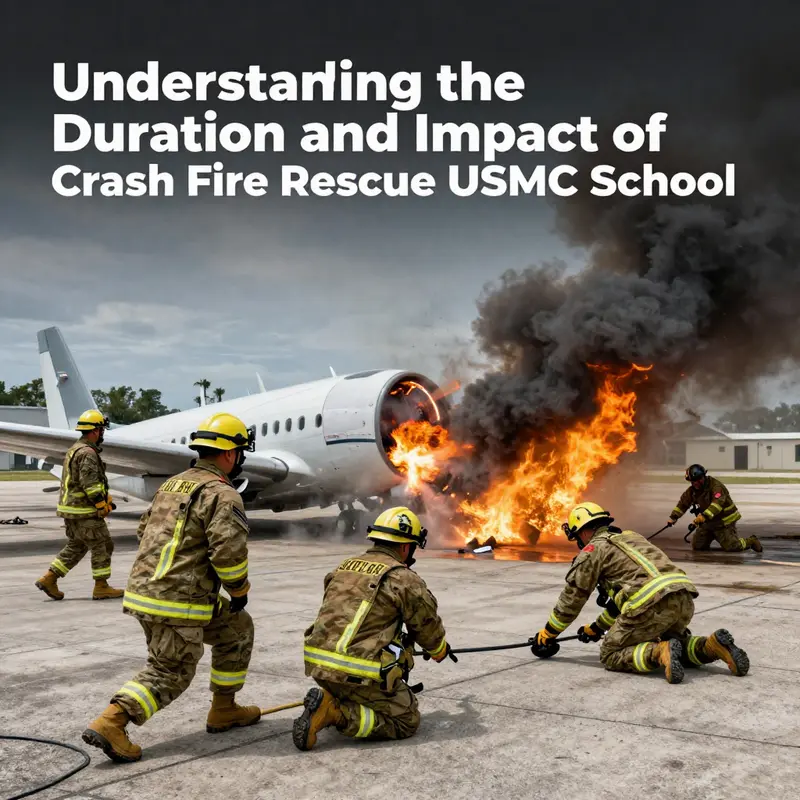
The Marine Corps Crash Fire and Rescue (CFR) School trains Marines to respond to aircraft incidents with speed, precision, and discipline.
The twelve-week program blends theory and hands-on drills to build expertise in fire suppression, hazmat response, medical casualty care, and airfield operations.
Trainees learn fire behavior, aircraft fuel and material hazards, and tactical decision making under pressure, with safety and teamwork always in the foreground.
Curriculum emphasizes rapid assessment, coordinated action, and clear communication across multiple agencies, preparing graduates to operate at home stations or in deployed environments.
Live-fire scenarios culminate in complex simulations that mirror forward operating conditions and the realities of austere airfields.
Certification as ARFF personnel signals readiness to protect lives and keep aircraft moving, even under challenging conditions.
CFR graduates join rapid-response teams that enable mission tempo while reducing risk to aircrews, maintenance, and support personnel.
The twelve-week cadence embodies a culture of readiness, resilience, and professional development that aligns with Marine airfield resilience and MAGTF operations.
Final thoughts
The Crash Fire and Rescue School for the USMC is not merely a training program; it is a pivotal institution preparing Marines for critical emergency response roles. The 12-week intensive course equips graduates with necessary skills in aircraft rescue and firefighting, enhancing their readiness for real-world challenges. The comprehensive curriculum and rigorous certification process ensure that these personnel can effectively handle emergencies in military airfields and deployed environments. Recognizing the value of this training helps appreciate the dedication and expertise of those who serve in rescue and firefighting operations.