
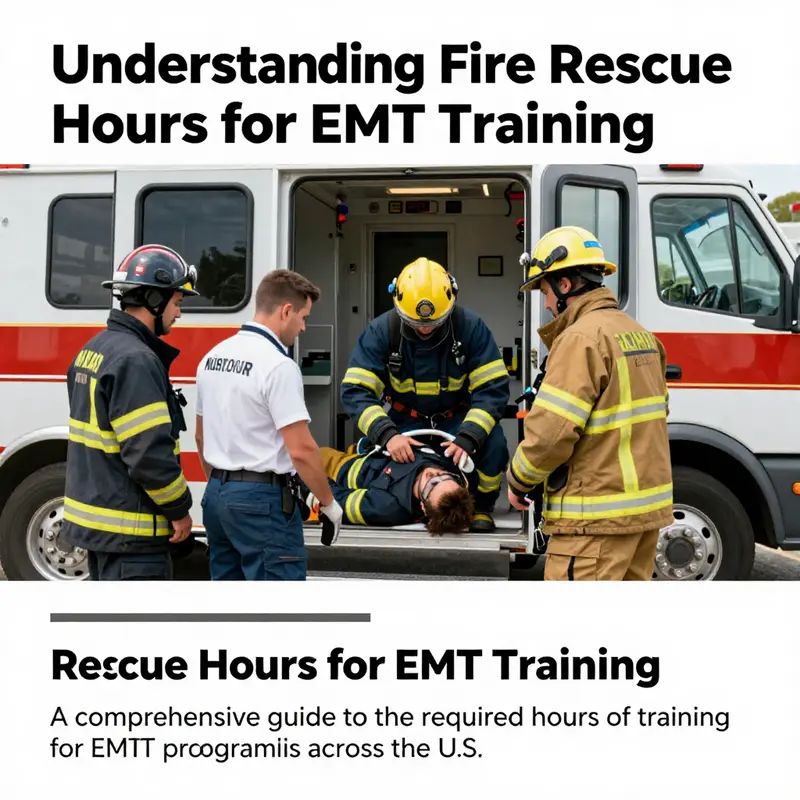
Emergency Medical Technicians (EMTs) play a critical role in our healthcare system, responding to urgent medical situations and providing lifesaving care. To become an EMT, individuals must undergo rigorous training that includes a specific number of classroom and hands-on hours. This article delves into the various components defining the number of fire rescue hours required in EMT school programs. We will explore the importance of classroom instruction, the value of clinical and field experience, and the significant variations in training requirements across different states. By examining each aspect, we aim to highlight the comprehensive preparations necessary for prospective EMTs to ensure they are well-equipped to handle emergencies effectively.
Beyond Classroom Walls: Charting the Hours that Forge EMTs and Fire-Rescue Responders
The question of how many hours it takes to prepare someone for the front lines of medical care and fire rescue rarely has a single, clean answer. It is a map with many routes, each defined by state rules, program design, and the evolving standards that guide paramedics, EMTs, and firefighters. To understand the total investment, we need to walk through the two pillars that most aspiring public safety professionals must cross: the EMT school hours and the subsequent fire rescue training hours. Taken together, they sketch a comprehensive portrait of readiness, one that is less a fixed stopwatch and more a disciplined trajectory toward competence in the most demanding moments of care and threat.
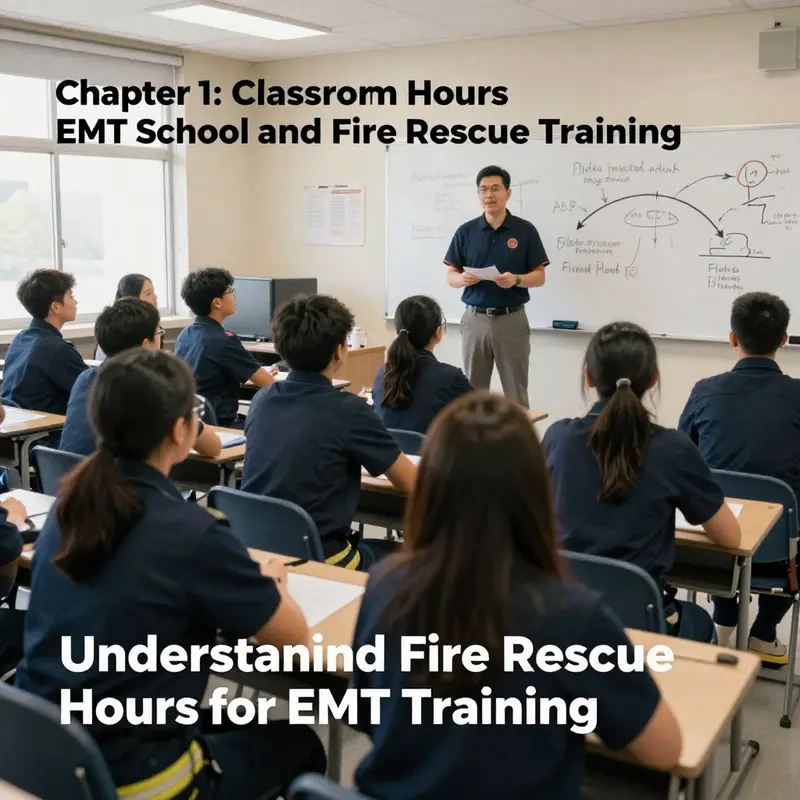
Across the United States, EMT training sits on a foundation of roughly 150 to 200 hours of combined classroom instruction and hands-on clinical or field experience. This range is not arbitrary. It reflects a balancing act between core medical knowledge and the practical realities of prehospital care. In most programs, classroom time dominates the early phase, with lectures, demonstrations, simulations, and collaborative learning designed to build the critical thinking that underpins patient assessment, decision making, and safe intervention. The didactic portion provides the bedrock: anatomy and physiology, the sequence of steps in patient assessment, recognition of life-threatening conditions, and the pharmacology that supports emergency treatment.
Within that framework, a typical EMT curriculum allocates about 60 to 70 percent of total hours to classroom learning. If the program runs on the low end, students might spend roughly 90 hours in formal instruction; on the high end, around 140 hours. The remaining time is filled by clinical rotations in hospital settings, often in emergency departments, where instructors pair observation with supervised participation; and by field time spent riding with EMS units or similar response teams. These clinical and field experiences are not decorative add-ons. They translate classroom concepts into real-world performance, requiring students to adapt to the noise of a running ambulance, to interface with hospital teams, and to translate rapid assessments into timely, lifesaving actions.
Two core threads anchor EMT education: the need to master the patient as a whole and the imperative to act decisively under pressure. The National Highway Traffic Safety Administration frames the core curriculum around critical subjects: patient assessment, airway management, trauma care, medical emergencies, and emergency response procedures. These areas form the backbone of what learners must be able to explain, demonstrate, and apply in the chaos of a moving scene. In practice, the classroom hours are not mere book knowledge; they are opportunities to rehearse the cognitive steps and the psychomotor skills that will be deployed in seconds when a call comes in.
From the perspective of certification bodies, the proportion of didactic time versus hands-on experience is not purely elective. The National Registry of Emergency Medical Technicians (NREMT) aligns EMT program standards with the broader federal framework set by USDOT, yet the exact hours in any given program can vary. The emphasis remains on ensuring a defined minimum of didactic education—roughly 120 hours of classroom instruction in many configurations—plus sufficient clinical and field experiences to demonstrate competency. The result is a total that generally hovers between 150 and 200 hours. For students planning through this lens, the roadmap is clear: you begin with rigorous classroom grounding and then layer on real-world exposure that tests your ability to maintain composure, think clearly, and act with precision when every second matters.
But the EMT track does not exist in isolation. The chapter’s second half, the fire rescue component, introduces another, more expansive block of training hours. Fire academy programs, as articulated by the US Fire Administration, demand a substantial commitment of time—typically a minimum of about 600 total hours. This is not merely a test of endurance; it is an education in fire behavior, life safety, incident command, and the myriad responsibilities that firefighters shoulder when a structure is threatened, or a hazardous material incident unfolds. The fire academy recognizes that rescuers must be adept not only at medical care under pressure but also at managing complex, dynamic environments where the hazard landscape shifts with every moment.
Within those 600 hours, a sizable share is devoted to classroom instruction. In many fire academy settings, roughly 30 to 40 percent of the total hours are allocated to theoretical or classroom learning. That translates to roughly 180 to 240 hours of lectures, seminars, and structured study focused on fire behavior, building construction, incident command systems, and risk assessment. These topics are not abstract. They provide the critical lens through which responders interpret evolving scenes, formulate strategy, and communicate clearly with teammates and incident commanders. The balance of hours—about 360 to 420 hours—follows in the hands-on, experiential realm: live-fire evolutions, search-and-rescue scenarios, technical rescue operations, and the practical aspects of safety protocols that keep teams coordinated, protected, and effective.
What emerges is a composite portrait: EMT schooling provides the medical decision-making and patient care framework, while fire rescue training furnishes the operational, hazard-aware, and team-based competencies that are essential in volatile environments. When learners pursue both tracks, the hours do not simply add up; they interlock to form a comprehensive capability profile. The EMT portion grounds students in patient-centered care and rapid assessment, while the fire academy builds resilience, situational awareness, and a command-ready mindset that suits a team under pressure. In a sense, the full arc of preparation reads as a continuum—from the bedside and the EMS unit to the burning structure and the incident command post.
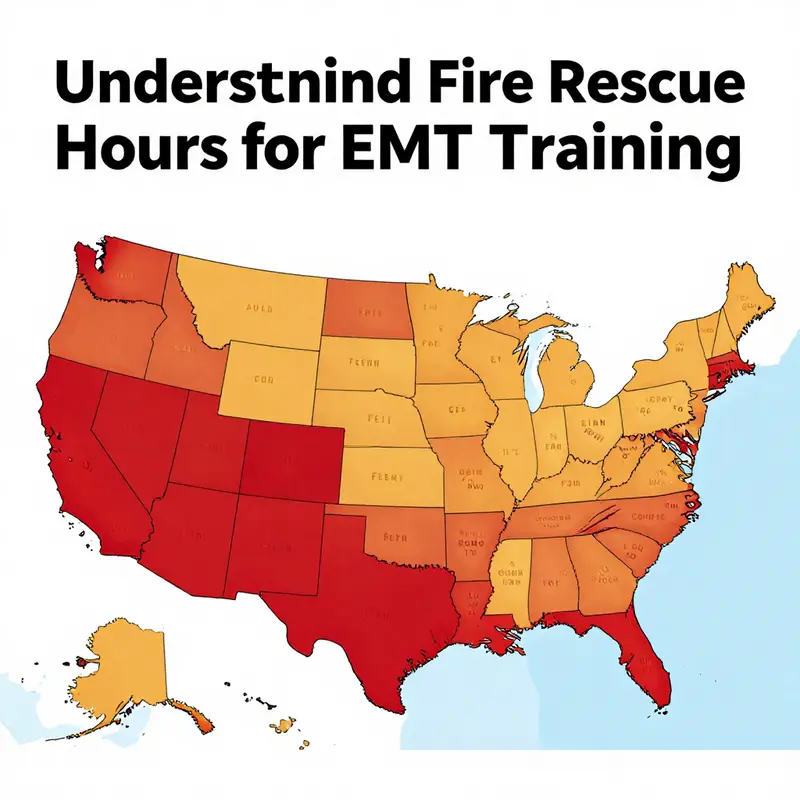
The numbers alone do not tell the entire story. The distribution of hours is influenced by state requirements, accrediting bodies, and the design of the program. Some states adopt more lenient frameworks for EMT training, while others insist on more formalized or extended didactic components. Likewise, the fire academy structure varies by agency, jurisdiction, and whether the program integrates with a broader fire service curriculum. The common thread remains clear, however: maximum readiness is achieved by balancing knowledge with practice, theory with field experience, and individual skill with team coordination. Learners who encounter this balance early report a smoother transition from classroom to scene and a higher likelihood of maintaining composure when the environment grows loud and unpredictable.
The road from student to competent responder also brings practical implications for time management and career planning. A learner who begins with EMT coursework often faces six to eight months of study if pursuing a single pathway step by step, depending on the program’s pacing and the amount of clinical time integrated into the schedule. If the path extends to the fire academy after earning EMT certification, the total calendar time can extend to a year or more, depending on how the programs are arranged and whether there is any overlap in coursework. The cumulative hours—roughly 750 to 950 when counting EMT and fire academy sequentially—represent not only time spent but also the accumulation of experiences that influence readiness. Each hour in class adds to a theoretical scaffold; each hour in the field or on the fire floor adds depth to situational judgment and operational competence. The interplay between the two tracks also helps explain why many departments value candidates who bring both sets of credentials to the table. A firefighter who is also an EMT can approach an incident with integrated medical and structural response capabilities, a combination that enhances overall scene management and patient outcomes.
The cautionary note here is not to treat hours as a mere checkbox. For students, the hour counts are a reflection of learning quality and the intensity of supervision. Classroom hours are more effective when paired with active learning strategies—case studies, simulations, and hands-on practice that mimic real calls. Clinical rotations gain their value when students rotate under skilled mentors who scaffold decision-making, not merely observe it. Likewise, fire academy hours are most transformative when classroom content is paired with evolving scenarios that demand teamwork, communication, and adherence to safety protocols. This is why many programs design their schedules to interweave theory with hands-on practice, alternating between a classroom block and a training gym, a stall bay, or a live-fire range. The rhythm matters because the brain needs to consolidate what it learns in one setting before applying it in another.
A practical way to evaluate your own trajectory is to think of hours in stages rather than as a single sum. The EMT stage builds a base of medical knowledge and patient-focused reasoning. The fire rescue stage expands your view to include the landscape of risk, the dynamics of a team, and the choreography of incident management. In both stages, time on the floor or the ramp is as valuable as time in the chair. And in a field where lives hang on precise timing and precise technique, those hours become the scaffolding that enables steady growth, then rapid escalation as competence becomes confidence, and finally, as the public expects, reliability under pressure.
In looking ahead, it is helpful to consider the impact of external sources that shape how hours are defined and valued. The USDOT standards, the NREMT framework, and NHTSA’s EMT Training guidance collectively establish a floor—a baseline below which programs should not fall. They are not universal ceilings; rather, they are guardrails that ensure every EMT enters the field with a proven level of knowledge and skill. The standardization helps employers compare credentials across states and programs, a feature that reduces uncertainty for agencies hiring new graduates and supports the mobility of the workforce across jurisdictions.
For learners who want to see a concrete articulation of these standards, the internal guidance and related materials from the national organizations can be instructive. They situate local hours within a national ecosystem of education and certification, helping students align their personal schedules with the expectations of certification boards. To widen the lens beyond the numbers, one can explore broader discussions about how training is evolving. A pathway through the Training and Innovation discussions around fire services reveals a broader commitment to preparedness, resilience, and continual learning. For readers curious about how these ideas translate into practice, a broader exploration of the field’s evolving training culture can be found in resources like Innovation Museum Transforming Fire Services, which offers perspectives on how training environments adapt to new threats and technologies. Innovation Museum Transforming Fire Services.
Even as the headline figures—150 to 200 EMT hours, 600 fire academy hours—are easy to recall, the deeper takeaway is the integrated design of the preparation. The hours are not a static tally but a carefully crafted ladder that raises a learner from basic medical knowledge to a capable firefighter who can simultaneously manage a patient in distress and navigate the perilous realities of a working structure fire. This dual-path reality shapes how programs are structured. It influences admission expectations, scheduling logistics, and clinical placement opportunities. It can determine the pace at which a student can absorb new concepts, rotate through different specialties, and transfer knowledge from the classroom into a live scene where every choice matters.
In discussing these training hours, it is crucial to acknowledge the variability that exists from one program to another. The same EMT program in one state might require fewer didactic hours but more field time, while a firefighter academy in another district could place heavier emphasis on live-fire training. Students should verify exact requirements with the specific programs they consider. The value of this verification goes beyond ticking boxes; it ensures that learners commit to a program that aligns with their career ambitions and the standards of the agencies they wish to serve. The end goal remains constant: to graduate with both the technical acumen to assess and treat patients in the field and the operational savvy to operate safely within the dynamic ecosystem of emergency response.
As a closing reflection for readers who are weighing the path ahead, consider how the hours you invest translate into confidence and capability on scene. It is not merely about finishing a program on time. It is about building a reservoir of knowledge and skill that reduces hesitation, increases speed, and improves outcomes for patients under stress. It is about cultivating teamwork, communication, and a shared mental model with the rest of the crew. It is about preparing for the moment when your training becomes your responsibility—the moment when you must decide, act, and protect life under conditions that demand both empathy and precision. The journey from the classrooms to the response units is not a straight line; it is a braided path that weaves together medical care, fire-ground basics, and the governance of safety, each hour contributing to a responder’s readiness to serve with competence and pride.
For readers who want to explore the broader landscape of how training is evolving and what it means for the culture of learning in fire and EMS, there is value in examining related conversations about innovation and transformation in fire services. See the resource linked above for a perspective on how training environments adapt to new threats and to advances in equipment, communication, and incident management. The evolving training ecosystem invites ongoing attention from students, instructors, and agencies alike, because the hours spent learning now shape how effectively responders can protect communities tomorrow. Finally, for those who want to verify the explicit hour requirements in their region, consult the official guidance from NREMT and the USDOT-aligned standards, and talk directly with the programs you are considering. The hours matter not just as a ledger entry but as the practical commitment to becoming capable, capable, and trusted responders when lives are in the balance. External resource: https://www.nhtsa.gov/vehicle-technology/emergency-medical-technician-training
Beyond the Classroom: How Clinical and Field Hours Shape EMT Readiness in Fire-Rescue Training
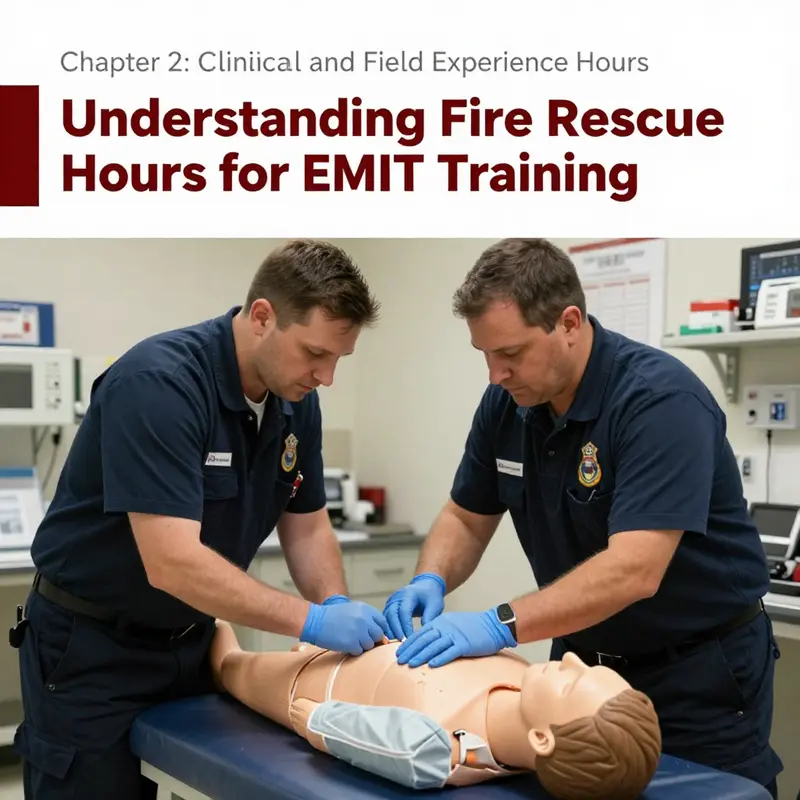
In the quiet cadence of an EMT program, the hours begin as numbers and end as a readiness to act under pressure. The stated total—often cited as a minimum of roughly 150 to 200 hours—serves as a boundary, not a badge of certainty. Within that boundary, the real work unfolds through three intertwined strands: classroom instruction, clinical rotations in hospital settings, and field internships or ride-alongs on emergency response vehicles. This triad is more than a schedule. It is the architecture of competence, designed to translate a student’s theoretical understanding into the tangible skills and professional judgment required on a real emergency scene. The exact tally of hours can vary widely from state to state and from program to program, but the underlying logic remains consistent: a solid foundation of knowledge, opportunities to apply it under supervision, and enough sustained exposure to diverse clinical encounters to build confidence and capably manage the unpredictable pace of emergencies.
The range of hours reflects a balancing act between depth and practicality. Most EMT programs in the United States converge somewhere near the 150 to 200 hour mark when you add together didactic content, clinical time, and field exposure. Yet the way those hours are distributed matters almost as much as the total itself. Classroom hours build the knowledge base—anatomy and physiology, patient assessment, trauma care, medical emergencies, pharmacology, and the ethics of care. They establish the theoretical framework students will test in the field. Clinical rotations, typically located in hospital emergency departments and on ambulances, place students in real patient care environments. Here they observe, assist, and progressively assume responsibility under the guidance of experienced clinicians. Field internships or ride-alongs are the bridge to real-time decision making in the public-safety ecosystem. They provide exposure to the pace and pressure of actual responses, the dynamics of teamwork in the field, and the need for rapid, sound judgments when every second counts.
Beyond the volume of hours, the content and quality of experiences are what truly prepare a student for certification and for the responsibilities that follow. The National Highway Traffic Safety Administration’s scope of practice and the related standards shape what counts as valid clinical and field experiences. The National Registry of Emergency Medical Technicians (NREMT) alignment with USDOT guidelines typically dictates at least 120 hours of didactic instruction, with additional time devoted to clinical and field experiences. In practical terms, programs often structure the curriculum so that a student completes a robust block of classroom work before transitioning into hands-on settings. The classroom serves as a rehearsal space for the vocabulary of care, the workflow of acute medical and trauma situations, and the safety practices that protect both patient and provider. When those students move into clinical settings, they begin a deliberate process of applying theory to practice under direct supervision. The supervision is not a hurdle; it is a critical learning accelerant. In the field, the interplay of patient needs, environmental constraints, and the team’s dynamics becomes the crucible in which technical skill is tested and refined under real-world conditions.
The clinical component, in particular, is where the divergence between mere knowledge and practical readiness becomes apparent. A student may master a dozen assessment checklists in the classroom, but it is in the hospital hallway and on the ambulance crew that those checklists translate into decisive action. During hospital rotations, students encounter a spectrum of medical emergencies, trauma cases, and pediatric concerns that broaden their exposure beyond what a single clinical site might offer. The hours spent here are not simply additive; they are cumulative, as repeated exposure to similar patterns of symptoms and patient presentations strengthens recognition, judgment, and speed without sacrificing safety. The ability to triage in a crowded ED, to coordinate with nurses and physicians, to document care with clarity, and to recognize when escalation is required, all hinge on the quality and consistency of these clinical experiences. Field internships extend this learning into the dynamic environment of prehospital care. Ride-alongs in ambulances reveal the reality that EMS work is as much about communication, scene safety, and patient advocacy as it is about technical skills. Students learn to manage the scene, coordinate with dispatch and hospital staff, and stay composed when the pressure and noise of an emergency are at their peak.
The hour-by-hour progression through classroom, clinical, and field experiences is rarely linear. Programs often design intensified blocks that concentrate didactic weeks followed by immersive clinical experiences, then a field internship that runs alongside ongoing coursework. Others spread hours more evenly across the term, weaving clinical shifts between classroom modules. The cadence is shaped by several practical constraints: the availability of hospital sites for student rotations, the need for trained preceptors who can provide meaningful supervision, and the regulatory requirements that ensure students demonstrate competency before advancing to the certification exam. In some programs, the clinical portions peak during the middle of the training, creating a bridge between knowledge and practice that culminates in a capstone clinical or field assessment. In others, the clinical and field hours may be distributed to maintain continuous exposure to patient care while students master new didactic material. Regardless of structure, the core principle remains intact: hours are a vehicle for repeated, supervised exposure to real patients and real risk, with a steady emphasis on patient safety, ethical practice, and professional communication.
When hours are evaluated, it is not simply a matter of counting time. A rigorous program tracks the quality of each hour. In the hospital setting, this means ensuring that students observe and then assist under the watchful eye of licensed clinicians who can provide immediate feedback. It means documenting the number of patient encounters, the types of cases seen, and the range of clinical skills practiced, from airway management to vital signs interpretation to emergency medication administration protocols. In the field, time spent riding with crews is documented alongside the incidents and the roles played during those responses. The supervision model matters greatly: preceptors who offer structured feedback, debriefs after calls, and opportunities to reflect on decision-making contribute far more to learning than rote time accumulation. The strongest programs couple hours with reflective practice, using case reviews and scenario-based discussions to connect field experiences back to classroom knowledge. The goal is to cultivate a clinician who can synthesize information quickly, communicate clearly with teammates, and act decisively with an appropriate level of autonomy while still honoring professional boundaries and system protocols.
The variability in hours across jurisdictions is not a weakness but a recognition of local realities. Some regions encounter higher call volumes, which can facilitate more rapid, varied clinical exposure within the same number of hours. Others may have fewer hospital partners or more stringent supervision rules, which can temper the pace of hands-on practice. In every case, programs strive to ensure that the learner achieves a reliable baseline of competencies before testing for certification. The emphasis is not simply on the duration of training but on the richness of the encounters that fill those hours. Trainees who finish programs with a well-rounded mix of clinical and field experiences tend to demonstrate stronger assessment skills, better collaboration with multidisciplinary teams, and improved decision-making under pressure. They also tend to report higher confidence when stepping into the role of EMT, which benefits patients and the broader fire-rescue system alike.
Concerns sometimes arise about the intensity of the schedule. Programs may compress several weeks of didactics into a shorter time frame to align with cohort intake and facility availability. Others spread the same material over a longer period, integrating clinical shifts in a way that preserves space for study and rest. The balance is delicate because fatigue, exposure to high-stakes environments, and the need for meaningful practice opportunities all influence learning outcomes. Wise programs design rotation sequences that maximize learning while protecting student well-being. They interleave classroom refreshers with hands-on practice and ensure adequate downtime between intense field shifts. They also incorporate patient-safety reminders, documentation standards, and professional behavior expectations as ongoing threads woven through every hour of training. In this way, hours become more than a metric; they become a map of professional development, guiding students from novice observer toward capable, compassionate responders.
A common, practical question concerns how to verify the precise hour requirements for a specific program or state. While the 120 hours of didactic instruction figure prominently in national guidelines, the total requirement typically includes more time for clinical and field experiences, pushing the grand total toward the 150–200 hour range commonly cited in program descriptions. Because the exact minimums can differ, prospective students are advised to contact their chosen training program directly and request a current breakdown of hours by category. Accreditation bodies and regulatory agencies often publish general frameworks, but local implementation can vary. The most reliable answer comes from the program’s catalog, its field internship agreements, and the schedules posted for the upcoming cohort. The value of this diligence goes beyond satisfying administrative curiosity. It ensures applicants understand what they are signing up for and what they must demonstrate to move forward to certification and, ultimately, to independent practice.
The endgame of these hours is certification readiness. The NREMT process, along with USDOT and state-specific requirements, uses the observed competency during hours of practice to gauge whether a student has the clinical judgment and technical skill to protect patients in the moment of need. In practice, this means students must demonstrate proficiency in core skills across diverse scenarios. They must show they can assess a patient quickly, prioritize care under time pressure, perform essential interventions safely, and communicate effectively with patients, families, and teammates. The journey from first day in class to the day of exam readiness is shaped by a chain of experiences that hinge on the equitable, well-structured distribution of hours across three domains. When hours are curated with attention to quality, supervision, and variety, the resulting EMT is not only technically proficient but also capable of navigating the ethical and interpersonal dimensions of emergency care.
For students, the most tangible takeaway is awareness: hours are not a generic checklist, but a carefully designed training arc. They should be prepared to invest time in a spectrum of experiences that challenge them to apply knowledge in new ways, to reflect on their performance, and to seek feedback that accelerates improvement. For educators and program designers, the challenge is to orchestrate a coherent arc where classroom theory informs field practice and clinical observation reinforces what was learned in lectures. The best programs screen for depth of experience as much as duration of exposure, ensuring that each hour contributes meaningfully to patient safety and professional growth. And for those who eventually step into the role of EMT, the enduring value of hours lies not in the count on a transcript but in the capacity to act with confidence, competence, and care when every moment on scene matters.
In sum, Chapter 2’s focus on clinical and field experience hours in EMT school fire-rescue programs underscores a simple, powerful truth: hours are the scaffolding of competence. They embody the partnership between knowledge and practice and the time needed to transform learning into reliable, humane service. The landscape of hours is shaped by regulation and standards, but it is the lived experience of students—supervised and varied—that ultimately determines readiness to respond with skill and judgment when called to action. For anyone charting a path into EMS, understanding how those hours are allocated, supervised, and assessed offers essential context for choosing a program that not only teaches but also prepares. The chain from classroom concepts to field-ready practice is the backbone of safer communities and stronger responders. To explore the official framework behind these standards, one can consult the National Highway Traffic Safety Administration’s EMS scope of practice, which outlines the structure and expectations guiding EMT education and certification. https://www.nhtsa.gov/ems
null
null
Final thoughts
The path to becoming an Emergency Medical Technician is steeped in rigorous training comprising classroom study, clinical practice, and field experiences. Understanding the specific fire rescue hours required for EMT school highlights the extensive preparation that these professionals undergo to deliver life-saving aid in critical situations. By examining the difference in training requirements across states, citizens can appreciate the commitment and competence that EMTs bring to their communities. Potential EMT candidates should ensure they align with their state’s educational requirements, setting a strong foundation for their future roles in emergency medical services.