
Firefighting and emergency rescue services are critical for community safety, especially in the realm of air rescue operations. These specialized teams not only navigate hazardous environments but also face the unique challenges associated with aerial rescues. Understanding how much it pays to fly fire rescue can provide valuable insights for aspiring rescue pilots, firefighters, and community members alike. This article delves into the compensation overview, evaluates pay structures for rescue flight operations, highlights regional salary variations, and examines the factors that influence earnings in this high-stakes field.
Sky-Bound Pay: Understanding How Much It Pays to Fly Fire Rescue
When people ask how much it pays to fly fire rescue, they’re really asking about a mix of base wages, aviation premiums, risk, and career trajectory. The job blends two demanding worlds—ground firefighting and airborne operations—and the compensation reflects both the steady pull of a public-service wage scale and the spikes that come with specialized aviation duties. In practical terms, the pay is not a single number but a spectrum that shifts with location, season, rank, and the exact responsibilities a firefighter-aircrew member carries. This is especially true for those who move into air tanker operations or helicopter mobility during wildfire seasons, where the job becomes as much about precision flying and mission planning as about suppression on the ground. To understand the numbers, it helps to start with the baseline and then layer in the aviation-specific premiums that set aerial firefighting apart.
At the core of most firefighting roles is a base salary that aligns with the department’s pay scale, the certification requirements, and the years of service. For many firefighters in the United States, the annual salary sits in a broad range—from the mid-40s to the mid-70s thousands of dollars. Entry-level pay tends to begin around the mid-40s to low 50s, progressing with year-over-year experience, specialized training, and increasing responsibility. In high-cost urban markets, salaries can push beyond six figures, driven by the same market pressures that elevate other public-safety positions in those regions. But when a firefighter also serves in an aviation capacity—whether as a crew member on an air tanker, a helicopter bucket operator, or as part of an incident management team that supports aerial operations—the compensation becomes layered. The sky-high risk, the required certifications, and the operational complexity all justify additional pay, but precisely how much can vary widely.
One crucial data point anchors this discussion: the broader civilian aviation wage landscape. The Bureau of Labor Statistics reports that the median annual wage for commercial pilots was about $105,780 as of May 2023. That figure signals the value placed on flying as a professional specialization, and it helps explain why agencies that contract wildfire aviation crews are willing to structure compensation to attract skilled pilots and flight crews. Yet aerial firefighting is not a pure commercial-pilot job. It sits at a unique intersection where firefighting expertise, aviation credentials, and the demands of seasonal, high-risk operations converge. As a result, firefighters who take on aviation duties often receive higher pay than their purely ground-based counterparts, reflecting the added hazards and the specialized training required to operate airborne suppression platforms safely.
Seasonal and permanent positions present a further layer of complexity. Many aircrew roles during wildfire seasons are seasonal by design, with a start and end that align with fuel load, drought conditions, and the advent of fire season peaks. These seasonal roles commonly offer a separate pay scale or hazard compensation designed to incentivize experienced personnel to commit to the demanding, sometimes remote assignments. In practical terms, seasonal firefighting aircrew positions can range from roughly $40,000 to $70,000 per year, depending on the region, the level of responsibility, and the length of the season. That range may seem modest when juxtaposed against the six-figure salaries seen in urban ground-based fire services, but it reflects the episodic nature of aerial firefighting and the unique cash-flow pattern of wildfire seasons. For many crews, the pay comes in waves: a base salary, smaller but meaningful aviation stipends, and a robust overtime component that can appear during the busiest weeks of the year.
Overtime, a familiar feature of firefighting, is particularly impactful in air operations. The long, demanding shifts required for suppression, reconnaissance, and aviation coordination frequently translate into overtime pay that can add several thousand dollars to annual earnings. In aerial roles, overtime is not merely a clock-ticking mechanism; it often accompanies extended mission counts, night flying, and the logistical challenges of keeping aircraft and flight crews ready for rapid deployment. In some departments, overtime can push a year’s earnings substantially higher than the base pay would suggest, especially when mileage, per diem, and travel allowances are also factored into the compensation package. Pair those with shift differentials for night or weekend flights, and the total annual compensation for experienced aircrews can feel closer to the upper ranges seen in the firefighting field.
Beyond raw numbers, compensation for air firefighting often hinges on the structure of benefits. The full value of a compensation package includes health insurance, retirement provisions—often with pension components—paid time off, tuition reimbursement, and sometimes housing or rental stipends for those stationed far from home. In many fire departments and federal contracts, there are structured pay scales that recognize tenure, certifications, and leadership roles. The combination of stable benefits and the potential for premium pay creates a package that may surpass what a purely ground-based role could offer, particularly for senior aircrews who bring a lengthy record of successful suppression operations and complex mission planning to the table.
Location is another decisive factor in earnings. Urban centers with higher living costs typically compensate more, both for the base wage and for aviation duties that come with higher demand for rapid, coordinated responses. California and New York, for instance, often feature higher base salaries, complemented by aviation premiums tied to the operational tempo during wildfire seasons. Conversely, rural and less densely populated states may offer lower base figures, even after accounting for flight pay and travel allowances. This geographic variance aligns with broader economic realities—the same forces that influence the salaries of firefighters on the ground also shape the pay of airborne responders who must navigate regional fire risk profiles, accessibility, and the availability of qualified aircrews.
Experience and rank exert a clear influence, whether working on the ground or in the air. Senior firefighters who transition into aviation roles may advance into leadership positions within incident management teams, supervisor roles for flight operations, or training and oversight positions. Each step upward typically carries not only a higher base wage but also enhanced eligibility for hazard pay, premium flight duties, and additional certifications that keep an aircrew’s qualifications current in a field that rewards skill and reliability. The existence of strong union contracts in many departments also matters here. Collective bargaining agreements often determine the granular structure of wages and benefits, including the premiums attached to aviation duties, the thresholds for overtime, and the pool of paid training opportunities—an important consideration for anyone weighing the career path that includes flying fire rescue missions.
Within this mix of numbers and conditions lies a broader truth about aerial firefighting: the job’s risk profile is a central driver of compensation. Flying over active wildfires, landing on uneven terrain, deploying water or foam from aircraft, and coordinating with ground crews all demand high levels of concentration, precise decision-making, and calm under pressure. The work environment is physically demanding and can expose crew members to toxic smoke, unpredictable weather, and the potential for equipment failure. The hazard dimension is not an abstract consideration; it translates directly into pay through higher base scales, hazard pay, and the premium attached to specialized, life-critical tasks. The pay story, in other words, reflects the double obligation of public safety and professional aviation.
To connect these threads to real-world practice, consider the dichotomy between a ground-based firefighter in a large city and an experienced aircrew member who alternates between the ground and the air. The ground role can carry a robust wage floor, especially when benefits are included, with overtime and retirement features spiraling upward with tenure. When that same person adds aviation responsibilities, the pay trajectory shifts upward in meaningful ways. The aviation premium is not merely about a higher ticket price for a flight; it is about the value of specialized training that enables rapid, accurate suppression in dangerous environments. It is about the ability to contribute to mission success when every minute counts, both in the air and on the ground. And it is about the strategic importance of airborne firefighting in protecting communities, ecosystems, and critical infrastructure during extreme fire seasons.
One of the most important takeaways for anyone evaluating whether aerial firefighting is worth pursuing is to view compensation as a function of three interlocking patterns: the base pay scale tied to firefighting service, the aviation-specific premiums earned through certifications and flight duties, and the seasonal rhythm that can concentrate earnings into a high-activity period. This triad explains why someone with a long track record in urban fire suppression might earn less in a given year than a seasonal aircrew member who reels off back-to-back missions during a brief but brutal fire season, all while maintaining a strong benefits package. It also highlights why geographical mobility can pay off. A firefighter who is willing to relocate to a jurisdiction with a high-intensity aviation program may find substantially higher compensation, not only in the air but across the entire pay and benefits package.
For readers who want to situate these numbers within a broader framework, there is value in looking at official occupational data and cross-referencing the aviation wage landscape with firefighting specifics. The U.S. Forest Service and other federal agencies provide detailed pay scales for incident management teams that include aerial support personnel. These scales reflect both the hazard premium and the value of specialized aviation roles within a coordinated wildfire response. The structure of these pay scales reinforces a core point: aerial firefighting is a professional track where compensation is designed to reward critical operational skill, precise execution, and the courage to operate under extreme risk. The resulting earnings picture, then, is less about a single salary number and more about a careful balance of base wages, aviation premiums, overtime potential, seasonal incentives, and comprehensive benefits that together form a credible, competitive package for those who choose to fly fire rescue.
As with many public-service careers, the total compensation is also a reflection of broader public policy goals and budget realities. Agencies seek to attract and retain capable aircrews, knowing that the wildland fire season can be both prolonged and unpredictable. That is why compensation packages often include annualized hazard pay, travel allowances, and targeted training funds to keep crews prepared for the next season. In practice, a seasoned aircrew member might see a year that skews higher than most, thanks to a combination of base salary, overtime, aviation premiums, and seasonal supplements. In quieter years, the same crew member might rely more on benefits and steady base pay, with fewer opportunities for the outsize returns that come from peak-season operations.
For readers exploring this topic further, consider the broader ecosystem that shapes aerial firefighting pay. The aviation components are not standalone; they are integrated into the firefighting system that coordinates resources across federal, state, and local levels. This integration helps ensure that when a wildfire demands a rapid aerial response, trained aircrews are available, capable, and compensated in a way that reflects both the peril of the work and its essential public value. The career path often includes milestones such as gaining certifications, joining incident management teams, and advancing into leadership or training roles that amplify both impact and earning potential. All these layers work together to form a coherent picture: pay for flying fire rescue is robust where the demand is strong, the costs of operations are higher, and the workforce is supported by a framework that recognizes risk, skill, and reliability.
Within this narrative, a thread worth highlighting is the way modern fire services view aviation roles as part of a broader mission to safeguard communities. The aviation component is a force multiplier, enabling early detection, rapid response, and effective resource deployment that can contain fires before they spread. That critical role justifies the premium that aircrews command and the investments departments make in training, safety protocols, and aircraft maintenance. When you hear about a high-cost wildfire season that stretches resources thin, remember that the pay structures for aerial firefighting are designed to attract talent quickly, sustain it through the season, and honor the expertise required to navigate airborne operations under extreme conditions. This is not merely a salary story; it is a workforce story about resilience, risk, and the pursuit of timely, life-saving suppression.
In closing, the question of how much it pays to fly fire rescue does not have a single, simple answer. It is a layered calculation that begins with a ground-based base salary, adds aviation-specific premiums, and then adjusts for overtime, seasonal cycles, location, and leadership responsibilities. It is a profile of a career that rewards specialized skill and courage with a compensation package that can be competitive with other high-risk, high-skill fields—especially for those who commit to the aviation dimension of firefighting. For readers curious about tangible benchmarks, the broader aviation wage landscape offers a useful reference, while the seasonal aerial roles provide a practical window into how the compensation can manifest during peak fire seasons. And for those seeking a sense of how innovation and modernization are reshaping the field, see the discussion of transformation in fire services through the Innovation Museum narrative that explores how new practices and technologies influence the work—and, by extension, the pay—of air-rescue crews. Innovation Museum: Transforming Fire Services
Ultimately, aerial firefighting salaries are a reflection of a demanding but crucial public service. They acknowledge the skill and judgment required to fly into a dynamic, dangerous environment while coordinating with ground crews and incident command. They acknowledge the commitment of those who train year after year to meet ever-evolving wildfire threats. And they acknowledge the community’s need for rapid, efficient, and expertly managed suppression to protect people, property, and ecosystems. For anyone weighing the decision to pursue a path that blends firefighting with aviation, the pay story is hopeful, even as it remains contingent on the variables described above. It is a reminder that the most meaningful compensation in this field often comes not just in dollars, but in the combined returns of safety, service, and the professional satisfaction of a job well done in the air and on the ground.
External resource: https://www.bls.gov/ooh/transportation/commercial-pilots.htm
Skyward Paychecks: Unpacking What It Really Means to Fly Fire Rescue Operations
When people ask how much it pays to fly fire rescue, they are tugging at a thread that winds through risk, skill, and a patchwork of pay structures. The short answer is simple in spirit and complicated in practice: compensation for airborne fire rescue is not a single number you can pin down across the board. It depends on who is flying, what aircraft is used, where the work happens, and whether the job sits on a government roster, a state program, or a private contract. The broader picture of firefighting pay shows that ground crews in many parts of the United States enjoy competitive compensation, often with overtime, robust benefits, and strong union support. But when you lift the curtain to the air, the picture becomes both more specialized and more varied. The experience reveals a basic truth: the skies demand a premium for the unique mix of risk, skill, and irregular hours that airborne fire rescue entails, yet the exact numbers can swing dramatically from one situation to another.
To understand why the pay for flying fire rescue operations looks so different, it helps to map the landscape of employment models that govern aerial firefighting. Some pilots work for federal agencies, such as the U.S. Forest Service or the National Interagency Fire Center networks, where compensation is determined by government pay scales, job grade, and the level of responsibility assigned to the aircraft and the mission. Other pilots are employed by state agencies or regional cooperatives, where pay mirrors state salary schedules, supplemented by overtime, on-call allowances, and travel reimbursements. A growing slice of aerial firefighting is performed under private contractors who operate under federal or state task orders. In those arrangements, pay tends to reflect private-sector aviation market factors—aircraft type, pilot experience, hour guarantees, and the terms of the contract—along with risk premiums baked into emergency response work.
What all of these models share is the idea that the base wage is only the starting point. In firefighting, the base pay often sits on top of a menu of additional compensation—overtime, shift differentials, standby or on-call pay, travel per diems, meal allowances, and, where applicable, pension contributions and health benefits. The reasoning is straightforward: air rescue work demands long, irregular hours and readiness to mobilize on short notice. A flight crew may fly long missions into dangerous conditions, encounter unpredictable weather, and confront the psychological and physical stresses of operating in the midst of wildfires. The risk calculus is real, and compensation tries to reflect that by layering compensation forms that recognize not just a clocked hour, but the value of being available, trained, and ready when disaster strikes.
Yet translating this into a single, representative figure—such as a clean hourly rate or annual salary for air rescue pilots—runs into a fundamental obstacle: there is no universal salary table for air firefighting that matches the ground firefighter data. The ground firefighter numbers—an average in the mid-five figures, climbing toward six figures in high-cost regions with overtime—provide a useful benchmark. They illustrate what a career in firefighting can pay when risk, seniority, and collective bargaining converge. But airborne roles create a different dynamic. The flight-time requirement alone reshapes earnings. Pilot pay reflects the scarcity of highly skilled aviation professionals capable of safely performing aerial fire suppression, mapping targets, coordinating drops, and communicating across complex incident command structures. The skill set is specialized enough that even within the broad field of aviation, air-rescue pay tends to cluster toward higher ranges in markets with intense wildfire activity or where contractors compete for scarce qualified pilots.
When people ask whether air rescue pays well, the practical response is to examine the components of a typical compensation package rather than a single headline figure. A baseline salary, where it exists, often blends with on-call stipends and overtime that recognizes the 24-hour or multi-day rotations common in wildland firefighting. Overtime in an airborne context can be particularly lucrative because mission days can stretch into long hours, including night flights during critical windows of fire behavior. Standby pay—the compensation for being ready to deploy at a moment’s notice—adds another layer. In many jurisdictions, pilots and crew are expected to remain on call for days at a time during active fire seasons, which means guaranteed compensation for being available even when not actively flying. Per diem for travel and lodging when crews rotate between bases, incident assignments, and remote wildfire sites is another standard feature of the package, especially in interagency operations that span large geographies.
Beyond the pipes of the paycheck, the benefits package for airborne firefighting often mirrors the broader firefighting world: health insurance, retirement plans with pension contributions, paid time off, and sometimes tuition reimbursement or education stipends. Benefit structures can be a major factor in overall compensation, sometimes flexing in meaningful ways depending on whether the employer is a public agency or a private contractor. Public-sector jobs may offer more predictable pension schemes and robust health benefits, while private contractor roles could present higher base pay with different benefits nuances or more flexibility around work location and schedules. For many pilots, the decision to pursue airborne firefighting ties as much to the overall compensation mix—benefits, retirement, stability, and the professional satisfaction of contributing to critical disaster response—as to the pure take-home figure.
The geographical dimension matters deeply. High-cost regions with intense wildfire seasons—think parts of the West where large fire complexes can demand rapid, sustained aerial support—tend to offer higher compensation to attract and retain qualified pilots and flight crews. But even within those areas, the numbers vary with the exact aircraft type, the mission profile, and the employer’s compensation philosophy. For example, pilots operating heavier airframes capable of large drops or long endurance missions might command different pay scales from helicopter crews focusing on rapid-response, relay coordination, or reconnaissance. And while the aerial component often carries a premium, the overall pay envelope can be sensitive to the seasonality of fires, incident complexity, and the scope of interagency cooperation that defines a given year’s firefighting program.
Experience and rank also steer the pay trajectory. Beginning pilots in air-rescue roles commonly start at a salary that reflects their aviation credentials, local market conditions, and the level of responsibility assigned in the incident. As crews gain time in the air, complete additional certifications, and assume leadership roles such as lead pilot, mission coordinator, or crew supervisor, compensation can rise accordingly. Senior pilots with specialized qualifications—such as wildfire behavior analysis, infrared mapping, or complex fixed-wing operations—may command premiums that reflect both the skill demands and the operational importance of their work. In many systems, the cost-of-living differential of a department’s location compounds these shifts, so a veteran in a high-cost metropolitan fire organization may reach cumulative earnings that surpass typical baselines seen in rural or smaller suburban districts.
We must also acknowledge the practical realities of compensation data in this niche. The research landscape emphasizes the need to consult authoritative, up-to-date sources for precise figures. The U.S. Bureau of Labor Statistics (BLS) Occupational Outlook Handbook provides the baseline for aircraft pilots and flight engineers, offering a broad view of pay scales, job prospects, and the influence of experience and industry on earnings. However, this is not a firefighting-specific payroll. The interaction of air-rescue duties with incident-based assignments, contract terms, and the public vs. private sector mix means that actual pay for firefighting aviation can diverge quite a bit from the generic aviation averages. Therefore, readers should treat air-rescue compensation as a composite outcome—one shaped by agency pay scales, contractor rates, geographic cost of living, and the particular demands of the wildfire season.
For those weighing a path into airborne fire rescue, it’s essential to think beyond the reported base salaries. The true compensation package often includes substantial overtime potential, which can transform annual earnings, especially in peak fire years or in agencies with long on-call rotations. The value of benefits today—health care, retirement security, and education support—can rival or exceed the value of a higher nominal pay rate. And for many professionals, the work itself carries intangible rewards: the professional mastery gained from operating in high-stakes environments, the teamwork forged in crisis, and the public service dimension of contributing to communities under threat.
From a decision-making standpoint, the question of pay in air-rescue roles also hinges on career goals and work-life balance. A pilot who wants steady hours, predictable base pay, and strong pension alignment might lean toward a public-sector role with a defined career ladder. A pilot who seeks high earning potential, rapid progression, and the chance to work with diverse mission profiles could be drawn to private contracting, where rates and terms can be negotiated and adjusted with each contract cycle. The interplay of these choices—base pay, overtime, on-call allowances, per diems, benefits, and long-term retirement planning—collectively shapes the true value of a career in airborne fire rescue.
In reflecting on how much it pays to fly fire rescue, it’s prudent to acknowledge the broader risk-reward calculus. Firefighting, in any form, remains among the more hazardous occupations. Air operations introduce additional layers of risk, including exposure to smoke, volatile weather, and the complexities of aircraft handling under challenging conditions. This risk is part of the justification for higher compensation in many contexts, along with the specialized skill set and the critical mission it serves. Yet the hazard does not merely justify higher pay; it also underscores the importance of strong training, ongoing certification maintenance, robust safety cultures, and consistent access to health and retirement protections. In a field where incidents are inherently unpredictable, a fair and transparent compensation framework helps ensure that the people entrusted with protecting lives and property can perform at their best when it matters most.
As this chapter threads together the different strands of airborne firefighting pay, it becomes clear there is no single numeric verdict. The pay to fly fire rescue operations is a function of multiple variables—employer type, geographic location, aircraft category, mission tempo, and the particular mix of base salary and supplemental pay. The essential takeaway is that airborne roles tend to offer compensation that reflects the elevated stakes, the specialized aviation competencies, and the demanding schedules that accompany wildfire response. For individuals evaluating a future in air-rescue work, the right question is not only what the headline salary might be, but how the total compensation package aligns with professional growth, long-term security, and the day-to-day realities of wildfire seasons.
Finally, the pursuit of precise numbers should point readers toward authoritative sources that regularly update the pay landscape. The Bureau of Labor Statistics provides a foundational view of aviation pay, while industry-specific job boards and interagency reports illuminate the particularities of firefighting air operations. The aim is a transparent, nuanced understanding that helps aspiring pilots, flight engineers, and mission coordinators gauge the true value of a career in the sky above our most urgent emergencies. For those who want a starting point on the broader aviation pay framework, the BLS resource offers a reliable, evidence-based reference that can be harmonized with interagency and contractor pay practices to form a realistic expectation for airborne fire rescue compensation.
External Resource: For authoritative data on aviation pay scales and labor market trends, see the U.S. Bureau of Labor Statistics entry on Aircraft Pilots and Flight Engineers. https://www.bls.gov/ooh/transportation/aircraft-pilots-and-flight-engineers.htm
Regional Pay in the Skies: Unpacking Fire Rescue Flight Salaries Across Regions
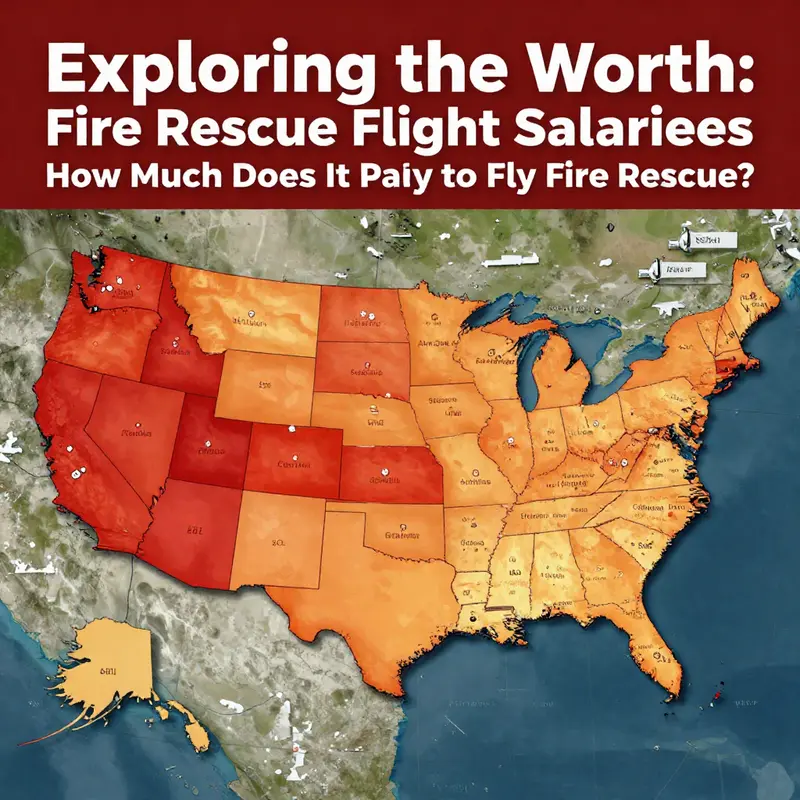
Flying fire rescue sits at the edge of aviation, public safety, and public budgeting. When alarms ring across forests, coastlines, or dense urban fringes, aerial assets can spell the difference between containment and catastrophe. That is why the pay for flight crews—pilots, aerial observers, paramedics, spotters, and the teams that keep the air operations running—remains a topic that blends skill, risk, and contract economics more than simple base wages. The material you provided centers on ground-based firefighter salaries in the United States, with clear evidence that pay scales shift widely by location, experience, and job duties. Yet the question of aerial pay has its own graph. It does not follow a single line item but a layered structure built from base wages, flight-hour pay, hazardous duty premiums, overtime, licensing requirements, and the sometimes separate budgets of state, local, and federal agencies or contractors. In practice, air rescue pay tends to sit above standard ground-level compensation, reflecting the specialized aviation skill set and the elevated risks involved, but the exact numbers vary far more by region and program than by any single job title.
To understand regional variations, it helps to keep the roles straight. Aerial firefighting encompasses pilots who operate rotorcraft or fixed-wing aircraft, crew members such as flight engineers, aerial medics, and flight observers, and ground personnel who must maintain readiness for rapid deployment to aircraft and airfields. The pay dynamics for these positions are closely tied to licensing and certification requirements, the length of the flight season, and the contractual framework that governs the operation. In the United States, many aerial firefighting programs are funded through a patchwork of federal, state, and local agencies and, in some cases, private contractors hired to augment public resources during peak fire seasons. This mix creates pay variations that can be dramatic from one program to the next, even when the underlying mission—saving life and property from wildfires—remains the same.
One recurring theme in this chapter is the premium placed on risk. Aerial operations inherently carry higher exposure to danger: volatile weather, long shifts over remote terrain, the need to operate close to looming fires, and the precision required to drop water or retardant accurately. This context is reflected in compensation, not as a single factor but as a constellation of elements. Base salaries for those who begin their careers in firefighting are often described in broad terms—mid-range or higher for urban centers, with lower baselines in rural areas. When flight duties become part of the mix, departments and contractors frequently attach an additional layer of pay that acknowledges hours in the air, maneuvering under pressure, and the criticality of mission success. In high-cost urban regions where living expenses are steep, the combination of base pay, overtime, night differential, and premium allowances can push total earnings well beyond the standard firefighter’s wage, even before the long-term benefits and pension structures are accounted for. Conversely, in regions with lower costs of living or smaller air fleets, base pay might be more modest while overtime and seasonal premiums still drive a meaningful portion of annual compensation.
The seasonal rhythm of air operations also shapes pay. Unlike some ground-based roles that sustain steady pay year-round, aerial firefighting often follows a cycle: a relatively quiet off-season, followed by intense, scheduled deployment during wildfire season. The cadence of this cycle matters for compensation. Many pilots and air crew earn more in the height of the season through overtime or per diem allowances, and some contracts include guaranteed minimum flight hours or seasonal bonuses designed to reward readiness and reliability. In practical terms, that means a flight crew member may see a dry-pay portion of the year with comparatively moderate earnings, punctuated by bursts of higher income during peak operations. For people considering this path, that rhythm is an essential factor: the financial stability of a year may hinge on a handful of months with intensive activity, rather than a steady, uniform paycheck.
The UK context adds another layer of nuance, because the public reporting around aerial pay is less transparent than many US programs. The research results you provided acknowledge a gap in specific air-rescue salary data for the UK and point to authoritative sources such as the National Fire Chiefs Council (NFCC), individual fire and rescue service websites, and public pay review bodies like the Independent Review Body for Fire and Rescue Services. They also direct readers to the Fire and Rescue Service Pay Review 2023 as a key external reference. In the United Kingdom, pay scales for public sector emergency services are organized through national frameworks and regionally negotiated terms, with aerial support typically integrated into wider air operations capabilities rather than standing as a discrete, fully transparent pay category. The governance structure—regional management boards, NFCC guidance, and pay review conclusions—shapes how aerial roles are compensated, including potential premiums for aviation-specific duties, training requirements, and the overall compensation package that can include pension benefits and health cover. In short, while the UK might not mirror the United States in the prevalence of large, multi-year aerial firefighting programs, the core logic remains: aerial capability carries higher risk and requires specialized skills, and compensation reflects that reality through a blend of base pay, allowances, and premium pay.
A central driver of these regional differences is the funding model and labor framework. Where unions have negotiated robust contracts and where agencies can fund air operations year to year, pay tends to be higher, with clearer paths to career progression and a broader benefits package. In places where air assets are deployed under seasonal contracts or through cost-sharing arrangements, compensation may be more fluid and closely tied to budget cycles. The result is a mosaic: pilots near major metropolitan fire centers may command premium rates, while those working in less populated or fiscally constrained areas might see more modest base figures but still benefit from meaningful overtime opportunities and per-flight premiums that recognize the essential nature of the work.
All of this matters for aspiring aerial firefighters and for those who support them. If you are considering a path that leads to a cockpit or to roles that keep aerial operations safe and effective, the trajectory is shaped by several interconnected realities. First, licensing and training are non-negotiable prerequisites. Rotorcraft pilots, for example, must typically hold a commercial pilot license with a rotorcraft rating, plus specialized flight training for water-dropping or retardant-dropping operations, weather and terrain assessment, and in-field emergency procedures. Paramedics and tactical flight officers also require rigorous medical standards, cross-disciplinary certifications, and ongoing requalification training. The investment in training is substantial, and for many agencies the cost of training is a factor in the overall compensation package, sometimes offset by employer-paid training stipends or reimbursement programs. Second, the career path tends to reward experience and versatility. A pilot who can operate across different aircraft platforms, adapt to diverse fire regimes, and coordinate closely with ground crews earns a premium beyond simple flight hours. Aerial observers who can rapidly translate visual information into actionable strategies—reading smoke columns, wind shifts, and fuel loads—bring critical value to incident command and may see enhanced pay or accelerated advancement as a result. Third, regional differences in cost of living almost always translate into differential compensation. In the US, this widely translates into higher pay bands in wave after wave of fire season requirements from California to the Pacific Northwest, with corresponding shifts in overtime potential and the availability of supplemental pay. In the UK, while the scale of aerial firefighting is not identical to US models, pay frameworks likewise reflect living costs, regional budgets, and the presence of national versus local pay instruments.
The numbers behind these patterns, when they exist, are worth noting but not essential to understanding the landscape. The chapter on ground firefighter salaries you provided shows how quickly pay can diverge with location, experience, and duties. Applied to air operations, the principle remains the same: your pay is a function of where you work, what you do, and how your work is valued within the budget that funds it. In high-cost urban hubs with robust air fleets, the magnet of higher living costs pairs with enhanced overtime availability and aviation premiums, potentially lifting total compensation well beyond the average ground-based firefighter wage. In remote or fiscally tighter regions, those premiums may be smaller or more tightly regulated, but the seasonal surge in workload can still deliver meaningful annual income when overtime or performance-based incentives are available. This is not a guarantee of six-figure pay across every program, but the directional trend is clear: aerial firefighting pays more than ground firefighting in many contexts, though the exact figures depend on a combination of regional budgets, contract terms, and the specific aviation role.
Interpreting this landscape also means recognizing where gaps in public data exist. The provided Detailed Research Results for the Chapter clearly notes that there is no explicit information about fire rescue flight salaries within the supplied material, and it recommends consulting government and service-level sources for precise numbers. Those sources include major professional bodies, national pay reviews, and individual fire and rescue service pages. For readers seeking concrete figures today, the path is to combine official pay scales and contract terms with field-specific allowances, as well as to account for the realities of overtime, seasonal premiums, and benefits that many air crews receive alongside base pay. And while numbers matter, the greater story is about the value placed on air operations as a force multiplier in firefighting—how regions choose to deploy aerial assets, how budgets reflect that deployment, and how individuals navigate training, certification, and career advancement to earn a living in a field that is as demanding as it is critical.
For readers who want to explore how pay in this domain is evolving, there is a broader conversation about innovation in how fire services organize, finance, and deploy aerial capabilities. A concise look at this dimension can be found in resources dedicated to innovation in fire services, which examine how new models of operation and compensation shape the effectiveness of aerial response. See the Innovation Museum transforming fire services for a sense of how evolving organizational structures and investment in training and equipment interact with pay and career development in air operations. Innovation Museum transforming fire services
Ultimately, the question “how much does it pay to fly fire rescue?” cannot be answered with a single figure. It is a mosaic of regional budgets, contractual terms, and the particular demands of each mission. The best way to gauge the reality is to follow the budgeting lines that fund air operations, the licensing and training commitments that keep crews sharp, and the seasonal rhythms that define overtime and premium pay. The overarching message is clear: aerial firefighting commands a payoff that reflects both the specialized skill set required and the elevated risk profile of flying into active fires. In regions where air support is a central piece of the suppression strategy and budgets are stable, compensation tends to be more robust and more predictable. In other regions, while the base may be lean, opportunity still exists through overtime, seasonal bonuses, and the satisfaction of contributing crucial, life-saving work from the skies. For anyone drawn to this path, the journey through training, certification, and field experience is as important as the final wage figure, because those elements together determine not just how much you earn, but how effectively you can perform when every second counts.
External resource: Fire and Rescue Service Pay Review 2023. https://www.gov.uk/government/publications/fire-and-rescue-service-pay-review-2023
Paychecks in the Sky: Unpacking How Much It Truly Pays to Fly Fire Rescue
Paychecks in the sky are not a simple blunt figure but a layered mosaic built from risk, responsibility, and the specialized skills required to direct aircraft in life or death moments. When people ask how much it pays to fly fire rescue, they are really asking about a spectrum that starts with basic pay for frontline crews and stretches into the premium wages earned by pilots and aviation specialists who maneuver through smoke, heat, and volatile winds. The general truth is that aerial firefighting salaries tend to sit higher than ground-based firefighting wages, yet they are not uniform. Pay depends on where you fly, how long you have flown, what role you fill on the flight line, and which organization funds the operation. The air is dangerous, the missions are unpredictable, and the compensation, while substantial, is meant to reflect the extra training, the longer hours, and the heavy physical and psychological toll of the work. In this chapter, we trace the main forces that shape earnings in fire rescue aviation, drawing from broad labor data, field experience, and the evolving needs of a nation increasingly vulnerable to wildfires and disaster events.
Geography is the first and most visible lever. In large urban regions with sky-high living costs, salaries for air rescue crews tend to be higher to attract and retain skilled personnel. The same logic applies in states with intense wildfire seasons where aviation units are in constant demand and operate helicopters or fixed-wing aircraft to herd, drop, or transport resources quickly. Urban centers, coastal areas, and states with sprawling public safety budgets often offer higher base pay to offset the higher cost of living. In practice, this means pilots and their crew in places like dense metropolitan corridors can see meaningful bumps in annual compensation compared with colleagues in rural counties or less affluent regions. Location, therefore, does not just shape what a person earns in a given year; it also influences the availability of overtime, the likelihood of standby duty, and the calendar of missions that can tilt annual earnings upward when wildfires or emergencies peak during a season.
Experience and certification play a parallel and decisive role. The most straightforward rule of thumb is that aviation tasks demand more training and more credentials than standard ground firefighting. An air rescue pilot will typically carry a commercial pilot license, and many roles require additional ratings, such as an instrument rating, type ratings for the specific aircraft, and in wildfire work a specialized set of helicopter operations training. The level of certification is often a gatekeeper for higher pay. An advanced qualification like an Airline Transport Pilot License signals not only skill but also readiness to assume leadership on multi-crew missions, weather-choked flight paths, and complex drop patterns. Those with years of field experience in wildfire suppression or search and rescue will command premium wages over newcomers who are still accumulating flight hours. When combined with seniority and rank, this experience often pushes total compensation well beyond the typical firefighter baseline, especially in agencies that rely on skilled aviation personnel to conduct aerial reconnaissance, retardant application, or rapid extraction.
The exact job role within fire rescue aviation also reshapes the earning landscape. At one end of the spectrum are pilots, who steer aircraft during critical missions. On many teams, pilots are paid more than other crew members because they bear the primary decision-making responsibility and face the highest risk while executing mission-critical maneuvers. On the other end are crew chiefs, flight engineers, and load masters who support flight safety, manage equipment, and ensure that drops and rescues occur with precision. Each position has its own compensation curve, reflecting different levels of responsibility, required certifications, and on-the-ground training commitments. Between these poles, some professionals perform multiple roles during a mission, such as a pilot who doubles as a mission commander, and this can translate into higher pay or mission-based bonuses depending on the department or contract.
Who employs the crew matters as well. Municipal fire departments, state forestry agencies, federal land management organizations, and private contractors all set pay scales that reflect different budgets, pay-grade systems, and collective bargaining agreements. When a federal agency funds air rescue operations, compensation may align with federal pay scales and hazard pay policies that recognize the national scope of the mission. Local departments, by contrast, typically use public sector wage structures that are tied to municipal budgets, union contracts, and local cost-of-living adjustments. Private contractors, meanwhile, may offer competitive rates to attract specialized talent in high-demand seasons, sometimes incorporating performance bonuses or seasonal supplements. The mix of employers in a given region—urban municipal crews, state wildfire teams, and federal aviation assets—creates a composite picture where some pilots never see a single pay scale, but rather a patchwork of base pay, overtime, hazard pay, and bonuses that reflect the cadence of the wildfire season and the department’s funding flexibility.
The data landscape confirms this layered reality. As of the most recent broad labor statistics, the median annual wage for firefighters across the United States sits in a modest range that signals more about a ground-based baseline than about air rescue salaries. The Bureau of Labor Statistics notes a median in the range often cited for firefighters, with substantial variation when aviation-specific roles enter the ledger. For dedicated air rescue pilots in fire departments or emergency management agencies, earnings generally trend higher than the ground-based median, thanks to the extra hours, specialized training, and the high intensity of wildfire missions. Many aviation professionals in this sector report earnings that begin in the upper half of the standard firefighter range and rise toward the six-figure mark when years of experience, higher certifications, and leadership roles accumulate. In some regions and under certain contracts, certified air rescue pilots have been observed earning roughly between eighty thousand and one hundred twenty thousand dollars annually, with potential for further increases through overtime and seniority. Those numbers do not uniformly apply everywhere, but they illustrate the general direction and the premium placed on aviation expertise in emergency response.
Overtime and shift differentials are a persistent engine of earnings in fire rescue aviation. The nature of aerial responses means long, irregular hours and the need for crews to stand by through critical fire seasons. Overtime pay can be substantial, especially when missions stretch beyond the standard duty days or when crews are required to remain on standby for extended periods. In some departments, a single season of intense activity can push annual overtime into the ten-thousand-to-twenty-thousand dollar range, though the exact figure depends on local policies, collective bargaining agreements, and the volume of dispatches. Shift differentials for night shifts, weekends, or holidays are another dependable layer. When a department values around-the-clock readiness, extra pay for nonstandard hours is common, and that premium grows during peak wildfire seasons when operations run through evenings and overnight. Benefits are the other side of the compensation mirror. In addition to base pay and overtime, most air rescue personnel receive health insurance, robust retirement plans or pension contributions, paid time off, and often tuition reimbursement or access to specialized training programs. These benefits can significantly raise the effective value of compensation and contribute to long-term financial security even when the cash pay alone might appear modest in comparison with private-sector aviation salaries.
From a risk management perspective, the premium for air rescue work reflects not only training and hours but the inherent hazards of the job. Flying in smoke-filled air, dealing with unpredictable weather, and performing aerial maneuvers close to terrain and structures place crews in a category of high-risk occupations. The pay scales, in this sense, encode risk adequately: higher pay acknowledges the additional danger, the physical strain of mission cycles, and the emotional toll of operating in disaster zones. That risk premium is complemented by opportunities for advancement, including leadership roles in mission planning, air traffic coordination, or supervisory positions within aviation units. As wildfires and other disasters intensify in many regions due to climate shifts, the demand for experienced aviators and flight crews remains strong. Demand itself becomes a wage driver, with departments in fire-prone areas competing to attract and retain highly skilled personnel through more favorable pay packages, signing bonuses, or accelerated career pathways.
For those seeking precision on what a specific path might pay, the most reliable compass remains official resources and agency postings. The general guidance is that the air rescue niche pays noticeably more than the ground role, driven by advanced training, high-stakes missions, and the need for highly reliable, mission-ready crews. The Bureau of Labor Statistics provides baseline context for the firefighter occupation, while aviation-specific roles within firefighting are frequently governed by agency pay scales or negotiated contracts that reflect local budgets and mission breadth. Prospective applicants should anticipate a mix of base salary, overtime, shift differentials, and comprehensive benefits, with the potential for higher than average earnings in regions with persistent wildfire risk and robust public safety investment. The path to a higher pay ceiling typically passes through flight hour accumulation, additional ratings, leadership credentials, and a track record of successful incident responses under demanding conditions. It is this combination of location, experience, role, and organizational structure that ultimately shapes how much is earned in fire rescue flight, and that is what differentiates a pilot who earns a comfortable six figures from a ground-based firefighter whose compensation is anchored by a strong but more common median.
Readers curious about how training and the broader evolution of fire aviation affect compensation can explore related conversations in the sector, including a deeper look at innovations in training and service delivery. For a glimpse of how the field is evolving beyond salary alone, see the Innovation Museum Transforming Fire Services resource. This link reflects how training, technology, and cross-disciplinary collaboration reshape the value proposition of flying fire rescue, beyond the paycheck itself. Innovation Museum Transforming Fire Services.
In the end, the question of how much it pays to fly fire rescue does not reduce to a single number. It is a calculation that weighs base pay against the realities of shift work, risk, certification requirements, and the budget realities of the employing agency. It weighs the confidence of a pilot who can navigate a smoke-choked corridor and the steadiness of a flight engineer who ensures that every drop is precise and safe. It weighs regional cost of living, union contracts, and the seasonality of the wildfire cycle. And it weighs the intangible rewards—the sense that a mission may protect communities, preserve lives, and help families survive the chaos of disaster—alongside the tangible rewards that come with a job defined by danger, skill, and crucial public service. For those drawn to this line of work, the compensation story is compelling not only because it pays well but because it recognizes the extraordinary demands of flying fire rescue.
External resource: https://www.bls.gov/oes/current/oes339090.htm
Final thoughts
In conclusion, flying fire rescue operations is a rewarding yet demanding career defined by its complexities and risks. Understanding the compensation structures associated with this field reveals not only the monetary benefits but also the various influences that impact earnings—such as location, experience, and collective bargaining agreements. This insight can help prospective firefighters, emergency personnel, and community residents appreciate the value of air rescue services while considering careers in this essential industry.