
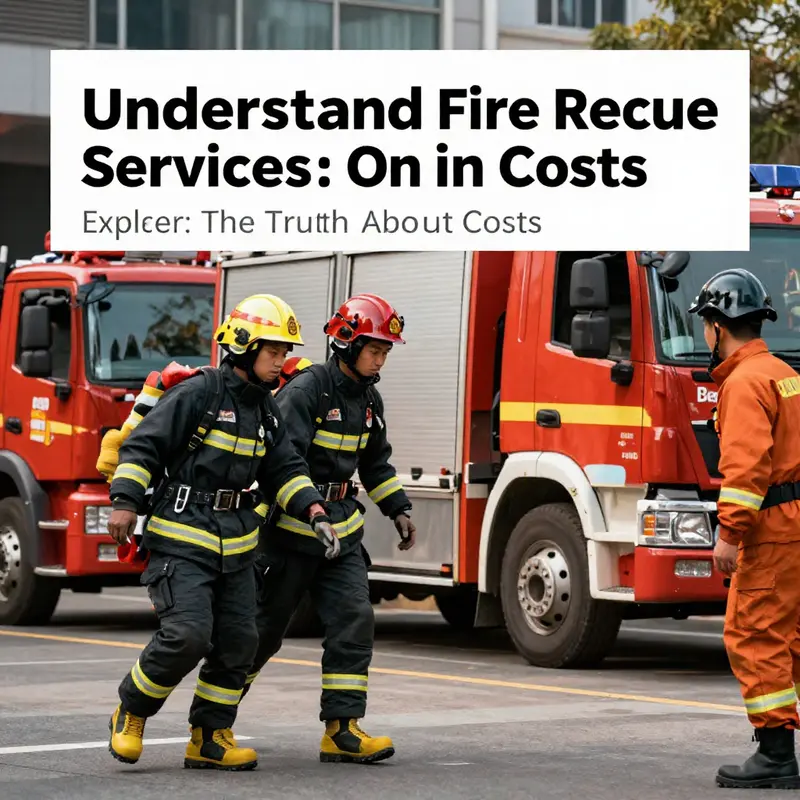
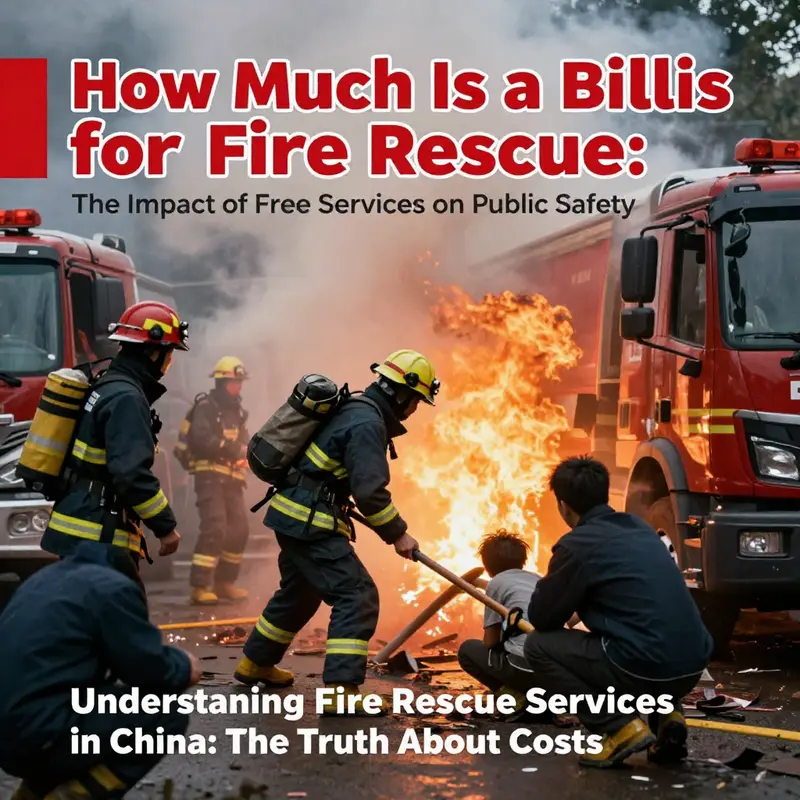
Fire rescue services in China operate under a unique model that prioritizes public safety without imposing costs on communities. Contrary to misconceptions, these essential services are rendered free of charge. The misconception that there is a bill for fire rescue often leads to confusion and hesitance in seeking help during emergencies. This article provides a comprehensive overview, detailing the beliefs surrounding fire rescue costs, clarifying these misconceptions, and offering insights into the implications of providing free services. Each chapter delves into different aspects of this topic, emphasizing the official stance of fire departments, the expectation of no fees when calling 119, and ultimately showcasing how these free services contribute to enhanced public safety.
Free Emergency Rescue in China: Why the First Response Isn’t Billed

In China, emergency fire rescue is designed to be free at the point of service. The public safety system is funded by government budgets and taxation, so calling 119 for a fire, collapse, or other life threatening incident triggers rapid response without a direct charge to the person in need. Costs for follow up work such as debris removal or repairs may be addressed separately, and routine or non emergency services are usually handled by private contractors or municipal programs. The policy is reinforced by law, notably Article 49 of the Fire Protection Law, and is communicated through official channels to ensure public trust and quick help in crises.
What a Fire-Rescue Bill Really Costs: Debunking Myths and Navigating Local Practices
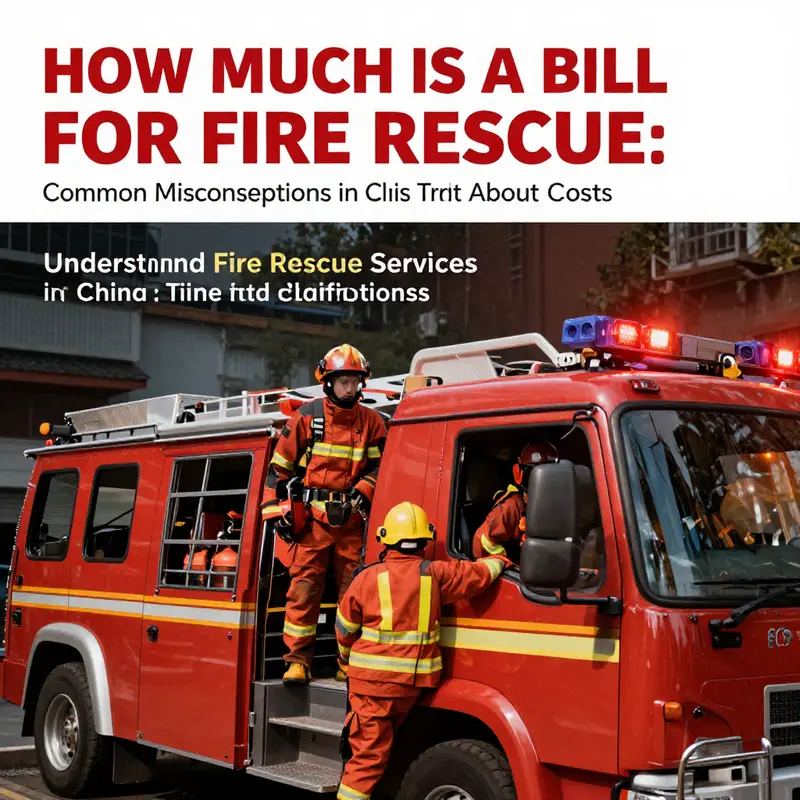
Emergency response costs vary by location and service. In many places, basic firefighting and first-response are funded through local taxes and general revenues, so there is no direct bill for the core life-saving action. Some non-emergency services or specialized rescues may incur fees, depending on jurisdiction and policies. Always check your local fire department’s billing policy and request written explanations if charges arise. Insurance may cover part of costs, but coverage differs by policy. An itemized bill can help identify charges for firefighting, extrication, medical care, or equipment. When in doubt, contact the department and review municipal policies on charges for false alarms, inspections, or follow-up work. Public safety aims to keep essential services accessible, with costs managed through public budgets rather than individuals paying out of pocket during emergencies. For further context, organizations like NFPA provide guidelines on funding and when charges may appear. External resource: NFPA fire department response costs.
Behind the Sirens: The Hidden Economics of Calling 119 for Fire Rescue
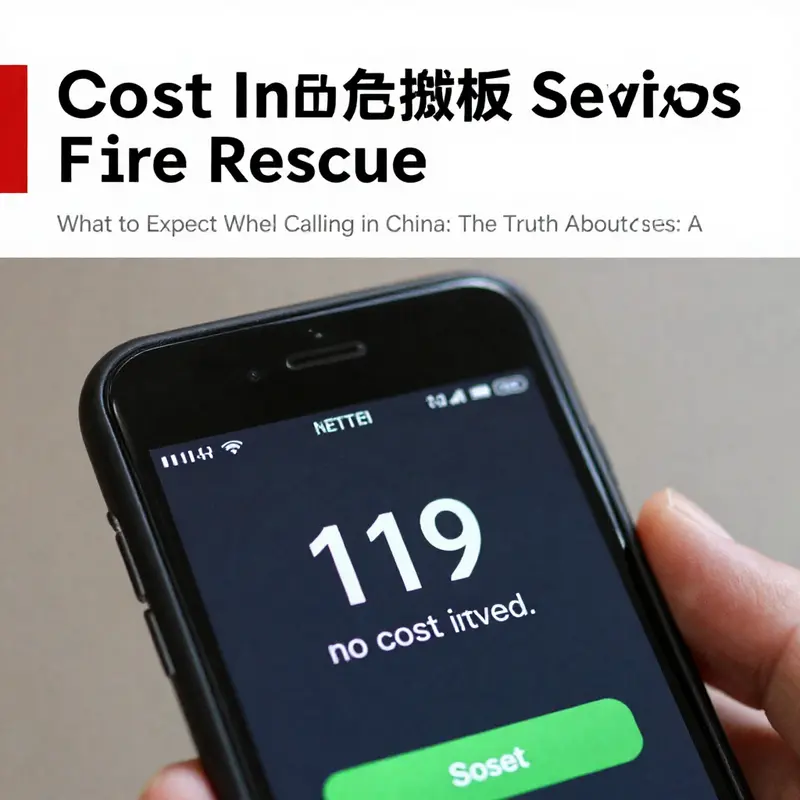
When the siren cuts through the night, the immediate impulse is to call for help and hope for a swift arrival. But behind every rapid response lies a web of costs, incentives, and public choices that shape what you pay and when. In this chapter we map the economics of a single 119 call into three broad streams: prevention and protection, direct damages and losses from fires, and the operating costs of fire and rescue services. Taken together they form a ledger where the caller moment of danger is only one line among many.\n\nPrevention and protection include building codes, inspections, community education, and research that reduce risk. Direct damages cover property loss, business interruption, medical costs, and social consequences long after the flames are out. Operational costs account for staffing, equipment, training, logistics, and maintenance that keep a department ready.\n\nAcross many countries the majority of these costs are not charged at the scene to the caller; they are funded through taxes, fees, or insurance arrangements designed to distribute risk over time rather than assign it to a single moment.\n\nSeeing the system as a mosaic helps residents and businesses act more effectively, invest in prevention, support transparent budgeting, and participate in safety programs. The chapter closes with a look at how technology governance and policy influence the efficiency and fairness of emergency services and how public accountability matters for the trust that underpins rapid response. For readers exploring further, see an illustrative external resource on the economics of fire prevention and response: https://www.ncbi.nlm.nih.gov/pmc/articles/PMC7560475/.
How Much Is a Bill for Fire Rescue? The Official Stance and Public-Funded Safety in China
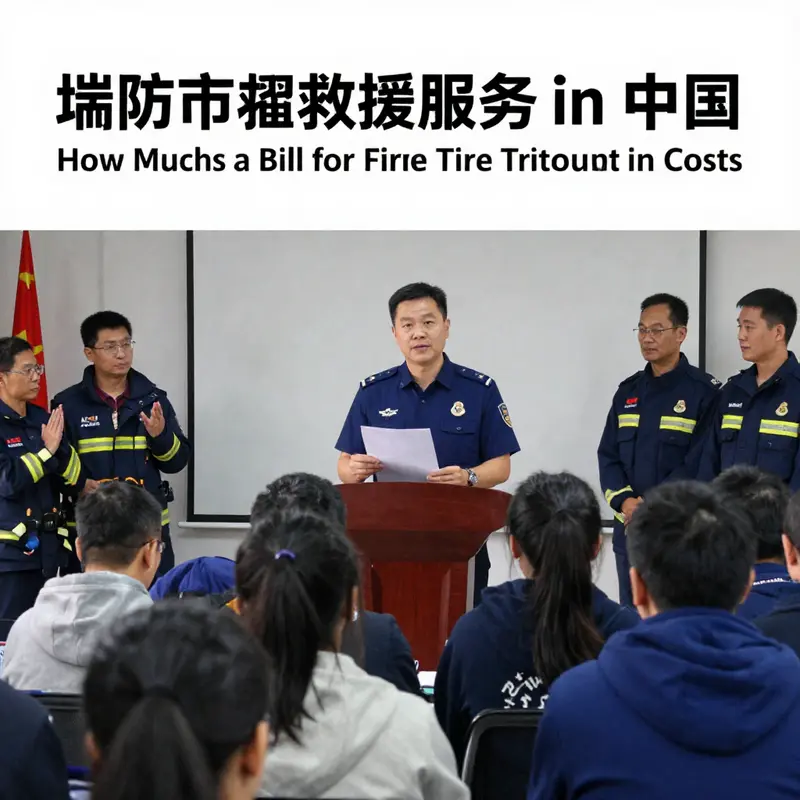
When households or business owners hear fire engines roar and seek reassurance about the aftermath, the question often centers on cost: will there be a bill for rescue services? In China, firefighting and emergency rescue operations are provided free of charge. This is not a marketing slogan or a provincial rumor, but a policy grounded in law and public administration. The principle is that protecting lives and property in emergencies is a public service funded by the state and local budgets so that every resident can access help when it is most needed, without worrying about payment at the moment of crisis.
The legal backbone for this policy is the Fire Control Law of the People’s Republic of China. In particular, Article 37 states that fire brigades do not charge fees for firefighting and rescue operations. This provision translates a constitutional commitment into practice: when danger demands rapid action, the state bears the cost of mobilizing trained personnel, equipment, and protective measures. The policy frames fire protection as an essential public service akin to road maintenance or public sanitation—an obligation of the state to safeguard lives and property. In other words, the moment a rescue or suppression operation is underway, the consumer-facing bill is not a line item for the individual or organization affected.
Public communications have reinforced this understanding, countering misconceptions. Official explanations, along with reputable local reporting, emphasize that the price of protection in emergencies is not a fee paid by victims but a provision funded through public budgets to ensure universal access to rescue services.
To understand how this policy translates into daily life, fire protection is funded as part of the national safety infrastructure. Fire brigades operate under national and local fiscal allocations. Governments budget for life and property protection through public safety accounts, emergency preparedness programs, and investments in equipment, training, and facility maintenance. When a fire breaks out or a rescue is needed, the costs are absorbed by the public system rather than billed to the person involved. The aim is to guarantee readiness, rapid response, and the best possible outcomes for those affected.
From the perspective of residents and businesses, knowing that emergency firefighting and rescue are free provides financial resilience and reinforces the social contract that public safety is a collective responsibility. When a fire alarm sounds and crews arrive, the obligation to protect lives and stabilize the scene rests with the state, not with the person in distress. This does not mean costs vanish entirely; they are allocated through the public purse so that immediate lifesaving actions can proceed without delay. Ordinary emergency response is the core of the policy; specialized services outside the routine emergency framework may be subject to different rules or contracts.
For readers seeking sources, the official Fire Control Law text offers a definitive reference. Official text can be found here: https://www.gov.cn/zhengce/2024-05/14/content_6984542.htm. The broader discussion of how public funding supports modern safety services is also a useful companion to understanding the policy in practice.
Free at the Point of Need? Unpacking Bills, Budgets, and Public Safety in Fire Rescue
Ask most people how much a fire rescue bill costs, and they expect a price tag to arrive after every siren. The reality is more nuanced. In many jurisdictions, the emergency response that saves a life or protects a home does not come with a per-incident invoice attached to the caller. Instead, the cost of that response is funded through public budgets and distributed across taxpayers. The phrase “free at the point of use” encapsulates a public-safety promise: you get help when you need it, regardless of your ability to pay. But the absence of a direct charge does not mean there is no cost. It means the cost is borne by a broader funding pool, one that must be kept healthy to sustain rapid, reliable service. The policy question, then, becomes not whether a response has a price, but how a community organizes the funding so responders are trained, equipment is current, and crews can answer a call in time. This framing helps readers understand why a so-called “free” service still demands disciplined budgeting and public accountability.
Across the United States, the prevailing model treats basic emergency response as a municipal obligation funded through local budgets. In most cases, fire departments do not bill individuals for firefighting or standard medical assistance during a fire incident. This funding arrangement has clear advantages: it removes debt concerns for those seeking help and anchors life-saving response in a shared social contract. Yet the absence of an explicit bill can obscure the true scale of the operation. Fire service is expensive. Staffing multiple shifts around the clock, maintaining a fleet of engines and rescue tools, stocking durable protective gear, and investing in ongoing training all require sustained expenditures. When money is visible only as tax receipts and budget lines, people may underestimate how much it costs to keep crews ready to go at a moment’s notice. The “gift” of no per-incident charge hides a complex, resource-heavy enterprise that must be planned, funded, and defended year after year.
The budgeting ecosystem that sustains emergency response is intricate. Local governments decide how much to tax, what reserves to maintain, and how aggressively to pursue grants for large capital needs. They juggle competing priorities—schools, roads, public health, housing—while trying not to degrade response times or protective capabilities. Grants can prop up capital projects such as new apparatus or upgraded equipment, but operating costs remain a steady obligation. The day-to-day reality is that every shift requires personnel who must be paid, trained, and insured; every engine and ladder must be kept in service, inspected, and repaired; and every supply line and protective garment must be replenished. When budgets tighten, the first casualties are often non-critical improvements, deferred maintenance, or slower replacement cycles. In such a system, the absence of an individual bill greatly amplifies the importance of transparent funding and public trust, for the public’s safety hinges on a clear, deliberate financial plan rather than on a vague sense of generosity from the tax dispenser.
National statistics lend dimension to these questions. The National Fire Protection Association’s 2023 fire department statistics show that most departments deliver primary emergency response free of charge to the public, but the operating costs behind that service are substantial. Average annual operating costs per department typically exceed a seven-figure sum, driven largely by staffing and equipment needs. In practical terms, this means that while a single fire call does not generate a bill, the system requires robust, predictable funding to maintain crews, training programs, and modern gear. When departments face funding gaps, they juggle staffing levels, maintenance schedules, and equipment replacement timelines. The consequence is not a single debt bill landing in a mailbox but a ripple effect across response times, the reliability of gear, and the ability to sustain a resilient emergency network. The cost calculus is not a distant accounting exercise; it translates directly into the speed and quality of the help that reaches people in crisis.
Nevertheless, the landscape is not uniform. In some jurisdictions, there are explicit revenue streams tied to non-emergency or specialized response services. Fees may be charged for activities that are not part of routine fire suppression—such as vehicle extrications, hazardous materials responses, or complex technical rescues—where the resources used are clearly attributable to a particular incident. This approach aims to preserve a strong public-safety core while allocating the costs of specialized operations to those most directly involved. Critics warn that such fees could deter calls in ambiguous situations or create inequities for those with limited means. Proponents argue that targeted charges improve transparency, showing precisely which services consume which resources. The policy balance remains delicate, and communities continue to experiment with models that blend universal access to emergency response with the need to fund specialized capabilities. In all cases, the core objective remains: keep the fire-rescue system capable of protecting lives and property when every second counts.
The broader takeaway for readers who seek to understand the true economics behind the headline question—how much is a bill for fire rescue?—is that the answer is not a fixed number but a framework. There is no universal invoice arriving in every mailbox. There is a financing architecture built on taxes, grants, and, in some places, incident-based fees. The transparency of that architecture matters as much as its size. How clearly does the budget reflect the real costs of staffing, training, and maintaining a capable fleet? How resilient is the funding during economic downturns or population shocks? And how does the community balance the desire for universal access with the realities of finite public resources? These questions matter because the public’s safety depends on a system that is funded with foresight, measured in budget cycles, and defended through informed civic participation.
A short but meaningful window into contemporary reform is the ongoing push to align modern training, dispatch optimization, and risk-informed investment with budget realities. Innovations in training methodologies, data-driven response planning, and safer building practices are not just technical upgrades; they are cost-management strategies that can stretch finite dollars further while preserving or even enhancing outcomes. For readers curious about how the service sector is evolving, consider the role of innovation in making the system more efficient without compromising safety. One example of this broader trajectory is the concept highlighted by initiatives described in resource collections such as the Innovation Museum Transforming Fire Services, which explores how new ideas reshape training, culture, and operations. This kind of forward-looking work helps communities imagine how to sustain a robust rescue network even as demand grows and budgets tighten. Innovation Museum Transforming Fire Services
As a practical reminder, for readers who want to anchor these discussions in empirical data, the National Fire Protection Association’s reports remain a reliable touchstone. They document trends in funding structures, workforce composition, and equipment turnover, offering a national perspective that complements local budgeting realities. While the public may never receive a line-item bill for a standard fire response, the true price of preparedness—captured in staffing, training, and gear—shapes policy choices, community expectations, and the long-term resilience of emergency services. This chapter has traced the logic from that perception of cost to the mechanics that sustain it, emphasizing that understanding the economics behind rescue services strengthens public safety as well as public trust. For a more comprehensive view, see the NFPA’s Fire Department Statistics.
External reading: https://www.nfpa.org/About-the-NFPA/News-and-Research/Fire-statistics/Annual-fire-reports
Final thoughts
The reality of fire rescue services being offered without charge in China fundamentally supports public safety and encourages community trust in emergency services. Understanding that individuals can reach out for assistance by calling 119 without worrying about fees is crucial. Through this knowledge, citizens can feel empowered to seek immediate help, ultimately enhancing the overall safety and welfare of the community. Fire departments play a crucial role in fostering this trust and clarifying misconceptions about services they provide, ensuring that everyone is aware of the essential, cost-free assistance available to them.