
The Boise River attracts countless adventurers each year, but with this beauty comes the responsibility of understanding the implications of rescue operations. When individuals find themselves in distress on the river, a critical question arises: Are they financially liable for the rescue services? This guide provides insights into the charges associated with Boise River rescues to inform community residents, emergency responders, educators, and school administrators. We will explore the rescue operations financing processes, shed light on potential medical expenses post-rescue, and examine the costs associated with private rescue services in outdoor activities.
What Rescues Really Cost on the Boise River: Debunking Charges and Understanding the Aftercare Toll
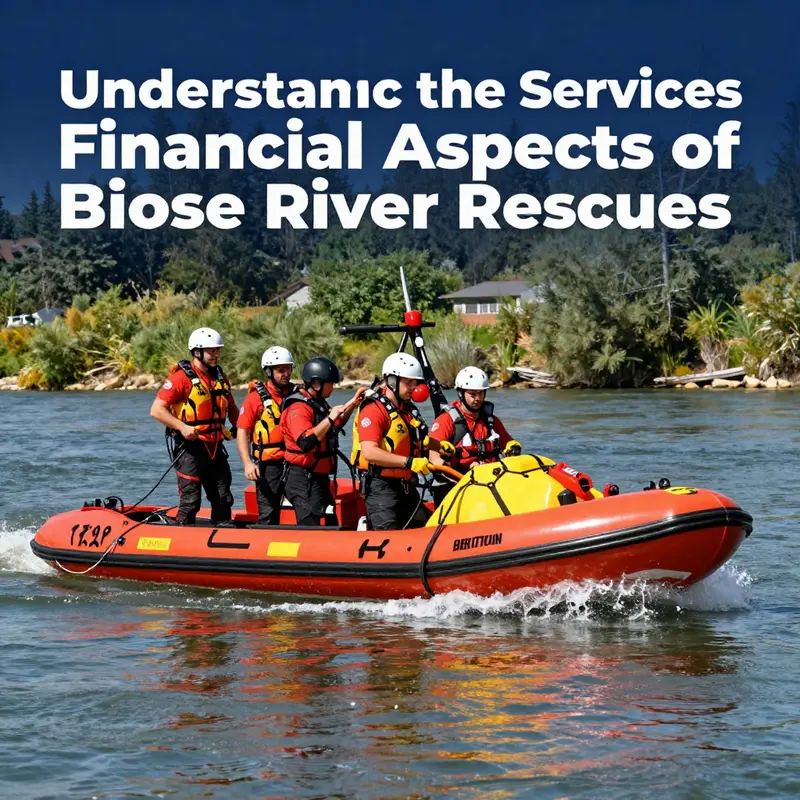
On the Boise River, the sight of a rescue can feel dramatic, urgent, and even cinematic. A helicopter slicing through a bright Idaho sky, a swift water rescue team maneuvering through whitecaps, or a shoreline team stabilizing a swimmer who has run out of luck. Yet beneath the emotion of the moment lies a practical truth about how these rescues are funded and billed. In most cases, the actual act of saving a life on public waterways happens without a direct bill sent to the person rescued. Local emergency services, including fire departments, paramedics, and search-and-rescue teams, are funded largely through taxpayer dollars. The response itself is treated as a public safety service, a core function of municipal government and regional authorities designed to protect the community as a whole, not to earn fees from individuals who happen to need help in a high-risk moment. The Boise River, like many urban and peri-urban waterways, sits at the intersection of citizen safety, public resources, and the moral economy of emergency response. The expectation, when an incident unfolds, is that the public safety system will mobilize, coordinate, and execute a rescue efficiently, with the rescue itself offered at no direct charge to the person in distress. The reality is more nuanced, and the nuance matters for anyone who spends time near the river or guides others through it.
The core message, often repeated by Boise Fire Department spokespeople and Ada County Sheriff’s Office communications, is simple: if you are rescued, you should not expect a bill for the rescue operation itself. Taxpayer funding and public budgets absorb the cost of deploying boats, helicopters, watercraft, rescue personnel, and the logistics that make a rescue possible. This framework is consistent across most of the United States, where the Emergency Medical Services (EMS) system is designed as a public utility of sorts—an essential public good provided in times of need. The direct billing focus, when it exists, typically shifts away from the rescue event itself and toward related services that may follow. The nuance often centers on what happens after the rescue and why those costs arise in the first place.
The clinical point of contact after a Boise River incident is most commonly medical care. If a person requires treatment for injuries sustained during the incident—whether it is a sprain, hypothermia, dehydration, or something more serious—the hospital and medical providers can bill for the treatment, tests, medication, and any ongoing care that follows. Those costs are separate from the rescue operation. They reflect standard medical billing practices for care delivered in a hospital setting or during transport by ambulance or emergency medical technicians. Even when a rescue is performed at no direct charge to the rescued individual, the medical bills that follow can be substantial, and they are typically paid through insurance, individual payment, or government programs. This separation matters because the emotional memory of a rescue can overshadow the pragmatics of billing, but the two are not the same financial transaction.
Indirect costs that arise from a Boise River rescue, however, can sometimes feel like a second set of charges, and they often require careful explanation. One such indirect cost is the potential for additional charges related to specialized or extended rescue operations. In Idaho and other jurisdictions, the idea of cost recovery for high-cost or complex rescues has occasionally entered legislative and policy discussions. These debates are not about charging individuals for the life-saving act itself; rather, they consider whether certain scenarios—such as rescues caused by extreme negligence, self-inflicted high-risk behavior, or operations that extend far beyond ordinary rescue parameters—could trigger some form of cost recovery through legal mechanisms or insurance claims. The discussions are nuanced and, in practice, rare. Even when lawmakers entertain the possibility, the default public safety model remains: the rescue itself is funded publicly, and cost recovery, when contemplated, tends to be a carefully circumscribed exception rather than the norm.
To illustrate the scale, some publicly available data highlight the financial gravity of complex rescues. In Idaho, helicopter rescues can be exceptionally expensive. Recent figures from the Idaho Department of Health and Welfare indicate that a single helicopter rescue can cost between roughly $15,000 and $20,000, with more specialized or complex missions potentially exceeding $30,000. These numbers reflect the total cost of a mission across multiple components: flight time, personnel, equipment usage, fuel, and the embedded costs of emergency medical services that operate behind the scenes to stabilize and transport a patient. It is important to read those figures as a reminder of the resources that underwrite a successful rescue, rather than a ticket to individual invoices. In many cases, the public system absorbs these costs, spreading them across budgets that fund fire services, law enforcement, helicopters, search-and-rescue teams, and hospital partnerships. The public budgeting logic is straightforward in intent: protect life and reduce harm by mobilizing all necessary capabilities in a timely fashion.
The real-world implications of this funding arrangement become clearer when people reflect on scenarios that test the boundaries of responsibility and risk. If a person is engaging in activities that are explicitly dangerous, or if they knowingly participate in stunts on the river that raise the risk profile for themselves and others, there may be conversations about accountability. Those conversations are not simply about the rescue staff doing their job; they are about whether some of the costs could be recovered later, either through civil actions, insurance claims, or legislative proposals. The Idaho Legislature, like many state legislatures, has considered cost-recovery concepts in some contexts. Such deliberations are often framed around high-cost scenarios rather than routine rescues, and they do not typically alter the immediate obligation of public safety agencies to respond when called. The practical takeaway is that, even in places where the policy debate exists, the standard Boise River rescue is not billed to the rescued individual at the point of service.
For readers who want a grounded sense of the system’s mechanics, the EMS framework offers critical context. Emergency medical services operate as a continuum of care that begins with the initial response and can include on-scene stabilization, transport, and hospital-based treatment. Funding, billing practices, and patient responsibility are shaped by a complex mix of state regulation, local ordinances, insurance coverage, and hospital policies. In Idaho, the EMS system is designed to ensure life-saving care is accessible while balancing the finite resources that public safety agencies must manage. The practical effect for a swimmer, paddler, or hiker on the Boise River is this: you are not typically charged for the rescue operation itself, but you may encounter medical charges or transport-related fees if you need treatment or if you transition from field care to hospital care.
This is not to minimize the real-world anxiety people feel after a dangerous river incident. The fear that a rescue could financially bankrupt a family is a legitimate concern for many who live near water or who guide others through river routes. The policy backbone, however, is that lifelines exist for the public good, and those lifelines are kept accessible through public funding. The cost of rescuing someone on a Boise River is a community investment intended to avert worse outcomes. Yet the broader cost structure remains layered: while the rescue may be free, the downstream costs can arise from medical treatment, rehabilitation, or specialized transport. In other words, the rescue operation itself is typically a gift of public service, financed by taxpayers who support the infrastructure, training, and personnel required to perform high-stakes responses on a river that attracts both residents and visitors.
For individuals who want to understand the system more deeply, the practical advice is straightforward. If you are planning river activities, take reasonable precautions, wear appropriate safety gear, and be aware that your medical or transport bills might be separate from the rescue itself. When in doubt, local authorities—Boise Fire Department and the Ada County Sheriff’s Office—are the best sources for guidance on policy and the specifics of any incident you might have witnessed or experienced. They can provide clarity on whether any action beyond the rescue could lead to cost considerations, how insurance may apply to post-rescue medical care, and what steps might help minimize any potential charges in unusual circumstances. One of the most valuable lessons is prevention and preparedness. Understanding the risks of river travel, recognizing early warning signs, and choosing routes with appropriate difficulty levels can reduce the likelihood that a rescue is necessary in the first place. That practical stance aligns with public safety goals: if people avoid dangerous situations, fewer resources are deployed, and the entire system can allocate more bandwidth to genuine emergencies.
From a narrative standpoint, it is easy to see a rescue as a dramatic episode in which someone is saved at the last moment. But the chapter of policy that sits behind such scenes is equally dramatic in its own way. It is a story about how communities organize themselves to respond to danger, how they share the costs of that response, and how they navigate the tension between collective responsibility and individual accountability. It is a story about the public trust that underwrites emergency services and the social contract that says, when danger arises in public spaces like the Boise River, the community steps in, supports the responders, and prioritizes saving a life over pursuing a direct invoice to the person rescued.
In a more philosophical sense, the pricing question becomes a measure of how a society values safety. If rescues were billed to individuals in every case, the deterrent effect could discourage people from seeking help when they need it most. The public safety model, by contrast, rests on the assumption that timely intervention should never be compromised by concerns about payment. That assumption is what helps maintain a reliable safety net for residents and visitors alike. Still, the conversation is not purely academic. It intersects with insurance design, hospital pricing, and the broader social safety net. Those elements collectively shape a landscape where the central fact remains clear: the rescue operation itself on the Boise River is not something the rescuer charges, and the cost borne by the public is a shared investment in safety and resilience.
To connect this discussion back to the evolving nature of rescue work, consider how new approaches to training, equipment, and coordination are gradually changing the calculus of what a rescue costs in time and resources. Innovations in training minimize on-scene time and enhance patient stabilization before transport. Advances in communication technology improve the efficiency of coordinating multi-agency responses. The long arc of these changes points to a future where the bravery of the responders remains constant, but the cost per rescue—once a looming question for taxpayers and policymakers—becomes more predictable and better managed. In that sense, the public’s contribution is not a hidden burden but a shared investment in the safety and vitality of Idaho’s river corridors. For readers intrigued by how these transformations unfold in practice, one can look to the ongoing work in innovations within fire services, which continues to influence policy, training, and the way communities experience rescue operations. innovation in fire services.
As a practical takeaway, anyone who spends time on the Boise River can approach safety with clear expectations. If a rescue is needed, you will not be billed for the rescue itself; you may, however, encounter medical bills or transport fees tied to post-rescue care. If you believe you might incur costs beyond the rescue—whether through medical treatment, rehabilitation, or, in rare circumstances, cost-recovery discussions—your best path is to consult the local authorities and your insurer. Clear documentation of the incident, honest communication with medical providers, and a proactive understanding of your insurance coverage can help navigate any financial implications after a life-saving event. While the financial mechanics behind these rescues can feel opaque, the public-facing aspect is straightforward: the rescue is a public service, designed to preserve life, and funded accordingly. The rest—the medical bills, the possible post-rescue logistics, and any potential legal conversations—unfold within a broader system built to balance care, cost, and accountability.
External resource for deeper context: For more on EMS funding and the broader context in Idaho, see the Idaho Department of Health and Welfare—Emergency Medical Services page. https://dhw.idaho.gov/ems/
Funding the Front Line: How Public Dollars Shape Boise River Rescues and Safety
Public safety on the Boise River is not a single moment of bravado. It is the product of budgets, training, equipment, and coordinated action funded by public dollars. This chapter explains how city, county, and state investments create a reliable rescue capability that can operate in fast currents, cold water, and variable flood conditions. The immediate rescue may be dramatic, but the steady groundwork behind it is what makes outcomes safer and more predictable for residents and visitors alike.
The distinction between the rescue itself and the costs that follow matters. The rescue operation is funded through preparedness and emergency response budgets, enabling rapid dispatch, trained personnel, and the equipment needed for swift water work. Medical care after the rescue is handled through healthcare providers and insurers, and while medical bills can arise, the act of saving a life is not billed to the rescued person as part of the rescue itself. This separation helps communities plan for safety as a public good rather than a billable service.
Beyond the rescue, many incidents involve search and rescue units, interagency coordination, and specialized gear. Public funding supports ongoing training, equipment maintenance, and readiness in all seasons. The costs of helmets, drysuits, throw bags, ropes, boats, and communications gear are weighed against the benefits of faster responses, reduced downstream harm, and fewer secondary injuries to both victims and responders.
A sustained funding model also links field operations to broader public safety goals. State level emergency preparedness programs and federal grants frequently supplement local budgets, creating a multi layer safety architecture. This approach makes it possible to sustain river rescue capabilities that individual jurisdictions could not sustain alone, while ensuring coordinated response across agencies during complex incidents.
In practice, the funding story is visible in response times, training quality, and the ability to rehearse emergencies before they happen. It is also about transparency and public engagement, helping residents understand why safety investments matter and how they are prioritized. When communities see the link between tax dollars and safer river experiences, they are more likely to support budgets that keep responders ready and equipped for whatever the river brings.
Medical Costs Following a Boise River Rescue: Understanding Fees, Bills, and Financial Safeguards
A rescue on the Boise River can feel sudden and disorienting, but one of the practical questions that often follows is not just what happened, but what it will cost. People who find themselves swept into rapid current, entangled in bendy branches, or struggling in a splashy stretch may be grateful simply to be alive and rescued. Yet as soon as the immediate danger subsides, another set of concerns tends to surface: are there charges for the rescue itself, and could medical bills accumulate after the fact? The short answer, grounded in how emergency services are funded in the United States, is nuanced but generally reassuring for most river participants. The actual rescue operation itself is typically funded through taxpayer dollars and does not bill the individual for the service. Local fire departments, paramedics, and search-and-rescue teams operate as public safety entities, and their life-saving work is considered a core municipal function paid for by the community as a whole. Still, the practical financial landscape around a Boise River incident includes several moving parts that deserve careful attention if you want to avoid surprise bills down the line.
First, and most directly, there is the distinction between the rescue and subsequent medical care. The rescue, by itself, is usually free at the point of service. The responders are performing a public service designed to save lives and reduce danger, and funding typically comes from local taxes, regional budgets, and state support where applicable. This principle applies across many jurisdictions in the United States, including Idaho. The moment you are stabilized and out of danger, the next chapter of costs begins to unfold, and this is where people often feel the most uncertainty. If injuries occurred, or if the emergency response involved emergency medical services (EMS) transport to a hospital, charges can accrue based on the medical care and the transport itself. These costs are not the same as the rescue operation and are governed by separate billing processes that reflect medical treatment, ambulance transport, imaging, procedures, medications, and inpatient care. You may find yourself facing hospital bills, lab work, physical therapy, or follow-up imaging after discharge, even if the rescue was performed at no charge to you.
To understand the financial path after a Boise River incident, it helps to map out the typical sequence. A caller dials 911 or triggers a rescue response when someone is in distress on the river. A crew reaches the person, performs the rescue, and transfers care to EMS if needed. If you are taken to a hospital, you will encounter hospital-based charges for the care you receive. Depending on the insurance landscape and the specifics of your case, those bills can be substantial, even if the rescue portion was free. Ambulance transport, in particular, has a well-known potential to generate bills that can surprise individuals who are not prepared for out-of-pocket expenses. The reason is that ambulance services often operate under separate billing structures, with base fees, mileage charges, and possible added costs for specialized equipment or personnel. While some people have insurance that covers much of these costs, others are balance-billed for portions not covered by their plans. The result can be a mix of covered services and out-of-pocket expenses that vary widely from case to case and from one insurance plan to another.
But the financial picture does not end with hospital visits and ambulance bills. There are broader, indirect costs that can accumulate after a river incident, especially if the injuries require ongoing care. Imaging studies, emergency department visits, surgical interventions, rehabilitation, medications, and even home health services can contribute to a mounting cost basket. The price tag for post-rescue care is not a mere nuisance; it can become a significant financial concern for individuals and families, particularly if the incident results in injuries that disrupt work, limit mobility, or necessitate long-term recovery. In the context of the pandemic era, the concerns around medical costs have taken on heightened salience for many people. The aftershocks of COVID-19 persist in discussions about health spending, underscoring how medical expenses can influence financial well-being even in non-pandemic times. A growing body of research has highlighted that people worry about medical costs when emergencies strike, and this anxiety remains a meaningful barrier to seeking timely care or pursuing necessary treatment when resources are tight. This broader context helps explain why the financial aftermath of a river rescue can feel as consequential as the physical aftermath. The study on medical-cost concerns during the pandemic period, while not river-specific, illuminates a pattern that many people recognize in everyday life: health costs can impose substantial stress and shape decisions about care, coverage, and debt.
In practical terms, there are several avenues to mitigate and manage these costs if you ever find yourself facing medical bills after a Boise River rescue. The first step is to clarify what is being billed and why. Request itemized hospital and EMS invoices and ask for explanations of any charges you do not understand. Patient advocates or social workers at hospitals can often help interpret the bills, explain insurance denials, and identify potential financial assistance options. If you have health insurance, contact your insurer to verify coverage for the specific services rendered, including whether the ambulance transport was medically necessary and how much your plan will pay versus what you personally owe. If you do not have insurance, or if your coverage is insufficient, there are still pathways to relief. Many hospitals and government programs offer charity care, payment plans, or financial assistance programs designed to help individuals with limited means manage large medical bills. Non-profit organizations and community agencies may provide short-term support or help with navigating applications for aid. Even in non-emergency situations, applying for financial assistance can be a step toward reducing a bill burden that might otherwise seem prohibitive.
Another practical consideration is knowing where to direct inquiry and how to gather the right documentation. When a Boise River incident happens, you may need to coordinate between the rescue agency, the hospital, and your insurance company. It can be helpful to collect proof of the rescue operation—such as the incident report or a dispatch record—from the local fire department or sheriff’s office. That documentation can clarify that the rescue itself was a public-safety service funded by public resources, distinguishing it from the medical care that follows. While this distinction is not always rendered in every bill, having a clear record can help you communicate with hospitals and insurers and prevent misclassifications that might lead to unexpected charges.
As you navigate these steps, consider the broader social and policy landscape. The idea that rescue operations should be free at the point of use reflects a civil obligation to protect life and safety. Yet the costs associated with medical treatment after a rescue are bound up with the design of insurance systems, hospital pricing, and ambulance service contracts. In some jurisdictions, there are ongoing policy discussions about cost recovery for high-cost or complex rescues, though such practices remain rare and typically governed by strict criteria. In the Boise area and similar communities, the default expectation remains that rescue is funded publicly, with medical care billed through standard channels. For people who want to understand the policy framework more deeply, it can be instructive to consult local public-safety offices, such as the fire department or sheriff’s office, to hear how their communities structure reimbursement, billing, and outreach for those affected by emergencies on the river.
The emotional and financial stakes of a Boise River incident often intersect. A sudden emergency can disrupt work, strain family resources, and trigger worry about debt in the wake of injury. In such moments, practical planning can make a meaningful difference. The guidance from professionals emphasizes timely contact with rescue and medical providers to understand coverage, a proactive search for financial assistance programs, and careful documentation of all communications and bills. For individuals who wish to learn more about how communities integrate health and safety with financial resilience, a related discussion about community-health infrastructure and sustainable spaces that support well-being offers valuable context. See the-green-firehouse-creating-sustainable-spaces-for-community-and-health for a perspective on how spaces designed for safety and health play a role in resilience and recovery after emergencies.
In addition to these practical steps, there is value in considering preventive and preparatory measures that can reduce financial exposure should a future river incident occur. One essential approach is to be aware of your health coverage. If you participate in river activities regularly, review your policy’s ambulance, emergency, and aftercare provisions. Confirm whether the plan includes flexibility for out-of-network charges or for services performed in an out-of-hospital setting. If you have a high deductible health plan, it may be worth exploring options for preventative care or accident-related coverage that could minimize out-of-pocket costs when emergencies arise. Although prevention cannot guarantee avoidance of injury, it can influence the financial consequences if an accident happens on the water.
From a community perspective, the Boise River and similar natural-water settings are joined by a network of responders, hospitals, insurers, and social-support organizations. The intersection of rescue operations and medical care creates a continuum of safety that hinges on rapid action, adequate funding, and accessible financial pathways for patients. It is rare for a rescue itself to generate charges in a way that would be billed to the individual in the act of saving someone’s life. It is more common for the subsequent medical care—emergency department visits, hospital stays, imaging, procedures, and rehabilitation—to be the source of costs. Those costs can be mitigated through understanding insurance coverage, pursuing financial assistance, negotiating payment terms, and leveraging community resources. For individuals and families who have experienced a Boise River incident, the experience can be emotionally intense long after the adrenaline fades. The financial dimension adds another layer of stress, which underscores the importance of clear communication, supportive guidance, and avenues for relief that reduce the risk of medical debt while ensuring access to essential care.
Ultimately, the balance between rescue funding and medical billing reflects a broader societal commitment: public safety responders act to preserve life, while medical systems provide the treatment required to restore health. Each component has its own funding mechanism, and together they shape the financial reality faced by those who survive a Boise River rescue. If you find yourself navigating this territory, remember that you are not alone in the financial questions. Reach out to hospital patient advocates, your insurer, and local public-safety offices to map out the path from rescue to recovery. Keep in mind that non-profit and government programs may offer support for those who are overwhelmed by medical bills, and applying for these resources promptly can be crucial. The aim is to ensure access to necessary care without imposing untenable financial burdens, so that the path from rescue to rehabilitation remains focused on healing.
External resource: https://doi.org/10.54821/uiecd.1343533
null
null
Final thoughts
Understanding the financial aspects associated with rescue operations on the Boise River is crucial for both the public and emergency responders. While local emergency services typically offer rescues at no direct cost to individuals, it is necessary to consider possible medical expenses and the potential for charges from private services. By staying informed, community residents can better prepare for outdoor activities and recognize the safety net provided by taxpayer-funded emergency services.