
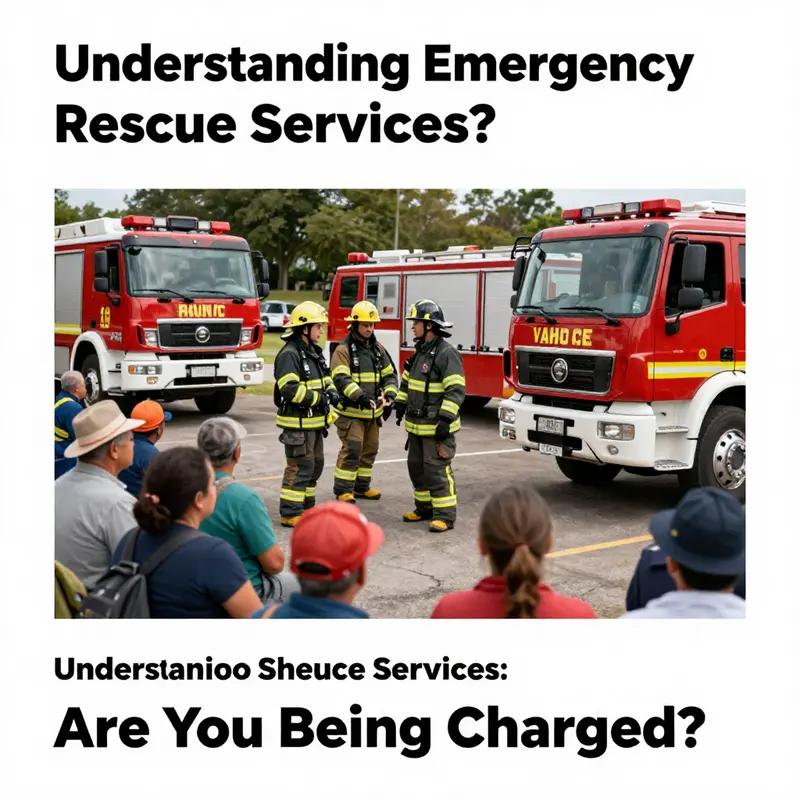
Fire departments across the United States are a cornerstone of public safety, dedicated to saving lives and protecting properties. Unlike many emergency services, these departments typically do not charge individuals for rescue operations, regardless of their situation. This article thoroughly explores the complexities surrounding this subject, delving into the funding sources that sustain fire departments, the distinctions between public and private rescue services, the broader implications for community safety, notable case studies, and future trends in rescue technology. By the end, readers will be informed and reassured about the operations and funding behind their local fire departments’ emergency rescue capabilities.
Who Pays When Rescuers Arrive: How Fire Departments Are Funded and Why Emergencies Are Usually Free

When people ask whether their fire department charges for a rescue, the quick answer is usually no. Emergency rescue—fire suppression, life-saving medical care, and technical rescues—has been treated in the United States as a core public safety responsibility. That status shapes how services are funded, why responses are available to everyone, and how occasional fees for special services fit into the bigger picture.
Fire departments exist to protect life and property. To do that reliably, communities must ensure resources are ready, personnel are trained, and equipment is maintained. Those basic needs are met not by a per-call business model but by pooled public funding. The most common and stable source of revenue is local property taxes. Municipalities and counties allocate a portion of those revenues directly to fire protection. This steady stream pays salaries, station upkeep, vehicles, fuel, and training. Because the money comes from the community as a whole, responses remain available to any resident in need, independent of their ability to pay.
Alongside property taxes, municipal budgets provide another primary funding channel. Fire departments are often line items in city or county budgets. Elected officials approve how much of the general fund goes to public safety. That budgetary relationship reflects broader civic priorities and allows resources to be shifted when necessary. A city council, for example, can increase funding for a longer staffing model or invest in new apparatus. Conversely, budget cuts can force difficult choices in staffing and service levels. The municipal budget model reinforces the idea that emergency response is a collective responsibility, financed by taxpayers and managed through civic governance.
State and federal grants supplement local funds, especially for targeted needs. Grants help departments buy specialized equipment, replace aging ambulances, or fund advanced training. Agencies such as federal emergency management offices award competitive grants for risk reduction and preparedness. These grants rarely cover ongoing operating costs. Instead, they enable capital improvements and upgrades that local budgets might not afford alone. Grants introduce opportunities and options, but they do not replace the stable base provided by taxes and municipal appropriations.
Not every dollar comes from general taxation. In some communities, special assessments or fees provide dedicated funding for higher-risk services. Developers of large complexes, for instance, may be assessed to offset additional fire protection demands. Industrial facilities that create elevated hazards sometimes pay for enhanced inspection or response capacity. These assessments are narrowly tailored, and they’re less common for routine emergency calls. Where they do exist, they are typically the result of local policy choices that balance cost, risk, and fairness.
Many fire departments also draw on fundraising and donations. Volunteer departments especially rely on community support to cover the gap between public funds and real needs. Fundraising buys items that are nice to have but not strictly essential—community outreach materials, special uniforms, or local scholarships. Donations create stronger community ties and can fund pilot programs. Still, they are supplemental, not a substitute for the core funding needed to sustain emergency operations.
Volunteer and combination departments illustrate how funding mixes can vary. In rural and suburban areas, volunteer brigades may have very low direct operating budgets but significant fundraising activity. They rely on volunteers’ time and donated gear, plus modest public appropriations. Urban departments are usually fully paid, supported by larger tax bases and formal municipal budgets. The difference matters because it affects response capacity, training expectations, and whether a jurisdiction can realistically consider charging for services.
The question of charging for rescues often arises when communities face rising costs. Some policymakers explore cost-recovery mechanisms—billing for rescue runs or ambulance transports—to offset budget pressures. But billing introduces complexity. Emergency scenes are chaotic. Billing people in crisis raises ethical questions. Insurance coverage varies. Administrative efforts to bill and collect increase overhead, and courts or public opinion can push back. Many jurisdictions view charging as contrary to the public-safety mission.
There are, however, legitimate distinctions between emergency and non-emergency work. Departments commonly provide several non-emergency services: public education, fire safety inspections, and sometimes non-urgent technical assistance. In those cases, modest fees or permits are reasonable and common. Additionally, certain non-urgent rescues—like retrieving a pet from a tree or moving a stalled vehicle not threatening traffic—may fall outside the standard emergency umbrella. Some places charge small fees for such calls to discourage unnecessary deployments and to recover direct costs. Even then, fees are usually designed for cost recovery, not profit.
Another area of confusion is emergency medical transport. Many fire departments perform medical first response free of charge. However, ambulance transport and the billing for that transport can be handled separately. In some communities, the fire agency operates ambulances and bills for transport; in others, private or third-party ambulance services handle the billing. That distinction matters because a person may receive free life-saving care on scene but later receive a bill for transport to a hospital. The presence of transport billing does not mean the department charged for the rescue itself; it reflects how emergency medical services are organized locally.
Policy choices about fees also reflect local values. Communities that prioritize universal access to emergency care resist per-call charging. They view the fire department as an essential service that should not be gated by payment. Other communities weigh fiscal pressures and opt for narrowly targeted fees or subscription models for certain services. When fees are considered, transparency is essential. Civic debates, budget hearings, and published fee schedules allow residents to understand trade-offs and hold decision-makers accountable.
Operationally, departments facing financial stress may pursue efficiency rather than fees. Consolidation of services, mutual aid agreements, shared training centers, and joint purchasing can yield savings. Investment in preventative measures—inspection programs, smoke-alarm distribution, and community education—reduces emergency volume over time. Those investments often make better financial and ethical sense than shifting costs to individuals in crisis.
For residents wanting clarity about their own community, the answer is local. Ask your fire department or review municipal budget documents. Most departments publish service policies and fee schedules if any exist. If you want deeper context on how fire services are funded nationwide, agencies that track fire department statistics offer useful background and data-driven explanations of funding models.
If you’re interested in how departments modernize facilities and pursue community-funded improvements, learn more about The Green Firehouse: creating sustainable spaces for community and health. For a broader look at national data and trends on operations and funding, see the National Fire Protection Association’s resource on fire department operations and funding: https://www.nfpa.org/News-and-Research/Publications-and-media/Fire-Service-Statistics/Fire-Department-Operations-and-Funding
Rescues at the Edge: Public Duty, Private Fees, and the Quiet Economics of Emergency Response
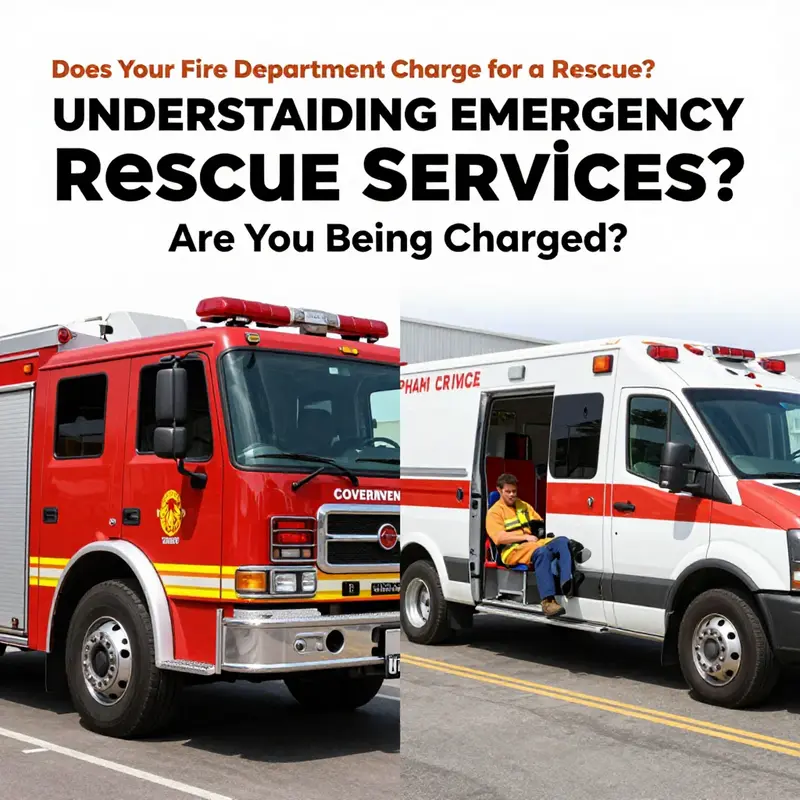
When households dial 911 in a moment of crisis, they expect immediate help, not a price tag. The question of whether a fire department will charge for a rescue touches at the heart of public safety: should life-saving response be treated as a public good funded by a community’s tax base, or as a service priced according to risk, complexity, and the capacity of local agencies? In the United States, the default position is clear: emergency rescue services are a public safety function funded through local taxes, government budgets, and other public money streams. The aim is simple and noble—provide help to those in danger regardless of a caller’s ability to pay. In practice, that ideal plays out in a complex landscape where policy choices, budget pressures, and local histories shape what happens when a rescue looks like more than a routine fire suppression event.
Most public fire departments act within a framework that centers accessibility and equity. Emergency rescues—whether they involve a firefighter sliding through smoke to pull a victim from a burning building, or a crew freeing someone from a vehicle after a crash—are considered core public safety operations. The funding for these operations comes primarily from property taxes, municipal budgets, state aid, and sometimes regional public safety partnerships. Because the emphasis is on universal access during emergencies, charging residents explicitly for rescue services runs counter to the public safety mission in most jurisdictions. The result is a system designed to remove financial barriers during life-threatening moments and to treat the emergency as a shared community responsibility.
That said, the picture is not monolithic. There are legitimate exceptions and nuanced practices that can appear when one looks beyond the headline policy. In some rural or volunteer-fire contexts, there may be fees attached to non-emergency rescue activities or to specialized technical rescues that extend beyond standard firefighting duties. Think of scenarios like deliberate high-angle rope rescues, intricate water-rescue operations, or other highly technical interventions that demand specialized training, equipment, and personnel. In these cases, the charges presented are usually modest and framed as a way to cover incremental operating costs rather than to extract profit. The practical effect is a pricing signal tied to the intensity and cost of the response, rather than a flat fee for any rescue call. It is a reminder that public safety systems are funded with a mix of broad tax support and targeted cost-recovery measures designed to keep essential services sustainable.
Another layer of the landscape involves private rescue entities. Private rescue providers operate on a fee-for-service model, offering specialized capabilities such as swiftwater rescue, high-angle operations, or industrial hazmat responses. In regions where public agencies lack the capacity or the specific expertise to handle a particular kind of incident, private firms can step in to fill the gap. The price tag on private rescue work varies widely, influenced by location, the complexity of the rescue, the equipment involved, the duration of the operation, and the level of risk assumed by responders. This distinction—public, funded as a public good, versus private, billed-for-service—helps explain why residents sometimes hear different stories about what rescues cost and who pays for them. It also underscores why, in a crisis, the first instinct of most public departments is to respond without hesitation, while the broader ecosystem around a rescue may include multiple actors with different funding models.
Policy makers and public agencies grapple with balancing transparency, accountability, and reliability. The National Fire Protection Association (NFPA) provides guidelines and data that help communities compare how they fund and organize rescue operations. While NFPA materials do not dictate a universal charging scheme, they offer a framework for understanding the economics of fire protection—the mix of local taxes, enterprise funds, state and federal grants, and, where appropriate, charge structures for non-emergency, specialized services. For readers seeking an authoritative overview, NFPA’s resources are a reliable place to start. https://www.nfpa.org offers a broad view of how fire departments are funded and how rescue operations fit into the bigger picture of public safety.
From a resident’s perspective, the practical implications of these funding choices become most tangible when a crisis arrives. If a call is clearly an emergency—an entrapment, a burning structure, a life-threatening medical event—public departments are expected to respond, with the costs wrapped into the community’s public safety budget. When the operation drifts toward non-emergency technical rescue, or when specialized equipment and expertise are required, local policies may vary. Some departments publish general outlines of when charges may apply and how they are calculated. Others leave pricing to the discretion of the responding unit or the governing body that funds the fire department. In any case, the overarching principle remains: life-saving work should be accessible during emergencies, without the fear of a bill that could deter a caller from seeking help.
To understand one’s own community, it helps to look up official policy documents or reach out directly to the local fire department. Many departments post summaries orFAQs on their websites, outlining when charges may apply for non-emergency rescues and what factors influence the pricing. The importance of clarity cannot be overstated. A transparent policy helps residents know what to expect and reduces confusion during stressful situations. It also supports public trust, which is essential when people must decide quickly whether to call for help in a non-emergency but potentially dangerous scenario.
Within this landscape, a broader conversation about public safety, equity, and budget resilience is essential. Communities must balance the inevitability of rising operation costs with the imperative to keep response universal and timely. Even modest charges for specialized, non-emergency rescues can become a point of contention if they appear to shift the burden onto people who can least afford it. This is where thoughtful policy design matters: allocating charges to cover incremental costs rather than general expenses, ensuring waivers or exemptions for vulnerable populations, and maintaining a robust public safety safety net so that cost concerns do not deter lifesaving action.
The reader may also encounter the argument that private rescue options are a rational market response to gaps in public capability. In places where public departments lack the resources to perform every kind of rescue, private firms can provide rapid, specialized assistance. Yet this arrangement can raise questions about access, equity, and the timing of response. A resident facing a non-emergency but technically complex situation might hear about an expensive private option, while someone in a neighboring district benefits from a no-charge public emergency rescue. The reality is that both systems can operate side by side, each with its own incentives and constraints. The practical takeaway is awareness: know the policy in your area, understand how charges may be applied, and consider the broader public-interest purpose that underpins emergency response.
For readers who want a broader sense of how fire services are evolving, there is value in looking at cross-cutting trends in the field. Innovation in training, equipment, and community outreach shapes not only how rescues are performed, but how they are financed and perceived by the public. Some communities use collaborative budgeting, regional fire districts, or public–private partnerships to strengthen capabilities while preserving universal access to emergency response. Others emphasize community risk reduction, so fewer people reach the point of needing rescue in the first place. Either trajectory reinforces that the core mission remains unchanged: to protect life and property without delay, guided by a commitment to public safety that transcends billing disputes.
To ground this discussion in a concrete example while preserving the broader frame, consider a community exploring how to present information about rescue costs to residents. A well-crafted public-facing summary can help people understand when charges may apply for non-emergency technical rescues, and how those costs are calculated. It can also point residents to official channels for questions or exemptions, such as contacting the fire department or reviewing the district’s policy documents. In addition, communities can benefit from integrating accessible, real-time information about rescue policies into school curricula, neighborhood associations, and civic forums. This approach builds trust by weaving cost transparency into everyday civic life, not just at the moment of a crisis.
Within this narrative, one thread runs consistently: the priority is to safeguard life during emergencies, not to deter calls for help with financial concerns. When readers want to dive deeper into how their own department handles rescue charges, the best route is to consult the official local resources and to connect with administrators who can explain the policy in plain terms. For broader context on how fire service innovation intersects with community needs, see The Green Firehouse, a piece that examines sustainable spaces for community health and fire service operations: The Green Firehouse: Creating Sustainable Spaces for Community and Health. This reference offers a complementary lens on how fire services are evolving to meet public safety goals while remaining accountable to residents they serve.
In sum, while charges for emergency rescues are uncommon in the public sector, they are not nonexistent, and the reasons behind them are nuanced. The essential frame is access: emergency responses must be immediate, universal, and unfettered by cost concerns. The exceptions—the non-emergency or highly specialized technical rescues—reflect a balance between maintaining public safety and managing the real costs of complex operations. For readers seeking a guide to their local policies, practical steps remain straightforward: review official department materials, ask questions, and rely on trusted sources like NFPA for broader context and data. By understanding the interplay of funding, policy, and service delivery, communities can ensure they receive critical rescue when it matters most, while maintaining confidence that reserved funds are used to safeguard everyone’s safety and well-being.
External resource: https://www.nfpa.org
Rescues Without a Price: Protecting Public Safety When Fire Departments Don’t Charge for Emergencies
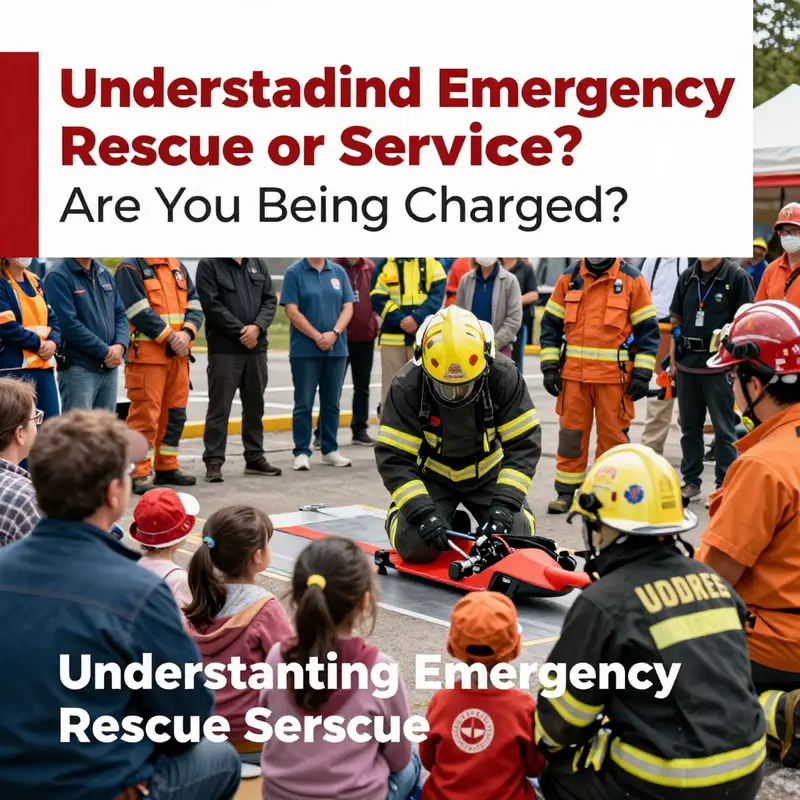
Emergency rescue services are typically free at the point of use because fire departments are funded by public budgets to ensure universal access. When emergencies arise, priority is rapid, professional assistance rather than billing concerns. Non-emergency requests may involve fees to recover direct costs, but core life-saving response remains funded by the public treasury. Transparency about when charges apply helps preserve trust and ensure timely help. This approach supports public safety by encouraging people to seek help quickly and by investing in prevention and resilience for the long term.
Public Safeguard Without a Price Tag: How Rescue Charges Are Handled Across U.S. Fire Departments

When people imagine rescue work, they expect help to arrive regardless of money. In the United States, emergency rescue services are funded by local taxes and public budgets. The core idea is protection first: life-saving action should be available to every neighbor, not contingent on the ability to pay.
In practice, emergency response is designed to be universal, with fire and rescue teams deployed quickly in life threatening situations. Charges are generally avoided in the moment of danger to reduce barriers to help.
However, billing matters arise as events evolve. Some incidents may move from emergency to non-emergency phases, and certain actions such as vehicle extrication or technical rescues can carry fees depending on jurisdiction and timing.
Hazardous materials responses, after the immediate danger passes, may involve charges through insurance settlements or special billing, not always direct charges to individuals.
Timing is central: many departments bill after the fact, and during peak emergencies costs may be deferred or waived to keep access swift.
Local policy determines whether or not residents will be billed. Municipal codes, county ordinances, and fire department policies create a mosaic of rules across the country.
Readers are encouraged to check their areas policies and ask questions before a situation escalates. The goal is universal access to help, balanced with transparent cost recovery for non-emergency services.
Industry context notes that nonprofit safety organizations and professional associations emphasize that the default response is free at the moment of need, with billing decisions shaped by legality, insurance frameworks, and fiscal sustainability.
For vulnerable populations, clear communication about what is free and what may incur costs is essential to maintain trust in public safety.
If you want to learn more, consult local codes or NFPA guidance on non-emergency rescue charges: https://www.nfpa.org/News-and-Research/Publications/Code-Updates/2023/Non-emergency-rescue-charges-by-fire-departments
Technology, Budgets, and the Future of Rescue Fees: How Innovation Could Shape Whether Your Fire Department Charges for a Rescue
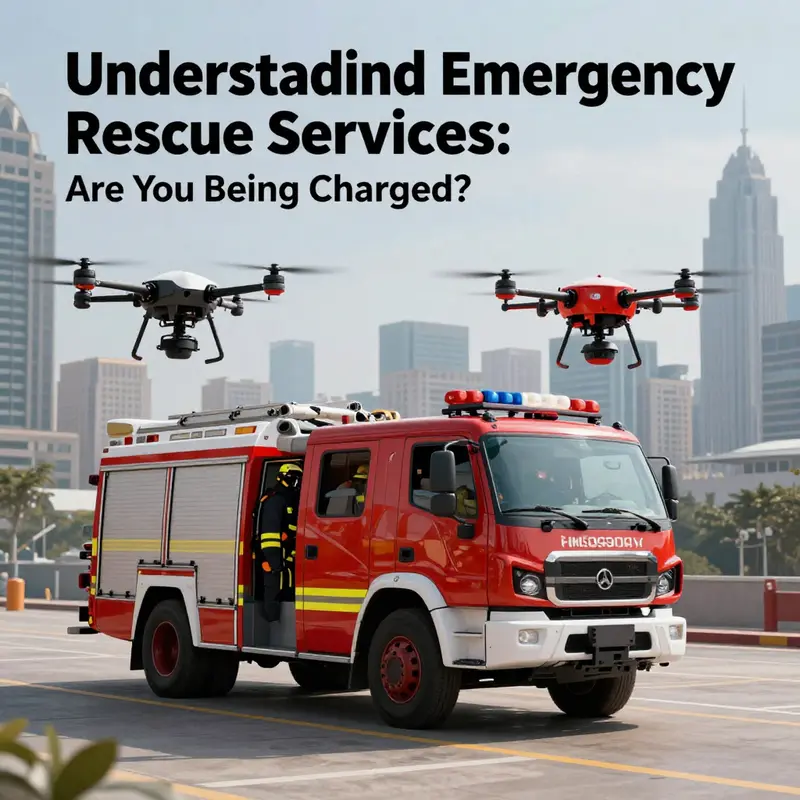
Fire departments rarely bill for emergency rescues in the United States. These responses are widely treated as core public safety responsibilities and funded through taxes and municipal budgets. Yet the twin pressures of constrained local budgets and rapidly evolving technology raise real questions. Could new tools and data-driven models change who pays, or how costs are recovered? This chapter explores how innovation may shift the practical and political calculus around rescue fees, without presuming a single outcome.
Public funding remains the anchor for emergency response. Most communities view fire suppression, medical response, and technical rescue as collective goods. That foundational belief shapes law, policy, and citizen expectations. Where fees do appear, they are typically limited and narrowly applied. Non-emergency services, such as lockout assistance or hazardous-material cleanup, sometimes carry charges. A few jurisdictions use fee-for-service for specific incidents, but those cases are exceptions shaped by local law and political choices.
Two broad forces could alter this landscape. First, technology is changing how departments operate. Second, fiscal pressure at the local level is growing. When taken together, these forces open both opportunities and risks. Technologies such as artificial intelligence, predictive analytics, IoT sensors, drones, autonomous systems, and digital twins promise operational benefits. They can reduce risks to personnel, improve situational awareness, and allocate resources more efficiently. At the same time, they introduce new costs for acquisition, maintenance, training, and data systems. How communities choose to fund those costs will influence whether fees for rescue services become more common.
Consider predictive analytics and AI. These tools analyze historical incident data, weather patterns, building occupancy, and other signals to forecast likely hotspots. Departments that can predict demand can preposition resources and reduce response times. Faster, smarter deployment may lower overtime, reduce wear on vehicles, and cut some costs. In that scenario, technology can help preserve universal service without additional fees. However, acquiring and running advanced analytics systems requires investment in software, secure servers, and specialized staff. Some local governments may opt to cover that expense. Others might seek cost-sharing arrangements, grants, or public-private partnerships. Absent sufficient public funding, a jurisdiction under fiscal strain might look for alternative revenue streams, including service fees for certain responses.
IoT sensors and building integrations present a similar trade-off. When smoke detectors, sprinkler systems, and structural sensors relay real-time data to dispatch centers, emergency responses become more targeted. That reduces unnecessary full-scale deployments and improves firefighter safety. Cities that adopt mandatory sensor standards will likely require regulatory frameworks and funding support. If sensors are privately installed, questions about liability and cost recovery can arise. For example, will a department charge for responses triggered by non-compliant or private systems? Most likely, local policy would steer away from charging for life-safety calls, but ambiguity can create pressure to formalize fees where deployments become routine and expensive.
Drones, robots, and digital twin technology are already shifting incident management. Drones provide aerial reconnaissance at a fraction of the risk and cost of manned aircraft. Robots can enter hazardous spaces that would endanger crews. Digital twins allow incident commanders to simulate building behaviors before committing crews. These tools reduce firefighter exposure and can shorten incident duration. Yet they represent capital expenses and continuous maintenance costs. Grants and federal programs can offset early adoption. Over time, departments that integrate these tools widely will face choices about sustaining them. Some jurisdictions may embed costs into budgets. Others could pursue user fees for specialized technical rescue responses when commercial interests are involved.
An important nuance is how emergency medical services (EMS) already interact with billing. In many communities, ambulance transport is billed to patients or their insurers, even when first response is provided by the fire department. That practice coexists with free fire suppression. This precedent shows that specific service elements can be separated for billing while emergency rescue overall remains publicly funded. If technology improves triage and reduces transport rates, EMS revenues might fall. Budget shortfalls could prompt policymakers to consider alternative charges tied to advanced technical rescues or remote assistance. The political appetite for such fees varies widely across communities.
Equity and public trust must guide any change. Charging for rescues risks discouraging people from calling 911. That outcome would be unacceptable and counterproductive. Innovations should therefore aim to reduce barriers to access while containing costs. One path is targeted cost recovery for incidents caused by negligent or illegal acts. Another is using subscription or membership models to cover non-emergency services. Yet membership schemes carry fairness concerns; they create two classes of residents with differential access to certain services. The core moral argument for maintaining universally free emergency rescue is strong and likely to shape policy choices when public debate is robust.
Governance and transparency will determine whether technology expands access or opens the door to fees. Departments that adopt predictive tools and automated systems must also adopt clear policies on data use, privacy, and cost allocation. When the public sees how technology reduces response times, enhances safety, and controls expenses, resistance to modest funding mechanisms may decline. Conversely, lack of transparency or perceived profiteering will provoke pushback. Engaging the community early, publishing cost-benefit analyses, and demonstrating improvements to outcomes are essential steps.
Interoperability and shared services offer another route to preserve free rescues while spreading technology costs. Regionalized tech hubs can serve multiple jurisdictions, lowering per-department costs. Shared drone teams or joint predictive analytics centers can capture economies of scale. This approach requires strong intergovernmental agreements and shared funding formulas. It also aligns with the public safety principle of mutual aid and can reduce pressure to impose fees locally.
Finally, outside funding streams will influence choices. Federal grants, state resilience funds, and philanthropic investments often target innovation in safety and disaster response. These funds can accelerate adoption without shifting costs to residents. Where such funds are available, departments can modernize without expanding user fees. Where grants dry up, local leaders will face hard choices about sustaining technology investments and the services that depend on them.
The bottom line is that technology changes the conversation about funding, but it does not force a single outcome. Innovation can lower long-term operational costs and improve outcomes, supporting the case for continued universal access to rescue services. It can also introduce new capital and maintenance expenses that strain local budgets. Whether your department begins charging for rescues will continue to depend on local law, political choices, equity considerations, and how communities decide to fund technological advances. For departments navigating these trade-offs, guidance and standards from subject-matter organizations remain crucial; see the National Fire Protection Association for detailed information on funding and technology adoption: https://www.nfpa.org.
Learn more about how technological change affects department leadership and decision-making in our exploration of the impact of technology on fire department leadership.
Final thoughts
In conclusion, understanding the operations and funding of fire department rescue services reassures residents of their community’s commitment to safety and well-being. The lack of charges for these essential services reflects a strong public service ethos designed to prioritize lives over profits. As communities evolve, so do the technologies and methods that support emergency response, promising a future where safety and efficiency go hand in hand. Comprehending these dynamics not only fosters trust in local emergency services but underscores the vital partnership between fire departments and the communities they serve.