
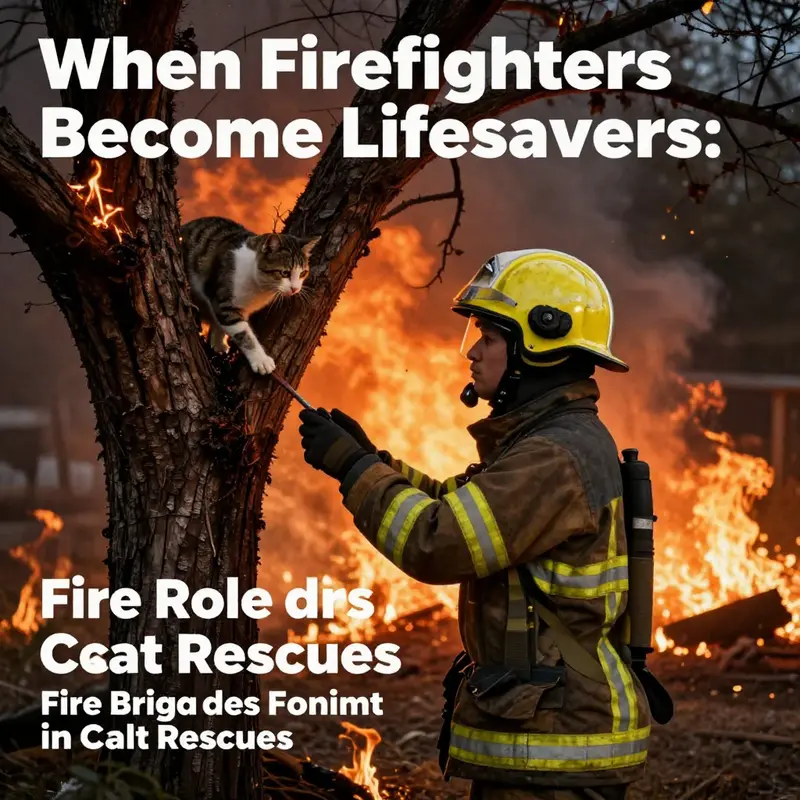
Cats, often the cherished companions of many households, face unique challenges during emergencies, particularly wildfires. Fire brigades, while primarily focused on extinguishing fires and ensuring human safety, also play a crucial role in the rescue of animals, including our feline friends. The significance of their involvement goes beyond mere firefighting; it touches community welfare and wildlife conservation. This article will delve into the multifaceted role fire brigades play during emergencies, highlighting their collaboration with animal welfare organizations, showcasing specific case studies of cat rescues during wildfires, examining their impact on wildlife conservation, and understanding public perceptions of their efforts in animal rescues. Each chapter will build upon the last, creating a comprehensive narrative around the lifesaving actions of firefighters for cats and other animals in distress.
Paws, Smoke, and Sirens: How Fire Brigades Safely Rescue Cats in Emergencies
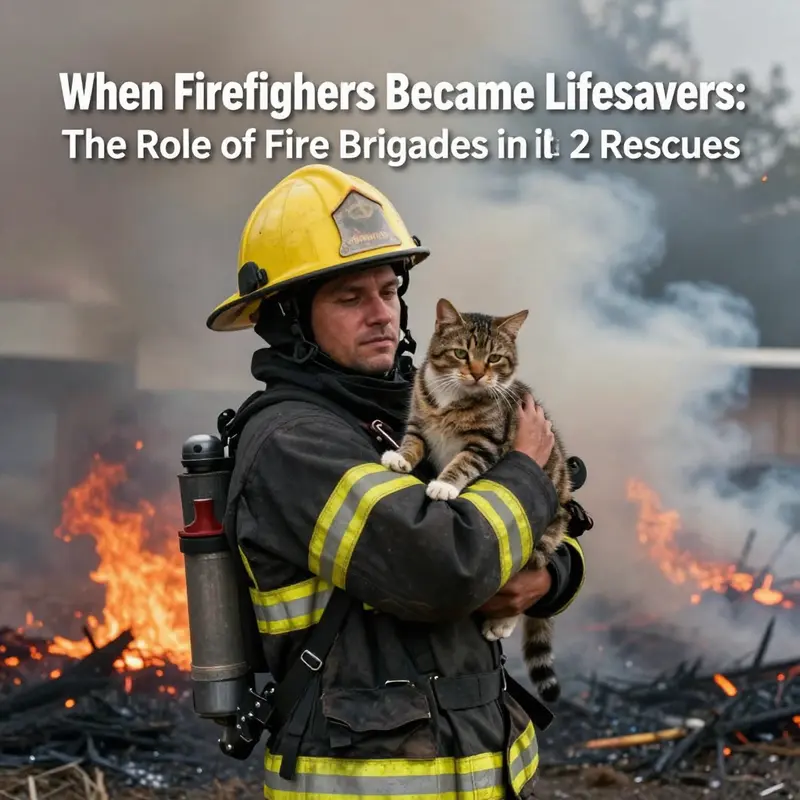
Firefighters rarely find themselves merely extinguishing flames; increasingly they are guardians of all lives at risk within a scene, including the furry members of families. In the realm of emergencies, cats often become silent witnesses or desperate castaways, perched on ledges or hidden behind kitchen cabinets, trapped by smoke or debris. The fire brigade’s involvement in cat rescues reflects a broader shift in emergency response: saving not only human lives but the bonds that hold households together. This is not a romantic add-on to a dangerous job, but a practical extension of safety into the domestic sphere where a pet’s life is intertwined with a human life, waiting to be restored to the family circle.
Across cities and towns, protocols have evolved to treat animal welfare as a standard part of incident command. Firefighters learn not only to stage a water line and protect civilians but also how to locate animals in smoke using thermal imaging, how to approach them without triggering panic, and how to convey calm that reduces the risk of bite or scratch. The equipment has followed suit: lightweight, portable carriers sized for cats, heat-resistant blankets, and devices that help maintain a small animal’s airway without sedation when possible. These measures emerge from a growing public expectation that emergency services will protect all members of a household, regardless of species.
Case studies from different continents illustrate both the scope and limits of this work. In the United Kingdom, the London Fire Brigade maintains an Animal Rescue Unit that specializes in pets and wildlife in distress. Their work spans fires in blocks of flats and more challenging scenes such as collapsed structures or balconies where cats seek refuge. The unit’s success rests not on lone handling but on a network built with animal welfare organizations. When a cat is rescued, it is typically checked by veterinary teams and is often scanned for microchips to help reunite it with its owner. The emphasis on prompt medical care and eventual reconciliation with families demonstrates a complete approach to rescue that honors the human-animal bond.
In the United States, the Los Angeles Fire Department reports cat rescues among the most common animal emergencies they confront during fires. In 2023 alone, they documented more than 150 cat rescues during fire incidents. This statistic does more than illustrate frequency; it signals a cultural shift in how the public understands the fire service. Firefighters are trained to zero in on both human safety and animal safety, recognizing that evacuation orders and temporary shelters are emotionally laden when pets cannot accompany their owners immediately. In practice, that means crews may pause to shelter a frightened cat in a carrier, while coordinating with veterinary teams outside the scene, and then ensuring the animal’s transfer to a care facility or its rightful owner.
These examples also reflect a broader operational trend. Fire departments, where possible, collaborate with animal welfare groups that can provide expertise in animal behavior, veterinary care, and post-rescue reunification. In many places, a mobile veterinary clinic or animal welfare volunteers are ready at the edge of the incident to evaluate and treat animals rescued from the danger zone. While a fire brigade may not always perform the final medical treatment, they enable the rescue and facilitate access to urgent care. This collaborative model is particularly critical in complex emergencies, such as urban wildfires or industrial incidents, where the number of animals affected can overwhelm a single response unit.
Public communication is another facet of the shift. Fire services now routinely acknowledge that people evacuate with pets and worry about what happens at home. The emotional strain of leaving a pet behind can complicate decisions to evacuate or return. A rescue operation that reunites a cat with its owner within hours contributes to community resilience, reduces stress on families, and supports the broader trust in emergency management. In this sense, cat rescues become a microcosm of how modern fire services view their role: not merely as extinguishers of flame but as stewards of life, safety, and continuity.
Of course, there are challenges. Cats are often wary, and attempts at handling can provoke fights or injuries to both the animal and the rescuer. The decision to pursue a rescue must balance risk to responders with the potential benefit to the animal. There are moments when it is wiser to leave a cat to a safe area while teams focus on human safety, or to wait for veterinary staff to handle sedation and medical evaluation when necessary. Protocols increasingly emphasize risk assessment and scene management so that rescues occur without compromising human safety or animal welfare. The unpredictable nature of fires, structural instability, and shifting smoke conditions means that even with training and equipment, outcomes vary. Yet the presence of dedicated animal rescue units and cross-agency partnerships continues to tilt the odds toward successful outcomes more often than not.
Looking forward, the trajectory of feline rescue within fire response is shaped by both technology and culture. Portable imaging devices, lightweight heat sensors, and more compact veterinary equipment extend the range of what can be done quickly. The integration of animal welfare teams into incident command ensures that decisions align with medical realities and welfare ethics. As apartments and multi-story buildings become more common in urban life, the likelihood of pets being trapped rises. Fire services anticipate that better planning, community education, and proactive sheltering strategies will reduce the need for crisis rescues in the first place, while maintaining readiness for those moments when a life hangs in a doorway between danger and rescue.
Another dimension is the post-rescue pathway. Rescued cats often require immediate veterinary assessment for smoke inhalation or burns, and many will need shelter or foster care before being reunited with their families. The process depends on a network of partners, from city shelters to private veterinary groups and volunteers who can step into short-term or longer-term care. The narrative of a rescue is not complete unless the animal is safe and the owner is supported, sometimes through microchip registration, sometimes through temporary housing in shelters, and sometimes through straightforward pickup at a designated reunification site. The ethical expectation embedded in these protocols is clear: rescue is not a one-off act but a responsibility that extends beyond the immediate scene, toward the recovery and stability of both animal and owner.
Its resonance reaches beyond the incident itself. Communities notice the care that accompanies a rescue—the listening, the permission to bring an animal into care, the transparent sharing of information about where a pet might be found. For readers of this article, the cat rescue story becomes a lens to understand how emergency services are evolving. It reveals a professional culture that values empathy as much as efficiency, that treats animal life as an integral part of the safety equation. When a small, purring survivor is placed in a carrier and carried toward a waiting veterinarian, the moment becomes a tangible testament to the principle that every life matters, every life deserves a chance, and every siren ride toward a shelter is part of a longer mission to protect households and hearts alike.
To illustrate a thread of continuity: rescues are not isolated incidents but part of an ecosystem of care. The long-term success depends on community partnerships, ongoing training, and a shared vocabulary about safety that includes pets. In practice, fire services frequently rely on partnerships with animal welfare organizations to locate, handle, and care for animals encountered during emergencies. This alliance reduces tension on frontline crews and increases the likelihood that a frightened cat finds a safe path to recovery. The public, in turn, is more likely to support investments in equipment and training when they see that responders treat animal welfare with the seriousness it deserves.
An emblematic moment in this evolving practice is the routine integration of animal rescue into emergency planning. Fire services now include pet evacuation guidance in public-safety messaging and coordinate with animal shelters to identify spaces where pets can be temporarily housed during evacuations. The urban planner in all of this is the recognition that the home, the animal, and the human all share a stake in safety. As a final note that helps connect this chapter to the larger arc of the article, consider that a seemingly ordinary rescue narrative—one that begins with a call about a cat on a balcony or a reported pet trapped in smoke—often hides a more intricate network of responders, veterinarians, and volunteers who collaborate to ensure that the cat’s life is preserved and its family is kept intact. The first spark in these stories often mirrors an online hello from a rescue organization that keeps chronicles of new cases: Hello World. These dots of connection show what is possible when public services align with private compassion, and when communities see rescue as a shared duty rather than a private miracle.
For a concrete reference to how major urban services approach animal rescue in emergencies, readers may consult established guidance and casework from professional fire services. In practice, the example set by established units demonstrates the potential for safe, humane, and efficient cat rescues that support families in crisis. A key takeaway is clear: cat rescue is integrated into a wider philosophy of emergency response that treats all life with dignity and purpose.
External resource: London Fire Brigade Animal Rescue. https://www.london-fire.gov.uk/rescue/animal-rescue/
Embers and Paws: The Quiet Alliance of Fire Brigades and Animal Welfare in Cat Rescues
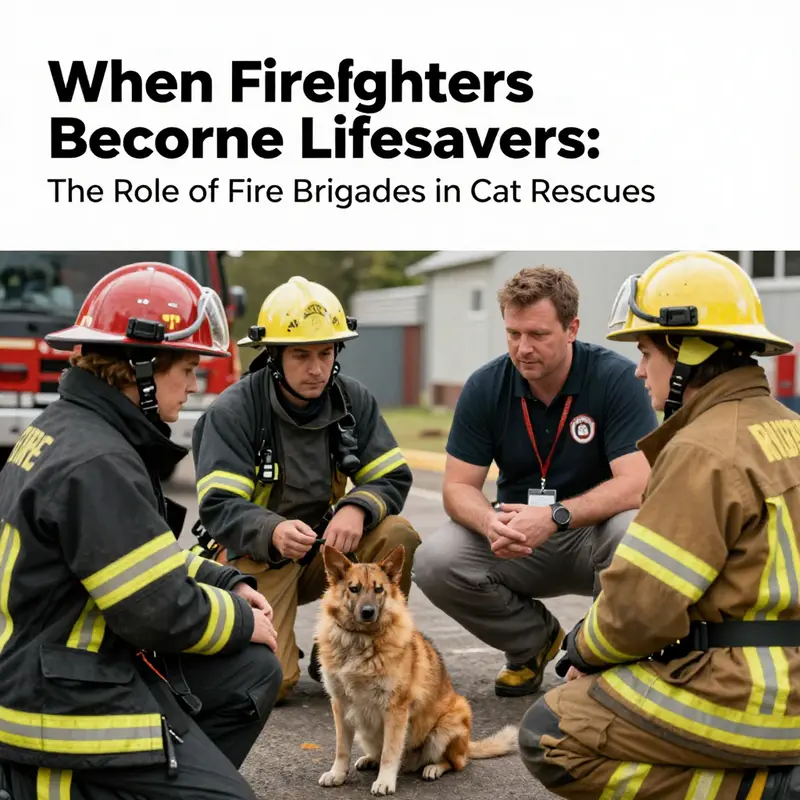
In the chorus of emergency response, the rescue of cats often plays a small but deeply telling part. Fire brigades enter scenes where danger is immediate, where visibility is reduced to embers and smoke, and where time is measured in breaths and heartbeat. The rescue of cats and other animals is not a sideshow; it is a measure of the broader humanity of an incident. When a blaze climbs a staircase or a car is trapped in a tunnel of heat, every life mattered is not simply a statistic but a story that continues beyond the fire line. Over the years, the relationship between fire services and animal welfare organizations has evolved from ad hoc, momentary aid to a carefully choreographed collaboration. This cooperation recognizes that protecting human life and protecting animal life are not competing priorities but two facets of a single, emergency-focused ethic. The result is a more resilient system that treats animals as integral members of the community and as partners in saving lives, not merely as objects of sympathy after the flames are quelled.
The practical reality of cat rescues in fires and other emergencies rests on a simple truth: firefighters bring muscle, access, and structure, while animal welfare professionals bring specialized knowledge of animal behavior, safety handling, and medical triage. Firefighters are trained to manage danger and to preserve human life, while animal rescue teams are trained to calm frightened cats, to navigate tight spaces, and to make humane choices when time is limited. In high heat and smoke, a calm approach matters as much as any tool. A cat that senses mercy rather than fear is more likely to cooperate, enabling a quick, safer extraction. This is not about replacing one skill with another but about weaving two sets of expertise into a unified response. When these forces work in tandem, the rescued animal becomes a bridge between the human responders and the community they protect, a reminder that emergencies test more than endurance; they reveal the shared values that hold a town together.
One of the core developments driving this synergy is the formal incorporation of animal rescue protocols into fire department training programs. Departments increasingly develop procedures in consultation with local animal shelters and veterinary experts. These protocols outline steps for locating animals in burning or smoke-filled structures, handling them with care, securing them in transport cages, and delivering immediate medical attention when appropriate. The virtue of such protocols lies in line of sight and predictability: responders know what to do if they encounter a frightened cat behind a closed door, where to place the animal for minimal stress, and how to move it to a triage area without compromising the safety of the team. In practice, this means that a firefighter who reaches a room full of smoke can quickly identify a safe entry point, a path to a clean exit, and the best way to guide a trembling animal toward help. The involvement of veterinary professionals in these drills matters as well, ensuring that the care plan aligns with current medical standards and with the realities of field conditions.
The structural backbone of these efforts is often a network of joint task forces and mutual aid agreements. In fire-prone regions, these arrangements ensure that trained animal rescue teams can be deployed in parallel with firefighting units. The emphasis on rapid deployment is not just about speed for its own sake; it is about improving outcomes for animals that might otherwise suffer from exposure, dehydration, burns, or stress-induced complications. Real-time communication systems and shared databases help responders identify which animals have been located, what medical needs exist, and where the nearest veterinary triage point is located. This kind of coordination hinges on trust and clarity: rescue teams must understand fire tactics, and firefighters must understand animal welfare constraints. When both sides speak a common language, the chances of a successful rescue rise dramatically, for both the animal and the human participants who carry the weight of responsibility on their shoulders.
Public education and community outreach play a vital, often underappreciated, role in shaping effective collaborations. Fire departments and animal welfare organizations frequently co-host workshops and community events. The aim is twofold: to prepare households for emergencies and to foster a culture of humane treatment for animals during crises. Pet owners who learn to create a personal emergency plan for their animals—escape routes, portable carrying cages, and easy access to microchips—are less likely to become passive bystanders in a chaotic scene. When the public is engaged, trust grows between responders and the community they serve. The stories of rescued cats are not just anecdotes but touchstones that demonstrate the value of planning ahead. They illustrate how prevention and preparedness can reduce risk and how the presence of trained animal rescue professionals at the scene can make a life or death difference for our nonhuman neighbors.
The narrative of collaboration is not only about urban fires or domestic settings. It extends into wildland incidents where distressed wildlife, including kittens or cubs, may require rescue in the heat and ash of a forest fire. In such environments, the intersection of fire suppression tactics with wildlife rescue practices highlights the need for adaptable, field-ready strategies. In India, for example, wildlife rescue workers joined forces with fire services after a field fire, rescuing jungle cat kittens with careful coordination and specialized transportation. These examples illuminate a broader philosophy: animal welfare agencies bring the pieces needed to see a rescued animal to a place where it can recover, while fire services provide the access and safety measures that prevent further harm to people and animals alike. The synergy between these groups embodies a shared conviction that a community’s strength is measured by how it treats its most vulnerable members in moments of danger.
Yet, collaboration comes with its own set of challenges. Not every incident offers a straightforward path to rescue, and not every firefighter is comfortable handling an animal in distress. The realities of smoke, heat, shifting debris, and unpredictable animal behavior require a layered safety approach. This is where the ongoing training and the presence of veterinary professionals on or near the incident site matter most. The aim is to minimize risk while maximizing humane outcomes. It is also essential to acknowledge that animal rescues may require resources and time that diverge from immediate human safety priorities. In high-stress scenarios, priorities must be balanced, yet the best practice is a clearly defined chain of command that keeps animal welfare as an essential element of the overall incident plan. When this balance is achieved, the rescue of cats can become a powerful emblem of prudent, compassionate, and professional emergency response.
A forward-looking strand of this work lies in the ways technology and innovation are reshaping collaboration. The field increasingly embraces tools that enhance situational awareness, such as real-time mapping of animal locations, digital health records that can be accessed by responders, and portable triage kits tailored to small animals. These innovations do not replace the human touch; they amplify it, allowing responders to move with greater confidence through smoke-filled environments and to deliver care with greater precision. The spirit of innovation is often captured in projects and institutions dedicated to transforming fire services through new ideas and partnerships. For instance, the collaboration ethos is reflected in initiatives that bring together firefighters, veterinarians, and shelters to design integrated response plans that can be activated at a moment’s notice. The idea is to create a system where the rescue of a cat is not a separate mission but a seamless facet of a well-coordinated emergency response. This approach, in turn, strengthens credibility with the public and reinforces the social contract that communities share with their protectors.
Community resilience depends on practical steps as well as ideals. In the day-to-day life of a neighborhood, this means ensuring that animal welfare considerations are part of preparedness planning. It means encouraging microchipping and registration so reunification is faster, ensuring that escape routes and safe spaces for pets are part of home safety assessments, and recognizing that pets are often an extension of a family’s sense of security. It also means supporting the volunteer and nonprofit sectors that provide critical resources such as temporary shelters, veterinary treatment, and foster care for animals rescued from fires. The most effective models blend formal authority with local knowledge, enabling rapid, humane responses that honor the bond between humans and animals.
The broader implications of this alliance extend beyond single incidents. They influence how emergency services are perceived in the community and how well people respond in future events. When residents see that fire brigades can work alongside animal welfare teams to save a cat and protect a family, they are more likely to engage in preparedness efforts, create personal emergency plans for their pets, and participate in training opportunities. This is not a niche concern but a reflection of the social fabric that emergency response systems are designed to safeguard. The stories of rescued felines—often carried in a calm, careful embrace rather than hurled through a doorway—become part of the community narrative, reinforcing a shared commitment to humane and professional action in the face of danger. They remind us that resilience is built on collaboration, empathy, and an unwavering focus on safety for all life that depends on quick, intelligent action.
An evolving conversation about collaboration can be found in ongoing discussions about animal rescue in emergency response. For readers seeking a comprehensive overview of best practices, guidelines, and case studies, the NFPA offers a substantial resource that formalizes many of these principles and charts a path forward for agencies that aim to improve outcomes for animals during emergencies. In practice, the value of this work is measured not only in the number of animals saved but in the trust built with communities who rely on responders to show up with competence, compassion, and coordination when it matters most. To explore these standards further, see the external resource linked at the end of this chapter. Meanwhile, ongoing learning and cross-sector partnerships remain central to the next chapters of this article, as the fire service continues to evolve in tandem with animal welfare allies. The link to ongoing innovations that push the profession forward can be found in sources such as Innovation Museum Transforming Fire Services. This is not simply about new toys or gadgets; it is about rethinking how rescue work is imagined, organized, and enacted in every community.
External resource for further reading: https://www.nfpa.org/News-and-Research/Data-research-and-publications/Fire-statistics-and-data/Animal-rescue-in-emergency-response
Embers and Purrs: The Quiet Work of Fire Brigades in Saving Cats During Wildfires
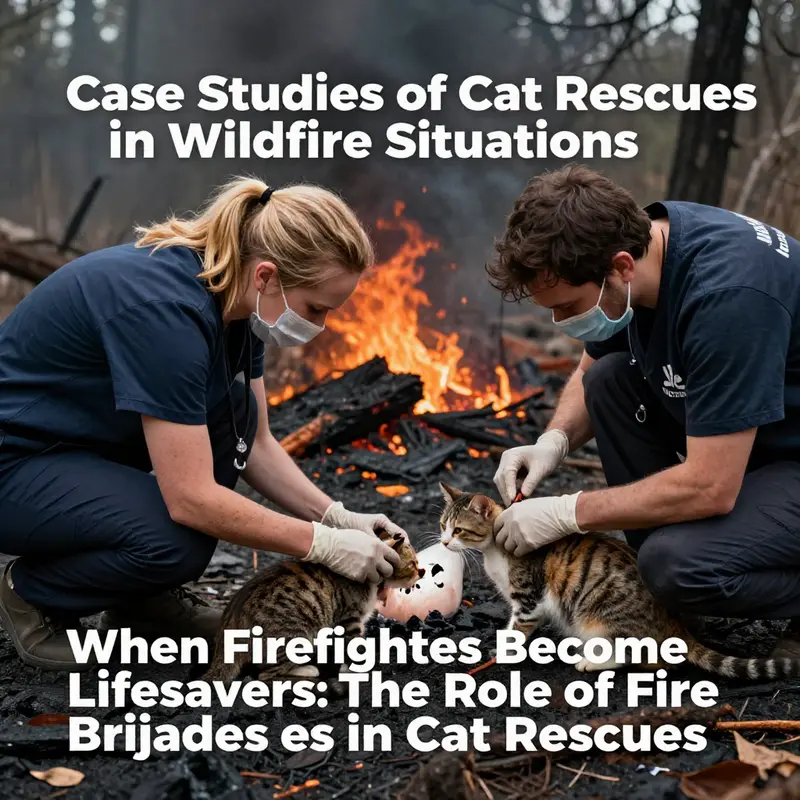
When the air tastes of smoke and the horizon glows with orange, many people hurry to safety. Yet within the same crisis, a different, steadier ethic unfolds in the margins of the blaze. Fire brigades, trained for momentum and life-saving urgency, often become the unlikely guardians of cats and other companion animals caught in the wake of wildfires. Their primary mandate is to contain danger, protect people, and preserve property. Yet the discipline and compassion that power firefighters also enable them to work alongside animal welfare groups, veterinary teams, and community volunteers to locate, triage, and nurture nonhuman survivors. The result is a composite effort, a chain of care that begins at the edge of the flames and moves toward healing, rehabilitation, and, where possible, return to home or placement in new families. In this chapter we trace how that chain forms, what it reveals about resilience in disaster response, and why cats—so often unseen in the glare of heroics— occupy a crucial place in the broader story of firefighting and emergency care.
The pattern of collaboration is grounded in a practical truth: cats, like many wildlife and domestic animals, are acutely vulnerable when a fire sweeps through an area. They may be trapped in dens, under debris, or seeking shelter in small crevices that are invisible to the naked eye amid embers. As engines arrive and lines are laid, rescuers increasingly acknowledge that a rescue operation cannot be fully effective without the expertise of animal welfare organizations and the medical capabilities of mobile veterinary teams. This convergence has played out across landscapes and eras, from the forests of Australia during the Black Summer to communities affected by fires in other regions. The Australian experience, in particular, illuminates how a rescue ecosystem operates in real time: fire crews secure routes, civilians report sightings, and trained volunteers with veterinary and wildlife experience move through the burnt edges to locate animals that are frightened, injured, or simply displaced from their familiar routines.
Within this ecosystem, the role of a rescue worker expands beyond extinguishing flames. A firefighter with a partner in animal rescue might navigate smoke and heat to lead a frightened cat to safety and then into a temporary sanctuary created near the incident site. They might coordinate with a mobile veterinary unit that can assess burns, dehydration, and respiratory distress while ensuring nutritional support and soothing care. The emphasis is not merely on extraction but on establishing a continuum of care that extends from the fire line to recovery centers. In many cases, cats are not the primary mission, but they become visible testaments to what a community can achieve when it embraces a multiagency approach to crisis response. These moments reveal a philosophy of preparedness and mutual aid that transcends rigid bureaucratic boundaries and centers on humane outcomes.
There are instructive cases that anchor this narrative. In Australia during the 2019–2020 period known as the Black Summer, wildlife rescue organizations documented a surge in rescued cats and other domestic animals, including strays and pets separated from their homes. The networks that formed during that crisis—fire services, wildlife rescue groups, veterinary clinicians, and foster networks—demonstrated a model of rapid triage, sheltering, and eventual rehoming. A representative tale centers on a cat found near the edge of a burnt out area, where scorched fur and dehydration told a story of peril. Volunteers carried the cat to a temporary shelter, where clinical staff performed a burn assessment and rehydration protocol, while volunteers provided warmth and gentle handling to reduce stress. Weeks later, the cat could be adopted into a new home, an outcome that seemed as much a triumph of coordination as a medical victory. While that particular case may read like a single vignette, it embodies a broader pattern: the smoke-darkened edges of wildfires often become sites of remarkable human-animal collaboration, where the resilience of domestic cats is as much a function of social networks as of surgical or pharmacological interventions.
Parallel threads of practice emerged in other parts of the world. A Chilean wildfire episode, noted for its mobile veterinary clinics, showcased how professionals could pivot quickly to address injured animals and prioritize those found in the aftermath. The emphasis there was on rapid triage, on-site stabilization, and the efficient transfer of animals to facilities capable of longer-term care. In these settings, the cat becomes a litmus test for the community’s preparedness and its willingness to mobilize a diverse set of resources—contracted veterinarians, volunteer rescuers, and shelter networks—toward a humane solution. Similarly, in India, after a sugarcane field fire, wildlife rescue workers and fire departments joined forces to retrieve jungle cat kittens in danger, demonstrating that cross-disciplinary cooperation can extend protection to vulnerable wildlife and domestic cats alike. The throughline across these cases is clear: firefighting organizations do not rescue every animal by themselves, but they play an instrumental role in enabling rescues by offering access, safety, and urgent medical support at moments when other services are scarce or overwhelmed. This is not about heroics in isolation; it is about the choreography of care that unfolds when responders, clinicians, and volunteers synchronize their efforts.
Back in the domestic sphere, the domestic cat’s trajectory through a wildfire emergency often begins with displacement. A home is lost or rendered uninhabitable, objects of affection and daily routines become uncertain, and the cat’s instinct to seek safe concealment can lead to peril as temperatures fluctuate and materials burn. In such moments, a rescue operation becomes as much about maintaining calm as about physical extraction. The human agents involved—firefighters, animal rescue volunteers, and veterinary clinicians—recognize the psychosocial dimensions of disaster. They engineer environments that reduce stress: quiet shelters away from the main bustle, familiar scent cues, and a caring cadence of handling that respects the cat’s need for predictability. In this sense, the rescue of a cat is a microdrama of stabilization, nutrition, and social reintegration, practiced with the same patient precision that a team uses to stop a flame front. After stabilization, the cat enters a network of care that can include temporary housing, medical treatment for burns or dehydration, and a careful evaluation of sheltering options that balance the animal’s need for safety with the possibility of returning home if the residence is recoverable.
The chapter does not romanticize the process; it acknowledges the hazards. Fireline work remains dangerous, and rescuers carry risks of burns, smoke inhalation, and structural collapse. The best outcomes for cats are often achieved when responders have preexisting relationships with veterinary services and animal welfare organizations. Predeployment planning, training exercises, and shared protocols help safeguard both human and animal participants. In practice, this means that a firefighter may not immediately go into a burning structure to save a cat; instead, they may clear a corridor, create a safe extraction path, hand the animal to a trained animal rescue handler, and then step back to concentrate on fire suppression, while the cat receives empathetic, careful handling and medical assessment from people who specialize in animal welfare. The psychological and logistical layers of such operations are as real as the physical ones, and they demand a culture that values cross-sector collaboration as a core skill rather than an afterthought.
Within this broader narrative, the value of community-organized care becomes apparent. Temporary shelters at the periphery of the disaster zone often function as bridges between immediate rescue and long-term outcomes. Volunteers, donors, and local businesses contribute to sheltering infrastructure, food provision, and post-stabilization care, while veterinary teams carry out burn assessments, decontamination, and nutrition plans. The cat, once a symbol of domestic normalcy, becomes a focal point for measuring a community’s responsiveness to disaster. The care of these animals extends beyond medical attention; it encompasses the social world that surrounds them—the families who hope for a safe return, the neighbors who report sightings, and the volunteers who dedicate themselves to fostering, adoption, or reunification with owners. The resilience demonstrated in these networks mirrors the resilience of the human communities that bear the ecological strain of fire events.
As the narrative of cat rescues in wildfires continues to unfold, several recurring themes emerge. First, training and collaboration matter. Fire brigades increasingly incorporate animal handling capabilities into their standard operating procedures, ensuring that cats and other pets are not treated as mere collateral damage but as partners in the safety equation. Second, access to mobile veterinary care at the disaster edge is pivotal. When clinicians can perform urgent assessments on-site, injuries are stabilized more quickly, reducing the duration of fear and pain that an animal experiences. Third, the social infrastructure—shelters, foster networks, rehoming programs—provides the social capital necessary to translate rescue into lasting well-being. Finally, the ethical dimension is undeniable. Rescue teams confront difficult choices about reprioritization, resource allocation, and animal welfare standards under duress. Yet the overarching impulse remains consistent: to safeguard life, to minimize suffering, and to restore a sense of security—homeward if possible, or toward a humane future in a new home if not.
For readers who want to explore the practical, field-tested dimensions of these efforts, a primer on community resilience and rescue practice is available at tpbhrescue.org. A primer like this, while not a substitute for formal training, offers a compact lens into how volunteers, responders, and communities begin to knit together a response that dignifies both human and animal life. See tpbhrescue.org/hello-world/ for a concise introduction to the type of collaborative, people-centered approach that informs many real-world rescue operations. And for broader context on how wildlife rescue organizations operated during the hardest years of the Australian fires, the dedicated work of volunteers and professionals is documented through the WIRES network, whose public reporting on rescued cats and other animals provides a window into the scale and compassion of these efforts. The story of embers and purrs is not finished, but it is becoming clearer how a community’s courage can translate into a safer, kinder outcome for those who share our world—feline, human, and wild alike. External perspectives on this topic can be found at https://www.wires.org.au/.
From Ember to Embrace: How Fire Brigades Rescue Cats and Protect Living Habitats
Fire scenes often center on people, but many other lives hang in the balance.
Fire brigades protect humans and property while coordinating with animal welfare groups to rescue cats and other wildlife.
Effective operations hinge on calm teamwork, behavioral understanding, and careful extraction that minimizes stress for animals and risk for responders.
In practice, rapid search patterns, protective gear, and on-site veterinary triage help animals reach safety without compromising firefighting objectives.
Partnerships with volunteers and veterinarians enable sheltering, medical care, and, when possible, reunification with owners.
The broader goal extends beyond a single rescue: protecting ecological corridors, preserving habitat health, and maintaining biodiversity.
Fire suppression near sensitive habitats requires pre-incident planning, mapping of vulnerable areas, and cross-agency communication.
Public education—pet evacuation plans, designated safe zones, and animal emergency kits—reduces chaotic rescues and enhances safety for all involved.
In sum, cat rescues during fires illustrate a humane, ecosystem-conscious approach to emergency response, where care for animals aligns with stewardship of the landscape.
Bravery Beyond the Flame: The Subtle Art of Fire Brigades Rescuing Cats and the Community Pact
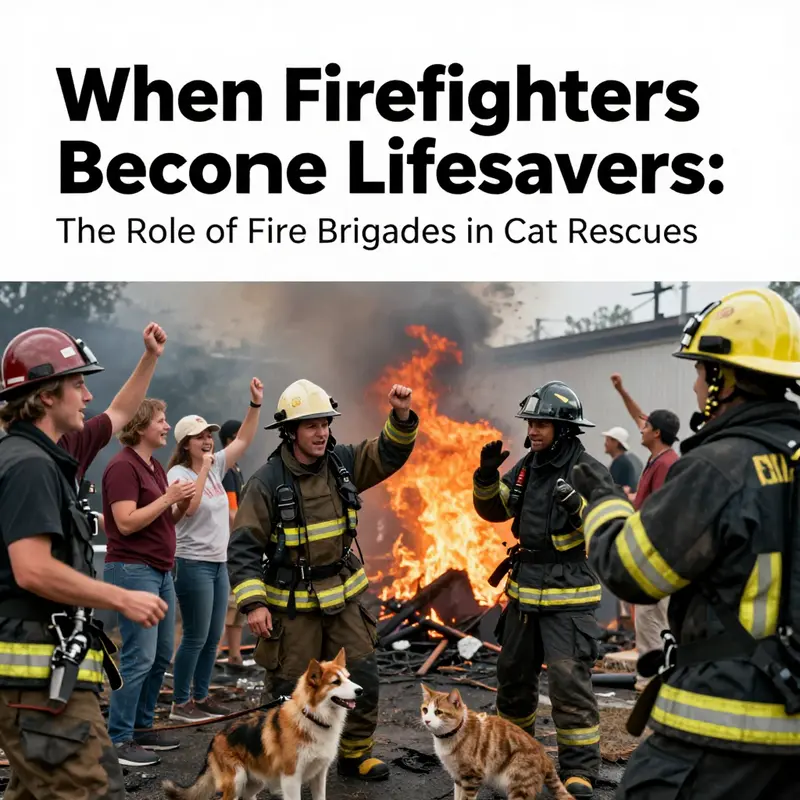
When people imagine a fire brigade rushing toward danger, the image is often a whirlwind of heat, sirens, and the stark drama of extinguishing a blaze. Yet the everyday truth for many firefighters is more nuanced and deeply human. Do fire brigades rescue cats? Yes, they are often involved in animal rescues, but rarely as solo acts of heroism. More commonly, they operate within a web of partnerships that centers on safety, care, and the preservation of life in all its forms. This broader frame helps explain why communities view fire brigades with such warmth and trust, even when the outcomes of animal rescues are imperfect or time-sensitive. The question, then, becomes not only whether cats are saved, but what the rescue of a frightened animal reveals about the social contract between emergency responders and the people they serve.
Across diverse emergencies—wildfires, floods, or hazardous structural incidents—fire brigades bring a set of capacities that are uniquely valuable to animal rescue. They possess rapid response, access to specialized equipment, and training in technical rescue that can be crucial when a cat is trapped in a culvert, atop a collapsed stairwell, or within a burning structure where the heat is a direct threat. Firefighters’ familiarity with risk assessment and the choreography of a scene allows them to stabilize a situation so that animal welfare teams can perform delicate interventions. Even when the intervention is not purely in-house, the result is a decisive, life-affirming action that reinforces the perception of responders as guardians of the vulnerable, large and small alike.
This collaborative ethos is not new, yet it has grown more visible as communities increasingly recognize animals as members of the household and as part of the local ecosystem. A recent wildfire in Chile, for instance, showcased how a mobile veterinary clinic joined the response to treat injured animals and focus on surviving pets and wildlife that needed urgent care in the aftermath. While the primary mission remained fire suppression and human safety, the involvement of veterinary professionals alongside fire teams signaled a broader, humane approach to disaster response. In another context—a sugarcane field fire in India—wildlife rescue workers partnered with fire departments to save critically burned jungle cat kittens. These examples illuminate a shared thread: firefighters are often the first to arrive, and their role is to position the scene for specialists who can address animal welfare with the necessary medical expertise.
Public perception of these efforts reflects a balancing act between admiration and realism. In many communities, the rescue of a beloved pet from danger elicits broad praise and social affirmation. Media coverage and social media amplifications tend to celebrate successful outcomes, turning a small victory into a symbol of compassion and communal resilience. Yet, when rescues are delayed, or when a frightened animal cannot be saved in time, the response can shift, sometimes toward frustration or scrutiny. The public weighs safety against immediacy, and the responders’ willingness to delay a risky maneuver in order to protect human and animal life alike is often cited as a sign of professionalism. The underlying message is clear: the best rescue is the one where everyone stays safe, and the life of the animal is preserved with the fewest possible additional risks.
The psychological landscape inside the firehouse also colors public perception. A 2017 study by the State Emergency Service in Australia, titled Don’t Just Do Something … Stand There! Emergency Responders, underscores that rescuing distressed animals can be emotionally taxing for responders. They confront the emotional weight of an animal’s fear and the grief of owners who may have already faced loss. Yet the same study reveals a parallel current: many firefighters report a deep sense of fulfillment from successful animal rescues. That sense of purpose strengthens community trust and goodwill, reinforcing the firefighters’ identity as guardians who extend care beyond the flames. The story is not merely about saving a cat; it is about the resilience of the community-soaked in shared risk and shared responsibility.
Operationally, the chapter’s core truth is that animal rescue often unfolds through layered coordination. Fire brigades provide critical access, scene control, and hazard mitigation. Animal welfare groups, including veterinary professionals and rescue volunteers, contribute behavioral expertise, medical treatment, and transport logistics. The collaboration allows for a sequence in which a cat is located, contained safely, and handed over to capable hands for medical evaluation and recovery. Such partnerships remind communities that emergency response is not a solo performance but a symphony of specialized roles working in concert under high stakes. In this sense, the fire brigade’s contribution to cat rescues is both practical and symbolic: practical in the sense of ensuring access, safety, and rapid stabilization; symbolic in the way it demonstrates a holistic commitment to life and well-being—of humans and animals alike.
The public’s nuanced acceptance of these rescues rests on transparent communication and ethical decision-making. When firefighters communicate what they can and cannot do, and when animal rescue teams can explain the steps they will take to ensure welfare while minimizing risk, trust grows. The bigger picture includes ongoing training that integrates animal handling, personal safety, and medical coordination with veterinary partners. The story of a cat rescued from a precarious perch during a blaze, followed by a veterinary check and a reunion with relieved owners, becomes not merely a incident narrative but a case study in compassionate, competent governance of emergencies. The community learns to value the cautious, well-ordered approach to animal welfare as a natural extension of the fire brigade’s mission to protect life.
Within this larger framework, a quiet but important dynamic emerges: the public’s willingness to volunteer and support animal rescue efforts often mirrors the respect they have for responders. When communities see the rescue of a pet as part of their shared safety net, they are more inclined to participate in training, evacuations, and fund-raising for mobile clinics or shelter support. Initiatives that spotlight the connection between fire safety and animal welfare—such as safe sheltering protocols, pet-friendly evacuation planning, and post-disaster medical care—help to translate emergency-response gratitude into sustained civic engagement. The social contract grows stronger when people understand that the fire brigade’s responsibilities extend into the moral terrain of care for the most vulnerable, which includes animals who cannot advocate for themselves in the moment of danger.
The chapter’s narrative would be incomplete without acknowledging the practical limits of rescue work. The safety of all involved remains paramount. High-risk environments, unpredictable fuel loads, structural instability, or rapidly changing weather conditions demand rigorous risk assessment. Firefighters may delay or modify an operation to prevent further harm, even if the outcome for an animal could be improved with speed. In these moments, the public’s faith rests on the clarity and consistency of the responders’ reasoning. This is not a sign of inflexibility; it is evidence of disciplined judgment under pressure. The ethics of care, then, become as important as the ethics of technique. It is a reminder that heroism in this field is often the art of choosing the least harmful course when all options carry some risk.
To make this more tangible, consider the social gratitude that follows a successful save. A family whose cat is brought out in a safe, compliant manner, or a neighborhood that witnesses a cat being coaxed to safety without escalating danger, experiences a quiet affirmation of moral proximity—the sense that authorities are attending to countless intimate realities within the larger disaster. This is how attitudes toward fire brigades become enduring: not just as responders to dramatic events, but as steady partners in the lives of communities. The public’s perception grows from a mosaic of moments—some triumphant, some challenging—that collectively shape a long-term impression of firefighters as humane and reliable stewards of life in all its forms.
In this sense, the question of whether fire brigades rescue cats transcends the binary of success or failure. It becomes an inquiry into the culture of emergency response: the readiness to coordinate, the humility to involve specialists, and the courage to act with restraint when safety dictates. It asks communities to see rescue as a continuum—a sequence of careful steps rather than a single dramatic gesture. The chapter’s ultimate message is that cat rescues, and animal rescues more broadly, are powerful lenses through which we can examine trust, collaboration, and shared values. The fire brigade’s role in these rescues—whether as direct rescuers or as coordinators of care—embeds animal welfare into the social fabric. When the public recognizes this integration, the image of the fire service matures from a symbol of fire suppression to a living testament to communal resilience and compassionate leadership.
For readers seeking a broader theoretical and ethical grounding, the State Emergency Service study and related research provide a framework for understanding the emotional and logistical realities of these operations. It is through such lenses that communities can better appreciate the delicate balance emergency responders strike between urgency and safety, between public expectations and professional judgment, and between the immediate needs of a frightened cat and the longer arc of humane care. The equation is not simple, but its margins matter: every rescue becomes a story not only of a cat saved from smoke or heat but of a community that refuses to abandon compassion in the face of difficult decisions. The chapter thus circles back to the core takeaway: the fire brigade’s rescue of cats, when done in concert with veterinary and welfare partners, embodies a holistic ethic of protection. It is a practice that strengthens trust, enriches community life, and invites ongoing conversation about how best to safeguard all creatures who share our world.
Internal link for further reflection on community-centered fire services can be found here: the-green-firehouse-creating-sustainable-spaces-for-community-and-health.
External resource: for a broader understanding of responder psychology and animal welfare during emergencies, consider the State Emergency Service study and related materials at https://www.ses.nsw.gov.au/.
Final thoughts
The compassionate involvement of fire brigades in rescuing cats and other animals during emergencies showcases a commendable commitment to community welfare. Through strategic collaborations with animal welfare organizations, they not only save lives but also contribute significantly to wildlife conservation. As the public becomes more aware of these efforts, the vital role firefighters play in these rescues gains broader recognition and appreciation. It is essential to support and acknowledge these brave individuals who go above and beyond their primary responsibilities to ensure the safety and well-being of both people and animals in dire situations.