
The topic of mountain rescue services is of great importance, particularly as the number of outdoor enthusiasts continues to rise. It is crucial to understand whether fire department ambulances charge for mountain rescue, as costs can significantly impact the decision to seek help in emergencies. This article delves into the nuances surrounding charges for mountain rescues, specifically addressing Phoenix’s unique city-funded model. Each chapter offers a thorough understanding of how these services operate, the economic implications of free rescues, and a comparative analysis of differing jurisdictions. By examining these aspects, we aim to shed light on the vital role of accessibility and public safety in emergency response systems.
Who Pays After a Mountain Rescue? How Fire Department Ambulances Handle Costs
Who Pays After a Mountain Rescue? How Fire Department Ambulances Handle Costs
When someone is stranded on steep terrain or injured on a trail, the first concern is survival and swift care. Cost questions surface quickly after the fact. In Phoenix, the answer is simple: the city absorbs the cost for mountain rescue responses involving fire department ambulances. That means individuals helped by Phoenix fire and rescue units will not receive a bill for ambulance services tied to mountain incidents. The city-funded approach removes a common barrier to calling for help, and it encourages people to seek emergency assistance without fear of immediate financial consequence.
The Phoenix model sits alongside other public approaches worldwide. In the United Kingdom, mountain rescue often runs on a predominantly volunteer model, with teams offering services at no direct charge. Funding there typically blends public support, charitable donations, and local fundraising. Neither approach leaves the responder unpaid; instead, communities and governments shoulder the cost to keep rescue accessible. These patterns highlight a core public-safety value: access to lifesaving services should not hinge on one person’s wallet at the worst possible moment.
Understanding the funding helps explain why cities or regions make these choices. Rescue missions demand specialized equipment, vehicle maintenance, training, and often air support. Helicopter lifts, for instance, escalate costs dramatically. Flight hours, fuel, skilled aviation crews, and aircraft maintenance add large sums to any single operation. When jurisdictions choose to absorb these costs, they often weigh the public benefit of timely rescue against the administrative complexity and public relations risk of billing victims. The result is a policy that favors rapid response and broad accessibility over cost recovery.
The mechanics of who pays vary. A municipal fire department with ambulance services may have a line item in the city budget to handle mountain rescues. That item covers personnel overtime, fuel, and medical supplies. Volunteer mountain rescue organizations in other countries rely on charity and grants to cover equipment and training. In places where full cost recovery is not the norm, governments sometimes dedicate funds to pay for shared resources like helicopters, which serve many emergency missions beyond mountain rescue. These pooled funding models spread expense across taxpayers or donors instead of concentrating it on a single rescued person.
Debate exists about whether some rescued people should share in the cost, especially when their situation arises from risky or negligent behavior. Critics argue that charging reckless users could deter avoidable incidents and offset expenses. Supporters of free rescue point out ethical and practical problems with retroactive billing. People in life-or-death situations cannot always be expected to make decisions about exposure to future financial liability. Billing can also complicate relationships between agencies and the public, potentially discouraging calls for help and increasing risk to both victims and rescuers.
Legal frameworks also shape policy. Some jurisdictions have statutes or ordinances that permit cost recovery under narrow conditions, often tied to willful or grossly negligent conduct. Others expressly forbid billing for emergency responses. Insurance contracts and third-party liability can further alter the picture: insurers may reimburse rescue costs in places where agencies bill, and courts can assign personal liability for rescue costs in rare circumstances. However, cities like Phoenix that fund rescue operations remove those legal and administrative steps at the point of service, simplifying outcomes for everyone involved.
From a practical standpoint, what should outdoor enthusiasts know? First, local policy matters. If you hike, climb, or ski in Phoenix, you can expect that fire department ambulance services tied to mountain rescues will not bill you directly. If you travel elsewhere, verify the rules for that jurisdiction before you go. Some counties or states in the United States, for example, have cost-recovery measures for mountain rescues. Internationally, systems range from free volunteer services to formal user-fee structures.
Second, consider supplemental protections. Travel and outdoor-specific emergency coverage can pay for search and rescue costs in areas that bill. These policies often cover helicopter extraction and emergency transport. Having coverage reduces the risk of unexpected bills and gives rescuers and victims a clear path for financial settlement after the emergency. Even in cities that absorb costs, insurance can relieve other expenses tied to outdoor accidents, like medical bills and evacuation logistics.
Third, prevention and preparation matter. Most rescues occur because of sudden weather changes, navigational errors, or inadequate equipment. Simple steps reduce the chance of needing rescue: check weather forecasts, carry navigation aids, inform someone of your itinerary, and pack layers and emergency supplies. Registering plans with park or trail authorities where available helps dispatchers narrow search areas. If local authorities publish guidance on preparedness, take it seriously; these resources often reflect lessons from past incidents and can reduce the burden on rescue teams.
For communities and policymakers, the choice to fund rescues directly reflects priorities. Funding rescues through general budgets or dedicated lines encourages quick response and removes financial hesitation. It also acknowledges that rescue infrastructure benefits everyone, not just the person in peril. Volunteers and public employees alike operate under the assumption that swift care must be easy to obtain. That logic drives both Phoenix’s city-funded ambulance responses and the volunteer-supported systems in other countries.
There are costs, however. Municipal budgets are finite, and rising operational expenses pressure decision-makers. Helicopter availability, training demands, and equipment replacement can strain resources. Advocates often recommend transparent budgeting, public education on safe outdoor practices, and a mixed funding approach that includes grants, donations, and municipal support. Community-backed models that combine volunteer effort with city funding have shown resilience and public approval.
If you want to dive deeper into how mountain rescue policies and funding are discussed in formal settings, parliamentary records and public reports can illuminate the trade-offs policymakers consider. For example, the Hansard archive contains detailed debates about mountain rescue roles and costs, offering useful background on how funding decisions develop at higher levels of government: https://hansard.parliament.uk/.
Local preparation resources can also help you stay safe and informed. For guidance on broader emergency planning and common gaps to address, review community preparedness discussions like those about emergency preparedness gaps. These resources emphasize prevention, risk communication, and how communities can support rescue services before emergencies occur: https://tpbhrescue.org/emergency-preparedness-gaps-california-wildfires/.
Overall, policy differences matter. Phoenix’s city-funded approach means you should not hesitate to call for help during a mountain incident there. Elsewhere, the rules may differ. Knowing local policy, carrying appropriate insurance, and practicing prevention reduce the likelihood of surprise bills and help keep rescues efficient and effective for everyone.
When the City Pays: How Phoenix’s No-Charge Mountain Rescue Model Works
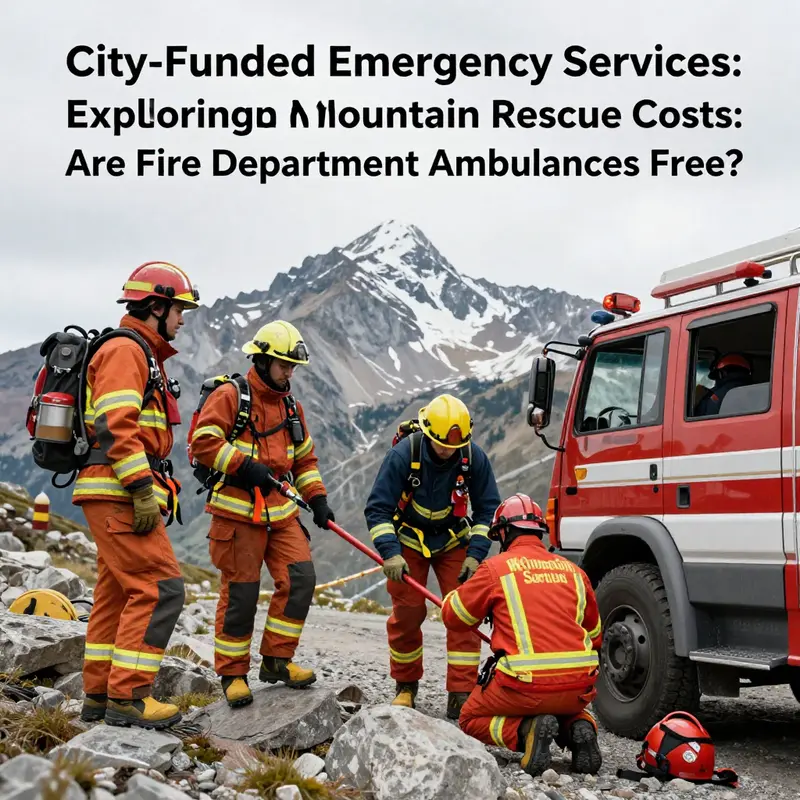
When a call goes out for help on a desert ridge or canyon, the response must be fast, professional, and unhesitating. In Phoenix, that principle is embedded in policy: mountain rescue provided by the fire department and ambulance services does not generate bills for the rescued individual. The city absorbs those costs as part of its public safety responsibilities. This model removes a financial barrier that might otherwise delay people from calling for help. It also shapes how emergency crews plan, train, and equip themselves for operations in rugged terrain.
Municipal funding means mountain rescues become a standard line item in public safety budgets. Those budgets pay for staff, vehicles, and the specialized gear essential for mountain operations. Ropes, harnesses, litters, and technical hardware are more expensive than typical urban firefighting tools. Communications systems must work where cell reception is spotty. Crews need dependable lighting for dawn and night operations. These material costs add up, and a city-funded approach spreads them across taxpayers rather than charging individuals for each mission.
Beyond equipment, the human factor drives expense. Mountain rescues require firefighters and paramedics trained in rope work, wilderness medicine, and search tactics. That training takes time and resources, including recurring certifications and scenario rehearsals. In Phoenix, these training programs are treated as ongoing investments in community safety. They ensure responders can safely reach people on cliffs, in washes, and on steep trails. When the city shoulders these costs, agencies can maintain readiness without a transactional mindset toward each rescue.
Funding rescues through public revenue changes behavior in subtle but important ways. People abandon the fear that a single misstep will produce a large bill. They are likelier to call 911 quickly, report their precise location, and follow dispatcher guidance. Faster calls and precise information shorten response times. That difference can be life-saving, particularly when severe trauma or uncontrolled bleeding occurs. In extreme cases, the early initiation of advanced treatments in the field, like damage control resuscitation, can directly influence survival.
Medical advances have pushed prehospital care beyond basic first aid. Studies show that initiating blood product transfusion and aggressively managing coagulopathy before patients reach hospital can reduce early mortality after trauma. Emergency teams operating in mountainous areas must therefore carry more sophisticated medical capabilities than before. These capabilities add cost and complexity. A system that bills each rescued person would have to create billing mechanisms for advanced care rendered in the field. A city-funded model sidesteps that administrative burden and keeps the focus squarely on saving lives.
There are broader equity and policy considerations. City-funded rescue aligns with the idea that public safety is a communal good. People who live near trailheads, or who come to the region for recreation, all benefit from shared investment in rescue services. This is particularly relevant in regions with high visitor volumes. If rescue were routinely billed, economically disadvantaged residents and visitors might hesitate to call for help. That hesitation can increase community risk and create downstream costs in healthcare and long-term care.
Cost management still matters under a public funding model. Municipal leaders must balance competing priorities across police, fire, public works, and health services. Fire departments track rescue incidence rates, equipment needs, and per-call operating costs. They work with city budget officers to forecast expenses and justify resource requests. When wildland seasons or visitor spikes push rescue numbers up, cities may seek targeted funding, temporary mutual aid, or grants. In Phoenix, absorbing mountain rescue costs into the city budget reflects a policy choice to prioritize immediate access to care.
Different jurisdictions take different approaches. Some counties and states charge rescue fees, either routinely or in extraordinary cases. Others rely heavily on volunteer search-and-rescue teams and pass administrative costs to the individuals or their insurers only in specific scenarios. These variations often reflect local political choices, tax structures, and the presence of volunteer organizations. The Phoenix approach is instructive: it shows how a city can choose accessibility over cost recovery.
There are trade-offs. A no-charge policy can increase the number of nonessential calls, diverting resources from serious emergencies. It can also create public expectations that extend beyond what a city can reasonably provide. To manage this, agencies invest in public education. They teach responsible outdoor behavior, highlight equipment and fitness preparation, and outline the limits of rescue. That education reduces frivolous or preventable incidents and ensures crews remain focused on life-threatening situations.
Liability and legal frameworks matter, too. When a city assumes responsibility for rescue, legal obligations and standards of care follow. Fire departments must maintain professional competence, maintain records, and meet medical protocols. These obligations can increase administrative overhead and demand clear policies on scope of practice. They also require coordination with hospitals and air medical services when patient transport becomes necessary.
Operationally, a city-funded model supports integrated planning. Rescue teams coordinate with dispatch centers, parks officials, and neighboring agencies for mutual aid. They maintain maps and preplanned routes for common incidents. They also invest in technology that increases efficiency, such as GPS tracking, mapping tools, and improved radios. Investments in infrastructure reduce per-call time and long-term cost trends.
There is one practical, often-overlooked advantage: peace of mind. Hikers, climbers, and casual visitors who know rescue will be provided without a bill tend to make calmer, better-informed decisions in emergencies. That psychological effect can improve communication with dispatchers and enhance cooperation during complex extrications. It is a small but tangible return on the city’s investment in public safety.
At the same time, personal responsibility remains essential. Preparing for outings, carrying adequate water and navigation tools, knowing your limits, and telling someone your plan all reduce the chance you will need rescue. Cities that fund rescues usually promote such behaviors as part of a comprehensive safety strategy. They combine investment with education to reduce both the human and financial cost of emergencies.
This combination of policy choices, equipment investment, and advanced medical care defines the modern mountain rescue in municipal settings. Phoenix exemplifies how absorbing rescue costs into municipal budgets encourages prompt help, supports high levels of preparedness, and integrates modern prehospital medical care into field operations. If you live in or visit another region, check local policies before you go. Jurisdictions differ widely in how they distribute rescue costs and responsibilities.
For the specific details behind Phoenix’s approach, see reporting by local news that explains how city funds cover these operations and what that means for people on the trails. The Green Firehouse examines related public safety investments and community impacts. For the direct coverage on Phoenix policy and who pays for mountain rescues, refer to the local news report: https://www.ktvk.com/news/local/who-pays-for-mountain-rescues-in-phoenix/.
Free Lifelines on the Slopes: How Mountain Rescue Is Funded Without Direct Charges and What It Means for Public Safety
When a mountain call goes out, the response starts long before the first responders reach the accident site. It begins in budget deliberations, sensor-equipped command centers, and the quiet calculus of public finance. In Phoenix, as in several other jurisdictions, the emergency air and ground teams that reach a stranded climber or a lost hiker do not bill the person in distress. The city absorbs the cost, a policy designed to remove a potential barrier to seeking help when time is of the essence. This arrangement reflects a core public-safety principle: the urgency of saving lives should not hinge on a person’s ability to pay at a moment of crisis. Yet behind this benevolent surface lies a tapestry of costs, trade-offs, and policy decisions that illuminate how mountain rescue operations are sustained over years, even decades, of rising demand, evolving technology, and shifting budgets.
Rescue work on mountains, by its nature, is not a simple transaction. It requires skilled personnel, specialized training, and access to equipment that must be kept ready for rapid deployment. The budget must cover personnel salaries, ongoing training cycles, maintenance of rescue gear, dispatch and communications systems, and, crucially, the transportation that makes mountain rescues possible. In many systems, that transportation includes helicopters, all-terrain vehicles, and multi-modal logistics that enable responders to reach remote or rugged terrain. Each element carries a cost that compounds across hours of operations, through the night, and across a spectrum of terrains—from granite faces to snowfields and wooded shelves where visibility can collapse in minutes. The financial footprint is broad, and it is rarely apparent to the public at the moment a rescue unfolds.
Parliamentary discussions around such services underscore the need to illuminate the full financial picture. A recurring refrain is the call for more information about what these services cost and how they are embedded within broader mountain-rescue funding. The point is not to minimize the value of free-at-point-of-use services but to acknowledge that the absence of a direct charge to the rescued individual does not equal a lack of economic consequence. When a helicopter is aloft, when a search and rescue team is mobilized, and when coordination centers operate around the clock, those costs accumulate in ways that must be financed by taxpayers, insurers, or charitable giving—often a blend of all three. The public expects that someone, somewhere, shoulders the bill so that the person cheered by the sight of a landing helicopter is not thinking about debt but about recovery and safety.
The societal value is striking. The historical record from mountain-rescue operations emphasizes lives saved as the principal measure of success. A historical Hansard note highlights 1,500 lives saved by mountain-rescue teams in a single year under certain conditions, a reminder that the value of these services extends far beyond any single incident. This figure serves as a symbolic benchmark for the broader public good: reducing fatalities, preventing serious injury, and, in turn, mitigating long-term health costs and the social burdens that follow severe trauma on rugged terrain. When communities decide to fund rescues via the public purse rather than through immediate charges to individuals, they are choosing a lens that prioritizes prevention, rapid response, and equity of access. In practical terms, that means a hiker who slips on a remote ridge gets the same chance at survival as a climber who can afford a costly rescue bill if one existed.
Sustainability is the thread that runs through this policy choice. If the public funds allocated to mountain rescue are insufficient, or if allocations are repeatedly re-prioritized toward other pressing needs, response times can slip and readiness can wane. The risk is not just a slower response for a single incident; it is the cumulative effect on mission readiness and community confidence. Transparent funding models, therefore, are essential. They allow communities to understand trade-offs, track outcomes, and adjust investments as conditions change—seasonally, geographically, and across the spectrum of rescue missions that may involve land, coastline, and even maritime rescue elements in some jurisdictions. The aim is not to trap rescuers in bureaucratic rigidity but to ensure that the resources exist where they are most needed, when they are most needed, without compromising the core value of immediate accessibility for those in peril.
It is important to recognize that Phoenix offers a model that many regions may envy, but not all can replicate. Public safety funding engines differ—some rely more on municipal taxation, others on state support, private insurance schemes, or philanthropic contributions. In some places, there are deliberations about charging for certain components of a mountain rescue operation, such as specialized evacuations or helicopter flight under specific conditions. The diversity of policy outcomes reflects how communities balance public safety goals with budget realities, political priorities, and local risk profiles. The core tension remains clear: the more life-saving services are kept free at the point of use, the more attention must be paid to sustainable funding mechanisms that prevent gaps in capability during peak seasons or lean years.
Beyond the budget, there is room for innovation in how rescue services are organized and funded. Some departments actively explore new financing and delivery models that can sustain high readiness without eroding the public-good nature of the mission. These conversations touch on the broader evolution of the fire and emergency services in the 21st century, where technology, data, and partnerships guide decisions about where to invest, how to deploy, and what level of coverage is required for a given geographic area. In this vein, institutions such as innovation-focused exhibitions highlight how the field is rethinking the relationship between public investment and service delivery. For instance, some discussions and showcases profile transformations in fire services that blend traditional response with new approaches to prevention, risk communication, and community engagement. A notable example can be found in exhibitions dedicated to exploring how innovations in service design can improve outcomes while managing costs, illustrating that the debate over funding is not merely about who pays but about how best to prevent harm and ensure rapid, reliable responses when danger arises. Within this broader discourse, there is a clear thread connecting funding decisions to public safety outcomes, technological progress, and the social contract that binds communities to those who serve them in their most vulnerable moments.
The emphasis on accessibility and equity also shapes how the public perceives the legitimacy of funding arrangements. When a rescuer rides to the aid of a stranded hiker without a bill arriving later, the immediate gratitude can be tempered by a longer view of what it costs to maintain such a capability year after year. The question becomes not only what rescue operations cost in the moment but how those costs are distributed across a population that benefits from safer trails, better search-and-rescue infrastructure, and enhanced coordination among agencies. In regions that emphasize no direct charges, the challenge is to communicate the rationale for public investment in a way that preserves public trust and reinforces a sense of shared responsibility. It is a delicate balance: sustain the capability to save lives, ensure accountability in how funds are spent, and avoid worsening inequities in access to safety for those who recreate in mountains, forests, or coastal backdrops that demand rapid, specialized intervention.
For readers seeking a broader view of how such funding ecosystems operate beyond one city, it can be instructive to explore examples that emphasize national coordination and cross-jurisdictional learning. One resource, the Mountain Rescue Organisation, outlines the UK context and provides documentation on the operational and financial dimensions that enable mountain rescue missions across diverse terrains. While the UK system differs in structure and funding mechanisms from Phoenix, the underlying principle—public safety as a shared public good—binds these models together. It is in these cross-border comparisons that readers can begin to appreciate both the universal appeal of free-at-point-of-use rescue and the practical realities that sustain it over time. For those curious about how regional models converge or diverge, a visit to the official documentation provides historical context and contemporary analysis of funding, governance, and outcomes.
Internal link note: As policy discussions continue to evolve, it is worth considering how innovation in service delivery intersects with funding. Some departments highlight progress and experimentation in areas such as data-driven dispatch, multi-agency coordination, and public education that may influence future budgets. A related discussion can be found in sources that explore how modern fire and rescue services are transforming through learning and innovation—such as the Innovation Museum Transforming Fire Services, which offers a lens into how new approaches are reshaping the field. This example helps illustrate that the funding conversation is not just about dollars and cents; it is about reimagining how best to protect communities while maintaining efficiency and readiness. See the linked resource for a sense of how contemporary thinking is shaping service design and funding deliberations: Innovation Museum Transforming Fire Services.
In sum, the Phoenix model of city-funded mountain rescues demonstrates a commitment to removing financial barriers at the moment of need, a choice that aligns with public-safety imperatives and social equity aims. It also invites ongoing scrutiny of how such services are funded, maintained, and improved over time. The costs are real, the benefits tangible, and the policy landscape continually evolving as communities weigh the balance between immediate accessibility and sustainable investment. For anyone planning outdoor activity in any jurisdiction, the core message remains consistent: while you may not receive a bill if you need a mountain rescue, understanding the broader economic framework behind these lifesaving services helps illuminate why these programs exist, how they endure, and what is at stake when budgets are drawn, reallocated, or reimagined.
External resource for further reading: https://www.mountainrescue.org.uk
Lifelines on the Ridge: Free Mountain Rescue and the Ethics of Ambulance Charges
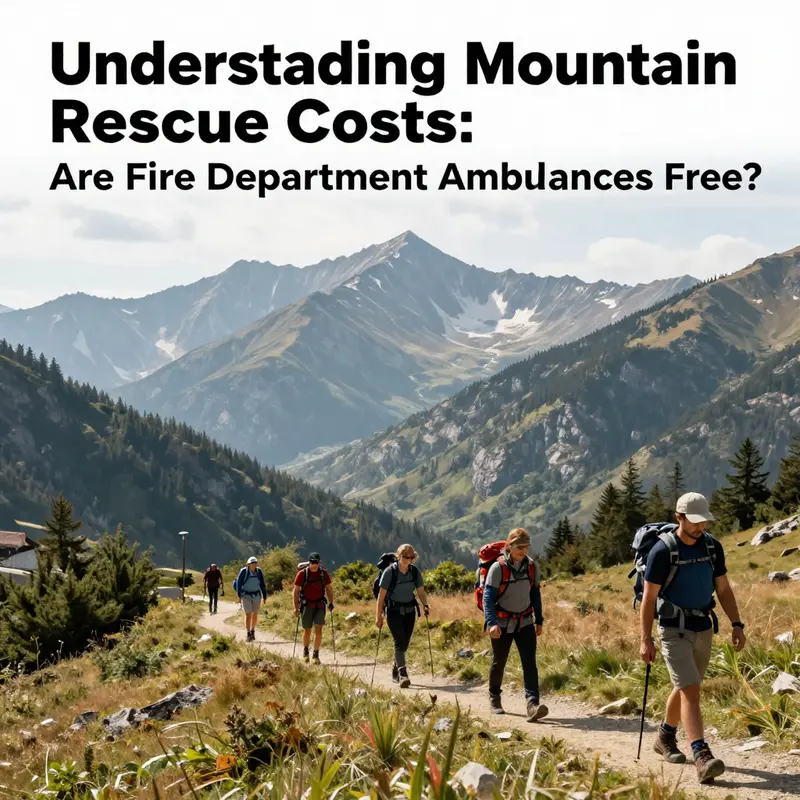
Lifelines on the Ridge: Free Mountain Rescue and the Question of Ambulance Charges
In mountainous terrains, rescue is not merely a service but a lifeline that can determine life or death. The policy choices surrounding who pays for that lifeline sit at the crossroads of public safety, budget realities, and social equity. When hikers, climbers, or skiers stray into remote areas, the bill for help should not overshadow the need for timely assistance. In Phoenix, for example, the city funds the ambulance services that respond to mountain emergencies, delivering care without a direct charge to the individual in need. No invoice lands on a frightened doorstep, and no emergency fund is exhausted by a sudden demand for payment. This city-funded approach codifies safety as a public good, making help accessible when it is most crucial and removing a potential barrier that could delay a call for aid.
Yet this model is not universal. Across different regions, the financing of mountain rescue resembles a mosaic more than a uniform blueprint. In several alpine and national park contexts, rescue has historically been provided free of charge to protect emergency access as a universal right. The Dolomites are frequently cited in debates about accessibility, where no-cost rescue reflects a long-standing commitment to equitable emergency response, regardless of financial means. However, the policy landscape is shifting in some places, with authorities experimenting with fees or partial charges to help defray the enormous costs of specialized equipment, helicopter time, and highly trained personnel. The result can be paradoxical: a system designed to safeguard lives ends up introducing a financial hurdle that can deter people from seeking help when it is critically needed. That deterrent effect is not merely theoretical; it is a real-world risk that outdoor participants weigh as they plan a trip, pack a bag, and choose a route.
The tension between free access and sustainable funding is amplified by the chain of operations that rescue in the mountains requires. Coordination is essential. Free, life-saving responses depend on a seamless collaboration among ground search and rescue teams, avalanche safety authorities, air support, and medical care providers. The orchestration of these diverse capacities becomes even more complex in expansive, rugged parks where resources are spread across multiple jurisdictions. Multi-agency cooperation—where legions of professionals work in sync under dynamic and often austere conditions—emerges as the bedrock of effective rescue. When coordination falters, even the most generously funded free-rescue framework can struggle to deliver timely aid. This reality underscores why some discussions about charging policies center not just on the price tag, but on the reliability and speed of the response itself.
Accessibility in the broader sense—physical access to the mountains and access to emergency services—also hinges on infrastructure. The viability of rescue operations depends on reliable transit options, maintained trails, and the resilience of communications networks in remote settings. Integrating tourism infrastructure with public transport and emergency response planning makes a tangible difference in real-world outcomes. When people can reach starting points or remote areas with little friction, they are less likely to delay seeking help in distress, and rescue teams can reach those in need more quickly. In other words, the debate over rescue funding intersects with the design of safe, inclusive outdoor spaces. A community that invests in accessible infrastructure is not merely catering to recreation; it is preserving a safety net that stands ready when danger arises.
Against this backdrop, the Phoenix model presents a clear, concrete example of how public safety can be structured as a funded service rather than a user fee. By absorbing the costs of mountain rescue through general city funding, Phoenix removes a potential financial barrier at the exact moment when people are most vulnerable. The absence of a direct charge aligns with the ethical impulse to treat rescue as a social responsibility rather than a personal obligation. It signals to residents and visitors alike that the community values rapid assistance and fairness in access to emergency care. The practical implications extend beyond invoices. When there is no bill to fear, the on-scene decision-making can be swifter, the risk of delayed calls reduced, and the coordination among responder agencies more streamlined because the funding model supports a consistent emergency response tempo rather than a pay-for-service cadence.
Nevertheless, the broader policy environment is uneven. Regions that rely on mixed funding—tax revenue, insurance reimbursements, or user fees—face unique challenges in maintaining public trust and ensuring equity. The presence of fees can create a perception of unequal access to aid, particularly among travelers, first-time visitors, or families with limited resources. Policy-makers must weigh the public health benefits of rapid rescue against the fiscal realities of operating sophisticated, high-cost rescue systems. In doing so, they confront questions that extend beyond the mountain trail: How do we preserve universal access while ensuring that rescue services remain financially viable under pressure from economic fluctuations, competing budget priorities, and the escalating costs of technology and personnel? The policy answer rarely comes in a single gesture; it appears as a spectrum, with some jurisdictions maintaining free or heavily subsidized rescue, others applying carefully defined fees, and many operating somewhere in between. For outdoor participants, that spectrum means monitoring local rules, understanding the specific funding arrangement in effect, and recognizing that a policy decision about charges influences the speed and reliability of the response when danger arises.
The cultural dimension of safety cannot be ignored either. Communities with deep traditions of mutual aid and shared responsibility tend to treat rescue as a core service that strengthens social cohesion. The long-standing collaboration among alpine communities—whether across national borders or within a regional park system—emphasizes that mountain rescue is a collective investment, not an individual burden. This cultural lens helps explain why some regions resist introducing user fees despite mounting costs. It also explains why others pursue transparent charging policies with clear exemptions and safeguards to protect vulnerable populations. The outcome when the policy aligns with community values is a public that not only accepts but actively supports the investment in rescue infrastructure, equipment, and training. In practice, this alignment translates into faster, more predictable responses and, crucially, less hesitation on the part of someone in danger who may hesitate to call for help for fear of the bill.
For travelers and local residents alike, understanding the funding logic behind mountain rescue is more than a budgeting question; it is part of a broader literacy about how safety is organized and maintained in the outdoors. The Phoenix example demonstrates that a city can choose to place rescue at the center of a public safety portfolio, removing direct charges and elevating emergency response as a universal service. Other regions may adopt that model, adapt it, or maintain a different approach that aims to balance fiscal responsibility with access. Regardless of the model, a key through-line remains: the rate-limiting factor in mountain rescue is not only the capability to respond but the willingness of people to seek help when they need it. Reducing or eliminating direct costs is one way to nurture that willingness, though it is not a panacea. Transparent communication about when fees apply, what they cover, and who is exempt is essential to maintaining trust and ensuring that financial considerations do not overshadow the moral imperative to save lives.
As these ideas circulate through policymakers, rescue professionals, outdoor enthusiasts, and ordinary communities, they invite a broader reflection on what public safety means in a landscape where the risks are real and the rewards of timely aid are profound. The question of whether ambulance services on mountains should be free is not simply about the price tag. It is about the values that guide a society in choosing to protect life, guarantee accessibility, and invest in a shared capability that can respond under pressure. It is about recognizing that mountains will always demand respect and preparation, and that the human response to danger—coordinated, well-funded, and resilient—can be as crucial as the terrain itself.
For further context on how community-focused safety infrastructure can reinforce public trust and accessibility, see The Green Firehouse: Creating Sustainable Spaces for Community and Health. The Green Firehouse: Creating Sustainable Spaces for Community and Health.
External resource: Management of Multi-Casualty Incidents in Mountain Rescue – PMC, https://www.ncbi.nlm.nih.gov/pmc/articles/PMC8549126/
Funding Rescue Access: A Global Perspective on Mountain Ambulance Charges and Public Safety
When people imagine mountain rescues, they often picture dramatic cliff faces and life-saving helicopters. Yet behind every urgent call lies a budget decision about how the rescue will be financed. In Phoenix, the fire department ambulance that operates in mountain terrain is funded by the city, and individuals are not charged for the service directly. This city-funded model means that seeking help in a life-threatening moment carries no immediate financial repercussion. The approach reduces barriers at a moment when delay can be deadly and aligns with a public-safety ethos that emergency response should be accessible to all, regardless of one’s ability to pay. Still, Phoenix is one node in a broader global map of how mountain rescues are financed, and the differences between jurisdictions illuminate how societies balance risk, cost, and equity in the shadow of alpine hazards. The Phoenix example matters not as a universal blueprint but as a reference point for what publicly funded emergency response can look like when the goal is universal access. It also invites a deeper inquiry into what happens elsewhere when the public purse and private philanthropy share the responsibility of keeping climbers, hikers, and skiers safe. This is where the comparative lens becomes essential, revealing a spectrum of funding choices that reflect local budgets, political values, and historical relationships to risk and rescue.
Across the United Kingdom, mountain rescue is often carried out by volunteer teams that rely on donations, grants, and public subsidies. The operations are generally free of charge to the user, even as teams stress the substantial costs of equipment, training, and logistics. The reliance on volunteers is a strength in many ways, allowing communities to mobilize rapid, specialized assistance without creating a direct bill for the individual in distress. Yet the model faces sustainability pressures. Hansard records show that rescue call-outs number in the hundreds each year, underscoring the scale of the task and the associated running costs. Critics of the status quo argue that if the public is benefiting from these rescues, some form of contribution—whether through taxes, charitable giving, or mandatory levies—might be warranted to ensure long-term viability. Proponents counter that charging users could deter people from calling for help in a crisis, creating a paradox where fear of cost reduces safety. The debate thus centers on balancing a nondiscriminatory public service with the practical realities of maintaining highly specialized teams where training, equipment, and safety protocols demand ongoing funding. It is a conversation about who bears the cost of risk and how to protect a tradition of volunteerism while keeping rescue services robust in the face of rising costs.
In continental Europe, where mountain regions are integral to national identity and tourism, rescue services are frequently embedded within public emergency frameworks and funded through taxation. Switzerland and Austria, in particular, maintain highly professionalized mountain rescue units that benefit from state support and public budgeting. Direct charges to individuals for rescue operations are rare, and universal access is a core objective. The model supports consistent availability and rapid deployment, even in remote or challenging terrains, because funding streams are designed to cover operational overheads, training pipelines, and equipment depreciation. This approach emphasizes equity and preparedness, aligning with broader social commitments to safety and mobility in alpine environments. The mountain rescue ecosystem in these countries tends to be integrated with other emergency services, featuring coordinated response protocols, standardized training, and high-quality equipment that reflects long-standing public funding priorities. The outcome is a high level of readiness that does not threaten the financial stability of the rescuer networks or the communities they serve, though it places a premium on political will and fiscal discipline within government budgets.
In the United States, where rescue governance is more patchwork, the funding mosaic mirrors the country’s federal structure and diverse local economies. Many mountain rescue teams are still volunteer-driven, similar to the UK model, but with greater variation in how operations are financed. Some jurisdictions rely on partnerships with municipalities or state agencies, while others depend on donations and fundraising to cover the costs of gear, training, and logistics. The most controversial dimension is the possibility of charges in specific circumstances, such as rescues prompted by negligent or irresponsible behavior, where some agencies have considered recovery of costs through billing. Helicopter rescues, medical evacuations, and specialized gear can incur substantial charges, and these costs may be contested on ethical and legal grounds. The uneven landscape can create disparities: a caller in one state might face a different financial reality than a caller in another, even when the risk profile is comparable. Critics warn that cost-shifting to individuals could deter people from seeking timely help, particularly in lower-income communities or more remote regions where the fear of a bill compounds the fear of danger. Supporters argue that clearer cost-sharing can preserve public resources and incentivize prudent use of services, but the trajectory of this argument remains unsettled in many jurisdictions.
Taken together, these international differences reveal a clear pattern: where governments and communities commit to funding rescue as a public good, access tends to be broad and immediate. Where funding is more fragmented or contingent on donations and private arrangements, access can be more variable, and the burden on volunteers and donors can intensify. The absence or presence of direct charges to the user is less a technical detail than a signal about a society’s willingness to absorb risk in the form of public investment, tax allocations, or charitable support. In the United Kingdom and much of continental Europe, the model tends toward universal access with public backing, even as specialists and volunteers shoulder much of the day-to-day labor. In the United States, the mix reflects a larger debate about cost responsibility, risk tolerance, and the proper balance between public safety and private initiative. Each model has value, but each also carries trade-offs that influence how individuals plan outdoor activities, how communities fund training and equipment, and how quickly teams can mobilize in the most demanding conditions.
For outdoor enthusiasts and policymakers alike, the practical takeaway is that mountain rescue charges, or the lack thereof, are not simply about a single rescue incident. They reflect broader policy choices about safety, equity, and the distribution of risk. A climber in a country with universal public funding can rely on rapid response without worrying about a bill, while a traveler in a jurisdiction with user-based fees may face different expectations, planning considerations, and potential financial exposure. That distinction matters for trip preparation, insurance coverage, and awareness of local customs and regulations governing rescue operations. It also highlights the importance of transparent communication from authorities about what is funded publicly, what costs a caller might be responsible for in atypical scenarios, and how rescue services are organized to ensure that fear of cost does not deter urgent help.
The Phoenix example warrants reconsideration in this broader frame. A city model that absorbs the cost of mountain rescue operations can serve as an anchor for a public-safety approach that prioritizes accessibility over affordability concerns at the moment of need. Yet even in Phoenix, and in other places that rely heavily on public funding, the sustainability of rescue services depends on ongoing support, from budgetary allocations to private philanthropy and community partnerships. The balance between funding constraints and the imperative to respond swiftly in life-threatening situations generates a continuous policy conversation about reform, efficiency, and resilience in emergency response. That conversation is not a call for uniformity; rather, it is a call to understand how different funding arrangements shape outcomes, influence behavior, and determine who bears risk in alpine environments. The takeaway is not simply to copy-paste models across borders but to recognize that funding decisions are value choices about safety, responsibility, and the social contract in outdoor life.
As this chapter threads together perspectives from diverse jurisdictions, it also points toward practical considerations for readers planning trips in mountain terrain. If you are traveling or adventuring in regions with strong public funding for mountain rescue, you can reasonably expect rapid support without a direct bill in most standard emergencies. If you move through areas with more fragmented funding, you should be mindful of local regulations, potential costs associated with specific interventions, and the importance of carrying appropriate insurance and documentation. The discussion also invites readers to consider how public institutions can sustain essential services through innovation, partnerships, and transparent governance. In other words, the question of charges is part of a larger inquiry into how societies maintain readiness for extreme environments without compromising access, equity, or safety. For further context on how innovation and policy intersect in emergency response, see the discussion of innovations in fire services and rescue operations in related coverage.
Internal resource reference: Innovation is increasingly shaping how emergency services allocate resources, coordinate responses, and manage costs. A broader look at this evolution can be explored through insights on Innovation Museum Transforming Fire Services, which highlights how new ideas and technologies influence both funding decisions and frontline outcomes. This exploration helps frame the Phoenix example within a wider trajectory of public safety modernization and the ongoing effort to keep rescues swift, safe, and affordable for communities.
External reference: For additional insights on government funding of mountain rescue costs and how fiscal choices affect access to emergency services, see the UK Government publication Mountain Rescue Service Costs and Funding (external resource).
Final thoughts
In summary, understanding whether fire department ambulances charge for mountain rescue services is a vital topic for anyone engaging in outdoor activities. Phoenix serves as a prominent model where these services are funded by the city, ensuring that individuals can seek help without the burden of costs. The economic benefits of this model, combined with the critical importance of public safety, reinforce the value of free services in emergency situations. As every jurisdiction adopts different approaches, it remains essential for the public to stay informed about local policies to ensure their safety while taking part in outdoor adventures.