
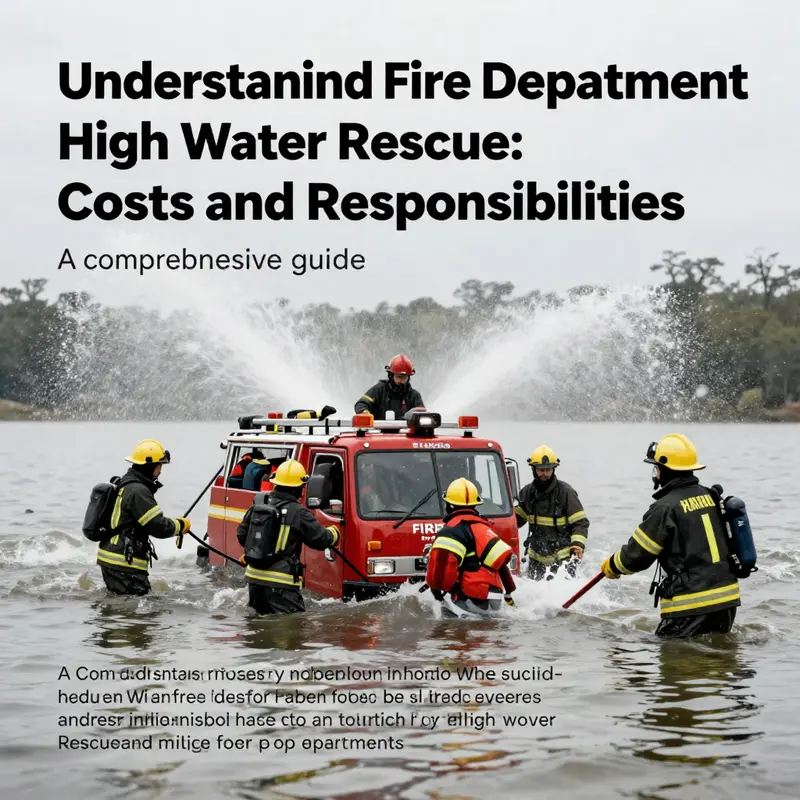
Fire department high water rescue services are crucial for public safety during emergencies. Many residents may wonder if these services entail direct costs to the individuals they help. This article elucidates the financial aspects of such rescues, offering insights into funding mechanisms, public safety policies, potential liabilities, and post-rescue charges. Each chapter is designed to clarify these concepts for the general public, emergency personnel, educators, and community leaders, ensuring that all stakeholders have the necessary knowledge to navigate these important issues.
When the Flood Recedes: Public Safety, Costs, and the Realities of High Water Rescue
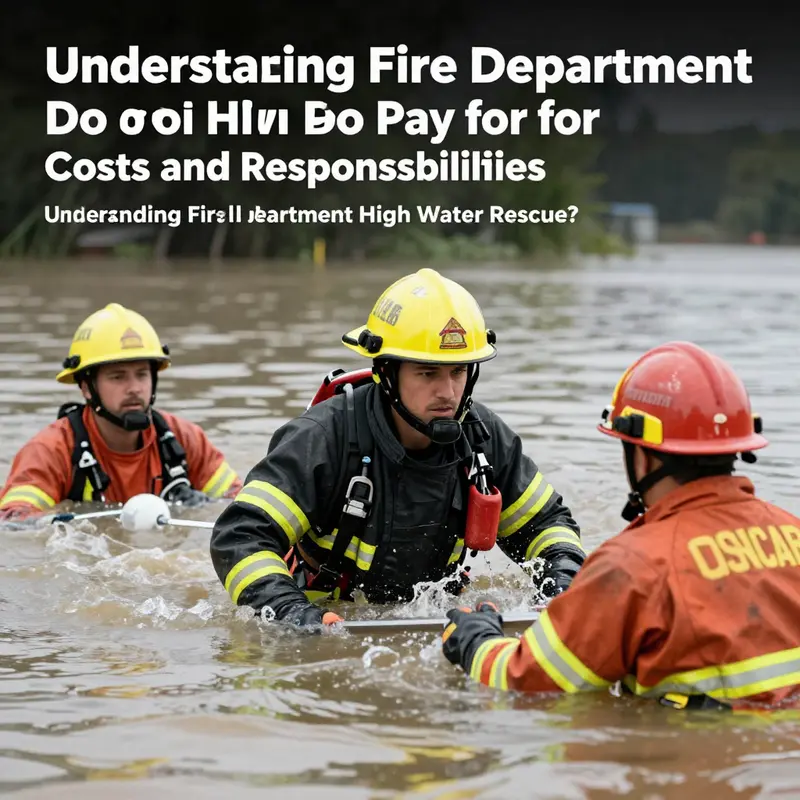
In moments when floodwaters rise and streets turn to riverbeds, the question of cost often lands as heavy as the duty to respond. Yet in the United States, the ordinary answer to whether you have to pay for a fire department high water rescue is generally no. Fire and emergency responders are funded through local taxes and public budgets, a system designed to protect life and property when people are most vulnerable. The rescue itself—vehicles wading through surge, responders reaching a stranded driver, a boat slicing through murky current—is treated as a core public safety service. The idea of placing a direct bill for that life-saving moment would run counter to the social contract that underwrites emergency services. In practical terms, your rescue is aimed to be free at the point of service, much like police response or public health protection during a crisis. This principle is widespread across jurisdictions, though the exact mechanics can vary, and the conversation doesn’t end with the initial lift from danger. The moment the immediate danger passes, the conversation moves to what comes next: the possible indirect costs and how they may—or may not—affect the people who were rescued.
The most important part of understanding cost in these situations is distinguishing between the direct rescue and subsequent needs that may arise from the incident. The initial emergency response—the call, the dispatch, the on-scene effort, and the extraction—typically comes without a direct charge to the person being rescued. This is a key point and a widely held expectation among residents and responders alike. It reflects a public safety model in which communities invest in readiness and capability so that any person in danger can receive timely assistance regardless of their insurance status or ability to pay. The rationale is simple: delaying or denying aid because someone cannot afford it would endanger more lives and erode trust in the very institutions that communities rely on during crises. When people need help most, the safety net should be there, intact and unburdened by a potential bill.
Yet the absence of an immediate charge does not mean there are no costs attached to the incident at all. Several non-emergency or post-response financial considerations can surface, and understanding them helps residents anticipate what might happen after the rescue. One area of potential impact involves equipment damage or recovery. If a vehicle or personal watercraft is damaged or towed, the costs of recovery, repair, or replacement may be borne by the owner or by their insurance, depending on the policy terms. Insurance often plays a central role here, absorbing or mitigating repair costs that follow an incident, but coverage varies widely. Vehicle protections, comprehensive coverage, and even special endorsements can influence the final bill after a flood-related incident. The rescue itself remains free, but the aftermath can be less predictable, especially if the incident caused substantial damage or required temporary displacement.
Medical costs form another important axis. If medical treatment is needed after a rescue—on-scene evaluation, hospital care, or ambulance transport—the billing landscape becomes more complex. Ambulance fees are charged separately in many areas, even when the initial rescue is free. Some jurisdictions have policies or waivers for certain circumstances, such as low income, veteran status, or specific medical emergencies. But these waivers are not universal, and individuals may face bills that arise from transportation, treatment, or follow-up care. The interplay between public safety funding and health care costs means that even a simple rescue can ripple into medical expenses that must be navigated with the relevant health care providers or insurers.
Beyond medical transport and vehicle costs, there are broader insurance and potential policy implications. A claim arising from a high water incident could influence homeowners’ or auto insurance premiums in the long term, even if the rescue itself was not charged directly. While many policies handle incident-related repairs without triggering premium increases, some circumstances—such as repeated losses or claims—can lead to adjustments. It is worth reviewing policy language, particularly sections that relate to water damage, liability, and accidents during evacuations. In addition, some emergency-related charges may be addressed by public health systems or social services rather than private billing, depending on local rules and the availability of waivers or subsidies. The key message is to consult with the insurer after the fact, request an itemized statement, and understand what portion is covered by insurance and what might be the applicant’s responsibility.
There are, of course, exceptions to the general rule of no direct charge for the rescue itself. In rare cases, a rescue may involve private contractors or be categorized as non-emergency, depending on the jurisdiction and the specific circumstances of the operation. For instance, if commercial entities are contracted for specialized water rescue services, or if a response is executed outside the mainstream emergency framework, there could be charges associated with those particular arrangements. Such scenarios are the exception rather than the rule, and they underscore why familiarity with local policies matters. A practical takeaway from this nuance is simple: know the local fees and billing practices in your area, especially if your community has unique programs or partnerships that might occasionally shift some costs away from the public budget and toward a private arrangement.
The overarching reality remains that the rescue itself is a public service designed to protect life, and this principle is aimed at ensuring that help arrives when it is most needed. The ethical and practical dimension of this arrangement is that fear of or uncertainty about a bill should not deter someone from seeking help during a crisis. That is why, in addition to the general policy of no direct charge for the emergency response, many regions have systems to manage subsequent costs in a way that protects individuals who are already facing hardship. These systems may include waivers for ambulance transport, subsidies for medical treatment, or insurance-based mechanisms that ease the financial burden after a dangerous incident. The result is a safety landscape where the immediate rescue remains the common good, while the financial fallout, if any, is handled within broader social and insurance frameworks rather than as a direct demand on the rescued person.
For readers seeking a broader framework or related policy discussions, one can examine public safety standards and funding practices that underpin these services. The understanding of how emergency services are funded and delivered reveals why high water rescues are treated as essential public duties. It is also a reminder that the system’s fairness depends on transparent communication and accessible information about potential charges, waivers, and insurance requirements. Residents benefit when they know what to expect and where to look for assistance in the aftermath. In this regard, a simple, practical step is to review local EMS billing practices and to keep a copy of any incident-related documents, correspondence, or bills. Such preparation can empower individuals to engage proactively with insurers and service providers, reducing confusion and accelerating resolution should post-incident costs arise.
The threads connecting public safety, personal responsibility, and financial planning come together most clearly in the everyday practice of preparedness. If you live in a flood-prone area or frequently navigate waters, take time to consider your coverage: what does your auto policy cover if your vehicle is damaged during a rescue? Does your homeowners policy address damage or loss arising from flood-related incidents that require specialized recovery? Are ambulance fees likely in your jurisdiction, and are there waivers you may qualify for? These questions are not theoretical; they are part of anticipatory planning that can help families and individuals face the aftermath with clarity rather than with surprise. When communities invest in preparedness, they also foster resilience. The people who respond to a high water call deserve to be supported by a system that prioritizes life over liability, aid over accusation, and recovery over recrimination. The better equipped the public is to understand the range of potential costs, the more confidence residents gain in their emergency services—and in their own capacity to navigate the consequences after the rescue.
For readers who want a quick entry point into understanding how these topics fit into the broader conversation about community resources and safety culture, consider a related post that introduces foundational ideas about community conversation and resilience: tpbhrescue.org/hello-world/. This brief post can illuminate how such sites frame safety as a shared obligation rather than a private burden, reinforcing the idea that the rescue itself is a public benefit.
In the end, the core message remains straightforward: you should not expect a direct bill for the actual high water rescue. The financial reality that follows depends on many factors—insurance, medical transport, vehicle recovery, and local billing practices—but the rescue itself is part of the public safety service that communities commit to providing. Awareness and preparation are your best tools. Know your coverage, ask questions, and keep informed about your area’s policies. If you do receive a bill related to the incident, request a breakdown, verify the charges, and seek guidance from your insurer or a public billing advocate who can help you navigate waivers, negotiations, or disputes. The safety net exists precisely to ensure that fear of debt does not deter someone from seeking help when every second counts.
External resources can deepen understanding of these structures and the standards that guide them. For authoritative guidance on public safety funding and fire service standards, refer to the NFPA resources at https://www.nfpa.org.
Funding Without Fees: How Fire Departments Sustain High-Water Rescues as a Public Good
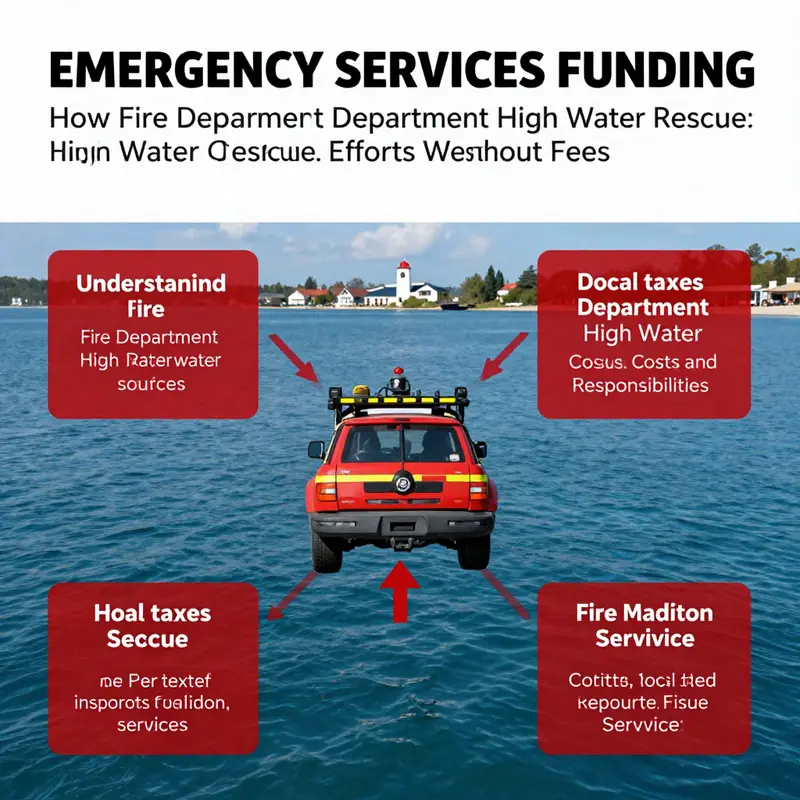
When floodwater rises and streets vanish beneath swirling currents, the first call for help may come from a neighbor, a business, or a passerby. Trained responders arrive with boats, throw lines, and a coordinated plan designed to save lives even as conditions deteriorate. The key point is that high-water rescue is treated as a public safety function, funded by public budgets rather than billed to individuals at the moment of crisis.
Funding comes from a mix of local, state, and federal sources. Municipal budgets, property taxes, and general funds provide baseline operations; state grants and federal programs bolster specialized equipment and training. The aim is to ensure access to rescue services is universal, not dependent on a survivor’s ability to pay under pressure.
Intergovernmental cooperation, mutual aid agreements, and regional resource sharing extend capacity across borders. The result is a resilient system that can respond rapidly, even when a single agency would be overwhelmed. After the initial rescue, costs may be addressed through insurance, hospital billing, or disaster-relief funds rather than direct charges to those saved.
Thinking about prevention and preparedness—such as floodplain management and public education—helps reduce the long-term expense of response and reinforces the public-good rationale. In short, the rescue itself is free at the point of need, while the broader costs are financed through a mix of public funds and risk-sharing mechanisms that preserve trust and equal access.
Public Safety, High-Water Rescues, and the Question of Fees
Public safety in the face of flood events centers on a simple premise: life saving comes first, and the funding framework follows. In most places, fire departments and other responders are paid through local taxes, district budgets, and public safety levies, so the rescue itself arrives at no immediate charge to the person in danger. The aim is to remove financial barriers at the moment seconds matter, treating urgent help as a public service rather than a billable act. The practical effect is that the initial response is typically free at the point of service, with downstream costs addressed through insurance, medical bills, or public programs rather than a direct rescue fee.
That said, the landscape is not uniform. A small but real portion of jurisdictions has explored or adopted policies that attach fees to non emergency or specialized operations that extend beyond the immediate rescue. In practice, such charges are usually limited to post incident work, extended operations, or costs related to equipment use and transport, and not to the life saving act itself. Even where fees exist in some form, broad consensus remains that emergency response should not be deterred by cost concerns, particularly when quick action can save lives.
Fire protection structures—such as districts, towns, or counties—also shape how costs are allocated. In areas with robust public funding for emergency services, the likelihood of direct charges to individuals who receive help is reduced or eliminated. In other areas, downstream costs may manifest as medical billing, property claims, or district assessments, rather than a specific rescue fee. This creates a mosaic in which the principle of rapid, universal access coexists with the reality of funding complexity and accountability.
For residents, the most reliable approach is local awareness: learn how emergency responses are funded where you live, understand whether any post rescue costs could apply, and advocate for policies that preserve free life saving action at the point of need while ensuring accountability and transparency in how resources are used. Preparedness, appropriate insurance coverage, and resilient home design can also reduce the likelihood of high downstream costs and support faster, safer recoveries after flood events.
null
null
Water Rescue and the Bill: What You Pay When Fire Teams Respond
When floods rise and currents surge, the people who arrive first—often with heavy gear and calm, practiced motions—have one job: to get you to safety. Fire departments, in particular, have built their reputation on quick, decisive action in high-water situations. The impulse to ask, after a successful life-saving moment, is natural: was there a cost attached to this rescue? The answer, in most corners of the United States, is nuanced but ultimately reassuring for most families: the initial rescue is typically free at the point of service. This is not merely a courtesy. It is a foundational principle of public safety funding. Fire departments are commonly supported by local taxes and budgets designed to ensure that when danger arrives, help is available immediately, without delay or hesitation. A life-or-death call, no matter how dramatic the circumstances, should not hinge on whether someone can afford a bill in the moment of crisis.
The public safety framework that governs high-water rescues rests on the broader idea that essential emergency services are funded as a public good. When the water is raging and a rescue is necessary, the priority is to prevent loss of life and minimize harm. In practice, this means the first responders’ work—steering through debris, reaching stranded individuals, coordinating with medical teams, and transporting people to safety—does not come with a bill for the person being rescued. This principle aligns with the moral and practical aims of communities that choose to fund emergency response through taxes rather than through user fees. The social contract here is straightforward: if a citizen is in danger and needs rescue, that rescue should not be withheld because payment is uncertain or unaffordable. The immediate protection of life is paramount, and it is the default expectation that help will be provided without financial barrier at the critical moment.
But the story does not end at the moment of the pull to safety. The broader reality of post-rescue charges is more complex. The research points to a policy landscape in which most jurisdictions do not bill for the life-saving portion of a high-water response. Yet there exists a subset of places that have explored or implemented what are called rescue charges or emergency service fees. These charges are typically framed as a means to recover some costs—equipment wear, personnel time, training, and aftercare planning—that arise when a rescue involves non-emergency or avoidable risk. In practice, charges in these cases often hinge on how the incident began and whether it could have been prevented with better judgment or adherence to safety rules. The distinction is subtle but meaningful: an emergency response born out of a true, unavoidable danger remains a public service, whereas an avoidable crisis might invite scrutiny and, in some jurisdictions, a bill.
Consider the landscapes of places like Florida and portions of California, where authorities have, at times, issued bills in situations judged to be avoidable or related to recreational activity that defied posted warnings or safe-use regulations. These scenarios illustrate a policy line that some departments have drawn between life-saving emergencies and incidents that could have been avoided through more cautious conduct. The logic rests on cost recovery: responders must allocate scarce resources, and when a rescue stems from risky behavior, the jurisdiction may seek to recoup part of the expenses incurred. It is important to emphasize, however, that such charges are rarely, if ever, applied to life-threatening emergencies in which immediate action is necessary to save a life. The decision-making process tends to be case-by-case and subject to administrative review, reflecting both fiscal responsibility and the primacy of public safety.
For the individual citizen, this creates a practical sense of reassurance and a few prudent cautions. If you live in or travel through regions with known flood risks, the most important step is to understand your local policy. Local fire departments and city or county offices are the authoritative sources for whether any post-rescue charges exist and under what circumstances they might apply. In many communities, the rescue remains free, with avenues for post-event billing only in carefully defined scenarios that follow an administrative process. If a billing decision arises, it is usually possible to request an itemized statement, appeal the charge, or seek guidance from a public safety office. Insurance coverage can also play a role in handling downstream costs, especially if medical care or property damage follows the rescue. While the rescue itself is free, associated costs—such as medical treatment, hospital bills, or vehicle repairs—may be addressed through health insurance, car insurance, homeowners or renters policies, or, in some cases, public health programs. The critical point is that the emergency response is designed to function as a public safety service first, with any downstream financial consequences handled through standard channels after safety has been achieved.
The regulatory and policy landscape around high-water rescues also features important ethical and practical considerations. Fire departments have a mandate to preserve life and protect property. Charging a person for the life-saving action could create a chilling effect, potentially deterring someone in imminent danger from calling for help, especially in vulnerable situations. Policymakers who favor universal access to emergency services argue that the presence of a reliable, no-surprise emergency response is not only a moral obligation but a strategic public health measure. When people know they can call for help without facing financial ruin, they are more likely to seek assistance promptly, reducing the risk of more severe injuries, longer rescues, or more extensive property damage. In this sense, the default position of many communities aligns with a broader public health and safety objective: do not let cost shape the decision to call for help in a crisis.
That said, the reality of local budgets and administrative processes means citizens should stay informed. The specifics—whether a jurisdiction has a formal rescue fee policy, how the bill is calculated, and what exceptions exist—are all determined at the municipal or county level. For people who have experienced or heard about a charge after a flood or a high-water incident, the most constructive response is to engage with the local fire department or municipal clerk’s office. Ask about the policy, request guidance on whether the scenario qualifies for a fee, and learn about the appeal process if a bill arrives. Because these policies can evolve with budgets and enforcement priorities, checking the most current information from a local authority is essential. The National Fire Protection Association (NFPA) reinforces the overarching principle that emergency response is a fundamental public-safety function supported by public funds, which many communities interpret as justification for keeping the initial response free of charge. While not a definitive legal shield, this perspective informs how departments frame and justify their rescue operations and any ancillary charges they might impose later on.
For individuals who want to limit exposure to charges, practical steps align with good flood-preparedness and safety planning. Avoid risky behavior around floodwaters—keep a safe distance from swift currents, follow posted warnings, and use designated channels for entry and exit in flood-prone zones. If you must be near water for work or recreation, ensure you understand the local rules and have appropriate training and protective measures. In the event of a rescue, prioritize safety and trust that responders will act immediately. Afterward, gather documentation, review any billing notices with care, and pursue legitimate avenues for dispute or insurance reconciliation if necessary. In many communities, the most important takeaway is clear: the immediate act of saving a life is a public responsibility, funded to ensure access to help when it is needed most, and the financial arrangements that follow are a separate, context-dependent matter that should be navigated with local guidance and support.
Final thoughts
Fire department high water rescue services play an essential role in protecting communities during emergencies. The good news is that these services are generally provided free of charge, funded by local taxes to ensure that no individual hesitates to seek help when needed. However, understanding potential post-rescue liabilities and the importance of insurance can help community members navigate their responsibilities following such incidents. Overall, the collaborative efforts of firefighters, local government, and community members contribute significantly to public safety and preparedness.