
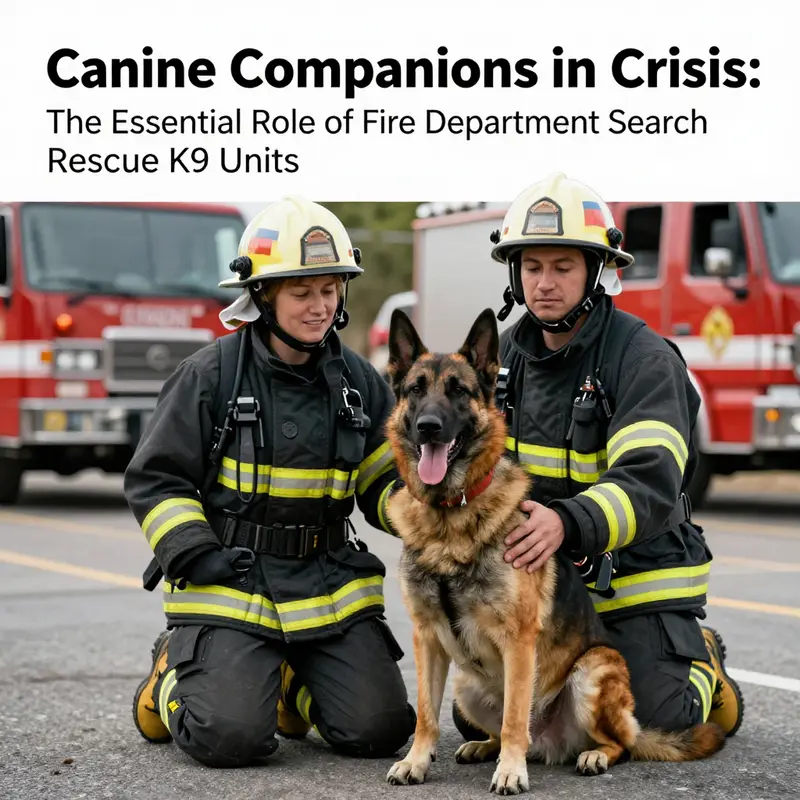
Fire departments worldwide deploy Search and Rescue K9 units to find individuals in emergency situations ranging from collapsed structures to wildfires. These highly trained canine teams, alongside their handlers, play an instrumental role in locating missing persons and ensuring swift responses during disasters. In this examination, we will delve into the significance of these units, their rigorous training processes, and the innovative technologies that augment their capabilities. Each chapter will build on our understanding of how these K9 units effectively contribute to fire department operations.
Scent of Rescue: The Integrated Role of Fire Departments in Search and Rescue K9 Units
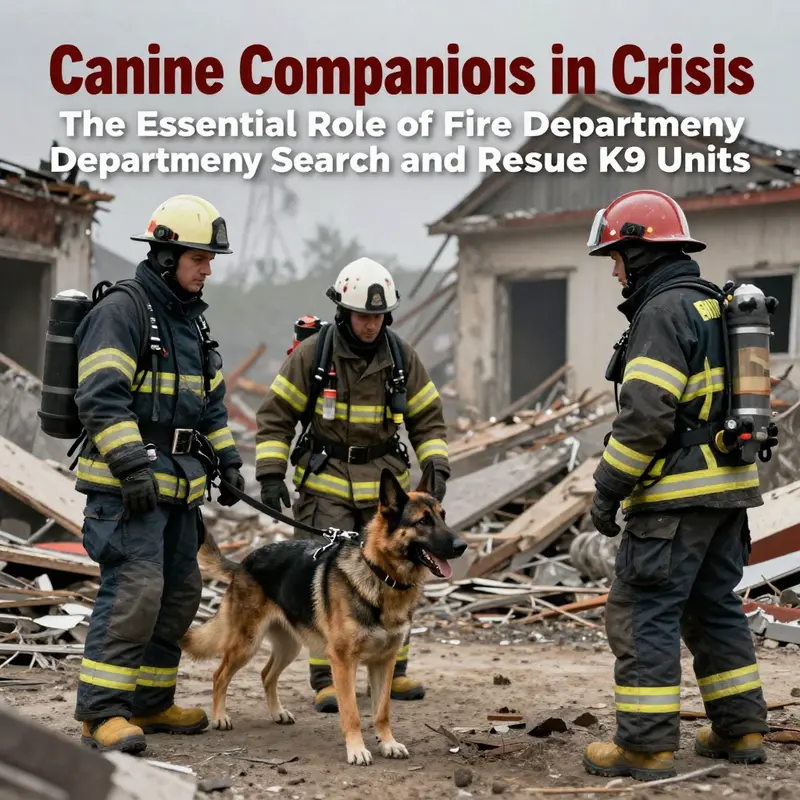
The scent that guides a rescue dog is more than a trail left by a person; it is a lifeline that narrows the vastness of a disaster zone into a focused path toward the living. Fire departments around the world have come to rely on search and rescue K9 units not as a supplementary tool but as a core axis of their rapid response capabilities. In the wake of fires, collapses, floods, and remote terrain hazards, these teams bring a precision that human effort alone cannot match. The public learns about them through dramatic headlines, yet the daily work is a patient accumulation of training, trust, and collaboration. When responders arrive on the scene, they do so with dogs already tuned to the rhythms of disaster zones. The dogs are not just animals in service of humans; they are integral teammates whose senses complete the team, filling gaps that even the best human searchers cannot. This is the heartbeat of the fire department SAR K9 program, a field built on years of partnership, science, and courage, and it remains a living model of effective interdisciplinary emergency response.
Across continents, the role of fire departments in search and rescue has evolved from a focus on structural firefighting to an ecosystem approach that includes rapid triage, swift assessment, and targeted location of missing or trapped persons. The dogs trained for these missions learn to operate where smoke clouds obscure vision, where rubble muffles sound, and where the scent of a survivor can be the only beacon left in a dangerous environment. The acute sense of smell that enables a SAR dog to detect human scent even when buried under debris or obscured by dust translates into minutes saved in the crucial window after a disaster. This capability does not emerge from chance; it comes from disciplined training, carefully structured operations, and the human capacity to orchestrate the dog and the detector in real time. The relationship is intimate: the handler relies on the dog to pick up faint scents, and the dog relies on the handler to translate those signals into action, to keep the dog safe, and to communicate the significance of a find. It is a bond forged in training grounds as much as it is in the field.
In the United States, the SAR K9 concept is deeply embedded in urban and regional rescue frameworks. Take the New York Fire Department, where a modern approach to SAR has integrated unique capabilities into its operations. In this context, a robotic canine platform has been deployed alongside traditional canine teams. The purpose of bringing a machine companion into such operations is not to replace the living dogs, but to extend reach and resilience when conditions threaten human responders. The robotic partner can scout or map areas that would be dangerous for a live dog, providing situational awareness while the trained dogs and their handlers do the epicenter work of locating survivors. It is a striking example of how technology and biology can converge within a single mission package to increase the odds of a successful rescue. The human-dog team remains the core, but the added dimension of robotic assistance represents a layered approach to problem solving in high-stakes environments.
California, with its dense urban centers and frequent wildfire events, exemplifies how fire departments mesh district resources into a comprehensive search and rescue framework. The Los Angeles County Fire Department, for instance, fields canine teams as part of a larger urban search and rescue USAR Task Force. These teams are deployed to major incidents that test the limits of terrain access and structural stability. The promise of this system lies in its redundancy and specialization: canine units specialize in locating survivors, while other components deliver structural assessment, medical support, and logistics. The collaboration spans not just dog and handler, but also the broader public safety network that surrounds a large-scale incident. The intent is not to rely on a single tool but to cook a robust mission plan in which each element contributes a critical perspective. In recent years, the scope has broadened to include responding to incidents beyond the traditional fire season, such as large-scale wildfires on the islands or the rugged brushlands where access is limited and time is a ruthless adversary.
On the human side of the equation, stories like that of Irie, a retired disaster search dog from a midwestern fire department, remind the public of the long arc of service these animals undertake. Irie spent years in the field, contributing to multiple missions across varied settings, and her career serves as a touchstone for the dignity and endurance the SAR K9 vocation demands. The recognition of canine partners is not merely ceremonial; it reflects real life-saving outcomes. Each mission adds to the institutional memory that guides training curricula, handler selection, and welfare practices that keep dogs healthy and ready for duty. The care of working dogs mirrors that of human responders: nutrition, medical care, rest cycles, and recovery protocols are all essential to ensure that dogs remain capable and resilient as they move from one critical incident to the next.
International perspectives broaden the picture further. In China, the Shanxi Provincial Fire Rescue Corps maintains a dedicated search and rescue dog team and has built its capability from the ground up since 2015 under the guidance of trainers like Long Zhengzhou. The development of such units demonstrates a shared understanding across cultures: in the most challenging environments, the canine partner brings a sensory edge that complements local training philosophies and organizational structures. The deployment patterns may differ, with variations in terrain and climate shaping the day-to-day realities of SAR work, but the underlying premise remains constant: dogs trained to track, locate, and indicate human scent are invaluable when speed and precision determine whether a life can be saved. When stories from distant regions make their way into training centers elsewhere, they contribute to a global language of best practices that benefits all programs, whether urban, suburban, or rural.
Disaster scenes also tell their own stories about the role of K9 units in rescue operations. Consider the dramatic case of a dog that fell from a cliff in San Francisco and the response that followed. Such events underscore how quickly the mission can pivot from search to rescue and how integrated response teams must be to shepherd people and canines to safety. In those moments, firefighters, canine handlers, medical personnel, and bystanders become part of a compact chain of care. The canines are not mere detectors of scent; they are active participants who can locate a missing person beneath a stack of fallen rock or within the sweep of a treacherous ledge. Their ability to indicate the exact location of a survivor reduces the duration of dangerous exposure for human responders and increases the chance of a successful outcome. That is why the training system emphasizes not only odor detection but also the dog’s confidence to work in environments that test balance, noise tolerance, and fear management. The handler plays a critical role in safeguarding the dog in such contexts while maintaining line-of-sight and control, a dynamic that becomes second nature after years of field exposure.
The OSHA-like rigor of training is complemented by ongoing innovations in equipment and transport. A well-equipped unit considers how to move a dog from the scene to medical care or from a field operation to a shelter for evaluation and rest. The logistics of canine movement—from portable kennels and transport crates to suitable harnesses and protective vests—are part of the operational fabric that makes SAR work possible. Efficient transport can dramatically improve the speed at which rescue teams reach a site and the agility with which they deploy to multiple locations during a single incident. When a disaster unfolds over hours, the ability to accelerate deployment of canines to newly identified hot zones becomes a strategic advantage. The focus on efficiency in transport reflects a broader trend in modern emergency response, where every minute and every travel distance count toward maximizing survivors’ chances.
Beyond gear and speed, the training camp of a SAR K9 unit is a living ecosystem that thrives on interdisciplinary collaboration. Firefighters work alongside canine handlers, search specialists, veterinary professionals, and, at times, disaster medicine consultants. Each discipline contributes a distinct lens: the canine handler translates scent cues into behavioral signals, the search specialist interprets grid patterns and debris layouts, and the medical team supervises the health of the animals and the humans who work with them. This integrated approach helps ensure that operations stay safe, targeted, and humane. The welfare of the dogs remains a central concern, with schedules that balance high-intensity work periods with decompression and medical checks. The animals deserve the same respect long-tenured responders hope for, and the field has tightened its routines to minimize stress while maximizing effectiveness. The synergy is visible in the field when a handler and dog move as a single unit, each anticipatory micro-movement signaling a potential discovery that can alter the course of a mission.
In the broader landscape of emergency response and public safety, the presence of K9 units in fire departments signals a shift toward more holistic, technology-enabled, and community-centered response models. As a public safety asset, the SAR K9 team embodies the principle that specialized capabilities, when integrated into a well-coordinated system, can dramatically shorten time to location and improve the odds of survival. The narrative of K9 units encompasses not only the dog and the handler but a network of people who plan, train, and respond in sync. The outcomes from these teams—lives saved, families reunited, communities restored—are the shared measure of their value. And while each unit may operate within its unique local framework, the underlying logic remains remarkably consistent: when a missing person is hidden under rubble, in a forest, or in a collapsed structure, a well-trained dog can see what people cannot and start a chain reaction of action that saves lives.
In recent years, the culture surrounding K9 units has begun to reflect broader societal shifts. The idea that emergency response can be augmented by modern technology and carefully designed training programs is now a familiar one. In some circles, game developers and training simulators have started to acknowledge the real-world relevance of these dogs by creating scenarios that echo the hazards encountered in actual rescues. In one such example, a recent game expansion introduced fire department K9 missions that simulate the challenge of searching for buried patients within construction site debris. The update also introduced dedicated rescue canine concepts and transport mechanics that echo the operational needs of real units. While the virtual environment cannot replicate every nuance of a live mission, it offers a controlled space for testing new procedures, practice sequences, and team coordination. The inclusion of canine rescue tasks in a simulated setting reflects a growing recognition that K9 units are not simply law enforcement tools but essential components of emergency response and disaster recovery.
The interdisciplinary nature of SAR K9 work also invites ongoing evaluation and learning. Not only do trainers refine odor discrimination and search patterns, but they also study canine behavior under stress, the impact of heat and smoke on performance, and the best practices for recovery after a difficult day on the job. In practice, the K9 teams work with human partners who bring expertise in navigation, structural assessment, medical response, and post-incident debriefing. These collaborations help ensure that the dogs’ contributions are maximized while risks are managed. The welfare framework includes rest, veterinary care, and mental well-being for the animals who bear the emotional and physical burdens of search and rescue. For the community, this translates into more reliable, more humane, and more efficient response capabilities that stand up to the pressures of real emergencies.
As the field advances, one sees an important shared lesson across cultures and agencies. The SAR K9 unit is not a stand-alone apparatus. It is part of a living, adaptive system that is capable of integrating new methods, new tools, and new training paradigms without sacrificing the core ethos of life-saving service. The dogs are not expected to perform miracles; they are trusted team members whose skills are matched by human judgment, structural planning, and unwavering commitment to public safety. The public benefit is tangible: shorter search times, safer operations for responders, and the moral certainty that communities have a dedicated, capable line of defense when catastrophe strikes. The continuity of this work depends on steady investment in training facilities, welfare standards for working dogs, and cross-agency collaboration that keeps exchanging lessons learned from every mission. The SAR K9 program, in short, is a living practice of how fire departments adapt to evolving risks while honoring the timeless partnership between humans and dogs in moments of profound need.
For readers seeking a broader context on how K9 units originated and why they are called K9 in contemporary discourse, the literature emphasizes that the term itself reflects a phonetic shorthand for canine, but its modern application has moved far beyond policing. In emergency services, the canine becomes a trusted instrument of compassionate rescue, a living bridge between the hazard and the hope of survivors. The practical proof lies in the field: rapid scent detection, decisive signaling, and the ability to traverse environments that challenge human searchers. Each mission is a reminder that the bond between handler and dog can compel teams to push through fatigue, fear, and uncertainty in service of others. The ongoing evolution of SAR K9 work is a story of resilience, science, and shared responsibility, one that keeps entire communities safer even as disasters become more complex and unpredictable.
To explore this topic further from a field-based, ground-level perspective, consider how sustainable firehouse practices support canine teams. A thoughtful stream of research and practice has emphasized the importance of facilities designed for animal welfare, training space, and health monitoring. Green spaces, climate-controlled kennels, and dedicated training yards are not luxuries but essential infrastructure for effectiveness and morale. The Green Firehouse project, for example, highlights how sustainable designs contribute to the welfare of both human and canine responders, ensuring that training and recovery occur in environments that foster well-being and readiness. This holistic approach to facility design and operation matters because it directly affects canine performance and handler confidence. Training regimens become more consistent when the environment supports cold or hot weather workouts, medical checkups, and rest periods, all of which translate into steadier endurance during real incidents. The link between building resilience in the fire service and success in SAR missions is not merely theoretical; it is a practical alignment of space, schedule, and stewardship that results in safer, faster, and more reliable responses. For a detailed exploration of these design considerations, see Green Firehouse: Creating Sustainable Spaces for Community and Health. the-green-firehouse-creating-sustainable-spaces-for-community-and-health.
In sum, fire departments do maintain search and rescue K9 units, and the reasons are grounded in animal senses, human expertise, and the realities of modern emergency response. The examples from major urban centers, international development practices, and the lived experiences of canine partners converge on a single conclusion: these teams are indispensable in locating survivors and expediting their removal from dangerous environments. The field continues to evolve through better training methods, improved welfare standards, cross-disciplinary collaboration, and the thoughtful integration of technology and logistics. The chapter that follows will further situate this practice within broader public safety and disaster response narratives, while continuing to honor the dog and handler as a living partnership at the center of every successful rescue. External perspectives illuminate the historical arc of canine roles in public safety and remind us that the K9 lineage is as old as the impulse to help others in peril. For readers seeking a broader historical perspective on K9 origins, a credible external reference offers a deeper dive into how police, fire, and rescue dogs have shaped public safety gates through the decades. https://www.policeone.com/first-responder-operations/articles/why-are-police-dogs-called-k9-k9-unit-origins-explained-781346282/
When Scent Becomes Signal: The Quiet Role of Fire Department SAR K9 Teams in Modern Rescue
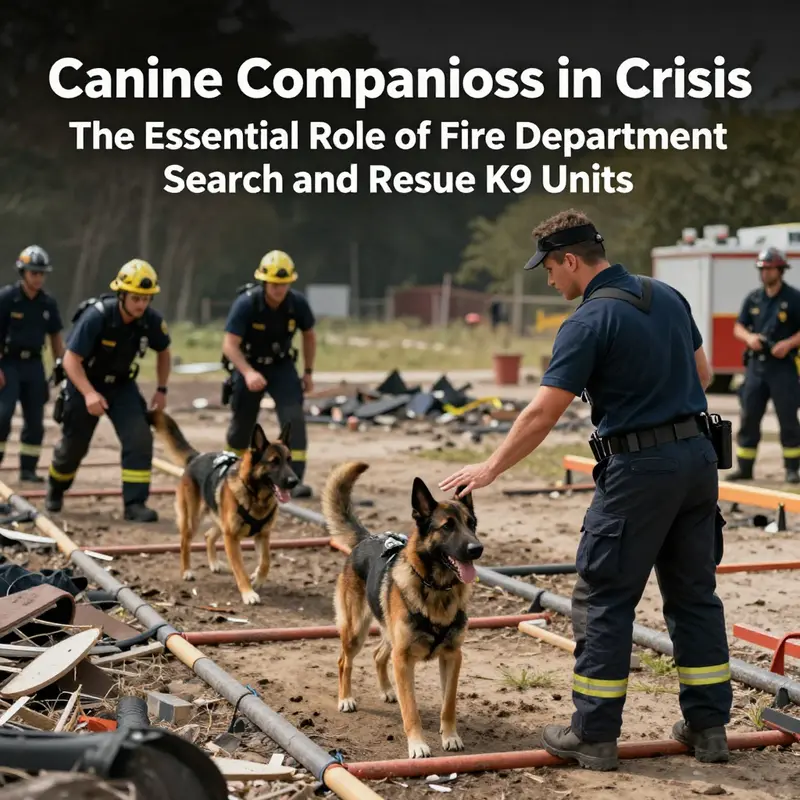
In the hush before a siren, in the tremor of a tremor-filled city, a different rhythm of rescue begins to beat—the careful, patient work of search and rescue canine teams within fire departments. These pairs, often described in the same breath as urban legends of courage and persistence, are real, reproducible, and increasingly indispensable. The dogs are not mere adjuncts to firefighters; they are highly trained specialists who extend the reach of a team into environments that tests of endurance and human search alone would struggle to confront. The environments vary from the rubble of collapsed structures to the unstable edges of wilderness, from the glowed embers of a wildfire’s edge to the treacherous grades of a mountainside washed by rain. In every scenario, the dog’s nose translates air and scent into a signal that can save a life or end the search with a measured, humane clarity. This integration—where canine instinct, human judgment, and systematic emergency protocols converge—represents a significant evolution in how fire departments respond to disasters of all scales.
The professional arc of SAR K9 teams begins with a recognition: the scent of a person trapped beneath debris or hidden in dense vegetation travels along micro-channels and stirs faintly in the air, often days after a crisis begins. A dog’s acute olfactory ability allows it to discern these traces with a sensitivity that is difficult for human searchers to emulate, especially in hazardous sections where entering is risky or physically impossible for a human. The dog’s search pattern, guided by the handler and shaped by training, typically emphasizes speed combined with precision. A trained dog does not endlessly fan the area; it follows scent trails that lead to a person who may be immobile, disoriented, or stunned by trauma. The handler, in turn, translates the dog’s behavioral cues into actions that align with the broader incident command structure, ensuring that every movement serves a defined rescue objective.
A central feature of these teams is their training architecture, a careful blend of physical conditioning, scent discrimination practice, obedience, and scenario-based drills that mimic the layers of complexity found in real emergencies. Conditioning is not about brute endurance alone; it is about maintaining peak performance under stress and in varying terrain—from the ash-choked wind of a wildfire zone to the cold, slippery surfaces of a collapsed foundation. Scent work training involves teaching dogs to distinguish human scent from other odors, to follow a trail that may meander through obstructed spaces, and to indicate a successful find without compromising the safety of the scene. The realism of the drills matters: trainers replicate pressure, noise, and changing conditions so that the dogs become adaptable to whatever the field throws at them. Handlers accompany this work with obedience training and crisis-management readiness so that, if a dog is injured or a responder requires medical attention, the team can operate smoothly under the most demanding conditions.
The partnership is a reciprocal one. Firefighters bring the comprehensive medical knowledge and emergency response protocols that are the backbone of any rescue operation. They understand when a canine partner might be exposed to risk, how to stabilize a human or animal with a dog nearby, and what to do if a canine itself becomes injured or disabled during an operation. This shared expertise is not merely a practical arrangement; it is a culture of safety that values health for both people and pets. Regular medical assessments for the dogs, much like the triage and care standards applied to human casualties, ensure that the animals remain fit for service and that any signs of fatigue or discomfort are addressed before performance declines. The handler, trained to manage a dog’s welfare in high-stress environments, plays a crucial role as the guardian of both the mission and the animal’s well-being. This ethos—of mutual protection and shared responsibility—distinguishes well-functioning SAR K9 units from improvised attempts to combine dogs with disaster response.
The strategic advantage of these units becomes most evident when the scale of a disaster expands beyond the reach of ground searches. In the context of earthquakes, avalanches, or large-scale building collapses, the terrain often defies rapid human triangulation. Debris may shift with aftershocks; smoke or dust can obscure vision; terrain can be unstable, posing additional danger to responders. In such realities, a SAR dog becomes a force multiplier. The dog’s ability to move NIMBY (not in my backyard) through unstable spaces, to follow the most nuanced scent trails, and to operate with a level of speed that makes the difference between survival and loss, transforms the tempo of a rescue. The handler’s decisions—whether to pursue a trail, to switch to a grid search, or to call for a technical rescue team—are guided by the dog’s signals and the dog’s confidence in what lies ahead. This interconnected decision-making reduces time-to-find for survivors and minimizes potential risks to responders who have to navigate hazardous zones.
The literature and field accounts from diverse regions depict how this integration unfolds in practice. In major urban centers, fire departments have institutionalized SAR K9 units as part of a broader USAR (urban search and rescue) framework. They are deployed in line with other specialized teams, such as structural engineers and technical rope crews, to interpret complex hazards and maintain a cohesive incident action plan. The By-the-book part of this practice matters a great deal: standard operating procedures specify how dogs should be utilized, how handlers should coordinate with incident commanders, and how the welfare of the animal is safeguarded on every mission. In larger national or regional responses, interoperability protocols allow canine units trained by dedicated organizations to join forces with other emergency services when an incident scales beyond a single department’s capacity. This collaborative approach ensures that a dog’s acute sensory capability is not constrained by jurisdictional boundaries but can contribute to a collective, nationwide rescue effort when needed.
The cross-pollination between departments and training organizations is another cornerstone of sustainable SAR K9 practice. Fire departments typically partner with specialized K9 training teams that bring expertise in scent work, canine behavior, and mission-specific simulations. These partnerships shape a continuous-learning ecosystem in which handlers and dogs train together, then participate in joint exercises with other emergency services. The benefits are twofold: dogs receive exposure to a broader range of scenarios and terrains, and the operational staff gain a deeper understanding of canine cues, enabling more precise interpretations of signals on the ground. In this arrangement, the training itself becomes a shared language—one that facilitates rapid, accurate decision-making under pressure. Such coordination also helps standardize performance expectations and ensures that the canine units stay current with evolving best practices in search techniques, veterinary care, and safety protocols.
Within this framework, the welfare of the canine partner is treated as a professional duty, not a courtesy. Regular veterinary checks, vaccination schedules, and protective gear appropriate to the mission are part of the standard equipment suite. When a dog is deployed into a dangerous environment, its safety is ensured through risk assessments and pre-mission rehearsals that account for possible hazards—from sharp debris and dust to heat exposure and aftercare needs should the dog tire or become stressed. The handlers carry trauma-informed care training so that they can recognize signs of distress in their partners and respond quickly. This attention to welfare creates long-term resilience; it reduces burnout and preserves the critical animal-human bond that underpins success in life-saving operations.
Technology, too, has a growing, nuanced role in supporting SAR K9 work without overshadowing the dogs themselves. Where once the canine unit stood on the frontline as a purely organic sensor, today it often shares the scene with robotic assistance, aerial reconnaissance, and sophisticated incident management software. Fire departments are increasingly incorporating non-traditional tools that complement canine capabilities, expanding the range of environments where humane search and rescue can be accomplished. The integration of remotely operated devices, weather and environmental monitoring, and real-time data visualization helps incident commanders craft more precise search strategies while preserving the safety of both responders and dogs. Importantly, this technological augmentation never replaces the dog’s primary contribution; it enhances the team’s situational awareness and allows the dog to work in the most favorable segments of the environment where scent diffusion remains reliable and the risk to humans is minimized. A growing understanding of this synergy is visible in articles and case studies that argue for a balanced approach: celebrate canine prowess, acknowledge human expertise, and harness technology as a companion that serves the mission rather than defines it.
The question of deployment strategy often turns on the specifics of the incident and the terrain. In a collapsed building, for instance, the dog’s ability to detect heat signatures, human scent, and movement can guide rescuers toward voids and air pockets where survivors may be sheltering. In wilderness searches, scent discrimination along animal tracks, soil samples, or water sources becomes a critical piece of the plan, enabling teams to narrow the search area and prioritize where to deploy search grids, acoustic listening posts, or ground-penetrating tools. In wildland fire scenarios, dogs can help locate civilians or injured responders in ember-laden zones where air quality and visibility pose unique challenges. The handler’s interpretation of the dog’s cues—whether the dog is signaling a location to dig, a path to follow, or a retreat to safer ground—must be aligned with the broader incident plan and the tactical priorities set by the incident commander.
A key leadership insight in these chapters of practice is the recognition that the long-term viability of SAR K9 units rests on sustained investment. That investment includes regular drills, certifications, and cross-training with allied agencies. It also requires continuous attention to equipment maintenance, such as leashes, harnesses, protective coverings, and veterinary readiness. The most successful programs treat training not as a one-off event but as an ongoing culture, embedded in the department’s daily routines and visible in the department’s relationships with the public. Community awareness plays a critical role here; when communities understand the value of SAR K9 teams, they become allies that facilitate training opportunities, fundraising for veterinary care, and the public’s willingness to cooperate during a mission. This social contract—between responders, the animals that serve with them, and the communities they protect—creates a durable foundation for resilience in the face of rising urbanization and the increasing frequency of natural disasters.
If one were to trace the arc of a SAR K9 unit’s lifecycle, it would begin with recruitment, then progress through rigorous screening, specialized obedience, and scent-work certification that culminates in real-world deployments. The middle years are defined by ongoing training, periodic re-certification, and deep, field-tested collaboration with human teammates. Finally, retirement and aftercare, both for the dog and its handler, complete the ecosystem. The retirement phase is more than an ending; it is a transition that recognizes the dog’s service and ensures that the human partners pass on a legacy of knowledge to newer generations through mentorship and formal knowledge transfer. Throughout this lifecycle, a department’s leadership must shoulder the financial and organizational work that keeps teams current, cohesive, and ready to respond when disaster strikes. The commitment is not ceremonial; it is practical, calculated, and dynamic—an ongoing investment in human life, animal welfare, and the communities that rely on both when the world grows uncertain.
In this broader frame, the SAR K9 units reflect a broader truth about modern emergency response. They embody a philosophy that values speed without sacrificing safety, agility without compromising care, and technology as a complement rather than a replacement. They remind us that even as urban landscapes expand and weather systems become more volatile, rescue operations can thrive when the human-animal bond is honored within a disciplined, well-funded system. The practice of integrating canine teams into fire department response is not merely about adding more responders to a roster; it is about embedding a particular kind of operational intelligence into the fabric of emergency management. It is a reminder that, sometimes, the most decisive tool in a crisis is a nose, a well-trained partner, and a handler who can read the story the scent is telling—an everyday demonstration that life-saving rescue often begins with the simple act of listening to a faithful companion.
For those curious about the evolving landscape of this field, there is a continuum of thought that connects tradition with innovation. The core principles—rigorous training, welfare-first practice, disciplined integration with incident command, and sustained institutional support—remain stable. Yet the way these principles are realized can shift as departments explore partnerships with external training networks, adopt advancing medical and safety practices, and weave in technology to support decision-making. The net effect is a future where SAR K9 units are more capable, more resilient, and more integrated into the broader emergency response ecosystem. They become not only a force for locating survivors but also a symbol of a community’s commitment to protecting life in the most demanding conditions. This vision is not a distant ideal; it is a working reality in many fire departments around the world, and its continuing evolution comes from the careful, steady work of trainers, handlers, and emergency managers who understand that every scent trail is a story of a person’s chance at survival—and every rescue a narrative of shared responsibility and hope. In the coming years, as urban density grows and disaster profiles shift, the SAR K9 model will undoubtedly expand in scope, sophistication, and reach. The dogs will continue to learn the language of scent and space, and the people who train them will carry forward a tradition that blends science with empathy, speed with safety, and duty with compassion. This is not merely about what a dog can do; it is about what a coordinated, well-supported team can do for a community when time is short and every second matters.
To glimpse the broader conversation about how rescue practice is evolving, consider the way knowledge on this topic circulates through the professional community and public-facing discourse. The commitment to continuous improvement—through training standards, joint exercises, and shared learning—remains a defining feature of successful programs. Readers who seek a deeper dive into the standards and guidelines that shape training and deployment can consult widely cited sources that document best practices for fire department SAR K9 units. The synthesis of these ideas with frontline experience helps create resilient, adaptable teams capable of responding to the most challenging crises with competence and care. In this light, SAR K9 units are not merely a specialized capability; they are a living expression of a department’s readiness to act decisively when minutes matter most.
For further reading on formalized guidelines, one may consult the National Fire Protection Association’s 2024 guidance on training and deployment for Fire Department Search and Rescue K9 Units. This resource outlines core competencies, certification paths, and procedural standards that help ensure consistency across departments and across borders. External resource: https://www.nfpa.org/News-and-Research/Reports-and-Studies/Incident-Reports/2024-Fire-Department-Search-and-Rescue-K9-Units-Training-and-Deployment-Guidelines. Within the chapters of practice, this external reference serves as a benchmark that informs ongoing training, interoperability, and the ethical dimensions of canine rescue work.
Within the ever-growing ecosystem of fire service innovation, one can also glimpse how the field is not standing still. A connected thread links the steady, quiet work of SAR K9 teams to broader explorations of how technology and human expertise can collaborate without diminishing the human elements—empathy, decision-making, and responsibility—that define life-saving rescue. The importance of this balance becomes especially clear in the context of mass casualty scenarios, where every decision can ripple through a chain of actions that ultimately saves or costs lives. The SAR K9 unit, in its quiet, effective way, demonstrates the value of careful integration, deliberate training, and a culture that prioritizes safety and welfare while expanding the bounds of what is possible in rescue operations. The story of these teams is, in many ways, a story about the future of emergency response: adaptive, collaborative, and driven by the conviction that when help arrives, it arrives with a trained nose, a steady heart, and a steadfast human partner who believes that another person’s life is worth every effort.
The reflective takeaway is clear. Fire departments that invest in SAR K9 units do more than add resources; they cultivate a resilient approach to crisis that honors the partnership between human responders and animal allies, integrates new tools in a principled manner, and remains steadfast in the pursuit of rapid, safer, and more humane rescue outcomes. The dogs’ work—quiet, precise, and relentlessly hopeful—remains a potent reminder that the most effective rescue response is not a single solution but a well-orchestrated collaboration that mobilizes training, care, and courage toward a common purpose. In that orchestration lies the chapter’s enduring truth: when scent becomes signal, and signal becomes action, communities stand a little taller, and a little more certain that help has arrived, ready to meet them where they are. And in that certainty, the voice of a dog, guided by a trained handler and a vigilant team, becomes a beacon of practical hope in the most difficult moments imaginable.
Technology-Driven Rescue: The Evolution of Fire Department Search-and-Rescue K9 Units
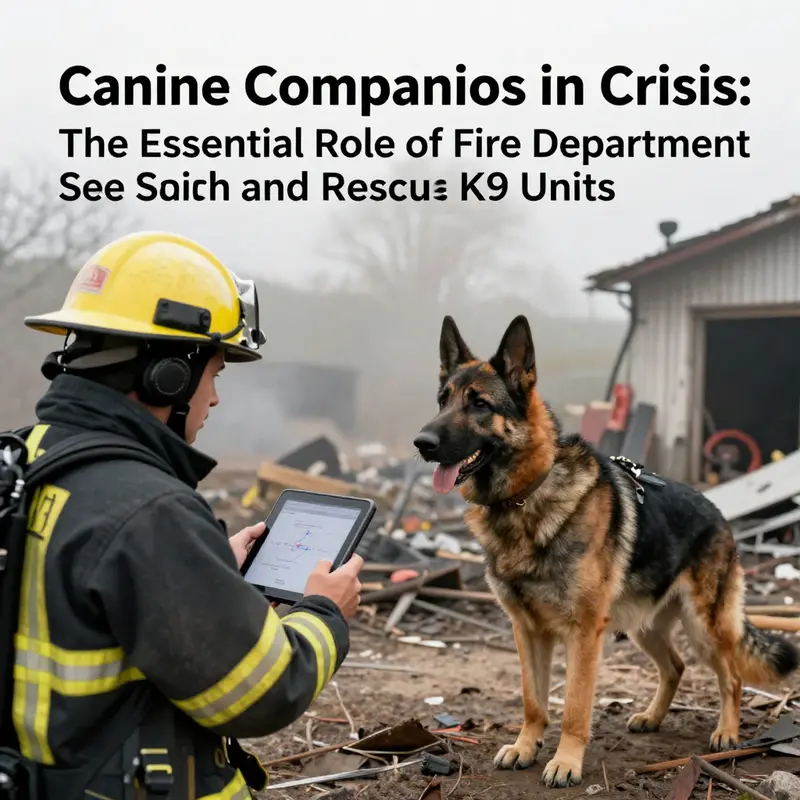
In modern fire service operations, search-and-rescue dogs work beside wearable sensors, data dashboards, and environmental analytics. The partnership remains dog-led, with technology acting as a force multiplier that expands what a K9 team can achieve in collapsed structures, wildland fires, and other high-risk scenes. Wearable monitors track heart rate and temperature, while GPS, air-quality sensors, and thermal imaging provide real-time context to the handler and incident command. The result is a safer, faster, and more precise search that preserves the dog’s primary olfactory strengths while leveraging data to guide decisions.
This approach is not about replacing canine skill; it is about extending it. Training emphasizes lightweight gear, ergonomic harnesses, and intuitive interfaces so data supports the dog’s nose without creating cognitive overload for the handler. When sensors corroborate a scent signal, teams can validate the target, prioritize routes, and reduce unnecessary exposure for both humans and dogs. The collaboration also prompts ongoing attention to welfare, veterinary oversight, and ethical use of technology in high-stress environments.
Across departments, the most effective operations blend tradition with evidence-based practice: the dog leads with scent, sensors map risk, and the command team orchestrates a coordinated response. This layered approach preserves the humane core of rescue work while expanding its capabilities, enabling responders to reach survivors more quickly and with greater confidence in the safety of every team member.
Final thoughts
The synergy between K9 units and fire departments is indispensable in modern emergency response efforts. These dedicated teams not only save lives but also embody the incredible bond between humans and their canine partners. The thorough training these dogs undergo and the innovative technologies that support them enhance their impact significantly. As communities strive for safety and preparedness, understanding the value and capabilities of fire department Search and Rescue K9 units becomes vital for all stakeholders involved.