
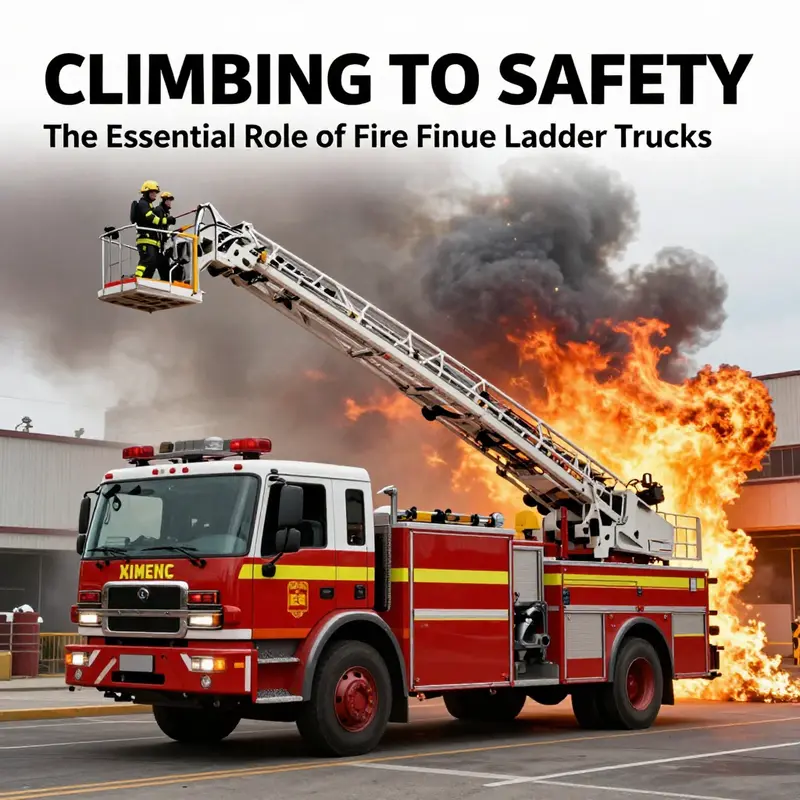
Fire engine ladder trucks serve as a frontline response tool in emergency rescue situations, particularly in urban settings where high-rise buildings pose significant challenges. With their advanced technology and design, these specialized vehicles are pivotal for effectively reaching and saving individuals trapped in high places. This article delves into the multifaceted role of fire engine ladder trucks, commencing with their operational significance in emergency rescues. We will explore their technical specifications, such as ladder reach and hydraulic systems, in further detail. Additionally, we’ll discuss the operational challenges faced by these trucks in real-world rescues and analyze their impact on urban firefighting tactics. By understanding the intricacies of fire engine ladder trucks, we can appreciate their crucial function in our communities and the safety they provide.
Rising Toward Rescue: The Ladder Truck’s Orchestrated Move Through the Urban Skyline
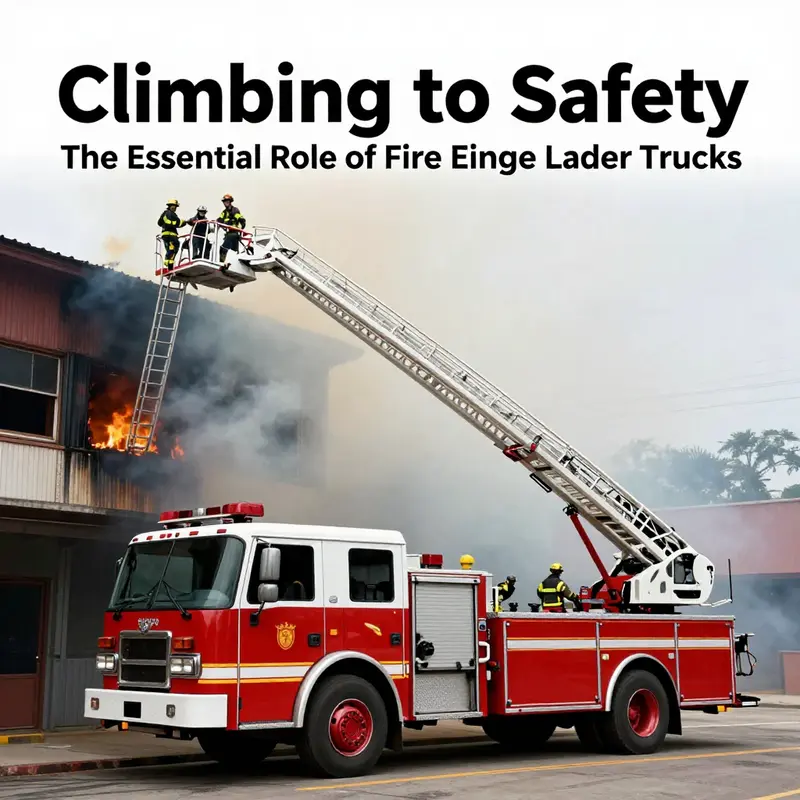
The street hums with an urgency that feels almost tactile as a fire engine ladder truck rolls forward, its tires tracing a line through the shimmer of heat and siren rhythm. This moment is more than a simple approach to a building; it is a calculated convergence of power, precision, and patience. The term fire engine ladder truck captures two essential capabilities in one agile frame: the pump that can feed water at pressure to combat a blaze and the extendable ladder that reaches into the upper stories where life clings to a narrow thread of air and a glimmer of safety. In the bustle of a city where towers claim the sky and streets narrow into canyons between glass and brick, the ladder becomes a movable ladder of hope, a platform that translates height into access, and access into safety for people who cannot descend by stairs or escape through ground-level windows. The reach of the ladder—often climbing to heights that dwarf the ground floor—transforms a rescue into a feasible outcome rather than a distant possibility. The ladder is not a luxury but a necessity for high-rise and dense-urban responses, a bridge between the immediacy of a trapped person and the trained hands that can free them. The truck’s hydraulics emit a subdued growl, a soft mechanical purr that signals readiness rather than aggression, while the crew’s eyes stay alert for subtle signs: a smoke-darkened stairwell, a hallway that has become slick with heat, a vibration in the structure that hints at instability. The vehicle’s posture is evidence of careful engineering and crew discipline, with stabilizing outriggers set to ground contact, weight evenly distributed, and a wind assessment absorbing the breath of the city. In this orchestration, every person has a role, yet the emphasis rests not on bravado but on the quiet confidence that comes from training that has been practiced, audited, and refreshed through drills and real calls alike. The driver’s hands on the wheel speak of tunnel-vision focus and broad situational awareness, a combination born from countless drives to and from incidents where the line between chaos and control can be as thin as a heat shimmer. The operator who commands the base of the ladder becomes a conductor, translating the incident command’s tactical brief into the cadence of mechanical action. A precise sequence unfolds: the truck is steered to align with the building’s face, outriggers are deployed and secured, and the ladder begins its measured ascent. The ground crew communicates with calm clarity, guiding pedestrians away, clearing vehicles, and marking safe zones that will anchor the responses above and below. The ladder’s sections slide with a velvet ease, extending toward the target floor as if the city itself were a fingerprint on a glass surface and the ladder must trace that fingerprint to reach the occupants. The bucket or platform—the space where a rescuer can cradle a patient while maintaining contact with a safety tether—becomes a stage for human resilience. In this setting, a civilian may find a moment of stability in the air, a breath that is no longer strained by heat, a light at the window that signals a path to safety. The crew members who attend to the person in the bucket balance clinical calm with the empathy that defines rescue work; they communicate softly, explain each step, and monitor the person’s comfort to prevent panic from escalating into a new danger. The city’s sounds fall away into a muted backdrop as the platform is positioned; what remains is a focused corridor of action that threads its way through smoke and light, smoke and hope, smoke and a life that might otherwise vanish in the blur of heat. The ladder truck’s reach is a bridge not only physically but also conceptually: it reframes the problem from a desperate climb through smoke to a measured ascent toward possibility. In the minutes when the ladder is secured and the occupants are being guided to safety, the fire suppression team remains mindful of the interplay between ventilation and water application. The ladder does not stand in opposition to the ground crews’ work; instead, it complements it by reducing the time the fire has to spread and by opening routes that allow people to move away from the core of danger. The precision of this balance—heightened access paired with controlled flow—often makes the critical difference between a partial rescue and a complete safety outcome. Urban environments amplify the importance of this partnership. When the ladder’s reach competes with street geometry, the crew must choreograph a careful dance of positioning, alignment, and reorientation. Street parking, narrow lanes, and the reflective glare of storefronts can complicate what would otherwise be straightforward. Yet the event’s outcome hinges on that restraint—the restraint to avoid improvisation in favor of rehearsed response, to trust the ladder’s stability and the operator’s command. The vehicle’s bulk, paradoxically, becomes a strength when layered with discipline. The same mass that makes navigating a tight alley a challenge is also what carries the water lines, rescue equipment, and protective gear needed to sustain operations at height. The ladder’s extension is more than a mechanical feat; it is a decision about where to place the line between vulnerability and rescue, between smoke-filled rooms and the fresh air of a balcony. The crew’s breath, steady, measured, and synchronized, echoes through the cab and into the platform as a reminder that fear must be managed, not ignored. In this sense, the ladder truck embodies a narrative that is both technical and human. It is a compact archive of training: each outriggers’ bite into the pavement, each hydraulic pump’s flicker, each rung the ladder climbs, each whispered instruction that ends in a successful patient handoff. There is a deeper signal behind the steel: the city’s continuous investment in design, in safety standards, and in the people who inhabit its towers. The operation is not solely about the peak moment when an occupant is moved to safety; it is about the chain of decisions that begins long before the call arrives and continues long after the last siren fades. This broader arc is why urban fire departments emphasize the integration of equipment with strategy, why standards bodies insist on interoperability, and why communities rely on ongoing training and maintenance. It is also why readers might explore broader conversations about how specialized emergency vehicles adapt to different terrains and populations, including how the design disciplines in developing contexts strive for solutions that are reliable, cost-effective, and supported. For a deeper dive into the broader landscape of adaptable firefighting solutions, see the discussion of comprehensive, customizable fire-truck approaches that address diverse contexts and needs, such as comprehensive-customized-fire-trucks-for-developing-countries-reliable-cost-effective-and-fully-supported-firefighting-solutions. As the ladder finally locks into its final angle and the operator clears the line for patient access, the city witnesses a quiet triumph: a moment when height, equipment, and human resolve converge to bend danger toward safety, if only for a few minutes or a few breaths of air that will one day be the difference between fear and relief. The ladder truck’s ascent is a reminder that rescue, at its core, is a careful, patient craft—an engineering problem solved by people who practice care, communicate clearly, and move with the city’s pulse. The narrative of this ride through the urban skyline is not a single peak but a continuum: a sequence of deliberate steps that, when executed with precision, transform a potentially devastating scenario into a controlled operation that restores safety and dignity to those who trust strangers to lift them into the open air. And so the engine, the ladder, the operator, and the crew become not only responders but stewards of a shared confidence—the city’s promise that when danger rises, there will be a way up, there will be a hand to hold, and there will be a path toward shelter, even at the height where light and smoke meet. External resource: https://www.nfpa.org/
Engineering the Reach: How Ladder Trucks Are Built to Save Lives in Urban Rescues
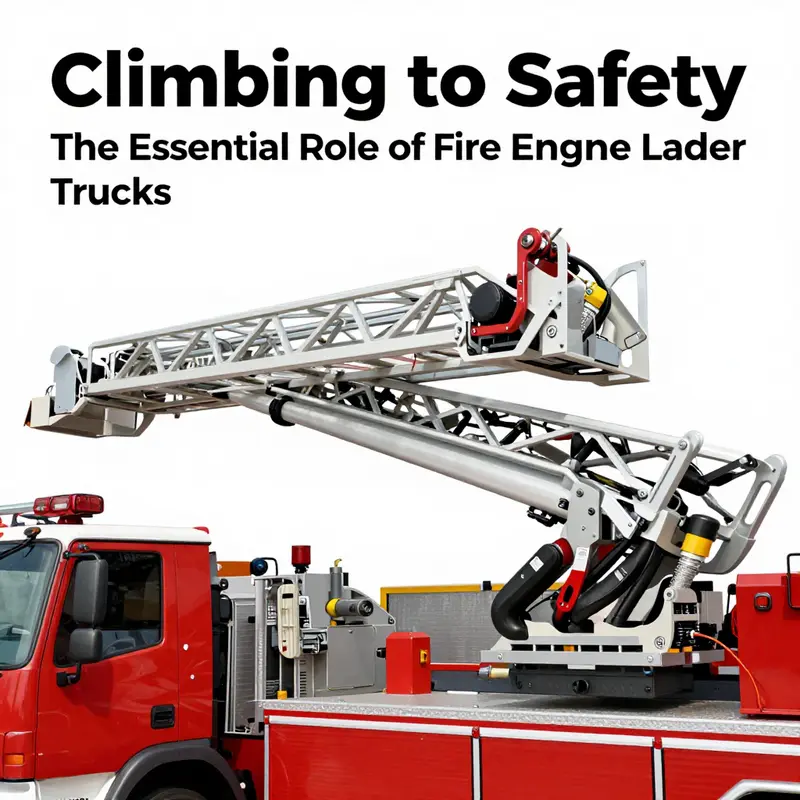
A fire engine ladder truck racing toward a rescue is a study in purposeful engineering. Every inch, pound, and feature of the vehicle is designed around two immutable goals: reach and safety. In dense urban environments where a ladder truck must place firefighters and water at height, the machine must perform reliably under stress, deliver precise positioning, and protect its crew and the people it serves. The specifications that define a ladder truck are not mere numerical curiosities; they form a coherent system that determines how the apparatus moves, stabilizes, and operates when seconds count.
At the heart of the apparatus is the ladder system. Modern ladder trucks employ telescoping and articulated sections that slide and pivot to create a long, rigid extension from a relatively compact base. Maximum working height is the headline number because it tells incident commanders the upper limit of access. Typical working heights fall in a range that allows access to mid- and high-rise floors, with many units rated between roughly 24 and 32 meters. That range translates into the ability to reach windows, balconies, and rooftops in the majority of city blocks. But height alone is not enough. Horizontal reach matters when buildings sit back from the street or when obstacles prevent the truck from parking directly beneath the target. The ladder’s horizontal extension and jib articulation provide offset reach that can exceed 18 meters in many designs, letting crews bridge gaps and set up rescue operations without exposing themselves to unnecessary hazards.
Rotation capability turns the ladder into a flexible tool. A full 360-degree swing allows positioning from any orientation around the chassis, which is essential when tight urban sites restrict where the truck can sit. The turntable that supports this rotation must carry enormous loads and move smoothly under hydraulic power. The hydraulic systems themselves are central to the ladder’s performance. They power extension, articulation, and precise movements from the operator’s console or from the platform itself. Redundancy, pressure regulation, and responsive control valves are part of the specification because a lagging or failing hydraulic circuit can mean the difference between a controlled, deliberate placement and a dangerous, unstable lift.
Safety and stability are inseparable from the ladder’s reach. Outriggers—deployable stabilizing legs—are engineered to transfer loads from the ladder into a wider footprint on the ground. When fully deployed, they create a stable base that counters overturning moments produced by an extended ladder carrying weight. Automatic leveling systems and load sensors constantly assess geometry and weight distribution. If an operator attempts a maneuver outside safe parameters, interlocks and alarms limit motion and protect the crew. The platform, or bucket, at the ladder tip is more than a standing place; it is a workstation. Designed to carry multiple firefighters with gear, it includes attachment points for safety harnesses, handrails, and controls so an operator can command ladder movements without leaving the platform.
The vehicle chassis and mobility systems define how the ladder reaches a scene. Ladder trucks commonly use heavy-duty chassis configurations such as six-wheel formats that offer higher payload capacities and better axle distribution. Configurations with additional driven wheels improve traction and mobility on uneven or slick surfaces. The chassis must accommodate not only the weight of the aerial device but also pumps, water tanks, hose loads, foam systems, tools, and crew members. Engine power must therefore be robust; high-output engines supply motive force and generate hydraulic pressure for ladder operations. Because the ladder’s hydraulic pumps can demand significant power, engine ratings and pump arrangements are specified so the apparatus can sustain prolonged operations while maintaining mobility when needed.
Fire suppression capability is integrated into many ladder trucks, making them versatile tools on the fireground. Built-in pumps with capacities often measured in the high hundreds to low thousands of gallons per minute supply water to both ground lines and the ladder’s nozzle. Having a large-capacity pump onboard means the ladder platform can become a high-elevation delivery point, allowing crews to apply water directly where it is most effective. An onboard water tank offers immediate suppression capability before hydrant connections are established; tanks commonly range enough to support initial attack operations while logistics are established. Specifications tie pump curves, nozzle pressures, and hose layouts together to ensure that the elevated stream achieves the required flow and reach when fighting fires at height.
Operational ergonomics and crew considerations are baked into the vehicle’s design. The cab is a command and living space for a small crew under stress. Seat configurations, communication systems, and instrument layouts aim to reduce cognitive load during response. Integrated radios, navigation systems, and incident lighting allow crews to arrive informed and begin operations immediately. Lighting and signaling play their own role: high-intensity scene lights, directional work lights, and conspicuous warning systems enhance safety during night operations and in complex incidents where the apparatus must be both visible and functional.
Specialty equipment and modularity add capability for diverse missions. Some ladder trucks include cutting tools, winches, and aerial-mounted pumps. Others offer adaptions for rescue tasks such as confined-space retrieval or technical rope operations. Modern designs often permit customization so that departments can balance capability, cost, and mission profile. For agencies operating in regions with particular needs—such as narrow streets or limited budgets—customizable solutions enable a ladder truck to serve as both an aerial rescue unit and a multi-role emergency vehicle. This flexibility is a practical response to the varied demands of urban, suburban, and industrial response environments.
Reliability and maintenance requirements also shape technical choices. Hydraulic circuits, for example, are specified with maintenance intervals and service access in mind. Load-bearing components are designed with material properties and safety factors that account for the rigors of daily use. Regular inspection schedules for the ladder sections, pins, and bearings are part of the operational doctrine, and sensors help detect wear or misalignment before failures occur. The electrical systems that support controls and alarms are typically designed with redundant circuits and protected connectors to withstand vibration, moisture, and temperature extremes.
Standards and certification anchor these technical specifications to recognized safety and performance criteria. Industry standards define testing procedures for aerial devices, outline structural load tests, and set limits for allowable deflection under load. Conformance to these standards gives departments confidence that a ladder truck will perform as expected in life-saving scenarios. The interplay of standards, manufacturer testing, and real-world operational feedback produces iterative improvements, making modern ladder trucks safer and more capable than their predecessors.
When a ladder truck approaches a rescue, the technical specifications translate into human outcomes. Maximum working height and horizontal reach determine whether a trapped occupant can be reached from the nearest street. Hydraulic responsiveness and rotation control shape how quickly a platform can be placed at a window. Outriggers and load sensors protect firefighters from unexpected shifts. Pump capacity and nozzle design control the effectiveness of water delivery at elevation. Each specification carries weight because it influences tactics, resource allocation, and, ultimately, the lives saved.
In planning and procurement, decision makers must balance competing demands: higher reach often means increased weight and greater cost. More complex hydraulics yield better movement but demand more maintenance expertise. Larger pumps provide flow but require greater water supply logistics. Acquiring and fielding a ladder truck therefore remains a strategic choice that reflects a community’s built environment, risk profile, and operational doctrine. Departments must weigh specifications against response times, street geometry, and typical incident types.
The technical anatomy of a ladder truck is a crafted compromise—engineered to deliver reach, stability, and safety while remaining operable in the chaotic conditions of an emergency. Its specifications are not abstract figures; they are the rules that govern how the apparatus interacts with buildings, people, and firefighters. Understanding those numbers gives a clearer picture of why ladder trucks move the way they do, why they set stabilizers where they do, and how they become the backbone of urban rescue operations. For departments exploring tailored aerial solutions that match their environment and budget, resources on adaptable apparatus options can provide practical perspectives on choosing the right configuration for local needs: customizable fire truck solutions for developing countries.
For authoritative standards and broader guidance on apparatus design and performance, consult the industry resource that sets many of the accepted benchmarks for fire apparatus safety and operation: https://www.nfpa.org/
When the Ladder Reaches: Real-World Operational Challenges of a Fire Engine Ladder Truck Driving to Rescue
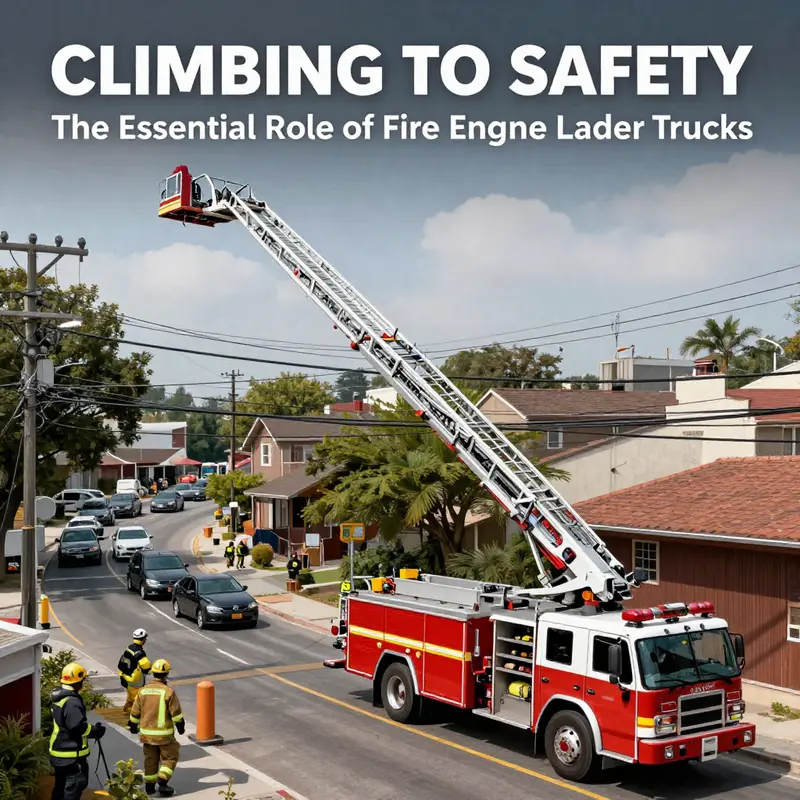
When a fire engine ladder truck drives toward a rescue, the scene that unfolds on arrival is the result of countless choices made long before the sirens quiet and the hoses are rolled up. These vehicles are engineered for extremes: reaching dozens of stories, supporting people and equipment at height, and delivering both firefighters and water where other apparatus cannot. That capability, however, brings a set of interlocking operational challenges that shape every aspect of response — from route selection and crew training to maintenance schedules and decisions made inside a smoky high-rise. This chapter examines those challenges as a single, continuous narrative, showing how they converge during an emergency and how departments reconcile them to deliver life-saving performance.
Size and maneuverability are the first limits responders face even as the ladder truck moves toward an incident. These apparatuses are long, heavy, and often wider than the average street lane. In older urban neighborhoods, alleyways and tree-lined streets, the simple act of finding a place to park becomes tactical work. A driver engineer must anticipate not just the shortest route, but the only feasible one: bridges with weight restrictions, underpasses with limited clearance, and streets that narrow at rush hour can all force reroutes that cost precious minutes. Arriving at a scene with the truck unable to position for safe ladder deployment is a failure that training alone cannot always solve. To mitigate this, crews rely on preincident planning, mapping software, and local knowledge. Yet no amount of planning eliminates surprises — double-parked delivery vans, curbside construction, or a festival crowd can transform a straightforward approach into a complex logistical puzzle requiring quick improvisation.
Closely tied to physical footprint is the need for stabilizing the aerial once in position. Outriggers extend and redistribute the truck’s weight, creating a stable base from which the ladder can safely operate. But deploying outriggers requires space and level ground. Sloped driveways, uneven sidewalks, or soft ground near landscaped curbs can complicate leveling. Even with built-in automatic leveling systems, crews must assess ground conditions and sometimes wrestle with limited placement options. The decision of where to deploy the truck is strategic: too close, and building overhangs or power lines pose hazards; too far, and the ladder may not reach victims or the target structure. These trade-offs are part of a continuous risk calculation performed by the officer in command and influenced by building construction, wind, and the location of victims.
Wind and other environmental forces introduce a different kind of constraint. At ground level, a ladder truck’s hydraulics and stabilization systems are robust. But as the ladder reaches height, even moderate winds translate into significant lateral forces at the tip. The physics are blunt: longer reach means greater deflection and more stress on the system. High-wind operations demand altered tactics — limiting ladder extension, shifting to rescues using ropes or internal stairwells, or waiting for a lull when conditions allow. Crews must balance urgency against structural safety, always aware that a ladder rescue in gusting conditions increases risk to both victims and firefighters. Manufacturers design for specified wind tolerances, but real-world scenarios often operate outside ideal conditions, and judgment becomes the instrument that bridges design intent and field reality.
Operating the aerial demands more than mechanical understanding; it requires skilled operators. Driving a ladder truck through congested streets is one skill set. Positioning and manipulating a telescoping or articulating ladder is another. Training programs emphasize precise, calm control of the joystick, clear communication between ground crew and the operator, and rehearsed gestures for moving people and equipment. Under stress, with smoke reducing visibility and bystanders in distress, even experienced operators must maintain composure. Errors in articulation can cause tip swing, entanglement with overhead hazards, or collisions with fragile building features. Continuous, scenario-based training reduces these risks, but it also carries cost and time implications. Departments must decide how intensively to train within the constraints of budgets and staffing, and those decisions directly affect field safety and effectiveness.
Fire engine ladder trucks are often hybridized in function: they carry ladders and aerials, sometimes pumps and water tanks, and extra equipment for technical rescues. Yet most aerial trucks are not designed to be self-sufficient water-delivery units. Dependence on hydrant networks or water supply from other engines is a strategic vulnerability, particularly in areas with aging infrastructure or in rural neighborhoods without hydrants. When an aerial unit arrives and must wait for supply lines or tanker shuttles, its ability to attack a fire from above or cool exposures is diminished. This scenario changes the incident timeline and forces crews to sequence tasks differently: protecting exposures, performing rescues, or shoring structural elements while water is routed. Departments with limited resources may equip ladder trucks with larger tanks or integrated pumps to bridge the gap, but adding mass increases the earlier problems of weight, handling, and bridge clearance — a cascade of trade-offs that planners must manage.
Weight and vehicle handling are not merely matters of vehicle dynamics; they influence routing policies, mutual aid agreements, and apparatus procurement decisions. Heavy curb weights restrict travel across older bridges and through certain tunnels. In some municipalities, ladder trucks require special permits or predefined routes to avoid structural stress. This reality feeds back into preincident planning: which stations house ladder trucks, how mutual aid is arranged between neighboring jurisdictions, and whether specialized lightweight aerial designs are needed for certain districts. Each procurement decision reflects local conditions and strategic priorities, balancing reach and capability against the constraints of the built environment.
Maintenance and operational costs underpin every capability. Aerial systems are complex assemblies of hydraulics, electronics, safety interlocks, and mechanical linkages. Regular inspections save lives, but they are resource-intensive. Hydraulic seals, wire rope splices, telemetry modules, and turntable bearings require cyclical replacement. Unexpected failures can strip a department of aerial capability for weeks. Preventive maintenance programs mitigate downtime, but they demand budget allocations that may compete with personnel needs, training, or station upgrades. Moreover, older fleets often require custom parts or specialized shops that introduce delays. Departments wrestle continually with lifecycle cost assessments, choosing between expensive new apparatus and the escalating maintenance costs of aging units.
Interoperability and standardization are less visible but significant challenges. In multi-agency responses, different models of ladder trucks can have divergent control interfaces, outrigger configurations, or communications wiring. In the fog of a large-scale incident, unfamiliar controls slow operations. Standardizing training across mutual aid partners and adopting common operating procedures reduces friction, but standardization itself is a long-term effort that requires coordination, joint training, and sometimes regional investment to align fleets.
Finally, the human dimension threads through every technical challenge. Crew fatigue, stress, and the psychological burden of high-stakes rescues affect performance. Extended incidents strain crews, and ladder operations are physically and mentally demanding. Departments implement shift management, wellness programs, and after-action reviews to preserve readiness, but the unpredictable nature of emergency response means fatigue and stress remain persistent operational variables.
These challenges are not isolated failures; they are the constraints that shape doctrine. A successful ladder truck response is the product of continuous adaptation: apparatus designs that attempt to balance reach with weight limits, training regimens that pair driving with aerial manipulation, maintenance schedules that prioritize safety-critical components, and interagency agreements that smooth mutual aid. Where infrastructure is limited or funding constrains equipment, tailored vehicle solutions can help bridge capability gaps — an approach discussed in frameworks such as customizable fire truck programs for developing regions. Departments that address these operational realities proactively create resilience: they plan routes with structural data, rehearse ladder operations under adverse conditions, and invest in maintenance strategies that keep aerial capability available when it matters most.
Understanding these interconnected challenges clarifies why ladder truck operations are rarely simple. Each rescue—especially in high-rise scenarios—repackages the same constraints into new permutations. The vehicle’s size and reach are its strength and its logistical burden. The aerial’s mechanics enable daring rescues and demand meticulous care. Environmental forces and human factors complicate every movement of the ladder, and water supply dependencies reframe tactical priorities. Effective responses emerge from a system that acknowledges these trade-offs and designs procedures, training, equipment, and partnerships to manage them. The ladder reaches not because one component is perfect, but because many imperfect parts are welded into a dependable whole by foresight, discipline, and the steady work of firefighters and planners.
For departments seeking detailed design standards and performance guidance related to aerial ladder trucks, the National Fire Protection Association provides comprehensive resources that inform safe operation and apparatus procurement: https://www.nfpa.org/.
For considerations about tailored apparatus solutions in constrained or developing environments, see a practical discussion of customizable fire truck solutions for developing countries: https://tpbhrescue.org/customizable-fire-truck-solutions-for-developing-countries-diverse-firefighting-needs/.
Raising the Level of Rescue: How Fire Engine Ladder Trucks Redefine Urban Firefighting Tactics
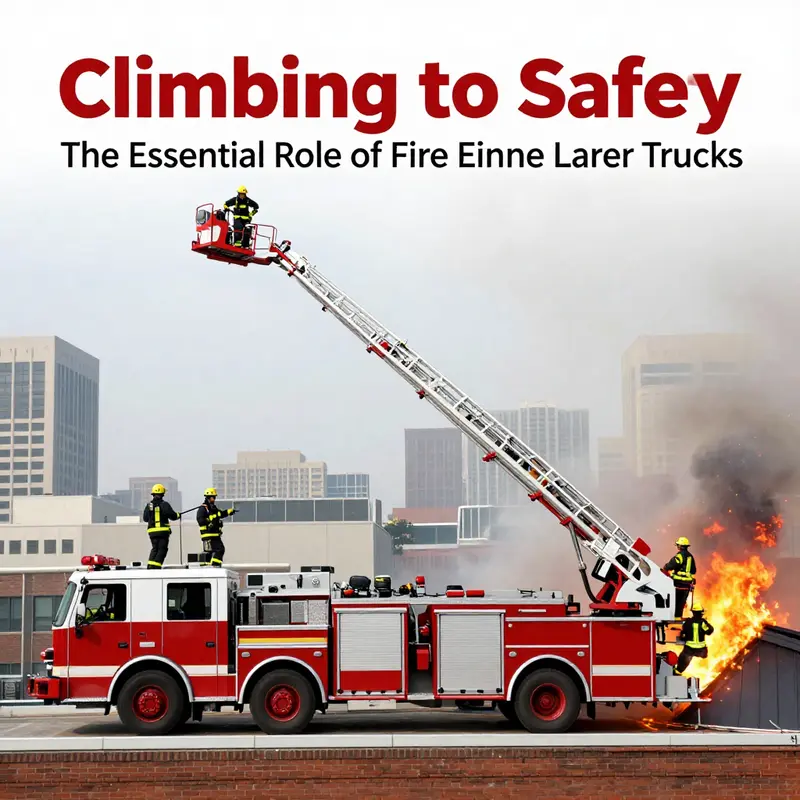
In dense urban centers, a fire engine’s ladder is more than a reach tool—it is a tactical spine that links ground operations to high-rise rescue and vertical ventilation. The aerial platform offers a stable perch above smoke and heat, allowing crews to direct water from above and to view trapped occupants through upper-floor windows. This capability shifts the tempo of a rescue, compressing the time from detection to evacuation and reducing exposure for both civilians and responders. The ladder also shapes incident command by providing adaptable angles and precise height control that can divert the fire plume toward safer channels and create controlled egress routes.
Yet the ladder is not a universal remedy. Its reach is bounded by street geometry, overhead obstacles, and the structural realities of tall buildings. In narrow districts or areas with complex ingress, maneuvering a large aerial apparatus requires meticulous planning, traffic control, and coordination with other units. Fire departments confront tradeoffs in fleet composition, choosing when to rely on an ladder extension versus alternative tools such as high-reach platforms, ground ladders, or interior stairwell-focused tactics. The modern doctrine treats the ladder as a premier capability for vertical access, while recognizing its limitations in the city’s most constrained corners.
Technology and training amplify the ladder’s effectiveness. Stabilization hardware, intuitive control systems, and thermal imaging help operators place the platform with precision and safety. Crew drills that simulate crowded streets, wind, and power line interference build the judgment needed to select target windows, establish a rescue corridor, and synchronize ventilation with fire attack. As urban form continues to push upward, the ladder truck remains a central instrument in a layered response that blends engineering, human skill, and city planning toward the shared goal of saving lives.
Final thoughts
Fire engine ladder trucks are an indispensable asset in the firefighting arsenal, providing critical support for rescue missions in complex urban environments. Their ability to reach significant heights combines with advanced technical capabilities to deliver effective emergency response. Recognizing the role these vehicles play fosters a greater appreciation for the professionals who operate them and the lives they save daily. As urban landscapes evolve, so too must our approaches to firefighting—making the integration of ladder trucks essential for safeguarding communities against fires and emergencies. Through ongoing training and innovation, we ensure that these remarkable vehicles will continue to protect lives and property.