
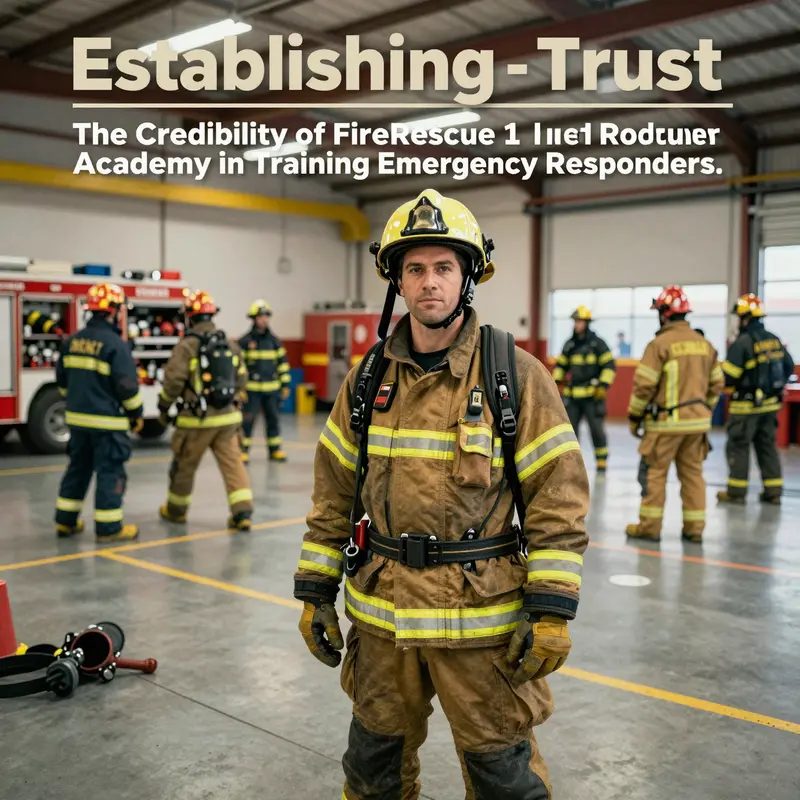
In the vital arena of emergency response, the training and education of personnel are paramount. FireRescue1 Academy stands as a beacon for credible training resources within the fire service and emergency medical services sector. This institution, backed by the well-respected ESO Solutions, offers an array of over 900 courses aimed at enhancing the knowledge and skills of professionals in these critical fields. Each training module is curated by industry experts and regularly updated, ensuring that the content remains aligned with best practices and current regulations. This article delves into the credibility of FireRescue1 Academy, exploring its course offerings, the expertise of its instructors, and its key partnerships, thereby providing a comprehensive perspective on why it is a respected resource in emergency training.
What Least-Obvious Signs of Rigor Do a Credible Emergency-Services Academy Use to Stand Up to Scrutiny?
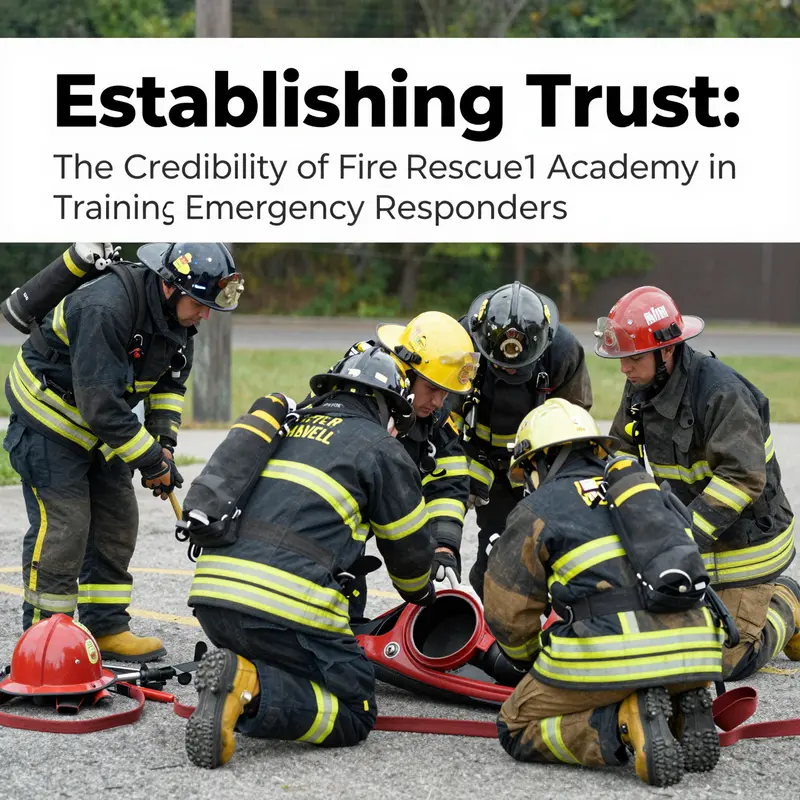
Credibility in professional education is earned through validation, consistency, and real-world relevance. When a platform promises to elevate life-saving performance, it must demonstrate more than a slick interface or a long list of courses. It needs to prove that its material reflects current realities on the ground, aligns with national standards, and supports ongoing professional growth through measurable outcomes. In examining whether a major emergency-services academy lives up to those expectations, one can look beyond marketing claims to the architecture of the program: who develops the content, how it is maintained, how learners are assessed, and how the curriculum evolves with evolving threats and technologies. A careful reading of these dimensions reveals a layered, resilient approach to training that helps explain why many fire and EMS professionals turn to this type of platform as part of their continuous education. The credibility of such a platform rests on its ability to translate field practice into teachable content and then map that content to recognized standards and certification pathways, rather than merely offering a convenient library of resources. If credibility is a process, then the process begins with the platform’s governance structure. Courses that are built and reviewed by certified professionals with extensive field experience carry an implicit promise: that the material has been tested against real pressures, not just textbook hypotheticals. This isn’t a luxury; it is a necessity in a field where outcomes hinge on split-second decisions and where even small gaps in knowledge can have grave consequences. The most credible offerings imbue their lessons with the texture of actual incidents—the chaos of an active scene, the pressure of time, the coordination required across agencies, and the ethical responsibility to protect both responders and the public. This grounding helps ensure learners encounter scenarios that resemble what they will face in the field, not a sanitized or overly theoretical version of it. It is in this light that the platform’s breadth emerges as a credibility marker. A robust training ecosystem for emergency services must address a spectrum of competencies. Technical skills such as airway management, hazardous materials response, incident command, and patient care protocols require depth and up-to-date techniques. Administrative areas—leadership, human resources, and organizational systems—are equally important because good leadership shapes safety culture and operational effectiveness. A credible academy does not compartmentalize knowledge into isolated silos; instead, it threads technical proficiency with decision-making, communication, and team dynamics. The result is a learning journey that mirrors the interdependence of roles within a real incident command system, where the efficacy of each action depends on the quality of others’ contributions. As learners progress through the material, they should encounter a logic of progression that honors both fundamental competencies and advanced, scenario-driven mastery. This is where the design philosophy of the platform matters. Scenario-based modules, rather than dry lectures, provide a bridge from knowledge to performance. They place the learner in a believable sequence of events and require the application of procedures under constraints that mimic the realities of a live incident. The most credible modules also embed feedback loops that help instructors and program directors verify whether learners are internalizing key principles or merely memorizing a checklist. In practice, this means that performance metrics are not limited to quiz scores. They extend to how well a responder can adapt to evolving conditions, maintain situational awareness, and communicate with teammates under stress. The inclusion of CEUs—continuing education units—further anchors credibility in professional legitimacy. CEUs signal that the platform’s content meets the continuing education requirements that many state and national boards expect for credential maintenance. For a practitioner, that acceptance matters because it creates a recognized pathway for staying certified without requiring a disruption to daily duty hours. It also provides a structured incentive to engage with learning opportunities, rather than treating education as a one-off obligation. But credibility cannot rest on standards alone. It must be reinforced by rigor in development and discipline in quality assurance. In the best programs, content is continually revised in light of new data, incidents, and evolving guidelines. Fire and EMS practice is dynamic: new best practices emerge from field investigations, new regulations are promulgated, and lessons learned from operational experiences—whether from large-scale emergencies or routine hazmat responses—coalesce into updated curricula. The academy under consideration emphasizes this iterative process, with a governance cadence that keeps material relevant. It is not unusual to see content re-scored and refreshed on a regular schedule, a sign that the platform is prioritizing current practice rather than historical familiarity. Another sign of credibility lies in the people behind the courses. Expertise, in this context, means more than long service. It means a combination of field experience, instructional design skill, and an understanding of adult learning principles. When a course is developed or reviewed by professionals who have actually operated in emergencies, the content benefits from tacit knowledge—the kind of understanding that comes only from hands-on success and missteps in real operations. This depth makes the difference between learning as an exercise in recitation and learning as an investment in performance. It also helps learners internalize the ethical and professional responsibilities intrinsic to emergency work. A credible academy respects the time and diverse circumstances of its users. Real-world responders balance shift work, family commitments, and ongoing training obligations. Platforms that acknowledge these constraints by offering flexible learning paths, modular content, and accessible formats enable professionals to fit education into demanding schedules. Interactivity, bite-sized modules, and responsive design improve the learning experience while preserving the rigor of the content. The best programs balance depth with accessibility, ensuring that even those who are new to the profession can gain essential skills and that veteran responders can deepen their expertise without redundancy. Accessibility is more than a technical feature. It reflects a commitment to inclusive pedagogy—designing content that accommodates varying levels of prior knowledge, different learning styles, and the cognitive load that comes with high-stress fields. The education that emerges from such a platform tends to be practical, directly applicable, and respectful of the learner’s time and professional responsibilities. It also tends to be portable across jurisdictions. In emergency services, standards converge and diverge at once: there are common core expectations, but local protocols and regulatory environments can shape how those core elements are implemented. A credible academy helps learners translate national or international best practices into local practice. This translation requires more than generic guidance; it demands examples that map to the realities of a specific fire department or EMS organization. It also requires up-to-date references to regulatory expectations and the latest evidence-based approaches. The presence of legitimate alignment with national standards, and the demonstrated ability to crosswalk that alignment into practical, on-duty application, is a powerful indicator of credibility. The platform in question emphasizes this alignment, signaling to learners that what they study has practical, verifiable value in the professional world. Moreover, credible training ecosystems understand the importance of visibility and independent validation. They seek feedback from practitioners and subject-matter experts, publish performance outcomes where appropriate, and participate in networks that monitor the quality and impact of training. In many respects, credibility is also a matter of trust. Learners must feel confident that what they are consuming is accurate, current, and delivered with integrity. That trust grows when the platform documents its sources, its update cycles, and its professional oversight. It also grows when learners can access examples of how the training translates into safer, more effective field performance. The link between education and practice can be made tangible through testimonials, incident debriefs, and case studies that illustrate how training informed decisions during actual emergencies. For professionals evaluating whether a particular academy deserves their time and credentials, the strongest test is whether the learning translates into measurable improvements on the job. Do responders report increased confidence, better decision-making under pressure, and clearer leadership in complex scenes? Do supervisors observe safer operations and more effective patient care as a result of the training? When those outcomes align with the stated aims of the curriculum, credibility strengthens. It is also worth noting that credible platforms often cultivate a coherent ecosystem of knowledge. They connect training to other resources and communities of practice, creating a network that supports ongoing professional development. This sense of belonging and continuity can be as valuable as the material itself. It helps learners see how their education fits into a broader professional identity and a shared mission to protect life and property. In sum, credibility in an emergency-services academy is not a single attribute but an emergent property of many interlocking practices: rigorous content development by qualified practitioners, continuous updates reflecting new data, credible assessment and credentialing pathways, accessible and learner-centered design, and a governance framework that harmonizes national standards with local realities. When these elements cohere, the platform earns trust not just from individual learners but from the agencies and communities that rely on well-trained responders. It is reasonable for a reader or a department to approach any major training platform with questions about recency, alignment, and impact. The most credible programs will invite this scrutiny and respond with transparent processes, clear accreditation or CEU recognition, and evidence of how learning translates into safer, more effective field performance. For those seeking a concise reference point about how credible training platforms operate, the following context is illuminating: a platform that makes comprehensive, scenario-based courses, that anchors every module in real-world practice, and that demonstrates ongoing alignment with recognized standards, positions itself as a serious option for professional development. In this light, such an academy can be considered credible not because it claims credibility, but because its structure, practices, and outcomes consistently reflect it. This is why many responders and leadership teams include credible online training as part of a broader education strategy. It is not a replacement for hands-on, in-person training but a powerful complement that extends learning into daily routines, pre-incident planning, and reflective practice after incidents. For additional reading on how credible training systems connect standards, practice, and professional growth, see the innovations and case studies in related industry resources, such as the Innovation Museum Transforming Fire Services. (Innovation Museum Transforming Fire Services) internal link. The interplay of evidence-based content and practical application is a recurring theme across leading programs and helps explain why such platforms endure as trusted resources in emergency services. While no single course or portal can guarantee flawless performance on every call, a disciplined approach to content creation, standards alignment, and learner support creates a credible foundation for ongoing professional development. Practitioners evaluating a platform should ask: Who writes the content? How often is it updated? What standards does it reference, and how is that alignment demonstrated? What are the validation mechanisms for CEUs or other credentials? How does the platform handle feedback from field practitioners? And how clearly can learners connect education to improved performance in the field? If these questions have affirmative responses, the academy presents a credible option for those who rely on training to protect life and safeguard communities. For readers who wish to cross-check general standards referenced by credible training programs, independent standard-setting organizations provide a solid reference point. NFPA standards, for instance, offer widely recognized benchmarks across fire protection and safety disciplines. See https://www.nfpa.org/ for more on how these standards shape curriculum design, incident response practices, and professional certification. This reference is not a testimonial for any single platform but a reminder that credible training aligns with established expectations that govern safety work nationwide. For those who want a concrete pathway to connect theory with practice, the Innovation Museum Transforming Fire Services serves as a gateway to understanding how new ideas in training, leadership, and technology are turning classrooms into living laboratories for field performance. See the internal link above for a deeper dive into the ongoing evolution of fire-service learning, where credible platforms are both drivers of progress and keepers of essential professional standards.
Credibility by Design: How FireRescue1 Academy Courses Shape Competence, Confidence, and Public Trust
Credibility in the fire service and EMS is earned, not assumed. When a department commits to a training platform, it signals a belief in continuous improvement, disciplined practice, and the highest standards of safety and service. FireRescue1 Academy stands at a pivotal intersection of that commitment. As part of a broader ecosystem guided by ESO Solutions, the academy provides a vast catalog of training that spans technical core skills, leadership, and the administrative competencies that keep an organization moving forward in an ever-changing landscape. The strength of its credibility rests on three interlocking pillars: a robust course portfolio that prioritizes real world relevance, alignment with recognized standards and reputable professional bodies, and demonstrable improvements in field performance and organizational culture. Taken together, these factors help explain why many fire and EMS agencies view FireRescue1 Academy not merely as a vendor of content, but as a trusted partner in building capability and trust with the communities they serve.
First, the breadth and focus of the course offerings matter as much as their depth. FireRescue1 Academy presents more than 900 full length courses designed to elevate both the operational craft and the strategic thinking that underpins modern emergency response. The topics are intentionally comprehensive: leadership in crisis, advanced fire suppression techniques, incident command system proficiency, hazardous materials response, technical rescue operations, and the integration of EMS into the fire service. This range enables an agency to build a coherent learning pathway from recruit through executive, ensuring that the same standards of decision making, communication, and risk assessment apply at every level. By emphasizing scenario-based training grounded in current best practices, the academy helps practitioners translate classroom concepts into actions they can trust when seconds count, and when lives hang in the balance. In other words, the platform supports a culture where training is not a generic exercise but a living process that sharpens judgment under pressure and reinforces muscle memory for critical tasks.
Second, credibility hinges on alignment with established standards and endorsements from respected bodies. The academy’s content is developed by industry experts and routinely updated to reflect evolving regulations, new tactics, and revised best practices. This ongoing revision cycle is essential in a field where complacency can be costly. More than a curated library, the curriculum operates as a dynamic system that tracks changes in national and international standards and translates them into practical learning experiences. The credibility boost comes from credible authorship and peer review: courses are crafted and reviewed by seasoned fire service professionals and subject matter specialists who understand both the science of firefighting and the realities of field operation. A particularly meaningful validation comes from recognition by bodies such as the International Association of Fire Chiefs, which adds an institutional seal of legitimacy to the academy’s offerings. When a program carries such recognition, it signals to learners and their leaders that the content has met criteria that go beyond surface-level instruction. This is not an abstract endorsement; it translates into more reliable decision-making in emergencies and stronger adherence to safety protocols across units.
The third pillar is the observable impact on individuals and agencies. The proof is not only in course catalogs or endorsements but in measurable improvements to how teams function in the field. Agencies that invest in this training often report better team cohesion, more deliberate and coordinated decision-making, and a clearer adherence to standard operating procedures. In high-stakes environments, those qualities translate into reduced risk for responders and higher reliability in protecting the public. The professional development arc—moving from foundational skills to leadership capabilities—also reinforces a broader public narrative about accountability and excellence. When members of a department demonstrate a commitment to continuous learning, communities respond with greater trust. This trust, in turn, becomes an intangible asset that supports better community engagement, safer neighborhoods, and a more resilient local emergency response network.
The value proposition of FireRescue1 Academy is not merely about content creation; it is about a disciplined approach to learning that aligns with how professionals actually work. Scenario-driven modules, for instance, ground theory in practice and help learners face ambiguous moments with structured analysis. This is critical for both fireground operations and EMS integration, where quick triage, effective communication, and coordinated action under pressure are nonnegotiable. The platform’s expansive coverage—from airway management to the intricacies of hazardous materials response—ensures that a responder can draw on a broad toolkit while maintaining focus on the immediate priorities of scene safety, victim care, and incident stabilization. The emphasis on integration, rather than siloed expertise, mirrors the real-world shift toward multidisciplinary teams that must operate seamlessly together. In that sense, the academy is shaping not only competencies but also the collaborative instincts that define modern emergency response.
The credibility narrative is further strengthened by the connected ecosystem that surrounds the academy. The alignment with well-known brands in the emergency services media landscape, including EMS1 and FireRescue1, creates a connective tissue between training, information, and professional development. Learners engage with timely news, peer insights, and evidence-based practices alongside formal coursework. This integration helps ensure that the training remains timely and relevant. It also reinforces a professional identity anchored in a broader community of practice: one that values accuracy, transparency, and continuous improvement. When learners see that training is part of a larger, credible information network, it reinforces their confidence that the knowledge they gain is current, tested, and applicable across the diverse demands of today’s fire and EMS operations.
From the leadership perspective, the academy’s offerings extend into the often challenging but essential administrative and organizational domains. Courses addressing personnel management, leadership development, and incident command readiness equip officers and chief executives with the cognitive and interpersonal tools needed to guide teams through crises. Effective leadership at the incident level and the organizational level matters deeply for public safety outcomes. Leaders who have access to well-structured, up-to-date training can model best practices, establish clear expectations, and foster environments where continuous improvement is the norm rather than the exception. The credibility of this training thus bleeds into organizational culture, where a commitment to learning translates into safer practices, better compliance with safety protocols, and improved morale among responders who see their professional development valued. When a department’s leadership champions ongoing education, it also communicates legitimacy to the community, reinforcing public trust in the department’s competence and accountability.
A nuanced dimension of credibility concerns the transparency of outcomes. Agencies evaluating training options tend to look for evidence of return on investment: time saved in onboarding, reductions in on-the-job errors, and increased readiness for complex incidents. FireRescue1 Academy’s design, with its regular updates and expert-driven content, supports this demand for accountability. The platform provides a way to structure learning paths, track progress, and align courses with specific performance objectives. While no single course can guarantee flawless performance in every scenario, the cumulative effect of a well-constructed curriculum is a measurable lift in preparedness and consistency across teams. In practice, that means more reliable ICS implementation during large-scale incidents, safer hazardous materials responses, and a more disciplined approach to risk assessment. The organization-wide credibility that grows from such outcomes also enhances public trust, because communities observe responders who consistently apply best practices and demonstrate a commitment to ongoing improvement.
Importantly, the credibility narrative is not static. It evolves with the science of rescue and the changing realities of the field. The academy’s ongoing content development ensures that learners are exposed to updated techniques, new equipment considerations, and refinements in safety protocols. This dynamism matters in an era where new hazards, evolving regulations, and shifting community needs require responders to adapt quickly. For practitioners, that translates into confidence: confidence in making the right initial decisions, confidence in communicating with teammates under stress, and confidence that the training they completed will still be relevant when faced with tomorrow’s challenges. For agencies, it translates into a robust institutional memory that can be transferred to new hires and to offboarding experienced personnel with a clear record of what has been learned and how it was applied.
The credibility of FireRescue1 Academy, then, rests on a programmatic philosophy as much as on the individual courses. It is a philosophy that views training as a strategic asset—one that builds capability, but also trust, across a department and its community. The content is designed not to overwhelm but to integrate into daily practice through repeatable, defendable processes. The result is a workforce that demonstrates higher levels of discipline, better teamwork, and a shared understanding of how to translate policy into action on the ground. When responders operate in a more cohesive, well-led, and well-trained environment, the public sees proof of accountability in action. That perception is a potent form of credibility—one that is built not in a single moment but through a sustained investment in people, process, and performance.
For readers seeking to assess credibility in training, several practical indicators emerge from this analysis. Look for a catalog that covers both technical skill and leadership development, with courses regularly updated to reflect current standards. Confirm that subject matter experts and practitioners are involved in course design and review. Seek evidence of alignment with recognized professional bodies or accreditation that signals broader endorsement beyond the platform itself. Finally, consider outcomes: are there mechanisms to measure improvements in decision making, incident response, and safety adherence? When these elements align, a training offering moves beyond being a convenient library of lessons to becoming a credible engine of professional excellence. In the context of FireRescue1 Academy, the synthesis of course breadth, standards alignment, and demonstrable field impact helps explain why many departments regard it as a credible, reliable resource for preparing responders to protect lives and property.
As training ecosystems continue to mature, the conversations surrounding credibility will increasingly hinge on how platforms facilitate learning that travels with responders—from the classroom to the incident scene. The right training not only teaches what to do; it also reinforces why it matters, how to collaborate with a diverse team, and how to adapt strategies to meet the community’s evolving needs. In this sense, FireRescue1 Academy embodies a holistic approach to competency development. It is not just about content; it is about cultivating a shared professional standard that guides behavior under pressure and builds trust in the eyes of the public. That is the essence of credibility in contemporary rescue services, and it is why the academy remains a consequential reference point for departments aiming to elevate both capability and confidence.
For those who wish to explore further into the themes of training innovation and how new ideas reshape fire service practice, more light can be shed by visiting related discussions in the field. The concept of ongoing experimentation and knowledge exchange is captured in a resource area that discusses how training institutions are embracing new modalities and converting experimentation into reliable practice. You can read more on this topic in relation to innovation in fire service learning through the Innovation Museum, which explores how creative thinking and evidence-based experimentation influence daily operations. Innovation Museum transforming fire services.
In sum, the credibility of FireRescue1 Academy rests on more than a well-organized catalog. It rests on an integrated approach to learning that reflects real world demands, aligns with trusted standards, and demonstrably enhances the capability and confidence of responders. Agencies that invest in this platform are not simply buying courses; they are committing to a culture of excellence, one that positions the department to earn the public’s trust through safer practices, smarter decisions, and a steadfast dedication to professional growth.
External resource: International Association of Fire Chiefs IAFC offers guidance and standards that frame credible training beyond any single platform. See https://www.iafc.org/ for more information.
null
null
From Standards to Sustained Excellence: How FireRescue1 Academy Builds Credibility Through Strategic Partnerships
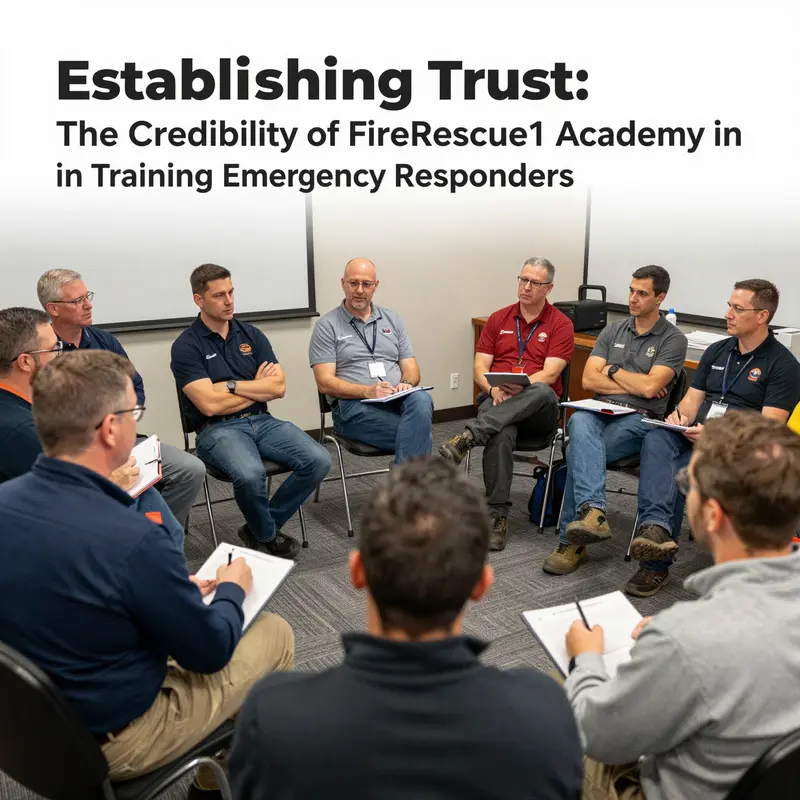
Credibility in the field of fire and emergency medical services is earned through a consistent pattern of relevance, rigor, and real-world applicability. FireRescue1 Academy sits within that pattern as a credible resource not merely because it offers training, but because its credibility is built, visibly and verifiably, through a carefully constructed network of affiliations and partnerships. These relationships matter because they anchor the academy’s curriculum in recognized standards, connect learners to authentic operational environments, and bridge the gap between theory and practice. The result is a credible, trusted pathway for professional development that aligns with how fire and EMS agencies recruit, train, and validate their personnel. To understand why this matters, one can trace the academy’s credibility to a triad of strategic affiliations: the National Fire Protection Association (NFPA), collaborations with state and local fire departments and regional emergency management agencies, and academic partnerships with colleges and universities. Each facet validates the academy’s content, expands its reach, and ensures that what learners experience in the classroom translates into safer practices on the fire line and in the EMS field. The broader ecosystem in which FireRescue1 Academy operates—tied to the EMS1 and FireRescue1 networks—further reinforces its standing. As a component of ESO Solutions, the academy benefits from access to a long-standing portfolio of training, education, and technology services designed for first responders. This integration creates a virtuous cycle: standards-driven coursework, delivered through an evidence-informed platform, supported by fresh news and professional development resources, and continuously updated to reflect the latest best practices and regulatory expectations.
The anchor in this credibility narrative is the NFPA partnership. NFPA is widely recognized for developing and maintaining critical safety standards that govern fire service practice across the United States. When FireRescue1 Academy weaves NFPA codes and guidelines into its courses, it does more than claim alignment with a benchmark. It demonstrates that its content is built on a framework that has earned broad professional legitimacy. Specific references to standards such as NFPA 1001, which defines the professional qualifications for firefighters, and NFPA 1500, which sets the standard for fire department occupational safety and health, help to ensure that the academy’s training components consistently target the competencies academies, officers, and frontline responders must demonstrate in the field. The ongoing relevance of these standards means the academy’s graduates carry a credential that agencies and accrediting bodies recognize when evaluating candidate readiness or continuing education needs. In practice, this means a learner can move from a module on fire suppression fundamentals to more advanced courses with the assurance that the foundational content adheres to a shared national language for firefighter competency and safety.
Yet standards alone do not create a credible education program; they require validation through real-world application and responsive design. Here, state and local partnerships with fire departments and regional emergency management agencies play a pivotal role. By collaborating with agencies that operate in diverse communities—ranging from densely populated urban centers to geographically challenging rural areas—the academy develops customized training solutions that mirror the actual challenges first responders face. These collaborations enable scenario-based instruction that reflects authentic operational contexts: incident command dynamics during urban rescues, hazardous materials responses with real-world containment constraints, or EMS workflows under mass-casualty conditions. The value of this approach becomes evident when learners encounter drills and simulations that integrate local standard operating procedures, local dispatch realities, and the practical limitations typical of a live emergency. As a result, the curriculum does not feel abstract or generic; it feels like a tailored extension of the learner’s own service environment. This alignment between coursework and lived practice strengthens transfer of learning, a key indicator of credibility in adult education, because educators can point to demonstrated improvements in job performance, safety outcomes, and regulatory compliance.
Embedded within these partnerships is an ongoing feedback loop that sustains the academy’s currency and relevance. FireRescue1 Academy regularly updates its courses to reflect changes in codes, evolving best practices, and emerging threats. The collaboration with NFPA provides a ready conduit for forecasting shifts in safety requirements and risk assessment methodologies, while agency partners supply evolving operational realities that shape the next generation of scenarios and exercises. This dual source of input—national standards and on-the-ground practice—ensures the training remains current, practical, and respected by the very crews who rely on it. In this sense, credibility is not a static badge but a living standard that must be refreshed in response to changing conditions on the ground and in regulation.
A third pillar in the credibility architecture rests on academic partnerships with colleges and universities. The academy’s integration with higher education institutions offers several crucial advantages. First, it introduces formal academic rigor into professional development. Learners can pursue college credit or advanced certifications for courses that meet the criteria of accredited programs. This is important not only for individual career progression but also for agencies that value staff development pathways that carry measurable academic currency. Second, these academic alignments extend to continuing education units (CEUs) that are recognized by professional bodies such as the International Association of Fire Chiefs (IAFC) and the National Wildfire Coordinating Group (NWCG). The accreditation of certain programs by these bodies signals to learners, employers, and funders that the content meets established standards for continuing education and cross-disciplinary competence. It also fosters a sense of scholastic legitimacy around what might otherwise be viewed as training in a vocational context. The upshot is a dual credibility: the practical, applied credibility that emerges from alignment with NFPA codes and field-tested scenarios, and the scholarly credibility that accrues when programs carry college credits and CEUs endorsed by respected professional organizations.
The interplay of these affiliations—standards, real-world partnerships, and academic validation—creates a robust ecosystem that elevates the academy above a simple catalog of courses. It becomes a structured pathway through which a learner can progress from foundational competencies to advanced leadership and specialty qualifications. Consider a hypothetical trajectory: a firefighter completes a core module aligned with NFPA 1001 to confirm foundational skills, participates in scenario-based training developed with a local department to practice incident command under duress, and then enrolls in an elective that offers college credit and CEUs approved by IAFC and NWCG. This progression mirrors actual career development paths within many fire and EMS organizations, where personnel accumulate validated credentials across a spectrum of domains—technical proficiency, safety culture, and leadership acumen. The alignment with higher education, in particular, signals to agencies and administrators that the academy’s offerings are not ephemeral or merely transactional; they are part of a legitimate, long-term professional development framework.
A narrative of credibility that includes such partnerships also helps explain the broader trust this academy enjoys within the fire service and EMS communities. Credibility in this field depends on transparency about content sources, regular updates, and accountability to public safety outcomes. The academy’s connections to NFPA are a formal statement of standards-based content; the collaborations with state and local departments demonstrate that the curriculum is not invented in isolation but co-created with practitioners who understand day-to-day operations. Academic partnerships further reinforce trust by connecting training to recognized degrees and professional credentials rather than a stand-alone training portfolio. In essence, the academy communicates a clear message: this is education that respects the complexities of frontline work, anchors itself to widely accepted safety standards, and contributes to the professionalization of the field.
For readers seeking a concise impression of this credibility architecture, the partnerships page comes to mind as a useful reference point. It frames the relationships in terms of standards, public safety service, and scholarly validation, illustrating how each partnership contributes to a cohesive educational ecosystem. The academy’s approach resonates with readers who view professional development as a continuum rather than a collection of isolated lessons. It also aligns with how many agencies evaluate training providers: is the content built on recognized standards? Does it reflect real-world practice? Can it be credited through legitimate academic or professional pathways? Do the offerings stay current with evolving safety challenges and technological advancements? The answers furnished by FireRescue1 Academy’s affiliations are affirmative, and that affirmative stance is a core component of its credibility narrative.
In addition to these formal alliances, the broader network of FireRescue1 and EMS1 contributes to the perception of credibility by offering timely news, ongoing professional development, and a sense of community among learners and their leaders. A credible training platform does not operate in a vacuum; it sits within a vibrant ecosystem where new research, incident analyses, and field reports circulate in parallel with formal coursework. Learners benefit from access to up-to-date information that informs both practice and policy. This integrated information environment helps ensure that the academy’s offerings are not only rigorous but also practically relevant in the current operational climate. For instructors and administrators, the ecosystem provides a powerful means of validating the relevance of courses and the transfer of learning to the field. The credibility thus extends beyond course content to the ecosystem that surrounds it, including professional networks, discourse, and shared standards for practice.
Intrinsically related to this credibility are the opportunities for learners to extract tangible value from their engagement with the academy. When courses carry NFPA-aligned content, when agencies shape the training through their own realities, and when academic partners recognize the learning with credits or CEUs, the learner gains a portfolio with demonstrable legitimacy. This legitimacy matters not only at the moment of graduation but throughout a firefighter’s or EMS professional’s career as they pursue promotions, specialized assignments, or leadership roles. It matters to department leaders seeking to justify training budgets and to accrediting bodies that monitor the alignment of practice with recognized standards. It matters to sponsors and funders who want evidence that investments in education translate into safer operations, fewer incidents, and better outcomes for communities. The credibility of FireRescue1 Academy, therefore, is not a marketing claim but a meaningful assurance built on the reinforced certainty that the curriculum stands up to external scrutiny and is continuously improved through real-world partnerships and scholarly endorsement.
The chapter on partnerships concludes with a reminder that credibility is a moving target, not a fixed banner. In that sense, FireRescue1 Academy’s affiliations function as ongoing guarantees of quality rather than a one-time endorsement. The NFPA-based alignment keeps the content anchored to universal safety standards; state and local collaborations keep it grounded in actual practice and local needs; and academic ties lend credentialed legitimacy and a pathway for lifelong learning. Together, these relationships create a durable foundation for learning that can be trusted by individuals, agencies, and communities at large. The academy’s capacity to sustain this trust over time depends on maintaining open channels of communication with partners, investing in faculty development to translate standards into pedagogy, and continuing to refine the learner experience to meet evolving demands. As new threats emerge and as safety cultures evolve, the credibility apparatus must adapt without compromising its core commitments to safety, effectiveness, and accessibility. That is the essence of why FireRescue1 Academy’s network of partnerships matters: it embodies a credible promise that the training offered will endure, endure with relevance, and endure with measurable impact.
For readers who wish to explore a broader perspective on the ecosystem that supports such credibility, an adjacent exploration of related innovations can be found in the Innovation Museum article that analyzes how the fire service is reimagining traditional roles and practices. See: Innovation Museum: Transforming Fire Services.
External resource: For a formal overview of the safety standards that anchor these credentialing pathways, see NFPA’s broad standards landscape at https://www.nfpa.org/.
Source: FireRescue1 Academy – Partnerships & Affiliations
Final thoughts
The examination of FireRescue1 Academy reveals a profound commitment to excellence in emergency services training. With a diverse range of courses informed by industry experts, the academy not only enhances the capabilities of firefighting and rescue personnel but also contributes to community safety as a whole. Its reputable affiliations and consistent updates in training content further fortify its status as a trustworthy educational resource. As the demands of emergency response continually evolve, FireRescue1 Academy remains poised as a leader, ready to equip today’s responders for tomorrow’s challenges.