
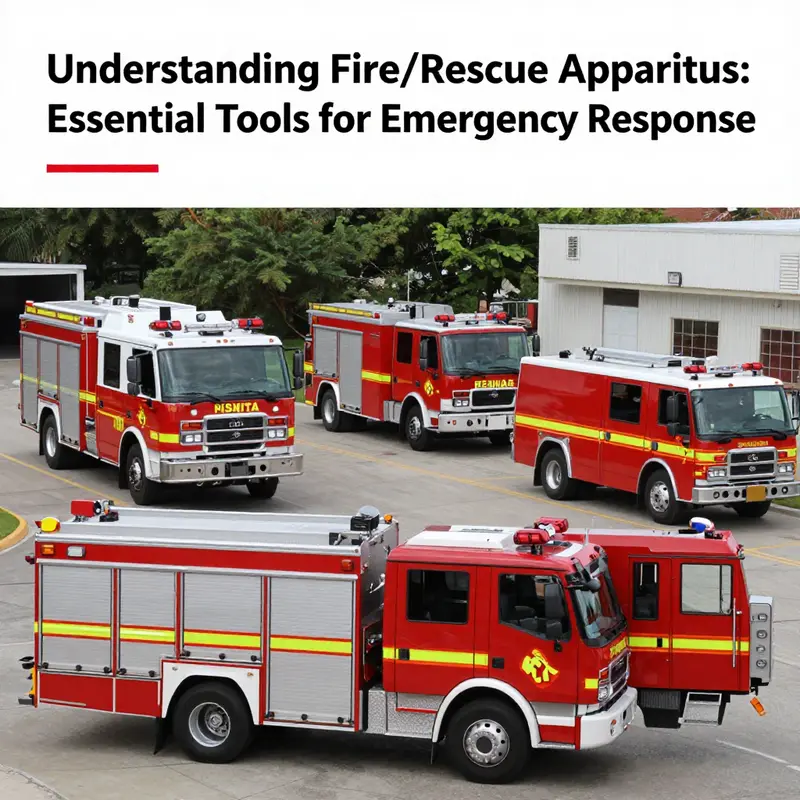
Fire and rescue apparatus serve as vital resources in combating emergencies, ranging from structural fires to hazardous situations. These specialized vehicles and equipment are indispensable to firefighters and emergency responders, helping to save lives and protect property. In understanding fire/rescue apparatus, one must explore the diverse types available, from fire engines to ladder trucks, which each serve unique functions within the emergency response framework. This article examines the various apparatus types, highlights the technological innovations enhancing their effectiveness, and underscores their critical societal impact, shaping community resilience during emergencies.
null
null
Beyond Steel and Sirens: The Intelligent, Integrated Fire/Rescue Apparatus Shaping Modern Response
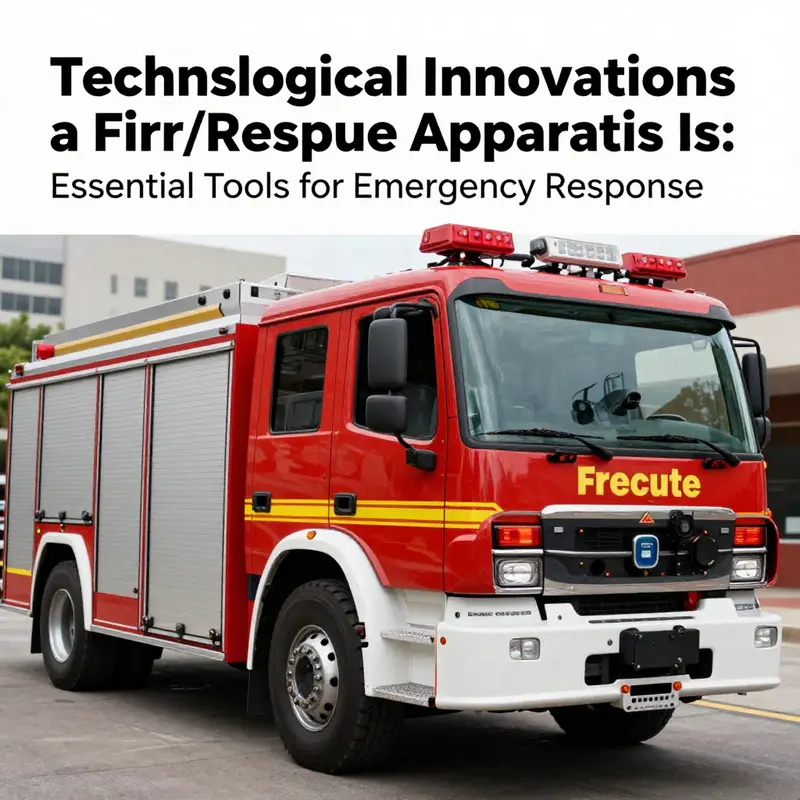
When people imagine a fire apparatus thundering toward a blaze, they picture the familiar silhouette of engines, ladders, and a crew ready to do battle with flame. Yet the contemporary fire/rescue apparatus has grown into something far more expansive than a stubbornly reliable machine. It is a platform that blends mechanical reliability with digital intelligence, sensor fusion, and remote capability. It is not merely a vehicle but a nervous system on wheels, linking the scene to command centers, hospitals, and the built environment itself. This redefinition does not arrive as a single invention but as a convergence of design philosophy, engineering discipline, and data-rich operations. Safer frame geometry, more capable hydraulics, autonomous and semi-autonomous tools, and the seamless integration of multiple streams of data have turned the apparatus into a critical ambassador between human decision-makers and the chaotic chemistry of emergencies. In short, today’s fire/rescue apparatus is designed to stretch time and space—to see around corners, to sense hidden dangers, and to make informed judgments in moments when lives hang in the balance. The result is a system that supports firefighters not only by bringing water and tools to the scene but by extending their senses and amplifying their collective judgment under pressure.
One of the most consequential shifts is the integration of unmanned and remote-capable tools that can operate in environments too dangerous for humans. Imagine an explosion-proof firefighting reconnaissance robot that can venture into a space smeared with heavy smoke, heat, or the volatile risk of gas leaks. This is not a mere gadget; it is a compact, purpose-built instrument that carries a spectrum of sensors, including gas detectors and multi-spectral imaging. It is equipped to measure temperature distribution in real time, trace the presence of hazardous chemicals, and map structural and atmospheric hazards as if the operator stood at the heart of the scene. The robot relays a live stream of data to the incident commander via a reliable, fast network, allowing decisions to be grounded in current, verifiable conditions rather than secondhand impressions. The value of such a tool lies not only in the data it provides but in the way it expands human perception: a crew can locate safe ingress routes, identify pockets of heat that risk flashover, and locate any occupants who may be trapped—all without exposing responders to the same dangers. This approach embodies a broader principle that dominates modern apparatus design: safety begins with information, and information grows stronger when it travels instantly and with fidelity across the response network.
The same networked intelligence that powers reconnaissance robotics also informs the reach and reachability of the equipment themselves. A next-generation aerial platform features a greatly extended operating envelope, enabling the firefighter to place nozzles, carry out rescues, or observe the scene from vantage points that would have required multiple vehicles in the past. Aerial reach—extendable arms and booms that can position water streams with remarkable precision or support rescue operations from upper stories—has become a standard capability that changes the dominant tactics of firefighting. When crews can access higher floors without exposing themselves to long, risky climbs, the probability of successfully locating occupants rises, and the safety margin for the entire operation improves. This kind of architectural advantage is not just about height but about visual access, stability in windy conditions, and the integration of the apparatus with building geometry. It requires careful calibration between the vehicle’s chassis, the extension mechanism, and the sensors that guide each movement. The result is not simply a longer ladder but a more intelligent extension of a firefighter’s reach—the capacity to see, stabilize, and rescue from spaces that previously posed unacceptable risk.
Another line of development centers on specialized responses to hazardous chemical and environmental incidents. A mobile, multi-functional chemical decontamination truck illustrates a shift from ad hoc, improvised solutions to integrated, rapid-response systems. These vehicles marry micro-positive pressure protection, which keeps contaminants from infiltrating protected areas, with an automated, detection-decontamination loop. In practice, responders place the vehicle at the perimeter or near the exposure zone, and the vehicle’s integrated suite performs detection of hazardous agents, initiates decontamination as needed, and precisely matches the decontaminant fluids to the detected threat profile. In effect, the apparatus becomes a containment and treatment facility on wheels. The intelligence embedded within this system orchestrates the sequence and intensity of both detection and decontamination, reducing the time that responders must spend in or near dangerous environments while ensuring that decontamination efficacy remains high. It is a clear example of how specialized vehicles can shield lives and stabilize conditions, creating a safer corridor for the subsequent phases of the operation.
The increasing sophistication of these platforms is inseparable from advances in digital forensics and data analytics that influence both field operations and investigations after the smoke clears. A modern fire investigation system, leveraging AI and machine learning, can analyze vast amounts of footage from the incident, perform intelligent image search, reconstruct scenes, and identify micro-changes that may yield crucial insights about ignition sources or sequence of events. This technology has proven its utility in high-profile incidents by helping investigators sift through thousands of frames with a speed and precision beyond human capacity. The role of digital forensics in firefighting is twofold: it supports real-time decision-making by providing evidence-based context during the response and then enables rigorous, data-driven analysis for accountability and prevention in the aftermath. When merged with on-scene data streams and the reporting framework of the incident command system, these tools create a durable chain of knowledge—from the moment the alarm sounds to the lessons learned after the fire is extinguished.
The convergence of on-board intelligence with environmental sensing also raises practical opportunities in occupant safety. Building-integrated technologies, such as QR code-based emergency systems, can dramatically cut search times for occupants trapped inside burning structures or incapacitated by smoke. The idea is to convert a building’s static information into a dynamic, machine-readable map that the apparatus can consume on arrival. QR codes—placed strategically in corridors, stairwells, and resident rooms—can link responders to up-to-date floor plans, occupant lists, and preferred egress routes. When integrated with the vehicle’s sensors and the incident commander’s digital display, these codes transform a potentially chaotic interior into a navigable network. The effect is not to replace the human element but to guide it with precise, actionable data, reducing confusion and enabling targeted, efficient search and rescue. This capability also supports post-incident analyses by offering a richer, digital record of how occupants were located and moved to safety, contributing to knowledge that can improve future planning and training.
All of these developments rest on a shared architecture of interoperability and disciplined design. The modern apparatus operates as part of a broader response ecosystem that includes command centers, air-resupply or medical facilities, and the responding fire station itself. A truly capable system requires standardized data formats, robust cybersecurity, and resilient communications—especially 5G and other high-bandwidth links that carry video, sensor streams, and real-time telemetry. The practical implication is that equipment is no longer judged solely by its mechanical prowess or its ability to deliver water; it is judged by its capacity to harmonize with other elements of the response network. When multiple agencies or departments must work together, the value of common interfaces, shared dashboards, and compatible control software becomes a matter of life and death. The apparatus must be able to speak the same language as the building management systems, the EMS networks, and the post-incident investigative platforms. This is why modern procurement in the firefighting sector increasingly emphasizes modularity and standardization—so that a single platform can adapt to a multitude of contexts without becoming obsolete or prohibitively expensive to maintain.
The human dimension remains central amid this technified evolution. New tools do not erase the need for training, judgment, and leadership under pressure. Rather, they reframe what training must cover. Firefighters must learn to operate autonomous or semi-autonomous devices with the same fluency they bring to traditional tools. They must understand how to interpret data streams, manage networked sensor fatigue, and maintain situational awareness when machines handle repetitive or hazardous tasks. The leadership at the scene must decide when to delegate to a drone-like reconnaissance unit, when to trust a robotic arm to handle a decontamination process, and when to take manual control to fine-tune a mission-critical operation. In practice, this requires new pedagogies, exercises, and certifications that reflect the emergent realities of smart, data-driven firefighting. Yet even as the apparatus grows more capable, the essence of the craft persists: courage under uncertainty, a disciplined approach to risk, and an unwavering commitment to saving lives.
What does this mean for the future of the fire/rescue apparatus itself? It points toward greater autonomy, more flexible platform architectures, and deeper integration with information networks that tie together urban resilience systems. A modular chassis might host a family of mission-specific modules—robotic payloads, additional compartments for specialized fluids, or extended-lift configurations—so that the same base vehicle can be reconfigured rapidly for an aviation incident, a chemical emergency, or a high-rise rescue. It implies smarter energy management, with hybrid or electrified propulsion that reduces on-scene emissions and improves operator safety by minimizing exhaust and heat near the crew. It suggests the continued expansion of on-board analytics that can forecast critical moments, identify the optimal crew allocation, or anticipate structural collapse risk based on real-time data and historical patterns.
This trajectory is not without challenges. Costs and lifecycle maintenance demand careful consideration, especially in developing contexts where budgets and supply chains strain acquisition. Training needs are substantial, as technicians must become fluent in robotics, data interpretation, and cyber-physical systems in addition to traditional firefighting skills. Compatibility across jurisdictions becomes a political and logistical issue as well, requiring consensus on standards and information-sharing protocols. Yet the overarching impulse is clear: to protect responders and the public by balancing mechanical reliability with intelligent, anticipatory systems. The better the apparatus can sense, predict, and adapt, the more it can focus human effort on decisions that require empathy, creativity, and moral courage.
This evolving picture of the fire/rescue apparatus is also shaped by the broader research current around smart buildings and digital building technologies. Smart infrastructure feeds the apparatus with data at the moment of need, while the apparatus, in turn, contributes to the safety and resilience of the built environment by compiling knowledge that can inform architectural design, building systems, and emergency planning. Taken together, these developments signify a shift from a purely reactive model of emergency response to a more proactive, data-informed paradigm. In this model, the apparatus is not solely a tool for suppressing flames but a critical node in a larger network that detects risk, reduces exposure, and guides decisions with a level of certainty that was unimaginable a decade ago.
For readers seeking a concise thread through these changes, consider how each advancement speaks to a core principle: safety through information. The unmanned reconnaissance device pushes the boundaries of risk management by removing responders from the immediate danger zone while still delivering crucial intelligence. The extended aerial reach expands the operational envelope, enabling safer and more efficient interventions at height or in difficult-to-access locations. The chemically specialized, decontaminating platform demonstrates how operational support can be embedded with protective systems to shield both responders and civilians from hazardous exposures. The digital forensics dimension shows that, after the smoke clears, the same technology that helps prevent harm also creates the capacity to learn from events and improve future responses. And the QR-driven interior mapping translates the latent knowledge of a building’s layout into actionable, real-time guidance during an interior search, ultimately saving precious seconds that can translate into lives saved. The common thread is not a single ingenious gadget but a philosophy: build capabilities that work together, respect the realities of the scene, and extend human judgment without replacing it.
As these technologies mature, the fire/rescue apparatus will increasingly resemble a highly adaptable platform that can be configured quickly to meet the demands of a specific incident. The emphasis on modularity, interoperability, and user-centered design will help ensure that a vehicle deployed in a small town can perform with the same reliability as one assigned to a major metropolitan agency. The same principles can translate to training, maintenance, and governance, ensuring that the equipment remains aligned with evolving incident command principles and the ethical obligations of emergency response. The result is a professional ecosystem in which every response is informed by a composite of experience, real-time data, and predictive insights. The fire/rescue apparatus is moving from being a purely mechanical implement to becoming a dynamic, adaptive partner in the mission to protect life and reduce harm.
For those who want to explore the concrete ways technology is shaping practice, a useful pointer is the way institutions document and reflect on this transformation. In practice, the path toward smarter, safer apparatus includes not only hardware upgrades but also the cultivation of a culture that embraces data-driven decision-making, continuous learning, and cross-disciplinary collaboration. Fire departments, engineering shops, building operators, and researchers must align around shared standards, common data platforms, and joint training programs. When these elements coalesce, the apparatus becomes more than a tool; it becomes a bridge that connects urban design, emergency medicine, public safety policy, and community resilience. In turn, communities gain a more reliable safeguard against the unpredictable threats they face—from structural collapses to toxic releases to the unpredictable dynamics of a rapidly changing climate.
The chapter’s deeper message is simple yet profound: the fire/rescue apparatus is an instrument of extended perception. It translates the environment into actionable knowledge and translates human intent into precise, coordinated action. It embodies a collaboration between steel, software, sensors, and human will. As this collaboration grows, so too does the potential for faster rescues, fewer injuries, and more humane outcomes in the most demanding situations. The apparatus, in its current and evolving forms, stands as a testament to what emerges when engineering curiosity aligns with the urgent needs of public safety. It is not merely about moving faster or lifting heavier; it is about moving more wisely, sensing more accurately, and staying ahead of danger so that those who run toward the fire can do so with greater confidence, under better protection, and with the best possible chance of saving lives.
For readers who want to trace the thread of innovation through practice, the narrative finds a tangible touchstone in the broader ecosystem of research and deployment that informs these capabilities. A growing body of work continues to show how digital and physical layers intertwine—in buildings, on streets, and within the apparatus itself. This interconnectedness suggests that the next generation of fire/rescue practice will be characterized by fewer silos and more fluid exchange among disciplines. It will be less about each new gadget standing alone and more about how a family of devices, sensors, and analytic tools can be composed into a coherent, adaptive response system. In other words, the modern fire/rescue apparatus is not a single invention but a platform upon which an entire culture of safety, resilience, and rapid learning is built. The aim is not to replace the skill and courage of firefighters but to complement it with a robust, data-informed, and context-aware capability that makes the most challenging missions tractable and the outcomes more certain.
For those curious about the practical implications of these trends in different contexts, the literature points toward a shared aspiration: to design and deploy customizable, scalable solutions that can meet diverse firefighting needs while maintaining a high standard of reliability and safety. The model traffic of innovations—from unmanned reconnaissance and extended aerial reach to integrated decontamination and AI-enhanced investigations—suggests a forward path for researchers, manufacturers, and practitioners alike. The overarching goal is clear: to deliver a fire/rescue apparatus that is as adept at protecting responders as it is at protecting the public, by leveraging intelligent systems, resilient design, and an integrated approach to risk that begins the moment the call comes in and continues long after the incident is resolved.
To connect these ideas with ongoing conversations within the field, consider how collaborative forums and research initiatives emphasize the same themes: interoperability, rapid deployment, and data-driven decision support. The movement toward smarter, safer, and more autonomous platforms represents not just a technological upgrade but a recalibration of the expectations for what a fire/rescue apparatus can achieve. It invites a future where the first responders’ work is amplified by machines that can operate in hostile environments, gather essential information, and execute complex sequences with precision. In that future, the apparatus becomes less a lone hero and more a trusted partner that shares the load of danger, enabling people to make life-saving decisions with greater confidence and fewer risks. For readers who want to explore further, a broader discussion of how technology shapes fire service leadership and practice offers additional context and insight into how these devices will be integrated into everyday operations and long-term strategic planning.
If you are looking to place this transformation within a broader research and practice landscape, you can explore related discussions about smart building technologies and emergency response integration. These discussions illuminate how digital, automated systems inside the built environment can dramatically reduce search times and guide responders with real-time intelligence, a principle that resonates with the design philosophy behind modern fire/rescue apparatus. The synergy between building technologies and field equipment underlines a future in which firefighting teams move through scenes not just with courage but with data-supported clarity, enabled by a networked fabric that spans from the building envelope to the command post and beyond. In this sense, the apparatus is both a physical instrument and a conduit for knowledge—an enduring symbol of how human ingenuity, when properly coordinated with advanced tools, can transform danger into a solvable problem and protect life with greater reliability than ever before.
For readers who want a concise take-away, the trend is toward smarter, safer, and more autonomous platforms that extend the reach of responders while shrinking their exposure to risk. These systems are built to learn from each mission, adapt to different emergency contexts, and align with the communities they serve. They are a vivid reminder that the core purpose of a fire/rescue apparatus remains unchanged: to save lives and protect property. What has changed is the scale and sophistication with which that purpose is pursued. The apparatus now wears the badge of a learning instrument, one that evolves through experience, data, and collaboration, rather than through isolated, one-off innovations. In that evolution lies the promise of a more capable and resilient public safety ecosystem, ready to meet the challenges of a changing urban world with steadiness, speed, and informed decision-making.
As a closing reflection, it is useful to anchor these ideas in a practical mindset. Agencies contemplating upgrades or new procurements should weigh the value of interoperability, modularity, and data integration alongside traditional metrics like horsepower, water capacity, and pump pressure. They should ask how a new platform will interact with existing command systems, how it will support training at scale, and how it will contribute to a safer, more transparent operations culture. They should also consider the communities they serve and think about how these intelligent platforms might impact response times, occupant safety, and post-incident learning. The modern fire/rescue apparatus embodies a philosophy of continuous improvement: seek better sensing, better decision support, and better outcomes for the people who depend on emergency services in their most vulnerable moments. In that spirit, the evolution of the apparatus continues, driven by the relentless pursuit of safer responses, more effective rescues, and a future in which technology serves as a steadfast partner in the timeless mission of public safety.
Internal resource for further context on digital and structural innovation in fire services: Innovation Museum: Transforming Fire Services
External resource: Smart Building Technologies for Fire Rescue: A QR Code. https://www.researchgate.net/publication/392475650SmartBuildingTechnologiesforFireRescueAQR_Code
On Wheels of Protection: The Fire/Rescue Apparatus as Society’s Lifeline and Engine of Rapid Emergency Response
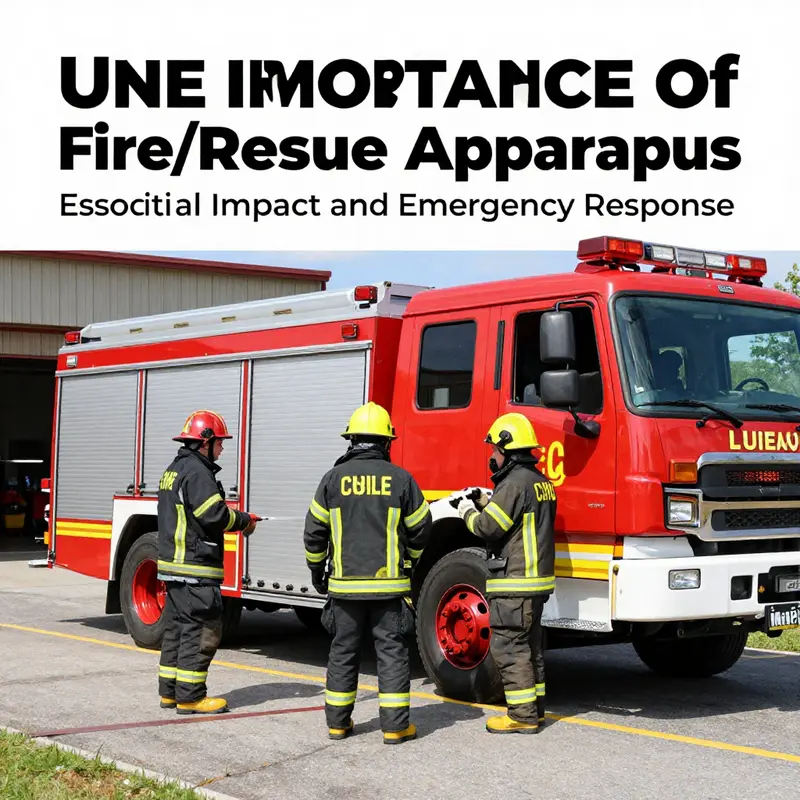
A fire/rescue apparatus is more than a vehicle. It is a moving pledge of safety, a carefully engineered tool that translates training into survival, and a public symbol of preparedness that communities come to rely on in their darkest hours. When a call goes out, seconds count, and the apparatus at the scene can determine whether a life is saved, a home is protected, or a critical structure remains standing to house a later reconstruction. This is not hype; it is the plain arithmetic of emergency response. The first minutes after a crisis often set the tone for what follows, and the apparatus is the centerpiece of that trajectory. From the station door to the interior of a burning building, it carries more than hoses, ladders, or hydraulic cutters. It carries a mandate to respond promptly and to do so with the knowledge that every move matters for human lives, property, and the public’s sense of security.
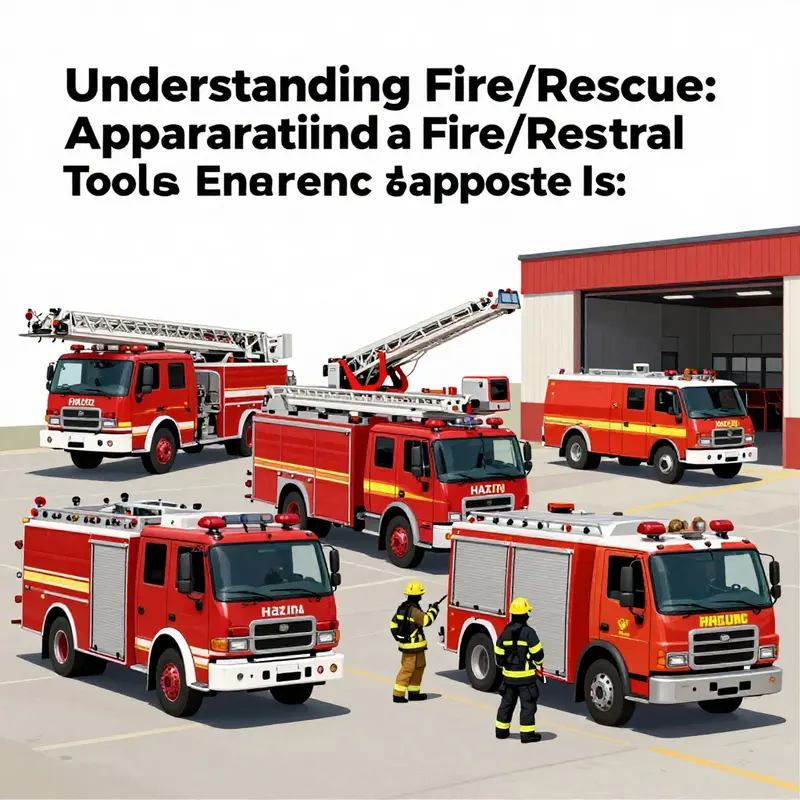
In practical terms, the fire/rescue apparatus family encompasses a range of vehicles and configurations, each tailored to distinct tasks yet designed to work as a coordinated system. Fire engines, which carry water and hoses to the scene, form the backbone of suppression. They deliver the immediate reach and force needed to control flames, protect occupants, and create a safer zone for further operations. Ladder trucks extend access to upper floors and roofs, providing both evacuation routes and a vantage point from which crews can direct water streams with precision. Rescue squads bring technical expertise to extrication and complex access problems, equipping responders with cutting tools, hydraulic spreaders, and stabilization devices that can rescue people trapped in crashed vehicles or damaged structures. Specialized units, whether focused on hazardous materials, aircraft incidents, or unique environmental hazards, act as the specialized wings of the fleet, ready to confront hazards that fall outside the standard repertoire of fire suppression.
This spectrum of apparatus is not arbitrary; it reflects a deliberate balancing of capability, terrain, population density, and risk. In dense urban cores, for example, the ability to reach upper stories swiftly and to maneuver through narrow streets becomes paramount, elevating the importance of ladders and smaller, more agile units. In rural or sprawling suburban areas, the emphasis may tilt toward longer water supplies, versatile pump configurations, and vehicles capable of traversing variable road conditions. Across this spectrum, the central objective remains the same: to bring the right mix of tools to a scene at the exact moment they are needed most. The design and arrangement of compartments, the weight distribution of apparatus, and the reliability of onboard systems all contribute to a response that is not just rapid but effective under a wide array of circumstances.
The importance of a fire/rescue apparatus lies not only in its mechanical capabilities but also in its integration with human judgment. Firefighters enter scenes with a trained eye for risk, a disciplined approach to teamwork, and an ethic that values life above property. The apparatus serves as the visible interface between this professional judgment and the physical realities of danger. It houses communication networks that keep crews connected with command, dispatchers, and hospital teams, allowing a unified response that can adapt as conditions evolve. It carries thermal imaging and other sensing technologies that help crews see what the naked eye cannot—hidden flames behind walls, compromised structural integrity, or the presence of occupants awaiting rescue. Each feature is a deliberate contribution to the chain of survival, a chain that is only as strong as its weakest link and only as fast as the day’s training and maintenance allow.
Response times offer one of the clearest measures of a system’s effectiveness. The National Fire Protection Association, a standard-bearer for safety practices, emphasizes rapid deployment as a core performance indicator. The guidance that the first apparatus should arrive within four minutes or less for 90 percent of incidents is not a mere guideline; it is a metric that has shaped station locations, staffing models, and vehicle design strategies in departments around the country. When a community standardizes on such a benchmark, the result is a visible commitment to rapid access, a commitment that translates into fewer fatalities, reduced injuries, and less severe structural damage. But speed is not the sole virtue. The tempo of the response must be matched by the quality of actions on arrival. A quick arrival with uncoordinated or ill-advised tactics can be counterproductive. The modern apparatus, therefore, embodies a balance: speed paired with resilience, versatility paired with reliability, and force paired with restraint.
Beyond the firewall and the flames, the fire/rescue apparatus is a bridge to many kinds of emergencies. The same fleet that fights fires often arrives ahead of medical units to provide critical life support, stabilize patients, and prepare for definitive care. Engines, choked with smoke, can become the first point of stabilization, while ladder trucks and rescue units help to extricate individuals from dangerous positions where time is a matter of life and death. In vehicle crashes, extrications may hinge on hydraulic tools that pry and cut through metal with controlled force. In structural collapses or high-angle rescues, the elevated reach and stability of certain apparatus can be the difference between successful rescue and tragedy. The apparatus is thus a multi-talented instrument calibrated for diverse crisis landscapes: floods and storms, earthquakes, wildland fires, and the slow, creeping hazards of carbon monoxide or hazardous materials incidents.
Societal impact emerges not only in the moment of crisis but also in the ongoing relationship between fire departments and the communities they serve. The presence of well-equipped, well-placed apparatus stations visibility and signals a public commitment to safety. When residents see a ready fleet awaiting the next call, they gain confidence that emergency services are present, capable, and accountable. This trust is not incidental. It arises from transparent performance, continuous training, and the willingness to invest in the hardware that makes lives safer. It also depends on prevention—public education, building inspections, and code compliance—that reduces the probability of a crisis and, by extension, the burden on the fleet. Fire departments are not mere responders; they are stewards of a safety ecosystem that includes prevention, preparedness, and rapid, informed action when prevention gives way to emergency.
The Fire Impact Tool, developed in Sweden, signals a broader expansion of what a fire department can be in terms of environmental stewardship. Though not used during live incidents, this tool informs pre-planning and training by modeling how suppression tactics and choice of extinguishing media affect air quality, groundwater, and soil. It translates tactical choices into environmental risk assessments and life cycle analyses, helping responders reason about ecological consequences before a crisis unfolds. Incorporating such environmental consciousness into training shifts the culture of response from pure immediacy toward a more holistic approach. Fire departments begin to weigh human safety alongside environmental responsibility, recognizing that the consequences of an intervention extend beyond the flames and smoke of a single incident. This is a long arc, but one that aligns with growing expectations for responsible governance and sustainable public service.
Technology sits at the heart of this evolution. Thermal imaging cameras, advanced communication systems, and integrated fire detection networks turn a moving apparatus into a node of information as well as a tool of action. Real-time data sharing among crew members, incident command, and hospital partners can shape decisions about where to direct water and where to stage personnel. The scene on the ground becomes part of a larger, data-informed picture that increases the probability of a favorable outcome. Yet the power of technology rests on human factors: disciplined decision-making, clear leadership, and mutual trust among responders. The apparatus amplifies these human factors; it does not replace them.
In many regions, the challenge of providing effective emergency response is closely tied to the adaptability of the fleet to local conditions. This is especially true in developing countries or regions with resource constraints. Here, the goal is not merely to purchase a new fleet but to design solutions that align with local realities—terrain, road networks, climate, and the nature of common hazards. The idea of customizable, affordable fleets has gained traction as a way to extend life-saving capacity without imposing unsustainable costs. A growing body of work envisions comprehensive, customized fire trucks for developing countries meeting diverse rescue needs efficiently, a concept that emphasizes modularity, reliability, and transportability across varied environments. Such approaches recognize that a one-size-fits-all apparatus is often impractical, and they foreground the importance of local technicians, maintenance regimes, and spare-part availability. The aspiration is not just equipment transfer but capability building, ensuring that communities can sustain and adapt life-saving functions over time.
This broader, global perspective underscores a crucial point: the apparatus is as much a social instrument as a mechanical one. Its design, deployment, and governance touch on equity, resilience, and public accountability. When a city or region invests in rapid-response infrastructure, it sends a message about who is valued and protected. When that investment is paired with prevention programs, inclusive planning, and transparent accountability, the response system becomes a social contract. It promises that, when danger arises, the community will be in a position to respond, to recover, and to learn from the experience so as to do better next time. The apparatus thus functions as a microcosm of public safety—an institution that embodies readiness, reliability, and responsibility.
This integrated view helps explain why departments continually refine their fleets. The emphasis is no longer solely on raw power or dazzling capability; it is on resilience, maintainability, and the capacity to perform across a spectrum of crises. A well-considered mix of apparatus supports not only immediate suppression and rescue but also prevention, public education, and disaster readiness. The equipment is the physical expression of a commitment to the community: an obligation to protect life, to preserve homes and livelihoods, and to minimize the social and economic costs of emergencies.
In practice, the story of a fire/rescue apparatus is a story of collaboration. It requires engineers who understand real-world firefighting and rescue needs; training officers who translate theory into on-scene competence; fleet managers who optimize deployment and maintenance; and policymakers who fund and sustain a resilient response system. Each actor contributes to a cohesive whole in which the apparatus remains a reliable workhorse under pressure. The public benefits not only from faster responses but from more thoughtful interactions between responders and residents. Education, transparency, and ongoing dialogue turn a response unit into a trusted partner in safety rather than a distant, opaque mechanism.
As communities look to the future, the apparatus will continue to evolve in tandem with social expectations, scientific advances, and ecological considerations. The convergence of modular design, enhanced diagnostics, and smarter logistics will enable fleets that are lighter on their feet, easier to maintain, and more capable of operating in challenging environments. The Fire Impact Tool illustrates one pathway toward responsible innovation, reminding us that every tactical choice carries environmental as well as human implications. The future of emergency response will likely hinge on the ability to synchronize speed, skill, and sustainability in a way that preserves life while protecting air, water, and soil for generations to come. This is not a distant ideal but a practical trajectory already shaping procurement, training, and field operations across many jurisdictions.
In this sense, the fire/rescue apparatus is a living instrument of public safety—a vehicle that travels the line between danger and protection, between catastrophe and recovery, between a moment of fear and a future of resilience. It binds the community to a shared expectation of readiness and reciprocity: that when danger appears, help will arrive promptly, equipped with the tools, knowledge, and judgment necessary to make a difference. The chapters of this article thus converge on a simple yet powerful truth: a fire/rescue apparatus is not merely a machine. It is a symbol and instrument of collective responsibility, a mobile embodiment of the social contract that binds a community to safety, preparedness, and ongoing care for one another.
To illustrate the global dimension of this responsibility, consider the trend toward adaptable, context-sensitive fleets that can serve diverse regional needs. In places where road networks are imperfect or where climates push equipment to its limits, modular solutions and robust after-sales support become as important as initial specifications. The emphasis shifts from simply owning equipment to ensuring that equipment remains functional, relevant, and capable of evolving alongside shifting hazards. When communities adopt models that prioritize long-term viability, they invest in sustainable safety that endures beyond the life of any single crisis. In this sense, the apparatus gains a second life as a platform for ongoing training, community engagement, and environmental stewardship. The result is a more resilient society—one that sees emergency services as an integral, dependable part of daily life rather than a distant reserve summoned only in times of crisis.
Ultimately, the story of the fire/rescue apparatus is a story about people. The crews who operate it, the residents whom it protects, and the policy makers who sustain it together determine the rhythm of response and the quality of outcomes. The apparatus is the stage on which those human dimensions are played out—where courage is tested, teamwork is required, and trust is earned with every emergency response. As communities continue to confront old hazards and new ones, the apparatus will remain a central instrument in shaping how societies navigate risk, recover from disruption, and invest in a safer, more resilient future. This, then, is the enduring message: a fire/rescue apparatus is a public good, a portable engine of readiness, and a daily reminder that preparedness, when well designed and well used, can transform fear into safety and uncertainty into a measured, collective calm.
External resource: For standards, response expectations, and ongoing safety guidance, see NFPA.
Final thoughts
Fire/rescue apparatus are not simply vehicles; they represent a community’s commitment to safety and resilience against emergencies. Understanding their types, technological advancements, and societal importance equips us with a greater appreciation for the essential services they provide. As communities evolve, so too does the reliance on these specialized tools, ensuring that we are prepared for diverse emergencies. The continued support for fire/rescue apparatus and innovation in their design will forge a stronger societal safety net, ready to face challenges head-on.