
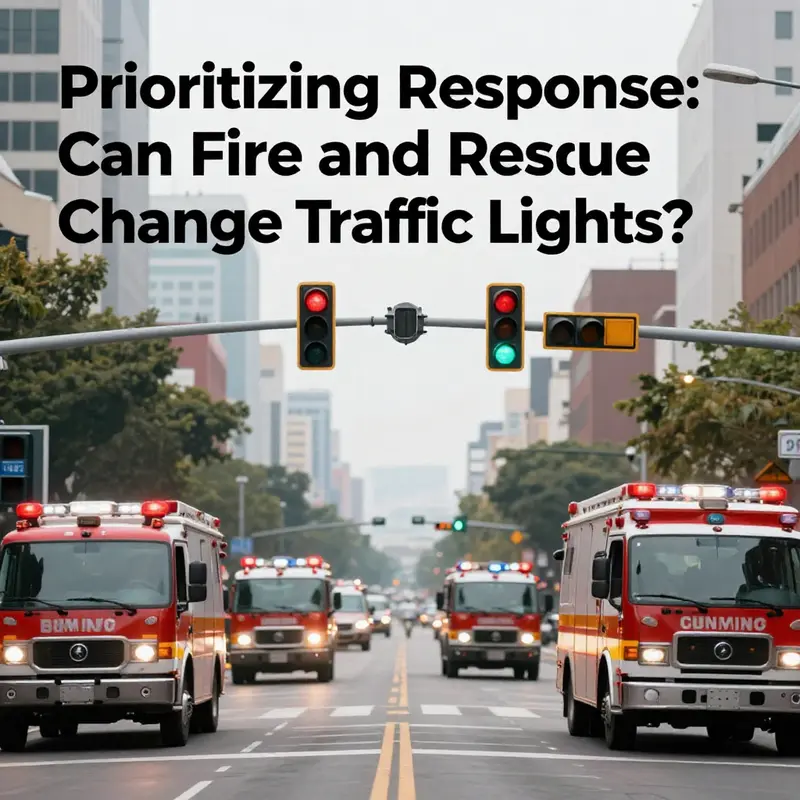
Fire and rescue services play a crucial role in ensuring public safety, especially during emergency situations. One vital aspect of their efficiency lies in their ability to navigate urban landscapes swiftly, where every second counts. The technology of traffic light preemption allows emergency vehicles to signal traffic control systems to change lights accordingly, thereby enhancing their response times and ensuring safety for both responders and the public. Throughout this article, we will delve deeply into the technological aspects of fire and rescue traffic light control, its economic implications, geopolitical considerations, societal impacts, and future developments. Each chapter will provide valuable insights, engaging with the diverse stakeholders involved, including the general public, emergency personnel, educators, and community leaders.
Rerouting Time: The Technological Alchemy of Fire, Rescue, and Traffic Lights
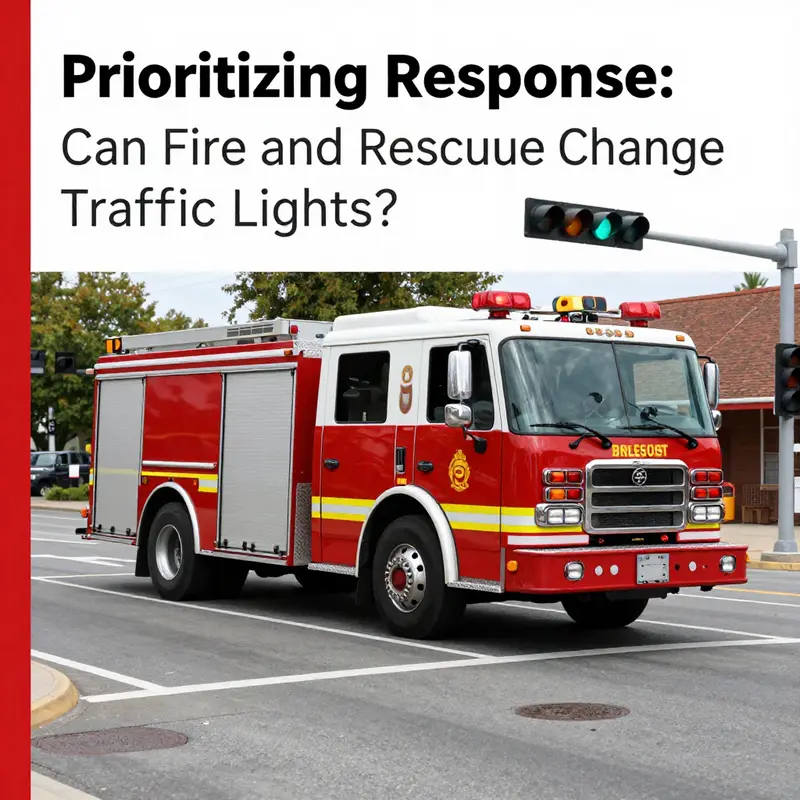
Across urban canyons of steel and glass, seconds matter. Fire and rescue teams push through streets where every light is a potential delay, and every delay can compound danger. The question of whether fire and rescue can change traffic lights is often reframed as a question of how modern technology reshapes priority at intersections. The practical reality is nuanced: emergency services do not “hack” signals in a blunt, uninterrupted way. Instead, they rely on a mature set of systems known as preemption and, more broadly, intelligent transportation systems that prioritize safety and speed while preserving orderly street use when possible. This is not a simple one-way command but a carefully choreographed dialogue between fast-moving responders, vehicle sensors, and the city’s traffic control backbone. In the choreography, infrared imaging, GPS-enabled devices, and advanced data analytics join forces to create a more agile and safer response, especially in the dense fabric of contemporary cities where congestion and unpredictability are the norm rather than the exception.
The core mechanism, often described as traffic signal preemption, rests on a simple premise: permit the approaching emergency vehicle to “take priority” at the intersection. Yet the sophistication behind that premise reveals a layered ecosystem. Fire and rescue units are now equipped with GPS and communication modules that link to a broader network of intelligent transportation systems. When an emergency vehicle nears an intersection, it can transmit a signal that prompts the traffic control system to adjust. Green phases are extended or initiated in the direction of travel, allowing a quicker and safer passage. The aim is twofold: minimize exposure to hazards for the responders and reduce exposure to risk for bystanders by shortening the time spent in or near the conflagration, smoke, or debris field. The logic is rooted in safety science as much as in logistics, recognizing that speed and control must be balanced to prevent new hazards from arising as lights shift and cross traffic reacts.
This balance rests on a spectrum of technologies that extend beyond the simple right-of-way. Intelligent Transportation Systems (ITS) embedded in city infrastructure act as the central nervous system of this ecosystem. They interpret signals from emergency vehicles, but they also monitor traffic density, pedestrian flows, and environmental conditions that affect incident management. Real-time data from various sources—location data, camera feeds, road surface conditions, and even weather patterns—feeds into predictive models. These models help determine how best to allocate green time not just along the emergency route, but across adjacent intersections to prevent gridlock created by the response. In effect, the system becomes anticipatory rather than reactive. It can foresee where congestion might divert responders’ paths, and it can recalibrate signal timing to maintain a smooth corridor while safeguarding other road users. The result is a more predictable path through a dynamic urban maze, a path that accommodates the urgency of the incident without sacrificing system-wide safety.
To understand the practical implications, one must consider the integration of information-rich technologies with the more traditional preemption framework. Infrared (IR) imaging systems are now common tools in many fire and rescue fleets. They allow crews to detect heat signatures through smoke and darkness, identify hotspots, locate victims, and assess structural integrity in real time. The value of IR data goes beyond incident assessment; it feeds into the broader situational awareness that informs traffic coordination. If a crew identifies a breached stairwell or a hidden hotspot near a critical egress route, this information can adjust the incident plan and the traffic management strategy in concert. For example, if a certain approach path reveals a blocked secondary route, the ITS can reallocate green phases to other lanes to prevent delay accumulation at the next intersection. This kind of data fusion—merging heat maps from IR with spatial data from GPS and environmental inputs—creates more precise and reliable decisions, reducing the risk that a rushed maneuver at one intersection creates a new hazard elsewhere.
Equally important is the role of info-analytic technologies. These systems process streams of disparate data to forecast how a fire may evolve, predict the most effective evacuation or egress routes for occupants, and, crucially for traffic management, optimize communications with smart signals. The analytic layer translates raw data into actionable guidance for both responders and traffic operators. It can, for instance, suggest staged clearance windows for pedestrians and vehicles, estimate the time required for a corridor to clear, and adjust signal timings at nearby intersections to accommodate surge traffic without compromising safety. The dynamic integration of IR imaging and analytics thus moves the responsibility for traffic coordination from a static set of rules to a living protocol that adapts to the incident’s unfolding reality. In this sense, the modern preemption system becomes a partner rather than a tool, a capability that recognizes the city as a complex, living organism whose safety and efficiency depend on continuous information exchange.
This evolving capability also invites a broader reflection on governance, standards, and accountability. The pursuit of faster emergency responses must be reconciled with the rights and needs of other road users, including motorists, cyclists, and pedestrians. Standards bodies and transportation agencies work to ensure that preemption and signal priority are implemented with robust fail-safes, redundancy, and cybersecurity protections. The goal is not to create a “free pass” for emergency traffic but to deliver time-critical aid with the least possible collateral risk. In practice, preemption is anchored by well-defined operating protocols, audit trails, and periodic drills that demonstrate how signals respond to emergency inputs and how they revert to normal operation after the incident is resolved. This approach supports transparency and trust in the system, key ingredients for public acceptance, especially in neighborhoods where the rhythm of daily life intersects with the urgency of emergencies.
The convergence of IR imaging, info-analytic methods, and adaptive ITS also reshapes how cities think about street design and incident corridors. Urban planners and engineers can design intersection layouts and signal timing schemes that anticipate the needs of responders while maintaining pedestrian safety and traffic flow during non-emergency periods. For example, signal programs can be crafted to reduce cross-street exposure time for pedestrians when an ambulance or fire unit is arriving along a major avenue. Or they can extend protected turn phases on parallel corridors to prevent bottlenecks as responders negotiate complex intersections. In dense urban centers, such planning requires a careful balance—protecting public safety without turning city streets into a perpetual emergency theater. The best outcomes emerge where technology, policy, and local context cohere, and where continuous feedback from field operations informs iterative improvements to both signal control and incident response plans.
The narrative around preemption has thus moved from a niche capability to a core component of smart emergency response. It is increasingly common to see references to how smart city frameworks enable adaptive traffic management that aligns with the needs of first responders in real time. In practical terms, this means that when an emergency call comes in, the city’s digital architecture can locate the closest available responders, determine the optimal route that minimizes risk, and adjust traffic signals along that route while preserving the safety of non-emergency traffic. The synergy is not merely technical; it is organizational. Dispatch centers, traffic management centers, and field units coordinate through shared data feeds, standardized communication protocols, and common performance metrics. The result is a more coherent, resilient approach to urban incident response—one that leverages data, sensors, and human judgment in a continuous loop of improvement.
For readers who want to connect the technical threads to broader narratives of innovation, the innovations on display in the broader fire and rescue ecosystem offer a helpful map. The innovations museum, for instance, highlights how a culture of experimentation and cross-disciplinary collaboration has led to richer, more reliable capabilities in emergency response. The threads of research, field deployment, and public policy converge in ways that illuminate how preemption sits at the intersection of engineering precision and human judgment. See the explorations in the Innovation Museum Transforming Fire Services for a glimpse into how forward-looking organizations are reimagining readiness through technology, training, and collaborative governance. Innovation Museum Transforming Fire Services.
Ultimately, the story of changing traffic lights in service of emergency response is a story about time. Time saved at a critical moment can prevent escalation, reduce exposure to danger, and preserve lives. It is a story of systems that learn to work together—whether through the calibrated timing of a signal, the heat-sensing clarity of infrared imagery, or the probabilistic insights of information analytics. It is also a story about the people who design, test, and operate these systems, whose choices about data sharing, safety margins, and operational transparency shape how citizens experience emergencies. The chapter on technology thus reframes traffic light preemption from a narrow mechanism into a comprehensive, safety-centered approach to urban resilience. It invites us to see intersections not merely as points where roads cross, but as nodal junctions where information, speed, and caution converge to keep communities safe when every second counts.
External reading: For a deeper technical treatment of info-analytic technologies in fire and rescue work, see the discussion in the MDPI article on infrared imaging and data analytics. Info-Analytic Technologies in the Work of Fire and Rescue Units Using Infrared Technologies.
Priced Priority: The Economic Realities of Traffic Light Preemption for Fire and Rescue
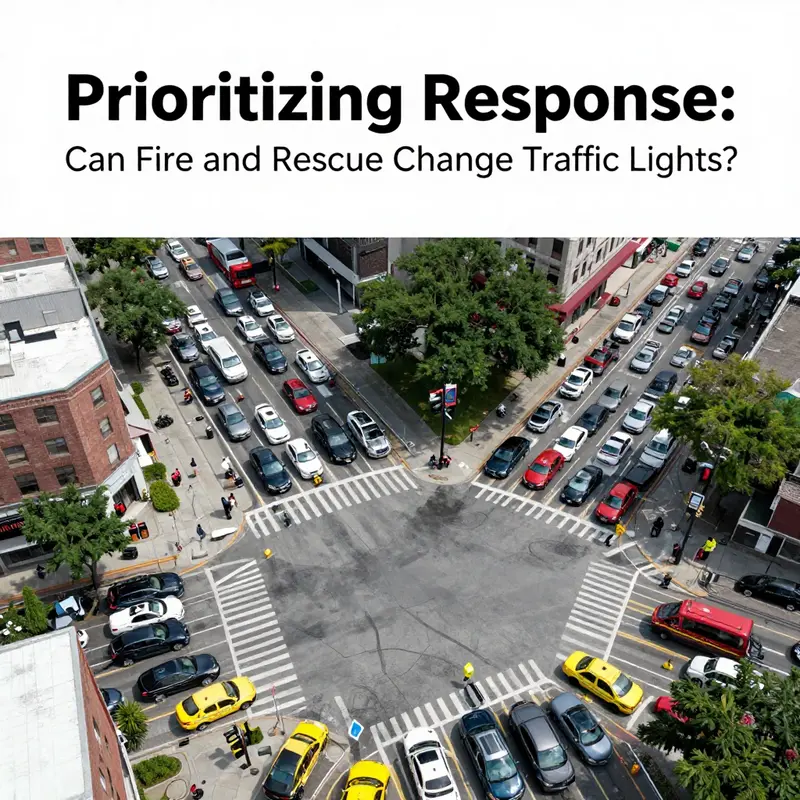
In the choreography of a city’s streets, seconds decide outcomes. Fire and rescue services live in that narrow margin, where every crossing, every queue, and every minute saved can mean a life saved or a home spared. Traffic light preemption sits at the intersection of public safety and urban economics, a mechanism that braids emergency response needs with the realities of everyday mobility.
It is not a blunt tool that simply clears a path; it is a complex, financeable intervention that reshapes costs, risks, and benefits across the urban system. To understand its economic texture, one must look beyond the light itself and into the wider fabric of how cities move, pay, and protect residents when time is a life-or-death factor. The core idea is simple: an emergency vehicle signals the traffic system, which shifts to favor the approaching direction. The vehicle moves through intersections on green while cross traffic pauses or yields.
In practice, that signal may be infrared or radio-based, a short, technical signal with outsized consequences. Yet the economics of that small green moment reach far beyond the intersection, rippling through budgets, commute times, fuel consumption, property safety, and health outcomes. This chapter follows those ripples, tracing how the promise of speed meets the price of disruption.
The heart of preemption is a trade-off: direct, measurable gains in response times versus disruptions to normal traffic. In dense corridors, the gains can be offset by longer delays for ordinary travelers. The economic question becomes not only how quickly responders arrive, but how the whole system performs over time, including the hidden costs that emerge when traffic is slowed.
Empirically, faster responses can translate into fewer injuries, reduced property losses, and lower healthcare expenditures when incidents are mitigated. But the chain of causation is not linear: increased delays for non-emergency traffic can imply foregone productivity and higher costs for businesses depending on predictable travel times. Upfront capital costs for preemption systems—transmitters, signal receivers, and the communications backbone—can be substantial, often tens of thousands of dollars per intersection. Ongoing maintenance and software updates add to the lifecycle bill.
Long-run savings may include fewer severe crashes and reduced hospital costs, creating a safety dividend that can justify the investment. The challenge is to quantify these long-term benefits and compare them credibly to immediate costs and short-term productivity losses. This requires care in cost–benefit analysis and transparent accounting.
Equity and geography matter: central corridors may see modest daily gains but critical improvements during emergencies, while suburbs may experience larger percentage time savings with smaller overall disruption. Deployment decisions should consider risk profiles, incident histories, and the distribution of emergency facilities, with a view toward universal standards or tiered approaches that balance safety and mobility.
From a management perspective, reliability and resilience are the core resources. The system’s effectiveness depends on signal hardware, vehicle transmitters, and the communications backbone. Maintenance, calibration, and staff training must be part of the cost model, ensuring that the network functions under duress. When preemption works smoothly, more predictable scheduling for other dispatches and more efficient network performance can emerge; when it malfunctions, cascading delays can erode trust and trigger further costs.
Finally, integration with broader traffic-management strategies matters. Coordinated signals, adaptive controls, and transparent public communication can reduce disruption for non-emergency traffic while preserving rapid access for responders. This integration often requires additional capital, technical expertise, and data-driven governance to sustain.
In summary, traffic light preemption is a policy mix: a public-safety edge that must be weighed against congestion costs, operating expenses, and long-term capital needs. Its value lies not in eliminating congestion but in enabling faster, safer responses while recognizing the economic trade-offs and distributional effects across urban space. Effective deployment rests on careful planning, ongoing evaluation, and a governance framework that aligns safety, mobility, budgeting, and citizen trust.
Borders in the Green Wave: The Geopolitics of Fire and Rescue Traffic Light Preemption
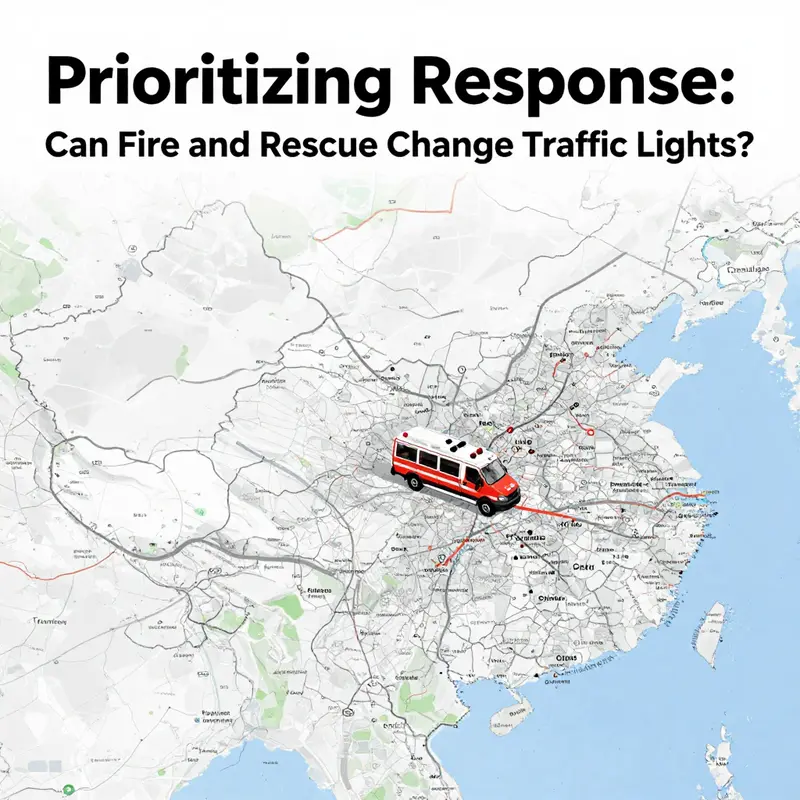
When cities light up in green to grant a swifter passage for an emergency vehicle, the moment feels universal: a vehicle, a signal, a clear path. Yet behind that simple choreography lies a web of geopolitical considerations that stretch far beyond the intersection. Fire and rescue traffic light preemption, powered by technologies like C-V2X, promises faster response times and safer operations in critical moments. It is, at its core, a public-safety ambition. But the realization of that ambition depends on a fragile mosaic of cross-border infrastructure, data governance, standardized protocols, and durable supply chains that transcend borders and sovereign interests. The technology itself is not merely a tool for traffic management. It is a conduit for coordination among jurisdictions, an artifact of international standards, and a test case for how nations align or diverge in their commitments to rapid emergency response. In this sense, the story of emergency vehicle preemption becomes a chapter in the broader dialogue about how interconnected systems upgrade public safety without compromising sovereignty or privacy. A deeper look reveals how technology and policy braid together, shaping the pace and reach of freedom to move when seconds matter.
Technological foundations anchor this discussion. Central to the preemption capability is a robust, real-time dialogue between emergency vehicles and the traffic signal infrastructure. Cellular Vehicle-to-Everything (C-V2X) emerges as a linchpin in this network, enabling direct communication between moving units and intersection controllers. The value proposition is straightforward: as an emergency vehicle approaches, signals travel through a secure channel that adjusts signal timing to favor the vehicle’s direction. The result is measurable—reduced approach times, fewer stop-and-go encounters, and a heightened assurance of safety for responders and civilians alike. Yet the strength of this dialogue rests on trust: trust in the accuracy of the location data, in the reliability of the channels, and in the shared understanding of how the system should behave under a broad spectrum of traffic conditions and weather. The technology thus sits at the crossroads of engineering and governance, where system performance depends on coordinated standards, shared protocols, and common expectations across jurisdictions.
In this cross-border frame, geopolitical considerations move from the periphery to the very center of implementation strategy. Cross-border infrastructure is not a mere overlay of one nation’s systems onto another’s roads; it is a complex treaty among legal regimes, procurement practices, and regulatory calendars. Signals crisscrossing international corridors must be able to interpret and respond to vehicles operating under multiple sets of rules. Sovereignty becomes a practical constraint as countries seek to safeguard their critical networks while embracing interoperable capabilities. Decisions about where to host data, how to route it, and who can access it touch sensitive questions of national security and civil liberties. If data about vehicle locations and movement can be shared across borders, nations must negotiate what is permissible, under what conditions, and with what oversight. Without clear boundaries and accountable processes, the potential benefits of rapid preemption could be undermined by mistrust or misconfiguration.
Data governance, then, is not a sidebar but a keystone. The real-time streams that enable green waves at intersections are also streams of sensitive information. Privacy protections, data minimization, and secure transmission become essential design choices. Different legal landscapes produce different requirements for data retention, access, and surveillance. Some jurisdictions insist on limiting how real-time vehicle data can be aggregated or stored, while others prioritize immediate utility for safety and traffic efficiency. The challenge is not merely technical; it is a negotiation of civil liberties, state interests, and public accountability. Furthermore, cross-border sharing amplifies concerns about data sovereignty and the potential for misuse if data protections do not travel with the data itself. In this context, policy frameworks, independent oversight, and transparent governance models are as important as the roadside hardware and software that execute the preemption signal. The smooth operation of an emergency vehicle’s green corridor depends on a shared commitment to safeguarding personal data while delivering lifesaving responses.
Standardization and compliance form another tier of geopolitics that can accelerate or impede adoption. The global deployment of preemption-capable systems requires alignment with international technical standards, most notably those around 5G-V2X compatibility. Interoperability across jurisdictions means that a fire truck’s signal must be recognized and acted upon consistently, whether it is navigating within a single city, crossing a regional boundary, or passing from one country to another along a major corridor. When standards diverge, gaps emerge. In some places, national regulators may insist on particular frequency bands, encryption schemes, or authentication procedures that do not align neatly with neighboring systems. In others, procurement practices and certification processes create asymmetries that complicate implementation timelines and inflate costs. The net effect is a potential drag on emergency responsiveness, precisely at the moment when harmonized operations could yield the greatest gains. The push for universal alignment is thus as much about diplomacy as it is about engineering, a quiet but consequential collaboration among standards bodies, policymakers, and public safety organizations.
The shadow of supply chain vulnerability also falls across the geopolitical landscape. The critical components that sustain traffic signal controllers, GPS modules, and the communications hardware fundamental to C-V2X do not sit in isolated warehouses but in a global network of suppliers and manufacturers. Geopolitical tensions, sanctions, or disruptions in any segment of that network can delay deployment, degrade reliability, or necessitate costly redirectives. A system built on fragile supply lines may struggle to maintain the rigorous uptime that life-saving preemption requires. This reality underscores a broader truth: the resilience of emergency preemption is inseparable from the stability of international relations and the health of global trade. Countries must consider diversification of suppliers, redundancy in critical components, and contingency planning that can absorb shocks without compromising safety or privacy. The goal is not to insulate systems from the world, but to build robustness that remains trustworthy under pressure.
Perhaps most important, international cooperation stands as the antidote to fragmentation. The interoperability of fire and rescue traffic light systems is not a race to win every standard in every jurisdiction; it is a cooperative project to establish common practices, shared expectations, and reliable pathways for cross-border response. The narrative here is a reminder that technology rarely exists in a vacuum. It thrives when nations commit to predictable rules of engagement, clear data-sharing protocols, and mutual auditability. The literature on emergency vehicle management with C-V2X emphasizes these dimensions, highlighting case studies and policy recommendations that stress the need for durable diplomatic channels and investment in interoperable infrastructure. This is not simply about faster response times; it is about a shared public safety ethic that honors both the speed of rescue and the legitimacy of governance across borders. In that spirit, publishers and practitioners alike advocate for transparent governance models, independent verification of data integrity, and ongoing dialogue among cities, provinces, and nations to harmonize expectations and minimize frictions.
For readers who want to explore this broader narrative of technology-driven public safety and organizational adaptation, the topic is frequently tied to broader conversations about how innovation reshapes public institutions. See the ongoing discussions in Innovation Museum Transforming Fire Services, which examines how new ideas migrate through systems of governance and practice, influencing not only equipment but the culture of emergency response. This thread helps connect the practicalities of cross-border preemption with the deeper questions about how communities govern and benefit from rapid, data-driven safety capabilities. The point is that preemption is as much about governance as it is about traffic control.
Against this backdrop, the geopolitics of fire and rescue traffic light systems becomes a lens to examine trust, coordination, and shared responsibility. It foregrounds the reality that the fastest green wave is not guaranteed by hardware alone but by the patience and clarity of international dialogue. When countries align standards, protect data, and commit to resilient supply chains, preemption can deliver consistent, predictable outcomes across diverse environments. When they fail to coordinate, the same technology risks becoming a patchwork of localized solutions that work in isolation but falter at the seams where borders meet. The ultimate objective remains straightforward: to ensure that when seconds count, the path to safety stays open, visible, and trustworthy for those who must move quickly and for the communities they serve.
External reference for further context on how policy and technology intersect in emergency vehicle management with C-V2X can be found at: https://www.sciencedirect.com/science/article/pii/S246801722300059X
Red Lights, Swift Alarms: The Societal Ripple of Emergency Vehicle Traffic Signal Preemption
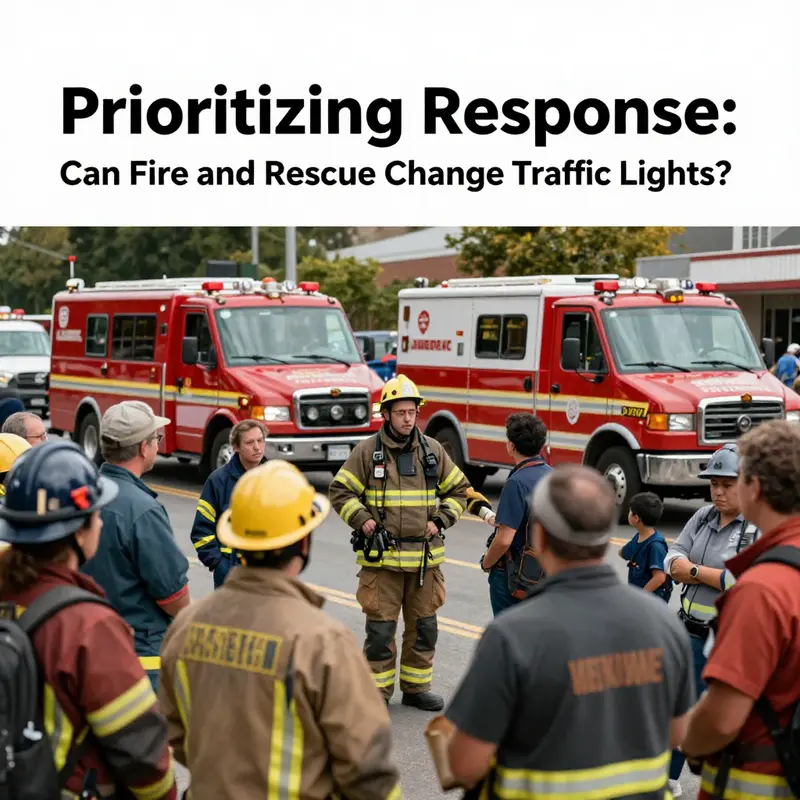
When a siren first slices through the city’s ordinary hum, the crosscurrents of everyday traffic must somehow yield to an urgent, life-preserving mission. The chapter of urban life that unfolds at each intersection during these moments is more than a momentary traffic maneuver. It is a real-world test of whether a city’s infrastructure can partner with those who respond to crises, not merely respond to them. Fire, rescue, and law enforcement services bring with them time as a critical resource, and the way traffic lights behave in those seconds—whether they stay faithful to a fixed rhythm or bend to accommodate an approaching emergency vehicle—has broad implications for safety, trust, and resilience. This is not simply a technical capability; it is a societal read on how well a city can prioritize life without sacrificing the coherence of its daily commute. The technology at the heart of this shift—preemption—does not redirect cars into a chaotic melee but choreographs a safer, faster passage through urban arteries. It signals that the goal of traffic control is not only efficiency in the aggregate but also mercy in the moments when human lives hang in the balance.
Preemption works by letting an emergency vehicle communicate with the traffic control system as it nears an intersection. The signal in the vehicle’s direction shifts from a protected green to a green wave that unfolds ahead of the ambulance, fire engine, or police car. In practice, the system can be infrared or radio-based, a seemingly small adjustment with outsized consequences. The result is a smoother approach for responders, fewer sudden decelerations, and, crucially, less exposure to danger for both the first responders and the civilians around them. In dense urban grids where buses, delivery trucks, and private vehicles occupy every lane, even a few seconds shaved from a response route can translate into lives saved and injuries averted. The societal payoff emerges not only in medical survivability but in the reduced strain on hospitals, emergency departments, and the entire cascade of services that follow a critical incident.
The public safety benefits are multi-layered. First, faster access to the scene means critical care can begin sooner, which often makes the difference between a full recovery and lasting impairment. In fire suppression, every second can determine whether a blaze is contained before it intensifies. In police operations, rapid arrival can prevent the escalation of a situation and protect bystanders and officers alike. These outcomes carry weight beyond the immediate incident: they influence long-term community health statistics, local budgeting for emergency services, and the public’s sense of security. When people observe that responders reach crises with fewer delays, trust in emergency services deepens. This trust is a social asset, as it supports clearer cooperation during drills, evacuations, and public safety campaigns.
Yet the societal impact stretches beyond the direct benefits to those in distress. Adaptive signaling systems designed for emergency vehicles contribute to smoother traffic flow for all road users. The network must balance the needs of the few against the many, a delicate equilibrium that requires precise calibration and robust safeguards. If an intersection routinely grants priority in a way that disrupts regular traffic, there is a risk of cascading congestion. Conversely, when the system is well-tuned, responders encounter fewer traffic-induced delays, and regular commuters experience fewer abrupt stops and accelerations that can provoke minor collisions or aggressive driving patterns. The goal is a predictable environment in which every driver can anticipate the occasional priority movement without confusion or frustration. Real-time coordination technologies, including vehicle-to-roadside communication, push this vision closer to reality. They permit signals not only to change in response to an approaching emergency but to be coordinated across multiple intersections ahead of time, weaving a corridor of safer, faster passage for responders while dampening the potential for rear-end shocks and erratic lane changes by other motorists.
As these systems mature, they begin to alter the everyday geography of safety. A city emerges where drivers learn, through repeated, low-friction experiences, that emergency vehicles will be given precedence while still preserving a coherent traffic order. The effect on driver behavior can be meaningful. Drivers become more predictable in the presence of flashing lights or directional strobes, and the likelihood of late-stage evasive maneuvers diminishes. Some researchers highlight how alternative lighting designs—such as adaptive or directional strobes—can influence yielding behavior more effectively than traditional flashing lights. This behavioral nuance matters: when drivers understand and anticipate the system’s logic, they respond faster and with less hesitation, which translates into shorter stop-and-go sequences that can cause fatigue and bottlenecks. The culmination is a more efficient, safer milieu for everyone who uses the road, whether they are rushing to a hospital, commuting to work, or delivering essential goods.
Trust is perhaps the most intangible yet essential societal dividend. When communities witness, time after time, that emergency vehicles reach scenes with minimal delay, public confidence grows. This confidence extends to how people perceive risk, how they comply during emergencies, and how they engage with future investments in public safety infrastructure. An emergency preemption system is, in effect, an explicit social contract: it promises that the city will organize itself to respond quickly to crises, and it asks citizens to participate in that system by driving attentively and courteously around intersections. In doing so, it reflects a broader philosophy of resilience—that urban life should not merely endure shocks but adapt in ways that preserve safety and continuity.
The practical implementation of this philosophy raises questions of equity and governance. If priority is granted at certain intersections or in certain neighborhoods with higher frequency, residents may perceive unfairness or bias in how the city distributes priority access. Conversely, when governance structures ensure uniform application, transparent auditing, and clear public communication about where and why preemption occurs, the system can become a model of equitable safety design. The policy conversation around preemption must reckon with privacy, reliability, and the possibility of misuse. The safeguards—authentication, restricted access by authorized vehicles, and fail-safes to default to normal signal operation if a system is compromised—are not mere technicalities. They are essential social guarantees that preserve trust and prevent secondary harms while maximizing the life-saving potential of rapid response.
In this evolving landscape, scholarship and practice increasingly emphasize interoperability and standards. Preemption is most effective when it is part of a broader, coordinated signal strategy rather than a patchwork set of independent controls. The integration with Vehicle-to-Roadside (V2R) communications, for instance, allows more nuanced, proactive coordination. A vehicle can alert multiple intersections in advance, creating beyond-immediate green corridors that reduce queueing and backflows. Such coordination promises not only improved response times but also a calmer urban traffic environment during incidents. The societal benefits extend to bystander safety as well; pedestrians and cyclists experience fewer unexpected vehicle movements when signals operate predictably and with well-timed clearance intervals.
A counterbalancing perspective reminds us that risk and complexity accompany every powerful technology. Emergency preemption must be designed so that it cannot be exploited by non-emergency actors or by malfunctioning equipment. The system’s safety case rests on rigorous testing, continuous monitoring, and clear accountability frameworks. Still, the promise remains compelling: a city that can dynamically adapt its streets to the tempo of life-saving operations while preserving everyday mobility is, in meaningful ways, a safer city overall. This is the underlying theme of the contemporary narrative around traffic signal control: how to harmonize urgency with ordinary movement, how to honor the fastest routes without sacrificing predictable travel for everyone else.
The idea that this topic is primarily a matter of hardware and software is incomplete. It is, above all, a story about people—the responders who rely on dependable access to the scene, the drivers who must share their road with urgent missions, and the residents whose daily routines are touched by the way an intersection behaves under pressure. When a city embarks on implementing or refining such systems, it is also engaging in a social process of learning, adaptation, and mutual trust. It is here that one can glimpse the broader cultural shift: a move toward smarter mobility ecosystems where life and safety are embedded into the design of public space rather than appended as afterthoughts. As researchers point out, the societal gains from adaptive signaling extend beyond immediate emergencies. They touch on the resilience of health systems, the efficiency of urban logistics, and the public’s confidence in local institutions during and after crises. This alignment—between rapid lifesaving action and steady, predictable traffic—defines a new urban norm, one where traffic lights do not merely regulate speed and order but actively participate in protecting life.
For readers curious about the wider implications and the imagination behind these networks, the literature offers vivid case studies and forward-looking analyses. One particularly illustrative line of inquiry examines how the interlocking of signals can be designed to minimize disruption while maximizing safety, a balance that depends on disciplined governance and continuous learning. A broader narrative emerges from this inquiry: our traffic signals, once passive timers, are becoming active partners in public safety, capable of bending to the needs of those who save lives and those who rely on the streets for daily life. This evolution speaks to the heart of the article’s question: can fire and rescue change traffic lights? The answer, increasingly clear, is yes—and in doing so, they help shape a society that values life, speed, and shared urban resilience in equal measure.
Internal reference: for a broader perspective on how innovation reshapes public services and infrastructure, see the discussion in innovative fire service exhibitions and museum perspectives, such as innovation-museum-transforming-fire-services. innovation-museum-transforming-fire-services.
External resource: for a technical overview of the underlying signal logic and potential benefits and limitations of emergency vehicle preemption, see Adaptive Traffic Signal System for Emergency Vehicle. External resource.
Smarter Signals, Faster Responses: The Next Frontier in Fire and Rescue Traffic Light Technology
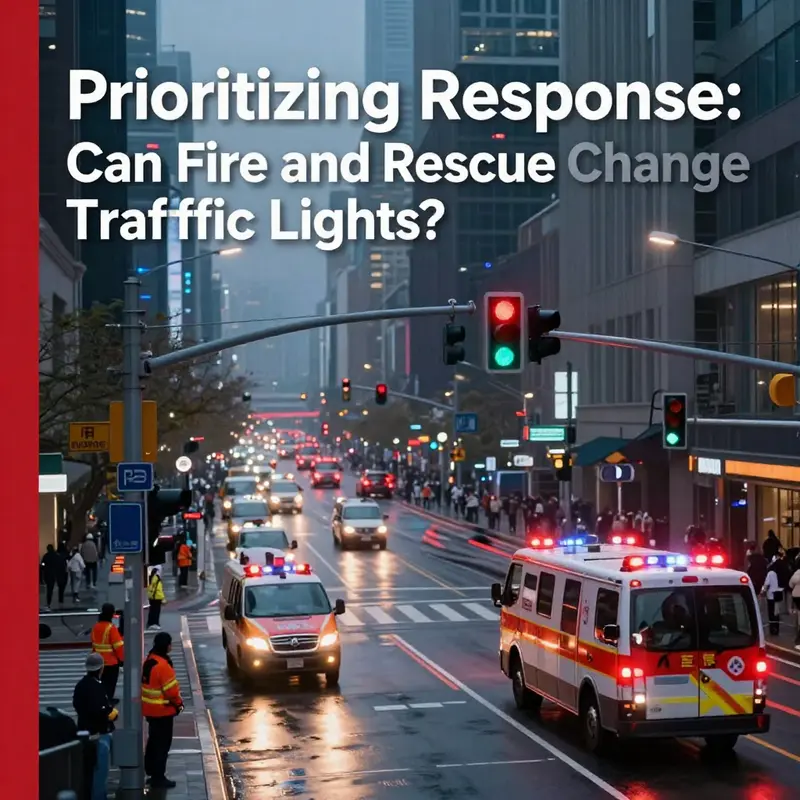
The traffic lights that punctuate urban life are among the quiet engines of public safety, and the next chapter in their evolution looks less like a single device and more like a collaborative ecosystem. Fire and rescue operations have always depended on speed, clarity, and predictability at intersections, which is why preemption—the practice of signaling a green to approaching emergency vehicles—has become a cornerstone of emergency response. Yet the horizon now extends beyond the traditional preemption box. The future lies in smarter, more integrated systems that use geographic awareness, digital infrastructure, and real-time data to orchestrate a citywide flow that favors lifesaving missions without unduly compromising the broader public. In this light, the coming developments are about turning signals from gatekeepers into participants in a dynamic, safety-centered transportation network that can adapt as rapidly as the emergencies themselves require.
A central pillar of this evolution is GPS-enabled communication between emergency vehicles and traffic signals. Early demonstrations in cities like Roswell have shown that vehicles can trigger adaptive signal changes to clear a path with greater accuracy and less latency than traditional radio-based preemption alone. The advantages are tangible: smoother progression through corridors reduces time on edge-of-control segments, lowers the likelihood of rear-end or side-swipe incidents at intersections, and curtails the cumulative delays that add up across a city during a major incident. But the technology is not a magic wand. It requires precise vehicle localization, validated messages about the vehicle’s identity and expected arrival, and robust timing coordination with the signal hardware so that a green wave is not only faster but safer. The system must reconcile the urgent needs of the responding unit with the rights and safety of other road users, incorporating pedestrian phases, turning movements, and cross-street traffic in a way that minimizes conflict points.
The potential for real-world impact grows as testing scales up from pilot intersections to coordinated networks. When a cluster of signals operates under a shared control layer, the traffic picture becomes more than a snapshot; it becomes a live map of how vehicles can weave through the urban fabric with minimal interruptions. This approach enables dynamic path clearing, where signals adapt in near real time to the approaching vehicle’s trajectory, estimated time of arrival, and the surrounding traffic density. Instead of a single preemption event at one intersection, a green corridor can be extended or re-routed as needed, preserving the momentum of the emergency unit while other travelers are guided through safer, shorter delays. The challenge here is reliability. Networked control systems must withstand sensor faults, communication outages, and cyber threats while maintaining safe fallback modes that revert to proven, conservative signal logic. As with any mission-critical system, redundancy and rigorous testing are non-negotiable, ensuring that a single compromised link does not cascade into unsafe conditions for the public.
Yet technology alone cannot deliver this promise. The integration of fire and rescue traffic light systems with broader smart city infrastructure represents a strategic shift in how cities conceive their mobility, safety, and resilience. Signals become nodes in an interconnected ecosystem that exchanges information with incident response centers, weather stations, public transit, and even real-time crowding data. The result is a smarter, more resilient urban fabric where adaptive signal timing reduces cross-traffic during emergencies and improves post-incident recovery by swiftly rebalancing the network once the immediate threat is mitigated. In this vision, dynamic routing for emergency services is informed by a constellation of inputs: current traffic speed, road conditions, historical congestion patterns, and real-time incident data. This holistic approach not only shortens response times but also enhances safety by predicting potential choke points before they form and by distributing downstream impacts away from the incident. The research community is actively exploring how integrated vehicular communication and adaptive signal control can be harmonized with existing transportation management platforms to deliver a unified operational picture.
A notable line of inquiry in this evolution is the Passable concept, an intelligent traffic light system with integrated vehicular communication that exemplifies how signals can function as collaborative partners rather than passive gatekeepers. The idea is to create a feedback loop in which the signal network not only responds to an approaching emergency vehicle but also contributes data to optimize routing for incoming units and to dampen the ripple effects of the event on the surrounding traffic. This involves sophisticated data fusion, standardized communication protocols, and careful attention to cybersecurity, privacy, and system resilience. For researchers and practitioners, the direction is clear: the smarter the data and the more robust the interfaces, the more effectively a city can support life-saving operations while preserving everyday mobility. External readers can explore this pathway in greater depth in Passable’s findings, which illuminate how integrated vehicular communication can enhance the intelligence and responsiveness of traffic signal networks.
Implementation at scale also prompts important governance questions. Standards bodies and regional authorities must collaborate to harmonize technologies across jurisdictions, ensuring that a fire truck in one district can be served by signal control logic understood and respected by neighboring areas. Interoperability extends beyond hardware compatibility to include data formats, message semantics, and safety protocols. The promise of a connected approach is tempered by the reality that urban environments differ in road geometry, traffic density, vehicle fleets, and emergency response procedures. Therefore, deployment plans increasingly favor modular, incremental rollouts that begin with high-priority corridors, then expand to broader networks as reliability and trust in the system solidify. In the long run, this requires continuous training for operators and responders, as well as ongoing evaluation of the balance between preemption authority and overall traffic safety. The human element remains central: technology is only as effective as the operators who design, monitor, and adjust it in the field.
With these advancements, the role of the dispatcher and the on-scene commander gains new dimensions. Dispatchers can leverage richer data feeds to determine not only which route a unit should take but how to coordinate multiple units converging on a single incident without creating cross-traffic hazards. On the street, responders can expect a more predictable journey through congestion, yet they must still exercise professional judgment. Situational awareness remains essential, not only for the safety of the emergency crew but for the efficient movement of other road users who must share the road with a fast-moving vehicle. This is where design philosophy matters: signal systems should impart clear, intuitive cues so drivers, pedestrians, and cyclists understand the evolving priority status of an intersection. In turn, this clarity reduces the likelihood of sudden braking, erratic lane changes, or ambiguous signal reading that could lead to accidents.
For readers seeking a broader perspective on how fire services are adopting innovative tools, the Innovation Museum Transforming Fire Services provides a thoughtful exploration of how technology is reshaping operations and expectations across the public safety spectrum. In sum, the chapter ahead invites ongoing collaboration among engineers, planners, responders, policymakers, and communities to translate the promise of smarter signals into tangible improvements in response times and in the everyday safety of all road users.
Final thoughts
The integration of traffic light preemption technology has proven to be a significant advancement in enhancing the efficiency of fire and rescue services. This system not only promotes rapid response during emergencies but also reinforces public safety and fosters community trust in emergency management strategies. As urban areas continue to evolve, so will the technologies that support their safety and functionality. Understanding these systems and advocating for their implementation can lead to safer environments for all. Engaging with various stakeholders—including the general public, emergency services, and education leaders—will be key to advancing these technologies further.