
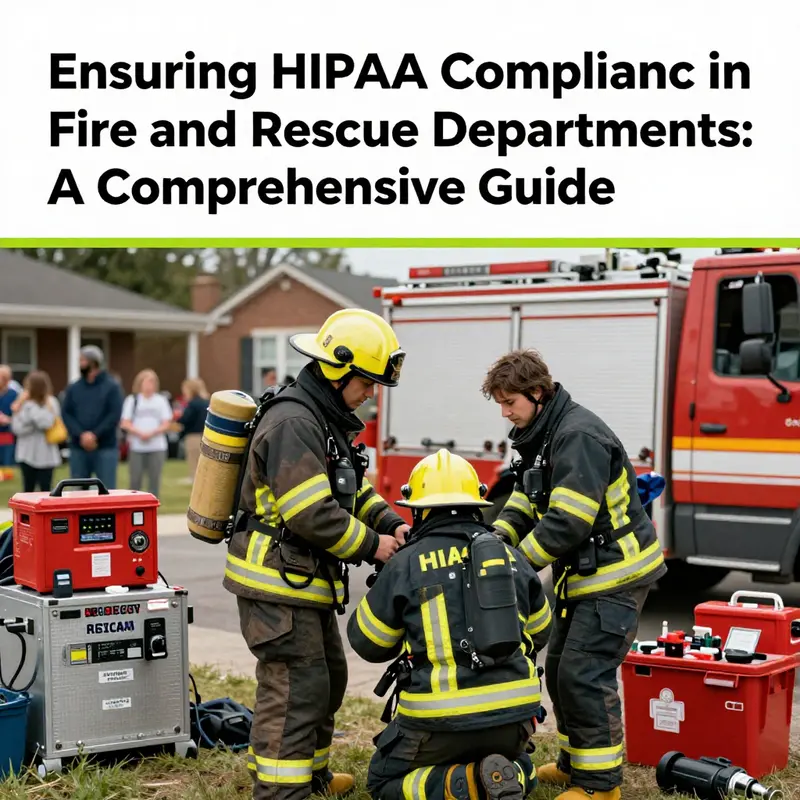
The intersection of emergency response and healthcare privacy regulations can be complex, yet vital for fire and rescue departments that provide medical services. Understanding HIPAA compliance is not merely a matter of regulatory necessity; it underscores the commitment to safeguarding patient rights in emergency situations. This article explores the multifaceted aspects of HIPAA compliance in fire and rescue departments by delving into four critical areas: the analysis of compliance requirements when medical services are provided, the role of these departments as business associates, implications of non-compliance, and best practices for maintaining adherence to HIPAA standards. Each chapter builds upon the previous to provide a comprehensive understanding of how emergency responders navigate the challenges of protecting sensitive health information.
null
null
null
null
HIPAA in the Fiery Line: Navigating Privacy, Compliance, and Trust for Fire and Rescue Departments
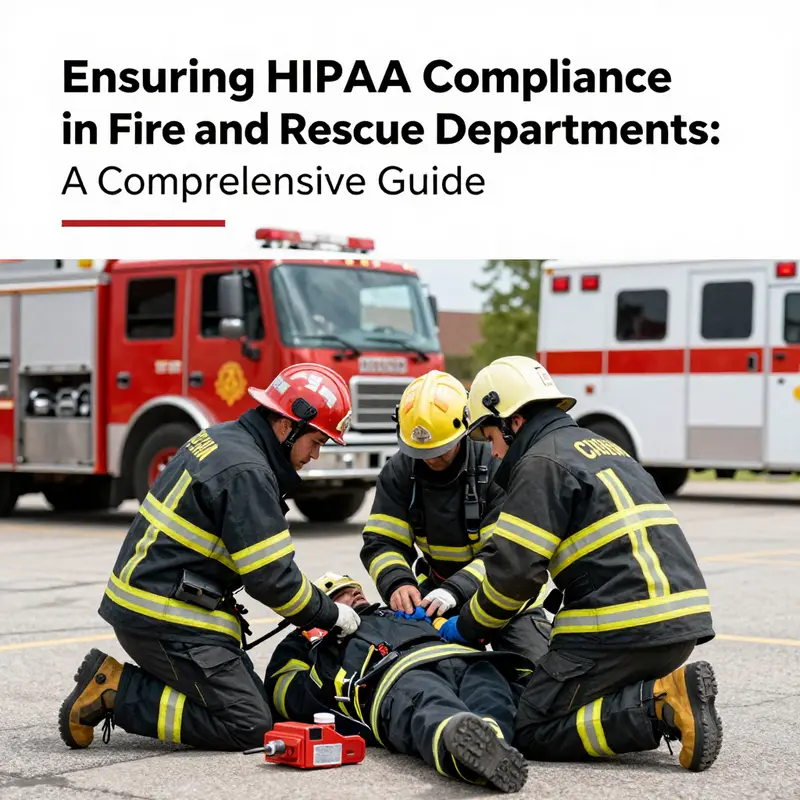
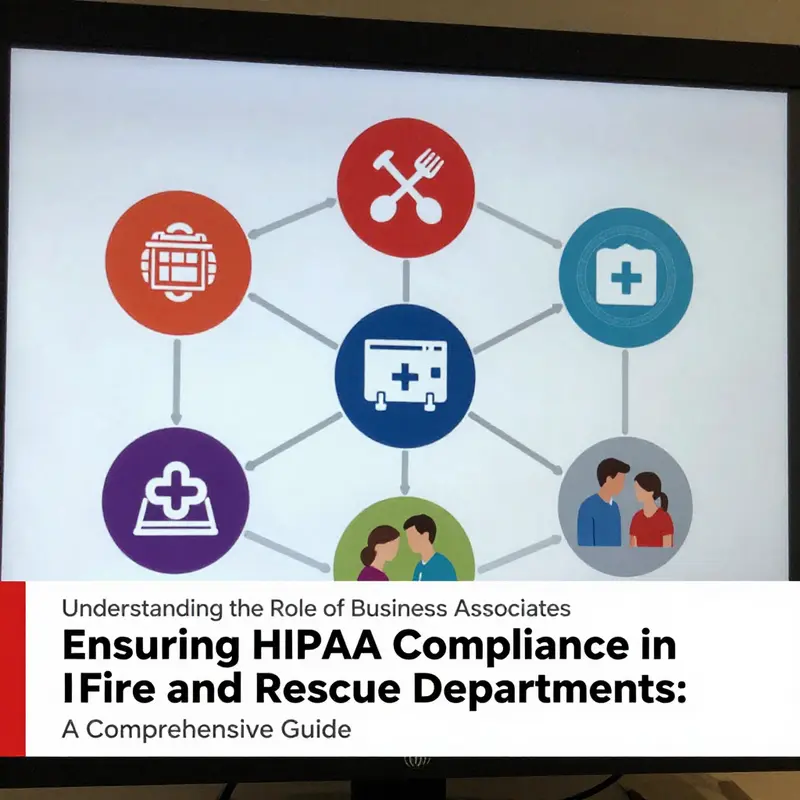
When the siren wails and a patient is loaded into an ambulance, a stream of information travels across devices and records. Names, conditions, treatments, and follow up plans move between crews, hospitals, and records. It is this flow of health information that HIPAA governs. Fire and rescue departments are not automatically shielded from HIPAA unless their role intersects with protected health information. The pathway to compliance is not about blanket privacy rules but about identifying where PHI is created, received, stored, or transmitted and then applying disciplined safeguards.\n\nPHI means any individually identifiable health information that relates to provision of health care or to payment for such services. It includes patient condition notes drafted by paramedics, treatment decisions made in the field, and transport details. It also includes administrative data such as billing codes, contact information, and any identifier that links a person to health data. The moment a fire department creates, receives, maintains, or transmits such information in the course of care or health care operations, HIPAA rules apply. If a department only responds to non medical emergencies without PHI involvement the rules may not apply directly, but if PHI enters the workflow, HIPAA protections are triggered.\n\nThe structure of HIPAA places two critical roles on fire operations. A department that provides EMS as its primary function is a covered entity and must protect PHI, enforce access controls, train staff, implement privacy and security policies, and comply with HIPAA rules. The second pathway occurs when a fire department receives PHI from another covered entity for purposes like transport or sharing records for continuity of care; in that scenario the department becomes a business associate and must sign BAAs and adhere to privacy safeguards.\n\nThis practical implication is simple: if PHI is involved at any stage of EMS, the department must handle it with care. If PHI does not enter the workflow, HIPAA safeguards may not apply in the strict sense, but the duty to protect trust and dignity remains.\n\nPenalties and enforcement: civil penalties can range from modest fines for inadvertent mistakes to substantial penalties for serious lapses. Per violation penalties can span from small amounts to higher figures, with annual caps for repeated violations. Criminal penalties exist for serious misuse, with potential fines and prison terms. Breaches trigger reports to affected individuals and agencies, and public disclosure may occur when many individuals are involved, affecting trust and public confidence.\n\nTo prevent outcomes, departments should adopt a proactive compliance posture. Core is a data protection policy that names PHI, defines who may access it, and under what conditions. Coupled with ongoing training, regular risk assessments, and BAAs with vendors, this creates a governance framework that holds all participants accountable.\n\nData protection means layering safeguards from policy to devices. Enforce least privilege access, maintain audit trails, encrypt PHI at rest and in transit, secure mobile devices, and practice data minimization in the field. Ensure that notes and patient care reports are accurate and shared through verified channels that preserve privacy during transitions of care.\n\nWhen moving to cloud or external storage, ensure BAAs and safeguards are in place and data is managed according to retention policies. The technology is a tool, not a shield, and must be governed by policies and contracts that preserve privacy and security. If departments centralize electronic records, focus on risk management and resilience that does not slow care.\n\nThe practical effect is a culture of privacy that improves patient trust, record quality, and care coordination with medical partners. Transparency with the public about how PHI is handled further strengthens confidence in emergency services. The ongoing journey is to keep privacy at the heart of the mission, balancing speed and protection.\n\nIf needed, external resources can be consulted through official health information portals, regulatory guidance, and industry best practices, ensuring alignment with evolving standards and new technologies.
Balancing Duty and Privacy: Best Practices for Making Fire and Rescue Departments HIPAA-Ready
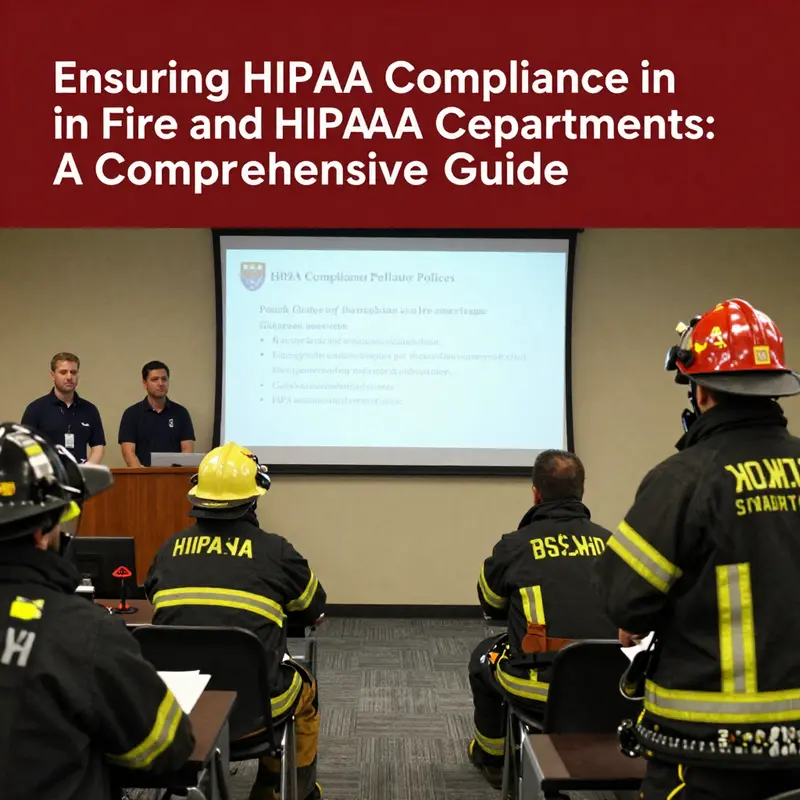
When people dial emergency services, they expect speed, skill, and clarity. What they may not realize is that the moment a fire or rescue team enters the scene, a privacy framework can begin to shape every decision, every transmission, and every handoff. The Health Insurance Portability and Accountability Act (HIPAA) often sits at the margins of public-safety work, but for fire and rescue departments that provide emergency medical services or routinely exchange protected health information (PHI) with hospitals and clinics, HIPAA is a living set of requirements that can govern how data is created, stored, transmitted, and protected. The central challenge is not to treat HIPAA as an external imposition but to weave it into the department’s daily operations without sacrificing speed or the clarity of incident command. In practice, HIPAA compliance for fire and rescue hinges on a straightforward but demanding principle: determine when PHI enters the department’s technical and organizational ecosystem, and then apply a coherent, layered set of safeguards that cover people, processes, and technology. When EMS is part of the department’s core mission, the organization becomes a potential covered entity or business associate, and the privacy and security protections that HIPAA dictates become a baseline rather than a distant requirement. Conversely, when a department’s activity is strictly non-medical—fires, water rescues, hazardous materials response with no patient contact—HIPAA’s reach recedes. Yet even in those scenarios, the culture of privacy can and should shape how information is handled when medical data appears in the workflow, such as during joint responses with hospitals or in the coordination of patient transports. The practical reality is that PHI can travel through a fire department’s processes in predictable ways: a patient encounter, a transport, a call-back from a hospital with diagnostic information, or even the electronic handoff to a receiving facility. Each instance elevates the risk of exposure, loss, or unauthorized access if it is not governed by formal policies and tested practices. In that sense, HIPAA compliance for fire and rescue departments is less about adopting a new framework and more about aligning existing public-safety strengths—discipline, rapid decision-making, clear lines of authority—with privacy protections that respect patient rights and safeguard trust. The goal is not to encumber responders with excessive bureaucracy but to ensure the same standards engineers rely on to protect a critical infrastructure sit at the heart of EMS operations. A department that completes a patient transport journey from the field to a hospital, shares clinical notes with a clinician via secure channels, or stores patient care records on mobile devices, already touches PHI. When this happens, HIPAA’s privacy rules demand careful handling of who can access PHI, under what circumstances, and for what purposes. They demand robust safeguards that protect the information while still enabling rapid, life-saving action. This dual requirement—protect PHI and preserve operational agility—drives the architecture of a HIPAA-aware fire department. It begins with a recognition that privacy is not an optional add-on but a core element of mission success. For example, the way a unit coordinates with a hospital through a patient handoff is fundamentally a communication protocol that can either reduce risk or increase it, depending on whether companions are trained in privacy-aware handoffs, whether electronic systems are encrypted in transit, and whether access to PHI is tightly controlled and auditable. A robust privacy program, then, becomes part of the department’s muscle memory, integrated into vehicle checklists, incident action plans, and after-action reviews. The first practical step is a careful delineation of when HIPAA applies and when it does not. If the department takes part in transporting patients or otherwise handling PHI, it becomes a business associate or a covered entity and must align with HIPAA’s Privacy, Security, and Breach Notification Rules. If the department’s EMS activities are strictly field-based and do not involve PHI, HIPAA may not impose direct duties. Still, in real-world practice, PHI often enters EMS workflows by way of hospital communications, interoperable health information exchanges, or shared care plans. Even if the department is not a formal covered entity, the risk of PHI exposure exists and warrants a proactive privacy posture. The core of this posture rests on a simple but powerful triad: governance, technical safeguards, and operational discipline. Governance gives you clarity on roles and accountability. A Privacy Officer, often a member of the leadership team or a designated compliance professional, becomes the steward of PHI, responsible for developing policies, delivering training, and overseeing risk assessments. The officer’s authority must be visible and supported—clear reporting lines, time allocated for compliance activities, and a mandate to enforce policies across the department. Technical safeguards translate privacy into practice. Encryption becomes not just an IT standard but a daily habit: PHI stored on laptops, tablets, or in cloud repositories must be encrypted at rest and in transit. Access controls, including role-based access and multi-factor authentication, ensure responders see only what they need for their role. Audit trails, incident logging, and regular vulnerability scanning provide the transparency necessary to detect unusual access patterns or data leaks. In rapid-response scenarios, had a clinician’s notes been accessible only through a secure, auditable process and not via an open file on a vehicle computer, the harm of a data breach could be greatly reduced. Physical safeguards complete the triad by protecting tangible repositories of PHI. Secure storage in stations, locked compartments in ambulances, and controlled access toPHI-containing devices prevent casual exposure. Consider the wayPHI is handled during a shift handover: a secure workspace, a policy that PHI should not be discussed in public areas, and a clear chain of custody for any device or document that contains health information. The human element is equally critical. Training is not a once-a-year requirement but a continuous practice that shapes daily decisions. Workforce training should cover privacy basics, the importance of least-privilege access, and how to recognize and respond to potential privacy incidents. The Privacy Officer should lead ongoing education, including drills that simulate a breach and an actual patient-care handoff. They should also manage BAAs—business associate agreements—with any third parties that touch PHI, from IT service providers to ambulance transport partners. A robust BAA defines responsibilities, security measures, breach notification responsibilities, and the scope of PHI use. It creates a legal and operational framework for collaboration while preserving patient privacy. The risk assessment is the compass that keeps the chapter of HIPAA compliance in line with reality. Departments should identify every system, process, and person that handles PHI, mapping them to potential threats—misplaced devices, unsecured vehicles, unencrypted data in transit, or insufficient authentication. The assessment should produce a prioritized plan, starting with the most dangerous gaps and progressing toward a mature, repeatable privacy program. Yet risk assessment is not a one-off exercise. HIPAA-compliant fire and rescue operations demand a culture of continuous improvement: annual audits, periodic policy reviews, and drills designed to test both technical defenses and human responsiveness. As the landscape of health information exchanges evolves and as fire and rescue services increasingly leverage digital workflows, the opportunity to strengthen privacy is also a chance to improve patient outcomes. In turn, this creates a shared value proposition for the public—faster, safer, and more privacy-preserving emergency care. The strongest evidence of a department’s privacy health lies in its breach-notification readiness. HIPAA requires that certain breaches be reported to affected individuals and, in many cases, to the Department of Health and Human Services. An incident response plan that defines detection, containment, eradication, and recovery steps, plus a communications protocol for notifying patients and authorities, is not optional; it is an operational lifeline. The plan should also specify how third parties will be engaged when a breach occurs and how BAAs will guide third-party responses. Even with all this structure, a department must stay practical. HIPAA compliance does not demand a perfect, never-failing fortress. It demands a robust, well-documented, and consistently applied approach that reduces risk while preserving the speed that emergency responders rely on. In the end, the fire and rescue discipline—its discipline, teamwork, and rapid decision-making under pressure—can be harnessed to elevate privacy protection as a standard feature of service delivery. The field’s ethos of minimizing harm translates naturally into protecting patient information. When a crew is about to transport a patient, every team member should know that PHI is at stake and that privacy safeguards are as critical as lifesaving procedures. When teams collaborate with hospitals, clinicians, and other public-safety partners, the privacy framework must extend beyond the station to the road and into the cloud. That is why a holistic HIPAA program should be designed not as a separate policy stack but as an integrated set of routines: a privacy-first approach embedded in daily operations, a security program that respects the realities of first response, and an ongoing governance process that evolves with technology, compliance expectations, and patient needs. For readers who want to connect this practical privacy work to a broader philosophy of health-centric infrastructure within the fire service, consider the concept of building environments that foster wellness and safety together. The Green Firehouse: Creating Sustainable Spaces for Community and Health offers a compelling glimpse into how design, operations, and culture can converge to support health outcomes across a department. It is not a disclosure policy, but a reminder that privacy and health protections can be integrated into the very fabric of a fire department’s buildings, vehicles, and workflows. You can explore this approach here: The Green Firehouse: Creating Sustainable Spaces for Community and Health. Integrating such design thinking with HIPAA readiness helps departments see privacy not as a barrier but as a facilitator of trust, resilience, and quality care. Within this integrated frame, the practical steps become clear: establish a privacy governance presence and empower it with authority; safeguard PHI with layered technical controls that anticipate field realities; secure physical and logistical environments where PHI might be present; manage third-party risk through BAAs; train consistently so privacy becomes instinctive; and prepare for incidents with tested, practiced responses. When residents rely on fire and rescue services during emergencies, they deserve confidence that their information is protected as carefully as their lives. HIPAA compliance, in this view, is not an abstract regulatory obligation but a real-world commitment to dignity, continuity of care, and public trust. The profession’s success depends on this alignment between mission and privacy. As policy makers and department leaders continue to refine requirements in a rapidly digitizing health landscape, the best path forward for fire and rescue services is a pragmatic, patient-centered privacy program that respects the urgency of the moment while protecting sensitive information. The discipline teaches us to move with precision; privacy safeguards teach us to move with responsibility. The two together deliver emergency care that honors both safety and privacy, a blend that strengthens the credibility of first responders and the confidence of the communities they serve. For further guidance on HIPAA practices and official regulatory references, consult the U.S. Department of Health and Human Services. External resource: https://www.hhs.gov/hipaa/index.html
Final thoughts
In conclusion, the complexities surrounding HIPAA compliance for fire and rescue departments cannot be understated. These emergency responders play an essential role in ensuring not only the safety of individuals but also the confidentiality of their health information during medical crises. As covered entities or business associates under HIPAA, they must adopt comprehensive strategies to implement best practices for data protection and compliance. By understanding their roles and responsibilities, fire and rescue departments can effectively navigate the legal landscape, mitigate risks associated with non-compliance, and ultimately enhance the quality of care they provide. A proactive approach toward HIPAA adherence is crucial for maintaining public trust and affirming the commitment to patient rights in emergency situations.