
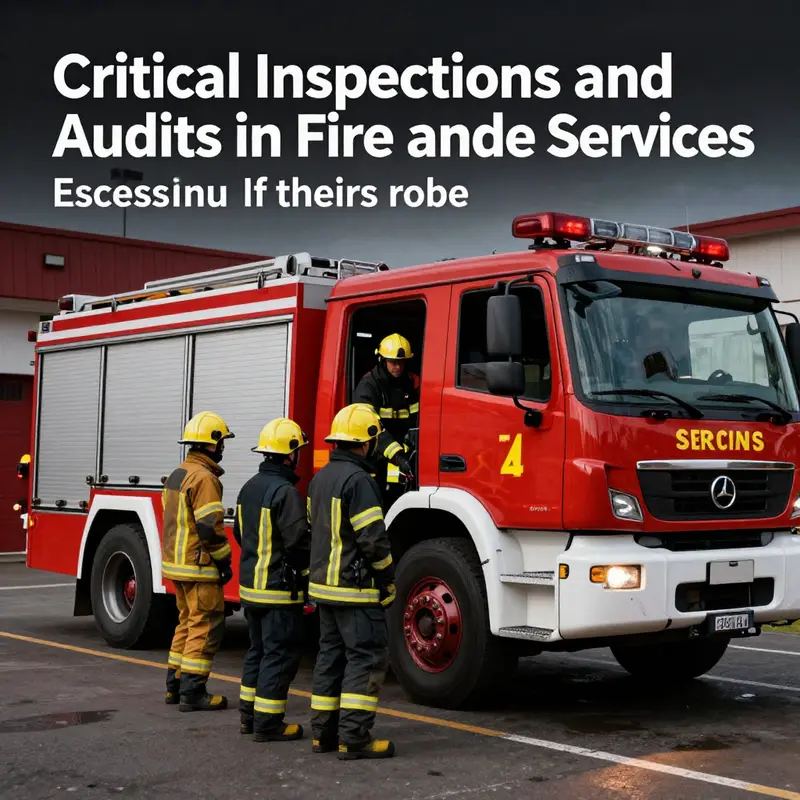
Fire and rescue services play an essential role in safeguarding public safety and ensuring compliance with safety regulations. Inspections and audits are crucial components of these services, designed to foster accountability and enhance operational efficiency. Inspections help proactively address potential hazards, while audits ensure the responsible management of resources. In this comprehensive overview, you will learn about the importance of these inspections, their audit processes, and how they work together to maintain the highest standards of safety and effectiveness in fire and rescue operations.
The Quiet Guardrails of Readiness: Inspections and Audits in Fire and Rescue Safety
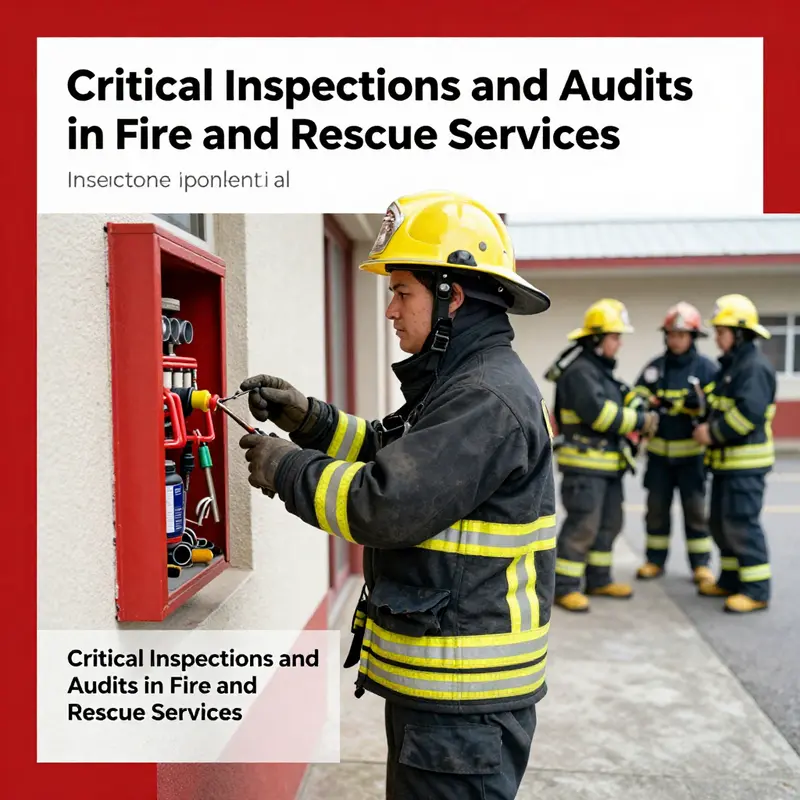
The work of a fire and rescue service is defined by readiness, not only by dramatic rescues. Inspections and audits act as quiet guardrails that keep systems, spaces, and people safe. They enable courage and skill by ensuring that the environment and the resources responders rely on are reliable, transparent, and capable of improvement. When viewed together, inspections and audits form a governance discipline that links safety outcomes to responsible stewardship of public resources. The risk landscape is dynamic: buildings rise, occupancies shift, and financing cycles evolve. In this environment, regular checks and rigorous reviews provide an anchor so that missions stay steady even as conditions change.
Inspections are the first line of defense before danger arrives. They are proactive, targeted, and guided by specific risk indicators. Fire departments organize inspections around occupancy types, hazardous processes, and critical life safety systems. In large cities, risk-based models help prioritize high-occupancy structures and complex fire protection systems. The practice involves trained inspectors who translate codes into practical actions: clear stairs, functioning doors, accessible exits, and visible detectors. The outcome extends beyond compliance; it sends a clear message that safety is ongoing responsibility and an essential element of daily life, not a one-time requirement.
Audits illuminate governance and financial stewardship. They trace how resources flow from budgets to frontline operations, verify that funds are spent as intended, and confirm that procurement, asset management, and reporting are transparent. They reveal whether decisions align with mission needs and whether measures intended to improve safety truly do so. In practice, audits connect to field readiness through asset and procurement reviews, maintenance schedules, and follow-up corrective actions. When a department demonstrates responsible stewardship, public trust grows and continued investment in safety becomes more likely.
Across contexts, both inspections and audits must contend with staff capacity and shifting risk. In tighter budgets, audits help prioritize investments; in growth zones, inspections manage development pace; in rural areas, they emphasize coverage and accessibility. The pairing of these processes creates a dynamic where readiness is protected by deliberate, data-informed practice. Innovation strengthens both sides: data analytics, mobile inspection tools, and digital asset management enable more precise risk mapping, while auditors use data to detect patterns and forecast vulnerabilities before they become problems. The practical result is safer communities, improved training, and more meaningful public engagement.
Standards bodies provide essential anchors. The National Fire Protection Association translates national expectations into local actions, guiding inspectors on site and informing auditors about governance and accountability. Standards are not checklists, but a shared language linking fieldwork to policy and funding decisions. For practitioners, the value lies in turning codes into daily routines: testing detectors, keeping exit routes clear, and reviewing contracts with an eye toward value and safety.
Ultimately, the aim is to protect people. Inspections safeguard life safety features in daily environments; audits safeguard the governance that pays for them. When done well, inspections invite owners and occupants to partner in safety, while audits offer transparent, constructive evidence of responsible stewardship. The combined discipline supports a service that remains prepared, learns from experience, and earns public trust even as threats and resources evolve.
To glimpse how this integrated approach translates into outcomes, consider that inspections are ongoing safety checks; audits verify that those checks themselves are credible and that resources are used to maximize protective results. This alignment helps responders act from a foundation of verified readiness, supported by transparent budgets and well-tracked assets, enabling faster and more reliable responses when alarms sound. For readers seeking further resources, see NFPA standards at https://www.nfpa.org.
Audits and Inspections as Guardians of Readiness: Building Accountability, Transparency, and Resource Stewardship in Fire and Rescue Services
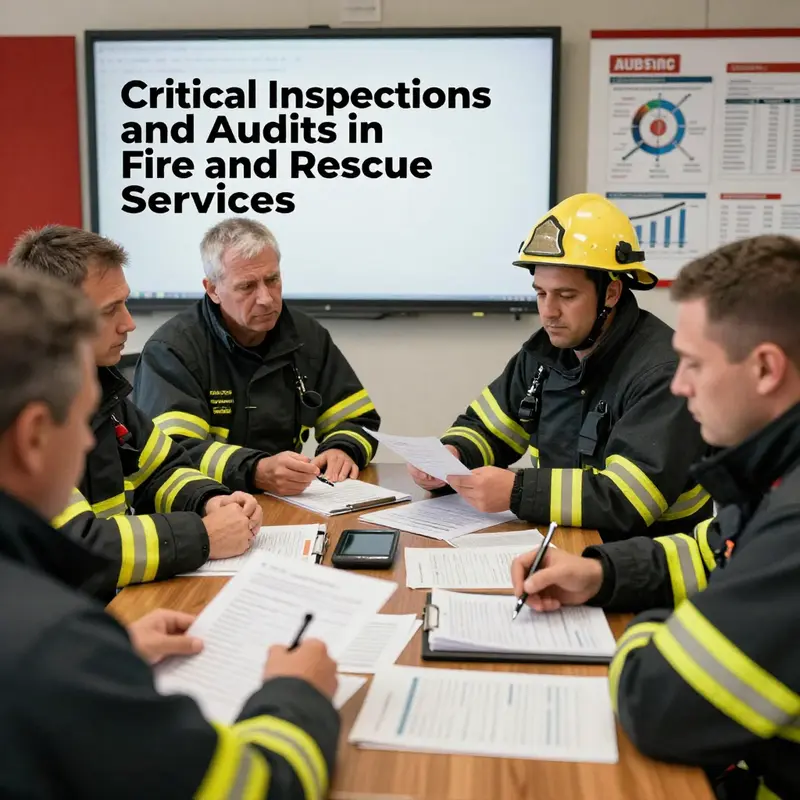
Audits and inspections are not mere formalities in the fire and rescue world. They are the ballast that keeps complex, high stakes systems from drifting toward inefficiency or risk. Inspections are the day to day curb checks that keep people safe, while audits look deeper into how those safety programs are funded, managed, and measured. The two practices converge on a common aim: to ensure that a service designed to protect life and property is operating with integrity, with clear lines of responsibility, and with resources tuned to real dangers rather than symbolic budgets. In jurisdictions large and small, communities expect transparency in how fire protection resources are allocated, how responders are trained, and how readiness is maintained. Audits examine the stewardship of funds, procurement choices, asset registers, and performance against strategic goals. Inspections, by contrast, test the immediate measures of safety in buildings, permits, and preparedness protocols. When done well, audits and inspections reinforce each other: inspections surface compliance gaps that audits can verify at the governance level, while audits track the outcomes of inspection programs in terms of safety outcomes, cost efficiency, and reliability. Fire and rescue services operate in environments where both the probability of catastrophe and the consequences of errors are significant. A lean, well-audited system does more than prevent loss; it helps communities trust that public money is spent wisely, that standards are applied consistently, and that the service remains capable in the face of evolving risks. The initial research overview notes that inspections are routine across many agencies, from major urban departments to rural brigades, and that audits range from internal financial checks to third party verifications of asset data. The interplay between inspection discipline and audit scrutiny defines how a service plans, executes, and learns. It turns out that the most instructive moment for understanding audit work in fire and rescue is not a dry financial ledger or a long list of compliance codes, but the everyday routines of inspectors walking hallways, booking rooms, and measuring response times soon after a call. In this sense, audits are not distant audits, but a practical, ongoing process of accountability that travels through the budget, through procurement, through asset management, and through the very training that keeps firefighters prepared to face the next emergency.
The fabric of inspections and audits comes into sharper relief when we consider concrete, real world practices. Inspections are carried out with a preventive mindset. Fire departments routinely inspect buildings, schools, and businesses to verify code compliance, ensure working smoke detectors, maintain clear evacuation routes, and confirm proper fire extinguisher placement. In large urban centers, the scale of inspection programs is substantial. Consider a department that undertakes regular reviews of high occupancy structures and specific hazard profiles, where inspectors must stay current on evolving fire codes and life safety standards. The New York City Fire Department, for instance, conducts regular inspections of buildings with high occupancy or particular hazards, underscoring how trained personnel become a frontline defense through systematic checks. The cadence of these inspections is not merely about compliance on one day; it is an ongoing dialogue with property owners about prevention, maintenance, and timely remediation. Elsewhere, in areas facing wildfire risk, agencies like Cal Fire perform inspections on private properties within wildland-urban interface zones to reduce risk by clearing vegetation and ensuring defensible space around structures. These programs illustrate how inspections extend beyond the brick and mortar of facilities; they are proactive investments in reducing the likelihood and severity of fires that could threaten entire communities.
Local departments add another layer, inspecting small businesses, schools, and residences for code compliance. The emphasis is not only on detecting dangerous conditions but on creating a predictable, repeatable standard of safety that property owners can internalize and sustain. When inspections are coupled with clear enforcement pathways and accessible guidance, communities experience a measurable uplift in fire protection readiness. That is the preventive value of inspections: they deter risk by making safety a routine, shared obligation rather than a sporadic, punitive activity. At the same time, audits sit alongside these preventive efforts to ensure resources are managed with discipline. Audits can take many forms. Financial audits examine how funds are allocated and spent, ensuring adherence to regulations and reporting standards. They verify that budgets align with strategic priorities, that procurement decisions reflect value for money, and that asset registers are accurate and complete. The initial research highlights a striking example from the other side of the world: the Hainan Provincial Aviation Emergency Rescue Center seeking an audit firm to conduct a full-process tracking audit and a final financial settlement audit for a major forest fire-fighting project. This kind of external financial audit is about trust in the governance process and accountability for the use of public funds in high-stakes initiatives. Internal and external performance audits examine leadership effectiveness, procurement practices, asset management, and the soundness of risk controls. In Heilongjiang Province, for instance, an audit team was dispatched to review the Jixi City Fire Rescue Brigade’s economic responsibilities from 2019 to 2021, shedding light on how decisions were made, how resources were allocated, and how assets were managed. The goal is not punishment but improvement: to identify weaknesses, ensure compliance, and highlight opportunities to strengthen governance and operational reliability.
In practice, audits also extend to the oversight of contractors and vendors who supply critical equipment and services. The Shenzhen Longgang District Fire Rescue Brigade, for example, has engaged third party firms to audit fixed assets, thereby ensuring that records reflect reality and that loss or misuse of equipment is minimized. Such contractor and vendor audits are essential in a sector defined by the interplay of life safety and technology. Equipment inventories, maintenance cycles, depreciation schedules, and replacement planning require meticulous tracking. When third-party auditors examine these areas, they create a check against drift in asset management that could otherwise undermine readiness just as a large incident tests the system’s limits. Taken together, the inspections and audits described in the materials point to a comprehensive approach to governance in fire and rescue services: inspections safeguard the continuum of safety in daily practice; audits secure the integrity of the resources and decisions that sustain that practice over time. The combined discipline makes it harder for inefficiency, misallocation, or oversight to slip through the cracks. It also clarifies accountability so that if a problem arises, there is a well-mapped trail from the frontline condition to the stewardship decisions that shaped it.
This integrated approach has become more vital as services confront evolving demands. In many countries, oversight bodies such as the National Audit Office in the United Kingdom have highlighted the stress points of ongoing public service delivery. Their 2023 review of fire and rescue services underscored how budget constraints, workforce shortages, and data collection needs shape the capacity to respond. The NAO’s work emphasizes that strategic planning must be robust, that digital tools can enhance asset management and incident response, and that standardized performance metrics are essential to meaningful comparisons across services. Data sharing and inter-agency coordination emerge as practical improvements that can transform both audits and inspections from isolated checks into a coordinated system of accountability. This broader regulatory perspective matters for the daily work of local firefighters and inspectors because it frames the expectations and limits within which they operate. It also nudges services toward modernization, encouraging investments in training, information systems, and governance structures that support accurate, timely reporting.
A key dimension of audits is their focus on risk assessment and emergency preparedness. Auditors examine whether a service has robust plans to respond to major incidents, including natural disasters and large-scale emergencies. They assess the effectiveness and consistency of training programs, verify that equipment is current and well maintained, and evaluate how well agencies coordinate with other emergency services. In other words, audits look not only at what is being done but at how well the organization can adapt when circumstances change. The emphasis on readiness aligns with the aims of inspections, which create the safe baseline on which resilience can be built. The result is a dual culture of continuous improvement: inspectors who guide prevention at the front end, and auditors who test governance, governance systems, and the use of resources that enable prevention and response. This dual culture is crucial for sustaining public trust because it demonstrates a tangible commitment to accountability and to the closure of gaps detected through both lines of inquiry.
Public trust is more than a nice-to-have; it is a political and social resource that underpins a community’s willingness to support funding, staffing, and modernization. Audits contribute to trust by making results visible and verifiable. Transparent reporting of audit outcomes lets communities understand how well their local services are performing, what risks have been mitigated, and where improvements remain needed. When audits identify deficiencies, they should be followed by clear corrective actions and realistic timelines. Where they highlight successful practices, those practices can be scaled or replicated across other stations or regions. The 2023 NAO report, for instance, invites fire and rescue services to adopt forward-looking planning that anticipates future demands and invests in digital tools that can streamline asset management and incident response. It also cautions against complacency in data collection and measurement, urging consistent, standardized metrics that enable meaningful comparisons and accountability. To translate such findings into everyday practice, authorities may point to accessible resources for communities, including public dashboards, plain-language explanations of financial stewardship, and clear updates on ongoing improvement programs. The result is a more confident public that sees the service not as a distant bureaucracy but as a responsive, responsible partner in community safety.
An important contrast in this landscape is how a department communicates about risk and performance. Audits do not function well as opaque gatekeeping; they succeed when they illuminate the path to better practice. This is where external linkages and internal knowledge-sharing play a role. The internal links within the broader article ecosystem can connect readers to practical, forward-looking examples of how fire services translate audit insights into tangible improvements. For instance, the exploration of transformation in fire services through an innovation oriented lens is captured in the resource on the innovative museum that translates complex safety concepts into public understanding. Readers can explore that material to see how governance, education, and community engagement intersect with audit and inspection regimes. The internal link to the innovation museum resource is a small but meaningful step toward illustrating how contemporary fire services narrate their readiness story to the communities they serve. This connection helps readers perceive audits and inspections not as isolated acts but as components of a broader, evolving culture of safety, transparency, and continuous learning.
The practical upshot for practitioners is clear. Inspections demand disciplined routine, technical competence, and direct engagement with property owners and managers. Audits demand rigorous evidence, traceable processes, and a steady political will to invest in governance structures that can endure changes in leadership, funding, and risk environment. When a service combines these strengths, it can better allocate funds to the areas that reduce risk, schedule maintenance and training in ways that minimize downtime, and deploy responders with a clearer sense of how their work fits into the overall mission of public safety. The result is not merely compliance but resilience. It is a resilience grounded in accountability, where the public can see how resources are used, what outcomes are achieved, and what trade-offs are accepted in pursuit of a safer community. And because risk is dynamic, the cycle must remain ongoing: inspections identify day-to-day hazards, audits verify the integrity of the governance that supports inspection programs, and both feed into strategic planning that anticipates tomorrow’s challenges rather than merely reacting to today’s incidents.
For readers seeking a concrete, digestible entry point into the audit and inspection landscape, consider the broader governance narrative in the public sector. Audits in fire and rescue services are part of a spectrum of oversight that includes budgetary discipline, procurement integrity, asset risk, and performance benchmarking. As in other public safety domains, the essential aim is to ensure that every dollar spent yields the maximum possible safety benefit and that the service remains ready to respond with speed, skill, and coordination when a community needs it most. The integration of traditional inspections with modern auditing approaches—supported by data, standardized metrics, and cross-agency collaboration—offers a model that can be replicated and adapted to different jurisdictions. In that sense, audits and inspections become not a burden but a driver of continuous improvement that elevates safety outcomes while maintaining public trust. The case studies cited in this chapter illustrate a spectrum of practice: from routine, preventive inspections to high-stakes, multi-year audits of large projects, and from local procurement scrutiny to international governance dialogues. Collectively, they show how fire and rescue services can manage risk through a disciplined, transparent, and responsive approach that treats readiness as an ongoing, community-centered obligation.
External resources offer deeper theoretical and regulatory context for those who want to explore the governance dimension further. The National Audit Office in the United Kingdom has published influential analyses on fire and rescue services that grapple with budgetary constraints, workforce planning, and the role of data in decision making. Their work reinforces the idea that audits should inform strategy as much as confirm compliance, guiding long-range planning and the intelligent deployment of digital tools. For readers who want a broader view on how such oversight operates at scale, a direct reference to the NAO report from 2023 provides a detailed examination of sustainability challenges, governance lessons, and the potential for standardized indicators across services. This external resource complements the narrative in this chapter by highlighting how national level findings can translate into locally actionable practices. It is a reminder that the fire and rescue enterprise operates within a larger ecosystem of safety governance, where accountability and resource stewardship are shared responsibilities across government tiers, professional associations, and the communities they protect.
In sum, audits and inspections in fire and rescue services are best understood as complementary strands of a single mandate: keep people safe, protect public investment, and sustain high readiness through disciplined governance. Their effectiveness rests on a culture that treats data as a public trust, pursues continuous learning, and communicates outcomes openly. When this culture takes root, inspections yield safer environments day by day, while audits confirm that the path from funding to frontline action is coherent, transparent, and resilient. That is the core promise of accountability in the fire and rescue sphere: not simply to recount what has happened, but to illuminate what will be needed next and to show, in clear terms, how the service will rise to the challenge.
Internal link reference for readers seeking related content on governance and innovation in fire services: Innovation Museum Transforming Fire Services.
External resource for broader regulatory context: https://www.nao.org.uk/publication/fire-and-rescue-services-2023/
Guardians of Readiness: How Regular Inspections and Audits Fortify Fire and Rescue Operations
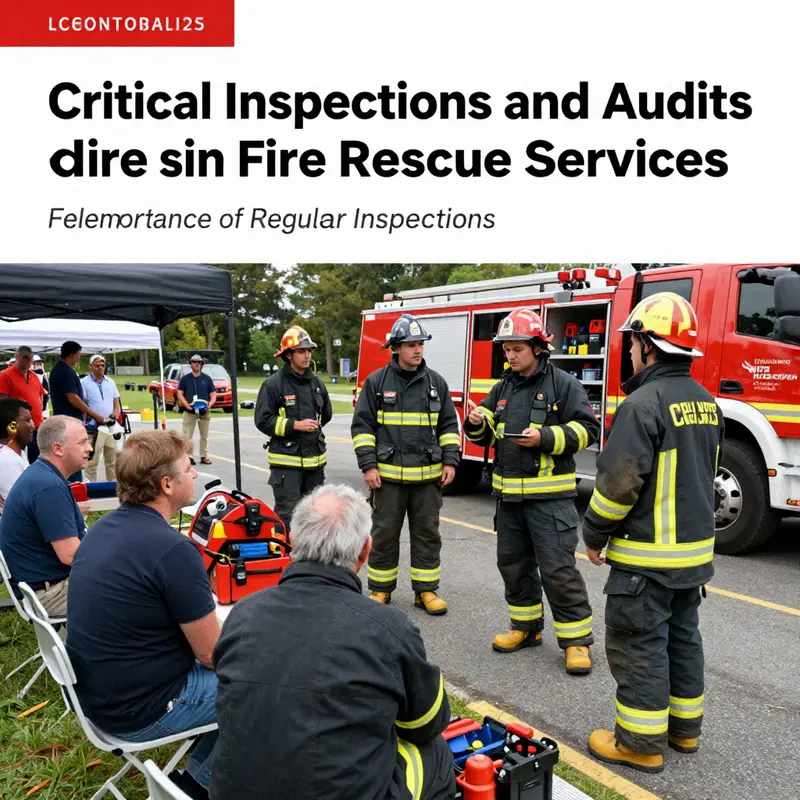
In the daily churn of emergency response, inspections and audits operate as the discipline behind the bravado of rapid cuts to risk. They are not flashy moments of crisis leadership but steady, procedural practices that shape what happens when a building catches fire, when a wildfire presses the edge of a town, or when a crowded school suddenly needs a safe exit plan. The two mechanisms—inspections and audits—work together to prevent catastrophe, allocate scarce resources wisely, and sustain trust between the fire service and the communities it serves. Inspections are the front line of safety. They are the routine checks that catch hazards before they ignite, the verifications of exit routes, the positioning of extinguishers, and the integrity of smoke detection systems. Consider the high-stakes environment of a city like New York, where the fire department’s inspectors routinely examine structures with heavy occupancy or particular hazards. Their task is not merely to point out noncompliance but to translate safety codes into practical, enforceable, and timely actions that buildings can implement. When a new cohort of fire protection inspectors graduates in Brooklyn, the moment crystallizes a broader principle: trained personnel and persistent evaluation are essential to keeping risks manageable in real time. Yet inspections extend far beyond the confines of a single metropolis. In wildland-urban interface zones, agencies such as California’s Cal Fire conduct inspections of private properties to reduce wildfire risk by clearing vegetation and ensuring defensible space around structures. These inspections are not about punishment; they are about equipping communities with the resilience to withstand what nature may bring, and about giving homeowners a concrete set of steps they can take to safeguard lives and property. Local departments routinely extend this vigilance to businesses, schools, and residential buildings, ensuring that fire extinguishers are accessible, evacuation routes unobstructed, and smoke detectors functioning. Each inspection is a small, practical conversation about how to convert policy into behavior—and how to translate abstract code into everyday actions. The second pillar, audits, operates more in the realm of governance and stewardship. Audits are not opposites of inspection but complements. They probe the systems that organizations rely on to perform their mission: how money flows, how procurement decisions are made, how assets are tracked, and how performance is measured and reported. The examples span provinces and continents, underscoring that the core challenges—ensuring funds are used appropriately, projects are completed on time, and leadership decisions are accountable—are universal. A financial audit of a major forest firefighting project, where an agency seeks a “full-process tracking audit” and a “final financial settlement audit,” makes transparent the journey from planning to completion. It matters not only for auditors and accountants but for every person who depends on those funds to protect communities during the worst days of a fire season. Internally, audits take the form of reviews of economic responsibility, where an audit team scrutinizes how decisions around procurement, asset management, and resource allocation were made over a defined period. The aim is not to cast blame but to illuminate risk points and to reinforce controls that prevent missteps from recurring. In some agencies, the cycle includes contractor and vendor audits, ensuring that third parties who manage fixed assets maintain accurate records and that equipment is accounted for, safeguarded, and readily deployable when needed. The common thread is accountability. Audits foster a culture of transparency, which is essential for public trust. They also underpin funding decisions. When auditors demonstrate robust internal controls, it becomes easier for governments and private partners to justify investments in safety, training, and modern equipment. Taken together, inspections and audits form a comprehensive approach to readiness. They ensure that the department’s daily operations—who is trained, what equipment is available, how responses are coordinated, and how performance is assessed—are aligned with standards and expectations. The National Fire Protection Association’s NFPA 1710 and NFPA 1720 provide a formal backbone for this alignment. These standards articulate the organization and deployment of fire suppression operations, emergency medical services, and special operations, with explicit calls for regular evaluations and performance reviews. They translate the abstract ideals of safety into measurable routines: the cadence of response readiness, the accuracy of incident documentation, and the consistency of training and drills across different districts, rural and urban alike. In rural areas, NFPA 1720 emphasizes appropriate deployment and resource management when response times are longer and distances greater. NFPA 1710 addresses the broader architecture of how a city or region organizes its fire and rescue operations, ensuring that the right mix of personnel and resources is available to meet demand. While standards provide the blueprint, the actual work occurs in the field, where inspectors verify that stations are ready, apparatus are properly maintained, and crews are prepared to improvise within established protocols. The practical benefits of this work are often invisible to the casual observer but are undeniable to those who have stood in a smoke-filled doorway or watched a rescue unfold with disciplined efficiency. Inspections keep apparatus from failing at the worst moment. They ensure PPE is intact and protective, communications systems function under stress, and the chain of accountability remains unbroken from the first alarm to the final report. Audits ensure that those checks translate into sustained results year after year. They remind leadership that every decision leaves a trace, every expenditure has a consequence, and every asset has a lifecycle that must be managed. The interplay of these processes also supports the ability to learn from experience. Audits in particular are a powerful mechanism for incorporating lessons learned into future preparedness plans. Documentation and procedural reviews allow departments to capture what worked, what did not, and why. The process of turning incident after action reviews into revised protocols is how a service evolves rather than merely reacts. Public confidence depends on transparency about what is being done to improve safety, not only what is being done to respond to emergencies. This is where the connection to broader governance becomes intimate. Audits demonstrate that safety is not a one-off event triggered by a crisis but a continuous, intentional practice. They reveal gaps in training, procurement, or asset management that, if left unaddressed, would undermine response effectiveness. The results of audits can guide budget requests and policy changes. They can justify the expansion of training programs, the modernization of equipment, or the redesign of response protocols to reflect new realities—such as the increasing complexity of wildfire contexts or the evolving methods of urban fire suppression. The culture of readiness that grows from regular inspections and audits also feeds directly into the public’s sense of security. When communities see that departments adhere to recognized standards, perform routine checks, and invite external reviews, they understand that safety is being actively managed, not assumed. This transparency helps build trust, encourages compliance with safety practices in the private sector, and reinforces the legitimacy of the fire service’s mission. The practical challenge, of course, is sustaining this rhythm in the face of competing demands. Inspections require time, trained personnel, and access, which can be limited in crowded urban environments or in sprawling rural districts. Audits require independent expertise, robust data systems, and cross-functional cooperation across divisions such as finance, procurement, training, and operations. Yet the payoff—reliability in the age of climate uncertainty, ability to deploy quickly to the most demanding scenarios, and credibility with funders—justifies the effort. As agencies look toward the future, the digital dimension of inspections and audits becomes ever more central. Digital records enable more precise asset management, predictive maintenance, and data-driven risk assessment. Asset tracking systems help ensure that gear is not only present but ready for use, down to who last inspected a piece of equipment and when its next service is due. Incident documentation supports continuous improvement by linking field experiences to policy changes and training upgrades. The integration of data analytics into inspection and audit programs is not a luxury; it is a necessity if departments are to keep pace with evolving risks, whether those risks arise from aging infrastructure, intensified wildfire seasons, or the demands of large, complex urban operations. In reflecting on these themes, one can see how the discipline of inspections and the rigor of audits shape the ethos of a fire and rescue service. They are expressions of a service’s commitment to safety and accountability, and to the people who rely on them every day. The idea that safety is achieved through ongoing verification rather than a single moment of compliance is, at its core, a practical philosophy. It recognizes that disasters test systems under pressure, and the measure of a system is not just how it performs during a crisis but how it prepares for and learns from every day between alarms. For readers seeking a concise guide to authoritative perspectives on regular inspections and audits, the US Fire Administration provides guidance rooted in FEMA’s broader mission. Their resources articulate why these continuous evaluations matter and how agencies can implement them in ways that are sustainable and impactful. In the spirit of ongoing improvement, many departments draw inspiration from institutions and initiatives that foreground innovation and disciplined practice. The idea that a fire service can transform through deliberate experimentation and careful governance is encapsulated in initiatives that explore how stations, equipment, and workflows can be redesigned to better support safety, health, and resilience. For instance, a forward-looking approach might include regular, structured training updates that align with evolving incident patterns, ongoing asset modernization, and rigorous documentation practices that ensure lessons learned translate into concrete changes on the ground. The combination of inspections and audits, underpinned by recognized standards and guided by transparent governance, creates a resilient loop: identify hazards, verify readiness, analyze performance, adjust practice, and revalidate through renewed inspection and audit cycles. This loop is not a theoretical ideal but a practical reality that underwrites every successful response. It is the quiet, persistent work that makes the dramatic moments of rescue possible, ensuring that when a siren sounds, the response is swift, the risk is contained, and the public remains confident that safety is being actively pursued. To link this discussion to the broader ecosystem of fire service improvement, consider how institutions and continuous-improvement cultures can reinforce each other. The narrative of inspections and audits aligns with broader strands of professional development, innovation, and community engagement. It echoes into discussions about how fire departments train, how they manage components of the fire protection system, and how they communicate with the communities they serve. It also resonates with the idea that safety is a shared responsibility—one that requires openness about shortcomings and a shared commitment to remedy them. For readers who want to explore a related thread on transformation in fire services, a good example of how institutions stay at the forefront of change can be found in the ongoing exploration of innovations at dedicated hubs of learning and practice, such as the Innovation Museum Transforming Fire Services. This resource reflects a belief that improvement is a collective pursuit, built on the sober judgment of audits, the vigilant care of inspections, and the imaginative confidence of leaders who push for better ways to protect lives and property. The originality of such work lies not in novelty for novelty’s sake but in the disciplined integration of evaluation, learning, and action. In the end, the essential message is straightforward: regular inspections and audits are not chores to be endured but instruments of safety, integrity, and resilience. They convert codes, guidelines, and financial prudence into real-world protections that help communities endure, recover, and thrive in the face of danger. They are the invisible architecture of preparedness that makes every response more effective and every outcome more predictable in the best sense—predictable not as a guarantee of perfection, but as the reliable capacity to meet the unknown with readiness. For practitioners and scholars alike, the alignment of inspections, audits, and standards such as NFPA 1710 and NFPA 1720 offers a robust framework for continuous improvement. It is a reminder that the fire and rescue service, at its core, is a system in which every part matters—whether it is the gear in a locker, the training of a crew, or the documentation that captures every decision. When these elements are kept in regular inspection and frequently audited, the result is not a static compliance report but a living pledge to safety, accountability, and public trust. The broader takeaway is clear: the health of a fire service is measured not only by the speed of its response but by the integrity of its processes, the transparency of its governance, and the relentless pursuit of improvement that ensures readiness for whatever threats tomorrow brings. For readers who want to delve deeper into the policy and practice of continuous inspection and governance in fire services, a practical, external resource provides authoritative guidance and a comprehensive overview of the rationale behind these essential activities: https://www.usfa.fema.gov/ as an external reference anchors the discussion in widely recognized standards and public health safety practice. In the same spirit of improvement, the internal link to ongoing innovation within the fire service can serve as a reminder that readiness is not a static state but a journey—one that is advanced by institutions, communities, and dedicated professionals working together to keep every citizen safer.
Final thoughts
The synergy of inspections and audits in fire and rescue services exemplifies a proactive approach to safety and community well-being. Through diligent inspections, potential hazards can be identified and mitigated before they escalate into serious incidents. In the same vein, audits provide a critical review of resource allocation, ensuring that funds are utilized efficiently and effectively. Together, these practices bolster the integrity of fire and rescue operations, ensuring that the public can trust in their local services. Commitment to regular inspections and transparency through audits illustrates a dedicated effort to maintain safety standards and prepare for emergencies.