
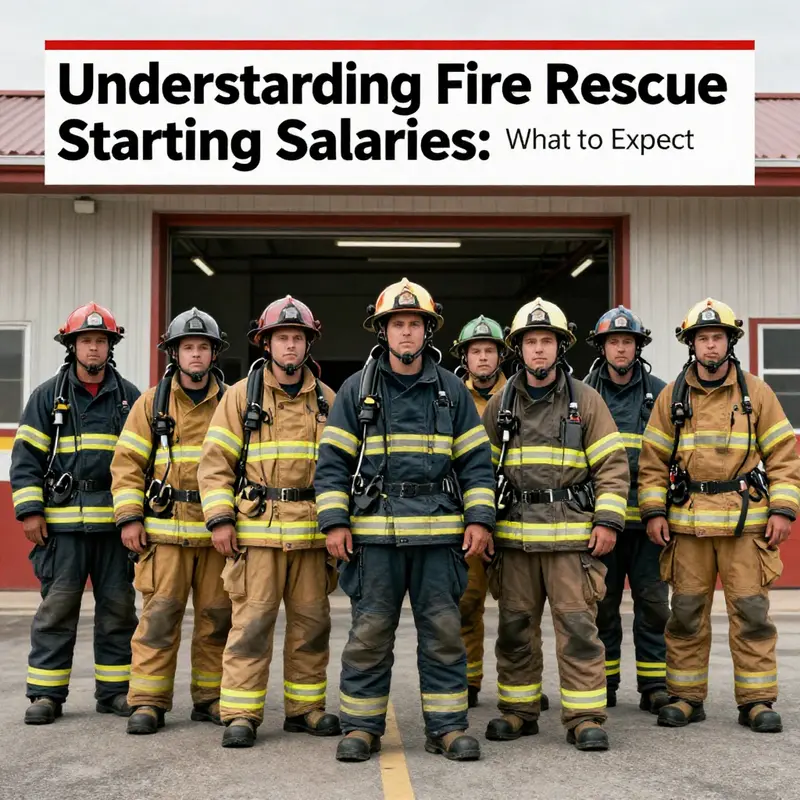
As communities rely heavily on dedicated first responders, understanding the salary landscape for entry-level firefighters becomes increasingly important. The profession, while noble and critical, often brings uncertainties regarding initial pay, benefits, and career growth. This article delves into various aspects of starting salaries for firefighters in the United States, including national averages and regional disparities, economic factors that influence compensation, benefits beyond base salary, and insights into long-term career advancement opportunities. Each chapter integrates key information to provide a holistic view of what aspiring firefighters can expect and plan for as they embark on their important service career.
Starting Salaries for Fire Rescue: Navigating Regional Gaps, Benefits, and the Real Value of a First-Year Firefighter
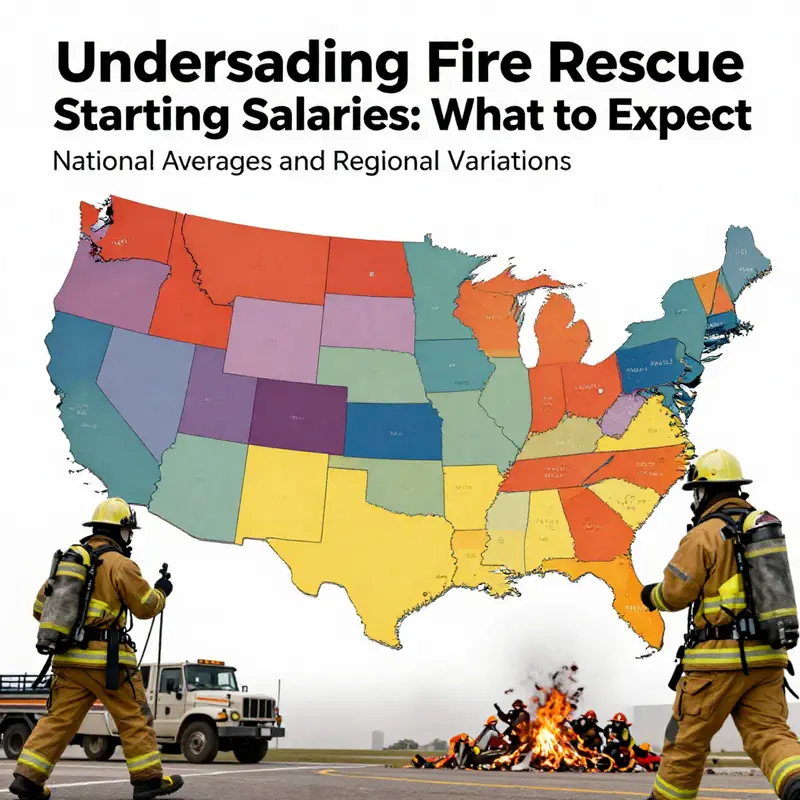
Choosing to begin a career in fire rescue is as much about practical compensation as it is about service, risk, and the steady cadence of a demanding profession. For someone stepping into the role of a firefighter, the first year can set the tone for a lifetime of work—so understanding how much you can expect to earn when you start matters. Nationally, the base pay for entry-level firefighters is not a single number but a spectrum shaped by where you work, the department’s funding, and the cost of living in that area. In broad terms, the starting base pay is often described as a band that stretches from the lower end of the forties into the higher fifties or even low sixties when regional premiums, overtime, and shifts are factored in. In practice, many new recruits begin in the mid‑range, with fresh hires commonly landing around the mid‑to‑upper $40,000s per year, while still others enter closer to $50,000 or more as they bring EMT credentials, paramedic training, or specialized certifications to the table. The two dominant forces behind these numbers are geography and department policy: larger urban departments with strong budgets and unions tend to offer higher starting salaries, while rural or smaller municipal departments may start closer to the lower end of the spectrum, sometimes around $40,000, reflecting local fiscal realities and cost of living.
A useful, current snapshot comes from aggregate salary reporting that places the national average for a firefighter around $58,356 per year. This figure aggregates base pay, overtime, and the effects of experience across a wide range of departments. Yet it is important to parse what that average represents. It rises substantially in places with high living costs, robust public funding, or competitive hiring practices, and it sits lower in communities where the tax base or budget constraints limit starting wages. For a first-year recruit, the typical expectation shifts downward from that average. In many departments, new entrants find themselves in the $45,000 to $50,000 range, with some starting a touch below and others nudging above, depending on the exact city, state, and the department’s particular pay scale.
Regional variation is the defining feature of starting pay. In high-cost metros such as major coastal cities or tech hubs, new firefighters can reasonably expect a starting salary that exceeds $60,000 on paper, even before overtime or bonuses are added. In practice, these districts often use elevated base pay to attract applicants in competitive markets, supplemented by premium shift differentials and a more generous benefits package. In contrast, smaller cities, rural counties, and districts with tighter budgets may place new hires nearer the $40,000 mark. The contrast is not merely about dollars but about the entire compensation envelope: what the department offers in health insurance, retirement plans, paid time off, education assistance, and the probability of overtime. When taken together, the total value of the package can be materially different from the base pay alone.
The role of benefits cannot be overstated. A firefighter’s compensation extends beyond the paycheck. A strong benefits package commonly includes comprehensive health insurance coverage, retirement planning—whether through a pension system or employer-sponsored contributions to a 401(k) or equivalent—paid vacation and sick leave, tuition reimbursement for advanced emergency medical training, and sometimes wellness programs or education stipends. These non-salary components can meaningfully increase the real value of the first year and the years that follow. And overtime—often a staple in fire-rescue work—can add a sizable slice to annual earnings, especially during peak fire seasons or prolonged emergency operations. Overtime is not guaranteed, and it depends on local needs and staffing, but when it is available, it frequently makes a noticeable difference in take-home pay. For many recruits, the combination of base pay, overtime, and the benefits bundle yields a total compensation picture that is richer than the base salary alone might suggest.
For aspirants weighing options, the decision is rarely about one department’s dollar figure in isolation. It is a comparison of location, living costs, and the likelihood of career development. A department in a big city may offer a starting base above the hollowed-out line of rural pay, but it also comes with a higher cost of living and a more demanding daily life. Conversely, a department in a smaller community may present a manageable workload and a lower daily cost of living, yet still offer room to grow through certifications, specialized teams, or promotional tracks. One factor that often becomes part of this calculation is the presence and strength of unions. Where unions are robust, starting salaries tend to be more predictable and aligned with a formal pay scale, which can reduce the risk of slow, ad hoc increases and can improve overall compensation packages as the employee gains experience.
Another layer of nuance is the certification wall that many departments use as a gate for enhanced starting salaries. EMT certification is a common minimum, and paramedic-level credentials can push a new recruit into higher starting pay or accelerate laddering into higher ranks. Departments that actively seek paramedic employees often structure starting compensation to reflect the value of advanced clinical skills. This is not just about medical prowess; it’s about the broader capabilities a firefighter brings to a demanding, multi-skill role that blends rescue operations, medical response, and public safety education. In practice, a new hire who arrives with EMT or paramedic credentials can expect a more favorable starting package or a shorter path to higher pay within the department’s pay scale. The takeaway for anyone beginning this career is clear: investing in training during or just before entry can yield meaningful differences in initial compensation and in long-term earning potential.
Distinguishing the legitimate professional track from less conventional labor arrangements is also essential when considering the broader landscape of wildfire response and emergency services. Public systems that employ trained, paid professionals, with protections, benefits, and formal training, stand in contrast to other models that have at times drawn public scrutiny. Notably, there have been controversial arrangements in which incarcerated individuals were deployed on wildfire operations at compensation levels that many observers deem exploitative. The ethical questions surrounding those programs are sharp and the economic calculations stark: daily wages well below minimum standards for a task that carries extreme risk and requires specialized training. This contrast helps illuminate why most jurisdictions emphasize professional standards, training, and fair compensation for full-time firefighters rather than relying on wage practices that fail to reflect the responsibilities of the work. For those evaluating a future in fire rescue, it matters to distinguish the professional, well-supported track from less transparent or ethically questionable models. The heart of the matter remains simple: starting pay is most meaningful when viewed as part of a comprehensive compensation package that includes benefits, overtime, and opportunities for advancement.
Of course, deciding where to start also means acknowledging how the numbers evolve over time. In the experience of many departments, the first-year salary is the launchpad. As a firefighter gains experience, completes additional training, and earns promotions, earnings typically scale with rank and responsibilities. Beyond the first year, the path often includes roles such as driver/operator, lieutenant, captain, and specialty team leader, each accompanied by its own salary increments. The rhythm of this progression is shaped by department policy, city or state funding, and the individual’s willingness to pursue further credentials, such as technical rescue, hazardous materials, or advanced EMS certifications. It is not unusual for a firefighter who remains in the service for a decade to see several meaningful steps in pay, particularly if they combine strong performance with ongoing professional development. In this way, the starting salary is not simply a one-year figure; it is the opening line in a longer financial story about service, skill building, and leadership within public safety.
For readers mapping a personal decision—whether you are entering the field, switching careers, or supporting someone who is—there is value in a practical way to frame the decision. Start with a realistic expectation of the base pay in your target area, then add the probable value of overtime, shift differentials, health coverage, retirement contributions, and education support. Consider the cost of living in the region and how long it might take before a raise or promotion affects your earnings meaningfully. It can also help to speak directly with recruiting officers or current personnel in the departments you’re considering. Ask about the department’s pay scale, how overtime is allocated, what the benefits package includes, and what certifications are most valued for advancement. These conversations, combined with a careful reading of publicly available pay tables, can provide a clear picture of what the first year will look like and how it fits into longer-term goals.
For those who want a concrete reference point beyond qualitative budgeting, the U.S. Bureau of Labor Statistics offers a detailed occupational outlook that covers pay, job prospects, and qualifications for firefighters as a category. While the exact starting salaries may vary, the broader data helps contextualize why pay scales look the way they do and how they align with the demands of the job. For a definitive external resource, see the Bureau of Labor Statistics page on firefighters. External resource: https://www.bls.gov/ooh/farming-fishing-and-forestry/firefighters.htm
Starting Fire Rescue Pay: Reading the Numbers, Regions, and Real-World Value
When you first step toward a career in fire rescue, the salary question often feels like a doorway you must pass through before you can even start. The numbers matter not only for bills and budgets but for decisions about where to train, which department to join, and how to plan a long arc of service. Across the United States and beyond, the base pay for entry-level firefighters typically lands in a similar neighborhood: roughly thirty thousand to forty thousand dollars a year. That band captures a wide range of realities, from the small suburban department to the large urban fire service, where the cost of living and public budgeting priorities push the numbers in different directions. The base figure is only part of the story, because total compensation includes benefits, overtime, shift differentials, and the practical realities of long, irregular hours that come with emergency response work. As with any public service role, the starting salary sits inside a larger ecosystem of local economies, union influence, and municipal budgets, all of which shape whether a department can offer a few more dollars upfront or invest in long-term retention through benefits and career ladders.
Economic conditions often act like a hidden dial on a control board. In parts of the United States with higher costs of living—cities on the coasts, certain fast-growing inland metros—starting pay may feel modest at first glance, yet the same position can carry real purchasing power once benefits and overtime are factored in. Conversely, in regions with lower living costs, the nominal starting figure might appear more robust relative to local expenses, even if the absolute amount is smaller. The regional calculus also reflects how municipal budgets respond to inflation, revenue growth, and political priorities. A starting salary is rarely a standalone stat; it is the surface of a deeper accounting that includes health insurance premiums, retirement contributions, paid leave, and workers’ compensation protections. The balance between base pay and these enduring benefits often determines the practical value of an entry-level firefighter’s compensation package over a career. To appreciate this balance, imagine two recruits with the same base pay in different settings. In one city, a robust benefits package and favorable retirement terms add meaningful long-term value. In another, the same base pays off early for overtime, but limited vacation time and medical coverage leave a different kind of trade-off. The numbers matter, but the story they tell becomes clearer when you look at how a department’s entire compensation package is assembled and how it translates into day-to-day life for a rookie on the squad.
The question of location extends beyond dollars and cents. A key factor is the cost of living, which turns a $35,000 starting salary into very different realities depending on where you work. In high-cost markets, even solid starting wages can be offset by housing, transportation, and everyday expenses. In more affordable regions, the same base could stretch farther, making early-career budgeting less stressful. The broader implication is that dollars in the bank are only part of the value equation. When a department negotiates pay scales, it is balancing the need to attract qualified candidates with the pressures of maintaining public budgets under scrutiny. This tension often shows up in how starting salaries are indexed to local wage trends, inflation, and the availability of funding for new recruit classes.
Another layer comes from how a department structures its additional compensation. Many departments offer overtime pay, which for firefighters can be a substantial supplement given the long shifts and on-call demands. Overtime can, in some jurisdictions, significantly boost a rookie’s take-home pay, especially during peak wildfire seasons or periods of higher emergency demand. Shift differentials, which provide extra pay for nights, weekends, or holiday assignments, also contribute to overall earnings, sometimes turning the headline starting figure into a more meaningful early-career income than it might appear at first glance. Yet this doesn’t erase concerns that have circulated about pay disparities and ethical considerations in related programs. For instance, some discussions around emergency staffing in certain regions have highlighted controversial arrangements where specific groups—such as incarcerated workers deployed to fight wildfires—are compensated at markedly low rates. The ethical complexity of such arrangements has fueled public debate about fair labor standards in highly dangerous, public-facing roles. While these arrangements are not representative of fully licensed, hired firefighters, they do illuminate how policy choices about compensation can ripple across the workforce, affecting morale, recruitment, and public trust.
The professional ladder itself is a crucial element of the starting-pay conversation. Entry-level firefighters earn more than simply their base wage when you factor in the potential for career progression. Many departments offer structured pathways to higher pay through certifications—such as EMT or paramedic credentials, specialized rescue qualifications, or leadership training—and through rank promotions to positions like lieutenant or captain. Each rung on that ladder often comes with both a higher base pay and expanded benefits. The ladder effect matters because it reframes the starting salary from a one-time number into a launch point for a financial trajectory tied to skill-building, service years, and demonstrated reliability under pressure. In practice, this means that the initial figure should be weighed against realistic timelines for promotion and the typical salary increases that accompany advanced qualifications and leadership responsibilities. When candidates compare departments, they benefit from looking beyond the first-year offer to the department’s track record for promotions, pay scales, and the total compensation framework.
Regional differences aren’t limited to the United States. In the United Kingdom, for example, base pay for a newly qualified firefighter varies by region, with higher starting salaries in areas facing greater living costs—most notably London. This regional variation reflects not only the cost of living but also the broader economic health and funding constraints faced by local government fire and rescue services. In many systems, local budget pressures compel fire authorities to optimize staffing levels and recruitment incentives within a fixed pool of resources, which can shape the starting-pay landscape as surely as in any other national context. The higher regional pay in some areas acts as a practical counterweight to living costs, underscoring how the same job title can carry different financial implications depending on where you live. The overarching lesson is clear: for anyone weighing a career in fire rescue, understanding the regional financial ecosystem is as important as understanding the job itself.
The influence of local government health on pay cannot be overstated. Local authorities fund fire services with budgets that are repeatedly tested by competing demands, from road maintenance to social services. An economic analysis of fire and rescue activities often shows FRSs facing pressures to demonstrate value for money, especially in tight fiscal times. In such environments, departments might stall wage growth, tighten hiring, or reprioritize training investments in ways that become visible to prospective recruits as pay scales, benefits, and career opportunities. The upshot is that salary discussions cannot be abstracted from the fiscal climate of the locality. A department’s willingness to invest in its people—through competitive entry wages, comprehensive benefits, and clear pathways for progression—often signals its long-term commitment to sustainability and to the communities it serves.
Inflation and wage growth at the national level also shape starting salaries. Periods of rising prices affect both the purchasing power of new recruits and the budgets available for wage adjustments. In the United States, the general pattern is that entry-level salaries for firefighters trend upward over time, but the pace is uneven, influenced by union agreements, state and municipal policies, and the capacity of agencies to fund raises. Prospective firefighters benefit from tracking not only the current starting figure but also the projected trajectory of wages in their target jurisdictions. A department that offers a modest base but strong health benefits, retirement planning, and dependable overtime opportunities can deliver a compelling total-compensation package that becomes more attractive as inflation erodes the purchasing power of a purely nominal salary.
For anyone contemplating this path, there is practical wisdom in learning how to evaluate offers with a holistic lens. Start with the base pay, but then layer in overtime predictions, shift differentials, pension plans, health care costs, and paid-leave provisions. Ask about the turnover rate in the recruit class and the average time to promotion. In some regions, small differences in pay scales can translate into meaningful differences over a career when you bring together the effect of yearly raises, the cost of benefits, and the likelihood of overtime. It is also worth considering the non-monetary value—the training opportunities, the work-life balance offered by shift patterns, the community impact, and the sense of purpose that accompanies public service. These intangible elements often carry significant weight in job satisfaction and long-term commitment, even if they do not show up as dollars in the first paycheck.
The conversation can also benefit from a forward-looking stance. If you are early in your planning, map out a five-to-ten-year budget scenario that accounts for possible relocation, family needs, and potential changes in tax policy. A regional analysis that weighs housing costs, commuting times, and school options can be as decisive as any salary figure. In that sense, starting pay becomes a part of a larger financial canvas rather than a single line on a pay stub. This broader view aligns well with the ethical and practical commitments of fire rescue work: service to the public, personal and family stability, and a clear path to mastery within a demanding but meaningful profession.
And while numbers are essential, they do not tell the whole truth about opportunity. When a department supports a strong training culture, robust safety programs, and a clear path for professional growth, the starting salary often serves as an entry ticket into a career that offers rising earnings over time and a lasting sense of contribution. In communities that invest in people and resources, you may find that a modest starting salary is balanced by a comprehensive benefits package, reliable career progression, and the chance to build a life in service of others. The contrast between markets that emphasize fresh pay floors and those that emphasize long-term investment in staff is a story about how public services value labor, risk, and resilience. For someone stepping into the door, that broader narrative matters as much as the number on the first paycheck.
If you want a tangible thread to follow through this maze, consider the idea of budgeting as a public enterprise. Fire departments do not simply pay salaries; they steward public funds to ensure readiness, safety, and accountability. In this sense, the starting pay is a signal about how a community values emergency services today while planning for the needs of tomorrow. The balance between upfront compensation and future security—through retirement plans and health coverage—is the practical heart of the decision. For those who crave a career that blends immediate, livable compensation with steady upward momentum, the landscape of entry-level fire rescue offers a hopeful, if regionally nuanced, picture. The real work, after all, is not only in understanding the numbers but in aligning them with a durable life plan built on service, skill, and steady advancement.
For readers seeking a concise, policy-oriented frame, a deeper dive into the occupational outlook and pay scales can be found in the official statistics and projections. This public-facing resource helps translate the local and regional differences into a standardized view of what to expect when you enter the field. And for those who want to explore broader topics tied to budgeting and sustainability within fire services, the concept of a “green firehouse”—an approach that links mission to resource stewardship—offers a constructive lens on how departments can sustain high performance without sacrificing personnel well-being. See The Green Firehouse article on sustainable spaces for community and health for a thoughtful exploration of how budgeting choices intersect with staffing and operations. The Green Firehouse: Creating Sustainable Spaces.
In sum, the starting salary for entry-level firefighters is a doorway, not a verdict. It opens into a career that rewards experience, credentialing, and service through rising pay, comprehensive benefits, and leadership opportunities. The precise number you’ll see on your first contract will reflect local economic realities, the health of the municipal budget, and the department’s approach to training and retention. By widening the lens to include overtime, benefits, and a clear ladder of advancement, you’ll get a much more accurate sense of the true value of beginning a career in fire rescue. As you compare offers, let the region’s cost of living, the department’s compensation package, and the trajectory of pay growth guide your decision. The optimal choice is the one that aligns your financial goals with a vocation that demands resilience, teamwork, and a lifelong commitment to communities in crisis.
External resource: For a standardized, national view of the occupation’s outlook and pay scales, see the U.S. Bureau of Labor Statistics OOH page for firefighters. https://www.bls.gov/ooh/farming-fishing-and-forestry/firefighters.htm
Beyond the Base Pay: The Full Spectrum of Benefits, Pensions, and Pathways in Fire Rescue Starter Roles

When someone asks how much salary a new firefighter can expect, the answer hinges on more than a single starting figure. In the United States, entry-level salaries typically fall in a broad band from around $30,000 to $40,000 per year. This range reflects stark differences in local budgets, union contracts, and the cost of living in different regions. A department in a mid-sized city may pay toward the upper end of that range, while rural or fiscally constrained districts may sit closer to the bottom. The cost of living matters as much as the nominal wage. A $38,000 offer in a city with a high housing cost can feel lean, while the same salary in a lower-cost area can support a modest but comfortable lifestyle. In other words, the headline number is only part of the story.
California has highlighted a troubling contrast within the broader fire protection system. In some wildfire programs, incarcerated individuals work as firefighters for very low pay. They can earn as little as $5.80 to $10.24 per day, plus around $1 per hour during wildfire operations. When you do the math, the daily take is well under minimum wage. This arrangement raises ethical questions about exploitation, safety, and long-term career prospects. It also underscores why most readers should focus on fully licensed, paid professionals for a fair standard of compensation and clear pathways to advancement.
Beyond base pay, the total compensation package includes robust benefits that can redefine what a starting salary truly means. As government employees, new firefighters typically enjoy access to comprehensive health, dental, and life insurance plans. These benefits protect both the individual and their family, buffering the costs of injuries, illnesses, or chronic conditions that can arise in the line of duty. Health coverage is not merely a perk; it is a practical safeguard that can influence long-term financial planning and security.
Along with health insurance, retirement provisions form a central pillar of compensation. Most departments offer pension eligibility, often with generous vesting periods. In many agencies, a firefighter can retire after about twenty years of service, receiving a steady income in retirement even as the job becomes physically and emotionally demanding in later years. The pension is a stabilizing force that complements a reasonable starting salary, converting the early years into a durable foundation for long-term security. This combination—steady pay, solid health protection, and a retirement path—constitutes a compelling case for choosing fire rescue as a public service career.
The benefits extend beyond insurance and pensions. Many departments provide paid leave, sick leave, and disability coverage that protects income during periods of recovery or caregiving. Education and training support are another common feature, helping new recruits pursue additional certifications or advance within the department. In a field that prizes continuous learning, access to professional development can sharpen skills, expand career options, and increase job satisfaction. The value of these benefits becomes particularly clear when you compare entry-level compensation with private-sector roles that may offer higher nominal wages but less comprehensive protection and fewer predictable career pathways.
Career development within fire rescue also matters. Starting roles are not just about putting out fires; they are about building experience, credibility, and leadership skills that translate to a wider range of public-safety functions. Many departments create structured tracks for specialization. A firefighter may progress toward roles such as fire safety educator, training instructor, or administrative coordinator. Each path comes with its own mix of responsibilities and rewards, and some tracks open doors to higher pay, different schedules, or expanded influence within the agency. This form of career diversification can be especially appealing for individuals who want to remain connected to public service while pursuing personal growth and long-term stability.
In practice, the total value of starting compensation for fire rescue hinges on more than a single paycheck. It includes the predictable costs and protections of the benefits package, the security of a pension after decades of service, and the opportunity to grow within a respected profession. For someone weighing whether to accept a starting role, this broader view is essential. It is not enough to compare salaries in a vacuum; it is necessary to weigh the future value of health coverage, retirement benefits, and the capacity to transition into specialized or non-incident roles that align with personal strengths and life goals.
Regional and local variations remain a major factor. Larger metropolitan areas often offer higher starting wages to compete with higher living costs and to attract a workforce that can meet complex demand. In contrast, smaller towns or state-managed agencies may compensate with more generous pension plans or more robust time-off provisions, even if the base pay sits toward the lower end of the spectrum. The interplay between base salary, benefits, and long-term security creates a mosaic of compensation that can feel very different depending on where a person starts. This reality is why new recruits should gather as much information as possible about the full package at any department of interest, rather than focusing solely on the starting figure.
The ethical considerations surrounding compensation in fire protection become particularly salient when comparing programs that rely on incarcerated labor to fully employed, trained professionals. The stark contrast in pay and protections underscores why standard public-service roles are valued for their consistency and accountability. It also highlights the importance of transparent compensation structures, fair labor practices, and ongoing advocacy for sustainable funding that supports both the responders and the communities they serve. In this context, the long arc of a fire rescue career—its salary range, its benefits, and its potential for advancement—appears not simply as a starting point, but as a ladder toward security, purpose, and public trust.
For readers seeking data-driven context, the U.S. Bureau of Labor Statistics provides a comprehensive view of the firefighting occupation, including job outlook, salary statistics, and the qualifications typically required. As a baseline, the landscape described above aligns with BLS observations that entry-level salaries vary by location and department, while the long-term compensation story often centers on the balance between base pay and benefits, plus the pension structure that accompanies career longevity. This dual focus—immediate earnings and enduring security—helps explain why many people choose this line of work despite the inherent risks.
In considering whether to pursue a starting role, it is useful to look at how the total package translates into real-life day-to-day stability. A wage that allows housing, transportation, and groceries to fit within a single budget can be transformative, but when paired with robust health coverage and a pension that promises income in retirement, the decision becomes more about a sustainable life path than a one-year salary. It is this synthesis of salary, benefits, and future earnings that often makes fire rescue an appealing long-term public service option.
For those who want even more context as they weigh options, a deeper dive into compensation and benefits from external, broad-based resources can provide clarity on how starting salaries in fire rescue fit into broader career trajectories. As this chapter has emphasized, the question of “how much salary” is best understood as “what is the complete, future-proof package?” A package that recognizes not only the immediate paycheck but also the protective layers that follow a career from apprentice to seasoned professional.
To ground these considerations in real-world policy and practice, readers may find relevant discussions in resources that explore how fire services evolve with community needs and governance. For example, see discussions on statewide and local emergency-management approaches and their implications for staffing and budgets. California wildfire emergency management failures.
Ultimately, the decision to enter fire rescue as a starting role should center on a clear-eyed view of the balance between earnings today and security tomorrow. While the headline salary matters, a robust benefits package, a viable pension, and opportunities to grow within public safety are the factors that transform a first-year paycheck into a durable, meaningful career. Those who approach the choice with a holistic view may find that the initial range of $30,000 to $40,000 is not a ceiling but a doorway into a profession that rewards commitment, resilience, and lifelong service.
For readers who want to explore the financial dimension further, a recent guide that compiles compensation and benefits considerations for firefighters can provide useful benchmarks and practical guidance as they plan their path. Firefighter Salary Guide (2025): What to Know Before Joining – Remitly.
From First Steps to Command: Navigating Long-Term Salary Growth and Career Advancement in Fire-Rescue
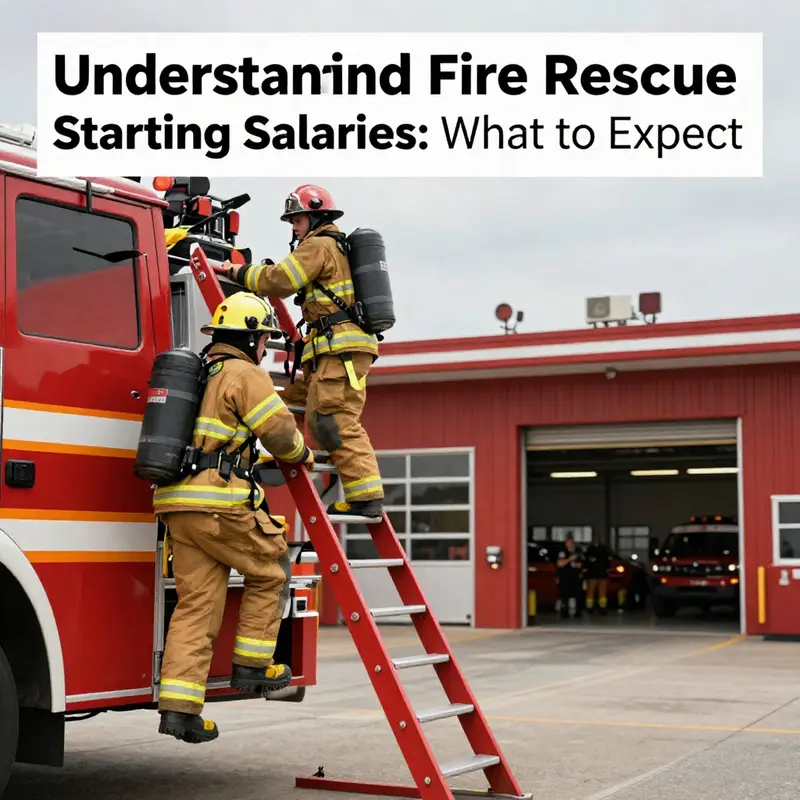
The start of a firefighting career often lands with a pragmatic concern: what will the paycheck look like as I take initial steps toward answering the call? Entry-level firefighters in the United States typically begin in a range that reflects the realities of municipal budgets, geographic cost of living, and the essential services provided by the department. A realistic starting point is roughly $30,000 to $40,000 annually, though this is not a universal number. In high-cost metro areas and states with greater living expenses, starting salaries tend to fare better, and in rural or underfunded regions, they can lag behind. This variation matters for young recruits weighing the decision not just by the badge but by the balance of work with the cost of daily life. Yet the starting figure is only a preface, a threshold from which a long career can unfold through experience, additional training, and the steady accumulation of responsibility.
What follows is a broader view of how salaries tend to evolve once someone commits to a fire-rescue path. The trajectory is not simply about climbing a ladder in a linear fashion; it is a composite of promotions, specialized roles, and the practical value of certification programs that expand a firefighter’s scope of work. The most compelling story for many is not the immediate paycheck but the long arc—how timely promotions, skill diversification, and leadership opportunities translate into meaningful compensation over a career. In this sense, the fire-rescue profession offers a model of growth that aligns with the discipline’s core demands: endurance, continuous learning, and the capacity to serve communities under pressure.
The middle portion of a firefighter’s career often centers on progression into higher ranks such as lieutenant and captain, with each promotion carrying heightened responsibility and a corresponding salary increase. Beyond the traditional captain’s chair lies the potential for more senior roles, including fire marshal or fire chief, depending on the department’s structure and its governance. Each step up the ladder is typically accompanied by an evaluation of performance, tenure, and the successful completion of competitive exams or training programs designed to ensure readiness for the more demanding duties. The payoffs are not merely in dollars; they include expanded influence over operational decisions, budgeting, and regional or departmental policy development that shapes how fire services protect lives and property.
Career advancement also invites the possibility of specialized positions that enhance both earning capacity and professional breadth. For those drawn to technical challenges, becoming a hazardous materials specialist can open new pathways, while paramedic credentials can dramatically broaden an individual’s clinical remit on the firefighting apparatus. These specialized tracks are not only about salary uplifts; they enable responders to provide a higher level of service during emergencies, which can, in turn, reinforce job security and justify higher compensation through the additional responsibilities undertaken. The financial effects of such specialization can be substantial, particularly when combined with shift differentials, overtime opportunities, and the mutual-aid network that many departments maintain across a region.
The U.S. Bureau of Labor Statistics (BLS) provides a benchmark for the long-term earning potential within the field. As of May 2023, the median annual wage for firefighters was $57,010. This median reflects a broad cross-section of departments and locales, illustrating that a mid-career firefighter can expect earnings that approach the national norm for protective-service occupations. Yet the distribution also shows that the top 10 percent of firefighters earn more than $98,000 annually, underscoring the possibility of substantial upside, particularly for those who reach senior ranks, assume leadership roles, or serve in departments with robust overtime structures, specialty positions, or emergency-response programs that reward advanced training and extended deployment.
This wage landscape does not arise by accident. It grows from a combination of factors that accumulate over time. Seniority remains a core component in many departments; it can influence both pay and the speed with which a firefighter moves through ranks. Performance—measured by reliability, technical proficiency, teamwork, and incident leadership—also plays a critical role, as do the outcomes of competitive examinations and training initiatives that departments use to calibrate readiness for promotion. In practical terms, a firefighter who demonstrates consistent performance and engages in ongoing professional development is more likely to be considered for advancement when a vacancy arises or when a department revises its rank structure and pay scales.
Internal promotion pathways often provide a clear, if demanding, route to higher earnings. Rather than forcing a move to a neighboring agency, many firefighters opt to stay within their home departments to pursue career growth. Within these organizations, internal promotion can be supported by targeted training programs, leadership academies, or mentorship tracks that prepare individuals for supervisory roles. The gains are both tangible and intangible: a supervisor’s role carries greater accountability, but it also comes with a structured pay increase and a more defined career path. For those who embrace the path of continuous learning, the opportunity to become a captain, battalion chief, or similar rank can be a decisive factor in long-term financial planning.
Training pipelines also matter for earnings because they unlock additional credentials that expand a firefighter’s practical toolkit. Becoming an EMT or a paramedic is one of the most common and impactful routes for boosting earning potential. The clinical responsibilities that accompany an EMT or paramedic designation often translate into higher pay and broader job duties, particularly in urban departments where medical response constitutes a significant portion of daily operations. The decision to pursue these certifications is rarely solitary; many departments support it through tuition reimbursement, study time, or structured progression that aligns with shift scheduling. The result is a dual benefit: heightened clinical capability and a more compelling value proposition for promotions and compensation discussions.
Beyond individual promotions and certifications, the broader employment outlook for firefighters supports the case for long-term salary growth. The BLS projects employment growth of about 5 percent from 2023 to 2033, which is on par with the average for all occupations. This steady demand reflects the essential nature of fire-rescue services and the ongoing need for skilled professionals who can respond to a wide range of emergencies, from structural fires to vehicle crashes, natural disasters, and evolving public-safety challenges. The stability of demand encourages a sustainable career path for those who invest in skill-building, leadership capacity, and the resilience necessary to manage shifting workloads and evolving incident types.
Of course, salary growth is not uniform across all jurisdictions. Local funding decisions, collective bargaining agreements, and regional cost-of-living differences shape the real take-home pay for any given firefighter. A career in a coastal metro with high housing costs may promise higher nominal wages, but it can also entail steeper living expenses that compress disposable income. Conversely, departments in smaller communities might offer lower starting salaries, yet provide strong benefits packages, generous pension provisions, and a lower cost of living that preserves purchasing power over time. In this dynamic, the long view matters more than a single pay check; it requires aligning early career choices with the anticipated trajectory of promotions, certifications, and supported professional development.
The narrative of long-term earnings in fire-rescue careers is therefore a story of multiplicative growth. Each promotion, each additional credential, and each year of service can compound into a stronger financial position. It is not unusual for seasoned firefighters to leverage their experience into leadership roles that oversee larger teams, budget allocations, and strategic priorities for their agencies. In parallel, many departments recognize the value of succession planning and invest in developing the next generation of leaders. That alignment between workforce planning and individual ambition creates a structural environment where earnings can rise in step with the complexity of the responsibilities shouldered by senior personnel.
An important nuance in this discussion is the ethical and practical context in which compensation evolves. The contrast between fully licensed, hired firefighters and other, less conventional firefighting arrangements—such as locations that deploy incarcerated crews to fight wildfires—has historically sparked public debate about fairness and the value of labor. While the latter arrangements are part of a broader conversation about cost containment and emergency response logistics, the core point for aspiring professionals remains: legitimate career advancement, with fair pay and benefits, is anchored in dedicated training, professional standards, and accountable leadership. For those entering the field today, the emphasis often lies in joining departments that provide robust onboarding, ongoing education, health insurance, retirement plans, and paid leave—elements that support long-term financial security just as strongly as salary figures.
To those evaluating their path, it can be helpful to look at the broader ecosystem surrounding fire-rescue careers. The starting pay is only the opening line, and the real value proposition emerges through ongoing training, certification, and the scaffold of promotions that builds over years of service. The practical takeaway is straightforward: commit to a plan for professional development. Decide early which certifications align with your interests and the needs of the departments you might serve. If your aim is to reach leadership roles or specialized positions, seek departments that actively promote from within and provide structured pathways for advancement. Ask about tuition reimbursement programs, in-house training academies, mentorship opportunities, and the availability of enhanced compensation for higher-level duties or cross-functional roles. These elements collectively shape the velocity and ceiling of your earnings over a career.
For readers who want to anchor their planning in solid data, it can be instructive to review the public statistics that track wages across the profession. While individual departments may report different numbers based on local contracts and schedules, the national frame remains a useful compass. The median wage level signals a central tendency for the field, while the higher end of the distribution points toward the earnings potential for those who pursue leadership roles, specialty tracks, and advanced clinical training. The growth projection reminds us that firefighting remains a vital, growing occupation with a sustained demand for capable professionals who can adapt to evolving emergency response requirements and increasingly complex public safety landscapes.
In sum, the long arc of earning in fire-rescue careers is less a single leap and more a sequence of deliberate steps. Starting salaries set the stage, but the real payoff grows as individuals advance through ranks, earn key certifications, and assume roles that extend beyond the basic responsibilities of firefighting. A successful trajectory blends practical, on-the-job experience with formal training, all within a framework that values leadership, community service, and professional integrity. For those who embrace that blend, the career can deliver not only a stable and rewarding income but also a durable sense of purpose that comes from protecting lives and serving communities under pressure.
For readers seeking a practical link to the broader conversation about how fire services are evolving and how leadership within the field is being shaped by new technologies, organizational changes, and community expectations, consider exploring a concise primer on the ongoing evolution of fire services. Hello World post at TPB Rescue offers a compact entry point into the conversation about how professionals in this field think about readiness, communication, and continuous improvement, which are all factors that ultimately influence how careers develop and are rewarded over time.
As you plan, keep in view the external benchmarks that help illuminate the landscape. The BLS Firefighters page provides the official account of wages, growth, and qualifications that undergird the practical decisions you will make about training investments, location, and the pace at which you pursue advancement. The statistics confirm what many seasoned professionals already know: why you start is important, but why and how you grow matters even more as you dedicate yourself to a life of service that is as financially sustaining as it is personally meaningful. For those who want to anchor their long-term plans in verifiable data, this external resource is a trustworthy reference point to examine salary distributions, career ladders, and the evolving expectations of the firefighting profession.
External reference: BLS Firefighters overview, including pay and outlook data, provides authoritative context for the long-range planning that comes with choosing a fire-rescue career. https://www.bls.gov/ooh/protective-service/firefighters.htm
Final thoughts
Navigating the financial aspects of a firefighting career begins with understanding entry-level salaries and the factors influencing them. As detailed in this article, while base pay can differ substantially based on geographic and economic conditions, the financial outlook for firefighters extends beyond initial salary figures. With comprehensive benefits and opportunities for advancement, a career in fire rescue not only promises personal fulfillment but also long-term financial stability. Potential applicants are encouraged to explore various departments and consider their unique circumstances to shape a rewarding career.