
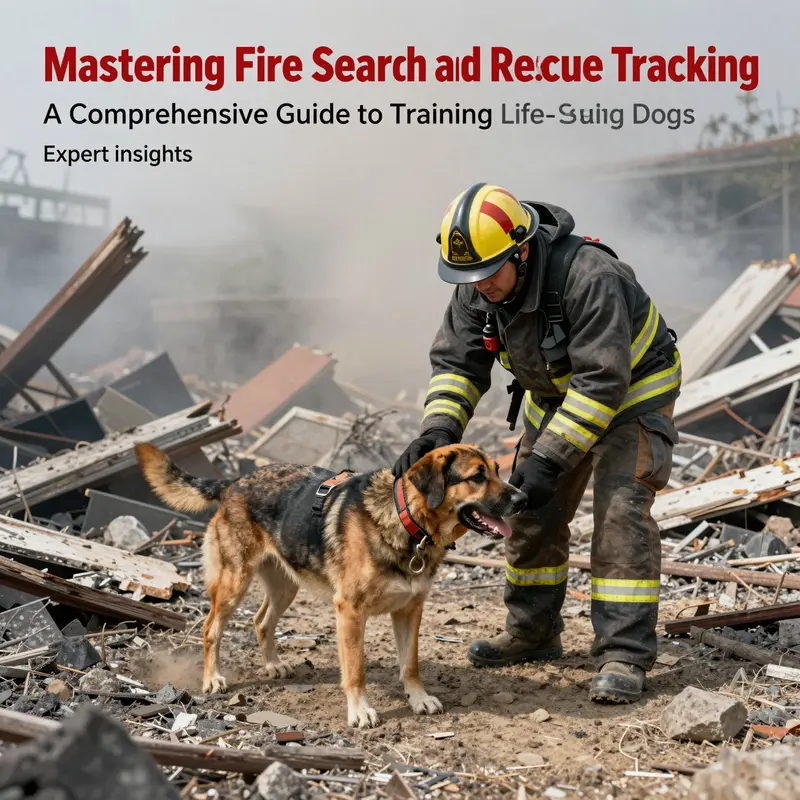
Fire search and rescue (SAR) dogs play an indispensable role in saving lives during disaster situations, particularly fires and structural collapses. Their ability to locate missing or trapped individuals hinges on meticulous, specialized training that builds endurance, trust, and scent detection skills. The journey to cultivate a highly effective fire SAR tracking dog encompasses several deliberate stages—starting with foundation training for obedience and bonding, advancing to critical human scent recognition, continuing through realistic field challenges, and culminating in rigorous scenario evaluations. Each phase ensures that both dog and handler form an unbreakable partnership, capable of responding swiftly and accurately under the most demanding conditions. This guide unfolds these stages, designed to deepen understanding among community residents, firefighters, emergency rescue personnel, educators, and school administrators about how to systematically train and support these remarkable rescue teams.
Foundational Trust and Responsive Bond: Building Obedience as the Bedrock of Fire Search and Rescue Tracking
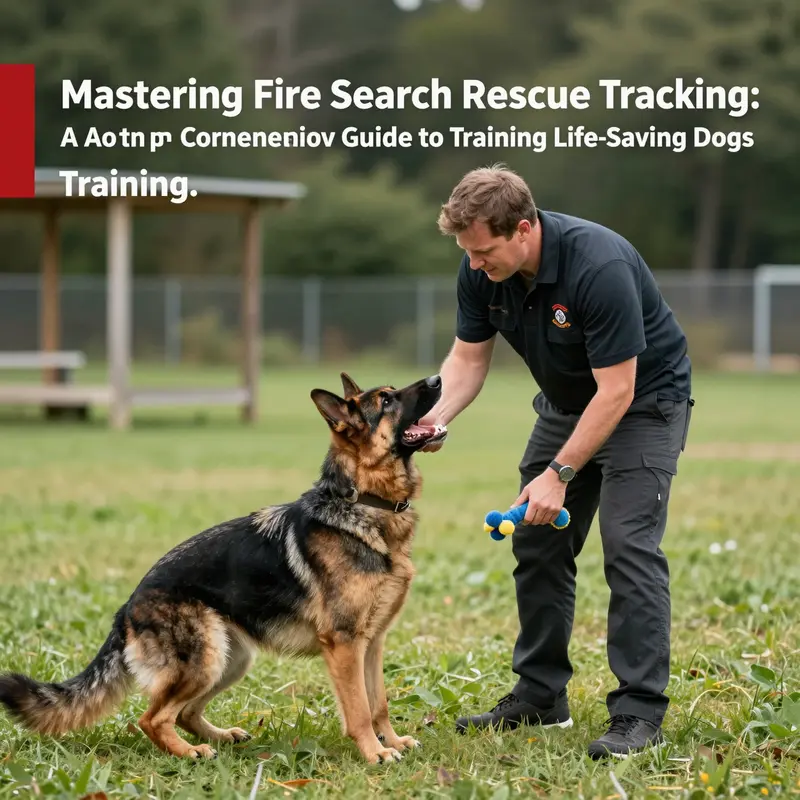
The foundation of any capable fire search and rescue (SAR) dog lies not in flashy demonstrations or dramatic rescues, but in a quiet, persistent discipline that forges a deep, working bond between handler and animal. This early stage is less about chasing accolades and more about building a dependable dialogue—one that translates every glance, tail flick, and posture into a clear, executable response. In practical terms, foundation training centers on obedience and bonding, because a dog that will not reliably respond to a handler under stress cannot be trusted to navigate the wreckage of a collapsed structure, nor to filter the noise of a disaster zone from the scent of human presence. The timeline for a complete SAR dog program is long—often spanning 1.5 to 3 years—but the value of this initial work compounds as the dog learns to pair instinct with instruction, becoming a partner capable of acting with precision when time and lives hang in the balance. The beauty of this period is its dual focus: cultivating a durable, affectionate trust and simultaneously shaping a disciplined, predictable response that a handler can count on, even when conditions turn chaotic and loud.
From the very first days, obedience forms the backbone of safety and operational efficiency. Basic commands—sit, stay, come, heel, and down—are introduced through positive reinforcement. Praise, treats, and play are not merely rewards; they are signals of reliability. A handler who remains consistent creates a predictable world for the dog, one in which every cue has a clear consequence. This predictability reduces anxiety and enhances the dog’s ability to process new tasks under pressure. In the field of fire SAR, where a moment’s hesitation can mean the difference between discovery and extinction of a life, reliability is not optional; it is essential. The training ethos here is simple: the dog must understand exactly what is expected and must choose to perform it because the relationship with the handler has earned that level of trust.
The bond that forms in these early weeks is more than affection. It is a language of cues, mutual attention, and shared purpose. Handlers learn to interpret subtle signals from their dogs—the shift in gaze, the tilt of the head, the brief pause before an explosion of movement—and the dog learns to recognize and respect the handler’s guidance. This is not a one-way street of commands; it is a dialogue that grows more nuanced with daily interaction. A powerful reminder of how important this bond is comes from field teams that describe the simple acts of encouragement that validate the dog’s efforts: a chest pat, delivered in a calm, steady manner, can be as motivating as any treat and, in some cases, acts as a comforting signal akin to a parent reassurance when a dog faces the stress of a training or real-world scenario. For more energetic breeds, such as those with a natural drive to act, the handler’s touch must be calibrated—firm enough to convey excitement and direction, but not so harsh as to trigger nervousness or avoidance. These subtleties are learned through long hours of practice and observation, where the goal is not to dominate the animal but to synchronize their responses with the handler’s expectations.
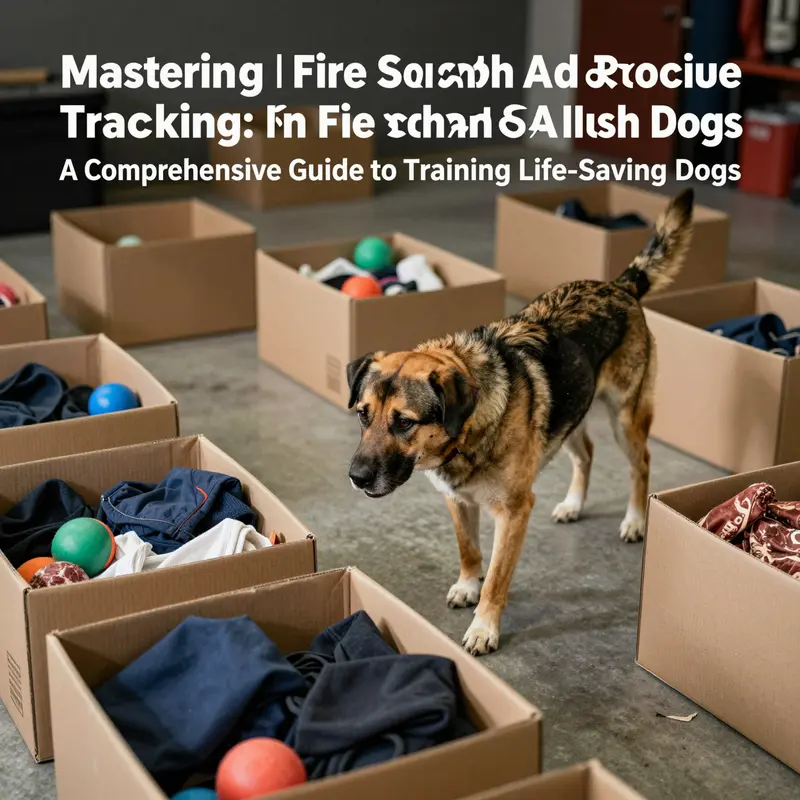
A core component of foundation training is the deliberate introduction of scent relevance while maintaining a steady obedience framework. The dog’s first steps toward human scent recognition come through a methodical association process. The dog is initially taught to link a reward with a chosen object, such as a toy or a sleeve. Once a stable association is established, the trainer introduces the scent of a person to the same object. This layered approach primes the dog to connect a neutral cue—a familiar toy or article—with the presence of a human odor. As the training advances, more complex exercises are added to simulate real-world conditions. One of the most pivotal drills is a box search exercise, where a dog is presented with 10 to 20 boxes, only one containing the hidden “victim.” The dog must use its nose to identify the correct box, oftentimes signaling with a bark or scratch. The advanced phase adds distractors—meat, balls, old clothes—so the dog must ignore competing odors and focus solely on human scent. This drill is more than a test of scent discrimination; it is a test of the dog’s ability to maintain obedience and concentration amid noise, movement, and misdirection. The ultimate objective remains simple and profound: the dog learns to signal the correct box quickly and reliably, a behavior that becomes the foundation for subsequent field tasks.
Blood trail training enters the repertoire as a complementary skill set. It extends the dog’s capability beyond a fixed location to a line of pursuit, teaching the dog to follow a specific scent over distance and varied terrain. In real emergencies, a victim may be injured and displaced; a dog trained in blood trail work can lead search teams to the source of the scent even when direct visual cues are scarce. This stage underscores a fundamental truth of foundation training: scent work and obedience are entwined. A dog that will sprint across rubble to reach a handler without hesitation but fails to stay under control when distracted cannot serve a safe, reliable function in real-world rescues. The two competencies reinforce each other—the dog’s confidence to work independently is bolstered by the handler’s confidence that the dog will operate safely and predictably in any environment.
The handler’s role in this foundation period cannot be overstated. A good handler is not merely someone who loves dogs; they are physically fit, emotionally resilient, and gifted at reading canine behavior. Training reports and field practitioners emphasize that successful handlers must be extroverted and energetic, capable of rallying a dog’s enthusiasm through long, demanding sessions while preserving focus on the mission. The relationship is built day after day through routine, ritual, and response to feedback. A simple, recurring pattern—walk, train, reinforce, and rest—creates a rhythm that the dog comes to anticipate and trust. This rhythm supports not only the dog’s physical conditioning but also its mental resilience, a critical factor when a dog must maintain composure in a gas-filled, thunderous, rubble-strewn arena. The handler’s ability to stay calm under pressure, to deliver concise and consistent cues, and to interpret small changes in the dog’s body language becomes as important as any physical drill.
As the bond strengthens, the training naturally expands beyond basic obedience. The dog becomes adept at maintaining focus in the presence of noise and other animals, and the handler learns to give commands from a distance, a necessity when a dog cannot be within arm’s reach during a search. Obedience thus evolves from a collection of commands into a reliable framework for decision-making under stress. At this stage, the dog’s repertoire broadens to include more nuanced signals—gentle corrections, pauses, and accelerations—that support the team’s overall effectiveness. The interplay between the dog’s growing confidence and the handler’s refined instruction creates a synergy that later translates into rapid, efficient responses in complex environments. The daily practice of praise, reward, and constructive correction cements a mutual understanding that becomes the backbone of every successful SAR operation.
For practitioners, the principle is clear: foundation training is not a one-time rite of passage but a long-term, evolving process. Even after a dog earns initial certifications, the work continues with periodic re-training and evaluation to ensure peak performance and adaptability to new challenges. The relationship between handler and dog remains a dynamic, living system where a glance, a breath, or a barely perceptible shift in posture can convey a precise command. In this sense, foundation training is the quiet engine behind every dramatic discovery—the patient, repetitive practice that readies the dog to respond instantly when lives depend on it. The aim is never to produce a dog that behaves like a performer on cue but to shape a partner whose behavior is as predictable as a well-rehearsed crew member in a critical operation.
In reflecting on the wider landscape of training literature and practical manuals, one finds a useful parallel with the broader discipline of handler-dog communication. The ability to align with a partner is not a mysterious talent but a cultivated skill, built through deliberate practice and reflective feedback. For handlers seeking to deepen this bond, a resource path that emphasizes effective communication with animal partners can be instructive. See becoming-a-great-conversationalist for insights that translate well to handler-dog interactions, where listening to subtle signals and delivering clear, timely cues makes the difference between hesitation and mission success.
The overarching arc of foundation training, then, is a narrative of trust forged through consistent, compassionate instruction. It is a preparation phase in which the dog learns to respond to human intention with reliability, to interpret the handler’s expectations with clarity, and to endure the stress of live-training environments without compromising safety or focus. The bite of a rulebook becomes a living habit as the dog’s brain internalizes a clear pattern of cause and effect: a cue issued, a response delivered, a reward earned, risk minimized. This is the essence of building a life-saving partnership rather than merely teaching a trick. The path from obedience to independent scent work is deliberate, measured, and deeply humane—a path that defines not only what a SAR dog can do, but how well a team can do it when every second counts.
External resources and ongoing professional standards reinforce this approach. Professionals emphasize that the foundation stage should be robust yet adaptable, allowing for individual temperament and breed traits while maintaining a core set of non-negotiable behaviors. The journey continues with progressive field simulations, including debris and structure navigation, remote command training, and controlled exposure to competing stimuli. Yet at every stage, the core truth remains intact: a strong, trusting bond between handler and dog makes the difference between a well-trained dog and a life-saving partner. The journey from obedience to scent work is not a sprint but a marathon of shared intention and disciplined practice, and it begins with the quiet, powerful work of foundation training.
For those seeking to explore the standards that guide this work, professional organizations and fire service training communities provide a wealth of guidelines, manuals, and case studies. They remind us that the real measure of success lies not in the elegance of a command repertoire but in the dog’s unwavering willingness to work at the handler’s side in the most dangerous environments. The dog’s clean, composed execution of cues in the face of rubble, smoke, and confusion is the living testament to a foundation laid with patience, care, and a daily commitment to excellence. It is this commitment that converts a dog into a capable responder in the most desperate moments, turning a quiet obedience into a loud, hopeful signal of human presence beneath the debris.
External resource for further reading: https://www.nfpa.org/
Tracing the Silent Trail: Human Scent Recognition in Fire SAR Tracking
Scent is a stubborn maestro in fire rescue, directing a dog through smoke, rubble, and chaos with a patient insistence that human lives depend on it. In the field, the dog’s nose becomes a finely tuned instrument, translating an invisible chemical language into action. Training a fire search and rescue dog is not merely about obedience or flashy tricks; it is a long, disciplined journey that builds a life-saving partnership. The arc begins with a simple bond between handler and dog and extends into the realm where science and instinct fuse. A typical program unfolds over years, tapering toward a refined capability to detect human presence in environments that would overwhelm most teams. From the first stroll with a leash to the final, unscripted tests under the gaze of debris and dust, the process cultivates trust, stamina, and razor-sharp focus on the scent that matters most: the human odor signature that persists even when safety conditions deteriorate.
The core skill set centers on human scent recognition, a discipline that rests on the dog’s ability to discriminate a human odor from the orchestra of environmental smells. This begins with foundation work—obedience and bonding—where consistent cues and rewards create a reliable neural conversation between dog and handler. Positive reinforcement shapes the dog’s response to commands and builds the emotional security necessary for high-stress operations. The bonding stage also leans on subtle cues from the handler, such as a gentle chest pat or a calm voice, which handlers at various training stations describe as powerful motivators. In living rooms and practice yards alike, this foundation pays dividends when the pressure rises on a disaster site, where a single misstep could mean the difference between a safe recovery and a failed search.
The science beneath scent emerges clearly when we examine the core skill: human scent recognition. The dog learns to associate a reward with a specific scent, then escalates to tasks that test discrimination under real-world complexity. The most pivotal exercise in this progression is the box search. Imagine ten to twenty boxes arranged in a row or a grid, with only some concealing a hidden person. The dog must deploy its nose, process subtle differences in odor, and signal a precise, loud alert at the correct box. As training advances, distractors—pieces of meat, balls, or old clothes—enter the mix to mimic the ambient odors of a burned or cluttered scene. The dog’s success hinges on ignoring these decoys and staying laser-focused on the target human odor. The signal of a correct find often comes in the form of a bark or a scratch at the target box, a cue that coordinates with the handler’s planned search pattern.
Beyond recognizing the living source, canine scent work extends to scenarios that demand tracking a scent trail across distances and varied terrain. Blood trail training, for instance, teaches dogs to follow a scent line laid by an injured person, a need that becomes crucial when victims are not immediately visible beneath debris or smoke. In both box searches and trail work, the dog learns to trust its nose as a consistent guide, even when the landscape changes from a controlled room to a windswept exterior or a hot, chaotic collapse site. The dog’s olfactory system is incredibly responsive, able to pick up volatile compounds at minute concentrations and to sustain attention through fatigue and external noise. This attentional fidelity is what makes scent-based tracking so effective in fire SAR contexts where time is scarce and conditions are volatile.
The veterinary science of scent intersects with forensic chemistry in meaningful ways. Human odors arise from volatile organic compounds, or VOCs, that emanate from skin lipids, breath, and the natural decomposition processes that may begin even after a fire. In post-fire environments, these volatiles can persist and drift with air currents, creating scent trails that dogs can follow into structurally compromised spaces. For SAR teams, this knowledge reinforces why dogs are trained to identify a discrete human odor amid a cacophony of smells—char, smoke, fuel residues, moisture, and other animals that share a sheltering footprint. For investigators and canine handlers, the VOC signatures are more than academic; they define practical search windows and influence deployment tactics on a burned or collapsed site.
In the laboratory and in the field, researchers study ante- and post-mortem human volatiles to map signatures that reliably indicate human presence. Techniques such as mass spectrometry and gas chromatography offer high-resolution insight into which compounds persist and how environmental conditions modulate their visibility to a canine nose. This scientific backdrop matters because it helps refine training strategies. Cadaver- or air-scenting dogs are trained to detect faint, airborne traces that may be lifted by a breeze or embedded within rubble, rather than relying on a single, obvious scent plume. The result is a set of procedural disciplines that guide handlers in selecting search points, interpreting canine signals, and coordinating movement with safety protocols.
To imagine how scent science informs field practice, consider the idea of odor plumes in turbulent boundary layers. After a fire, the scent is not a neat line but a dynamic cloud that travels with air flow, settles, and re-emerges under changing conditions. Recognizing this, canine teams train to steady their approach, align their search with airflow, and interpret the dog’s signals in relation to the visible environment. The spatial and temporal dynamics of odor dispersal underscore why even experienced teams must continually adapt—revisiting tactics after every new deployment, observing how wind shifts alter scent accessibility, and revising box arrangements or search patterns in response. The practical upshot is a cadre of dog-handler teams that practice not only for speed but for robust discrimination, dependable signaling, and consistent task abandonment if safety demands it.
The culture of training reinforces a central truth: the handler is inseparable from the dog’s success. A good handler is more than an commands officer; they are a partner who can read canine body language, modulate the dog’s energy, and navigate the psychosocial stress of long, demanding sessions. The literature from major training centers emphasizes that a handler’s temperament—extroverted energy, high resilience, and strong interpersonal skills—profoundly shapes the dog’s willingness to engage, persist, and perform. This synergy—where a glance, a gesture, or a momentary shift in posture becomes a precise instruction—defines the rescue dog’s daily life in the field. Even after certification, the life of a SAR dog remains in motion: annual re-training, evaluation, and a daily rhythm of reward-based interactions that refine the partnership. The relationship is not static; it evolves as the dog encounters new environments, different owners, and fresh challenges, ensuring the bond remains a dynamic, life-saving tool.
As the science and practice of scent work expand, the field increasingly borrows from cross-disciplinary innovations. Training programs now consider not only the dog’s nose but how scent science can inform deployment. For example, researchers and practitioners alike explore how to exploit the natural tendency of scent to cling to textiles, footwear, and other porous materials that may travel farther than a person’s body or breath. In practice, this translates into careful handling of evidence and careful selection of search zones where the dog is most likely to encounter human odor in a realistic scene. The integration of science into practice is not a sterile interface; it is a living dialogue that shapes every search plan, from how boxes are arranged to how teams interpret a dog’s alert under smoke and heat.
The narrative of human scent recognition in fire SAR is also a reminder of the emotional weight of the work. When a dog signals a box or follows a trail to a location within a wrecked structure, the handler must balance the urgency of rescue with the safety constraints of the environment. The dog’s success is measured not merely by speed but by accuracy and independence in the face of unpredictable conditions. In the most challenging deployments, teams rely on a blend of scent science, field training, and situational judgment—each element reinforcing the others. The result is a unit capable of pinpointing survivors or confirming the absence of life, even when smoke, heat, and structural instability threaten to obscure the trail.
For readers seeking a deeper dive into the scientific underpinnings of scent in disaster response, the literature on ante- and post-mortem human volatiles offers a rigorous, peer-reviewed foundation. It illuminates the chemical signatures that dogs learn to chase and the environmental factors that modulate scent visibility. This research is more than academic; it translates into practical training and operational decisions that save lives. A useful external reference delves into the nuanced signatures and their forensic implications, extending the reader’s understanding beyond canine training into the broader domain of disaster response science. External resource: https://www.sciencedirect.com/science/article/pii/S245196832400079X. For those curious about how cross-disciplinary innovations are shaping fire-rescue work, interdisciplinary perspectives are increasingly highlighted in dedicated forums and museums dedicated to transforming fire services. A relevant example of such innovation can be explored here: Innovation Museum Transforming Fire Services.
In sum, human scent recognition in fire SAR is a finely tuned blend of biology, chemistry, and applied fieldcraft. The dog’s nose reads a chemical script written by the human body, while the handler’s guidance and the science of odor dispersion shape the interpretation of that script. Training is the crucible in which this partnership is forged: it starts with the basics of obedience and bonding, proceeds through rigorous scent discrimination with carefully staged complexities, and culminates in full-scale, unscripted simulations that resemble the chaos of real disasters. The result is a life-saving force whose effectiveness rests not on a single skill but on a holistic ecosystem of canine physiology, sensory science, disciplined training, and human partnership—the very heart of fire search and rescue tracking.
Advanced Field Simulation and Obstacle Training in Fire Search and Rescue
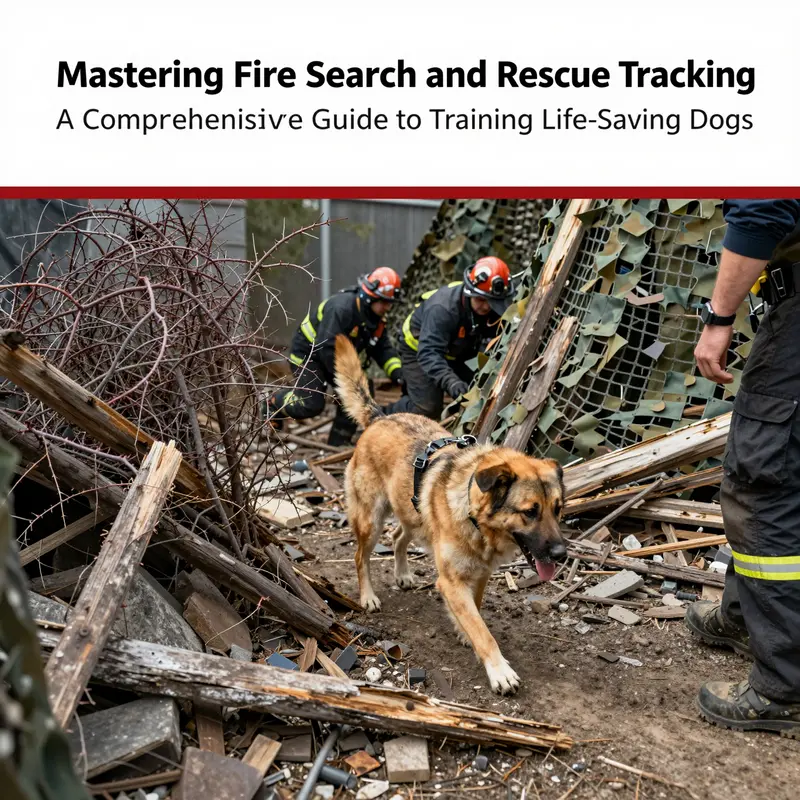
In the high-stakes world of fire search and rescue, training has evolved beyond the quiet precision of scent drills and the orderly rhythm of obedience lessons. Advanced field simulation and obstacle training bring the chaos of a real disaster into a controlled, repeatable space where dogs and their handlers can experiment, fail safely, and emerge more capable. This shift is a fundamental rethinking of how teams acquire the split-second judgment, resilient focus, and synchronized decision-making that define effective human and canine partnerships in demanding environments. Immersive technologies, virtual reality, augmented reality, and mixed reality, let trainers sculpt scenarios with precision while preserving safety and welfare. The field becomes a malleable training ground where a single exercise can morph from a calm scent search to a multi-layered operation with rubble, obstructed passages, and loud, unpredictable stimuli.
Realistic Scenario-Based Evaluations that Shape Fire Search and Rescue Tracking
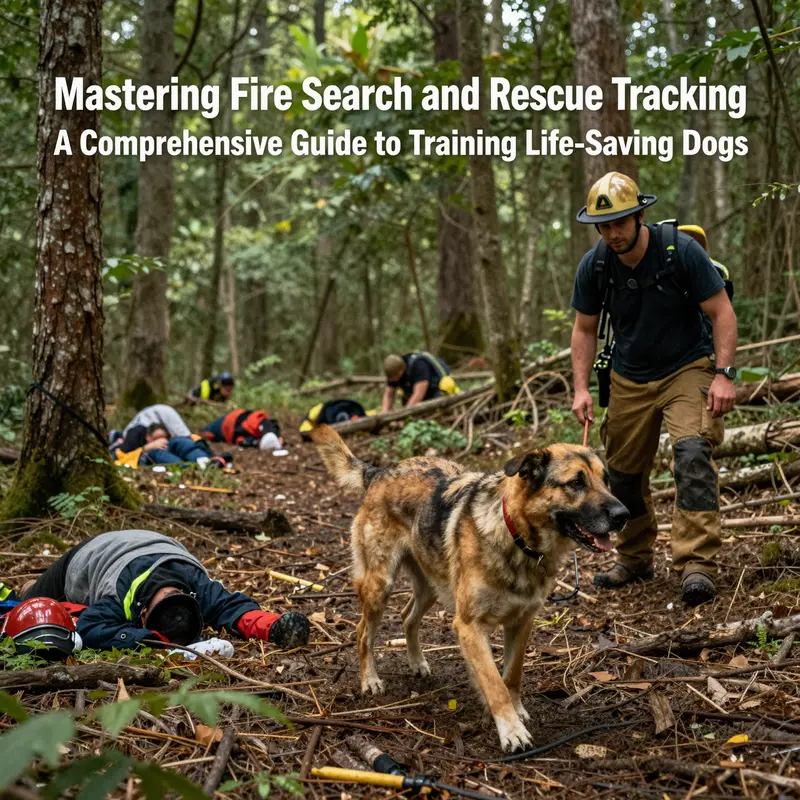
The most vital lessons in fire search and rescue tracking emerge not from classroom drills alone, but from realism that makes a trainer feel like a rescuer standing at the edge of chaos. Realistic scenario-based evaluations push human teams and canine or robotic trackers into environments that resemble the uncertain, hostile spaces where victims are found. They demand not only technical skill but also composure, intuition, and teamwork under pressure. In the early stages of training, a foundation of obedience, scent recognition, and basic field skills must be solid; yet the true test arrives when the trainee must apply those skills amid shifting temperatures, dense smoke, disorienting acoustics, and the unpredictable geometry of a collapsed structure. Realism is the bridge between possibility and performance; it turns theoretical ability into dependable response when every breath could count. The aim of scenario-based evaluation is not to chase novelty for its own sake but to expose gaps in perception, timing, and coordination before real emergencies occur; realism becomes a disciplined form of risk management, allowing teams to rehearse decision-making, adapt to constraints, and refine cues that lead to faster, safer rescues.
From the perspective of training design, the core challenge is to replicate the essential conditions that shape a search: limited visibility, obstructed lines of sight, varied terrains, and the presence of hazards that stress both neurocognitive processing and physical stamina. When a trainee enters a simulated fire scene, the air may be rendered dense with smoke, heat, and the acrid tang of combustion. The ground can shift underfoot as debris shifts or as stairwells collapse. Even the most capable handler or tracker must learn to prioritize information, filter distractions, and maintain focus on the scent trail or target among a barrage of competing cues. Realistic evaluations address these realities by layering environmental factors in a controlled, repeatable fashion. They provide a safe space to test how a team responds to a sudden change in conditions, how quickly a dog loosens or refines its attention in the face of competing odors, or how a robot’s sensors recalibrate when smoke obscures a camera or a lidar point cloud is degraded by dust. In the end, realism is not merely a dramatic backdrop; it is a mechanism for diagnosing weaknesses in perception, communication, and flow of command, then turning those findings into concrete, trainable adjustments.
Final thoughts
Training fire search and rescue tracking dogs requires unwavering dedication, expert methodology, and a holistic understanding of canine behavior and environmental challenges. From laying the foundation with obedience and bonding, through mastering human scent recognition, to tackling advanced field simulations and realistic scenario evaluations, every phase builds the capabilities necessary to save lives during emergencies. The partnership between handler and dog evolves into a finely tuned team, prepared to face the uncertainties of disaster sites with confidence and precision. As communities, first responders, and educators recognize the complexities and rewards of SAR dog training, fostering support and awareness ensures these vital teams remain effective and ready. Ultimately, investing in the art and science of fire SAR tracking enriches public safety and empowers those dedicated to humanitarian rescue efforts.