
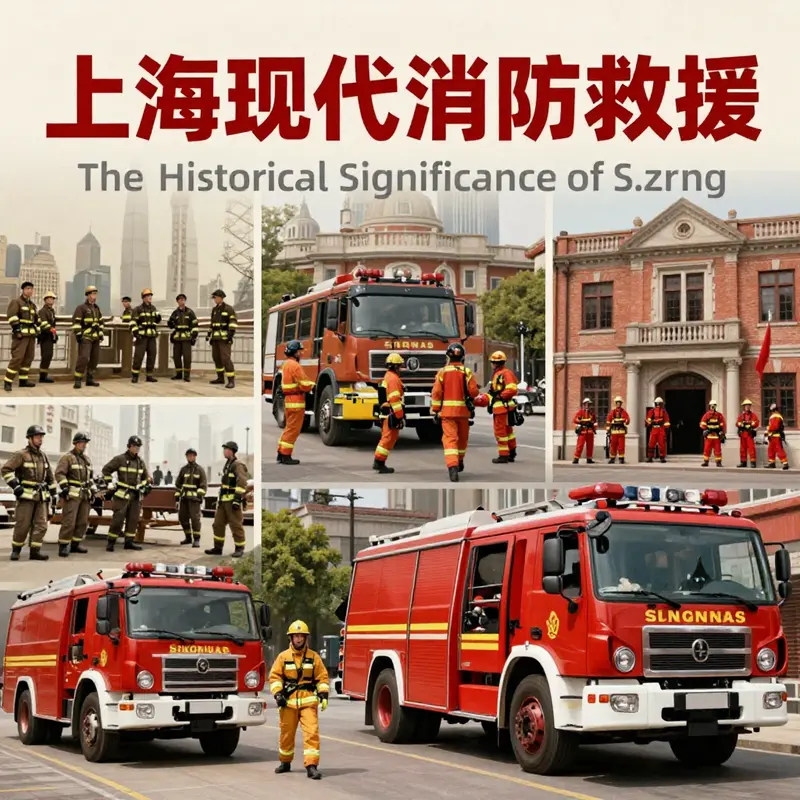
The establishment of the first modern fire station rescue in Shanghai marks a pivotal moment in urban firefighting history in China. Founded in August 1866, the Hongkou Second Fire Brigade laid the groundwork for modern fire rescue operations, integrating not just firefighting capabilities but also emergency response services crucial for urban safety. This article delves into the rich history of the Hongkou Fire Station, outlining its origins and evolution, exploring the innovations it introduced, assessing its societal impact, and recognizing its legacy. Together, these insights illuminate the significance of this foundational rescue service in enhancing urban safety and emergency preparedness.
From Shenjiawan to Shanghai’s Flame: The Emergence of Hongkou’s First Modern Fire Brigade
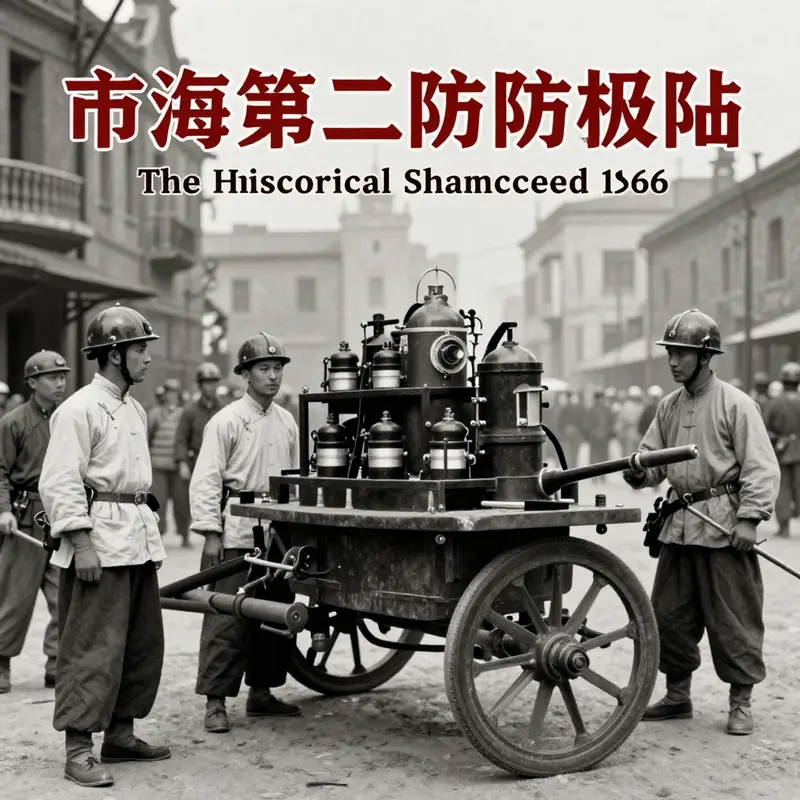
In the mid‑19th century, Shanghai’s streets were a pressure cooker of commerce, crowds, and risk. Fire was a constant threat in a city expanding along foreign concessions and crowded lanes, where timber-framed houses and densely packed alleys could transmit flames with alarming speed. The first notable response to this growing demand did not come from a single city council edict but from a practical alliance of people who shared a fear of fire and a will to protect neighbors. In 1852, a group of foreign residents within the International Settlement organized what would come to be known locally as the Shanghai Fire Brigade, or the Shanghai Rescue Association, near Shenjiawan in Hongkou. This unit began as unpaid volunteers operating with improvised equipment, yet its members treated firefighting as a craft that could be taught, rehearsed, and scaled. They sought permission from the Shanghai Municipal Council to coordinate across districts, a foundational step that transformed scattered acts of rescue into a recognized public service rather than a sequence of isolated incidents. The ethos of organized response was born out of necessity and cross‑cultural collaboration, and it would shape the city’s approach to danger for decades to come.
By 1863, the Shenjiawan Fire Brigade had come under the umbrella of the Fire Department’s evolving framework. The administrative shift reflected a broader shift in Shanghai’s governance: a city learning to organize risk management into predictable, routinized practice. The decisive moment arrived in 1867, when the Shanghai Municipal Council formally established the Fire Department, or Huo Zheng Chu, as the city’s official municipal fire service. This transition marked the emergence of a first modern urban fire brigade in China, one that moved beyond ad hoc volunteer effort to a structured apparatus capable of regular patrols, standardized response times, and coordinated deployments. Within this framework, the Shenjiawan unit gained a new legitimacy as a modern urban brigade, a milestone that would be echoed in later reorganizations and expansions. The central insight of this era is that urban resilience begins with institutional clarity: a mandate, a chain of command, and the capacity to mobilize people and equipment with shared expectations across neighborhoods.
Amid these organizational shifts, another thread of this history runs through the Hongkou district itself. The Hongkou Second Fire Brigade, commonly remembered as the Hongkou Machine Team, arose as a pivotal link between local initiative and municipal authority. Records indicate its establishment in August 1866, and it is frequently cited as the precursor to Shanghai’s Hongkou Fire Rescue Station. This unit did not simply inherit the Shenjiawan legacy; it refined it for the needs of a rapidly growing city. Its linking to Shenjiawan underscores a continuous lineage—from volunteer beginnings to a formally recognized municipal service—demonstrating how local courage, technical learning, and administrative support could converge to create a more reliable urban rescue capability. The Machine Team thus embodies a transitional moment: it preserved the ethos of duty and neighborliness while embracing the discipline and scope demanded by a modern city that could no longer rely on ad hoc help alone.
The material footprint of this transformation is visible in the city’s built environment. The early fire protection efforts of Shenjiawan—the volunteers who patrolled at the intersection of Hai Ning Road and Wu Song Road—laid down a practice of situational awareness, quick access to water sources, and coordinated alarm signaling. Those seeds sprouted into a more permanent physical presence in Shanghai when a landmark fire station complex rose at the intersection of Wusong Road and Wujiang Road in Hongkou. Completed in 1917, this building was conceived in a European Renaissance sensibility, giving the district a dignified brick-and-stone presence that could be read as both a civic monument and a functional hub. The 36‑meter watchtower, once a practical signal to streets and canal boats, symbolized the reach of municipal services across a crowded port city. Even as modern technology rendered the watchtower obsolete for its original function, the edifice remained a working fire station, a living reminder that urban firefighting had grown from a local vigil to a city‑level institution.
For more than a century the Hongkou Fire Rescue Station has continued to serve, its walls absorbing the changes in firefighting techniques, training, and equipment while maintaining a physical link to its roots. In 1994 the city formally recognized the building as a Shanghai Historic Building, a designation that acknowledged not only the architecture but the social memory embedded in its corridors and yards. As plans circulate for transforming the site into a multifunctional space—a fire museum and public experience center—the structure stands at the crossroads of memory and practice. The idea is not to seal history behind glass but to invite residents and visitors to witness how an emergency service evolved with Shanghai’s modernization. The watchtower may be quieter now, but the station’s daily operations continue, preserving a continuous thread from the Shenjiawan volunteers to today’s responders. The narrative that unfolds in Hongkou is thus both concrete and aspirational: a city that honors the origin of its safety systems even as it presses forward with new learning and infrastructure.
Within the broader arc of China’s firefighting history, the Hongkou lineage illuminates how foreign expertise and local governance could fuse to create a robust urban protection network. The Shanghai Fire Brigade of 1852, the Shenjiawan unit, and the formal municipal department collectively produced a template for urban resilience that extended beyond a single building or a single district. In the crowded quarters of old Shanghai, where lanes wound through markets, tenement blocks, and riverfront docks, a municipal fire service needed more than courage. It required organization, training, authority, and the capacity to move quickly across neighborhoods. This was the essence of modernization: to translate local risk into standardized procedure, to codify response times, and to align rescue with the management of streets, hydrants, and dispatch. The Hongkou station stands as a concrete articulation of that process—a reminder that the city’s safety infrastructure was built through iterative steps, each informed by practical necessities, political legitimacy, and a shared belief that public safety is a civic achievement rather than a private favor.
This historical thread also invites contemporary reflection on how heritage spaces can teach and inspire. The ongoing interest in Shanghai’s first modern urban fire brigade underscores that modern public safety is not only about technology but about a culture of preparedness and coordination. The site in Hongkou—where a watchtower once crowned a busy district and where crews trained to protect a growing metropolis—now offers a stage for education and contemplation as much as for service. Visitors can sense the pulse of a city that learned to balance global influences with local realities, crafting a system capable of responding to fire, flood, and crisis with method, skill, and communal resolve. And in that sense, the Hongkou Fire Rescue Station is not merely a relic; it is a living chronicle of how Shanghai’s public safety emerged from the interweaving of people, places, and plans across the long arc of a city’s transformation.
For readers curious about how modern firefighting heritage intersects with museum and public engagement, consideration of related initiatives offers a broader view. The path of learning and memory is illuminated by initiatives that treat firefighting history as a living field—one that can inform current practice while inviting new generations to study, engage, and contribute. The possibility of transforming the Hongkou complex into a multifaceted center aligns with a wider movement to connect archival memory with contemporary training and community education. This approach makes the past tangible and the future more intelligible, ensuring that lessons learned in the early days of Shanghai’s firefighting are not lost amid urban change.
Internal link for further exploration: Innovation Museum Transforming Fire Services.
External resource: for authoritative historical context, see archival materials maintained by the Shanghai Municipal Cultural Heritage Protection Bureau at https://www.shmwh.gov.cn.
From Shenjiawan to Shanghai’s Modern Fire Rescue: The Birth of China’s First Urban Fire Service
The question of where the first fire station rescue was established in China points to a city that would become a blueprint for urban firefighting across the nation. In Shanghai, the arc of modern fire rescue begins not with a single moment of triumph but with a sequence of evolving responsibilities, technologies, and authorities. The earliest seeds were planted in 1852, when a volunteer group known as the Shanghai Fire Brigade formed in the Hongkou area near Shenjiawan. This was not a formal city department but a grassroots effort driven by foreign residents who needed to protect their districts and properties. Their equipment was rudimentary by later standards: horse-drawn pumps, nicknamed ‘water dragons’, queuing to draw water from street hydrants or wells that predated a city-wide water supply. The men operated these engines by hand, coaxing a jet of water that could contain a fire long enough for others to work the hose and douse the flames.
The turning point arrived in the mid-1860s, when municipal governance began to assume the burden of emergency protection more directly. In 1863, the Shanghai Municipal Council, acting through the Public Works Department, took formal control of the firefighting effort. This shift from private and volunteer hands to official oversight signaled the first step toward a unified, citywide approach to fire rescue. By 1867, the council had established the Fire Department, centralizing control over multiple units and signaling the consolidation of firefighting as a municipal function. Within this reorganization, the Hongkou Machine Team—soon known as the Hongkou Second Fire Brigade—emerged as the direct predecessor of today’s Hongkou Fire Rescue Station.
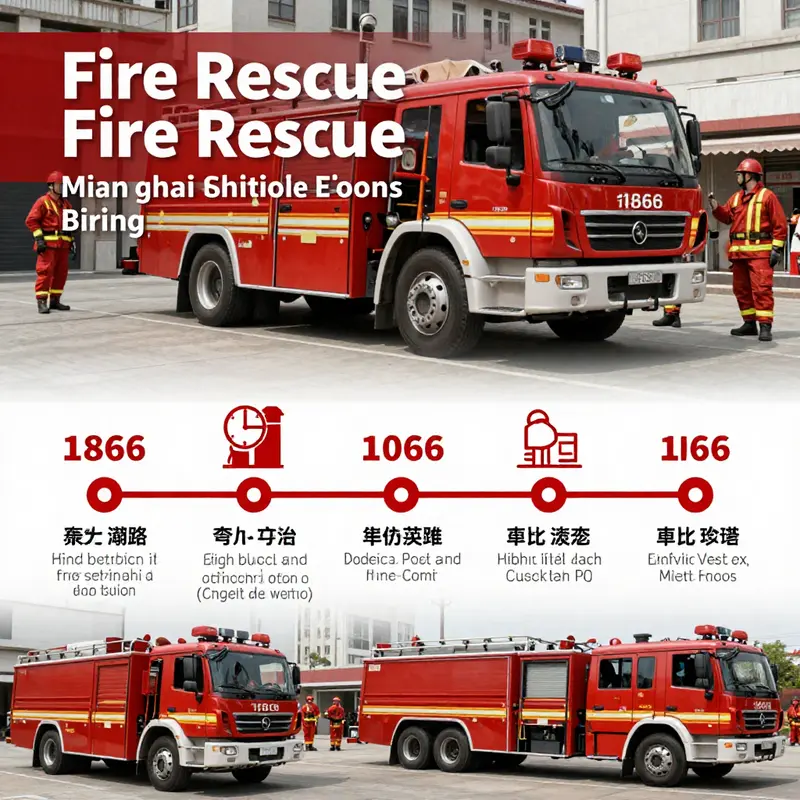
A close look at the chronological record shows another pivotal milestone: the year 1866, when Shanghai organized its first true Fire Engine Team at what is now 280 Huainan Middle Road. That location marked the embryo of a more systematic approach to firefighting. The team’s creation represents the city’s earliest formal step toward a professional apparatus capable of rapid response, coordinated with the rest of the urban infrastructure. By the close of the 19th century, Shanghai’s firefighting network had blossomed into a constellation of stations across districts such as Yangshupu, Jing’an Temple, and Yichang Road.
Technological advancement followed the arc of Shanghai’s modernization. The city’s first steam-powered engines arrived in the late 19th or early 20th century; in 1908 Shanghai purchased its first internal-combustion engine-driven fire truck from the United States, placing Shanghai among the earliest Chinese cities to adopt this technology. This acquisition did more than replace animal power; it redefined response times, maneuverability, and the scale of water delivery during fires. The 1910s and 1920s saw the rise of domestic manufacturing efforts, with Yanxian Machinery Ironworks—later known as Yanxian Fire Equipment Factory—producing China’s own engines and equipment. Those domestically produced machines signaled a transition from importing solutions to building local capacity.
The post-1949 period witnessed a reconfiguration of the organizational framework. With the founding of the People’s Republic of China, the fire protection function shifted from police oversight to a new set of public safety structures. The Shanghai Police Bureau Fire Division became the immediate successor in the formal line of command, eventually evolving into what is today the Shanghai Fire Rescue Corps, a specialized arm within the broader national emergency management system. The core mission—protecting lives and property through rapid, professional response—remained constant, even as the administrative label and toolkit shifted with changing political realities.
Today, the legacy of those early stations survives in memory and practice. The Hongkou Fire Rescue Station stands at 560 Wusong Road, a living monument to a long lineage of public service. The station’s curved facade and a tall observation tower symbolize a city’s vigilance and preparedness. Other historic structures, such as the Yangshupu Fire Station and the Xiaonanmen Bell Tower, endure as links to Shanghai’s firefighting odyssey. They remind residents and visitors that modern fire rescue is built on layers of experience: volunteer courage, municipal investment, technological innovation, and the discipline of professional crews. The story of Shanghai’s fire service is one of transformation—from ad hoc volunteer effort to a comprehensive, technologically enabled municipal function.
This narrative also resonates with a broader public memory: preserving historic stations and educating the public ensures that lessons from the past inform future readiness. Modern museums and exhibits offer interactive insights into how firefighting has evolved while staying true to its core mission.
External reference: https://www.shanghai.gov.cn/nr/zhengce/20201109/2f1a1e5b4c5a4f5a9b5d7a1c3b1d0a1e.html
From Sparks to the Thousand-Mile Eye: Technological Pioneering in Shanghai’s First Fire Station Rescue
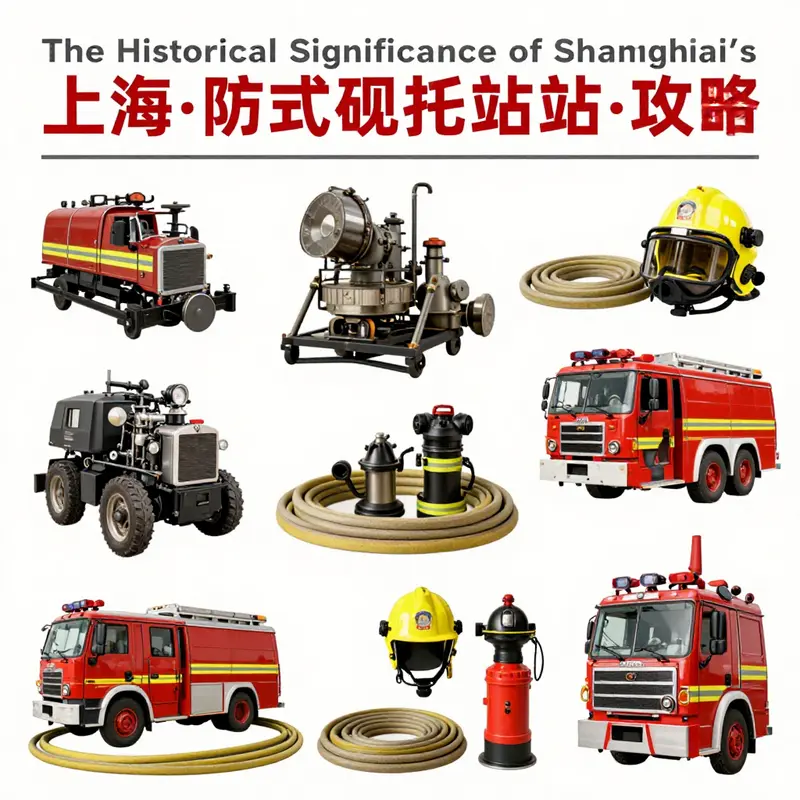
When the history of urban firefighting in China is told, it often begins with the stubborn, laborious courage of volunteer brigades and the steady arc of municipal reform. Yet the thread that binds those early efforts to today’s high-tech rescue operations is not merely chronology; it is a continuous redefinition of risk, information, and the role of machines in protecting human life. The first modern fire station rescue in Shanghai did not arise in a vacuum. Its roots stretch back to the Shenjiawan Volunteer Fire Brigade, and the Hongkou Second Fire Brigade—often remembered as the Hongkou Machine Team—was established in August 1866 as a turning point in organized urban response. This chapter follows that trajectory by examining a more recent leap: the integration of robotics, AI, and ultra-fast communications into the core of Shanghai’s rescue culture. It is a narrative of how a city that once hardened itself against fire by sheer manpower now choreographs human responders with intelligent machines, turning a traditional vocation into a technologically augmented mission.
The late 20th and early 21st century did not simply add gadgets to old routines; it reframed how teams perceive danger, gather intelligence, and execute precise actions under pressure. Shanghai’s ongoing evolution in emergency response has come to resemble a convergence zone where drones, robotic platforms, and artificial intelligence become active participants in the fire life cycle. This shift was prominently showcased at a major emergency disaster reduction and rescue expo in Shanghai, where the practical value of these technologies was demonstrated in real-time scenarios. The emphasis was not on spectacle but on reliability: how new tools could extend the reach of a command center, preserve the safety of frontline personnel, and improve the odds of saving lives trapped in smoke or collapsing structures. The expo underscored a central idea that would resonate with any city facing dense urban risks: the value of information is amplified by speed, precision, and coordination.
At the heart of this transformation lies a class of remote sensing and reconnaissance devices designed for situations where humans cannot safely tread. The anti-explosion firefighting reconnaissance robot, shown in demonstrations and later referenced in official summaries, epitomizes this approach. Such a machine can enter burning environments and zones with potential detonation risks, areas where human entry would be tantamount to speculation with grave consequences. The robot’s capabilities extend beyond simple surveillance. It streams live video and thermal imaging data back to the incident command post through 5G networks, allowing operators to observe temperature distributions, locate potential piers of entrapment, and assess fire conditions without putting responders in harm’s way. In practice, this means the command team can map heat gradients, plan safer entry routes, and decide where to deploy hoses or initiate ventilation with far greater confidence.
The notion of a seamless, almost telepathic information loop between field devices and the command center has given rise to what many observers call the thousand-mile eye. The combination of high-resolution thermal imaging and agile 5G connectivity makes it possible to see through smoke with startling clarity and to transmit that vision instantly to the people who must interpret it and decide. Such systems turn the command post into a cockpit of decision-making where situational awareness becomes action. Fire spreads, ventilation needs, and potential victim locations can be forecast with a level of detail that would have once required hours of on-scene reconnaissance. In Shanghai’s contemporary practice, this is not just an incremental upgrade; it is a fundamental reorientation of how rescue operations are conceived and executed.
Parallel to robotic reconnaissance is the deliberate enhancement of aerial and ground mobility that supports rapid reach and precision application. A specialized aerial spray vehicle, renowned for its extendable arm reaching significant heights and distances, provides a robust backbone for rescue operations that must strike at upper floors or compromised roof lines. Instead of relying solely on ground crews to maneuver long hoses through narrow stairwells or across unstable balconies, the advanced platform offers a controlled, steady stream from a position of safety. The result is a more flexible operational tempo: responders can stage coverage, coordinate with ground teams, and reduce the time needed to establish protective zones or to extinguish pockets of flame that threaten to re-ignite after initial suppression.
Together, these technologies reflect a broader shift toward unmanned rescue capabilities that nonetheless rely on close human collaboration. Robots and unmanned systems do not replace firefighters; they become essential companions—what some officials have described as reliable “steel comrades.” The synergy is practical and humane. Robots scout environments, deliver critical intelligence, and sometimes perform tasks too risky for human bodies. Firefighters, meanwhile, bring irreplaceable judgment, dexterity, and the ability to adapt to rapidly shifting conditions that no machine can fully replicate. The balance between machine and human is not a static arrangement but a dynamic partnership that grows with every mission, every training exercise, and every new deployment protocol.
This evolving ecosystem rests on institutional memory, too. The Shanghai Fire Rescue Corps has repeatedly underscored that modern rescue is a function of both legacy organization and cutting-edge capability. The official report issued in November 2023 provides a formal record of how these capabilities were developed, tested, and integrated into day-to-day operations. It documents a trajectory from early urban firefighting structures to contemporary, data-informed response strategies. The report confirms that 5G-enabled data streams, real-time thermal imaging, and unmanned platforms are not ancillary add-ons; they are integral to contemporary rescue planning and execution. In a city of Shanghai’s scale, where emergencies may unfold across densely built corridors and complex underground networks, having a layered, technology-supported response model is not a luxury but a necessity. This reality reflects a careful, sustained investment in both equipment and training to ensure that new tools are fully integrated with established firefighting practices rather than deployed as isolated novelties.
The practical implications of these innovations extend beyond the moment of fire suppression. They redefine risk assessment, triage, and post-incident analysis. With a clear, continuous feed of sensory data, incident commanders can coordinate more precisely, allocating personnel to tasks that maximize safety and effectiveness. Victim location can be accelerated through thermal and video cues that are filtered through intelligent analytical software, enabling faster extraction and evacuation decisions. In the long term, the accumulation of this data supports iterative improvements in building codes, safety protocols, and training curricula. The Shanghai experience suggests a blueprint for other cities that aspire to bring their fire rescue services into a more resilient, technology-enabled era.
For those who seek a broader context on where this shift sits within the larger project of modernizing urban emergency response, the linked discussions and related resources offer additional perspectives. An accessible overview of how technology is reshaping fire services can be found in formats that trace the evolution from mechanical response to intelligent systems. As Shanghai’s practice demonstrates, the heart of modernization lies not in replacing people with machines but in extending their reach and precision through reliable, well-integrated tools. This is why the latest demonstrations emphasize not just the gadgets themselves but the workflows that connect them—the data pipelines, the command-center dashboards, and the field procedures that translate digital insight into life-saving action.
To place this conversation within a wider research context, readers may explore further discussions on related innovations and the ongoing evolution of fire service infrastructure. For a broader look at how technology is reshaping fire services and the spaces where responders operate, see the resource on Innovation Museum Transforming Fire Services. Innovation Museum Transforming Fire Services.
The fusion of historical discipline with modern infotech is not merely a mood; it is a functional standard now, especially in Shanghai’s dense urban environment. The city’s first modern urban fire brigade served as a foundational model for organized rescue, but its descendants now push beyond the limits of traditional firefighting. The ongoing integration of reconnaissance robotics, 5G-enhanced data sharing, high-definition thermal imaging, and long-reach aerial suppression platforms marks a decisive turn toward situational intelligence and safe, effective intervention. In this light, Shanghai’s early fire-station rescue is remembered not just as a milestone in public safety history but as a living preface to a future where rescue work is conducted with greater courage, precision, and coordination than ever before. The story is still being written in the city’s streets, training grounds, and incident command rooms, where technology and human skill continue to learn from one another in real time.
External resource: https://www.shfire.gov.cn/press/20231119.html
From the Spark of 1866 to a City of Resilience: Shanghai’s First Fire Station and the Long Arc of Urban Safety
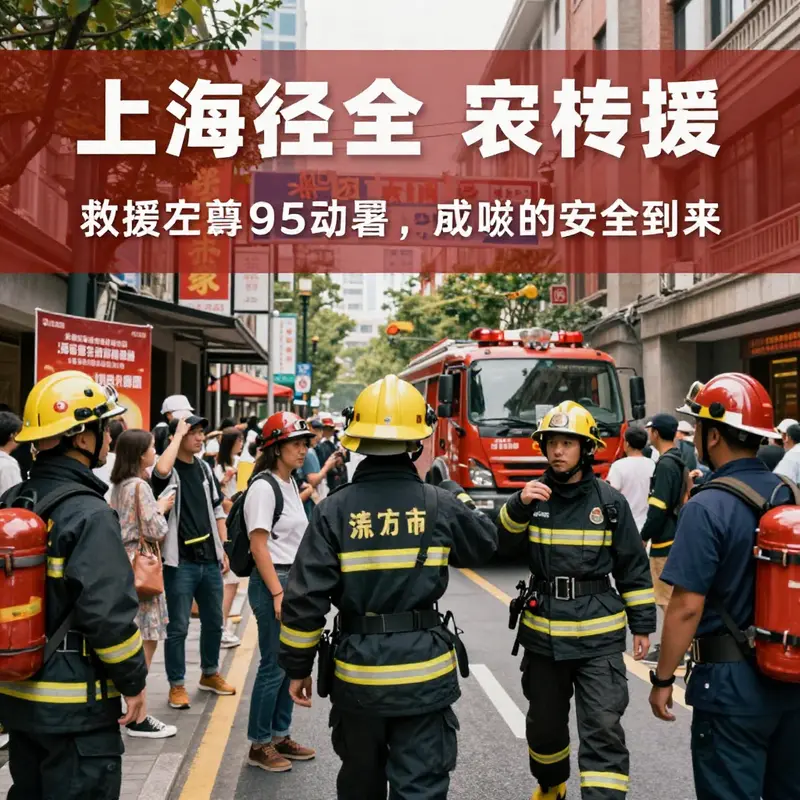
The question of where the first fire station rescue was established in Shanghai opens a doorway into a larger story about how a city learns to protect itself. In August 1866, a small but determined push toward organized rescue services took root in the Hongkou district, where the Hongkou Second Fire Brigade, popularly known as the Hongkou Machine Team, began to codify a new approach to danger. This was more than a building or a banded group of responders; it was the birth of a system meant to shrink the gaps between flame and fate, between alarm and action. Its origins trace back to a precursor—the Shenjiawan Volunteer Fire Brigade—whose volunteers carried the torch into a more formalized era. The earliest site of the enterprise was at the crossroads of Hai Ning Road and Wu Song Road, an urban seam where trade, dwellings, and transport intermingled in a way that would soon demand a more reliable, repeatable response to fire and crisis. The significance of that moment lies not only in the act of extinguishing flames but in the decision to treat rescue as an organized service, with standard procedures, trained personnel, and a public expectation of safety.
To understand the transformation, one must see the shift from ad hoc firefighting to a citywide system that could deploy quickly, coordinate multiple units, and adapt to the evolving urban fabric. The Hongkou Brigade, or the “Machine Team,” represented a bridge between the stubborn realities of 19th-century urban risk and the 20th-century logic of municipal governance. It was more than a gathering of engines and hoses; it was a disciplined effort to translate local courage into scalable capacity. The site at Hai Ning Road and Wu Song Road was less a ceremonial address than a strategic choice, signaling a commitment to proximity, accessibility, and the confidence that residents deserve rapid rescue. As records and retrospective accounts emphasize, this initial establishment laid down a framework for rapid deployment and coordinated rescue operations that would reverberate through Shanghai’s later fire service development.
The narrative of Shanghai’s first station advances when one considers its eventual evolution into a more prominent node of urban safety. Over time, the lineage of the Hongkou Machine Team would anchor what became the Shanghai Hongkou Fire Rescue Station, with the historic footprint of the early brigade transforming into a modern complex at No. 560 Wusong Road. The move from a neighborhood observation post to a citywide infrastructure project illustrates a key truth about urban resilience: safety is most effective when institutionalized. The early brigade demonstrated that rescue work requires not just bravery and equipment, but a disciplined cadence—training cycles, standardized protocols, and a governance scaffold that could fund and sustain expansion. The shift toward formalization was, in essence, a precondition for the kinds of investments that later generations would deem essential: larger fleets, specialized units, and improved coordination with other emergency services.
What followed—a long arc of growth and modernization—translated the historical insight of the first station into a public safety architecture that could respond under pressure. Contemporary assessments point to a sustained expansion of Shanghai’s fire service capacity, a trend driven by urban densification, rising risk profiles, and the recognition that time saved in the first moments of a fire translates into lives saved and property preserved. Current planning estimates suggest that constructing around 150 fire stations would effectively meet the city’s present needs. That figure embodies not nostalgia for a single dated milestone but a recognition of how early organizational principles matured into a framework capable of absorbing decades of demographic change, technological advancement, and shifting risk landscapes. The city’s fire rescue system thus stands as a quiet testament to incremental innovation—the reward of steady commitment rather than a single breakthrough.
The relevance of these historical lessons extends beyond sheer capacity. In 2023, Shanghai recorded 16,620 fires, a figure that marks not only activity but a growing complexity of urban risk. The rise—about 58.17 percent higher than in the prior period—speaks to a city that continues to adapt, balancing rapid development with the need for reliable emergency response. It also underscores why access, proximity, and response speed matter so much in urban design. When fires threaten central districts with dense populations and riverine corridors that shape both travel and hazard, the strategic placement of stations becomes a fundamental element of resilience. In cities like Shanghai, where water and built form intertwine, the geographic logic of rescue facilities—how close they are to risk, how quickly crews can reach a corridor, how effectively water-based or road-based routes interlace—becomes as vital as the engines themselves.
This is where the conversation about optimal siting intersects with broader questions of system design and urban foresight. Studies and practical assessments—such as those described in recent urban safety research—highlight the importance of data-driven planning in prioritizing locations for fire stations. The early impulse to centralize rescue within a formal brigade has matured into an emphasis on spatial analytics: population distribution, traffic patterns, flood risk, and critical infrastructure all feed into location models that guide new station siting and redeployments. The continuity from the first brigade to today’s planning culture rests on a shared conviction: early, disciplined organization can yield a platform for rapid, reliable response across a city’s evolving geography. In this sense, the Hongkou Machine Team did more than extinguish flames; it seeded a methodology for urban preservation that subsequent generations would refine with maps, simulations, and life-saving protocols.
For readers who want to explore how these themes translate into contemporary discourse and practice, discussions and exhibitions at dedicated knowledge sites illuminate the enduring link between history and innovation. The narrative of Shanghai’s early rescue institutions resonates with ongoing reflections on how fire services evolve within modern cities. One avenue for sensing this continuity is through focused explorations that bridge past and present, a thread you can follow in more detail through resources that foreground the transformation of fire services in public memory and practice. Innovation museums and related venues offer interpretive accounts that emphasize both the lineage of rescue work and the ways today’s urban systems learn from it. See for example the Innovation Museum: Transforming Fire Services, which traces the lineage from early brigades to contemporary resilience strategies. Innovation Museum: Transforming Fire Services.
As historians and planners alike remind us, the essence of Shanghai’s early rescue effort was not merely a historic milestone but a blueprint for an adaptive safety culture. The first station’s location, its evolution into a city-wide network, and its role in shaping how urban authorities conceive risk underscore a broader truth about resilience: it grows where institutions commit to continuous improvement, where data informs decisions, and where the public trust translates into sustained investment. In other words, one localized act—a brigade at a street corner in 1866—becomes a standard of care that supports millions of lives across generations. The continuity from manual brigades to technologically sophisticated, data-informed station networks is not a linear triumph but a culture of learning, adaptation, and shared responsibility that binds past to future.
External resource: for further context on the spatial planning implications of fire station placement in China, see Research on Chinese Fire Station Optimal Location Model. https://www.researchgate.net/publication/379564558ResearchonChineseFireStationOptimalLocationModel
From Shenjiawan to Shanghai Hongkou: The Enduring Legacy of China’s First Modern Fire Station
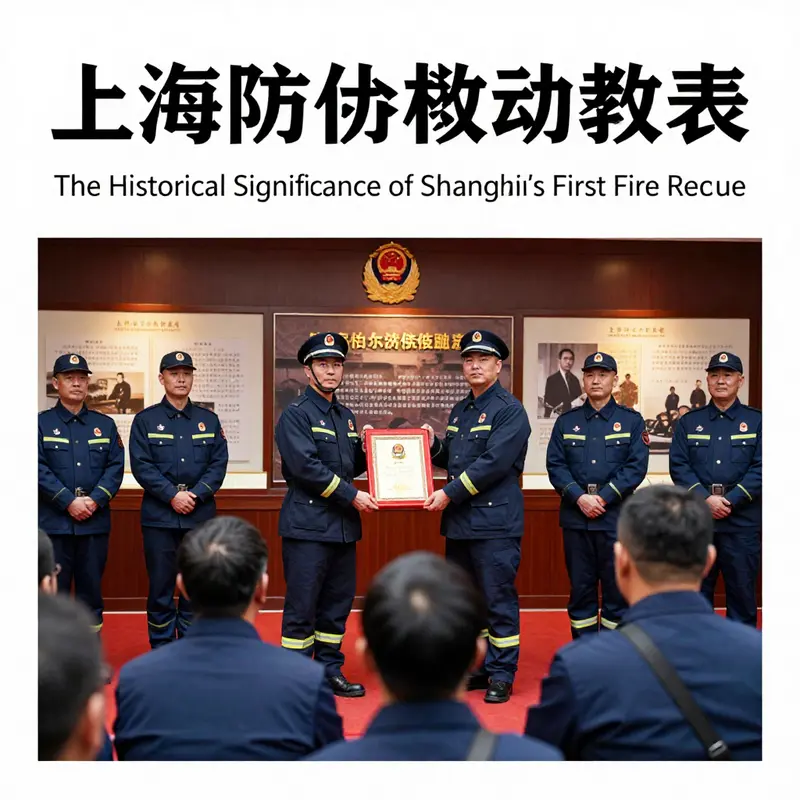
The story of the Hongkou Fire Station is more than a local chronicle; it is a visible thread in the fabric of modern urban safety in China. Established in the late 19th century, the Hongkou unit—sometimes called the Shenjiawan Fire Brigade or Hongkou Machine Team—represents the transition from informal volunteer firefighting to a formal municipal rescue service. Its presence at No. 560 Wusong (Wusong Road) in Hongkou District anchors this transition in both place and design, offering a rare architectural and operational continuity that speaks to the broader institutionalization of fire rescue in Chinese cities.
Architecturally, the station is unmistakable. The three-story Western-style building stands at a busy corner, its concave arc answering the curve of intersecting streets. A square tower rises above the roofline and is capped by a hexagonal observation deck. Below, the ground floor holds broad red and blue garage doors, a practical feature that visually links past and present: those bays once sheltered horse-drawn apparatus and now continue to house modern rescue vehicles. The building thus functions as a living artifact. It tells a layered story of technology, governance, and daily readiness.
Recognition of this site as a historical asset arrived in the modern era. In February 1994, local authorities designated the Hongkou Fire Station a “Shanghai Historic Building.” That recognition was not purely ceremonial. It acknowledged the station’s role in shaping municipal firefighting standards and preserved a physical example of how cities adapted foreign organizational models while embedding them in local life. The designation has helped protect the station’s distinctive features, ensuring that the place where Shanghai’s first modern municipal brigade organized and trained continues to communicate its story.
The origins of the Hongkou unit link to volunteer roots. Before municipal oversight, communities formed volunteer brigades to meet the acute risks of dense urban neighborhoods. As Shanghai’s population and built environment grew, so did the scale of fires and the complexity of responses. The Shanghai Municipal Council’s Fire Department, through its Fire Administration Office, formalized a professional structure around 1866–1867. That formalization created standards for training, equipment, and command that moved firefighting from ad hoc effort to organized public service. The Hongkou station sits at the intersection of that evolution, a local emblem of a national shift.
Legacy often lives in operational practice as much as in bricks and plaques. Today the Hongkou Fire Rescue Station serves under the Shanghai Fire Rescue Corps and remains an active emergency response unit. Its crews respond to a range of incidents, blending firefighting with rescue operations that modern urban life demands. At the same time, the station houses museum exhibits and educational resources that document the evolution of firefighting in Shanghai and beyond. Visitors can trace how apparatus changed, how uniforms evolved, and how techniques matured. That dual role—active station and repository of memory—keeps institutional knowledge accessible to both residents and professionals.
The value of this continuity is practical as well as symbolic. A standing station that also functions as a museum invites reflection on lessons learned. It showcases incremental improvements in equipment, from early hand pumps to mechanized engines, and illustrates how governance shaped standards for inspection, building codes, and public education. Each of these elements contributed to a systemic reduction in risk across neighborhoods and industry. In that sense, Hongkou’s footprint extends beyond its immediate district. It represents a node where practice, policy, and public awareness intersect.
Preserving such sites also fosters civic identity. Historic fire stations have a particular civic resonance: they are practical, public-facing, and often located in neighborhoods where generations have encountered them. The Hongkou station’s architecture and ongoing operations provide a familiar anchor in a rapidly changing city. Residents see the same façade that their grandparents saw, while firefighters continue routines shaped by a long institutional memory. This continuity supports trust: a public that recognizes an enduring local institution is more likely to engage with prevention campaigns and to view emergency services as steady partners in community safety.
The international context matters too. Shanghai’s adoption of Western-style municipal firefighting echoed developments in other modernizing cities. Yet local conditions shaped how those models were adapted. The Hongkou example shows selective adoption: external structures like standardized apparatus and centralized command were combined with local knowledge about building materials, street patterns, and community networks. The result was not a simple transplant of foreign methods but a hybrid system responsive to local constraints and needs. That hybridization is a key part of the brigade’s legacy.
Beyond historical and architectural value, the Hongkou station plays a role in ongoing innovation. Museums and heritage sites within the station create platforms for public engagement and professional training. Exhibits that explain past mistakes and solutions help inform contemporary resilience planning. In this way, the station becomes a resource for improving emergency preparedness citywide. For readers interested in how fire services can balance tradition and progress, this model offers practical lessons.
For those who want to explore similar efforts to preserve and reinterpret firefighting history, there are contemporary initiatives that combine operational readiness with public-facing interpretation. An example of creative preservation and institutional storytelling can be found at an innovation-focused museum that highlights the transformation of fire services; it makes the case for conservation paired with modern utility by blending exhibits and active displays (see the Innovation Museum link for a comparable approach).
The Hongkou Fire Station stands as a concentrated lesson in institutional development. It shows how a city moved from scattered volunteer brigades to professional municipal services, how architecture can embody civic values, and how operational continuity preserves both memory and expertise. As Shanghai continues to evolve, the station remains a deliberate link to the moment when firefighting became an organized public responsibility—an enduring reminder that urban safety is built one reform, one building, and one prepared crew at a time.
For official historical context and current operational details, the Shanghai Fire Rescue Corps provides authoritative resources and updates: https://www.shfire.gov.cn
Final thoughts
The establishment of the Hongkou Fire Brigade represents more than just Shanghai’s entry into modern firefighting; it initiated a critical evolution in urban safety and emergency response. Its legacy continues to inspire current and future generations of firefighters, emphasizing the importance of innovation, community engagement, and resilience in the face of urban challenges. As we reflect on this pivotal development, it is clear that the impact of the first fire station rescue remains deeply woven into the fabric of Shanghai’s urban safety narrative. This history not only underscores the significance of emergency services in protecting lives but also celebrates the unsung heroes who lay the groundwork for today’s advanced rescue operations.