
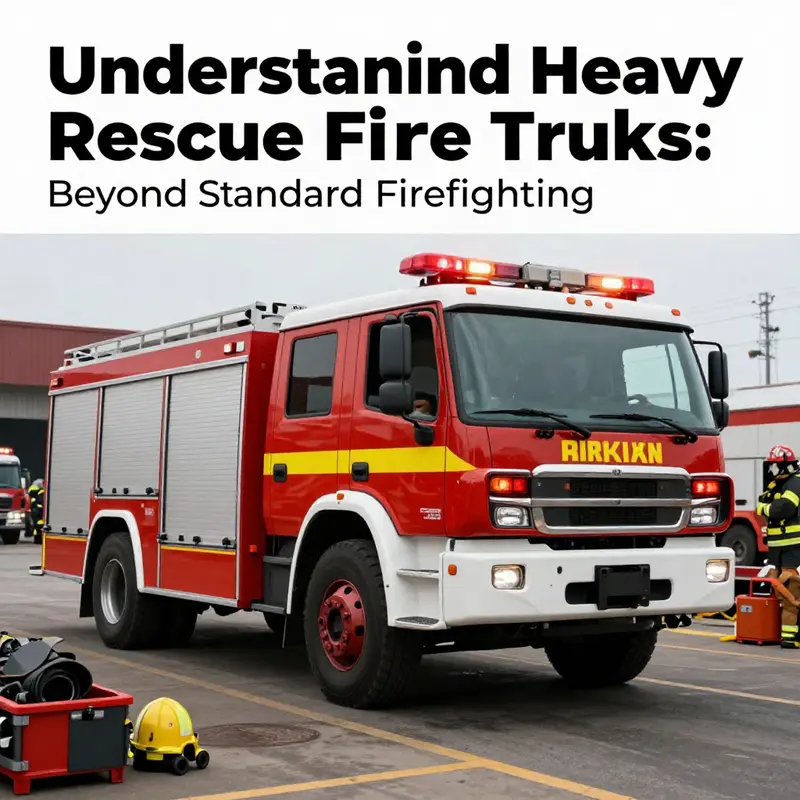
Heavy rescue fire trucks play a vital role in modern emergency response, serving communities through specialized functions that extend beyond traditional firefighting. These robust vehicles are equipped with advanced tools and technology, enabling firefighters and rescue personnel to address a wide range of emergencies—from vehicle extrications to hazardous materials incidents. In this article, we will delve into the multifaceted uses of heavy rescue fire trucks, highlighting their significance in vehicle extrication, structural collapse rescues, managing hazardous materials incidents, and confined space rescues. Each chapter aims to provide insights and practical knowledge pertinent to general public safety, firefighter training, and community preparedness.
Opening the Crushed: An In-Depth Look at How Heavy Rescue Trucks Facilitate Vehicle Extrication
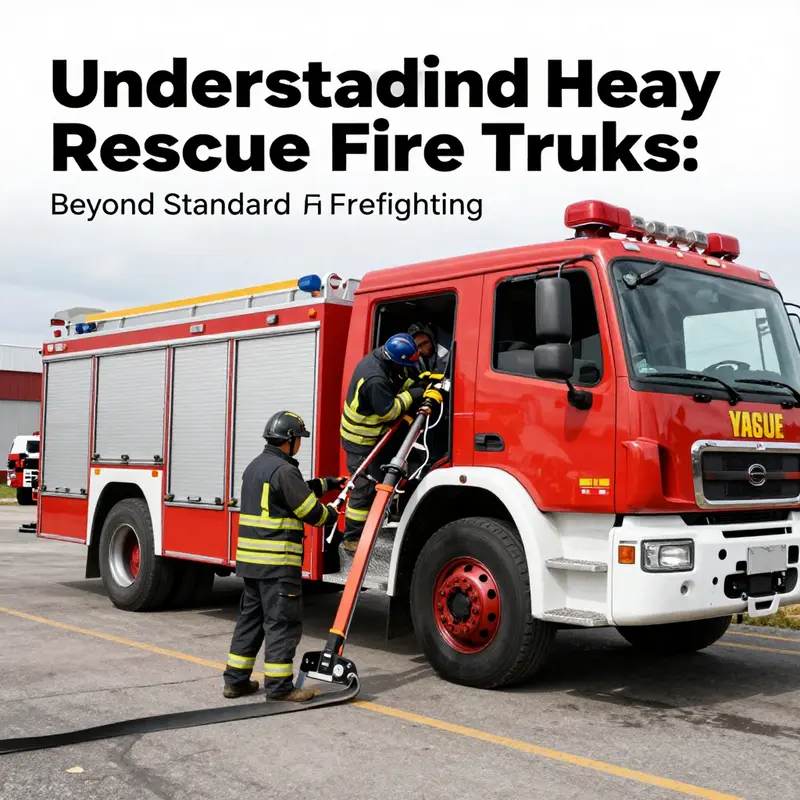
The moment a crash scene is called in, the clock starts ticking in a way that few other emergencies do. A heavy rescue fire truck arrives not as a jet engine of flames but as a mobile workshop built for the stubborn geometry of wrecked metal. The vehicle’s bulk is not a burden but a strategy: it holds an arsenal of tools, a cadre of trained hands, and enough lighting and power to stand up to hours of careful work in confined, chaotic spaces. Vehicle extrication is less a matter of brute force and more a choreography of patience, precision, and protection. Every twist of a door, every pane of shattered glass, every crumpled pillar of metal creates a unique puzzle. The goal is not to pry victims loose at any cost, but to create a safe pathway for removal while preserving as much bodily integrity as possible. In this sense, heavy rescue trucks embody a philosophy of rescue that fuses firefighting instincts with technical skill, medical awareness, and scene management. They are both a portable toolbox and a controlled worksite, deployed exactly where improvisation risks becoming tragedy and where the slightest misstep could multiply injuries instead of solving them. The scene demands a crew that can both read the wreck and translate that reading into a sequence of careful actions. The truck provides the instruments, but it is the people who guide them with discipline and empathy. The result is not a single tool acting in isolation but an interwoven set of capabilities that turn a dangerous, entangling situation into a manageable rescue.
When the Skyline Falls: The Hidden Role of Heavy Rescue Fire Trucks in Structural Collapse Missions
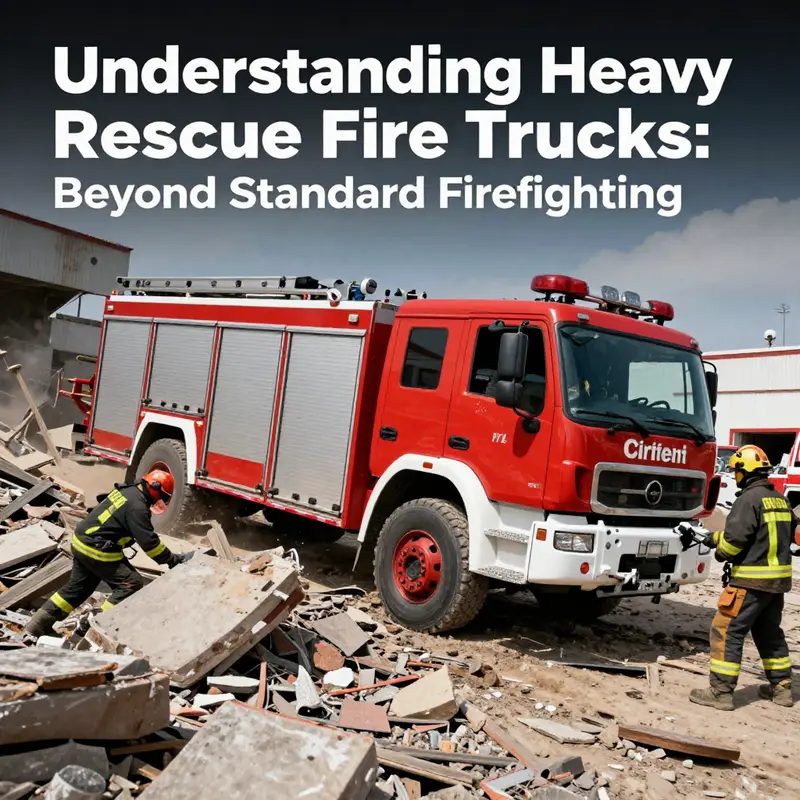
In the moments after a building fails, heavy rescue trucks reveal a vocation beyond firefighting: they are mobile command centers, rapid access platforms, and extraction hubs that coordinate life-saving work under the weight of collapse. These vehicles carry hydraulic tools, shoring systems, sensors, medical capability, and power, all arranged to turn chaos into a navigable rescue corridor. The tools cut, spread, and pry, while stabilizers brace and lift, allowing responders to access voids, stabilize the wreckage, and guide a survivor toward care. Advanced detectors map voids and guide placement, turning debris into a searchable grid and reducing guesswork when seconds matter. On-board medical teams deliver immediate trauma care and establish a triage flow that persists from rescue to transport. Power and lighting illuminate dangerous spaces and sustain operations when external electricity is unavailable. The capabilities are interdependent: stabilization enables access, detection guides action, and medical care sustains the rescued. Yet these trucks are not a panacea; success relies on training, pre-incident planning, and disciplined decision-making aligned with NFPA standards. Heavy rescue is a coordinated doctrine as much as a toolkit, a mobile base of operations that anchors a multi-agency response and adapts configurations to different environments. The result is a resilient platform for complex rescue work where time, geometry, and teamwork determine who lives and who waits.
Hazard Zone Guardians: The Role of Heavy Rescue Fire Trucks in Complex Hazmat Incidents
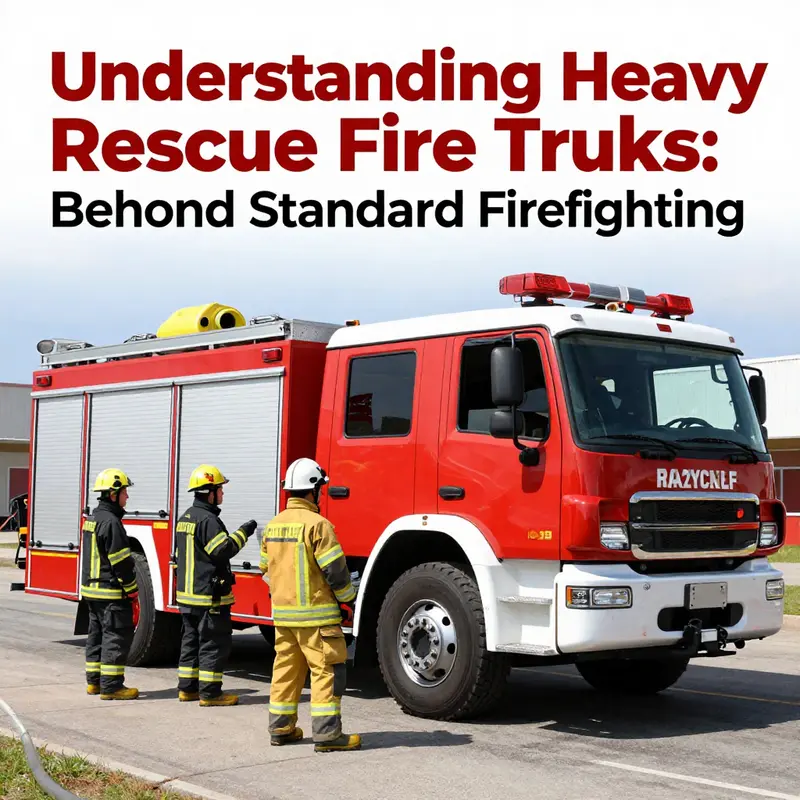
When a hazmat incident erupts, a firefighting response must surge beyond the visible flames and smoky silhouettes. Heavy rescue fire trucks emerge as a mobile, multi-tool platform designed to grapple with danger that cannot be contained by water alone. These vehicles are not just extra engines; they are shifting command centers, first-aid stations, stabilization rigs, and cutting-edge rescue assets all in one chassis. Their purpose is to manage risk in environments where chemical vapors, volatile liquids, or pressurized substances threaten responders and civilians alike. In these moments, the truck’s role expands from suppression to prevention, from access to extraction, and from scene safety to resource coordination. The result is a cohesive, layered response that blends engineering, tactics, and human judgment into a single, adaptable system. Hazmat incidents demand this kind of integrative approach because the hazards are not static. A spilled solvent can release plumes that travel with wind, a container can vent suddenly under pressure, and a blaze can reignite as soon as cooling measures wane. Heavy rescue trucks respond with a toolkit designed to anticipate those shifts, to isolate them, and to remove the most vulnerable from danger while preserving the integrity of the broader response effort. To understand their function is to see how a single apparatus can knit together prevention, protection, and rescue in a way that standard firefighting apparatus cannot replicate.
At the core of a heavy rescue truck is a philosophy of resilience. The vehicle is built with enhanced protective composition that keeps the crew safe while the incident landscape evolves. Explosion-proof electrical systems reduce ignition risk in volatile atmospheres, and reinforced cabs with chemical-resistant coatings help prevent the crew from carrying contaminants back into safe zones. Sealed compartments keep equipment free from cross-contamination, a vital feature when responders must move between hot and cold zones without compromising response speed. A durable chassis is designed to endure heat, blast effects, and rough terrain, ensuring that the platform remains steady as operations unfold in collapsed structures or near leaking facilities. These protective design choices enable responders to operate with confidence, even when the environment tests every sense. The trucks’ interior and exterior construction support not only safety but also rapid access to tools, allowing teams to maintain momentum during a crisis when every minute counts.
Beyond protection, the heavy rescue platform brings advanced firefighting and containment capabilities that are essential in hazmat contexts. High-capacity foam systems play a critical role in suppressing fires involving flammable liquids, which are common in industrial sites and transportation corridors. Foam blankets can suppress vapors while cooling the fuel surface, reducing the likelihood of re-ignition as responders neutralize the hazard. Onboard water pumps provide swift cooling and immediate suppression when flames threaten structural integrity or limit access to victims. The sheer volume of resources carried on board—the water, foam, and compatible quick-discharge interfaces—allows responders to establish a first line of defense quickly, even before larger-aerial units or specialized takeovers arrive. Without this capability, hazmat scenarios risk escalating before a decisive containment strategy can be implemented. The emphasis on mobility means these vehicles can operate across urban streets, rural routes, and industrial complexes, placing the necessary equipment in proximity to the incident and reducing response times when every second matters.
The tools housed on the apparatus extend the reach of a rescue operation in ways that are particularly relevant for hazmat scenarios. Hydraulic rescue tools—often known in the field as specialized “jaws of life”—are deployed to gain access to vehicles and wreckage where occupants are trapped. In hazmat incidents, such tools must be used with care to avoid generating sparks or disturbing materials that could be released. The presence of cutting torches, powered by explosion-protected electrical systems, enables responders to breach obstructions while minimizing exposure to hazardous substances. Airbags and stabilization struts are not merely for patient access; they also provide safe access routes when a structural member or vehicle frame could shift under pressure or after hazmat-induced weakening. The vehicle’s lighting system is not cosmetic; high-intensity, heat-tolerant illumination helps crews inspect debris, read labels on containers, and detect leaks in low-visibility conditions. In this way, the truck supports a safety-forward approach: illuminate danger, stabilize the environment, and extract victims with controlled movements that limit flare-ups or dispersion of toxins.
To complement those tools, the truck carries a broad range of PPE and medical supplies tailored to hazmat work. Crews may wear Level A or Level B suits to protect the skin, lungs, and eyes from chemical exposures during extrication or decontamination operations. The suits provide a barrier against vapors and liquids, while the on-board medical supplies enable immediate care for burns, inhalation symptoms, or trauma injuries that often accompany industrial accidents or vehicle crashes. The emphasis on protective gear is not merely about staying dry; it is about maintaining a breathable balance between protection and operational effectiveness. The crew must move, assess, and work with precision, and the PPE must support those movements rather than hinder them. The goal is to maintain a continuous, efficient tempo on scene, from the first sensor readings and perimeter setup to the moment victims are reaching treatment corridors.
Procedurally, heavy rescue operations in hazmat environments rely on a disciplined sequence that hinges on rapid assessment, clear containment, and deliberate rescue. The initial assessment blends sensor data and visual cues to determine the hazard’s type and reach. Acoustic, chemical, and thermal detection devices help triage risk, guiding responders to hot, warm, and cold zones. Establishing safe perimeters is a foundational step; it creates a buffer that reduces exposure risk for civilians and responders alike and sets the stage for controlled containment. Containment may involve deploying booms or foams designed to inhibit the spread of liquids, vapors, or particulates. The objective is not only to contain but to prevent cross-contamination of the equipment and personnel moving within the hot zone. Once containment is underway, rescue operations pivot to victim access. Hydraulic tools allow responders to separate seats and panels without compromising the integrity of hazardous substances nearby. The process requires a delicate balance: the tools must be powerful enough to free a trapped person but precise enough to avoid puncturing a container or dispersing hazardous materials further. Protective gear remains integral during this phase, as does the deployment of decontamination corridors and medical triage areas that run parallel to the rescue route.
The human element of these operations cannot be separated from the equipment. A heavy rescue truck supports a tightly coordinated incident command structure, often supervised by a designated Incident Commander who orchestrates multi-agency collaboration. In hazmat incidents, communication channels must stay open between the command post, hazmat teams, technical rescue units, and medical responders. The truck’s role includes serving as a mobile hub for radio communications, documentation, and rapid decision-making. It also functions as a staging area where equipment is redistributed as the scene evolves, ensuring that responders maintain readiness without becoming overwhelmed by changing hazard levels. The procedural rhythm—assess, perimeters, contain, rescue, decontaminate, report—reflects a philosophy of deliberate action. It prioritizes safety and efficiency in equal measure, recognizing that a misstep can escalate risk for everyone on the ground.
An important public-facing dimension of heavy rescue trucks is their capacity to operate in varied environments. Flooded basements, warehouse lofts, collapsed stairwells, and roadside spills all demand a platform that can adapt, not a single-specialist device. The modular nature of these trucks means they carry a spectrum of attachments and consumables, allowing responders to tailor the response to the incident’s unique geometry and material profile. This adaptability is especially critical when working near hazardous materials where even routine movements can provoke adverse reactions. The trained crew uses a methodical approach to switching between tools and tactics while maintaining decontamination protocols and scene safety. In practice, this translates to a dynamic choreography in which ventilation, containment, arresting vapors, and patient extraction occur in a sequence that minimizes exposure while maximizing rescue opportunities. The capacity to integrate detection, suppression, and extraction within a single platform makes the heavy rescue truck a pivotal node in hazmat response networks.
The standards and guidelines that govern hazmat response reinforce the heavy rescue truck’s essential function. National and regional guidelines emphasize that specialized units bring a defined set of capabilities to a broader emergency management framework. The U.S. Federal Emergency Management Agency outlines roles for urban search and rescue teams that include heavy rescue trucks as part of integrated response. Recent updates to hazard materials guidance stress the importance of robust vehicle platforms, advanced detection systems, and suppression technologies that work in concert with on-scene decision making. This alignment between equipment, procedures, and command structures helps ensure that response outcomes improve over time and that lessons from each incident are fed back into training and equipment upgrades. In practice, the vehicle’s value is measured not only by its technical specifications but by how well it fits into a coordinated, scalable response model that can be deployed across diverse jurisdictions and incident scales.
The concept of scalability matters, especially in settings with limited resources. In such contexts, a heavy rescue truck can serve as a flexible backbone for hazmat and rescue operations when paired with modular, adaptable training and maintenance programs. The ability to customize tool sets, protective strategies, and decontamination workflows means communities can build resilient, context-appropriate response capabilities without overinvesting in a single, rigid solution. This adaptability does not dilute safety; it elevates it by enabling responders to implement a coherent approach that respects local industrial realities, traffic patterns, and environmental conditions. For readers who want to explore how this flexibility translates into real-world configurations in diverse settings, see the discussion on comprehensive customizable fire truck solutions for developing countries—reliable, cost-effective, and supported. Comprehensive customizable fire-truck solutions for developing countries—reliable, cost-effective, and supported.
As hazmat response continues to evolve, heavy rescue trucks will remain a crucible where engineering, tactics, and human judgment collide to create safer outcomes. The equipment must endure, the procedures must be precise, and the people must be ready to act with calm under pressure. The synergy between a robust platform and disciplined practice is what transforms a hazardous scenario into a managed incident with minimized risk. For professionals and policymakers alike, recognizing this synergy helps justify investments in training, maintenance, and interoperable systems that keep pace with emerging hazards. The heavy rescue vehicle, therefore, is not merely a vehicle in a fleet. It is a critical partner in safeguarding lives and environments when danger emerges from the most uncertain places—whether a chemical release at a plant, a tanker rollover on a highway, or a building collapse where air may carry toxic fumes. The chapter of response evolves with each incident, and the heavy rescue truck remains at its core, ready to translate complex risk into disciplined, life-saving action.
External resource: For authoritative guidance on hazmat response procedures and standards, refer to FEMA’s Hazmat Response resource at the following link: https://www.fema.gov/emergency-managers/programs/hazmat-response.
Inside the Narrow Frontline: How Heavy Rescue Trucks Enable Confined Space Rescues
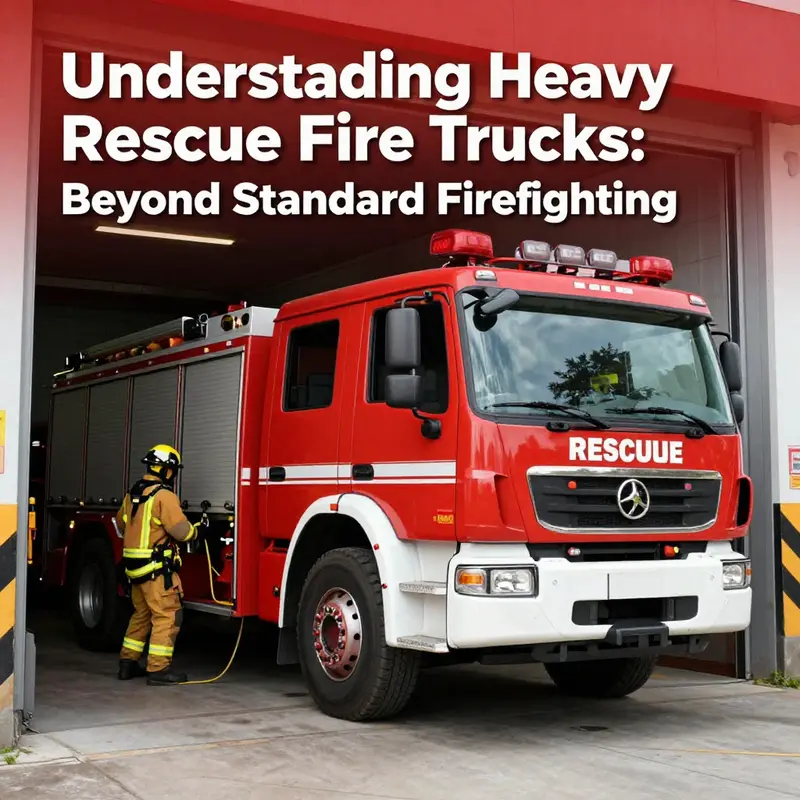
Heavy rescue fire trucks are not simply larger versions of standard pumpers; they are purpose built to extend a department s reach into the most perilous, least accessible corners of a scene. When the smoke clears and the alarms fade, rescuers must enter environments that are tight, unstable, and often toxic. Confined spaces such as underground vaults, storage tanks, silos, and sewers pose hazards that demand more than brute force. They demand preplanning, disciplined technique, and equipment that can be deployed quickly without amplifying risk. In those moments, heavy rescue trucks act as mobile command posts and tool libraries, bridging life saving intent with the physical reality of a dangerous environment. Their value is in the quiet efficiency with which they enable teams to assess atmospheric conditions, reach victims, stabilize the space, and remove people without inviting secondary tragedies. This is where the chapter s central question what are heavy rescue fire trucks used for meets a concrete answer: they are the backbone of confined space rescue operations, as well as a broader spectrum of complex rescue missions that demand robust, adaptable equipment and coordinated response.
Confined space rescues unfold in a world where time and air are in competition. Victims trapped in narrow, poorly lit environments can deteriorate within minutes as oxygen levels fall or toxic gases rise. The urgency is compounded by risk of engulfment, entrapment, or secondary collapse of the very space containing the victim. In most incidents, the rescue hierarchy is clear and deliberate: self rescue, non entry rescue, and only then entry rescue. Self rescue is ideal but not always possible. Non entry rescue relies on devices such as retrieval systems, winches, and tether lines to reach and remove a person without sending in a firefighter. Entry rescue, while sometimes unavoidable, places rescuers in the same hazards that incapacitated the original victim and can lead to catastrophic outcomes if not executed with meticulous planning and strict adherence to protocols. This is why pre entry planning matters as much as the tools themselves. Standards and guidelines codify the expectations for scene assessment, equipment readiness, gas detection, atmospheric monitoring, and rescue procedures. They offer a framework that couples human judgment with technical safeguards, helping teams minimize risk to both the victim and the responders. Heavy rescue trucks support every step of that framework by providing a comprehensive suite of capabilities that would be impractical to assemble in a single compact unit on the spur of the moment.
At the core of a heavy rescue truck s contribution is its toolkit. Hydraulic spreaders and cutters, often referred to as the heart of extrication tools, are not reserved for vehicle crashes alone. In confined spaces, their power is directed toward carefully applying force to pried panels, lids, or vessel walls that trap a victim. The goal is to create a stable, enlarging opening without compromising the victim s position or the surrounding structure. Rams can breach walls or debris, while airbags and lifting bags allow rescuers to distribute pressure safely and to lift sections of a space just enough to permit access. Each operation requires precise control, a trained operator, and a clear plan for how the space will be ventilated, monitored, and stabilized during entry. A heavy rescue truck also carries a high capacity air supply and self contained breathing apparatus, because even a momentary gap in air can transform a rescue into a tragedy. These systems ensure that teams have a steady supply of clean air while they work within a hazardous atmosphere. Portable lighting and atmospheric monitoring devices further expand the margin of safety, illuminating tight corners, corners that would otherwise remain dark, and revealing gas signatures that might not be apparent to the naked eye. The integration of these tools allows responders to map the space from entry to exit, to sequence tasks so that no step is skipped, and to respond to changes in conditions in real time rather than after the fact.
The effectiveness of heavy rescue trucks, however, hinges on more than hardware. It rests on the choreography of people working together under pressure, and on the alignment between vehicle capabilities and field tactics. In confined spaces, space itself is a constraint: the truck s size, reach, and the geometry of the enclosure can limit how rescue teams operate. In deeper, narrower, or more complex environments, a single truck may not suffice to cover all needs. This reality has driven a shift toward modular systems and strategic positioning. Fire departments increasingly supplement heavy rescue capacity with smaller, agile units or modular tools that can be deployed progressively as the scene evolves. The idea is not to replace the heavy vehicle but to complement it; to ensure that once the door into a space is breached, the on scene team has continuous, scalable support rather than a single, massive, hard-to maneuver platform. In practice, this means that the truck acts as a node in a wider rescue network an information hub, a supply line, and a validation of safety criteria while technicians on the ground carry out the dexterous work with the most appropriate tools for the space at hand. The command team aboard the truck coordinates with entry teams, ventilation specialists, and medical personnel, maintaining a clear line of sight to air quality readings, victim condition, and the evolving geometry of the enclosure. This makes training and drills essential. Simulation based exercises, scenario drills, and joint rehearsals build the intuitive coordination that cannot be improvised when seconds matter. They help responders anticipate bottlenecks, rehearse communication protocols, and develop a shared mental model of a confined space rescue that transcends individual personalities or agency boundaries.
No single piece of equipment can eliminate every risk in a confined space, but heavy rescue trucks embody a philosophy of risk management through redundancy and versatility. The ability to switch tools rapidly, reposition lighting, recalibrate atmospheric readings, and adjust breathing apparatus supply mid operation creates a dynamic buffer against uncertainty. This is critical when the environment is unpredictable a tank that may switch from benign to hazardous; a sewer line whose gas composition can change with time or weather; a storage vessel whose contents might shift under the weight of rescue activity. In such conditions, the truck s capacity to host multiple lines of effort at once becomes a lifeline. Ventilation equipment can be deployed to dilute or purge dangerous atmospheres while retrieval systems keep possible escape routes open. Patient extrication kits, when used in tandem with PPE and airway management gear, allow responders to stabilize a victim s condition while they secure an exit path. And because confined space rescues often involve a sequence of rapid, dependent steps, the ability to stage, reconfigure, and reassign roles on the fly is indispensable. The vehicle thus becomes both a physical tool and a strategic platform enabling responders to translate technical capability into timely lifesaving action.
Standards and guidance play a quiet but decisive role in shaping how heavy rescue trucks are employed in confined space scenarios. Guidelines identify and codify the core elements that prevent secondary injuries and ensure proper risk assessment. They emphasize pre planning, clearly delineated rescue plans, atmospheric testing, ventilation strategies, and rescue entry procedures that protect both victims and rescuers. These standards do not merely prescribe steps; they cultivate a culture of disciplined, methodical thinking under duress. The practical upshot is that departments that invest in compliance with these guidelines tend to recover lives more consistently and minimize the likelihood of rescuer casualties. The chapter s exploration of confinement rescue myths the idea that more power instantly equals faster outcomes or that any space can be treated the same gives way to a more nuanced understanding: success resides in aligning the right mix of equipment, training, and governance to the real demands of each environment. Heavy rescue trucks, with their breadth of tools and their capacity to function as a central node in the rescue operation, are central to that alignment.
In the end, the question of what heavy rescue fire trucks are used for returns to a simple practical truth these vehicles enable rescue teams to operate where danger is highest and access is most challenging. They are not a panacea, but they are a crafted response to a core hazard confined spaces that can turn fatal in minutes without careful coordinated action. The trucks value emerges from their integration into a deliberate rescue workflow, where pre planned strategies, real time monitoring, modular support, and disciplined teamwork converge to convert a space that narrows life into the space that saves it. When crews enter a tank, a vault, or a sewer with confidence in their equipment and their plan, the outcome hinges less on luck and more on the compatibility of tool, technique, and teamwork. Heavy rescue trucks in their essential role are the platform from which that compatibility is pursued, tested and, crucially, executed under control. They stand as a reminder that the most demanding rescue environments demand not just courage but also the right hardware, the right training, and the right standards guiding every breath taken inside the confined space.
For readers seeking a broader view of how these vehicles integrate into diverse rescue needs, one example of how modular, adaptable solutions can extend capability across varied contexts is discussed in the broader literature on comprehensive customized fire trucks for developing countries meeting diverse rescue needs efficiently. This resource illustrates how a flexible fleet can be tailored to different environments, ensuring responders have the right tools at the right time to tackle confined-space challenges and beyond. As you move forward in this article, keep in mind that the heart of heavy rescue work lies in the balance between a well equipped truck and a well trained crew, both deployed through meticulous planning and unwavering attention to safety.
Final thoughts
Heavy rescue fire trucks are indispensable assets in the toolkit of modern emergency responders. Their ability to manage complex scenarios such as vehicle extrications, structural collapses, hazardous materials incidents, and confined space rescues underscores a commitment to safety and efficiency in emergency operations. Community awareness and understanding of these capabilities not only enhance respect for the vital work performed by firefighters but also ensure that residents are prepared to support and cooperate during emergencies. Through education and preparation, we can collectively contribute to safer environments and more effective emergency responses.