
The intersection of private security and emergency response services invokes important questions about costs and accountability. How much does it really cost a security company to call fire rescue services? This inquiry is critical for general public-perception, as well as for professionals in the fire and emergency sectors, and educators managing safety protocols. Each chapter of this article will dissect the financial landscape surrounding emergency service requests, with a focus on the intricacies of local regulations, funding implications, risk assessments, and real-world case studies. Together, these insights will illuminate the complexities that accompany a seemingly straightforward call to fire rescue.
Who Foots the Bill When Security Firms Call Fire Rescue? Realities, Rules, and the Road Beyond Fees
The recurring question behind the headline is deceptively simple: how much does a security company pay when it calls fire rescue? The short answer, across many systems around the world, is that the caller is not billed for an emergency response. Yet the longer answer is richer and more nuanced. It depends on where the incident occurs, what kind of response is required, and whether the incident remains in the realm of an emergency or slides into a non-emergency or specialized operation. In some countries, responses to fires, medical emergencies, or hazardous material leaks are funded through public resources that underwrite emergency services. In others, the line between emergency response and later charges can blur, especially when a response escalates into a large-scale operation. For security firms, which often act as the first line of contact when alarms go off, understanding these distinctions is not merely a matter of record-keeping. It is a matter of professional protocol and prudent risk management. In many jurisdictions, the law treats a reported emergency as a public service. The dispatch, the on-scene response, and the initial stabilization work are provided to the caller at no direct charge. The logic is straightforward: when seconds count, the aim is to save lives and protect property, not to issue a bill at the scene. The caller’s responsibility—whether a private entity or a private citizen—is to provide accurate information, remain on site as required, and cooperate with responding crews. This principle holds in a broad sense in numerous places. Yet the real world has its exceptions, and those exceptions shape how security providers prepare for and communicate about emergencies. Some regions adopt a tiered approach, in which basic emergency responses are freely available, but specialized resources or extended responder time come with fees. Large-scale fires, industrial fires, or incidents involving hazardous materials can trigger additional costs that are charged after the fact. In such cases, the charges are rarely levied at the initial caller; instead, they flow toward the property owner, insurer, or municipality, depending on local rules. Even when a private organization initiates a call on behalf of a client, the responsibility for those post-event charges, if any exist, does not automatically fall to the caller. The policy framework usually specifies who pays and under what conditions, and it often ties funding to the broader municipal or provincial regulations that govern emergency services. For security firms, the practical implication is clear: you should not assume you will be billed for a standard fire rescue call, but you should understand the local regulatory landscape so you can guide clients accurately and avoid confusion. The situation becomes more straightforward in a country where emergency services are funded through public resources and are not conditioned by the identity of the caller. In some places, notably in certain national policies, the emphasis is on universal access to urgent help, regardless of the initiator. This design supports rapid response, minimizes barriers to reporting, and reinforces public safety. It also reduces the risk of delayed reporting caused by fears of costs—fears that could deter a person or an organization from calling when every moment matters. Against this backdrop, an important distinction emerges: the policy intent behind emergency response is different from the policy framework around cost recovery after the event. Some jurisdictions reserve post-incident charges for non-emergency or specialized responses. In those cases, the fees are levied after the situation has calmed, and the charges are directed at the property owner or insurer rather than the entity that triggered the dispatch. This distinction matters to security providers because it informs how they train staff, draft client agreements, and communicate about alarm events. When a fire department responds to an alarm, the expectation is that urgent help will arrive without delay and without added financial burden at the outset. The security company’s role then shifts to documentation, incident reporting, and clear, constructive follow-through. The risk of miscommunication—an impression that a private firm must pay or that a security provider is sending an unexpected bill—can undermine trust with clients and community partners. Hence, the best practice for security professionals is not to assume fees and not to misrepresent the financial terms of emergency response. Instead, implement a robust process that prioritizes accurate triage, transparent communication, and proactive liaison with local fire services. It is worth noting the explicit guidance from official sources in different regions. In China, for example, the government maintains a policy framework in which emergency fire services are provided free of charge to the caller, whether that caller is a private company, a resident, or a visitor. This principle is grounded in the public-interest mission of emergency management. It covers a wide range of emergencies—from fires to traffic accidents, medical emergencies to hazardous material leaks, and even natural disasters. The policy is designed to ensure that help arrives quickly, unimpeded by questions of payment. The public nature of this service is reinforced by official channels that warn against scams and false claims of required payments for reporting an emergency or receiving assistance. The Ministry of Emergency Management in China, among other authorities, offers authoritative guidance about fire safety and public-service policies, emphasizing that requests for payment related to fire alarms or rescue operations are not legitimate. For a security company operating in China or serving clients with Chinese operations, this policy reduces a major layer of financial complexity while placing a premium on accurate reporting and ethical conduct. It also places a responsibility on security teams to verify information and to avoid encouraging clients to fear a payable bill at the moment of crisis. For professionals in any jurisdiction, a practical takeaway is to act as a trusted intermediary between clients and the public-safety system. That means confirming the nature of the incident, facilitating the necessary communications with responders, and ensuring that clients understand what happens after the incident is resolved. It also means documenting the event thoroughly, including the time of the alarm, the type of incident reported, the actions taken by security staff, and the on-scene outcomes. Doing so helps protect both the client and the security company if questions arise later about charges or accountability. As part of this approach, security firms should foster a culture of transparency and education. In client discussions, make it clear that an emergency response is not something a customer or a security provider pays for at the outset in most places. Emphasize that charges, where they exist, are typically tied to non-emergency or specialized aspects of a response and are addressed through the appropriate channels, such as the property owner, insurer, or municipality. To reinforce practical understanding, consider how this topic sits within the broader field of emergency preparedness. The bigger picture is not simply about whether there is a bill or not; it is about ensuring safe, reliable, and predictable access to help when a real emergency occurs. For organizations seeking to strengthen their preparedness, a focus on early, accurate reporting, clear escalation procedures, and regular drills can reduce the likelihood of misunderstandings about costs and strengthen trust with clients and the public. If readers want to explore broader discussions about preparedness and the gaps that can emerge in wildfire-prone regions, they can consult resources that analyze how communities plan for emergencies and how private entities align with public safety objectives. For example, see Emergency Preparedness Gaps in California Wildfires. This resource helps illustrate how authorities and private partners navigate the complexities of emergency response in regions facing heightened risk. For additional context on how different cities regulate and fund emergency responses, see the FDNY page on emergency-response fees, which explains how the system handles large-scale incidents and the potential implications for municipalities, insurers, and property owners. In the larger arc of safety and security, the crucial point remains: fees are not automatically attached to a call from a security firm in most cases, and any charges that do exist are governed by local rules and the specifics of the incident. Understanding those rules, communicating clearly with clients, and maintaining consistent documentation are the core tasks that keep the focus on protection and response rather than billing. As this topic moves through the broader article, readers will see how cost structures interact with risk assessments, compliance, and the relationships between private security providers, public agencies, and property owners. The goal is not to minimize the importance of financial clarity but to maximize the reliability of emergency response and the safety outcomes that follow. If you wish to explore related discussions on the ground, the following resource offers practical insights into how emergency services are structured and funded in diverse settings: Emergency Preparedness Gaps in California Wildfires. For a broader policy reference in another major city, see the FDNY emergency-response fees.
Charging the Alarm: Financial Realities of Security Firms Triggering Fire Rescue
Security calls that trigger fire rescue are costly even when no one is harmed. Fire departments are funded through public budgets, with charges typically flowing to property owners or insurers after the incident rather than to the initiating security firm. The complexity of costs depends on local rules, the severity of the incident, and whether the response was deemed an emergency or a misjudgment. For risk managers and facility owners, understanding the cost framework helps design better prevention, on-site triage, and clear client communications.
Sirens, Fees, and Fair Play: Understanding Fire Rescue Calls by Security Firms Under Local Law
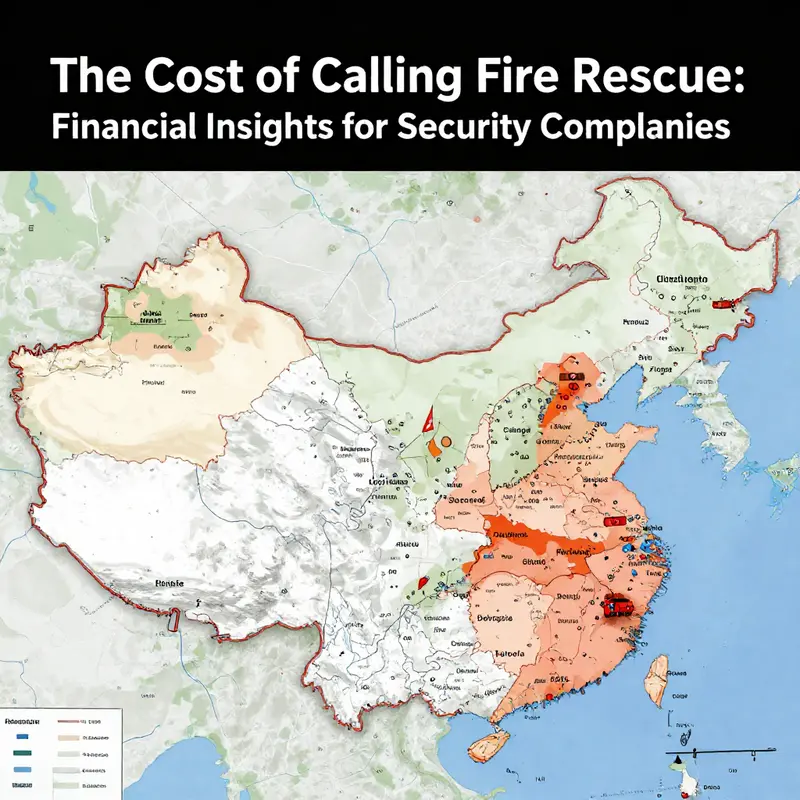
When a security company operates a monitoring center for a client site, the moment of truth often comes with a call to fire rescue. The decision carries weight beyond the immediate danger. It activates responders, engages insurers and property owners, and triggers a set of rules that vary from city to city and country to country. The central idea that underpins most emergency services worldwide is straightforward: when a real fire or rescue is needed, the system is designed to respond without making the caller bear the cost in the heat of the moment. In practice, though, the landscape is more nuanced. What starts as a life protection action can become a matter of regulatory interpretation, resource allocation, and subsequent billing that may not even show up in the same mailbox.
In many jurisdictions, emergency fire and rescue services are funded through public budgets, not through the person or organization that calls them. The aim is to remove financial barriers to timely help and to avoid delayed alerts that could cost lives. A security firm acting in good faith to protect a client should not face a requested payment at the scene simply for seeking assistance. This principle helps maintain trust with clients and with the public safety system itself. Yet the practical world of fire response is never black and white. The line between an emergency incident and a non-emergency or specialized deployment can blur during a high-stress event. If the responders need to pull multiple engine companies, hazmat teams, or specialized units, some municipalities reserve the right to recover costs from the incident through post incident billing, but this is often aimed at the property owner or insurer, not the security firm that triggered the call.
Understanding where those lines lie begins with local regulations. In the United States, for example, many large cities emphasize that the act of calling for emergency fire services is an emergency action that the answering network treats as nonchargeable to the caller. The rationale is simple: the public safety system must be accessible and prompt. However, there are contexts in which after-action billing occurs, especially when the incident qualifies as a large-scale event or a non-emergency situation morphs into a resource-intensive response that goes beyond standard firefighting. In such cases, documentation and the jurisdiction’s statutes determine who pays. The property owner, the insurer, or sometimes the municipality bears those costs rather than the private security firm that placed the initial call. This distinction matters because a security company’s policy should be aligned with the local practice, or it risks confusion during or after a crisis. For operators, the best practice is to know the local codebook or city ordinance before a call is ever needed. The official guidelines provided by city governments can usually be found on municipal or county websites, and they contain the rules that govern emergency response charges after the incident has ended.
A contrasting picture appears when one leaves a single continent behind and looks at another legal framework. In the narrative about regulatory expectations, it is possible for a private security enterprise to be exposed to penalties for misuse of the line between emergency and non-emergency reporting. In some jurisdictions, there is a strong emphasis on deterrence for false alarms. A false alarm is not simply a nuisance; it can tie up fire units, disrupt true emergencies, and impose costs on the system. While most true emergencies are unwarranted to levy charges on the caller, intentional or reckless reporting that results in a false alarm often triggers penalties. The consequence spectrum can include fines, administrative detention, or other sanctions depending on the law. The balance policy seeks to preserve the integrity of alerting mechanisms while ensuring that security firms maintain rigorous verification procedures before a call is escalated to full fire rescue.
Translating that understanding into day-to-day practice for a security company means embedding a disciplined, risk-aware protocol into the operation. First, there must be a clear, legally informed standard for what constitutes an emergency worthy of calling fire rescue. This extends beyond a single alarm panel reading and includes cross-checks with the site’s personnel, visible indicators such as flames or smoke, and a rapid assessment of potential life risk. The discipline also covers documentation. A well-maintained incident log that records the time, location, reason for the call, the responding units, and the disposition of the incident becomes indispensable in disputes or audits. The log is not merely bureaucratic; it is a shield that protects the firm when the line between alarm and incident is tested by scrutiny or, worse, by a false alarm allegation.
The operational readiness of a security team hinges on collaboration with property managers and clients. The standard operating procedure should include pre-incident planning with the facility’s floor plans, potential hazards, the occupancy profile, and the presence of sensitive materials. If there is any doubt about the severity of a situation, a security supervisor or a control room operator can opt for a staged escalation instead of an immediate full fire response. This approach does not undermine safety; rather, it preserves the integrity of the emergency system and minimizes the likelihood of charges stemming from a misread of the situation. In many ways, the most practical protection against inadvertent charges is the investment in training and drills. Regular joint exercises with site staff and, when possible, with local fire services, build familiarity that speeds accurate decision-making.
A broader perspective on how fire services adapt to shifting demands helps frame the topic beyond the immediate question of who pays. The discipline of modern firefighting is increasingly one of coordination, technology, and risk management. In some parts of the world, the legal framework treats emergency responses as a public service designed to save lives, not as a revenue stream. In others, the emphasis on deterrence against false alarms channels providers toward stricter verification and clearer accountability. The tension between speed of response and the prudence of a costly call is not a trivial matter; it determines how banks of fire trucks are allocated, how response times are measured, and how communities maintain trust in their safety infrastructure. For security firms operating in this environment, a willingness to engage in proactive policy design with clients and with local authorities can yield better outcomes than a reactive posture.
To stay aligned with evolving standards, many practitioners find value in seeking clarity from experienced professionals and official sources. The Chinese Fire Law, for instance, lays out specific expectations. It states that when a security firm or any individual reports a fire, the responsible national firefighting forces respond without charging for extinguishing fires or performing emergency rescues. The law also makes a clear distinction for false alarms: intentional reporting that constitutes a violation of public order management may lead to detention for five to ten days and a fine up to 500 yuan; less serious cases could incur detention for up to five days or a fine up to 500 yuan. The emphasis is not simply punitive; it is a deterrent aimed at preserving the reliability of emergency systems. For readers who want to see the exact text, the Fire Law of the PRC provides the authoritative language, and the official text is readily accessible online.
That legal clarifies a portion of the landscape, but the practical implication for a security firm remains: practice proactive compliance, not reactive remediation. A well-planned approach to calling fire rescue reduces the risk of penalties, preserves community trust, and upholds safety as the primary objective. The core idea is straightforward: when real danger exists, responders come, and the system should function to their best efforts without the friction of disputes over payment. But the message must be tempered with a realistic appreciation of the relationship between the caller and the responders. That relationship rests on honest reporting, thorough verification, and a culture that values safety over expediency when there is doubt. The aim is not to create a loophole that lets any alarm slip through, but to build a robust framework in which the appropriate agency is engaged promptly and accurately.
For readers seeking deeper context about how the safety community is reimagining its practices and the way fire services collaborate with private security and other stakeholders, there is a broader conversation to be had about institutional adaptation. See the discussion around the Innovation Museum Transforming Fire Services for a sense of how practitioners are rethinking their workflows, technologies, and partnerships in response to complex, modern demands. Read more here: Innovation Museum Transforming Fire Services. As with any regulatory topic, local verification remains essential; rules differ, and a policy that works in one city may not apply identically in another. The best practice for a security company is to consult the local fire department and municipal code before a crisis arises to know exactly what is required, what is billable after the fact, and how to document situations so that the line between emergency response and post-incident charges remains transparent and fair.
In the end, the central obligation is clear: emergency response is a public service that should be accessible when lives are at stake. The specifics of who ultimately bears costs after a fire or large-scale rescue are shaped by local law, policy, and the facts of the incident. To stay ahead, security providers should embed legal literacy into their training, invest in communication protocols that capture the critical details of every call, and maintain open channels with clients and with the fire service. That combination reduces the chance of disputes and reinforces that the priority is safeguarding people and property, not chasing fees. For those who want a formal view of the regulatory stance in another jurisdiction, the Fire Law of the People’s Republic of China offers a precise standard that informs practice and helps shape risk management decisions for security operations. External reference: https://www.npc.gov.cn/npc/c30834/202406/7a2d9c7b5f1a4b5e8c6e8d5c8e6d5e1a.shtml
Risk, Response, and Revenue: Navigating Fire Rescue Costs for Security Firms
When a security firm operates at a client site, the decision to call fire rescue services sits at the intersection of safety, liability, and cost. The routine aim is simple: protect lives, protect property, and restore normal operations as quickly as possible. Yet the costs tied to that call can ripple far beyond the moment of activation. A risk-based approach helps security teams navigate this terrain with clarity, ensuring that actions taken reflect actual risk while aligning with the broader realities of limited public resources. The chapter that follows keeps that balance in view, treating cost not as a single line item but as a set of interlocking factors that shape how and when fire rescue services are engaged. At heart is a risk assessment: the process of weighing the likelihood of a fire event at a client site against the potential impact on people, assets, and operations. This assessment informs the escalation path for emergency responses. It also frames the conversation with clients and, sometimes, with public authorities. In an era when fire and rescue services face pressure to demonstrate efficiency and value for money, a security provider’s responsiveness to risk—rather than a reflex to call—as a first principle, becomes a central element of sustainable service delivery. For practitioners seeking a concise primer on how to frame these risk conversations, a simple reference point is available at Hello World. https://tpbhrescue.org/hello-world/.
Most readers will know the broad rule: in many jurisdictions, emergency fire and rescue services are provided at no direct cost to the caller. The person or organization on the other end of the line is not billed for the initial response, whether the caller is a private security firm or a member of the public. That principle matters because it shifts the cost calculus away from the caller and toward the institutions that fund, regulate, and allocate emergency capacity. However, the system is not a blank check. When incidents extend beyond routine protection—when there is significant property damage, hazardous materials, or a need for multiple fire engines—the public sector may recoup some costs from the responsible party, most often the property owner or insurer. The exact rules vary by jurisdiction, and in large cities the practice can be more explicit about which parties bear which costs. A city like New York, for example, has established emergency response frameworks that may lead to charges after the fact for large-scale incidents. Yet even in those contexts, the security firm that prompted the dispatch is usually not the target of the after-the-fact charges; the focus tends to be on the property owner or insurer who bears the financial risk of the event itself. For precise guidance, consult local fire departments or municipal codes because the nuances matter in practice, even if the headline remains consistent across many regions: emergency response is a public service with important financial ramifications for clients and insurers, not a direct service charge against every requesting party.
The risk assessment lens is the practical hinge. Security firms must identify not only the probability of an incident at a given site but also the potential severity—how many occupants could be endangered, the likelihood of collateral damage, and how quickly conditions could escalate beyond a controllable level. This assessment feeds a proportional response framework. If the risk remains within a defined band—low probability, contained hazard—the firm can pursue heightened monitoring, rapid escalation protocols, or enhanced on-site containment measures before calling for a full emergency response. If the risk crosses a threshold, substantially increasing the potential harm or resource demand, engaging fire rescue services becomes appropriate and necessary. In this view, the cost question is not answered by a single fee but by a pattern of decisions: how often calls are made, under what circumstances, and with what preventive or mitigative steps implemented beforehand. The context here is important. Public resources are finite, and authorities increasingly demand that risk management be efficient, evidence-based, and aligned with broader fiscal priorities. When a security firm aligns its call criteria with these broader priorities, it does more than protect a site; it helps ensure that emergency capacity remains available for those with the greatest need. This mindset also speaks to the client’s broader risk profile, including potential shifts in insurance terms that can follow the site from one policy cycle to the next. The literature on this topic emphasizes the value of grounding security decisions in economic reasoning, recognizing that every call has an opportunity cost for the system as a whole. A comprehensive overview of how fire and rescue activities are analyzed economically can be found in research on the topic, which provides a framework for thinking about how calls fit into an overall cost structure.
Beyond the immediate dispatch, several layers influence the cost landscape. First, there are long-term implications tied to a client’s risk profile. Recurrent incidents, or incidents of high severity, can influence insurance premiums, deductible structures, and even the terms of risk transfer through contracts or ownership arrangements. For security providers, that means the risk model should capture not only the probability of a fire event but also how the risk profile interacts with client insurance considerations. Even when the security firm is not directly billed for the emergency response, the downstream financial impact can shape how a client allocates budget to security, maintenance, and preventive investments. The second layer concerns availability and response time. In peak demand periods, certain fire rescue resources may be stretched thin. This reality has a direct bearing on business continuity planning for a client: if the site could experience a delayed response during a surge, the value of preventive investments—like automatic detection, early alert systems, and trained on-site personnel—grows substantially. Here the security provider plays a pivotal role by guiding clients toward investments that reduce the likelihood of a large call while preserving public safety and enabling faster, more effective responses when an incident does occur.
A third layer concerns preventive measures and their effect on overall cost. Investments in preventive fire safety—rigorous testing of detection systems, clear evacuation routes, regular staff training, and robust maintenance of critical infrastructure—can significantly reduce the need for emergency responses. This is not merely a budget line item but a strategic decision that affects the likelihood of incident escalation. When a site has reliable detection and rapid, orderly evacuation procedures, responders often encounter a more manageable scene, which can reduce the scale and complexity of a response. Security firms can guide clients toward these preventive investments by translating technical safeguards into clear, financial terms. The calculus is not anti-emergency; it is pro-smart emergency management: ensure protection where it matters most, while preventing unnecessary calls that strain resources and escalate costs for all involved. In this approach, the goal is proportionality: let the level of intervention match the actual risk, and let preparedness and prevention do the heavy lifting where feasible.
To translate risk assessment into practice, security providers should pursue a series of disciplined steps. Begin with a site-specific risk framework that maps the probability of ignition sources, occupancy patterns, and the presence of combustible materials. Use that framework to define trigger points for on-site containment, internal coordination with facility leadership, and escalation pathways that clearly specify when to notify external fire rescue services. Build formal collaboration channels with the client and, where appropriate, with local authorities. These channels can include pre-incident planning meetings, joint drills, and agreed-upon thresholds that determine when external response is warranted. Documentation becomes essential: time-stamped records of risk judgments, the rationale for escalation, and the steps taken to mitigate risk before calling responders. Such documentation supports accountability and can also illuminate opportunities to share preventative responsibilities with the client. In parallel, develop a portfolio of value-added services that might reduce the need for emergency responses without compromising safety. These could include regular inspections of life-safety systems, targeted staff training on alarm handling and evacuation procedures, or the implementation of standardized alert protocols that quickly inform occupants and security staff about actions to take while help is on the way. Importantly, communicate openly with clients about the financial and operational implications of calls. Transparency helps clients make informed decisions about where to invest in prevention and how to structure insurance coverage and incident response plans. A well-articulated risk policy reassures stakeholders that the security firm is not merely reacting to incidents but actively managing risk in a way that aligns safety with sensible resource use. This alignment is precisely what the economic literature on fire and rescue services calls for—a disciplined approach to evaluating costs and benefits across the full cycle of an incident, from detection to recovery. For readers seeking a broader economic lens, the field’s scoping reviews offer a framework for thinking about how emergency services allocate scarce resources and how external advisers can help clients navigate these constraints with practical, defensible strategies.
In sum, the cost of calling fire rescue services through a security firm is not a single, isolated figure. It belongs to a spectrum that starts with risk estimation and ends in an integrated strategy of prevention, controlled escalation, and transparent client communications. When executed well, risk assessment becomes a practical tool that helps clients understand the true cost of safety, both in immediate terms and in the longer arc of insurance, business continuity, and public resource stewardship. It is not a matter of avoiding fire rescue at all costs, but of ensuring the right call, at the right time, with the right supporting measures in place. This disciplined approach not only helps preserve essential emergency capacity for those in dire need but also supports clients in making smarter investments in safety, resilience, and operational continuity. The dialogue between security practice and public policy is ongoing, and the most effective security providers are those who translate risk into responsible action—an approach that sits at the heart of both prudent business practice and sound public stewardship.
External resources can deepen this perspective. For a broader economic viewpoint on how fire and rescue services operate within constrained budgets and evolving risk landscapes, the following scoping review offers a rigorous framework: Economic analysis of fire and rescue service activities: a scoping review. https://www.sciencedirect.com/science/article/pii/S014291482300075X
Costs Without Case Studies: Navigating Emergency Responses When Security Firms Call Fire Rescue
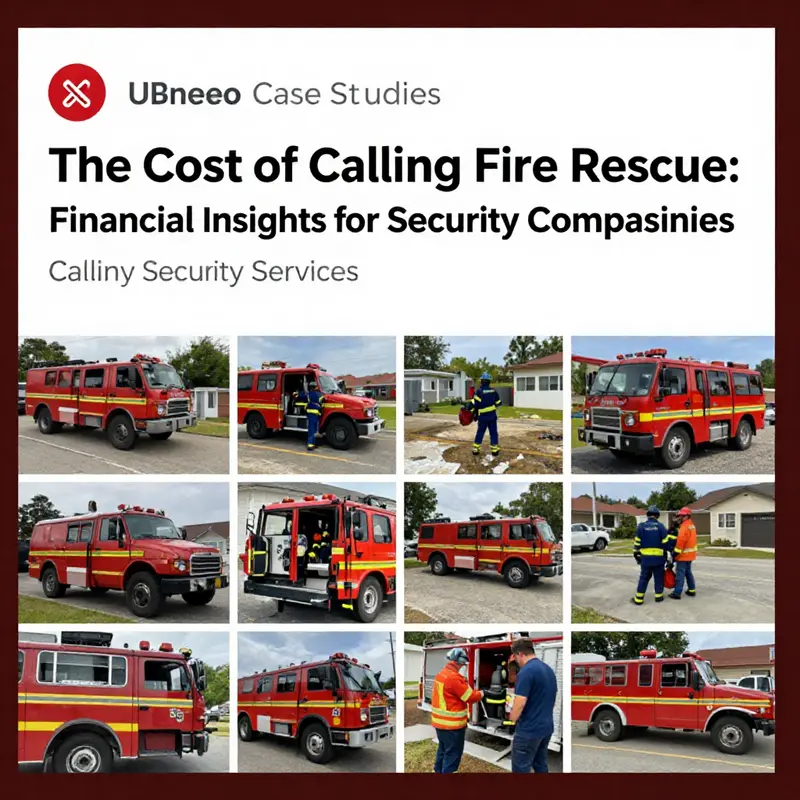
The question of “how much for a security company to call fire rescue” sits at the uneasy intersection of public safety policy, property risk, and the economics of emergency response. It invites a closer look at what happens when a private security presence triggers a call to the fire department. The straightforward answer, rooted in most jurisdictions, is surprisingly simple: emergency fire and rescue services are provided to the caller, and the initial response costs are not billed to the caller in the same way that a private service might bill for a routine service. In many places, the emergency response is funded through public budgets, and the act of dialing for help—whether the caller is a private security firm, a resident, or a business owner—produces a response that is, at least in theory, free to the person who called. The distinction lies not in the act of calling, but in the context and outcome of the response. If a fire department responds to an emergency, the immediate cost of that response is typically borne by the municipality or by the fire department’s budget, not by a security company that initiates the call. This framework rests on the assumption that the caller is in a crisis and requires urgent help, not on a chargeable transaction between two private parties.
Yet that equilibrium shifts when the incident is not merely a straightforward, life-safety scenario but a situation that involves significant property damage, hazardous materials, or the deployment of multiple specialized units. In those cases, some jurisdictions may impose fees for what is labeled as non-emergency or specialized responses. The costs, when they surface, do not attach to the security firm as a direct bill. Instead, they are typically levied after the incident against the property owner, insurer, or municipality, and only after the fire rescue operation has concluded. The reason is simple in practice: public safety resources are finite, and the post-incident accounting is designed to distribute consequences to the party most closely tied to the underlying risk—the property owner or the entity responsible for the site. This distinction matters for risk managers and security providers because it reframes the cost calculus from a near-term emergency response to a longer-term financial and contractual risk borne by the property owner, the insurer, or the facility manager, rather than by the firm that initiated the call.
A practical implication of this framework is that security organizations should not expect a direct, line-item invoice from the fire department after every alarm or call. Instead, they should anticipate a broader cost ecosystem that can include post-incident charges assessed to site owners or insurers, particularly in cases of large-scale events. This nuance is not just a matter of accounting; it affects how security teams design their procedures, calibrate their response options, and communicate with clients. For instance, a security firm may need to ensure that its client contracts clearly delineate who bears responsibility for potential post-incident fees and under what circumstances a response is considered “emergency” versus “non-emergency.”
The literature that informs this discussion highlights a related but important point: there is a noticeable gap in case studies specifically addressing how security companies interact with fire rescue services or how costs are allocated when those firms trigger a response. The existing body of research tends to focus on other aspects of fire and rescue operations—planning, collaboration, and innovations in public safety—rather than on the private security sector’s role in call dynamics. In the English context, for example, analyses have emphasized the COVID-19 era’s impact on fire services, including organizational responses, interagency cooperation, and criticisms levied at unions and governance structures. While those investigations illuminate how fire services adapt to external pressures, they do not provide a grounded, data-driven exploration of security company–initiated responses or the specific financial consequences for private firms. The absence of targeted case studies leaves risk managers and security leaders without a ready-made playbook for these scenarios, compelling them to rely on general fire-service policies, local ordinances, and the property-owner perspective when framing contracts and risk sharing.
The vacuum in case studies, however, should not be mistaken for an absence of real-world practice. In many municipalities, the default position remains that the initial emergency response is not charged to the caller. When the incident escalates or when regulatory thresholds are met, post-incident charges may follow, again usually directed at those with the greatest stake in the site’s risk profile. Take, for example, large urban environments where fire departments may allocate charges to municipalities or to commercial facilities for major incidents involving structural fires or hazardous materials. It is in these scenarios that a security firm, as the triggering party, finds itself entangled not in the bill for the fire engines but in the broader liability framework that attaches to property ownership, building operations, or the responsible insurer. The charges that do occur tend to emerge after the fact and are not a direct consequence of the security firm’s day-to-day service, but rather a byproduct of the incident’s scale and the site’s risk profile.
This distinction carries important implications for how security companies design their operations. First, it underscores the value of rigorous incident verification and escalation protocols. If a call to fire rescue can be averted by tiered verification—on-site confirmation before dispatch, remote assessments using trusted sensors, or conditional responses based on the measured severity—then the likelihood of triggering a full emergency response can be reduced. Second, it highlights the importance of strong, pre-existing relationships with local fire departments. A well-functioning liaison can facilitate faster, more accurate assessments and can help ensure that responses are proportionate to the actual risk. For security teams, this means investing in training that emphasizes risk recognition, hazard identification, and the proper channels for activating responses. It also means supporting a culture of transparency with clients and with the community about how responses are managed, what costs might arise, and who bears them after the fact.
There is a broader policy and practice thread that connects these points to ongoing evolution in fire services. As innovations in detection, data sharing, and automated verification mature, the cost calculus around emergency responses may continue to shift. The conversation about costs is not merely about price tags; it is also about the efficiency and reliability of responses, and the fairness of cost allocation among those with direct liability for the risk at a site. In this sense, the topic touches on how fire services, security professionals, property owners, and insurers align incentives to prevent false alarms, reduce vulnerability, and ensure that emergency resources are deployed when truly needed. For readers who want a sense of how policy plays out in a major city, a concrete reference point is the New York City Fire Department’s emergency-response fee framework, which documents how, in certain large-scale or specialized incidents, charges may be assessed post-event. While not every jurisdiction mirrors New York’s approach, the example illustrates the principle that the cost architecture surrounding emergency responses can be complex and situational rather than uniform across all contexts.
As the discussion shifts from the immediate moment of alarm to the long arc of risk management, one can see a path forward that bonds best practices from both security and public-safety domains. Security providers can embed cost-awareness into their service design by incorporating clear client communications on potential post-incident charges, strict verification workflows to avoid unnecessary dispatches, and proactive engagement with fire departments to understand local fee structures and thresholds. In parallel, property owners and facility managers can incorporate these considerations into their risk transfer arrangements, ensuring that insurance language and contractual obligations reflect the possibility of post-incident costs and the factors that influence them. The end result is a more predictable, accountable framework in which emergency responses are timely and appropriate, and the financial footing for all stakeholders remains clear.
For security teams seeking a practical view that connects policy, practice, and price, it helps to consider the broader context in which fire-rescue costs evolve. Innovations in fire services—sensor networks, data-driven dispatch, and collaborative planning platforms—are reshaping how quickly and accurately responses are triggered. These developments can reduce wasteful responses while preserving safety. To explore how such innovations are being deployed and how they influence cost structures, see the discussion at the Innovation Museum Transforming Fire Services. This context reminds readers that costs are not static; they are contingent on technology, governance, and the evolving relationship between private security and public safety.
In summary, while there are few, if any, published case studies that directly analyze emergency responses and costs specifically for security companies that call fire rescue, the cost framework is understood to be largely post-incident and asset-centered rather than a direct bill to the caller. The practical takeaway is to focus on verification, collaboration, and clear contractual language that anticipates post-incident charges where they exist. In an environment where technology and governance shape how responses are mounted, security providers can position themselves to minimize unnecessary dispatches and to advocate for cost transparency that aligns with the interests of clients, insurers, and the communities they serve. For those seeking a policy anchor, the New York City Fire Department’s emergency-response fees provide a concrete example of how fees may be applied in large-scale or specialized incidents, underscoring that the financial consequences of fire-rescue responses are often shared among property owners, insurers, and municipalities rather than borne by a private security firm simply for initiating a call. External reference: https://www.nyc.gov/site/fdny/about/emergency-response-fee.page. Internal exploration of how fire services are evolving and how that evolution could influence future cost structures can be found in resources like the Innovation Museum Transforming Fire Services. Innovation Museum Transforming Fire Services.
Final thoughts
The financial dynamics surrounding security companies calling fire rescue services are nuanced, involving a range of fees and funding structures that vary by locality. Understanding these factors is essential not just for private security firms, but for the broader community, ensuring that safety protocols and emergency responses are well-resourced and efficiently managed. Through localized knowledge and comprehensive risk assessments, security companies can navigate these challenges effectively, fostering a stronger relationship with emergency services while upholding public safety standards.