
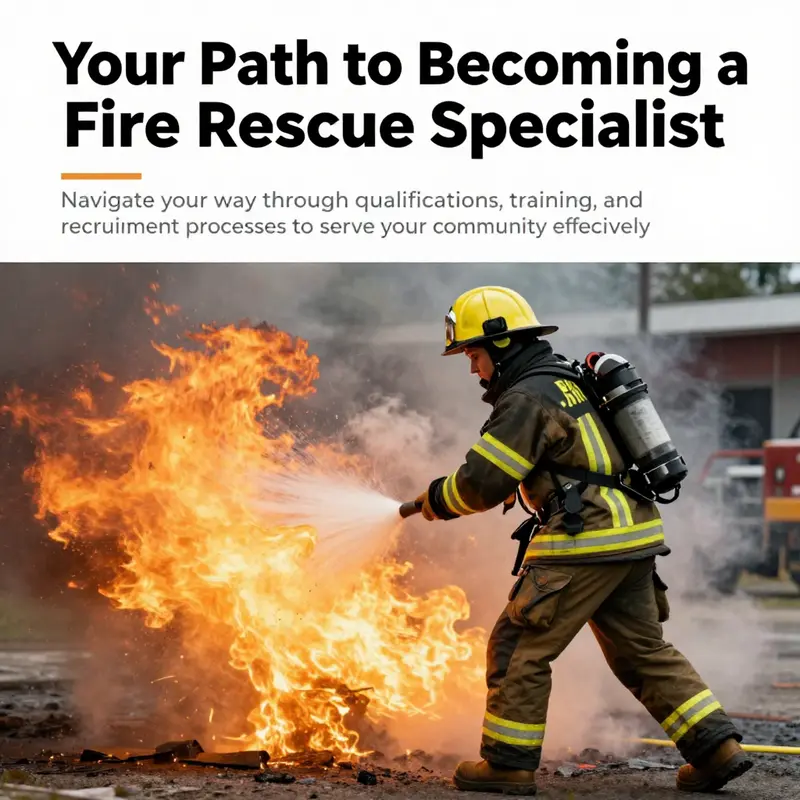
Becoming a fire rescue specialist is a noble aspiration that requires dedication, appropriate education, and rigorous training. Fire rescue specialists are vital to community safety, addressing emergencies and saving lives. Through extensive training and preparation, aspiring firefighters and rescue personnel can ensure they meet the necessary qualifications and excel in their roles. This guide outlines the distinct pathways available to you, eligibility and training requirements, and the comprehensive recruitment process involved — all critical aspects of embarking on this rewarding career path.
Pathways, Training, and Career Tracks to Become a Fire Rescue Specialist
Pathways, Training, and Career Tracks to Become a Fire Rescue Specialist
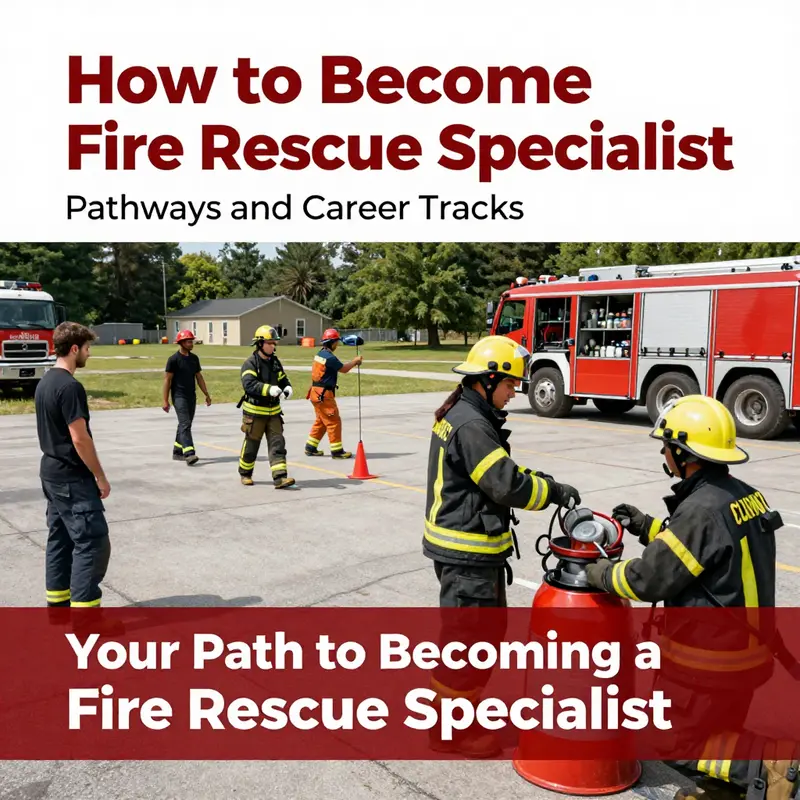
Becoming a fire rescue specialist means choosing a clear path and then committing to a rigorous, step-by-step process of training, certification, and practical experience. The pathways can look different from country to country, and even from one city to the next, but the core elements are the same: eligibility, formal training, certification, departmental hiring, real-world practice, specialization, and continuous development. This chapter weaves those elements together into a single narrative, showing how an aspiring candidate moves from an initial decision to a career of technical skill and leadership.
First, decide the broad track you want to follow. Options typically fall into two groups. One group leads to permanent public service positions that include civil service benefits and clear promotion ladders. The other group includes contract-based positions, volunteer roles, and private-sector rescue teams that offer flexibility and varied experience. In some countries, like China, the distinction is explicit: the national comprehensive fire rescue team follows civil service systems, while government-contracted firefighters work under labor contracts with local fire departments. In the United States and many other countries, the distinction shows up as municipal career departments, volunteer fire companies, state wildland units, or federal emergency teams. Choose a track with the long-term career objectives in mind: job security, chances for promotion, or breadth of hands-on experience.
Next, ensure you meet the basic eligibility requirements. Most departments require candidates to be adults with a high school diploma or equivalent, a valid driver’s license, and a clear background. Medical and psychological fitness are essential. Departments run background checks for criminal history and financial issues. Tobacco, drug, and alcohol histories are evaluated during medical screens. Beyond passing a background check, candidates must demonstrate robust mental health, the ability to handle stress, and a track record of lawful conduct. These baseline standards protect teams and communities.
Once eligible, it helps to enroll in a recognized firefighter training program before applying. Community colleges, vocational schools, and state-certified academies offer certificates that cover fire behavior, suppression techniques, hazardous materials, technical rescue, and emergency medical basics. These programs generally last six to twelve months and teach the practical skills required for early career success. Completing a program that aligns with national standards adds credibility and often meets hiring prerequisites.
Certification is the next essential milestone. Across many systems, certification follows standardized competency frameworks. In the United States, NFPA-based certifications such as Firefighter I and II are foundational. Most departments also require Emergency Medical Technician (EMT) certification. EMT training equips candidates to deliver patient care and work inside integrated EMS-fire systems. Additional certifications—hazmat operations, confined space rescue, rope rescue, swift-water rescue—allow specialists to join technical teams and handle complex incidents. In systems that use formal civil service entry, some specialized roles require specific licenses, like vehicle driving endorsements for apparatus operators.
Preparing for the hiring process requires focused physical and cognitive training. Physical ability tests are non-negotiable and are designed to simulate the demands of firefighting. The Candidate Physical Ability Test, or similar protocols, examine endurance, strength, and agility through tasks like stair climbs with weight, hose drags, ladder raises, and equipment carries. Building the specific fitness required is more effective than generalized exercise. Train with weighted stair climbs, interval running, grip strength work, and exercises that mimic job tasks.
Written examinations and situational judgment tests evaluate reading comprehension, problem-solving, and job knowledge. Oral interviews probe motivation, ethical judgment, teamwork, and decision-making under pressure. Psychological testing often screens for resilience and stress tolerance. Medical exams verify vision, hearing, cardiovascular health, and the absence of disqualifying conditions. In some countries or agencies, tattoos, visible scars, or prior medical history require explanation or could bar employment. Anything that might appear on a medical or political review should be considered early in the preparation process.
After passing hiring hurdles, new firefighters usually attend a department-specific fire academy. Academies last from six to twelve weeks and hone technical skills, tactics, and teamwork under a department’s protocols. If you completed a community college program before hiring, the academy focuses more on local procedures and teamwork. Once you graduate the academy, you enter a probationary period of one to two years. During probation you gain frontline experience under the supervision of seasoned personnel. Performance during probation shapes early promotion opportunities and determines long-term placement.
Specialization happens naturally as experience builds. Early assignments usually focus on routine engine or ladder company operations. Over time, firefighters apply for technical teams or shift into roles that match their talents and interests. Technical rescue specialists work on rope systems, confined space extrications, or structural collapse incidents. Hazmat specialists receive advanced training to identify and mitigate chemical, biological, or radiological threats. Investigators combine field experience with investigative techniques to determine fire causes. Prevention officers pivot to building inspections, public education, and code enforcement. Leadership tracks move into supervisory positions such as lieutenant or captain, where tactical skills expand to include people management, incident command, and operational planning.
Advancement rarely comes by seniority alone. Departments value demonstrated competence, additional certifications, leadership training, and formal education. Many fire officers pursue degrees in fire science, emergency management, or public administration to position themselves for battalion chief or chief roles. But formal education complements, rather than replaces, broad field experience. Promotion boards typically weigh operational performance and peer evaluations most heavily.
Career flexibility can be a strategic advantage. Many firefighters cross-train in EMT, paramedic, or specialized rescue disciplines. Cross-training improves employability and opens access to specialized assignments. It also enhances team capability, because modern incidents often require multiple technical skills. For those interested in technology and systems-level work, opportunities exist in communications, equipment maintenance, and incident management systems. The role of technology in leadership and operations is growing, and understanding data systems, GIS, and remote sensing can set a candidate apart. For a concentrated look at leadership and tech integration, see this piece on Impact of Technology on Fire Department Leadership.
Continuous learning is critical. Standards evolve, new tools appear, and research informs safer tactics. Maintain certifications through refresher courses and attend drills regularly. Participate in scenarios that replicate urban search and rescue, hazmat, or wildland fire complexities. Workshops, conferences, and peer networks will expose you to recent lessons and emerging practices. Agencies that invest in training build more capable teams and foster promotable candidates faster.
Practical preparation advice matters. Begin fitness training months or years before application. Focus on functional strength, cardiovascular endurance, and job-specific movements. Practice climbing stairs while carrying weight, lifting awkward loads, and repetitive overhead tasks. Simulate gear use by training in weighted vests or with a heavy backpack. Develop core and grip strength; both are decisive during rescues. Equally important, practice time management and teamwork. Fire work depends on coordination; learning to communicate clearly under fatigue can make you more effective than raw strength alone.
Mental readiness deserves equal attention. Fire rescue specialists face traumatic scenes and high-stress decisions. Resilience training, stress inoculation, and techniques for coping with critical incidents prepare candidates for the emotional demands of the job. Departments increasingly screen for psychological fitness and provide peer support programs. Early familiarity with these systems helps new members adapt and reduces the risk of burnout.
Be strategic about certifications. If your department requires EMT or paramedic credentials, prioritize those. If technical rescue is a likely career path, seek rope or confined space certifications. For apparatus roles, make sure you meet any driving licence requirements. In some systems, like certain national teams, apparatus drivers must hold specific heavy vehicle licenses and demonstrate driving experience under operational conditions.
Understand the value of both breadth and depth. Early career breadth exposes you to many incident types and teaches general principles. Deeper specialization makes you indispensable to a technical team. Balance both by rotating through assignments and pursuing targeted certifications. Networking matters too. Mentors, union representatives, and veteran firefighters can help you navigate application cycles and recommend training pathways that are most respected within a particular agency.
Expect competition. Hiring cycles are infrequent and selective. Vacancies may open in waves, and departments often maintain central applicant pools. Timing your applications and keeping documentation current increases your chances. Keep original certificates, diplomas, and discharge papers (if applicable) organized and ready for qualification review. Small errors or missing documents can delay or disqualify an otherwise strong candidate.
Finally, think long term about service and vocation. Fire rescue is a public-facing career with direct community impact. It requires discipline, empathy, and a commitment to safety. Whether you choose a civil service role with structured advancement, a government-contracted position that offers stability without civil servant status, or a volunteer track that builds local ties, every path leads to meaningful responsibility and skill development. The combination of training, certification, and real incident experience forms the backbone of a successful career.
For detailed standards and certification guidance, consult authoritative sources that define training and qualification frameworks. These sources provide the technical specifications that underpin Firefighter I and II, EMT certification, and specialty standards. The National Fire Protection Association provides well-established standards and resources for training and professional development: https://www.nfpa.org
From Candidate to Crew: Eligibility, Selection, and Training to Become a Fire Rescue Specialist
Eligibility and Training: a single roadmap for becoming a fire rescue specialist
Becoming a fire rescue specialist is a demanding, structured journey. It moves a candidate from basic eligibility through a series of rigorous tests and into intensive practical training. Each stage filters for physical ability, mental resilience, and vocational fit. The path you choose, the preparation you undertake, and how well you adapt to training will decide whether you join a national fire rescue team or a government-contracted firefighting unit. This chapter describes the requirements and training you will face, and shows how to turn each step into an advantage.
At the outset, the essential eligibility criteria are straightforward and non-negotiable. You must be a citizen and pass background, political, and integrity checks. Recruiters verify records for criminal history, dismissal from public office, and other disqualifying factors. They also evaluate family background in some systems where political review is stringent. These checks happen early to avoid wasted preparation and to ensure public trust in emergency services.
Age and education rules then narrow the field. For national-level civil service positions, age limits are younger and tighter, often targeting candidates at the start of their careers. Recent high school graduates, vocational students, and college graduates can apply, with certain extensions for veterans and degree holders. Government-contracted roles typically allow a wider age window and sometimes accept older applicants with field experience. A high school diploma or equivalent is the common minimum, while degrees in fire science, emergency medicine, mechanical systems, or related fields add competitive advantage.
Certain specialized roles bring additional requirements. Drivers who operate heavy apparatus must hold appropriate licenses, such as a B2 class or higher, and demonstrate proven driving time. Communication officers, equipment technicians, and vehicle mechanics may need relevant certifications or proof of trade experience. Some positions require or reward Emergency Medical Technician (EMT) certification. In many departments, EMT certification is expected either before hiring or as part of early training. Military veterans and former firefighters often receive priority because they bring practical skills and discipline.
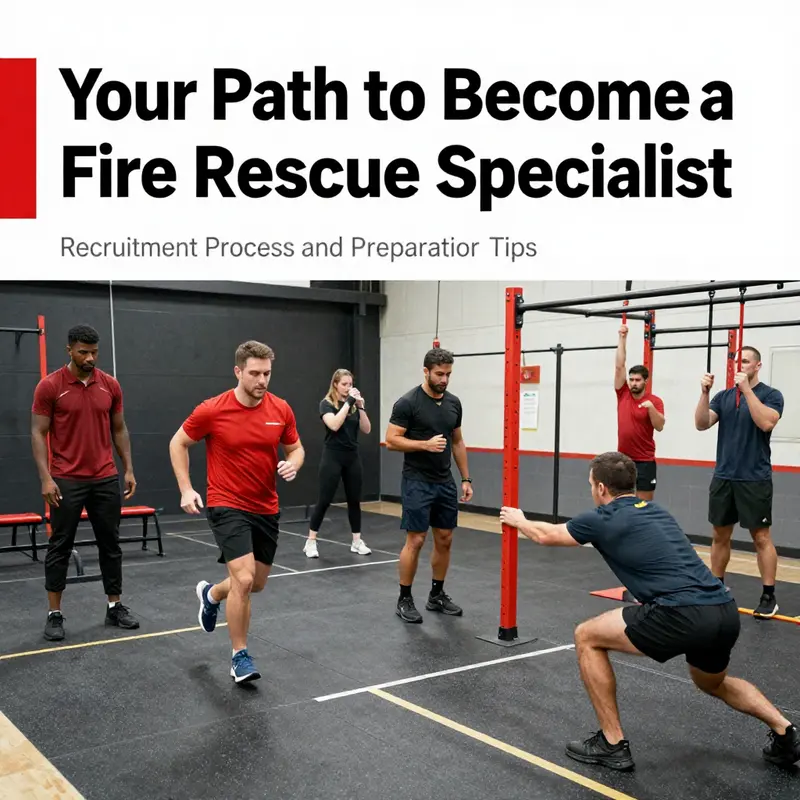
Physical fitness is the single most visible gatekeeper. The physical fitness test (PFT) is designed to replicate job tasks, not abstract gym metrics. Recruiters assess cardiovascular fitness, strength, agility, and the ability to work while carrying loads. Common events include a timed load-carrying stair climb with a heavy pack, sprint shuttle runs like the 10 m × 4 test, pull-ups or push-ups, core strength tests, and distance runs. Each test has clear standards tied to age and sex categories for fairness.
Training for the PFT should be task-specific. Progressive overload and simulation matter. Practice stair climbs with weighted packs and boots. Repeat short, intense sprints with quick direction changes. Build grip and upper-body strength with pull-ups, farmer carries, and deadlifts. Work core endurance through planks, sit-ups, and rotational exercises. Include recovery protocols and flexibility work to avoid injury. Recruiters look for consistent, demonstrable improvement rather than one-off peak performance.
Mental fitness and psychological assessment are as critical as physical ability. Fire rescue work exposes people to life-threatening hazards, traumatic scenes, and chaotic environments. Psychological screening evaluates stress tolerance, decision-making under pressure, emotional stability, and teamwork orientation. The assessment often combines written inventories with structured interviews and scenario-based exercises. Candidates who show openness to training, emotional regulation strategies, and a collaborative mindset perform better in interviews and on the job.
A formal medical examination confirms fitness and screens for conditions incompatible with the role. Examinations follow strict occupational standards. Vision and hearing checks are routine. Color vision screening is common because color differentiation can be essential during equipment checks and control panels. Cardiovascular evaluation seeks to rule out conditions that could cause collapse under heavy exertion. Scars, tattoos, and certain dermatological conditions may be evaluated for their potential to interfere with personal protective equipment or professional standards. Recruiters also screen for chronic conditions and substance use.
Once administrative, background, physical, psychological, and medical checks clear, candidates face interviews and practical skill trials. The interview is not just a conversation; it is a test of situational judgment, motivation, and communication. Expect scenario questions that ask how you would prioritize tasks in multi-victim incidents, or how you would manage a team under shifting conditions. Recruiters want clear, calm, and principled responses. Practical exams may test knot-tying, basic hose handling, and simple equipment assembly under time pressure.
Successful candidates enter formal training programs. Training typically begins in a fire academy or a dedicated training center. Basic firefighter training forms the foundation. It covers fire behavior, combustion science, crew safety, hose handling, ladder operations, ventilation tactics, search and rescue, and the correct use of personal protective equipment (PPE). This phase combines classroom instruction with hands-on drills. Simulated burns, controlled live-fire exercises, and team-based problem solving build both skills and trust among trainees.
Specialized instruction follows basic training. Rescue tasks require different techniques and tools than structural firefighting. Vehicle extrication training teaches you to stabilize vehicles, operate hydraulic rescue tools, and extract victims without causing further harm. Rope rescue focuses on knots, anchors, belaying, and lowering operations in complex terrain. Confined space rescue builds technical assessment skills for environments with limited entry and hazardous atmospheres. Water rescue covers boat handling, swim-rescue techniques, and swift-water operations when applicable. Each specialty involves repetitive scenario practice to create muscle memory and safe habits.
Medical training is integrated throughout. For many teams, EMT-level skills are baseline. Trainees learn patient assessment, airway management, hemorrhage control, spinal motion restriction, and triage. Burning injuries and smoke inhalation demand specific care protocols that combine rescue techniques with immediate medical interventions. The training emphasizes teamwork with ambulance services and hospitals, and protocols for safe patient packaging and transfer.
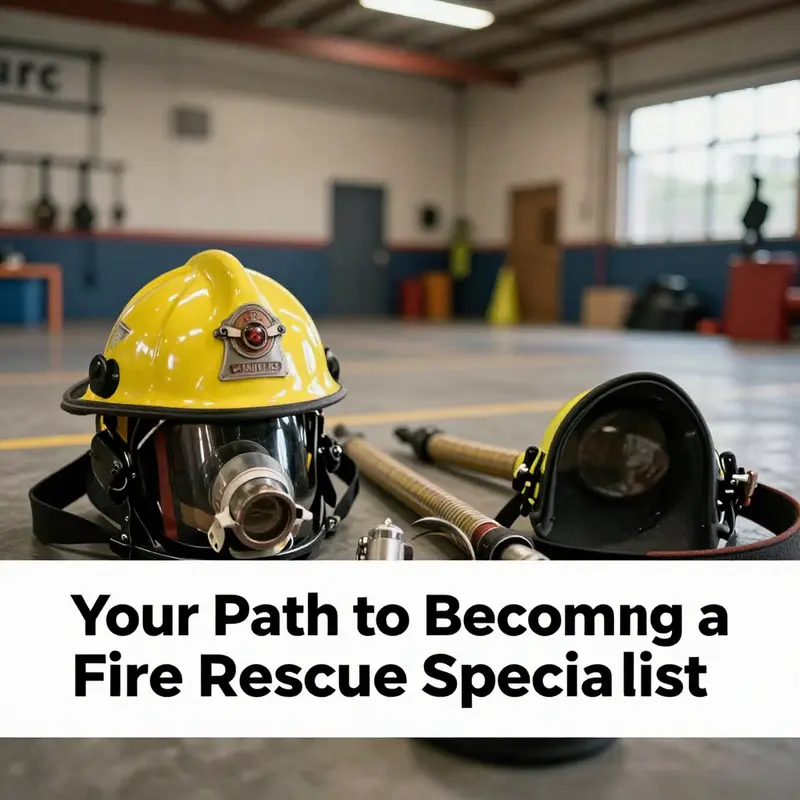
Equipment training sits at the heart of operational readiness. Fire apparatus, hydraulic tools, thermal imaging cameras, breathing apparatus, and command radios must be used confidently. Training drills require you to don self-contained breathing apparatus quickly and operate in low-visibility conditions. Thermal imaging camera use teaches you to detect hotspots and locate victims in smoke. Communications drills train clear, concise radio language and accurate reporting under stress. The goal is to make equipment use automatic under pressure.
Field training reinforces academy lessons in real operations. Many services assign new recruits to watch, assist, and gradually take on responsibilities under a mentor. Ride-alongs and supervised shifts expose trainees to call types, multi-agency coordination, and the daily rhythms of the job. Incident debriefs and after-action reviews teach reflective practice. Trainers look for curiosity, the ability to accept constructive criticism, and rapid adaptation.
Continuing education ensures skills remain current. Fire rescue is a dynamic field. New techniques, gear, and standards emerge regularly. Departments mandate ongoing drills, scenario refreshers, and periodic recertification for life-saving skills. Participation in specialized courses can lead to advanced qualifications and career progression. For those who want to rise into technical rescue roles or leadership, additional formal education, certifications, and multi-agency training will be necessary.
Preparing for this career means preparing your whole life. Physical preparation demands a disciplined routine of cardiovascular work, strength training, and mobility exercises. Simulate job tasks, and train in boots and weighted gear to build job-specific stamina. Mental preparation involves stress management techniques, exposure to realistic scenarios, and development of interpersonal skills. Learn conflict de-escalation, clear radio communication, and how to work in high-stress teams.
Administrative readiness matters too. Collect and organize your identity documents, diplomas, and any certificates such as EMT, driver class credentials, or military discharge papers. Keep digital copies and updated contact information. Understand the recruitment calendar for the agency you target and submit a clean, complete application on time. During the process, be transparent about any past issues and ready to provide context; honesty preserves credibility.
There are strategic advantages you can cultivate. Earning an EMT certificate before application removes a hiring barrier and shows initiative. Pursuing a vocational or associate degree in fire science or emergency management improves competitiveness for national-level roles. Gaining experience in volunteer firefighting, search and rescue teams, or the military provides practical exposure and strengthens your resume. Demonstrated teamwork, leadership in community projects, and steady physical conditioning are all assets.
Technology increasingly shapes how fire rescue teams operate and train. Newer tools improve situational awareness and safety. Learn to use incident management software, mapping tools, and digital radios. Familiarity with thermal imaging, drone reconnaissance, and modern hydraulic rescue tools will make you more effective in training and on scene. For more perspective on how technology changes fire department practices and leadership, review resources on the impact of technology on fire department leadership: https://tpbhrescue.org/impact-of-technology-on-fire-department-leadership/
Finally, adopt a professional mindset. Fire rescue work demands discipline, humility, and a service ethic. Focus on steady improvement rather than one-time tests. Build strong habits: punctuality, equipment care, clear communication, and respect for safety protocols. Maintain your health, sleep, and social supports because resilience depends on them. A successful candidate blends physical capability with mental clarity and consistent, accountable behavior.
For formal standards and detailed training competencies, consult recognized regulatory documents. The National Fire Protection Association publishes standards on firefighter professional qualifications that outline required skills and core competencies for firefighters and rescue specialists. For a comprehensive reference on training criteria, see NFPA: https://www.nfpa.org
Rising Through the Line: A Cohesive Path to Becoming a Fire Rescue Specialist
Becoming a fire rescue specialist requires disciplined preparation, ethical clarity, and sustained physical and mental training. Prospective candidates should first verify eligibility: citizenship and a clean background, baseline education (typically a high school diploma or equivalent), and the health standards necessary for high-risk operations. Two common employment frameworks exist—national civil service positions with permanent status and benefits, and government-contracted roles under local or regional departments—each with slightly different age and administrative requirements but the same core operational demands.
Recruitment typically follows a sequence: online application and document verification, a demanding physical fitness test that emphasizes load-bearing, agility, and endurance, psychological screening and structured interviews to assess resilience and teamwork, comprehensive medical examinations, and a political or background review. Specialized roles (drivers, communications, equipment maintenance, technical rescue) may require additional licenses or experience and can change age or credential thresholds.
Accepted recruits enter an extended, immersive training phase covering fire suppression, rescue techniques, hazardous materials, emergency medical care, and teamwork in realistic simulations. Training also enforces continual fitness, mental conditioning, and safety discipline; graduates are expected to combine technical competence with sound judgment under pressure.
Effective preparation is holistic: progressive physical training aligned to PFT tasks, mental rehearsal for high-stress scenarios, healthy lifestyle choices, and practical experience such as volunteering, first aid/CPR certification, or mentorship from veteran responders. Staying informed through official recruitment channels and industry resources—such as the National Fire Protection Association (https://www.nfpa.org/)—helps candidates align with current standards and best practices.
Ultimately, the journey is a long-term commitment to public service. The recruitment and training architecture exist to transform potential into dependable capability: a professional who can respond decisively, work within coordinated teams, and uphold the ethical standards that sustain public trust. Continuous learning, physical readiness, and community commitment remain central throughout a career in fire rescue.
Final thoughts
In summary, achieving the status of a fire rescue specialist demands a combination of unwavering dedication, robust physical and mental preparation, and a deep commitment to serving the community. By carefully considering your pathway, understanding eligibility requirements, and effectively preparing for the recruitment process, you can position yourself for a rewarding career in fire rescue. The journey may be rigorous, but the opportunity to make a meaningful impact in your community makes it immensely worthwhile.