
Understanding the critical steps to take during a fire outbreak can mean the difference between life and death. As fires can spread rapidly and unpredictably, knowing immediate actions to ensure safety is paramount. This guide aims to empower individuals—whether general citizens or professional responders—with the comprehensive knowledge needed to navigate fire emergencies effectively. Each chapter will delve into essential strategies, starting with actions to take when a fire breaks out, moving to the stay-put strategy, details on safe evacuation procedures, and concluding with special situations like forest fires. By following these insights, we can better prepare ourselves and our communities to act decisively in moments of crisis.
In the Moment: Immediate Actions for Rescue When a Fire Breaks Out
When a fire breaks out, the first seconds are not a time for hesitation but a test of training, composure, and the will to act with clear purpose. The surrounding chaos can feel overwhelming, yet the most reliable path to safety rests on a sequence you can internalize and execute with minimal thought when the alarms scream. This chapter weaves together the core actions that maximize your chances of rescue and survival, while also underscoring how preparation and practice shape outcomes in the worst moments. The goal is not to pretend danger does not exist but to empower you with a practiced response that threads through fire behavior, human physiology, and the practical realities of the spaces we inhabit every day. To rescue yourself or others effectively, you must move with intent, balance urgency with caution, and keep the lines of communication open to call for help as the smoke thickens and heat rises.
The first imperative is to stay calm. Panic is the silent accelerant that clouds judgment, narrows perception, and drains the body of efficient energy. A deliberate inhale, a moment of mental grounding, and a quick scan of your surroundings set the stage for action. From that point, the next steps form a continuum rather than a checklist, blending assessment, communication, smoke management, and safe movement. If you are in a position where you can see a path to safety, you proceed with the same careful efficiency you would use in any rehearsal or drill. If the fire is small and you possess an appropriate fire extinguisher, you may attempt to suppress it, but only if doing so does not expose you to greater danger. The right extinguisher for the right class of fire can be a life saver, yet misapplication often compounds risk. If the fire has grown or you are uncertain about your ability to control it, evacuate without delay. The moment you suspect you cannot manage the situation, you switch from firefighting to fleeing.
Communication is the next essential thread. Call emergency services immediately from a safe location, detailing your exact position and the nature of the fire. In different regions the number differs, but the principle remains universal: alert responders as soon as you determine that help is necessary. If you are in a place where the local number is well known, use it without hesitation. Clear, concise information accelerates rescue and informs responders about possible hazards to anticipate on arrival. If you cannot reach help directly, shout for assistance from a window, balcony, or doorway, signaling your presence with bright clothing or a flashlight if you can do so safely. The act of signaling is as important as the act of fleeing, because it informs responders where you are and what you need.
Protecting yourself from smoke is another cornerstone of immediate action. Smoke is the primary killer in many fires, and it behaves predictably in the worst possible way: it rises, fills upper areas first, and carries toxic gases that impair judgment and respiration. If smoke is present, cover your mouth and nose with a damp cloth or towel to filter particulates and help cool the inhaled air. Moving low keeps you in the cleaner, cooler layer of air closer to the floor, where the density of smoke is significantly lower. This is not simply a instinctive reflex but a practical tactic backed by long-standing safety guidance. The moisture in the cloth also aids cooling, which reduces the sensation of heat and can buy crucial seconds. If you can, ventilate your path safely by opening a window or a door at a higher point to improve airflow and to create a channel for smoke to escape, but never compromise your escape by creating a direct path toward active flames.
The question of displacement versus protection comes to the fore as you navigate space. If you are evacuating, test the door before opening it. The back of your hand should meet the door and the doorknob with a quick, careful touch. If either is hot, you should not open the door. A hot door can indicate flames on the other side, and forcing a way through can trap you between fire and smoke. If the door remains cool, proceed slowly and cautiously, moving along the hinge side to avoid exposing yourself to the hottest area. Keep low to the ground as you move toward the nearest exit and stay in a crouched or crawling posture if you encounter a heavier concentration of smoke. Running generally increases your breathing rate and inhalation of toxic gases, so conserve energy and breathe through a damp cloth if possible while you traverse corridors or stairwells.
Elevators must be treated with a strict rule of avoidance. Elevators can fail, halt between floors, or become a vertical conduit for heat, smoke, and toxic gases. In most building fire safety protocols, stairs are the safest route to exit during a fire, even if it means longer travel time. If you encounter a stairwell that feels unsafe or is filling with smoke, do not linger. Backtrack to a safer route if possible, or seek a sheltered area with a closed door and a plan to alert responders to your location. The door behind you becomes an essential barrier; closing it promptly slows fire and smoke ingress and buys you precious minutes to reassess and wait for rescue.
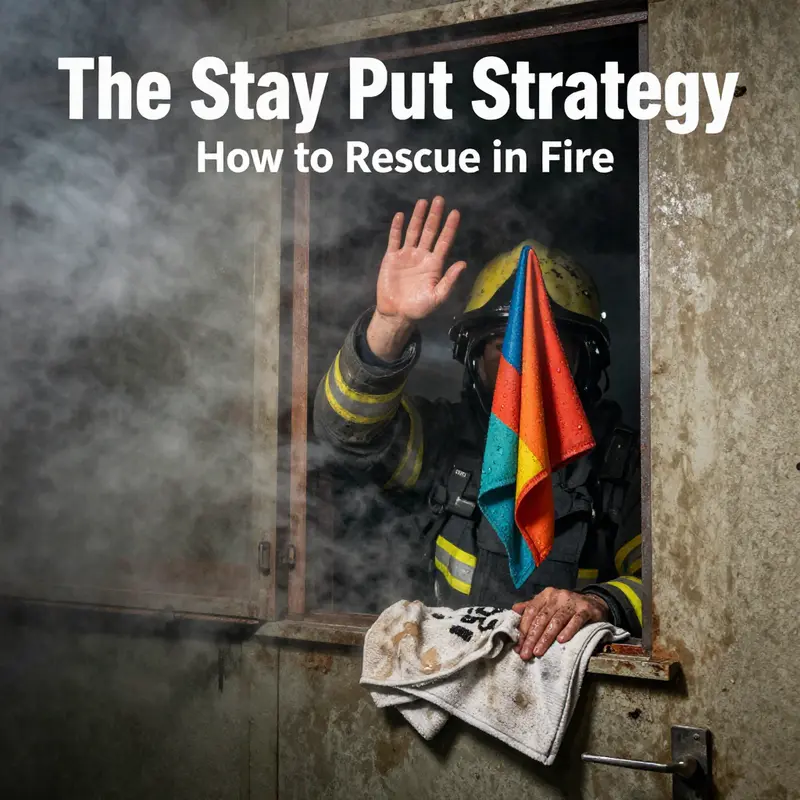
When you are trapped and cannot reach an exterior exit, the strategy shifts toward creating a survivable pocket and signaling for help. The primary aim in such moments is to block heat and smoke from entering the space and to provide a visible, breathable environment where rescuers can locate you. Close the door to the room, sealing gaps with wet towels or clothing at the bottom and around any cracks that could siphon in heat or smoke. If you can, seal a window gap the same way. The damp material not only blocks smoke but helps reduce air leakage, maintaining a more breathable microclimate inside. Ventilation becomes a controlled release; you want enough fresh air to stay conscious, but not so much that smoke is drawn into the room through gaps. If a window is accessible, crack it slightly to equalize pressure and allow fresh air to flow in while you remain shielded from direct flame contact. Signaling for help is critical. A flashlight, a bright-colored cloth, or a reflective surface from a window or door can dramatically increase your visibility to rescuers. The act of signaling turns your position into a beacon, reducing the time responders spend searching and increasing your odds of being seen.
In situations where you are on the move toward safety, there are additional practical rules that help you preserve energy and minimize exposure. Move quickly but deliberately; a rapid sprint often backfires because it raises your breathing rate and pulls more smoke into your lungs. If you are wearing bulky clothing or layers that may snag or overheat you, shed excess outer garments if it is safe to do so, but avoid exposing skin to hot surfaces or flames. Keep your head low and your mouth covered, maintain a steady rhythm of breaths, and plan your route before you reach a turn or door. This mental mapping—your internal route plan—saves precious time in negotiating unfamiliar layouts, crowded stairwells, or smoke-filled corridors. The moment you reach a known exit, do not linger in the immediate vicinity. Push through the opening, moving away from the source of the fire and toward open air or a stairwell that leads to safety, always continuing to shield your airway with cloth.
The chapter would be incomplete without acknowledging special contexts in which these principles apply in broader landscapes. In a forest fire, for instance, the advice diverges in important ways. Fire moves differently, and terrain becomes a dominant variable. In many wildland scenarios, fire travels uphill rapidly, so moving downhill or laterally away from the fire becomes a safer instinct. If wind shifts, you must adapt immediately, moving perpendicular to the fire’s direction and, where possible, escaping into naturally fire-scarred patches or clearings that lack fuel. The concept of a safe zone remains key—the aim is to find a space where you can wait for rescue with minimal exposure to radiant heat and smoke. In any environment, keeping a plan for a designated assembly point and communicating your location to others remains critical so that rescuers can verify who remains inside and where they should search first. These principles echo standard safety frameworks that emphasize prevention, preparation, and practiced response over ad hoc improvisation.
Beyond the immediacy of action lies the broader lesson of preparation. The best rescue outcomes emerge not solely from how you respond in the heat of the moment but from what you have rehearsed beforehand. This is why a thorough home fire escape plan, regular checks of smoke detectors, and practicing drill-like movements with family members matter. They prime your reflexes and reduce reaction time, turning anxiety into predictable behavior rather than paralyzed fear. Preparation transforms a crisis from an existential threat into a scenario where the correct actions—calm evaluation, clear communication, smoke-aware movement, and timely signaling—become almost automatic. In practice, this means knowing two routes out of each space you occupy, having a simple, accessible drill that everyone in the household can perform, and ensuring you have a reliable means to call for help from any room. It also means recognizing when to aid others and when to prioritize your own safety, because rescuing others often requires the fuel of personal safety first.
The thread that ties these actions together is a robust principle: prevention is the best rescue. Regularly checking for smoke detectors, never leaving cooking unattended, avoiding overloaded outlets, and having a practiced plan shared with your household are the bedrock of resilience. When everyone in a home or workplace understands and rehearses their role in an alarm, the chaotic moment when fire breaks out becomes a space where clear decisions overwhelm fear. In the broader discourse on safety, this alignment between knowledge, practice, and real-world behavior reduces the chance that panic will derail critical choices. It is a reminder that rescue is not a single act performed in isolation but a chain of preparedness, perception, and response that stretches back to the quiet hours of routine safety checks.
To connect with ongoing conversations about preparedness beyond a single event, consider the larger picture of how communities address gaps in readiness. Comprehensive risk reduction requires attention to common vulnerabilities, practical drills, and accessible resources for all ages and abilities. Preparation is not optional ornament but a critical component of safety culture. For further reflection on these dynamics and to explore how communities examine and close preparedness gaps in wildfire contexts, see emergency preparedness gaps in California wildfires. This insight into how plans fail and what improves outcomes can illuminate the way households design their own rehearsed responses, improving resilience when fire does erupt in any setting.
For readers seeking deeper, officially grounded guidance, a wealth of authoritative safety resources exists to complement the practical, experience-based approach outlined here. In particular, the National Fire Protection Association’s Fire Safety Tips offer comprehensive, accessible advice on prevention, detection, and immediate actions. Their guidance reinforces the principles described here—stoic focus, rapid but careful assessment, and a clear path to safety, with an emphasis on training and preparation that saves lives when fire strikes. As you read these narratives and think about your own spaces, remember that the most reliable rescue strategy combines personal composure, deliberate action, and a culture of prevention that transcends any single incident.
Internal link for further context on readiness: emergency preparedness gaps in California wildfires
External resource for continued learning: https://www.nfpa.org/For-the-Public/All-Topics/Fire-Safety-Tips
Staying Put to Stay Alive: The Stay Put Strategy in Modern Buildings
In the heat of a building fire, choosing to stay put is not a sign of fear or failure. It is a deliberate assessment of the environment and an applied method shaped by how modern architecture and fire behavior interact. Many modern buildings are designed with fire compartments that limit the spread of heat and smoke, using fire rated doors, seals, and controlled ventilation to buy valuable time. The stay put strategy rests on that reality, recognizing that stairs, corridors, and sometimes even the lobby can become dangerous as heat rises and smoke thickens. Staying where you are can preserve your life by remaining in a controllable, breathable space while awaiting rescue rather than sprinting into a potentially lethal corridor.
To understand why stay put can be the safest option, consider how a building is constructed and how fires typically spread. Fire compartments — units, floors, and walls with fire rated barriers — limit rapid travel of heat and smoke. If a fire starts in one apartment or on a single floor, the immediate goal is to contain it and keep it from spreading to others. Often the best chance to survive until firefighters arrive is to stay in a protected room, seal the door, and reduce the amount of smoke entering your space. The stay put approach is not universal; it is a reasoned response to your building’s geometry and protection features, anchored in training, planning, and the belief that you improve your odds by minimizing exposure to heat and inhaled toxins.
As you prioritize calm, your first actions set the tone for the event. If you are on a higher floor or in a room with a closed door, you may have more time than you think, provided the door remains closed and the path of smoke stays blocked from your space. Begin with the door: if the door is hot to touch, the fire is likely on the other side and you should not open it. If it is cool, open slowly and cautiously, but only after you have prepared for the possibility that smoke may fill the hallway. The stay put strategy treats the door as your first line of defense. Keep it closed as the primary shield, and if possible seal gaps around the door with damp towels or clothing to slow smoke and heat from entering. That simple step buys minutes and reduces the concentration of toxic gases.
Next comes ventilation, a calculated risk that can be life saving when done carefully. If it is safe, crack a window or balcony door slightly to exchange stale air for fresher air. Smoke rises, and cooler outside air can dilute heat and aid breathing, but opening a vent can also draw more smoke in if exterior conditions are worse. If you ventilate, do so only to create a controlled flow that allows smoke to exit without inviting a heavy inflow of oxygen. Stay alert to the fire’s direction and be prepared to close the opening if heat or flames approach your room.
Communication is the anchor that connects stay put to rescue. Once you have stabilized your environment, signal for help clearly and persistently. If you have a phone, keep it with you and call emergency services, giving precise information about your location, floor, unit number, and obstacles. If phone calls are not possible, use banners of light or color to help rescuers locate you. Bright cloths waved from a window during the day or a flashlight at night can serve as a beacon through smoke. When rescuers arrive, follow their instructions promptly. They bring the equipment and access needed to reach you safely.
An essential aspect of staying put is creating a safe refuge within a room that is as smoke free as possible. Shut the door tightly and, if available, use a secondary space as a buffer behind sealed walls. The air you breathe matters more than freedom of movement at this stage. Damp towels used to seal gaps reduce exposure to heat and smoke, though they do not create a perfect seal. If smoke begins to infiltrate via cracks around the door or under the threshold, adjust your approach carefully. In some cases, occupants on lower floors might consider a controlled improvised evacuation using a rope from a bed sheet, but this option is extremely high risk and should be a last resort when all other options are exhausted. The emphasis remains on containment and signaling for rescue.
Knowing when stay put remains the right choice comes from recognizing conditions that make it viable. The tactic is most effective when the fire is contained to a single apartment or a single floor and you are not overwhelmed by smoke or heat. If the hallway fills with smoke or heat threatens your room, reassessing your plan becomes essential. In such moments, consider alternative actions, including moving to a designated safe refuge if your building offers one, or identifying a secondary exit if practical and safe. The decision to stay or evacuate is a risk based calculation grounded in fire physics, building design, and responder resources. The stay put approach depends on practiced routines, not improvisation, and rehearsing these routines with family members, roommates, or building staff is a safeguard that translates into composure when seconds count.
Taken together, stay put sits within a broader safety framework. It complements prevention measures such as functioning smoke detectors, clear access to exits, and a practiced fire escape plan. It is not a universal prescription but a viable option when conditions favor containment over rapid evacuation. For residents of modern, compartmentalized buildings, stay put can offer a safer, more controllable response that buys time for responders to reach you.
Escaping the Inferno: A Steady, Safe Path to Rescue When You Must Evacuate
When fire demands evacuation, the body moves faster than the mind can think. Yet speed without clarity can trap you in a corridor of heat and smoke. The chapter that follows sows a single, essential idea through every decision: you rescue yourself by planning, by staying calm, and by making choices that keep air in your lungs and warmth from sealing you in. This isn’t about bravado or last-minute improvisation; it’s about a practiced sequence that becomes almost automatic when alarms ring and the world grows suddenly unfamiliar. The moment you are told to evacuate, you shift from being a resident to being a navigator of danger, reading the building as a map and your own body as a tool for survival. The guiding principle remains simple: keep yourself alive long enough to reach safety, and then aid others as you can.
First, the mind must anchor itself in calm. Panic is a siren that can drown reason. Take a deliberate breath, draw air through your nose, and let it out slowly. In a fire, time slows for the person who remains conscious, who recognizes that every second spent deciding is a second less exposed to the toxic products of combustion. With a clear head, you can locate the fire’s origin, identify which exits are likely to be blocked, and determine the safest route to escape. If you are with others, designate a person to call for help while the rest evaluate the route. In many places, dialing emergency services should be done as soon as you can do so without risking your escape. In some regions, the number is widely known; in others, it may be different. The important thing is to communicate your location clearly, describe the smoke and flames you see, and provide the number of people who need aid and their conditions. This is not a moment for vague statements or assumptions about the responsiveness of responders. Clarity accelerates the pathway to rescue.
Secondly, do not rely on elevators. Elevators in a fire can stop working, become trapped, or fail to reach your floor due to power loss. They can become ducts of smoke or corridors of heat. The stairs, while often crowded and imperfect, are the dependable artery of a building during an evacuation. If you share a space with others, move as a group, but do not let the group become a bottleneck. Your pace should be steady and purposeful, not frenetic. A calm, well-spaced march down the stairs reduces the chance that someone will stumble, trip, or block the way. If you are responsible for children or elderly or disabled companions, assign a specific role to each person. One adult can guide the younger children, another can monitor someone with mobility challenges, and a third can watch for smoke at each landing so that the line remains orderly and efficient. In chaotic moments, organized movement matters more than raw speed.
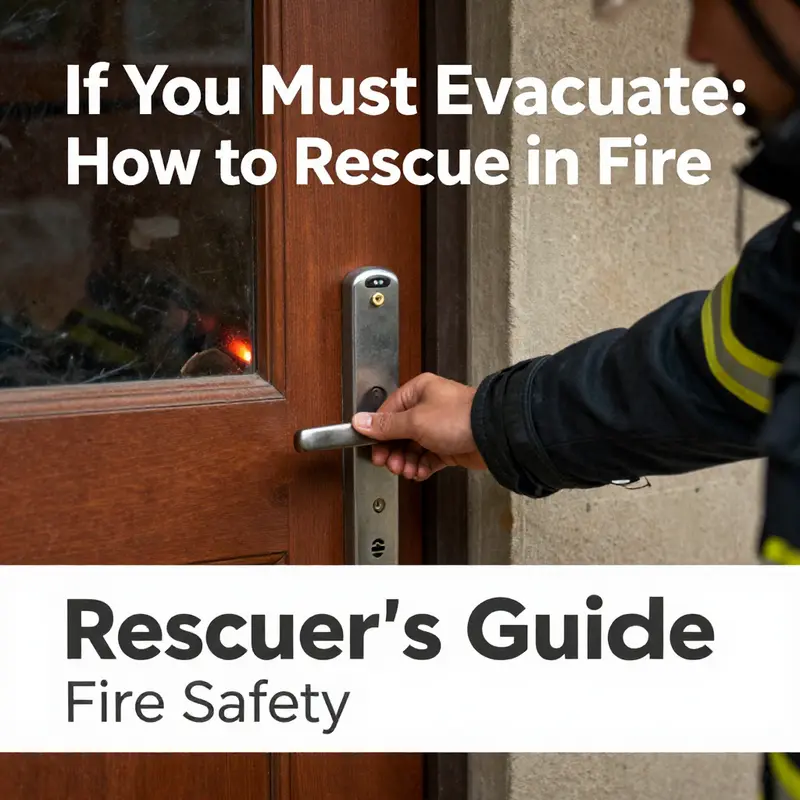
In the same breath, you must read the door before you open it. The door is a boundary and often a line of defense. Touch the door with the back of your hand before you reach for the doorknob. If the door or the doorknob is hot, heat surges from the other side, signaling that flames have found your exit. Do not open that door. If the door feels cool, you may open it slowly and cautiously, peeking into the corridor to assess heat and smoke levels. A slow, measured opening is safer than a sudden rush. If you smell smoke or feel heat from the hinge side, you know the path ahead is compromised. In that moment, you should pivot to an alternate exit or return to your previous position to delay exposure until another option presents itself. This practice—checking doors, listening for crackling through the walls, watching for changes in wind direction—transforms a potentially chaotic moment into a sequence of informed steps.
Smoke is the most immediate and deadly threat. It hugs the ground because hot gases rise, leaving the lower air relatively cooler and less saturated with toxic compounds. The rule to protect your airway remains simple: stay as low as possible, crawl if you must, and keep your mouth and nose shielded. A damp cloth can filter some smoke and help you stay cooler, though it will not render the air perfectly safe. Wetness adds a small cooling effect in the air, reducing the temperature at the lips and throat and making it marginally easier to breathe. If you must pass through smoke, cover your mouth, nose, and eyes with the damp fabric, and keep your head low. Breathe through the cloth rather than directly through heavily contaminated air. The towel or shirt should be dampened with water from a sink or bottle if available; in a pinch, even a damp cloth from a sink can provide some relief. The crawl is slow but efficient, and it physically places you below the densest layer of smoke.
Close doors behind you as you depart a room. This simple habit buys precious time by slowing the spread of heat and smoke. A closed door is a barrier, a shield enabling you to advance toward safety while reducing the chances that flames will overtake you during a fleeting moment of confusion. If gaps exist under the door, use towels, clothing, or any available fabric to seal them, further limiting the inflow of smoke. This makes your path safer and gives responders a better chance to locate you if you are signaling for help from a sheltered area. In some situations, this act is as important as moving quickly; the balance between speed and concealment of heat can mean the difference between life and death, especially on upper floors where rescue may take longer.
If the main exit is blocked or compromised, you must be ready to pivot to an alternative route. The world becomes a revised map in those seconds: windows, secondary stairwells, or even a balcony may provide escape. Some people on lower floors have considered improvised descents with cords or sheets. These options carry high risks and should be treated as last resorts, used only if all other routes are closed and you have no choice left. The safer path remains a ground-floor exit that leads away from the building, or a balcony that allows rescuers to approach with ladders or aerial devices. If you are on a higher level and a safe window is reachable, signal rescuers from the outside by waving a bright cloth or flashing a light. Your goal is to attract attention without inviting more smoke into your zone or increasing your exposure to heat. If you can create a small, controlled opening—just enough to vent air without inviting flames—do so, but never open a window fully if smoke is pouring in.
There is also value in planning, even before a fire begins. A home escape plan, practiced at least once a year, teaches every member of the household where to go and what to do. A map of two exits from each room, a designated meeting point outside the building, and a rehearsal that involves everyone in the household can translate fear into familiarity when the alarm sounds. People often forget that the best time to learn is when everything is calm. With practice, the action becomes automatic: you know which stairs to take, where to shelter if smoke is heavy, and how to move a group without leaving anyone behind. In practice, this means more than a plan on paper. It means a routine: counting to three before moving, checking doors before opening, and moving in a way that minimizes both risk and confusion. This is how households become resilient, and it is also what reduces the likelihood that individuals will become separated from their group in the chaos of a real event.
In the broader context of evacuation, it is important to acknowledge that some people may need additional time or assistance. Children, the elderly, and individuals with mobility limitations require careful planning, and those responsible for their safety should have a tailored approach. This could involve pre-designating a neighbor or a family member to assist during an evacuation, ensuring that a wheelchair or mobility aid can be transported, and rehearsing a quickest possible exit that does not place these individuals in unnecessary danger. Safe evacuation does not rely on luck; it relies on purposeful structure and mindful teamwork. When everyone understands their role and the path to safety is clear, the evacuation becomes less about improvisation and more about execution. The result is a higher probability that each individual is moved away from danger with as little exposure to heat and smoke as possible.
Sometimes, even with the best preparation, you may find yourself in a situation where you cannot safely exit. In such moments, a different kind of safety strategy applies: stay put in a smoke-free or low-heat area, seal your door, and signal for rescue. This is the “stay put” option that is often recommended for those on upper floors or in rooms that remain accessible to rescuers while the fire burns elsewhere. If you must wait, remember to monitor your environment continually. If you can, close the door, seal gaps, and dampen any other openings to prevent smoke from entering. Even when you are not actively moving toward an exit, you can still influence the odds by remaining calm, conserving air, and providing clear signals for help. A bright cloth waved at a window or a flashlight can be the difference between being found and remaining hidden behind smoke. In this sense, the act of waiting becomes its own form of rescue, a deliberate act that complements the physical act of moving toward safety.
The decision to evacuate is not a single moment but a set of moments, each shaping the outcome. The need to balance haste with caution appears in almost every fire scenario: hurry may save you from heat, but panic may lead you into a trap. The most effective escape patterns are those that are rehearsed, practiced, and understood by every member of a household or workplace. The value of such planning is reinforced by real-world observations and analysis, including numerous documented failures where people attempted to improvise during a fire. Those cases illuminate why a well-practiced plan matters more than improvised courage. For a broader view of evacuation challenges and how they shape outcomes, examine analyses of California wildfire evacuations, which emphasize that individual readiness and collective planning can mitigate some of the most devastating consequences of large-scale evacuations. California wildfire evacuation failures offers sobering case studies that remind readers why preparation is essential and why communities benefit from consistent drills and clear lines of communication. This perspective should not discourage action; it should sharpen it, turning fear into a disciplined routine that you can perform under pressure.
In the same spirit of preparation, consider what it means to practice in everyday life. A basic routine—checking exits when you enter a building, identifying the nearest two escape routes, and practicing a planned meeting point—forces you to internalize a map of safety. The practice does not have to be dramatic. A simple walk-through of your home should become an annual ritual, a moment when you highlight potential hazards, ensure exit doors are unobstructed, verify that smoke detectors remain functional, and confirm that accessibility provisions for family members are in place. The goal is not to create anxiety but to reduce it by turning one’s body and sense of space into a tool for survival. The more you rehearse, the more you can trust your own abilities at the moment of crisis.
Ultimately, evacuation is about translating the theoretical knowledge of fire safety into the lived practice of daily life. It is about giving yourself a margin of safety through planning, maintaining a clear sense of direction, and preserving the precious air you breathe. It is about recognizing that the difference between a near-miss and a tragedy often hinges on small, deliberate choices made under strain. The final layer of this approach is to remain mindful of responders and the people who may be affected by the fire around you. If you can, aid others who are struggling to move, clear a doorway for faster egress, and communicate what you know to those who may be disoriented or frightened. Rescuing in a fire is not a solo act; it is a collective effort grounded in preparation and decency toward others who share your space.
External resources can augment personal practice. For a broader, evidence-based framework on fire safety and evacuation beyond household drills, consider established guidance from national emergency organizations that emphasize systematic planning and public education about fire escape. These resources provide complementary perspectives on how communities can reduce evacuation risks and improve outcomes when fire strikes. They remind us that, even in the most difficult moments, the choice to evacuate safely is the choice to act with intention, to follow a plan, and to support the people around us rather than yield to fear.
When Seconds Count: Special Situations in Fire Rescue and Survival
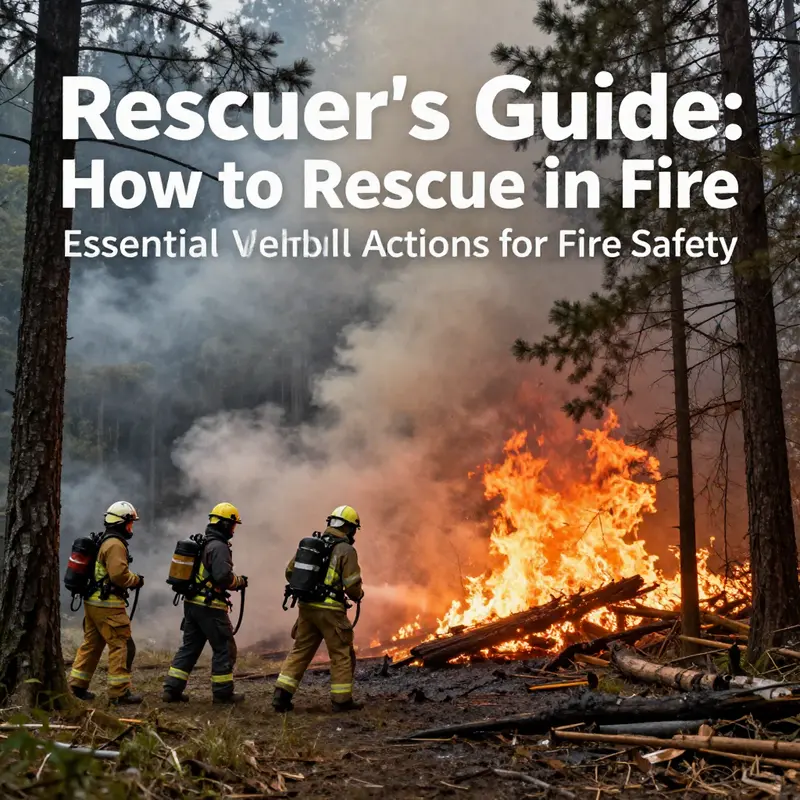
Fire rescue rarely unfolds like a drill. In real emergencies, the scenes shift quickly from quiet corridors to choking smoke, from a familiar hallway to a crumbling stairwell. This chapter walks through the most demanding moments you may face when rescue becomes a matter of seconds. It treats bystander action not as reckless bravado but as informed, deliberate intervention shaped by preparation, situational awareness, and a clear understanding of when to intervene and when to yield to professional responders. Across years of casework and safety guidance, certain patterns emerge: the value of a fast, accurate assessment; the necessity to act within your limits; and the power of simple, repeatable habits that keep you and others safer amid chaos.
First, be prepared for bystander action. Neighbors who react with calm urgency rather than panic can save lives. Do not assume that you must wait for a command. If you smell smoke or see fire, you can make a quick, measured choice to close doors behind you, alert others, and move toward safety while avoiding closed spaces you cannot escape from. When possible, shout a brief warning, identify a safe exit, and avoid obstacles that could trap you or someone else.
Second, the moment when someone is trapped in a room is among the most perilous situations. If smoke thickens and heat rises, time contracts. The guiding rule is simple but demanding: do not expose yourself to toxic gases or extreme heat to attempt a rescue unless you can do so without compromising your own safety. If you enter, protect your mouth and nose with a dry cloth, stay low to the floor where the air is cooler, and move quickly with purpose. If the person can walk, offer a hand and guide them to a direct path to safety. If there is risk of entrapment, retreat and call for professional help rather than forcing a passage that could end both lives.
Third, understand when structural elements demand restraint. Doors can trap a person behind you or become a barrier if you cannot control the momentum of a sudden flame front. Never push beyond a point where you lose situational awareness. When stairs are crowded or the floor is unstable, stay with your group, communicate clearly, and keep a steady pace toward a known exit. In some cases the safest choice is to stay put in a safe room with a door closed and a known escape plan for responders rather than running into a collapsing space. The aim is not heroism for its own sake but targeted, disciplined action that increases the odds of survival for you and others.
Fourth, tasks involving assisting untrained helpers or children require extra care. Communicate clearly, move slowly if needed, and protect the person from heat and smoke using whatever barrier you can safely improvise. If you are a bystander with medical skills, apply basic first aid only if you can do so without compromising your own safety, and be ready to direct responders to the best entry point.
Finally, drills and rehearsals matter. Regular practice with a simple plan becomes second nature when panic rises. Memorize two or three exit routes, know when to retreat, and keep a clear mindset that your action is meant to buy time for the professionals. In the end, the core message remains practical: act decisively, but stay within the lines drawn by your training, your instincts, and your responsibility to protect life without becoming another casualty in the smoke.
Final thoughts
By understanding the protocols of immediate action, employing the stay-put strategy, following safe evacuation procedures, and adapting to special situations, we can enhance our preparedness and response to fire emergencies. Everyone, from firefighters to community residents, plays a pivotal role in mitigating the effects of fires. Emphasizing training, awareness, and a proactive mindset ensures that we are better equipped to handle these crises when they arise. The call to action remains clear: prioritizing prevention and preparedness is key to fostering a safer community.