
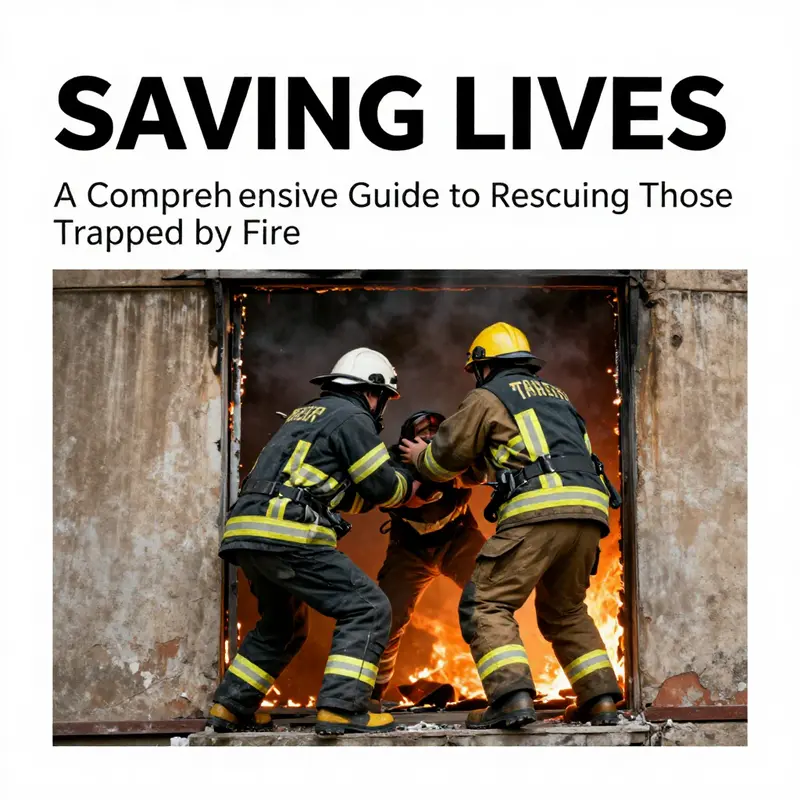
The alarming reality of fires can leave those trapped in a desperate situation. Knowing how to appropriately respond in such dire circumstances is not just about urgency; it is about being strategic and calm. This guide outlines critical steps for effective rescues, underscoring the importance of assessing the situation, proper communication with emergency services, strategies for safe evacuation, and the psychological support necessary during these critical moments. Each chapter builds on the previous one, offering a holistic approach to fire rescue situations.
In the Heat of Fire: Calm Judgment, Safe Boundaries, and the Calculated Path to Rescue
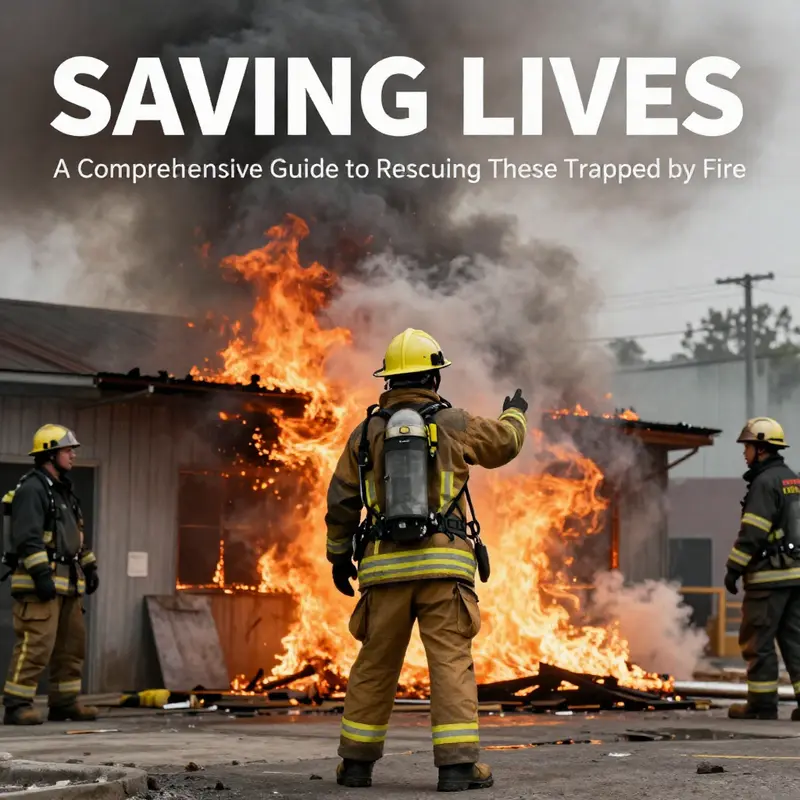
The moment a fire breaks out and smoke begins to curl through hallways, the instinct to act is natural. Yet the most daring impulse can become a deadly mistake if it supplants clear thinking. This chapter follows a single throughline: any rescue effort must begin with a steady mind, a sober assessment of the danger, and a carefully bounded plan that protects both the rescuer and the trapped. When flames lick toward you, speed is essential, but speed without judgment is a hazard. The heart may race, but the mind must settle into a rhythm of observation, evaluation, and decision. Only then can the path toward safety be chosen with confidence rather than bravado. The practical truth drawn from real incidents is not glamorous heroism but disciplined restraint paired with decisive action taken at the right moment.
The first act in a fire is not a rescue but a risk assessment conducted in real time. As soon as you become aware of a fire or learn that someone is trapped, slow your breath and scan the scene. Ask yourself a quiet series of questions: How large is the fire? Is it spreading toward your escape routes? How thick is the smoke, and does it travel with the wind or along the ceiling? Are there doors or windows that remain open, allowing a potential route for a careful exit, or is the path blocked by heat and flame? This moment of deliberation is not hesitation but a protective ritual. It acknowledges danger while preserving cognitive clarity needed to act later. If the fire is already large, or if smoke is dense and moving quickly toward exits, the safest course is not a direct entry. In such cases the aim shifts from immediate extraction to rapid notification and guiding others to safety from a distance. The decision to stand back is not surrender but the opening move in a strategy that preserves life until trained professionals can intervene.
Even when the urge to rush in flares up, you must protect your own safety first. Firefighting professionals are trained to operate within conditions that overwhelm untrained bystanders. The protective gear, the oxygen supply, the tools, and the experience to assess collapse risks, flashover potential, and structural integrity are beyond the reach of most lay rescuers in a moment of crisis. Entering a burning building without that protection often multiplies the danger, jeopardizing both the person you mean to save and you yourself. The principle remains simple and powerful: you cannot help others if you become a casualty. This understanding does not condemn compassion; it channels it into the most effective form—preventing additional harm while awaiting the arrival of those who are equipped to perform high-risk tasks.
With your own safety anchored, the next essential step is to call emergency services without delay. The exact numbers vary by location, but the principle is universal: report the fire clearly and provide precise information. State the address, floor level, and room or area where the person is located, and share any visible signs of distress, such as smoke from a window or unusual heat near a doorway. In a 2026 incident in Guangxi, timely reporting enabled rescue teams to reach trapped individuals within minutes, illustrating how crucial immediate notification can be. While you wait for professionals, your role shifts toward facilitating safe evacuation for others who can move. If someone is conscious and capable of walking, you may guide them toward a safe exit along a known route, keeping the line of sight open and the path well lit. Speak calmly and clearly as you lead, using simple directions and steady pace. The act of guiding becomes part of a larger choreography—protecting them from confusion and panic as you navigate toward safety together.
The boundary between rescue and risk is defined by the condition of the environment and the capability of the rescuer. If the fire has formed a barrier between you and the trapped person, or if the corridor fills with smoke to the point of blurring vision and muffling sound, the duty shifts toward sheltering those inside and delaying entry. In such moments, close doors between the fire and the space where people are trapped, if possible, and seal gaps with damp towels or clothing. A sealed room can become a temporary refuge, reducing heat and smoke ingress while you await firefighters. This is not surrender but tactical restraint—buying crucial time for the professionals to work with specialized equipment such as protection gear, search cameras, and ventilation tools. The emphasis is on conversion: convert momentum into a measured plan, not a reckless dash into danger.
When it is safe to move toward the trapped person, proceed with care and humility toward a chosen exit. If the path is clear, a conscious person who can walk can be assisted to the exit using a direct and simple route. The helper should stay close, maintain eye contact, and stop if heat or smoke intensifies. If smoke is present, advise the person to stay low and cover the mouth and nose with a cloth, preferably damp, and to crawl if possible. Smoke and toxic gases rise, so traveling along the floor reduces inhalation risk. If there is more than one affected person, prioritize those who can walk and communicate, and leave the most vulnerable to the professionals while you manage the safer exits for others who can move. For those who cannot walk—elderly neighbors, injured individuals, or small children—the method changes. A back carry, a secure drag, or a gentle blanket pull might be necessary, but only if you can perform it without placing yourself at high risk. Elevators must be avoided; they can fail when heat and power systems are compromised. The objective is not to fetch everyone at once but to move those who can be moved while preserving energy and balance, preventing further injury, and maintaining a calm, steady pace.
In the middle of a high-pressure moment, moral and psychological support becomes a vital tool. Victims trapped in fire experience fear, confusion, and the perception of danger that can magnify with each moment of exposure. Communicate with clarity and tone that conveys safety and direction. A few simple phrases—stay low, follow me, we are getting out—can anchor a person in the situation and reduce panic. Your voice becomes a lifeline, a thread that links the person to the possibility of rescue. This has the added benefit of drawing out cooperation, which makes small tasks, like moving from one room to another or adjusting an improvised improvised shelter, more feasible. The mental dimension of rescue is not peripheral; it is central to the probability of success. A calm, steady presence helps others conserve energy, regulate breathing, and follow instructions when their bodies are reacting to heat and smoke. If you cannot physically pull someone away from danger, your guidance alone can transform a precarious moment into an orderly evacuation toward safety.
Despite the best preparation and the clearest intent, there are moments when the safest choice is to pause, seal a doorway, and wait for professionals. When a space becomes too dangerous to enter, shutting a door behind you creates a barrier against heat and smoke. Wet towels can improve that barrier by reducing gaps where heat can penetrate and by slowing the movement of smoke between compartments. In many cases, this action can extend the trapped person’s window of safety, providing firefighters with a more favorable environment to operate in. Waiting for professional responders does not imply a failure to act; it acknowledges the limits of non-professional intervention and the high stakes of attempting a risky rescue without the proper equipment. This measured decision can be life-saving because it preserves both the trapped occupant’s chances and your own. A real-life scenario from 2026 in Guangxi highlighted how a family turned a bedroom into a safe zone by sealing doors with wet towels and waiting for rescue, demonstrating the practical value of controlled, patient action.
The overarching guideline that should echo through every decision in a fire scene is deceptively simple: rescue only when it is safe to do so. The impulse to save a neighbor is noble, but bold action without safeguards can convert a rescue into a tragedy. If a rescue is possible without placing you or the victim at unacceptable risk, proceed with care, using the fewest and most reliable actions necessary to move the person to a safe exit. If there is any doubt, call for help and wait for professionals. Your role can still be crucial even without physically pulling someone out; guiding, shielding, and maintaining a calm environment can make the difference between life and death for the person you are trying to help. The most effective rescues often emerge from a combination of quick thinking, prudent restraint, and the willingness to seek and accept external aid when the situation exceeds one person’s capacity to manage safely.
The core takeaway for any reader is a practical maxim that anchors the impulse to act in the right moral compass: rescue only when safe to do so. This principle aligns with the wider body of fire safety guidance that emphasizes early reporting, protection of life through immediate evacuation of those who can move, and the intelligent use of barriers to slow heat and smoke while awaiting trained responders. Preparedness is a mindset. It is trained in families who practice escape routes, smoke alarm checks, and the habit of keeping paths clear and doors closed to slow the spread of fire. It is exercised in communities that know how to seal rooms, to shelter in place when required, and to trust the professionals to bring the situation under control. The difference between a successful outcome and a catastrophe often hinges on whether bystanders maintain calm, act with restraint, and deploy the right mixture of self-protection, situational awareness, and timely communication with emergency services.
For those seeking grounding models beyond personal judgment, consider resources that discuss how communities prepare for and respond to wildfire and domestic fire events. A practical takeaway from these materials is the value of pre-planned escape routes and the habit of reviewing them with others so that everyone knows the exact steps to take in a crisis. A relevant internal resource discusses emergency preparedness gaps in California wildfires and offers a broader lens on how households and neighborhoods can strengthen readiness ahead of time. See this discussion under emergency preparedness gaps in California wildfires for a deeper look at building resilience before a fire starts. emergency preparedness gaps in California wildfires
In conjunction with this personal readiness, it is essential to acknowledge the role of formal firefighting services. Recognizing their expertise and equipment helps temper expectations about what can be accomplished without professional help. You deserve to be protected, and others deserve to be saved, but not at the cost of becoming a casualty yourself. The discipline of waiting for trained responders does not absolve you of responsibility; it reframes responsibility as prudent stewardship of life, emphasizing that there are moments when strategic retreat and accurate reporting are the most courageous acts anyone can perform. By embracing calm judgment, risk assessment, and careful coordination with responders, you contribute to a chain of survival that can extend far beyond a single rescued individual. In the end, the aim is not to perform heroics in the heat of battle, but to enact a measured, protective response that preserves life while minimizing risk to all involved.
For readers seeking a structured, standards-based frame for fire safety and rescue practices, authoritative guidance exists in public safety resources that underpin both prevention and response. NFPA resources, which compile science-based standards and public education materials on life safety, prevention, and emergency response, offer comprehensive guidance that can inform training, drills, and community planning. Access to these materials can strengthen the readiness of individuals and households, ensuring that the next time danger arises, responses are swift, safe, and effective. To explore these standards and guidelines, consult NFPA resources: https://www.nfpa.org/.
In sum, the path to saving someone trapped by fire begins with a clear, calm mind and ends with a disciplined, protective approach. You act within your limits, you call for help without delay, you guide and assist only when it is safe, and you shelter those who cannot move when conditions demand it. The blend of situational awareness, patient restraint, and prompt professional involvement creates the most favorable balance between courage and caution. As the chapters around this topic continue to unfold, the message remains consistent: be prepared, think clearly, and prioritize safety first. This is how communities translate the fear of fire into a practical, life-preserving response that protects both the guardian and the one in danger. The outcome depends not on a single heroic act, but on a sequence of thoughtful decisions made with composure, supported by a network of trained responders who can bring the scene under control.
External resource follow-up: For authoritative guidance on fire safety and rescue practices, refer to NFPA resources: NFPA resources.
When the Walls Heat Up: A Cohesive Call for Calm, Strategy, and Clear Communication in Fire Rescue
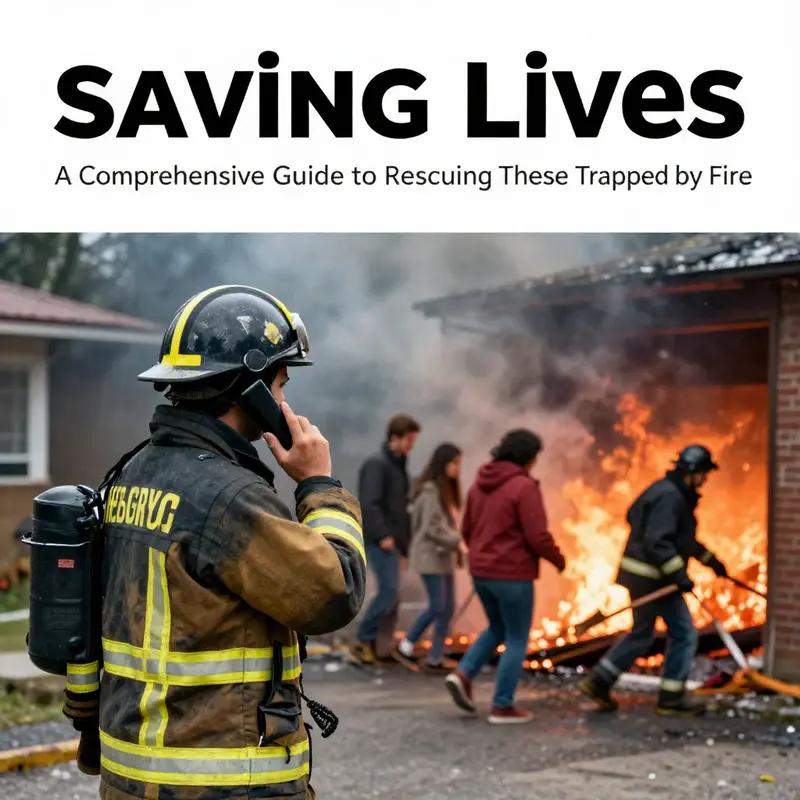
The air trembles with heat and a clocklike urgency ticks in the ears of anyone who has faced a fire. In those moments, rescue is less a heroic impulse than a carefully choreographed sequence that preserves life. This chapter weaves together the most reliable, tested principles of emergency response with the human realities of fear, terrain, and decision making. It is not a blueprint for bravado but a guide to maximizing safety for both the person trapped and the bystander charged with helping. The first and most universal truth is painfully simple: entering a fire scene without training and the proper equipment is almost always a choice that trades one danger for another. The goal of rescue work in a fire is to save lives while minimizing risk to everyone involved. When we respect the limits of our own training, we can still influence outcomes profoundly through preparation, calm, and coordinated action.
From the outset, the most critical action is to act quickly to summon professionals and to organize the space around the emergency. Call emergency services without delay and deliver a precise, unambiguous report. A single sentence can determine how fast responders arrive: the address, the floor or level, visible landmarks, and whether anyone is trapped. Nature adds chaos to the scene, but the dispatcher can translate information into a faster, safer path for firefighters. This is where the human moment matters most. Our instinct to rush in can be noble, yet if it is not tempered by a clear, factual briefing, it may hinder those who arrive with the right tools and training. In real world incidents, the difference between minutes and moments can be the difference between life and smoke inhalation for someone who is trapped. The rule to remember is direct and blunt: do not enter a building that is already fully involved. If the fire is large or spreading rapidly, your best action is outside the danger, guiding others to exit safely and letting professionals perform the rescue with the equipment designed for that purpose.
If the situation allows a possible rescue, the margin for error remains razor-thin. The Stay Low, Go Fast principle becomes a practical hinge on which the outcome turns. Smoke and heat rise; the cleaner air and cooler temperatures hug the floor. The rescuer who can move softly and quickly is not defeating the fire but avoiding the most lethal elements of it. Protecting oneself is not selfish; it is a prerequisite for protecting others. Before moving toward anyone who is trapped, the rescuer should check the path, evaluate whether doors or barriers are intact, and shield the mouth and nose with a damp cloth to filter out smoke. The goal is to move in a way that minimizes both exposure to toxic gases and the risk of becoming another casualty. If the person is able to walk or be guided, lead them to the safest exit path using calm, clear commands. Do not shout frantic instructions that might overwhelm or confuse. Instead, speak with measured cadence, repeating the safest route and the next action to take. The emphasis is on coordination, not impulse. A calm voice can be as effective as a steady hand when fear threatens to freeze movement.
Yet there are many scenarios where escape is not immediately possible. In these moments, sheltering in place becomes a strategic, not passive, choice. The shelter-in-place approach is not surrender but a deliberate plan to buy time while professional rescuers approach. The first step is to close the door to the room containing the fire, which creates a barrier against heat and smoke. If possible, seal gaps under doors and around windows with wet towels or clothing. The aim is to reduce the flow of smoke into the space where people wait. This is not a guarantee of safety, but it is a proven technique to improve conditions inside a sealed area. Inside this temporary sanctuary, it is crucial to create an escape path if the opportunity arises. A window that can be opened, a balcony, or a feed line to a safer route can become the next leg of the journey. When possible, prepare a line or rope that can be used to reach a lower height for a potential vertical descent, ensuring that any improvised line is strong enough to bear weight. The act of signaling for help is equally important. Shouts, waving of bright cloths, or the use of a flashlight can help rescuers locate those who are sheltering. Everyone should remain as still as possible to minimize oxygen consumption and heat exposure, while still maintaining a visible presence for rescuers.
Communication remains the thread that holds together every phase of a fire rescue. As soon as possible, keep lines of contact open with the people inside and with the professionals outside. When addressing the trapped, clear executable commands beat the ambiguity out of fear. The messages should be simple: stay low, cover your mouth, follow me, we are getting out. For those sheltering in place, periodic updates to the rescuers by the occupants help them gauge location, conditions, and any changes in the situation. On the other end, the call to 911 should be concise and informative. Use a steady voice, deliver the address, describe the layout of the building as you know it, specify the number of people trapped, and pass along any changes in conditions or accessibility. If conditions change—if a door becomes inaccessible, if smoke intensifies, if someone resumes movement—the update should be conveyed immediately. The goal is speed and accuracy: a precise location allows responders to bring the right equipment to the exact place where it is needed most.
A further layer to this work is the decision about when to wait for professionals. The safest course in many cases is to close the door and wait for help, especially when the fire sweeps across an entire room or floor or when visibility is reduced to near zero. Closing the door is a temporary shield against heat and smoke and can freeze time for firefighters, allowing them to arrive with the tools used to breach barriers safely. The real-world value of this approach is captured in recent incidents where families created safe zones by sealing doors with wet towels, turning a bed into a staging area, and waiting for rescue while maintaining a dialogue with authorities. It is tempting to improvise, but improvisation without training can trap someone in a final tactical misstep. When in doubt, wait. Let the trained professionals orchestrate the extraction, while you preserve your own safety and that of the potential victim by maintaining a shielded, low-oxygen environment inside.
The practical techniques for those who cannot walk are a core part of this narrative. The back carry, the fireman’s carry, and drag methods are standard in the hands of trained personnel, yet they also serve as a reminder that any attempt without proper technique can cause more harm than good. Elevators and escalators must be avoided at all costs as they are prone to failure or jam during a fire. If a person is able to move even a little, slow, deliberate movement toward a known exit path reduces the risk of additional injury. The use of a blanket or coat as padding can ease the stress on joints and muscles during this transfer, while still maintaining control over the victim’s body and ensuring their airway remains clear. When the scene narrows into a single corridor or a staircase becomes impassable, the decision to improvise a secondary route should only be made after a quick, honest assessment of the risk and the potential for a successful exit. In many cases, an alternate exit or an exterior window with a sturdy anchor can be the bridge to safety if the main route is compromised. The balance between speed and safety in this context depends heavily on the observer’s ability to read heat, smoke, and structural integrity, all of which come from training and prior planning rather than raw impulse.
In the space between action and outcome, the emotional dimension of rescue emerges. Fear is contagious, and panic can intrude even on the most composed bystander. The role of the rescuer includes providing psychological support during the process. Calm, decisive reassurance—words that acknowledge fear while offering clear instructions—helps the trapped person cooperate. The voice matters as much as posture. The simple phrases stay low and follow me repeatedly can anchor a frightened person in the reality of a safe plan. This human element is not optional; it is a crucial instrument in the repertoire of effective rescue. When rescue teams arrive, the atmosphere shifts from improvisation to coordination. The on-scene leaders weave together the reports, routes, and conditions described by bystanders with the equipment and expertise they possess. A well-coordinated effort reduces time to rescue and increases the probability of a successful outcome for multiple occupants who may be navigating a shared hazard.
There is a quiet continuity to these practices that transcends the specifics of any single incident. It is the recognition that the most powerful tool in a fire emergency is information: accurate location data, a clear account of who is trapped, and the ongoing report of changing conditions. It is also the recognition that the responder who remains outside is not passive; they are actively managing a dynamic situation by directing others to safe exits and by bearing witness to evolving danger so that professionals can intervene with precision. This is why effective emergency response hinges on a culture of training, rehearsal, and communication that travels with people into every home, building, and community. When those habits are in place, the line between danger and safety becomes not a blurring boundary but a well-lit route toward safety.
To link this practical framework to broader preparedness, consider how communities structure their response to actual fires. Preparedness reduces the unknowns that make rescue risky. It translates into routine drills, clear signage, marked escape routes, and a shared language of safety that can be activated in moments of heat and fear. It also means acknowledging limits: not every scenario will permit rescue without professional equipment or protective gear. In those instances, the most humane choice may be to call, to guide, to shelter, or to wait for professionals who can perform the complex, high-risk operations required. This disciplined approach preserves life by aligning actions with the realities of fire dynamics and human physiology, rather than with a wish to be heroic at any cost. The overarching principle is straightforward and transformative: small fire still demands exit quickly; thick smoke requires closing doors and waiting for help. Acting on this principle makes the difference between a tragic outcome and a story of resilience.
The integration of these ideas into everyday life begins with an ongoing commitment to readiness. Families, tenants, and workers in high-risk environments should routinely review escape routes, identify safe spaces, and practice communication plans that can be activated under stress. The mental rehearsal of the sequence—from hearing the alarm to reporting to dispatch, from choosing a safe path to guiding others, from closing a door to waiting for rescue—creates a kind of muscle memory. That memory becomes a resource you can draw upon when smoke fills a hallway and the clock narrows to seconds. In this sense, rescue is as much about what you have prepared to do as what you can do in the moment. It is about designing environments and habits that reduce the likelihood of confusion, miscommunication, and misjudgment under pressure. When a fire test arrives, it tests more than the structure of a building; it tests the coherence of a community’s approach to safety.
The synergy of calm, strategy, and clear communication thus emerges as the chapter’s through line. Every action we take in the heat of the moment becomes a ripple that can save multiple lives if guided by training, restraint, and respect for professional boundaries. The chain of decisions—from making the initial call to selecting a safe exit route, from sheltering when necessary to signaling responders—reflects a culture of safety that values life over spectacle. And while it is essential to avoid unnecessary risk, it is equally essential to avoid paralysis. The right balance is achieved when we remember that each person who acts as a capable, informed participant in an emergency increases the odds that everyone else will have a chance to walk away from danger. The chapter ends not with a final act of rescue, but with an invitation to carry these principles into daily life, so that when a fire arrives, the room fills with a practiced rhythm rather than panic.
Internal resource for context and further study: California wildfire emergency management failures. This reference underscores how preparedness, clear roles, and rehearsed protocols shape outcomes when fire meets structure and people. By embedding these lessons into local planning and household routines, communities can build resilience that translates into fewer casualties and quicker, safer evacuations in real emergencies. As these practices circulate through schools, workplaces, and residential communities, the chorus of calm, precise action becomes the norm rather than the exception. A well-rehearsed response is not a substitute for professional rescue teams, but it is the indispensable first line that safeguards life until those teams arrive.
External resource: https://www.china-fire.gov.cn/news/2026/gx-fire-rescue/
When Courage Meets Smoke: Mastering Safe Evacuation and Smart Alternatives for Rescuing Someone Trapped by Fire
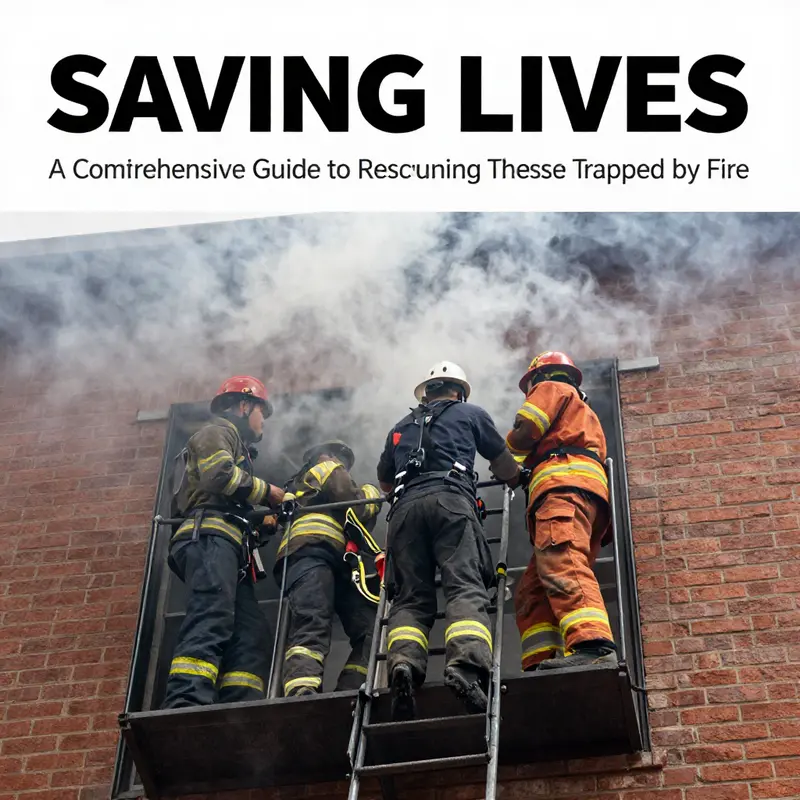
The moment a flame takes hold and smoke begins to thicken, the human impulse is to act with courage. Yet true courage in a fire lies not in rushing forward, but in choosing a path that preserves life—both for the person you aim to help and for yourself. This chapter explores a seamless, cohesive approach to rescue that starts with risk assessment and ends with safe, practiced actions that align with professional standards. It is a narrative of how to balance keenness to help with the disciplined caution that fire rapidly demands. By weaving practical tactics with the wisdom of trained responders, we can imagine a rescue that looks steady, methodical, and humane, rather than improvised and reckless. The goal remains constant: to maximize the chances of survival while minimizing harm to anyone involved, including bystanders who may become crucial helpers in the moments before professionals arrive.
The first step, often overlooked in the heat of the moment, is to stay calm and assess. Panic narrows perception and delays crucial decisions. With a broad view of the scene, you can determine the fire’s size, direction, and the spread of smoke. A quick mental map becomes a lifesaving tool: where is the nearest exit, which routes are blocked, and where could a safe platform for aid exist? The moment you identify a clear and safe path, you should act to protect yourself and others by calling emergency services without delay. In China, emergency communications have repeatedly shown that rapid notification accelerates response times. In a 2026 Guangxi incident, timely reporting allowed rescue teams to arrive within minutes, dramatically increasing the odds for occupants who were trapped. When you dial 119 or your local number, provide the exact address, the floor level, and explicitly state if anyone is trapped. The more precise the information, the faster firefighters can deploy the right resources to the right location.
There is a cardinal rule that governs all actions in a blaze: you should not enter a burning building unless you are trained and equipped to do so. The risk of a rescue turning into a new casualty is a hard boundary in fire safety. The principle is simple but often contested in the heat of the moment: your life matters as much as the person you wish to save, and you cannot save someone if you become a casualty yourself. This is not a plea for passivity; it is a sober acknowledgment that the highest form of heroism is to avoid becoming a second victim. By recognizing the limits of your training and resources, you set the stage for decisions that reduce overall danger and enable the professionals to do their jobs with the greatest possible effectiveness.
When the fire is small and the path to exit is clear, you can assist by guiding others who can walk to safety. A low, crawling posture stays ahead of the thicker, hotter smoke that climbs rather than spreads horizontally. Smoke and toxic gases are denser near the floor early on, so keeping your body close to the ground reduces inhalation risk. Encourage those who can walk to move deliberately, calmly, and with minimal panic. If a person is able to do so, have them cover their mouth and nose with a damp cloth to help filter out some fumes. It is often the quiet, repetitive guidance that keeps people oriented and reduces chaos, allowing them to find the nearest exit without frantic scrambling.
There are times when the safest option is to seek an alternate escape route. When stairwells are filled with smoke, or the main route is compromised, windows, balconies, or designed fire escapes can become viable exits. In real events from 2026, families have demonstrated how pre-installed escape features—such as balcony routes or hatch access—provide critical alternatives when doors and stairs fail. The essential caveat is that any improvised exit must be secure and stable. If you must use a rope or an improvised ladder, test its strength before applying your full weight. Secure anchors, quick checks for fraying, and controlled descent preserve you and those you are helping from a fall or a collapse of the improvised system.
For individuals who cannot walk or are heavily burdened by injury or age, rescue techniques must be practiced, not improvised. The back carry, the fireman’s carry, and the drag are time-tested methods used by trained teams. Each technique requires careful attention to the person being moved: support the head and neck, ensure the weight is distributed to prevent jolts, and maintain a steady, downward pressure to counter the effect of gravity on unstable surfaces. Elevators should be avoided entirely in fires; they can fail or trap you between floors. Instead, move with the clarity of a practiced routine, taking steps that minimize jostling, sudden movements, or abrupt changes in direction. If you encounter air-drifted heat or rising smoke while assisting, adjust your path to stay low and direct your companion toward the nearest safe exit.
A critical, often-overlooked aspect of rescue is the psychological dimension. Fear and panic are common companions in a fire, and calming communication can be as impactful as any physical maneuver. A steady voice that uses concise commands—Stay low, Follow me, We’re getting out—can help a trapped person regain a sense of control and reduce the likelihood of impaired judgment. Verbal reassurance merges with physical guidance to maintain cooperation, especially when the person being helped is disoriented or overwhelmed by heat. This is not mere sentiment; in high-stress situations, cognitive clarity is a practical tool that improves coordination between the victim and the helper, increasing the probability of a successful outcome.
There are moments when the safest course is to wait for professionals rather than press forward. When the fire has already engulfed a room or floor, closing the door creates a barrier against heat and smoke, buying precious minutes for firefighters to arrive. A disciplined use of door closure, combined with sealing gaps with wet towels or clothing, can transform a dangerous space into a temporary sanctuary. In Guangxi, a 2026 incident demonstrated how a family sealed a door and converted a bedroom into a protected zone, buying time until rescue teams could intervene. The core lesson is simple: you do not have to rush through danger to demonstrate care. Sometimes the most compassionate act is to hold a position of safety, preserve air and energy, and wait for professionals who possess the tools and training to remove occupants safely from a heat-filled environment.
The cautionary counterweight to action is the warning against DIY rescues that rely on improvised gear or untrained improvisation. Ladders and improvised ropes may seem like obvious aids, but their incorrect setup can yield catastrophic falls or entrapment. The use of specialized equipment—hydraulic cutters, rescue stretchers, or aerial platforms—belongs to trained responders who understand how to manage pressure, heat, and instability in structural environments. Even with the best intentions, mishandling such devices can compound danger and complicate the rescue effort for all involved. In the spirit of responsible action, the boundary between brave intention and reckless risk is often the difference between success and tragedy. After a rescue, medical evaluation is essential. Smoke inhalation can produce delayed injuries, and symptoms may appear hours later. A professional medical assessment helps ensure that hidden damage is detected and treated promptly, reducing the risk of long-term harm.
The practical synthesis of these elements—assessment, protection, careful guiding, alternate routes when needed, specialized techniques for those who cannot walk, psychological steadiness, prudent waiting for professionals, and post-rescue medical care—constitutes a coherent framework for safe action. The core principle remains straightforward: small missteps can have outsized consequences in a fire. The guiding maxim that aligns with expert protocols—small fire? get out fast. thick smoke? close the door and wait—frames a decision-making process that prioritizes the preservation of life above all else. It is a reminder that rescue is not about heroics in the moment; it is about disciplined, informed choices that maximize survival odds for all involved.
For a broader perspective on regional evacuation dynamics and the limitations of planning under pressure, consider the case studies and analyses available at california-wildfire-evacuation-failures. This internal reference highlights how even well-intentioned strategies can falter under real conditions, underscoring the value of flexible, well-practiced procedures that prioritize safety over speed in chaotic environments. See california-wildfire-evacuation-failures for a concise synthesis of these lessons and their implications for community preparedness and individual response.
In closing, the rescue approach outlined here is not a single tactic but a unified orientation toward safety. It asks you to balance courage with caution, to act decisively yet within the bounds of training and capability, and to recognize when the most effective act of care is to stay out of harm’s way until professionals can intervene. This perspective aligns with official guidance that emphasizes rapid reporting, avoidance of entry into active fire zones, the use of alternative exits when necessary, and the deliberate, low-risk management of any person who cannot easily move on their own. It is through this integrated approach that we honor both the lives we seek to protect and the lives we must safeguard in the process of rescue.
External reference: https://www.china-fire.gov.cn/news/2026/gx-fire-rescue/
Mind in the Flame: Psychological Support During Rescue and Respect for Professional Boundaries
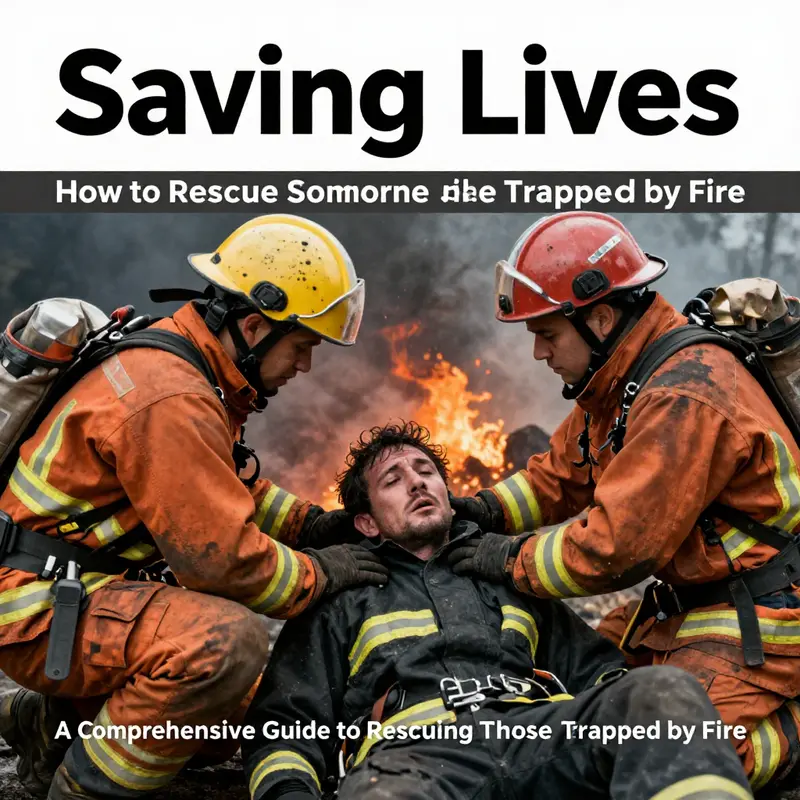
When fire consumes space and time, rescue becomes a test of mind and nerve. The rescuer’s calm presence, clear instructions, and steady tone help survivors move with confidence even under smoke and heat. This chapter outlines how to balance rapid action with psychological care, how to keep boundaries intact, and how to connect survivors to long-term support without overstepping competencies.
Effective communication pairs words with action. Short, directive sentences reduce cognitive load, while nonverbal cues provide stability. The rescuer’s own emotional state is contagious; a calm center can prevent panic from spiraling and can keep the exit path clear.
Postescape, emotional triage begins alongside physical triage. Acknowledging fear, validating experience, and avoiding minimizing statements helps the survivor feel seen. Then the rescuer guides toward safety and connects with professional resources for longer-term care.
Boundary management is essential. Rescuers do not diagnose or treat mental health conditions; they provide containment during the crisis and facilitate access to licensed professionals who can help after the scene.
Sustained support completes the rescue narrative. Follow-ups, peer support, and community programs, together with access to professional care, help survivors rebuild a sense of safety and belonging. Responder wellness is part of the system, ensuring teams remain capable for future calls.
Training and ethics reinforce the practice. Ongoing education in compassionate communication, reflective listening, and boundary awareness creates a culture that honors life and mental wellbeing as part of emergency response.
Final thoughts
In emergencies like fires, every second counts, and the actions taken can have life-altering consequences. By staying calm, communicating effectively, utilizing safe evacuation techniques, and offering psychological reassurance, individuals can significantly contribute to rescue efforts. Ultimately, understanding the limits of personal capabilities and waiting for trained professionals when necessary can safeguard against becoming another victim. Awareness and preparedness are crucial; by internalizing these principles and practicing them in community settings, we increase our chances of saving lives during fire incidents.