
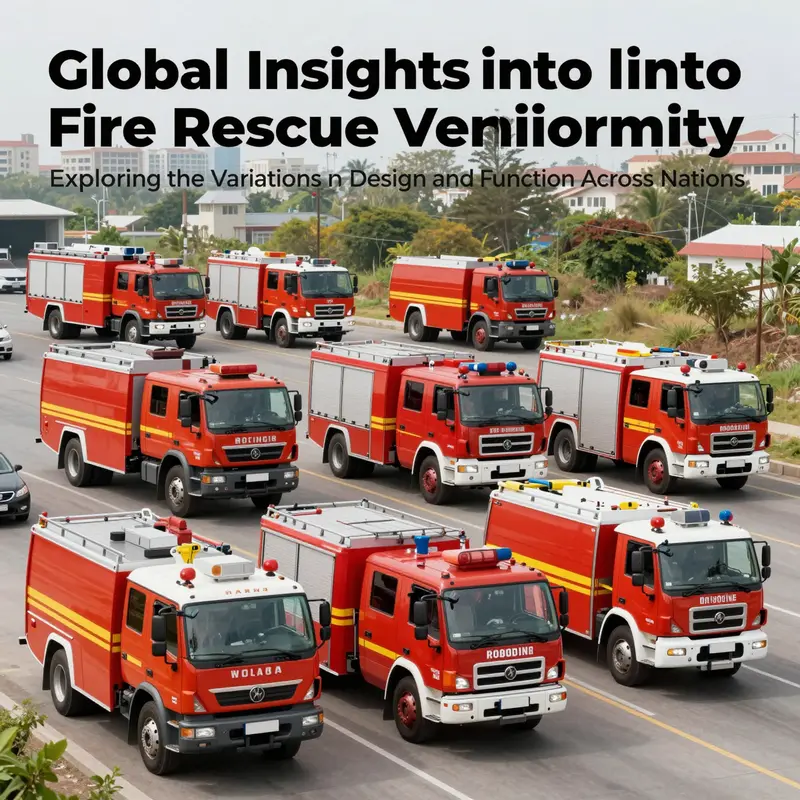
Fire rescue vehicles play a critical role in safeguarding communities by responding to emergencies efficiently. However, these vehicles are not uniform across different countries; their configurations, designs, and standards vary significantly. Understanding these variations is crucial for firefighters, emergency rescue personnel, educators, and community residents, as it highlights how local needs shape the capabilities of fire rescue services. This article delves into four key areas: vehicle design and dimensions, chassis and manufacturing approaches, equipment and system configurations, and specialized customization alongside regulatory standards. Each chapter provides insights into how these aspects adapt to specific environmental and operational requirements, ensuring effective emergency responses worldwide.
Beyond One Size: Unpacking the Global Diversity of Fire Rescue Vehicle Design and Dimensions
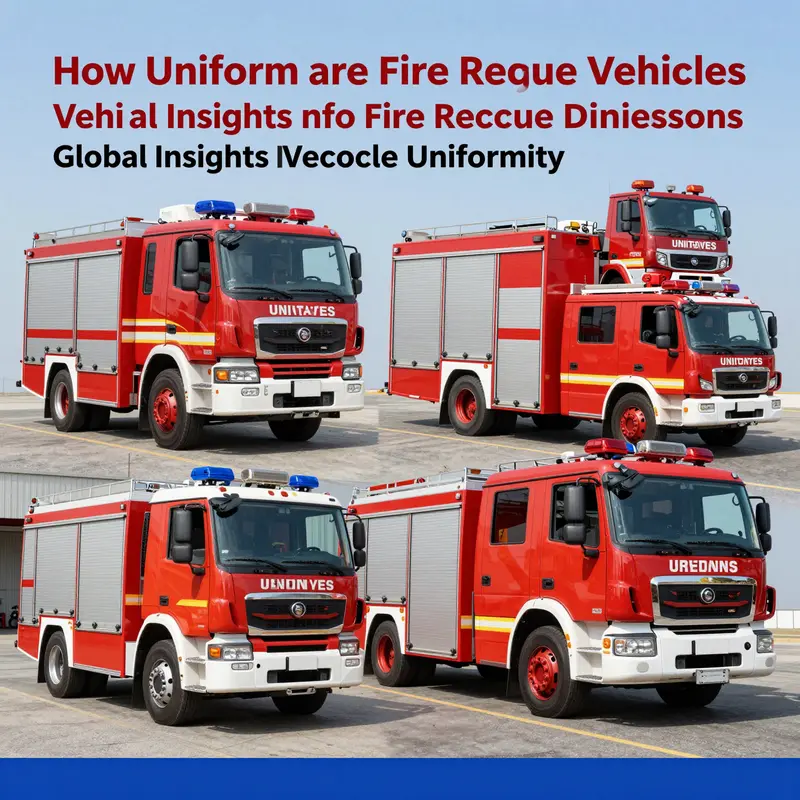
Fire rescue vehicles do not travel the world in lockstep. They move through cities and landscapes shaped by very different rules, roads, and risks, and their designs reflect that reality with a degree of variety that can seem surprising at first glance. The broad pattern across regions is not simply a matter of preference or budget; it is a response to how emergencies unfold in different environments. Road networks, building typologies, and the density of urban cores shape what an emergency vehicle must do and how easily it can reach the scene. National regulations and safety codes further mold every curve and dimension, ensuring vehicles perform under pressure while meeting local expectations for maintenance, interoperability, and training. As a result, even though all fire rescue apparatus share a common mission—rapid access, reliable propulsion, and effective tool use—their physical form and internal layouts speak to a complex calculus of place, purpose, and policy more than to a single, universal standard of design.
In design and dimensions, the most visible differences shadow the underlying geography of fire service operations. In the United States, fleets often embody the scale of suburban and exurban life; roads are frequently wider and facilities more dispersed, allowing for larger, more capacious chassis that emphasize cargo space and crew comfort. These trucks are typically engineered to haul substantial payloads and to store a wide array of equipment in highly accessible compartments. The consequence is a vehicle that can feel almost cavernous inside, designed to deploy multiple hoses quickly, stage heavy gear, and accommodate a sizable crew for extended responses. In contrast, European fire rescue vehicles tend to prioritize maneuverability and urban agility. Narrow streets, tight corners, and densely built environments demand compact, highly maneuverable machines whose external dimensions, while still capable, are tightly attuned to the geometry of historic city cores. The result is a different balance between storage capacity and accessibility, between external silhouette and interior workflow, with a bias toward efficient transit through crowded streets and tunnels. In China, the design philosophy often sits between these poles. Urban intensification, rapidly expanding cities, and evolving traffic patterns encourage a balanced approach—vehicles robust enough for urban rescues but engineered with a consciousness for traffic flow, easier maintenance, and predictable behavior on mixed road types. Across all three contexts, the vehicles retain one core principle: they must fit the conditions in which they operate, rather than forcing those conditions to conform to an existing template.
The chassis and manufacturing approach further reveals regional priorities. North American practice has long favored purpose-built, highly customizable chassis that optimize firefighting performance as a specialized function. Rather than relying primarily on off-the-shelf commercial platforms, these regions push for interiors and systems engineered to accommodate specific workflows, with interiors redesigned to support rapid deployment and resilience under demanding field conditions. Europe, by contrast, frequently employs commercial vehicle platforms that are then adapted for firefighting tasks. This strategy emphasizes cost-efficiency and flexibility, enabling fleets to leverage established manufacturing ecosystems while modifying the vehicle to meet mission needs. It is a different calculus of investment, risk, and lifecycle management: one emphasizes bespoke performance and the luxury of long-term customization, the other emphasizes scalability and interoperability across a broader market. The consequence is not a single path to capability but rather a spectrum in which the chassis foundation itself signals a country’s governance of risk, resources, and maintenance culture. In the end, the choice of chassis philosophy affects everything from spare parts supply chains to training syllabi and even the pace at which fleets can transition to new technologies such as electric propulsion.
Equipment and system configuration further illuminate regional differences. In North America, you commonly encounter layouts and interfaces designed for rapid hydrant access and hose deployment, with multiple hydrant outlets and pre-connected lines prepared for immediate attack. The emphasis is on speed and redundancy: the ability to attach a series of hoses rapidly, connect to a municipal water supply with minimal maneuvering, and adapt quickly to evolving fire ground needs. Europe has adopted a somewhat different emphasis—often steering toward closed transport concepts that protect equipment and reduce idling exposure to the elements during transit. This means fewer external outlets and a layout that supports safe passage of sensitive gear, with a focus on protecting systems from damage during movement through traffic and urban corridors. In Germany, the design tradition blends precision engineering with environmental and safety concerns, integrating energy-saving elements, sophisticated safety technologies, and comprehensive firefighter support systems throughout the vehicle’s lifecycle. The aim is to minimize risk and maximize training and reuse potential. On the other side of the globe, China illustrates a keen interest in intelligent systems and human-centered design, weaving automated or semi-automated features into the cab and equipment bays. The progression here includes smarter diagnostics, more intuitive interfaces, and an emphasis on public education components that align with a broader shift toward proactive incident prevention and community resilience.
The research record also highlights how specialized customization responds to extreme or unusual environments. A striking example comes from a Czech collaboration that produced a 6×6 Hiload fire rescue vehicle designed to meet modern challenges such as electric-vehicle fires. This concept vehicle pushes the envelope on mobility, payload, and urban clearance. Its drivetrain delivers superior off-road capability, crucial for accessing remote or rugged locations where incidents may occur, while its high payload capacity allows it to carry necessary equipment and response tools to the scene. Yet it also carves out a remarkably low overall height, enabling navigation through constrained urban spaces such as underground facilities and multi-level garages with limited headroom. The extended chassis length provides space for integrating advanced systems intended to address the unique demands of EV-related incidents and other modern threats. In short, this vehicle embodies a design language that simultaneously pushes safety, payload, and space efficiency to new limits. It is a reminder that while the majority of fleets operate within established frameworks, there is always room for purpose-built innovations that address specific risk landscapes, even if those innovations stay within a relatively narrow niche.
From a regulatory perspective, the landscape is equally diverse and consequential. National standards and codes set the baseline for safety, reliability, and performance, shaping what manufacturers must prove during inspection and certification. In the United States, rigorous NFPA standards guide the design, testing, and ongoing stewardship of fire apparatus, creating a baseline of expectations for both manufacturers and fire departments. The Vehicle Inspection Programs, as administered by recognized testing bodies, require manufacturers to provide formal certificates of full compliance or detailed explanations of any exceptions. This formal process ensures that even as designs evolve—driven by technology, budget cycles, or shifting priorities—the core safety envelope remains intact. Aircraft Rescue and Firefighting (ARFF) vehicles follow in-service testing procedures intended to verify that performance levels remain within specified bounds throughout their operational life. Such regulatory regimes underscore how uniformity, in the sense of shared safety outcomes, emerges only through standardized testing and continual oversight rather than through a single, universal vehicle template.
Despite the momentum toward shared best practices—especially in the domains of communication architecture and smart technologies—the chapter of uniformity ends there. The physical and functional diversity of fire rescue vehicles continues to be anchored in local conditions. Geography dictates size and maneuverability; urban form governs interior workflows and equipment placement; climate and maintenance culture shape material choices and corrosion resistance. Even within the same regulatory framework, fleets can diverge in subtle yet meaningful ways, reflecting different procurement ecosystems, manufacturing partnerships, and longevity strategies. This does not imply division or discord among nations. Rather, it highlights a healthy pluralism in emergency response design, where multiple pathways can lead to effective outcomes. It also suggests that the future of global standardization might lie less in forcing uniform external dimensions and more in harmonizing core interfaces, data protocols, and interoperability conduits—the digital nervous system that connects vehicles, dispatch, and on-scene operations across borders.
That is where the research points us toward one practical synthesis: the shared commitment to reliable, rapid, and contextually appropriate mobility. It is not about a single template, but about ensuring that a fire rescue vehicle, regardless of where it is built, respects the realities on the ground where it serves. When a vehicle design prioritizes low clearance to fit into tunnels and underground spaces, or high payload to carry specialized tools for unique hazards, or modular interiors to accommodate evolving equipment, it demonstrates a thoughtful alignment with real-world constraints. And when manufacturers and regulatory bodies build in robust testing, clear documentation, and ongoing training support, they ensure that these diverse designs arrive at readiness with comparable guarantees of performance. The underlying challenge—how to reconcile global advancement with local readiness—remains a dynamic area for ongoing dialogue, research, and thoughtful engineering.
In the discussion of how uniform these vehicles truly are, it is helpful to consider practical, real-world narratives from different parts of the world. A fleet optimized for a large, north-south metropolis with sprawling suburbs will inevitably lean toward larger platforms with expansive storage and high crew capacity. In a country with a compact urban core and a dense network of tunnels and underpasses, a shorter wheelbase and a reduced overall height can be the decisive factor that speeds response times and reduces the risk of structural interference on the way to a call. In regions where EV and advanced battery technologies are increasing in prominence, there is a premium on specialized containment, rapid access to cooling, and systems designed to manage hazardous thermal events. In places where resources are constrained, the emphasis may shift toward modular, upgradable platforms that can be maintained with limited spares, rather than toward bespoke, one-off configurations. Across all these scenarios, the thread that ties them together is the focus on what responders need to do when they arrive, the constraints they must overcome en route, and the ongoing stewardship required to keep a fleet mission-ready across years of service.
For readers seeking a tangible link to how these principles apply in developing contexts, consider exploring the broader literature on customizable fleets. A recently highlighted resource discusses comprehensive fire truck solutions tailored for diverse rescue needs in developing countries, underscoring how adaptable platforms and cost-effective configurations can deliver robust performance under varied conditions. This discussion is not about importing a single, standardized design but about cultivating a design philosophy that embraces local realities while leveraging international knowledge. The linked case studies illuminate how fleets can be configured to address a spectrum of environments—from rural frontiers to rapidly expanding urban districts—without sacrificing safety or reliability. It is a practical reminder that uniformity, if pursued as sameness, may obscure the broader imperative: to align capability with circumstance, ensuring that every fire rescue vehicle can perform when every second counts. comprehensive-custom-fire-trucks-for-developing-countries-diverse-firefighting-needs
As the sector continues to evolve, convergence is likely to occur in the language of interoperability rather than in a single measure of form. Fire departments will increasingly expect their fleets to communicate with dispatch and on-scene tools, to share diagnostic data in real time, and to enable streamlined maintenance across jurisdictions. The broader integration of smart systems and standardized data interfaces promises smoother cross-border collaboration, faster mutual aid, and safer, more efficient operations. Yet the core design principles—scale and scope dictated by geography, the realities of traffic and infrastructure, and the ever-present need to balance cost with capability—will keep the aesthetic and functional diversity of fire rescue vehicles intact. The search for a universal silhouette may be quixotic, but the journey toward universal safety standards, shared data pathways, and compatible training models is well underway.
External resource for further reading on EV-related fire safety and integrated design considerations can be found here: https://www.atenta.cz/en/projects/ev-fire-safety. This external reference offers a broader view of how modern emergency apparatus must contend with evolving hazards, including electric-vehicle incidents, and how integrated design thinking supports safer, more effective interventions on the front lines.
Under the Chassis: How Manufacturing Choices Shape Uniformity in Fire Rescue Vehicles
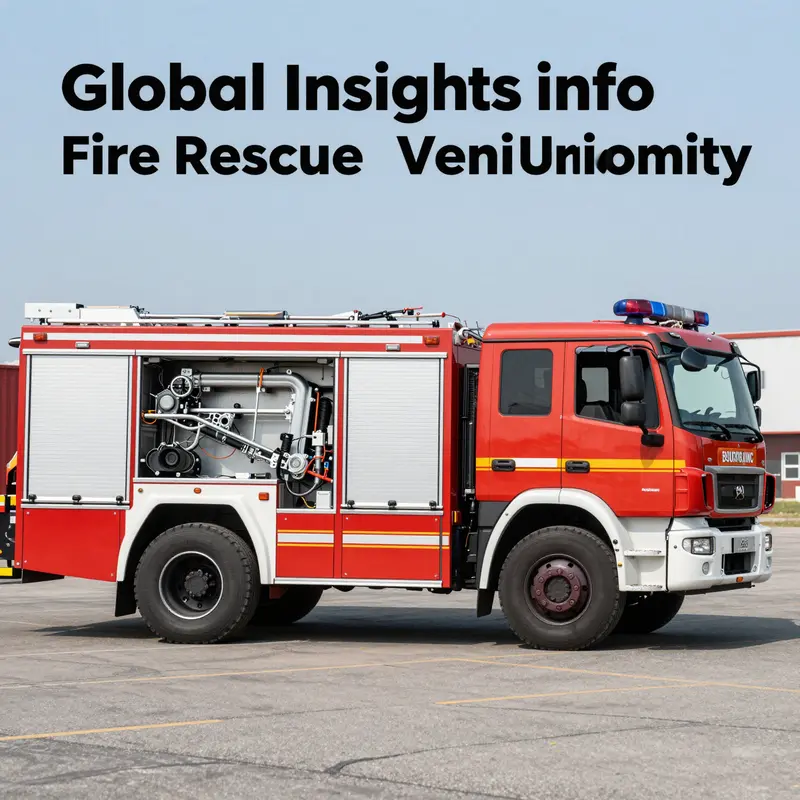
Uniformity in the fleet of fire rescue vehicles is rarely a simple yes or no. When you peel back the protective shell of a modern fire unit, you find a landscape shaped by road geometry, budgets, national regulations, and the training ecosystems that keep responders effective. The chassis and manufacturing approach sit at the heart of that landscape, because they determine how quickly a vehicle can be deployed, how reliably it will perform under stress, and how easily it can be serviced after years of service in tough environments.
Across the world, standards exist to ensure safety and compatibility. In China, the GB 7956 series provides a formal backbone: Part 1 lays out general technical specifications; Part 20 addresses special chassis fire trucks, setting a baseline for performance, electrical systems, and structural integrity. This does not erase differences but creates a common lexicon for manufacturers and buyers. In contrast, the United States leans on NFPA standards that govern training, equipment compatibility, and performance criteria, while the concrete chassis and interior configurations are often driven by local procurement channels. The result is a dual reality: a shared expectation of safety and reliability, paired with a large set of design choices that reflect local realities.
The choice of chassis follows the mission profile almost as a rule. A standard 6×4 truck chassis, such as the models commonly used for foam tankers, provides a reliable baseline: good weight distribution, high payload capacity, and robust road performance for highway transit between large facilities and sprawling urban zones. But when the task demands movement through narrow alleys, across winding streets, or through environments with tight clearance, the base becomes a starting point for a bespoke solution. Consider a low-profile tunnel fire truck engineered to slip through the narrow passages of underground corridors. Its roof is flattened, tires are smaller, and axles are reinforced to minimize height and maximize maneuverability. In another setting, forest fire units rise on high-clearance, off-road capable platforms that can ford rough terrain, climb embankments, and survive mud and sand where traditional highway trucks falter. Or imagine a water-land unit with either amphibious capabilities or a design that can shuttle rapidly from a river edge to pavement, extending reach without compromising stability.
The manufacturing approach mirrors these demands. In North America, the emphasis often leans toward purpose-built, highly customizable chassis interiors. The aim is to extract every bit of performance within a fire mission profile that includes hydrant access, rapid hose deployment, and complex pump operations. In Europe, a common strategy is to build on commercial vehicle platforms. The interior and body are adapted to firefighting duties, but the chassis come from a broad supplier ecosystem. This choice emphasizes cost efficiency, maintenance familiarity, and the ability to upscale or downscale production with standard parts. The result is a vehicle that benefits from the economies of a broader market, yet must still endure the rigors of a firefighting function through reinforced frames, water-tight compartments, and safety systems tailored to emergency response.
Germany serves as a telling example within this spectrum. Known for precision engineering, German programs integrate advanced safety and environmental technologies into the very heart of the chassis and systems. Energy-efficient hydraulic and electrical systems, robust diagnostics, and training support for responders are woven into the manufacturing process. The aim is not just to meet a standard but to reduce lifecycle costs and improve reliability across thousands of hours of operation. Even within this country, the push toward environmental sustainability translates into design choices that favor reduced emissions, more efficient cooling, and smarter energy management for pump and powertrain systems. These choices ripple through the vehicle, affecting heat management, noise levels, and the ease of maintenance for crews who must service and repair potentially dozens of components in a single shift.
Across Asia, China’s approach illustrates another axis of variation. As the industry modernizes, there is a marked tilt toward intelligent and human-centered design. Automated systems govern some routine operations, while dashboards emphasize intuitive controls for crews that often work with diverse training backgrounds. The development of digital communication networks allows fleets to coordinate with urban authorities, hospitals, and road management systems in real time. Yet this push for smart features sits alongside the enduring requirement for ruggedness and reliability. The base chassis must endure China’s traffic conditions, while the firefighting body must remain within the regulatory framework that ensures universal safety and performance.
A striking facet of this landscape is the extent to which specialization drives form as much as function. A tunnel truck in a dense city network has to negotiate angles, ramps, and limited headroom that would pose a challenge to a standard long wheelbase model. A dedicated track-laying or rail-based unit represents a fundamentally different engineering problem altogether: it may ride on a tracked platform or a rail-compatible chassis, with balancing, steering, and braking systems tuned for rail corridors and road sections alike. The same logic applies to the challenges of underground operations in major metropolises, where the working envelope is constrained in height and width, and where the vehicle must remain safe in the event of smoke, heat, or ground movement. The GB 7956.20 standard within China, which codifies such specialized chassis fire trucks, highlights a wider truth: uniformity at the core horizon is preserved, but the surface diversity remains vibrant and necessary.
Even where standards set the baseline, the reality of manufacturing means that two vehicles built to the same general specification can look and behave very differently. A 6×4 platform may be outfitted with a wide array of safety features, diagnostic networks, and energy-handling systems that differ from one manufacturer to another. In one case, a vehicle might prioritize a large number of hydrant outlets for immediate external water access, while in another, the emphasis could be on protecting the integrity of critical equipment during transit through closed compartments and concealed pathways. In Europe, the tendency toward closed transport systems means that more equipment stays shielded within rigid bodies and away from the elements during movement. The external interface—where hoses and outlets appear—may be more restrained, with emphasis on protecting equipment against vibration and corrosion during transit. These design choices influence maintenance schedules, fault diagnosis, spare parts compatibility, and, ultimately, the speed at which a crew can ready a vehicle for action.
The manufacturing landscape is also a mirror of how public procurement, industrial policy, and regional supply chains shape outcomes. In markets with concentrated chassis suppliers and robust domestic service networks, vehicles can be tuned quickly to local needs with a high degree of after-sales support. In other regions, fleets rely on a broader mix of global platforms and regional body-builders, prizing flexibility and access to a wide menu of bodies, pumps, and safety packages. Either path can yield vehicles that perform effectively, but the total cost of ownership, including maintenance turnaround times and the availability of spare parts, will differ. In this context, uniformity is less about identical parts and more about consistent interfaces and predictable performance envelopes.
For developing regions where budgets, infrastructure, and climate demand a different approach, a growing segment of the industry emphasizes customizable fire-truck solutions for developing countries, diverse firefighting needs. This trajectory highlights how the industry is not simply exporting a one-size-fits-all design; it is translating core safety principles into adaptable platforms that communities can sustain and upgrade over time. The pathway often begins with a modular approach: standardized chassis elements that can be swapped or enhanced with different bodies, pump configurations, or integrated safety packages. A modular base makes it possible to tune a vehicle to urban, rural, or industrial environments without starting from scratch. In practice, this means that a Shacman-like 6×4 might be the anchor, yet the surrounding equipment, fuel, water-tank geometry, and even electrical architecture can be tailored to local needs. You can imagine a spectrum where the same fundamental platform expands to a family of specialized vehicles, each optimized for a particular mission while preserving core safety standards. See the concept in action at customizable-fire-truck-solutions-for-developing-countries-diverse-firefighting-needs.
The conversation about uniformity would be incomplete without acknowledging the role of local and international standards. Outside the specific chassis decisions, a robust standard framework helps ensure safety and predictability. In addition to GB 7956 and its Part 20 for specialized chassis, Europe has codified many interface and safety requirements through regional codes. The United States relies on NFPA-driven guidance for training and equipment readiness, while other nations adopt a mix of national and regional norms. These standards do not force identical manufacturing lines across borders; instead, they specify the nonnegotiables—structural integrity, electrical safety, water delivery performance, and operator readiness. When a vehicle passes a standardized test and receives certification, that product can function across jurisdictions with reasonable confidence that fundamental expectations will be met. The challenge for manufacturers is to balance the cost pressures of delivering standardized components with the imperative to tailor the setup to the mission, climate, and geography of the intended territory.
Viewed from a practical angle, uniformity is a balance rather than a fixed rule. The baseline safety and performance criteria provide a shared platform on which devices and systems can perform. The variations in chassis and manufacturing reflect the need to operate across different geographies, climates, and urban layouts. The same vehicle family might exist as a modular family of designs that share interfaces, yet differ in loadouts and physical footprints. The result is a fleet that, when viewed holistically, reveals both common standards and a tapestry of forms. In practice, that tapestry matters because it determines how quickly a crew can deploy, how easily a workshop can service a vehicle, and how well spare parts can be sourced in a pinch. It underscores that uniformity is not a single look but a shared capacity to respond, adapt, and save lives under diverse conditions.
For readers who want a deeper technical dive into the chassis specifics and standards in play, a widely referenced resource compiles the essential specifications across the major regions. It presents the practical implications of chassis design choices, including the implications of using track-laying systems, rail-based platforms, and specialized low-profile configurations. The reader will find that document integrates with the broader narrative of how uniformity plays out in practice, bridging the gap between abstract standards and the concrete realities of field operations. Emergency Vehicle Chassis Specs.
customizable-fire-truck-solutions-for-developing-countries-diverse-firefighting-needs
External resource: Emergency Vehicle Chassis Specs
null
null
Between Uniformity and Autonomy: Specialized Customization and Regulatory Standards Shaping Fire Rescue Vehicles

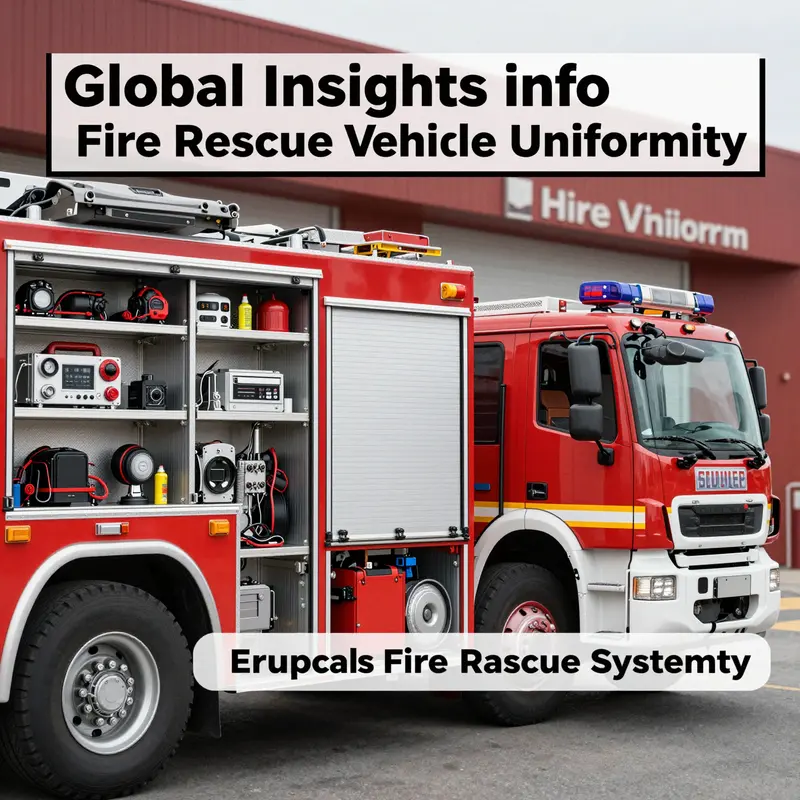
Fire rescue vehicles sit at a nuanced crossroads where safety-critical uniformity meets practical customization. The question of how uniform these vehicles are across borders is less a simple yes-or-no and more a spectrum shaped by geography, infrastructure, governance, and the evolving demands of emergency response.\n\nOn one end, universal principles—structural integrity, reliable visibility, dependable communication, and rapid access to essential tools—ground all fleets in a shared safety baseline. On the other end, every department, city, and country negotiates that baseline against local risks, road networks, climate, population density, and available resources. The result is a family of fire rescue vehicles that look different in the ways they move, carry, and operate, yet still speak a common professional language when it matters most. Across this landscape, the tension between standardization and customization is not a barrier but a design logic that enables resilience in diverse emergency management environments.\n\nThe most visible dimension of variation is design and dimensions, which are fundamentally tethered to how fires and rescues unfold in particular spaces. In regions where highways and broad avenues are common, fire apparatus grow larger, with higher-capacity compartments and longer ladders or booms designed to reach remote rooftops or expansive industrial facilities. In dense urban cores, where streets twist and space is at a premium, fleets favor compact, highly manoeuvrable vehicles that can thread through crowded blocks, negotiate tight corners, and park at the edge of a scene without blocking transit arteries. In many mid-tier economies, a balanced mid-size configuration aims to bridge urban and suburban needs, offering urban reach without sacrificing rural capability. Across these choices, the weight distribution, wheelbase, ground clearance, and overall silhouette are tuned to optimize maneuverability, stability, and safety on the most common response routes. The result is not a single standard shape but a continuum that reflects the topology of daily life in each service area. And as cities grow and mutate—with megacities expanding upward, transit corridors shifting, and new forms of risk emerging—these dimensional decisions continually recalibrate to maintain effectiveness under changing conditions.\n\nA parallel axis of divergence lies in chassis philosophy and manufacturing approach. North American practices have long favored purpose-built, highly customizable chassis designed to squeeze maximum performance from the interior layout. The interior is often modular, with space allocations that adapt to growing equipment inventories, specialized compartments, and crews’ workflows. By contrast, many European models lean on commercial vehicle platforms that are then transformed for firefighting duties. This approach emphasizes cost efficiency, ease maintenance, and adaptability within a high-volume supply chain. The core difference is not merely hardware but a design ethic. In North America, the emphasis is on bespoke capability and tailored performance for complex scenarios—industrial complexes, large-scale structural fires, or specialized rescue operations. In Europe, the emphasis tends toward versatility, reliability, and economical mass production that supports rapid deployment across many municipalities. These choices echo broader industrial ecosystems: a culture of bespoke engineering versus a culture of modular adaptation to existing platforms. The practical upshot is that two fleets may share similar mission goals but achieve them through different chassis architectures, procurement philosophies, and life-cycle management strategies.\n\nEquipment and system configuration illustrate how internal layouts and external interfaces reveal distinct priorities. In North American configurations, for instance, there is a tradition of multiple hydrant outlets and pre-connected attack lines designed to minimize the steps needed to deploy water on a fire or to reach a spray pattern quickly. This arrangement accelerates action but can demand larger, more expansive compartments to house hoses, pumps, and valves. European systems lean toward what some describe as a closed transport philosophy: equipment is protected during transit, external outlets are fewer, and the emphasis is on safeguarding sensitive gear and reducing exposure to the elements. Within Germany, the focus tends to blend precision engineering with safety and environmental technologies, creating energy-efficient systems and integrated training supports that promote safer, more effective crew performance. In China, a different trajectory is visible: a shift toward intelligent and human-centered design, where automated systems, smart diagnostics, and enhanced public education capabilities begin to shape the vehicle as both tool and agent of community engagement. The result is not merely a rearrangement of pumps and hoses but an integrated ecosystem where propulsion, power, hydraulics, and information systems interlock to support mission outcomes. The same basic tool, used in shifting ways, becomes capable of different tasks depending on the risk profile and operational philosophy of the jurisdiction.\n\nYet the most striking stories of customization are not found in broad categories but in targeted adaptations that respond to unique environments. A classic example lies in the development of specialized, low-profile response vehicles for challenging underground or tunnel environments. These designs borrow nothing from a one-size-fits-all blueprint; instead, they emerge from a deep, site-specific risk assessment. A tunnel-focused unit might feature a flattened roof, a shorter overall height, reinforced axles, and tires chosen for stability on slick or confined surfaces. The objective is to navigate tight corridors, clear high-severity path constraints, and deliver critical equipment to crews without compromising safety in the most restricted spaces. Such a vehicle is not simply a transport; it is a tailored instrument crafted to meet a precise operational problem. Similar bespoke adaptations appear in mountainous regions, arid zones, or disaster-prone coastlines, where vehicles receive hardware and layout modifications designed to maximize performance under local weather, terrain, and climate challenges. These customization efforts are a reminder that uniformity, when interpreted as rigidity, can erode the capacity to respond to surprising and evolving hazards. The adaptive approach, by contrast, preserves core safety mechanisms while aligning the vehicle with the realities of the field.\n\nRegulatory standards anchor these diverse configurations in a shared framework of safety and interoperability, yet the way standards are interpreted and applied can diverge widely. In the United States, the National Fire Protection Association outlines a comprehensive set of expectations under NFPA 1917, covering the design, performance, and testing of fire apparatus. Within this framework, departments retain latitude to tailor vehicles to rural, suburban, or urban needs: a rural department might prioritize fuel efficiency and rugged-terrain capability through a higher-clearance chassis, while an urban department may favor compact dimensions and tighter turning radii for city streets. Across the Atlantic, regulatory regimes emphasize different priorities. European and national codes often converge on core safety philosophies but differ in testing procedures, approval pathways, and the balance between consumer-protection style product standards and fleet-specific operating allowances. Germany, for instance, has cultivated a rigorous safety culture that integrates environmental considerations, energy-efficient technologies, and formalized training support as essential components of vehicle design. In China, regulatory approaches are moving toward smarter systems and human-centered design, with an emphasis on automation, reliability, and public-facing education components that reinforce the vehicle’s role as a community partner. What emerges from these varied regulatory landscapes is not a global uniform template but a shared commitment to safety, reliability, and mutual aid, underpinned by a common vocabulary of performance goals and safety criteria. The practical effect is that compliance feels familiar—covers clear safety outcomes and compatible interfaces—yet the path to compliance remains distinctly shaped by local expectations and regulatory culture.\n\nThe interplay of interoperability and safety further affirms that uniformity lives not in form but in function. Despite divergent aesthetics and mechanical architectures, the need for crews to work together across agencies remains a unifying imperative. Standardized equipment interfaces—such as hose couplings, tool mounting points, and ladder attachment schemas—allow responders from different departments to share resources smoothly during mutual aid operations. Protocols governing communications, incident command, and data sharing also serve as crucial connectors that bridge local fleets with national or regional response networks. In practice, this means that even when a vehicle is different in size, layout, or propulsion philosophy, its critical interfaces remain compatible with a broader safety ecosystem. Color schemes and markings, while sometimes reflecting local branding, must still maintain high visibility and recognizability in dynamic, high-stress environments. Reflective tape, conspicuous lighting, and consistent signaling codes all contribute to rapid scene assessment and crew safety, reinforcing the idea that standardization underpins safety even as customization optimizes performance for specific risks. The overall picture, then, is of a fleet landscape that looks varied but functions with a shared operational rhythm when disasters strike.\n\nThe trajectory toward convergence is real, even if pace and emphasis differ by region. Across the globe, designers and policymakers increasingly acknowledge that advances in communications, digital instrumentation, and data analytics can yield substantial gains in response effectiveness. Smart diagnostics help teams anticipate maintenance needs, minimize downtime, and allocate limited resources with greater precision. Integrated incident management platforms enable multi-agency teams to coordinate movements, share situational awareness, and synchronize equipment deployment. Yet even as these technologies diffuse, they reinforce the core insight that uniformity risks becoming a liability if it suppresses the local knowledge and granular expertise that drive practical decisions in the field. The most enduring pattern is thus not a universal blueprint but a dynamic balance: standard core safety features and interoperable interfaces coexisting with highly specialized configurations that reflect local realities. In this sense, uniformity is less a singular design and more a disciplined adaptability—a common operating system that leaves room for software extensions, hardware refinements, and organizational customs that respond to the evolving character of risk in each community.\n\nFor readers who want to see how the conversation around specialization can be framed in a broader development context, the idea of comprehensive customizable options for developing countries is illustrative. This approach emphasizes meeting diverse rescue needs efficiently while considering cost, maintenance, and capacity constraints. It frames vehicles as adaptable platforms rather than fixed solutions, capable of evolving as urban forms change, as training becomes more widespread, and as incident profiles shift with climate and population dynamics. Such a perspective recognizes that uniformity can coexist with customization as long as the underlying safety and interoperability requirements are preserved. To explore a representative articulation of this approach, consider the concept of comprehensive customizable fire trucks for developing countries meeting diverse rescue needs efficiently. comprehensive customizable fire trucks for developing countries meeting diverse rescue needs efficiently. This framing invites a constructive dialogue about how to scale capabilities, ensure durable performance, and sustain training and maintenance in contexts where resources are constrained yet needs are urgent.\n\nIn sum, fire rescue vehicles are neither identical nor entirely divergent across borders. They inhabit a space where essential safety principles create a shared foundation, while operational demands and governance contexts sculpt distinct configurations. The uniformity that truly matters is found in the capacity of each fleet to deliver rapid, safe, and reliable responses, irrespective of the form it takes. The ongoing evolution of communication technologies, data-informed decision making, and collaborative standards suggests a future in which the line between uniformity and customization becomes increasingly permeable. The challenge—and the opportunity—lie in preserving the core commitments to safety, interoperability, and performance while allowing the flexible adaptations that let each fleet master its local terrain, its unique hazards, and the rhythms of its communities. External support, cross-border learning, and a steady alignment of regulatory expectations with ground-level practice will help ensure that uniform safety outcomes are achieved not by a single model but by a resilient family of capable vehicles tuned to the real work of rescue across an increasingly diverse world. External resource: NFPA 1917 Update Overview. https://www.nfpa.org/Code-Updates/2024-NFPA-1917-Update-Overview
Final thoughts
The diversity in fire rescue vehicles worldwide underscores the importance of context in emergency response. Vehicle design, chassis selection, equipment configuration, and regulatory standards all reflect the unique environmental challenges and operational needs of each region. While there is an ongoing trend toward adopting best practices across borders, fundamental differences remain based on geographic and infrastructural factors. By understanding these distinctions, community members and emergency responders can better appreciate the nuances of their local firefighting capabilities and the commitment required to ensure public safety. Continued dialogue and collaboration among global rescue services will further enhance preparedness and effectiveness.